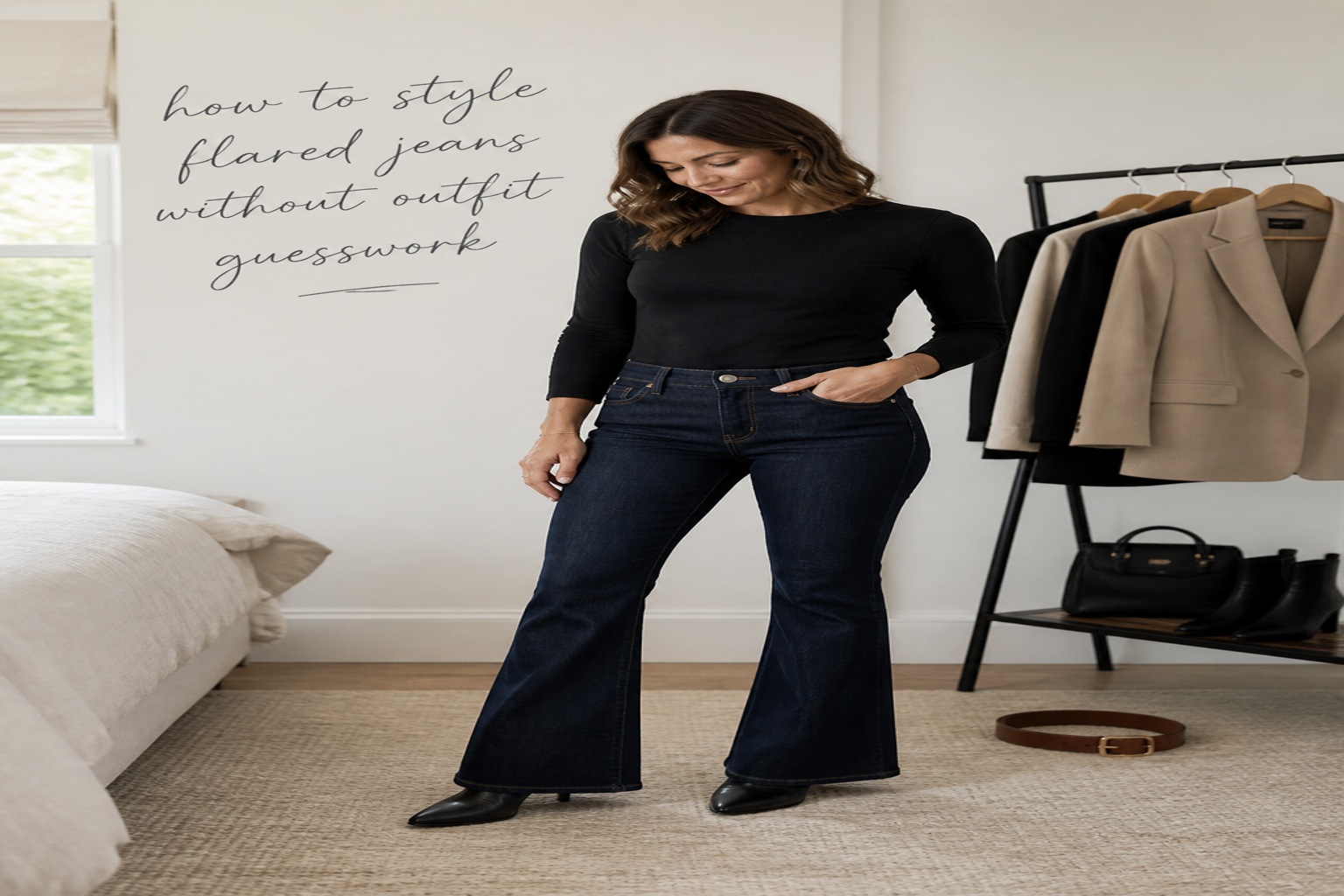
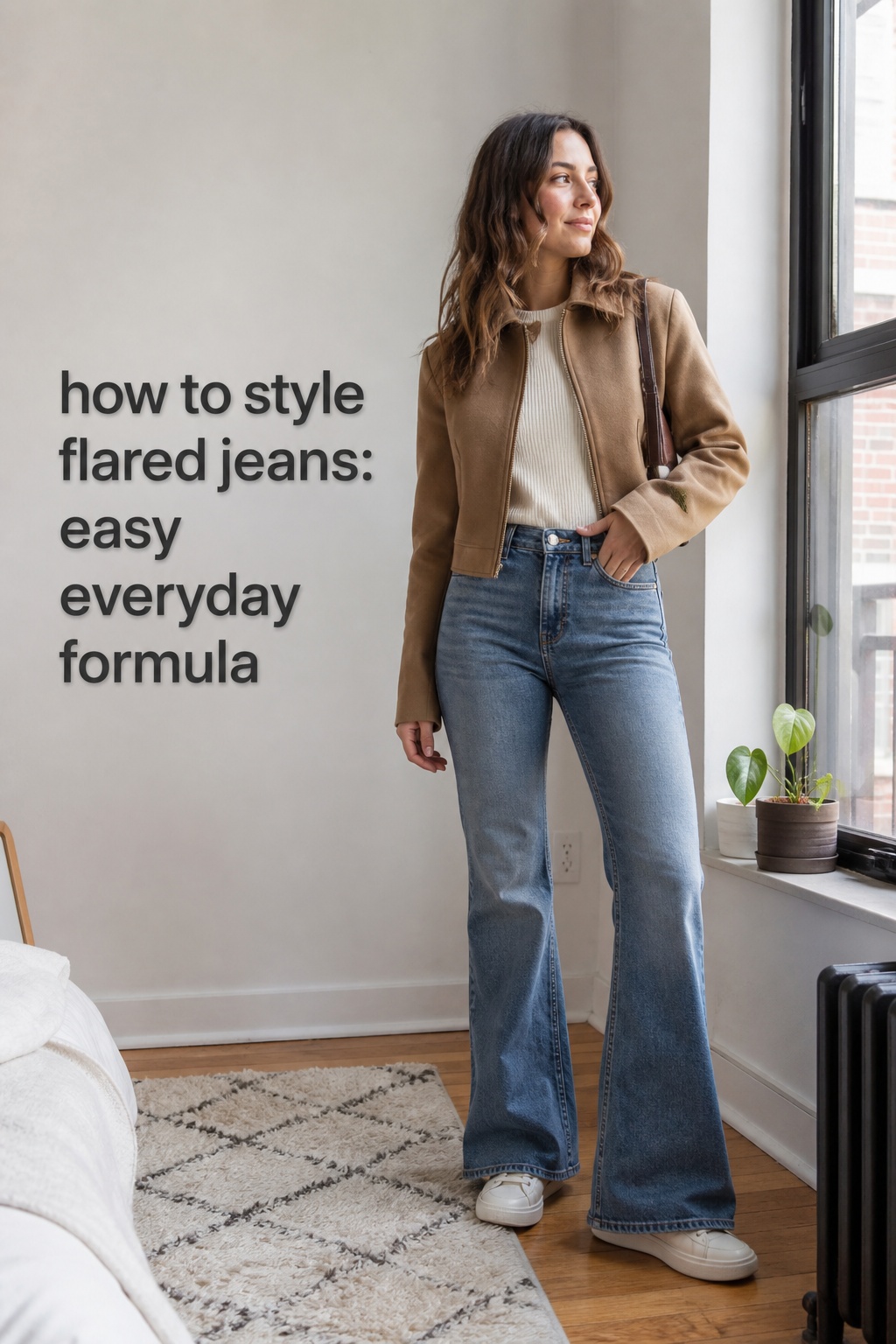
There is a particular moment when flared jeans stop looking like a brave purchase and start looking like the obvious answer. You pull on a pair before a busy morning, tuck in a simple knit, add a short jacket, and suddenly the outfit has a long, clear line. The same jeans can feel relaxed with sneakers, considered with a blazer, or quietly dramatic with pointed boots. The trick is not to recreate a 1970s costume. It is to notice where the volume begins, where the hem lands, and which piece gives the outfit its modern point of view.
If you are wondering how to style flared jeans, begin with the silhouette rather than the trend label. A true flare usually stays close through the hip and thigh before opening more visibly below the knee. A kick flare is shorter and subtler, while a bootcut widens only enough to skim a boot. Those differences change every styling decision. This guide treats flares as useful wardrobe pieces: denim that can carry a workday, a coffee run, a train journey, or dinner without requiring a whole new personality.
Why flared jeans feel current again
Flares are back in the conversation because they offer something many straight and wide-leg jeans do not: a defined shape through the upper leg and a graceful release at the hem. That movement gives an outfit presence without demanding a loud top. Current versions tend to look cleaner than exaggerated bell-bottoms. Medium and dark washes, high or mid rises, and hems that nearly meet the shoe make the silhouette feel intentional. A little retro reference is welcome; a full themed outfit is usually less convincing.
The easiest way to make the cut feel contemporary is to contrast its vintage memory with something precise. Try a white button-down with a structured bag, a fine knit with a cropped jacket, or a simple tee under a tailored blazer. The jeans provide the movement; the other pieces provide the context. This is why a trim blazer and pointed shoes can make flares work for a polished office, while a striped polo and sneakers can make them feel right for a Saturday morning.
Your wedding has a lot of moving pieces. Your plan can still feel composed.
Zarellea organizes guests, vendors, budget, and timelines in one shared space — so you can make decisions with clarity, not stress.
Color also changes the mood. Dark indigo or black denim looks sleek with cream, camel, charcoal, or navy. A medium blue wash feels more relaxed with white, red, soft green, or warm brown. White or ecru flares can look fresh in warm weather, but they benefit from a clear contrast on top, such as a chambray shirt or dark knit. If the jeans already have a strong wash, seam, or hem detail, keep the rest of the outfit quieter.
Start with the fit, rise, and hem
Before choosing a top, check the jeans in a full-length mirror while wearing the shoes you actually plan to use. The waistband should stay in place when you sit, the fabric should skim rather than pull across the hips, and the flare should open cleanly instead of twisting. Stretch can improve comfort, but too much stretch may soften the line after a few hours. A firm but flexible denim often holds the shape better, especially when the hem is long.
High-waisted flares create the clearest tucked-in outfit because the waistband gives the torso a visible endpoint. Mid-rise styles can feel easier and more casual, particularly with a cropped cardigan or a short jacket. Low-rise flares can work when the rest of the look deliberately references early-2000s dressing, but they need more care: a long loose top can erase the waist and make the leg line look shorter. Choose the rise that supports how you dress, not the one that happens to be most visible in a trend photo.
Hem length is the quiet detail that decides whether flares look polished. For a full-length pair, the hem should come close to the ground without dragging. You want to see the front of the shoe only slightly, while the back remains clean and free of a heavy fold. If you often switch between sneakers and heels, consider two pairs or have the jeans altered for your most-used height. A dramatic difference in shoe height cannot be solved by a cuff without changing the shape of the flare.
- Try the jeans with your tallest realistic everyday shoe, not a pair you never wear.
- Walk, sit, and climb one step to check that the hem does not catch under your heel.
- Look at the side view: the line from hip to knee should feel smooth, not compressed.
- For petite proportions, a clean uninterrupted color line and a slightly shorter flare can be easier to manage.
Petite styling does not require avoiding flares. It usually requires more attention to scale. A moderate flare, a higher rise, and a shoe that adds a little lift can preserve the length of the leg. Taller readers can carry a longer hem or a more generous opening, but they still need to watch for pooling. The best fit is the one that lets the jeans move while keeping the shoe and hem visually connected.
Build the top half around proportion
The most dependable top for flared jeans is one that gives the waist a clear definition. A fitted tee, tucked button-down, slim sweater, or fine-gauge polo creates contrast with the wider hem. This does not mean every top must be tight. It means the outfit needs one place where the eye understands the body of the look. A soft shirt can work beautifully when it is tucked or tied, and a relaxed sweater can work when it ends near the hip rather than covering the entire flare.
Layering is where flares become more versatile. A cropped cardigan follows the waistband and keeps the outfit light. A short leather jacket adds structure and a little edge. A tailored blazer can be longer, especially when it creates a strong vertical line, but avoid ending it exactly at the widest part of the leg. That horizontal break can make the outfit feel divided. If the blazer is roomy, keep the base layer simple and let the lapels provide the structure.
Oversized pieces are not forbidden; they just need an intentional boundary. A large coat can echo the movement of the flare when the outfit underneath is narrow and the coat is worn open. A boxy tunic that ends over the widest part of the jeans is harder to balance because it creates volume at both the torso and lower leg. If you love an oversized knit, try a partial tuck, a belt, or a shorter layer underneath so the waist does not disappear.
Texture is another way to make a simple outfit feel styled. Smooth denim looks richer beside a nubby cardigan, a crisp poplin shirt, or a soft wool coat. Avoid stacking too many heavy textures in the same area. A chunky sweater, thick belt, and wide flare can become visually dense; lighten one element with a fine scarf, a sleek shoe, or a smaller bag. The best outfits usually have one dominant volume and one clear counterweight.
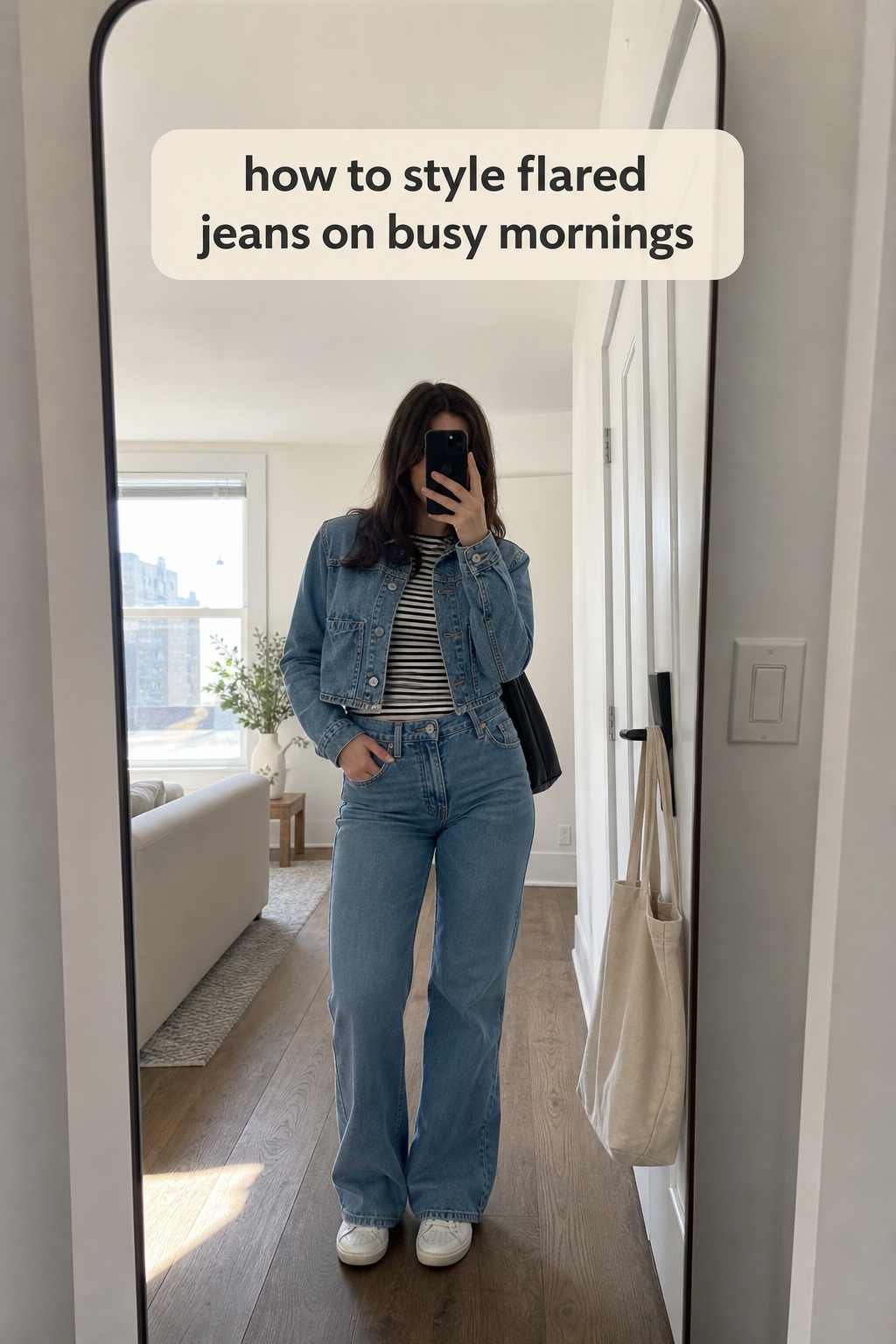
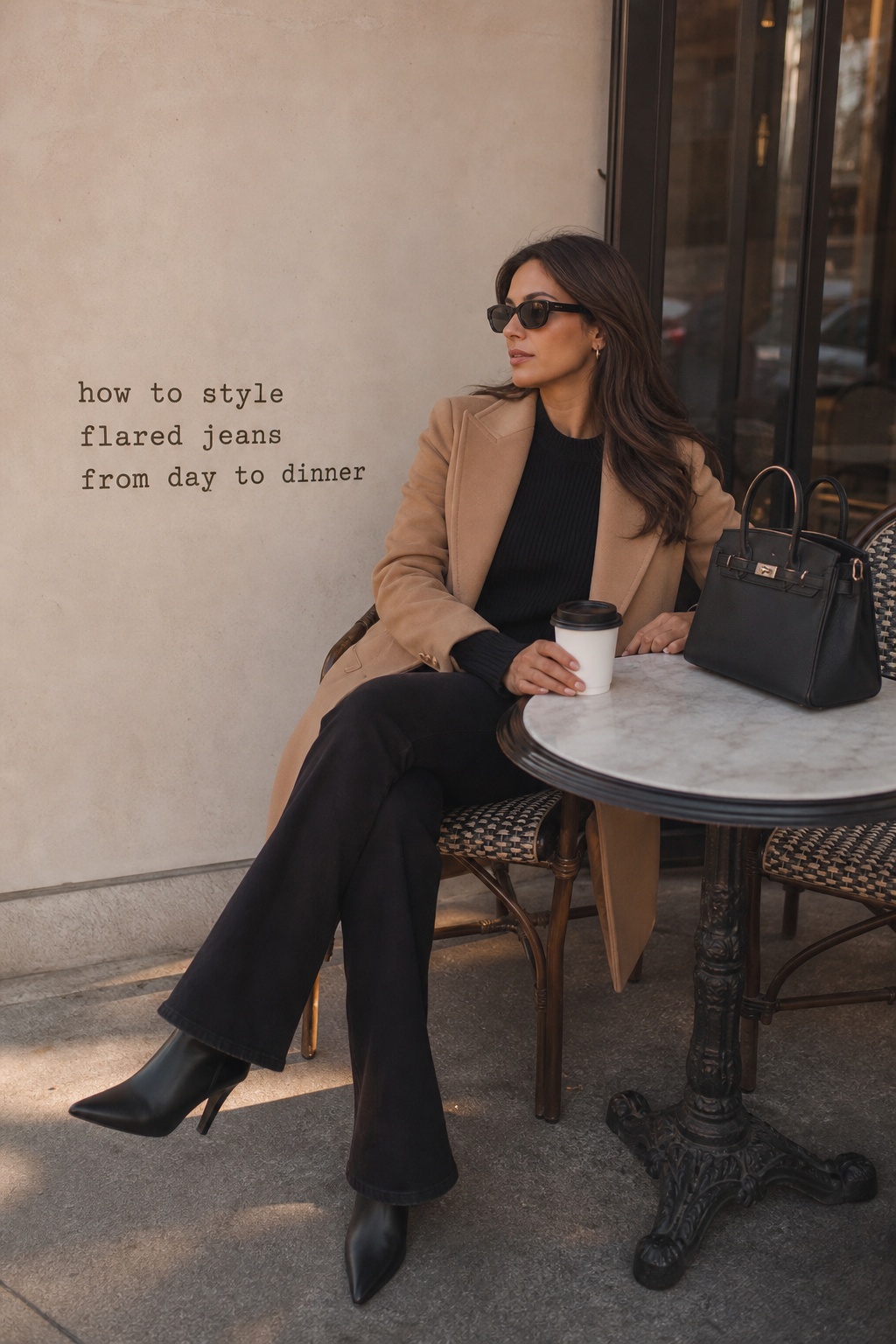
For a relaxed daytime formula, tuck a striped knit into medium-wash flares and finish with white sneakers and a practical tote. For a more polished version, swap the sneakers for loafers, add a belt, and layer a navy blazer. For evening, use black flares with a fine knit, a compact shoulder bag, and pointed ankle boots. Each outfit uses the same logic: the top half is organized enough to let the flare become the interesting part.
Choose shoes for the occasion
Shoes are not an afterthought with flared jeans. They determine the hem, the posture, and the mood. Platform sneakers and low wedges offer comfortable height while keeping the outfit casual. Pointed-toe boots create a long line for work or dinner. Loafers can work with a shorter kick flare, but they are more difficult with a full-length flare unless the hem is tailored carefully. The shoe should either be visible as a deliberate accent or quietly support the leg line.
Sneakers make flares approachable, especially when the denim is medium wash and the top is simple. Choose a low-profile pair if the flare is narrow, or a slightly stronger platform if the leg opening is broad. A bulky sneaker under a delicate flare can make the ankle area look crowded. White sneakers brighten dark denim; retro-colored sneakers can echo the vintage note without turning the entire outfit into a costume.
Ankle boots are among the easiest matches because they disappear naturally under the hem. A pointed toe adds polish, while a rounded toe feels more casual. If the boots have a noticeable shaft, make sure it does not catch against the flare when you walk. Wedges and platform sandals are useful in warmer weather because they give the jeans enough lift without looking overly formal. With cropped flares, the shoe becomes more visible, so treat it as part of the outfit’s color story.
For a work setting, a pointed heel or sleek loafer can make a dark flare feel as composed as tailored trousers. Pair it with a tucked shirt and structured jacket rather than adding several statement accessories. For travel, choose a stable platform sneaker or low boot and prioritize a hem that will not drag through stations and sidewalks. For an evening outfit, a simple pointed boot and a small bag may do more than a complicated top.
- Choose a little lift when a full-length flare would otherwise brush the floor.
- Use a visible shoe as the color accent when the top is classic.
- Match cropped flares with shoes that deserve to be seen, such as loafers, boots, or sandals.
- Keep the shoe shape streamlined when the flare is very wide or patterned.
Four outfit directions that work in real life
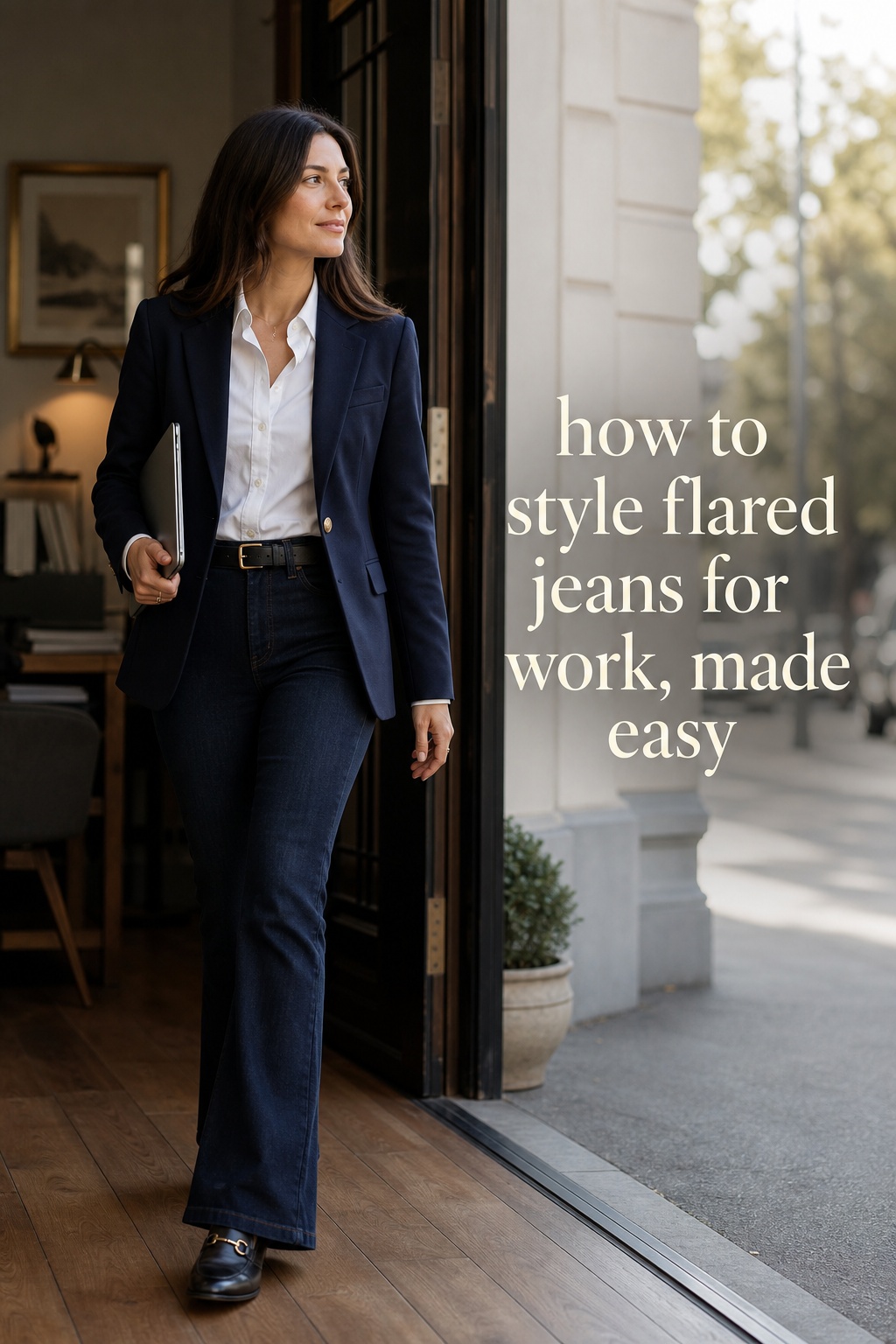
For the office, start with dark flares, a pale button-down, and a blazer that holds its shape. Tuck the shirt fully and add a narrow belt if the waistband allows it. Pointed boots or polished loafers keep the hem practical. If your workplace is more relaxed, replace the crisp shirt with a fine knit and carry a structured tote. The outfit reads professional because the proportions are deliberate, not because every piece is formal.
For a weekend, medium-wash flares and a simple tee need only one strong layer. A cropped denim jacket gives a clean waist and a casual texture match. A leather jacket creates sharper contrast. Add white sneakers, a canvas tote, and small jewelry. If the jeans are very long, wear the shoe you tested during the fitting; an effortless weekend outfit becomes frustrating when the hem needs constant attention.
For travel, choose a stretch denim that keeps its shape, a fitted tee, and a lightweight cardigan or overshirt. A crossbody bag leaves your hands free, and a low platform sneaker protects the hem while still giving a little lift. Keep the color palette close—blue, ivory, camel, or gray—so the same jeans can work with several tops. This is where flares can be surprisingly useful: the defined leg line looks finished even when the rest of the outfit is comfortable.
For dinner, black or dark indigo flares offer a strong base for a fine knit, silk-inspired blouse, or simple sleeveless layer with a jacket. Let one detail lead: pointed boots, a red bag, an interesting belt, or a textured coat. If every piece competes, the silhouette loses its calm. A monochrome outfit can be especially effective because the continuous dark line makes the flare feel modern and the accessories feel intentional.
Seasonal changes are easy when the base proportions stay consistent. In spring, try a light blouse and a cropped jacket. In summer, use a breathable shirt with a platform sandal or a cropped flare. In fall, add a fine turtleneck and wool coat. In winter, let a long coat echo the movement of the jeans, but keep the layers beneath it relatively streamlined. The goal is not to style the jeans according to a fixed era; it is to let the surrounding fabric and footwear describe the season.
Common styling mistakes and easy fixes
The most common mistake is ignoring the hem. A flare that drags, folds, or catches under the heel makes the whole outfit look accidental. The fix is simple: fit the jeans with the shoes, and tailor them for the height you genuinely wear. Another mistake is pairing a very wide flare with a long, boxy top and no visible waist. Try a shorter jacket, a full tuck, or a belt to create a visual anchor.
Too many retro references can also make the outfit feel like a costume. A floppy hat, fringe bag, printed blouse, platform shoe, and dramatic flare may each be appealing, but together they compete. Keep one or two references and modernize the rest with clean tailoring, a simple bag, or minimal jewelry. The same rule works for Y2K-inspired low-rise styles: let the rise be the reference instead of repeating every detail from the period.
Some readers avoid flares because they expect the jeans to do all the work. A classic top and a strong shoe are often enough. If the outfit still feels flat, look at contrast: add a camel belt to blue denim, a red shoe to a neutral base, or a structured bag to a soft knit. If it feels too busy, remove one element rather than adding another. Styling improves quickly when you make one decision at a time.

FAQ
What tops go best with flared jeans?
Fitted or neatly tucked tops are the easiest starting point because they balance the wider hem. Try a tee, fine sweater, polo, button-down, or cropped cardigan. A longer oversized layer can work when it is worn open or ends near the hip, but avoid adding uncontrolled volume at both the torso and lower leg.
What shoes should you wear with flared jeans?
Choose shoes according to the hem and occasion. Platform sneakers, wedges, and pointed ankle boots work well with full-length flares because they provide lift. Loafers and sandals are especially easy with cropped or kick flares. Try the jeans with the shoes before altering the hem so the front does not drag or pool.
Can petite people wear flared jeans?
Yes. A moderate flare, a higher rise, a clean hem, and a shoe with a little lift can create a long uninterrupted line. Keep the top or jacket close to the waist and avoid a hem that pools. The most important step is tailoring the jeans to the shoes you actually wear.
How do you style flared jeans for work?
Use dark denim, a tucked shirt or fine knit, and a structured blazer. Pointed boots or polished loafers make the outfit feel deliberate, while a structured tote keeps it practical. Keep accessories edited and choose one strong color accent rather than several competing details.
Are flared jeans still in style?
Flares remain wearable because the cut has moved beyond a single trend cycle. The most current versions usually have balanced openings, clean washes, practical hems, and modern styling around them. You do not need an exaggerated bell-bottom; a subtle flare or bootcut-adjacent shape can deliver the same movement more quietly.
What is the difference between flared jeans and bootcut jeans?
Bootcut jeans usually widen modestly from the knee so they can skim a boot. True flares open more noticeably and may extend farther toward the floor. Kick flares are shorter and show more of the shoe. Look at the width from knee to hem and decide whether you want a subtle everyday line or a more expressive silhouette.
Leave a Reply