Blue jeans rarely fail because they are unfashionable. They fail because the outfit around them has not been considered closely enough. A blue jeans outfit can look effortless on one day and oddly unfinished on the next, even when the jeans themselves are perfectly good. The challenge is not owning denim; it is understanding how wash, silhouette, footwear, color, and occasion work together.
This is why so many people return to the same questions: how to style blue jeans for different occasions, how to dress them up for evening, what shoes to wear, whether double denim still works, and how to make denim feel polished rather than purely casual. The answer is usually found in composition, not trend-chasing. With the right balance of structure and ease, blue jeans can move through daytime errands, office-adjacent dressing, travel, dinner, and seasonal transitions with remarkable precision.
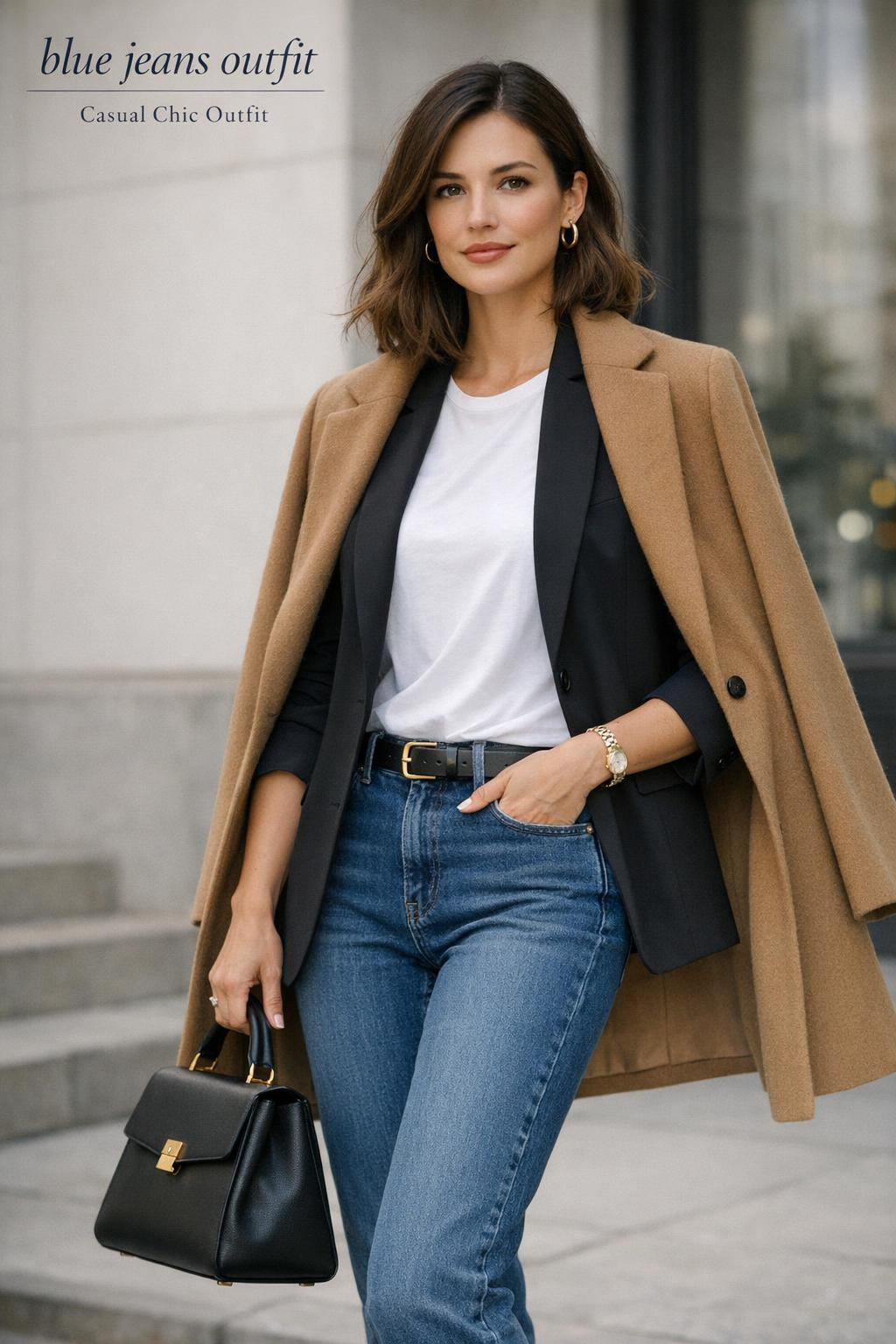
What follows is a practical fashion guide built around real styling logic. Instead of treating denim as a default, it treats it as a foundation: one that can support a casual chic outfit, refined classy streetwear, winter fashion outfits casual enough for everyday life, and more considered fall fashion outfits with color and texture built in. The goal is simple: make your jeans work harder, look better, and feel appropriate wherever the day takes you.
Why blue jeans remain the modern wardrobe anchor
Jeans occupy a distinctive place in fashion because they sit between utility and style. The fabric history of denim, often associated with Levi Strauss & Co., explains part of their staying power, but the more useful point for daily dressing is versatility. Blue jeans absorb contrast well: a white tee makes them look clean and direct, a silk blouse makes them look refined, a knit softens them, and a blazer sharpens them.
Your wedding has a lot of moving pieces. Your plan can still feel composed.
Zarellea organizes guests, vendors, budget, and timelines in one shared space — so you can make decisions with clarity, not stress.
That flexibility is also why they create confusion. Because jeans can be worn almost anywhere, people often assume every pair works for every setting. In practice, wash, rise, fit, and the surrounding pieces matter. Dark wash denim generally reads more polished than a very faded light wash. A straight-leg silhouette creates a different line than wide-leg or bootcut. Stretch content and fabric weight affect how the jeans hold shape across a long day. The same blue jeans can lean relaxed, work-ready, or evening-appropriate depending on what frames them.
Fashion media and influencer styling often return to the same dependable formulas for a reason: a white tee, knitwear, jackets, sneakers, heels, and boots all create recognizable outfit structures around denim. Rather than seeing these as clichés, it is more useful to see them as archetypes. Once you understand the archetype, you can adapt it to weather, region, and occasion without losing the clarity of the look.
The real styling challenge behind denim outfits
The difficulty with denim is rarely the jeans alone. It is the tension between comfort and intention. Blue jeans are easy to wear physically, but they can become visually flat if every supporting piece is equally casual. On the other hand, they can feel forced if a highly dressy top and formal accessories are placed against a denim wash that is too distressed or too daytime in mood.
Weather adds another layer. In winter, denim must work with boots, coats, and knits without becoming heavy or bulky. In summer, the outfit needs lightness, ventilation, and simpler lines. During fall, richer palettes such as camel and tomato red become especially useful because they add depth against blue denim. In travel or city dressing, practicality matters just as much as appearance: you need shoes that can handle movement, layers that adapt, and accessories that do not overwhelm the silhouette.
There is also the question of setting. A blue jeans outfit for a Los Angeles daytime mood is not built the same way as one intended for New York urban casual. A laid-back sandal-and-light-wash combination may feel entirely right in a warm, easygoing context, while a city look often benefits from more structure through jackets, boots, loafers, or a strong bag and belt combination. The solution is not to abandon denim but to edit the supporting pieces more intelligently.
The principles that make a jeans outfit look polished
Before moving into outfit ideas, it helps to establish the few principles that consistently improve a denim look. These are not rigid rules, but they solve most of the common problems people face when building outfits around blue jeans.
- Match the wash to the occasion. Dark wash reads cleaner and more elevated; light wash feels more casual and daytime.
- Balance silhouette with silhouette. If the jeans are wide or relaxed, pair them with a more defined top or structured outerwear. If the jeans are slim or straight, a softer knit or slightly oversized layer can work beautifully.
- Use shoes to set the tone quickly. Sneakers keep denim grounded, boots add seasonal structure, and heels shift the outfit toward evening.
- Let accessories finish what the clothing begins. A belt, bag, or jewelry choice can move the same jeans from basic to resolved.
- Keep color deliberate. White, camel, black, navy, and red accents all interact with blue denim differently and should be chosen with intention.
A useful way to think about denim styling is that jeans should never compete with every other element at once. If the wash is already expressive, keep the rest clean. If the top has sheen or drape, let the denim provide calm. If you are trying double denim, make sure there is enough contrast in tone, cut, or texture so the outfit feels composed rather than accidental.
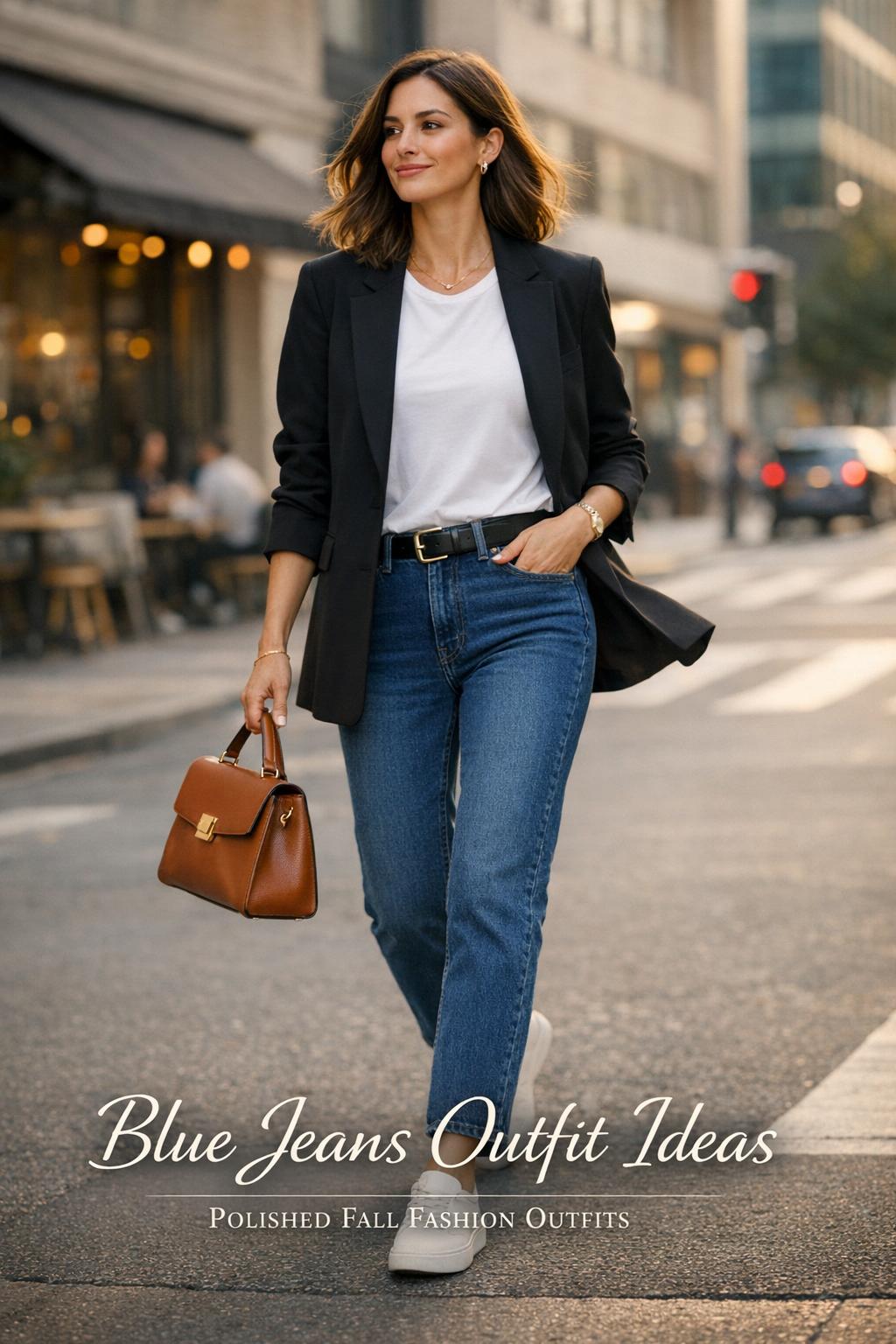
Three denim archetypes to understand before getting dressed
Dark-wash denim for a sharper mood
Dark wash is often the easiest route when you want jeans to feel refined. It supports blazers, silk blouses, and heeled footwear with very little resistance. If your main challenge is dressing denim up for work-adjacent settings, dinner, or evenings that are not strictly formal, this is the most dependable starting point.
Light-wash denim for relaxed daytime dressing
Light wash has a naturally informal quality that works well with white tees, cropped knits, sneakers, and sandals. It is ideal for casual errands, travel days, and warm-weather dressing. The risk is that it can read too laid-back if every piece around it is equally soft or oversized. Add one element of structure to keep the outfit from dissolving.
Double denim and alternative denim moods
Double denim remains relevant when handled with restraint. It works best when the pieces are clearly intentional rather than too perfectly matched. Recent trend coverage also shows how blue jeans are sometimes contrasted with alternatives such as khaki pants, a shift noted around figures like Kendall Jenner and Hailey Bieber. Even if you stay loyal to blue denim, that comparison is useful: it reminds you that color and tone are doing as much work as the garments themselves.
Outfit solution: the white tee and straight-leg formula that always steadies the wardrobe
A white tee with straight-leg blue jeans remains one of the clearest examples of how simplicity can still look editorial. The combination works because each piece gives the other definition. The tee provides brightness and a clean frame near the face, while the jeans bring structure and weight below. Add sneakers for a direct, everyday finish or switch to loafers or low heels when you want the look to sit closer to a casual chic outfit.
This formula is especially useful when you are dressing in a hurry and want certainty. A medium or dark wash straight leg is often the most forgiving option because it can move across settings. If the outfit feels too plain, the solution is not to abandon it but to sharpen the accessories: a leather belt, a compact bag, and minimal jewelry usually do enough. The line stays clean, the outfit remains comfortable, and the result feels considered rather than underdressed.
In urban settings such as New York or Chicago, this look benefits from a jacket layered over the tee. In Los Angeles or San Francisco, it can remain lighter and more open. The point is not city costume, but city rhythm: some places ask for more structure, others for more ease.
Outfit solution: silk blouse and wide-leg jeans for evenings that are not formal but still require polish
One of the easiest ways to dress up blue jeans for evening is to shift texture rather than adding obvious embellishment. A silk blouse with wide-leg jeans does exactly that. The blouse introduces fluidity and light reflection, while the denim keeps the outfit modern and grounded. This combination solves a common problem: wanting to look elevated without feeling overdressed.
The proportions matter. Because wide-leg jeans already carry volume, the blouse should drape with intention rather than excess bulk. A tucked or half-tucked finish helps establish the waist and keeps the silhouette from becoming diffuse. Heels refine the length of the line, but if comfort is a concern, a polished boot can create the same sense of completion in cooler weather.
This is also where darker denim has an advantage. A dark wash reads quieter and lets the blouse carry the sophistication. If your blouse is in a camel, navy, white, or red family, the contrast with blue denim feels especially strong. Woman & Home style coverage around Victoria Beckham’s use of camel and tomato red underscores how effective this palette can be, particularly in fall fashion outfits when richer tones naturally enter the wardrobe.
Outfit solution: cropped knit with ankle jeans for transitional weather and fall fashion outfits
Transitional dressing asks the most of denim. The weather is unstable, layers matter, and comfort has to survive a full day. A cropped knit with ankle jeans is one of the most practical answers because it gives warmth without heaviness and shape without stiffness. The slight break between knit, waistband, and ankle length keeps the outfit visually alive.
This combination works particularly well for fall fashion outfits because it welcomes texture. Think of soft knitwear against the firmer line of denim, then anchor it with boots when temperatures drop. If the jeans are high-rise, the cropped proportion often feels cleaner and more modern. If you prefer more coverage, use a knit that skims the waistband rather than one that extends too far below it.
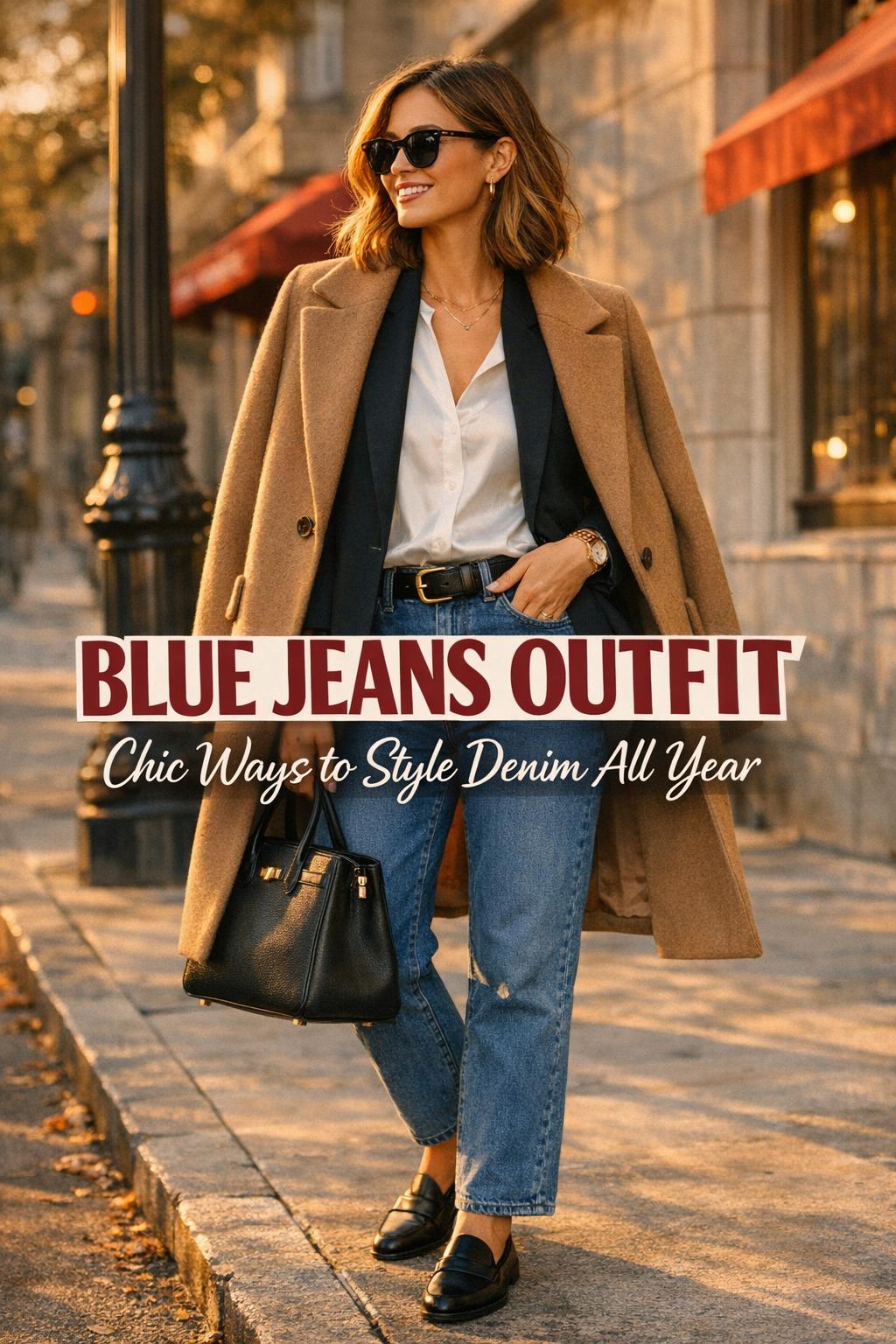
Color matters here. Camel paired with blue jeans creates warmth without dullness. Tomato red, used carefully, can energize a neutral wardrobe and make denim feel freshly styled. This is the kind of outfit that benefits from a thoughtful bag and belt because those details keep the softness of knitwear from becoming too casual.
Outfit solution: a structured blazer to turn denim into a smart casual balance
When the challenge is making jeans feel more appropriate for semi-polished settings, a blazer is often the clearest answer. It introduces tailored structure, sharpens posture, and gives denim an architectural counterpart. This pairing is especially effective for people who want office-adjacent denim, a dinner look, or smart travel dressing without sacrificing ease.
The logic is simple: blue jeans soften the severity of tailoring, and the blazer corrects the informality of denim. Straight-leg or wide-leg jeans both work here, but the cleaner the wash, the more convincing the result. Underneath, a white tee creates directness, while a blouse offers more refinement. Footwear decides the final register. Sneakers make the outfit modern and practical; loafers or heels move it into a more polished category.
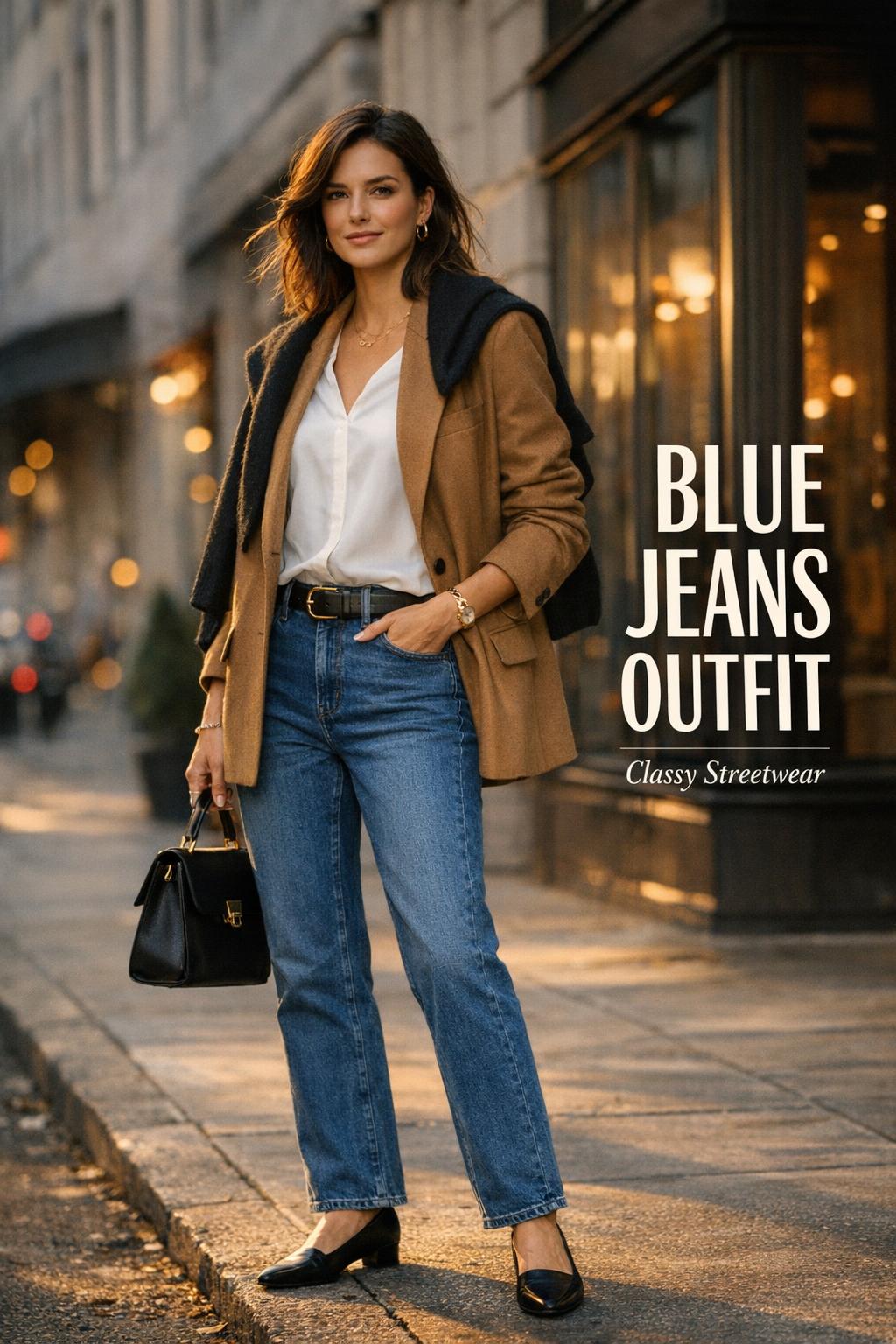
This is where classy streetwear becomes a useful reference point. The outfit still feels urban and lived-in, but the lines are deliberate. It is not formal dressing pretending to be relaxed; it is relaxed dressing edited with precision.
Outfit solution: denim-on-denim without looking overworked
Double denim often intimidates people because it can either look excellent or strangely flat. The key is variation. If your jeans and denim shirt or jacket are too close in tone and fit, the outfit can feel uniform-like. If there is enough distinction between washes, cuts, or layering pieces, it becomes quietly sophisticated.
Woman & Home’s attention to Mary Berry’s double denim moment is useful because it frames the concept as smart-casual rather than novelty. That is exactly the right approach. Treat denim-on-denim as a tonal outfit that needs contrast, not as a gimmick. A darker jacket over lighter jeans, or a relaxed denim shirt with straighter jeans, usually works better than a perfectly matched set. Add boots, a belt, or understated jewelry to create visual punctuation.
This look is particularly strong in autumn and winter because layering naturally adds depth. In spring or summer, keep the lines lighter and simpler so the outfit does not feel heavy.
Outfit solution: winter fashion outfits casual enough for daily life
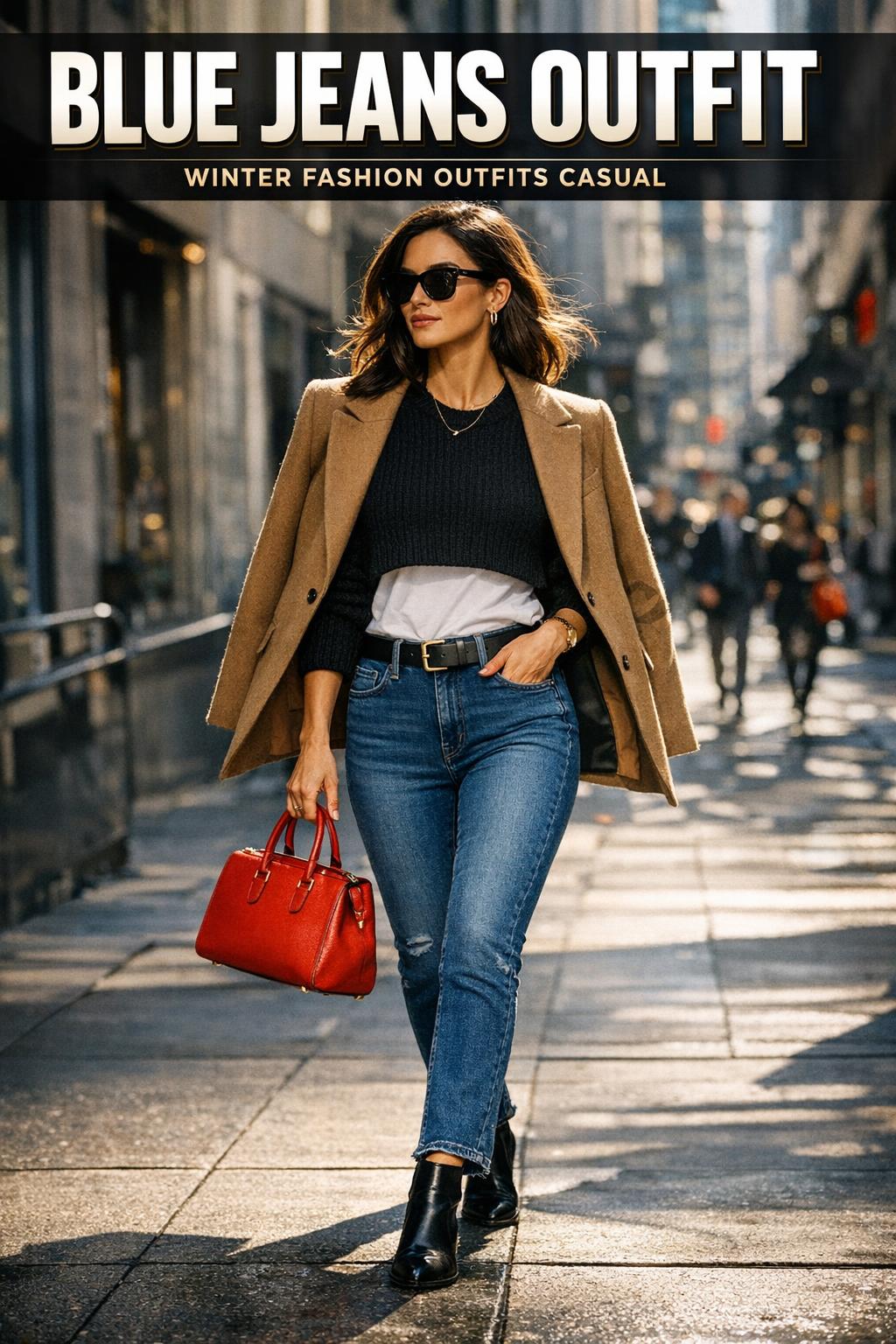
Winter denim outfits can quickly become bulky if every layer is thick and every shape is oversized. The more elegant route is to use jeans as the stable base and let the rest of the look build vertically. A knit, a jacket or coat, and boots create a strong winter line without overwhelming the body. This is the foundation of winter fashion outfits that still feel refined.
For winter fashion outfits casual enough to wear repeatedly, dark or medium-wash jeans are especially practical. They pair naturally with boots, handle outerwear well, and visually support deeper seasonal colors. A structured coat over a knit and jeans creates a polished everyday look, while a softer oversized sweater with straighter jeans leans more relaxed. The distinction matters because winter comfort should not erase shape completely.
In colder urban settings such as Chicago or New York, boots are often the strongest footwear partner because they extend the line and work with weather. In milder climates, sneakers can still function, but the outfit benefits from a coat or blazer to avoid looking seasonally incomplete. Winter style with denim succeeds when warmth, movement, and silhouette are considered together.
Outfit solution: summer and travel denim that does not feel heavy
Blue jeans in warmer weather require restraint. The pieces around them should lighten the outfit visually and practically. This is where light-wash or ankle jeans can be useful, especially with sandals or low-profile sneakers. A simple top, a breathable-feeling silhouette, and minimal accessories often work better than trying to force a layered look into high temperatures.
For travel, denim works best when the outfit can absorb changes in temperature and activity. A white tee, straight-leg jeans, and a jacket carried or layered as needed is one of the most dependable combinations. It stays comfortable during movement, adapts across airports or city walking, and still looks coherent when you arrive. If you want a more polished version, replace the tee with a blouse and keep the footwear practical but clean.
Color and accessory logic: how to make jeans look intentional
Many denim outfits fail not because the clothing is wrong, but because no one finished the thought. Accessories are often what make blue jeans feel complete. Shoes, belts, bags, and jewelry create continuity between the casual character of denim and the mood you want the outfit to express.
Shoes that shift the mood immediately
Sneakers keep a blue jeans outfit grounded and modern. Boots add authority, especially in colder months. Heels bring precision and are one of the fastest ways to dress up denim for evening. The practical question is not simply what shoe looks good with jeans, but what role the shoe needs to play. If the outfit already has volume and texture, the shoe can be quieter. If the outfit is minimal, the shoe can carry more of the style message.
Belts, bags, and jewelry as finishing structure
A belt is especially helpful with blue jeans because it marks the waist and gives definition when tops are tucked or lightly bloused. Bags should support the silhouette rather than interrupt it; compact, structured styles often work well with tailored looks, while softer bags suit more relaxed denim dressing. Jewelry is most effective when it echoes the outfit’s level of polish. With a white tee and jeans, even minimal jewelry can make the combination feel deliberately styled rather than default.
Camel accessories with blue denim create quiet warmth. Black gives clarity. Red, used selectively, adds energy and can transform otherwise simple fall fashion outfits. These choices do not need to be dramatic. Small, controlled accents often look more refined than trying to make every piece stand out at once.
What celebrity and influencer styling gets right about denim
Fashion influencers and celebrities appear so often in denim coverage because they demonstrate repeatable formulas rather than impossible fantasies. Who What Wear’s recurring focus on blue-jeans outfits built around white tees, oversized sweaters, heels, sneakers, and outerwear points toward a practical truth: the strongest denim looks are often the most legible at a glance.
Kendall Jenner and Hailey Bieber are often used as trend anchors not simply because of visibility, but because their styling tends to clarify a silhouette quickly. Victoria Beckham’s color-led dressing offers another useful lesson: denim responds extremely well to strong, elegant color partners such as camel and red. Mary Berry’s double denim reference reinforces the smart-casual potential of denim-on-denim when the styling stays measured.
The takeaway is not to copy celebrity wardrobes literally. It is to observe how they use one dominant idea at a time. A clean jean line, a clear color story, or one strong layer is usually enough. That discipline is what makes a jeans outfit feel modern.
A U.S. wardrobe lens: regional cues that subtly change the denim formula
One of the more overlooked aspects of denim styling is regional rhythm. The same jeans can feel entirely different depending on climate, pace, and local dress habits. In New York, a blue jeans outfit often benefits from sharper layering: jackets, boots, loafers, or a structured bag that can hold its own in a fast-moving day. In Los Angeles, the line usually relaxes. Light wash, easier tops, and simpler footwear feel more natural. San Francisco often asks for practical layering because temperatures shift. Chicago invites stronger winter structure. Dallas can support polished casual dressing with denim but usually benefits from a confident silhouette and clear accessories.
These are not rigid style laws. They are reminders that practicality shapes aesthetics. If your jeans outfit consistently feels slightly wrong, it may not be because the clothes are bad. It may be because the outfit is not calibrated to your actual environment.
Quality, care, and sustainability: the less glamorous part that changes the result
Good denim styling begins before the outfit does. Fabric composition, stretch level, and general quality all influence how jeans sit on the body through the day. Denim that loses shape too quickly can make even a carefully composed outfit feel tired by late afternoon. Quality matters because silhouette matters.
There is also growing interest in sustainable denim, recycled blends, dye practices, and the broader lifecycle of jeans. Even when shopping with aesthetics in mind, it is worth considering longevity. A pair of blue jeans that holds shape, wears well, and can move across multiple outfit types is usually a better wardrobe investment than one that only works in a narrow styling lane. Heritage and premium denim names such as Levi’s, Lee, Paige, and AG remain useful anchors in this conversation because they connect denim identity with durability and fit expectations.
Care is part of style. The better your jeans are maintained, the better they support a polished look. If denim is a foundation piece, then preserving that foundation is not an afterthought; it is part of dressing well.
Common denim mistakes that quietly weaken the outfit
Most denim errors are subtle. The outfit is not disastrous, only unresolved. That is why they are easy to repeat.
- Wearing a wash that fights the occasion, such as very casual faded denim in a setting that needs more polish.
- Pairing an oversized top with overly relaxed jeans and losing all definition.
- Ignoring footwear, even though shoes are often what determine whether the look reads casual, refined, or awkwardly in between.
- Trying double denim without enough contrast in tone or silhouette.
- Adding accessories as an afterthought rather than using them to complete the outfit’s line.
If a jeans outfit feels off, start by checking proportion, then wash, then shoes. Those three decisions solve most problems faster than buying something new.
Practical tips for choosing the right jeans before building the outfit
The most stylish denim formula still depends on the right base. Fit and rise affect every other piece in the outfit, from where a knit sits to whether a blazer line feels balanced. Straight-leg jeans are often the easiest all-round option because they pair well with tees, blouses, knits, boots, sneakers, and heels. Wide-leg jeans can look elegant, but they ask for more attention to footwear and top proportion. Bootcut can be useful when you want movement with boots or heeled shoes. High-rise cuts often create a neater waistline and support tucked styling more easily.
Alterations are worth considering if the length disrupts the silhouette. A hem that bunches awkwardly can undermine an otherwise strong outfit. Likewise, a waistband that shifts constantly changes how your top sits and how polished the look feels. Choosing jeans by body type is less about rigid categories and more about identifying where you want definition, length, or balance in the silhouette.
As a practical rule, build your wardrobe around one or two jean shapes you trust. Then vary the mood through tops, outerwear, shoes, and accessories. This approach creates far more outfit range than collecting many different jeans that solve the same purpose poorly.
FAQ
How do I make a blue jeans outfit look more polished?
Start with a cleaner wash, then add one structured piece such as a blazer or tailored jacket, and finish with deliberate shoes and accessories. The easiest upgrade is often changing the footwear and defining the waist with a belt.
What shoes pair best with blue jeans?
Sneakers work for everyday ease, boots are especially strong for seasonal structure, and heels are the most direct way to dress jeans up for evening. The best choice depends on whether you want the outfit to read casual, smart casual, or refined.
Can I wear double denim without looking dated?
Yes, if you create contrast through wash, fit, or layering. Double denim usually looks strongest when the pieces are not identical and when accessories add enough definition to break up the tonal effect.
Are light-wash or dark-wash jeans better for different occasions?
Dark wash generally feels more elevated and suits evening, smart casual, or office-adjacent dressing more easily. Light wash is more relaxed and works especially well for daytime, travel, and warm-weather outfits.
What tops work best with blue jeans?
White tees, silk blouses, cropped knits, sweaters, and blazers layered over simple tops all work well because they create clear contrast with denim. The strongest choice depends on whether you want ease, softness, or structure.
How can I style blue jeans for winter fashion outfits?
Use jeans as the stable base, then build with a knit, outerwear, and boots. Darker washes often look more seasonally grounded, and the key is to keep warmth and silhouette balanced so the outfit does not become bulky.
What colors go especially well with blue jeans?
White offers clean contrast, camel adds warmth, black gives sharp definition, and tomato red creates a strong seasonal accent. These colors work because they either clarify the denim or add depth without competing with it.
How do I choose the right jeans fit for outfit versatility?
Straight-leg jeans are often the most versatile because they adapt well to sneakers, boots, heels, tees, knits, and blouses. If you want one dependable shape for many situations, this is usually the easiest place to begin.
Can blue jeans work for a casual chic outfit or classy streetwear look?
Absolutely. For a casual chic outfit, combine jeans with a refined top, polished shoes, and clean accessories. For classy streetwear, keep the base relaxed but add a strong layer such as a blazer or jacket so the look feels urban and intentional rather than simply casual.
Leave a Reply