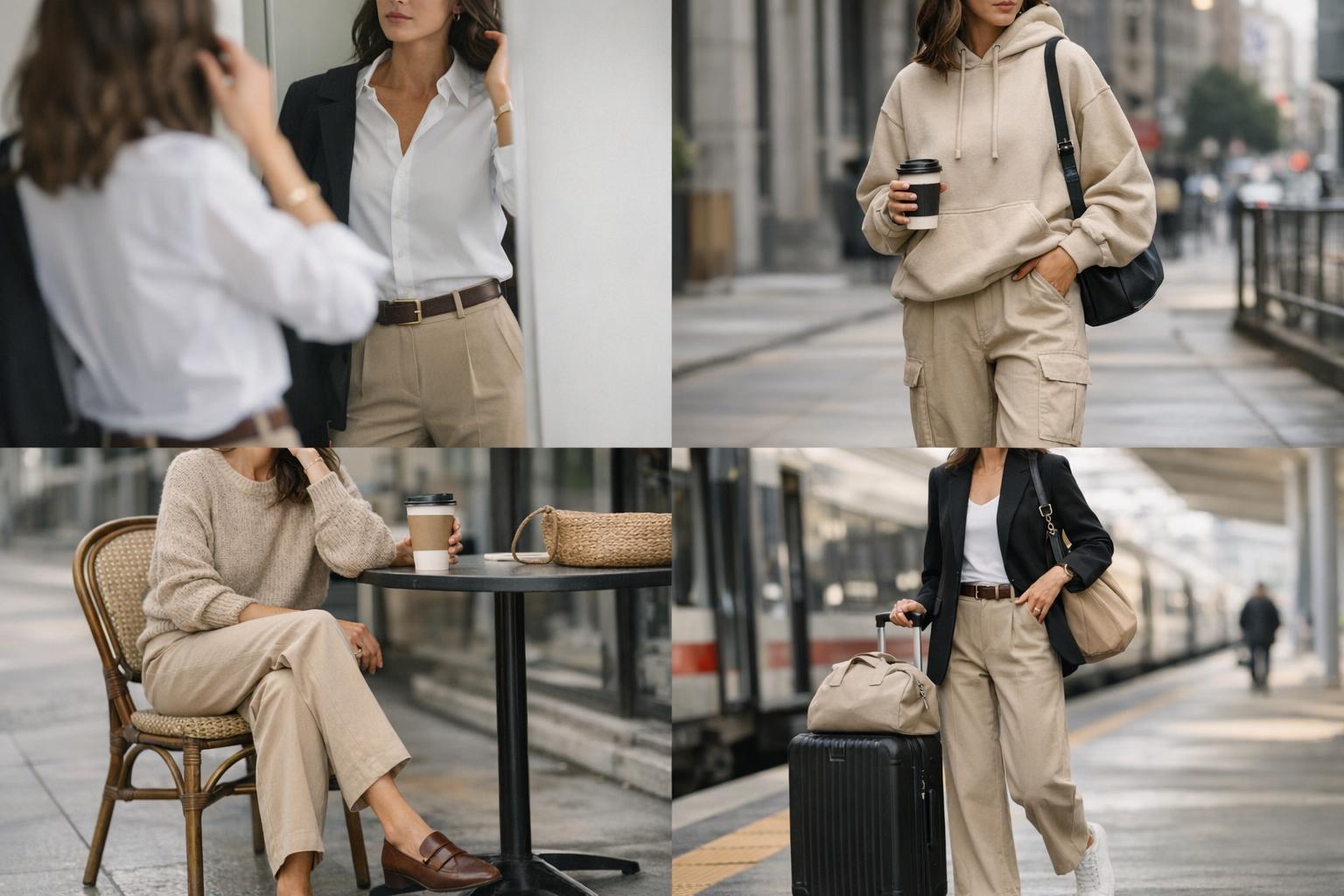
There’s a particular moment in the mirror—often before work, sometimes before a weekend coffee run—when beige pants feel both like the simplest choice and the most puzzling one. The color is neutral, the concept is classic, yet the final effect can swing from sharp and modern to oddly flat with one wrong top, shoe, or fabric. That’s why the beige pants outfit continues to be discussed in the same breath as minimalist dressing and street style: both aesthetics lean on restraint, and both can start from the same pair of trousers.
This comparison matters because the overlap is real. Minimalist wardrobes often center on neutrals and tailored structure—beige trousers, a white shirt, a clean loafer—while contemporary street style also borrows beige as an anchor, pairing it with hoodies, sneakers, and oversized silhouettes. On a hanger, the pants may look identical; on a person, the styling philosophy makes them entirely different.
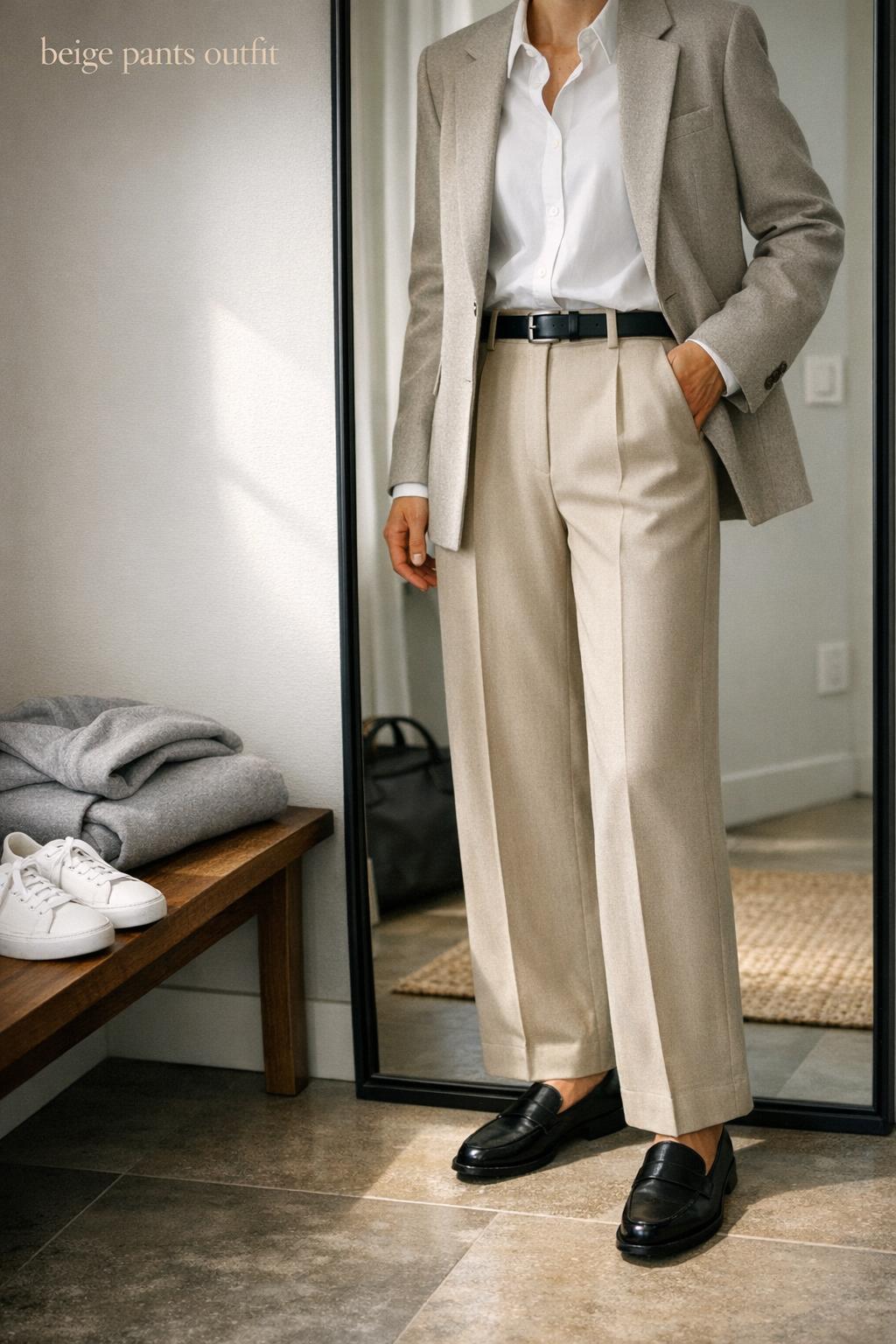
Below, we’ll break down two core approaches to styling beige pants—polished minimalism and urban street style—then compare how each uses silhouette, contrast, texture, and accessories. You’ll leave with practical outfit formulas for office, casual weekends, evening, and travel, plus the small finishing decisions (belts, footwear, layering) that keep beige from fading into the background.
Style overview: polished minimalism with beige trousers
Polished minimalism treats beige pants as a wardrobe cornerstone—quiet, intentional, and designed to make everything else look more expensive through restraint. The defining characteristic is clarity: clean lines, thoughtful proportion, and a controlled palette of neutrals punctuated by dark accents like navy, black, or charcoal when needed.
Your wedding has a lot of moving pieces. Your plan can still feel composed.
Zarellea organizes guests, vendors, budget, and timelines in one shared space — so you can make decisions with clarity, not stress.
Typical silhouettes are straight, tailored, or wide-leg with a composed drape. A beige color pant in this style often comes in fabrics that hold shape or move elegantly—wool/tailored options for a professional look, cotton twill or cotton blends for everyday structure, and linen for warm weather with an intentionally relaxed refinement.
Texture is not decoration here; it’s depth. Minimalist outfits frequently rely on subtle contrast—matte trousers with a crisp button-down, a soft knit against a sharper waistband, or a structured blazer layered over a simple top—to keep the neutral story from reading as unfinished.
Style overview: urban street style and casual neutrals
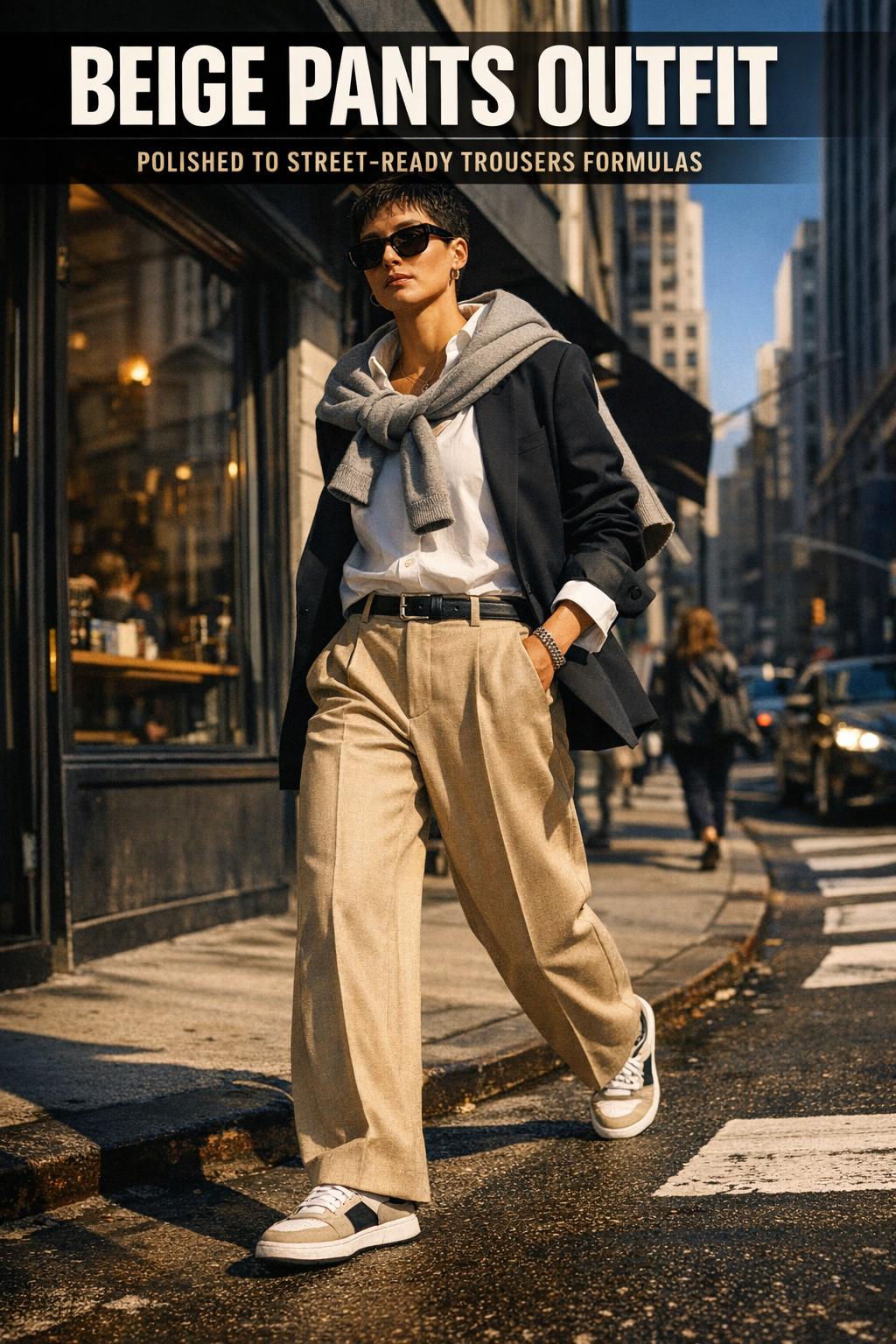
Urban street style uses beige pants as a grounding device, not a headline. The mood is modern, relaxed, and slightly athletic, built on comfort and a confident ease with volume—hoodies, oversized tops, and cargo-inspired silhouettes that create a lived-in, city-ready feel.
In this lane, beige pants are often chinos, relaxed trousers, or beige cargo pants. The silhouette is less about perfect tailoring and more about proportion: looser legs balanced by a cropped jacket, an oversized hoodie countered by cleaner footwear, or a wide-leg shape that becomes the outfit’s architecture.
Texture and contrast do heavier lifting. Street style leans into visible pairings—knit with cotton, denim accents, even leather touches through shoes or belts—so the beige base feels intentional rather than “safe.” Sneakers are common, but the overall look is still composed: beige is the anchor, and everything else is tuned around it.
Why these styles get confused—beige as the shared anchor
Both aesthetics begin with the same premise: beige pants are neutral, versatile, and easy to repeat. Both also rely on outfit formulas—repeatable combinations that work across seasons—because beige trousers can move from office to weekend with minimal changes.
The confusion comes from the shared color story. A neutral outfit can look minimalist or street depending on the silhouette, footwear, and the “finish” of the fabrics. Linen beige pants with a white tee could read resort-polished or downtown casual; a tailored beige trouser with a dark top could be professional or deliberately edgy. Beige doesn’t declare the style on its own; the styling logic does.
Key differences: minimalist beige pants outfits vs street-style beige pants outfits
Silhouette and structure
Minimalism favors structure: straight legs, tailored waists, wide-leg trousers that fall cleanly, and proportions that feel measured. Street style favors ease and volume: relaxed chinos, cargo joggers, or wider shapes paired with oversized layers. Both can use wide-leg beige pants, but minimalism keeps the top sleek and defined, while street style often lets the top go bigger—hoodie, oversized sweatshirt, or roomy jacket—to create an intentional slouch.
Color palette: tonal restraint vs high-contrast punctuation
Minimalist dressing tends toward tonal neutrals—beige with off-white, cream, ivory, taupe—then adds controlled dark accents like navy, black, or charcoal for clarity. Street style is comfortable with stronger punctuation: black hoodies, charcoal layers, olive utility pieces, or burgundy accents that pop against beige trousers. The beige base stays steady, but the palette in street style often feels more graphic.
Formality and context
A beige pants outfit in minimalist mode can slide naturally into office settings: a tailored trouser, button-down, belt, and loafers reads professional without looking rigid. Street style leans casual by default—sneakers, hoodies, and relaxed fits—though it can still be polished if the proportions are clean and accessories are intentional.
Styling philosophy: “less, but exact” vs “relaxed, but intentional”
Minimalism is about editing. Each piece has a job: define the waist, extend the line of the leg, sharpen the shoulder, keep the palette calm. Street style is about balance and attitude—mixing textures, playing with volume, and letting beige anchor the outfit so the oversized elements don’t feel chaotic. Both require intention; they simply express it differently.
Visual style breakdown: how the differences show up in real outfits
Layering approach
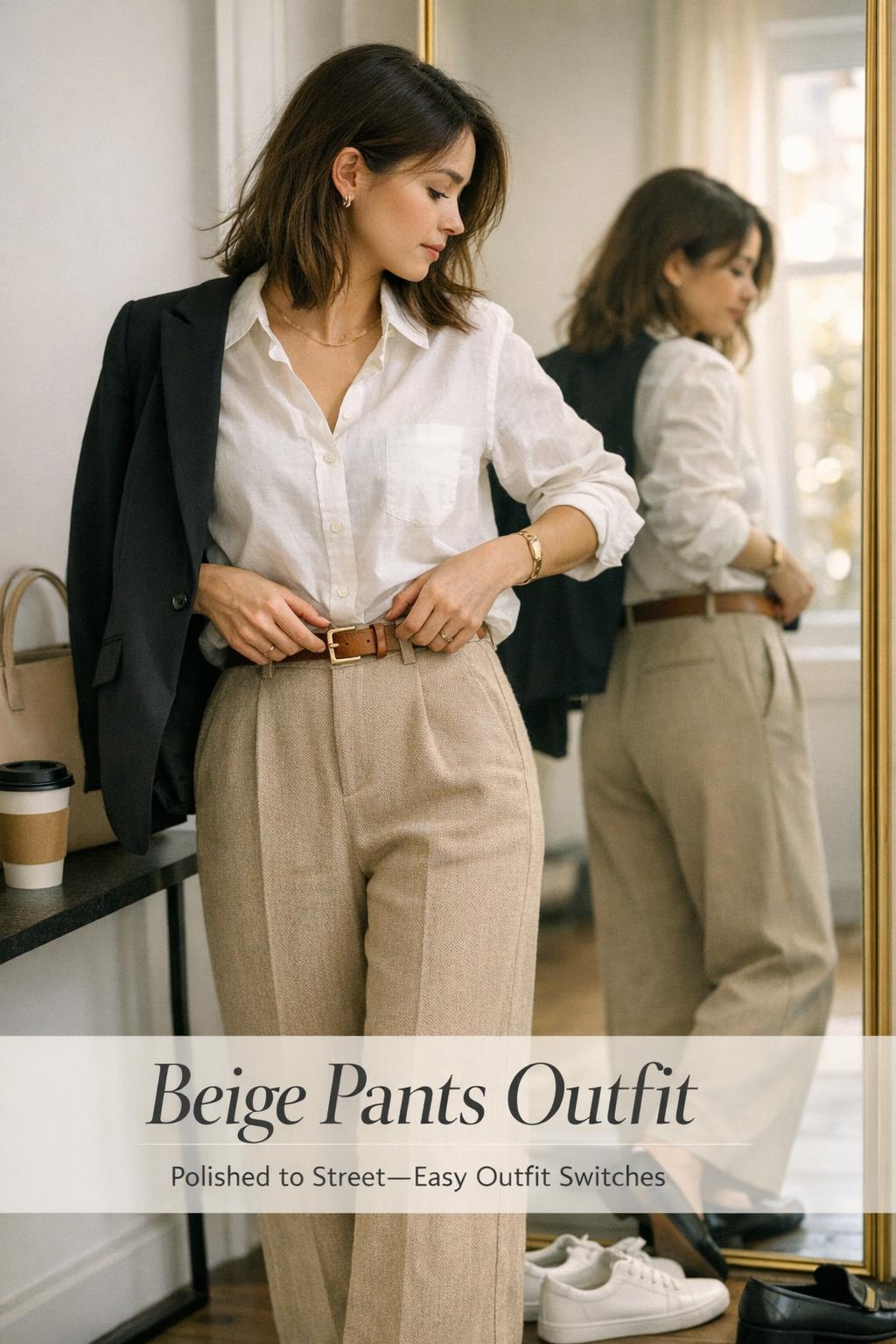
Minimalist layering is clean and vertical: a structured blazer over a simple top, or a knit that skims rather than swallows. Street layering is more dimensional: hoodie under a jacket, relaxed outerwear, and pieces that create depth through volume. Beige trousers are flexible enough for both, but the layering changes the entire mood—minimalism reads composed; street style reads lived-in and urban.
Garment proportions and waist definition
In minimalist looks, waist definition is a quiet priority. A tuck, a belt, or a top that ends at the right point keeps tailored beige pants looking intentional. In street style, waist definition may be softened; the proportion is often set by an oversized hoodie or a longer top. The key is still balance: if the top is large, keep the leg line clean, or choose a cargo shape that looks designed to be roomy rather than simply oversized.
Accessories: the “finish” that decides the style
Accessories are where beige outfits either sharpen or soften. Minimalism prefers restraint—an intentional belt, understated jewelry, a bag that matches the palette. Street style uses accessories to underline attitude: sneakers, bolder contrasts, and functional pieces that feel ready for the city. In both cases, the advice is the same: keep accessories intentional. Beige is subtle, so anything careless looks louder than you expect.
Footwear choices: loafers vs sneakers (and what they signal)
Footwear is the fastest way to “declare” the outfit. Loafers shift beige trousers toward office polish; sneakers pull the same pants into a casual, street-led register. Boots can lean either way depending on the rest: with tailored wool trousers they read refined; with cargo pants and an oversized hoodie they read urban. The point is not the shoe itself, but the overall balance—beige pants reflect whatever style language your footwear speaks.
Fabric and texture: the invisible architect of a beige pants outfit
Beige is particularly sensitive to fabric. A linen trouser tells one story—summery, breathable, slightly relaxed—while a wool/tailored pant tells another—structured, professional, and crisp. Cotton blends and chinos sit in the versatile middle, easily styled up or down depending on top and shoe choices.
Texture is also the antidote to flatness. Beige can look monochrome in the wrong way if everything is the same finish. Mixing textures—knit with cotton, denim accents with tailored trousers, leather details through a belt or shoes—adds visual interest without abandoning the neutral palette. This is why so many strong beige looks rely on texture, not busy color.
Tips: how to keep beige from looking “washed out”
In practice, beige outfits fail for two reasons: insufficient contrast or insufficient structure. If your beige color pant is close to your skin tone, introduce contrast through a navy, charcoal, or black top, or through sharper texture differences like a crisp shirt against a softer pant fabric. If the outfit feels shapeless, refine the silhouette—define the waist, choose a straighter leg, or add a layer with cleaner lines.
- Use contrast deliberately: navy, black, or charcoal can add immediate definition.
- Mix textures: knit tops, denim accents, or leather details keep neutrals lively.
- Let beige anchor the outfit: avoid competing focal points if the palette is subtle.
- Keep accessories intentional: belts and footwear should look chosen, not accidental.
Color pairings compared: tonal neutrals vs darker accents vs earth tones
Color pairing is where minimalism and street style sometimes borrow from each other. Both love a neutral foundation, but the emphasis differs: minimalism often goes tonal first, while street style often starts with contrast. The most useful approach is to decide what you want beige pants to do—blend seamlessly or sharpen the outfit through contrast—then choose your palette accordingly.
Neutrals and off-whites (cream, ivory, taupe)
This is the minimalist stronghold: beige trousers with a cream knit, an off-white tee, or an ivory button-down. The sophistication comes from small shifts in tone and fabric finish—matte next to crisp, soft next to structured. Street style can use this palette too, but it will typically introduce a more relaxed silhouette, like beige cargo pants with an oversized off-white top and sneakers.
Dark accents (navy, black, charcoal)
Dark accents bring clarity to beige, and they are particularly effective for U.S. office settings where you may want to look professional without defaulting to all-black. A navy top with beige pants reads classic and grounded; black adds sharpness; charcoal feels modern and slightly softer than pure black. Street style often uses black and charcoal in hoodies and outerwear, creating that urban contrast that makes beige look intentional rather than simply neutral.
Warm and earth tones (olive, burgundy, pastel notes)
Earth tones add depth to beige without breaking its calm. Olive is especially at home in street style—utility-coded, practical, and easy with cargo silhouettes—while burgundy offers a richer contrast that can also work for evening. Pastel accents can soften a beige pants outfit and keep it seasonal, especially when the fabric is lighter like linen.
The capsule approach: silhouettes that behave differently in each style
If you want versatility, think in silhouettes rather than collecting endless pairs. The same wardrobe can support minimalist and street style looks if you choose shapes that can “translate” with styling. Three silhouettes appear again and again in strong beige pants outfits: wide-leg, straight/tailored, and cropped or slimmer fits. Each has a different relationship to footwear, layers, and waist definition.
Wide-leg beige pants
Wide-leg beige pants are a modern staple because the silhouette does the work. Minimalism pairs them with a cleaner top—button-down, fine knit, or a sleek layer—so the volume stays elegant. Street style amplifies the volume with oversized pieces, but the look succeeds only when the outfit remains balanced: if everything is oversized, it can drift into shapelessness.
A notable fashion-media example of this wide-leg direction is the beige suede wide-leg pants trend associated with Sofia Richie Grainge, highlighted in a celebrity-style context and connected to SRG Atelier. Here, the message isn’t that suede is mandatory, but that fabric choice can turn a neutral pant into the centerpiece of a seasonal look—especially in fall/winter styling where texture carries the outfit.
Straight or tailored beige trousers
This is the most office-friendly option. Tailored beige trousers pair naturally with white shirts, blazers, and loafers, creating a professional silhouette without harsh color. For street style, the same pants can be made casual through a hoodie and sneakers—but the trouser’s structure will keep the look from feeling too lounge-adjacent.
Cropped or slimmer beige pants
Cropped beige pants can look crisp and intentional, especially when paired with loafers or sleek shoes that emphasize the ankle line. Minimalism uses this silhouette to keep outfits sharp and clean. Street style can use cropped pants too, but it works best when the rest of the outfit keeps a confident simplicity—clean sneakers, a relaxed top, and accessories that don’t compete.
Occasion comparisons: how each style handles the same real-life moments
The most useful comparison is not theoretical—it’s situational. Most people aren’t choosing a “style identity” every morning; they’re dressing for a calendar. Below are side-by-side interpretations of common occasions, using the same beige pants foundation but different style logic.
Office and professional settings
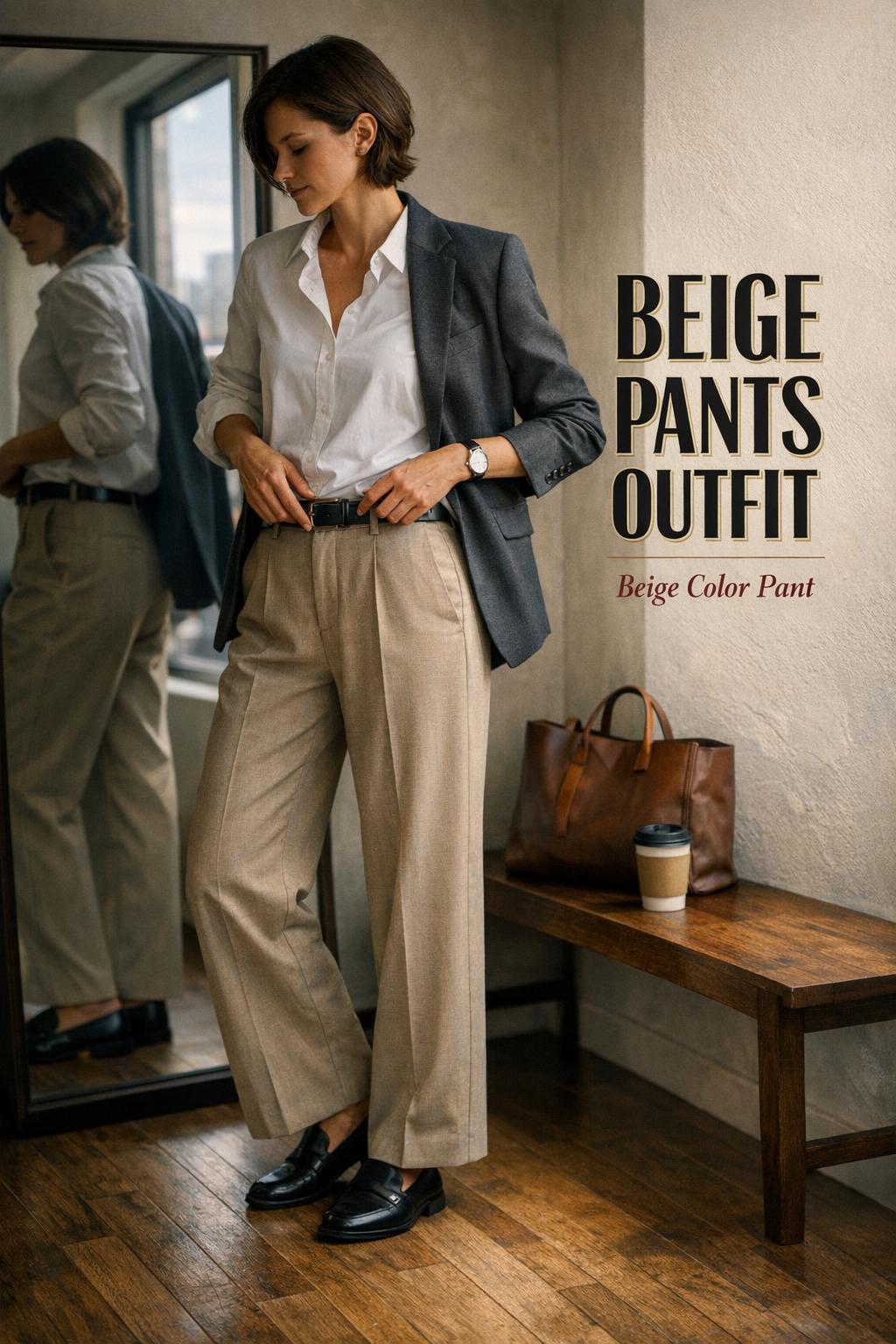
Minimalist approach: start with tailored beige trousers in wool or a structured blend. Add a white shirt or a crisp button-down, then sharpen the outline with a belt and loafers. The look is calm, clean, and built on proportion—waist definition, a straight line through the leg, and minimal distractions.
Street-style approach: keep the beige trousers, but relax the top into a hoodie or an oversized layer in charcoal or black. Sneakers shift the outfit into a modern office-casual territory where dress codes allow. The trick is to keep accessories intentional—one clean belt or a considered bag—so it still reads as an outfit, not an errand run.
Casual weekend (coffee, errands, a walkable afternoon)
Minimalist approach: chinos or straight beige pants with an off-white tee or a knit, plus loafers for a polished daytime ease. This is where tonal dressing shines—beige, cream, and soft neutrals—with texture doing the heavy lifting.
Street-style approach: beige cargo pants with an oversized hoodie and sneakers. The appeal is comfort, but the success is in the balance: if the hoodie is oversized, keep the pant leg clean or structured enough that it looks designed. Mix textures—cotton with knit, perhaps denim accents through outerwear—to avoid a flat monochrome.
Evening and dressier moments
Minimalist approach: lean into dark accents. Beige trousers with a black top create contrast that feels immediately elevated; add a refined belt and sleek footwear to keep lines clean. Texture becomes more important at night—wool trousers, a smoother knit, and accessories that feel deliberate.
Street-style approach: keep the contrast, but let the silhouette stay relaxed—beige pants with a darker top, clean sneakers, and a layer that adds depth. This is where street style can look unexpectedly polished: the outfit reads intentional because beige anchors the palette while the darker tones frame it.
Travel and capsule dressing
Minimalist approach: choose beige trousers in a cotton blend that holds shape after hours of sitting. Pair with an off-white top, then add a structured layer for temperature shifts. The palette stays cohesive, making repeats feel chic rather than repetitive.
Street-style approach: opt for chinos or cargo joggers for movement and comfort, then build around sneakers and a hoodie. The best travel version uses contrast strategically—charcoal or navy up top—so beige stays crisp even after a long day. Accessories matter here: a belt can reintroduce shape after hours in transit.
Accessories and finishing: the small decisions that change the style category
Because beige is quiet, finishing details become disproportionately visible. Belts, footwear, and the choice between minimal jewelry or none at all can pull your beige pants outfit toward refined minimalism or relaxed street style with very little effort.
Belts: structure vs styling
In minimalist outfits, a belt is often structural—defining the waist and creating a clean break between top and trousers. In street style, the belt is more of a styling cue: it can add a subtle edge, but it’s less about perfect proportion and more about intentionality. Either way, beige pants benefit from a belt when the outfit feels “unfinished,” especially with tucked tees or button-down shirts.
Shoes: the quickest lever you can pull
Loafers are a minimalist staple with beige trousers because they keep the line refined and office-ready. Sneakers are the street-style staple because they support relaxed silhouettes and long days. Boots can sit between the two; their effect depends on the trouser shape and the top’s structure. When in doubt, choose footwear that matches the intended formality of the day, then adjust the top to reinforce that message.
Tips: a practical “intentional accessories” check
Before leaving, look for one intentional focal point. Beige is forgiving, but it can also read as background if everything is neutral and soft. A dark shoe, a crisp white shirt, a textured knit, or a clean belt can be enough to make the outfit feel finished. If you add multiple focal points, keep them within the same story—contrast and structure for minimalism, or contrast and volume for street style.
Common beige pants outfit mistakes—and how each style avoids them
Beige pants are often purchased with the promise of versatility, then worn less than expected because the results feel inconsistent. The good news is that the most common problems are simple: flatness, imbalance, and mismatched context. Both minimalism and street style offer solutions, but they prioritize different fixes.
- Flat tonal dressing: Minimalism fixes this with texture (knit vs crisp cotton) and clean structure; street style fixes it with stronger contrast (black/charcoal tops) and more obvious layering.
- Shapeless proportions: Minimalism brings back waist definition and tailored lines; street style rebalances volume (oversized top with cleaner leg, or cargo leg with a simpler layer).
- Wrong level of formality: Minimalism adjusts with loafers, button-downs, and blazers; street style adjusts with sneakers, hoodies, and relaxed silhouettes.
- Accessories that feel accidental: Both styles rely on intentional finishing—belts and footwear are not afterthoughts with beige.
City-style lens: beige pants in New York vs Los Angeles vs Chicago
Even within U.S. style, beige trousers take on different energy depending on city rhythm and weather. The same neutral base can read sharper or more relaxed depending on how you layer and what shoes you choose for a day that actually involves walking, commuting, or shifting temperatures.
New York: contrast and pace
New York dressing often rewards contrast because the city is visually busy and the day is long. Beige pants grounded with black, charcoal, or navy feel crisp and practical. Street style thrives here—hoodies and sneakers make sense—but the best looks keep accessories intentional, so beige remains an anchor rather than an afterthought.
Los Angeles: relaxed structure
In Los Angeles, beige pants naturally skew casual and sunlit. Linen and cotton blends feel at home, and tonal neutrals can look effortless rather than flat when the fabrics have texture. Sneakers work, but loafers with straight beige trousers can look equally natural—minimalism becomes softer, less corporate, more ease-driven.
Chicago: seasonality and layering
Chicago style often has to negotiate weather. That makes layering and fabric choice more important: wool/tailored trousers feel relevant, and darker accents like charcoal or navy help anchor beige in cooler months. Street style layering—hoodies, heavier layers—can be practical, but keeping the silhouette balanced prevents bulk from overpowering the outfit.
Celebrity and brand signals: when beige becomes a trend, not just a staple
Beige is timeless, but certain iterations become more visible when fashion media and celebrity styling highlight a specific fabric or silhouette. The recent emphasis on suede—particularly beige suede wide-leg pants—shows how a neutral can shift into trend territory through texture. Sofia Richie Grainge’s association with this look, alongside the SRG Atelier name, signals a specific mood: luxury neutrals, elevated simplicity, and a fabric-led approach that makes beige feel intentional for fall/winter.
The practical takeaway is not that everyone needs suede, but that a beige pants outfit can become significantly more “fashion” with one considered element: a distinctive fabric, a wide-leg silhouette, or a sharper contrast pairing. Minimalists can adopt the texture story without changing their palette; street-style dressers can adopt the wide-leg trend while keeping sneakers and oversized layers.
When to choose each style—and how to blend them without losing clarity
Minimalism is the natural choice when you need polish: office days, meetings, dinners where you want to look refined without looking dressed up. It’s also the better option when you want beige trousers to look expensive through fit and fabric behavior—tailoring, clean lines, and intentional restraint.
Street style is the natural choice when your day is physical: commuting, travel, long walks, casual social plans. It’s also ideal when you want to use beige pants as a grounding piece while playing with volume—hoodies, oversized layers, cargo shapes—without relying on loud color.
Blending the two is often the most realistic wardrobe strategy. A tailored beige trouser with a hoodie can look modern if the hoodie is clean and the shoes are intentional. A beige cargo pant with a crisp button-down can look surprisingly sharp if the proportions are balanced. The hybrid rule is simple: mix one element of structure with one element of ease, and keep the palette controlled—neutrals with either tonal nuance or one dark accent.
Tips: the “one switch” method for fast outfit changes
If you want your beige pants to work harder, change only one category at a time. Swap sneakers for loafers and keep everything else the same to move from street to office-casual. Or keep sneakers and switch a tee to a crisp white shirt to move from weekend to a smarter day. Beige is an anchor; small changes ripple through the whole look.
A refined cheat sheet: quick comparisons you can actually remember
- Minimalist beige pants outfit: tailored or straight trousers, tonal neutrals or controlled dark accents, clean layering, loafers, defined waist.
- Street-style beige pants outfit: chinos or cargo pants, oversized hoodie or relaxed layers, stronger contrast (black/charcoal/olive), sneakers, texture-forward styling.
- If your outfit looks flat: add contrast (navy/black/charcoal) or add texture (knit/denim accents/leather details).
- If your outfit looks bulky: simplify one element—either the top or the pant silhouette—so beige remains the calm center.
Conclusion: the real distinction is not beige—it’s intention
A beige pants outfit can speak two fluent style languages: polished minimalism or urban street style. The difference is not the color, and often not even the trousers—it’s the architecture around them. Minimalism relies on clean structure, tonal intelligence, and restrained finishing. Street style relies on proportion play, contrast, and texture-driven depth, with beige acting as the stabilizer.
Once you learn to identify the signals—loafers vs sneakers, tailored lines vs oversized layers, tonal nuance vs graphic contrast—you can choose the approach that suits your day. And when you blend them, keep one foot in structure and one in ease. Beige, at its best, doesn’t disappear. It quietly holds the outfit together.
FAQ
How do I style beige pants for different body types?
Use silhouette and waist definition as your main tools: wide-leg beige pants create an elongated line when the waist is defined and the top is cleaner, while straight or tailored beige trousers offer the most universal balance; if you prefer cropped or slimmer beige pants, keep footwear sleek to maintain a continuous leg line and use layering (like a blazer or structured jacket) to add shape.
What tops pair best with beige trousers for an office setting?
A crisp white shirt or button-down is the simplest professional pairing, and navy, black, or charcoal tops add clarity and contrast; for a polished minimalist feel, choose structured or refined fabrics and consider a belt and loafers to keep the outfit intentional.
How can I wear a beige pants outfit without looking washed out?
Add either contrast or texture: contrast can come from navy, black, or charcoal near the face, while texture can come from knits, denim accents, or leather details through footwear or a belt; if your beige color pant is close to your skin tone, a darker top is often the fastest fix.
Are beige cargo pants best styled as street style?
Beige cargo pants naturally align with street style because they suit oversized hoodies, sneakers, and relaxed layering, but they can still look polished if you simplify the palette, keep accessories intentional, and balance volume with a cleaner top or more structured outerwear.
What shoes work best with beige pants: loafers, sneakers, or boots?
Loafers push beige trousers toward a refined, office-ready look; sneakers emphasize casual, urban ease and work especially well with chinos or cargo silhouettes; boots can move either direction depending on whether the trousers are tailored (more polished) or relaxed (more street), so match the shoe to your intended formality and overall proportions.
How do I mix textures with beige pants without overcomplicating the outfit?
Start with one clear contrast in finish—like a knit top with cotton trousers, or a crisp shirt with linen pants—then keep the rest of the palette neutral; beige works best when textures add depth but the silhouette remains clean enough to read as intentional.
What are the easiest color pairings with beige pants?
Off-whites and neutrals (cream, ivory, taupe) create a tonal, minimalist look, while navy, black, and charcoal add strong definition; olive and burgundy offer warmer, earth-toned depth, and pastel accents can soften the outfit when the fabrics are lighter like linen.
How can I make one pair of beige trousers work for travel and multiple occasions?
Choose a versatile fabric like a cotton blend or structured chinos, then rely on small switches: sneakers and a hoodie for travel ease, loafers and a button-down for polish, and a dark accent top (black, navy, or charcoal) when you need the beige pants outfit to look sharper with minimal effort.
Leave a Reply