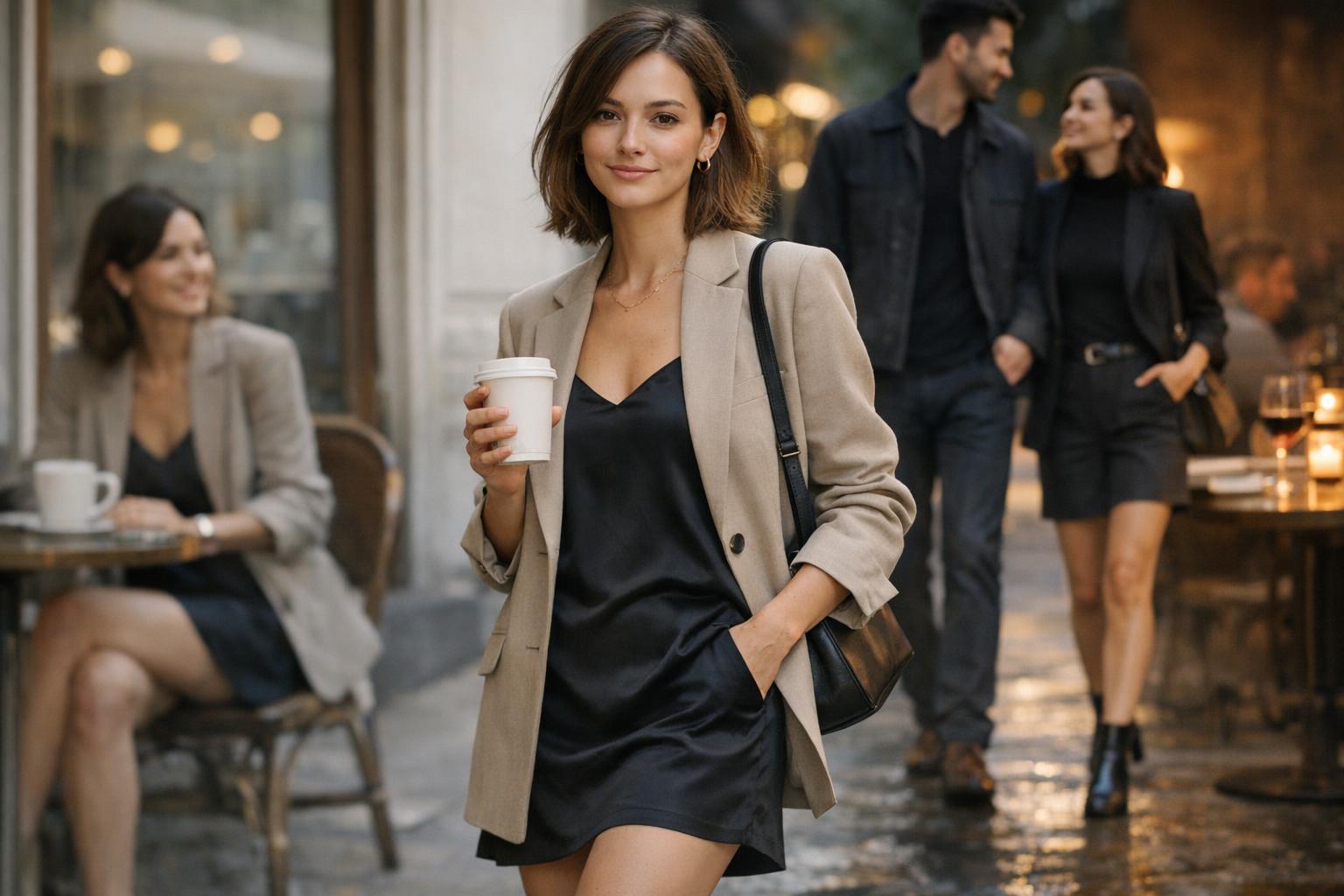
Date outfit decisions, solved: looking right without overthinking it
A date outfit sounds simple until you’re standing in front of your closet, trying to decode the evening: Is it a coffee date or dinner date? Is the venue relaxed or quietly formal? Will you be walking, sitting, outside, under aggressive air-conditioning, or all of the above? The real challenge isn’t finding something “cute.” It’s building a look that reads intentional—without feeling like a costume.
The stakes feel higher on a first date, but the same tension applies to any date night: you want comfort that lasts past the first hour, and polish that holds up in real light—not just the mirror at home. Dresses can be effortless, but the wrong fabric can crease or cling. Blazers can elevate instantly, but the wrong cut can feel stiff. Accessories can refine the outfit, or turn it fussy.
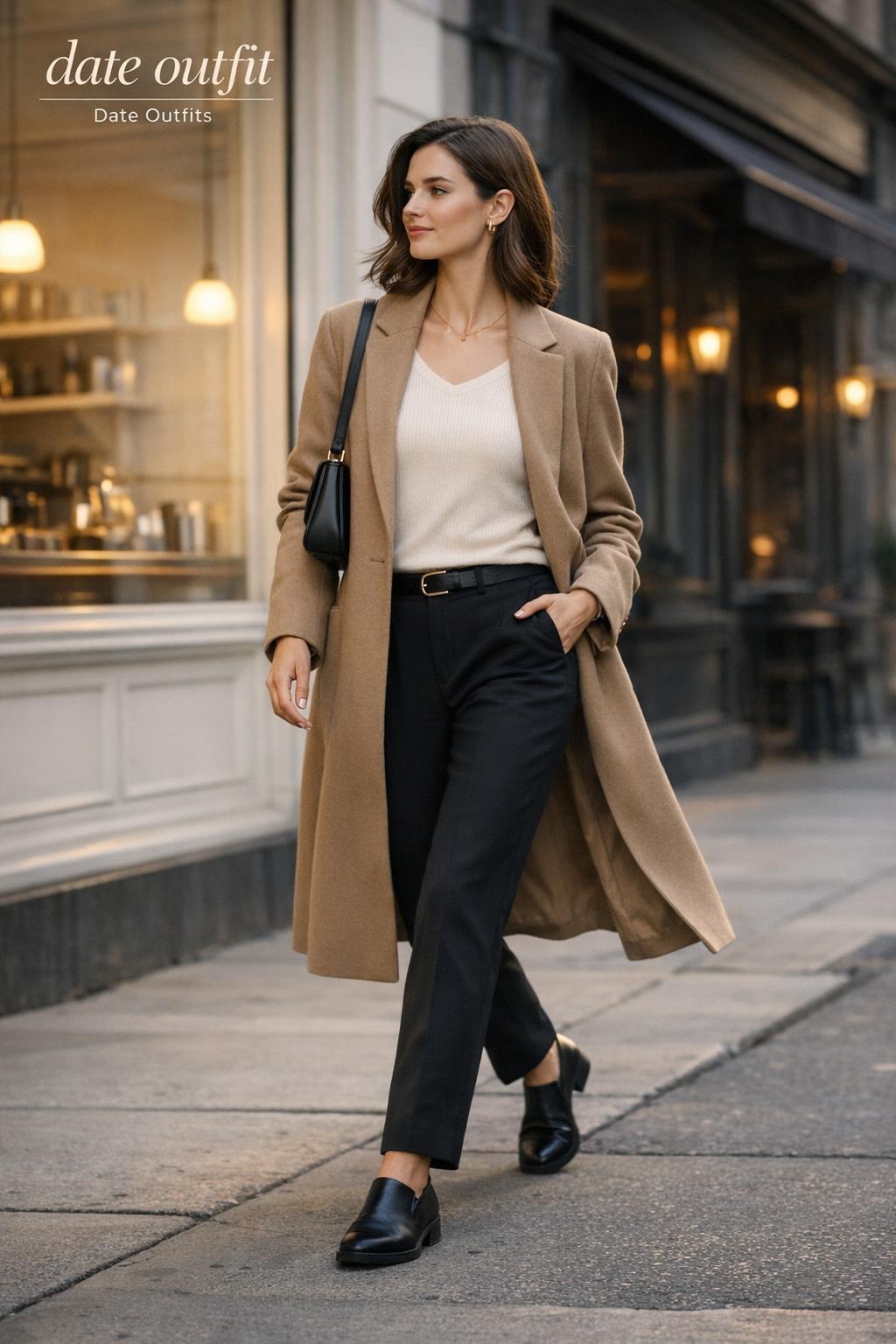
This guide approaches date outfits the way an editor would: as a series of small, solvable styling problems. You’ll learn the essential building blocks (dresses, separates, tailoring, shoes, outerwear), how to adjust by venue and season, and a set of outfit formulas you can repeat—casual, dressy, smart-casual, and business casual outfits that go office-to-date—without losing your personality.
Understanding the styling challenge: venue, weather, and the comfort trap
Most date-night wardrobe mistakes aren’t about taste; they’re about context. A look that feels “perfect” at home can fall apart when you factor in a long walk to the restaurant, a crowded bar, or a coffee shop with outdoor seating. The common trap is dressing for the idea of the date rather than the logistics of the date.
Your wedding has a lot of moving pieces. Your plan can still feel composed.
Zarellea organizes guests, vendors, budget, and timelines in one shared space — so you can make decisions with clarity, not stress.
Weather is the quiet decision-maker. Warm evenings tempt minimal outfits, yet restaurants can be cold enough to make a satin mini dress feel exposed and impractical without a layer. In cooler months, heavy outerwear can crush a sleek silhouette unless you plan the proportions—especially around blazers, coats, and hemlines. Even footwear has “venue physics”: heels behave differently on cobblestones, stairs, and standing-room spaces than they do on a smooth floor.
The solution is not owning more clothing. It’s choosing versatile pieces—tailoring, dresses, skirts, trousers, outerwear—and then letting fabric, color, and accessories do the fine-tuning. Think of it as building a date outfit with range: it should look right in motion, in different lighting, and across the casual-to-dressy spectrum.
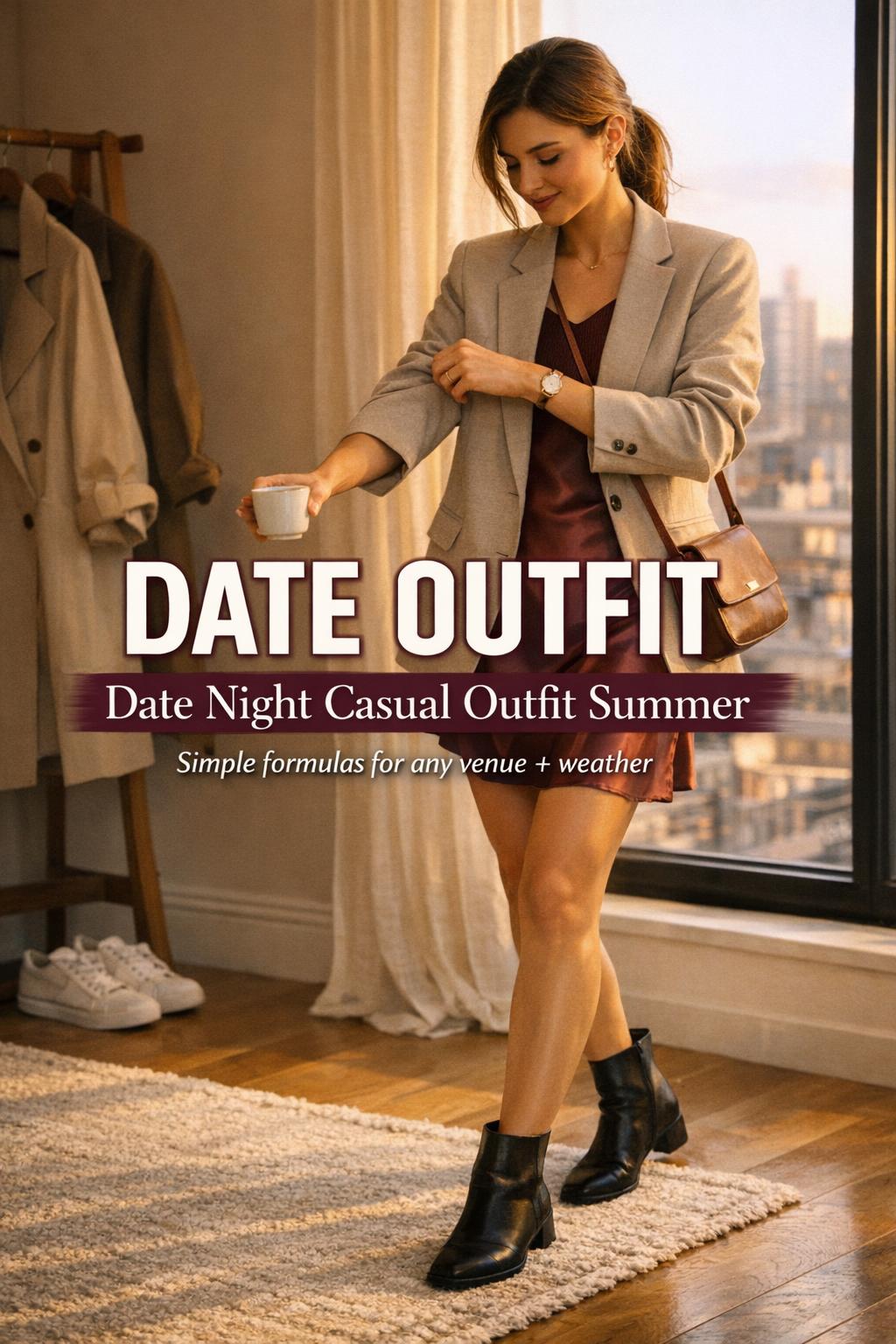
Key dressing principles that make date outfits work (nearly) everywhere
Start with a clear “formality anchor”
Every strong date-night look has one item that sets the tone. It might be a satin dress, a blazer with minimalist tailoring, or sleek trousers. Once you decide the anchor, the rest of the outfit becomes editing: keep the supporting pieces quieter so the look reads deliberate, not busy. This is how timeless outfits are built—less about trend-chasing, more about a coherent message.
Use comfort as a styling tool, not a compromise
Comfort isn’t the opposite of chic; it’s what allows chic to look effortless. A dressy top that restricts your shoulders changes your posture. Shoes you can’t walk in make you look preoccupied. The best date outfits balance comfort and polish: a smart-casual silhouette, refined fabrics, and footwear that lets you move naturally through the night.
Build “versatility” into the outfit on purpose
Versatility is the hidden advantage of top-ranking date-night formulas: day-to-night transitions, casual-to-dressy flexibility, and layering that adapts to temperature shifts. A blazer over a dress, or a change in shoes and accessories, can shift the entire mood without requiring a full outfit swap. If you want a perfect outfit, plan at least one adjustable element—outerwear, a removable layer, or accessories that change the finish.
Think in silhouettes: structure + softness
Reliable date-night styling often comes down to contrast. Pair tailored structure (blazer, trousers, a clean jacket line) with softer textures (satin, knit, a fluid skirt) for a modern silhouette. This balance reads sophisticated in a way that feels natural—an approach seen across minimalist wardrobes and chic outfits inspired by fashion capitals like NYC, with a nod to the refined restraint of Paris and Milan.
The core wardrobe catalog: pieces that power most date outfits
Instead of chasing dozens of “ideas,” it helps to know which garment categories repeatedly appear in successful date-night looks. Across casual, smart-casual, and formal styling, the same pillars return: dresses (especially satin), separates with tailored intent, and outerwear and shoes that complete the story.
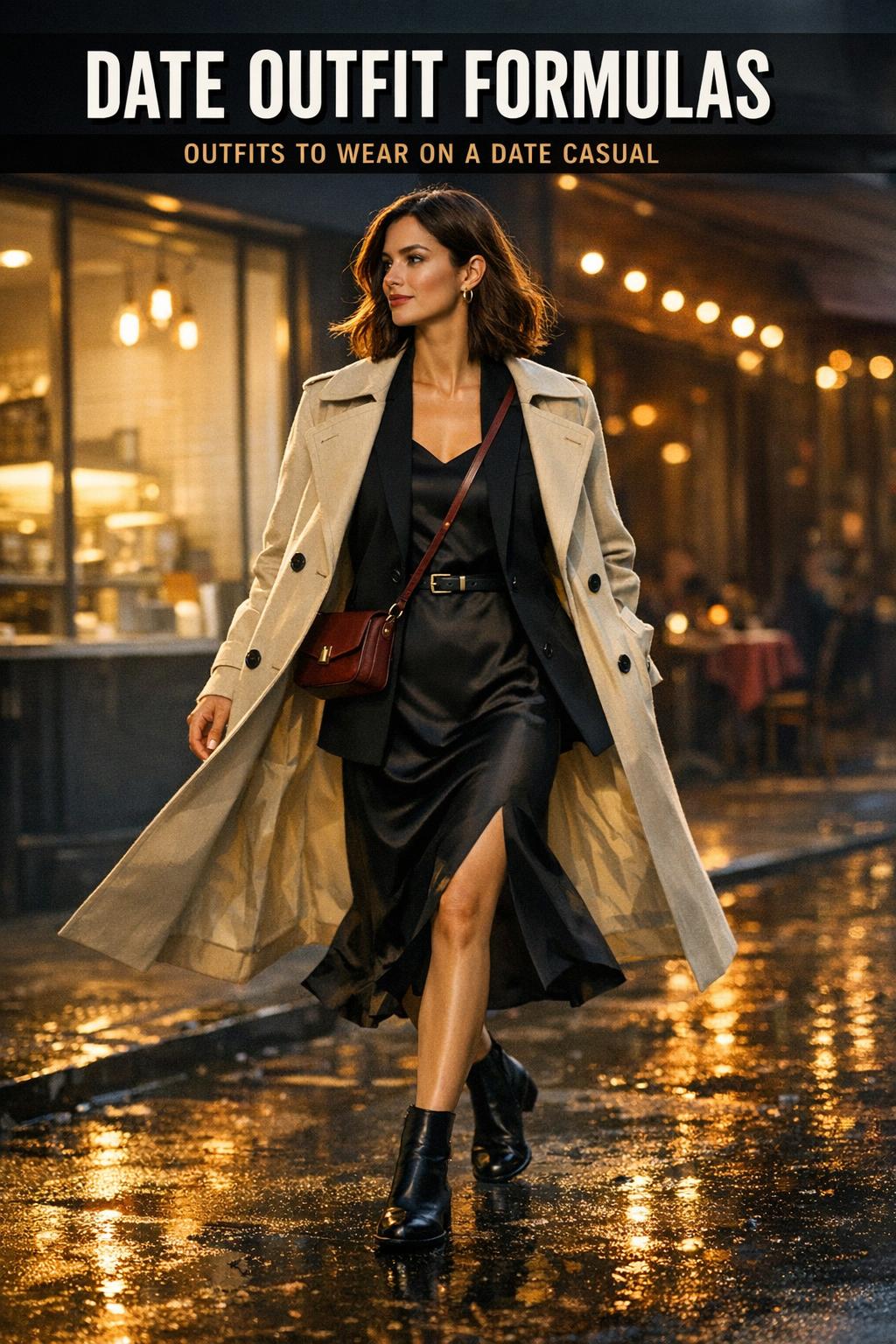
Dresses: the fastest route to a date-night finish
A dress is a one-step silhouette, which is why it dominates date night outfits. The key is choosing a dress that matches the venue and your tolerance for fuss. Satin dresses—like the satin mini dress archetype—signal “evening” immediately, especially under low restaurant lighting. More understated dressy pieces can read timeless with minimal accessories, while still feeling special.
Practical note: dresses are most successful when you plan the layer and the shoe at the same time. A jacket or blazer can keep the look refined when the temperature drops, and it also adds a tailored frame that photographs well without trying too hard.
Separates: the intelligent choice for by-venue flexibility
Separates—jeans with a dressier top, skirts with refined knit or blouse pairings, tailored trousers with a sleek top—excel when you need to calibrate. A dinner date might demand more polish than a coffee date, but your personal style might prefer a grounded base. Separates let you adjust one element (the top, the shoe, the outerwear) without rebuilding everything.
Jumpsuits sit beautifully in this category too: one-piece simplicity with the presence of tailoring. They’re especially effective for smart-casual settings where you want clean lines and minimal styling decisions.
Outerwear and shoes: where the outfit becomes credible
Outerwear and footwear are not afterthoughts on a date night; they are the difference between “styled” and “thrown on.” A blazer is the classic bridge across dress codes, moving seamlessly from office-to-date and from casual to dressy. Shoes—whether dress shoes, ankle boots, loafers, or streamlined sneakers—should align with the setting and the amount of walking the night requires.
For men’s date-night styling, the same logic applies even more visibly: a suit or blazer sets the tier (sleek casual, smart-casual, formal), while the shirt and shoes refine the message. Color coordination does the quiet work—cohesion reads confident.
Fabric, color, and accessory language: how to look intentional without overdoing it
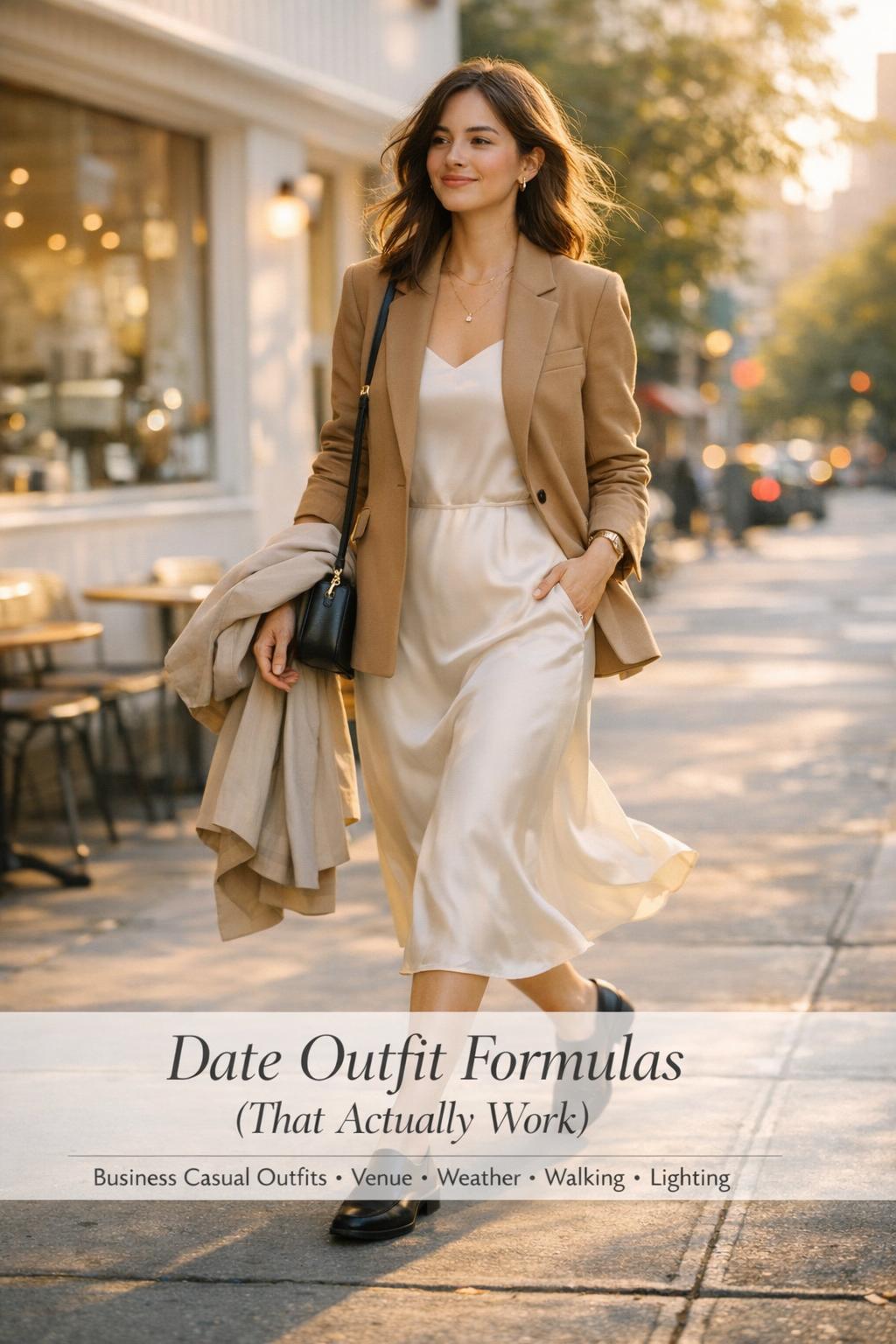
Fabrics by date type: why satin and knit behave differently at night
Fabric is not just aesthetic; it’s performance. Satin has a luminous finish that flatters evening lighting, but it also shows wrinkles and can feel revealing without a layer. Knit offers comfort and movement and can lean casual unless balanced with tailoring. Silk blends and refined textures (including lace-like finishes when used subtly) can read dressy, but they need clean styling around them to avoid visual clutter.
If you’re planning outfits to wear on a date casual, fabric choice is the fastest way to keep the look elevated: choose a dressier finish in one piece (a satin skirt, a refined top) and let the rest stay simple. For dressy date night outfits, you can reverse that—keep the base streamlined and let accessories add shine.
Color story by season: small palette shifts that feel current
Seasonal date looks don’t require a total wardrobe reset. The palette simply adjusts. In spring, lighter tones and softer contrasts keep the outfit feeling fresh; in autumn, deeper tones and richer texture create warmth and dimension. In winter, minimalism and tailoring look especially polished, while summer invites lighter construction and breathable styling choices—crucial if you’re building a date night casual outfit summer that still looks intentional.
Color coordination matters most when you’re wearing separates. A cohesive palette makes jeans and a dressier top look planned rather than accidental. It’s also a practical confidence boost: you stop thinking about whether the outfit “works” and start enjoying the evening.
Accessories and finishing touches: the edit that changes everything
Accessories are the language of refinement: shoes, a bag, and jewelry can shift a look from day to night in seconds. The most timeless date-night approach is restraint—choose a single focal point (a polished shoe, a sleek bag, or a sculptural piece of jewelry) and let it punctuate the outfit. This keeps the styling confident and modern, especially when the clothing already has texture (satin, lace-like detail, layered fabrics).
- If your outfit is sleek and tailored, choose one accessory with presence.
- If your outfit is romantic or textured, keep accessories clean-lined and minimal.
- If your date involves walking, let the shoe be the “hero” by being both polished and realistic.
Outfit solutions: by venue, by mood, and by real-life constraints
Below are outfit solutions designed as repeatable formulas. Each one solves a specific constraint—temperature changes, venue ambiguity, first-date nerves, or the need for versatility—while staying rooted in the core date-night entities: dresses, blazers, tailoring, shoes, outerwear, and accessories.
Outfit solution: coffee date polish that still feels effortless
A coffee date is deceptively tricky: it’s casual, but the close proximity and daylight can make an outfit feel exposed if it’s overly “night.” The most reliable approach is smart-casual with a clean silhouette. Start with jeans and a dressier top—something with a refined finish rather than overt sparkle—then add a blazer for minimalist tailoring. Finish with comfortable shoes that look intentional, like sleek sneakers or loafers depending on your style.
Why it works: jeans keep the outfit grounded and approachable, while the blazer signals effort without trying to dominate the room. It’s an ideal solution for first-date outfit ideas because it reads natural, confident, and adaptable if the date extends beyond the coffee shop.
Outfit solution: dinner date elegance with a satin anchor
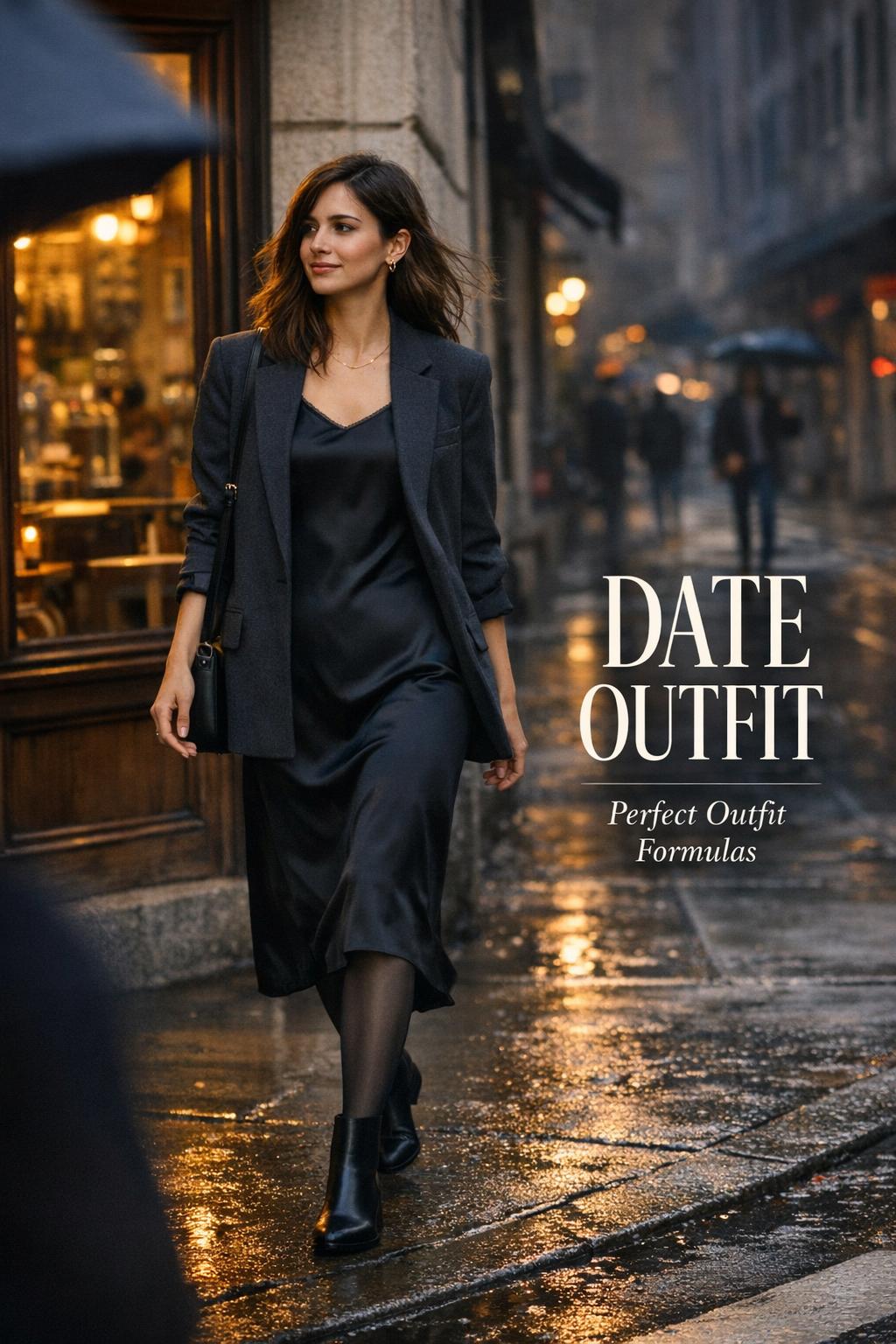
For a dinner date, lighting and ambiance do half the styling for you—so choose an anchor that responds beautifully to evening: a satin dress or satin mini dress silhouette, styled with a structured layer. Add a blazer or sleek jacket to give the look architecture, then choose dress shoes that can handle a full evening (standing at the bar, walking between venues) without making you look guarded.
Why it works: satin reads instantly “date night,” while tailoring keeps it modern and composed. This balance is the essence of dressy casual: romantic texture controlled by clean lines.
Outfit solution: outdoor date practicality without sacrificing style
An outdoor date—walks, casual evening plans, or any setting where weather and terrain matter—calls for a look that moves. Start with separates: a refined knit top with a skirt or trousers, then add outerwear that layers cleanly. Ankle boots are a natural choice when the ground is uneven or temperatures shift; if the forecast is warm, keep the outfit light and let the jacket be a removable styling piece rather than a heavy commitment.
Why it works: you’re dressing for motion and temperature changes while keeping a polished outline. The outfit doesn’t collapse when you add or remove layers—an underrated feature of well-built date outfits.
Outfit solution: office-to-date business casual outfits that don’t feel corporate
The office-to-date problem is specific: you need to look credible at work and still feel like yourself later. The answer is business casual outfits with a subtle after-hours shift. Keep the tailored base—trousers or a skirt and a refined top—then change one element for the date: swap in a dressier shoe, add a more evening-leaning accessory, or adjust the outerwear to a sharper blazer rather than a purely practical layer.
Why it works: tailoring creates authority; the evening edit creates intimacy. You’re not “changing personalities,” you’re simply shifting the styling language from professional to social.
Outfit solution: sleek casual for men (the blazer-first strategy)
Men’s date outfits are often decided by one question: do you need a blazer? For most dates where you want to look intentional without going formal, the blazer-first strategy wins. Pair a blazer with a simple shirt and well-fitted trousers or dark denim, then let shoes do the finishing—clean dress shoes for dinner, or a polished casual shoe for relaxed venues.
Why it works: it places you confidently in the smart-casual tier without forcing a suit. It also photographs well and remains comfortable for a longer date night.
Outfit solution: formal date night, distilled (structure, shine, restraint)
Formal date nights don’t require maximalism; they require control. Choose a formal anchor—an elegant dress or a sharply tailored suit—then keep everything else in harmony: streamlined outerwear, minimal accessories, and careful color coordination. If your garment already has a statement texture (like satin), let it carry the look and choose quieter companions.
Why it works: formal looks succeed when the silhouette is uninterrupted. Too many competing elements dilute the impact. Restraint, here, is the most confident styling choice.
Seasonal date outfits without the wardrobe overhaul
Seasonality is less about buying new pieces and more about switching the emphasis: fabric weight, layering logic, and color story. Done well, the same core entities—dresses, separates, blazers, shoes—translate across months with small, intelligent edits.
Spring date outfits: light layers and refined simplicity
Spring styling thrives on clean lines and breathable comfort. A dress with a light blazer feels fresh and considered, and separates in lighter tones can look polished without feeling heavy. The key is layering that can be removed easily—spring evenings can shift quickly, and an adaptable outfit prevents you from spending the date thinking about the temperature.
Summer date night casual outfit summer: airy, but still elevated
Summer date nights reward minimal construction, but they also expose styling shortcuts. To keep a date night casual outfit summer from looking too daytime, use one dressy signal: a satin finish, a sharper silhouette, or a more structured shoe. If you’re choosing outfits to wear on a date casual, keep the skin-to-fabric balance in mind—an overly bare look can feel uncomfortable in cold interiors, so bring a light outerwear piece that doesn’t overwhelm the outfit.
Autumn date looks: texture, layering, and chic outfits energy
Autumn is made for layering and texture. This is where minimalist tailoring and outerwear shine: a blazer over a knit, a jacket framing a dress, ankle boots grounding a skirt. The goal is warmth without bulk, and contrast without chaos. If you’re drawing inspiration from chic outfits, focus on proportion: keep one line sleek (a clean trouser, a narrow skirt) and let the layer add depth.
Winter date-night strategy: warmth that doesn’t flatten the silhouette
Winter style is a study in structure. If your coat is substantial, keep what’s underneath streamlined—tailored separates, a dress that doesn’t bunch, shoes that look refined but remain stable. The most common winter pitfall is an outfit that looks great indoors but feels disjointed once outerwear enters the picture. Choose layers that nest cleanly: blazer under coat when needed, or a coat that complements the blazer’s line rather than fighting it.
Local and regional cues: how U.S. settings subtly change the dress code
Even within the same “date night” label, the U.S. can read differently depending on the city and venue culture. In NYC, restaurant settings often reward minimalist tailoring and a polished shoe—an editorial approach that feels at home among clean lines and darker palettes. In more relaxed, casual-leaning environments, the same outfit can soften: trade a stricter shoe for something easier, keep the blazer but choose a less rigid styling finish.
The practical takeaway is simple: dress for the venue first, then for the city’s baseline. If you’re unsure, aim for dressy casual with one elevated piece (satin, tailoring, or a refined accessory). It’s the most forgiving zone—and the most repeatable.
Tips that make a date outfit feel like your perfect outfit
Plan your outfit around the longest part of the night. If you’ll be walking or standing, footwear becomes the priority; if you’ll be seated in a restaurant, consider how the fabric behaves when you sit—satin can crease, knits can cling, tailoring can pull if too tight. A perfect outfit is the one that doesn’t demand your attention once you leave the house.
Use the “one-step elevation” rule. If you feel underdressed, add structure: a blazer, a sharper jacket, a more refined shoe. If you feel overdressed, relax one element: switch to a softer top, simpler accessories, or a less formal shoe while keeping the anchor intact. This is how you keep date outfits versatile without starting over.
Keep accessories purposeful. A small bag, a considered piece of jewelry, and shoes that align with the venue are often enough. The goal is to look composed, not decorated.
Common mistakes that sabotage otherwise great date-night looks
Mistake: dressing for a fantasy version of the venue
This happens when you choose a formal outfit for a casual coffee shop or a purely casual look for a dressier dinner date. The fix is to anchor your outfit to the venue’s baseline, then express style through fabric and silhouette—satin with tailoring, denim with a dressier top, a blazer to bridge the gap.
Mistake: ignoring the outerwear equation
If your coat or jacket doesn’t harmonize with what’s underneath, your look loses its rhythm the moment you step outside. Outerwear should be part of the styling plan: it frames the outfit, affects proportions, and signals formality before you even enter the room.
Mistake: choosing shoes you can’t actually live in
Footwear discomfort changes posture, mood, and confidence. The better approach is to choose a shoe that suits the terrain and duration, then let the rest of the outfit match its level of polish. Your date-night look should support you, not test you.
A calmer way to choose date outfits, every time
When you treat a date outfit as a problem to solve—venue, season, comfort, silhouette—the choices become simpler and the result looks more refined. Start with an anchor (a satin dress, tailored trousers, a blazer, a suit), then build the supporting pieces to match the setting. Use fabric and accessories to fine-tune the mood, and keep versatility in the plan so the outfit can adapt as the night unfolds.
Over time, the goal isn’t to memorize dozens of looks; it’s to master a handful of formulas you trust. That’s the quiet secret behind timeless date-night style: thoughtful composition, repeated with confidence.
FAQ
How can I make a date outfit feel more confident?
Choose one “anchor” piece that matches the venue—like a satin dress, a blazer with tailored structure, or sleek trousers—then keep the rest simple so you’re not fussing with your outfit all night; confidence usually comes from comfort, clean proportions, and a look that feels intentional rather than over-styled.
What should I wear on a first date if I don’t know the dress code?
A smart-casual formula is the safest: jeans with a dressier top or tailored trousers with a refined top, plus a blazer or sleek jacket; it reads approachable for a casual venue but can look polished enough if the date shifts into a dinner setting.
What are the best date outfits by venue (coffee date vs. dinner date)?
For a coffee date, lean into casual polish—denim or easy trousers with a dressier top and minimal accessories; for a dinner date, add an evening signal like satin, a more refined dress silhouette, or sharper tailoring, then finish with shoes that match the restaurant’s formality.
How do I build a date night casual outfit summer without looking too casual?
Keep the silhouette light and breathable, but add one dressy element—such as a satin finish, a structured blazer, or a more polished shoe—so the outfit reads “date night” rather than daytime; a light outerwear layer also helps when indoor spaces are cold.
How can I adapt a date outfit so I can wear it multiple times?
Build around versatile core pieces—dresses, tailored separates, blazers—and change the finish with accessories, shoes, and outerwear; the same base can shift from casual to dressy by swapping one key element while keeping the anchor consistent.
What’s the simplest way to make outfits to wear on a date casual feel elevated?
Elevate one component instead of everything: pair jeans with a dressier top, add minimalist tailoring through a blazer, or choose a refined shoe; this keeps the outfit relaxed but clearly styled, which is the essence of timeless dressy casual.
How do I choose accessories for date night without overdoing it?
Pick a single focal point—shoes, a bag, or one jewelry element—and keep the rest minimal; if your outfit already has texture like satin or layered fabrics, clean-lined accessories will look more modern and composed.
What makes business casual outfits work for an office-to-date transition?
A tailored base creates polish for work, and a small evening edit makes it date-ready—typically a sharper blazer, a dressier shoe, or refined accessories; this approach preserves versatility while shifting the mood from professional to social.
Leave a Reply