Dinner party outfit dilemmas: polished enough, comfortable enough, you enough
The invitation sounds simple—“Dinner at eight”—until you’re standing in front of your closet negotiating three competing realities: you’ll be sitting for hours, the lighting will be unforgiving, and the vibe might swing from relaxed to quietly elevated the moment you arrive. A dinner party outfit has to perform in real life: it needs comfort for long conversations, ease for eating and moving, and just enough intention to look like you understood the assignment.
This is why dinner-party dressing can feel more difficult than a night out. A “night out outfit party classy” moment can lean dramatic and short-lived; a dinner party stretches across courses, temperatures, and social proximity. You’re close enough for people to notice fabric texture—velvet, satin, lace—and close enough for fit to matter. The goal isn’t to look trendy for ten minutes; it’s to look composed for an entire evening.
Below is a problem-solving fashion guide designed the way a good host designs a menu: structured, flexible, and considerate. You’ll find silhouettes that consistently work (blazer dress, jumpsuit, maxi dress, tailored pantsuit), fabrics that read festive without becoming fussy (velvet, satin, silk, lace), dress codes decoded, and outfit solutions you can adapt whether you’re arriving in Los Angeles with a sleek, celebrity-inspired energy or stepping into a more classic, workwear-to-evening mood.
Understanding the styling challenge: why dinner parties expose weak outfits
Dinner parties have a particular kind of intimacy. You’re seated, often under warm lighting, with your upper half on display for most of the evening. Anything that wrinkles badly, pulls at the waist, or slides off the shoulder becomes distracting quickly. Fabrics like satin can shine beautifully, but they also spotlight creases; velvet looks rich, but it can feel too warm if the room runs hot; tailoring reads confident, but only if you can actually breathe through the main course.
Your wedding has a lot of moving pieces. Your plan can still feel composed.
Zarellea organizes guests, vendors, budget, and timelines in one shared space — so you can make decisions with clarity, not stress.
Then there’s the practical choreography: you’ll likely layer on the way in (outerwear matters), hold a small evening bag, and balance a glass at some point. Shoes need to be steady enough for standing conversations but refined enough to carry the look. This is why the most reliable dinner outfits share a core trait: they’re built on a clear silhouette—blazer dress, tailored trousers with a blouse, a maxi dress, a jumpsuit—then refined with accessories and thoughtful fabric choice.
Key dressing principles that make a dinner party outfit work
Start with a silhouette that holds its shape while you sit
In practice, this means choosing structure where it counts: a blazer dress that frames the shoulders, tailored trousers that don’t collapse at the knee, a pantsuit with clean lines, or a maxi dress that drapes rather than clings. Celebrity-inspired looks—think Kendall Jenner’s LA dining outfits or the polished minimalism often associated with Hailey Bieber—work because they prioritize strong outlines. The camera loves them, but so does real life: the silhouette does the work when you’re seated.
Let fabric do the “party” work (velvet, satin, silk, lace)
When you want festive without overstyling, texture is your quiet advantage. Velvet reads immediately occasion-ready—Gillian Anderson’s green velvet dress moment at a gala dinner (the War Child event) is a reminder that one fabric choice can carry the entire look. Satin and silk create that reflective, candlelit glow; Katie Holmes’ party-season pairing—a satin slip skirt with a lace-trim camisole—shows how shine plus a delicate detail can feel elevated without being loud.
The trade-off is maintenance: satin and silk can crease, velvet can run warm, and lace can feel too revealing without a grounding layer. The solution is to build your outfit like a composition: texture on one area, structure on another, and calm basics to keep it modern.
Balance “special” with “approachable”
Dinner parties sit between day and night, between friend and formality. That’s why smart-casual remains the most useful mental framework. You don’t need a red carpet approach—even when you’re inspired by a Coach dinner party look worn by Elle Fanning or Dakota Fanning—but you do want intentionality. A single hero element (a blazer dress, a velvet dress, a satin skirt, a tailored pantsuit) paired with restrained accessories is often the most confident choice.
Plan your outfit from the top half outward
Because dinner is mostly a seated event, your neckline, sleeves, blazer lapels, and jewelry will be the focal point. A camisole with lace trim, a draped top, or a crisp blouse under a blazer photographs well and feels deliberate. Your lower half can be quieter—tailored trousers, a slip skirt, or a maxi hemline—so the overall effect is refined rather than overdone.
Dress codes decoded: casual dinner, semi-formal, business dinner, gala night
Most dinner-party stress comes from unclear expectations. The simplest way to interpret the invite is to categorize it by setting and social purpose: a relaxed home dinner, a semi-formal celebration, a business dinner, or an event that edges into gala territory. Each category has a reliable outfit “grammar” you can follow.
- Casual dinner: polished basics elevated by tailoring—tailored trousers with a blouse, or a simple midi dress with a blazer.
- Semi-formal dinner party: texture and shine become appropriate—satin skirt, velvet dress, blazer dress, or a sleek jumpsuit with heels.
- Business dinner: structure first—tailored pantsuit or separates; keep shine subtle and accessories restrained.
- Gala night / gala dinner: longer hemlines and richer fabrics—maxi dress, elegant gown, velvet; consider more dramatic outerwear and a refined evening bag.
If you’re unsure, choose the semi-formal lane: it’s the safest middle ground. A blazer dress, a satin skirt with a tailored top, or a tailored jumpsuit reads “I made an effort” without visually competing with the host’s table.
Outfit solutions built for real dinner parties (not just photos)
Outfit solution: the blazer dress that behaves all evening
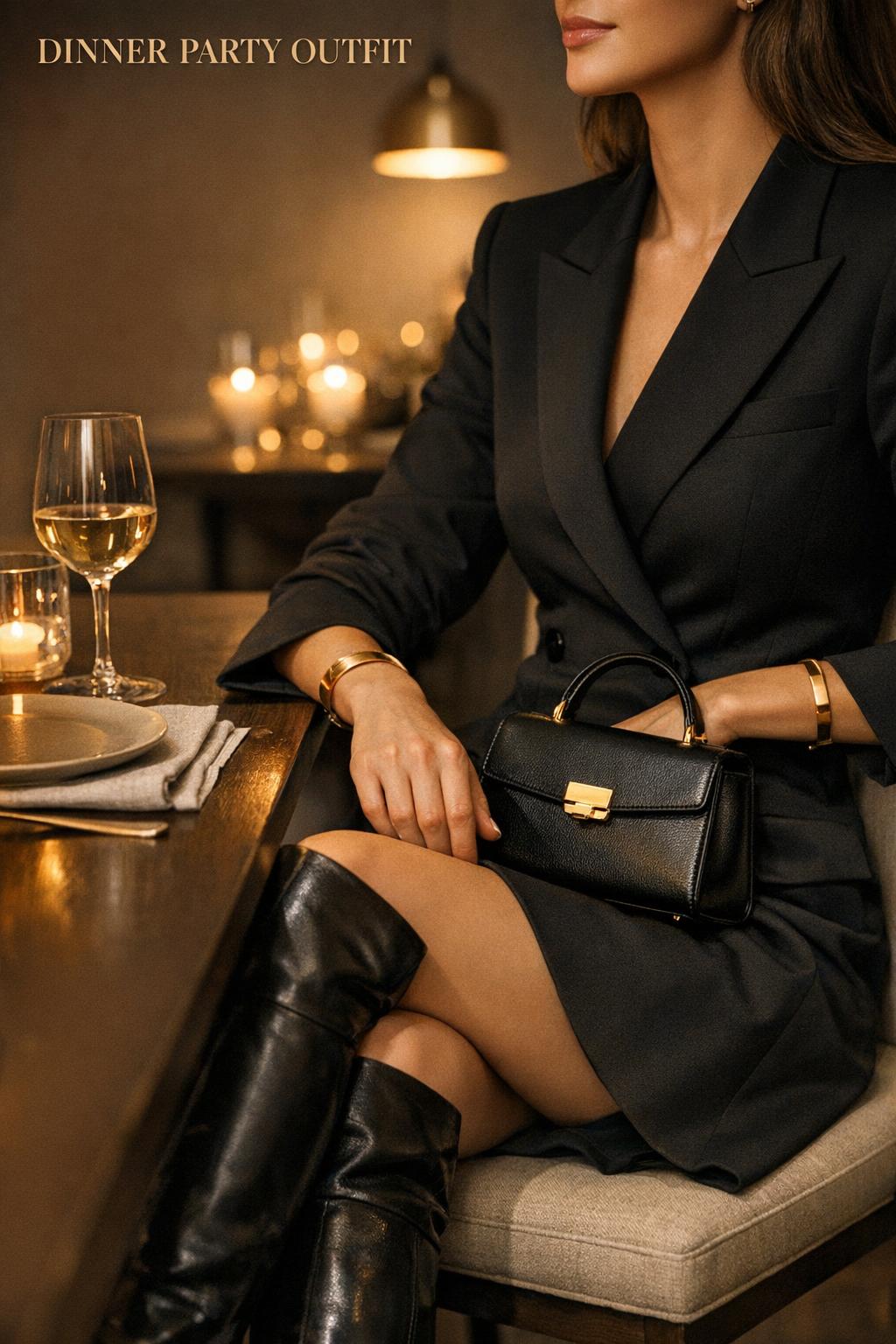
A blazer dress is one of the most efficient dinner party outfit ideas because it’s a complete silhouette with built-in structure. It nods to the sleek, tailored confidence seen in celebrity “out to dinner” styling—an LA-adjacent polish that feels current without feeling costume-like. The key is proportion: strong shoulders, a clean waistline, and hem length that stays comfortable when seated.
Style logic: the blazer dress creates a vertical line that elongates, while the lapels frame the neckline (perfect for minimal jewelry). Pair with heels for a refined finish; if you want a slightly tougher edge for a city restaurant, go with an “all black outfit going out night” approach—black blazer dress, black bag, black shoes—then let texture (matte vs. subtle shine) provide dimension.
When it may not work: if the dinner is very casual at someone’s home, a blazer dress can feel too sharp. In that case, soften it with simpler accessories and a quieter bag, or pivot to tailored trousers and a blouse.
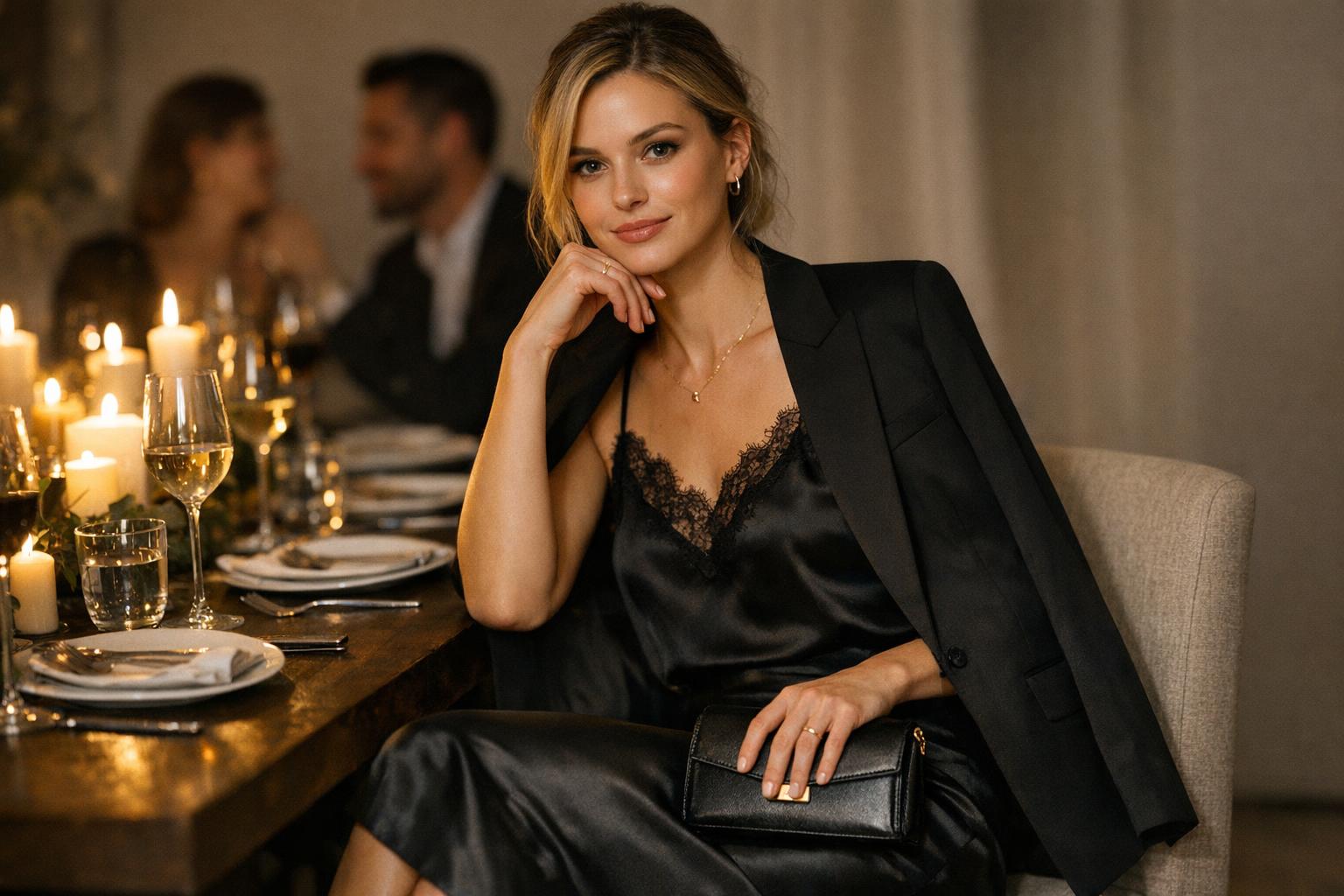
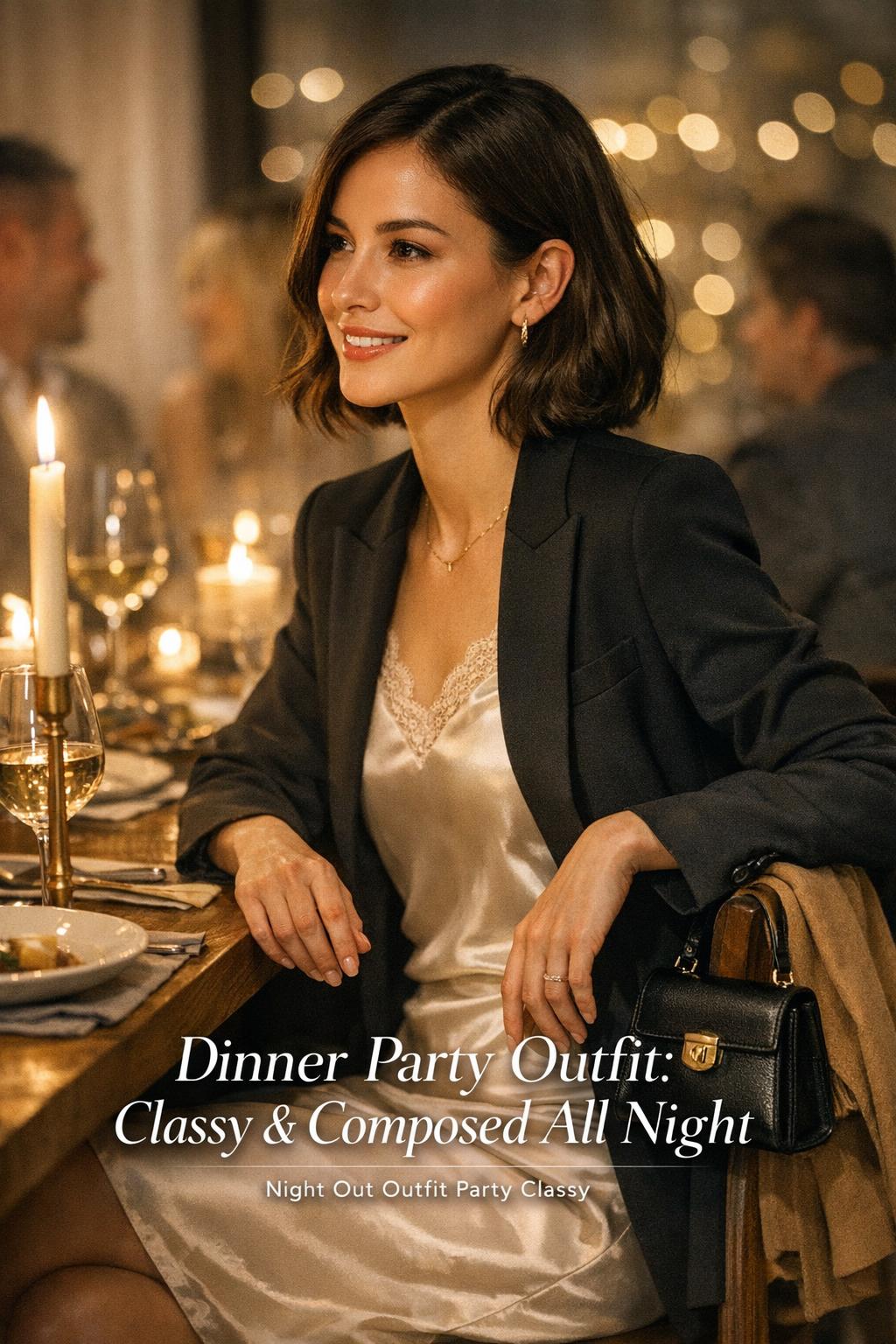
Outfit solution: satin slip skirt + lace-trim camisole, made modern
This pairing is a party-season classic for a reason: satin catches low light beautifully, and a lace-trim camisole adds a whisper of detail without heavy embellishment. Katie Holmes’ satin slip skirt moment—paired with a camisole and associated with Aligne—captures the appeal: it looks like an “investment piece” outfit while remaining surprisingly adaptable.
Style logic: satin brings the “occasion,” while the camisole keeps the look light and layered. If you’re concerned about satin’s tendency to show creases, treat the skirt as the focal point and keep the rest sleek—add a blazer for structure and to temper the shine. This also transitions smoothly from workwear to evening, echoing the practical approach seen in dinner outfit guides that focus on classic silhouettes.
Variation: switch the camisole for a draped top and keep the skirt; the overall mood stays elevated but less delicate. Either way, heels lift the line of the skirt and keep the look dinner-appropriate.
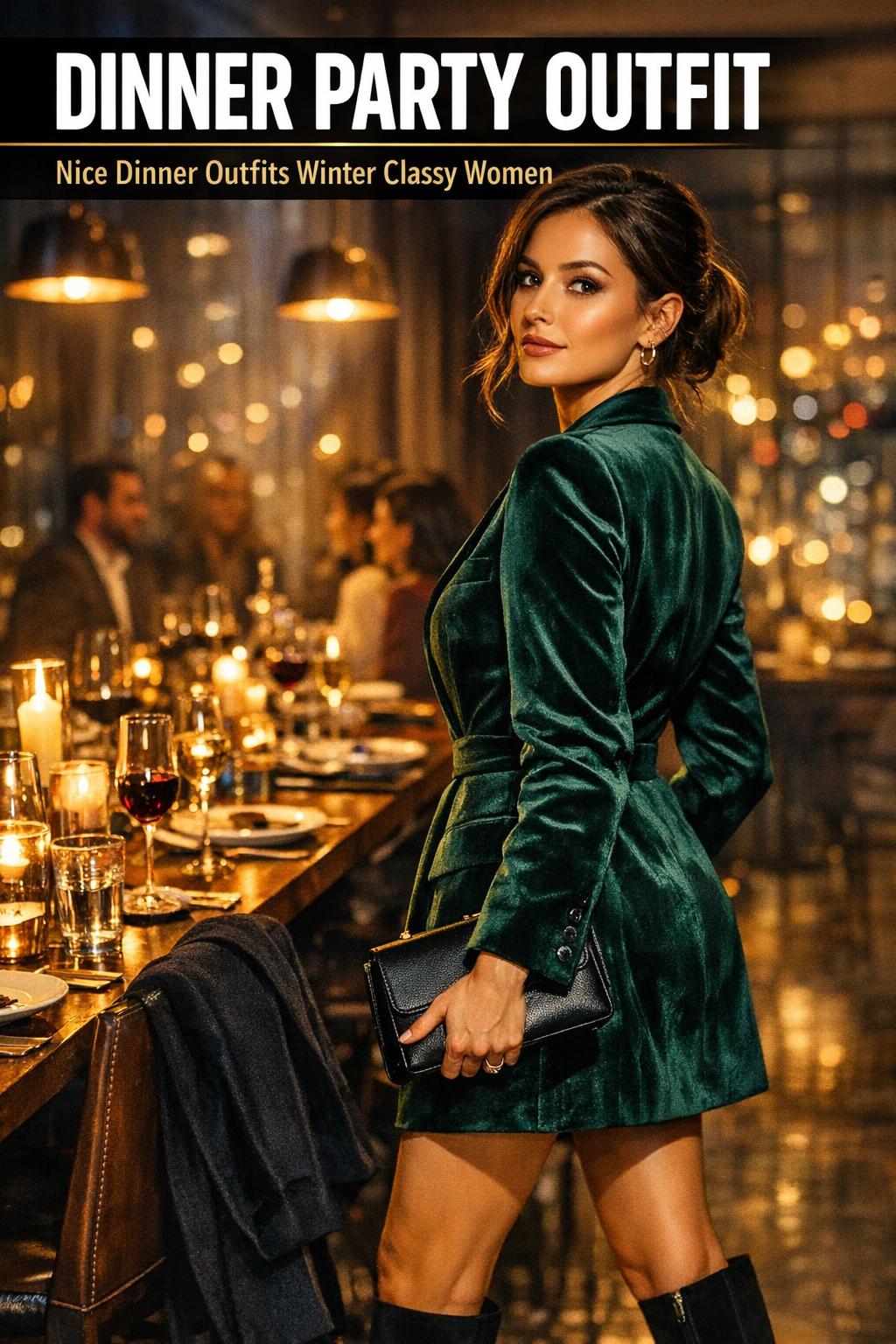
Outfit solution: velvet dress for winter dinners that feel instantly special
If you’re searching for “nice dinner outfits winter classy women,” velvet is the fabric shortcut. It reads rich under warm lighting, photographs beautifully, and communicates festivity without requiring complicated styling. The reference point is clear: Gillian Anderson’s velvet dress worn for a gala dinner environment (the War Child event) illustrates how velvet can carry an entire look on its own.
Style logic: velvet has depth; it doesn’t need loud accessories. Let the dress remain the statement and keep the silhouette clean—especially around the shoulders and neckline, where dinner-party conversation keeps attention. Pair with a simple evening bag and heels. If you’re in a room that runs warm, choose a velvet dress cut that allows movement rather than a restrictive, body-hugging shape.
When it may not work: in a very casual setting, velvet can feel too “holiday.” If the invite is low-key, you can still use velvet—just keep the rest understated and avoid overly dramatic styling.
Outfit solution: tailored pantsuit or separates for the confident minimalist
A tailored pantsuit is the quiet power move of dinner-party dressing. It’s also one of the easiest solutions for anyone who dislikes the fuss of dresses but still wants to look intentional. This silhouette shows up repeatedly in practical dinner outfit guides because it works across dress codes: it can look smart-casual with softer styling, or business-appropriate with crisp finishing.
Style logic: tailoring creates clean lines that hold up through sitting, standing, and moving between rooms. Choose a silk blouse for a refined contrast, or a satin blouse if you want a touch of shine. Keep your shoes elegant—heels tend to complete the line of trousers—and add a compact evening bag to keep the look dinner-ready rather than daytime corporate.
Host-friendly note: if you’re hosting, a pantsuit is practical. It allows you to move, carry plates, and still look polished when guests arrive. It also reads intentional without feeling like you’re dressing for your own spotlight.
Outfit solution: the tailored jumpsuit that bridges comfort and polish
A tailored jumpsuit is the dinner-party equivalent of a single, well-composed sentence: it’s concise, flattering, and hard to misinterpret. It appears frequently in outfit idea roundups because it solves two problems at once—no need to match separates, and no fear of a top riding up while you’re seated. For many wardrobes, it’s the most reliable “smart-casual but elevated” piece.
Style logic: the jumpsuit’s one-piece construction creates a continuous line, which reads sleek under restaurant lighting or at-home candlelight. Add heels for elegance; if your dinner party leans more trend-forward, you can layer a blazer over it to echo that tailored dinner-outfit energy without needing a full suit.
Comfort consideration: pay attention to the waist and torso length—sitting should feel natural. A jumpsuit that looks perfect standing but pulls when seated will distract you all evening.
Outfit solution: maxi dress elegance without the “too formal” fear
A maxi dress can feel dramatic, but it doesn’t have to read like a red carpet. The key is choosing a silhouette that drapes elegantly and styling it with restraint. Celebrity dinner-party coverage often highlights maxi dresses—think of event imagery tied to brand-hosted dinners like Coach in Los Angeles—because the long line looks effortless in photos. The real-life benefit is comfort: a maxi dress allows movement, accommodates a long evening, and can be layered easily with outerwear.
Style logic: let the maxi dress be the canvas. Keep accessories refined: a simple evening bag, minimal jewelry, and heels that feel stable. If your dinner party is semi-formal, a maxi dress in a festive fabric (velvet or satin-like shine) will read appropriate; if the setting is casual, opt for simpler styling and a more understated fabric finish.
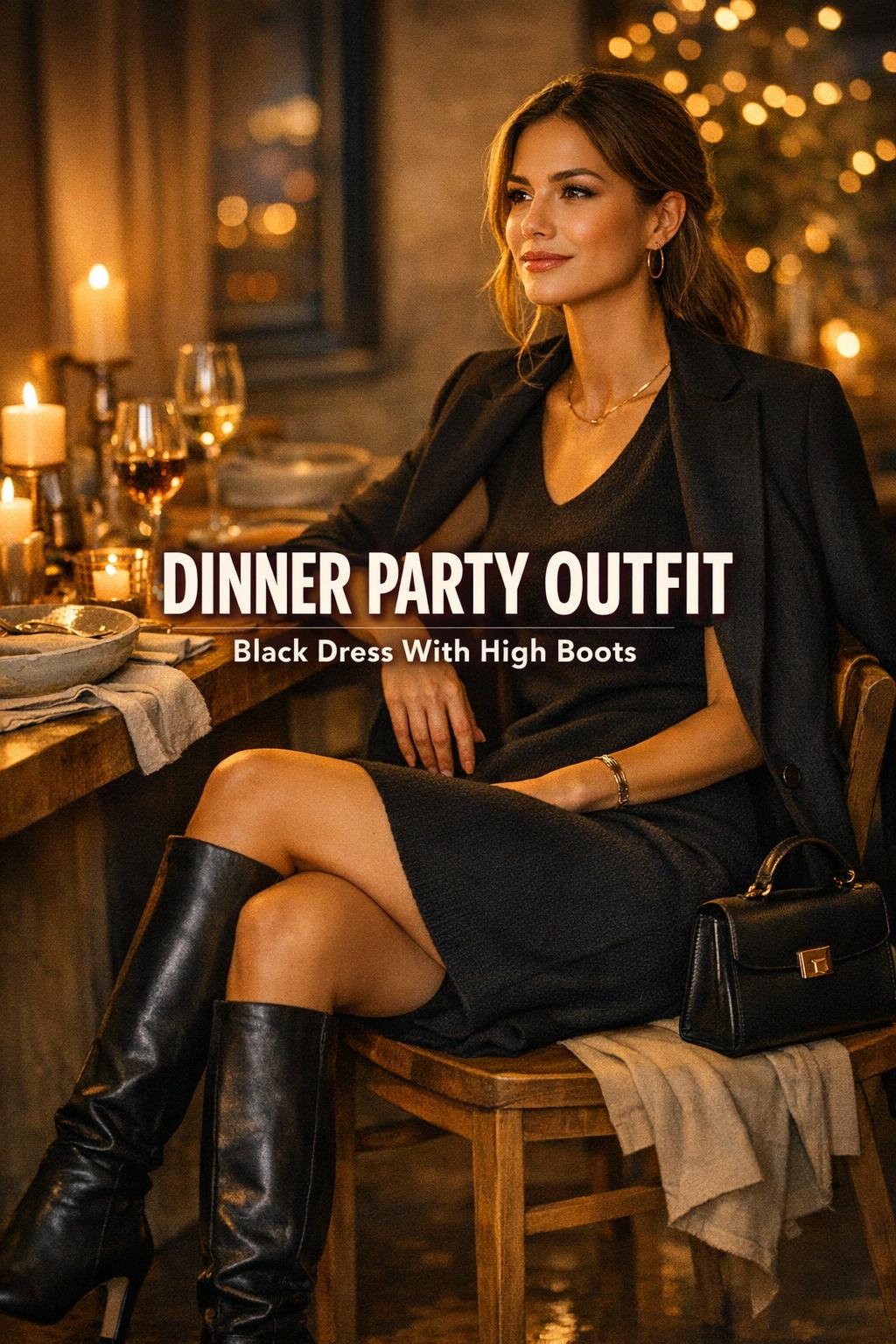
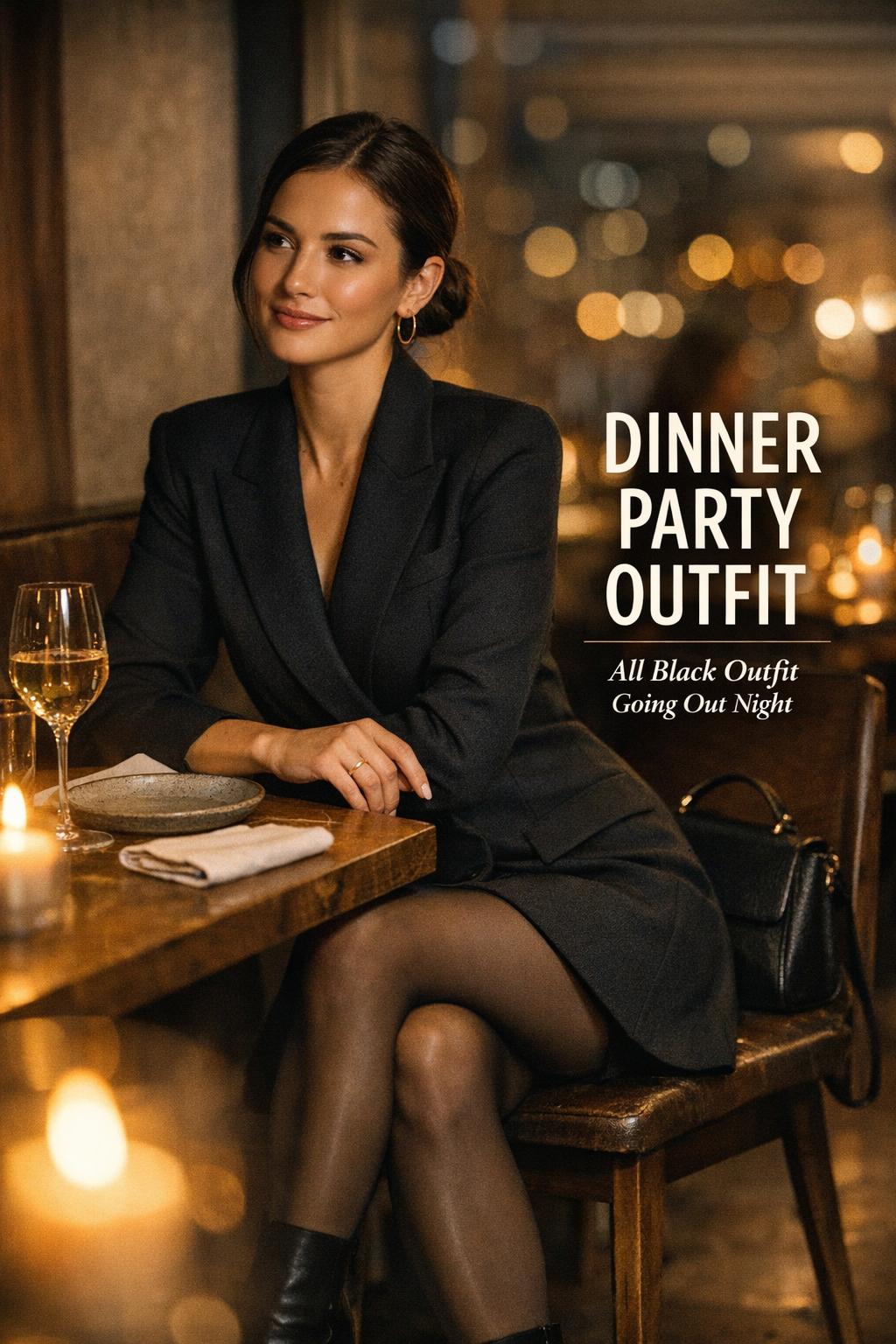
Outfit solution: the all-black dinner look with boots (done the refined way)
An “all black outfit going out night” can be the most elegant solution when you want to look sleek, modern, and unmistakably put-together. The challenge is keeping it dinner-appropriate rather than club-coded. The answer is silhouette and texture: a clean black dress, purposeful boots, and a polished bag create a quiet statement without shouting.
If you love boots, a black dress with long boots can work beautifully for winter—particularly in a smart-casual or semi-formal setting where you want warmth and presence. For a sharper line, a black dress with high boots creates a strong vertical effect, especially when the dress hem and boot shaft meet with intention. Keep the dress silhouette streamlined and add structure on top (a blazer or tailored outerwear) so the boots look considered, not improvised.
Style logic: black-on-black relies on contrast within the black—matte versus subtle sheen, tailoring versus softness. This is where satin, silk, or lace details earn their place: they keep the outfit dimensional under dinner lighting.
A setting-specific editor’s note: Los Angeles “out to dinner” energy vs. New York polish
Location isn’t a rule, but it does influence mood. Los Angeles “out to dinner” styling—often framed through celebrity sightings—leans sleek, body-aware, and tailored in an effortless way: blazer dresses, heels, clean silhouettes. Kendall Jenner’s dinner outfits in LA have become a visual shorthand for that polished minimalism, and the appeal is clear: it feels current without needing excessive detail.
New York party-season polish, by contrast, often leans into texture and layering—satin skirts, camisoles, and the kind of outfit that transitions easily from earlier plans. Katie Holmes in New York wearing a satin slip skirt and camisole captures that “city evening” practicality: elegant, adaptable, and grounded in pieces that can be restyled.
Take the lesson rather than the literal: if your dinner party is in a restaurant with a nightlife edge, lean into tailored silhouettes and heels; if it’s a layered, winter city evening, bring in satin or velvet and a stronger outerwear moment.
Accessories that finish the story: shoes, bags, jewelry, outerwear
Accessories are where dinner-party outfits often succeed or quietly fall apart. The best approach is to match the accessory “weight” to the outfit’s main element: if your dress or fabric is doing a lot (velvet, satin, lace), keep accessories restrained; if your outfit is minimal and tailored, you can allow a slightly stronger accessory presence.
Shoes by silhouette (what looks right and feels right)
Heels appear repeatedly in dinner outfit coverage because they refine proportion: they lengthen the leg line under a blazer dress, elevate a satin skirt, and polish tailored trousers. But dinner parties are long; the best heel is the one you can wear through dessert without changing your posture. If you’re wearing boots as part of your look—especially with an all-black outfit—make sure the boot shape is intentional and complements the hemline, so the outfit reads editorial rather than accidental.
Evening bags and jewelry: keep it close, keep it clean
A small handbag is practical and visually correct for dinner. Brand-hosted dinner parties often feature polished handbags alongside maxi dresses and tailored looks—Coach appears naturally in that space, particularly in celebrity event imagery—because a structured bag keeps the outfit feeling “finished.” Jewelry should frame the face, not compete with the fabric. With a blazer dress, think minimal; with a camisole, consider a delicate focal point that sits at the collarbone and doesn’t snag on lace.
Outerwear as part of the outfit, not an afterthought
Dinner parties often involve that awkward transition from cold entry to warm room. This is where a blazer becomes your best tool: it layers over camisoles and draped tops, sharpens a maxi dress, and keeps satin from looking too “lingerie” in more conservative settings. If you’re building “nice dinner outfits winter classy women” wardrobes, treat the blazer as your anchor piece—tailored, clean, and versatile.
Color stories by season: how to look appropriate without overthinking
Seasonal color isn’t about rigid rules; it’s about visual temperature. Winter dinners welcome depth—velvet especially looks rich in darker or jewel-like tones, and all-black looks become naturally practical. In warmer months, shine and lightness can come from satin and silk rather than heavy layering, while tailoring keeps the silhouette dinner-ready.
If you’re uncertain, choose a restrained base (black, deep neutral, or a classic tone) and let fabric provide the interest: satin’s glow, velvet’s depth, lace’s detail. This approach also reduces the risk of feeling overdressed, because the outfit reads elegant rather than overly “event” themed.
Fit and body considerations: petite, curvy, tall—and everyone who sits down to eat
Most dinner-party guidance forgets a basic truth: your outfit has to work in a chair. Fit is not a vanity issue here; it’s a comfort and confidence issue. Petites often benefit from clean, uninterrupted lines—blazer dresses and tailored jumpsuits can elongate when the proportions are right. Tall frames can lean into maxi dresses and wide-leg tailoring, where the fabric has space to move. Curvier bodies often look particularly polished in pieces that define shape without constriction: a well-cut blazer over a camisole, trousers that sit smoothly, or a velvet dress with a stable neckline.
The most helpful test is the “sit, reach, and breathe” check before you leave: sit down, reach forward as if for a glass, and take a full breath. If the outfit shifts dramatically, rides up, or feels restrictive, it will distract you later—no matter how beautiful it looks standing in a mirror.
Host vs. guest: the etiquette that quietly shapes what to wear
Host styling is a different assignment from guest styling. As a guest, you can lean further into occasion—satin, velvet, statement silhouette—because your job is to show up and enjoy. As a host, you need mobility and ease while still looking elevated in the first five minutes when the door opens. This is where tailored separates, pantsuits, and jumpsuits shine: they look composed but allow movement.
It’s also worth considering the “host-guest dynamics” that lifestyle guides emphasize: you want to honor the mood without pulling focus. A practical rule is to keep one axis calm. If your fabric is dramatic (velvet), keep accessories minimal. If your silhouette is sharp (blazer dress), keep the styling clean. This restraint is what makes an outfit feel expensive and intentional, even when it’s built from familiar wardrobe pieces.
Tips you’ll actually use an hour before you leave
If you’re dressing at the last minute, choose one hero piece and build around it. A satin slip skirt, a velvet dress, a blazer dress, tailored trousers, or a jumpsuit gives you instant direction. Then bring in one layer for temperature control—a blazer is the most adaptable—and finish with heels and an evening bag so the outfit reads “dinner party,” not “daytime errand.”
If you’re leaning into a black dress with long boots or a black dress with high boots, refine the look with structure up top: a blazer, clean neckline, and a bag that looks deliberate. This is how boots stay elegant rather than casual. For those aiming at a “night out outfit party classy” feel, keep the palette controlled and let either the silhouette or the fabric lead—rarely both at maximum volume.
- For shine fabrics: balance satin or silk with tailoring (a blazer or clean trousers) to prevent a “too lingerie” impression.
- For velvet: keep jewelry minimal; let texture be the statement.
- For tailoring: add one soft element (a camisole, draped top, or silk blouse) so the look doesn’t feel overly strict.
- For long dinners: prioritize a stable neckline and comfortable waist placement—your posture will thank you by course two.
Common mistakes that make dinner-party outfits feel off
Choosing a look that only works standing
A mirror can flatter an outfit that won’t survive sitting. Too-tight waistlines, slippery straps, or stiff fabrics become the evening’s main distraction. Choose pieces that hold their shape while seated—tailored trousers, blazer dresses, jumpsuits, and draped tops tend to perform better across the full night.
Overloading “party” signals at once
Velvet plus heavy jewelry plus dramatic shoes can read costume-like in a dining room. The more distinctive your fabric—velvet, satin, lace—the more you benefit from restraint elsewhere. This is the difference between festive and frantic.
Ignoring the dress code and trying to “out-style” it
Even celebrity-inspired outfits work best when adapted to context. A Coach dinner party look with a maxi dress and a polished handbag makes sense at a branded event; at an intimate home dinner, the same energy can feel misplaced. The solution is to translate the idea (silhouette, polish, texture) rather than replicate the intensity.
A quick dinner party outfit generator (choose your lane, then refine)
When you need clarity fast, start with the scenario, pick a silhouette, then choose one finishing element—fabric, heel, or bag—to signal the formality.
- Casual home dinner: tailored trousers + blouse + blazer; heels optional depending on the group.
- Semi-formal dinner party: satin slip skirt + lace-trim camisole + blazer + heels + evening bag.
- Restaurant birthday dinner: blazer dress + heels + compact handbag; keep jewelry minimal.
- Winter dinner: velvet dress + heels; or an all-black outfit going out night with a black dress and high boots, refined with tailored outerwear.
- Business dinner: tailored pantsuit + silk blouse + heels + simple evening bag.
- Gala dinner mood: maxi dress (velvet or elegant drape) + heels + structured handbag.
Each of these formulas works because it respects the core dinner-party reality: you’re dressing for closeness, duration, and the subtle theater of a shared table.
Conclusion: the smartest dinner-party style is intentional, not complicated
A successful dinner party outfit isn’t defined by how “new” it is—it’s defined by how well it performs. Start with a strong silhouette (blazer dress, jumpsuit, maxi dress, tailored pantsuit or separates), choose a fabric that suits the mood (velvet for depth, satin or silk for glow, lace for detail), and let accessories support rather than dominate. When you add practical thinking—sitting comfort, temperature shifts, and the host vs. guest role—you’ll stop second-guessing and start arriving with quiet confidence.
FAQ
What should I wear to a dinner party if the dress code isn’t clear?
Aim for smart-casual with one elevated element: a blazer dress, a tailored jumpsuit, or a satin slip skirt with a camisole and blazer. This middle ground reads intentional without risking the “too formal” feeling.
Is a blazer dress appropriate for a dinner party?
Yes, a blazer dress is one of the most reliable dinner party silhouettes because it’s structured, polished, and easy to style with heels and a small handbag. For more casual gatherings, soften it with minimal accessories and a less dramatic overall finish.
Can I wear velvet to a dinner party without looking overdressed?
You can, especially in winter or party season, because velvet reads festive in a refined way. Keep the silhouette clean and accessories restrained so the texture feels elegant rather than theatrical.
How do I wear a satin slip skirt to a dinner party?
Pair a satin slip skirt with a camisole (lace trim can add a delicate detail) and add a blazer for structure. Finish with heels and a small evening bag so the shine reads intentional and dinner-appropriate.
What are the best nice dinner outfits winter classy women can rely on?
Velvet dresses, blazer dresses with heels, tailored pantsuits with a silk blouse, and all-black looks anchored by structure (like a blazer) are dependable winter options because they balance warmth, polish, and long-evening comfort.
How do I pull off an all black outfit going out night for a dinner party?
Use contrast within the black—tailoring with a softer fabric, or matte pieces with a subtle sheen—and keep the silhouette clean. A structured bag and refined shoes help the look feel dinner-ready rather than overly nightlife-coded.
Can a black dress with long boots or a black dress with high boots work for a dinner party?
Yes, especially for winter dinners, as long as the outfit is styled with intention: a streamlined dress, boots that align neatly with the hemline, and a structured top layer like a blazer to keep the look polished.
What should I wear to a business dinner vs. a gala dinner?
For a business dinner, prioritize tailoring—think a tailored pantsuit or separates with a silk blouse and restrained accessories. For a gala dinner, longer hemlines and richer fabrics like velvet or a more elegant maxi dress silhouette fit the heightened formality.
Should hosts dress differently than guests at a dinner party?
Often, yes: hosts benefit from outfits that allow movement while still looking elevated, such as a tailored jumpsuit, pantsuit, or polished separates. Guests can lean slightly more festive with satin, velvet, or a statement silhouette, while still respecting the overall tone of the gathering.
Leave a Reply