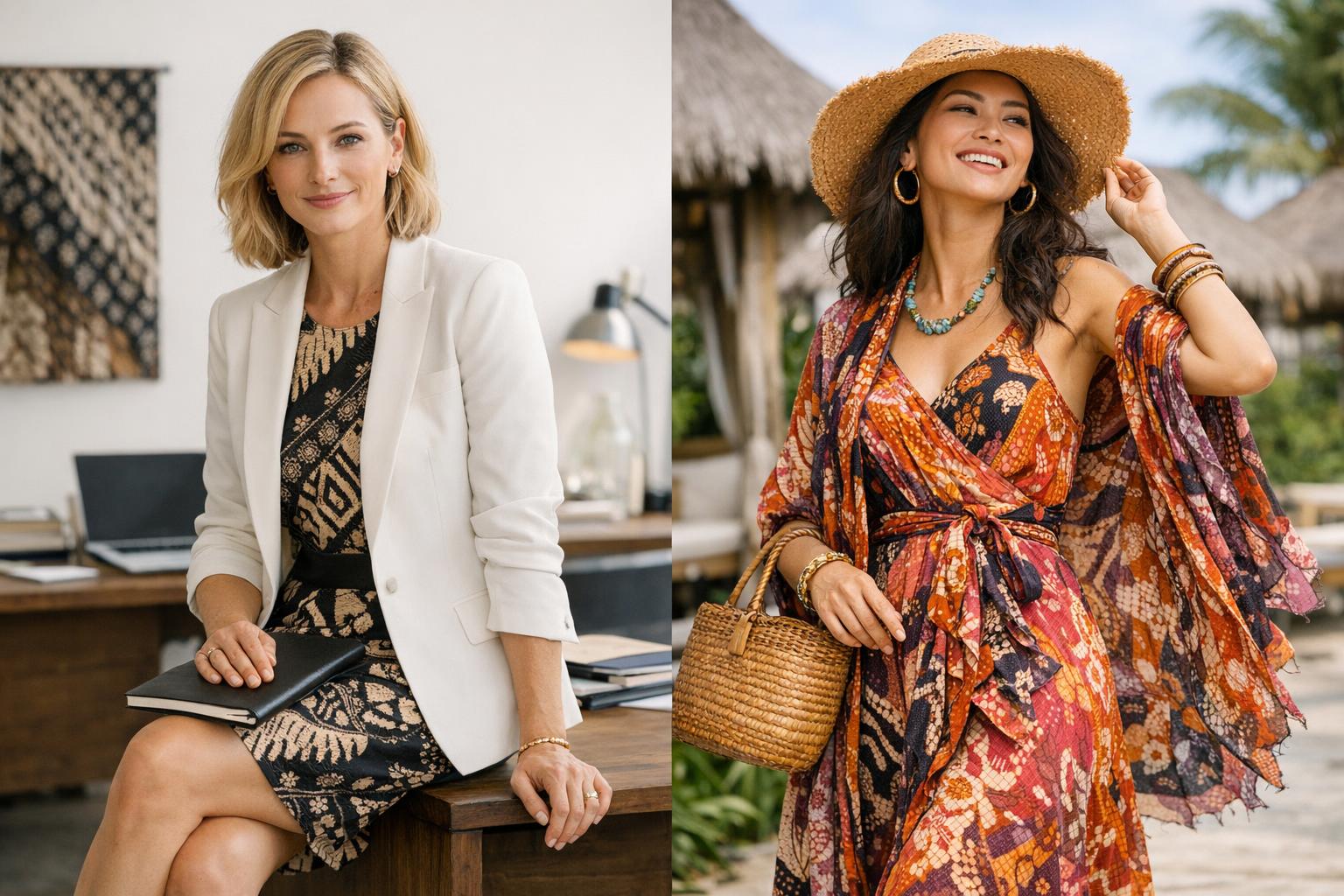
Batik outfit, decoded: why “modern” can mean two very different things
There’s a particular moment that reveals what you really want from a batik outfit: you’re getting dressed for a normal day—maybe a meeting, maybe dinner, maybe a weekend coffee—and you realize batik can read either quietly polished or vividly expressive. Both feel “modern.” Both are wearable in the United States. And yet, the styling logic behind each is fundamentally different.
This is where the conversation gets blurred. “Batik modern” is often used as shorthand for any contemporary batik fashion, but in real wardrobes it splits into two distinct aesthetics. One approach treats batik as a refined statement textile—tailored, restrained, often anchored by clean lines. The other leans into batik’s energy—pattern-forward, color-celebratory, and more openly artisanal. They overlap, they borrow from each other, and they’re easy to confuse when you’re scrolling batik dresses on a marketplace like Etsy or browsing a batik collection from a retailer such as Andaaz Fashion, Rangreza, SanJules, or Batik Chicago.
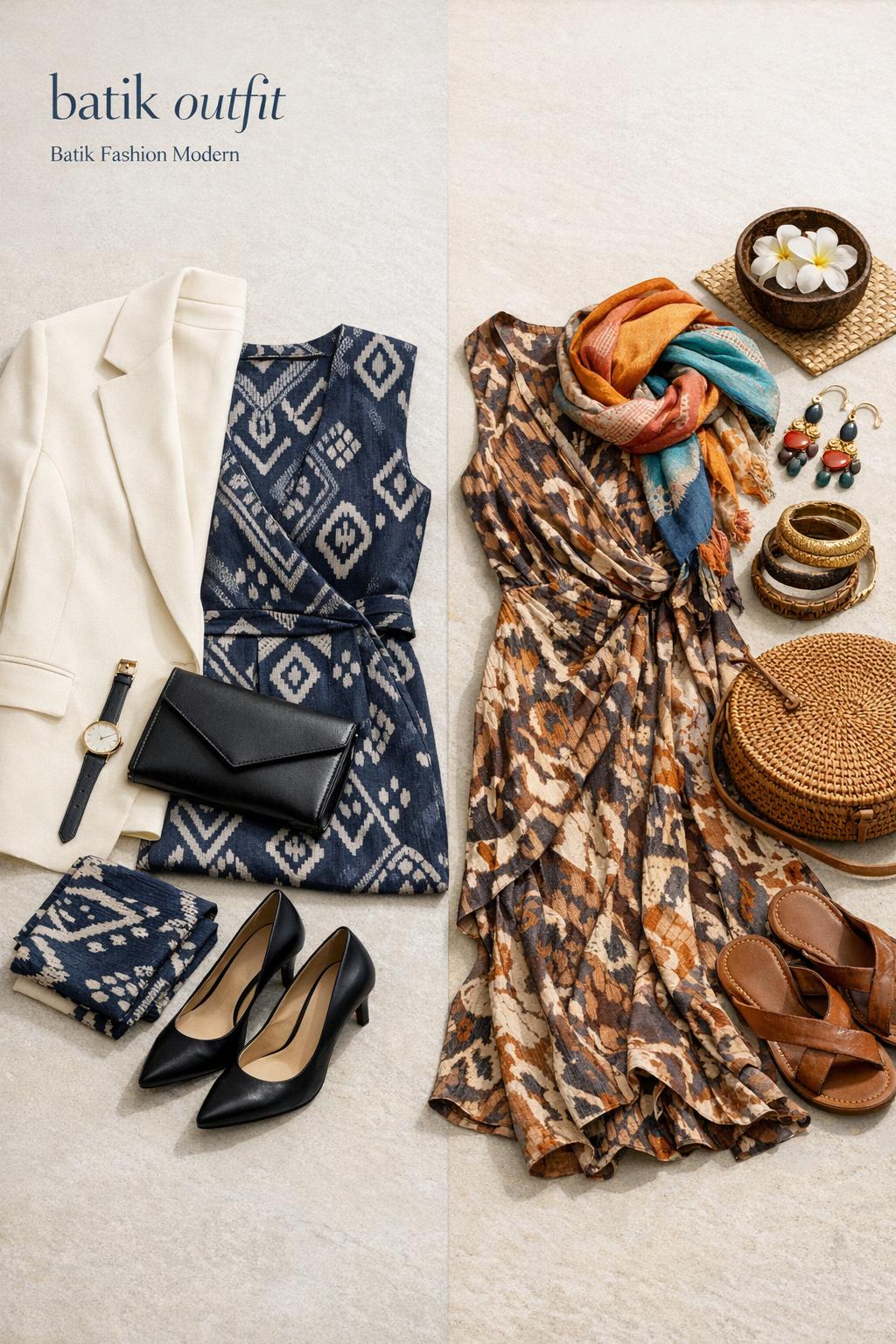
In this comparison and style breakdown, you’ll learn to identify the two main “modern” directions—batik fashion modern minimalism versus batik fashion modern casual maximalism—then apply them to real outfit scenarios: office days, wedding guest dressing, evening, and travel. We’ll also bring in the craft layer that many shopping pages skip: techniques (batik tulis and batik cap), regional origins (Indonesia, Bali, and key cities such as Pekalongan, Jogja/Yogyakarta, Cirebon, and Lasem), and practical care with fabrics commonly mentioned in batik outfits—cotton, rayon, and even khaddar.
Style overview: batik fashion modern minimalism (the “edited silhouette” approach)
Think of this as the batik modern fashion style that behaves like a capsule wardrobe. The print is present, but the outfit is composed with restraint—clean proportions, controlled color, and minimal competing details. This is the territory where a batik dress functions almost like a tailored neutral: it’s the focal point, and everything else supports it.
Your wedding has a lot of moving pieces. Your plan can still feel composed.
Zarellea organizes guests, vendors, budget, and timelines in one shared space — so you can make decisions with clarity, not stress.
Typical silhouettes are simple and structured: a shift dress, a clean wrap dress, or a maxi dress with an unfussy line. Layering is purposeful—often a blazer over batik, not because it’s trendy, but because the blazer creates architectural balance and brings batik into “weekday” territory without diluting its identity.
- Defining characteristics: restrained styling, crisp outlines, fewer accessories
- Typical silhouettes: shift dress, wrap dress, minimalist maxi, streamlined separates
- Color palette: controlled—often one main batik palette anchored by calm solids
- Fabrics and textures: cotton and rayon work especially well here because the drape (rayon) or structure (cotton) helps the silhouette stay clean
- Aesthetic mood: polished, calm, intentional—batik as an “artful essential”
This is the aesthetic you’ll often see implied in editorial discussions of “chic batik pieces” designed for a minimalist wardrobe: batik as a refined textile choice rather than an entire theme.
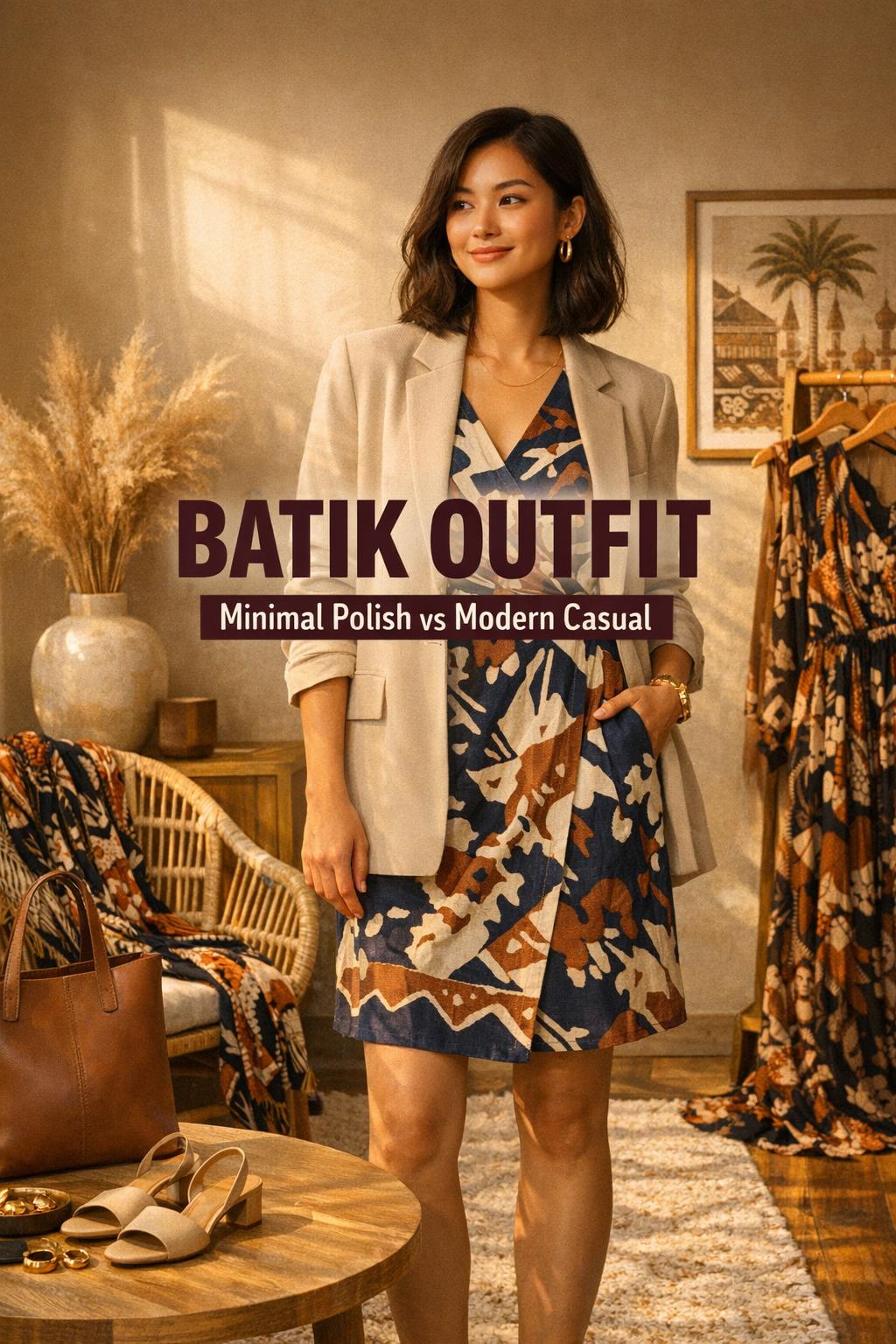
Style overview: batik fashion modern casual maximalism (the “pattern-forward” approach)
This second modern direction treats batik as a joyful, expressive surface—closer to an artisan marketplace sensibility, where print and craft are part of the point. Here, the batik outfit isn’t merely a silhouette with a pattern; it’s a visual conversation between color, motif, and styling.
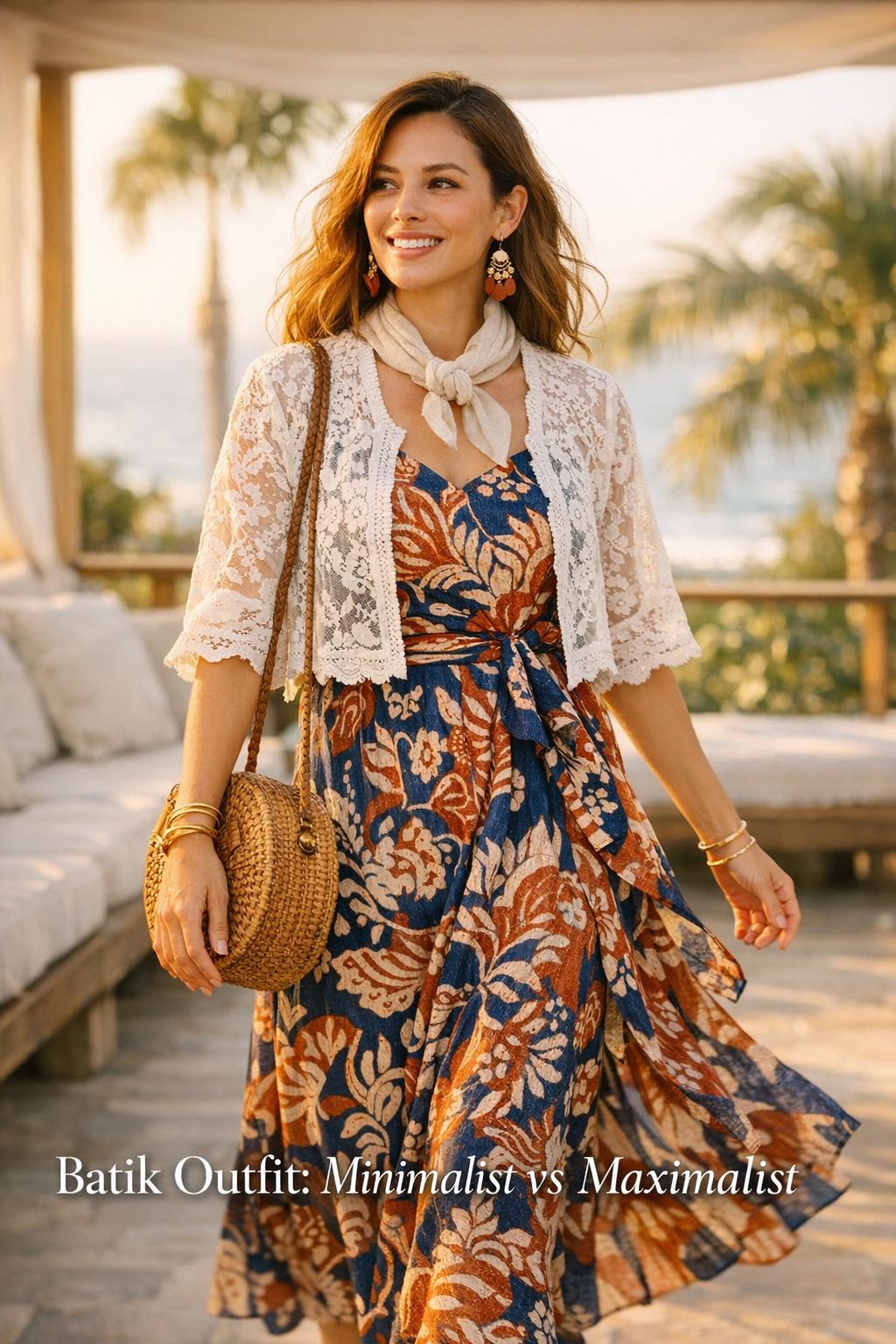
You’ll see more overt mixing: batik with a scarf, batik with bolder jewelry, batik layered in a way that’s less about tailoring and more about relaxed personality. This isn’t inherently “louder” in a careless way; when it works, it feels curated—like resort wear that still has structure, or weekend dressing that looks styled rather than accidental.
- Defining characteristics: pattern-forward, layered, accessories used as visual punctuation
- Typical silhouettes: relaxed dresses, tunic-like forms, maxi dresses, easy separates
- Color palette: more open—brights, contrast, multi-color motifs
- Fabrics and textures: rayon’s movement amplifies the print; cotton keeps it wearable; khaddar reads more substantial and casual when used in batik outfits
- Aesthetic mood: expressive, global, artisanal—batik as the main event
This style aligns naturally with artisan-led platforms and collections where the maker story matters—like Novica’s batik outfit category, where designers and artisans such as Endah and Alaya Cholprasertsuk are named within the product ecosystem, tying the clothing back to Indonesia and Bali.
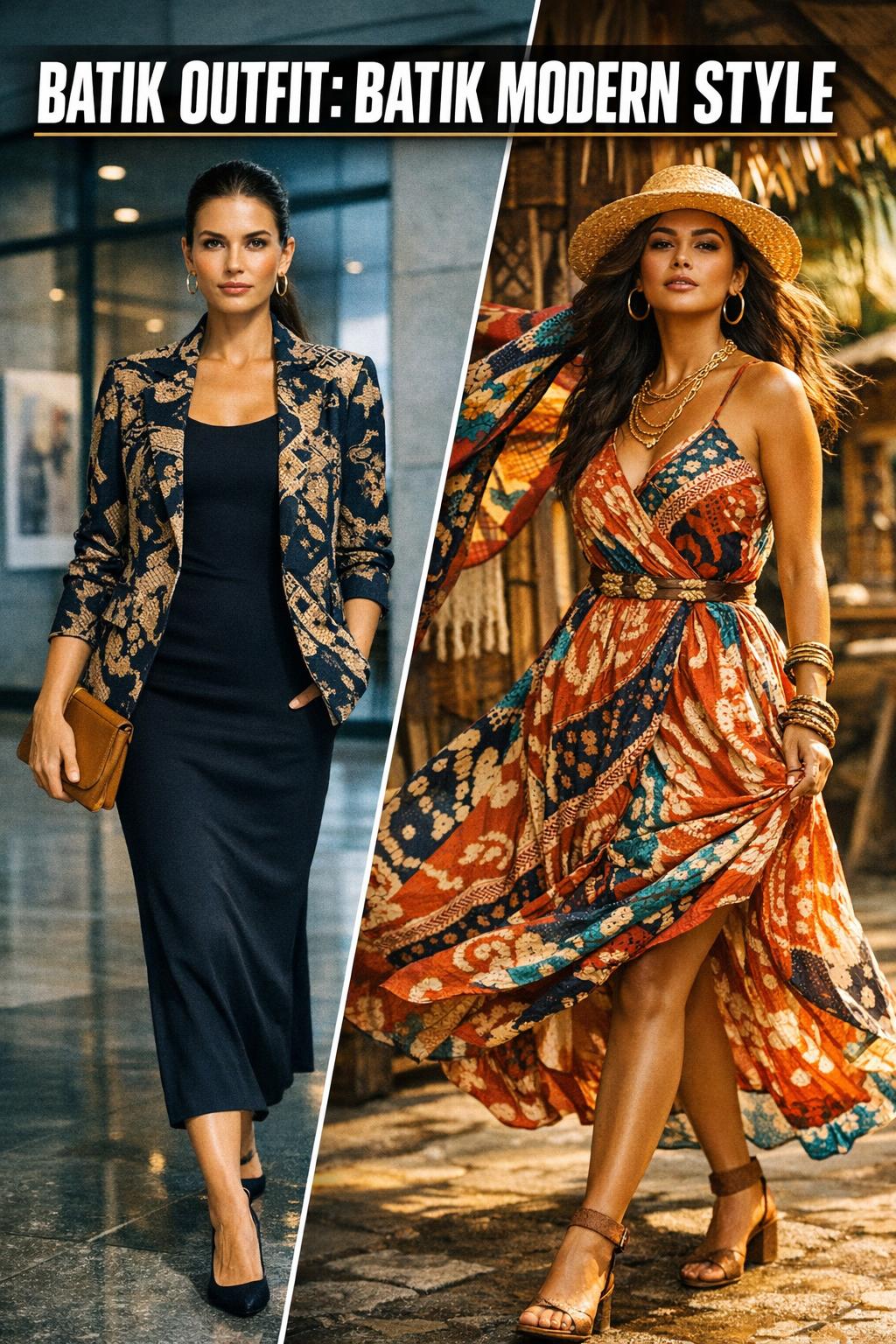
The key differences that change how a batik outfit reads in the U.S.
In American settings—workplaces, weddings, dinners—the same batik dress can land very differently depending on what you pair it with. The distinction isn’t simply “casual versus dressy.” It’s about structure, palette discipline, and the role of the print.
Silhouette and structure: tailored framing vs. relaxed flow
Minimalist modern batik styling is anchored in structure: a blazer over a batik dress, a wrap dress tied cleanly, or a shift that skims without fuss. Maximalist modern casual batik allows more movement—rayon drape, fuller shapes, and a sense that the outfit is meant to breathe. Neither is better; they simply solve different wardrobe problems. Structure reads “meeting-ready.” Flow reads “weekend or travel-ready,” unless elevated with deliberate finishing.
Color palette: edited harmony vs. intentional contrast
Minimalist batik modern fashion style keeps the palette tight. The batik motif can be complex, but the outfit around it is calm. Maximalist batik fashion modern casual is more comfortable letting color and contrast do the talking—pairing batik with another accent (a scarf, a bolder layer) as long as the overall effect feels chosen, not random.
Formality: “quietly elevated” vs. “festive and expressive”
Minimalist styling tends to read more formal because it borrows cues from tailoring. Maximalist styling can still be formal—particularly with maxi dresses and event-specific choices—but it reads as celebratory. This matters for weddings: a wedding guest outfit with batik can look sophisticated in both modes, but the minimalist route leans elegant while the maximalist route leans festive.
Styling philosophy: outfit architecture vs. outfit storytelling
Minimalist batik modern is about architecture: proportion, clean layering, a considered neckline, and accessories that don’t compete. Maximalist batik modern casual is about storytelling: craft, motif, and personality, often supported by accessories like a scarf and layered elements that echo the batik’s colors.
Craft matters: technique and origin as part of the style equation
A batik outfit isn’t only a visual choice; it’s a material one. While many U.S.-facing collection pages focus on the product category—batik dresses, batik outfits, 3pc sets—the editorial advantage comes from knowing what you’re looking at. Two technique terms appear repeatedly in deeper batik conversations and are often under-explained on retail pages: batik tulis and batik cap.
Batik tulis vs. batik cap: why the label changes expectations
Batik tulis is typically discussed as a hand-drawn approach, while batik cap is discussed as a stamped approach; in practice, these terms influence how people think about individuality, precision, and value. For your wardrobe, the point is not to memorize jargon, but to understand that technique can affect how a motif appears and how “artisanal” the surface feels—especially when you’re choosing between a marketplace listing and a boutique collection.
Tip for real shopping behavior: if you’re comparing batik dresses across platforms—from a retailer like Andaaz Fashion or Batik Chicago to a marketplace like Etsy—pause on the motif consistency and the “handmade” framing. The best decision is the one aligned with your goal: a workhorse dress you’ll wear often, or a more craft-forward piece you’ll treat like wearable art.
Indonesia, Bali, and the regional style lens
When batik is tied explicitly to Indonesia—sometimes even to Bali through the idea of Balinese batik—the clothing gains context. This context can influence styling choices: a piece framed as Balinese batik may invite a resort sensibility (movement, ease), while region-focused discussions can guide your palette choices and mood.
Several Indonesian regions and cities are often used as anchors for batik conversations—Pekalongan, Jogja/Yogyakarta, Cirebon, and Lasem. Even if a product listing doesn’t name its regional influence, you can use the regional lens as a styling tool: coastal brightness versus classic refinement, fusion motifs versus earthier artisanal tones. The result is not a rulebook, but a way to style with intention.
Visual style breakdown: how the two modern batik aesthetics build an outfit
To see the difference instantly, look at layering and proportions. In batik fashion modern minimalism, the batik piece is framed—by a blazer, by a clean neckline, by a simple hemline. In batik fashion modern casual maximalism, the batik piece is amplified—by motion, by complementary accents, by the willingness to let motif dominate.
Layering approach: blazer logic vs. scarf logic
The blazer is the signature tool of minimalist batik modern. It introduces straight lines and subtle authority, which is why “batik blazer outfit” ideas show up in styling-focused discussions. The scarf, by contrast, is a maximalist tool: it repeats or contrasts color, adds texture near the face, and turns a simple dress into a styled statement without needing tailoring.
Garment proportions: clean columns vs. expressive volume
Minimalist batik modern tends to favor a column shape: a shift dress, a long clean maxi, or a wrap dress tied neatly to keep the lines controlled. Maximalist batik modern casual is comfortable with volume—especially when the fabric is rayon and the garment moves. The proportion goal shifts from “sleek” to “alive.”
Accessories and finishing: edited restraint vs. curated emphasis
Minimalist styling uses accessories like punctuation—small and intentional—so the batik motif stays legible. Maximalist styling uses accessories like rhythm—bringing the eye across the outfit with a scarf, a complementary layer, or a bolder finishing touch. The risk in maximalism is visual noise; the fix is repetition: echo one or two colors from the batik motif, then stop.
Outfit comparisons in real scenarios (and why each works)
Rather than treating batik as a costume moment, the most useful styling comes from running the same scenario through both aesthetics. The point is to understand the logic—what each style prioritizes—so you can choose based on occasion, comfort, and how you want to be read.
Example comparison: batik modern for an office day
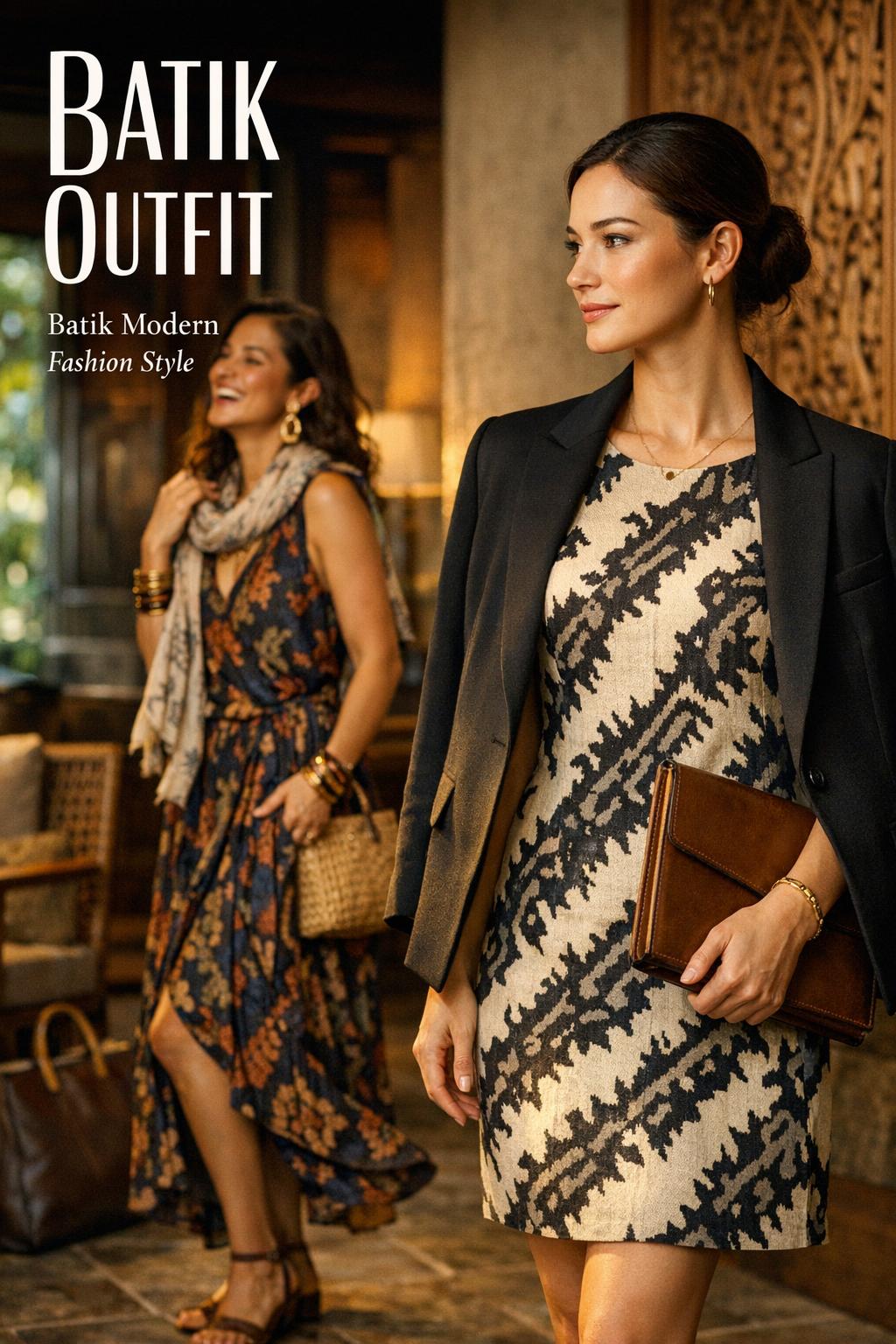
Minimalist approach: Start with a batik shift dress in cotton or a controlled rayon drape. Add a blazer to create a clear shoulder line and a composed silhouette; keep the rest of the outfit quiet so the motif feels intentional, not busy. This is where batik reads like “print as polish”—especially effective in U.S. workplaces that accept creative professional dressing.
Modern casual maximalist approach: Choose a batik dress with more movement—often rayon—and rely on proportion rather than tailoring. Instead of a blazer, consider a light layer that doesn’t sharpen the lines too much, and use a scarf as the styling centerpiece. This version works best in creative offices or casual professional settings, where ease and personality are part of the uniform.
Tip: If you’re unsure which direction is appropriate, let structure be your safety net. The blazer instantly translates batik into an “I meant this” work look.
Example comparison: wedding guest outfit with batik
Minimalist approach: A batik maxi dress with a refined line is the cleanest path. Keep the styling architectural: a simple wrap dress silhouette or a long column shape, with minimal competing elements. The result reads formal through restraint—especially when the motif is strong enough to carry the look on its own.
Modern casual maximalist approach: Lean into the celebratory nature of weddings: batik that feels vibrant, a scarf that echoes one color from the motif, and a silhouette that moves beautifully through a long day of ceremony, photos, and dancing. This approach is also adaptable for guests who want the option of modest styling; discussions of wedding guest batik outfits often include hijab styling considerations, where color harmony and fabric drape become even more important.
Practical insight: Weddings are long. Prioritize fabrics that will feel comfortable for hours—cotton for breathability, rayon for movement—then decide whether you want the formal signal of tailoring (minimalist) or the festive signal of layered color (maximalist).
Example comparison: evening dinner or gallery opening
Minimalist approach: Let batik read like art: one striking batik dress, clean layering, and a focused silhouette. When the lines are controlled, the motif looks curated—almost like a print you’d see framed. This is where “batik fashion modern” feels closest to contemporary European styling: fewer elements, higher intention.
Modern casual maximalist approach: Go for sensuality through motion—rayon that moves, a maxi that shifts as you walk, and accessories that highlight rather than compete. The key is restraint within maximalism: choose one accessory statement (often a scarf) and keep everything else in service of the batik.
Example comparison: travel and resort wear (the Bali effect)
Minimalist approach: Pack a batik wrap dress that can handle multiple roles—day sightseeing, dinner, an impromptu event. The wrap dress silhouette is repeatedly suggested in outfit-idea discussions for a reason: it adapts to small changes in comfort, climate, and styling without looking improvised.
Modern casual maximalist approach: If the batik is framed as Balinese batik, it naturally invites a resort sensibility: flowing rayon, bold motif, and the ease of a dress that can be styled up or down with a scarf. The look is at its best when you keep proportions relaxed but not sloppy—think deliberate volume rather than oversize randomness.
Where “kebaya casual” fits: a useful point of contrast, not a costume detour
Kebaya casual appears in conversations as a styling phrase that sits near batik modern, because both are often discussed through the lens of cultural-inspired dressing made wearable today. In practice, it helps as a contrast tool: kebaya casual styling tends to emphasize a defined top layer and a more traditional sense of “set dressing,” while a batik outfit—especially in modern U.S. wardrobes—often revolves around a single hero piece like a batik dress.
If you’re drawn to kebaya casual as a concept, consider what you actually want: the composure of a defined top layer (which maps well to minimalist batik modern via a blazer) or the expressiveness of motif and drape (which maps to maximalist batik fashion modern casual). Either way, the strongest results come from translating the idea into contemporary proportions rather than replicating a full traditional set in a context where it may feel out of place.
Choosing a batik outfit like an editor: fabric, feel, and the reality of your day
Most people buy batik based on what they see, then regret it based on how it feels. The wardrobe-smart move is to reverse that: decide the feel first, then choose the visual. The research landscape around batik outfits frequently references cotton and rayon; khaddar also appears as a fabric mention in batik outfit collections, especially in set formats like 3pc outfits.
Cotton vs. rayon vs. khaddar: what each one does to your silhouette
Cotton tends to hold shape, which makes it excellent for minimalist batik modern: clean hems, stable wrap ties, and a silhouette that looks deliberate all day. Rayon tends to move and drape, which flatters maximalist styling and adds elegance to maxi dresses—but it can also reveal every styling decision, so underlayers and fit matter. Khaddar, when used in batik outfits and sets, reads more substantial and casual; it can be ideal when you want the print but also want the outfit to feel grounded and practical.
Tips from real-life wear: If you’ll be sitting for long stretches (a wedding ceremony, a full day of meetings), choose the fabric that will look good after hours of wear. Cotton is forgiving in structure; rayon is forgiving in movement but can demand more care in how it’s layered and stored.
Fit and proportion: why the “right” batik dress is often the simplest one
Batik motifs are visually active. That means the more complex the cut, the harder the garment is to style. For many U.S. wardrobes, the most successful batik dresses are those with clear geometry: a shift, a wrap, a long maxi with a controlled line. This is also why boutique and marketplace categories frequently lean on dresses—they offer a complete outfit in a single decision.
In sets—like 3pc batik outfits—proportion becomes the main styling task. The modern move is to avoid wearing every piece at maximum intensity. Treat the set as a wardrobe kit: one hero piece at a time, one quiet base, one accent element.
Styling tips that prevent the most common batik mistakes
Batik is forgiving in spirit but precise in impact. Small choices—where the eye lands first, how many colors are competing, whether the silhouette has a clear line—decide if your batik outfit reads refined or chaotic.
Tips: make the motif legible
- Choose one “quiet zone” in the outfit (a calm layer, a simple neckline, or a clean hemline) so the batik motif can be seen rather than swallowed by detail.
- If you add a scarf, let it repeat a color already inside the batik rather than introducing a brand-new palette.
- When in doubt, use a blazer to create a clear frame—especially for office or dinner settings.
Tips: match the outfit to the event’s social temperature
In the U.S., batik can be interpreted through multiple lenses: as fashion, as craft, as cultural expression. For weddings, aim for intentional elegance—either through minimalist structure or maximalist celebration—while keeping the overall look respectful and composed. For work, let tailoring do the translating. For weekends, let comfort lead and use accessories to keep it styled.
Tips: don’t let “modern” become generic
“Batik fashion modern” shouldn’t mean stripping away what makes batik special. Keep a connection to craft and origin in how you choose and care for your clothing—especially if you’re buying from artisan-forward sources that name makers, such as Novica’s listings featuring Endah and Alaya Cholprasertsuk, or if you’re exploring batik tied to Indonesia and Bali as part of its identity.
Shopping pathways in the U.S.: boutique polish vs. marketplace discovery
Even if you’re not in “shopping mode,” understanding where batik outfits are commonly found in the U.S. helps you interpret what you’re seeing. Retail collections often present batik as a cohesive brand story and emphasize categories like batik dresses. Marketplaces present batik as a world of individual decisions—each listing with its own maker, materials, and interpretation of “handmade.”
Retail collections: a clearer aesthetic lens
Retailers such as Andaaz Fashion, Rangreza, SanJules, Batik Chicago, and even catalog-driven batik dress categories like Advance Apparels Inc tend to streamline your decision into silhouettes and categories. Rangreza adds a specific U.S. location anchor with its store in Edison, NJ—useful if you value in-person context and local retail continuity. Batik Chicago carries a city-boutique identity that often implies a curated dress focus.
The limitation of many retail pages is depth: you may get styling suggestions and basic care notes, but fewer explanations of technique (batik tulis vs batik cap) or regional character. That’s why it helps to bring your own framework when browsing.
Marketplace and artisan platforms: discovery and variability
On Etsy, batik dresses appear through countless seller lenses—global locations, different materials, different levels of “handmade” framing. Novica, by contrast, organizes batik outfits with a clearer artisan story and often connects pieces to Indonesia and Bali while naming artisans and designers. The advantage is character and storytelling; the trade-off is that you must compare carefully, because not every listing communicates technique, care, or origin with the same clarity.
Editor’s rule for marketplaces: don’t buy a batik outfit based solely on the photo. Look for signals that support your intended use—fabric (cotton, rayon), intended occasion (office, wedding guest), and whether the listing context aligns with your preference for artisan narrative or minimalist styling potential.
Batik by occasion: choosing the right “modern” for the moment
The most practical way to resolve the minimalist-versus-maximalist question is to start with the setting. A batik outfit should serve your life, not complicate it. Below is a context-driven breakdown that keeps the focus on function and visual harmony.
Everyday and weekend: batik fashion modern casual without looking overly styled
For weekends, maximalist batik modern casual shines—especially with dresses that move and motifs that feel alive. The trick is to keep the silhouette simple so the print doesn’t overwhelm. A batik dress that feels easy on the body can still look intentional if you keep one element crisp: a clean neckline, a defined waist (wrap dress logic), or a controlled hemline.
Minimalist batik modern also works on weekends if you want the opposite mood: calm, elevated, and quietly distinctive. This is where “chic batik pieces” thinking pays off—batik integrated into a wardrobe rather than treated as a special occasion item.
Work and conferences: batik modern with credibility
When you need batik to read as professional, structure is your ally. A batik blazer outfit concept—either a blazer over a batik dress or a blazer paired with batik as the central textile—bridges cultures of dress without forcing a theme. Keep accessories minimal, and let the batik motif sit within a composed frame.
Weddings: balancing celebration and refinement
Wedding guest outfit with batik styling lives in the tension between festive and respectful. Minimalist styling delivers elegance through restraint—especially with maxi dresses and wrap dress silhouettes. Maximalist styling delivers joy through motif and layered color, and it can be particularly effective when you select one accessory strategy (often a scarf) and keep everything else calm. If you’re incorporating hijab styling, the harmony between scarf and motif becomes the outfit’s central composition problem—solve it with repetition, not contrast overload.
Care and longevity: keeping batik beautiful in a real wardrobe
Batik care is where modern styling becomes long-term ownership. Cotton and rayon—frequent fabric callouts in batik outfit categories—behave differently over time, and batik dyes can be sensitive. Even when product pages offer brief care notes, it helps to treat batik as you would any statement textile: gentle handling, thoughtful storage, and avoiding habits that stress the surface.
Tips: practical care habits that protect color and shape
- Prioritize gentle washing behavior over aggressive “get it clean fast” routines; batik dyes benefit from caution.
- Store batik dresses so the motif isn’t creased into sharp folds for long periods, especially with rayon drape.
- If you rely on a batik wrap dress as a repeat piece, monitor stress points (ties and seams) and handle them carefully so the silhouette stays refined.
The payoff is simple: when batik is cared for well, it becomes the rare printed piece that can return season after season without looking tired—precisely the quality that makes batik modern fashion style feel timeless rather than trend-driven.
Bringing the two aesthetics together: a controlled fusion that still feels personal
The most compelling batik outfits often blend both aesthetics: minimalist structure with maximalist soul. A blazer over a vibrant batik maxi dress. A calm shift dress with a scarf that echoes one color. A batik piece treated as the hero, but not isolated from the rest of the wardrobe.
To do this well, keep one axis consistent and let the other vary. If the silhouette is structured (minimalist), allow the motif to be expressive (maximalist). If the motif is refined and classic, you can play with layering and accessories—so long as the palette remains coherent. This is where batik fashion modern becomes not a label, but a practice: thoughtful composition, clear proportion, and respect for the textile’s identity.
Conclusion: how to tell which modern batik style you’re wearing
The core distinction is simple: batik fashion modern minimalism frames the print with structure, while batik fashion modern casual maximalism amplifies the print with expressive styling. You can identify minimalist batik modern by its edited silhouette, controlled palette, and blazer-like architecture. You can identify maximalist batik modern casual by its pattern-forward energy, scarf-driven styling, and comfort-led drape—often in cotton, rayon, or more substantial fabrics like khaddar in set formats.
In a U.S. wardrobe, both approaches are useful. Choose minimalist structure when you need batik to read professional or quietly elevated; choose maximalist expression when you want batik to feel celebratory, artisanal, or travel-ready. And if you want the most modern result of all, borrow from both: let craft and origin—Indonesia, Bali, and the regional lens of Pekalongan, Jogja/Yogyakarta, Cirebon, and Lasem—inform your choices, while letting proportion and care keep the look polished for real life.
FAQ
What is a batik outfit, and why is it so versatile?
A batik outfit is clothing made with batik-patterned fabric—most commonly seen as batik dresses and coordinated sets—and it’s versatile because the same textile can be styled in a tailored, minimalist way for work or in a more expressive, batik fashion modern casual way for weekends, travel, and celebrations.
What’s the difference between batik tulis and batik cap?
Batik tulis and batik cap are technique terms often referenced when discussing batik quality and craft; they’re commonly presented as hand-drawn versus stamped approaches, and they influence how the motif looks and how “artisanal” the fabric surface feels when you’re comparing batik outfits across retailers and marketplaces.
How do I style a batik dress for the office without it feeling too loud?
Use a minimalist batik modern fashion style approach: choose a clean silhouette like a shift dress or wrap dress, keep the palette around it calm, and add structure with a blazer so the batik motif is framed rather than competing with multiple statement elements.
Can I wear a batik outfit as a wedding guest in the U.S.?
Yes—wedding guest outfit with batik styling is commonly discussed through maxi dresses, wrap dresses, blazers, and scarves; the key is to match the wedding’s formality by choosing either refined minimalist structure or a celebratory maximalist approach that still feels composed and intentional.
What fabrics are common in batik outfits, and how do they affect the look?
Cotton and rayon are frequently associated with batik outfits and dresses, with cotton tending to hold a cleaner shape and rayon emphasizing movement and drape; khaddar is also mentioned in batik outfit collections and can read more substantial and casual, which changes how structured or relaxed the silhouette feels.
Where do batik outfits come from, culturally and geographically?
Batik is strongly associated with Indonesia, and batik outfits are often framed through Indonesian origins and regional references; Bali is also commonly mentioned through the idea of Balinese batik, and regional lenses may include places like Pekalongan, Jogja/Yogyakarta, Cirebon, and Lasem.
What are reliable places to browse batik dresses and batik outfits in the U.S.?
In the U.S., batik dresses and batik outfits commonly appear through retailer collections such as Andaaz Fashion, Rangreza (including a store presence in Edison, NJ), SanJules, and Batik Chicago, as well as artisan and marketplace platforms like Novica and Etsy where listings can vary widely by maker and materials.
How should I care for batik so it lasts?
Treat batik as a statement textile: handle it gently to protect dye and motif clarity, avoid harsh routines that can stress color, and store batik dresses thoughtfully to prevent long-term creasing—especially for rayon pieces where drape and surface finish are central to the look.
How can I make batik modern without losing its character?
Keep the silhouette contemporary—clean wrap dresses, minimalist maxi dresses, and blazer-based layering—while preserving batik’s identity through intentional color harmony, motif visibility, and an appreciation of craft contexts such as Indonesian origins and artisan-led storytelling found in some batik outfit collections.
Leave a Reply