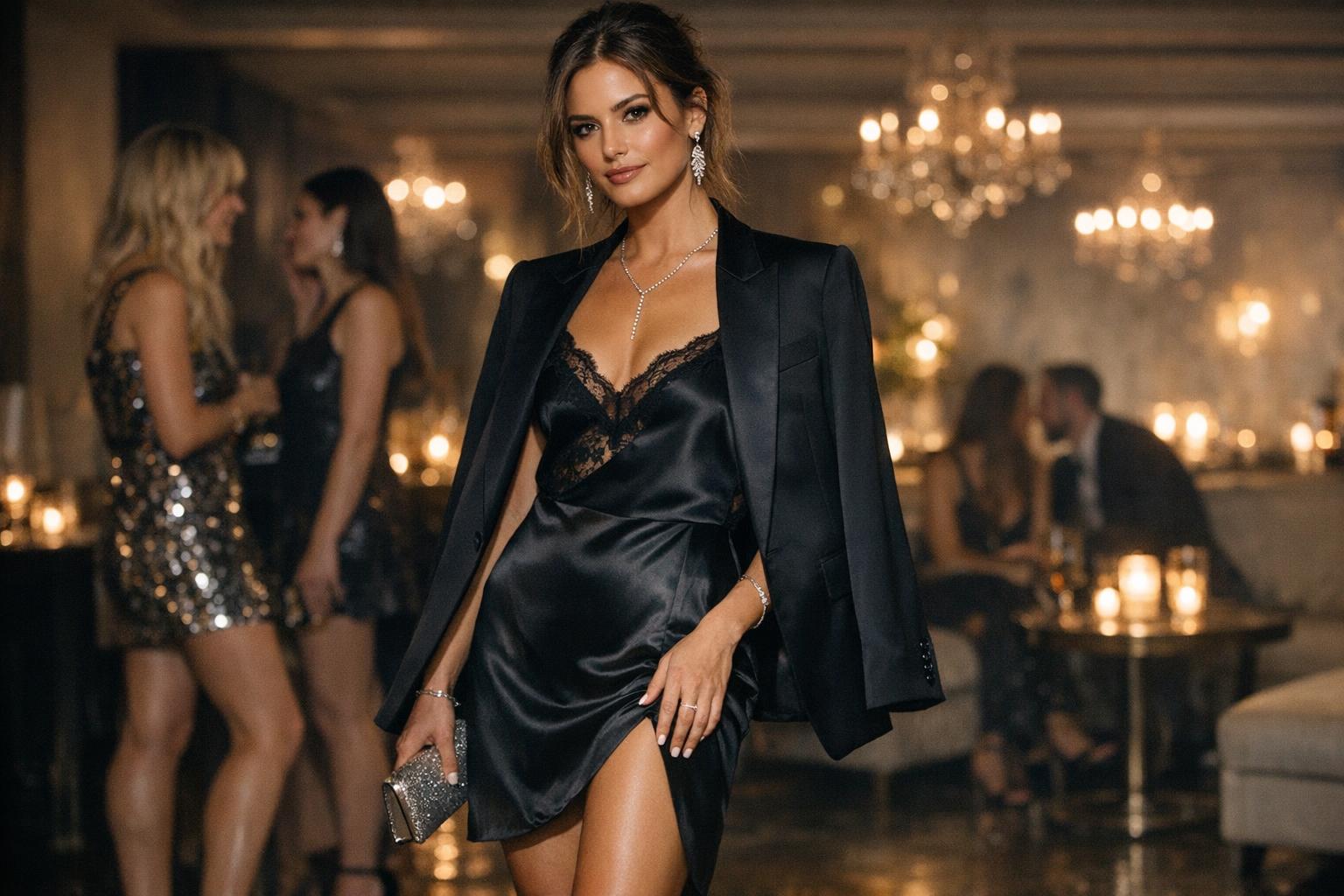
After-party outfits: where red-carpet polish meets late-night freedom
The after party outfit lives in a specific fashion hour: the moment the formal photos are done, the music turns up, and the night asks for something more expressive—and more wearable. Whether the setting is an Oscars-adjacent room buzzing with Vanity Fair energy, a Saint Laurent post-Grammys party with a Chateau Marmont mood, or a wedding after-party where the dance floor becomes the main event, the style logic is the same: you still want impact, but you also need movement.
This is why after-party dressing is often confused with red-carpet dressing. Both can lean into couture and designer signals—Prada, Dior, Giorgio Armani Privé, Tamara Ralph—along with accessories that telegraph “occasion,” like Manolo Blahnik heels or jewelry from Tiffany & Co. Yet the after-party version shifts the emphasis. It’s not only about being seen; it’s also about staying comfortable enough to last until the end of the night.
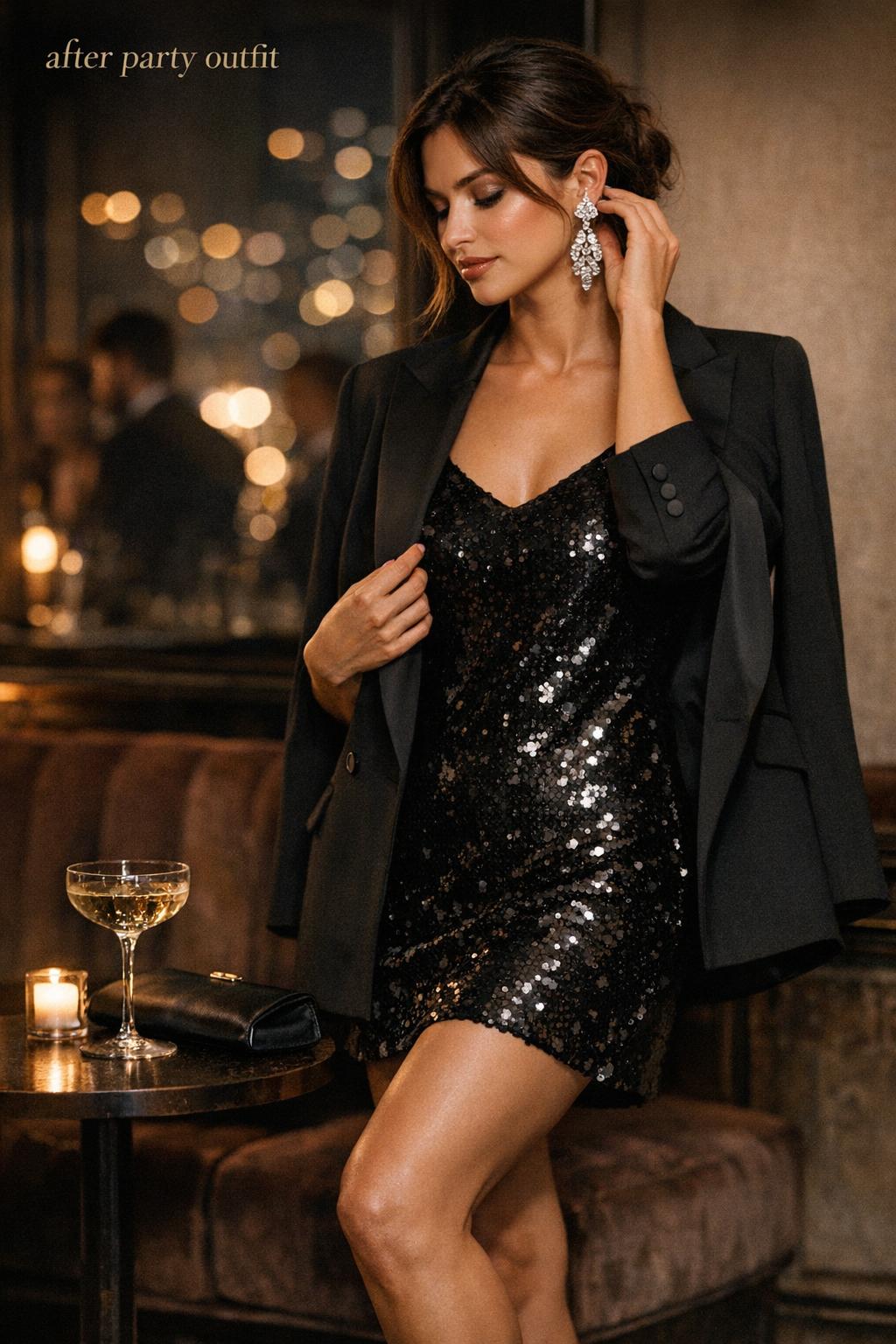
Below, we’ll compare two dominant approaches that show up again and again in modern going out fashion: the high-glam, celebrity-coded after-party look versus the guest-first, wedding-after-party look. You’ll learn how their silhouettes, fabrics (velvet, sequins, mesh, satin, lamé), and styling philosophies differ—and how to borrow from both when you need an outfit for the night that feels special without feeling precious.
Style overview: the celebrity after-party look (Oscars, Grammys, Met Gala, VMAs)
Celebrity after-party dressing is built for cameras, quick transitions, and a kind of curated spontaneity. Think of the red-carpet-to-after-party transition as a deliberate edit: the look often becomes shorter, sharper, or more fluid, but it still carries designer authority. At the Oscars after-parties—often framed through the aura of the Vanity Fair Oscar Party—the emphasis falls on “after-party looks” that feel fashion-forward yet less ceremonial than the main red carpet.
Your wedding has a lot of moving pieces. Your plan can still feel composed.
Zarellea organizes guests, vendors, budget, and timelines in one shared space — so you can make decisions with clarity, not stress.
Defining characteristics include a strong designer signature (Prada, Dior, Giorgio Armani Privé), dramatic textures (sequins, velvet, mesh), and accessories used like punctuation. Jewelry isn’t an afterthought; it’s part of the architecture of the look, with recognizable names like Tiffany & Co. anchoring the overall impression. Footwear can also carry status weight—Manolo Blahnik is the kind of label that reads as a deliberate finishing touch rather than mere utility.
The overall mood is late-night glamour: sleek lines, intentional shine, and the confidence to be a little bolder than daytime style allows. And it isn’t only “classic glam.” There’s also room for contrastive styling—the kind of anti-after-party statement associated with Zoë Kravitz at a VMAs after-party, where minimalism can feel rebellious precisely because everyone expects sparkle.
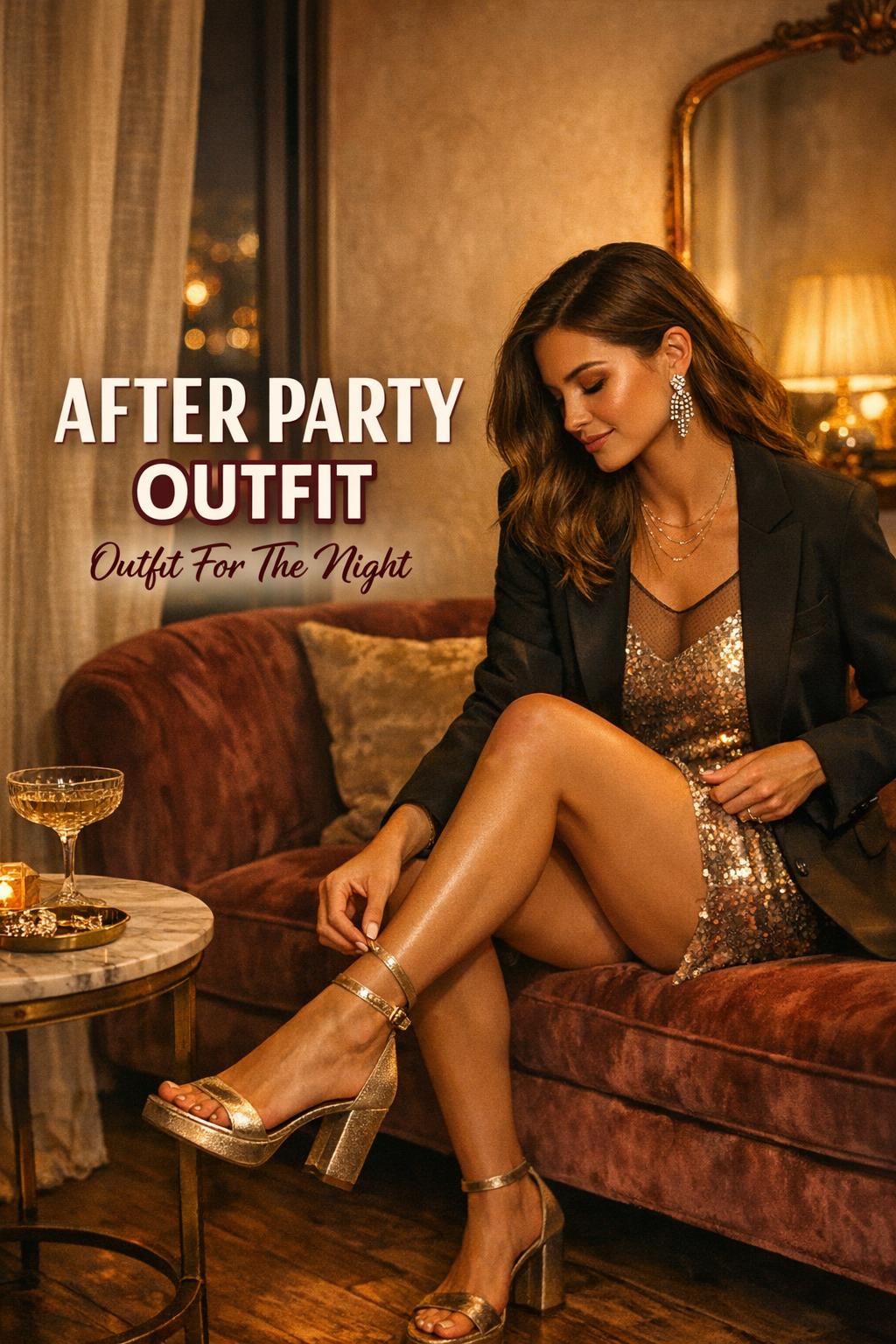
Style overview: the wedding after-party look (for brides and guests)
Wedding after-party style is its own ecosystem. It borrows the glamour language of eveningwear, but its priorities are different: comfort, stamina, and personal practicality. The wedding after-party isn’t a moment you exit after five minutes; it’s a stretch of hours that includes hugs, dancing, and the quiet reality of being on your feet. Guidance in this space tends to focus on wearability—fit, support, and ease—while still delivering a show-stopping silhouette.
In this lane, brands and retailers often function as a wardrobe framework. Adrianna Papell appears as a voice of practical wedding-guest dressing, while Windsor positions itself around wedding-after-party outfit ideas that feel party-ready and accessible. The mood can still be glamorous—sequins and satin certainly belong here—but the styling tends to read less “editorial photo call” and more “personal best night.”
Wedding after-party outfits also tend to be more adaptable. A guest might want a party outfit that looks intentional in photos but can handle a crowded dance floor; a bride might want something that feels like a second act—lighter, shorter, or more playful—without losing the elevated occasion energy.
The key differences that change everything
Silhouette: “designed to be seen” vs. “designed to be lived in”
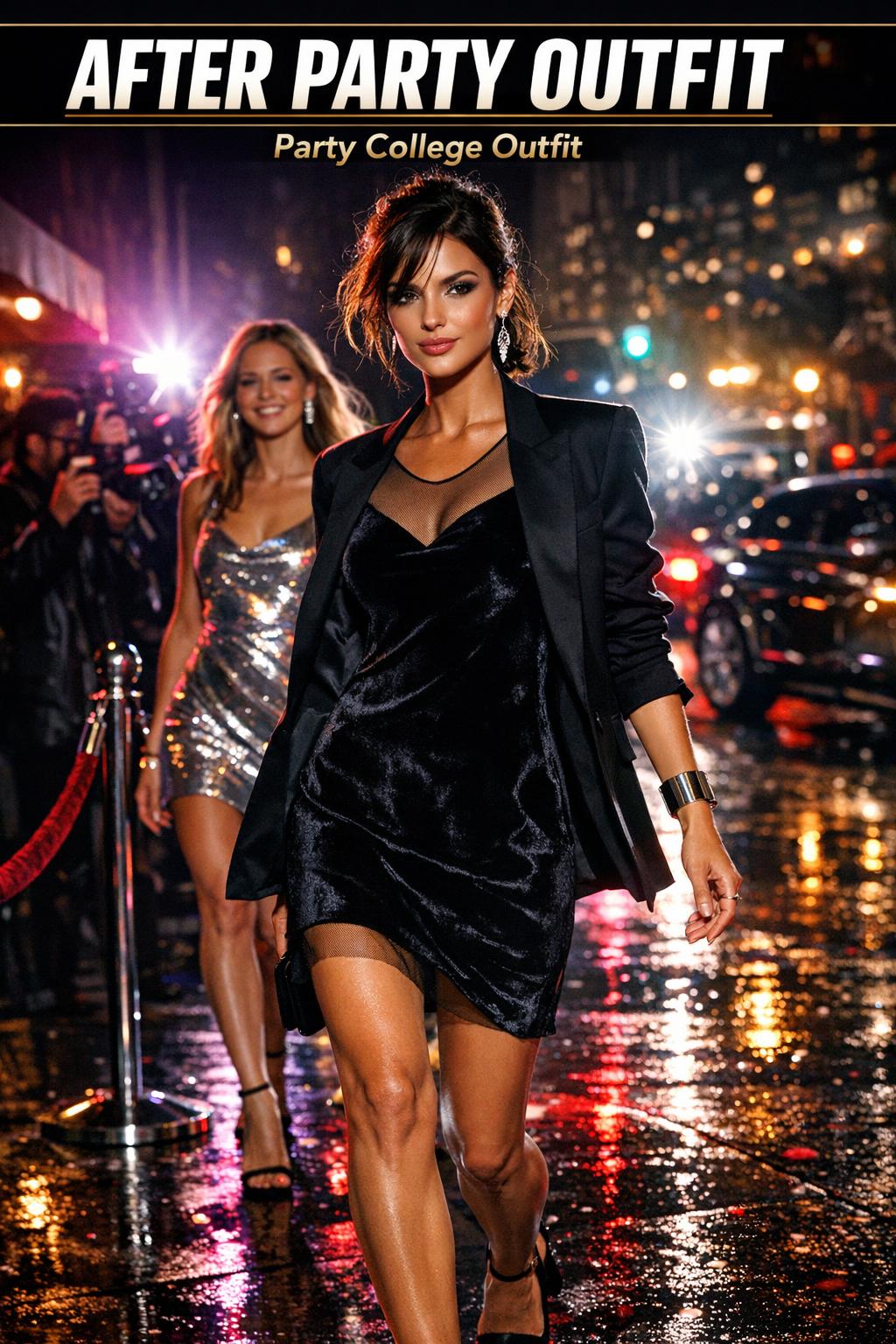
Celebrity after-party silhouettes often emphasize a clean, striking outline—think a sharp mini dress, a sleek slip dress, or a lingerie-inspired bodysuit under a tailored blazer. The fit can be precise because the context assumes styling support and shorter bursts of wear. Wedding after-party silhouettes still aim for impact, but they’re typically chosen with movement in mind: enough ease through the hips, stable straps, and a shape that still looks polished when you’re mid-dance rather than standing still.
Fabric choice: optical drama vs. long-night comfort
Both aesthetics rely on texture, but they use it differently. Celebrity looks lean hard into fabrics that photograph beautifully—sequins that catch flash, mesh that creates intrigue, velvet that reads rich in low light, even lamé for a metallic, editorial finish. Wedding after-party dressing can absolutely include sequins or satin, but the fabric conversation shifts toward what stays comfortable overnight: how a material feels against skin, how it moves, and whether it holds up when the venue gets warm.
Accessory strategy: brand punctuation vs. practical elegance
In celebrity after-party styling, accessories can be the headline: Tiffany & Co. jewelry, Manolo Blahnik shoes, and designer callouts that tie a look to a wider fashion narrative (Prada, Dior, Giorgio Armani Privé, Tamara Ralph). Wedding after-party accessorizing usually works best when it’s slightly more restrained: still elevated, still intentional, but chosen so nothing distracts or becomes uncomfortable as the night goes on.
Styling philosophy: “look” vs. “wear”
Perhaps the most important difference is mindset. Celebrity after-party style is often built around a single image: the outfit is composed to communicate a point of view—late-night glamour, couture confidence, or an anti-after-party minimalism. Wedding after-party style is built around experience: the outfit is composed to support the evening while still reading as celebration-ready.
Visual style breakdown: how these aesthetics appear in real outfits
Layering and proportions
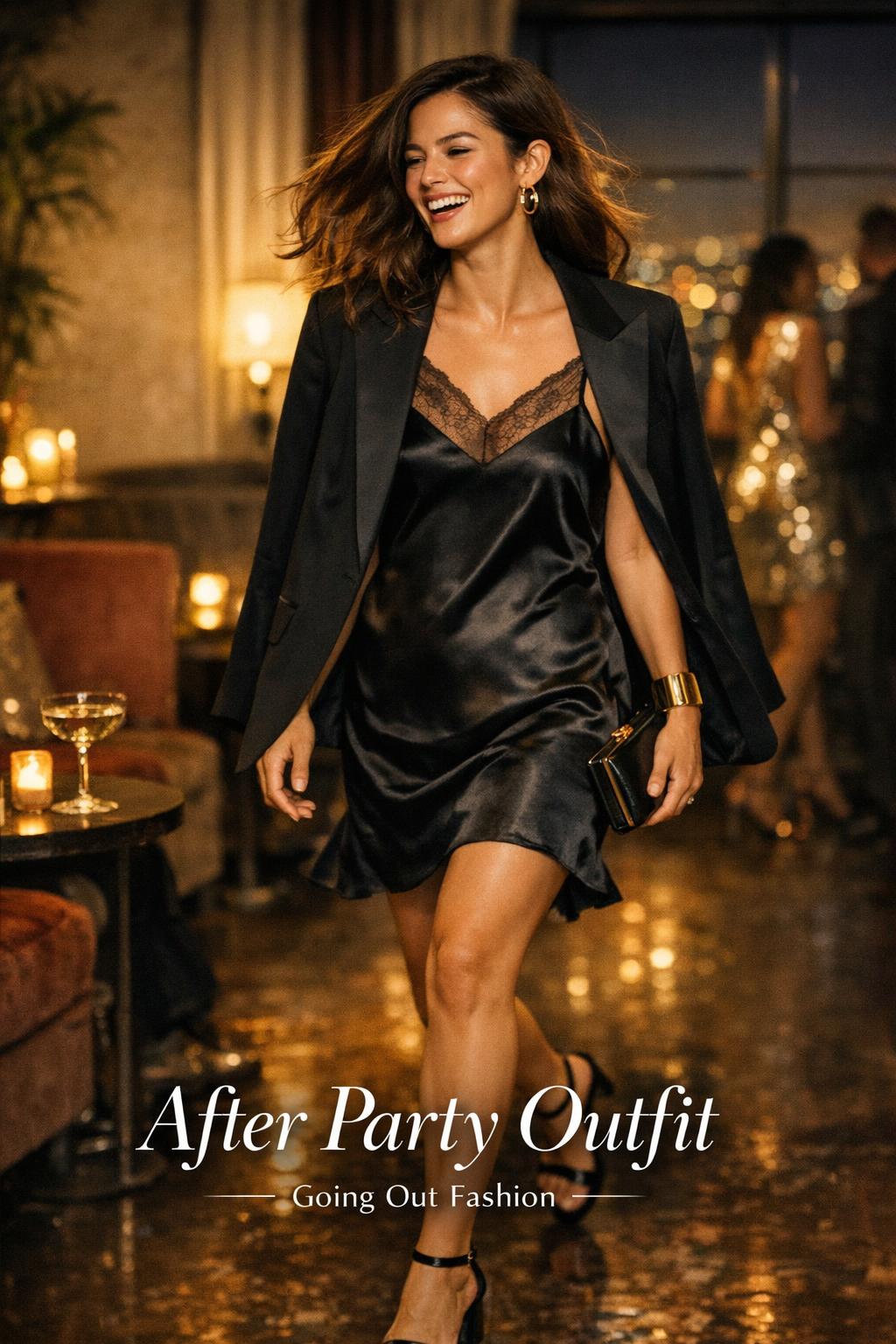
Celebrity after-party outfits frequently use minimal layering so the silhouette stays crisp in photos: a slip dress with bare shoulders, a sequin jumpsuit that doesn’t need much else, or a tailored blazer over a lingerie-inspired base for a controlled reveal. Wedding after-party outfits tend to allow more practical layering—especially when venues change—without losing polish. A blazer can still be used, but it’s often chosen as a comfort layer rather than purely a style statement.
Accessories as balance, not clutter
In both aesthetics, accessories function best when they correct the outfit’s balance. A velvet slip dress becomes modern when paired with statement jewelry rather than competing textures. A sequin-heavy piece becomes chic when the bag and shoe stay clean-lined. The celebrity version may lean into recognizable brand signals; the wedding version leans into an edited, stable finish that stays comfortable for hours.
Footwear: the quiet determinant of how your night goes
After-party footwear is where theory meets reality. A designer shoe—Manolo Blahnik is a classic example of a name that carries visual authority—can elevate the entire outfit for the first hour. But for wedding after-parties especially, the best choice is the one that keeps your posture confident later in the night. The look should still feel intentional; the difference is that wedding logic prioritizes longevity.
The shared foundation: fabrics that define after-party dressing
Even when the styling philosophies diverge, after-party fashion returns to a small set of textures that signal “night.” These are the materials that repeatedly anchor after-party outfit ideas because they translate well under low light and feel appropriately elevated for the occasion.
- Velvet: rich, soft, and inherently evening-coded—especially effective in a slip dress silhouette where the fabric can do most of the work.
- Sequins: maximal impact and camera-friendly sparkle; ideal when you want the outfit to read as a statement even with minimal styling.
- Mesh: modern and slightly provocative, often used to create contrast—either as panels, overlays, or a sheer moment balanced by tailoring.
- Satin: smooth, reflective, and fluid; reads polished and can move beautifully on a dance floor when the cut is right.
- Lamé: a more overt metallic effect that leans editorial; best when the silhouette is clean so the fabric doesn’t feel costume-like.
What changes between celebrity after-parties and wedding after-parties is how you deploy these fabrics: celebrity style often stacks drama upon drama; wedding style tends to choose one main “loud” element and keeps the rest more disciplined.
Outfit frameworks, compared: the same pieces, different styling logic
Velvet slip dress: late-night minimalism vs. wedding-ready romance
A velvet slip dress is one of the clearest bridges between aesthetics. In a celebrity after-party interpretation, the styling is sleek: a clean neckline, a high-impact jewelry moment (this is where Tiffany & Co. styling cues make sense conceptually), and a shoe that reads sharp and deliberate. In a wedding after-party interpretation, the slip dress becomes softer: the accessories are still elevated, but chosen to stay comfortable; the overall finish is warm and celebratory rather than intentionally “cool.”
Tips: Velvet is forgiving visually, but it can feel warm. If you know the venue will be crowded or you’ll be dancing for hours, keep the silhouette fluid rather than overly tight, and avoid piling on heavy layers that turn the outfit into something you can’t wait to take off.
Sequin jumpsuit: high-shine edge vs. guest-first ease
The sequin jumpsuit is pure after-party energy—an instant party outfit that doesn’t require complex coordination. For a celebrity-coded look, the jumpsuit is styled like a single, decisive statement: minimal layering, crisp hair-and-makeup energy, and accessories that look intentional rather than “extra.” For a wedding after-party, the same jumpsuit can work, but comfort becomes the deciding factor: you want ease through the torso and a fit that moves without constant adjustment.
This is also where the conversation about “outfit for the night” becomes practical. A jumpsuit is a commitment. If you love how it looks but worry about the long-hours reality, consider how easy it will be to move, sit, and dance in it—because an after-party look that feels restrictive quickly loses its glamour.
Lingerie-inspired bodysuit with tailored blazer: the after-party uniform, two ways
This combination sits at the heart of going out fashion because it’s modular. In a celebrity after-party context, the blazer can be sharply tailored—evoking the authority of couture and high fashion houses like Giorgio Armani Privé or Dior in spirit—worn over a lingerie-inspired bodysuit that feels modern and slightly provocative. In a wedding after-party context, the same pairing becomes more about polish: the bodysuit is chosen for security and comfort, and the blazer functions as a temperature and confidence layer rather than a pure statement.
Tips: The blazer matters most in the shoulders. A clean shoulder line instantly elevates the look; a blazer that slips, pinches, or overwhelms the frame can make even the best base layer feel messy. If you want the “after-party” effect without overthinking, keep the base sleek and let the tailoring create structure.
Statement mini dress with texture: editorial flash vs. dance-floor practicality
Mini dresses are after-party shorthand: shorter hem, more energy, less formality. Celebrity interpretations often lean into texture—sequins, mesh, lace, or layered effects—paired with strong accessories and a confident stride. Wedding after-party minis can be just as fun, but the best versions are those you can forget about while wearing: stable straps, a secure neckline, and a fabric that won’t irritate after several hours.
A helpful lens is to ask: is this mini dress designed for standing still, or for moving? After-party life rarely involves standing still for long.
Event context comparison: awards after-parties vs. wedding after-parties
Occasion drives everything. It’s easy to say “after party” and imagine a single dress code, but the style cues change dramatically depending on whether you’re entering an awards-season atmosphere—Oscars, Grammys, Met Gala, VMAs—or a wedding after-party where the social rules are more personal and less performative.
Oscars and the Vanity Fair Oscar Party: couture energy, controlled glamour
Oscars after-parties are associated with designer clarity: identifying who wore Prada, Dior, Giorgio Armani Privé, or Tamara Ralph is part of the fashion conversation, as are the jewelry and accessories that complete the look. The style expectation is high-impact, but the after-party twist is that the outfit often feels more playful or more comfortable than the main red-carpet moment—without losing the aura of ceremony.
Grammys after-parties and the Chateau Marmont mood: sharper, nightlife-coded styling
Grammys after-party style often reads as nightlife-first: sleek, slightly rebellious, and venue-aware. A Saint Laurent post-Grammys party with a Chateau Marmont vibe suggests a look that’s polished but less formal than an awards gown—still elevated, still designer-aware, but built for music, movement, and a more intimate kind of glamour.
Met Gala after-party looks: concept meets wearability (and recreations)
Met Gala after-party dressing sits in a fascinating middle ground. The Met Gala itself is known for statement-making, but the after-party invites reinterpretation—often through more wearable silhouettes, or through budget-friendly recreations that translate a high-fashion mood into something you can actually wear out. This is where the conversation naturally expands from “what did they wear?” to “how do I recreate it?”—a practical question that still respects the original styling idea.
VMAs after-party: the anti-after-party twist
The VMAs after-party space leaves room for an “anti” approach—an intentionally pared-back look that becomes striking because it refuses the expected formula. The Zoë Kravitz example captures this: minimalism can read bold when the room is full of sequins. If you’re drawn to this direction, the key is precision—clean lines, considered proportions, and a confident refusal of clutter.
Where “party outfit” becomes personal: three everyday translations
Not every after-party moment is tied to a formal event. Many people are searching for an after party outfit because they want going out fashion that feels elevated but wearable—something that works for a birthday, a rooftop, a hotel lounge, or a spontaneous late reservation. This is also where the additional style needs come in: a party college outfit that feels current without looking overdone, or a party jeans outfit that stays comfortable while still reading as “night.”
The party jeans outfit: casual structure with after-party texture
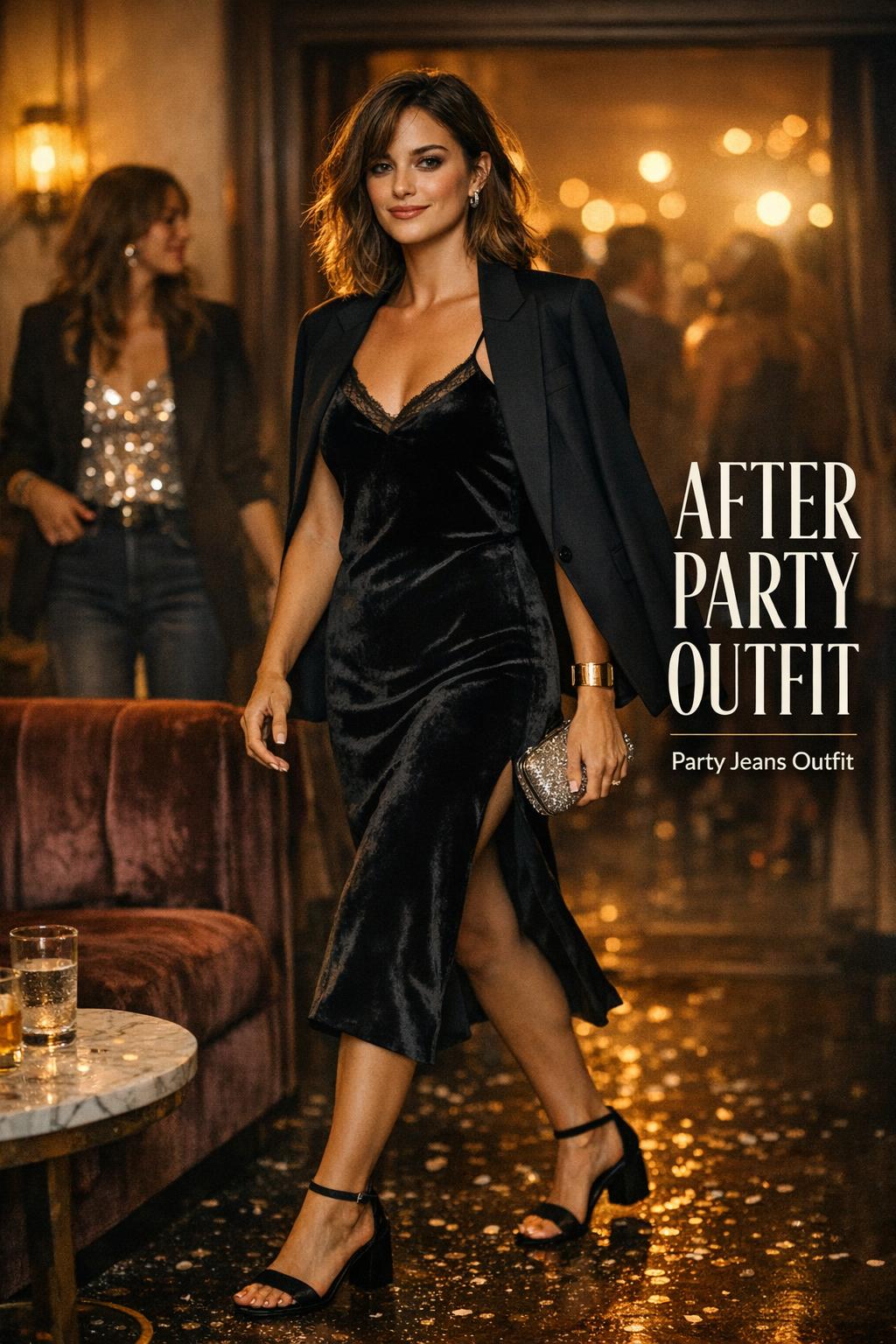
A party jeans outfit succeeds when the denim is treated as the grounding piece and everything else is elevated. The after-party element comes from texture—mesh, satin, sequins—or from a tailored blazer that sharpens the silhouette. The goal isn’t to mimic an Oscars after-party; it’s to borrow the logic: one statement element, one strong line, one deliberate finish.
Tips: If you’re using denim as the base, keep the top half intentional. A lingerie-inspired bodysuit under a blazer can look composed rather than accidental, especially when accessories are edited and the proportions feel balanced.
The party college outfit: confidence, comfort, and a clear point of view
A party college outfit benefits from the after-party mindset: you’re dressing for hours, not minutes. A mini dress in a tactile fabric—sequins or velvet—can work beautifully, but only if you can move comfortably. Alternatively, a tailored blazer over a sleek base creates a polished outline that feels grown-up without being formal. This is where “outfit for the night” becomes less about a single trend and more about knowing what you can wear with ease.
The “desk-to-dance-floor” edit: red-carpet logic, real-life timing
The most practical after-party skill is editing. If you’re coming from dinner, work, or a ceremony, take a cue from the red-carpet-to-after-party transition: remove weight, sharpen the silhouette, and add one high-impact element. That might mean trading a daytime layer for a tailored blazer, or swapping a subdued texture for mesh or satin. The point isn’t to transform into someone else; it’s to give your existing outfit a late-night finish.
Designer spotlight vs. accessible wardrobes: how the references change the feel
Designer references matter in after-party culture because they function like visual shorthand. A Prada or Dior mention signals a certain type of polish; Giorgio Armani Privé suggests couture-level tailoring; Tamara Ralph carries a couture romance; Tiffany & Co. jewelry reads as classic, recognizable refinement; Manolo Blahnik implies an iconic heel culture. Even when you aren’t wearing those exact pieces, understanding what they communicate helps you replicate the mood.
Accessible wardrobes use different anchors. Retailers like Windsor and brand-driven edits like Oh Polly—particularly the Oh Polly x Sarah Ashcroft “after party” collaboration—lean into party-ready silhouettes such as embellished tailoring or faux fur accents. Meanwhile, Adrianna Papell’s wedding-oriented guidance centers the realities of fit and comfort, reminding you that the best after-party look is the one you can actually enjoy wearing.
The useful comparison isn’t “luxury vs. affordable.” It’s signal vs. function. Celebrity dressing often prioritizes fashion signal; wedding and everyday after-party dressing often prioritizes function. The strongest personal style usually finds a composed midpoint.
Practical styling: what experienced dressers check before they commit
Fit and comfort: the after-party reality check
After-party outfits are judged in motion. Before you commit to any dress, jumpsuit, or blazer-and-bodysuit combination, test it like you’ll actually live in it: sit, walk, lift your arms, and imagine a crowded dance floor. Wedding after-party guidance emphasizes this for good reason—comfort isn’t a compromise; it’s what allows the look to stay confident. If you’re relying on a strapless or very fitted silhouette, be honest about how much adjustment you’re willing to do all night.
Venue cues: Chateau Marmont cool vs. ballroom glamour
Venue mood is an underrated styling tool. A Chateau Marmont-inspired night suggests sleeker, nightlife-coded choices: crisp tailoring, a controlled amount of shine, and a look that feels intentional without looking overly formal. A wedding after-party can range from lounge to ballroom energy, and the outfit should reflect that: sequins and satin can thrive in either, but the silhouette and layering strategy should match the room’s formality and temperature.
Common mistakes that quietly undermine an after-party look
The most common misstep is over-styling—stacking sequins, heavy jewelry, and complicated layers until the outfit loses clarity. Another is underestimating fabric behavior: mesh can be powerful, but it needs structure somewhere else; velvet can look rich, but it can feel too warm if the venue runs hot. And finally, many outfit-for-the-night plans fail at the shoe stage: the wrong footwear changes posture, movement, and mood, no matter how perfect the dress is.
Choosing your aesthetic: when to lean glam, and when to go “anti”
If you’re attending an awards-season adjacent event—anything in the orbit of Oscars, Met Gala, Grammys, or VMAs—the room often rewards a clearer fashion point of view. Glam works when it’s disciplined: one dominant texture (sequins, velvet, lamé) and one strong silhouette (slip, mini, jumpsuit, tailored blazer). This is also where designer-coded styling cues—Prada-level minimalism, Dior polish, Armani Privé tailoring—feel contextually appropriate.
If your after-party is a wedding, your best strategy is elegant stamina. Choose a silhouette that flatters in movement, keep the accessories refined, and let the fabric do the storytelling. And if you’re drawn to the Zoë Kravitz-style anti-after-party mood—pared-back, minimalist, almost defiant—commit fully: clean lines, controlled proportions, and a finish that looks intentional rather than “underdressed.”
The most modern answer is that you can combine them. A wedding after-party look can borrow a touch of awards-night shine; an awards after-party look can borrow wedding-level comfort logic. The goal is not to copy a celebrity—it’s to understand why the styling works, then apply the reasoning to your own night.
FAQ
What defines an after party outfit compared to a regular party outfit?
An after party outfit is usually designed for a later-hour setting and often follows a main event, so it balances visual impact with comfort and movement—think high-impact textures like sequins, velvet, or mesh paired with a silhouette you can actually wear for hours.
How do I choose an after-party outfit for a wedding vs. an awards after-party?
Wedding after-party outfits typically prioritize comfort, secure fit, and dance-floor practicality, while awards after-party looks (Oscars, Grammys, Met Gala, VMAs) lean more editorial and designer-coded, often emphasizing striking silhouettes and statement accessories like Tiffany & Co. jewelry or Manolo Blahnik-style heels.
What fabrics work best for after-party looks that last all night?
Velvet, sequins, mesh, satin, and lamé are the signature after-party fabrics, but the best choice depends on comfort and venue heat—velvet reads rich but can feel warm, while satin and thoughtfully placed mesh can feel lighter if the silhouette allows movement.
How can I recreate a celebrity after-party look on a budget?
Focus on replicating the styling logic rather than the exact label: choose one statement element (like a sequin mini or a velvet slip), keep the silhouette clean, and finish with edited accessories; this approach mirrors the way Met Gala after-party looks are often recreated in more accessible ways.
Can I wear a party jeans outfit as an after-party outfit?
Yes—treat denim as the grounding piece and add an after-party texture or structure on top, such as a tailored blazer over a sleek base or a satin/mesh-inspired top, so the look reads intentional rather than simply casual.
What makes a Chateau Marmont-inspired after-party vibe different from Oscars after-party style?
A Chateau Marmont-inspired mood (often referenced around Grammys after-parties) tends to be nightlife-coded and sleek—more sharp tailoring and controlled shine—while Oscars after-party style leans more couture-adjacent, with designer callouts and classic high-glam finishing touches.
How do I avoid looking overdressed or underdressed at an after-party?
Choose one clear “occasion” signal—texture (sequins, velvet), a strong silhouette (slip, mini, jumpsuit), or elevated accessories—then keep the rest disciplined; most after-party styling mistakes come from stacking too many loud elements or choosing a look that isn’t wearable for the venue.
What’s the easiest outfit for the night when I need to transition quickly?
A tailored blazer over a sleek base (like a lingerie-inspired bodysuit) is one of the quickest transitions because it’s modular: you can sharpen the silhouette instantly, adapt to venue temperature, and keep the look polished without rebuilding the entire outfit.
Leave a Reply