
College outfit ideas, decoded: effortless campus chic vs polished casual
There’s a particular moment on a U.S. campus—late morning, a lecture hall that runs cold even in early fall—when style becomes less about spectacle and more about strategy. You want to look considered, even a little look di moda, but you also need to move, sit for long stretches, carry a bag, and still feel like yourself by the time the study session ends.
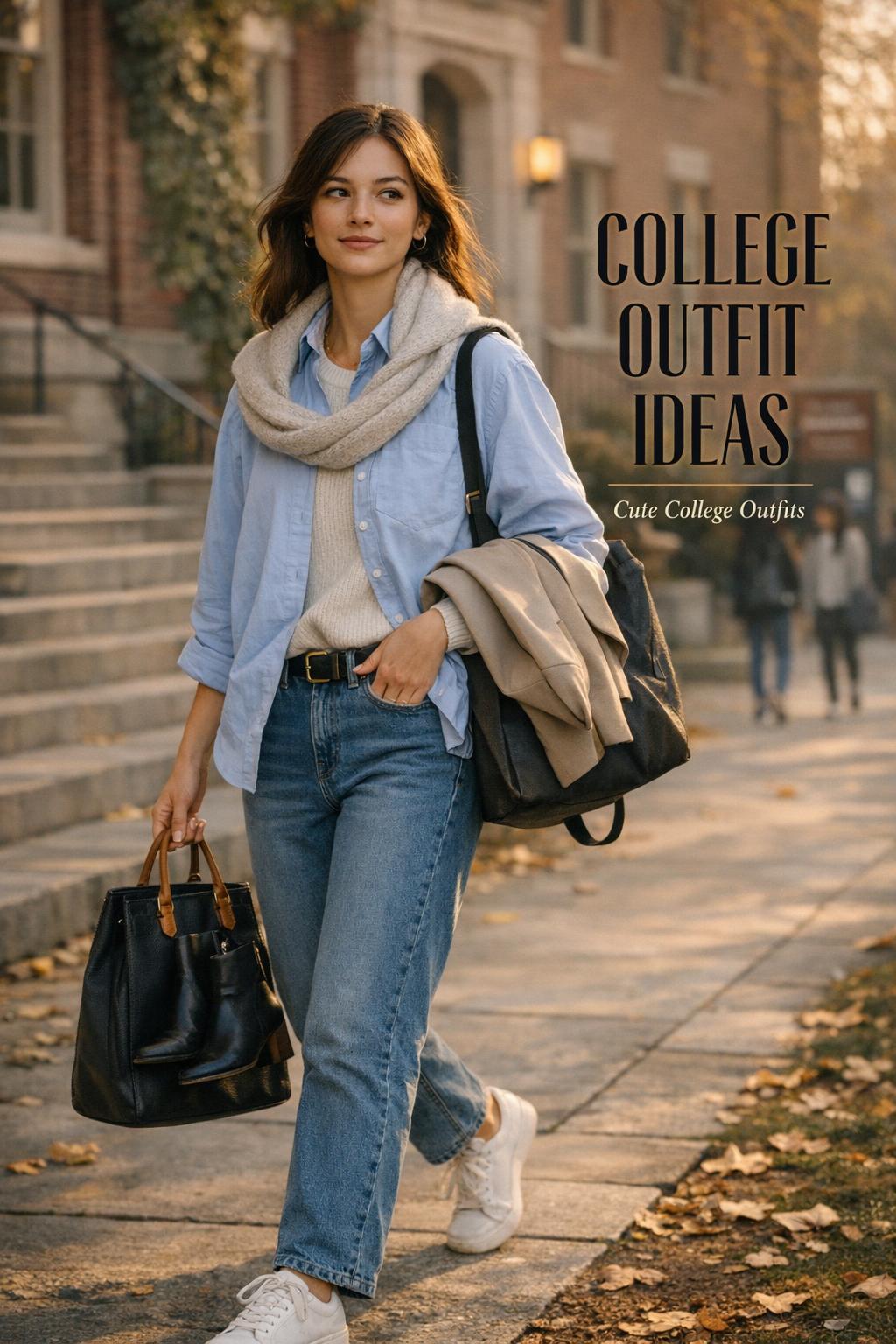
That’s why so many college outfit ideas circle the same two aesthetics and sometimes blur them together: effortless campus chic (the relaxed, “thrown-on-but-right” formula) and polished casual (a cleaner, more structured approach that still reads comfortable). Both can produce cute college outfits. Both can become trendy college outfits. And both can be built from the same core pieces—oversized shirt, jeans, skirt, sweater, collared shirt, boots, sneakers—just arranged with different priorities.
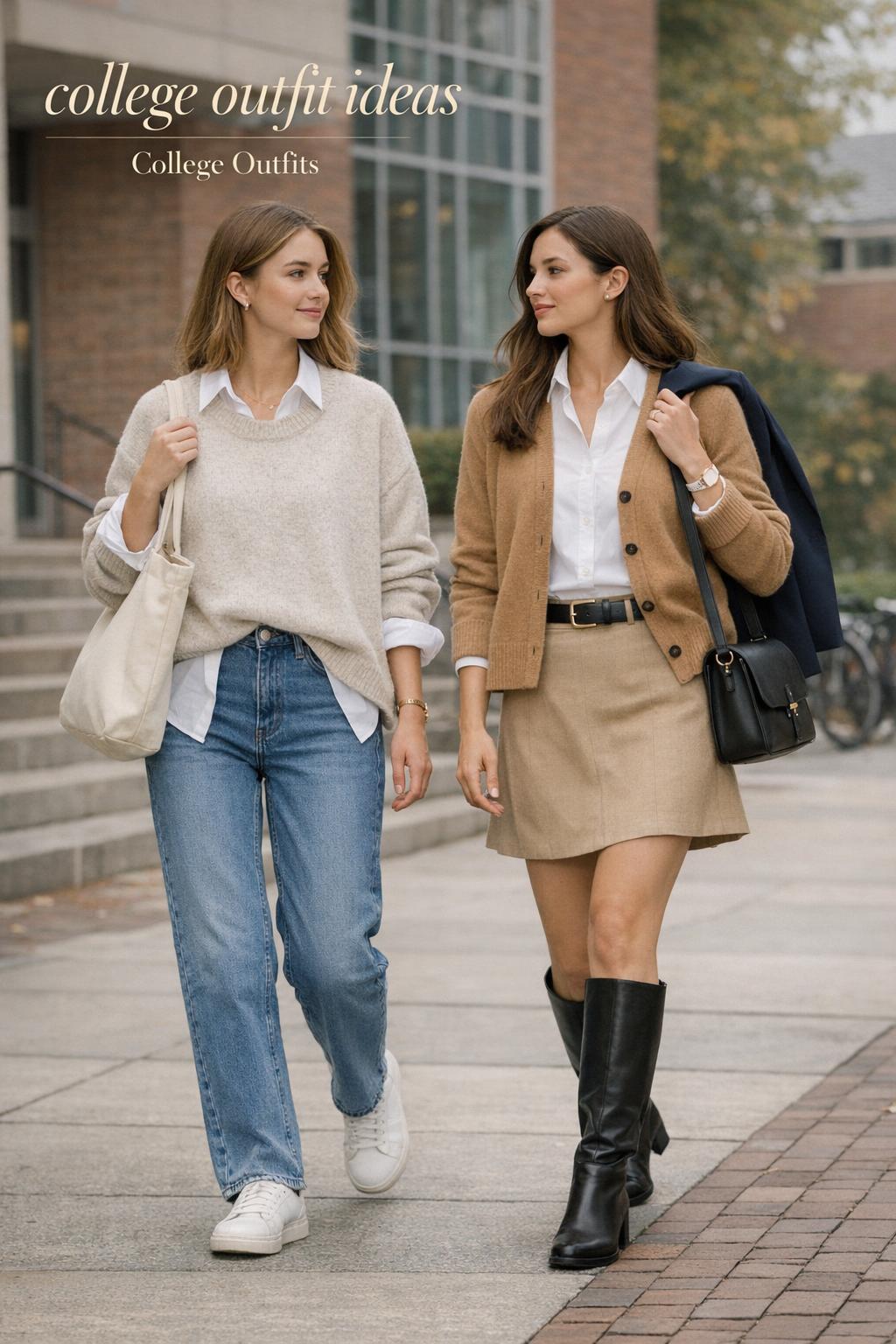
This comparison breaks down how these styles actually work in real life: silhouettes, layering logic, footwear, accessories, and where each approach shines (class mornings, presentations, career fairs, campus festivities). You’ll also find practical uni outfits you can adapt across seasons—fall through summer—without needing a completely different wardrobe every time the weather changes.
Style overview: effortless campus chic (the “intentional ease” formula)
Effortless campus chic is the style most people mean when they say they want to look “put-together” without looking like they tried too hard. The mood is relaxed, practical, and modern—rooted in everyday campus life. In this lane, comfort is not an afterthought; it’s the starting point, then refined with proportion and repetition of dependable staples.

Your wedding has a lot of moving pieces. Your plan can still feel composed.
Zarellea organizes guests, vendors, budget, and timelines in one shared space — so you can make decisions with clarity, not stress.
Defining characteristics: soft structure, easy layering, and familiar pairings that feel reliable at 8 a.m. Typical silhouettes favor a slightly oversized top (think oversized shirt) with a straight, uncomplicated bottom (jeans or a simple skirt). The palette tends to stay wearable and repeatable—neutrals and basics—because the goal is consistency over novelty.
Fabrics and textures: the emphasis is on pieces that move with you: a sweater or cardigan that layers without bulk, denim that feels like a second skin, and knits that can handle temperature swings between outdoors and lecture halls. Footwear leans practical—sneakers are the natural anchor, with boots stepping in as weather shifts.
Style overview: polished casual (clean lines, campus-ready structure)
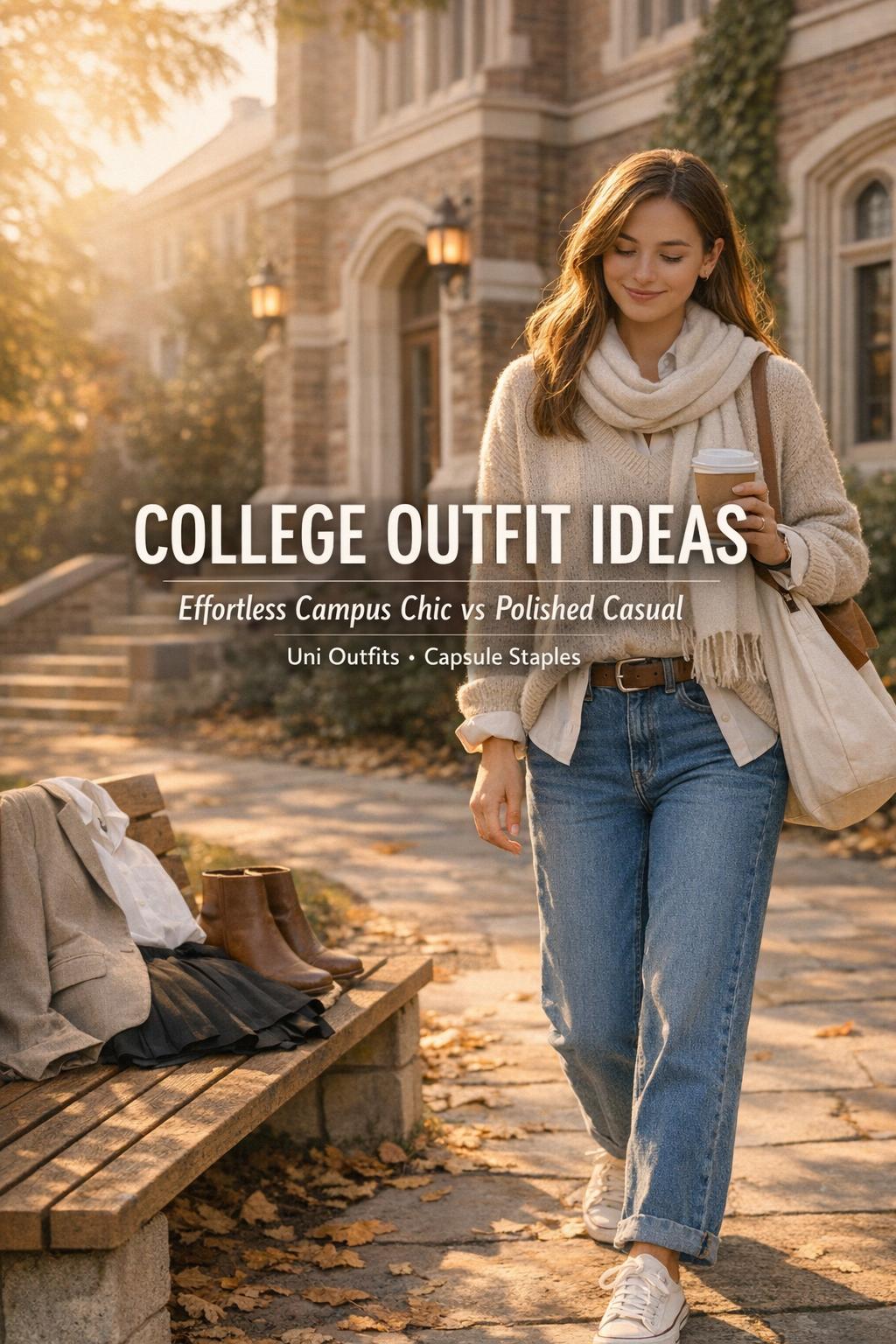
Polished casual starts from the same campus reality—long days, lots of walking, unpredictable temperatures—but it interprets “college outfits” with more clarity and composure. Where effortless campus chic is about ease, polished casual is about definition: sharper lines, a more deliberate finish, and a subtle lift in formality that still stays appropriate for class.
Defining characteristics: a tidier silhouette, gentle tailoring, and a styling philosophy that favors refinement. The collared shirt becomes a central player, layering under sweaters or sitting crisply on its own. Jeans still appear, but they’re treated as part of a composed outfit rather than the default. Skirts can feel more intentional here—less “cute,” more “considered.”
Fabrics and textures: think knits with a smoother finish and layers that read structured—like a blazer over a blouse when the day calls for it. Footwear shifts toward ankle boots or loafers when you want a cleaner line; sneakers can still work, but the rest of the outfit is usually more streamlined to balance them.
Where they overlap (and why they’re often confused)
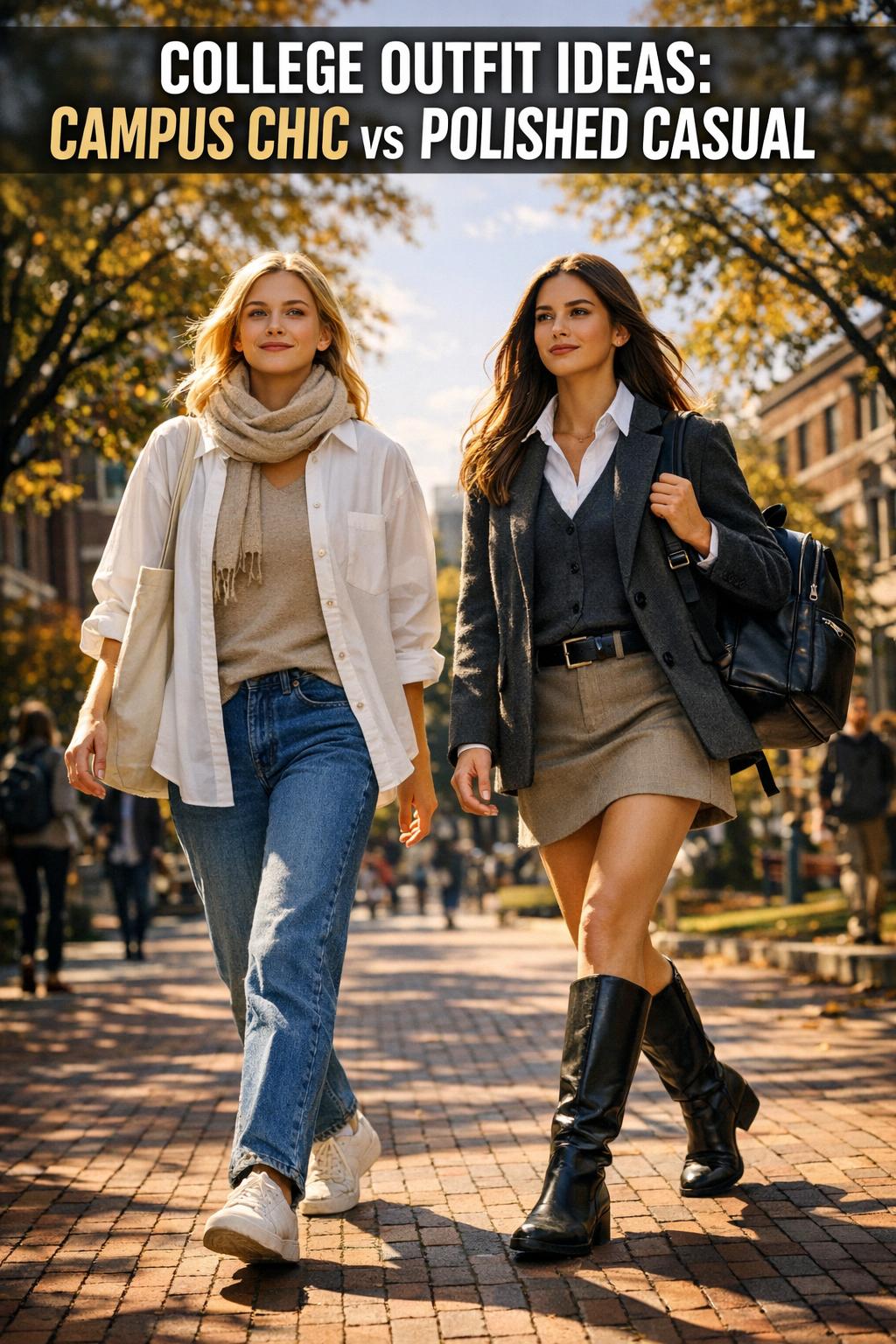
Effortless campus chic and polished casual share the same wardrobe vocabulary. Scroll any campus outfit roundup and you’ll see the repeats: oversized shirt, jeans, sweaters, collared shirts, skirts, boots. Pinterest-style inspiration boards amplify this overlap because they cluster images by mood rather than explaining the styling logic behind each look.
The difference isn’t the item list—it’s what each style is trying to achieve. Effortless campus chic prioritizes comfort-first composition. Polished casual prioritizes clarity of silhouette and a slightly elevated finish. If you’ve ever worn the same jeans and top combo two different ways and felt like you’d shifted your whole “vibe,” you’ve already experienced the distinction.
Key differences that matter on a real campus day
Silhouette and structure
Effortless campus chic tends to play with relaxed proportions: an oversized shirt over jeans, a sweater that drapes, or a cardigan that softens the outline. The silhouette is intentionally unforced—comfortable for sitting through lectures and moving between buildings. Polished casual pulls the shape inward. A collared shirt introduces a clean neckline; a blazer (even lightly structured) creates a more defined shoulder and a sharper vertical line, ideal for days that include a presentation-ready moment.
Color palette and visual “quietness”
Both styles can live in a neutral, campus-friendly palette, but the effect differs. Effortless campus chic often looks best when colors blend softly—basic tops, denim, and knits that feel cohesive without looking matched. Polished casual benefits from clearer contrasts and cleaner blocks: a collared shirt peeking under a sweater, or a blazer framing a blouse. It reads more intentional because the eye can follow the outfit’s lines.
Level of formality (and how far each style can stretch)
Effortless campus chic is ideal for class and day-to-day campus life, but it can struggle when you need to look formally credible—think a career fair, an internship meeting, or an academic presentation—unless you add a stronger layer like a blazer. Polished casual already sits closer to that threshold. It transitions more easily from lecture hall comfort to event-focused outfits, with fewer changes required.
Styling philosophy: “template dressing” vs “composition dressing”
Effortless campus chic is built on templates: oversized shirt + jeans + sneakers; sweater + skirt + boots. The goal is repeatability—outfits you can assemble quickly, especially during back-to-school season when you’re establishing routines. Polished casual behaves more like composition: the collared shirt neckline, the sweater layer, the shoe choice, and accessories work together as a single message. It’s not harder; it’s simply more deliberate.
The wardrobe pillars both styles rely on (and how each interprets them)
Most cute college outfits that actually get worn (not just saved) are variations on a small capsule. When you treat the wardrobe as a set of pillars—core tops, bottoms, layers, footwear—you stop chasing random pieces and start building uni outfits that mix without friction.
The capsule starter: 6–8 essential pieces
This isn’t about restriction; it’s about a foundation that keeps your mornings easy. Both effortless campus chic and polished casual can be built from a compact core—then styled in two different directions depending on your day.
- an oversized shirt (the relaxed anchor piece)
- jeans (a consistent base for daily college outfits)
- a skirt (for contrast and quick polish)
- a sweater (layering and warmth without fuss)
- a collared shirt (instant structure, especially in polished casual)
- a cardigan (soft layering for shifting campus temperatures)
- sneakers (comfort-first walking shoe)
- boots (especially ankle boots; knee-high boots for a more statement line)
In effortless campus chic, these pieces are styled to feel relaxed and natural—oversized shirt draped, sweater worn casually, sneakers doing the heavy lifting. In polished casual, the same pieces are arranged to look intentional—collared shirt crisp under a sweater, boots or loafers sharpening the finish, and a blazer appearing when the day calls for authority.
Layering essentials by climate (the campus reality check)
Layering is where college outfit ideas become practical rather than aspirational. Lecture halls can feel cold; afternoons can warm up; a long walk across campus changes what “comfortable” means. Effortless campus chic prefers softer layers: cardigan over a basic top, sweater over a collared shirt with a relaxed drape. Polished casual uses layers to create definition: a blazer to refine the silhouette, or a sweater layered with more visible structure at the neckline.
Footwear fundamentals: sneakers, boots, and the mood shift
Sneakers signal campus ease—perfect for long days, tight schedules, and lots of walking. Boots shift the posture of the outfit. Ankle boots immediately read more refined and can elevate jeans or a skirt without pushing you into overdressed territory. Knee-high boots are more directional: they turn a simple skirt into a trendy college outfit, but they’re less subtle and can feel like “a look,” especially if the rest of the outfit is also statement-driven.
Visual style breakdown: how the two aesthetics look in motion
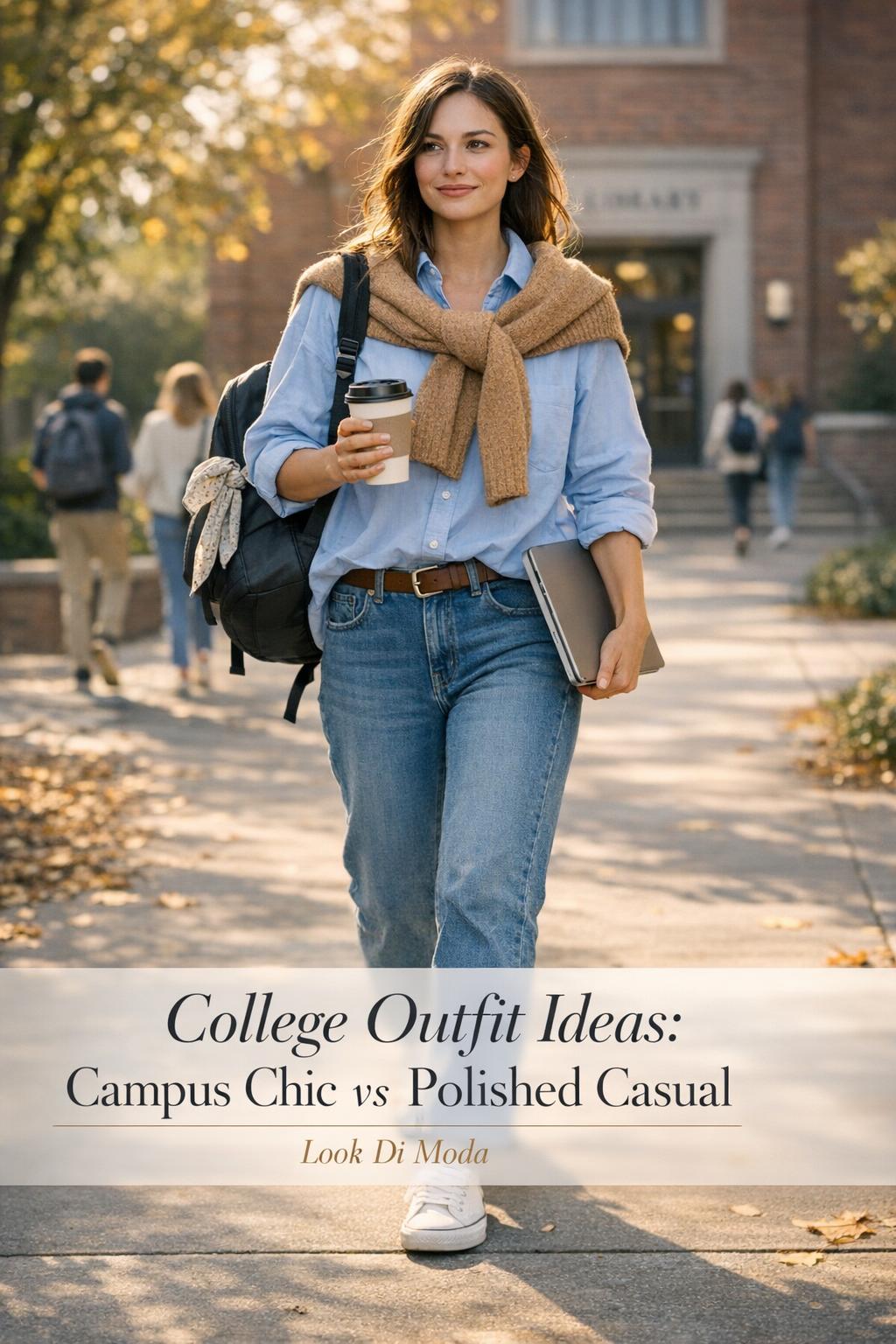
On paper, both styles use similar ingredients. In real life—walking to class, sitting in a library, moving between buildings—the difference is visible in proportion, layering, and finishing details.
Layering approach: softness vs definition
Effortless campus chic layers for comfort and warmth. A cardigan is worn open; a sweater feels slightly oversized; an oversized shirt becomes a relaxed top layer. The outfit moves. Polished casual layers for line. A collared shirt creates a clear neckline; a blazer frames the torso; sweaters sit more cleanly, keeping the silhouette tidy even when you add warmth.
Garment proportions: drape vs precision
Effortless campus chic leans into drape—tops that don’t cling, bottoms that feel familiar and easy. The balance often comes from pairing one relaxed piece with one straightforward piece (oversized shirt with jeans, sweater with a skirt). Polished casual is more precise: the top half often has a deliberate line (collared shirt, blouse, blazer), and the bottom half supports it with cleaner styling.
Accessories: the quiet difference-maker
Accessories are a supporting entity in many campus fashion guides because they’re the easiest way to adjust the message of an outfit. Effortless campus chic treats accessories as minimal—small additions that don’t interrupt comfort. Polished casual uses accessories to sharpen the impression: a belt to define shape, a scarf to add a composed layer, or understated pieces that reinforce the “put-together” effect.
Outfit comparisons: the same scenario, two different style logics
Rather than a long list of outfits, consider these as styling interpretations. Each example uses familiar campus pieces—jeans, oversized shirt, sweater, skirt, boots—then adjusts proportion and finish to land in either effortless campus chic or polished casual.
Casual class morning: jeans as the anchor
Effortless campus chic: Start with jeans and an oversized shirt, letting the top skim the body for ease. Sneakers keep it grounded for walking across campus. The outfit reads relaxed, functional, and current—ideal when you want cute college outfits that don’t demand attention. Polished casual: Keep the jeans, but swap the oversized shirt for a collared shirt (or layer the collared shirt beneath a sweater). Add ankle boots to tighten the silhouette. The result is still comfortable, but the lines look sharper—more “ready” than “rolled out.”
Study session chic: soft layering with purpose
Effortless campus chic: A cardigan over a simple top, paired with a skirt for a light, collegiate contrast. Sneakers can keep it practical, or boots can shift it toward a trendier direction without sacrificing comfort. Polished casual: A sweater layered over a collared shirt creates instant structure around the face—useful in indoor lighting and long hours. Pair with a skirt and ankle boots for a composed outline that still feels relaxed enough for a library chair.
Presentation-ready: when you need credibility without stiffness
Effortless campus chic: Build from the familiar—jeans and a clean top—then add a blazer as the authority layer. The blazer is the pivot: it moves the outfit from “class outfit” to “professional college look” without forcing you into uncomfortable formality. Polished casual: Begin with a blouse under a blazer, then choose jeans only if they read neat and intentional; otherwise, a skirt can create an equally campus-appropriate but more polished line. Footwear matters here: ankle boots (or loafers) keep the look cohesive and composed.
Back-to-school first week: trend-aware, not trend-chasing
Effortless campus chic: An oversized shirt with jeans is a reliable first-week uniform because it’s forgiving when schedules shift. Add a sweater you can remove mid-day. The goal is consistency: outfits for class that keep you comfortable while you learn campus rhythms. Polished casual: Use the collared shirt as your “signal” piece—either alone or under a sweater. It photographs well, reads intentional, and helps you feel pulled together in new spaces, from lecture halls to campus meetings.
Trendy college outfits moment: knee-high boots and a skirt
Effortless campus chic: Pair knee-high boots with a simple skirt and a relaxed sweater to keep the look wearable. The boots make it fashion-forward; the knit keeps it grounded. Polished casual: Let the boots stay, but refine the top half—layer a collared shirt under the sweater or add a blazer. The aim is balance: when footwear is bold, the rest of the outfit should feel controlled so it reads look di moda rather than costume-like.
Seasonal translation: fall to summer without changing your identity
Seasonality is where campus outfits often go wrong: people chase a “fall aesthetic” and end up with outfits that don’t work indoors, don’t layer well, or feel impractical by week three. A smarter approach is to keep your style identity stable—effortless or polished—then adjust fabric weight and layering.
Fall: the semester’s most forgiving style season
Fall college outfits are the easiest to make look cohesive because layering is expected. Effortless campus chic thrives here: oversized shirt plus jeans, topped with a sweater or cardigan when the temperature drops. Polished casual also shines in fall because collared shirts and sweaters layer naturally, and ankle boots feel seasonally appropriate without effort.
Winter: warmth changes the silhouette
In winter, the challenge is bulk. Effortless campus chic can lean too oversized if every layer is loose; keep one element cleaner (jeans that hold a line, or a skirt with boots that create structure). Polished casual benefits from defined layers—especially a blazer under heavier outer layers when you need a crisp indoor look after you take your coat off.
Spring: lighter layers, clearer proportions
Spring outfits reward restraint. A collared shirt becomes a perfect transitional piece—alone on mild days, under a cardigan when mornings are cooler. Effortless campus chic can feel fresh with a simple oversized shirt and jeans, while polished casual reads especially modern with a sweater draped over a collared shirt and streamlined footwear.
Summer campus comfort: minimal layers, maximum intention
Summer strips away layering tricks, which means proportion and simplicity matter more. Effortless campus chic becomes about clean basics—an easy top with jeans or a skirt, sneakers for long walks. Polished casual relies on crispness: a collared shirt with sleeves styled neatly, or a blouse that keeps the look elevated even when the outfit is minimal.
Event-focused dressing: career fairs, lectures, campus festivities
College life isn’t only “what to wear to class.” There are career fairs, internship conversations, presentations, guest lectures, and campus festivities—each with its own unspoken dress code. The most useful college outfit ideas acknowledge this and build flexible templates rather than one-off looks.
Career fair-ready templates (where polished casual leads)
For career fairs, polished casual tends to be the safer default because it signals competence without looking overly formal. A blazer over a blouse is the clearest option when you want a professional college look that still feels like you. If you lean effortless campus chic, keep your base familiar, but let the blazer do the talking—otherwise the look can read too relaxed for a first impression.
Lecture hall comfort (where effortless campus chic excels)
Long lectures reward comfort and temperature management. Effortless campus chic handles this elegantly: oversized shirt with jeans, sneakers, and a sweater you can put on or take off. Polished casual can still work for lectures, especially if you like feeling more composed; just make sure the layers don’t restrict movement or become fussy when you’re sitting for long periods.
Campus festivities and dress codes: trending without overcommitting
Campus festivities are where trendy college outfits appear—boots with skirts, a more styled silhouette, accessories that show personality. The key is adaptability: choose one statement element (knee-high boots or a skirt) and keep the rest grounded (a sweater, an oversized shirt, or clean layers). Both aesthetics can participate; the difference is whether the finish feels relaxed (effortless) or defined (polished).
Tips from real campus wear: making outfits last from morning to night
Even the best uni outfits can fail if they don’t survive a full day. Comfort isn’t only about softness; it’s about friction points—waistbands when you sit for hours, layers that overheat indoors, shoes that feel fine for ten minutes but not ten thousand steps.
Tips: a “two-layer rule” for unpredictable buildings
Many campuses run cold inside. A practical rule is to plan for two layers you can separate: a base (top, blouse, or collared shirt) and a removable layer (cardigan, sweater, or blazer). Effortless campus chic keeps this relaxed—cardigan over a basic top. Polished casual keeps it crisp—blazer over a blouse, or a sweater over a collared shirt. The point is control: you can adapt without the outfit losing its shape.
Tips: use footwear to choose your style lane
If you’re torn between aesthetics, decide based on shoes. Sneakers naturally pull you toward effortless campus chic. Ankle boots naturally pull you toward polished casual. Knee-high boots lean trend-forward and can work in either style, but they require more balance elsewhere—cleaner layers if you want polish, softer knits if you want ease.
Tips: the “one polished element” shortcut
On days when you’re tired but still want to look put-together, add one polished element to an otherwise casual outfit. A collared shirt under a sweater, a blazer over your usual jeans-and-top formula, or ankle boots instead of sneakers. This is how you move from everyday campus wear to something that reads refined—without changing your whole wardrobe.
Common styling mistakes (and what to do instead)
Most outfit frustration in college isn’t about lacking clothes—it’s about mismatched intention. The fix is rarely “buy more.” It’s usually about making your pieces agree with each other.
- Too many oversized layers at once: if your oversized shirt is relaxed and your sweater is also oversized, keep jeans more streamlined or add boots to reintroduce structure.
- Mixing formality signals without a plan: a blazer can look awkward if everything else is ultra-casual; pair it with a blouse or a collared shirt to make the message cohesive.
- Over-styling for class: knee-high boots and a skirt can be cute, but if the rest of the outfit is also highly styled, it may feel uncomfortable for a long campus day; soften with a sweater or keep accessories minimal.
- Ignoring the indoor climate: outfits that work outside can fail inside; rely on cardigans, sweaters, and blazers you can remove without losing the look.
The underlying principle is simple: decide whether the day calls for ease or definition. Then style consistently within that lane. This is how college outfits become repeatable, not just photogenic.
Inclusive and sustainable campus style (what many guides skip)
Campus style should work across bodies and across budgets, and it should feel responsible in how you build it. Two themes are often discussed but not always developed in typical roundups: inclusive sizing and sustainability. You don’t need a perfect system to start; you need a way of thinking that favors pieces you’ll rewear, layer, and adapt.
Size-inclusive thinking: adapt the silhouette, not the trend
The most wearable styles—effortless campus chic and polished casual—are fundamentally adaptable because they rely on proportion rather than a single “ideal” shape. If you’re petite, oversized shirts can overwhelm unless you keep the bottom line clean (jeans that hold shape, boots that lengthen the line). If you’re tall, skirts with boots can look especially balanced when the top half is streamlined (a sweater layered over a collared shirt). If you’re plus-size, polished casual can be powerful because clean lines and defined layering (blazer, collared shirt) create a refined silhouette without relying on tightness. In all cases, comfort matters: outfits for class should feel good sitting down, not just standing up.
Sustainability as a wardrobe method: fewer, better combinations
Sustainable campus style doesn’t require a new identity; it’s often a commitment to a capsule approach that reduces excess. When you build around essentials—jeans, an oversized shirt, a collared shirt, sweaters, a skirt, sneakers, boots—you naturally repeat outfits in fresh ways. This is the quiet advantage of a true capsule wardrobe for college: it supports daily variety through styling, not through constant replacement.
Choosing your style lane: a practical guide for everyday decisions
Some days demand ease. Others demand clarity. The most stylish students aren’t the ones with the most clothes—they’re the ones who can shift between effortless campus chic and polished casual without losing coherence.
Choose effortless campus chic when you need endurance
Reach for effortless campus chic on long days with lots of walking, back-to-back classes, or heavy study sessions. It’s the most forgiving style for changing temperatures and changing schedules. It also excels at “repeat dressing”: jeans, oversized shirt, sneakers, sweater—small variations that still look intentional.
Choose polished casual when the day includes visibility
Polished casual is ideal for presentations, career fairs, internship conversations, or any day when you’ll be meeting new people and want a little more authority. A collared shirt, a blouse, or a blazer can elevate your presence without pushing you into discomfort. It’s still campus fashion—just sharper.
Blend both for a modern “look di moda” campus signature
The most convincing trendy college outfits often blend the two: a relaxed base with one structured element. Think jeans and sneakers (effortless), finished with a blazer (polished). Or a skirt with boots (directional), tempered by a sweater (easy). This hybrid is especially useful when you want cute college outfits that still feel grown-up—modern, not performative.
A note on regional campus style (and why climate changes the outfit)
Even within the U.S., campus style shifts with climate and daily movement patterns. The same “college outfit ideas” behave differently depending on how much you walk, how unpredictable the weather is, and whether you spend most of your day indoors or outdoors. That’s why layering entities—sweaters, cardigans, jackets, blazers—show up again and again in campus outfit guides: they’re the functional bridge between seasons and settings.
If your campus days are mostly outdoors, boots and heavier layers become more than aesthetic—they’re practical. If your campus is primarily indoors, you’ll likely rely on removable layers and lighter bases. In both cases, the best uni outfits are designed to flex: they should still look coherent when a sweater comes off or a blazer gets carried in your arm.
Conclusion: the core distinction—and how to spot it instantly
Effortless campus chic and polished casual share the same building blocks, which is why they’re often discussed together in college outfits roundups. The distinction is in intention: effortless campus chic prioritizes ease and soft proportion, while polished casual prioritizes defined lines and a cleaner finish. Once you understand that, you can translate any inspiration—Pinterest boards, back-to-school edits, everyday campus wear—into something that suits your real schedule.
To identify the style at a glance, look at the neckline and the shoes: a collared shirt, blouse, blazer, and ankle boots usually signal polished casual; an oversized shirt, relaxed sweater, and sneakers often signal effortless campus chic. And if you want a look di moda signature, blend them: one structured element over an otherwise relaxed base. That’s how cute college outfits become sustainable, repeatable, and genuinely yours.
FAQ
What are the easiest college outfit ideas for class?
Start with a repeatable template: an oversized shirt with jeans and sneakers for effortless campus chic, or a collared shirt layered under a sweater with ankle boots for polished casual; both are comfortable for lecture halls and easy to adapt with a cardigan or sweater when temperatures change.
How do I look put-together without looking overdressed on campus?
Use one elevated element at a time—swap sneakers for ankle boots, add a collared shirt under a sweater, or layer a blazer over your usual jeans-and-top combination—so the outfit reads intentional while still feeling like everyday campus wear.
What’s the difference between effortless campus chic and polished casual?
Effortless campus chic emphasizes relaxed proportions and comfort-first layering (oversized shirt, sweaters, sneakers), while polished casual emphasizes clearer structure and refinement (collared shirts, blouses, blazers, ankle boots), even when both styles use similar wardrobe pieces.
What should I wear to a college career fair?
Polished casual is typically the safest direction: a blazer over a blouse creates a professional college look that still feels campus-appropriate, and you can keep the rest of the outfit simple so you look credible without feeling stiff during a long event.
How do I layer for fall college outfits without looking bulky?
Keep one part of the outfit clean and one part cozy—layer a cardigan or sweater over a simpler base like a collared shirt or basic top, and pair it with jeans or a skirt that holds its shape so the silhouette stays balanced while you stay warm.
Can sneakers still work for polished casual uni outfits?
Yes, but the outfit needs cleaner lines elsewhere—think a collared shirt under a sweater or a blazer over a blouse—so the sneakers read as intentional contrast rather than a default choice.
How do I style a skirt for campus without it feeling too dressed up?
Balance the skirt with a relaxed top layer such as a sweater or cardigan for effortless campus chic, or keep the top half composed with a collared shirt and simple footwear for polished casual so the overall look stays appropriate for class and study sessions.
Are knee-high boots practical for college outfits?
Knee-high boots can create trendy college outfits—especially with a skirt—but they read more statement-making, so they work best when the rest of the outfit is grounded (a simple sweater or structured layers) and when your day’s walking and comfort needs support that choice.
Leave a Reply