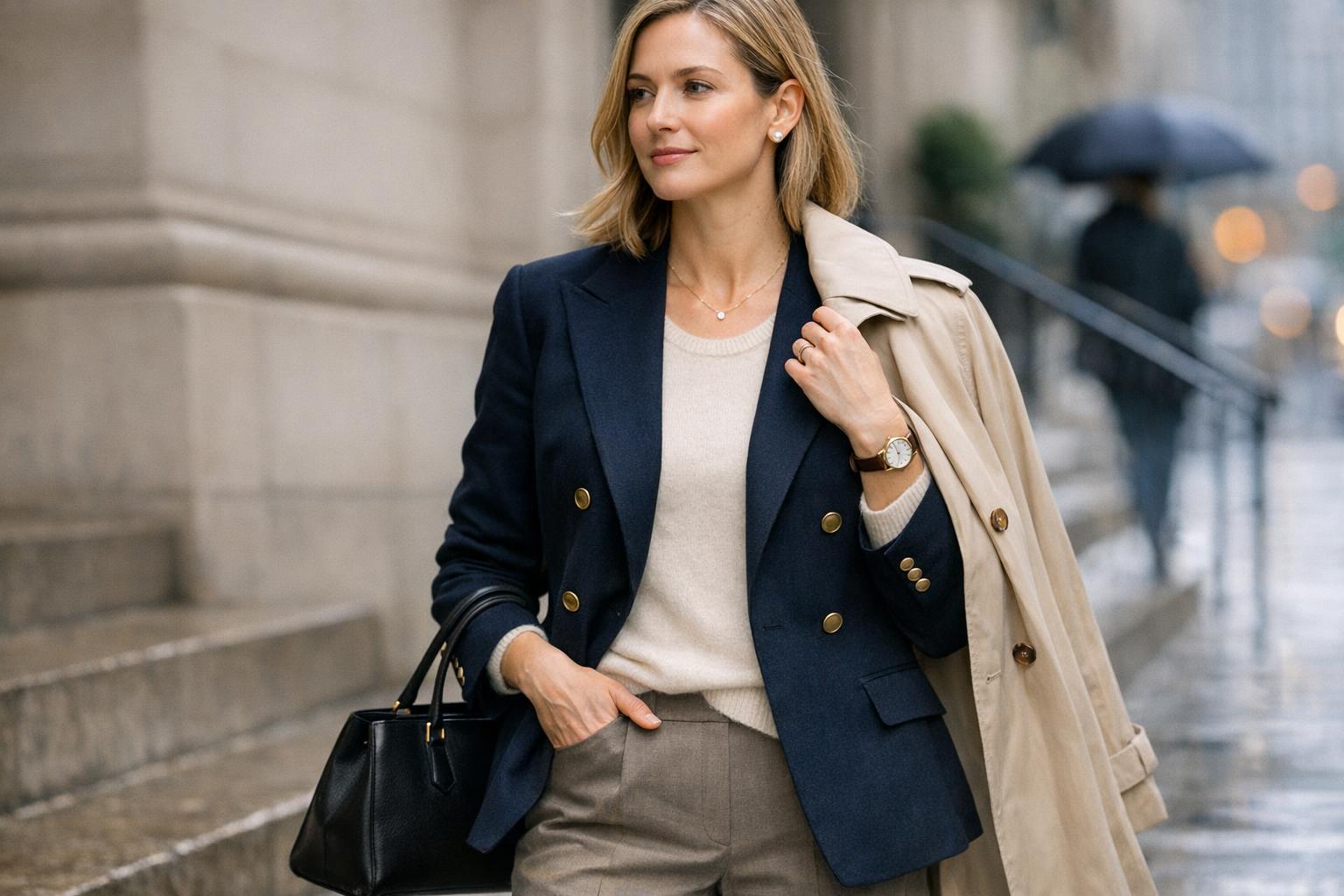
Old money fashion when you need to look polished all day (without feeling overdressed)
The hardest part of dressing “old money” isn’t finding a blazer or a pair of loafers—it’s managing the in-between moments of real life. A morning that starts in an air-conditioned office, turns into a sunny lunch, becomes a windy commute, and ends at a dinner where you suddenly feel either too casual or too done-up. Old money fashion promises effortless composure, but the wrong fabric, fit, or styling choice can quickly read as stiff, costume-like, or simply uncomfortable.
That tension is why the old money aesthetic has become synonymous with quiet luxury: it’s less about “looking rich” and more about looking considered. The goal is a wardrobe that behaves well—tailoring that moves, knitwear that breathes, leather that softens, and a palette that lets you repeat outfits without anyone noticing. If you’ve admired the country club aesthetic or the Ivy League-inspired polish of East Coast prep traditions, this guide is designed to help you translate the idea into outfits that work for modern schedules.
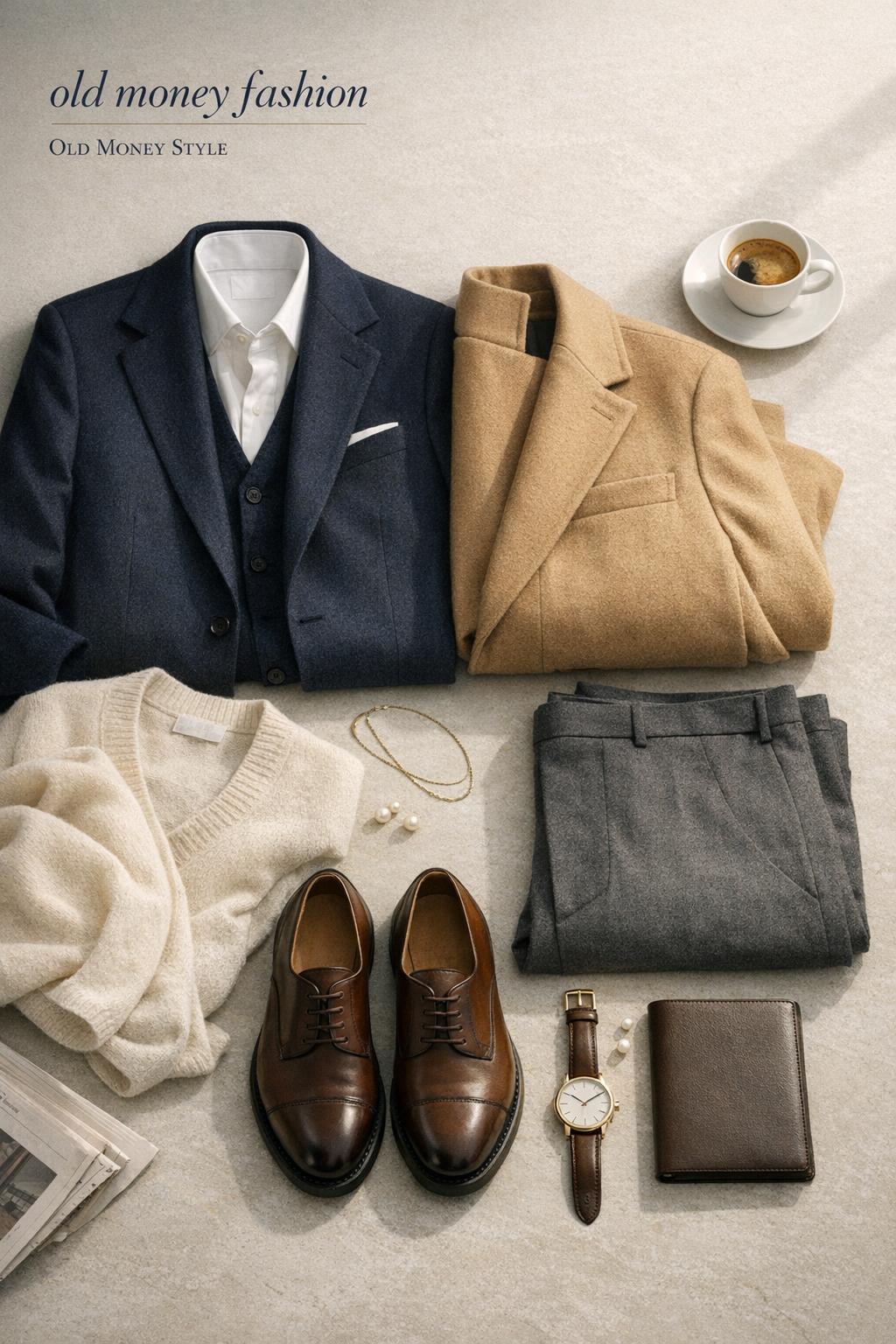
Think of this as a problem-solving fashion guide: you’ll learn the styling logic behind old money style, how to build a wardrobe with durable staples (not trend-chasing “hauls”), and how to create outfit solutions for work, travel, weekends, and occasions. Consider it your practical bridge between “look di moda” aspiration and the realities of weather, comfort, and movement.
Understanding the styling challenge: timeless, understated, and actually wearable
Old money fashion is often described in images—navy blazers, trench coats, cashmere sweaters, pearl earrings, heirloom watches—but lived experience is more complicated. The look relies on restraint: minimal logos, refined silhouettes, and fabrics that hold their shape. Yet restraint can become rigid if you choose pieces that don’t match your climate, your daily walking distance, or your tolerance for fussy layers.
Your wedding has a lot of moving pieces. Your plan can still feel composed.
Zarellea organizes guests, vendors, budget, and timelines in one shared space — so you can make decisions with clarity, not stress.
The most common friction points are practical. Weather shifts make heavy wool too warm at noon and too thin at night if you’ve only brought one layer. Comfort matters when you’re sitting through meetings or moving through airports; an overly tight tailored trouser can ruin the “effortless” impression faster than any trend mistake. And there’s a social balance: old money style should feel quietly confident, not like you’re auditioning for a role in someone else’s lifestyle.
Solving this means thinking in relationships rather than single items: silhouettes connected to fabrics, fabrics connected to seasons, and accessories connected to function. The best old money wardrobes look simple because the decisions were made earlier—fit, material, and color harmony doing the work so you don’t have to.
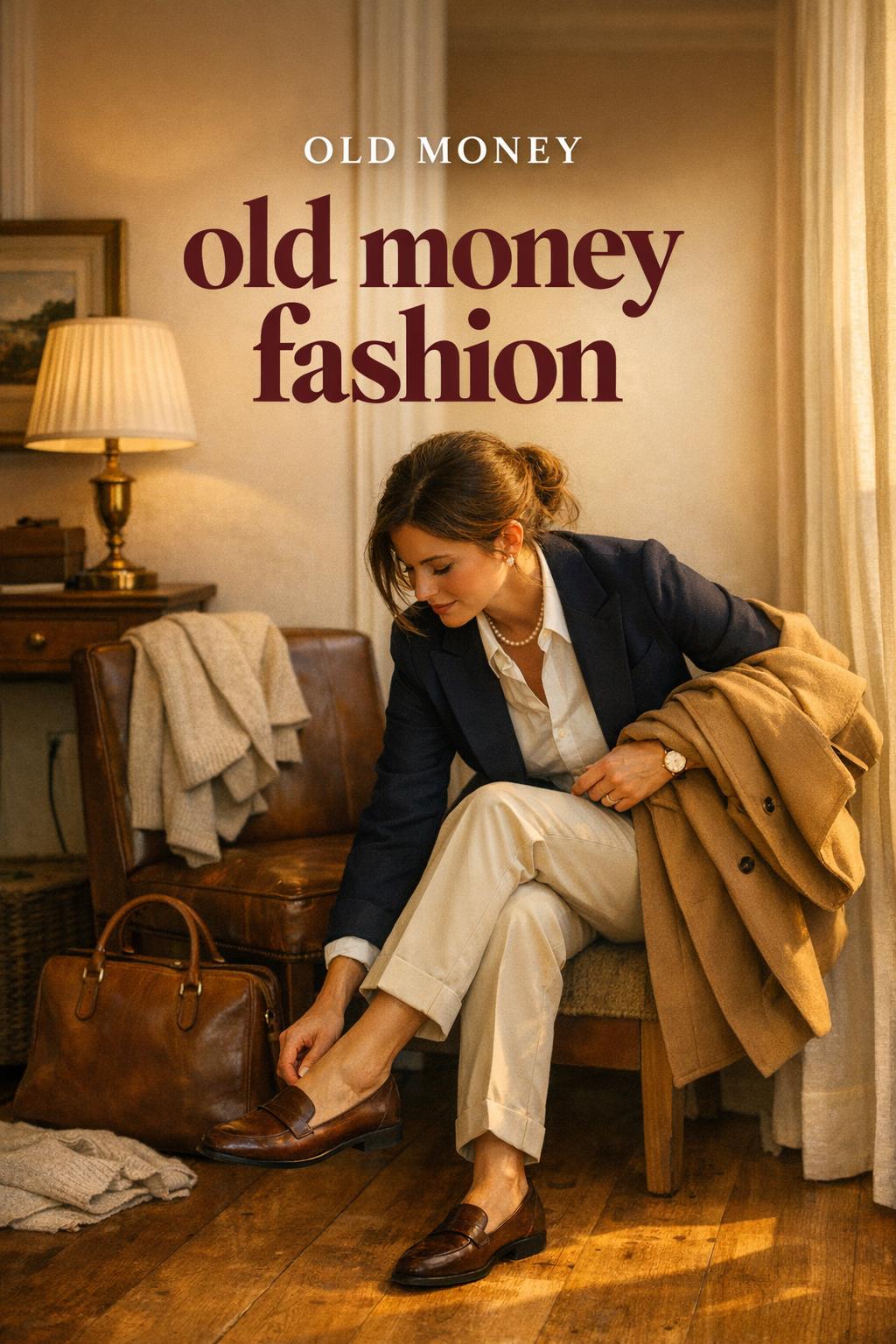
Key dressing principles of the old money aesthetic (the logic behind the ease)
Principle 1: build the silhouette first, then add “quiet” texture
Old money fashion is anchored by clean lines: a tailored blazer that defines the shoulder, trousers that skim rather than cling, and outerwear that falls with intention. Once the shape is right, texture does the elevating—cashmere against crisp cotton, wool against smooth leather. This is the quiet luxury trick: you don’t need loud branding when the materials create depth up close.
Principle 2: use layering to solve temperature swings without bulk
Layering in old money style is not about piling on; it’s about modular refinement. A cardigan that can be buttoned or worn open, a trench coat that handles wind and light rain, a blazer that can replace a coat in mild weather—these pieces let you adapt while keeping a polished outline. When done well, the outfit still reads intentional even when you remove a layer and carry it.
Principle 3: commit to a restrained palette that repeats elegantly
The old money aesthetic leans on neutrals that work across seasons—navy, camel, cream, black, and soft, natural tones. This isn’t about being “boring”; it’s about building an ecosystem where everything speaks the same language. When your blazer, knitwear, and trousers are in a coherent family of tones, you can rewear pieces frequently and still look freshly composed.
Principle 4: choose craftsmanship and fit over novelty
Even the most classic items—loafers, cap-toe oxfords, a trench coat—can look wrong if the fit is careless or the material collapses. Old money fashion is built around durable materials (wool, cashmere, cotton, leather) and tailoring details that keep garments looking elegant over time. When you prioritize construction and fit, you don’t need constant refreshes; your wardrobe becomes stable, not seasonal.
Principle 5: accessories should be personal, subtle, and functional
Understated jewelry—pearls, simple gold chains, an heirloom watch—fits the spirit of old money because it signals continuity rather than trend. Accessories also solve practical problems: a belt that refines proportion, a watch that keeps you off your phone, loafers that transition from daytime to evening. The goal is never “more,” but “enough.”
Wardrobe anchors: the investment pieces that do the heavy lifting
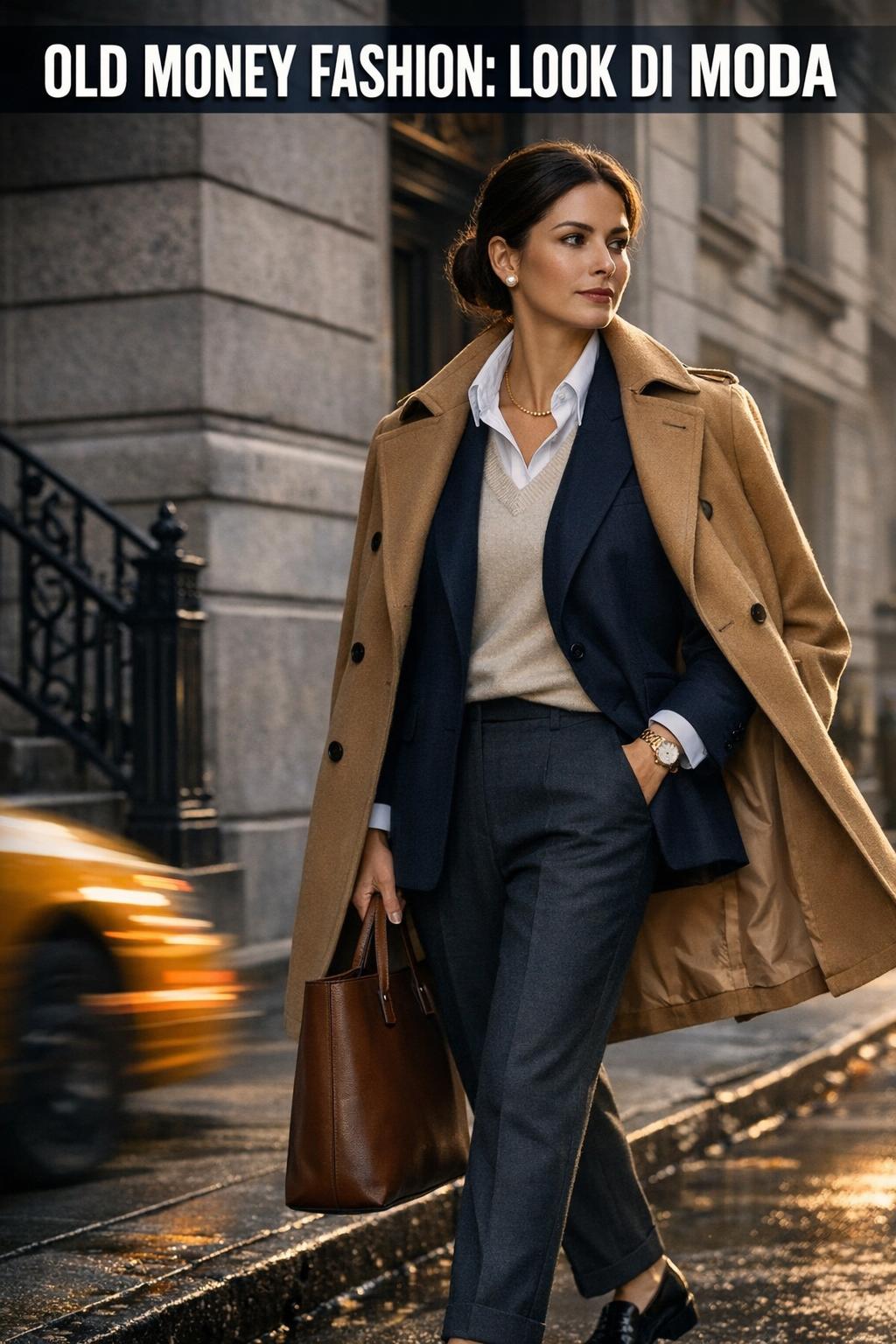
You can’t style your way out of weak foundations. Old money fashion works when your closet contains a core of timeless wardrobe staples that combine seamlessly. These are not “must-buys” in a shopping sense; they’re design solutions: pieces with stable silhouettes, durable fabrics, and a quiet presence that makes everything else look better.
- Outerwear: trench coat, camel hair overcoat
- Tailoring: navy blazer, tailored trousers
- Knitwear: cashmere sweater, refined cardigan
- Shirts and bases: crisp cotton pieces that layer cleanly
- Footwear: leather loafers, cap-toe oxfords
- Jewelry and finishing: pearl studs, simple gold chains, heirloom watches
Brand names aren’t the point, but heritage brands are often referenced because they’ve historically specialized in the very categories that define the look. Brooks Brothers and J. Press are archetypes in classic American tailoring tied to East Coast and Ivy League style codes, while Ralph Lauren represents a modern reinterpretation that translates heritage cues into contemporary wardrobes. Treat these names as directional references: they illustrate categories and proportions, not a requirement list.
Fabrics, materials, and craftsmanship: where “quiet luxury” becomes visible
In old money fashion, materials are the message. Cashmere reads refined because it drapes softly and looks calm even in simple silhouettes. Wool holds structure in tailoring and outerwear. Cotton brings crispness to the layers closest to the skin. Leather becomes more beautiful with wear, especially in footwear and belts, where shine and softness develop gradually. These fabrics support the aesthetic precisely because they age with dignity rather than collapsing after a season.
Wool and cashmere: warmth without heaviness
Wool and cashmere are central to the old money aesthetic because they solve a common styling challenge: staying warm while maintaining clean lines. A cashmere sweater under a blazer adds insulation without the puffiness that breaks a tailored silhouette. A wool coat or camel hair overcoat creates an elegant vertical line—especially useful when you want to look longer and more composed in colder months.
Cotton: the quiet structure layer
Cotton is the behind-the-scenes hero of old money style. A crisp cotton layer keeps knitwear from feeling too casual and helps tailoring sit smoothly. It’s also practical: cotton breathes, which matters when you’re moving between overheated interiors and brisk city streets. The effect is subtle, but the comfort difference is immediate.
Leather: polish that improves with time (if you care for it)
Leather loafers and cap-toe oxfords are more than aesthetic cues; they’re functional tools for looking put-together with minimal effort. Good leather holds shape, supports the foot, and can be maintained. The old money approach is to keep leather clean, conditioned, and rotated—less frantic replacement, more long-term relationship. This is one reason the look aligns with durable, repair-friendly wardrobe thinking.
Color palette and styling rules: the country club aesthetic without the costume
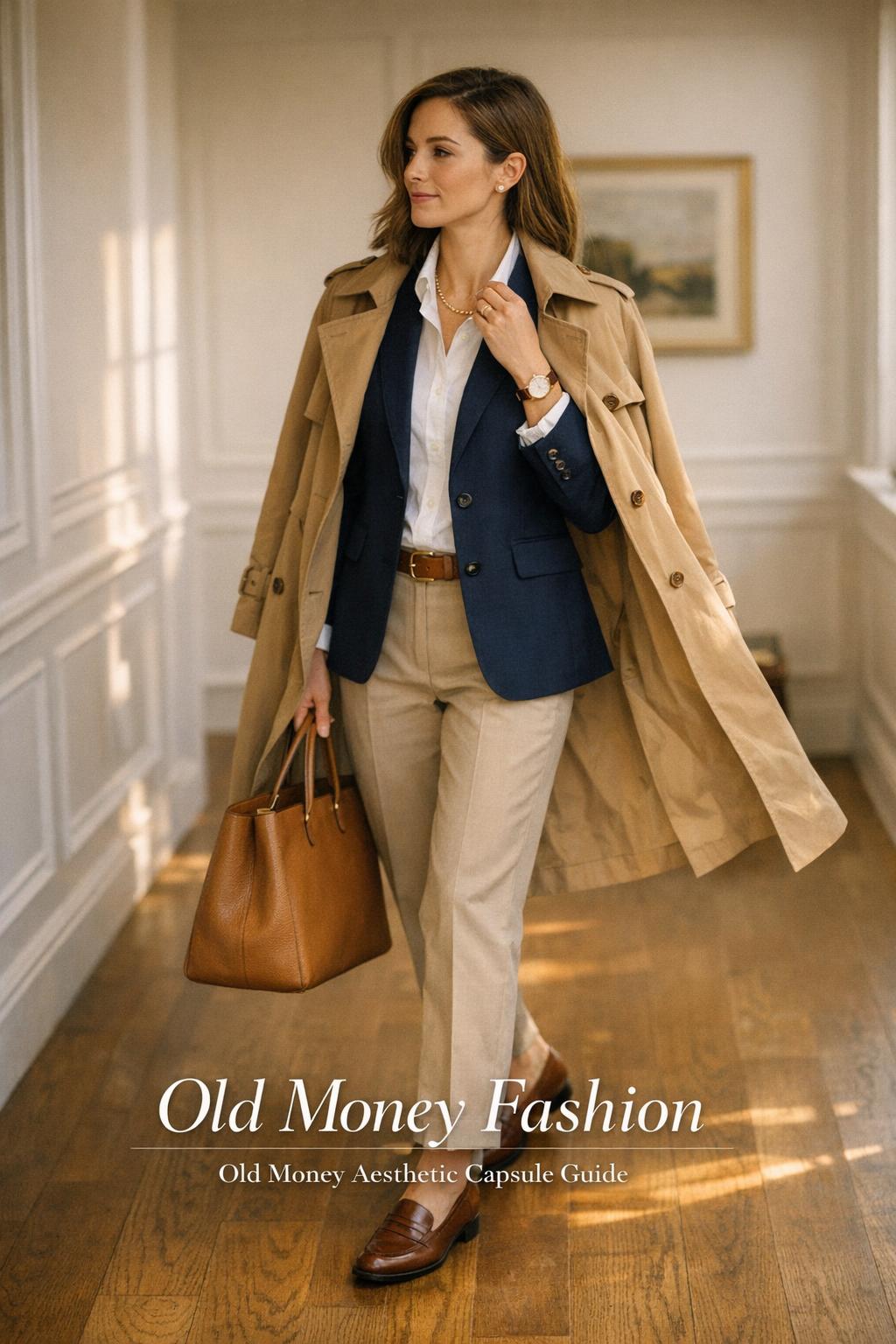
The country club aesthetic can be misread as a uniform—navy, white, beige, repeat. In reality, the best old money fashion uses neutrals as a canvas, then introduces interest through texture, proportion, and controlled contrast. Navy against cream feels crisp. Camel against black feels architectural. A soft tonal outfit in wool and cashmere feels expensive without announcing itself.
Neutrals that work across seasons
If your goal is to dress well with fewer decisions, build around neutrals that layer naturally. Navy is the backbone of the classic blazer; camel is the language of outerwear; cream and soft whites brighten knitwear and cotton layers. Black is best used with intention—clean, sharp, and minimal—so it doesn’t overpower the quieter textures that define the old money aesthetic.
Where to place subtle accents
Accents in old money style belong at the edges: a scarf-like layer of knitwear, a small piece of jewelry, the warm tone of leather. This is where “look di moda” can enter without turning flashy—one refined point of interest that doesn’t fight the silhouette. If you want to add personality, do it through texture or one controlled contrast, not a loud logo.
Outfit solutions for real life: polished, adaptable, and quietly confident
Outfit planning is where old money fashion stops being an idea and becomes a solution. The combinations below are designed for common situations: long days, unpredictable temperatures, and social settings where you want to look refined without feeling like you’re trying too hard. Each is built around wardrobe anchors—blazer, trench, cashmere, loafers—then adjusted through proportion and fabric behavior.
Outfit solution: the lightweight layered look for unpredictable weather
Start with a crisp cotton base for breathability, then add a cashmere sweater or refined cardigan as your soft layer. Finish with a trench coat as the outer shell. The silhouette stays clean because each layer is slim and structured: cotton gives clarity, cashmere adds softness, and the trench provides a defined outline that resists wind. Pair with tailored trousers and leather loafers so the outfit reads composed even if you remove the trench midday and carry it.
This is the quiet luxury equation in action: nothing is loud, but everything is deliberate. The trench coat signals classic outerwear heritage, the cashmere signals texture and quality, and the loafers keep the outfit grounded in timeless footwear. It’s old money style that moves with you rather than restricting you.
Outfit solution: smart-casual balance for office-to-dinner days
Choose a navy blazer as the anchor—structured shoulders and a clean lapel line instantly elevate even simple layers. Underneath, keep the base refined and minimal so the blazer remains the statement. Add tailored trousers for a long, uninterrupted line. For footwear, leather loafers or cap-toe oxfords create a polished finish that doesn’t feel delicate or over-styled.
The reason this works for long days is flexibility: the blazer can stay on for meetings, then be worn open at dinner for a more relaxed mood. If the venue is warmer, the base layer remains presentable on its own. If the evening turns cooler, the blazer still provides structure without needing an additional heavy coat in mild weather.
Outfit solution: the weekend “country club aesthetic” without the clichés
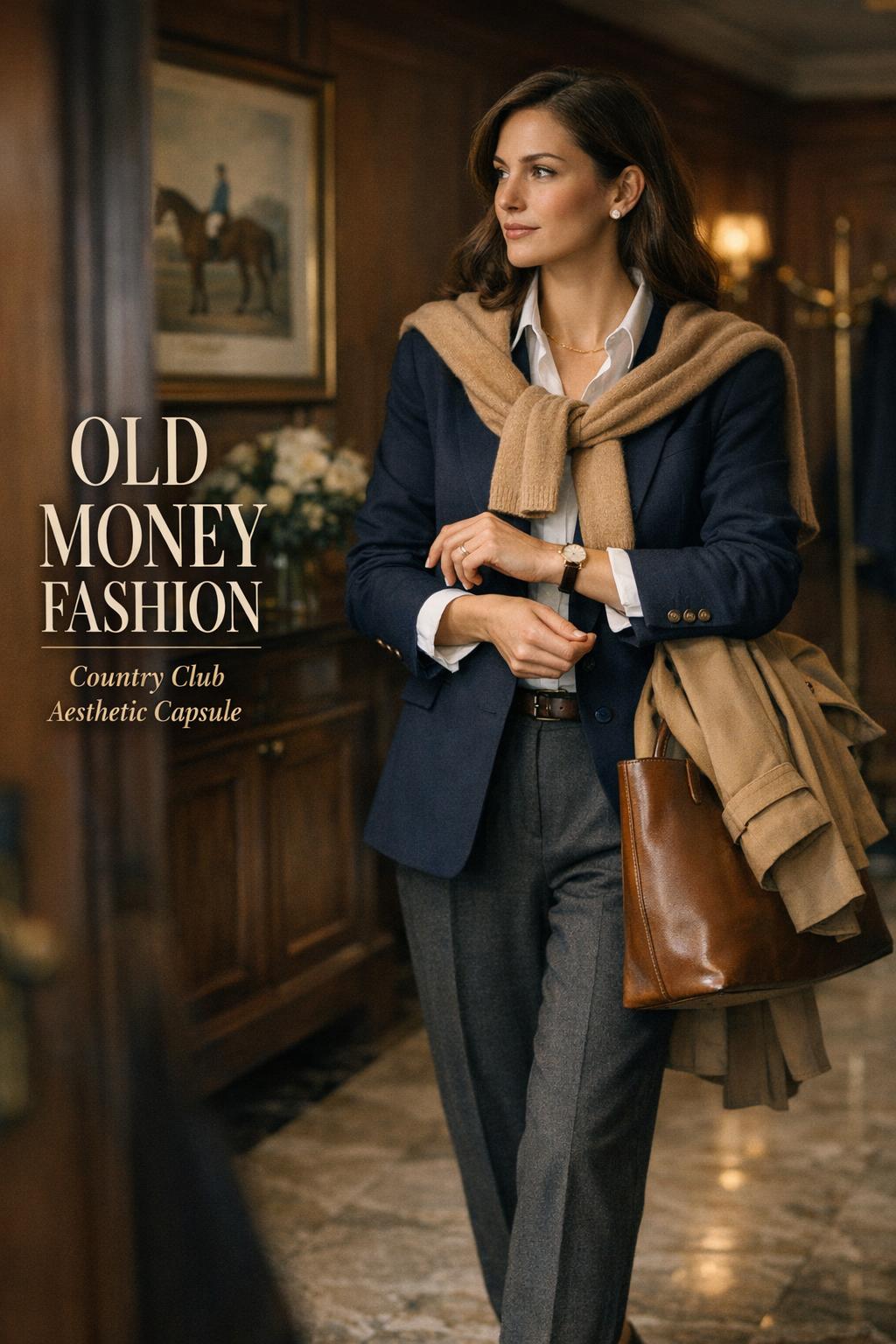
For weekends, old money fashion is best expressed through relaxed structure: a cardigan layered over a crisp cotton piece, paired with tailored trousers rather than overly casual bottoms. The cardigan softens the outfit, but the trousers keep it intentional. Add pearl studs or a simple gold chain—small, classic details that read personal rather than performative. Finish with loafers for a polished step that still feels comfortable for walking through a city neighborhood, a museum, or an outdoor lunch.
This is where many people overdo it, leaning into obvious “prep” signals. The more modern approach is restraint: keep the palette neutral, let textures do the talking, and choose proportions that feel current—tailored but not tight, relaxed but not sloppy.
Outfit solution: travel-day elegance that stays comfortable
Travel is a stress test for the old money aesthetic because it exposes weak fabrics and fussy styling. Build your look around knitwear and tailoring: a cashmere sweater for comfort, tailored trousers that allow movement when seated, and a trench coat for temperature changes. An heirloom watch is an especially practical finishing touch on travel days—quiet, functional, and in keeping with the understated luxury style.
The key is avoiding anything that wrinkles or pinches. When the fabrics behave well, you step off a plane or train looking composed rather than crushed. That’s the true promise of old money style: looking calm when the day is not.
Outfit solution: formal-leaning minimalism for events that require restraint
For formal events where you want elegance without sparkle, focus on tailoring and jewelry discipline. A well-fitted blazer and tailored trousers create a refined frame. Keep the palette deep and neutral—navy or black with subtle contrast. Add pearl earrings or a simple gold chain, then stop there. This is where quiet luxury is most powerful: the absence of overt statement pieces reads confident, especially in rooms where dress codes are implied rather than spelled out.
If you expect cooler temperatures or a late-night departure, a camel hair overcoat completes the line beautifully. The coat doesn’t compete; it elongates. And because the silhouette is coherent from shoulder to hem, the outfit looks “finished” even when you’re holding a bag, greeting people, and moving through a crowded venue.
How to build an old money wardrobe in phases (a realistic plan, not a fantasy closet)
The most sustainable way to develop old money fashion is to build it like a capsule wardrobe: phased, intentional, and based on what you actually do during a week. The goal is not quantity. It’s a small set of pieces that can be recomposed endlessly—so you’re never stuck with a closet full of items and nothing that feels right.
Phase 1: foundations—fit, neutrals, and your daily uniform
Start with what touches your life most: the silhouettes you wear on ordinary days. Prioritize tailored trousers that fit comfortably when sitting, a base of crisp cotton layers that feel breathable, and one anchoring blazer. This phase is where you learn your proportions—what makes you feel polished rather than constrained. Old money style looks easy because the wearer isn’t adjusting all day.
Phase 2: layering pieces—cashmere, cardigans, and outerwear that solves weather
Once the foundation is stable, add the layers that make outfits flexible: a cashmere sweater, a refined cardigan, and a trench coat. These pieces expand your outfit range without requiring new colors or dramatic styling changes. This is also where the old money aesthetic becomes visible—texture, softness, and quiet structure coming together.
Phase 3: finishing—footwear, jewelry, and the “signature” that repeats
Finally, invest your attention in what completes the look: leather loafers and/or cap-toe oxfords, plus one or two understated jewelry choices like pearl studs or a simple gold chain. Add an heirloom watch if it fits your lifestyle. The finishing pieces should feel like you, not like a checklist. In old money fashion, repetition is a feature—your “signature” becomes part of your presence.
Additional styling tips that make old money style feel effortless
Tip: Before buying anything new, test the old money aesthetic with styling swaps: replace a casual shoe with a leather loafer, exchange a flimsy layer for a cashmere sweater, or add a trench coat over a simple base. These changes reveal how much the look depends on structure and material, not novelty.
Tip: Treat tailoring as comfort engineering. If tailored trousers look elegant but feel restrictive, they’ll never become your everyday uniform—and old money fashion depends on repetition. Choose cuts that allow sitting, walking, and commuting without constant adjustment. The most polished people look polished because they’re not fighting their clothes.
Tip: Use accessories as punctuation, not paragraphs. Pearls, a simple gold chain, and an heirloom watch are powerful precisely because they are restrained. If you add all of them at once, keep everything else calm: clean tailoring, neutral palette, minimal texture clashes.
Tip: Keep a “fallback formula” for busy mornings: blazer + crisp cotton + tailored trousers + loafers. Add trench coat or camel hair overcoat depending on weather. This is the kind of outfit logic that makes quiet luxury practical—your standard looks good, so you don’t spiral into outfit indecision.
Common mistakes that sabotage the old money aesthetic (and what to do instead)
Mistake: chasing logos instead of materials
Old money fashion is defined by understated luxury, so visible branding can work against the point. When the focus becomes the logo, the outfit starts to feel “new money” rather than quietly refined. Instead, lean on fabric quality and fit—cashmere softness, wool structure, leather polish—so the outfit’s value reads through craftsmanship.
Mistake: wearing overly stiff tailoring that looks good only when standing still
If your blazer restricts your shoulders or your trousers pinch when seated, you’ll look uncomfortable, which is the opposite of effortless. Old money style should survive a long day. Choose tailoring that maintains a clean line while allowing movement, and rely on layering for refinement rather than tightness for “sharpness.”
Mistake: leaning too hard into “prep” cues until it feels like a costume
East Coast prep schools and Ivy League culture are part of the historical atmosphere around old money style, but literal imitation can feel dated or performative. The modern answer is to borrow the discipline—neutrals, structure, quality materials—without turning the outfit into a caricature of the country club aesthetic.
Mistake: forgetting that footwear sets the tone
Even beautiful tailoring can be undercut by shoes that don’t match the level of polish. Leather loafers and cap-toe oxfords create a refined baseline and make simple outfits look intentional. If comfort is your concern, rotate footwear and maintain leather; the goal is ease, not endurance through pain.
A note on icons, heritage, and modern interpretation
Old money fashion sits at the intersection of history and modern life. It draws on recognizable settings—East Coast high-society imagery, Ivy League campus polish, the understated codes of clubs and dress traditions—yet it keeps evolving through contemporary reinterpretations. That’s why references to heritage brands like Brooks Brothers and J. Press still appear in conversations about the look, while Ralph Lauren often stands as a bridge between archival cues and modern styling.
When you approach these references with intelligence, they become useful context rather than strict rules. The point is to understand the visual language: classic silhouettes, durable materials, and a quiet approach to luxury. You can express old money style in a way that fits your city, your climate, and your calendar—without losing the essence.
Conclusion: make old money fashion a system, not a performance
Old money fashion is easiest when you treat it as a wardrobe system: stable silhouettes, breathable layers, durable materials, and a restrained palette that repeats elegantly. The old money aesthetic and quiet luxury aren’t about chasing attention; they’re about composing outfits that look polished in motion—during long workdays, travel, weekends, and events where understatement is the most refined choice.
When you understand the logic—structure first, texture second, accessories as subtle punctuation—you can solve the daily styling challenge with calm consistency. And once you have that foundation, “old money,” “old money style,” and even a touch of “look di moda” become less like a trend and more like a dependable way of dressing well.
FAQ
What is old money fashion, exactly?
Old money fashion is an understated approach to dressing built on classic silhouettes, durable materials like wool, cashmere, cotton, and leather, and a restrained color palette; it overlaps with quiet luxury because it avoids loud logos and relies on fit, craftsmanship, and timeless wardrobe staples.
Is the old money aesthetic the same as quiet luxury?
They’re closely related, but not identical: quiet luxury describes the understated, logo-minimal expression of quality, while the old money aesthetic adds cultural styling cues often associated with heritage, timeless tailoring, and classic settings like East Coast prep and Ivy League-inspired polish.
Is old money style the same as preppy?
Old money style can include preppy influences, but it’s broader than preppy; the most convincing versions prioritize refined proportions, subtle accessories, and high-quality fabrics over obvious “prep” signals, which helps avoid looking costume-like.
How do I dress old money without wearing logos?
Focus on the pieces and the materials that communicate refinement on their own—navy blazers, tailored trousers, trench coats, cashmere sweaters, leather loafers—then keep the palette neutral and the accessories minimal, such as pearl studs, a simple gold chain, or an heirloom watch.
Can I achieve the old money fashion look on a budget?
You can get close by prioritizing fit, a cohesive neutral palette, and fewer but better wardrobe staples—especially classic tailoring and practical layers like a trench coat and refined knitwear—because the look depends more on silhouette and material behavior than on constant newness.
What are the most important old money wardrobe staples to start with?
Start with an anchoring navy blazer, tailored trousers, a trench coat for adaptable outerwear, a cashmere sweater or cardigan for refined layering, and leather loafers; then add understated finishing pieces like pearls or an heirloom watch once the foundation feels effortless.
Which fabrics matter most for the country club aesthetic?
Wool and cashmere create warmth and refined texture without bulk, cotton keeps base layers crisp and breathable, and leather provides polish in footwear and accessories; together, these materials support the quiet, composed look associated with the country club aesthetic.
How do I keep old money fashion practical for travel or long days?
Use a modular layering strategy—crisp cotton as a base, cashmere knitwear for comfort, and a trench coat for weather shifts—paired with tailored trousers that allow sitting and walking comfortably, plus leather loafers or cap-toe oxfords to maintain polish with minimal effort.
Leave a Reply