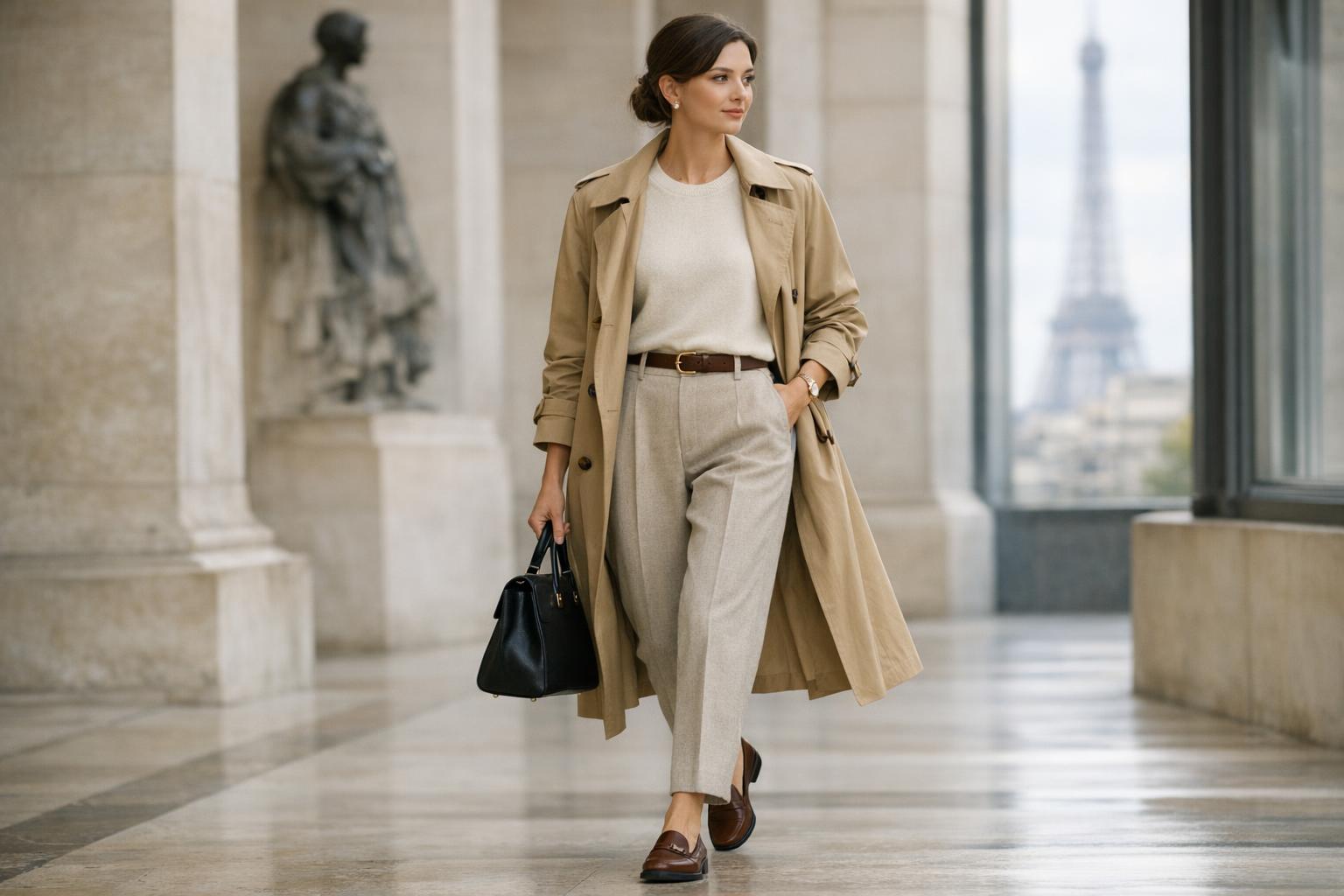
Old money aesthetic outfit: a definitive guide to timeless, quiet luxury
The old money aesthetic outfit isn’t built on spectacle. It’s built on restraint: a steady palette of navy, ivory, beige, and black; silhouettes that hold their shape; fabrics that move with quiet confidence. The look reads polished from a distance and even better up close—because the elegance is in the cut of a trouser, the drape of a trench coat, the understatement of a simple watch and delicate jewelry.
In real life, this aesthetic shows up where clothes need to perform for long hours: a business luncheon, a museum afternoon, a coastal weekend, a flight to Paris, or the kind of workday that turns into dinner. It’s the same reason “quiet luxury” keeps resurfacing—especially through cultural touchpoints like Succession, where characters such as Shiv Roy made minimal, tailored dressing feel like a modern uniform rather than a costume.
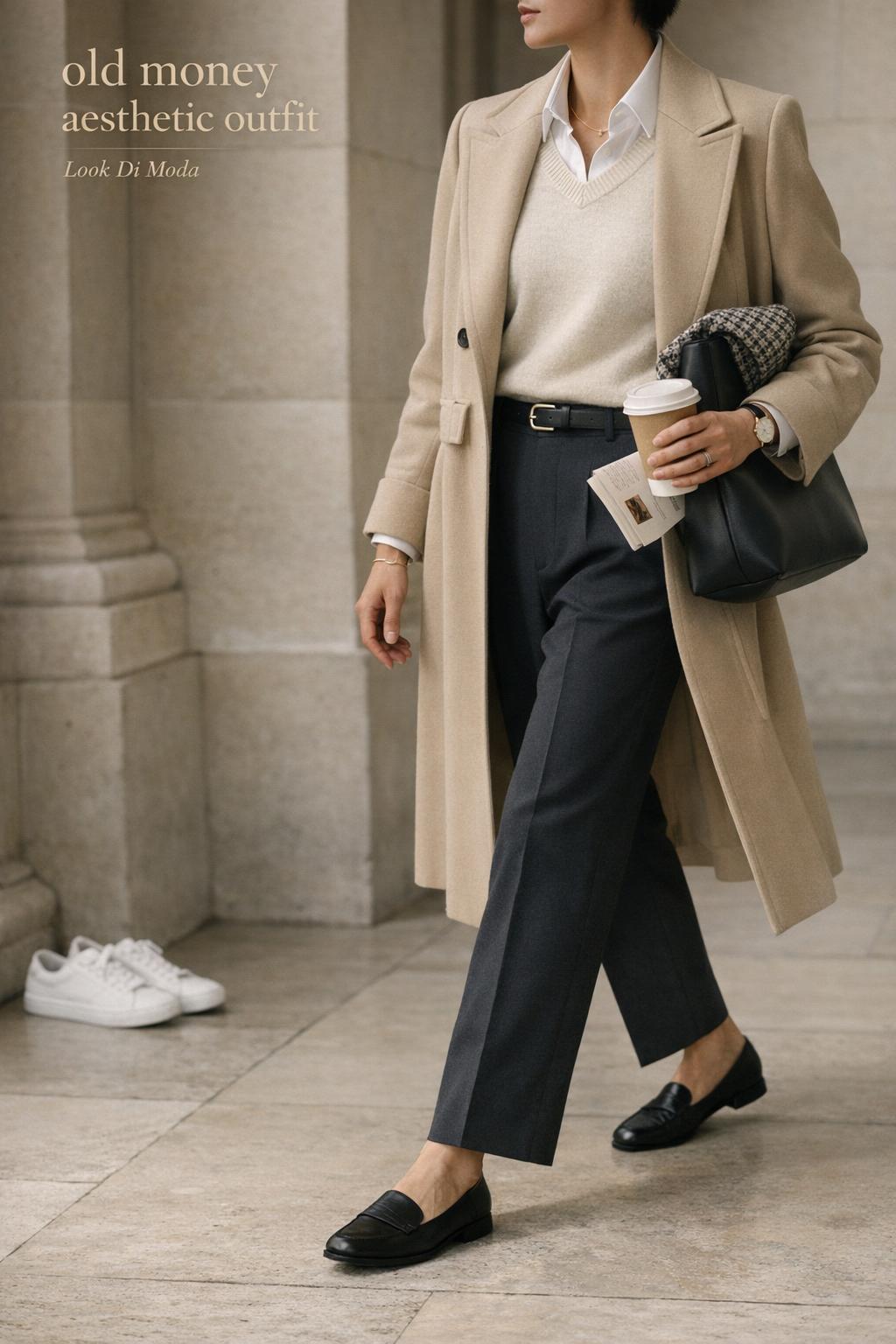
What makes the style so appealing is its calm. It doesn’t require a loud label to feel expensive; it relies on classic tailoring, subversive basics, and longevity. Think of it as looks chic dressing with better priorities: fit, fabric, and proportion first—then accessories, then personality.
What the old money aesthetic is (and what it isn’t)
The old money aesthetic is a styling language rooted in classic silhouettes—tailored blazers, straight-leg trousers, trench coats, crisp button-downs, and refined shoes like loafers or ballet flats. It’s adjacent to “quiet luxury” and “stealth wealth,” but the best version is less about broadcasting status and more about communicating taste through simplicity. The message is subtle: you choose pieces that look considered, not trendy.
Your wedding has a lot of moving pieces. Your plan can still feel composed.
Zarellea organizes guests, vendors, budget, and timelines in one shared space — so you can make decisions with clarity, not stress.
It is not the same as wearing head-to-toe logos or chasing novelty. The aesthetic also isn’t limited to one gender expression; many guides now position it as gender-inclusive, relying on shared building blocks—tailoring, heritage fabrics like tweed and wool, classic patterns like stripes and houndstooth, and a neutral palette that makes mixing easy.
A practical way to keep the concept grounded is to treat it as “longevity dressing.” One widely discussed framework is a four-year test: if you can imagine reaching for a piece across multiple seasons and years—without it feeling dated—it likely belongs in an old money wardrobe. This is where fashion psychology enters the conversation, including commentary associated with fashion psychologist Shakaila Forbes-Bell: the appeal is as much about perceived stability and refinement as it is about aesthetics.
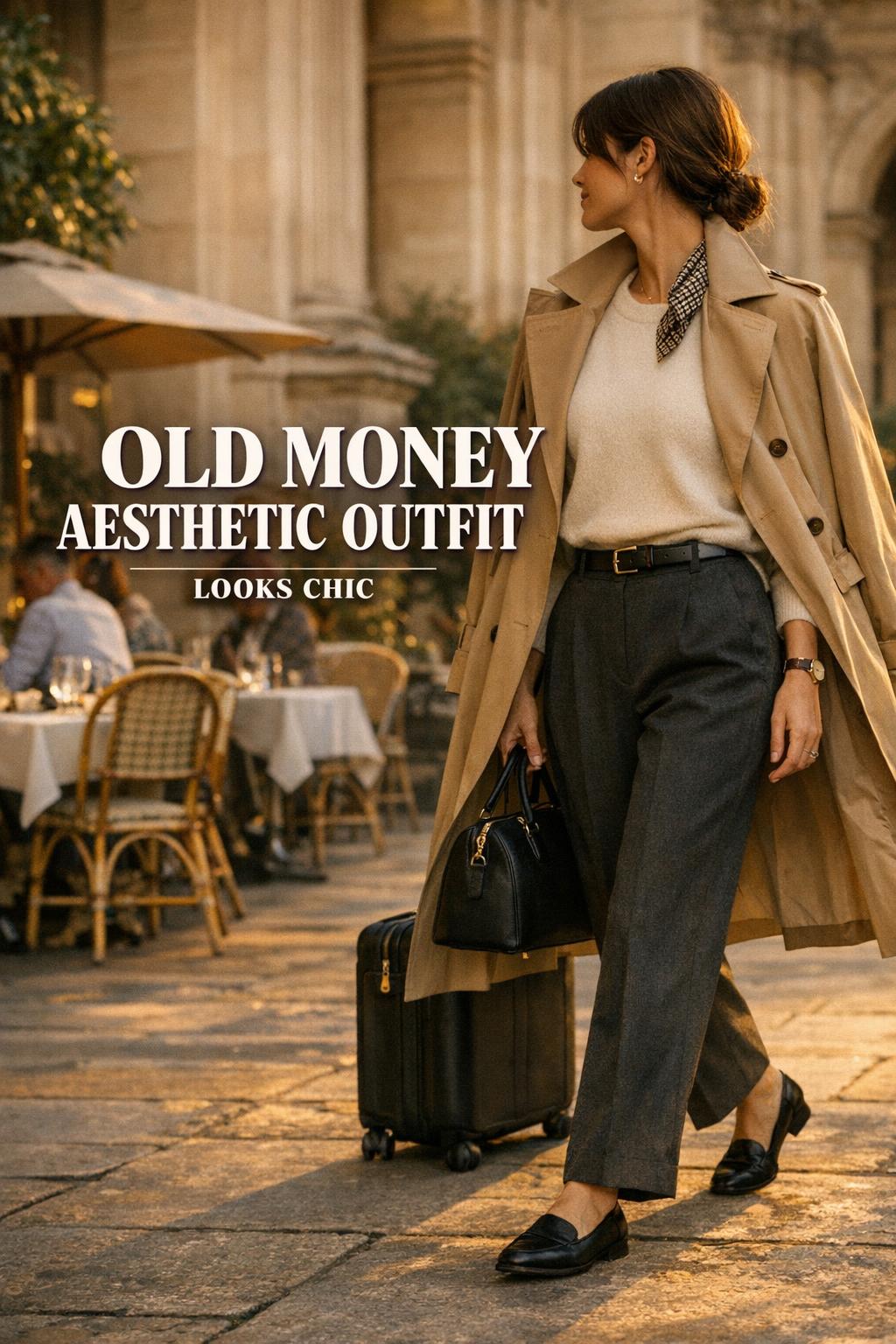
The visual codes: silhouette, proportion, and the art of restraint
Old money styling is often mistaken for “basic,” but the difference is architectural. The silhouette tends to be clean and slightly structured: shoulders are defined, waistlines are intentional, hems are neat, and lengths feel balanced (a trouser that skims the shoe, a trench that elongates the line, a skirt that holds its shape). Even when the look is relaxed, it’s rarely sloppy—there’s always one element providing structure.
This is why tailored trousers appear in nearly every serious guide. They anchor the body and give even simple tops—like subversive basics in cotton or knitwear—an elevated frame. The same logic applies to a trench coat: it’s outerwear, yes, but also a moving silhouette that signals intention the moment you enter a room.
Accessories are chosen for clarity rather than volume: a belt that defines the waistline, a watch that reads grown-up, delicate jewelry that doesn’t compete with the outfit. If there’s a single “rule,” it’s this: the outfit should look composed even when you’re rushing.
Color, fabric, and texture: why neutrals look expensive
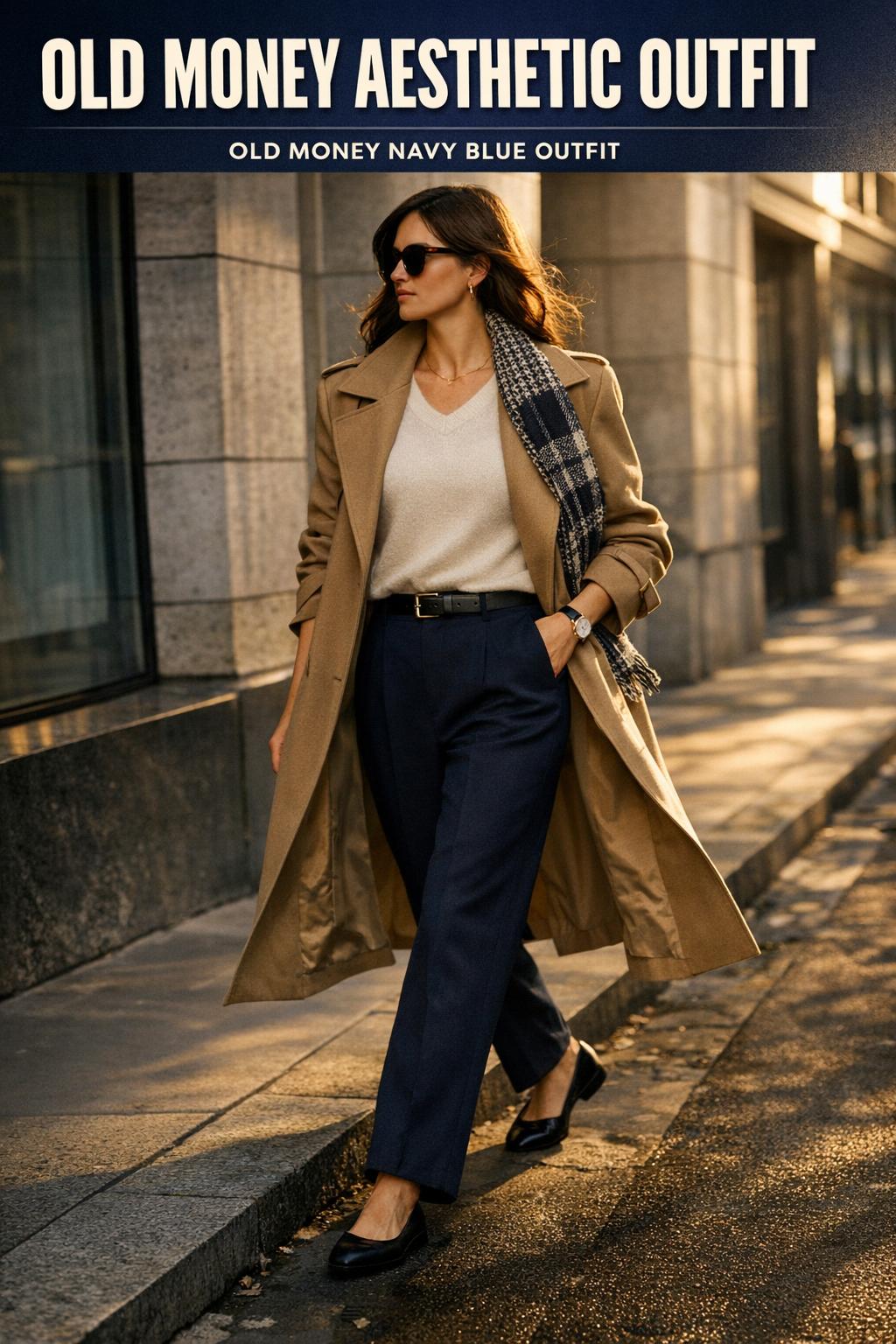
The old money palette is famously restrained: beige, ivory, navy, black, taupe—sometimes punctuated by crisp white or a muted stripe. These colors are forgiving in real wardrobes because they layer easily, photograph beautifully, and don’t lock you into a specific season. That’s also why an old money navy blue outfit is so reliable: navy has depth without the harshness of black, and it pairs effortlessly with ivory knitwear, camel outerwear, or a clean white shirt.
Texture is where the outfit becomes believable. Classic fabric names are repeated across the category for a reason: tweed, wool, cashmere, and silk carry a visual weight that synthetic blends often struggle to replicate. Houndstooth and stripes add heritage character without feeling loud; they read as pattern with a pedigree, especially when used sparingly in a blazer, scarf, or skirt.
The most convincing “quiet luxury” looks aren’t shiny; they’re tactile. A matte wool trouser, a softly brushed cashmere sweater, a crisp cotton button-down—these textures communicate quality in a way logos never need to.
Key pieces that build the wardrobe (the ones you actually wear)
Old money dressing is often described through icons—Princess Diana, private-school aesthetics, or the modern corporate polish of Succession. But in daily life, it’s held together by a small, disciplined set of garments. These pieces appear across editorial guides because they do the heavy lifting: they create line, create ease, and make mixing straightforward.
- Tailored blazers and sport coats (structure, polish, easy layering)
- Trench coats and classic outerwear silhouettes (movement, authority, weather utility)
- Tailored trousers (high-rise, straight-leg, often wool blends)
- Skirts and dresses with classic lines (clean hems, minimal fuss)
- Tops: crisp button-down shirts and refined knitwear (cashmere is a signature)
- Shoes: loafers, ballet flats, and minimal white sneakers
- Accessories: belts, watches, delicate jewelry (subtle, not loud)
Brand references tend to cluster around heritage and modern minimalism. You’ll often see luxury houses like Chanel, Saint Laurent, Ferragamo, Bottega Veneta, and Loewe used as visual anchors for the aesthetic, alongside contemporary labels such as Nanushka, COS, The Frankie Shop, Favorite Daughter, and Remain Birger Christensen for cleaner, modern interpretations. The point isn’t to chase labels; it’s to recognize the visual language those labels often communicate: tailoring, restraint, and longevity.
Look: the Paris outfits trench-and-knit uniform (quiet, cinematic, practical)
This is the old money look that feels made for movement—crossing a city, stepping in and out of cafés, or navigating a full day that includes work, errands, and dinner. The mood is composed and slightly anonymous in the best way: a clean line, a calm face, and clothes that never ask for attention.
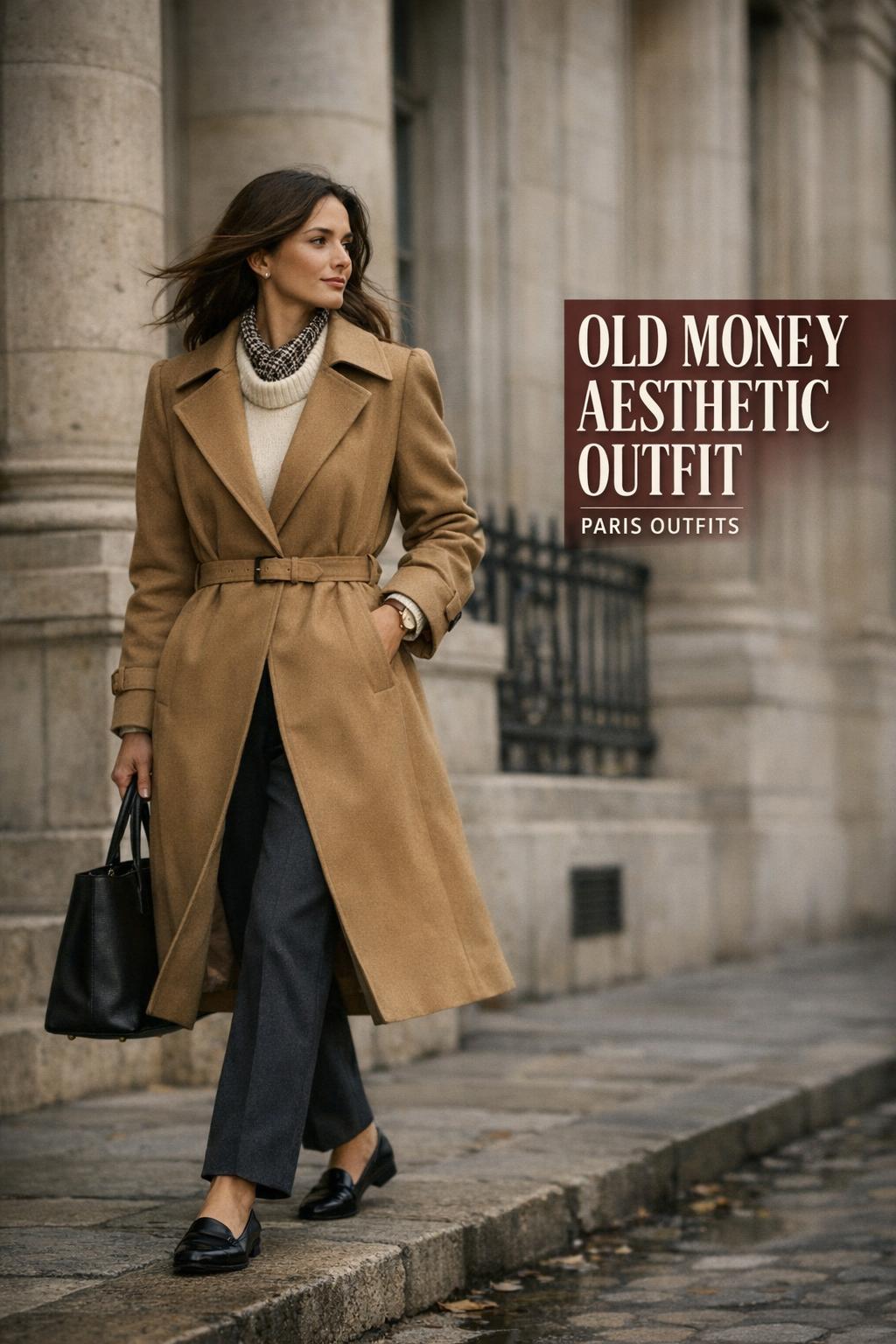
Start with a trench coat in a classic neutral—beige, camel, or stone—layered over fine knitwear in ivory or navy. Pair it with straight-leg tailored trousers in wool or a wool blend; keep the rise comfortable but intentional. Shoes set the tone: loafers sharpen the stride, ballet flats soften it, and minimal white sneakers tilt it toward off-duty ease while staying within the aesthetic’s “no chaos” rule.
- Key garments: trench coat, cashmere sweater or fine knit, tailored trousers
- Footwear: loafers, ballet flats, or clean white sneakers
- Accessories: slim belt, simple watch, delicate jewelry
Why it works: the trench provides architecture, knitwear provides softness, and the trouser provides polish. It’s a classic formula that reads looks chic without feeling styled to death—especially when you keep jewelry minimal and let the silhouette speak.
Look: tailored trousers with subversive basics (the modern Shiv Roy energy)
This look leans into the contemporary side of the aesthetic—the one popularized by sleek corporate wardrobes and “quiet luxury” storytelling. It’s spare, precise, and slightly severe in a way that feels powerful rather than cold. Think clean lines, controlled proportions, and fabrics that hold their shape through a long day.
Choose tailored trousers as the anchor—straight-leg, high-rise, and ideally in a sober neutral like black, navy, or charcoal-adjacent tones (staying within the neutral family). Add a crisp white shirt or a refined, body-skimming knit top—this is where “subversive basics” come in: pieces that look simple but are cut impeccably. A tailored blazer finishes the frame, creating that boardroom-to-dinner authority.
Why it works: the outfit communicates old money through discipline. You’re not relying on trend pieces; you’re relying on silhouette. When the trousers fit perfectly at the waist and fall cleanly to the hem, the entire outfit looks more expensive—regardless of the label.
Style tip: the easiest way to upgrade a “basic” top
In practice, the quickest edit is to swap a flimsy tee for a crisper shirt or fine knit and to add one structured layer—usually a blazer. The old money effect comes from contrast: soft against sharp, simple against tailored.
Look: the old money navy blue outfit (deep color, lighter mood)
Navy is the quiet hero of the aesthetic: it feels traditional without being costume-like, and it’s kinder than black in daylight. This look is ideal when you want the “heritage” read—clubby, composed, subtly preppy—without leaning into overtly preppy styling.
Work with navy as your base: navy tailored trousers or a navy skirt with classic lines. Add an ivory button-down or a cashmere sweater in cream to lift the palette. Outerwear can be a trench coat for elegance, or a tailored blazer if you want a sharper line. Finish with loafers for a more grounded, academic note or ballet flats for a softer, feminine balance.
- Key garments: navy tailored trousers or skirt, ivory shirt or cashmere knit, blazer or trench
- Footwear: loafers or ballet flats
- Accessories: slim belt, watch, understated jewelry
Why it works: navy and ivory create contrast without drama, and the combination plays beautifully with heritage fabrics—wool trousers, tweed-adjacent textures, or a knit that reads refined rather than casual. This is the sort of look di moda composition that never looks like it’s trying.
Look: tweed and houndstooth heritage (prep without cliché)
Heritage textures are where the old money aesthetic becomes unmistakable. The mood here is private-school-adjacent—polished, traditional, slightly nostalgic—but the styling should feel modern, not theatrical. The goal is to borrow the codes (tweed, houndstooth, stripes) while keeping the silhouette current and clean.
Let one heritage piece take the lead: a tweed blazer or a houndstooth skirt. Keep everything else minimal—an ivory knit top, a crisp shirt, or a simple dress underneath. The shoe choice decides whether it reads academic or romantic: loafers sharpen the heritage note, while ballet flats soften it into something more garden-party and editorial.
Why it works: old money style is about controlled reference. A single patterned piece signals tradition; the rest of the outfit signals modern restraint. If you’ve ever tried to wear tweed and felt “overdone,” it’s usually because too many heritage cues appeared at once.
Look: garden-party elegance (refined outdoors, never fussy)
Garden-party dressing is one of the aesthetic’s most flattering expressions: elegant, airy, and deliberately untrendy. The silhouette is clean and classic—nothing too tight, nothing too experimental—because the setting does the work. You’re dressing for light, movement, and long conversations.
Choose a simple dress with refined lines or pair a classic skirt with a crisp shirt. Outerwear can be a trench coat if the weather turns, or a tailored blazer if the event leans more formal. Keep the palette bright but grounded—ivory, beige, navy accents—and choose delicate jewelry that catches light without feeling loud. Ballet flats feel most aligned here: practical on grass, elegant in photos, and consistent with the aesthetic’s quiet mood.
Why it works: the old money aesthetic thrives in environments where understatement reads as confidence. A clean dress or skirt-and-shirt combination looks timeless in daylight and doesn’t compete with the setting.
Look: weekend refined casual (the “long-hauler” wardrobe in motion)
This is the look for the Saturday that starts with coffee and ends somewhere nicer than expected. It’s relaxed, but it never collapses into loungewear energy. The silhouette is built on two ideas: one piece with structure and one piece with ease.
Start with tailored trousers or a classic skirt, then add a soft knit—cashmere if you have it, fine knitwear if you don’t. Swap the blazer for a trench coat when you want movement, or keep it simple with a structured layer that holds the shoulders. Shoes can be minimal white sneakers here, but keep them clean and pared-back; the aesthetic doesn’t tolerate clutter. A watch and a slim belt finish the look with the kind of quiet intention associated with longevity dressing—pieces you reach for again and again.
Why it works: it’s the “long-hauler” concept in real life. These are not outfits designed for a single moment; they’re designed to be repeated, refined, and relied upon.
Look: the business outfit that doesn’t feel trend-led
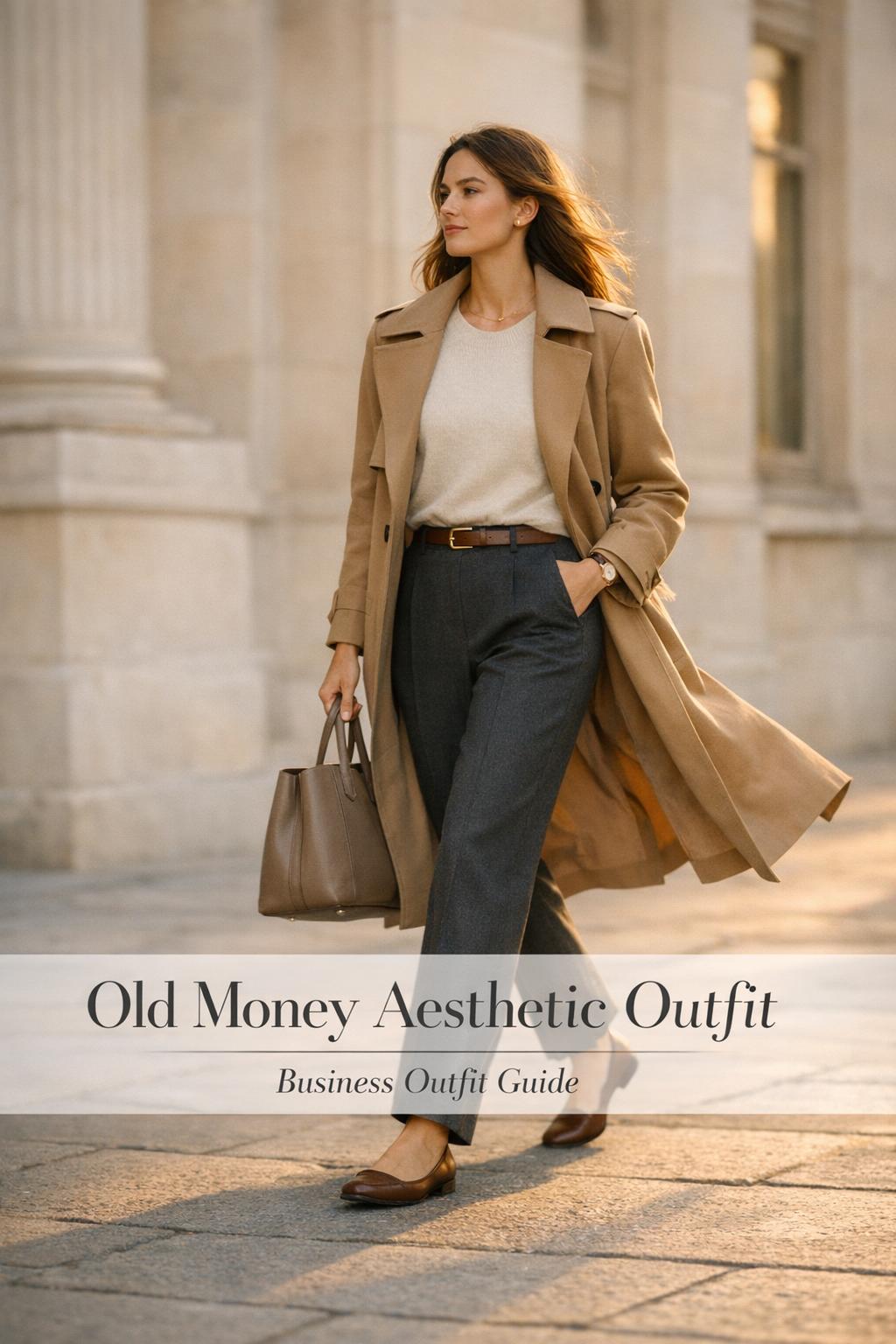
An old money business outfit is less about looking “corporate” and more about looking settled. It’s the confidence of a blazer that fits the shoulders, trousers that sit cleanly at the waist, and shoes that can handle a full day without changing the mood of the outfit.
Build around tailoring: a blazer and tailored trousers in navy, black, or a soft neutral. Underneath, keep it crisp—button-down shirts are the obvious choice, but refined knitwear can read even more modern if the fit is precise. Loafers feel especially right for this aesthetic: they’re classic, grounded, and quietly authoritative. Jewelry stays delicate; the watch becomes the focal point instead of a statement accessory.
Why it works: the old money aesthetic doesn’t fight for attention in professional spaces; it earns it through coherence. When your palette is controlled and your silhouettes are clean, you look composed even under pressure.
Tips: tailoring checks that change everything
- Prioritize shoulder fit in blazers; structure starts at the top.
- Choose trousers that fall straight from hip to hem; the line matters more than a trend cut.
- Keep hems intentional—too long looks careless, too short looks accidental.
- If you’re wearing a trench coat, belt it with purpose or leave it cleanly open; avoid half-fastened styling.
Iconic influences: Princess Diana, private-school polish, and modern TV minimalism
The old money aesthetic is often explained through recognizable references because the visual codes are instantly legible. Princess Diana is frequently cited as an icon: her looks balanced tradition with approachability, often relying on classic tailoring, clean lines, and accessories that felt intentional rather than excessive. That influence still shows up today in blazers, neat trousers, and refined footwear that can move through real life.
On the modern end, Succession sharpened the public’s vocabulary for quiet luxury. The appeal wasn’t novelty—it was discipline. Characters like Shiv Roy made the case for minimal palettes, tailored silhouettes, and accessories that whisper. Alongside that, the private-school or ivy league adjacency remains a strong undercurrent: stripes, houndstooth, tweed, and loafers—heritage cues that can read either classic or dated depending on how heavily you lean in.
The editorial trick is to treat influence as seasoning, not the meal. A single nod—a houndstooth skirt, a stripe, a trench—keeps the outfit anchored in the aesthetic without slipping into costume.
How to build a capsule wardrobe (three-level approach that feels personal)
Old money style is at its strongest when it’s repeatable. A capsule wardrobe approach makes the aesthetic livable: you invest attention in a small set of pieces and learn the combinations until they feel instinctive. The result is less decision fatigue and more coherence—especially useful if you’re balancing work, weekends, and travel (think Paris outfits that don’t require overpacking).
Level one: the pieces you’ll wear 80% of the time
These are the daily anchors: tailored trousers, a crisp shirt, refined knitwear, a blazer, and shoes that match your life—loafers, ballet flats, or minimal white sneakers. Choose neutrals first so the wardrobe blends effortlessly; this is where beige, navy, ivory, and black do their best work.
Level two: seasonal accents that elevate without distracting
Seasonal doesn’t have to mean trendy. Think of accents as texture and layering: a trench coat for transitional weather, a tweed or houndstooth piece for heritage depth, stripes for a preppy note, and a skirt or dress with classic lines for event dressing. These items keep the wardrobe from feeling uniform while staying within the same visual identity.
Level three: the four-year test (longevity as a style filter)
Before you add a piece, imagine wearing it across four years—different seasons, different occasions, different versions of you. If it only works for a single “moment,” it’s likely not old money. If it supports multiple looks—work, weekend, travel, social events—it earns its place. This mindset aligns with the aesthetic’s obsession with long-haulers: garments that outlast hype.
A brief note on labels: heritage cues vs. modern minimalism
The old money aesthetic is frequently illustrated with heritage luxury names—Chanel, Saint Laurent, Ferragamo, Bottega Veneta, and Loewe—because their house codes often align with the look: classic shapes, restrained palettes, and refined materials. At the same time, modern brands like COS, Nanushka, The Frankie Shop, Favorite Daughter, and Remain Birger Christensen are often used to demonstrate how clean tailoring and minimal silhouettes can achieve a similar effect without leaning on overt branding.
In practice, the label matters less than the decision-making. If the fit is correct, the fabric reads substantial, and the palette stays coherent, the outfit communicates quiet luxury regardless of price. That balance—aspirational without being dependent on logos—is central to why the aesthetic feels so current.
Common styling mistakes that break the illusion (and how to fix them)
Old money styling is deceptively easy to get wrong because it’s subtle. When something is off, it’s usually not dramatic—it’s a small proportion issue, a conflicting texture, or an accessory that feels too loud for the outfit’s quiet logic.
- Too many heritage references at once: If you’re wearing tweed, skip the extra houndstooth and keep stripes for another day.
- Fit that collapses the silhouette: Tailoring should skim, not cling or drown; a clean line is the point.
- Over-accessorizing: Choose a watch or delicate jewelry, not a competing collection.
- Ignoring footwear tone: Loafers and ballet flats support the aesthetic; overly busy shoes usually don’t.
- Neutrals without texture: A beige-on-ivory look needs fabric depth—wool, cashmere, tweed—to avoid looking flat.
A useful correction method is to identify the “hero” (usually tailoring or outerwear) and let everything else be calm. If your outfit feels like it’s trying too hard, it’s often because everything is competing for hero status.
How to recreate the aesthetic on a budget without losing credibility
Many guides now address a budget-friendly approach, and the most reliable strategy is to stop chasing the most “expensive-looking” item and instead build a coherent system. Spend your attention on the pieces that control silhouette—blazer, trousers, trench—and keep the rest refined and minimal. “Quiet luxury” is less about price and more about discipline.
Start with one excellent pair of tailored trousers and a crisp shirt, then add a structured layer. Keep your color palette narrow so everything mixes; navy, ivory, beige, and black can carry you through work, weekends, and travel. When you add accessories, choose restraint: a belt that matches your shoes, a simple watch, delicate jewelry. This is the fast track to looks chic consistency.
If you’re tempted by trend-driven purchases, rerun the four-year test. The pieces that pass tend to be the ones you’ll wear repeatedly—exactly what the aesthetic celebrates.
Quick-start cheat sheet: the 10-piece starter kit
If you want the look to feel immediate, begin with a small kit that creates multiple outfit formulas. The goal is to be able to dress for work, weekend, and social plans without changing your style identity.
- Tailored blazer (neutral)
- Trench coat
- Two pairs of tailored trousers (one navy or black, one lighter neutral)
- One skirt or one simple dress with classic lines
- Crisp white shirt
- Fine knitwear (cashmere if possible)
- Loafers
- Ballet flats or minimal white sneakers
- Slim belt
- Simple watch and delicate jewelry
From here, your “look di moda” advantage comes from repetition: wearing the same shapes in different combinations until the wardrobe feels like a signature, not a costume.
FAQ
What is an old money aesthetic outfit, in simple terms?
An old money aesthetic outfit is a quiet, tailored look built from classic pieces—blazers, trench coats, straight-leg trousers, crisp shirts, refined knitwear, and understated shoes like loafers or ballet flats—usually in neutral colors such as navy, ivory, beige, taupe, and black.
How is the old money aesthetic related to quiet luxury and stealth wealth?
They overlap in the idea of understated refinement: quiet luxury and stealth wealth avoid overt branding and rely on fit, fabric, and timeless silhouettes, which are also the core tools of old money styling.
What are the most important wardrobe staples for this style?
The most repeated staples are tailored trousers, a structured blazer, a trench coat, a crisp button-down shirt, refined knitwear (often cashmere), and classic footwear such as loafers, ballet flats, or minimal white sneakers, finished with a belt, a simple watch, and delicate jewelry.
Can I wear an old money navy blue outfit year-round?
Yes—navy is a core neutral within the aesthetic, pairing easily with ivory, beige, and crisp white, and it works across seasons because it reads polished in winter layers and still feels fresh in lighter spring and summer combinations.
How do I make the style work for a business outfit?
Use tailoring as your foundation—blazer plus tailored trousers in navy, black, or beige—add a crisp shirt or fine knitwear, and keep accessories minimal; loafers and a simple watch are especially effective for a professional, quiet luxury finish.
What patterns fit the old money aesthetic without looking too preppy?
Classic patterns like stripes, houndstooth, and tweed work best when used as a single focal point—one patterned blazer, skirt, or accessory—while the rest of the outfit stays clean and neutral to maintain a modern, restrained silhouette.
Do I need luxury brands like Chanel or Saint Laurent to achieve the look?
No—the aesthetic is commonly illustrated with houses like Chanel, Saint Laurent, Ferragamo, Bottega Veneta, and Loewe, but the effect comes primarily from classic silhouettes, a controlled neutral palette, quality-looking fabrics, and cohesive styling rather than visible labels.
What’s the “four-year test,” and how do I use it?
The four-year test is a longevity check: before buying or keeping a piece, ask whether you can realistically see yourself wearing it across multiple seasons over the next four years; if it supports repeated outfits and still feels timeless, it aligns well with old money wardrobe logic.
How can I adapt old money styling to Paris outfits without overpacking?
Pack a trench coat, a blazer, tailored trousers, a crisp shirt, refined knitwear, and one versatile shoe choice (loafers, ballet flats, or minimal white sneakers), then keep the palette neutral so everything mixes; the aesthetic is naturally capsule-friendly because it relies on repeatable, coherent formulas.
Leave a Reply