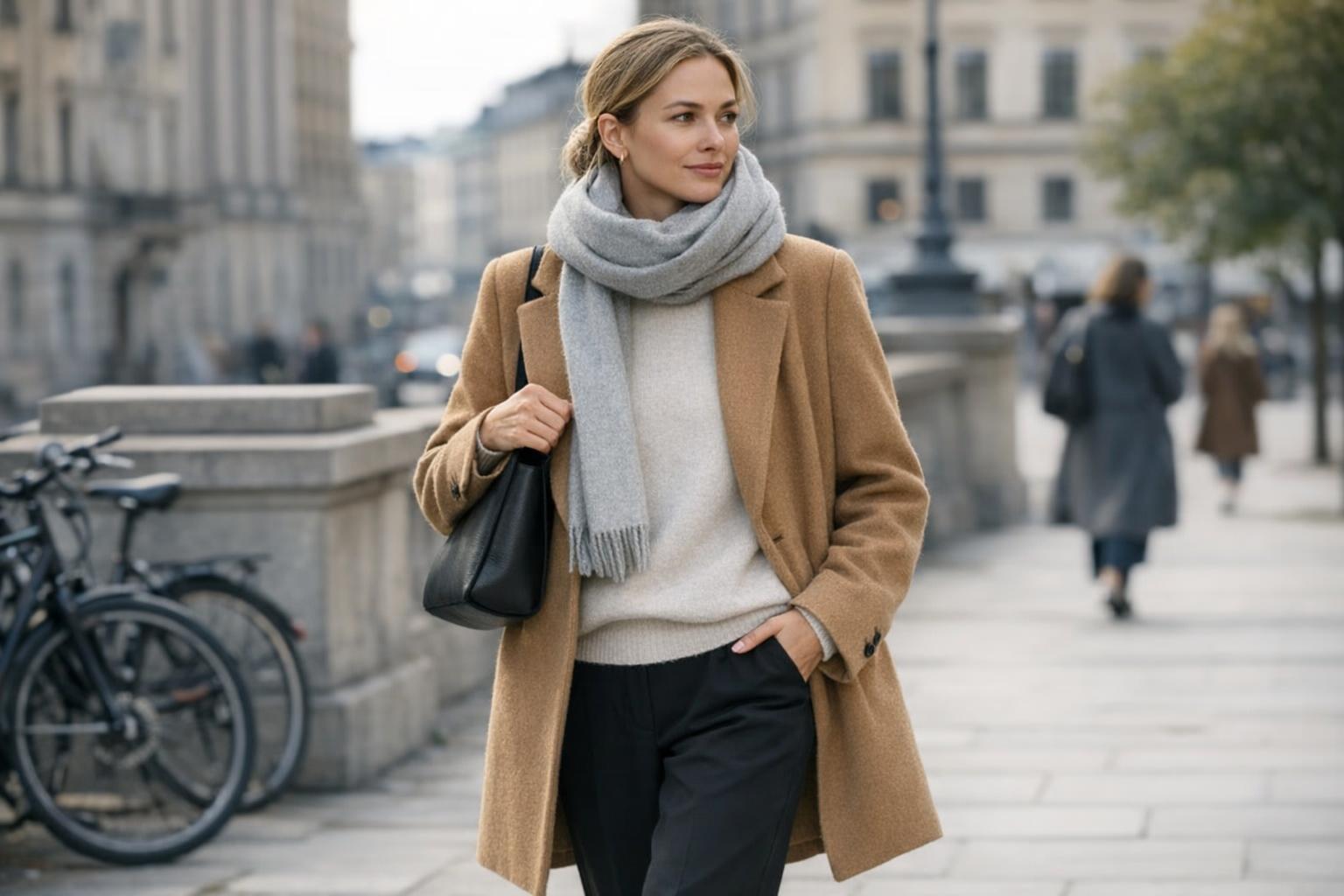
Scandinavian outfits: where minimalism meets real life
You’re late for a morning class, the forecast keeps changing, and you need something that looks intentional without feeling fussy. That problem—looking polished while staying comfortable and practical—is exactly why scandinavian outfits have become such a reliable reference point in the U.S. The appeal isn’t just “minimalism” as a trend; it’s a repeatable way of getting dressed built on clean silhouettes, functional layering, and a calm but considered color story.
Across Scandinavia and the broader Nordic region, the look is often described through nordic minimalism: fewer pieces, better fabrics, and styling decisions that hold up over a long day. It shows up in brand identities (from Gudrun Sjödén’s patternful Scandinavian wear to streamlined, minimalist labels like Filippa K), and it gets remixed in the most visible way on the streets of Copenhagen during Copenhagen Fashion Week. This guide breaks down how to build outfits Scandinavian style, how to adapt the aesthetic for U.S. seasons and routines, and how to shop it without losing the point.
What “Scandi” actually means when you’re getting dressed
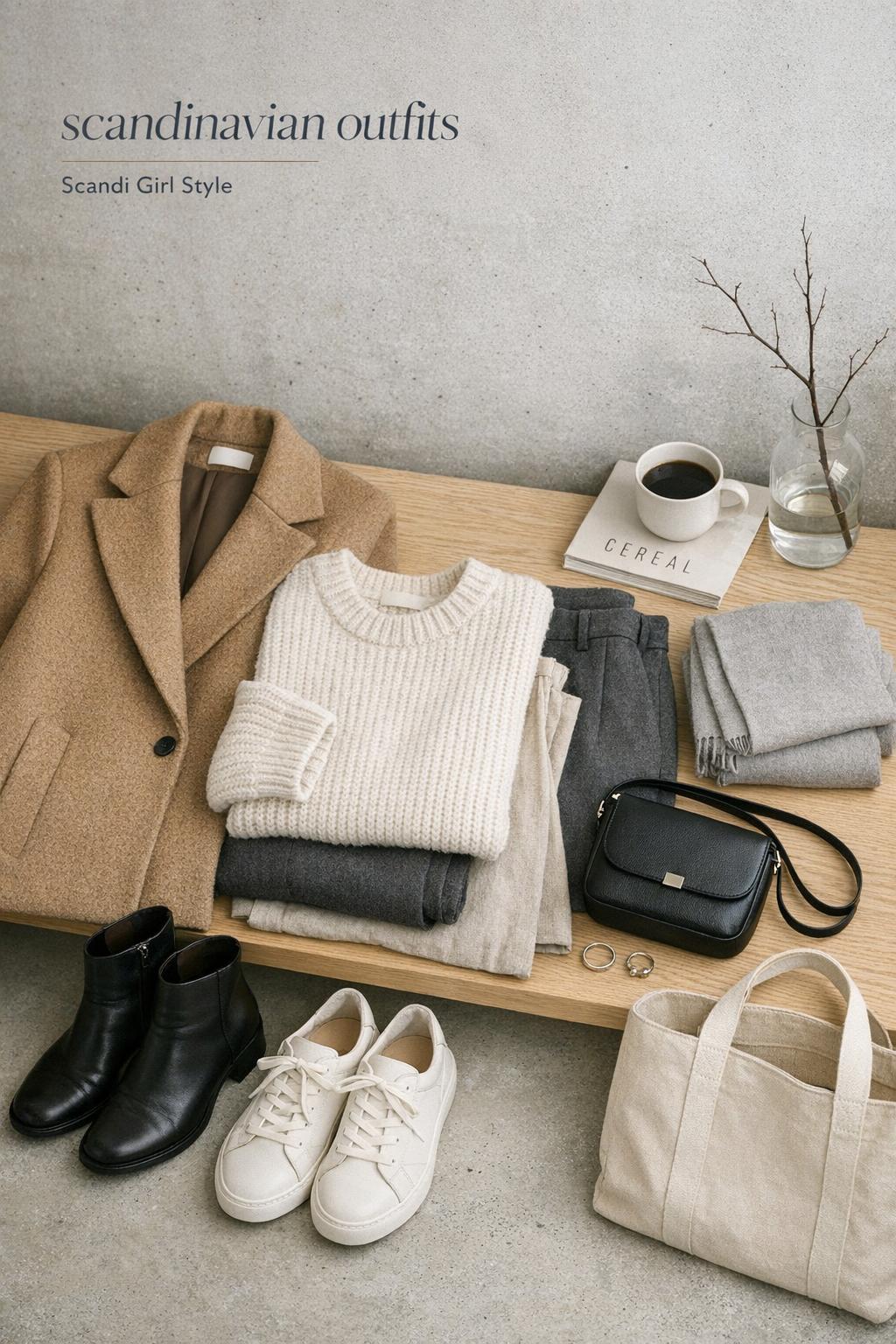
At its core, a “Scandi look” is less about copying a single uniform and more about applying Nordic design principles to a wardrobe: restraint, function, and a preference for pieces that can be reworn in multiple contexts. That’s why scandinavian fashion often reads as effortless—because the outfit is designed to work from the start, rather than relying on constant adjustments or delicate styling.
Most recognizable scandinavian outfits share a few consistent decisions: minimal silhouettes, a neutral-forward nordic color palette, and fabrics that behave well—meaning they layer, drape, and hold shape. That doesn’t mean the look is only black, white, and beige. It can be tonal and textured, or even boldly patterned, as long as the overall effect still feels purposeful.
Your wedding has a lot of moving pieces. Your plan can still feel composed.
Zarellea organizes guests, vendors, budget, and timelines in one shared space — so you can make decisions with clarity, not stress.
Scandi girl style: the “quiet structure” behind the vibe
Scandi girl style is often summarized online as clean basics and slick outerwear, but the more accurate throughline is quiet structure. Think outfits built around one strong shape (an oversized coat, straight trousers, a knit dress) with the rest kept streamlined. This is why the style translates so well to real life: it’s comfortable, but it doesn’t collapse into “loungewear everywhere.”
In practice, the structure comes from proportion choices—slightly oversized outerwear over sleeker layers, or a straighter pant balanced with a more substantial knit. Small choices create a big difference: a coat that’s roomy enough for layering, trousers that sit cleanly at the waist, and footwear that can handle walking.
A quick timeline of Scandi influence (and why it still matters)
Scandinavian minimalism didn’t appear overnight; it’s been reinforced over time through designers, brands, and widely shared fashion moments. A “less but better” approach to dressing has repeatedly resurfaced as an alternative to overly trend-driven wardrobes. That’s part of why scandinavian outfits remain relevant: the aesthetic is inherently durable, and the styling logic doesn’t expire when a micro-trend fades.
In U.S. closets, you can see this influence in the steady popularity of clean outerwear, minimalist separates, and capsule-friendly dressing. You can also see it in how Nordic influence threads through shopping culture, from editorial timelines of Scandi impact to e-commerce assortments that categorize Scandinavian fashion as a distinct, recognizable style language.
The brand map: names that anchor Scandinavian fashion
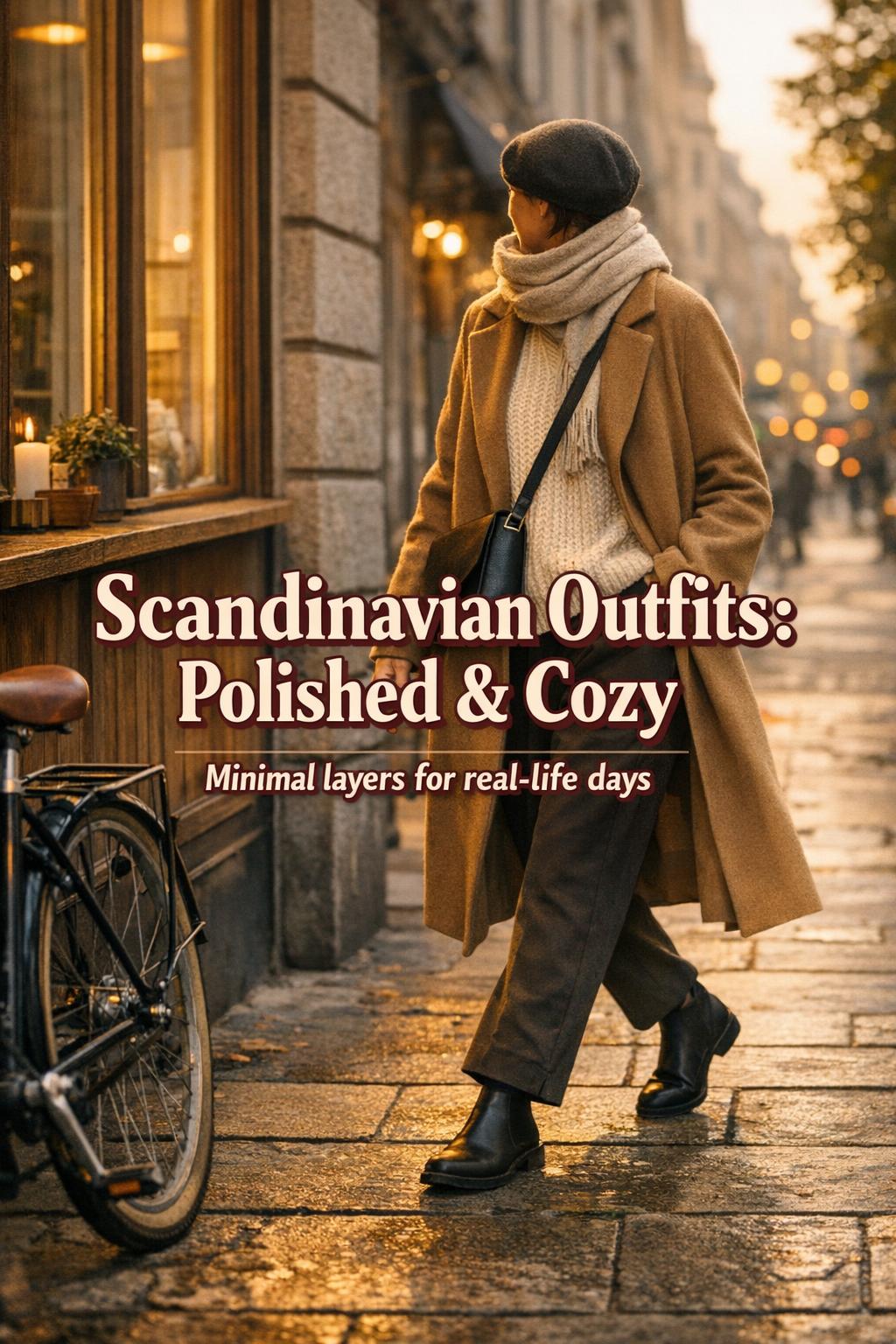
If you want the look to feel authentic rather than costume-like, it helps to understand the range within Scandinavian fashion. Some labels lean sharply minimalist; others make pattern and color the main event while staying wearable and functional. In the U.S., scandinavian outfits are often built by mixing a few brand “signals” (shape, fabric, palette) rather than committing to a head-to-toe uniform.
Minimalist anchors (the backbone of nordic minimalism)
Minimalist Scandinavian dressing is easiest when your key pieces come from brands that specialize in clean lines and wardrobe repetition. Acne Studios, Filippa K, and Arket are frequently used as shorthand for that pared-back, modern Nordic sensibility—pieces that look considered without obvious embellishment.
- Acne Studios: useful as an “edge” ingredient—clean, modern, and capable of making simple outfits feel fashion-forward without requiring a complicated color story.
- Filippa K: a natural fit for a capsule wardrobe mindset; straightforward pieces that can repeat across work, weekends, and travel days.
- Arket: often thought of as a practical bridge between basics and a curated wardrobe, especially for everyday layers.
Tip: If you’re building a wardrobe from scratch, start with one outerwear piece and one knitwear piece from this minimalist lane. That pairing does more heavy lifting than most people expect, especially for U.S. weather swings where you’ll wear a coat and knit repeatedly.
Patternful Scandinavian wear (color and print, still wearable)
Not all scandinavian outfits are muted. Gudrun Sjödén is a clear example of a Scandinavian fashion identity that embraces patternful prints and Nordic colorways while keeping the pieces functional and mixable. The styling takeaway is important: you can wear statement patterns and still look “Scandi” if the silhouette stays practical and the outfit stays cohesive.
In real life, this might look like a patterned dress with a simpler coat and comfortable footwear, or a printed top paired with neutral trousers. The print becomes the focal point; everything else supports it.
Scandi-leaning shopping culture (where the influence shows up)
Scandinavian-influenced minimalism also shows up in broader shopping ecosystems. In brand roundups and retailer edits, you’ll see labels described in terms that point back to a modern Nordic feel. Helsa is one example often mentioned within this context, alongside other labels that borrow Scandi restraint in silhouette and palette.
The practical use: even when you’re not buying from a strictly Scandinavian brand, you can still shop with Scandinavian logic—prioritize pieces that layer, repeat, and hold a clean line through the body.
City-by-city cues: how Nordic style changes with place
“Scandi style” gets flattened online, but the look gains depth when you connect it to cities. Stockholm, Copenhagen, Oslo, and Helsinki operate as useful style references because they imply different balances of minimalism, practicality, and street-style expression. For U.S. readers, thinking in city cues can make outfit planning easier: you’re not chasing a vague aesthetic; you’re choosing a lane.
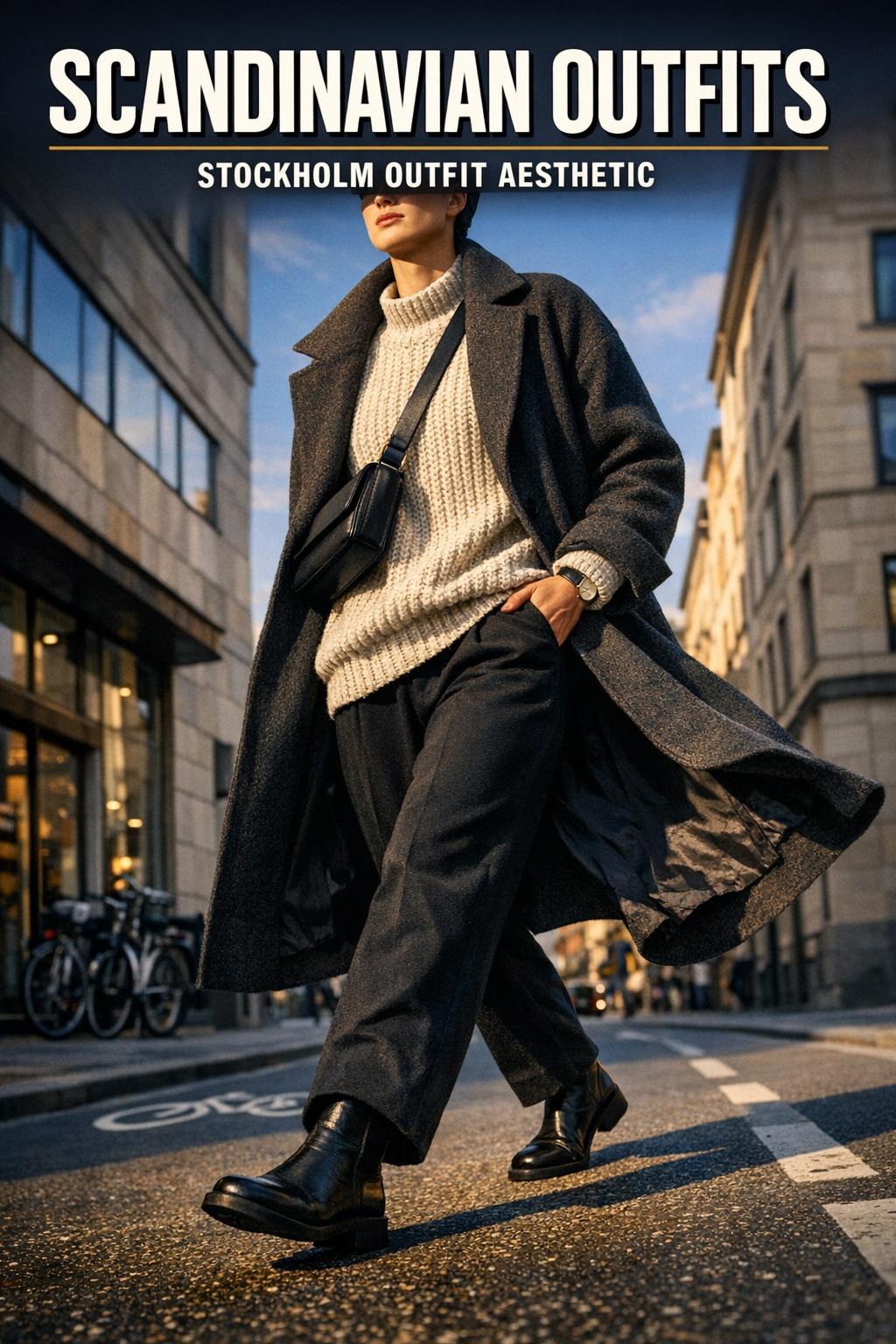
Stockholm outfit aesthetic: clean, composed, quietly strong
A Stockholm outfit aesthetic is an ideal reference when you want minimalism that still feels sharp. Think controlled proportions, a streamlined palette, and a sense that every piece has a job. Even when the silhouette is oversized, it’s oversized with intention—outerwear that frames the body, knits that layer without bulk, trousers that fall cleanly.
Try this in a U.S. context: for a long day that includes commuting and indoor heating, build around straight trousers, a knitwear layer, and a coat that can be worn open or closed without looking sloppy. Keep the palette neutral, then use texture (wool, boiled wool, linen depending on season) to keep it from looking flat.
Copenhagen: street style energy and fashion-week experimentation
Copenhagen street style is where Nordic minimalism meets visible trend movement. Copenhagen Fashion Week street style coverage often highlights how the city embraces wearable experimentation: strong silhouettes, unexpected proportions, and specific items that rise to trend status. Balloon pants are one of those examples—voluminous but styled in a way that still reads streamlined when paired with a simpler top or structured outerwear.
Tip: If balloon pants feel intimidating, treat them like the “statement piece” and keep everything else calm. A neutral palette and minimal accessories make the silhouette feel fashion-forward rather than costume-like.
Oslo and Helsinki: function-first dressing that still feels modern
Oslo and Helsinki are useful reference points when your main concern is practicality—layers that manage temperature changes, pieces that can handle walking, and outfits built for full days. The takeaway for scandinavian outfits isn’t about copying a specific item; it’s about prioritizing comfort, movement, and repeat wear.
If your U.S. routine includes campus, public transit, or long commutes, this function-first approach will feel especially relevant. You’re aiming for clothes that support your day rather than clothes that require you to manage them.
The wardrobe pillars that make outfits Scandinavian (without overthinking)
Most successful scandinavian outfits can be reverse-engineered into a few wardrobe pillars. The pieces aren’t complicated; the difference is that each one is chosen for versatility, fabric performance, and how it layers. This is where Scandinavian fashion overlaps with a capsule wardrobe mindset: fewer items, more combinations, less styling stress.
Outerwear that does the heavy lifting
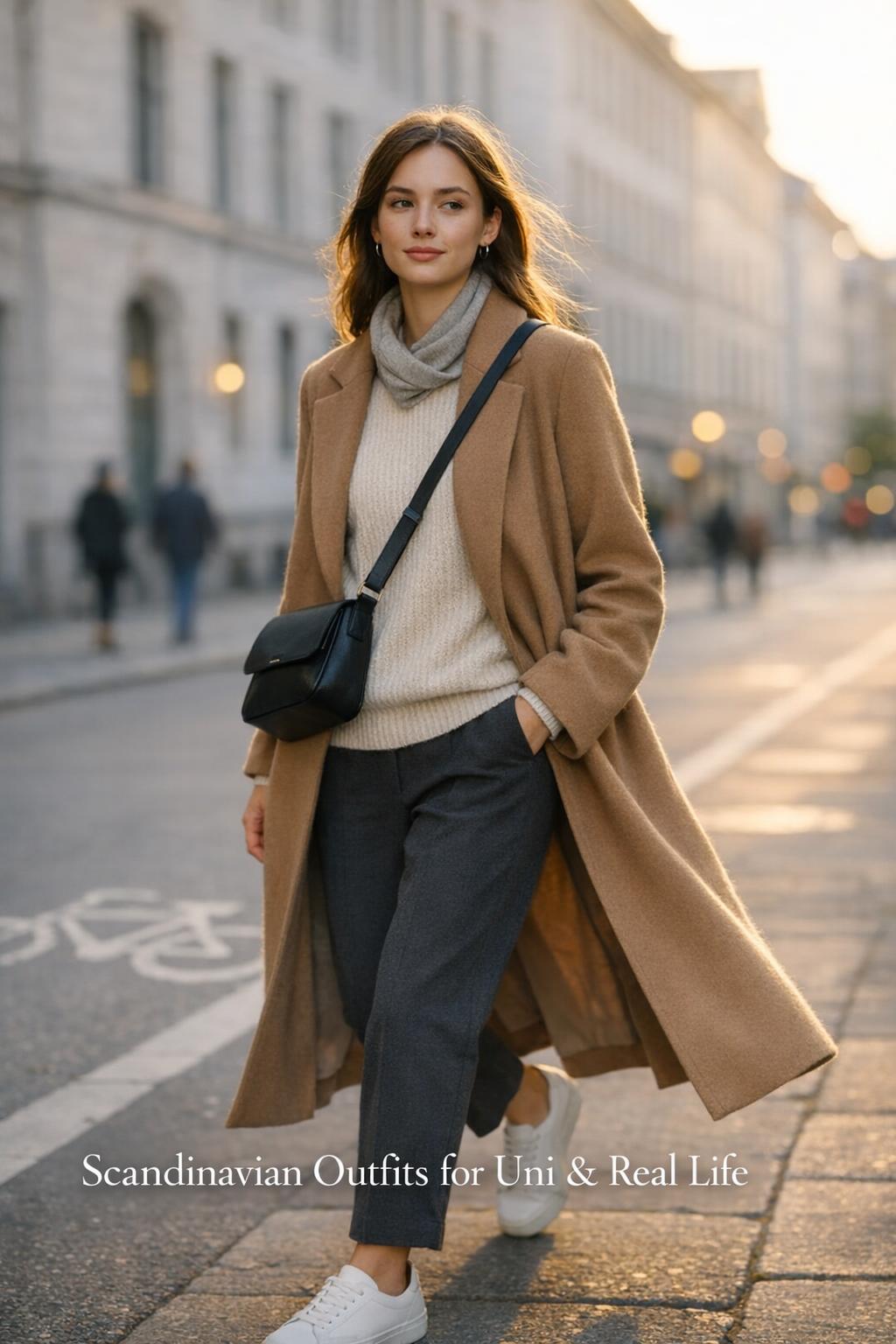
Outerwear is often the most visible part of a Nordic outfit, especially in transitional weather. A great coat can make a simple base look intentional. Look for silhouettes that can handle layering—wool coats, trench-like options, and other structured styles that hold shape.
- Wool outerwear: supports a clean line and adds texture to neutral outfits.
- Room for layering: essential if you want the coat to work from early fall through winter-like days.
- Simple closures and minimal hardware: keeps the look aligned with nordic minimalism.
Tip: In the U.S., where you may go from cold outdoors to overheated indoors, choose outerwear you can comfortably wear open. The outfit should still look “finished” even when the coat is unbuttoned.
Knitwear as the everyday luxury
Scandinavian knitwear is a quiet hero: it adds warmth, texture, and a sense of quality. Knitwear also makes a minimal outfit feel rich without relying on loud details. A knit can be the main top layer, a mid-layer under a coat, or a piece you drape and adjust through the day.
For a realistic outfit formula, try knitwear plus straight trousers plus a coat. It’s repeatable, forgiving, and easy to shift from casual to more polished depending on footwear and accessories.
Trousers that balance proportion (including the balloon-pant moment)
Scandi silhouettes often rely on trousers to set the proportion. Straight or minimal trousers are the easiest entry point, but street style—especially in Copenhagen—has normalized bolder shapes. Balloon pants work when you respect balance: a cleaner top, less bulk at the waist, and a coat that doesn’t fight the volume.
For everyday wear, minimal trousers keep the outfit flexible. For a fashion-week-inspired approach, one exaggerated pant shape paired with neutral tones can still read Scandinavian rather than chaotic.
Dresses that can handle layering
Dresses show up in scandinavian outfits because they’re efficient: one piece creates a full look, and then you adjust warmth with layers. Patternful Scandinavian wear often uses dresses as the central item, especially when the print is part of the brand identity. In a minimalist wardrobe, a simple dress becomes a canvas for coats and knits.
If you want a more “Scandi” result, pay attention to how the dress sits under outerwear. The best options don’t bunch; they hold a clean line and feel comfortable when you’re walking, sitting, and moving through a full schedule.
Footwear and bags: minimal, practical, and city-ready
Although specific shoe models vary, the Scandinavian approach is consistent: choose footwear silhouettes that can handle walking and still look clean with trousers, dresses, and coats. Bags follow the same logic—functional shapes without excessive ornamentation. The goal is to support a full day of movement, not to create a delicate outfit that only works in photos.
Tip: If you’re building uni outfits with a Scandinavian feel, prioritize footwear first. Comfortable walking changes how confidently you wear an oversized coat or a longer hemline.
Color palettes and texture: the Nordic way to avoid “boring neutrals”
A nordic color palette is often described as neutral, but the sophistication comes from nuance: tonal dressing, subtle contrast, and texture doing the visual work. Neutrals become more interesting when you combine materials like wool, boiled wool, and linen (season depending), or when you mix matte and slightly structured surfaces within the same outfit.
Neutral outfits are especially common in Scandinavian neutral outfits content because they’re easy to repeat and easy to shop. But neutrals can look flat if everything is the same weight and finish. The simplest fix is to vary texture: pair a smoother trouser with a more tactile knit, or a structured coat over softer layers.
Tip: choose one “depth” element per look
When you keep the palette restrained, give the outfit one source of depth: a heavier knit, a more sculptural coat, or a patterned piece in Nordic colorways. This is where brands like Gudrun Sjödén can be especially helpful—one patterned item can carry the look while the rest stays simple.
Styling logic: layering, proportions, and the details that matter
Nordic minimalism looks effortless because it’s built on repeatable styling decisions. Once you understand those decisions, you can create outfit ideas Scandinavian style without buying an entirely new wardrobe. The main levers are layering (for function), proportions (for shape), and detailing (for polish).
Layering that works indoors and outdoors
Layering is not just aesthetic; it’s how Scandinavian outfits stay practical. In the U.S., especially in cities with big temperature swings, you’ll want layers you can adjust—knitwear that isn’t too bulky under a coat, and base layers that look fine on their own when the outerwear comes off.
Real-life example: a student wearing uni outfits might start the morning in a coat and knit, then remove the coat in a warm lecture hall. If the knit has a clean shape and the trousers fit well, the outfit still looks intentional without the outer layer.
Proportion: oversized done in a clean way
Oversized silhouettes are a common Scandi move, but the “clean” part matters. One oversized piece is usually enough: an oversized coat with straighter trousers, or a roomier knit with a more streamlined bottom. When everything is oversized, the outfit can lose the crispness that defines Scandinavian minimalism.
Tip: If you’re wearing balloon pants inspired by Copenhagen street style, keep the top simpler and consider outerwear that’s structured rather than slouchy. That keeps the volume looking deliberate.
Detailing: minimal accessories, maximum impact
Scandinavian outfits tend to avoid overly busy accessories. Instead, the “impact” comes from the cut of the coat, the texture of knitwear, and the coherence of the palette. If you love accessories, the Scandinavian approach is to pick one focal point rather than stacking many competing elements.
Outfit ideas Scandinavian style for specific U.S. routines
The most useful way to think about scandinavian outfits is to match them to scenarios. Scandinavian fashion excels at repeatable looks that work for commuting, campus, and travel—places where you need comfort, movement, and an outfit that still looks good after hours of wear.
Uni outfits with a Scandi girl style backbone
For uni outfits, the Scandinavian approach is about building a uniform that doesn’t feel like a uniform. Start with trousers that you can sit in all day, add knitwear that breathes, and finish with a coat that makes the outfit feel composed. Keep colors neutral so everything mixes, then rotate one standout element—maybe a patternful piece inspired by Gudrun Sjödén, or a stronger silhouette nodding to Copenhagen fashion energy.
- Comfort test: can you walk across campus and sit for a full lecture without tugging or adjusting?
- Layer test: does the outfit still look good when you remove your coat indoors?
- Repeat-wear test: can each piece be worn at least three different ways?
Office-leaning days without looking overly formal
If you want scandinavian outfits that read professional but not rigid, lean into clean lines and quality textures. A minimalist coat over knitwear and minimal trousers is often enough. This is where Filippa K and Arket-style simplicity becomes a practical guide: you’re dressing for movement and long hours, not for a delicate, high-maintenance look.
Tip: Keep the palette coherent (tonal or neutral), then use one structural element—like a sharper outerwear silhouette—to create authority without stiffness.
Travel days and city weekends (Stockholm-to-Copenhagen energy)
For travel, the Scandinavian model is especially effective: layers that can shift with temperature, and pieces that don’t wrinkle or lose shape too quickly. If you prefer the Stockholm outfit aesthetic, keep the silhouette controlled and the palette calm. If you want more Copenhagen street style attitude, add one trend-forward proportion—balloon pants, a bolder coat shape, or a more statement knit—while keeping the rest minimal.
A helpful rule: on travel days, your outerwear and footwear carry the outfit. If those are comfortable and structured, everything else can stay simple.
Seasonal Scandinavian outfits, adapted for U.S. weather
Seasonality matters because Scandinavian outfits are built on function. The same outfit logic works year-round, but the materials and layering choices shift. Instead of chasing a completely different wardrobe each season, aim for a consistent foundation and seasonal adjustments.
Spring: light layers and clean lines
Spring Scandi outfits tend to look simple because they rely on layering rather than heaviness. This is a good season for lighter textures and transitional outerwear. Keep the palette within neutrals and soft earthy tones, and use layering to handle the morning-to-afternoon temperature changes common in many U.S. regions.
Tip: If you’re tempted to add lots of color, try adding it through one piece—either a patterned item in Nordic colorways or a single stronger shade—while keeping the rest restrained.
Summer: minimal silhouettes, breathable textures
Summer Scandinavian outfits work best when you keep the silhouette minimal and let fabric choice carry comfort. Linen is a natural texture reference here, especially if you want neutrals that still feel seasonal. Dresses can be particularly useful in summer because they create an instant outfit; you can still keep the Scandinavian feeling by choosing clean shapes and minimal styling.
For U.S. humidity, prioritize comfort and breathability over strict adherence to a “perfect” silhouette. The Scandinavian principle is function first.
Fall: coats and knitwear take center stage
Fall is where Scandinavian fashion becomes easiest to recognize: outerwear, knitwear, and layered neutrals. Texture becomes the main styling tool—wool and boiled wool can add depth to neutral outfits, and coats become the outfit’s visual anchor.
Tip: Plan your fall outfits Scandinavian style by choosing one “hero coat,” then building a small rotation of knitwear and trousers that work underneath it. It reduces decision fatigue and makes getting dressed faster.
Winter: warmth without bulk (and the value of smart layering)
Winter Nordic outfits are often misunderstood as purely aesthetic; in practice, they’re about warmth that still looks streamlined. In the U.S., winter conditions vary widely, so the key is adaptable layering rather than a single rigid formula. Wool outerwear paired with knitwear and well-fitting trousers can keep the silhouette clean. If you run cold, layer more underneath rather than sizing up everything—oversizing every layer can make movement harder and reduce the crispness associated with nordic minimalism.
A realistic winter scenario: if you’re commuting, you want a coat that’s warm enough outdoors but not unbearable indoors. That’s where removable layers matter—knitwear that stands on its own, and base layers that stay comfortable all day.
Sustainability, materials, and the “quality over quantity” mindset
Sustainability is frequently associated with Scandinavian fashion, particularly through brand storytelling around sustainable materials and thoughtful wardrobe building. The practical takeaway for U.S. shoppers is to focus on garments that last through repeated wear and that feel good against the skin across seasons. This is also where the difference between “cheap minimalism” and nordic minimalism becomes obvious: the Scandinavian approach relies on fabric and construction to create polish, not on constant trend turnover.
Brands like Gudrun Sjödén explicitly foreground sustainable materials alongside a distinct visual identity, showing that sustainability and pattern can coexist. The balance to keep in mind is that “sustainable” doesn’t automatically mean perfect for everyone; your climate, sensitivity to fabrics, and how often you’ll realistically wear the piece should guide your choices.
Tip: use a “repeat-wear” filter before you buy
Before purchasing, imagine three different days you’d wear the item—one casual, one slightly more polished, and one weather-challenging day. If you can’t picture those scenarios, the piece may be more trend-driven than Scandinavian in spirit, even if it looks minimal on a product page.
Where to shop Scandinavian outfits in the U.S. (without losing the point)
Shopping Scandinavian fashion in the U.S. usually means a mix of direct brand shopping and browsing multi-brand retailers that carry Scandinavian-leaning labels. You’ll also find Scandi influence inside broader e-commerce environments through curated brand roundups and edits that call out minimalist, Nordic-inspired aesthetics.
If you’re building a wardrobe, avoid buying everything at once. Scandinavian outfits look best when they’re lived in—built through a small set of reliable pieces you learn how to style. Start with one outerwear anchor, add knitwear, then fill in with trousers and a dress option if that fits your lifestyle.
- Direct brand shopping: helpful when you already know you love a brand’s silhouette and sizing approach.
- Multi-brand browsing: useful for comparing different interpretations of Scandinavian-influenced minimalism, including labels like Helsa.
- Wardrobe-first shopping: choose based on gaps (coat, knitwear, trousers) rather than chasing a single viral outfit.
Common mistakes that make Scandinavian outfits look “off”
Because Scandinavian style can look simple, it’s easy to miss what makes it work. Most missteps come down to proportion, fabric behavior, or trying to force minimalism without building enough depth through texture and fit.
Wearing neutrals without texture
A fully neutral outfit can look unfinished if every piece has the same visual weight. Add depth through knitwear texture, a structured coat, or a fabric like wool or boiled wool in cooler seasons. If you prefer summer neutrals, linen can play that role.
Oversizing everything at once
Oversized silhouettes are a Scandi staple, but they work best when balanced. If the coat is oversized, keep the inner layers more streamlined. If the trousers are voluminous (like balloon pants), simplify the top. Balance is what keeps the look clean.
Buying “Scandi” pieces that don’t match your life
The Scandinavian wardrobe logic is rooted in practicality. If you don’t walk much, you might not need the same footwear priorities; if your climate is warm, heavy knitwear won’t serve you. The goal is to apply Nordic design principles to your routines, not to copy a climate-specific wardrobe piece for piece.
A compact checklist for building outfits Scandinavian style
If you want a quick way to pressure-test a look, use this checklist. It keeps scandinavian outfits grounded in the principles that make them feel modern and wearable, whether your inspiration is Stockholm outfit aesthetic polish or Copenhagen street style experimentation.
- Silhouette: is there one clear shape that leads the outfit (coat, trousers, or dress)?
- Palette: does the color story feel coherent (neutral, tonal, or restrained with one focal point)?
- Texture: is there at least one material element adding depth (wool, boiled wool, linen, or a tactile knit)?
- Function: can you move comfortably, sit, walk, and adjust layers through the day?
- Repeatability: can you rewear the core pieces in multiple combinations?
Tip: If you’re new to the style, take photos of outfits that feel good after a full day. Scandinavian dressing is about how clothes perform over time, not just how they look at the mirror check.
FAQ
What defines scandinavian outfits compared to other minimalist styles?
Scandinavian outfits are typically defined by nordic minimalism paired with practicality: functional layering, clean silhouettes, and a neutral-forward palette supported by quality fabrics and texture. The emphasis is on repeatable outfits that work in real life, not just visual simplicity.
How can I get a scandi girl style look without buying a whole new wardrobe?
Start with one strong outerwear piece and one versatile knitwear piece, then build outfits around minimal trousers or a simple dress. Keep colors coherent and rely on texture for depth; this lets existing basics look more intentional without a complete closet reset.
Which brands are most associated with Scandinavian fashion in the U.S.?
Commonly referenced Scandinavian and Scandinavian-leaning anchors include Acne Studios, Ganni, Filippa K, Arket, and Gudrun Sjödén, with Helsa often discussed in shopping contexts that highlight Scandinavian-influenced minimalism.
How do I wear balloon pants in a Scandinavian way?
Take a Copenhagen street style approach by making balloon pants the focal point and keeping the rest streamlined: a simpler top, minimal accessories, and structured outerwear. A neutral palette helps the volume feel deliberate and modern.
What is the Stockholm outfit aesthetic?
The Stockholm outfit aesthetic is a useful reference for clean, composed minimalism: controlled proportions, streamlined layers, and a calm palette that still feels strong. It typically prioritizes pieces that sit neatly under outerwear and look polished through a full day.
Are Scandinavian neutral outfits always the best starting point?
Neutral outfits are a practical starting point because they mix easily and support repeat wear, but they can look flat without texture or a strong silhouette. If neutrals don’t suit you, you can still dress Scandinavian by using patternful pieces in Nordic colorways while keeping the overall outfit cohesive.
How do I adapt Scandinavian outfits for U.S. seasons and indoor heating?
Focus on adjustable layers: outerwear that looks good worn open, knitwear that works as a top layer indoors, and fabrics that don’t feel overly heavy in warm interiors. This keeps the outfit functional across common U.S. temperature swings.
What are the easiest outfit ideas Scandinavian style for busy students?
For uni outfits, use a repeatable formula: minimal trousers, a comfortable knitwear layer, and a structured coat, keeping the palette neutral or tonal for easy mixing. If you want variety, rotate one statement element such as a patterned item inspired by Gudrun Sjödén or a stronger silhouette cue associated with Copenhagen street style.
Leave a Reply