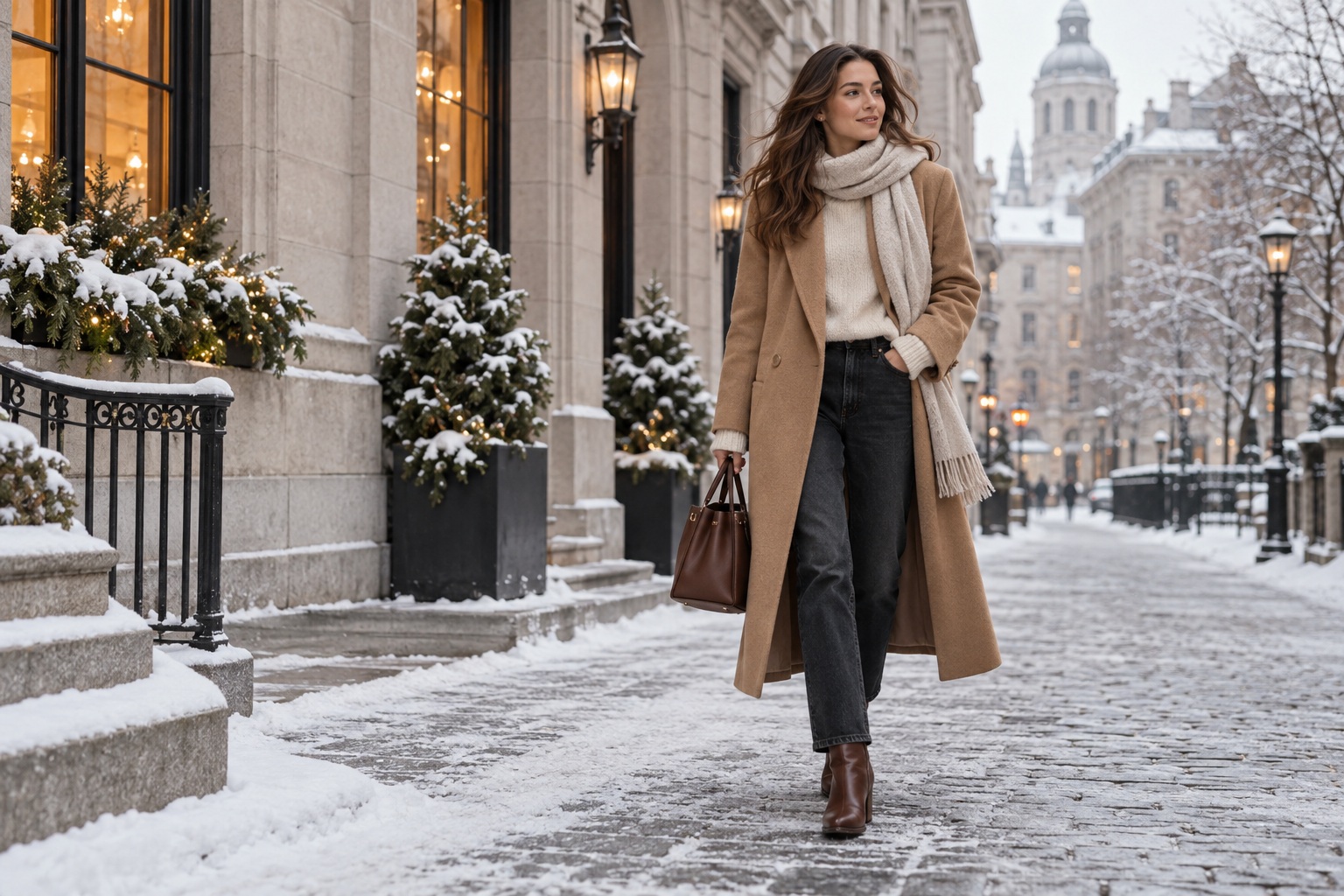
A winter aesthetic outfit looks intentional before anyone notices the individual pieces. The coat frames the silhouette, the knit adds softness, the shoes give the look a clear finish, and one controlled detail makes the whole combination feel personal. You do not need a closet full of new clothes to create that effect. You need a simple order for making decisions.
Start with the practical questions: how cold is it, how much will you walk, and what do you need to carry? Then choose the visual direction. You might want soft neutrals, dark city layers, warm brown and cream, a polished office mood, or a relaxed weekend look. Once the purpose and mood are clear, the outfit becomes easier to edit. This guide gives you a repeatable winter aesthetic outfit checklist, five formulas, and a final fit test so the result looks good in a mirror and works after you leave home.
Start with the winter aesthetic outfit formula
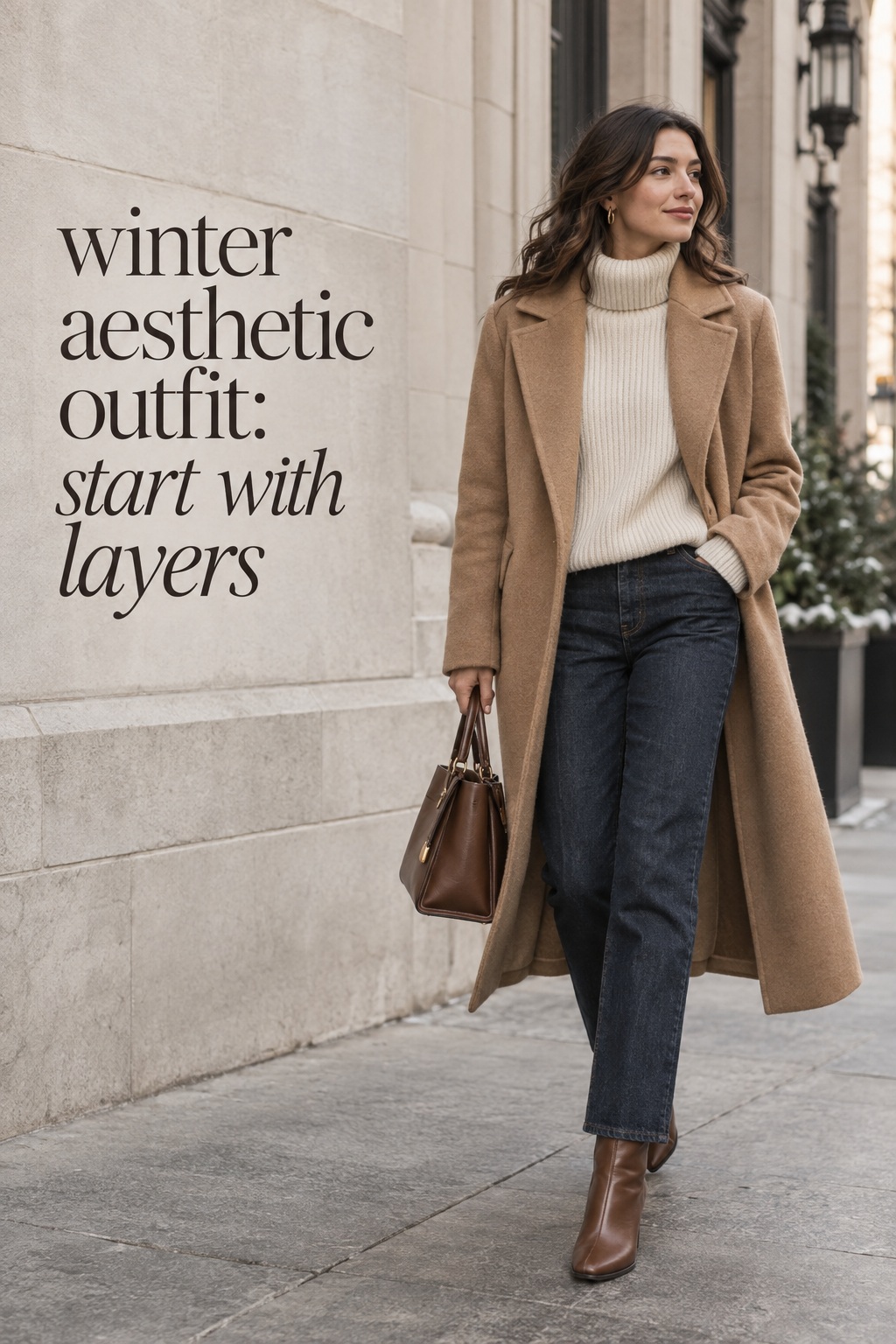
The most reliable formula has four parts: a close-to-the-body base, one main proportion, a winter frame, and a single finishing signal. The base can be a thin turtleneck, fitted long-sleeve top, fine knit, shirt, or simple dress. It should feel comfortable under the layers you expect to add. A bulky base often makes the rest of the outfit harder to balance.
The main proportion is the shape people read first. It may be a long coat over straight jeans, a cropped jacket over wide trousers, a short skirt with tall boots, or a fitted knit dress beneath a generous coat. Choose this relationship before you think about jewelry or color accents. If the silhouette is clear, the outfit can stay quiet and still feel styled.
Your wedding has a lot of moving pieces. Your plan can still feel composed.
Zarellea organizes guests, vendors, budget, and timelines in one shared space — so you can make decisions with clarity, not stress.
The winter frame is the outer layer and shoe combination. A wool coat with loafers creates a different message from a puffer with insulated boots, even when the base underneath is the same. A long coat creates a vertical line. A cropped jacket emphasizes the waist. Tall boots connect the hem to the ground, while ankle boots leave more visual space around the leg. Treat the frame as part of the outfit, not as an afterthought you add on the way out.
Finally, choose one finishing signal. It could be a soft scarf, a glossy bag, a red knit, a textured boot, a belt, or a distinctive pair of earrings. One signal gives the outfit a point of view. Several competing signals can make it feel like a collection of saved images rather than a look you chose for yourself.
- Base: choose the layer that sits closest to your body.
- Proportion: decide whether the volume is above, below, or around the body.
- Frame: pair the outerwear with shoes that support the silhouette.
- Signal: add one texture, color, or accessory that makes the outfit memorable.
This order also prevents unnecessary shopping. If your closet already contains a neutral knit, a straight trouser, a coat, and a supportive shoe, you can create several winter aesthetic outfits by changing only the frame or the signal. The goal is not to make every look different. The goal is to make familiar pieces feel deliberate.
Build the base before adding the aesthetic details
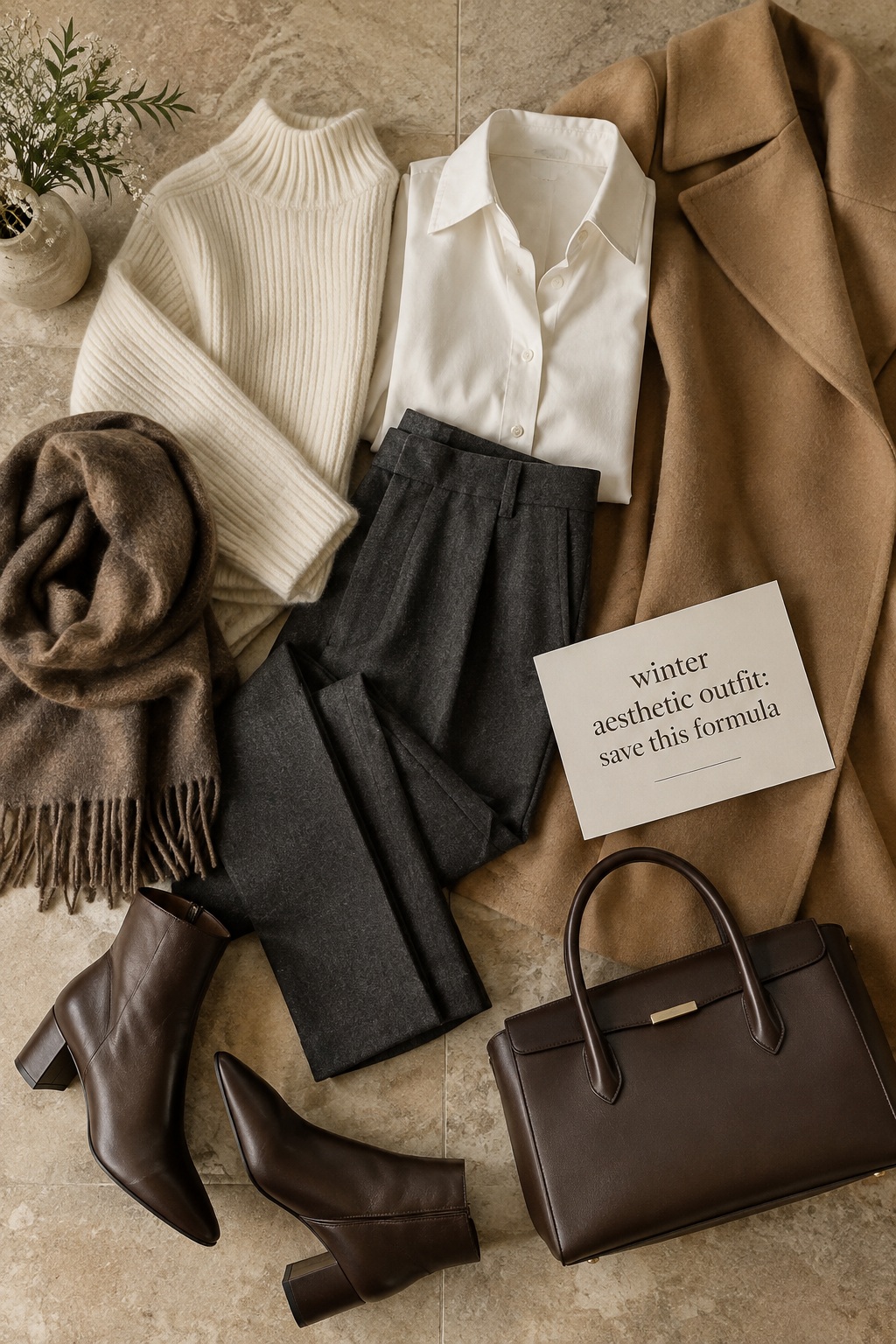
Begin with temperature and movement. A thin, smooth base layer can make a sweater or jacket easier to wear because it reduces bulk and helps the upper layers slide into place. If you will be outside for a long time, add warmth close to the body rather than relying only on a very large coat. This gives you more control over the silhouette.
Next, choose the lower half. Straight jeans, wide-leg trousers, a midi skirt, a mini with tights, and a knit dress can all support an aesthetic winter look. The right choice depends on the frame you want. Wide trousers need a compact or clearly tucked upper layer. A midi skirt benefits from a boot or shoe that gives the hem a strong finish. A mini skirt often feels more balanced with a longer coat or tall boot.
Set a color anchor before adding interest. Black, navy, charcoal, camel, cream, chocolate brown, denim, and olive are useful winter foundations because they can be repeated across different outfits. You do not have to dress in one color. Instead, let one neutral appear at least twice, such as a camel coat with a tan bag or brown boots with a chocolate scarf.
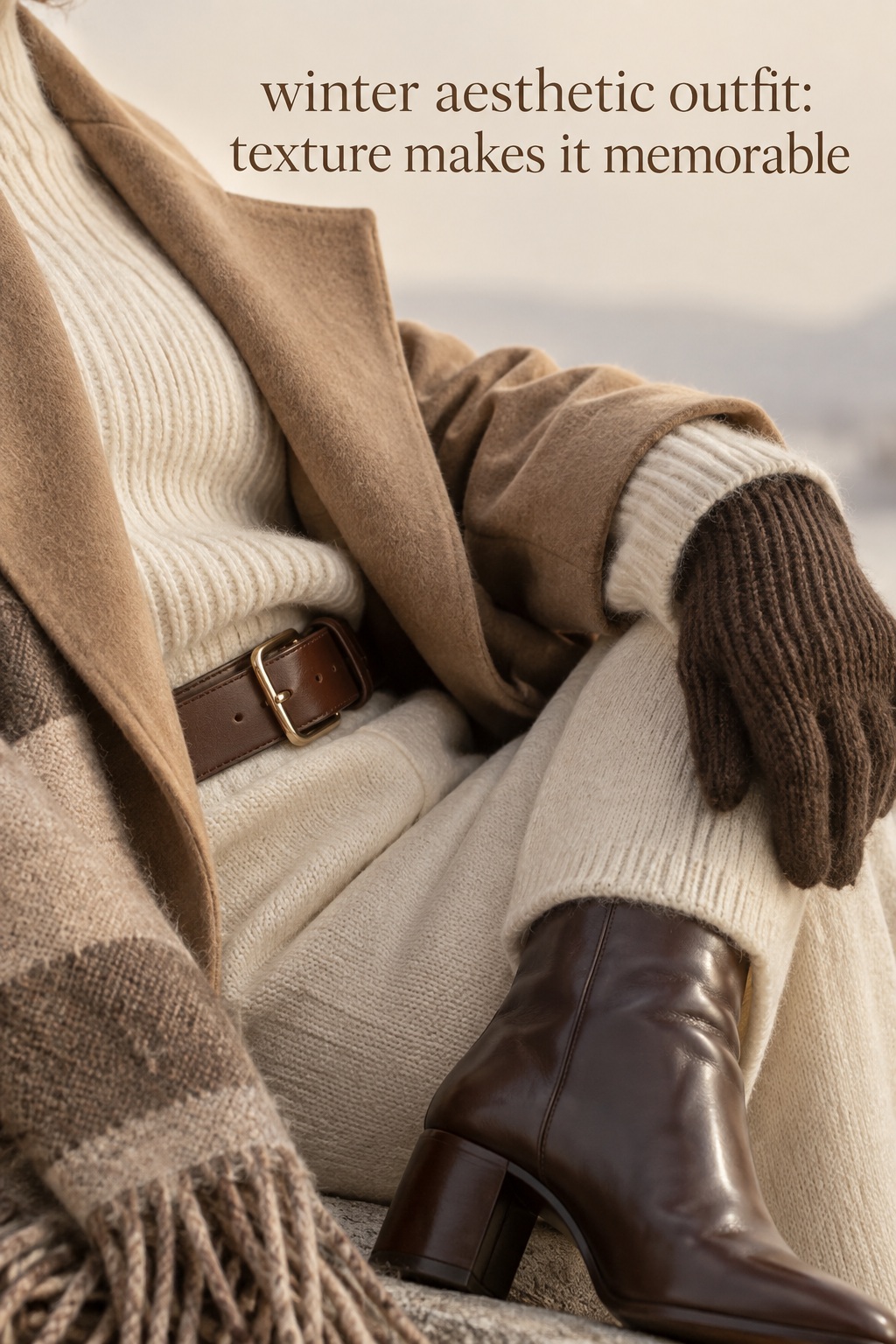
Then introduce texture. Winter outfits look richer when smooth, soft, matte, and slightly shiny surfaces appear together. Try ribbed knit with wool, denim with suede, leather with brushed jersey, or satin with a chunky cardigan. You only need two or three noticeable textures. If every piece has a strong surface, the outfit loses a clean focal point.
Use accessories to clarify the mood rather than to fill empty space. A structured bag can make relaxed layers feel polished. A scarf can add a small color break near the face. A belt can give a loose coat or cardigan a more defined line. A hat can bring personality to a simple coat and jeans formula. Choose the accessory that solves the visual problem you actually have.
Choose a color story you can repeat
A winter aesthetic outfit usually looks more cohesive when the color story is limited. Start with two neutrals and one optional accent. Cream, camel, and dark brown feel warm. Charcoal, black, and silver feel urban. Navy, gray, and burgundy feel refined. Olive, denim, and tan feel relaxed. These are starting points, not rules. The useful part is the repetition.
Give the outfit a visual frame
Look at what surrounds the outfit. The coat, bag, and shoes create the edge of the look, especially in winter when most of the base may be covered. A long coat over a simple outfit can look elegant because it creates one uninterrupted line. A cropped jacket and high-waisted trouser can look sharper because the waist becomes the frame. Decide which line you want people to notice.
Five winter aesthetic outfit formulas to repeat
Use the formulas below as working templates. Keep the proportions, then swap colors and textures according to what you already own. Each formula has a clear aesthetic signal, but none requires a complete new wardrobe.
1. Straight denim, a fine knit, and a long coat
Start with straight-leg or softly relaxed denim, a fine turtleneck or crewneck, and a long wool-style coat. Add ankle boots or a supportive loafer with a warm sock. This is the easiest everyday winter aesthetic outfit because the structure is familiar and the coat supplies most of the polish. Keep the palette tonal, such as cream with camel and brown, or charcoal with black and gray.
For a softer version, use a fuzzy scarf or a brushed cardigan beneath the coat. For a sharper version, choose a crisp shirt under the knit and a structured bag. If the outfit feels flat, change one surface rather than adding more accessories. A suede shoe, ribbed knit, or leather belt may be enough.
2. Wide-leg trousers, a compact top, and a short jacket
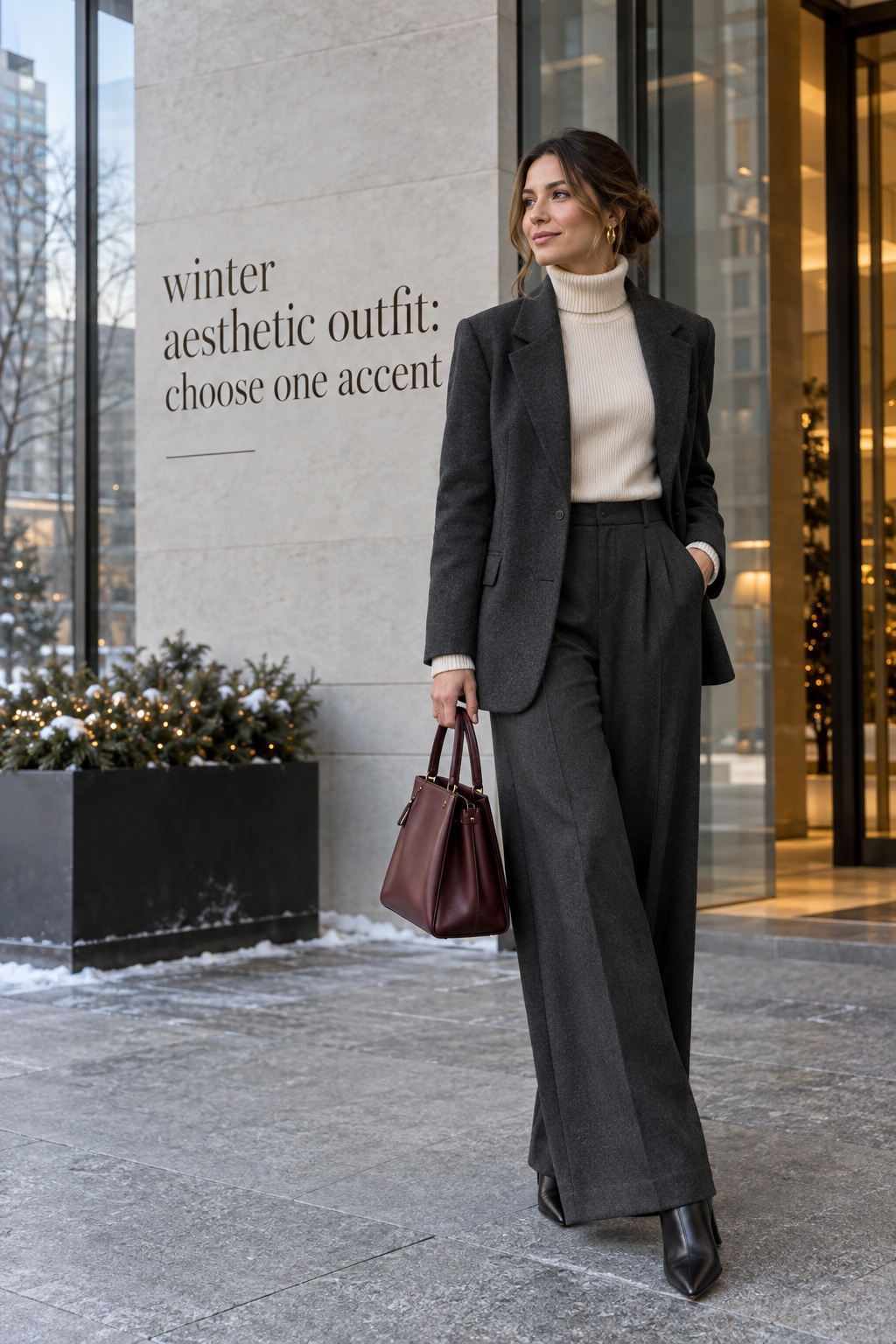
Wide-leg trousers create movement, so balance them with a compact knit, fitted long-sleeve top, or tucked shirt. Finish with a short jacket, cropped puffer, or waist-length cardigan. The shorter top layer gives the outfit a visible center and keeps the trousers from looking unplanned. A low-profile sneaker works for casual settings, while a pointed boot or low heel makes the formula more polished.
Keep the lower half long and clean. The trouser hem should meet the shoe in a way that feels intentional, not accidental. If the pants are fluid and the jacket is also oversized, add a defined neckline, belt, or close-fitting base to restore shape. One clear fitted area makes generous layers easier to wear.
3. Midi skirt, fitted knit, and tall boots
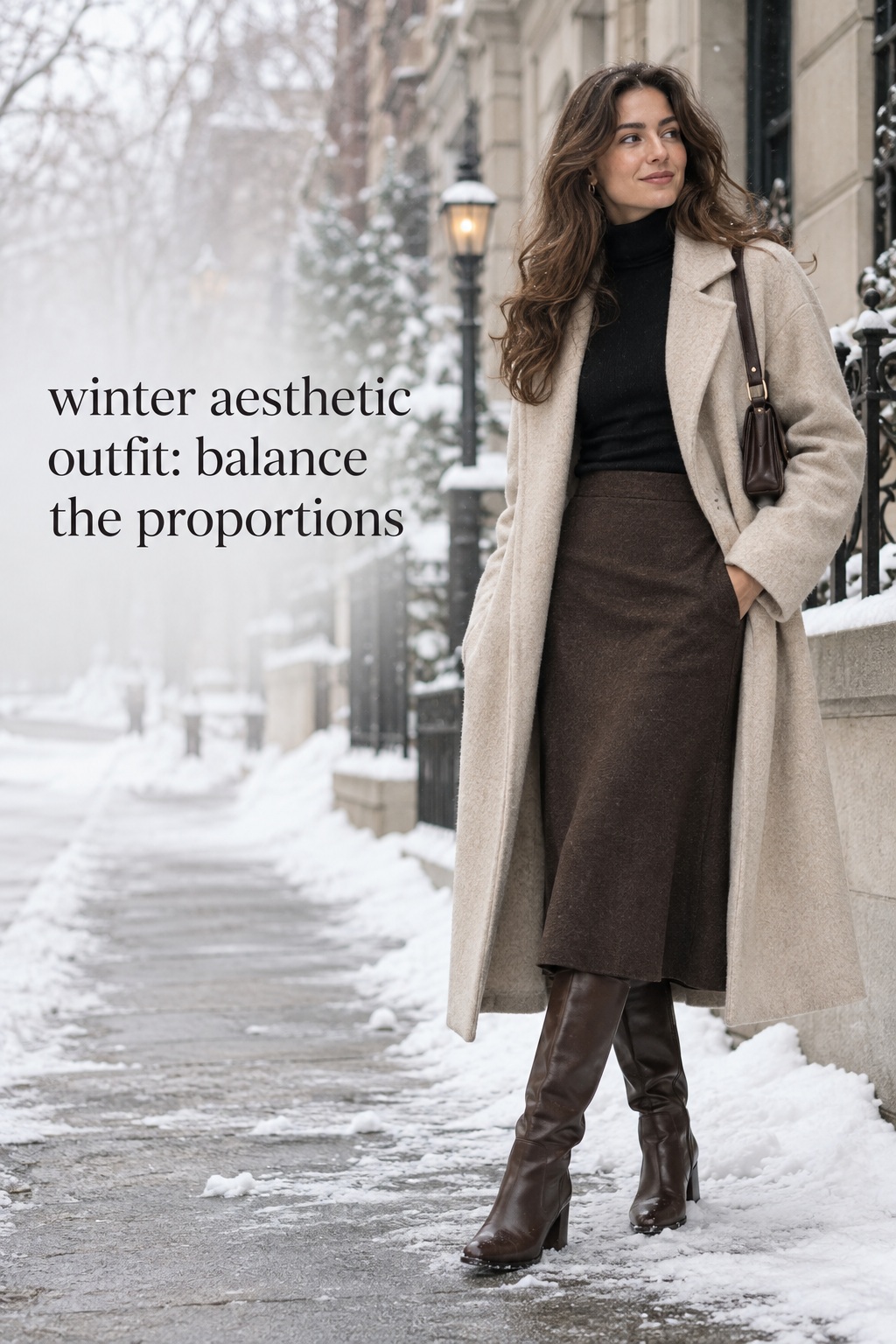
A midi skirt gives you a feminine winter route without requiring a dress. Pair it with a fitted turtleneck, slim cardigan, or neat sweater, then add tall boots. A long coat or a short jacket can both work, but they create different proportions. A long coat gives the outfit a quiet column shape. A short jacket emphasizes the waist and lets the skirt carry more of the movement.
Use texture to keep the formula from feeling too formal. Try a satin skirt with a matte knit, a wool skirt with a smooth top, or a denim skirt with a soft cardigan. Tights can provide warmth and visual continuity between the skirt and boot. Keep the bag relatively simple so the hem and boot line remain easy to read.
4. Knit dress, tall boot, and one structured outer layer
A knit dress is a one-piece base that makes winter dressing fast. Choose a shape that lets you sit and walk comfortably, then add tall boots and a coat, trench, or structured jacket. The dress can be close to the body, softly relaxed, or belted. What matters is the relationship between the dress and the outer layer. A generous coat creates contrast, while a fitted jacket keeps the whole look closer to the body.
This formula works for workdays, dinners, and travel when the accessories change. Use a roomy tote and flat boot for daytime. Switch to a smaller shoulder bag and a pointed boot for evening. If the dress is plain, let the coat texture or bag shape provide the visual signal. If the dress has a strong pattern, keep the outer layer and shoes quieter.
5. Layered weekend base with a polished finish
For a relaxed weekend version, combine a long-sleeve tee or thin turtleneck with a sweater, straight jeans, and a practical coat. Add one polished element, such as a leather belt, neat scarf, clean boot, or small structured bag. The result should feel comfortable but not unfinished. This is a good formula for errands, casual coffee, travel, and days when you need the outfit to move easily.
Keep the layers visually connected. A white shirt peeking from a navy sweater can echo a light sneaker. A burgundy scarf can repeat a dark red sock or bag detail. If the coat is oversized, keep the denim straight and the shoes defined. If the jeans are loose, choose a closer sweater or a shorter jacket. A small contrast in volume gives the relaxed outfit a point of view.
Use texture, color, and proportion as the visual system
Texture is the easiest way to make winter clothes look considered. Smooth wool and ribbed knit create quiet contrast. Denim and suede feel casual but rich. Leather and brushed jersey create a sharper balance. Faux fur, shearling, velvet, and bouclé add drama, but they work best when the rest of the outfit stays simple. Let one texture lead and use a second texture to support it.
Color does not have to be bright to be memorable. Tonal cream can look strong when the materials are varied. Chocolate brown can feel deep when paired with gray or denim. A red scarf, bag, or knit can wake up an otherwise neutral base. If you use a noticeable accent, repeat it once or keep the rest of the outfit very quiet. Repetition makes the accent look intentional.
Proportion keeps layers from becoming a pile of fabric. Pair a large coat with a cleaner bottom, a wide trouser with a compact upper half, or a short skirt with a longer outer layer. You can also create balance through exposed space, such as a visible ankle between a cropped trouser and boot, or a clear waist beneath a short jacket. In cold weather, the shape may be subtle, but it should still be readable.
Accessories should sit in the negative space of the outfit. A scarf fills the area around the neckline. A belt defines the waist. A bag gives the hand and hip a point of interest. Earrings brighten the face when the coat and knit are dark. This is more effective than adding decorative pieces everywhere. Think of accessories as punctuation marks.
- If the look feels plain, add one tactile surface such as suede, ribbed knit, or shearling.
- If the look feels bulky, remove a layer or move warmth closer to the body.
- If the look feels disconnected, repeat one color between the coat, shoe, bag, or scarf.
- If the look feels costume-like, replace one trend-led item with a clean everyday basic.
- If the look feels too dark, add a lighter knit, pale scarf, or small bright accessory near the face.
Photo-readability is also part of the visual system. A coat with a clear shoulder, a scarf with a defined edge, or a bag with a visible shape can make a simple outfit easier to understand in a picture. You do not need a dramatic pose or a crowded background. Let the outfit have one clear line and one clear texture that the camera can find.
Final winter outfit checklist
Before leaving, wear the complete outfit for a few minutes. Sit down, walk across the room, lift your arms, climb a few steps, and place your phone and keys in the bag. This quick movement test catches problems that a mirror cannot. A strap that slips or a hem that twists will become more distracting once you are outside.
Check the warmth in layers. Are your hands, neck, and feet protected for the route you are taking? Can you remove one layer if you enter a warm room? If the outfit only works when every layer stays on, make sure the base still looks complete. A good winter outfit has a visible plan for both outside and inside.
Check the shoes against the day. Walkable boots, loafers with warm socks, low platforms, and clean sneakers can all look aesthetic when they match the outfit frame. The most attractive shoe is the one that lets you move naturally. If you keep thinking about your feet, the outfit will not feel effortless.
Check the bag for real capacity. A tiny shoulder bag may look perfect but fail if you need gloves, a larger wallet, or a portable charger. Choose the smallest bag that carries what you actually need, then let its color or texture support the outfit. Practicality is part of the aesthetic because it keeps the silhouette calm.
Finally, remove one thing if the outfit feels crowded. The last edit is often the most useful. Take off an extra necklace, trade a patterned scarf for a plain one, or choose either the textured bag or the statement boot. A winter aesthetic outfit should look composed, not over-explained.
FAQ
What makes a winter aesthetic outfit look intentional?
A clear silhouette, a limited color story, and one noticeable texture or accessory usually make the biggest difference. Start with a practical base, choose the coat and shoe frame together, then repeat one color or material so the pieces feel connected.
What colors work best for a winter aesthetic outfit?
Black, charcoal, navy, cream, camel, chocolate brown, denim, and olive are useful foundations. Add one accent such as burgundy, red, icy blue, or soft pink if you want more contrast. Repeating the accent once keeps the outfit cohesive.
How can I make a winter outfit look aesthetic without buying new clothes?
Change the order and proportion of pieces you already own. Tuck a sweater into wide trousers, layer a shirt under knitwear, add a belt to a cardigan, or switch the coat and shoe combination. A scarf, bag, or textured boot can also create a new focal point without replacing the whole outfit.
What shoes go with a winter aesthetic outfit?
Choose shoes that match the silhouette and the amount of walking you will do. Ankle boots work with denim and trousers, tall boots support skirts and dresses, loafers add a polished finish, and clean sneakers suit relaxed layers. Comfort and a secure fit matter more than a specific trend.
How do I layer for warmth without looking bulky?
Use a smooth close-fitting base, add warmth near the body, and let the outer layer provide the main volume. Keep one area of the outfit relatively clean, such as the lower half beneath a large coat or the upper half above wide trousers. Warm socks, tights, scarves, and gloves can add insulation without changing the whole silhouette.
Can a winter aesthetic outfit be casual?
Yes. Straight jeans, a knit, a practical coat, and clean sneakers or boots can look aesthetic when the fit is deliberate and one detail adds polish. Try a structured bag, a neat scarf, a defined belt, or a richer texture such as suede or leather.
How do I choose a winter coat for an aesthetic outfit?
Choose the coat after deciding the main proportion. A long coat creates a vertical, refined frame, a short jacket emphasizes the waist, and a generous puffer suits a relaxed practical look. Check that it fits over your warmest planned layer and that the shoes support its shape.
Leave a Reply