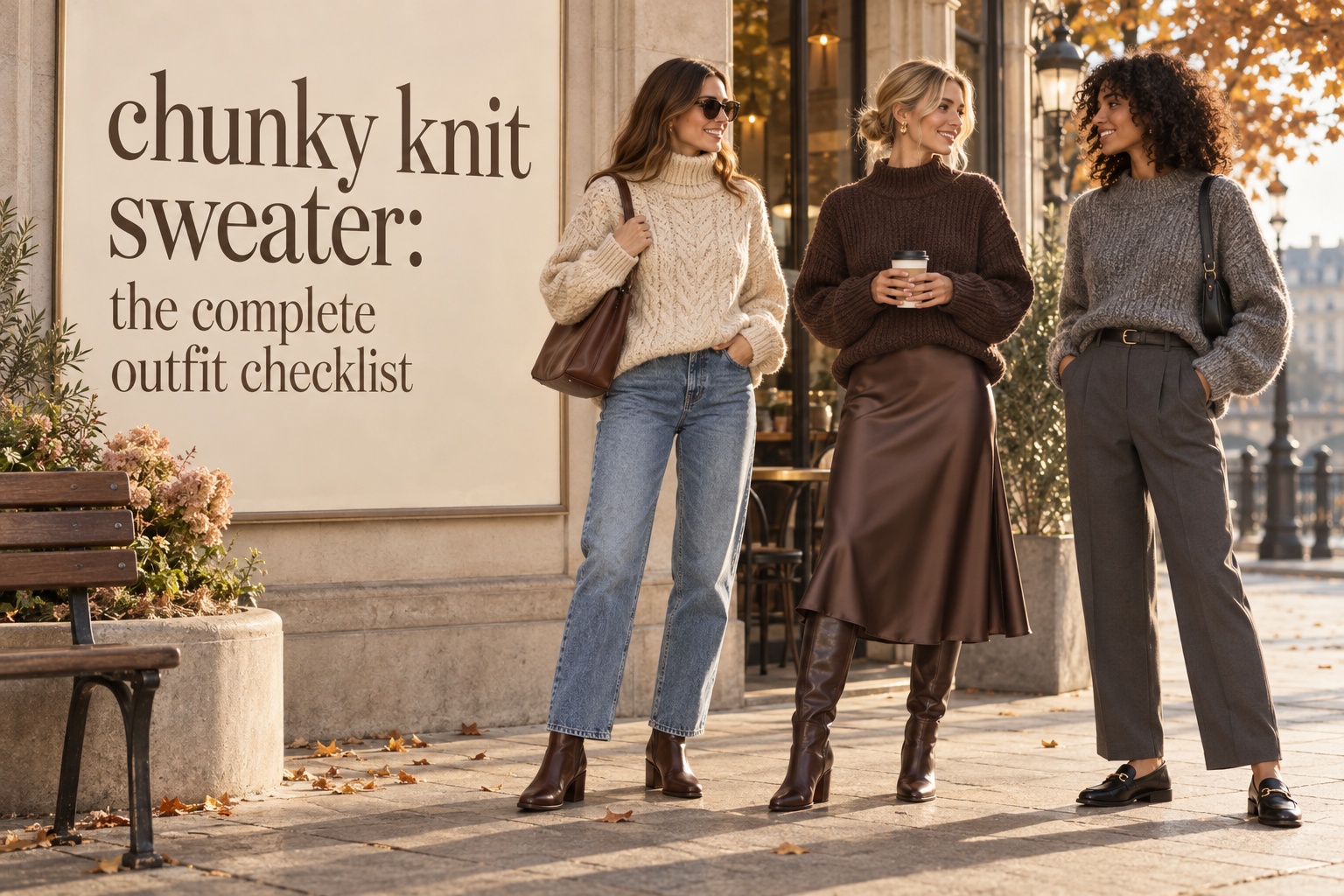
A chunky knit sweater can make getting dressed feel wonderfully easy until you put it on and realize that every other piece suddenly has to work harder. The generous texture adds warmth and personality, but it also takes up visual space. A pair of wide trousers may make the outfit feel heavy. A long coat may refuse to close comfortably. A delicate shoe can look lost underneath all that knit.
The solution is not to avoid volume. It is to make a few decisions in the right order. Read the shape of the sweater first, choose a lower half that gives the outfit direction, then finish with shoes and one useful detail. This checklist will help you create chunky knit sweater outfits for errands, brunch, work, dinner, and genuinely cold days without starting over in front of the closet.
Preparation: read the sweater before choosing the rest
Before reaching for jeans or a skirt, spend thirty seconds looking at the sweater as a design object. Two sweaters can both be called chunky while creating completely different proportions. A cropped cable knit needs a different response from a long, soft cardigan. A high turtleneck carries more visual weight near the face than a loose crewneck. Sleeves that balloon at the wrist can matter more than the body of the sweater.
Check the four sources of volume
- Body: Is the sweater close to the torso, relaxed, or deliberately oversized?
- Hem: Does it end at the waist, hip, upper thigh, or below the seat?
- Sleeves: Are they straight, dropped, balloon-shaped, or long enough to cover the hands?
- Neckline: Is the collar open and light, or does a turtleneck create a solid block around the face?
When the body, sleeves, and neckline are all generous, treat the knit as the outfit’s main event. Keep the next layer streamlined and let the lower half provide a clear line. When only one feature is oversized, you have more freedom. A chunky sleeve can work beautifully with a fuller trouser, while a cropped, boxy sweater can support a long skirt because the waist remains visible.
Your wedding has a lot of moving pieces. Your plan can still feel composed.
Zarellea organizes guests, vendors, budget, and timelines in one shared space — so you can make decisions with clarity, not stress.
Decide whether the waist needs to be visible
A visible waist is not a rule for every body or every outfit. It is simply one of the quickest ways to stop a thick knit from becoming one uninterrupted rectangle. You can create that break with a full tuck, a small front tuck, a belt over a longer sweater, a cropped hem, or a coat worn open to reveal the vertical layers underneath.
If the sweater is already short or fitted at the hem, leave it alone. If it is long and relaxed, try a soft front tuck into a high-rise bottom before deciding that the shape does not work. The goal is not a sharply cinched waist. The goal is to give the eye a place to understand where the torso ends and the legs begin.
Choose the outfit’s visual anchor
Pick one element that carries the outfit from a distance. It might be a cable texture, a rich neutral color, a long skirt, a strong boot, or a crisp shirt collar. Everything else should support it. This is especially helpful when the sweater has a bold stitch, stripe, or color combination. A simple bag and quiet jewelry often make the knit look more intentional than a pile of extra accessories.
The decision checklist for balanced proportions
Once you understand the sweater, choose the rest from top to bottom. The most reliable chunky knit sweater outfits usually contain one generous piece, one piece with a clean or directional line, and one finishing element that adds structure. This does not mean every look needs skinny jeans. It means the outfit should have contrast somewhere.
Choose the lower half by contrast, not by habit
- For a long or oversized sweater: start with straight jeans, slim pants, leggings, a pencil skirt, or a narrow midi. These options give the outfit a readable base.
- For a cropped or waist-length sweater: try high-rise wide-leg trousers, a pleated midi, a denim maxi, or a fuller skirt. The shorter hem already creates definition.
- For a relaxed but not huge sweater: straight-leg jeans, corduroy pants, or a softly tailored trouser usually provide enough balance without looking forced.
- For a fitted chunky knit: use the texture as the volume and allow more freedom with the bottom, including flares or a flowing skirt.
There is one useful exception to the contrast rule: a deliberately relaxed, head-to-toe silhouette can look modern when the boundaries are clear. With a chunky sweater and baggy jeans, add a visible belt, a cropped coat, a small shoulder bag, or a pointed shoe. One sharp detail tells the eye that the volume is chosen rather than accidental.
Use the tuck as a styling tool
A full tuck works best with a thinner chunky knit, a structured skirt, or trousers that have enough room at the waist. A front tuck is more forgiving for a thick cable knit and gives you shape without trapping all the fabric. If the sweater is too bulky to tuck neatly, fold a small section under at the front and let the rest fall naturally. A belt can hold the fold, but it should not create a tight ridge under the knit.
Let footwear repeat the sweater’s weight
Footwear is the final proportion check. Lug-sole boots, platform sneakers, substantial loafers, and riding boots can carry the weight of a thick knit. Sleek ankle boots and pointed shoes can also work, especially when the bottom half is narrow or tailored. Very delicate sandals may look disconnected unless the sweater is balanced by a silky skirt, bare ankle, or a light color palette.
Think about the line between hem and shoe. Cropped jeans look purposeful when the ankle is visible above a boot or sneaker. A midi skirt often benefits from a boot that follows the leg rather than stopping at the widest part of the calf. Wide-leg trousers need enough shoe height or structure to keep the hem from collapsing around the floor.
Limit competing textures
Texture is one of the best reasons to wear a chunky knit, so do not cover it with too many competing surfaces. One smooth contrast, such as satin, leather, polished denim, or a crisp cotton shirt, is often enough. If you choose corduroy, a nubby bag, and a fuzzy coat together, keep the colors close and the accessories quiet. If the knit is plain, you can let a patterned skirt or checked trouser take the supporting role.
Worked outfit formulas for real plans
Use these formulas as starting points rather than fixed uniforms. Each one has a main shape, a practical shoe direction, and a simple adjustment for a different mood. The purpose is to make the sweater easier to use on an ordinary morning, not to create a shopping list.
For errands and everyday walking
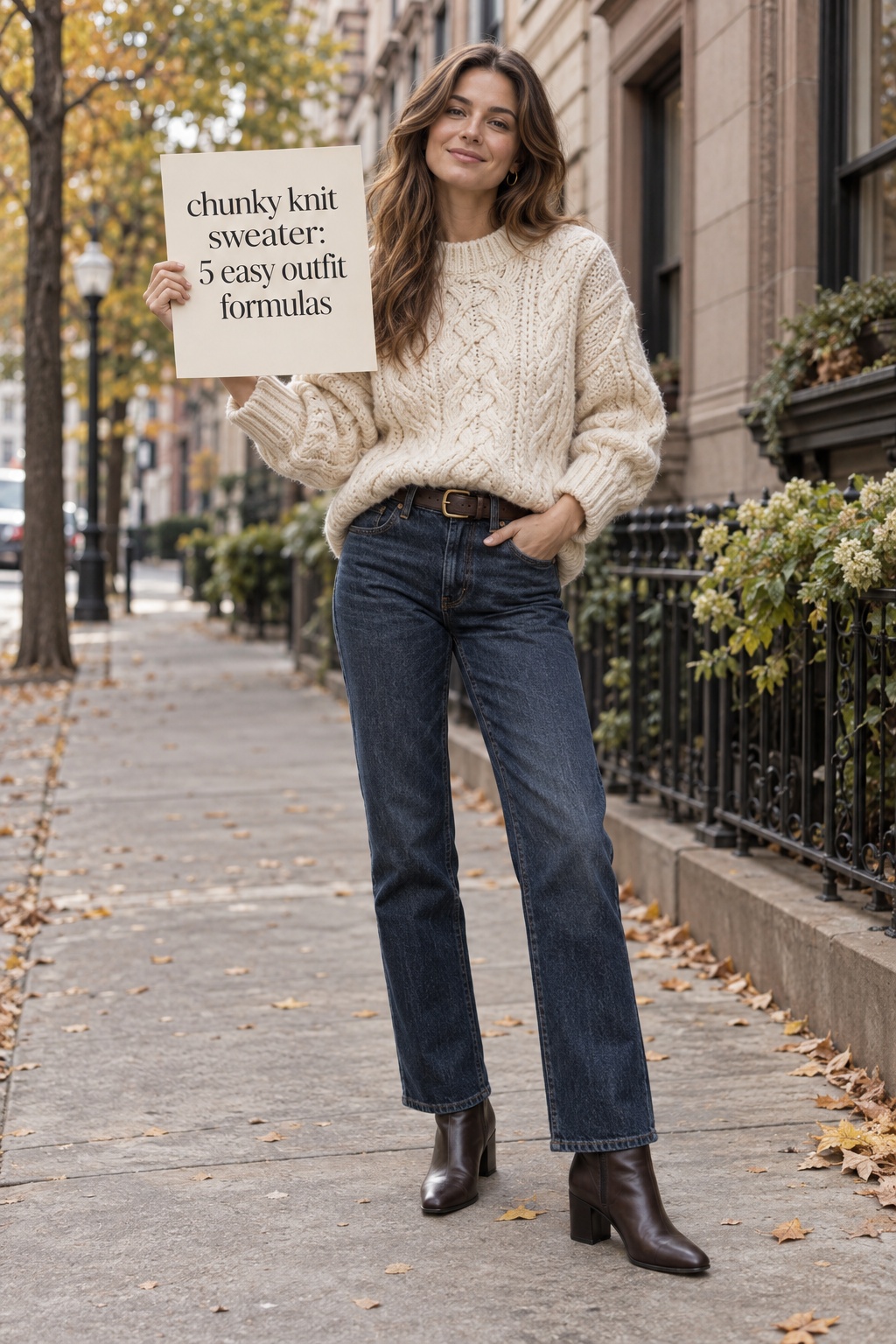
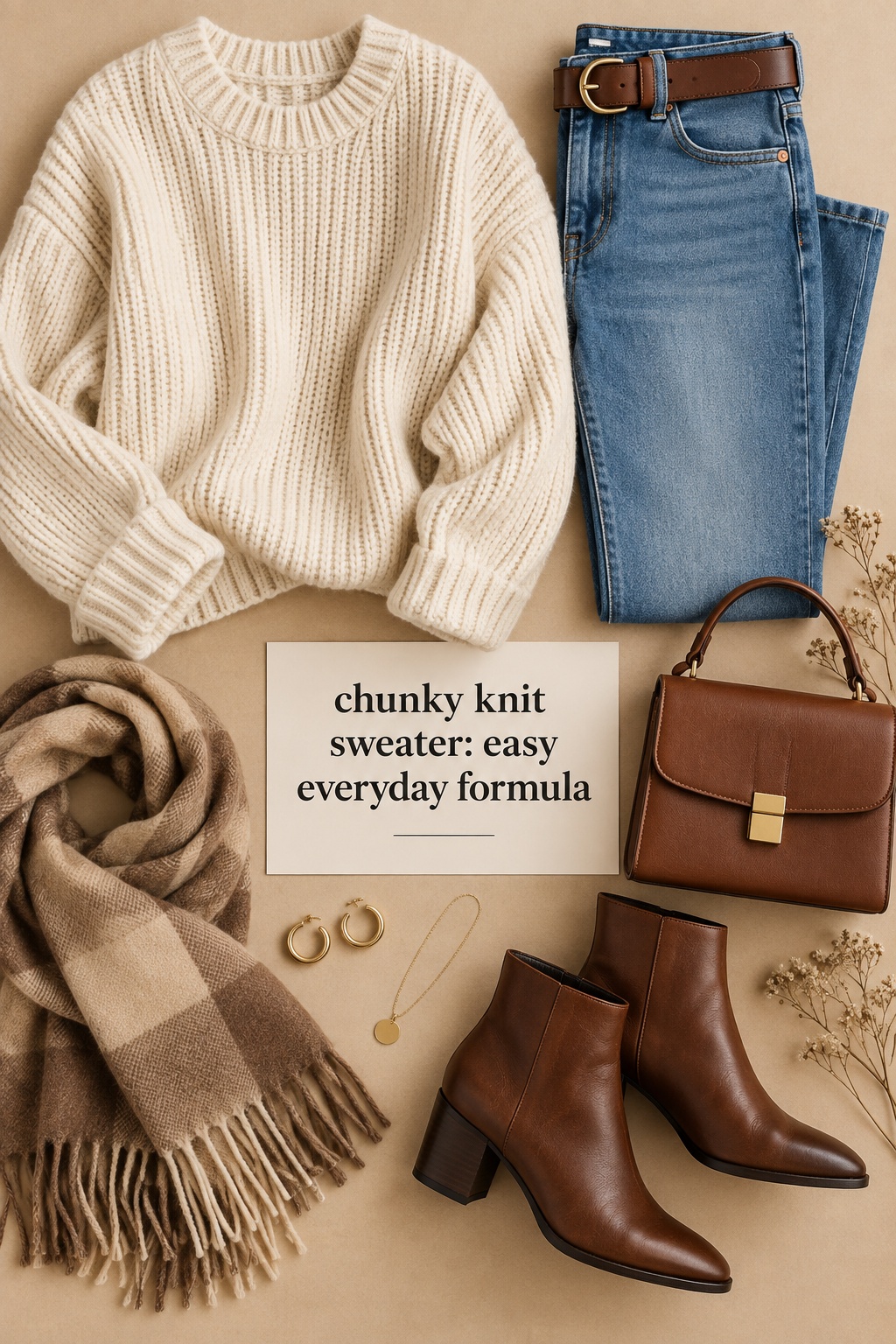
Pair a relaxed crewneck with straight-leg jeans, a leather belt, and ankle boots or clean sneakers. Let the sweater fall loose if the hem is already short enough, or add a small front tuck with high-rise denim. A crossbody bag gives the outfit structure and keeps your hands free. If the knit is a bright color, choose medium or dark denim and simple shoes. If the knit is neutral, try a softly faded jean or a colored sock that echoes one small detail.
For extra warmth, add a short quilted vest rather than forcing a bulky coat over very full sleeves. The vest creates a clear edge around the torso while allowing the knit to remain visible. A beanie can work, but keep the rest of the accessories clean so the look does not become visually crowded.
For brunch or a casual date
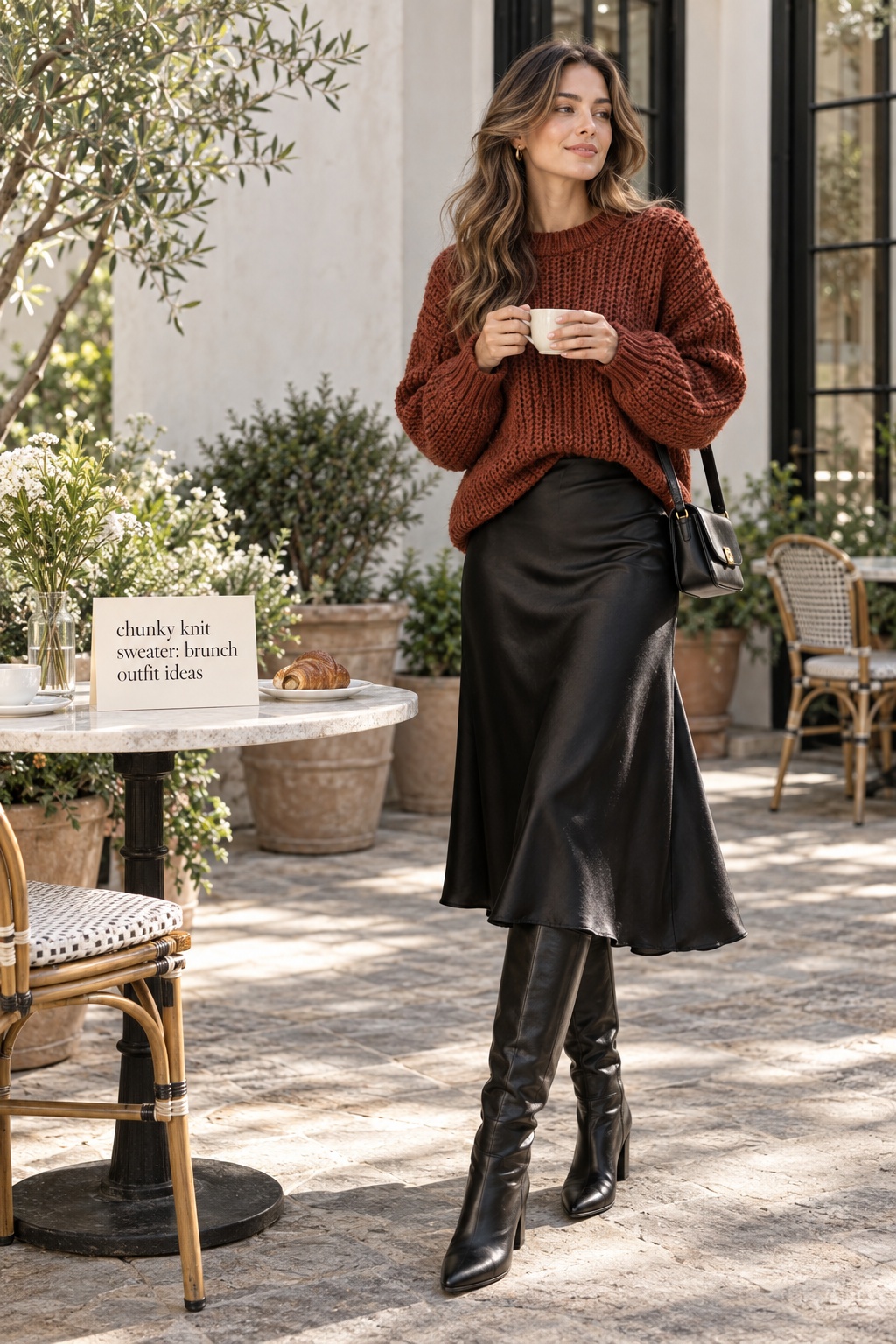
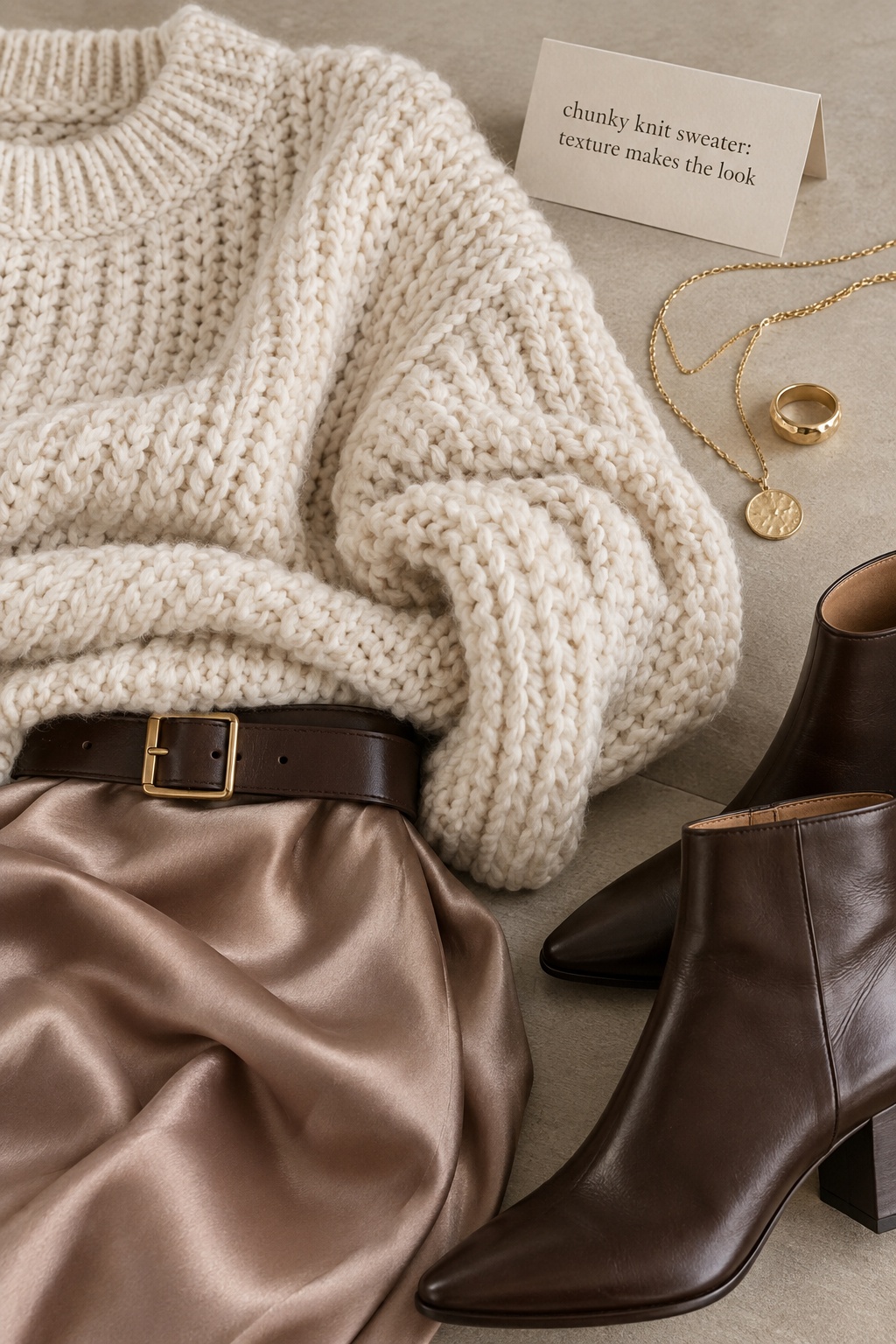
Use texture contrast: a chunky sweater with a satin midi skirt, a denim midi skirt, or a smooth leather-look pant. A soft front tuck gives the skirt a starting point, while knee-high boots make the combination feel grounded. With a satin skirt, keep jewelry delicate and let the movement of the fabric contrast with the knit. With denim, add a small shoulder bag or a polished loafer to keep the outfit from feeling too weekend-basic.
If the sweater is very oversized, choose a skirt with a clean fall rather than many gathered layers. If the skirt is full, use a cropped sweater or fold the hem under. The best version usually has one soft movement and one controlled line.
For a polished office or creative workplace
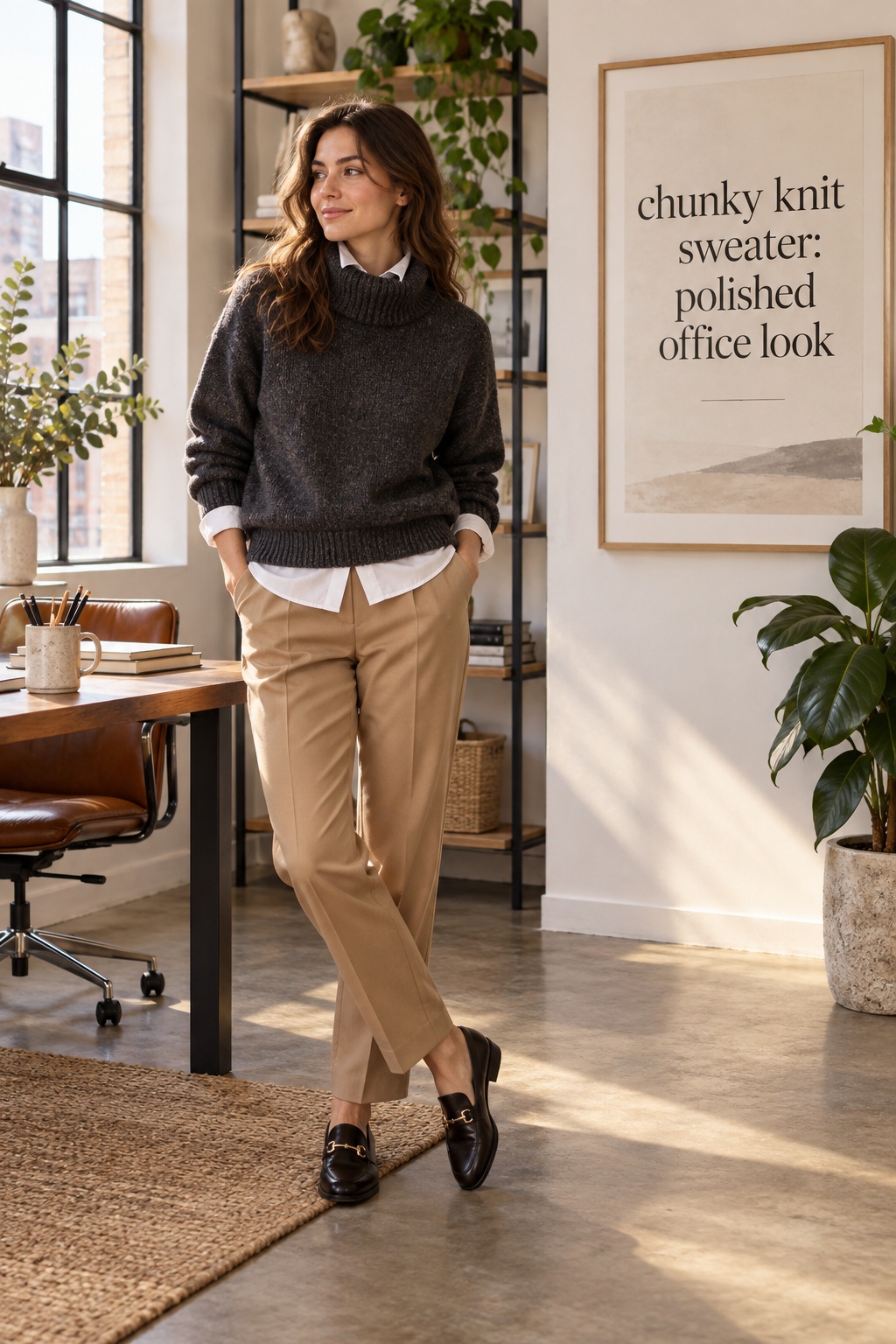
Start with a less slouchy knit or one with a tidy shoulder line. Wear it with high-waisted tailored trousers, a pencil skirt, or a straight midi skirt. A collared shirt underneath can add crispness, but choose a slim shirt so the layers do not bunch at the arms. Loafers, pointed ankle boots, or a low heel give the outfit a deliberate finish.
Color can do much of the work. A cream sweater with charcoal trousers feels clear and calm. A navy sweater with camel or gray creates contrast without needing a print. If the knit has a strong pattern, simplify the trousers and use a structured tote. A belt or small front tuck is useful here because it keeps the outfit from reading like loungewear.
For dinner or an evening plan
Let the chunky knit become the relaxed part of a dressier combination. Try it with a leather-look straight pant, a satin slip skirt, or a simple skirt with opaque tights. Keep the shape at the bottom clean and choose one refined accessory, such as a small clutch, sculptural earring, or pointed boot. A front tuck or a belt at the natural waist prevents the sweater from hiding the entire outfit.
For a more dramatic look, use a monochromatic base. A charcoal knit over black trousers with black boots creates a long line, while the knit texture supplies interest. For a softer result, combine a warm neutral sweater with chocolate brown, cream, or deep burgundy. These are styling choices, not rules, so use the color combination that makes the sweater feel like yours.
For genuinely cold weather
Plan the layers before you leave the house. A fitted base layer can reduce friction under the sweater, while a puffer vest gives warmth without adding another pair of sleeves. Over that, choose a coat with enough room through the armhole and chest. If the coat only works when the sweater is compressed, it is not the right top layer for that knit.
On the bottom, straight jeans with warm socks and sturdy boots are easy to walk in. Leggings can work when the sweater is long enough to cover the hips and the upper layer provides structure. Wide-leg pants are possible too, but make sure the hem clears the ground and that the shoes have enough visual weight. A scarf should add warmth without creating a second oversized collar around a turtleneck.
Final review: fix the outfit in two minutes
Before changing everything, use this short review. Stand back from the mirror and check the outfit as a whole, not just the sweater. Most problems can be solved with one small change.
- If you look swallowed: add a front tuck, roll the sleeves once, open the coat, or change to a narrower bottom.
- If the look feels too tight: remove the tuck, use a longer layer, or replace the narrow bottom with a straight or softly wide shape.
- If everything feels soft: add a belt, structured bag, polished loafer, leather-look bottom, or tailored coat.
- If there is too much texture: remove one fuzzy or patterned accessory and keep the shoe simple.
- If the outfit looks disconnected: repeat one sweater color in the bag, belt, sock, or shoe.
- If the sweater is too warm indoors: use a lighter base layer and choose a vest or open coat instead of adding another thick layer.
Finally, check movement. Sit down, raise your arms, walk a few steps, and see whether the hem, sleeves, and shoes still feel practical. A good chunky knit sweater outfit should look considered while allowing the wearer to move normally. If the outfit only works while standing perfectly still, it needs one less complicated element.
The most dependable formula is simple: give the knit one clear partner, create a visible line somewhere, and finish with a shoe that can carry the texture. That might mean straight denim and boots, a satin skirt and sleek ankle boots, tailored trousers and loafers, or leggings under a long sweater with a structured coat. Once you can identify the sweater’s volume, the rest becomes a series of small, manageable choices.
FAQ
What bottoms look best with a chunky knit sweater?
Straight-leg jeans, narrow pants, pencil skirts, and clean midi skirts are reliable because they give the knit a clear base. Wide-leg trousers and fuller skirts can also work when the sweater is cropped, tucked, or balanced with a visible waist.
Can I wear a chunky knit sweater with wide-leg jeans?
Yes. Treat the combination as intentionally relaxed by adding one sharp detail, such as a belt, cropped jacket, structured bag, visible front tuck, or pointed shoe. A shorter sweater often makes the proportions easier to read.
Should a chunky knit sweater be tucked in?
Not always. A small front tuck is useful when the sweater is long and the bottom is high-waisted. Leave it untucked when the hem already ends at a flattering point, when the fabric is too thick, or when you want a longer vertical line.
What shoes should I wear with a chunky knit sweater?
Choose shoes that match the weight and line of the outfit. Lug-sole boots, ankle boots, riding boots, loafers, and platform sneakers are easy choices. Sleek pointed boots also work when the lower half is narrow or tailored.
How can I wear a chunky knit sweater to work?
Choose a knit with a tidy shoulder and pair it with tailored trousers, a pencil skirt, or a straight midi skirt. Add a slim collared shirt, a belt, loafers, pointed boots, or a structured bag to keep the outfit polished and work-ready.
How do I stop a chunky knit sweater from looking bulky?
Identify where the volume is concentrated, then create contrast elsewhere. Try a front tuck, a visible waist, a narrower bottom, rolled sleeves, an open coat, or a structured accessory. Avoid adding several bulky textures at the same time.
Leave a Reply