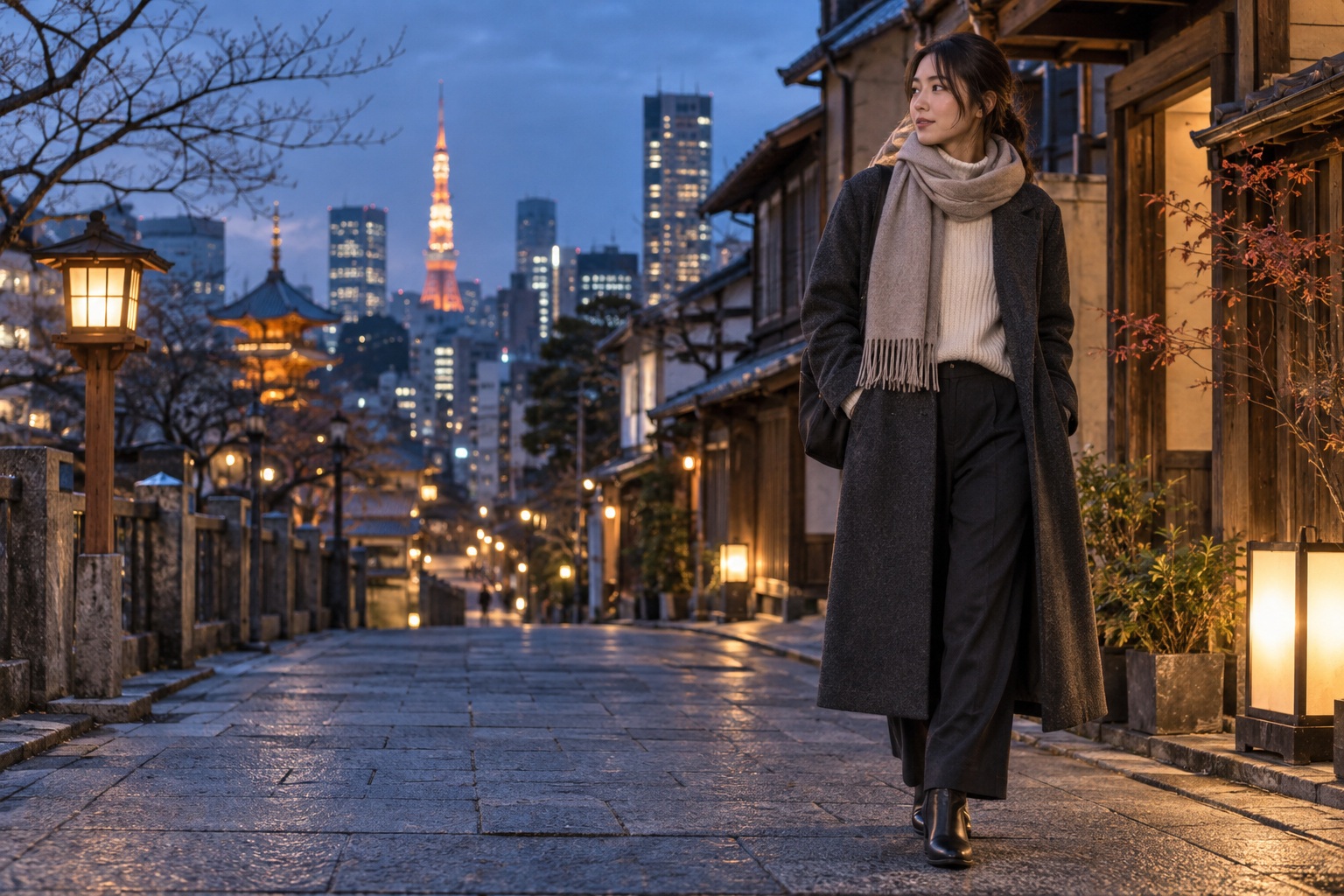
A winter day in Japan can begin on a cold station platform, continue through a bright department store, and end beside a river after sunset. The outfit has to move through all three scenes without becoming bulky, sweaty, or difficult to carry. That is the real styling challenge behind a useful japan outfit winter plan.
The best approach is not one enormous coat over a thin top. It is a small, coordinated system of layers that can open, come off, or add warmth as your route changes. The formulas below are designed for travelers who want a refined silhouette, comfortable walking shoes, and enough flexibility for trains, temples, cafés, shopping streets, and cold evenings.
A winter scene in Japan changes what the outfit needs to do
It is easy to picture winter in Japan as a single aesthetic: a long coat, a scarf, neat boots, and a snowy street. That image is attractive, but it leaves out the movement that defines a real travel day. You may walk several miles, stand on an exposed platform, remove your coat in a heated train, sit on the floor in a traditional setting, and carry purchases for hours. The polished look has to support that rhythm.
Regional weather matters as much as the calendar. Tokyo, Kyoto, Osaka, and Fukuoka often call for a flexible city layer rather than expedition gear. Hokkaido, mountain towns, and snowy routes demand better insulation, water resistance, and traction. A useful reference such as LIVE JAPAN’s seasonal guide separates cities and months instead of treating the country as one climate.
Your wedding has a lot of moving pieces. Your plan can still feel composed.
Zarellea organizes guests, vendors, budget, and timelines in one shared space — so you can make decisions with clarity, not stress.
That distinction also changes the visual balance of an outfit. In a mild city winter, a wool coat can be the main statement and the layers underneath can stay slim. On a snowy itinerary, the outer layer becomes more technical, so texture, color, and proportion inside the coat do more of the style work. You are not trying to imitate every street-style photograph. You are building a look that remains composed when the weather is less photogenic.
Think of the wardrobe as a quiet conversation between function and restraint. A muted palette, one clear shape, and a few tactile details can feel more intentional than a collection of conspicuous trend pieces. Charcoal, cream, black, camel, chocolate, and deep navy are especially easy to combine. Add one accent such as oxblood, forest green, cobalt, or warm red when you want the outfit to feel more expressive.
Build the Japan winter outfit around adjustable layers
Start with a base layer that sits close to the body without making you feel trapped. A fine long-sleeved tee, lightweight thermal top, or smooth mock neck works beneath most outfits. Choose a fabric that feels comfortable during long walks and does not create too much bulk beneath a sweater. The goal is a dependable first layer, not maximum thickness.
The middle layer creates the visual identity of the look. A merino crewneck gives a clean, understated finish. A fine turtleneck adds a sharper line under a coat. A cardigan brings softness and makes indoor temperature changes easier to manage. A fleece or thin down vest can be more useful for cold routes, particularly when it can be folded into a day bag after you enter a warm space.
Finish with outerwear that opens easily and does not make sitting or carrying a bag awkward. A knee-length wool coat is elegant for urban sightseeing. A short insulated jacket works well with wide-leg pants and sneakers. A packable down layer is valuable when you expect a long evening outdoors, but it should still coordinate with the rest of your palette. An outer layer that looks good only when fully zipped is less useful than one that works open, closed, or draped over your arm.
Keep accessories modular. A scarf warms your neck outside and disappears into a tote in seconds. Gloves are easy to add for an early start without changing the outfit. A beanie can soften a tailored coat, while a structured cap can make a puffer feel more urban. Choose one or two accessories that repeat across several outfits rather than packing a different finishing piece for every day.
Shoes deserve more attention than they usually receive. For Tokyo, Kyoto, and Osaka, clean leather sneakers, supportive fashion sneakers, loafers with substantial soles, or ankle boots can work when the forecast is dry. For snow, slush, or icy paths, prioritize a sealed upper and dependable traction. A beautiful smooth sole is not a style victory if you spend the day walking cautiously.
Do not build the outfit around a heavy shoe that you will wear only once. Instead, let the itinerary decide. If the route is mostly cities and indoor stops, choose the pair that keeps you comfortable on pavement and stairs. If the route includes snowy villages or mountain excursions, make the weatherproof pair your anchor and adjust the hem lengths and socks around it.
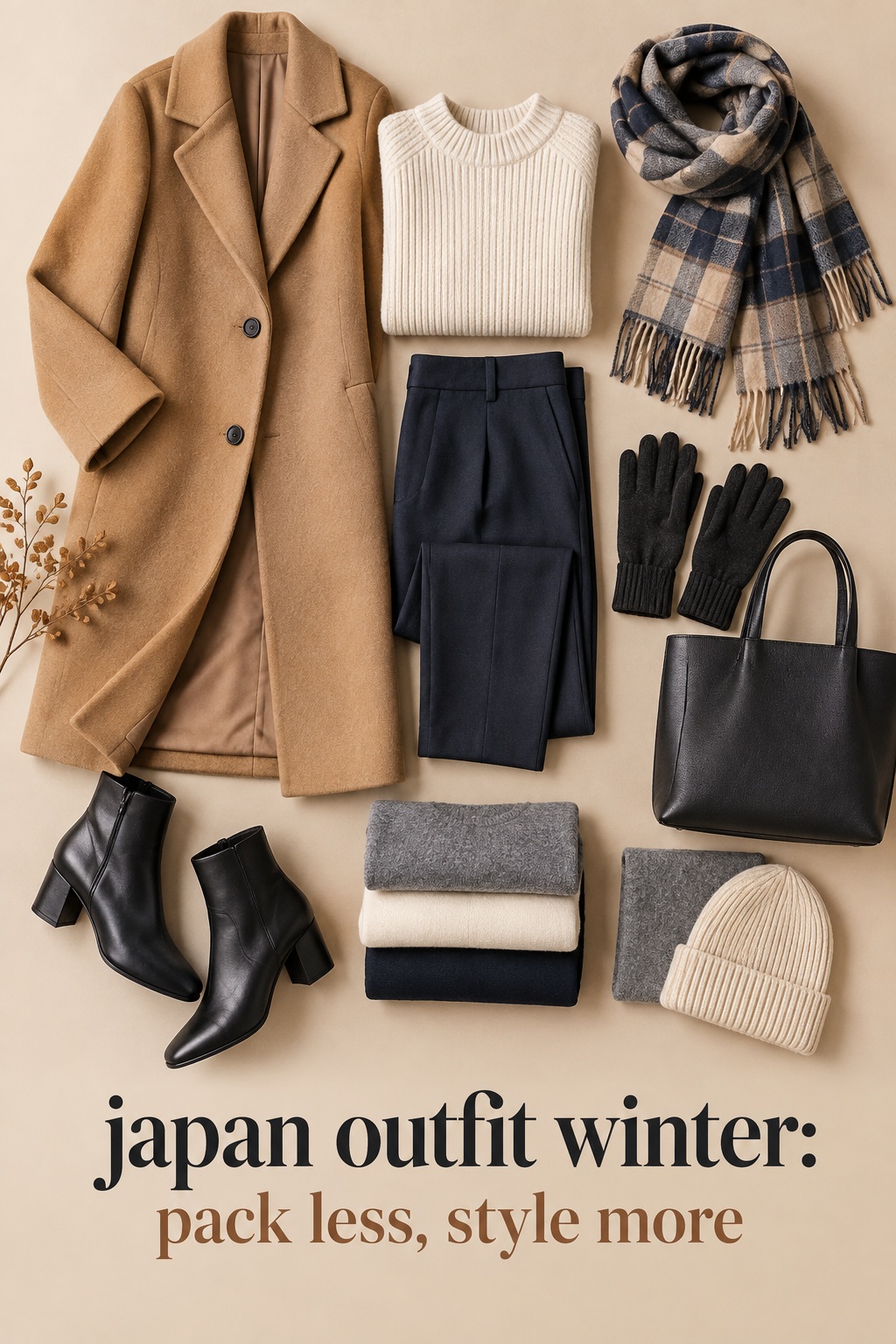
For a compact packing plan, begin with three or four base tops, two middle layers, two bottoms, one dress or skirt option if you enjoy them, one city coat, and one weatherproof layer or shoe upgrade when needed. Keep the colors connected so every top works with every bottom. This gives you more combinations than a suitcase full of unrelated statement items.
Five outfit formulas for Tokyo, Kyoto, and Osaka days
These formulas are starting points rather than rules. Their purpose is to make the decision easier when you are dressing in a hotel room and want an outfit that photographs well, feels appropriate in different settings, and can handle a full day on your feet. Repeat the silhouettes and change the texture, color, or accessory when you want variety.
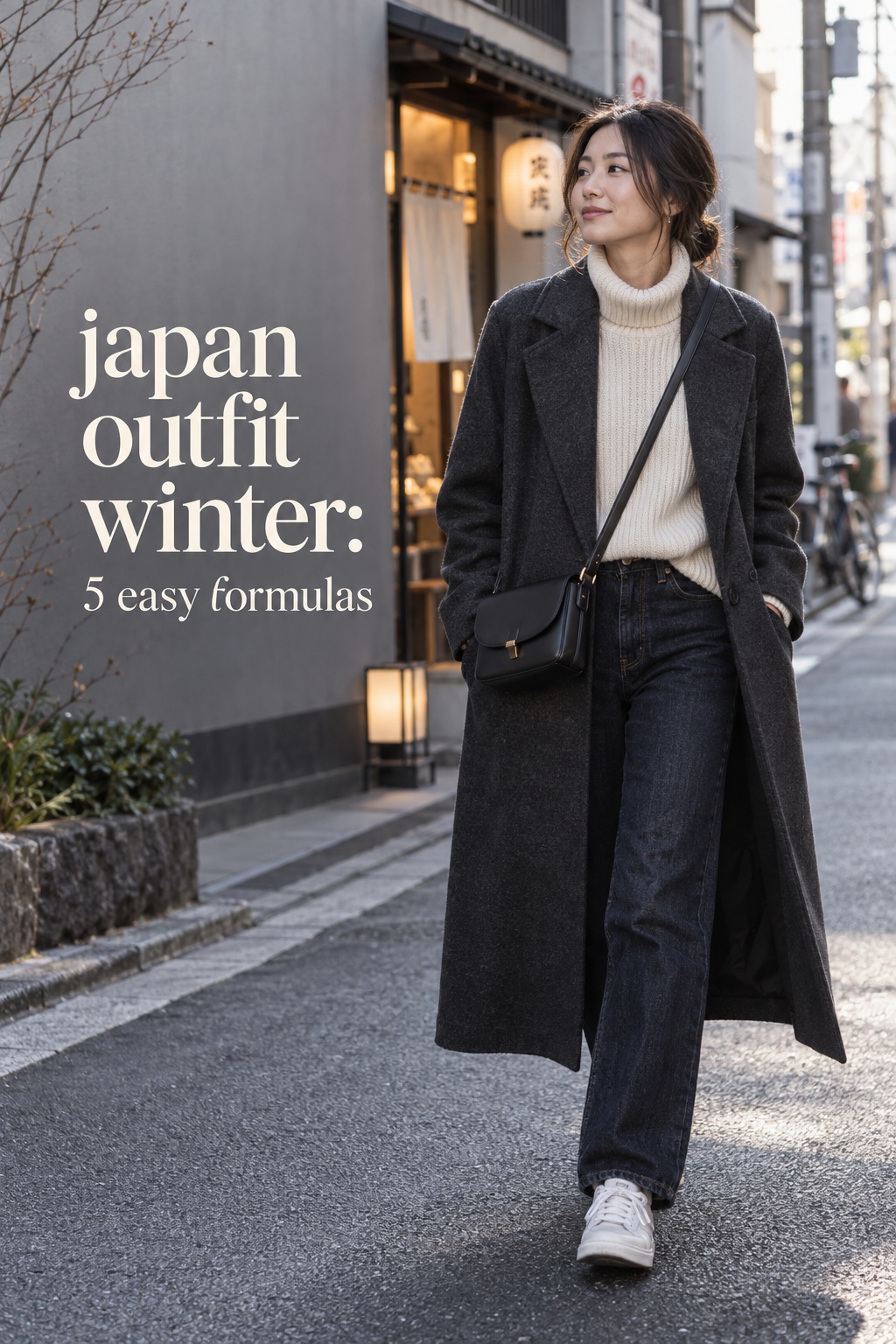
1. Long wool coat, fine knit, straight jeans, and walking sneakers
This is the dependable city formula. Choose a long coat in charcoal, camel, or black, then keep the top fitted enough to balance the length. Straight-leg denim gives the outfit structure without feeling restrictive on trains or stairs. Finish with sleek sneakers, a compact crossbody bag, and a scarf that introduces one subtle contrast.
The important proportion is the relationship between the long coat and the straight leg. Avoid adding several oversized pieces at once. If the coat is generous, keep the knit relatively clean and let the jeans show a little ankle or sit neatly over the shoe. For a stronger Japanese-inspired mood, use tonal layers and one precise accessory instead of adding obvious novelty prints.
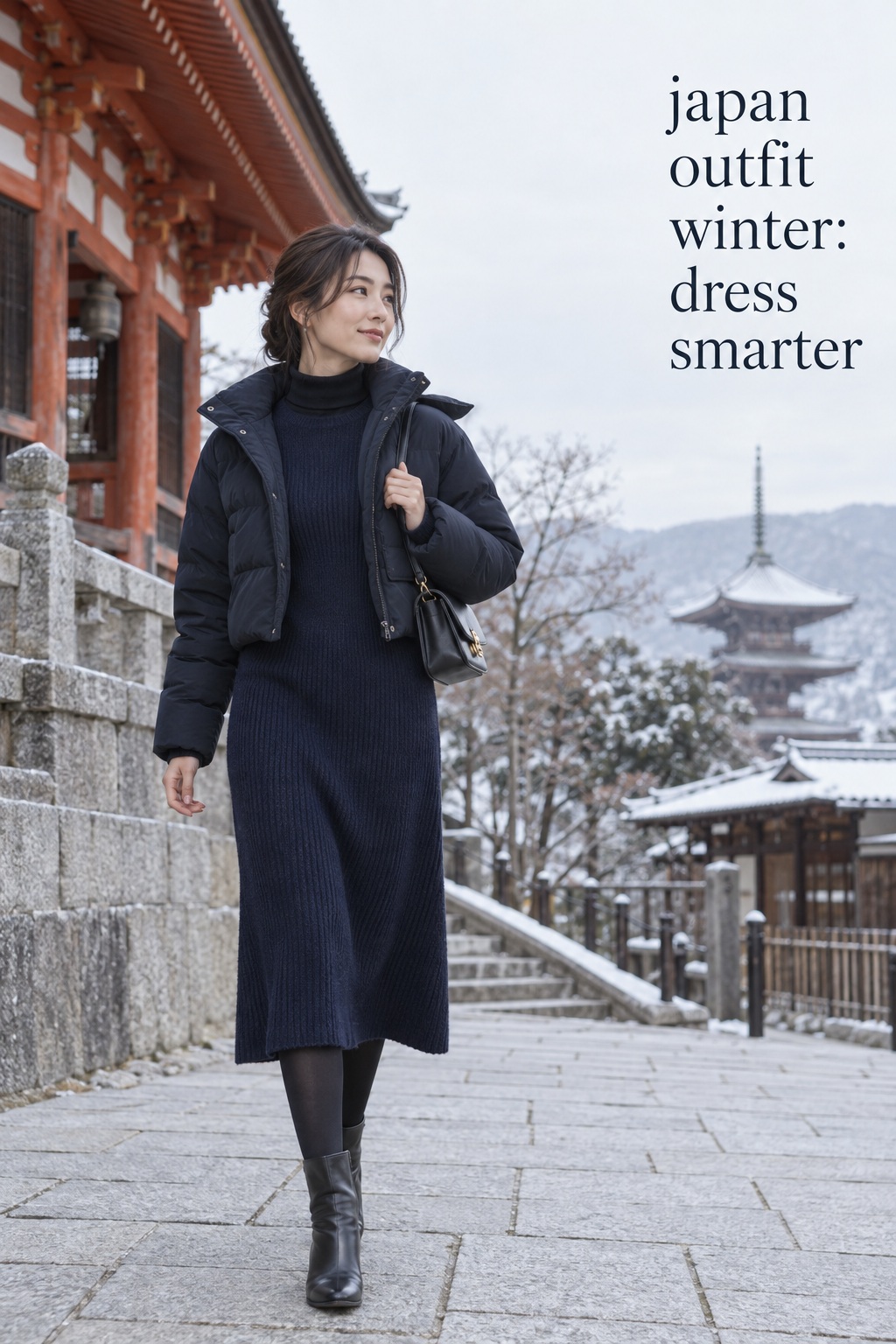
2. Turtleneck, knit dress, tights, and a short insulated jacket
A knit dress is one of the easiest ways to look polished while staying comfortable. Wear a slim turtleneck underneath when the dress has a low or open neckline, then add opaque tights and ankle boots. A short puffer or insulated jacket keeps the proportions fresh by ending above the widest part of the dress rather than covering the entire silhouette.
This outfit is especially useful for a café, museum, or dinner day when you want to transition from daytime sightseeing without a full change. Keep the dress close to the body if the jacket is roomy, or choose a relaxed dress with a more tailored outer layer. A small shoulder bag and simple earrings make the look feel considered without making it fragile.
3. Wide-leg trousers, compact down layer, and a refined knit
Wide-leg trousers create movement and a modern line, but they need careful handling in wet weather. Choose a pair that clears the ground and wear them with a fitted or softly tucked knit. A compact down jacket or vest adds warmth without competing with the volume of the trousers. Finish with a supportive sneaker or a low boot that gives the hem a clean base.
For a quieter look, keep the trousers and knit within the same color family, such as stone with oatmeal or navy with soft gray. Add shape with a belt, a structured tote, or a coat worn open over the shorter insulated layer. This formula feels relaxed, but the clean vertical line keeps it from reading like airport loungewear.
4. Midi skirt, fine sweater, long coat, and substantial loafers
A midi skirt is a useful answer when you want softness and movement without sacrificing warmth. Choose wool, corduroy, denim, or a heavier pleated fabric, then pair it with a fine sweater tucked or half-tucked at the waist. A long coat echoes the skirt length, while loafers with a thicker sole make the formula more practical for pavement.
Warm tights make this option more realistic for long days. If the skirt is patterned, keep the rest of the look calm. If it is plain, use a textured sweater, interesting sock, or compact bag for depth. The result can feel feminine and distinctly styled while still allowing easy movement through stations, shops, and temple grounds.
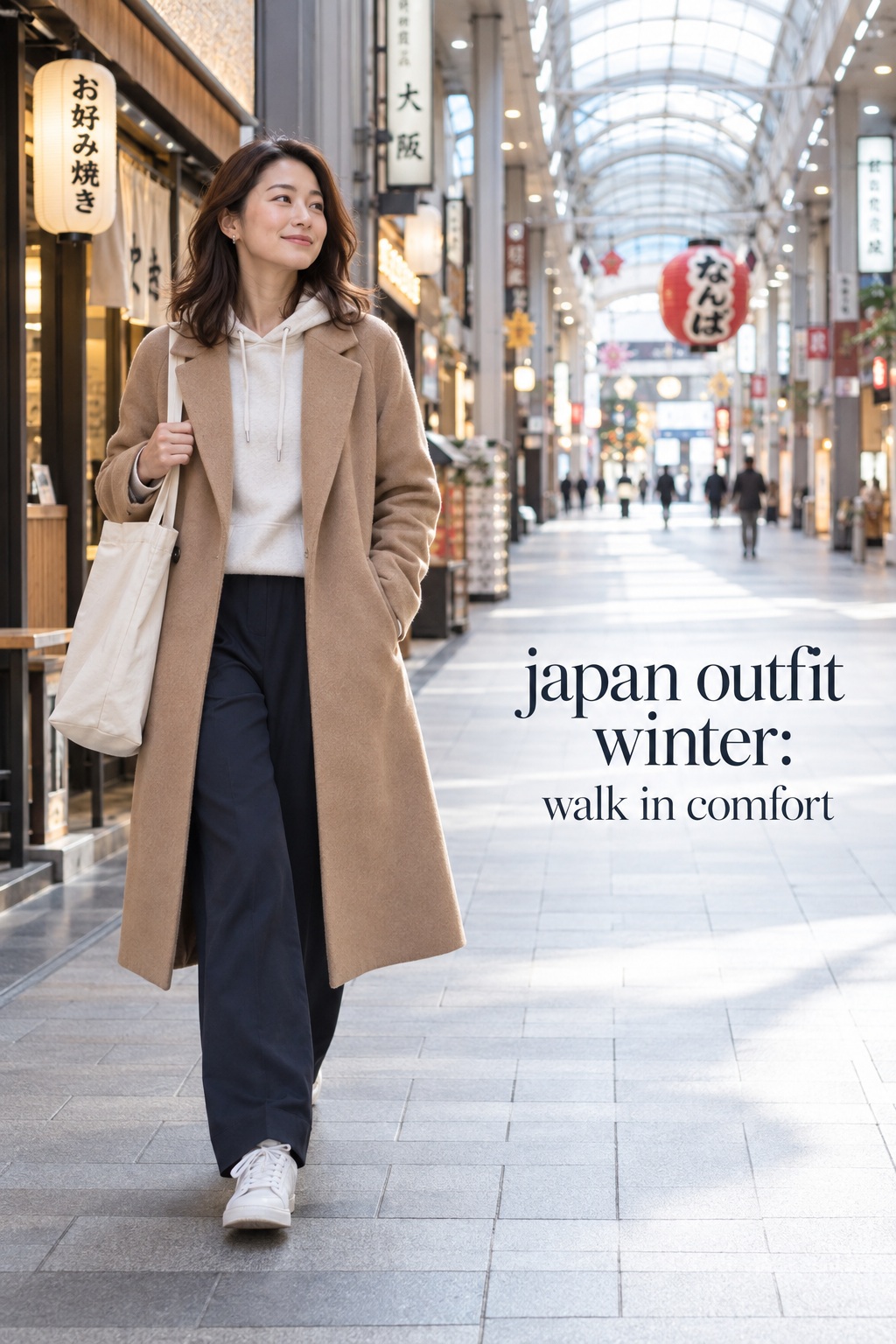
5. Hoodie, tailored coat, relaxed trousers, and clean sneakers
For a travel day, combine one relaxed piece with one polished piece. A simple hoodie under a tailored coat creates that contrast, especially when paired with relaxed trousers and clean sneakers. Choose a hoodie without a large graphic, keep the coat structured enough to hold the shape, and use a tote or backpack that leaves your hands free.
This formula works because it respects the practical reality of transit without looking like an afterthought. A monochrome base makes the layers look intentional. A bright scarf, silver earrings, or colored socks can add personality. If the hoodie is thick, select a coat with a generous armhole so you can move comfortably and remove the layer indoors.
Change the formula for Hokkaido, snow, rain, and long walking routes
A Tokyo winter outfit and a Hokkaido winter outfit should not be treated as interchangeable. Regional guides note that January conditions vary dramatically, from relatively mild Pacific-side city weather to sub-zero temperatures and snow in the north. Check the forecast for each stop, then dress for the coldest outdoor activity rather than the average temperature of the whole trip.
For snow, upgrade the feet first. Choose boots with a sealed upper, insulation appropriate to the temperature, and a sole that grips rather than slides. Wear socks that stay warm if they become slightly damp, and carry a spare pair in a waterproof bag. The rest of the outfit can remain visually simple because the footwear is doing serious practical work.
For rain or slush, add a water-resistant shell or coat and avoid hems that drag. A cropped or ankle-length trouser can be easier than a puddle-catching wide leg. If you love a long skirt, choose a fabric that does not absorb water quickly and pair it with boots that protect the ankle. A compact umbrella may help, but it should not replace a coat that can handle a damp walk.
For a long walking route, keep the outfit light enough to regulate. A base layer, breathable knit, and coat that opens fully will usually be more comfortable than one very heavy layer. Bring a scarf and gloves rather than committing to the thickest possible sweater. You want warmth at the start of the day and an easy way to cool down once you are inside a crowded train or shop.
For an evening illumination, riverside walk, or outdoor observation deck, add warmth strategically. A thin insulated vest under a coat can preserve the silhouette while keeping your core warm. Hand warmers can be useful on especially cold outings, but they do not solve wet feet or poor traction. Keep the visual focus on the coat, scarf, or bag and let the technical pieces stay quiet.
When the itinerary combines Tokyo with Hokkaido, pack a flexible city system and add one serious cold-weather layer rather than trying to make every item perform every task. A slim thermal top, merino sweater, insulated vest, warm coat, scarf, gloves, and weatherproof boots can be mixed in different ways. This is more efficient than bringing multiple bulky coats that work only in one region.
Small styling choices that make winter travel outfits feel finished
Color is the fastest way to create cohesion. Choose a base of two or three neutrals, then add one accent. A black coat can support cream knitwear and oxblood accessories. A camel coat works with charcoal, denim, and deep green. Soft gray can look elegant with white, navy, or a muted red. The palette should make packing easier, not force you into a rigid uniform.
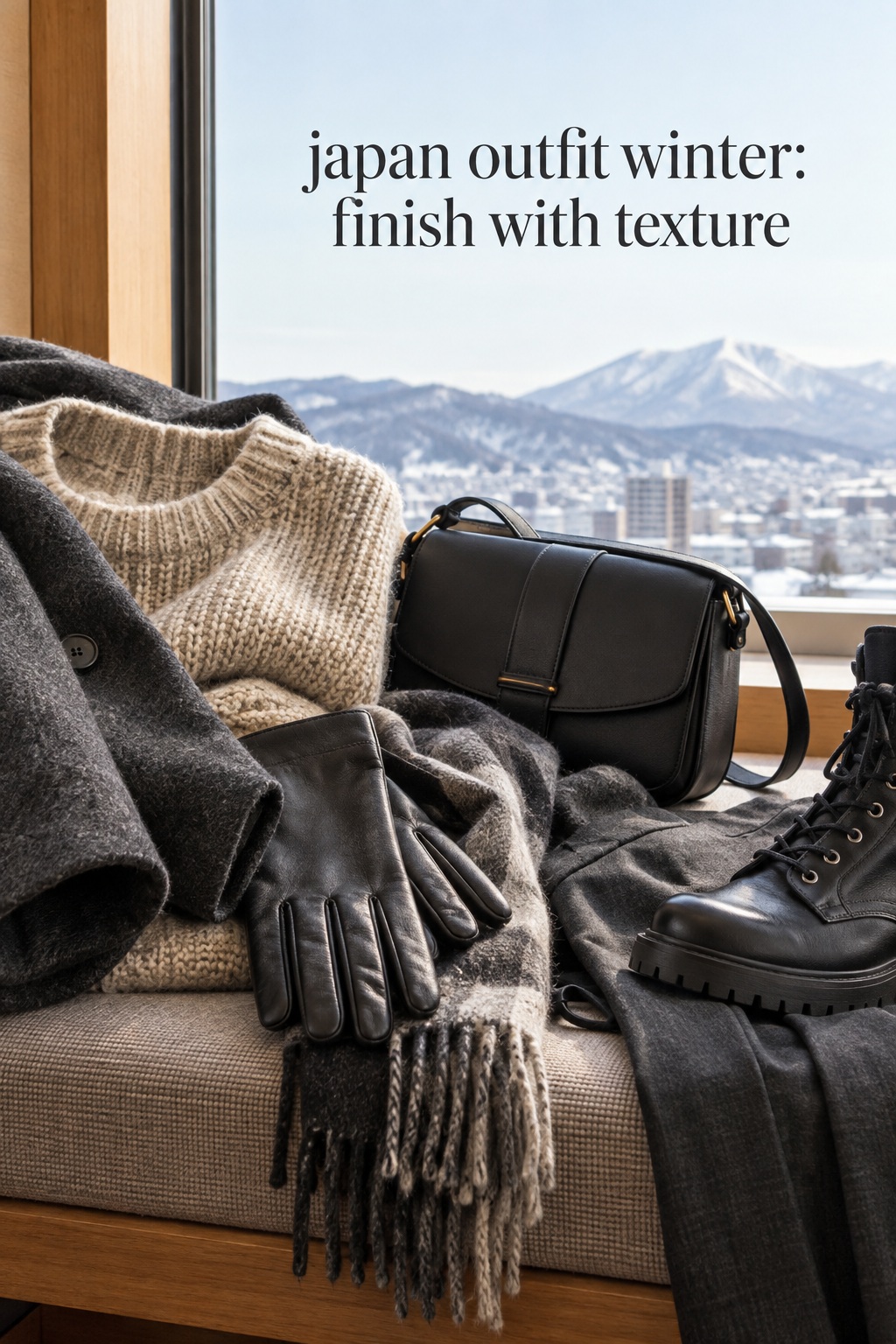
Texture gives a simple outfit depth in winter photographs. Mix smooth denim with brushed wool, ribbed knit with polished leather, or a matte puffer with a soft scarf. Keep the number of textures controlled so the look remains calm. One tactile coat and one interesting accessory are often enough to make basic layers feel editorial.
Pay attention to the bag. A lightweight crossbody is convenient when you are moving through stations, while a structured tote makes a simple coat-and-jeans formula look more deliberate. For heavy walking, keep the bag close to the body and distribute weight carefully. A beautiful bag that constantly slips from your shoulder will change your posture and make the entire outfit feel less comfortable.
Plan the indoor version of the outfit before you leave the hotel. Ask which piece comes off first. If the answer is only the coat, add a lighter middle layer or choose a less bulky knit. Heated trains, restaurants, stores, and museums can make a heavy winter outfit uncomfortable. Good layering is not only about staying warm. It is about having a middle setting.
Avoid packing for a fantasy itinerary. If you will walk all day, do not bring a shoe that requires careful pavement. If you will spend time in snow, do not make a smooth fashion boot your only pair. If you plan to visit refined restaurants, bring one clean, elevated layer such as a fine knit, tailored trouser, or simple dress rather than an entirely separate evening wardrobe.
Finally, leave room for adaptation. Winter clothing is bulky, and you may discover a scarf, knit, or compact accessory that works better with your wardrobe once you arrive. A restrained base palette gives those additions a place to belong. The strongest japan outfit winter plan is not the one that predicts every photograph. It is the one that keeps you warm, mobile, and visually put together when the day changes.
FAQ
What should I wear in Japan in winter?
Start with a thin base layer, a knit or fleece middle layer, and an outer layer that can open or come off easily. Add full-length trousers or warm tights, comfortable walking shoes, and a scarf. Adjust the coat and footwear for your region, forecast, and amount of snow or rain.
Is a heavy down jacket necessary for Tokyo in winter?
Not always. A long wool coat or medium insulated jacket with removable layers is often more flexible for Tokyo sightseeing, especially when you will move between cold streets and heated trains or stores. A heavier down jacket becomes more useful for unusually cold forecasts, long evening outings, or a trip that continues north.
What shoes are best for a winter trip to Japan?
For mostly urban routes, choose supportive sneakers, substantial loafers, or ankle boots with a comfortable sole. For Hokkaido, snowy areas, or icy paths, choose weatherproof boots with reliable traction. The correct pair depends on the surface and forecast, not only on the outfit you want to photograph.
Can I wear a dress in Japan during winter?
Yes. A knit or heavier midi dress works well with warm tights, ankle or knee-high boots, and a coat. Add a thin turtleneck underneath when the neckline allows it. For snow or slush, keep the hem practical and make sure the footwear offers enough protection and grip.
How many winter outfits should I pack for two weeks in Japan?
A compact starting point is three or four base tops, two middle layers, two bottoms, one dress or skirt if you wear them, one main coat, and one weatherproof footwear or outerwear upgrade for snowy regions. Use a connected palette so the pieces mix. Laundry and heated indoor spaces make a layer system more useful than many bulky sweaters.
What is the easiest way to look stylish and warm in Japan?
Use one strong silhouette, a calm color palette, and one tactile or colorful detail. A long coat over a fine knit and straight jeans, a knit dress with tights, or a hoodie under a tailored coat can all look intentional. Make sure the shoes are genuinely comfortable, then use a scarf, bag, or jewelry to finish the outfit.
Leave a Reply