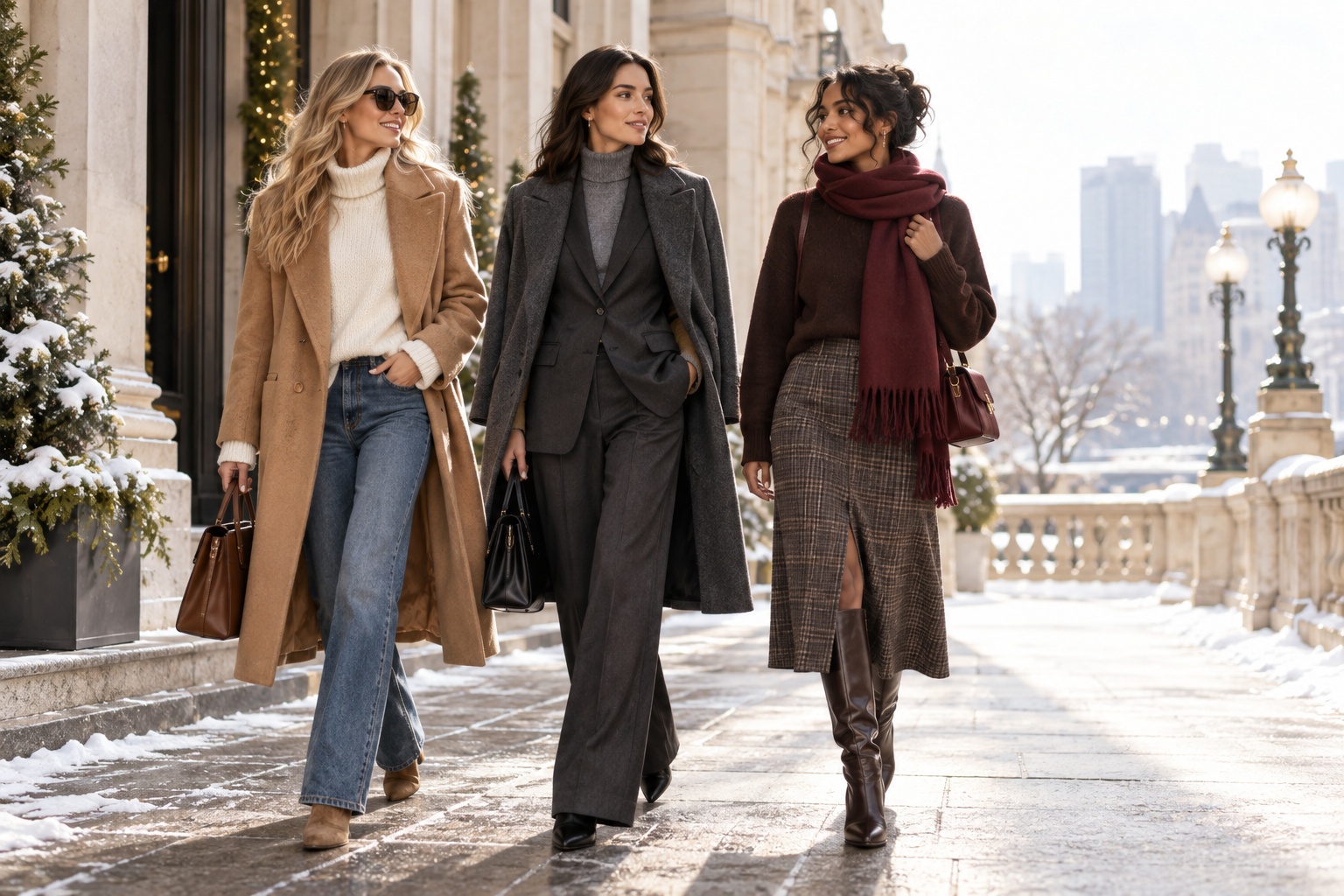
Winter dressing gets frustrating when every morning feels like a negotiation between warmth and shape. Add one more sweater and the outfit loses its line. Remove a layer and the commute becomes miserable. The most useful outfit ideas for winter solve both problems by giving each piece a job: the base manages comfort, the middle layer adds insulation, the outer layer handles the weather, and one finishing detail makes the combination feel intentional.
This guide turns that logic into seven repeatable formulas. They are not costumes to copy exactly. They are starting points you can adjust with the coat, shoes, knitwear, denim, skirts, and accessories already in your closet. Begin with the forecast and your schedule, choose the right level of warmth, then check the proportions before you add another statement piece.
The goal is simple: leave the house warm enough for the day, comfortable enough for real movement, and polished enough that the outfit works when your coat comes off. Think in combinations rather than isolated items, and winter style becomes much easier to repeat.
Why winter outfits feel difficult, and the simple formula that fixes it
Cold weather creates two visual problems at once. Layers add width, while practical footwear and heavy outerwear can make the entire outfit feel visually dense. At the same time, indoor heating means you may spend part of the day taking pieces off. A successful outfit therefore needs flexibility, not just maximum thickness.
Your wedding has a lot of moving pieces. Your plan can still feel composed.
Zarellea organizes guests, vendors, budget, and timelines in one shared space — so you can make decisions with clarity, not stress.
Use a three-part check before you get dressed. First, decide warmth: will you be outside for ten minutes, walking between locations, or standing in the cold for an hour? Second, decide shape: if the top half is generous, keep the bottom half cleaner, or reverse the balance with a fuller trouser or skirt and a closer-fitting top. Third, decide finish: choose one clear detail such as a colored scarf, a polished boot, a visible belt, a textured bag, or a tonal color story.
This sequence prevents the common mistake of adding random layers until the outfit feels finished. Warmth belongs closest to the body and in the outer layer. Shape comes from contrast between volumes. Finish comes from one or two deliberate choices. When every item is trying to be the focal point, the outfit looks busy. When nothing adds contrast, it looks unfinished.
Build the base: layers that keep the outfit flexible
Start with a close-fitting base that sits smoothly under the rest of the outfit. A long-sleeve tee, fine turtleneck, lightweight thermal top, or fitted jersey layer can give you comfort without forcing the coat to become oversized. The base should not be so tight that it restricts movement, but it should be neat enough that the next layer does not bunch at the neckline or sleeves.
Add warmth with a middle layer that matches the weather. A fine merino-style knit works well when you want a clean line. A medium-weight crewneck or cardigan adds more insulation for ordinary cold days. A vest can provide warmth through the torso while leaving the arms less crowded under a coat. The key is to choose one main insulating layer rather than stacking several bulky knits by habit.
Let the outer layer do the visual work. A wool coat, quilted jacket, puffer, shearling-style jacket, or weather-resistant parka changes the character of the same base outfit. A tailored coat sharpens denim and sneakers. A puffer makes a skirt and boots feel more relaxed. A cropped jacket balances a wide-leg trouser, while a long coat can create a clean column over a dress or monochrome look.
Finish with the parts that protect the edges of the outfit. Boots, socks, gloves, a hat, and a scarf are not afterthoughts when the temperature drops. Choose footwear that suits the surface you will actually walk on. If the day includes wet sidewalks or snow, a beautiful but delicate shoe may undermine the whole formula. Practical does not have to mean plain, but it does have to be usable.
7 outfit ideas for winter, organized by real-life situation
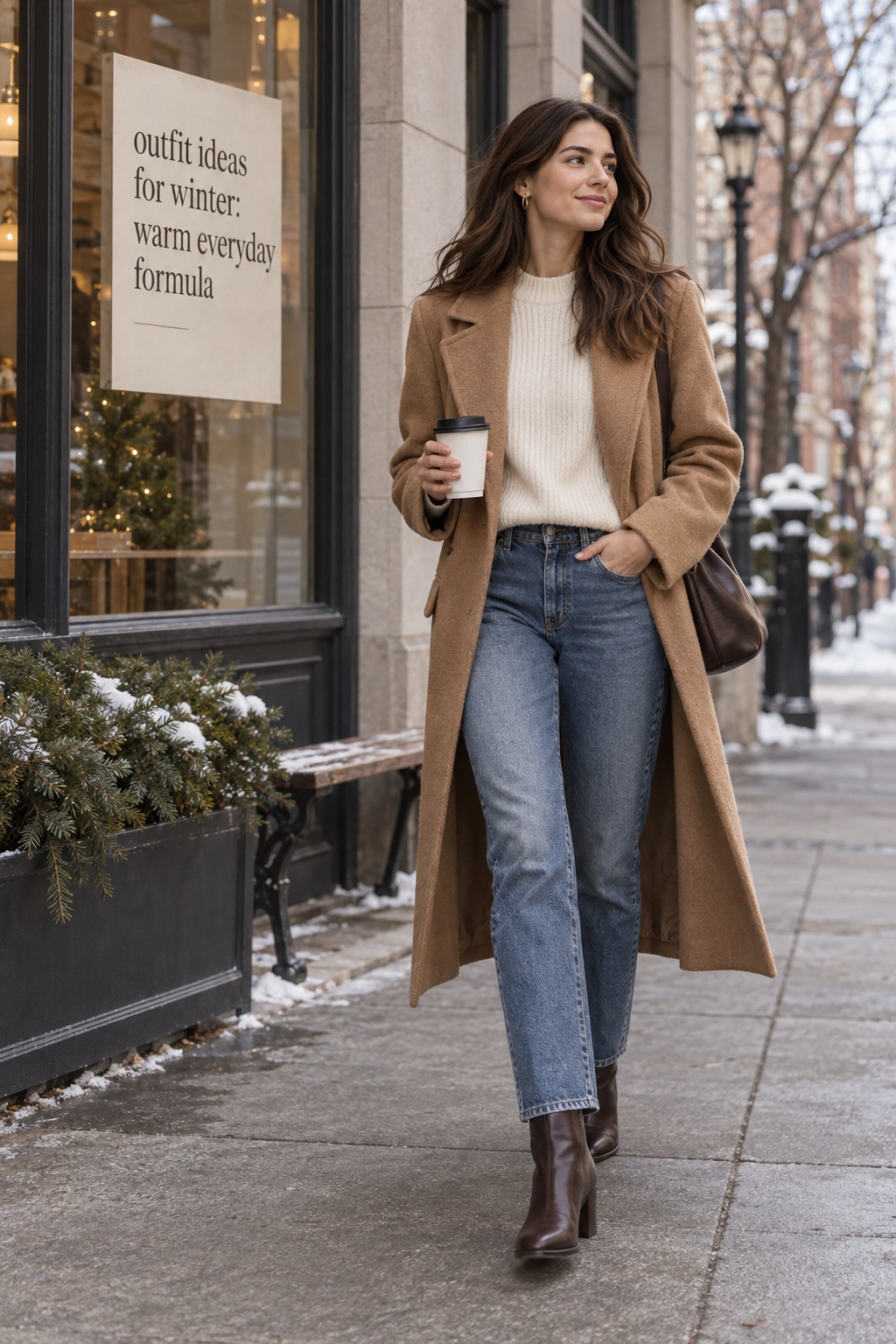
1. The everyday coat, knit, and straight-leg jean formula. Start with a fitted long-sleeve base, add a medium crewneck knit, and finish with straight-leg jeans, a long coat, and ankle boots. This is the dependable option for errands, coffee, school runs, and casual appointments because each piece is familiar and easy to swap. Use a lighter base on mild days, or replace the knit with a turtleneck when wind makes the neckline feel exposed.
Keep the shape clean by choosing a coat that skims rather than grips the jeans. If both the sweater and coat are oversized, tuck or half-tuck the sweater and show a little ankle or a narrow sock line above the boot. A structured shoulder bag or a scarf in a deeper color gives the simple combination a clear finish.
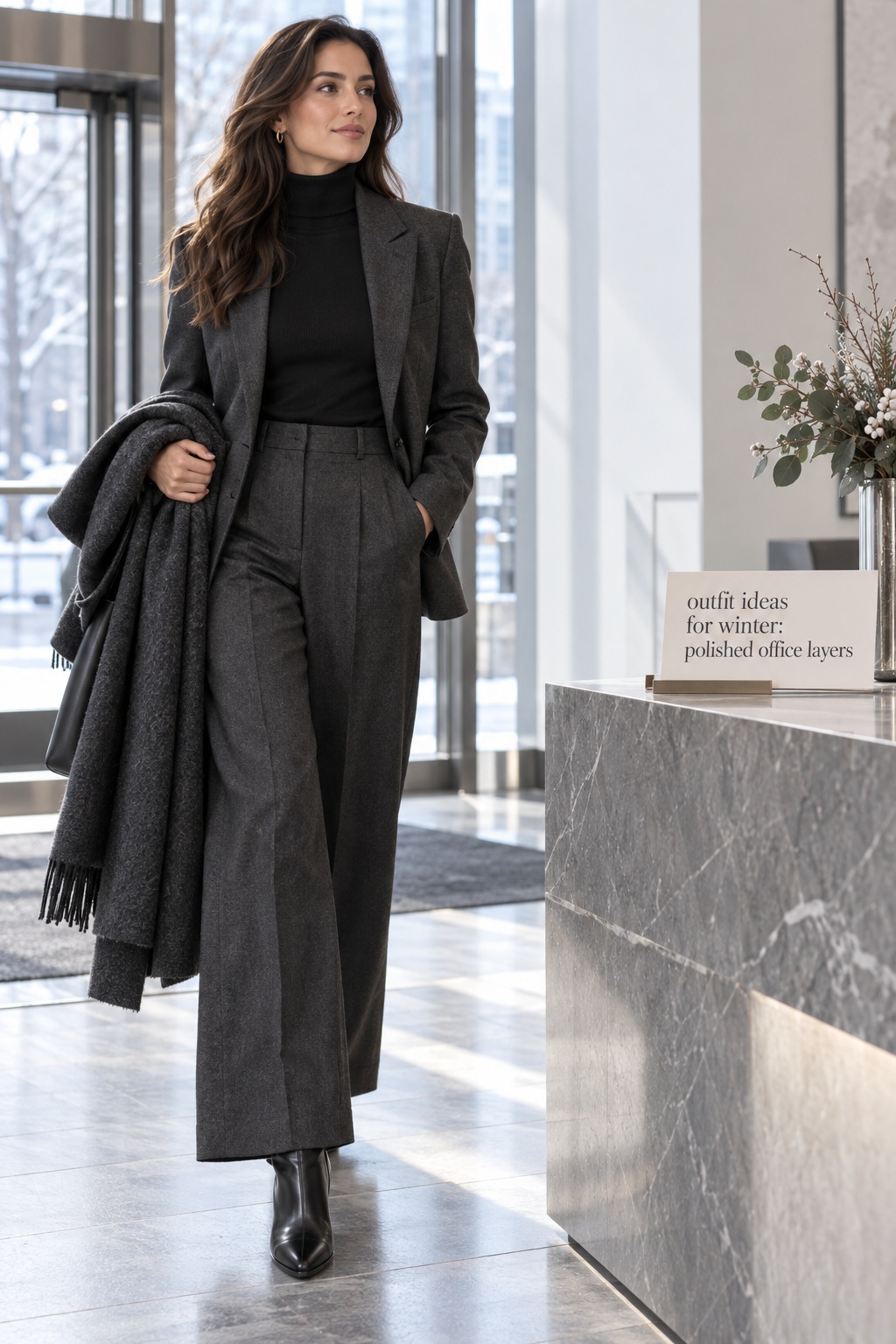
2. The polished office formula. Layer a fine turtleneck under a blazer, add tailored trousers, and top the look with a wool coat. Choose loafers for a mostly indoor day, or switch to sleek ankle boots when the commute is colder. This outfit works because the base is thin, the blazer supplies structure, and the outer coat keeps the proportions sharp instead of relying on a single oversized sweater.
For a softer version, use a knit blazer or a cardigan jacket and keep the trousers pressed and full enough to move. A tonal combination in charcoal, navy, brown, cream, or black looks intentional without requiring a bright color. Add one small contrast, such as a belt, a metal watch, or a scarf tied close to the neck.
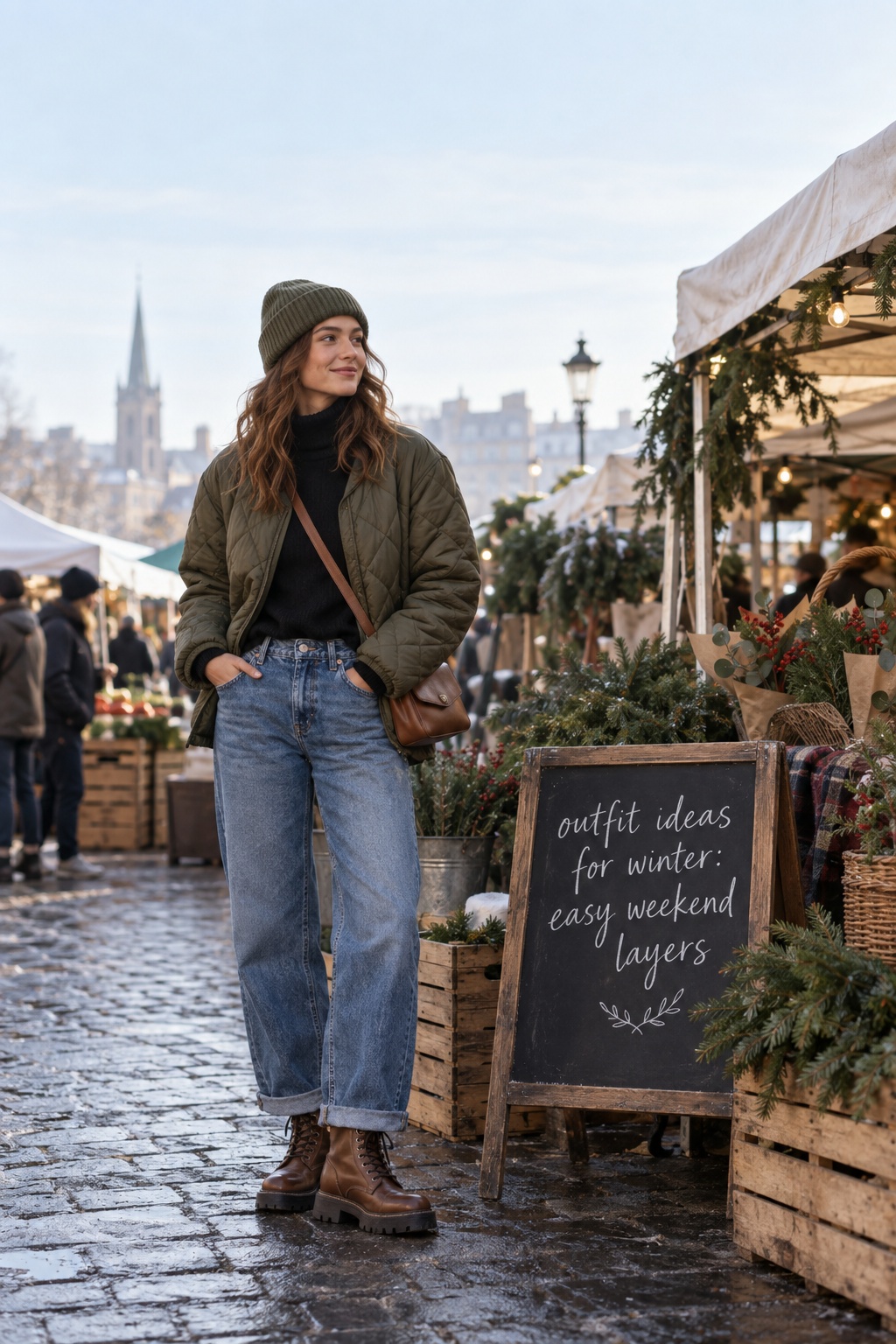
3. The warm weekend formula. Pair a black or neutral turtleneck with a quilted jacket, relaxed denim, and substantial boots. The closer-fitting base keeps the relaxed jacket and denim from becoming shapeless. This is useful for a market, a long walk, travel, or a day when you want comfort without defaulting to leggings and a hoodie.
Make the outfit feel styled by repeating one color in two places. A brown boot can echo a brown leather belt or bag. A burgundy beanie can echo a muted stripe in the scarf. Keep the palette limited to two neutrals and one accent so the practical pieces look like a composition rather than a pile of weekend clothes.
4. The cold-commute formula. On genuinely cold days, use a thin base, an insulating knit, a compact vest or additional torso layer, and a weather-blocking coat. Add trousers with room for a warm sock and choose boots with a sole that feels secure on slippery pavement. A large scarf can protect the neck and create a visible vertical line when worn open down the front.
The proportion trick is to keep the coat and lower half simple. If the outer layer is large, choose straight or slim trousers. If you prefer wide-leg trousers, let them fall from a clean waistline and use a shorter coat that ends near the hip or upper thigh. Avoid adding a long cardigan, bulky scarf, and long coat all at once unless each layer is thin enough to move independently.
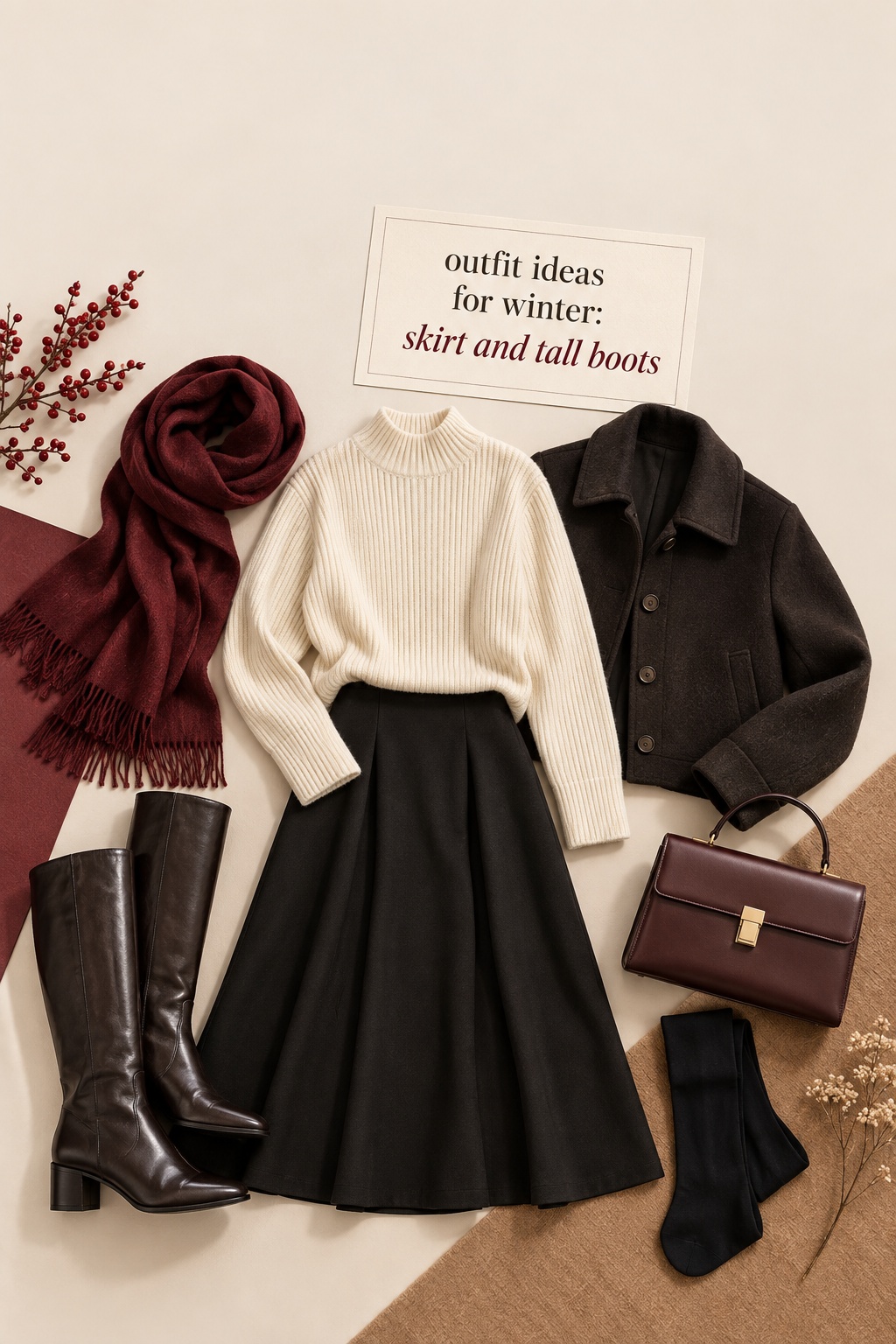
5. The skirt and tall-boot formula. Wear a midi or maxi skirt with a fine knit, warm tights, and tall boots, then add a short jacket or a long coat. This combination makes a skirt feel practical because the boot continues the leg line and the tights remove the bare-skin problem. A leather-look, denim, wool, or pleated skirt can all work, depending on how dressy the day feels.
Control volume by pairing a fuller skirt with a closer-fitting top, or let a fitted skirt support a relaxed sweater. If the sweater is chunky, use a half-tuck only when it does not create a heavy lump at the waist. A small shoulder bag or a simple belt helps define the point where the upper and lower halves meet.
6. The winter dress formula. Start with a knit or long-sleeve dress, add opaque tights, and choose boots that match the visual weight of the hem. A long wool coat makes the outfit feel polished for lunch or an evening plan, while a cropped jacket makes it more casual. If the dress is patterned, keep the coat and accessories quiet. If the dress is plain, use texture through a scarf, a belt, or a noticeable boot finish.
Layer a thin turtleneck under a sleeveless dress when you need extra warmth and want to reuse a piece outside summer. The underlayer should sit smoothly at the armhole and neckline. If the combination feels too covered, show a narrow band of contrast at the neck or cuffs instead of adding another accessory.
7. The mild-winter tonal formula. For a day that is cold but not severe, combine a fine sweater, a shirt or tee, a midi skirt or tailored trouser, and a lighter coat. Keep the shades within one family, such as cream and oatmeal, charcoal and soft gray, or camel and chocolate. Tonal dressing makes lightweight layers look connected and gives you room to add one brighter accessory.
This formula is especially useful when you move between an outdoor walk and heated interiors. Choose layers that can be removed without ruining the outfit. A button-down under a knit can become visible when the sweater comes off. A slim belt can remain useful after the coat is removed. The goal is for the indoor version to look like a complete outfit, not a leftover underlayer.
Make every formula look intentional
Proportion is the quickest way to improve winter outfit ideas. Use the one-voluminous-piece rule when you are unsure: pair an oversized coat with a neater base, a chunky sweater with a cleaner bottom, or wide trousers with a shorter, closer-fitting jacket. You can break the rule when the layers are thin and the fabrics drape, but it is a reliable starting point.
Color does not need to be dramatic to be useful. A neutral winter outfit can look rich when it combines different shades of the same family. Cream, tan, chocolate, and camel create depth without high contrast. Charcoal, gray, black, and silver feel sleek. Navy, denim, and burgundy add color while remaining easy to repeat. Pick one accent and let the rest support it.
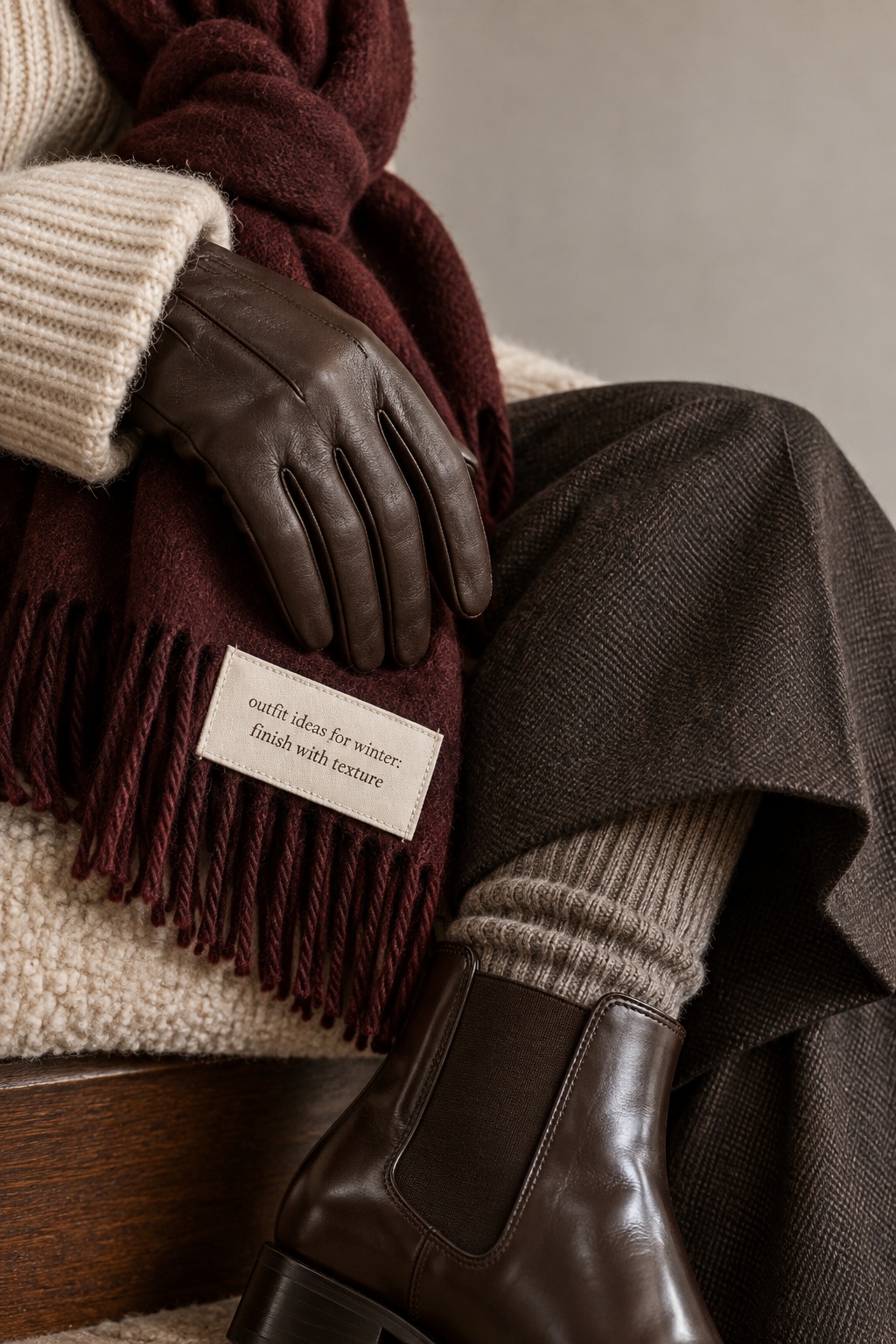
Texture is another way to keep a warm outfit from looking flat. Combine one smooth piece, one soft piece, and one structured piece. For example, pair a smooth knit with a wool coat and leather-look boots. Or combine denim, a fuzzy scarf, and a crisp shirt. When every item is fuzzy, shiny, or heavily textured, the outfit can lose its hierarchy.
Use accessories to correct the outfit rather than decorate it randomly. A scarf can fill an empty neckline, add color to a neutral coat, or create a vertical line when left open. A belt can define a relaxed blazer or coat. Tall boots can balance a midi skirt. Gloves and a hat can repeat the same accent color and make the practical parts look deliberate.
When indoor heating is a problem, build for removal. Keep the base presentable, make sure the middle layer looks good on its own, and avoid relying on a scarf to hide a messy neckline. When wind is the problem, protect the openings: neck, cuffs, ankles, and the gap between trouser hem and boot. A small adjustment at an edge can make a familiar outfit feel much more comfortable.
Finally, photograph or note the formulas that work. Write down the temperature range, the shoes, and the layer that made the difference. This turns inspiration into a personal winter wardrobe system. You do not need a new outfit every day. You need a handful of combinations that can be adjusted with one swap.
Sources and methodology
This guide was shaped by comparing winter styling roundups, layering guides, and cold-weather outfit coverage from FITPOP’s layering framework and Harper’s BAZAAR’s coat and knitwear examples. The recommendations here are practical styling guidance, not a claim that one fabric, brand, or silhouette works for every climate.
FAQ
How many layers should a winter outfit have?
Start with two or three functional layers: a comfortable base, an insulating middle layer, and an outer layer that suits the weather. Add a vest, scarf, or warmer accessory when you need more protection. More layers are not automatically better if they restrict movement or create too much bulk.
How can I stay warm without looking bulky?
Keep the base close to the body, place most of the volume in one layer, and keep the opposite half of the silhouette cleaner. A fine base under a substantial coat is usually easier to balance than several thick sweaters. Use footwear and accessories to finish the shape instead of adding another bulky top layer.
What shoes work with winter skirts?
Tall boots, ankle boots, and weather-ready loafers can all work. Tall boots create a continuous line with a midi skirt and provide more coverage. Ankle boots look cleaner with a shorter hem or a visible warm sock. Choose the shoe according to the surface and distance you will walk, not only the indoor outfit.
Which colors make winter outfits look polished?
Any controlled palette can look polished. Tonal combinations of cream, camel, brown, gray, charcoal, navy, or black are easy to repeat. Add one accent such as burgundy, forest green, rust, or a soft red. Repeating the accent in a scarf, bag, belt, or shoe makes the color feel intentional.
How do I dress for a winter day that gets warmer indoors?
Make the base and middle layer presentable on their own. Choose a smooth shirt under a cardigan, a fine turtleneck under a blazer, or a dress that works without the coat. Keep the outer layer easy to remove and avoid using a bulky scarf as the only element that makes the outfit feel finished.
Can I use summer skirts and dresses in winter?
Yes. Add a long-sleeve base or thin turtleneck, warm tights, and boots, then use a coat that matches the dressiness of the piece. A summer midi can feel winter-ready when the textures around it are heavier. Keep the layers smooth at the neckline and armholes so the outfit does not look improvised.
What is the easiest winter outfit formula to repeat?
Try a close-fitting base, a medium knit, straight-leg jeans, a long coat, and ankle boots. Change one element at a time: swap jeans for tailored trousers, the coat for a puffer, or the boots for sneakers on a dry day. A small accessory change can make the familiar formula feel new.
Leave a Reply