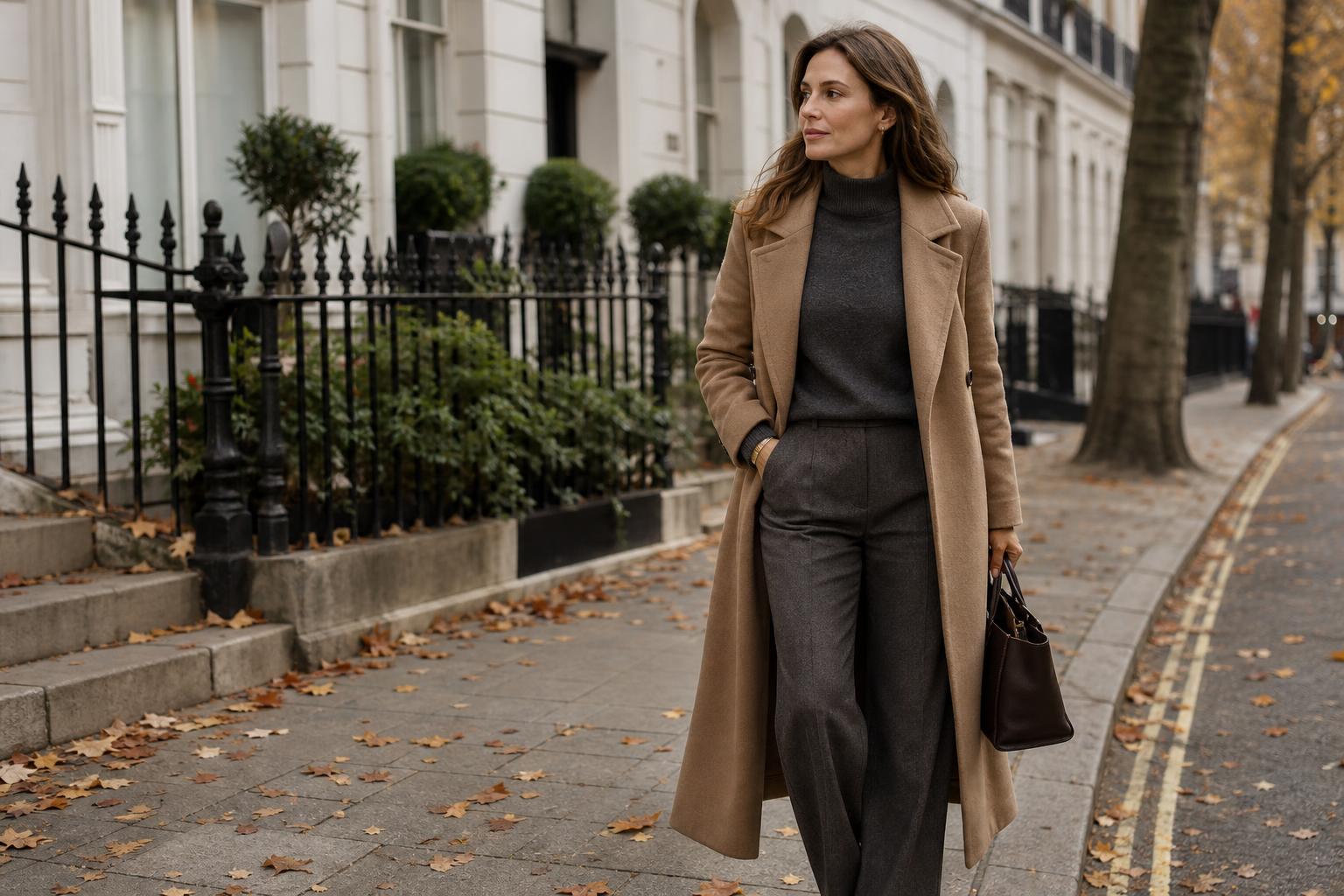
By the time the air turns cooler and city sidewalks begin to fill with coats, leather shoes, and softly layered knits, european fall outfits start to feel less like a trend category and more like a visual language. The appeal is immediate: polished but never stiff, practical without losing elegance, and shaped by the rhythm of cities such as London, Paris, and Milan where outerwear, footwear, and proportion matter as much as color.
The mood is city-chic with restraint. A trench coat moving over straight-leg denim, a wool coat balanced with heeled boots, a midi skirt sharpened by ballet flats, a scarf that gives depth rather than decoration alone—these are the details that define the aesthetic. It is often worn in urban settings, on travel days, at work, during café afternoons, and in the in-between moments when weather shifts through the day and style has to keep up.
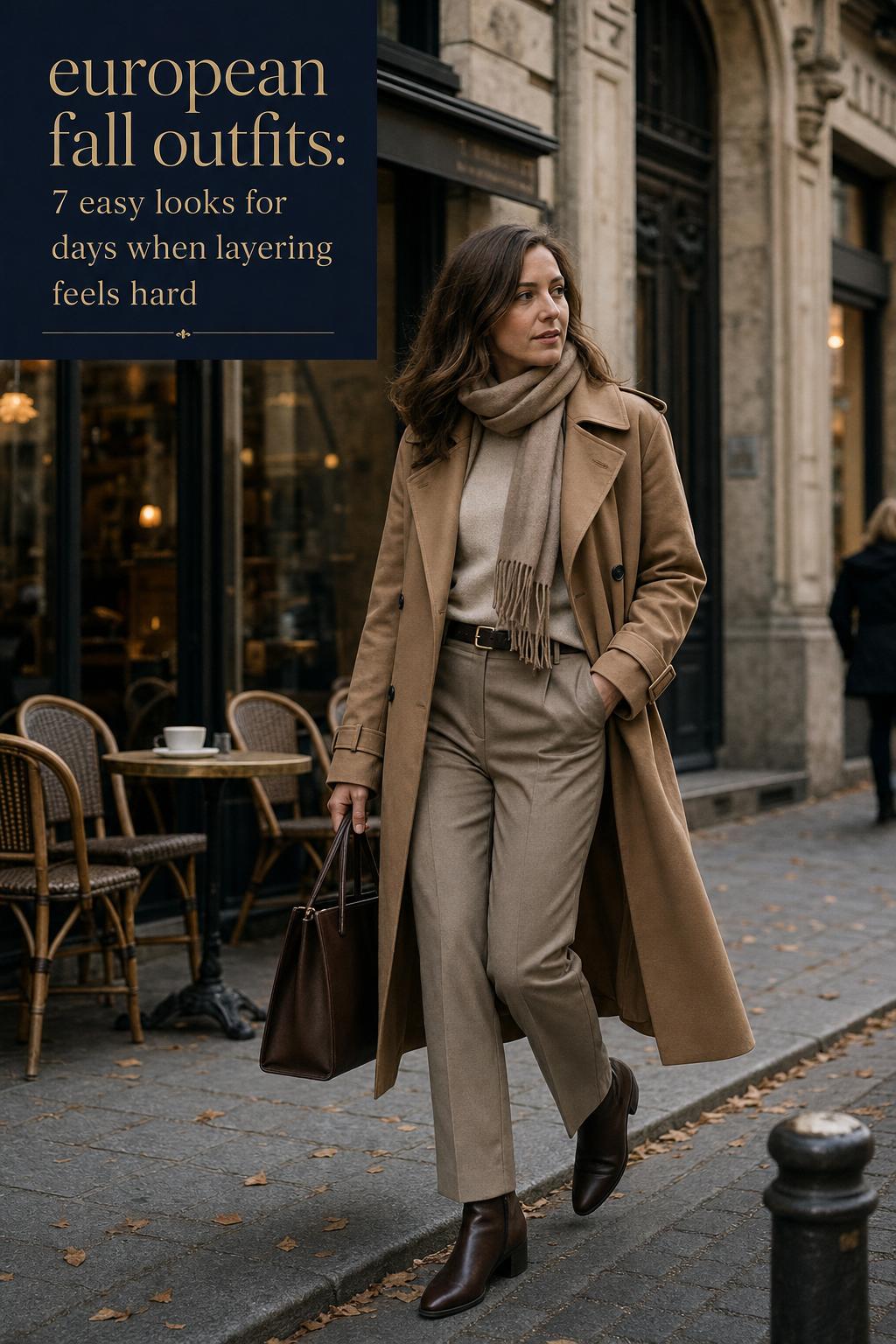
What makes this approach so enduring is its intelligence. European-inspired fall dressing favors layering, neutral tones, clean silhouettes, and accessories that finish a look with quiet confidence. Rather than chasing fast statements, it builds atmosphere through coats, boots, bags, and thoughtful combinations that can move from casual city walks to a more polished evening with very little adjustment.
The visual code behind european autumn style
At its core, European fall style is built on composition. The silhouette usually begins with a strong outer layer—a trench coat, oversized coat, or tailored wool coat—then softens through knitwear, skirts, dresses, or denim underneath. Nothing feels isolated. Each piece supports another, which is why even simple formulas read as refined.
Your wedding has a lot of moving pieces. Your plan can still feel composed.
Zarellea organizes guests, vendors, budget, and timelines in one shared space — so you can make decisions with clarity, not stress.
Layering is not only practical here; it is the main styling device. A coat over a sweater and white jeans creates one expression of the mood, while a midi dress under a structured coat with ballet flats creates another. The common thread is balance: tailored structure meeting relaxed texture, neutral palettes punctuated by a darker boot or a softly draped scarf, and footwear chosen with city movement in mind.
London tends to push the urban trench-and-boot combination, Paris often leans into polished restraint with flats, coats, and feminine lines, and Milan sharpens the palette through cleaner monochrome dressing and more sculpted footwear. Across these cities, however, the through line remains the same: elegance comes from proportion and editing.
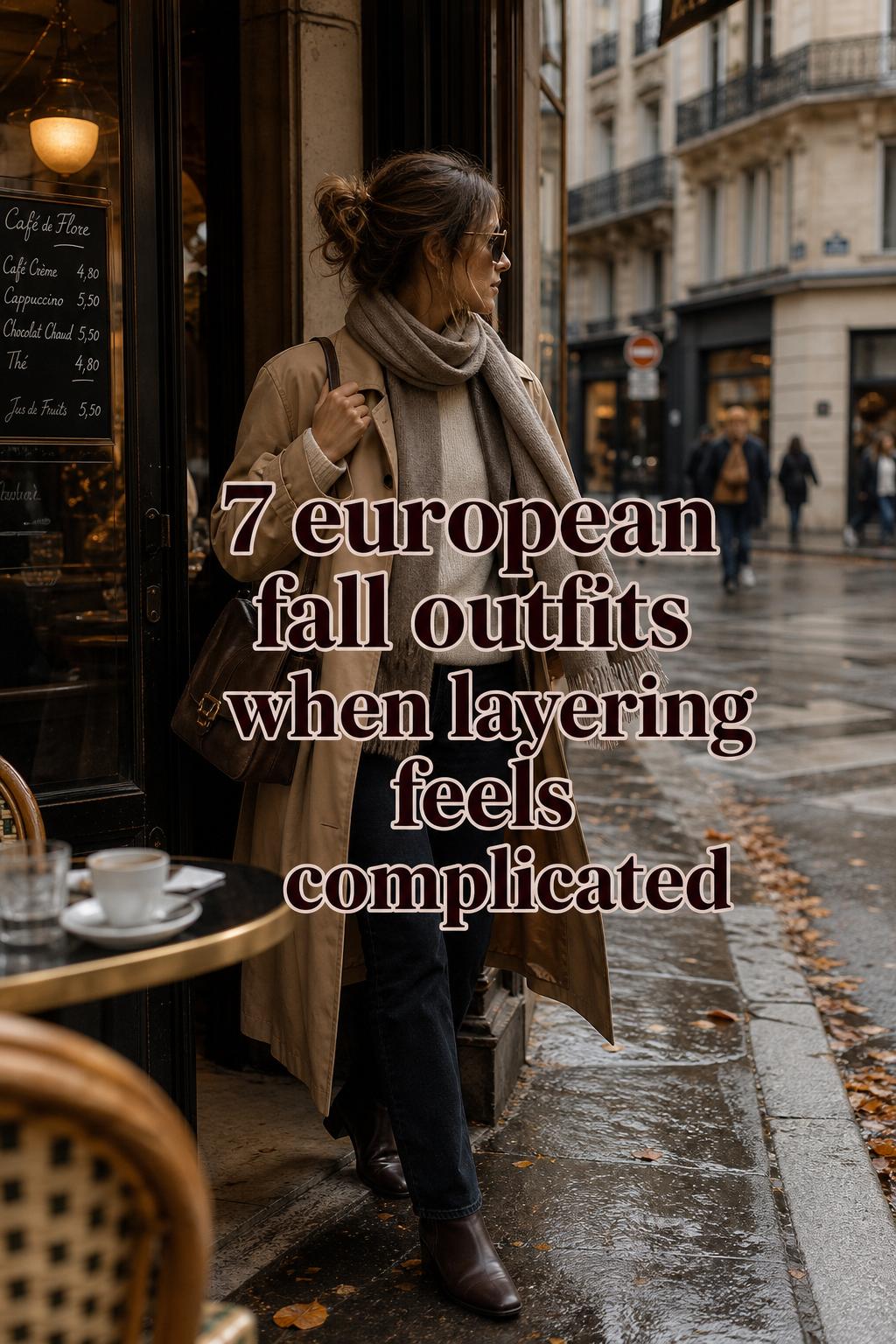
Look: London urban layers
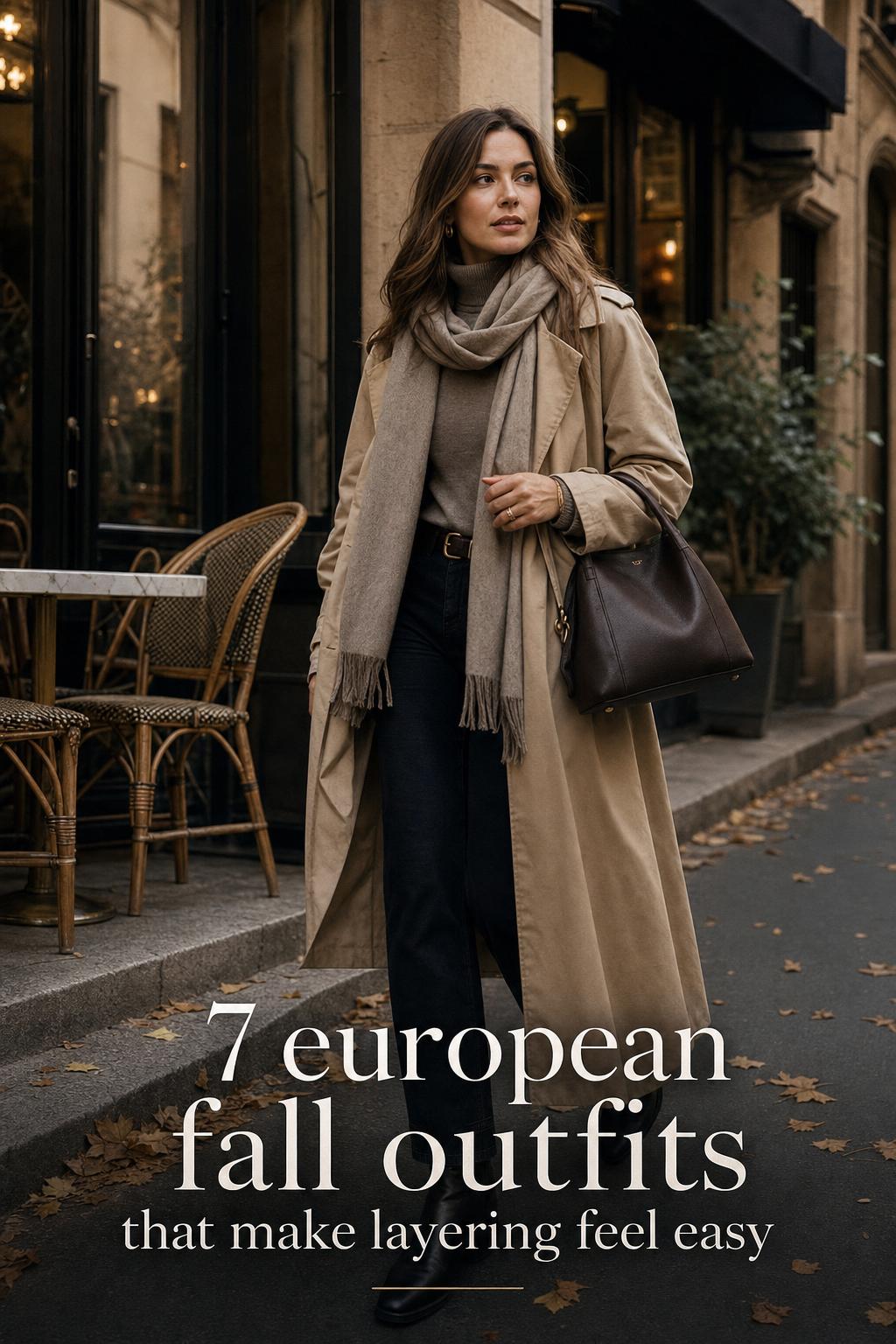
This is one of the clearest expressions of the European fall aesthetic: brisk, composed, and made for movement. The silhouette is long through the coat, close enough through the knit, and grounded by ankle boots that can handle a full day in the city. It feels purposeful without looking overworked.
A classic trench coat leads the look, and this is where the Burberry association naturally enters the conversation, since the trench remains one of the most recognizable symbols of London-adjacent fall dressing. Underneath, a cashmere knit or fine sweater keeps the line smooth rather than bulky. Straight trousers or denim hold the outfit in a practical register, while cocoa-tone or black ankle boots keep the finish sharp. A scarf can be added if the weather shifts, but it should drape rather than dominate.
- Key garments: trench coat, cashmere knit, straight-leg trousers or denim
- Footwear: ankle boots
- Accessories: scarf, structured bag
Why it works: London-inspired dressing thrives on outerwear authority. The trench creates immediate structure, while boots give the look enough weight to feel appropriate for fall instead of transitional. This is an especially useful formula for commuters, travelers, and anyone who wants polish without formality.
Style tip: keep the layers slim under the trench
A trench loses some of its elegance when everything underneath is too bulky. If the goal is authentic city-ready layering, keep the knit close to the body and let the coat provide the movement. The result is cleaner and more versatile from morning to evening.
Look: Parisian café classic
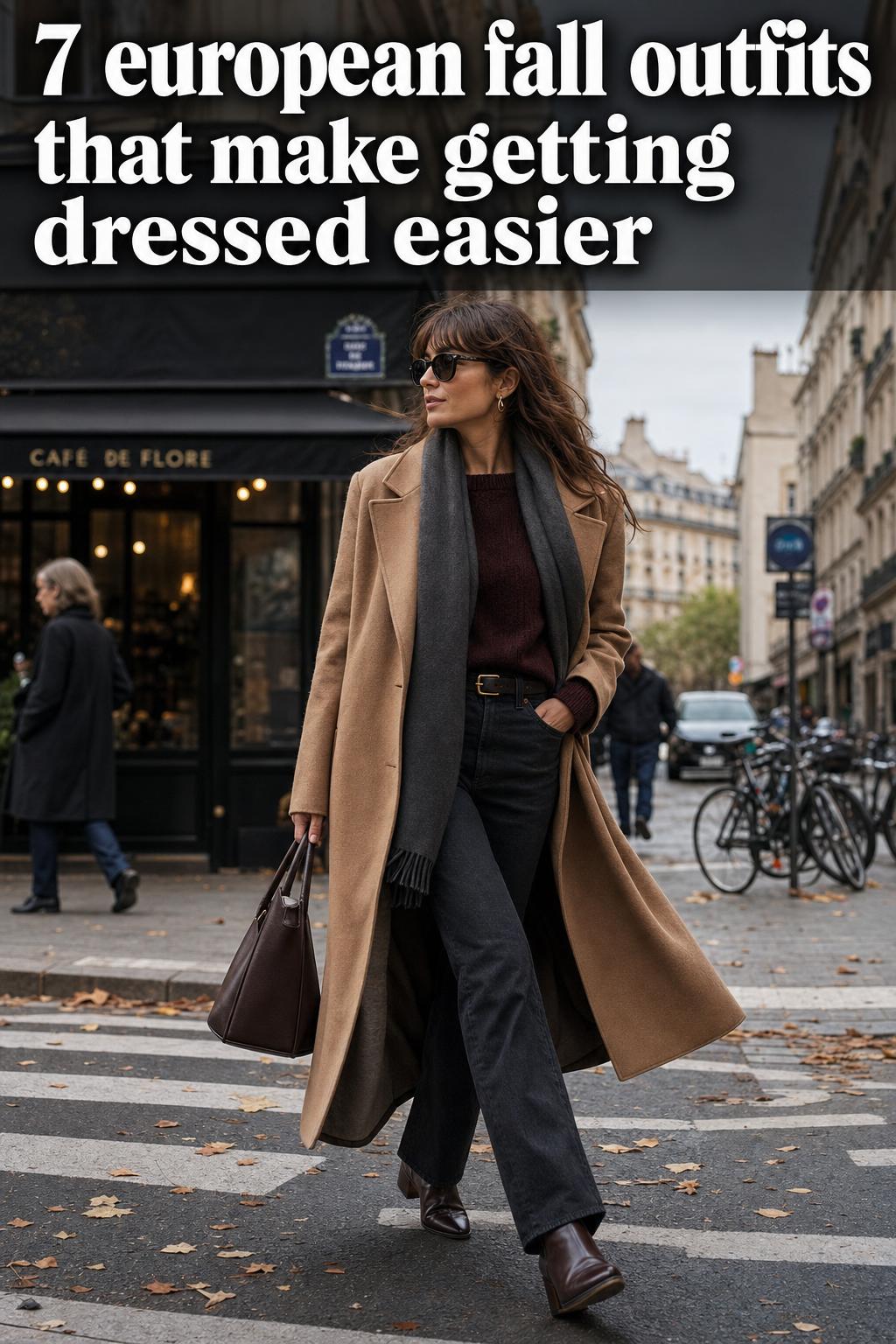
The Paris interpretation of european fall outfits often feels softer but no less disciplined. The mood is refined, slightly romantic, and understated enough to work from daytime meetings to a lingering café stop. The silhouette usually combines one tailored layer with one fluid element, which keeps the outfit elegant rather than precious.
A tailored coat over a midi dress or midi skirt creates that balance immediately. Ballet flats, a recurring footwear idea in current fall dressing, shift the look away from severity and toward ease. The palette works best in neutrals—cream, camel, black, deep brown, soft gray—because these shades allow the shape of the outfit to speak more clearly. A modest bag and a scarf complete the story without interrupting the line.
Why it works: The coat provides polish, while the midi length and ballet flats soften the mood. It is a strong formula for those who want european chic fall looks that feel feminine without relying on ornate details. It also translates well for work, lunches, and travel days when comfort matters as much as presentation.
How to recreate the effect
Focus first on proportion, not decoration. A streamlined coat, a skirt or dress with fluid movement, and flats with a clean profile will communicate the aesthetic more effectively than adding too many accessories. In this kind of outfit, restraint is what creates the sophistication.
Look: Milanese monochrome crispness
Milan brings a more distilled kind of drama. The mood is crisp, polished, and confident, often relying on monochrome or near-monochrome dressing to create impact. Instead of many visible layers, the emphasis is on a strong vertical line, a sharper coat shape, and footwear with more presence.
A wool coat in black, charcoal, camel, or deep espresso can anchor the outfit. Underneath, a knit and tailored trousers in closely related tones produce a seamless effect. Heeled boots add definition and make the coat feel more architectural. This is a look that benefits from minimal interruption, so accessories should stay concise: a structured bag, a belt if the silhouette needs emphasis, and perhaps understated jewelry rather than anything too busy.
- Key garments: wool coat, tonal knit, tailored trousers
- Footwear: heeled boots
- Accessories: belt, structured bag, understated jewelry
Why it works: monochrome dressing sharpens even familiar pieces. In fall, that matters because coats and boots already carry visual weight. Keeping the palette controlled allows texture—wool, knit, smooth leather—to create the depth instead of contrasting colors.
Look: white jeans in a European palette
White jeans are one of the more distinctive styling anchors within fall dressing because they brighten a season often dominated by darker tones. In a European context, they are not treated as summery leftovers. Instead, they are grounded by substantial outerwear, richer neutrals, and footwear that gives the look seasonal credibility.
The most convincing version pairs white jeans with a coat and boots, supported by a sweater in beige, gray, camel, or black. The outerwear is what keeps the outfit aligned with autumn rather than drifting into transition-season uncertainty. A longer coat especially helps, because it contrasts the clean brightness of the denim with a more enveloping silhouette above.
Why it works: white jeans bring lightness to fall color stories without breaking the mood of the season. They are especially useful if your wardrobe already leans neutral, since they pair easily with trench coats, wool coats, scarves, and both ankle boots and loafers. The main caution is practicality—this look reads best in settings where the day is urban and polished rather than wet or rugged.
Key pieces for this aesthetic
- White jeans with a clean straight or slim silhouette
- A coat substantial enough to feel seasonal
- A knit in a muted neutral tone
- Boots or loafers that add visual weight
Look: Nordic minimal city layers
Among the most modern interpretations of European-inspired fall outfits is the Nordic minimal approach. The mood is clean, quiet, and functional, but not cold. The silhouette typically relies on straight lines, measured layering, and a neutral palette that feels intentional rather than plain.
A wool blend coat or simple jacket layered over a knit and tailored trousers forms the foundation. A functional bag makes sense here, not as an afterthought but as part of the overall visual logic. Footwear can shift between boots and loafers depending on the day, while the palette stays disciplined—stone, cream, charcoal, taupe, black. The effect is less romantic than Paris and less dramatic than Milan, but it is deeply wearable.
Why it works: minimalism allows texture and silhouette to take center stage. In real life, this also makes dressing easier. A tightly edited neutral wardrobe creates more outfit combinations, which is one reason this aesthetic appeals to travelers and anyone building a practical capsule wardrobe for Europe in fall.
Look: soft weekend knit dressing
Not every European fall look needs the precision of city tailoring. There is also a softer weekend version of the aesthetic—still polished, but gentler in movement and mood. This look suits slower mornings, neighborhood walks, museum afternoons, or a casual lunch where comfort matters but a fully relaxed outfit would feel too informal.
An oversized coat over knitwear creates the right amount of ease. The lower half can move toward a skirt, dress, or easy trousers, depending on how fluid you want the silhouette to feel. Boots ground the softness, while a scarf and bag bring the outfit back into a more considered register. Earth tones work especially well here: camel, cocoa, olive-adjacent neutrals, cream, and gray.
Why it works: the oversized outer layer gives visual comfort, while the boots prevent the look from becoming shapeless. It is a good reminder that relaxed dressing still benefits from one strong anchor piece. In this case, the coat provides the architecture.
Look: ballet flats with a fall wardrobe
Ballet flats can look surprisingly current in fall when they are styled with enough seasonal texture around them. Instead of treating them as a spring shoe, the more elegant approach is to place them inside a layered outfit where coats, sweaters, and midi lengths create contrast. The resulting look is light on the foot but still appropriate for autumn.
A coat with a sweater and midi skirt is one of the strongest pairings. A dress can work as well, especially when the outer layer is tailored enough to keep the outfit from drifting too soft. Because ballet flats lack the visual weight of boots, the surrounding pieces need a little more structure. A bag with a defined shape and a scarf with substance help stabilize the outfit.
- Best pairings: midi skirts, dresses, fine sweaters, tailored coats
- Most flattering palettes: black, cream, camel, gray, tonal neutrals
- Best setting: milder days, indoor-heavy city plans, polished casual wear
Why it works: ballet flats introduce comfort and polish at once. They are particularly compelling for readers drawn to Parisian style or those who want an alternative to boots without sacrificing refinement. The limitation is weather. On colder or wetter days, boots remain the more practical choice.
Outerwear that shapes the entire outfit
In most european autumn outfits, the coat is not the final addition; it is the starting point. Outerwear determines line, mood, and often the level of formality. That is why the same knit and trousers can feel entirely different under a trench coat than they do under an oversized wool coat.
The trench coat is the sharpest bridge between practicality and iconography, especially in London-coded dressing and in looks influenced by European fashion influencers. Wool coats bring greater softness and depth, particularly for Milan-inspired monochrome dressing or more polished city evenings. Jackets can work for lighter layering, but they tend to create a less elongated silhouette than a full coat.
Choosing the right outerwear mood
- Choose a trench coat when you want movement, urban polish, and easy layering.
- Choose a wool coat when you want a richer, more structured fall presence.
- Choose an oversized coat when your outfit needs softness and visual ease.
- Choose a simpler jacket when the day is milder and your underlayers deserve more visibility.
The reason outerwear matters so much in this aesthetic is simple: in fall, the coat is often the most visible garment. An excellent coat can make basic pieces look elevated, while an unconsidered coat can flatten even a carefully composed look.
Footwear logic: boots, loafers, and flats
Footwear in European fall dressing is rarely random. It needs to support city walking, suit variable weather, and visually complete the outfit. That practical layer is part of the aesthetic itself, which is why ankle boots, heeled boots, loafers, and ballet flats appear so consistently across European style references.
Ankle boots are the most adaptable. They work with trenches, coats, dresses, skirts, white jeans, and tailored trousers. Heeled boots shift the mood toward a more Milanese sharpness. Loafers are ideal when you want polish without the delicacy of a flat, and ballet flats offer a softer finish on milder days or in more indoor-oriented settings.
The key is weight. If the rest of the outfit is light and fluid, a stronger shoe can bring balance. If the coat and knitwear already feel substantial, a flatter or simpler shoe can keep the overall impression from becoming too heavy.
Color stories that make the aesthetic feel expensive
Color is one of the quiet forces behind why European fall outfits often look so cohesive. The strongest palettes are built around neutrals and earth tones: camel, cream, black, charcoal, gray, brown, and muted tonal combinations that allow texture and silhouette to lead. Even when a look is simple, this palette gives it depth.
Neutrals also make layering easier. A camel trench over a gray sweater and white jeans feels intentional because each tone supports the next. A black wool coat over tonal tailoring feels sleek because the visual field stays disciplined. Scarves, bags, and boots can either blend into that palette or create a subtle punctuation point, but rarely should they interrupt it too dramatically if the goal is classic European elegance.
Texture matters as much as color
When a palette is restrained, texture becomes more visible. Knitwear, tweed, wool, cashmere, corduroy, and even touches of velvet can deepen a fall outfit without making it louder. This is one of the most reliable ways to create sophistication: not more color, but more material contrast.
Accessories that elevate rather than crowd
In this style category, accessories should complete the composition, not compete with it. Scarves, belts, bags, and understated jewelry all have a role, but the best European-inspired outfits use them with restraint. The accessory should sharpen the outfit’s mood or soften its transition between pieces.
A scarf can bridge the gap between coat and knit while adding movement near the face. A belt can define shape when an oversized coat or looser silhouette needs more structure. Bags often work best when they are clean-lined and practical enough for city use, especially in travel-focused outfits. Jewelry should usually stay in the background unless the outfit itself is highly minimal.
This is why accessories are so effective in European fall styling: they are not filler. They solve proportion, temperature, and finish all at once.
City-ready fall outfits for travel
Travel changes the demands of fall dressing. A look may need to handle walking, changing temperatures, café stops, and a long day that includes transit as well as sightseeing. The best city-ready formulas for Europe combine style with repetition-friendly practicality, which is why coats, boots, scarves, and versatile knits appear so often in travel style guides.
For Paris, Prague, London, or similar city settings, the most reliable approach is to anchor the wardrobe in one coat, one pair of boots, and a compact neutral palette. A traveler might rotate a sweater with white jeans one day, then switch to a midi skirt and flats the next while keeping the same coat and bag. That continuity is not only efficient; it also preserves the visual coherence associated with European dressing.
Packing framework for a fall city wardrobe
- One strong coat, preferably a trench or wool coat
- One versatile knit and one lighter sweater
- One pair of boots and one alternate shoe such as loafers or ballet flats
- One pair of trousers or denim, potentially white jeans if conditions suit
- One midi dress or skirt for variation
- One scarf and one practical bag
This kind of capsule approach works because it mirrors the styling intelligence behind the aesthetic itself. Fewer, better-coordinated pieces almost always look more refined than an overpacked suitcase full of isolated outfits.
Where the aesthetic can go wrong
European fall style is often described as effortless, but the effortlessness comes from editing. The most common misstep is trying to force too many ideas into one look: a dramatic coat, a heavy scarf, a busy bag, trend-forward shoes, and contrasting colors all at once. The result can feel crowded rather than polished.
Another issue is mismatched seasonal weight. White jeans with a thin top and no substantial outerwear can feel out of sync with autumn, just as ballet flats with overly heavy layers may create imbalance. Likewise, an oversized coat needs either a defined shoe or a cleaner underlayer so the silhouette remains intentional.
The correction is usually simple. Remove one visual element, strengthen the outerwear, or bring the palette back into a more neutral conversation. In this aesthetic, refinement often comes from subtraction.
How to adapt the look for work, casual days, and evenings
One of the real strengths of european fall outfits is that the same visual language can be adapted across settings. For work, tailored coats, trousers, loafers, and knitwear create a polished base that feels professional without becoming corporate. For casual days, the coat remains important, but the underlayers can shift toward denim, softer sweaters, and flatter shoes.
Evening dressing in this aesthetic does not require a dramatic departure. Milan offers the best cue here: deepen the palette, streamline the silhouette, and switch to heeled boots or a more sculpted coat. A monochrome look becomes especially useful after dark because it reads sharper under low light and needs very little embellishment.
Practical styling insight
If you want the wardrobe to stretch further, choose pieces that can shift mood by changing only the shoes and accessories. A midi dress with ballet flats and a tailored coat can feel daytime Parisian, then move toward evening with a darker coat, a belt, and heeled boots. This kind of flexibility is central to the appeal of the style.
Why European fashion influencers remain such a strong reference point
European fashion influencers continue to shape how fall dressing is interpreted because they show the aesthetic in motion—on city streets, in layered weather, and through combinations that feel lived-in rather than purely conceptual. Their influence often centers less on novelty and more on consistency: trench coats reappearing in London, polished neutrals in Paris, sharper tonal dressing in Milan.
This matters because the aesthetic is not built from one hero garment alone. It is built from relationships between pieces: coats and boots, scarves and outerwear, dresses and flats, white jeans and autumnal knits. Seeing these combinations repeated across European city contexts reinforces why they work so reliably in real wardrobes.
A final note on building the mood instead of copying the formula
The most compelling version of this style does not come from replicating one exact outfit. It comes from understanding the atmosphere behind it: city-aware layering, controlled color, strong outerwear, practical shoes, and accessories that refine rather than distract. Whether your preference leans London trench elegance, Parisian softness, Milanese precision, or Nordic minimal restraint, the aesthetic remains cohesive because it values composition over excess.
That is why the look continues to resonate. It can be adapted to travel, work, weekends, and evenings without losing its identity. Start with one excellent coat, one dependable pair of shoes, and a palette of neutrals and earth tones, then let proportion and texture do the rest.
FAQ
What defines european fall outfits?
They are usually defined by layered dressing, strong outerwear, neutral or earthy color palettes, and practical but polished footwear such as ankle boots, loafers, and ballet flats. The overall effect is refined, city-ready, and based on silhouette and texture rather than loud styling.
How do I layer for variable fall weather in Europe?
Start with a light knit or sweater, add a trench coat or wool coat as the main outer layer, and finish with a scarf if needed. The most effective approach is to keep the underlayers relatively slim so the outfit remains comfortable indoors while still feeling substantial enough for cooler streets.
Are white jeans appropriate for European fall fashion?
Yes, especially when they are styled with autumnal pieces such as coats, sweaters, and boots. White jeans work best when the rest of the outfit has enough seasonal depth to keep the look aligned with fall rather than feeling leftover from summer.
What coat works best for a European-inspired fall wardrobe?
A trench coat is one of the most versatile choices because it suits city dressing, layering, and both casual and polished outfits. A wool coat is equally useful if you prefer a richer, more structured fall look, especially for monochrome or evening-leaning outfits.
Can ballet flats work in fall, or should I stick to boots?
Ballet flats can work very well on milder days, especially with midi skirts, dresses, sweaters, and tailored coats. Boots are still the better option for colder or wetter conditions, but flats offer a polished alternative when the day is more indoor-focused or the weather is relatively gentle.
Which cities most influence this aesthetic?
London, Paris, and Milan are the clearest reference points, with Nordic minimalism also offering a strong variation. London often suggests trench coats and ankle boots, Paris leans toward tailored coats with softer feminine lines, and Milan favors monochrome dressing with sharper structure.
How can I make european fall outfits work for travel?
Build around a compact capsule of versatile pieces: one coat, one pair of boots, one alternate shoe, a few knits, and bottoms or dresses that share the same palette. This keeps the wardrobe cohesive, practical for city walking, and easy to restyle across several days.
What colors are most common in European autumn style?
Neutrals and earth tones dominate, including camel, cream, gray, black, brown, and other muted shades. These colors create a cohesive base and allow texture, layering, and silhouette to carry the look.
What accessories matter most in this aesthetic?
Scarves, bags, and belts are the most useful because they improve both function and finish. A scarf adds warmth and movement, a bag supports the city-ready mood, and a belt can refine the silhouette when coats or layers feel oversized.
How do I make the style feel authentic rather than costume-like?
Focus on one strong outer layer, one controlled palette, and a few quality-looking basics instead of trying to include every recognizable European style cue at once. The aesthetic feels most convincing when it is edited, practical, and built around proportion rather than obvious styling signals.
Leave a Reply