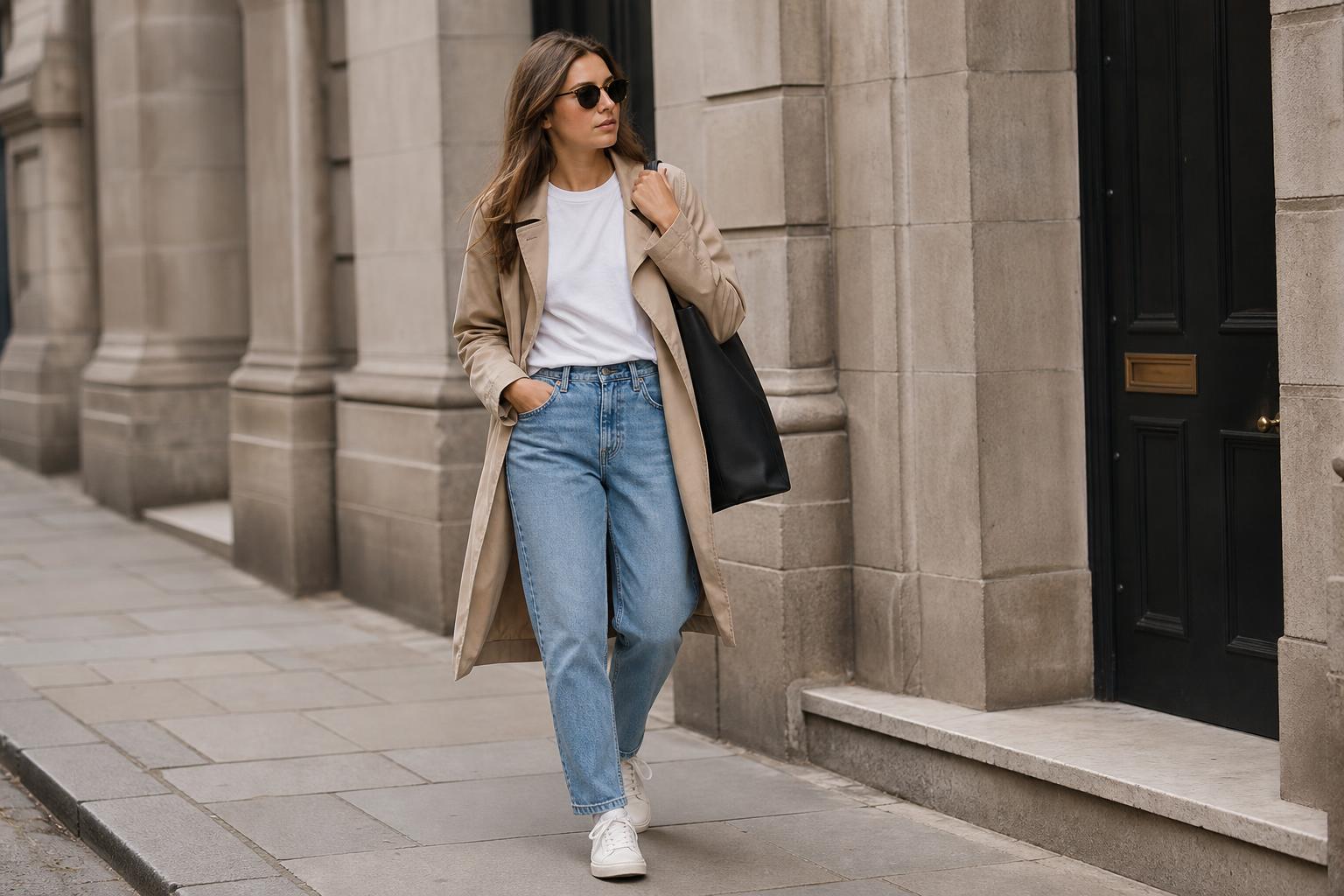
Most wardrobes do not fail because they lack clothes. They fail because the clothes do not speak to one another. That is why simple casual outfits remain so useful: they ask less of your closet and more of your styling judgment. A clean T-shirt, relaxed denim, a knit, a tailored outer layer, and practical shoes can carry you through a week of ordinary life far better than a rail of impulse buys. The appeal is not only ease. It is the quiet confidence of pieces that move comfortably through errands, coffee meetings, school runs, travel days, and informal office settings without looking underconsidered.
The most effective casual dressing has a certain editorial clarity. Think of the understated precision often associated with Paris, the polished restraint of Milan, or the intelligent layering seen in Copenhagen. None of these style references depend on excess. They depend on proportion, fabric, repetition, and knowing which pieces deserve investment and which can remain simple. If you want everyday outfits that actually work in real life, the answer usually lies in better combinations rather than more complicated clothes.
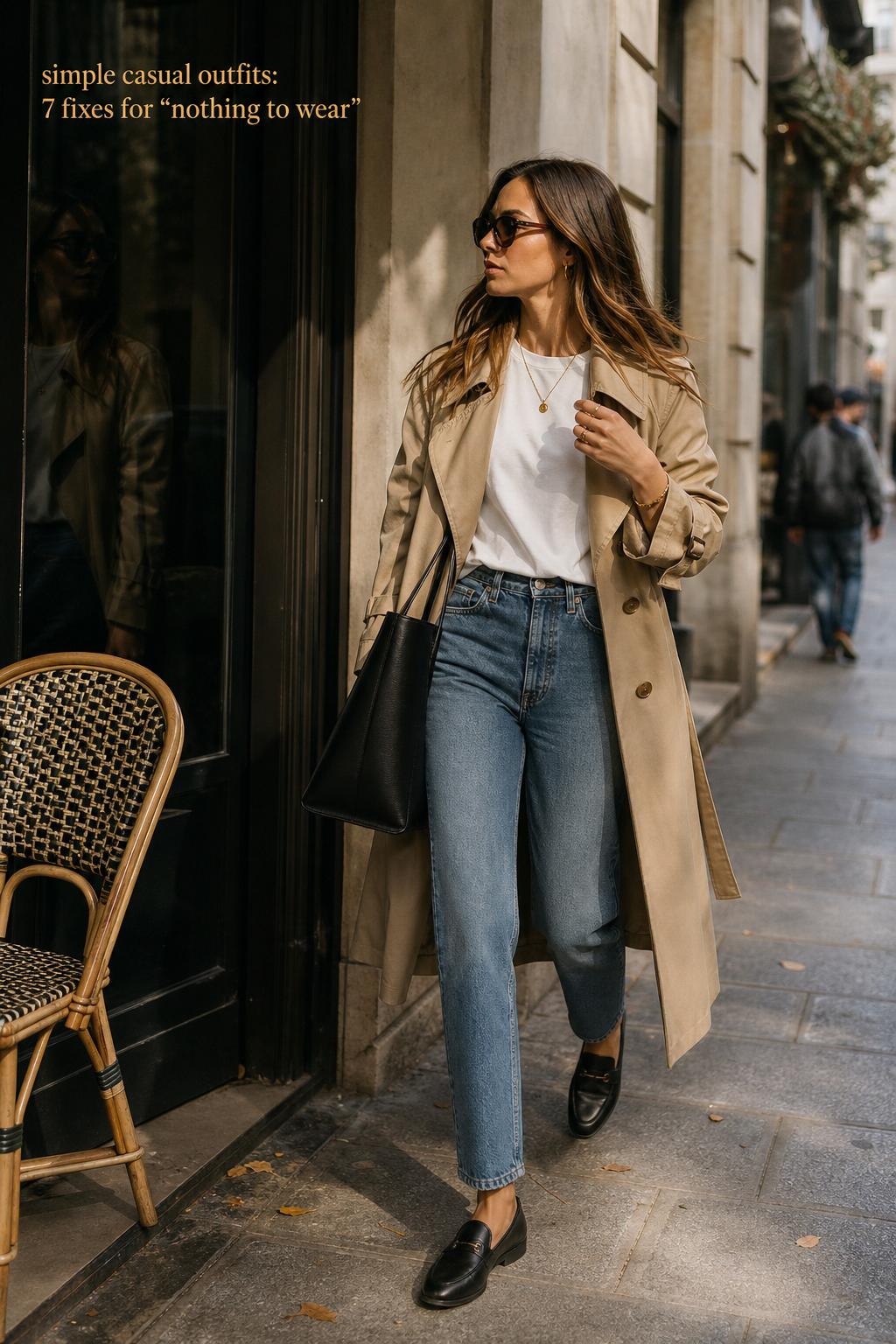
This guide approaches simple casual outfits from that perspective: how to build them, why they work, what to buy first, how to adapt them to body shape and season, and how to avoid the small mistakes that make an otherwise good outfit feel flat. The goal is not to chase novelty. It is to make getting dressed easier, sharper, and more consistent.
The foundation of a strong casual wardrobe
Before thinking in terms of full looks, it helps to think in terms of function. A practical casual wardrobe is built from pieces that can be repeated in different combinations without looking repetitive. This is the difference between owning clothes and owning a wardrobe. A few well-chosen staples can create dozens of simple casual outfits if each one has a clear role.
Your wedding has a lot of moving pieces. Your plan can still feel composed.
Zarellea organizes guests, vendors, budget, and timelines in one shared space — so you can make decisions with clarity, not stress.
The most useful foundation usually includes clean tops, denim or relaxed trousers, knitwear, one or two light layers, and shoes that can bridge comfort and polish. The pieces do not need to be expensive, but they do need to fit properly and hold their shape. A slightly structured shoulder, a straighter hem, a more substantial cotton, or denim with a balanced rise often makes an outfit appear far more refined, even when everything about it is basic.
- A fitted or softly relaxed T-shirt in a neutral shade
- Jeans that flatter your natural proportions rather than fight them
- A button-down shirt that can be worn open, tucked, or layered
- A knit sweater or cardigan for texture and warmth
- A blazer, trench, or simple jacket to add shape
- Comfortable sneakers, loafers, or ankle boots depending on season
If you are shopping with a limited budget, buy first for repetition. A great pair of jeans and a reliable outer layer will usually give you more wear than a statement top. The pieces worth investing in are the ones that determine silhouette and endurance: denim, coats, leather footwear, and a bag you can carry often. More trend-sensitive or interchangeable items, such as basic tees and seasonal accessories, can remain affordable.
Why simple outfits often look better than complicated ones
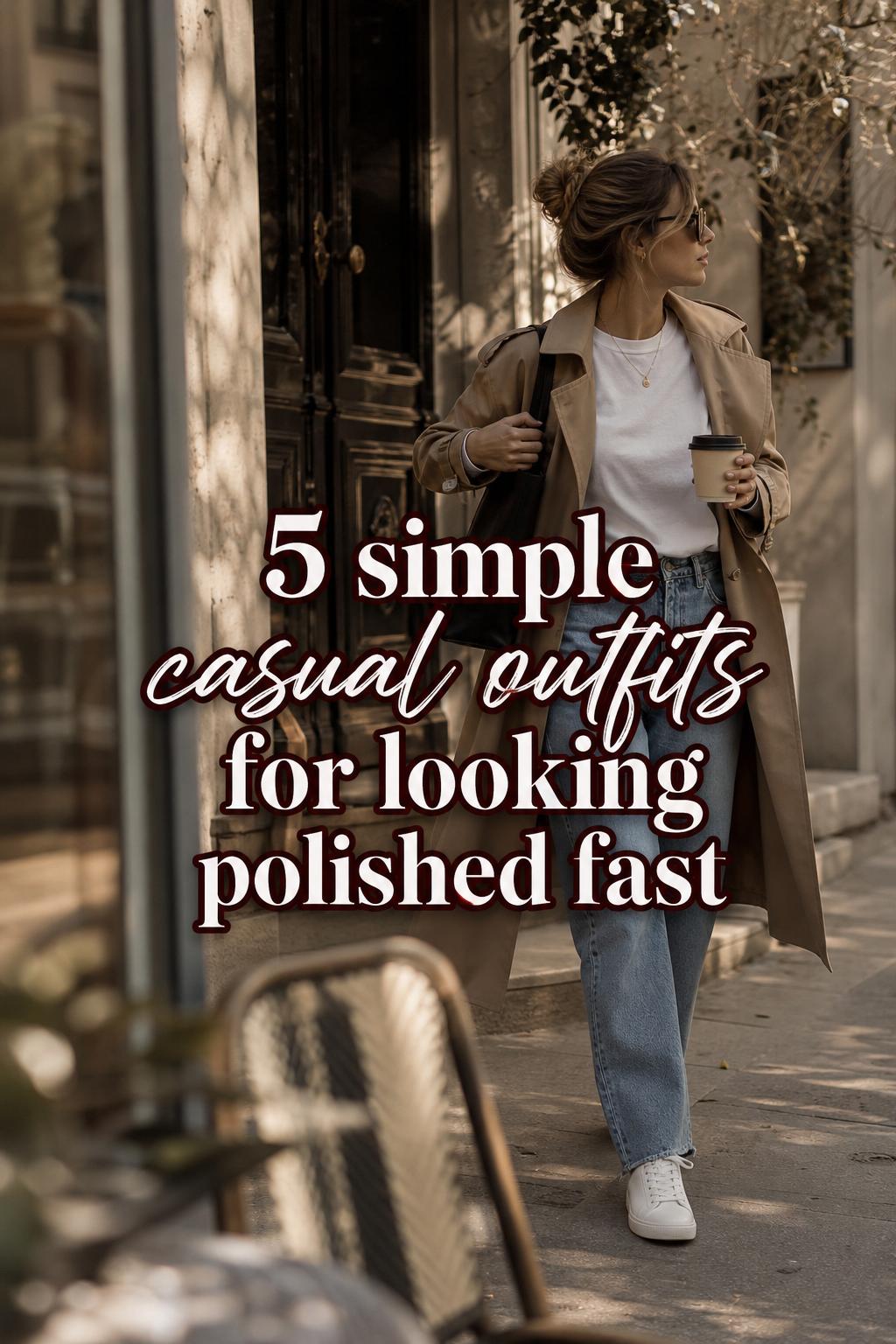
The reason simple dressing works so well is visual balance. When there are fewer elements competing for attention, the eye notices proportion, line, and texture more clearly. A white T-shirt with straight-leg jeans and a structured blazer feels complete not because it is elaborate, but because each element serves a purpose. The softness of cotton, the weight of denim, and the shape of the blazer create contrast without clutter.
This is also why many everyday outfits look expensive when they are not. Restraint tends to read as confidence. A palette of cream, navy, black, grey, camel, or denim blue is easier to mix, easier to repeat, and easier to accessorize. You do not need a dramatic color story to look intentional. In fact, one of the most practical ways to improve casual dressing is to narrow your color range so everything works harder together.
There is another benefit: comfort. Complicated outfits often become impractical once you add weather, walking, commuting, or the realities of a long day. Simplicity tends to survive real life. It allows movement, layering, and small adjustments. That is exactly what everyday style should do.
The everyday formulas that rarely fail
The most dependable simple casual outfits are not individual looks copied exactly but formulas you can reuse. Once you understand the formula, you can change colors, fabrics, and accessories without losing the effect.
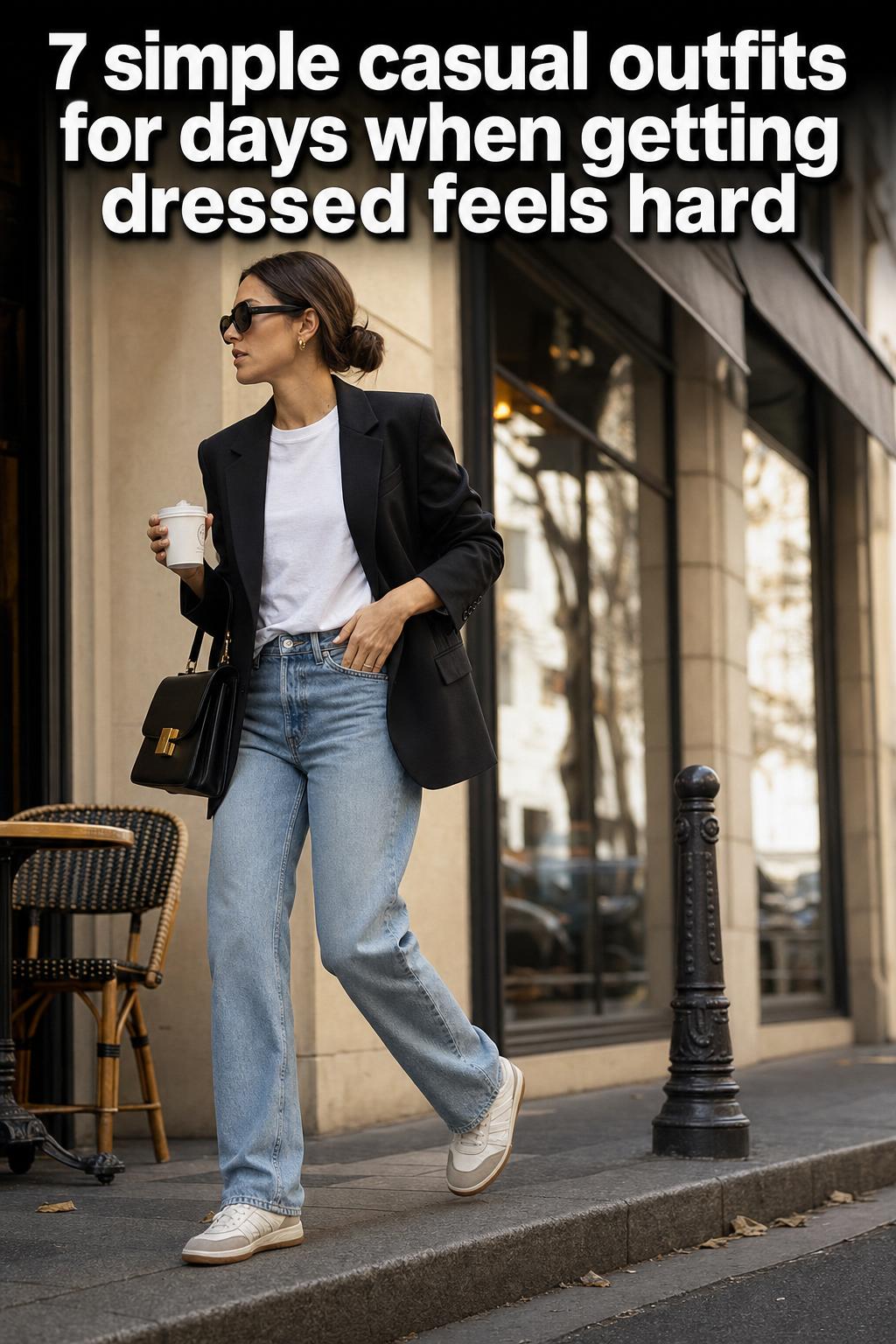
The T-shirt, jeans, and outer layer combination
This is perhaps the most reliable casual formula because it balances ease and structure. Start with a T-shirt that skims the body rather than clinging too tightly. Add jeans with a leg shape that suits your frame, then finish with a blazer, denim jacket, trench, or lightweight coat depending on season. The outer layer is what gives the outfit intention. Without it, the look can read too plain. With it, the same base feels composed.
For petites, a shorter jacket or a blazer with a higher button stance can keep proportions lifted. For taller frames, longer layers often look elegant and natural. For curvier figures, a softly tailored jacket that follows the body rather than cuts sharply across it tends to flatter better and remains more comfortable through the day.
The knit and relaxed trouser pairing
A fine knit or soft sweater with relaxed trousers creates a modern silhouette that feels especially strong in cooler weather. The reason it works is its balance between softness and line. If the knit is oversized, keep the trouser shape straight or tapered enough to define the lower half. If the trousers are fuller, a slimmer knit or a front tuck restores shape.
This formula is useful for travel, casual offices, and weekends because it moves easily and adapts well to temperature changes. Choose fabrics that hold their finish throughout the day. A knit that pills quickly or trousers that crease heavily can make the outfit feel tired by midday.
The shirt worn three ways
A simple button-down shirt is one of the smartest pieces in a casual wardrobe because it can become several outfits. Worn buttoned with jeans, it feels polished. Worn open over a tank or T-shirt, it becomes a light layer. Tucked loosely into trousers, it introduces shape without stiffness. This versatility makes it an ideal first purchase if you want more outfit options without buying many pieces.
The key is fabric. A shirt that is too crisp can feel formal, while one that is too limp can lose structure. Something with light body usually gives the best range. Neutral shades are easiest, but even subtle stripes can work if the rest of the outfit remains restrained.
Building outfits around proportion, not trend
The fastest way to improve casual dressing is to pay attention to silhouette. Even basic pieces can look off if every item is equally tight, equally oversized, or visually heavy in the same way. Good styling usually comes from contrast. A relaxed top with a more defined bottom. A wider trouser with a closer-fitting knit. A boxy jacket over a streamlined base. These shifts create shape and help the outfit feel intentional.
If you often feel that outfits look better on others than on you, the issue is rarely the concept itself. It is usually proportion. Straight-leg jeans, for example, can feel remarkably different depending on rise, ankle length, and where the top ends. A simple hem adjustment or different tuck can change the entire line of the body.
- If your torso feels short, avoid tops that end at the widest point of the hip.
- If your legs feel shorter, choose shoes close to your trouser hem or skin tone for a longer line.
- If your shoulders are broader, soften the top half with draped knits or open collars.
- If you want more waist definition, use a half-tuck, cropped layer, or belt rather than tight clothing.
This is where thoughtful dressing begins to feel empowering rather than restrictive. You are not trying to fit into one ideal formula. You are adjusting familiar pieces until they work for your own frame.
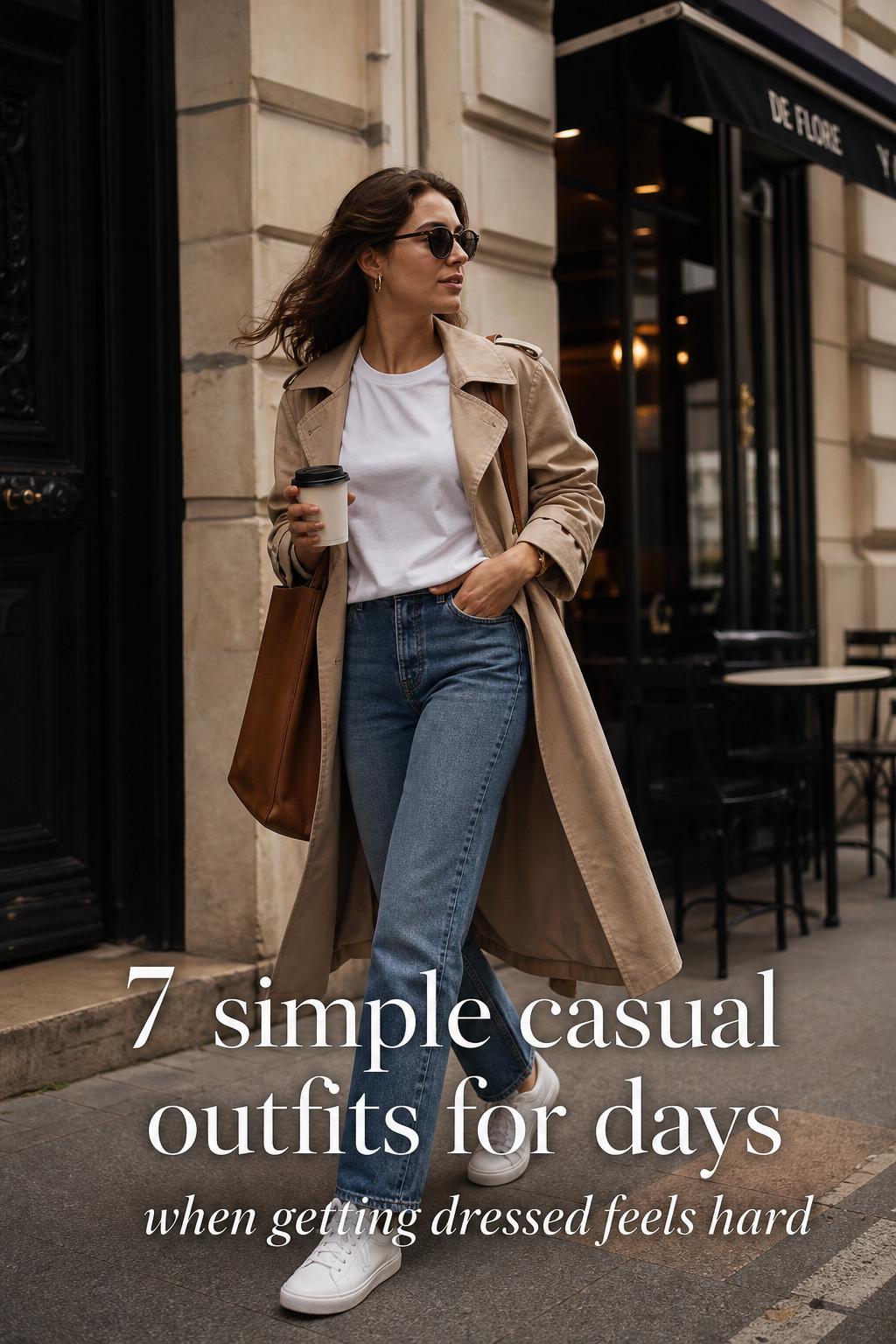
How to make casual outfits work for real life
An outfit can be visually successful and still fail in practice. Shoes pinch, fabrics wrinkle, layers overheat, and bags become useless by lunchtime. The best simple casual outfits account for movement, weather, sitting, walking, and repeated wear. This practical side is often what separates a beautiful image from a wardrobe you actually reach for.
For workdays that are not fully formal
In a casual office or hybrid work setting, the goal is refinement without rigidity. A knit with tailored trousers, a shirt with dark denim, or a T-shirt under a blazer can all work well. Keep the palette calm and the shoes polished. Even clean sneakers can work in some environments if the rest of the outfit has enough structure. A bag with clean lines helps here, as does avoiding anything too distressed or excessively oversized.
For travel and long days out
Travel dressing should prioritize layers, soft fabrics, and shoes you know well. A simple tee, knit, straight-leg trousers or relaxed jeans, and a jacket is usually more functional than trying to look overtly styled. This is one of those moments where Copenhagen-style practicality has something to teach everyone: comfort is not the opposite of polish when the proportions are clean.
For weekends and errands
Weekend casual can easily drift into looking careless, especially if everything is oversized and soft. Keep one element crisp. That might be a neat sneaker, a structured tote, a straight jean, or a jacket with shape. The aim is not to be dressed up for errands but to avoid that slightly shapeless feeling that makes an outfit appear accidental.
Seasonal shifts: keeping the same wardrobe relevant
One of the strengths of simple casual outfits is that they translate easily across seasons. The silhouette can remain similar while the fabrics and layers shift. This is more efficient than rebuilding your wardrobe every few months.
Warm weather
In warmer months, light cotton, linen blends, and breathable knits become essential. Keep the shape easy, but not sloppy. A sleeveless knit with relaxed trousers, a T-shirt with lighter-wash jeans, or a shirt worn open over a simple base all feel appropriate. The mistake to avoid is overly thin fabric that turns casual into flimsy. Even in heat, some substance helps clothing drape more cleanly.
Cool weather
Autumn and winter are often the easiest seasons for casual style because layering adds interest naturally. A coat over a knit, denim with ankle boots, and a scarf in a related tone can make a very simple outfit feel complete. Watch bulk carefully. If you add volume at the top with a thick sweater and coat, keep the lower half clean and balanced. This prevents the outfit from feeling heavy.
In-between temperatures
Transitional weather calls for flexible layers rather than thick single pieces. A shirt under a cardigan, a trench over a tee, or a blazer over a knit tank often works better than one heavy sweater. These combinations let you adapt through the day and give the outfit a more considered line.
The quiet power of color and texture
Simple dressing becomes more compelling when color and texture do some of the work. This does not require bold combinations. In fact, subtle shifts are often more effective. Cream with camel, blue denim with grey knitwear, black with soft white, or tonal neutrals layered together create depth without fuss.
Texture matters just as much. A ribbed knit against smooth trousers, crisp cotton against worn denim, leather shoes with a brushed wool coat—these relationships give simple clothes character. If an outfit feels bland, the answer is often not more accessories. It is more contrast in surface and weight.
- Use one dominant neutral and one supporting tone to keep combinations easy.
- Mix matte and slightly structured fabrics for a more expensive-looking finish.
- Keep strong color to one element if you prefer a minimal wardrobe.
- Repeat a color in a subtle way, such as shoes and belt, to make the outfit feel connected.
This is where a wardrobe starts to feel refined instead of merely basic. The clothes are still simple. The composition is what elevates them.
What to buy first if your wardrobe feels disjointed
When a wardrobe does not seem to produce enough outfits, most people assume they need more options. Usually, they need better anchors. The most versatile purchases are the ones that solve multiple outfit problems at once.
- A well-fitting pair of jeans in a medium or dark wash
- A neutral blazer or simple jacket with enough structure to sharpen basics
- A knit that layers easily under outerwear and over a light base layer
- A white or neutral shirt that can function as both top and light layer
- Comfortable everyday shoes that work with both denim and trousers
If your budget is especially tight, begin with the item that gives your existing wardrobe the most new combinations. For some, that is a jacket. For others, it is jeans that finally fit correctly. Avoid buying several trend pieces in the hope they will create style. Without strong basics, they rarely do.
Body-shape adaptations that actually help
Casual style advice often becomes unhelpful when it is too generic. Real wardrobes need adaptation. The same simple casual outfits can suit different bodies, but the details matter.
For petite frames
Look for cleaner vertical lines and avoid excessive fabric that swallows the frame. Cropped jackets, straight jeans with a clear ankle line, and lighter layering usually work well. If you love an oversized sweater, pair it with a more defined lower half. Keep accessories proportional. Large bags and very chunky shoes can visually overpower an otherwise balanced look.
For tall frames
Taller silhouettes often carry long lines beautifully, so use that advantage. Longer coats, wider trousers, and layered knits can look naturally elegant. The one caution is avoiding outfits that become too linear without interruption. A tuck, belt, or contrast in texture can stop the look from feeling visually stretched.
For curvy proportions
Choose pieces that follow the body without clinging. Straight jeans, soft tailoring, wrap-style knits, and shirts worn slightly open at the neck often create shape without discomfort. Avoid assuming that hiding the figure under too much fabric will be more flattering. In casual dressing, some structure is usually more elegant than volume without definition.
In every case, the principle remains the same: create balance. Once that becomes your focus, outfit-building gets simpler.
Making casual outfits look more polished without trying too hard
There are a few quiet adjustments that consistently make everyday outfits feel more refined. None are dramatic, and that is precisely why they are effective. Good casual style is often a story of small decisions.
- Steam or press pieces that wrinkle easily, especially shirts and trousers.
- Tuck with intention rather than leaving hems to bunch awkwardly.
- Keep shoes clean and in good condition.
- Choose bags with simple lines and minimal visual clutter.
- Limit accessories so they support the outfit instead of distracting from it.
A polished outfit does not need to look formal. It simply needs to look finished. This is where the influence of cities such as Paris and Milan is so instructive. The clothes are often straightforward, but the final impression is precise. The shirt sleeve is rolled deliberately. The coat sits properly on the shoulder. The shoe suits the silhouette. These details matter.
Common mistakes that make simple outfits fall flat
When casual outfits fail, the reason is rarely that they are too simple. More often, they are imbalanced or under-edited. Recognizing these issues can save you money and frustration.
One common mistake is choosing every piece for comfort without considering shape. Comfort matters, but if the top, bottom, and layer are all loose in the same way, the outfit loses definition. Another is relying on poor-quality basics. Because simple outfits expose each piece more clearly, weak fabric, bad fit, and stretched necklines become more obvious.
Footwear is another frequent problem. Shoes can either sharpen a casual look or undermine it completely. A sleek sneaker, loafer, or well-cut boot often works because it supports the line of the outfit. A shoe that is too sporty, bulky, or worn out can disrupt that balance. The same is true of accessories. Too many can make a simple outfit feel busy; none at all can leave it unfinished.
Tips for avoiding those mistakes
Build each outfit around one clear idea. Perhaps the focus is relaxed denim with a tailored layer, or soft knitwear with a clean trouser. Once that idea is clear, everything else should support it. If a piece does not contribute, remove it. Casual dressing usually improves through subtraction rather than addition.
A capsule approach to simple casual outfits
If you want your wardrobe to work harder, think in capsule terms. This does not mean owning very little. It means owning pieces that connect easily. A capsule-friendly wardrobe favors repeated silhouettes, a controlled palette, and layers that can move across settings. This is especially useful for anyone trying to shop less, pack more efficiently, or get dressed quickly in the morning.
A practical capsule for casual dressing might include a few tops, a shirt, two or three bottoms, a knit, a blazer or jacket, and versatile shoes. The strength of this approach is that each addition is tested by versatility. Can it work with at least three other pieces you already own? Can it move between seasons with layering? Can it serve more than one real-life situation? If the answer is no, it is less useful than it first appears.
This is also where thoughtful restraint pays off. The most satisfying wardrobes are rarely the largest. They are the ones where each piece earns its place.
The editorial finish: subtle ways to express personality
Simple does not need to mean anonymous. Once the foundation is strong, personality can enter through controlled details. Perhaps it is a preference for crisp shirts over soft tees, dark denim over faded washes, silver-toned jewelry over gold, or a habit of wearing monochrome neutrals with one textured layer. These signatures create consistency without compromising practicality.
The most compelling casual style often works this way. It is not loud, but it is recognizable. You see it in the repeated line of a coat, the way a sweater is layered over a shirt, the preference for clean sneakers, or the steady confidence of a narrow color palette. These choices make a wardrobe feel personal and coherent, even when the pieces themselves are familiar.
That is ultimately the value of simple casual outfits. They do not ask you to perform style. They ask you to refine it. With the right proportions, thoughtful layers, practical fabrics, and a few reliable staples, everyday dressing becomes easier and significantly more elegant.
FAQ
What are the best first pieces to buy for simple casual outfits?
Start with the pieces that create the most combinations: a well-fitting pair of jeans, a neutral outer layer such as a blazer or simple jacket, a versatile button-down shirt, a reliable knit, and everyday shoes that work with both denim and trousers.
How can I make simple casual outfits look more expensive?
Focus on fit, fabric weight, and finishing details. Clean shoes, pressed clothing, a controlled color palette, and one structured piece such as a blazer, coat, or polished bag often make a basic outfit feel far more refined.
Do simple casual outfits work for a casual office?
Yes, if the outfit has enough structure. Darker denim, tailored trousers, knitwear, shirts, and clean layers such as blazers usually work well in casual office settings, especially when paired with polished shoes and minimal accessories.
How do I adapt casual outfits if I am petite?
Prioritize cleaner lines, lighter layering, and hems that do not visually cut the body in the wrong place. Cropped jackets, straight-leg jeans with a visible ankle line, and tops that define the waist area tend to be especially helpful on petite frames.
Which shoes are most versatile for everyday casual dressing?
Clean sneakers, loafers, and ankle boots are usually the most adaptable because they work across seasons and with several outfit formulas. The best choice depends on climate and routine, but all three can support a polished casual wardrobe.
How can I build simple casual outfits on a budget?
Spend first on the pieces you will repeat most, especially jeans, shoes, and outerwear, and save on interchangeable basics such as T-shirts and simple layering tops. Buying fewer, more versatile pieces is usually more effective than buying many low-use items.
What colors are easiest to style in a casual wardrobe?
Neutrals such as black, white, grey, navy, camel, and denim blue are the easiest starting point because they mix naturally and allow repeated wear without much effort. You can then add one accent tone if you want more variation.
Why do some basic outfits still look flat?
Usually because they lack balance in proportion, texture, or finishing. If every piece is the same shape, too soft, or poorly fitted, the outfit can feel shapeless. Adding one structured layer, improving the fit, or creating more contrast in fabric often solves the problem.
Leave a Reply