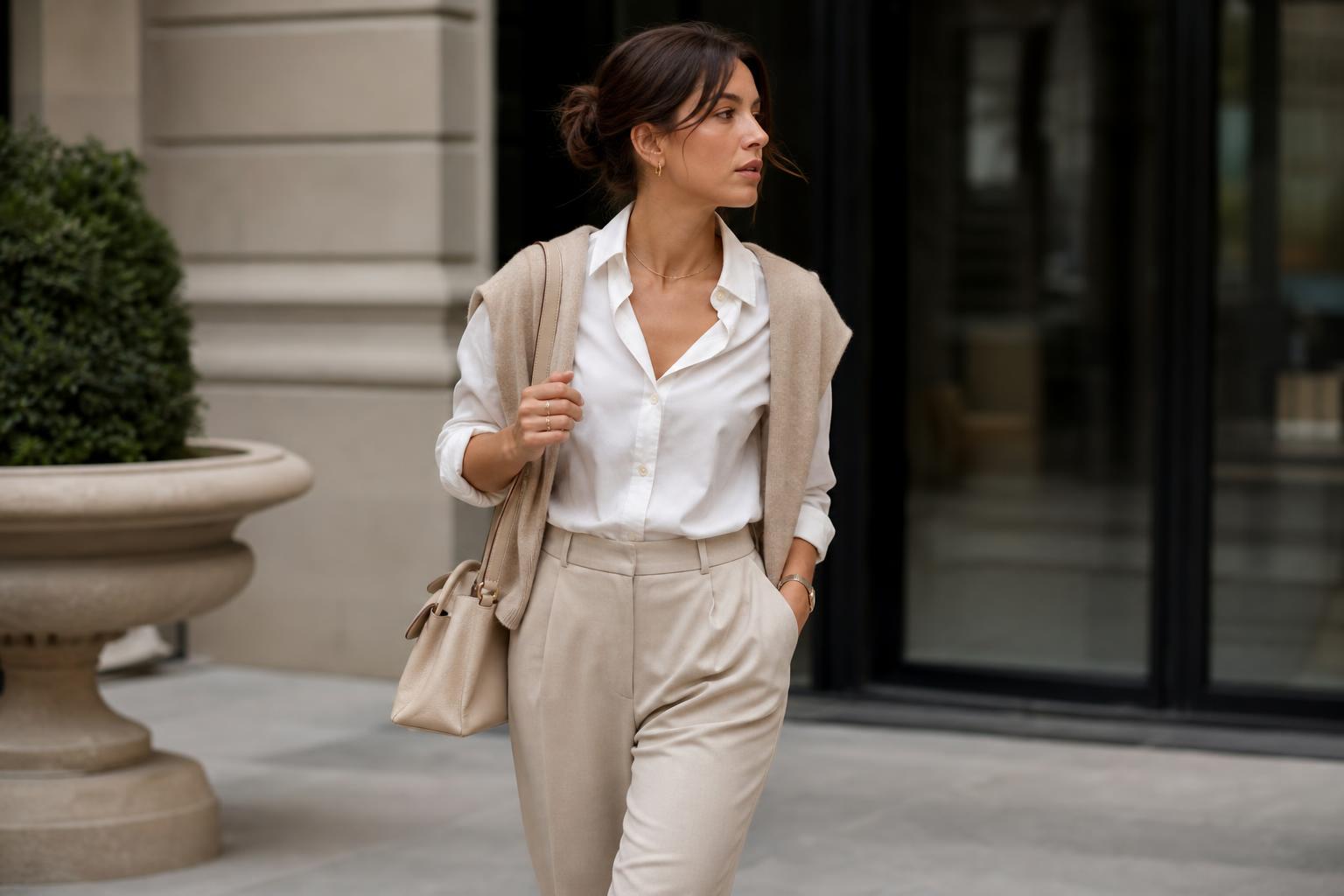
On most mornings, the difference between looking merely dressed and looking truly composed comes down to a narrow style space: not fully formal, not plainly relaxed, but intelligently balanced. That is where classy casual outfits live. The phrase often appears alongside smart casual, casual chic, and dressy casual because all four describe wardrobes built on ease with polish, yet they do not create the same visual message.
For anyone building a modern wardrobe in the U.S., this distinction matters. A blazer with jeans can read refined, office-appropriate, or softly fashion-led depending on the cut, fabric, footwear, and restraint of the styling. The same is true of a white shirt, tailored trousers, a midi dress, or loafers. What follows is a clear comparison of the styles most often grouped together, with practical guidance on how to recognize them, how they function in real life, and how to use them to create polished everyday dressing.
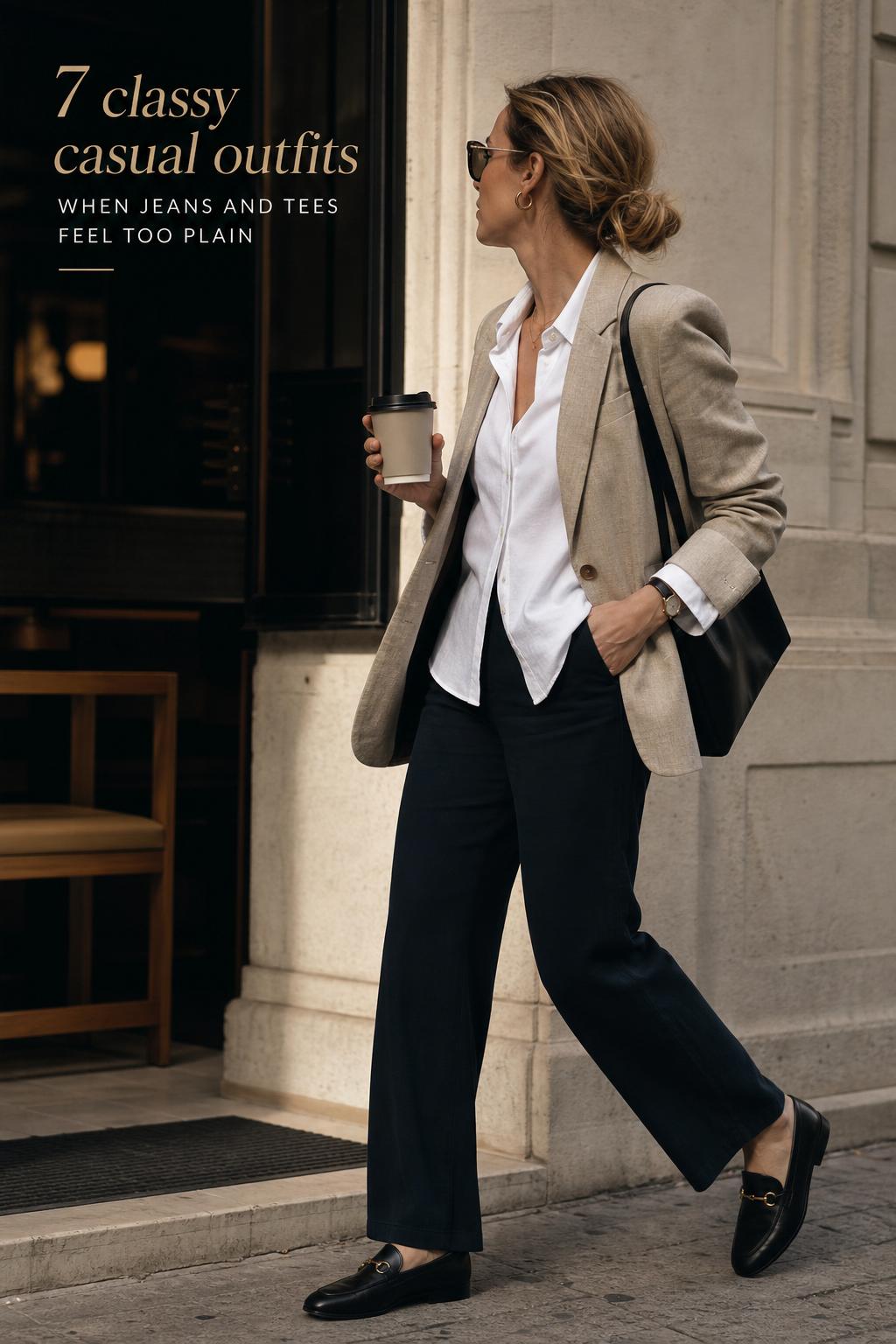
The family resemblance: why these styles are so often confused
Classy casual, smart casual, casual chic, and dressy casual all rely on elevated basics. Across fashion editorials, from Nordstrom-linked styling advice at WhoWhatWear to smart casual breakdowns in Woman & Home, the recurring wardrobe language is familiar: blazers, button-down shirts, tailored trousers, jeans with clean lines, dresses with simple structure, lightweight jackets, minimalist jewelry, and handbags that feel deliberate rather than decorative.
The confusion comes from overlap. Each style values simplicity, fit, and versatility. Each can include the same garments. Yet the emphasis shifts. Classy casual tends to prioritize refinement through restraint. Smart casual leans more situational and workplace-aware. Casual chic often feels more editorial and trend-sensitive. Dressy casual introduces a slightly more polished finish, often through accessories or fabric choice. Understanding the difference is less about memorizing labels and more about reading silhouette, proportion, and intent.
Your wedding has a lot of moving pieces. Your plan can still feel composed.
Zarellea organizes guests, vendors, budget, and timelines in one shared space — so you can make decisions with clarity, not stress.
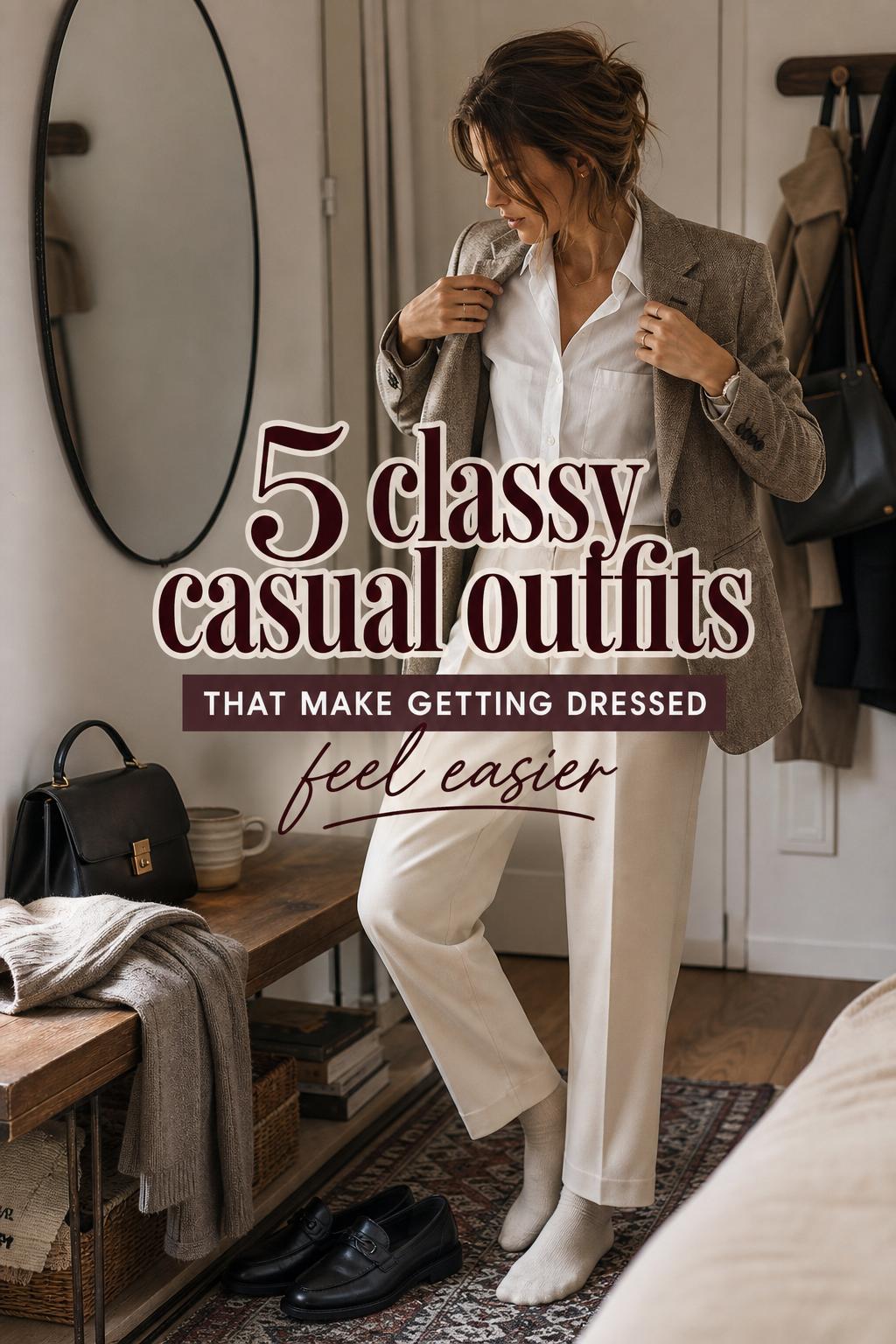
Style overview: classy casual
Classy casual is the most balanced of the group. It is rooted in polished everyday style, where the outfit looks composed without seeming overworked. The defining characteristics are clean lines, tailored structure, soft restraint, and wardrobe staples that can move between work, off-duty days, travel, and low-key evening plans.
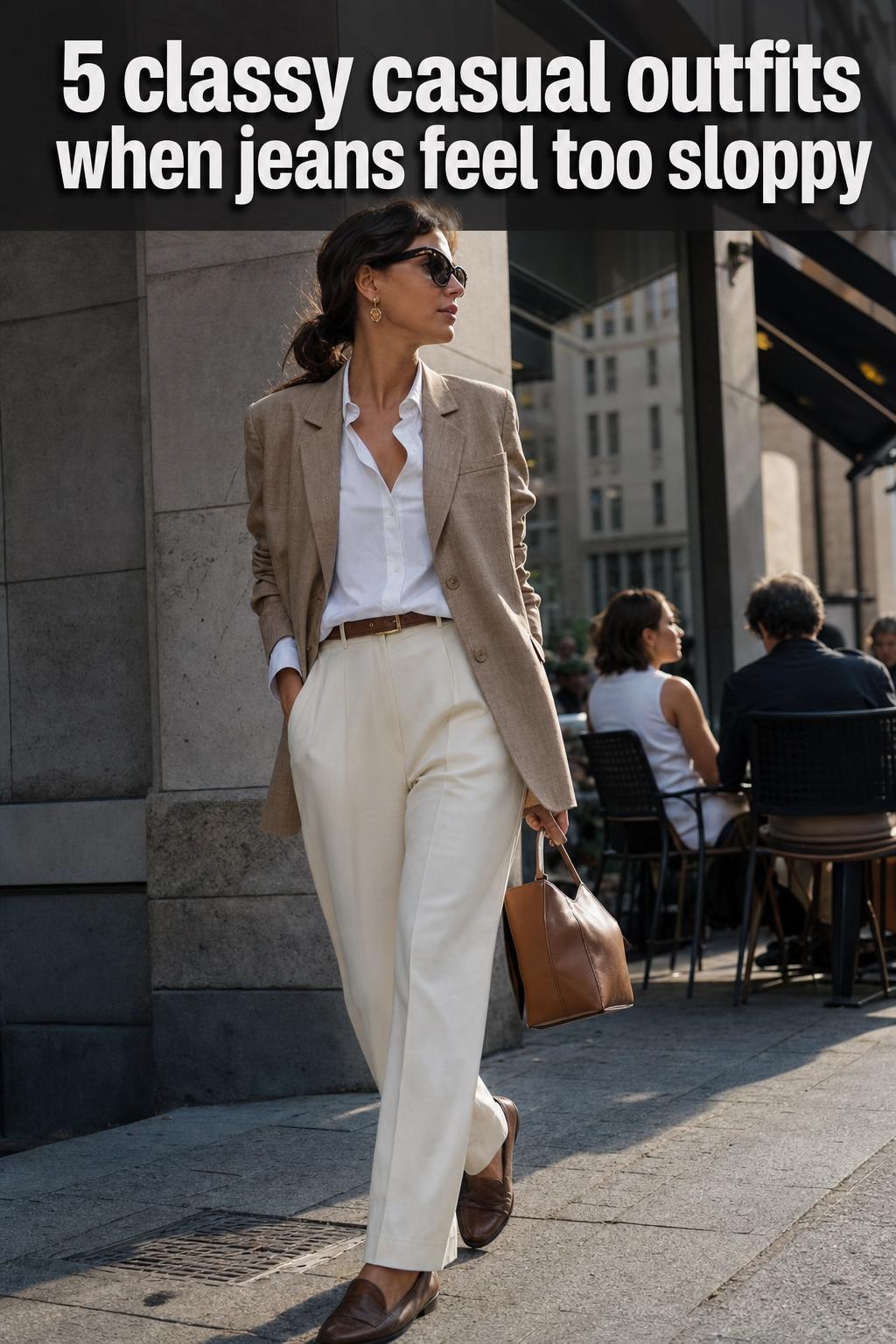
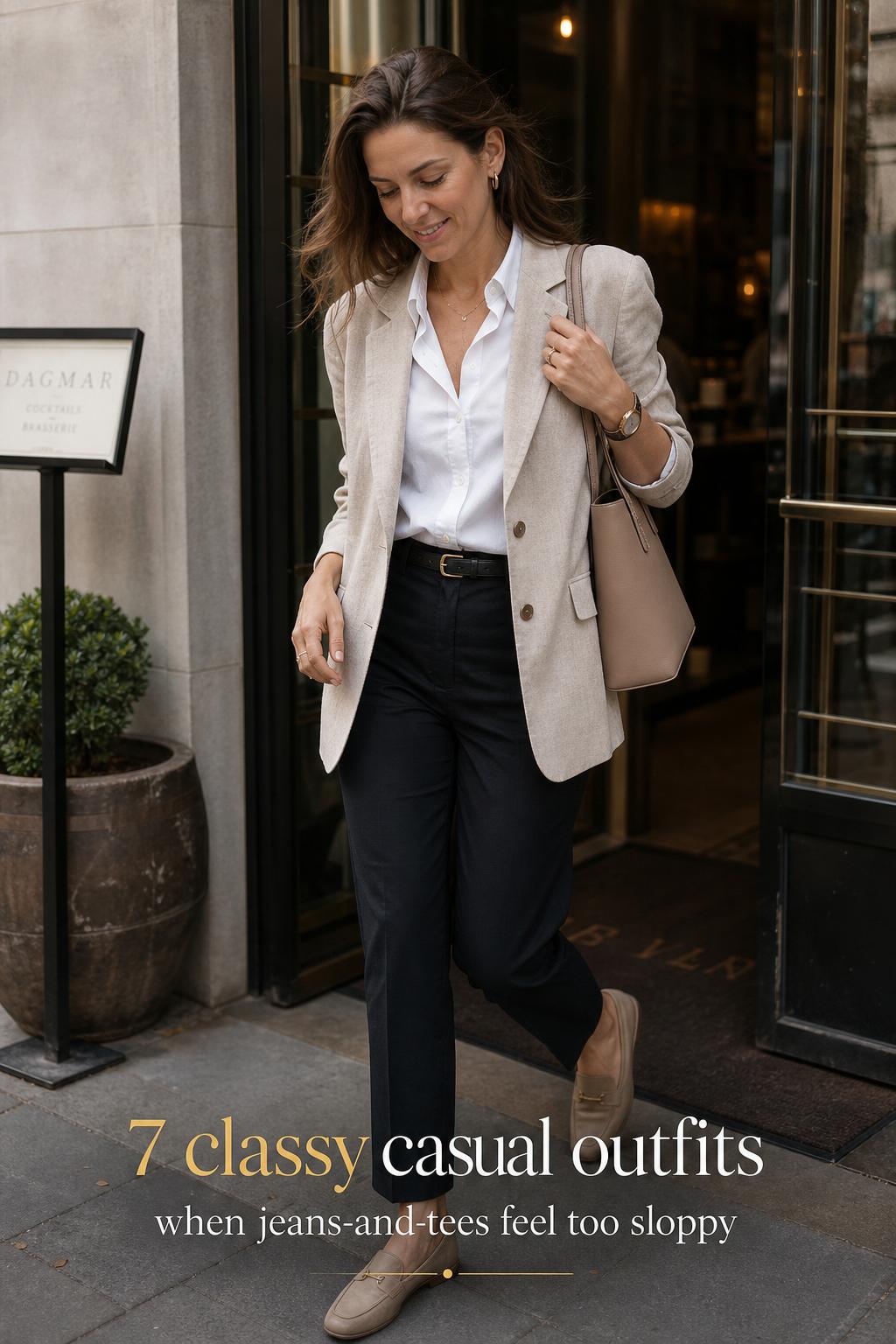
Its typical silhouettes are streamlined rather than dramatic: a structured blazer over a cami, a crisp white shirt with tailored trousers, a midi dress with clean shoes, or denim sharpened by a refined top and minimal accessories. The color palette usually stays close to neutrals, monochromes, and soft contrasts. Fabrics such as linen, crepe, wool blend, silk, and tweed reinforce the impression of quality through texture rather than ornament. The mood is understated elegance.
Style overview: smart casual
Smart casual is often the most practical label because it is closely tied to context. In fashion media and styling guides, it appears frequently in relation to office-appropriate dressing, casual Friday, and transitional social settings where full business attire would feel too rigid but ordinary casualwear would feel too relaxed.
Its signature silhouette usually begins with a crisp shirt or tailored piece. Tailored trousers, blazers, dresses, and structured footwear anchor the look. The color palette can still be neutral, but smart casual tends to read slightly more functional than expressive. Textures matter, but they are often selected for neatness and structure. The overall mood is competent, polished, and adaptable.
Style overview: casual chic
Casual chic shares the relaxed-polished balance but introduces more visual personality. In editorial features such as seasonal casual-chic roundups, the look often reflects what fashion people wear in city settings or at seasonal editorial shoots. The garments may remain simple, yet the styling feels more image-conscious.
The silhouette can be looser or more directional than classic smart casual. A jacket, dress, or footwear choice may carry more influence in the final impression. The palette often still includes neutrals, but casual chic is more likely to use contrast, layering nuance, or a subtly trend-led piece. The mood is modern, urban, and composed with a slightly sharper fashion edge.
Style overview: dressy casual
Dressy casual sits nearest to occasion dressing. It still avoids formality, but it introduces a finish that feels more intentionally elevated. E-commerce editorials and wardrobe-planning guides often define it through staples such as blouses, trousers, dresses, and accessories that can bridge daytime and evening without looking overly formal.
The typical silhouette is cleaner and more refined than everyday casual. Outerwear, shoes, and bags become particularly important here. The fabrics may carry more fluidity or polish, while the color palette remains disciplined. The mood is effortless, but with a touch more ceremony than standard daytime dressing.
Where classy casual sits among them all
If smart casual is the practical dresser, casual chic the editorial dresser, and dressy casual the occasion-aware dresser, classy casual is the wardrobe thinker. It is less tied to one environment and more tied to how garments interact. A white shirt capsule, a blazer with tailored trousers, clean denim, loafers, a simple handbag, and minimalist jewelry can all belong here because the visual goal is coherence.
This is why classy casual outfits are so often searched by readers who want ideas that bridge casual and polished looks. The style answers a real need: clothing that works for ordinary life while still appearing refined. It is not dependent on one brand, one age group, or one season. It is a method of dressing.
The key differences that change the whole outfit
Silhouette and structure
Classy casual favors streamlined silhouettes with enough tailoring to define the body without making the outfit rigid. Smart casual is often a touch more structured because it frequently serves office or professional environments. Casual chic may loosen the silhouette in a more fashion-led way, while dressy casual usually smooths and refines the shape so the outfit feels occasion-ready.
Color palette
All four styles can live in neutrals, but classy casual relies most consistently on tonal balance and soft contrast. Smart casual often keeps color practical and controlled. Casual chic is more open to contrast if it strengthens the visual statement. Dressy casual tends to use color with restraint, allowing finish and texture to carry the elegance.
Level of formality
Classy casual is polished but still easy. Smart casual is the most situationally polished, especially for work-adjacent settings. Casual chic can look elevated, but its formality depends on styling intention more than dress code. Dressy casual has the highest level of finish, though it still avoids the language of formalwear.
Styling philosophy
Classy casual is built on thoughtful composition. Smart casual is built on appropriateness. Casual chic is built on visual impact through subtle fashion instinct. Dressy casual is built on refinement for flexible social use. These philosophies matter because they explain why the same blazer, shirt, or pair of trousers can communicate something different depending on what surrounds it.
Typical wardrobe pieces
- Classy casual: blazers, button-down shirts, tailored trousers, jeans with clean lines, midi dresses, loafers, minimalist jewelry, handbags.
- Smart casual: crisp white shirts, tailored pieces, trousers, dresses, blazers, office-appropriate footwear.
- Casual chic: jackets, dresses, fashion-led footwear, elevated basics, trend-aware layering.
- Dressy casual: blouses, polished tops, trousers, dresses, layered separates, refined accessories.
How the styles look in real life
Visual distinction is often easier than verbal definition. In everyday dressing, classy casual tends to look calm. The outfit reads as complete from a distance because the lines are clean and the pieces are not competing. A tailored silhouette contrasted with relaxed textures is common: perhaps a blazer over denim, or a shirt and skirt combination grounded by simple footwear.
Smart casual appears slightly more purposeful. You notice the crispness first: the shirt is sharper, the trousers more office-aware, the shoe choice more clearly functional. Casual chic, by contrast, often reveals itself in proportion and mood. The layering may feel more directional, and there is usually one element that gives the look a fashion-editorial lift. Dressy casual can resemble classy casual at first glance, but it usually contains a cleaner finish, especially in accessories and evening readiness.
Layering approach
Layering is one of the easiest ways to read the difference. Classy casual layering is disciplined: a lightweight jacket, a blazer, or a structured outer layer placed over a simple base. Smart casual layering aims for clarity and polish. Casual chic may use layering to create shape and attitude. Dressy casual uses it sparingly, preferring layers that maintain a sleek line.
Accessories and footwear
Accessories reveal the outfit’s true category. In classy casual dressing, minimalist jewelry and handbags support the look without dominating it. Loafers are a recurring anchor because they suggest polish without strain. Smart casual footwear tends to be neat and dependable. Casual chic can tolerate more visual emphasis in the shoe or bag. Dressy casual often looks most refined when accessories are slightly elevated but still restrained.
The fabric question: why texture decides whether an outfit looks polished
Across fashion editorials and outfit guides, fabrics are one of the most underexplained reasons certain looks feel more elevated than others. Linen, crepe, wool blend, silk, and tweed all appear as texture cues that move casual dressing into more refined territory. The garments themselves may be simple, but the fabric changes how the silhouette holds and how light interacts with the outfit.
In classy casual outfits, fabric often does quiet work. Linen can make a tailored shape feel breathable rather than stiff. Crepe gives fluidity without sloppiness. Wool blends sharpen trousers and blazers. Silk softens a shirt or blouse and creates contrast against more structured pieces. Tweed, used carefully, adds depth and visual weight. Casual chic may use these textures with more contrast, while smart casual tends to favor the cleanest, most orderly version of them.
Outfit comparisons that make the distinctions clear
A blazer and jeans on an ordinary weekday
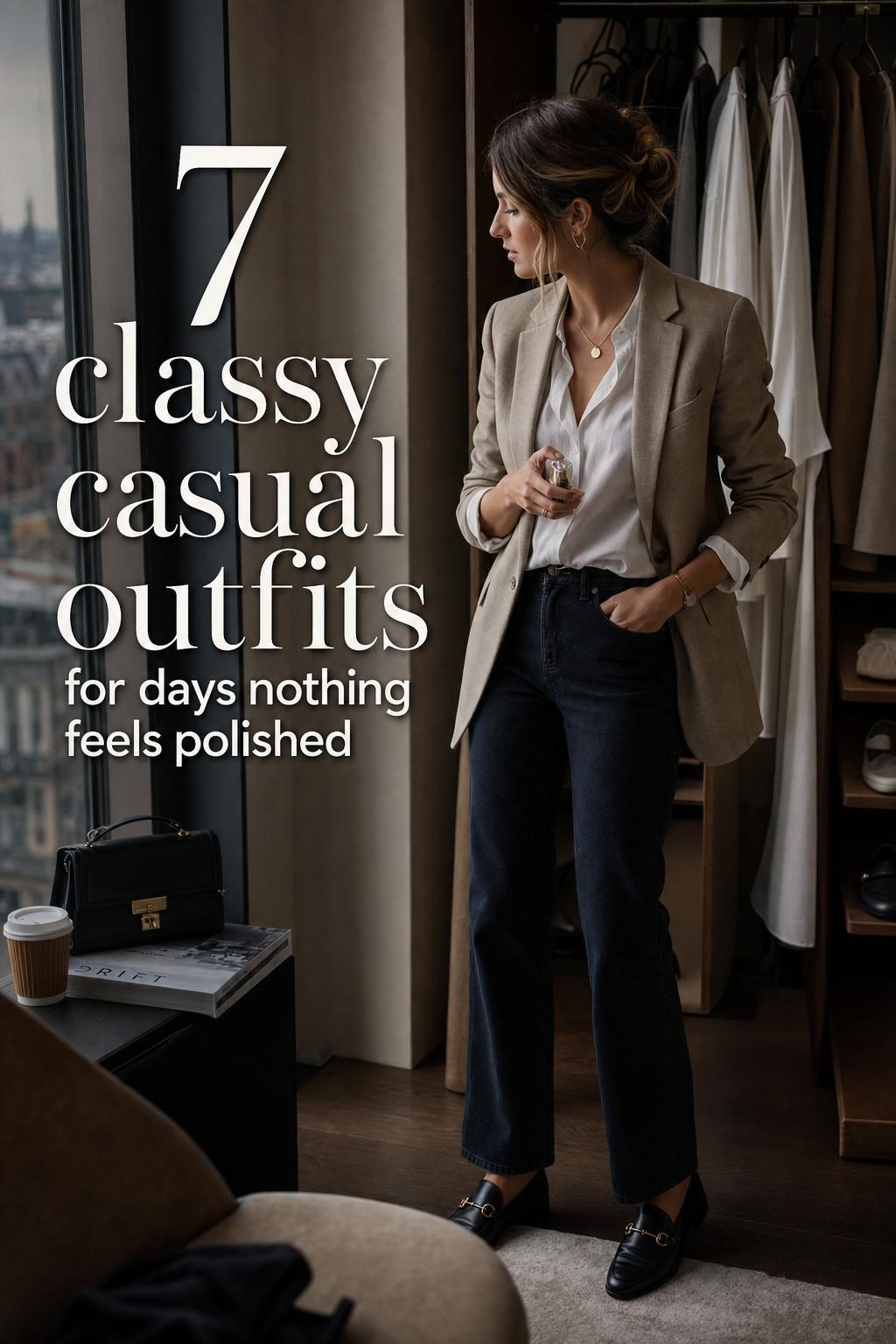
A classy casual interpretation would start with a structured blazer, clean denim, and loafers or similarly polished shoes. The top underneath would likely stay simple, perhaps a cami or button-down shirt, and the accessories would remain minimal. The intention is not to impress through contrast but to create balance.
A smart casual version of the same formula would tighten the presentation. The shirt would be crisper, the denim darker or more controlled in shape, and the footwear chosen with workplace visibility in mind. A casual chic version might keep the blazer but shift the proportion, texture, or styling attitude so the look appears more fashion-aware. Dressy casual would likely refine the top and accessories, making the outfit feel ready for a dinner reservation rather than just the daytime schedule.
The white shirt capsule in motion
A white shirt is central to all four styles, which is why it is such a useful comparison point. In classy casual dressing, the shirt acts as a stabilizer. Worn with tailored trousers or a skirt, it creates clean lines and keeps the outfit grounded. The styling remains quiet, with proportion doing the work.
In smart casual, the crisp white shirt often becomes the lead piece because it instantly communicates neatness. In casual chic, the same shirt may be styled with more deliberate nonchalance or visual contrast. In dressy casual, fabric choice matters more; a softer or more polished finish can make the shirt feel appropriate for an evening-adjacent setting.
A midi dress with clean shoes
The midi dress is one of the easiest routes into classy casual because it offers a complete line with minimal effort. In this version, the dress would stay refined in cut and easy in movement, paired with clean shoes and a simple bag. The result is polished but not ceremonial.
Smart casual would ask whether the dress reads neat enough for a semi-professional setting. Casual chic would focus more on mood, perhaps through outerwear or accessories. Dressy casual would sharpen the finish and make the footwear and handbag more visibly elevated. The dress itself may not change much, but the styling logic does.
Tailored trousers after hours
With tailored trousers, classy casual keeps the look sleek but wearable: a structured top, subtle accessories, and enough ease in the silhouette that it still feels like everyday clothing. Smart casual would make the combination more office-attuned. Casual chic could loosen the top or alter the proportion to make the outfit more current and city-oriented. Dressy casual would likely add a more refined blouse or accessory finish to signal the shift into evening.
Classy casual by occasion: where each style works best
One of the strongest ways to compare these aesthetics is by where they function best. The same wardrobe staples can serve different settings, but each style solves a different kind of dressing problem.
- For office-appropriate dressing, smart casual usually offers the clearest formula because tailored pieces and crisp shirts already align with workplace expectations.
- For everyday wear, classy casual is often the most useful because it balances comfort and polish without appearing overly prescribed.
- For social plans that still require ease, dressy casual creates a polished finish without demanding formalwear.
- For image-led city dressing, casual chic works well because it allows more visible styling personality.
- For casual Friday, classy casual and smart casual overlap, but the final choice depends on how strict the environment is.
- For travel-ready dressing, classy casual often performs best because it values versatility, layering, and clothing that can shift across settings.
From NYC to LA: location changes the expression, not the principle
Geographic style references help clarify why these categories remain flexible. In a city such as NYC, the classy casual wardrobe may edge toward sharper tailoring, cleaner trousers, and a more power-dressing sensibility. In LA, the same idea can become more laid-back through lighter textures, easier layering, and a softer interpretation of polish. The principle remains the same: elevated casual outfits built through intention.
This is also why city-level fashion scenes and editorial shoots influence the language around casual chic and classy casual. Fashion people may use different proportions or seasonal references, but the enduring lesson is not about copying one city or one influencer. It is about understanding what makes an outfit read polished in your own context.
Seasonal shifts and what they reveal about style identity
Seasonal roundups in spring and fall often shape how readers think about these categories. In spring, smart casual and classy casual frequently lean on crisp shirts, dresses, and lighter jackets. In fall, casual chic becomes more prominent because outerwear, layering, and richer textures naturally create more visual interest. Dressy casual also gains strength in cooler seasons when fabrics and layers can add refinement without requiring much ornament.
For a practical U.S. wardrobe, this means the style label may shift slightly by season even when your personal taste remains stable. A linen shirt and tailored trousers in spring can feel distinctly classy casual. A wool-blend blazer layered over a refined dress in fall may move closer to dressy casual or casual chic depending on accessories. The pieces matter, but the seasonal styling language matters just as much.
Tips for building classy casual outfits without losing individuality
The most convincing classy casual wardrobes do not rely on endless novelty. They rely on a clear foundation, repeated with intelligence. This is where capsule thinking becomes useful. A blazer, white shirt, clean trousers, denim, dresses, skirts, loafers, lightweight jackets, and a few simple accessories can produce a surprising range of combinations when proportion and fabric are considered carefully.
- Begin with core items before adding expressive pieces. A coherent wardrobe is easier to build than a collection of isolated statements.
- Use texture to create depth. Linen, crepe, silk, tweed, and wool blends add sophistication without forcing the outfit.
- Keep accessories selective. Minimalist jewelry and one well-chosen handbag often do more than multiple competing details.
- Let one element relax the look. If the blazer is structured, softer denim or a fluid top can prevent the outfit from becoming too strict.
- Pay attention to color balance. Neutrals, monochromes, and soft contrasts make it easier for the outfit to feel polished.
A useful test is to ask whether the outfit still looks intentional when outerwear is removed. If the answer is yes, the styling is likely working. If the outfit relies entirely on one statement layer to create interest, it may drift away from classy casual and toward something more purely trend-led.
Body-positive styling logic and the role of fit
One of the more important developments in this style space is the growing need for size-inclusive and body-diverse guidance. The principles of classy casual are adaptable because they are based on balance, not on one fixed body shape. A flattering silhouette is not created by following a rigid formula. It comes from managing line, proportion, and comfort in a way that supports how you actually move through the day.
For some, that may mean allowing a blazer to create structure while the rest of the outfit stays softer. For others, tailored trousers may be the anchor, with a less rigid top to maintain ease. Midi dresses can work especially well because they create continuity of line, while shirts and skirts allow more adjustment through proportion. The key is to adapt the formula rather than force the body into it.
Common mistakes that blur the look in the wrong way
The line between elevated casual and unfinished casual is narrow. Most styling mistakes happen not because the pieces are wrong, but because the outfit lacks hierarchy. Too many accessories, clashing metals, overly casual footwear in the wrong setting, or fabrics that fight one another can all weaken an otherwise strong look.
- Over-accessorizing can make a refined outfit lose its calm.
- Unclear footwear choices can shift a look from polished to inconsistent.
- Ignoring fabric contrast can flatten the outfit and make it feel accidental.
- Forcing office-level structure into an off-duty setting can remove the ease that classy casual requires.
- Leaning too heavily on one brand or one trend can reduce versatility.
This is also where many wardrobes confuse classy casual with smart casual. If every outfit feels like it is trying to satisfy a dress code, the ease disappears. Conversely, if every outfit is built around trend atmosphere alone, the refinement weakens. The strongest looks sit in the middle.
A closer look at wardrobe staples through a comparison lens
Blazers
In classy casual dressing, the blazer is a framing device. It brings order to denim, dresses, skirts, and trousers. In smart casual, it often acts as a professionalism cue. In casual chic, it may become a proportion play. In dressy casual, it smooths the transition from day to evening.
Button-down shirts
The button-down shirt is perhaps the most universal garment across these categories. It can be crisp and workplace-ready, soft and refined, or editorially styled depending on context. This versatility explains why white shirt capsule thinking appears so often in wardrobe guidance.
Tailored trousers
Tailored trousers give all four aesthetics a polished backbone. Their role changes according to surrounding pieces. With loafers and a clean top, they read firmly classy casual. With sharper structure, they become smart casual. With more fashion-forward contrast, they become casual chic. With a refined blouse and evening-minded accessories, they shift toward dressy casual.
Jeans
Denim is where many readers most need clarity. Jeans can absolutely belong in classy casual outfits, but they need support from more refined companions: a structured blazer, a polished shirt, simple shoes, and a controlled silhouette. In smart casual, jeans must generally appear neater and more restrained. In casual chic, denim can carry more attitude. In dressy casual, it becomes less central unless styled with visible refinement.
Brands, editorials, and the role of inspiration
Fashion readers often encounter these style categories through magazines, blogs, and store editorials rather than through strict definitions. WhoWhatWear frames elegant basics through a Nordstrom stylist perspective. Woman & Home approaches smart casual with outfit formulas. Marie Claire presents casual-chic looks through seasonal fashion storytelling, while Avara and Gaâla place dressy casual and classy casual within wardrobe planning and editorial commerce. Vuori appears in a casual-chic context, and college-focused style guides adapt these ideas for campus and classroom settings.
The useful takeaway is not that one publication owns the style language, but that the same recurring pieces appear across contexts. Fashion editors, influencers, and designers return to blazers, shirts, dresses, trousers, and accessories because those items are flexible enough to support multiple aesthetics. Great style comes from how they are composed, not from how loudly they are presented.
Choosing your dominant style language
For most wardrobes, the question is not which label is objectively best. It is which style language serves your life most consistently. Someone with frequent office obligations may live primarily in smart casual and borrow from classy casual to soften the edges. Someone whose schedule moves between daytime errands, travel, and social plans may find classy casual the most practical center. A more image-aware dresser may naturally lean casual chic, while someone with regular evening plans may appreciate the refinement of dressy casual.
There is also no reason to keep these categories separate. In fact, the strongest wardrobes often combine them. A classy casual base can absorb a smart casual shirt, a casual-chic outer layer, or dressy casual accessories without losing coherence. That flexibility is precisely why elevated basics remain so central to modern dressing.
Conclusion
The core distinction is simple once you see it. Classy casual is about refined balance. Smart casual is about polished appropriateness. Casual chic is about relaxed sophistication with a more visible fashion perspective. Dressy casual is about ease with a heightened finish. All four share garments, but they do not share the same styling intention.
To identify each one, look first at silhouette, then at fabric, then at the role of accessories and footwear. A structured blazer layered over a clean base, soft neutral tones balanced with tailored structure, and clean lines that create a polished everyday look will usually place you in classy casual territory. From there, you can sharpen, soften, or elevate the outfit depending on where the day leads.
FAQ
What is the difference between classy casual and smart casual?
Classy casual focuses on refined everyday balance, while smart casual is more directly tied to polished, situational dressing such as office-appropriate or casual Friday environments. Both use similar staples like blazers, shirts, and tailored trousers, but smart casual usually feels slightly more structured and dress-code aware.
Can jeans work in classy casual outfits?
Yes, jeans can work very well in classy casual outfits when they are paired with more polished elements such as a structured blazer, button-down shirt, refined top, loafers, or a simple handbag. The goal is to keep the denim part of a composed silhouette rather than the dominant casual element.
What shoes pair best with classy casual outfits?
Clean, polished footwear works best, especially loafers and other simple shoes that support the outfit without overpowering it. In this style category, footwear should reinforce balance and refinement rather than pull the outfit toward either formalwear or overly relaxed casual dressing.
How can I make a casual outfit look more polished?
Start by adding structure and editing the outfit. A blazer, crisp white shirt, tailored trousers, or a clean handbag can immediately sharpen a casual look. Fabrics such as linen, crepe, wool blend, silk, or tweed also make a noticeable difference because texture often determines whether an outfit feels elevated.
Are classy casual and casual chic the same thing?
They overlap, but they are not exactly the same. Classy casual tends to be quieter and more timeless, with an emphasis on restraint and wearable polish. Casual chic usually carries a slightly more editorial or trend-aware quality, often visible in proportion, layering, or a more fashion-conscious finishing touch.
What colors work best for a classy casual wardrobe?
Neutrals, monochromes, and soft contrasts are especially effective because they help the outfit look composed and versatile. This does not mean the wardrobe must be limited, but calm color balance tends to support the polished, understated mood that defines classy casual dressing.
How do I dress classy casual for work?
Use smart casual structure with classy casual restraint. A crisp shirt, tailored trousers, blazer, dress, or skirt can work well, especially when the accessories stay minimal and the silhouette remains clean. The best approach is polished enough for the workplace but not so formal that it loses ease.
Can a midi dress be considered classy casual?
Absolutely. A midi dress is one of the easiest foundations for classy casual dressing because it creates a long, clean line with very little effort. When paired with clean shoes, a lightweight jacket or blazer, and simple accessories, it can feel polished, versatile, and appropriate for many everyday settings.
How can I build a classy casual capsule wardrobe?
Focus on core pieces that appear repeatedly across polished outfit formulas: a blazer, white shirt, tailored trousers, clean denim, a midi dress, a skirt, loafers, lightweight outerwear, minimalist jewelry, and a practical handbag. The strength of the capsule comes from how these pieces interact through fit, texture, and color balance.
What is the easiest way to tell if an outfit is dressy casual instead of classy casual?
The easiest clue is the level of finish. Dressy casual usually looks slightly more occasion-ready, often through a more refined top, smoother accessories, or an evening-friendly polish. Classy casual remains elegant, but it stays closer to everyday wear and depends more on balanced composition than on elevated finish alone.
Leave a Reply