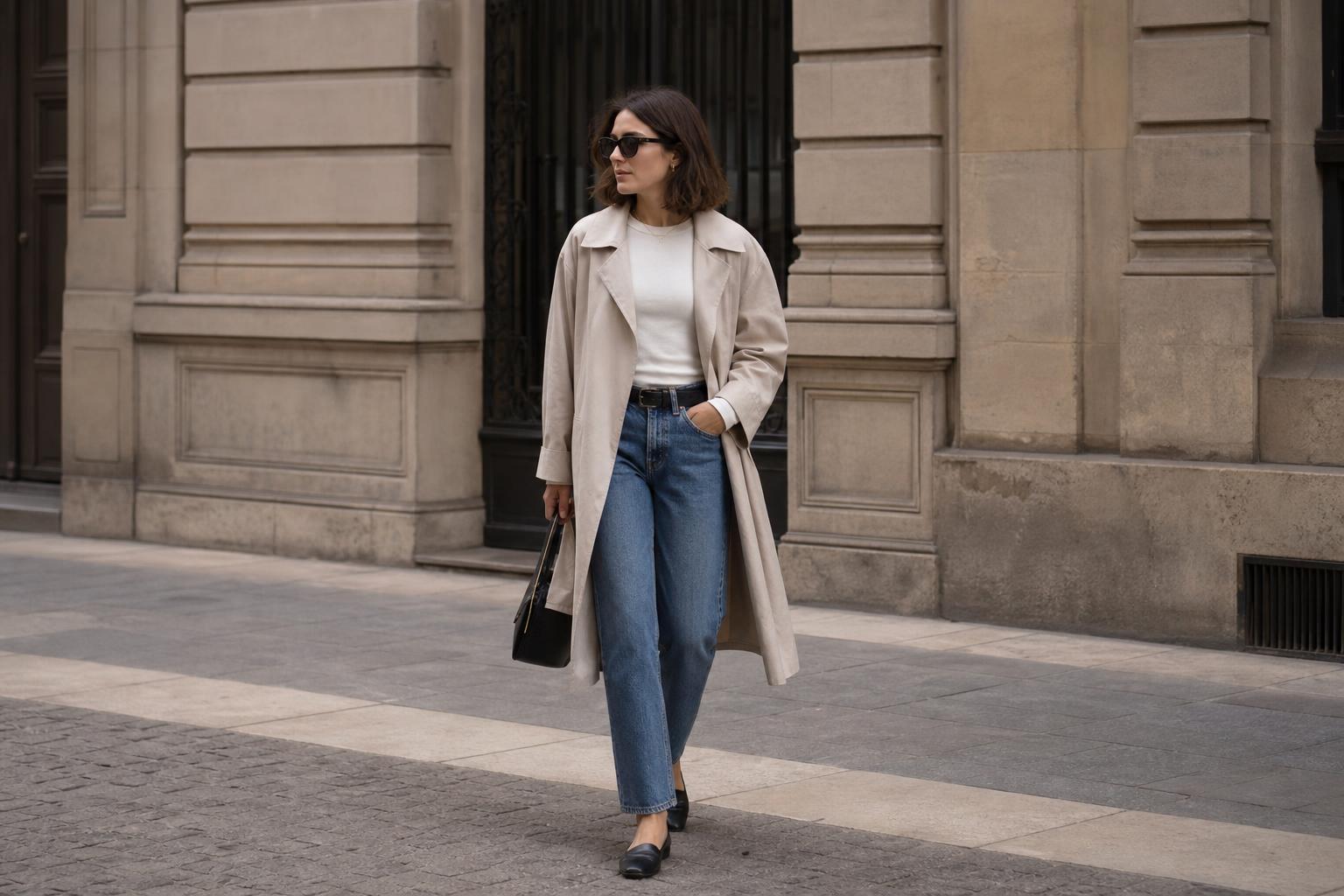
Some mornings in early spring begin with bright light and a mild forecast, only to turn breezy, damp, or unexpectedly cool by late afternoon. That is exactly why casual spring outfits can feel more difficult than they look in editorials: the season asks for ease, but also for judgment. You want a look that feels relaxed, modern, and wearable, yet still polished enough for errands, lunch, commuting, or a spontaneous dinner without a complete outfit change.
The challenge is rarely a lack of clothes. More often, it is the tension between comfort and composition. Heavy winter layers feel wrong, but fully bare silhouettes can feel premature. Shoes become a question. Fabrics matter more than usual. Proportions that worked in colder months may suddenly feel too dense. The solution is not to dress for an idealized spring day, but to build outfits with flexibility, light structure, and a clear sense of balance.
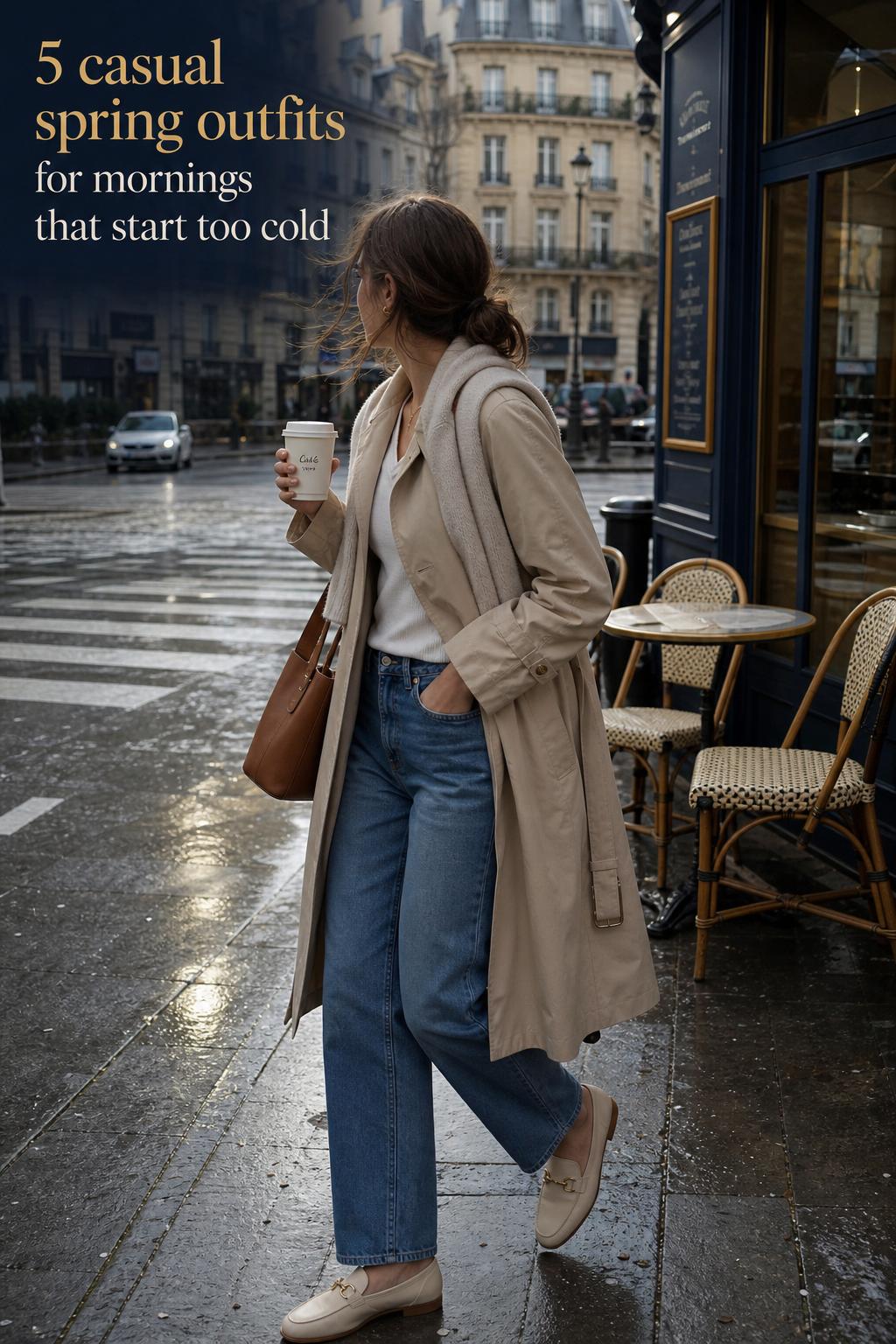
This guide approaches casual spring outfits as a practical styling problem with elegant answers. Rather than chasing novelty, it focuses on how to dress with intention: how to layer without bulk, how to use texture and silhouette to create ease, and how to make everyday pieces feel refined in the spirit of Paris, Milan, and Copenhagen style.
Why spring dressing feels deceptively complicated
Spring sits in a transitional space, which is why getting dressed can feel inconsistent from one day to the next. Temperatures shift. Indoor and outdoor settings rarely match. A walkable city day may require movement, while a work-from-café schedule asks for something more composed. Even a simple casual look has to account for weather, practicality, and visual lightness.
Your wedding has a lot of moving pieces. Your plan can still feel composed.
Zarellea organizes guests, vendors, budget, and timelines in one shared space — so you can make decisions with clarity, not stress.
There is also a styling tension unique to this season: many wardrobes are still visually anchored in winter. Dark knits, sturdy boots, and substantial coats can overpower the softer, lighter rhythm that makes spring dressing feel effortless. On the other hand, moving too quickly into airy pieces can create outfits that look disconnected from the actual climate. The result is often a look that is either too heavy, too bare, or too tentative.
The most successful casual spring outfits resolve this by treating the season as one of gradual adjustment. Instead of replacing your wardrobe, you recalibrate it. A tailored layer replaces a thick coat. Relaxed denim looks fresher with a lighter shoe. Soft neutral tones, clean lines, and breathable textures make an outfit feel seasonally right even when the weather remains unsettled.
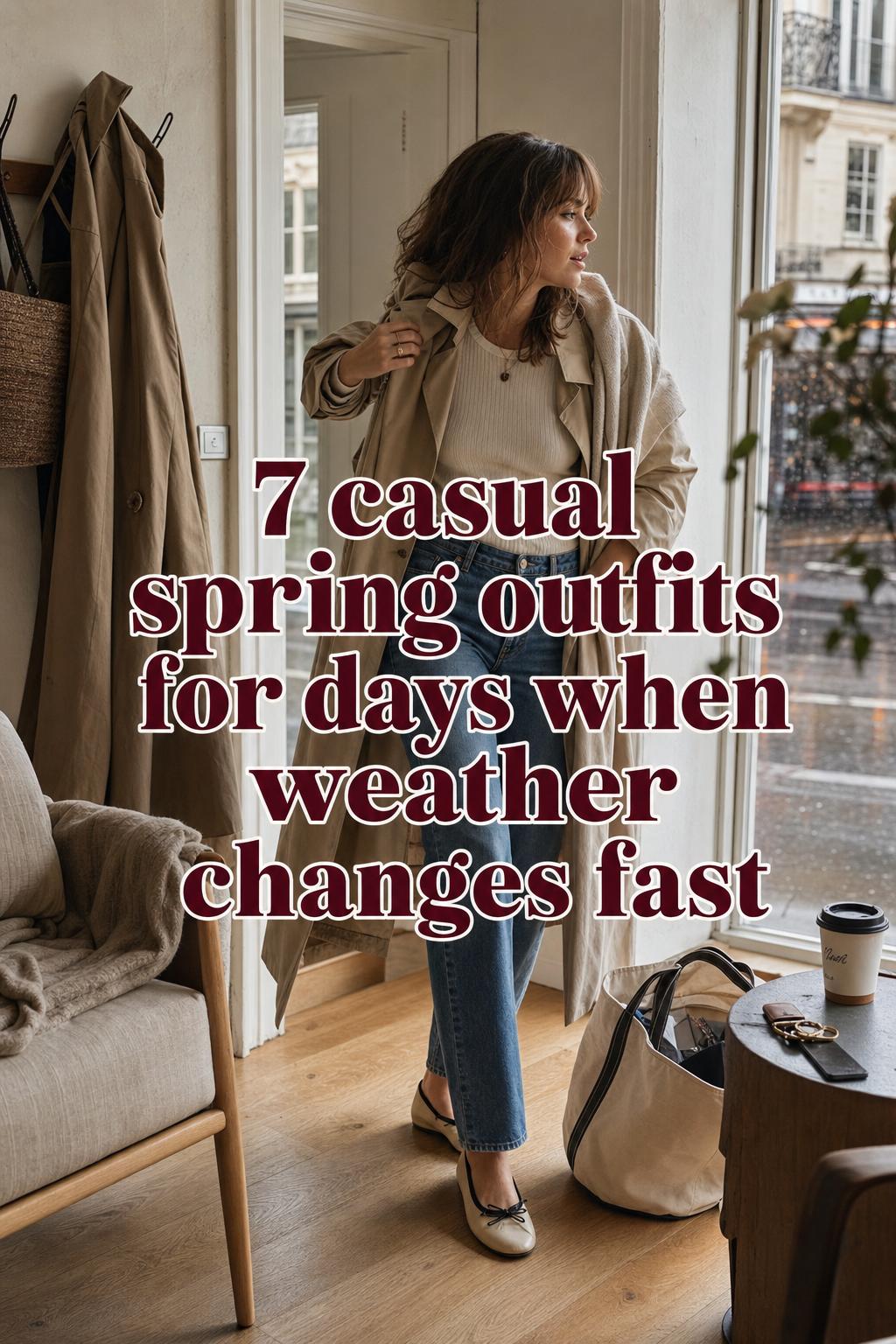
The dressing principles that solve the problem
Think in layers, not in single outfits
A spring outfit should be able to expand or contract as the day changes. This is where light layering becomes essential. A structured blazer layered over a simple top, a lightweight knit draped over the shoulders, or a trench-style outer layer can shift the look without making it feel bulky. The point is not only warmth. Layers create adaptability and visual depth.
Use fabric to create seasonal ease
Fabric often determines whether an outfit feels correct for spring. Pieces with some movement and breathability naturally read as lighter and more relaxed. Crisp cotton, soft jersey, fine knits, and other breathable materials help casual dressing feel intentional rather than improvised. Even familiar wardrobe basics can look transformed when the texture feels clean and seasonally appropriate.
Balance structure with relaxation
Casual does not mean shapeless. One reason European street style often looks so composed is that relaxed pieces are usually anchored by something tailored. Loose denim, for example, becomes more polished with a blazer or a sharply cut jacket. A fluid skirt feels grounded with a streamlined knit. The contrast between ease and structure is what gives spring outfits their sophistication.
Keep the palette coherent
Color balance matters more in spring because heavier visual contrasts can make an outfit feel stuck in the previous season. Soft neutrals, denim blues, off-whites, muted earth tones, and restrained accents tend to create a refined everyday look. This does not require a monochrome wardrobe. It simply means the pieces should speak to one another rather than compete.
Choose shoes for movement and continuity
Footwear often determines whether a casual spring outfit truly works in real life. The wrong shoe can make the entire look feel seasonally confused. Shoes should support walking, transitional weather, and the overall silhouette. Clean, low-profile options usually help create continuity between practicality and style.
A Paris-to-Copenhagen approach to casual spring style
There is a useful lesson in the way style is often observed across Paris, Milan, and Copenhagen. Although each city has its own language of dress, they share an understanding that everyday outfits should look composed without appearing overworked. A tailored silhouette contrasted with relaxed textures, understated layering, and thoughtful color balance creates that effect.
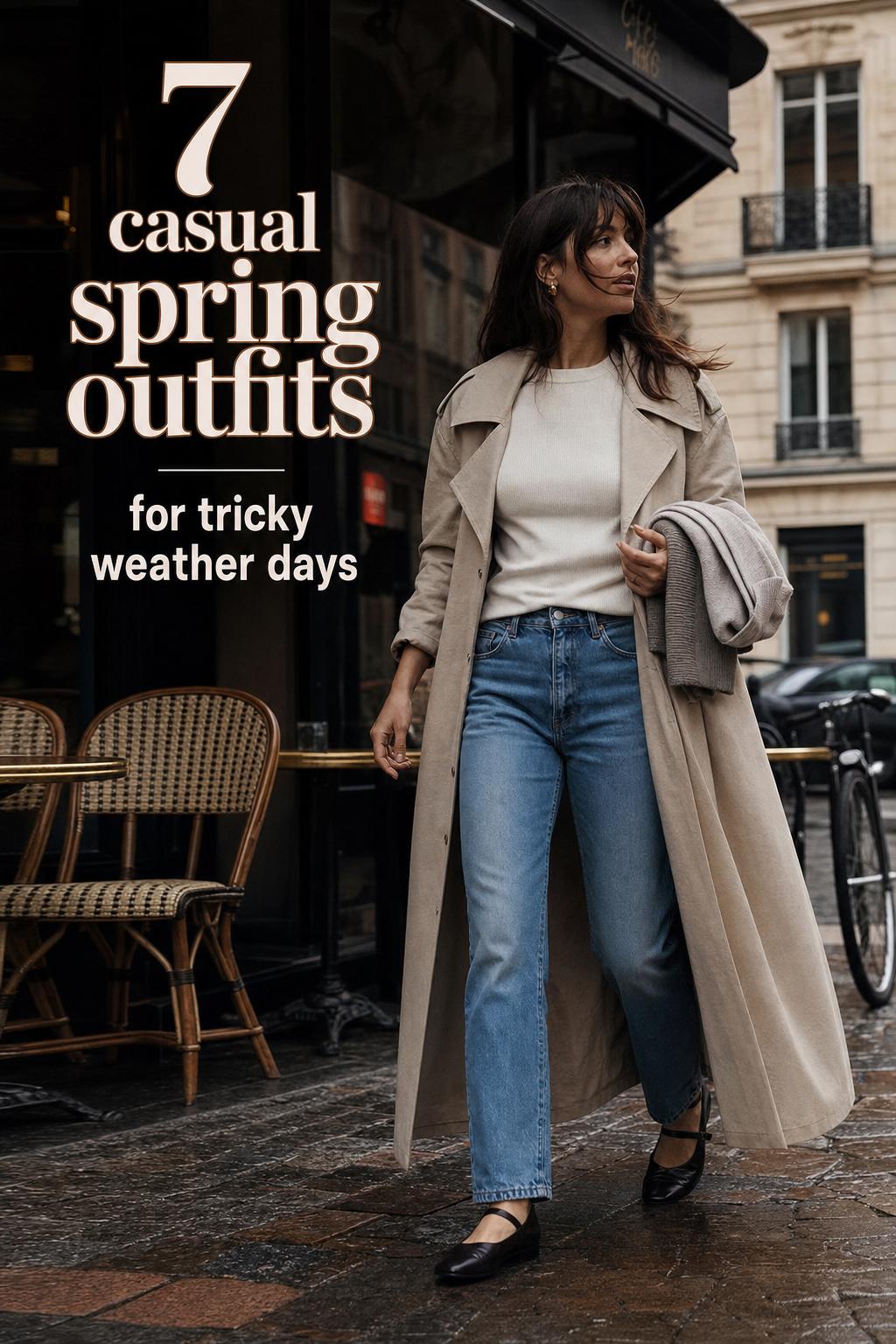
For spring, this translates beautifully into everyday dressing. From a Parisian perspective, a simple outfit gains elegance from restraint: a clean trench, straight-leg denim, a knit, and a practical flat. Milan offers a sharper sense of polish, where even casual separates benefit from clearer lines and stronger proportions. Copenhagen contributes a more relaxed, modern ease, often through looser shapes and unfussy layering. The practical value for the reader is simple: combine one polished element, one relaxed element, and one functional layer.
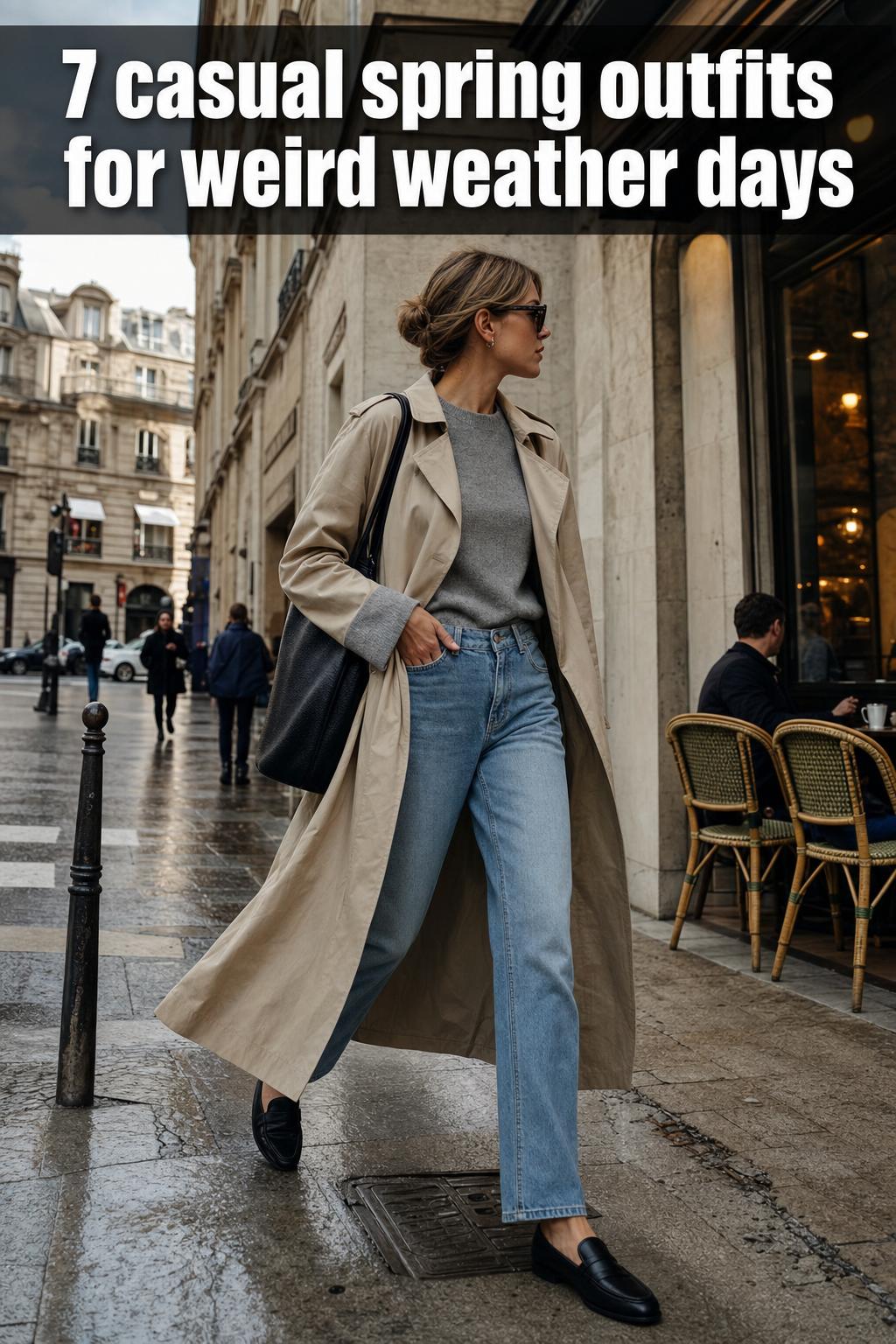
Outfit solution: the lightweight layered city look
A lightweight layered city look is one of the most reliable answers for unpredictable spring days. Start with a simple base such as a fitted or softly cut top, add straight or relaxed denim, and finish with a tailored outer layer that can stay on indoors without feeling excessive. The silhouette should feel clean rather than bulky, with enough structure to make the outfit look deliberate.
This works because each element serves a purpose. The base layer keeps the outfit uncomplicated. Denim gives ease and familiarity. The outer layer introduces polish and solves the temperature problem. A structured blazer layered over a simple top creates a refined line through the shoulders, while the denim keeps the mood casual. The result is an outfit that can move from commute to coffee to evening plans with very little adjustment.
If the weather shifts, the look still holds. You can remove the jacket and retain a complete outfit rather than a half-finished one. This is the quiet intelligence behind the best casual spring outfits: each layer is both functional and visually coherent.
Tips for making it feel modern
- Keep the underlayer relatively simple so the top half does not feel crowded.
- Choose a jacket with enough shape to define the outfit, but not so much stiffness that it loses everyday ease.
- Let one element stay relaxed, such as the denim or the hemline, so the final look remains casual rather than corporate.
Outfit solution: smart casual balance for everyday plans
There are days when the challenge is not weather alone but social ambiguity. You may be meeting friends, stepping into an informal office, then heading to dinner. In those moments, the strongest approach is smart casual balance: elevated basics composed with enough tailoring to look intentional, but never rigid.
A fine knit paired with relaxed trousers or clean denim creates an ideal base. Add a polished layer, whether that is a blazer, a lightweight jacket, or another streamlined piece with visible structure. The key is proportion. If the trousers are looser, the top should feel slightly neater. If the upper half is more relaxed, the trousers should provide definition. This keeps the silhouette modern and prevents the outfit from appearing either overly dressed or too informal.
The strength of this formula is versatility. It respects real life. You can sit comfortably, walk easily, and still look considered in photographs, meetings, or spontaneous social settings. That blend of practicality and subtle refinement is what makes it such a useful spring solution.
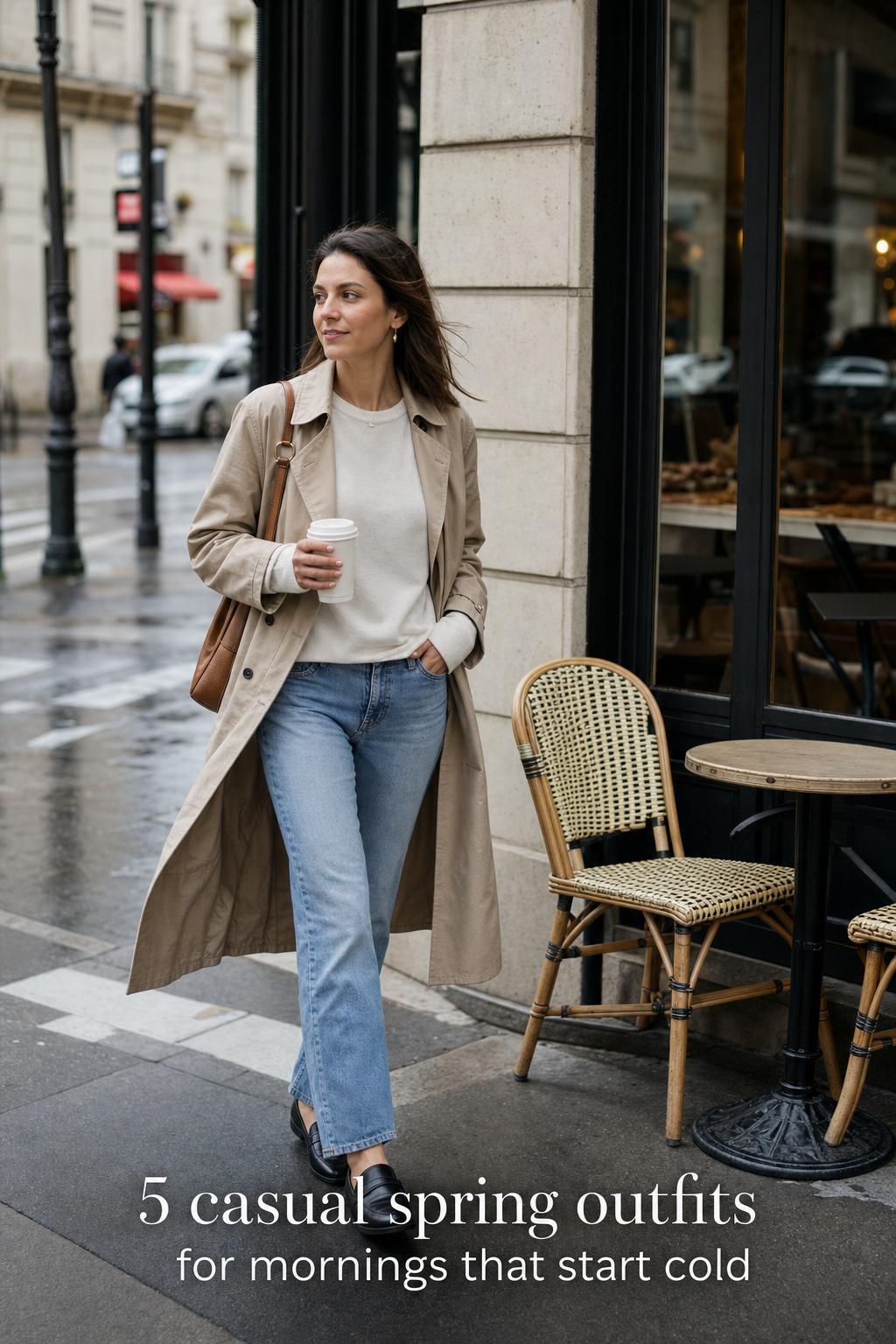
Outfit solution: a comfortable weekend silhouette that still looks polished
Weekend dressing often goes wrong when comfort becomes the only priority. The outfit may feel easy, but visually it can look flat or unfinished. A better solution is to build around comfort while preserving shape. Start with relaxed separates, then add one element that sharpens the composition.
For example, a soft knit or simple top with easy denim can look entirely different when paired with a clean outer layer or a thoughtfully chosen shoe. The outfit remains casual, but the lines feel controlled. Clean lines that create a polished everyday look are especially valuable on weekends because they help simple basics appear intentional rather than purely functional.
This is also where texture can do quiet work. A smooth knit against denim, or a tailored surface contrasted with softer fabrics, gives the look more depth. You do not need many pieces. You need the right relationship between them.
Outfit solution: the soft neutral look for brighter spring days
On milder days, a softer palette can immediately make your outfit feel attuned to the season. Soft neutral tones balanced with denim, light knits, or simple separates create a fresh visual rhythm without requiring anything dramatic. This approach is especially effective if your winter wardrobe leaned dark and heavy.
The reason it works is partly optical. Lighter tones reflect the season’s atmosphere and make even familiar shapes appear fresher. But it also works structurally: a restrained palette allows silhouette, fabric, and proportion to become more visible. A simple combination can therefore look elevated because the eye notices the composition rather than a loud color story.
This kind of outfit is ideal for daytime plans, casual lunches, gallery visits, or city walking when you want to look relaxed yet refined. It feels particularly aligned with the elegant understatement often associated with Paris and Milan, where subtlety tends to read as confidence.
Outfit solution: denim done with intention
Denim sits at the center of many casual spring outfits, but it only looks elevated when the styling around it is deliberate. Denim is most effective in spring when it is used as an anchor rather than the entire statement. Pair it with a sharper top layer, a fine knit, or a clean minimal base so the overall look has shape.
A common mistake is to combine denim with equally heavy or overly casual companions, which can make the outfit feel visually dense. Spring asks denim to work differently. It should provide grounded ease while the rest of the outfit introduces lightness. That may come from a more refined neckline, a softer fabric, or a cleaner silhouette through the outer layer.
When styled well, denim becomes the practical constant in a changing season. It supports movement, handles transitional weather, and pairs naturally with many of the pieces that make spring dressing work.
How to keep denim spring-appropriate
- Pair it with lighter textures so the outfit does not feel winter-heavy.
- Use one tailored piece to sharpen the silhouette.
- Keep shoes clean and seasonally light to avoid dragging the look back into colder months.
Outfit solution: relaxed tailoring for in-between temperatures
Some of the best casual spring outfits rely less on obvious seasonal cues and more on precise tailoring used in a relaxed way. Relaxed tailoring means garments that hold shape without feeling strict. Think of a jacket with definition but not stiffness, trousers with movement but not slouch, or a knit that skims rather than clings. This balance is especially useful on days that begin cool and gradually warm.
The outfit logic is straightforward. Structured elements provide confidence and visual coherence. Softer textures prevent the look from feeling formal. Together, they create a wardrobe language that works across many spring contexts: office-adjacent dressing, travel days, lunch meetings, or city weekends.
This is one of the most transferable style lessons from European fashion culture. Looking polished does not require rigidity. It requires control of line, proportion, and contrast.
What stylists quietly understand about spring proportions
The difference between an ordinary casual outfit and a refined one is often proportion. In spring, layers are lighter, so the eye notices imbalance more quickly. An oversized top with oversized trousers can feel heavy unless there is a visible point of structure. A fitted top with a narrow bottom can look too stark if the fabrics are thin and the weather remains cool. Spring dressing rewards nuance.
A good working rule is to let one area remain relaxed while another stays defined. A soft top can work beautifully with cleaner trousers. Relaxed denim benefits from a more tailored shoulder. A looser layer looks more intentional when the underlayer is controlled. This creates movement without visual disorder.
Readers often notice that certain outfits simply look more expensive or editorial even when the pieces are basic. Usually, proportion is the reason. The garments are interacting well. The hem lengths, shoulder line, and volume distribution create harmony, which is why the outfit feels polished without appearing forced.
Footwear, accessories, and the practical details that matter
An outfit may look balanced in theory, but everyday success depends on details. Spring often involves walking, shifting surfaces, light rain, indoor heating, and schedules that stretch from morning to evening. Accessories and shoes therefore need to support the outfit rather than interrupt it.
- Choose footwear that handles movement comfortably while maintaining a clean silhouette.
- Use accessories to add clarity, not clutter; in spring, restraint often looks more refined.
- Keep outer layers light enough to carry or drape when the temperature rises.
- Favor pieces that can transition across settings without requiring a full restyle.
In practical terms, this means avoiding shoes that are too heavy for the outfit’s visual weight, or accessories that make a casual look feel overly styled. The best additions are the ones that quietly improve function and finish. A simple bag, a neat belt, or a lightweight layer can be more effective than multiple decorative elements.
Small adjustments that make casual spring outfits look more expensive
Refinement in casual dressing often comes from editing rather than adding. A sleeve pushed with intention, a hemline that sits correctly with the shoe, or a more coherent color relationship can transform a simple outfit. These are not dramatic changes, but they create the impression of certainty.
One useful habit is to look at the outfit in terms of line. Does the outer layer create shape, or does it collapse the silhouette? Do the fabrics fight each other, or do they create contrast in a controlled way? Is there one element making the look feel too seasonal in the wrong direction, such as an overly heavy shoe or an overly summery top? This kind of quick analysis leads to better decisions than simply adding more pieces.
Another adjustment is to reduce visual noise. Casual spring outfits tend to feel most elegant when there is room for the eye to rest. Clean layering, measured texture, and a restrained palette give basics a more elevated presence.
Common mistakes that make spring outfits feel off
Dressing only for the forecast headline
A mild temperature reading can be misleading. Wind, shade, and indoor cooling often change how the outfit feels in practice. Dressing only for the warmest part of the day usually results in discomfort and hurried styling fixes. A better approach is to build in one adaptable layer from the beginning.
Keeping winter visual weight in the outfit
Even if temperatures are still cool, an outfit can feel heavy because of color, fabric, and silhouette rather than warmth alone. Dense textures, dark palettes, and bulky shapes may be practical, but they often look out of sync with the season. Lightening the palette or refining the shape usually solves the issue without sacrificing comfort.
Confusing casual with unstructured
Relaxed dressing works best when it still has form. Without some tailored structure, the outfit can lose direction. This is why a simple blazer, neat jacket, or well-cut layer is so effective in spring: it keeps the look casual while preserving a polished outline.
Letting shoes disrupt the silhouette
Footwear can either complete the outfit or make it feel disconnected. Shoes that are too heavy, too formal, or too summery for the rest of the look often create imbalance. The best choice is usually the one that supports the line of the outfit and suits the day’s movement.
A realistic formula for building casual spring outfits from your own wardrobe
If you want a reliable way to get dressed without overthinking, use a three-part formula: a simple base, a shaping layer, and a practical finish. The base may be a top with denim or easy trousers. The shaping layer is the piece that adds structure, such as a tailored jacket or another lightweight layer with clear lines. The practical finish is the shoe and accessory choice that makes the outfit wearable for the day you actually have.
This formula works because it keeps style decisions grounded in function. It also allows variation. A cleaner base feels more polished. A looser base feels more relaxed. A sharper layer introduces city refinement; a softer one feels more weekend-appropriate. Once you understand the logic, you can adapt the same structure to many spring scenarios without looking repetitive.
That is ultimately the goal. Great spring style does not come from constant reinvention. It comes from learning how pieces interact: silhouette against silhouette, texture against texture, practicality against elegance. When those relationships are considered, even the most casual outfit feels composed.
Conclusion
The secret to successful casual spring outfits is not owning a completely different wardrobe for the season. It is understanding transition. Light layers, breathable textures, balanced proportions, and practical footwear create the kind of flexibility that spring dressing demands. Add one tailored element, keep the palette coherent, and let comfort support the look rather than dominate it.
Once you begin dressing with those principles in mind, spring becomes far less unpredictable. You stop asking whether an outfit is casual enough or polished enough and start building looks that can do both. That is where everyday style becomes more refined, more wearable, and far more useful.
FAQ
How do I make casual spring outfits look polished without feeling overdressed?
The easiest way is to combine one relaxed piece with one structured piece. Denim or easy trousers paired with a tailored jacket, refined knit, or clean outer layer creates balance. The outfit stays casual, but the silhouette looks intentional.
What should I wear on a spring day when the temperature changes a lot?
Build the outfit in layers that can work together or separately. A simple base with a lightweight shaping layer is usually the most practical solution. This allows you to adapt to cooler mornings and warmer afternoons without losing the coherence of the look.
Which colors work best for casual spring outfits?
Soft neutrals, denim blues, off-whites, and muted earth tones tend to work especially well because they feel lighter and more seasonal than heavy winter shades. The goal is not to avoid contrast entirely, but to keep the palette balanced and visually calm.
Can I still wear denim regularly in spring?
Yes, denim is one of the most useful spring anchors. The key is to style it with lighter textures and a cleaner silhouette so it feels appropriate for the season. A sharper top layer or softer knit usually helps denim look more refined.
How can I dress casually for spring without looking too simple?
Focus on composition rather than adding more items. Texture contrast, a well-defined shoulder line, balanced proportions, and a coherent palette can make very basic pieces look elevated. Simple outfits often feel strongest when the styling is edited and precise.
What is the biggest mistake people make with spring outfits?
One of the most common mistakes is dressing too quickly for an idealized version of spring. Outfits then feel either impractical or visually disconnected from the weather. Transitional dressing works best when you keep some coverage, but lighten the textures and overall weight.
How do I choose the right shoes for a casual spring look?
Choose shoes that support movement and match the visual weight of the outfit. In spring, footwear should usually feel cleaner and lighter than winter options, but still practical enough for walking and changing weather. The best shoe is the one that finishes the silhouette without interrupting it.
How can I adapt European style influences like Paris, Milan, and Copenhagen to everyday outfits?
Take the underlying principles rather than copying a costume version of the look. Paris offers restraint, Milan brings polish, and Copenhagen adds relaxed modernity. In practice, that means combining elevated basics, clear proportions, and functional layering in a way that suits your own routine.
Leave a Reply