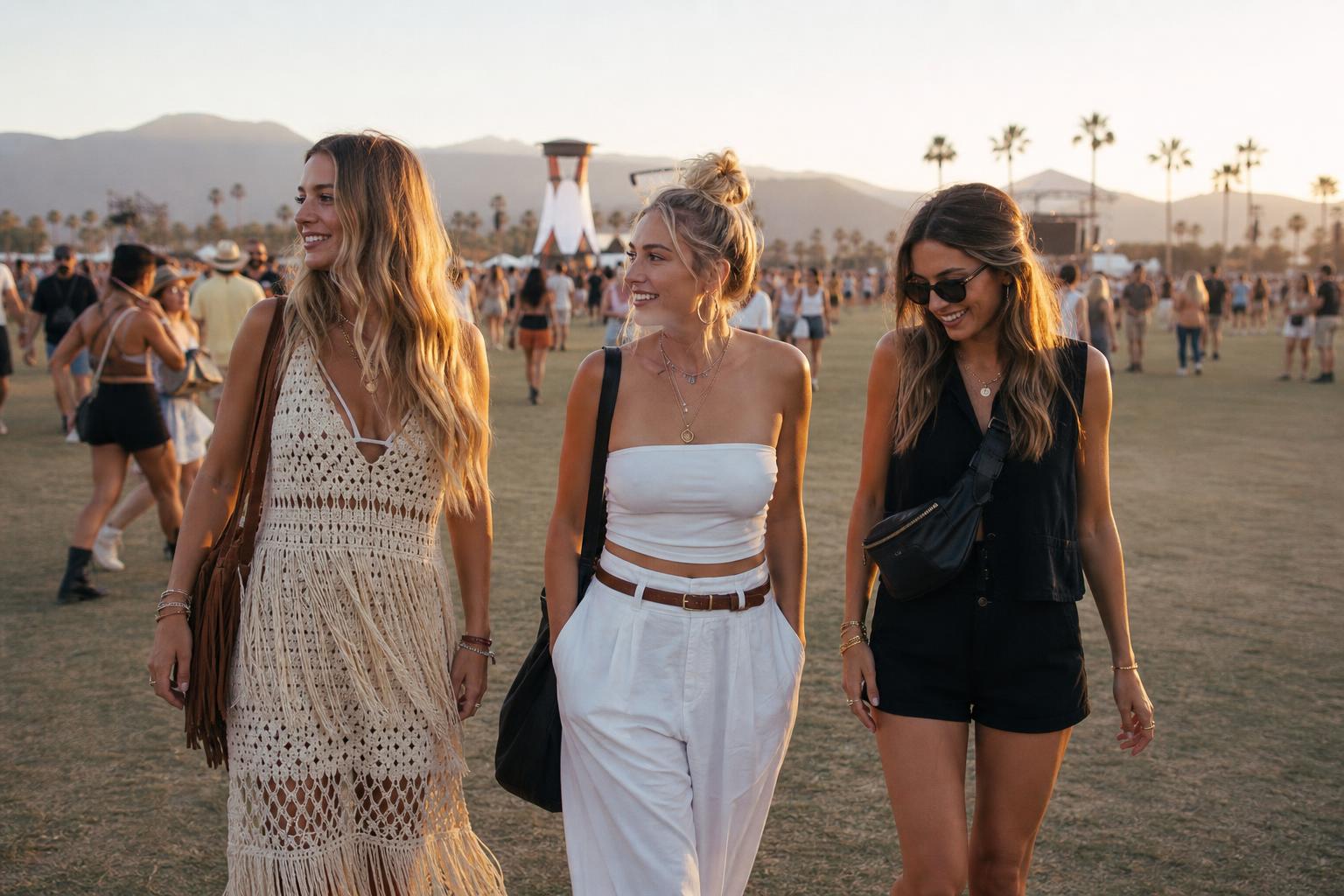
By the time festival season reaches its hottest stretch, the question is rarely whether you need inspiration. It is whether your summer festival outfits should lean boho and expressive, sleek and minimal, or somewhere in the more practical middle ground that real wardrobes usually occupy. The most compelling festival style sits at that intersection: visual enough for the mood of an open-air event, functional enough for heat, walking, and long hours on your feet.
That is why certain aesthetics keep appearing together. Crochet, fringe, mesh, white shirts, dresses, sandals, Bermuda shorts, cargo details, satin, linen, and coordinated sets all belong to the same conversation, yet they communicate very different fashion instincts. Some outfits are built around texture and movement, others around crisp lines and day-to-night versatility. Readers often group them under one broad category, but the styling logic behind each approach is distinct.
This comparison breaks down the most relevant style directions shaping summer festival outfits right now: boho-textural festival dressing, clean minimal tailoring, and the utility-led practical approach that has become increasingly important for outdoor concerts and large-scale summer events from Outside Lands to Lollapalooza and Essence Festival in New Orleans. The goal is not simply to list what to wear, but to explain how these aesthetics differ, where they overlap, and how to choose the one that works for your climate, venue, and personal style.
The three festival aesthetics worth understanding
Festival fashion tends to look crowded online because many pieces belong to more than one aesthetic. A crochet dress can feel bohemian, body-conscious, or polished depending on cut and accessories. A white shirt can read tailored and refined with Bermuda shorts, or easy and boho with a maxi skirt and flat sandals. Before comparing them directly, it helps to define the three strongest style directions that recur across modern festival dressing.
Your wedding has a lot of moving pieces. Your plan can still feel composed.
Zarellea organizes guests, vendors, budget, and timelines in one shared space — so you can make decisions with clarity, not stress.
Style overview: boho-textural festival dressing
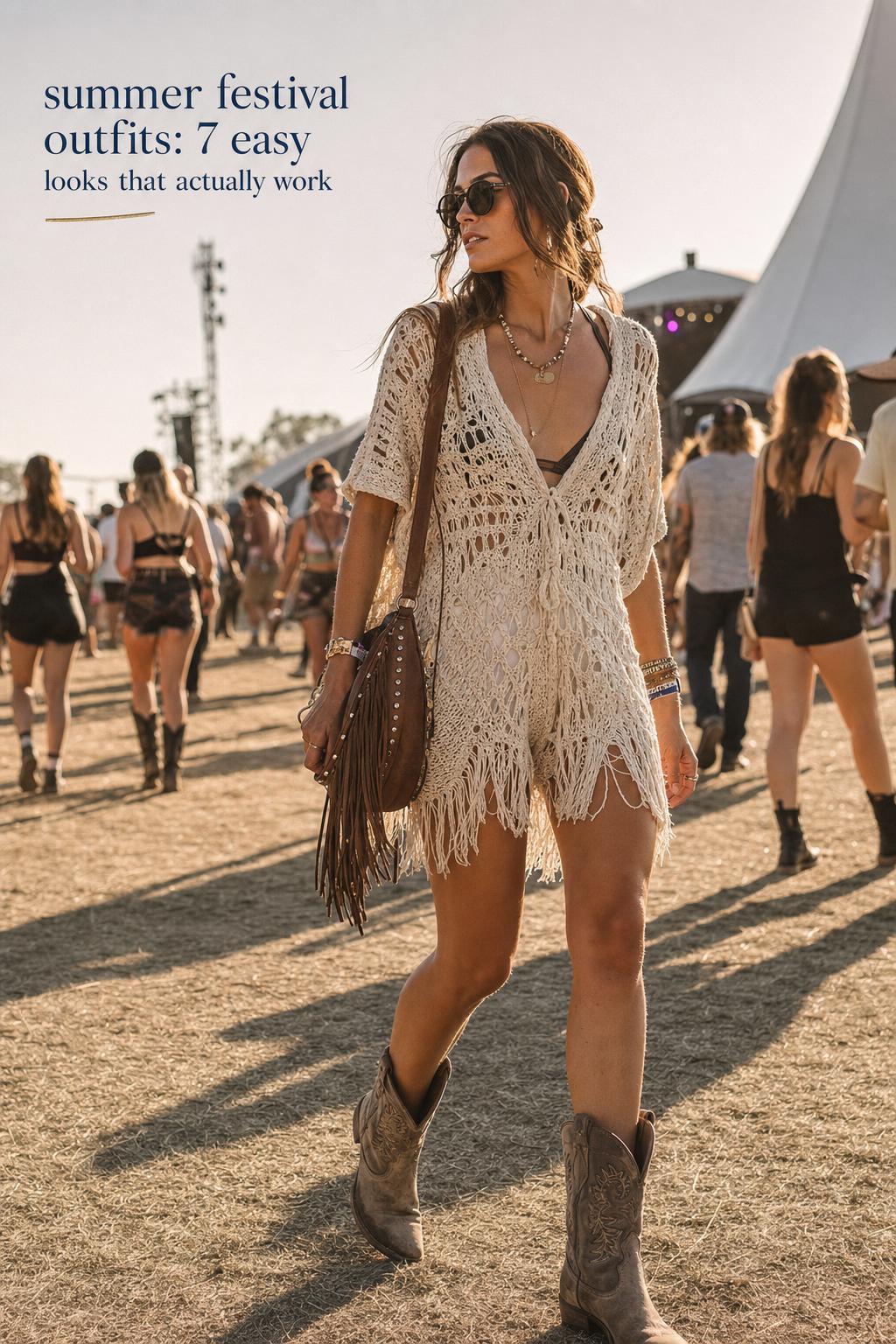
This is the most recognizable festival look and the one most closely linked to crochet, fringe, mesh, sheer layers, maxi dresses, sunset tones, and expressive accessories. Its defining characteristic is movement. Fabrics are chosen not only for appearance but for how they shift while walking, dancing, or standing in open air. Silhouettes are often soft rather than strict: a flowing maxi, a relaxed dress, a co-ord with texture, or a crochet piece with visible openness in the weave.
The palette can move from warm neutrals to florals, holographic details, and brighter seasonal color. Even when the garments are body-conscious, the overall mood is less sharp than sensual and atmospheric. This is the aesthetic most associated with crochet-inspired textures, fringe dresses, mesh overlays, and the broader boho chic festival outfits category.
Style overview: clean minimal festival tailoring
This approach is often overlooked in festival conversations because it appears simpler at first glance, yet it is one of the most modern directions. Think white shirts, coordinated sets, silk or satin contrasts, linen separates, dresses paired with streamlined sandals, and a more edited color story. The defining quality here is clarity. Instead of relying on overt embellishment, the look is built through proportion, fabric balance, and restraint.
Typical silhouettes include a crisp shirt with shorts, a sleek midi dress with clean sandals, or a co-ord set that moves easily from daytime to evening. The palette tends toward white, black, beige, soft neutrals, and occasional statement pieces. The mood is polished, travel-friendly, and quietly elegant rather than overtly theatrical.
Style overview: utility-led practical festival style
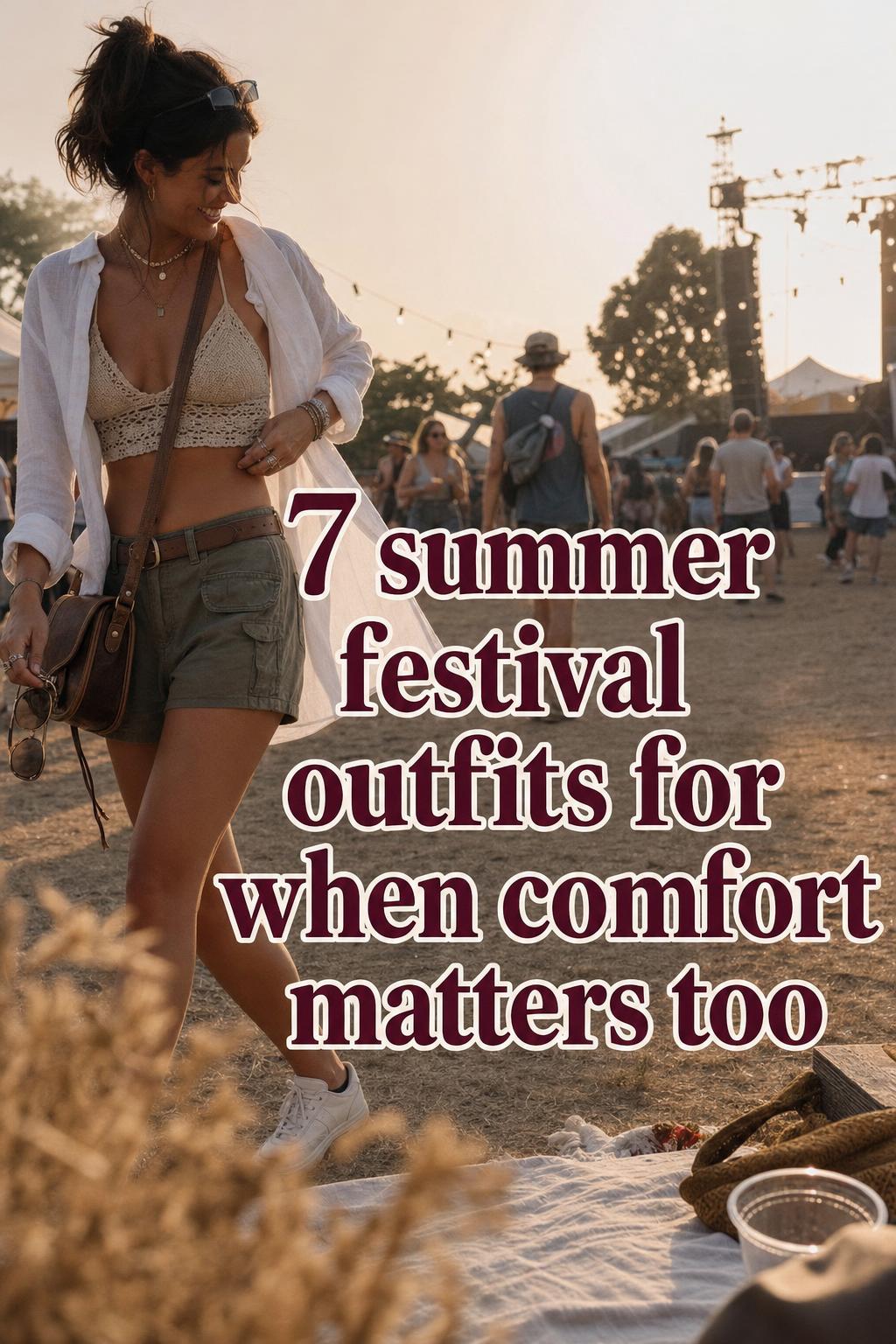
The third aesthetic grows out of reality: heat, crowds, walking, changing terrain, and the need for pieces that can endure a full day. This style borrows from cargo details, denim shorts, shirts, pockets, relaxed fits, walkable footwear, and hands-free bags. It does not reject fashion; rather, it prioritizes function as part of the visual language.
Its silhouettes are grounded and mobile. A utility short, a lightweight top, a romper, or a jumpsuit can all belong here, especially when paired with supportive sandals or sneakers. The palette is often neutral or sun-faded, though practical festival style can absorb trend textures like crochet or mesh in smaller doses. It is especially relevant for long festival days, city events, and climates where humidity and heat shape every wardrobe decision.
Where these styles diverge most clearly
The easiest way to understand the difference between these aesthetics is to stop thinking in terms of single pieces and start thinking in terms of composition. A dress is never just a dress at a festival. Its length, fabric, openness, footwear pairing, and accessory story determine which style language it belongs to.
Silhouette and structure
Boho-textural outfits favor movement and fluidity. Maxi dresses, airy layers, and fringe produce a softer outline, even when the garment itself is fitted. Clean minimal looks are more controlled. The line is sharper, with a deliberate balance between fitted and relaxed elements: a loose linen shirt with neat shorts, or a slim dress with pared-back sandals. Utility-led dressing sits between them, but with more pragmatic volume. Cargo shorts, rompers, and relaxed shirts are chosen for mobility rather than drama.
Color and surface interest
Boho festival fashion often depends on texture to create visual depth: crochet openings, mesh, fringe, florals, shimmer, or even holographic accents. Minimal tailoring creates interest through contrast instead, such as linen against satin or a white shirt against darker shorts. Utility style usually reduces decoration and focuses on material and function, using pockets, seams, and practical fabric choices as part of the design story.
Level of polish
All three approaches can look considered, but they express polish differently. Boho style appears styled through texture layering and mood. Minimal festival dressing appears polished through editing and proportion. Utility style appears polished when practical pieces are intentional rather than accidental, with clean styling and a restrained accessory approach. This distinction matters because many summer festival outfits fail not from lack of trend awareness, but from mixed signals. A heavily textured dress with overly rugged accessories can feel visually confused. A sleek satin piece with no regard for terrain can feel disconnected from the setting.
Wardrobe pieces each style returns to
- Boho-textural style returns to crochet pieces, fringe dresses, mesh layers, maxi dresses, florals, and expressive accessories.
- Clean minimal style returns to white shirts, linen separates, silk or satin accents, co-ord sets, dresses with simple sandals, and refined statement pieces.
- Utility-led style returns to cargo elements, denim shorts, shirts, jumpsuits, rompers, supportive footwear, and practical bags.
The fabric conversation: texture versus performance
One of the most useful ways to compare festival aesthetics is through fabric. Summer festival outfits are shaped as much by material behavior as by silhouette. Heat, movement, and long wear expose the difference between a look that photographs well for a few minutes and one that actually works through an entire day.
Linen, cotton, satin, crochet, and mesh in practice
Linen and cotton sit closest to the minimal and practical ends of the spectrum because they align with breathability and ease. A linen shirt or cotton dress naturally supports a cleaner silhouette while remaining realistic for daytime heat. Satin and silk-inspired textures introduce elevation, but they work best when the rest of the outfit stays simple. Their role in festival dressing is usually to sharpen a look, not to carry an overly complicated outfit.
Crochet and mesh belong most naturally to the boho-textural family, yet they can shift tone depending on styling. A crochet top with cargo shorts becomes more grounded and practical. A mesh layer over a simple dress feels more fashion-driven. What matters is not the fabric alone, but how open textures are balanced with coverage, proportion, and footwear.
Why fit changes the effect of the same fabric
A loose crochet maxi reads romantic and free-moving. A fitted crochet dress feels more body-conscious and stage-ready. A crisp white shirt worn oversized can lean effortless and slightly bohemian; worn neatly with Bermuda shorts, it becomes clean and tailored. This is why style comparison matters more than trend naming. The same material can move across aesthetics depending on cut, shape, and what sits beside it.
Tip: choose one expressive texture at a time
At festivals, texture is often more effective than excess. If you are wearing fringe, keep the rest of the outfit streamlined. If your outfit centers on mesh, let footwear and bag choices stay practical. If satin is the statement, pair it with simpler separates. The result is more refined, more wearable, and easier to sustain over a full day.
How these styles look in real outfits
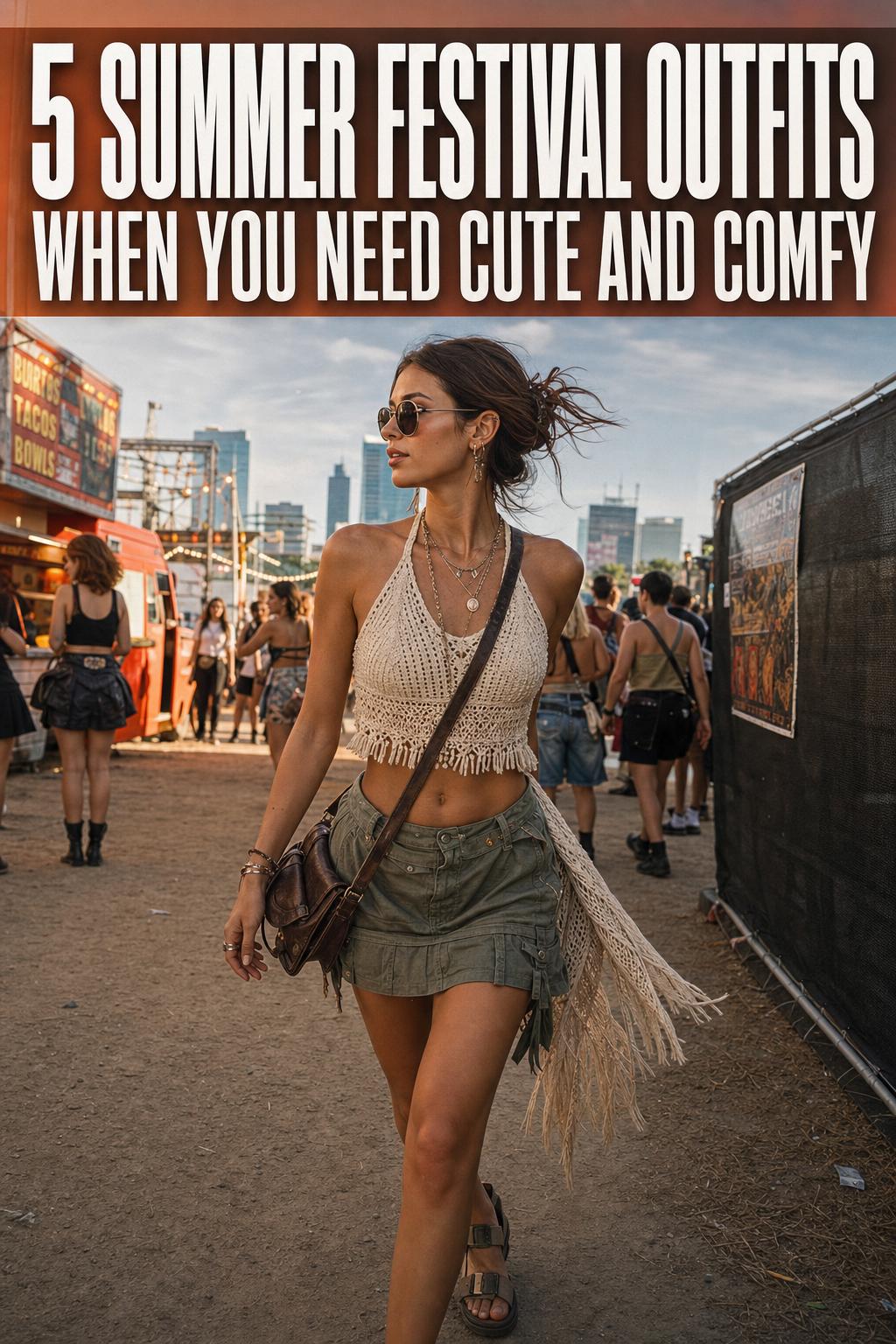
The visual difference between aesthetics often becomes clearest in everyday festival dressing, where weather, venue, and movement force styling decisions. Looking at outfit logic rather than isolated pieces makes it easier to identify what each style is trying to achieve.
Dress-and-sandal outfits: romantic versus refined
A boho interpretation of the dress-and-sandal formula might involve a crochet or fringe-accented dress, warm-toned accessories, and sandals that feel relaxed rather than polished. The outfit is meant to move and catch light. A minimal interpretation of the same idea would focus on a cleaner dress silhouette, perhaps midi rather than highly embellished, with pared-back sandals and fewer accessories. The styling message shifts from expressive ease to elegant restraint.
This is why dress and sandal outfits remain so versatile all summer long. They can belong to different aesthetics without changing the basic formula. The difference lies in texture, line, and editing.
White shirt outfits: crisp tailoring versus undone festival ease
A white shirt with Bermuda shorts is one of the clearest examples of clean festival tailoring. It feels modern, especially when the shirt has structure and the shorts carry a longer line. The same white shirt can become softer and more boho when tied over a maxi skirt or layered with crochet. If paired with utility shorts or a hands-free bag, it starts moving toward the practical end of the spectrum. One item, three style languages.
Shorts and shirts: platform-ready versus venue-ready
Shirts and shorts often separate trend dressing from true event dressing. A more fashion-forward interpretation may involve proportion play, a statement piece, and deliberate contrast. A venue-ready interpretation simplifies the silhouette, prioritizes comfort, and brings in supportive sandals or sneakers. Poshmark-style affordability and ASOS-style coordinated dressing both sit comfortably here, but they express different intentions: one is more trend-led and buyable, the other more composition-focused.
Body-conscious silhouettes versus relaxed lines
Meshki’s body-conscious direction and the softer lines seen in more classic summer dressing illustrate another important divide. Fitted silhouettes can look striking, especially in fringe or crochet, but they ask more from the wearer in heat and during long movement-heavy days. Relaxed lines, by contrast, often look quieter at first, yet they perform better over hours of walking, sitting, and dancing. Neither is inherently better. The question is whether the event calls for visual impact, practical endurance, or a measured blend of both.
Footwear reveals your style philosophy fastest
If there is one category that instantly clarifies the difference between festival aesthetics, it is footwear. Sandals, sneakers, and boots are never just accessories at an outdoor event. They set the tone of the entire outfit and determine whether the look can survive grass, dirt, pavement, and full-day wear.
Sandals in boho and minimal styling
Sandals appear across almost every major summer style guide because they work visually and practically in heat. In boho dressing, sandals usually support the relaxed spirit of the outfit. In minimal dressing, sandals become cleaner and more architectural, acting as a finishing line rather than a casual afterthought. That subtle difference changes the whole balance of a dress, co-ord, or shirt-and-short combination.
Sneakers and boots in practical festival wardrobes
Utility-led dressing is more open to sneakers and sturdier options because the style already values endurance and movement. This makes particular sense at large festivals where walking is constant and terrain is unpredictable. The practical advantage is obvious, but there is also a visual one: grounded shoes can prevent shorts, rompers, or light dresses from feeling overly delicate or unfinished.
Tip: let terrain decide as much as taste
Grass, dust, pavement, and humidity all shape how footwear performs. A sandal that works beautifully for a polished daytime city event may not be the best choice for a field-based venue. The strongest festival wardrobes do not treat comfort and aesthetics as opposites. They use the venue itself as part of the styling brief.
Accessories and balance: how the outfit is completed
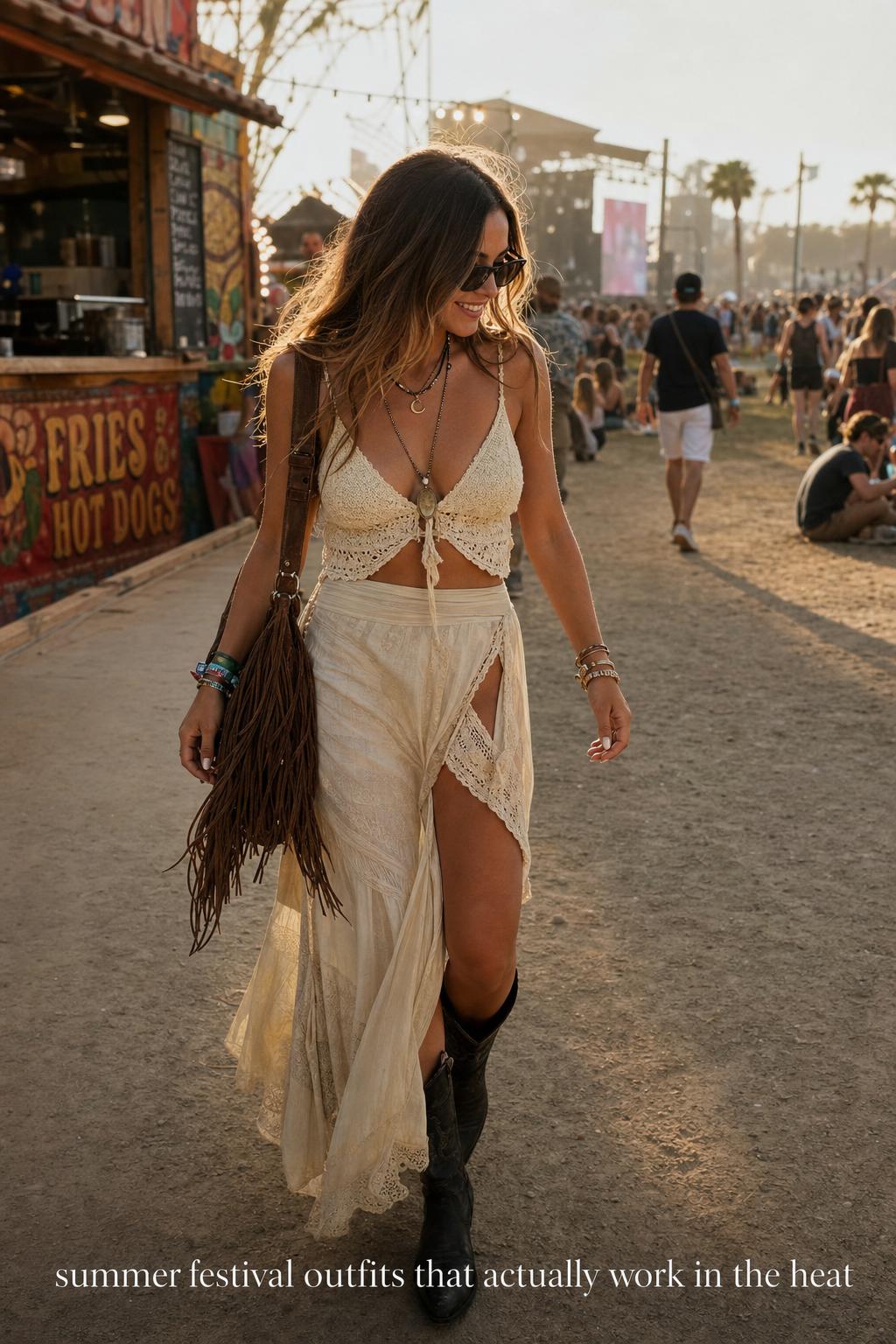
Accessories are where summer festival outfits often tip into excess or, conversely, become too plain. The right finishing pieces should reinforce the style direction already established by the garments.
Boho-textural looks generally welcome more visible accessories: hats, sunglasses, belts, and small bags that contribute to mood and movement. Minimal looks ask for more restraint. One pair of sunglasses, a simple bag, and a clean sandal may be enough because the outfit’s power comes from silhouette and fabric contrast. Utility-led outfits often benefit from the most intentional editing of all. A practical bag, secure sunglasses, and a sun-conscious hat can look sharp when the rest of the look is uncomplicated.
An overlooked point is that accessories also determine how “festival” an outfit reads. A linen dress can feel almost everyday until it is paired with the right sandals and bag. A white shirt and shorts can feel too ordinary until sunglasses and proportion give it direction. Accessories do not need to be louder; they need to be coherent.
Location changes everything: from California light to New Orleans humidity
No comparison of festival dressing is complete without location. A style that feels perfectly judged for California can feel misplaced in the humidity of New Orleans or the shifting conditions of Chicago. Summer festival outfits are never created in a vacuum; they are responses to heat, exposure, movement, and regional atmosphere.
California coast and Coachella-like climates
In drier, sun-heavy settings associated with California festivals and Coachella-adjacent dressing, boho-textural and minimal styles both thrive. Crochet, white shirts, dresses, and coordinated looks all make visual sense in strong light. The main difference is mood: boho looks more atmospheric and expressive, while minimal tailoring feels cleaner and more deliberate. Layering for evening still matters, but daytime styling can remain relatively open and light.
Austin, Chicago, New York, and the practical middle ground
In cities where the day may involve more walking, more pavement, and less purely scenic dressing, utility-led style becomes especially persuasive. Shirts, shorts, jumpsuits, and practical bags feel grounded. This does not eliminate style; it simply shifts emphasis toward pieces that can move across travel, festival hours, and the journey home.
Essence Festival and New Orleans heat
Essence Festival offers one of the clearest examples of why practical glamour matters. In New Orleans, walking comfort and heat are central, so the most successful outfits do not ignore reality. Dresses, tops, and accessories can still feel elevated, and brands such as Rendoll, Bottega Veneta, and Simon Miller may inform the styling direction, but the wardrobe needs walkability. This is where minimal refinement and practical dressing often meet most successfully.
Tip: style for the event schedule, not only the photo moment
A look that begins outdoors in full sun and ends after dark needs more range than a short appearance-based outfit. Day-to-night transitions matter at festivals more than they do in many other summer settings. A linen layer, a balanced sandal, and a compact bag often do more for the full experience than an outfit built only for impact.
Comparison through real styling scenarios
A daytime open-air concert
The boho interpretation might center on a crochet top or a flowing maxi dress with sandals and visible texture, creating a soft, movement-driven silhouette. The minimal interpretation would likely use a cleaner dress or a co-ord set with streamlined accessories, allowing fabric and line to carry the look. The utility version would turn to shorts, a lightweight shirt, and footwear designed for hours of standing. All three are valid; they simply prioritize atmosphere, polish, or endurance in different measure.
A multi-day festival weekend
Over several days, a capsule approach becomes more useful than isolated statement looks. Boho dressing may rotate crochet, fringe, and a maxi silhouette across the weekend. Minimal dressing may rely on a dress, a white shirt, Bermuda shorts, and sandals that can be reworked in several combinations. Utility dressing often performs best here because it naturally supports repetition, layering, and comfort. In practice, many of the best festival wardrobes blend these systems rather than choosing one exclusively.
An evening set with a cooler finish
Minimal tailoring tends to adapt most smoothly into evening because satin, silk-inspired textures, and cleaner silhouettes already carry a subtle formality. Boho style can be beautiful after dark, particularly with shimmer, mesh, or fringe, but it often needs thoughtful editing to avoid feeling overworked. Utility style can move into evening as well, though it usually depends on cleaner accessories and a stronger sense of proportion to feel intentional after sunset.
The case for a festival capsule wardrobe
If there is one practical lesson hidden inside all these aesthetics, it is that festival dressing works best when the wardrobe has internal logic. A small capsule of compatible pieces creates more sophistication than a collection of disconnected trend items.
- A dress that works for daytime and can shift into evening
- A top that pairs with shorts or a skirt
- A bottom such as denim shorts, cargo shorts, or Bermuda shorts
- An outer layer for later hours
- Versatile footwear, usually sandals or sneakers depending on venue
- A small crossbody or similarly compact bag
- Sunglasses and a hat for sun management
This kind of edit supports all three style approaches. The difference lies in the pieces you select. A boho capsule may emphasize crochet and a maxi silhouette. A minimal capsule may depend on linen, co-ords, and a white shirt. A practical capsule may place more emphasis on pockets, movement, and all-day footwear. The philosophy remains the same: thoughtful composition over excess.
What people often get wrong with summer festival outfits
One common mistake is assuming festival style must always be loud to feel relevant. In reality, some of the strongest outfits are the simplest, particularly when line and texture are well judged. Another frequent error is treating trend pieces as complete styling solutions. Crochet, mesh, fringe, and shimmer can all be compelling, but they need grounding. Without that, the outfit can feel costume-like rather than modern.
A second mistake is overlooking the relationship between climate and silhouette. Body-conscious dressing can be striking, but not every venue rewards it equally. Likewise, relaxed and breathable fabrics may seem less dramatic at first, yet they often look better after several hours because they still feel effortless rather than strained. The most convincing wardrobes respect both image and experience.
A third mistake is failing to align accessories with the style direction. A practical bag can sharpen a utility look, but may interrupt a more refined satin outfit if it is too rugged. Delicate sandals can elevate a dress, but they may undermine a more grounded shorts-and-shirt combination if the venue is rough underfoot. Balance is what separates a styled outfit from a random one.
When to choose each style
The right festival aesthetic depends less on trend cycles than on setting, energy, and how you like to dress under real conditions.
Choose boho-textural style when
- You want a visually expressive outfit with movement and personality.
- The event setting suits crochet, fringe, mesh, florals, or softer silhouettes.
- Your priority is atmosphere and texture, especially in dry, sunlit festival environments.
Choose clean minimal tailoring when
- You prefer refined lines over overt trend signals.
- You want a wardrobe that can move from daytime into evening with little adjustment.
- You value dresses, white shirts, linen, co-ords, and sandals that feel polished but uncomplicated.
Choose utility-led practical dressing when
- The event involves extensive walking, long hours, or challenging terrain.
- You want clothing that supports movement first without giving up style.
- You are dressing for city festivals, humid conditions, or multi-day wear where repetition and comfort matter.
For many readers, the smartest answer is not choosing only one. A white shirt from the minimal wardrobe, cargo-inspired shorts from the utility wardrobe, and a crochet layer from the boho wardrobe can form a far more interesting outfit than a strict commitment to a single style category. The point is to understand the language of each approach so you can combine them with intent.
A final editorial note on mixing aesthetics
The core distinction between these styles is not whether they use dresses, sandals, shorts, or statement pieces. It is the reason those pieces are chosen. Boho festival dressing seeks texture, mood, and movement. Minimal festival tailoring seeks line, restraint, and ease. Utility-led style seeks practicality integrated into the visual composition. Once you recognize that difference, identifying each look becomes much easier.
The best summer festival outfits rarely look as though they were assembled from a single trend board. They look considered. A tailored silhouette can soften with crochet. A practical outfit can gain elegance through cleaner sandals. A flowing dress can become more modern with a structured bag and edited accessories. That is where festival dressing becomes genuinely stylish: not in copying one formula, but in understanding how textures, proportions, and function work together under summer light.
FAQ
What are the best summer festival outfits for hot weather?
The best options for heat usually combine breathable fabrics, easy movement, and simple styling. Dresses, linen separates, cotton pieces, coordinated sets, and shirt-and-short combinations tend to work well because they feel lighter over long hours. Sandals are a frequent choice, but the venue should guide the final decision.
How do boho chic festival outfits differ from minimalist festival outfits?
Boho chic festival outfits rely more on texture, movement, and expressive details such as crochet, fringe, mesh, and flowing silhouettes. Minimalist festival outfits are more restrained, often built around white shirts, linen, satin contrasts, clean dresses, and edited accessories. Both can feel stylish, but one is mood-driven and the other is line-driven.
Are dresses and sandals still one of the easiest festival outfit ideas?
Yes, because the formula is versatile and easy to adapt. A dress and sandals can look bohemian, polished, or practical depending on the silhouette, fabric, and accessories. It is one of the few combinations that can work across daytime events, travel-friendly dressing, and simple day-to-night transitions.
What should I wear to a festival in New Orleans heat?
For a setting like Essence Festival in New Orleans, practical glamour is usually the strongest approach. Lightweight dresses, easy tops, walkable footwear, and accessories that support comfort are more useful than overly complicated outfits. The goal is to keep the look elevated without ignoring the reality of heat and walking.
Can I wear a white shirt to a summer festival?
A white shirt is one of the most adaptable festival pieces. It can read crisp and tailored with Bermuda shorts, relaxed and easy with a skirt or denim shorts, or slightly boho when layered over crochet or a dress. Its strength is that it balances stronger textures without competing with them.
What footwear works best for festivals: sandals, sneakers, or boots?
All three can work, but the terrain matters. Sandals suit many heat-driven summer outfits and pair especially well with dresses and minimalist looks. Sneakers often make more sense for all-day walking and city festivals. Boots can anchor certain outfits visually, but they are most useful when the setting supports them rather than purely for style effect.
How can I build a festival capsule wardrobe instead of packing random pieces?
Start with a small group of mix-and-match items: one dress, one top, one bottom, one outer layer, versatile footwear, and a few accessories such as sunglasses and a compact bag. Then choose whether your capsule leans boho, minimal, or practical. The fewer disconnected statement pieces you bring, the easier it is to create balanced outfits across multiple days.
Are crochet festival outfits still relevant?
Yes, crochet remains one of the clearest visual signals in festival fashion. What changes is the styling. It can feel romantic and bohemian in a flowing silhouette, more modern when paired with clean accessories, or more grounded when combined with practical shorts or simple sandals. The key is to keep the rest of the outfit balanced.
How do I make festival fashion look polished instead of overdone?
Choose one visual focus and let the rest of the outfit support it. If you are wearing fringe, keep accessories simpler. If you choose a mesh or crochet piece, pair it with cleaner silhouettes. If you want satin or a statement item, reduce the number of competing textures. Polished festival dressing usually comes from editing, not adding more.
Leave a Reply