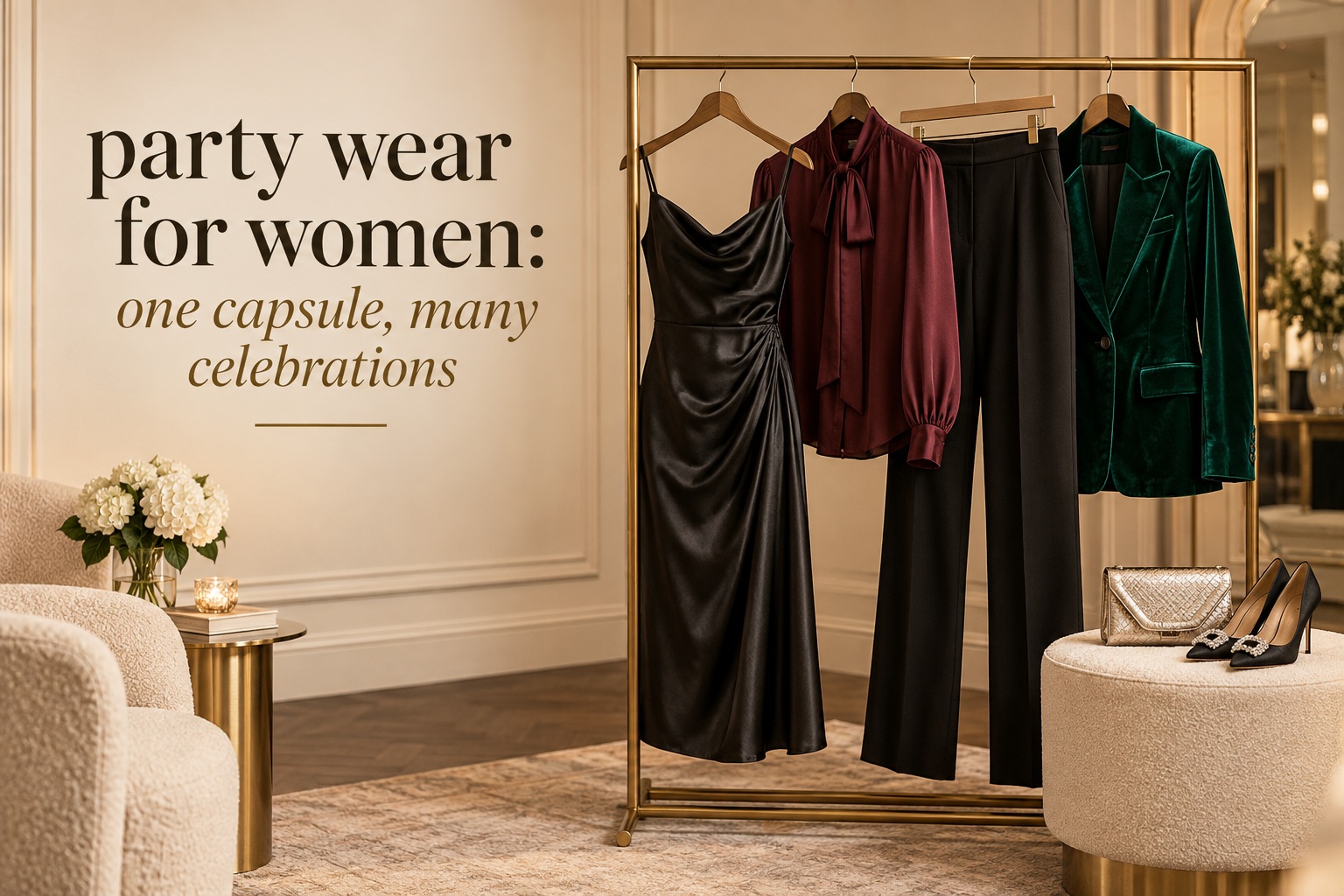
Party invitations are exciting until you open your closet and realize that every event seems to require a different answer. A family birthday, office celebration, cocktail hour, rooftop dinner, and formal evening may all appear on the same calendar, yet buying a separate outfit for each one creates a crowded wardrobe and very little confidence. The more useful approach to party wear for women is to build a small capsule of pieces that can change mood through styling.
A successful party wardrobe does not depend on owning the most dramatic dress. It depends on having a few dependable shapes, one or two interesting textures, a layer that makes the outfit practical, and shoes that let you move. Start with the event, choose the right foundation, then add only the level of shine or polish the occasion needs. This guide turns that process into a repeatable system.
Start With the Invitation, Venue, and Level of Movement
The invitation gives you the first styling information, even when it does not use a formal dress-code label. Look at the words, the time, the location, and the reason for the gathering. A daytime garden celebration usually needs lighter fabrics and easier shoes than an evening cocktail event. A company party needs polish and appropriate coverage, while a friend’s house party gives you more room for denim, a relaxed layer, or a playful accessory.
A useful starting point is the same one suggested by this party dress-code guide: read the wording, venue, time of day, and host together rather than relying on one clue. If the invitation says cocktail attire, a midi dress, jumpsuit, or dressy separates are sensible. If it says smart casual, dark denim with a polished top or tailored trousers with a refined knit can be enough. If it says black tie, choose a formal gown, elegant long dress, or sharply cut tuxedo-inspired alternative and keep the accessories intentional.
Your wedding has a lot of moving pieces. Your plan can still feel composed.
Zarellea organizes guests, vendors, budget, and timelines in one shared space — so you can make decisions with clarity, not stress.
Translate common party signals
- Casual or house party: use elevated everyday pieces such as straight jeans, a satin top, a fine knit, a short dress with boots, or a polished flat.
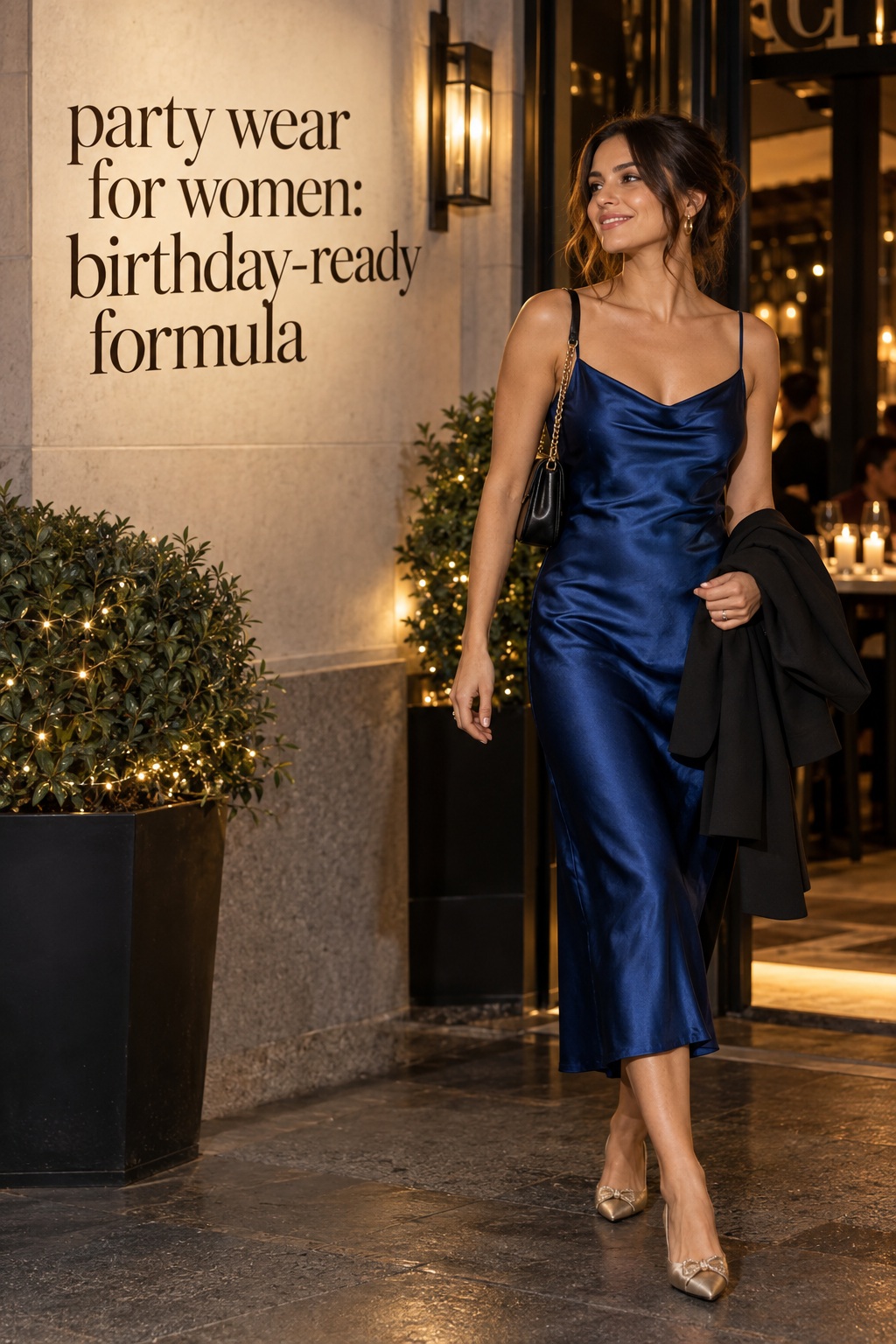
- Birthday dinner: choose a midi dress, a coordinated skirt and top, or trousers with a memorable blouse and a small bag.
- Office or work party: combine tailoring with one festive detail, such as velvet, a subtle sequin, a jewel color, or a statement earring.
- Cocktail party: reach for a dress, jumpsuit, skirt, or wide-leg trousers in a fabric that feels more special than office clothing.
- Outdoor or garden party: prioritize breathable fabric, a secure neckline, a practical heel or flat, and a layer that handles changing temperature.
- Formal evening: let the silhouette and fabric carry the formality, then keep the shoe, bag, and jewelry refined.
Movement matters as much as formality. Ask whether you will stand for hours, sit at a long table, walk on grass, dance, use public transportation, or move between indoor and outdoor spaces. A beautiful outfit that requires constant pulling, pinning, or balancing is not finished. The best party wear for women looks considered because it has already been tested against the actual evening.
If the dress code is missing, aim for the middle: polished separates, a simple dress with strong accessories, or dark trousers with a festive top. Cocktail dressing advice from The Budget Fashionista is especially useful here because it treats jumpsuits, skirts, and wide-leg pants as genuine alternatives to a dress. When you remain uncertain, add one refined element rather than several loud ones.
Build the Party Wear for Women Capsule From Five Clothing Blocks
A capsule works when every block has a clear job. You do not need five versions of the same party dress. You need different levels of structure, shine, coverage, and flexibility. The following five blocks can be adjusted for your climate, body preferences, budget, and personal style.
1. The dependable hero dress
Choose one dress that makes you feel ready without requiring complicated styling. A black midi, jewel-tone slip dress, fluid wrap dress, velvet column, or clean mini can fill this role. The ideal hero dress has a neckline that stays in place, a hemline you can walk in, and fabric that does not need constant steaming or adjusting. It should work with at least two pairs of shoes and one layer.
Think of the dress as a blank stage. A satin style can become cocktail-ready with metallic earrings and a small heel, then more relaxed with a leather jacket and ankle boots. A black knit dress can work for dinner with a refined belt, or for a winter celebration with opaque tights and a textured coat. The point is not that one dress fits every event. The point is that it covers several nearby levels of formality.
2. The polished separate
Separates give you control when a dress feels too obvious, too formal, or simply not like you. Start with one pair of tailored trousers, a midi skirt, or a sleek pair of dark jeans that holds its shape. Add a top that changes the message: satin, lace-lined, velvet, metallic knit, crisp silk-look fabric, or an interesting neckline. A fitted top balances wide trousers, while a fluid blouse works well with a narrow skirt or straight pants.
One strong separate can also make your existing wardrobe feel new. Who What Wear’s casual party examples show how a sparkly top, embroidered dress, or thoughtful accessory can transform familiar jeans and everyday pieces. Use that principle to avoid overbuying: keep the base simple and let one special item do the visible work.
3. The shine or texture piece
Every party capsule benefits from one item that catches light or adds tactile interest. It might be a sequin skirt, velvet blazer, metallic top, satin camisole, beaded bag, brocade jacket, or glossy shoe. This block creates celebration without forcing you into a full glitter look. For a work party, wear the textured piece with matte tailoring. For a casual gathering, use it with denim. For a formal dinner, repeat its color in a small accessory and keep the rest clean.
Texture is often easier to rewear than a very specific print. A velvet blazer can sit over a dress, trousers, jeans, or a skirt. A sequin skirt can work with a fine sweater, white shirt, fitted bodysuit, or simple tank under a jacket. Vogue’s party wardrobe edit similarly identifies a going-out top, sequin skirt, shimmery dress, embellished flats, convertible clutch, and statement earrings as useful building blocks.
4. The one-piece alternative
A jumpsuit, tailored romper, or coordinated vest-and-trouser set gives you the polish of a complete outfit while offering a different proportion from a dress. Choose a one-piece with a comfortable waist, a closure you can manage in a restroom, and trousers or shorts that do not ride up when you sit. A wide-leg jumpsuit looks elegant with a pointed shoe, while a fitted style can take a blazer or oversize jacket.
This block is especially useful when you want coverage, dislike skirts, or need an outfit that feels modern without depending on sparkle. A black jumpsuit with gold earrings can suit a cocktail dinner. A colored jumpsuit with a simple sandal can suit a warm-weather celebration. A tailored set can move from an office event to dinner when you swap the blouse, shoe, or jewelry.
5. The flexible layer
The layer is part of the outfit, not an afterthought. Choose one blazer, cropped jacket, refined cardigan, leather jacket, wrap, or tailored coat that works with your main pieces. It should solve a real problem: cold air conditioning, a chilly walk home, extra coverage, a less formal arrival, or a shift from daytime to evening. A sharp blazer makes satin and sequins feel controlled. A leather jacket makes a romantic dress feel more relaxed. A cropped cardigan softens a sleek skirt.
In a useful stylist checklist, Vogue highlights the blazer dress, tights, statement jewelry, and a compact party bag as pieces that can carry a look. You do not need those exact items or price points. The broader lesson is to select small wardrobe multipliers that change the same clothing block for a different setting.
Assemble Formulas for Casual, Cocktail, Work, Outdoor, and Formal Parties
Once the capsule is in place, dressing becomes a matter of choosing a formula. Each formula has a foundation, a contrast, and a finishing detail. Keep the structure, then change the color, fabric, or shoe so the result feels personal.
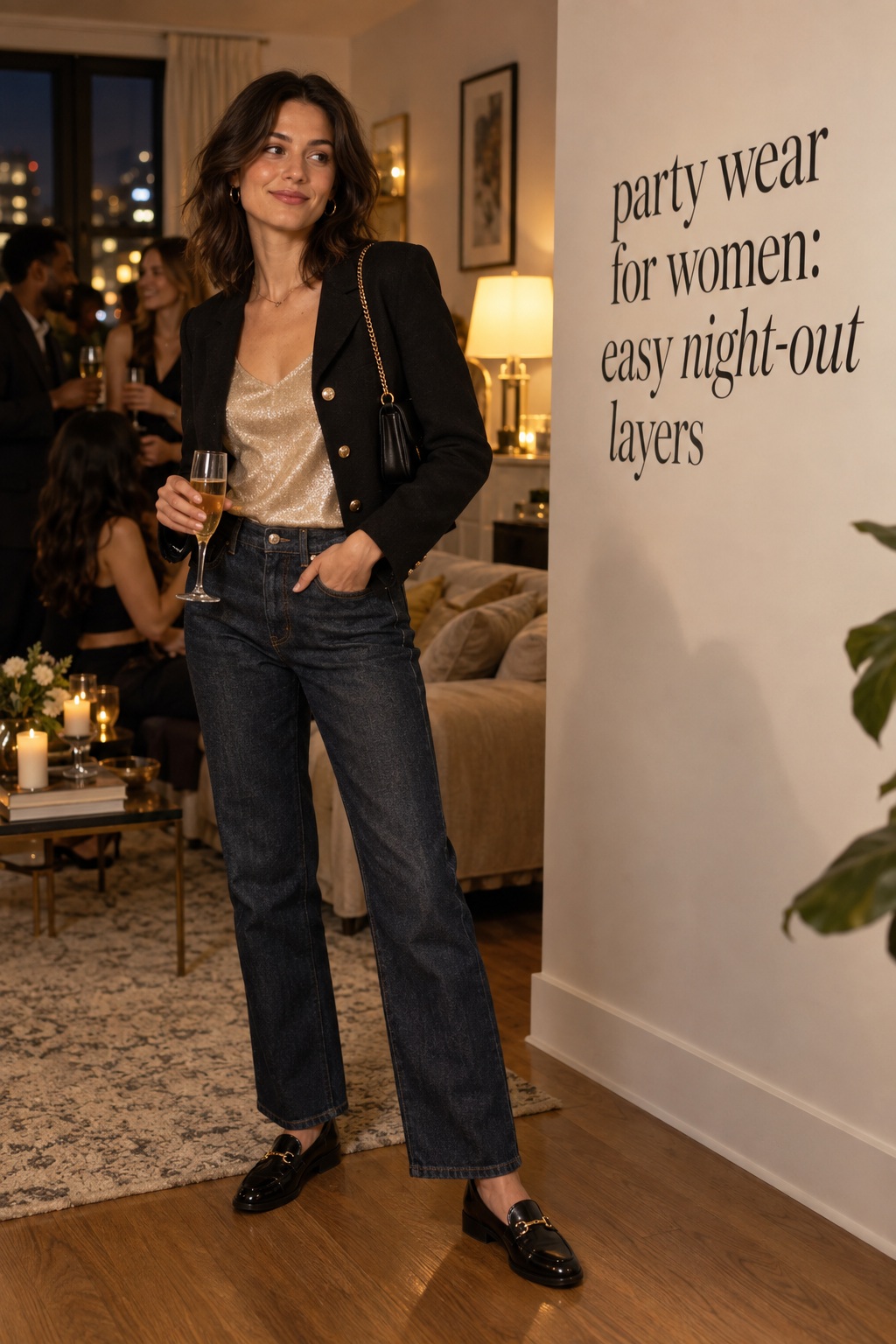
Casual party: dark base plus one going-out piece
Start with dark straight-leg jeans, a clean mini skirt, or relaxed tailored trousers. Add a satin camisole, sheer-but-lined blouse, sequined top, or fitted knit with a special neckline. Finish with ankle boots, polished sneakers, loafers, or a low heel depending on the venue. A compact shoulder bag keeps the outfit practical, while one bright earring or a glossy lip gives it a party finish.
This formula is useful for a house party, casual birthday, neighborhood restaurant, or informal drinks. Keep the proportions intentional. If the top is fitted and shiny, let the denim be simple. If the trousers are wide, use a closer-fitting top or tuck the blouse to show the waist. Casual does not mean every item should be relaxed at once.
Cocktail party: refined silhouette plus controlled contrast
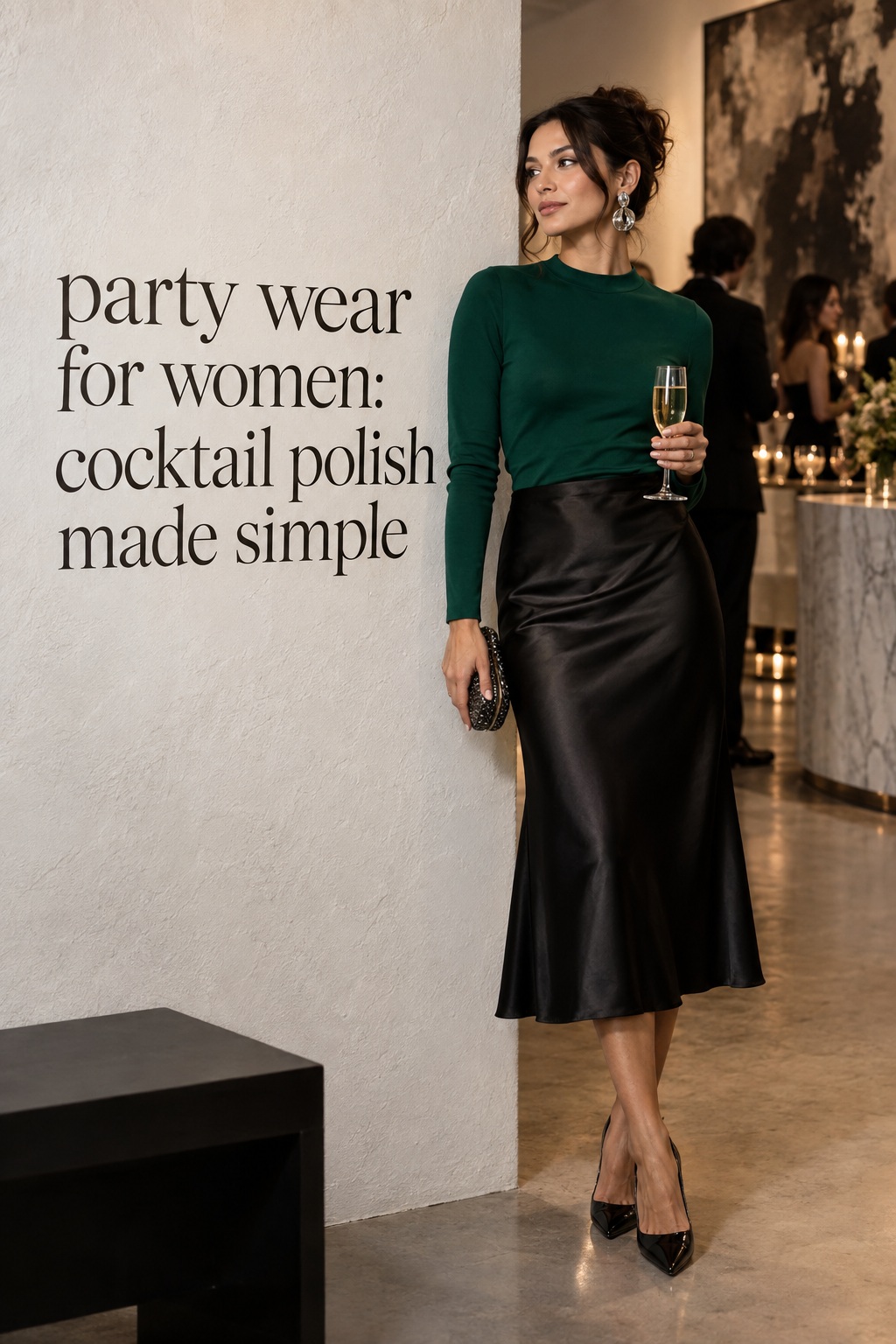
Use a midi dress, fluid jumpsuit, satin skirt, or wide-leg trouser with a fitted top. Pick one controlled contrast, such as a matte shoe with a glossy dress, a sharp blazer over a soft slip, or a sculptural earring with a plain neckline. A delicate sandal, kitten heel, pointed pump, or elegant flat can all work if the shape feels finished.
Before leaving, copy the fit test recommended by cocktail-dressing specialists: sit, stand, raise your arms, walk, and check that the neckline and hem stay where they should. The Budget Fashionista’s guide also recommends limiting accessories so the primary piece remains visible. If your dress already has shine or draping, two deliberate accessories are usually enough.
Work party: tailoring plus a festive signal
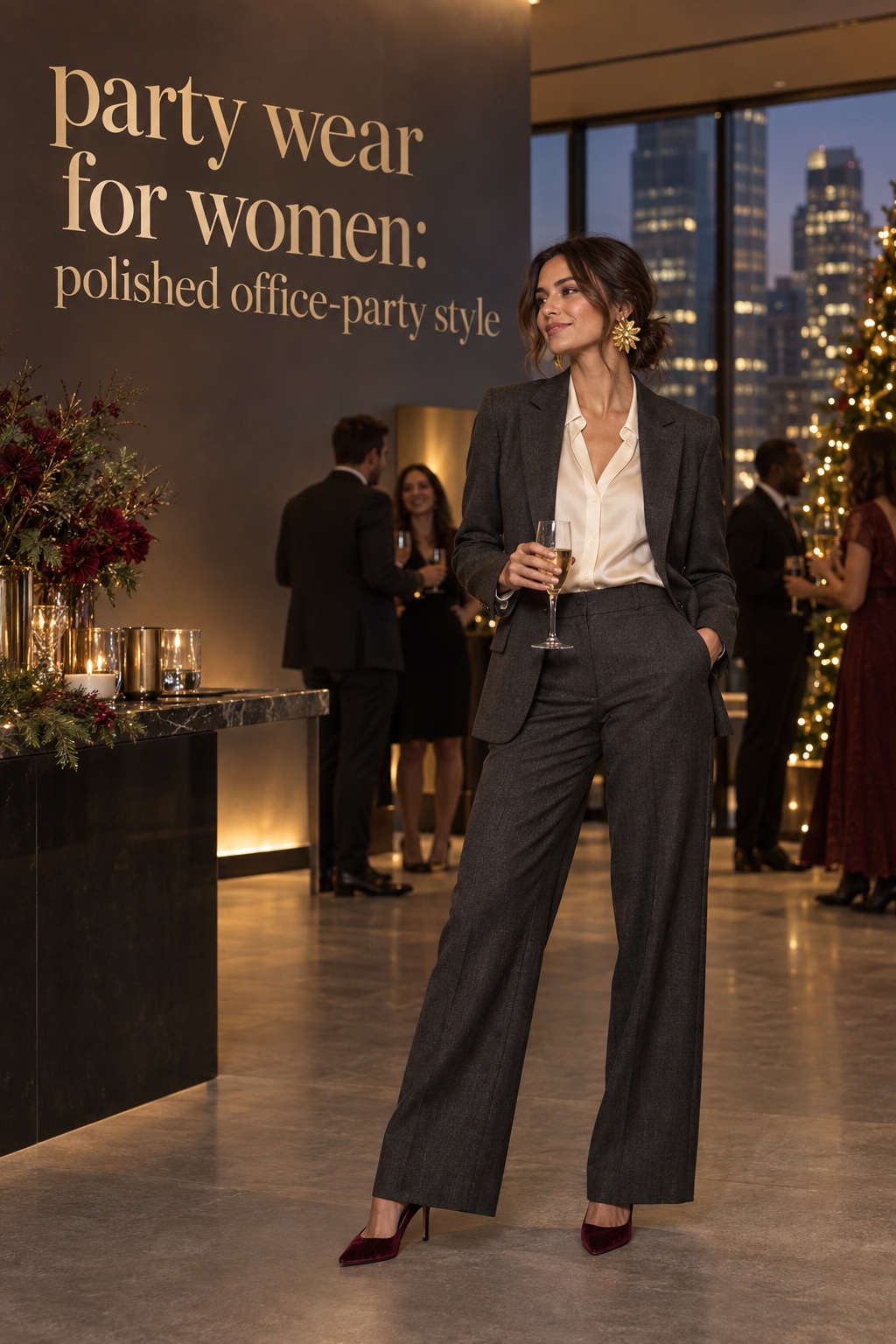
Build from trousers, a below-the-knee skirt, a knit dress, or a simple suit. Add one festive signal: velvet shoes, a silk-look blouse, a jewel-tone jacket, a metallic belt, a polished brooch, or a statement earring. Keep the neckline and hem appropriate for your workplace, and let the unusual texture or color show personality.
A work party often includes standing, conversation, and photos with colleagues, so movement and coverage matter. A blazer gives you a professional arrival layer, but you can remove it later if the room becomes warmer. Avoid a look that only works when you are posing. The most successful party wear for women in a professional setting looks confident before the first drink and after the last one.
Outdoor party: breathable foundation plus useful protection
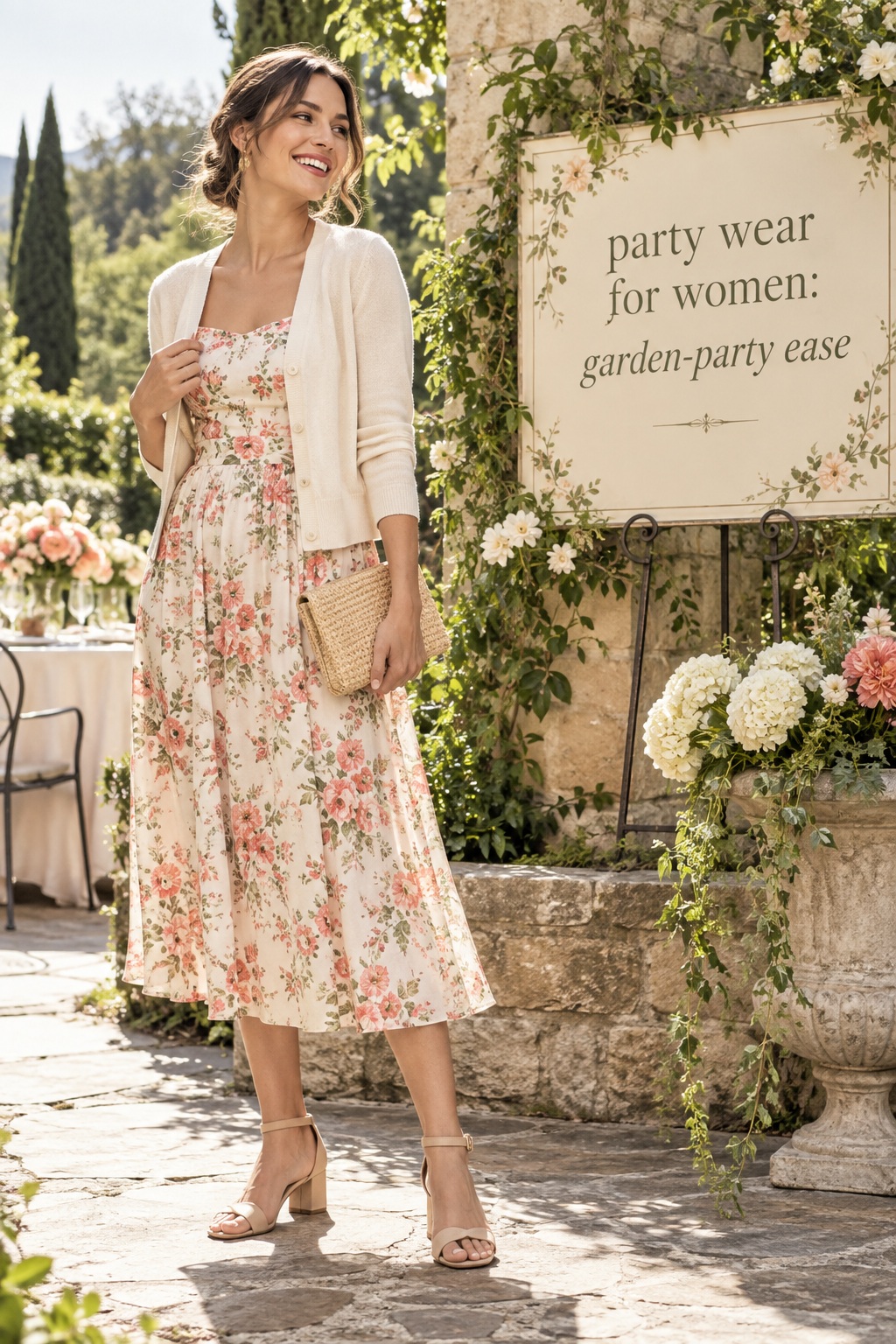
Choose a cotton-poplin dress, linen-blend set, fluid midi, tailored shorts with a statement blouse, or lightweight jumpsuit. Add shoes that can handle the surface: block heels, dressy flats, low wedges, or clean sandals. Bring a layer even if the afternoon is warm, and consider whether the event will continue after sunset. A woven or smooth shoulder bag can feel festive without looking like beachwear.
Keep the color story easy to read in natural light. One saturated shade, a floral print, or a light neutral with metallic jewelry is enough. If the party is in a garden, choose a hem that will not drag and skip a heel that sinks into grass. If it is on a rooftop, secure your hair, neckline, and outer layer before you leave.
Formal party: long line plus edited glamour
For a formal evening, use a floor-length dress, a refined maxi, a formal jumpsuit, or a tuxedo-inspired suit when the invitation allows it. Choose one main statement: a liquid fabric, an elegant neckline, a strong color, a clean train, or restrained embellishment. Keep the bag small and the jewelry proportional to the neckline and hairstyle.
Do not confuse formal with uncomfortable. Check that you can sit, walk up steps, enter a car, and carry the essentials you need. A long dress may need a secure hem or a shorter lining. A strapless shape may need a properly fitted bodice rather than constant adjustment. The goal is composed glamour, not a costume you have to manage all evening.
Finish With Shoes, Layers, Accessories, and Repeat-Wear Decisions
Accessories should complete the outfit’s message. They should not compete with every focal point at once. Start by deciding what the eye should notice first: the dress, the texture, the color, the shoe, or the jewelry. Then choose one supporting detail and one practical item. This is how a simple base becomes party wear without becoming visually crowded.
Choose shoes for the actual floor plan
Strappy heels suit a seated cocktail dinner, but a block heel, kitten heel, polished loafer, or dressy flat may be better for an event with standing and walking. Boots can ground a short dress or skirt in cold weather. A pointed flat can look elegant with tailored trousers or a midi dress. Test the shoes with the outfit, not separately, because the visual weight of the shoe changes the proportions.
If you are wearing a pair for the first time, walk on several surfaces at home. Check whether the strap rubs, the heel catches, or the shoe changes your stride. Comfort is not a compromise to style. It lets you hold your posture, move naturally, and stop thinking about your feet.
Make the layer visible and useful
Coordinate the outer layer with the indoor look. A long coat over a short dress creates a different line from a cropped jacket. A blazer over a camisole adds structure, while a soft cardigan can reduce the sharpness of sequins or satin. If the layer is likely to stay on for photos, choose one that looks complete with the outfit rather than treating it as emergency coverage.
Use bags and jewelry to control the level of glamour
A compact shoulder bag, clutch, or small top-handle bag is usually easier for parties than an oversized everyday tote. Choose a smooth finish when the clothing is textured, or use beading and shine when the base is plain. Jewelry should follow the neckline: earrings work beautifully with an open shoulder or high neck, while a necklace can define a simple, low neckline.
For a quick upgrade, change the accessories before changing the whole outfit. A bold earring, metallic shoe, slim belt, polished hair accessory, or deeper lip can move a simple dress from dinner to celebration. The same idea appears in Vogue’s stylist-approved party checklist, where small accessories and tights act as high-impact wardrobe multipliers.
Ask whether the outfit can be worn again
Repeat wear is a useful test for buying or keeping party clothing. Can the dress work with a jacket and boots? Can the blouse work with jeans? Can the trousers move from work to dinner? Can the jewelry make a basic outfit feel special? If the answer is yes, the piece earns space in your capsule. If it only works for one theme, one season, and one photograph, consider whether you genuinely love it before adding it.
Review the Look Before Leaving and Avoid Common Mistakes
Give yourself ten minutes for a final review. Put on the complete outfit, including shoes, layer, bag, and jewelry. Sit down, walk across the room, reach for something, and turn around. Look at the outfit from a distance and in a normal mirror rather than only in a close selfie. A party outfit is ready when the parts stay in place and the balance feels intentional.
- Too casual: replace one everyday item with a refined fabric, sharper shoe, or more structured bag.
- Too formal: add denim, a relaxed jacket, a simple knit, or a less delicate shoe.
- Too busy: remove one statement detail and repeat a quiet color from the main piece.
- Too revealing for the setting: add a layer, tights, a camisole, or a longer hem that lets you move comfortably.
- Too cold: build the coat, tights, boots, or cardigan into the look from the start.
- Too uncomfortable: change the shoe, underlayer, closure, or fit before changing the entire idea.
- Not personal enough: add one color, texture, piece of jewelry, or styling detail that feels like you.
The strongest party wear for women is not a single trend or silhouette. It is a wardrobe that lets you make a clear decision quickly. Start with the invitation, choose one of five clothing blocks, add the right shoe and layer, then edit the accessories. That sequence gives you enough glamour for the occasion and enough practicality to enjoy it.
FAQ
What is the safest party outfit for women when there is no dress code?
Choose a polished middle ground: a midi dress, dark tailored trousers with a special top, or dark jeans with a refined blouse and good shoes. Add one accessory that can make the look more festive if the room is dressier than expected. Asking the host is always best, but smart casual is a reliable starting point.
Can women wear trousers as party wear?
Yes. Wide-leg trousers with a fitted satin top, a tuxedo-inspired suit, a tailored jumpsuit, or straight trousers with a statement blouse can all look party-ready. Use fabric, fit, color, and accessories to create the level of polish the event requires.
How many party outfits should a small capsule wardrobe include?
Start with one dependable dress, one polished separate, one shine or texture piece, one jumpsuit or coordinated set, and one flexible layer. These blocks can create several outfits when you change shoes, bags, jewelry, and proportions. Add more only when your calendar or lifestyle reveals a genuine gap.
How can I make a simple black dress feel festive?
Change the accessories first. Try a metallic or beaded bag, statement earrings, a bright shoe, sheer or opaque tights, a velvet jacket, or a polished belt. Keep the number of focal points limited so the dress still anchors the outfit.
What shoes are best for a party where I will be standing?
Choose a block heel, kitten heel, supportive dressy flat, polished loafer, or low wedge that you can walk in confidently. Match the shoe to the surface and expected movement. A lower heel often looks more elegant than a taller one when it allows you to stand naturally.
How do I dress for a party in cold weather?
Plan the layer as part of the outfit. Add tights, boots, a blazer, leather jacket, refined cardigan, or tailored coat according to the dress code. A long-sleeve dress, velvet texture, satin with a warm coat, or wide-leg trousers can provide coverage without losing the party feeling.
How can I avoid looking overdressed at a casual party?
Keep one glamorous item and make the rest familiar. Wear a sequin top with jeans, a satin skirt with a simple knit, or a dress with a denim or leather layer. Relaxed shoes and a practical bag can also lower the formality without making the outfit look unfinished.
Should party accessories match each other?
They do not need to match exactly, but they should share a visual relationship. Repeat a metal, color, finish, or level of formality across two accessories. For example, pair gold earrings with a warm metallic bag, or let a jewel-tone shoe echo the color of the dress.
Leave a Reply