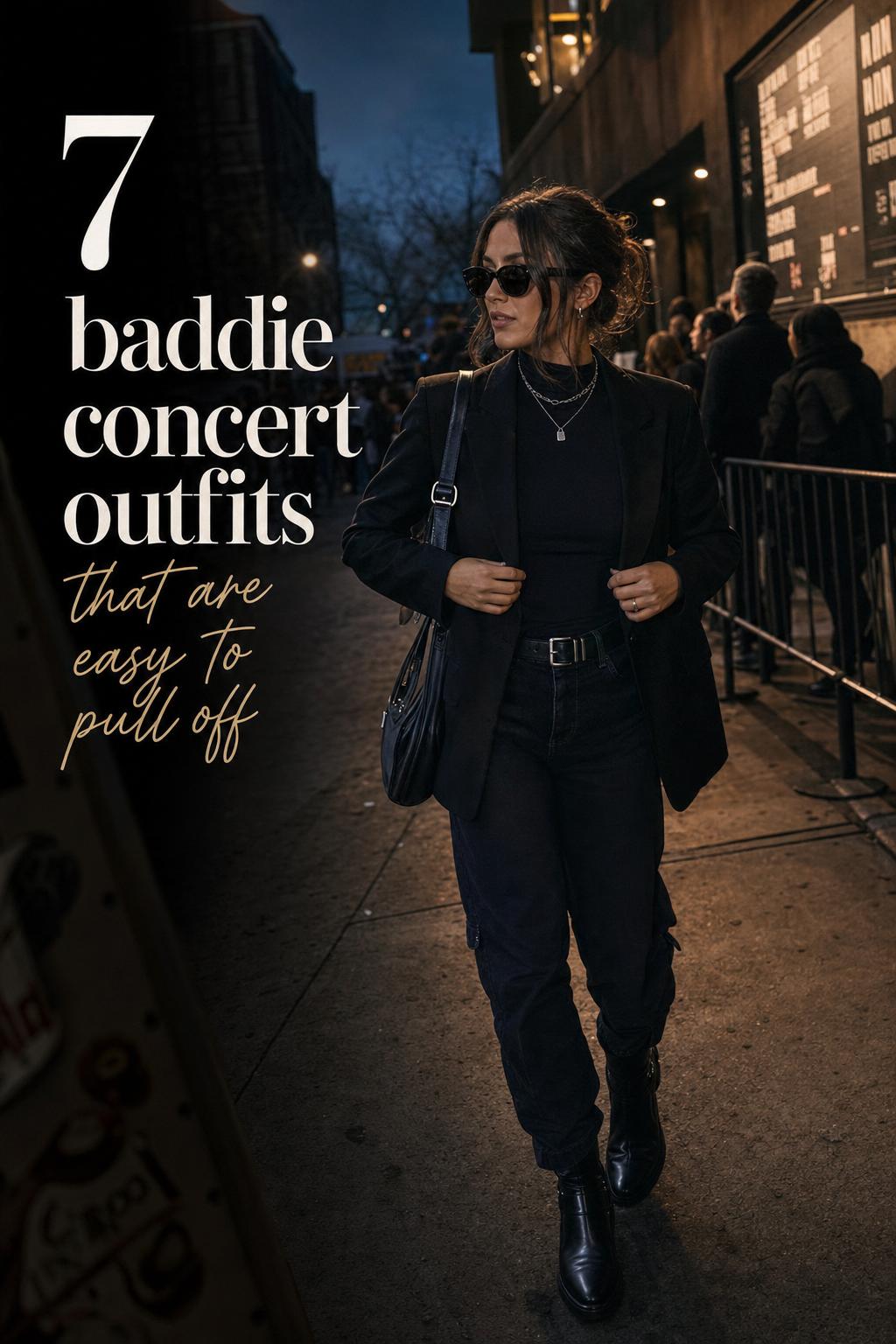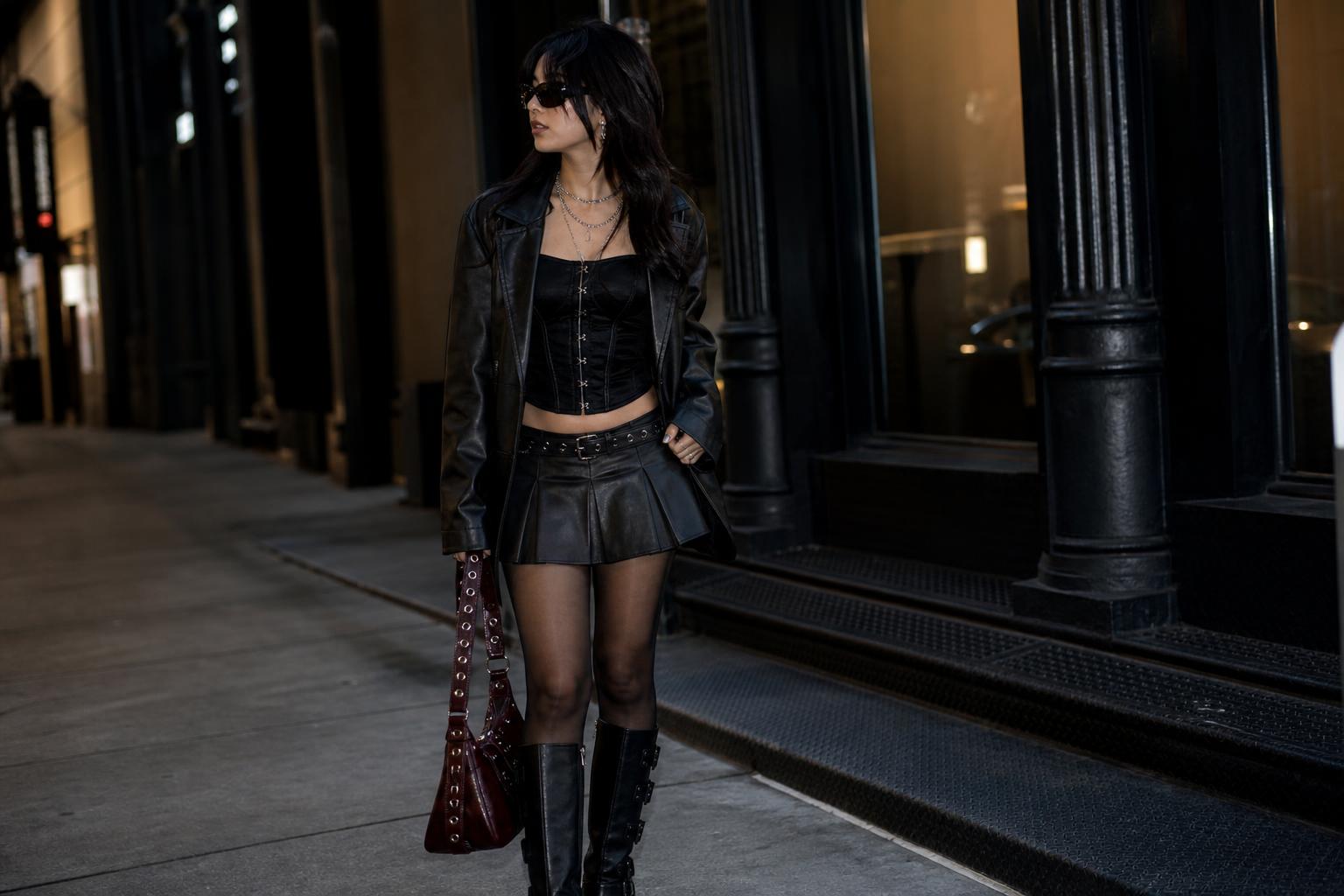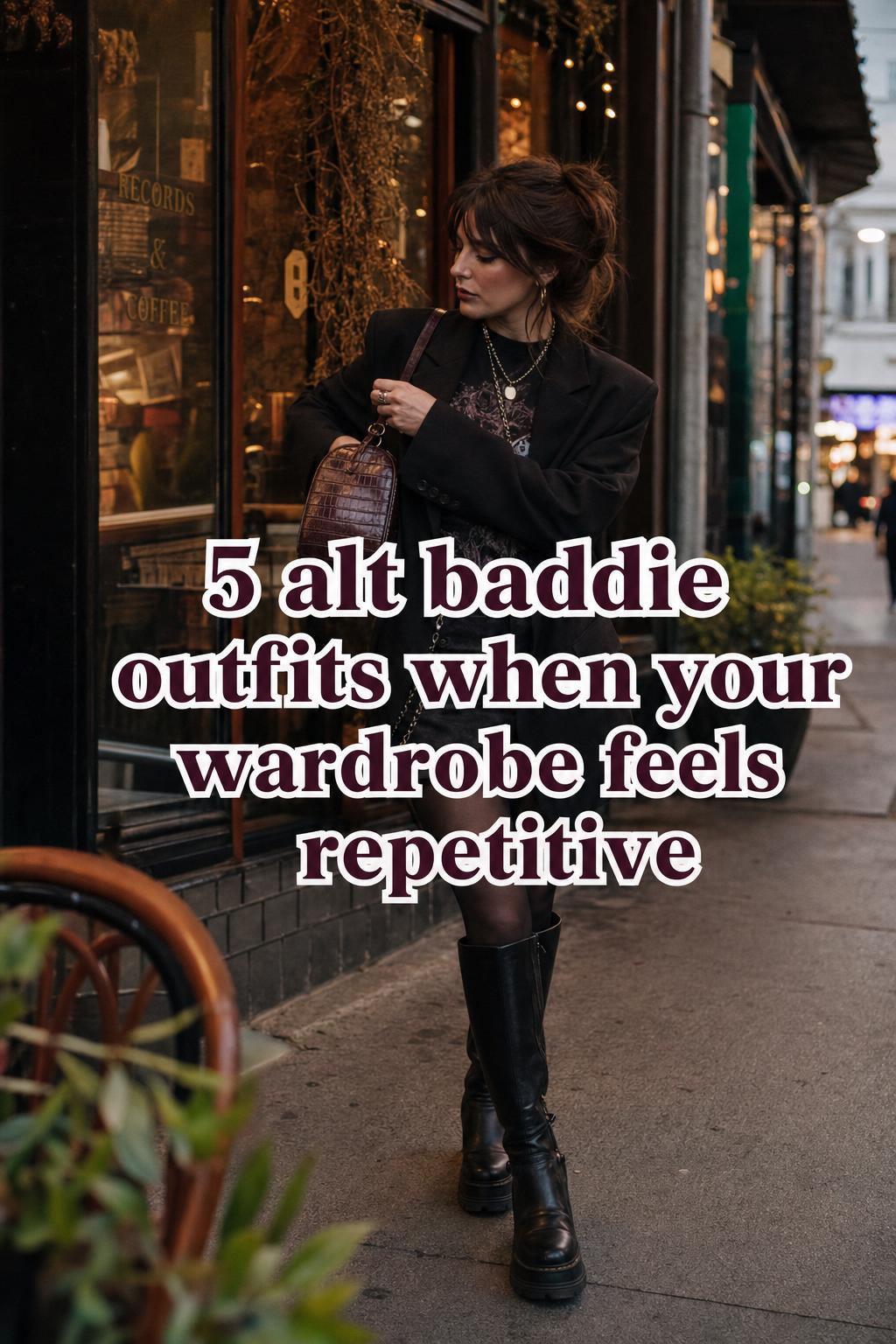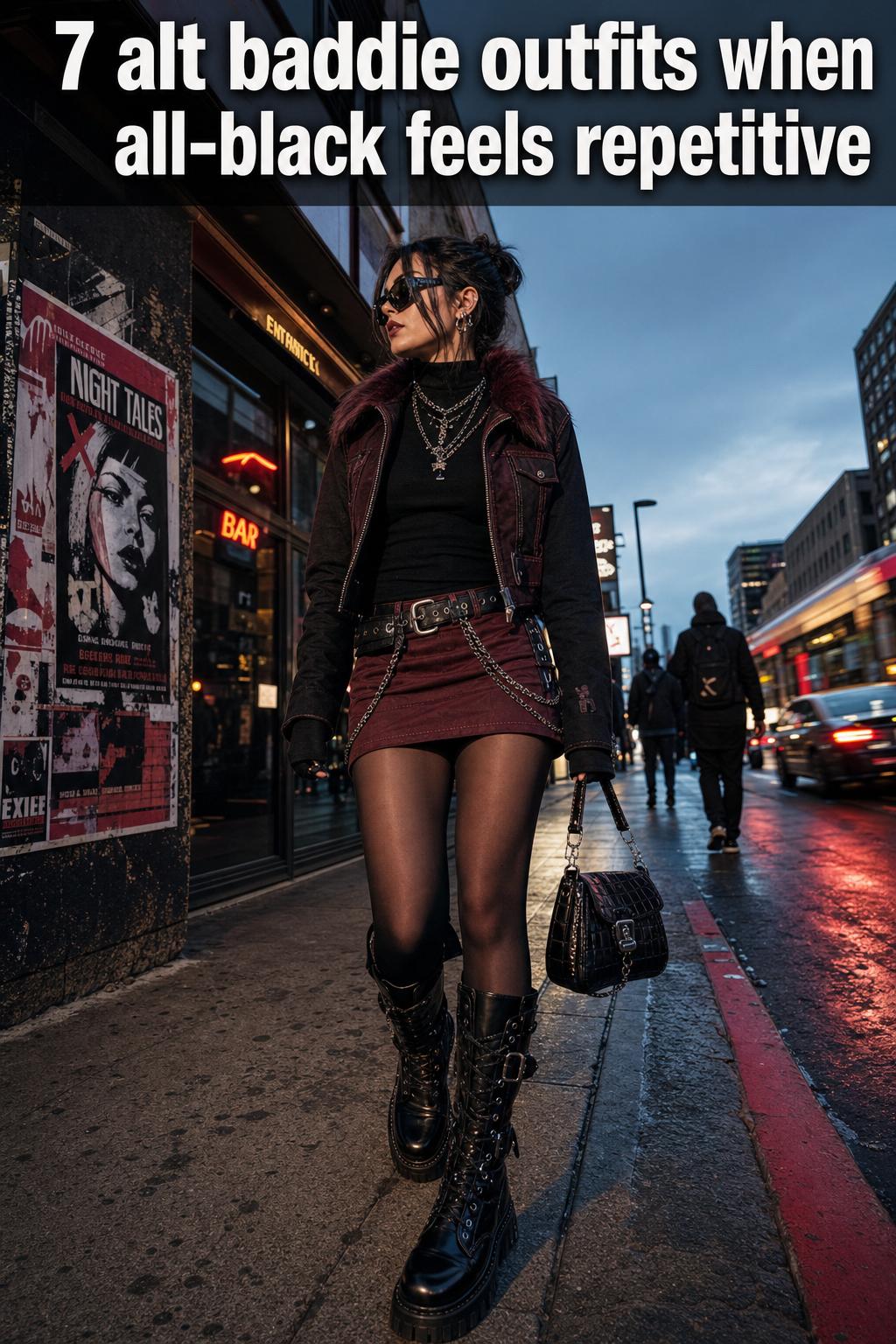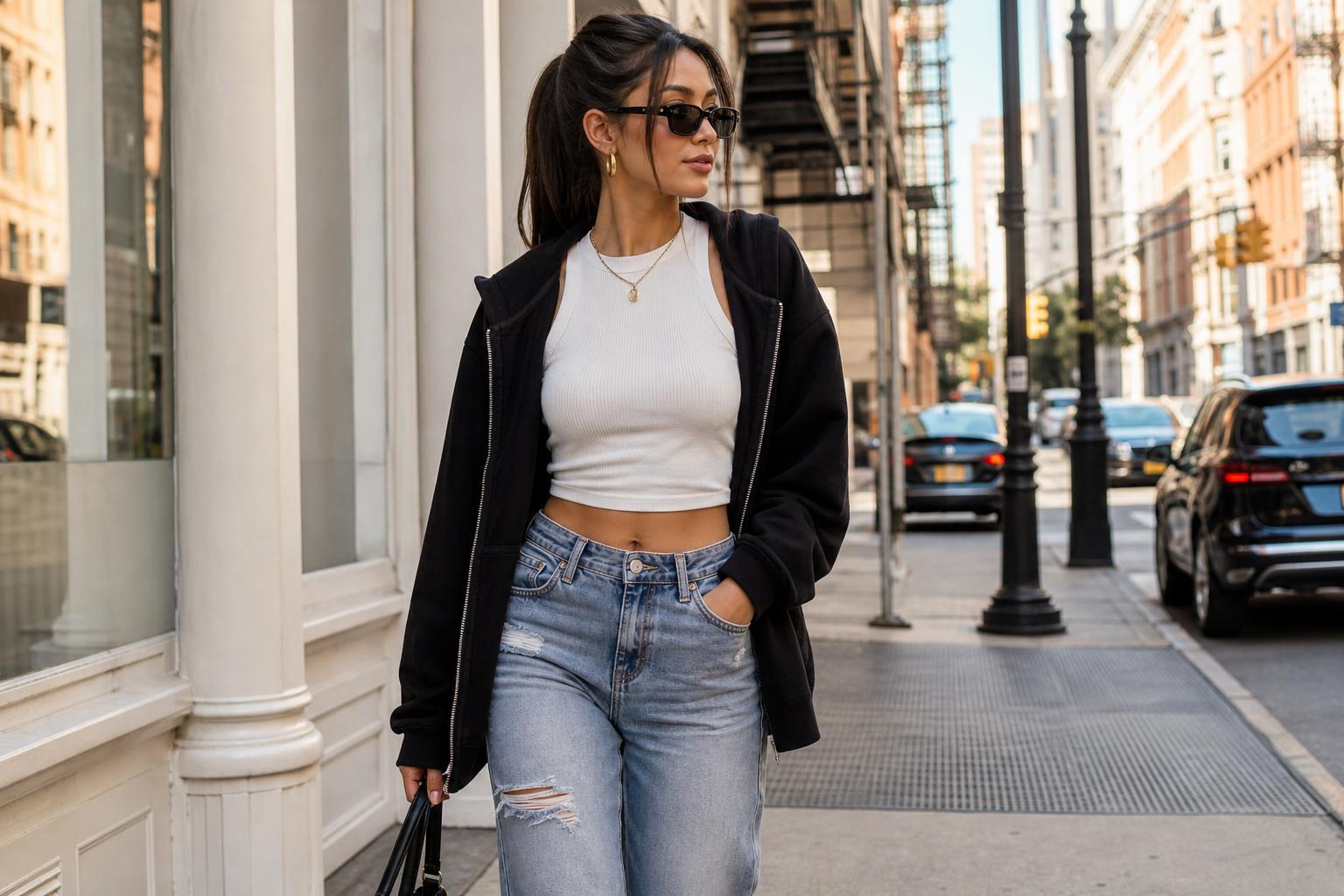
Category: Baddie Outfits

Baddie outfits is your go-to destination for bold, confident, and trend-forward fashion inspiration. Explore stylish outfit ideas featuring cargo pants, crop tops, oversized jackets, denim, bodycon dresses, sneakers, heels, and statement accessories. Inspired by street style, social media trends, and modern urban fashion, these looks are designed to help you express confidence and individuality. Whether you’re dressing for a casual day out, a night with friends, a vacation, or a special event, you’ll find endless baddie aesthetic outfit ideas to elevate your wardrobe and stay on top of the latest fashion trends.

  • Spring Cute Baddie Outfits With Day-to-Night Edge

    Spring Cute Baddie Outfits With Day-to-Night Edge

    On any given afternoon, the line between streetwear ease and polished glamour can feel surprisingly narrow. That is precisely why cute baddie outfits continue to hold attention: they sit at the intersection of casual confidence, body-aware silhouettes, and high-impact accessories. Yet the phrase is often used too broadly. A casual baddie look, a glam baddie look, and an edgy streetwear interpretation may share denim, crop tops, boots, or hoop earrings, but they do not create the same visual result.

    This comparison breaks down the main branches of the baddie aesthetic so readers can understand how the look shifts from relaxed daytime dressing to sharper night-out styling. Along the way, the article clarifies what defines the aesthetic, how proportion and color palette change its mood, and how to build cute baddie outfits that feel intentional rather than overworked.
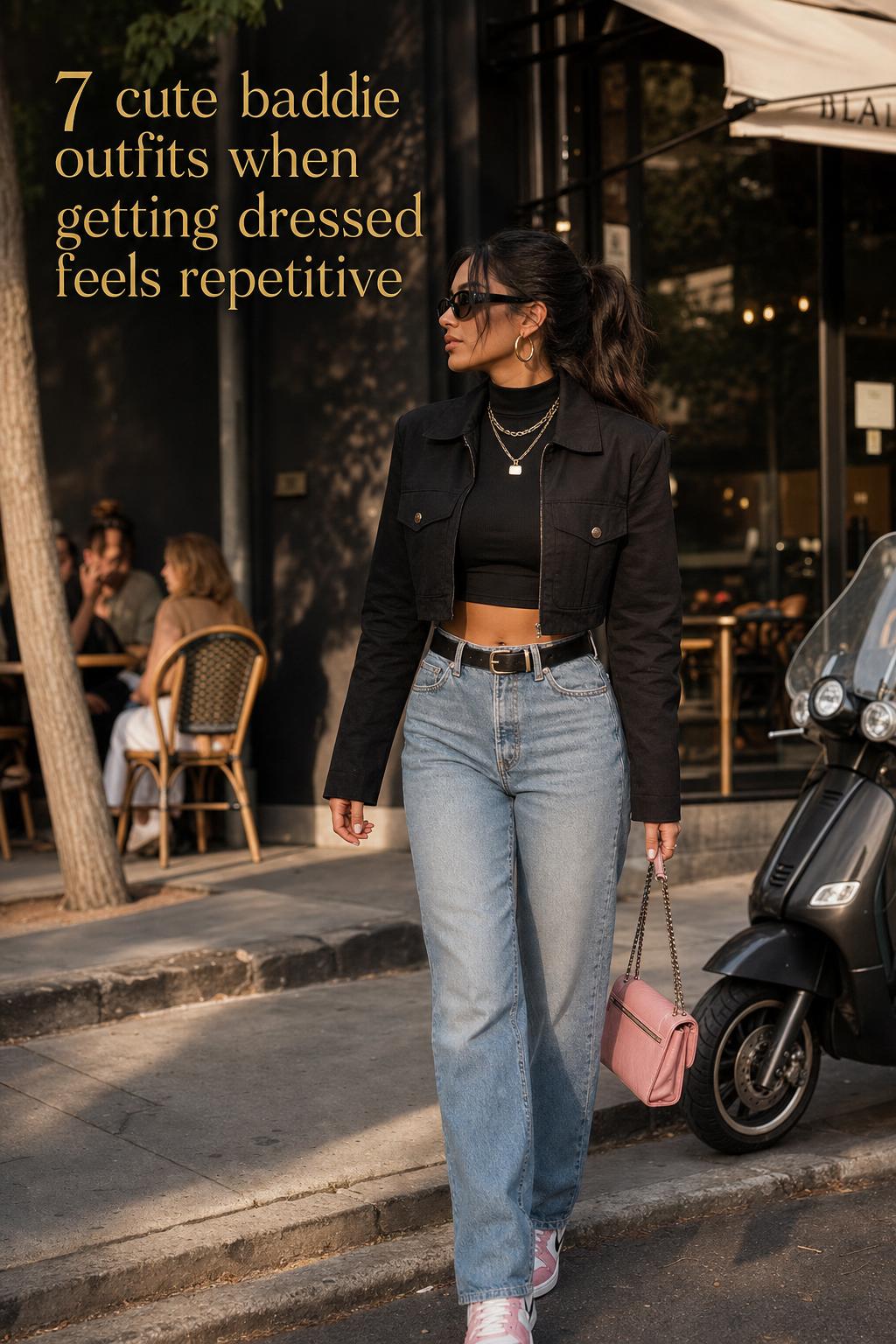
    Cute baddie outfits street style look on an adult woman walking past a modern cafe at golden hour in the city
    A confident woman strolls past a modern café at golden hour in a polished cute baddie outfit with denim, black layers, and soft pink accents.

    The shared language of the baddie aesthetic

    Before comparing substyles, it helps to define the common foundation. Across fashion portals, lifestyle blogs, and collection pages, the baddie aesthetic is consistently tied to modern streetwear glam: denim, crop tops, fitted dresses, bodysuits, oversized tees, jackets, boots, sneakers, sunglasses, chains, and hoop earrings all appear as recurring wardrobe anchors. The mood is confident, visually composed, and often influenced by Y2K energy, Bratz-inspired styling, and an urban, Instagram-ready finish.

    What changes from one version to another is not the existence of these staples, but how they are balanced. A hoodie with shorts and sneakers produces a very different effect from a sleek dress with heels and statement shades. In other words, the baddie look is not one outfit formula. It is a styling framework built around attitude, contrast, and deliberate emphasis.
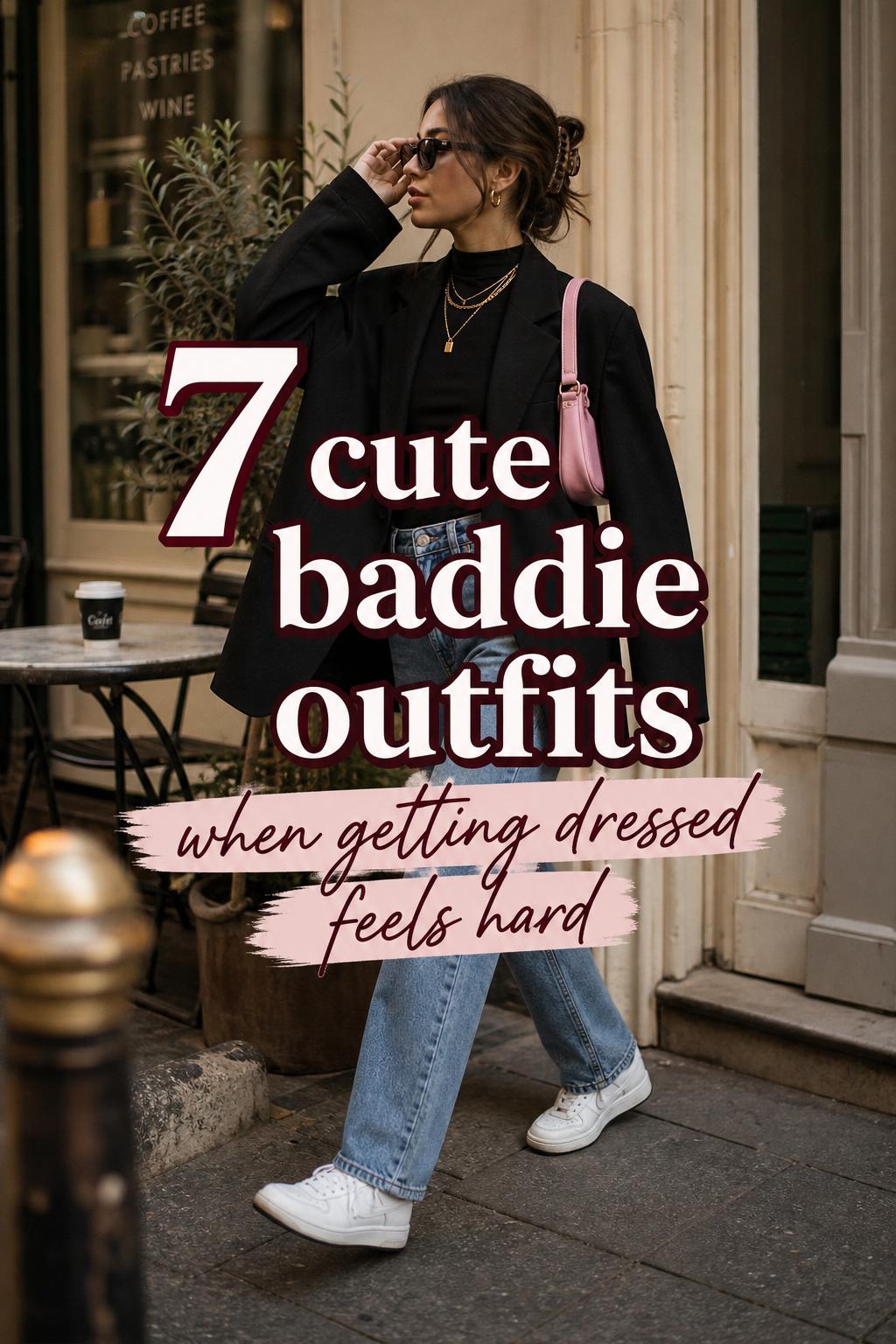
    Cute baddie outfits street style: adult woman in black blazer and denim adjusting sunglasses at a golden-hour sidewalk café
    A confident street-style moment pairs a black blazer and straight-leg denim with sleek accessories in golden-hour city light.

    Style overview: casual baddie

    The casual baddie approach is the most accessible and, for many wardrobes, the most wearable. It leans into comfort-chic dressing through hoodies, crop tops, athleisure pieces, denim, relaxed jackets, and sneakers. The silhouette usually combines one fitted element with one looser one: a cropped top against wide or straight denim, or a fitted bodysuit under an oversized layer. This keeps the outfit from feeling flat while preserving ease of movement.

    Its color palette can move between classic black, washed denim blues, and bright accents, with pink and other color-forward notes adding personality. The fabrics are practical rather than precious, and the finish is less about formal glamour than everyday confidence. If glam baddie dressing is a spotlight, casual baddie style is a well-edited daytime lens.

    Style overview: glam baddie

    Glam baddie style sharpens the same vocabulary. Instead of relying on laid-back structure, it emphasizes sleek silhouettes, dresses, bodysuits, heels, boots, statement jewelry, and more deliberate makeup-forward styling. The overall line is cleaner and more sculpted. Pieces sit closer to the body, details appear more intentional, and accessories are less incidental.

    Color also becomes more strategic here. Classic black is especially effective because it creates a polished backdrop for sunglasses, hoops, chains, and bold footwear. Satin or mesh-inspired evening textures, as referenced in seasonal night-out styling, shift the outfit toward a dressier register without losing the streetwear edge that keeps the look recognizably baddie rather than conventionally formal.
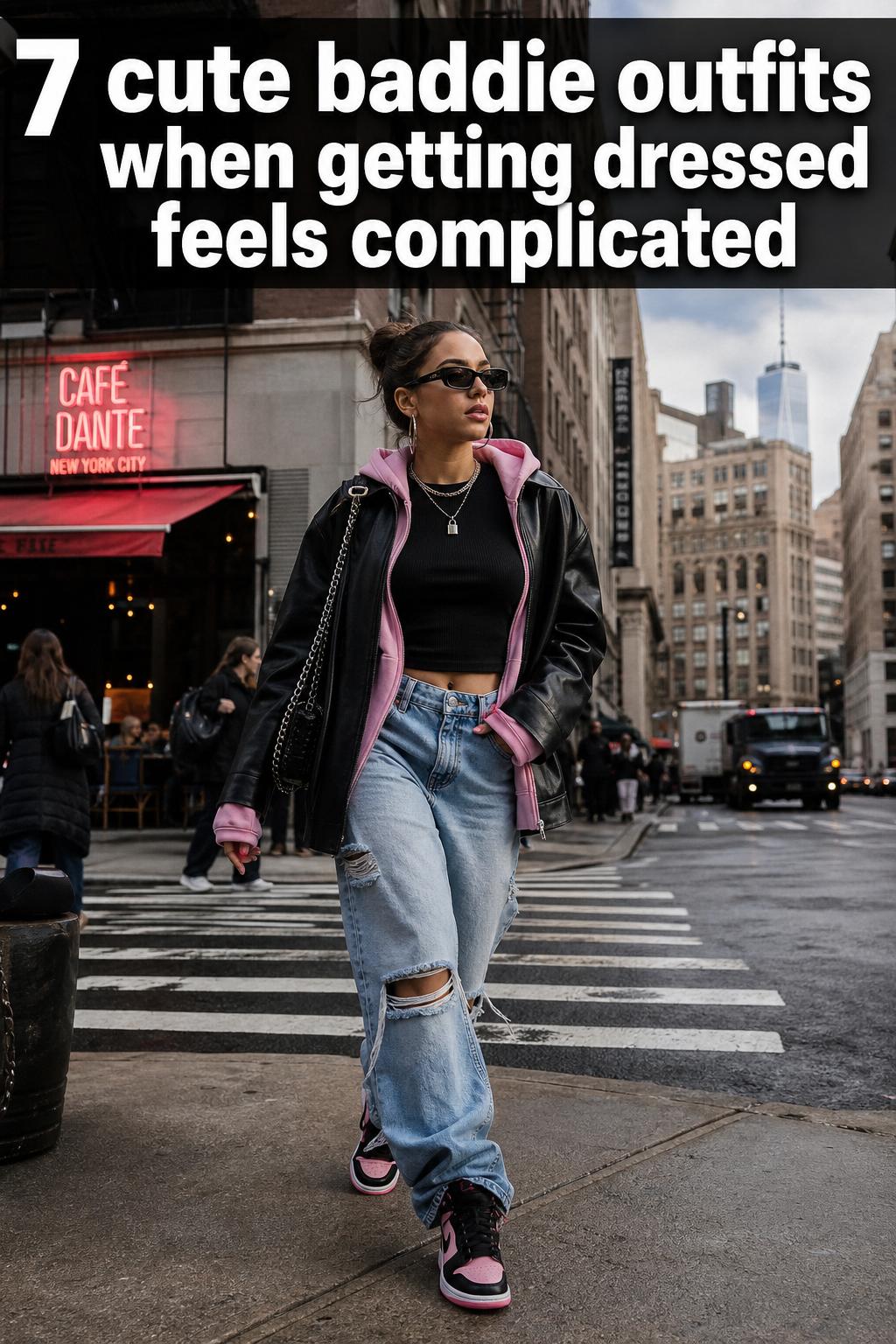
    Cute baddie outfits styled in a chic streetwear look with crop top, high-waisted pants, and sneakers.
    A chic streetwear ensemble showcases cute baddie outfits with confident, modern styling.

    Style overview: edgy streetwear baddie

    The edgy streetwear version sits slightly apart from the first two because it foregrounds attitude over softness. Graphic tees, oversized tops, denim, jackets, boots, and stronger proportions define the visual language. It remains close to the baddie aesthetic’s urban roots and often feels the most directly connected to streetwear culture.

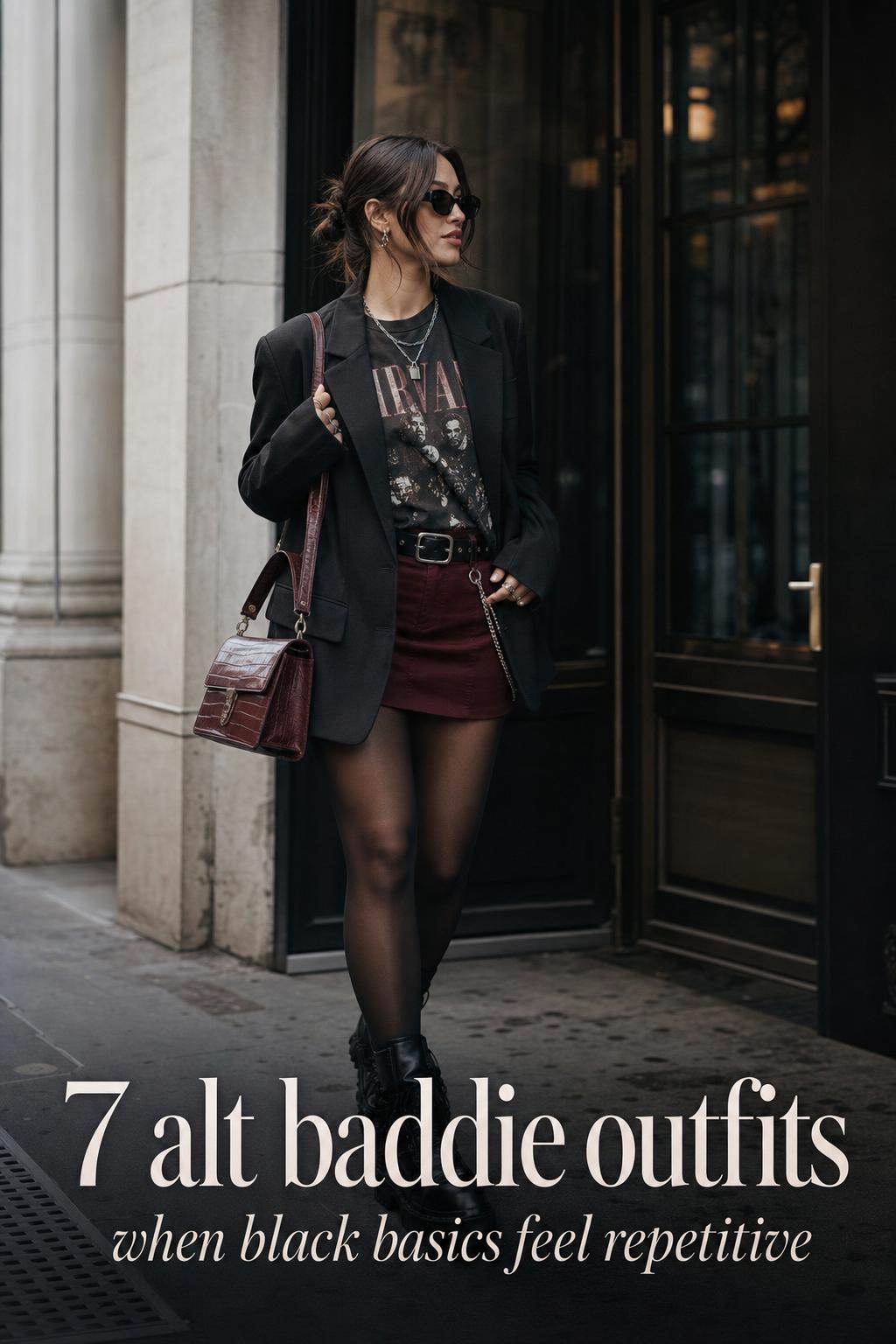
    Where casual baddie style softens the mood and glam baddie style refines it, edgy baddie dressing intensifies it. The result can be more dramatic even when the wardrobe pieces themselves are familiar. A pair of jeans becomes edgier when paired with a graphic tee, chunky boots, dark shades, and a sharper layering approach. The silhouette may be looser overall, but the statement is stronger.
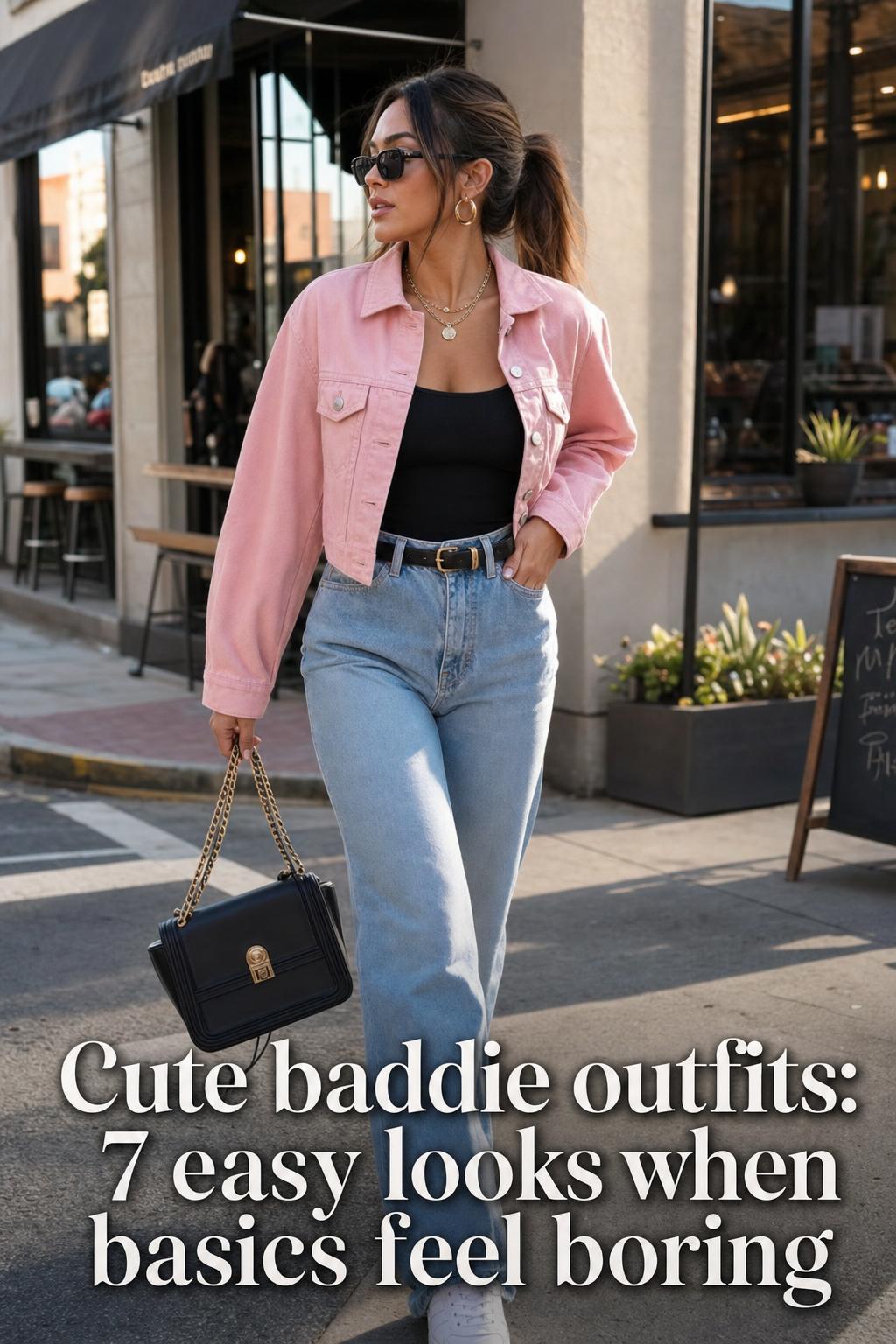
    Cute baddie outfits street style: adult woman in cropped jacket, high-waisted denim, hoops, layered jewelry and sneakers on a city sidewalk
    A candid city street-style moment showcasing a polished-yet-relaxed cute baddie outfit with layered accessories and clean sneakers.

    Where these styles overlap and why they are often confused

    They overlap because they are built from many of the same components. Denim appears across nearly every interpretation, whether in jeans, shorts, or jackets. Crop tops are equally versatile, working under an oversized layer during the day or standing alone with fitted bottoms for a cleaner evening look. Boots cross categories with ease, and accessories such as hoop earrings, sunglasses, and chains help unify the aesthetic even when the clothing shifts from relaxed to dressy.

    This overlap can make two different outfits seem similar at first glance. In practice, the difference lies in silhouette discipline. Casual baddie dressing uses contrast for ease; glam baddie dressing uses contrast for emphasis; edgy baddie dressing uses contrast for impact. Once you start reading proportion, color balance, and styling density, the distinctions become much easier to identify.

    The clearest differences at a glance

    • Casual baddie favors comfort-chic pieces such as hoodies, athleisure, denim, and sneakers.
    • Glam baddie relies on sleeker dresses, bodysuits, heels, boots, and a more polished finish.
    • Edgy streetwear baddie pushes oversized layers, graphic elements, and stronger visual contrast.
    • Casual looks often feel daytime-friendly, while glam reads as night-out ready.
    • Edgy styling tends to be the most urban in mood, while cute baddie outfits often soften the look through pinks, fitted tops, or balanced proportions.

    Silhouette is the real dividing line

    In editorial terms, silhouette is where the comparison becomes useful. Cute baddie outfits rarely succeed through individual pieces alone. The look depends on what each item does to the line of the body. High-contrast outfits work best when one area feels controlled and another feels relaxed. That is why denim and crop tops appear so frequently together: they create a familiar framework in which volume and exposure can be balanced without looking accidental.

    In a casual baddie outfit, the silhouette might begin with straight jeans and a cropped top, then soften with a hoodie or oversized jacket. In a glam version, the same cropped proportion would likely be streamlined through a fitted dress, bodysuit, or sleek top with heels. In an edgy interpretation, the line becomes less about neatness and more about presence, often with heavier footwear and more visible layering.

    Color stories: pink baddie, neon energy, and classic black

    Color is one of the easiest ways to make one branch of the aesthetic feel distinct from another. Pink baddie outfits bring a softer but still high-visibility approach, often supported by gold jewelry and athleisure references. This version reads playful, highly curated, and unmistakably color-forward. It is especially effective when the silhouette remains clean, since too many decorative notes at once can dilute the strength of the palette.

    Neons and bright colors shift the aesthetic toward a more attention-seeking mode. They work best when grounded by familiar baddie staples such as denim, sunglasses, or a simple fitted top. Classic black, by contrast, is the most versatile option and often the easiest route into glam baddie dressing. It sharpens shape, lets accessories stand out, and gives boots or heels more visual authority.

    Readers often ask whether cute baddie outfits need bold color. They do not. Color is a styling choice, not a requirement. The more essential principle is visual focus. A bright pink set, black bodysuit with denim, or neon-accented casual look can all work if the rest of the outfit supports that focal point rather than competing with it.

    Visual breakdown: layering, accessories, and footwear

    Layering approach

    Casual baddie layering tends to be functional and relaxed: a jacket over a crop top, a hoodie with shorts, or an oversized tee paired with more fitted bottoms. Glam layering is lighter but more deliberate, often relying on cleaner outerwear or minimal layering so the silhouette remains visible. Edgy streetwear baddie looks use layering to increase drama, especially through oversized tops, jackets, and graphic pieces.

    Accessory logic

    Accessories unify all three styles, but their role changes. In casual outfits, hoop earrings and sunglasses add finish to otherwise simple clothing. In glam looks, chains, statement shades, and jewelry become part of the outfit architecture. In edgy styling, accessories often reinforce attitude rather than polish. The same hoops can feel soft in a pink baddie look and sharper in an all-black one.

    Footwear choices

    Footwear often decides whether an outfit reads laid-back or dressed. Sneakers keep hoodies, denim, and athleisure grounded in daytime wear. Boots are more flexible and can swing between casual and edgy, especially thigh-high or statement styles. Heels move the look toward glam immediately, particularly when paired with a dress, bodysuit, or streamlined silhouette.

    Core wardrobe pieces and how each style uses them differently

    Most baddie wardrobes are built from the same foundational categories, but each substyle treats them differently. That is why a capsule wardrobe can support several variations of the aesthetic without becoming repetitive.

    • Denim: casual baddie uses jeans, shorts, and jackets for everyday structure; edgy versions often push denim into stronger streetwear pairings; glam uses denim more selectively and usually with sleeker tops or boots.
    • Crop tops: central to cute baddie outfits because they create shape quickly; styled casually with hoodies and sneakers, or more sharply with fitted skirts, shorts, or body-conscious layers.
    • Bodysuits: especially effective in glam baddie dressing because they create a continuous line under jackets or with fitted bottoms.
    • Oversized tees and hoodies: strongest in casual and edgy styling, where proportion is part of the appeal.
    • Dresses and jumpsuits: these lean naturally toward glam, though a dress can be made more casual through sneakers or a jacket.
    • Accessories: hoop earrings, sunglasses, chains, and bags give the outfit its final point of view.

    Outfit comparisons that show the difference in real life

    A daytime coffee run or city errand

    A casual baddie interpretation might pair jeans with a crop top, hoodie, and sneakers, using sunglasses and simple hoops for finish. The logic is comfort first, shape second, statement third. The outfit moves easily and feels practical for a long day, yet still photographs with intention because the cropped line and accessories keep it visually composed.

    A glam baddie version of the same scenario would likely reduce the bulk. Think a fitted bodysuit with denim, boots instead of sneakers, and more polished jewelry. The mood is less relaxed, more streamlined. Both outfits may share denim and sunglasses, but one feels softened by ease while the other feels sharpened by control.

    A casual dinner that may turn into a night out

    This is where the baddie aesthetic is especially useful because it transitions well. A casual baddie look might begin with shorts, a fitted top, and a jacket, then rely on accessories to elevate the outfit after dark. The shape is still approachable, but the styling leaves room for a more social setting.

    The glam baddie answer would be more immediate: a dress or bodysuit, stronger boots or heels, cleaner lines, and perhaps a classic black palette. The same confidence is present, but the outfit makes its point earlier. It is designed to enter the evening without needing adjustment.

    A summer outfit in warm weather

    Summer baddie outfits often revolve around light fabrics, bright colors, shorts, crop tops, bags, and sundresses. A cute casual version may focus on breathable ease with a crop top and denim shorts, keeping accessories deliberate but not heavy. The outfit should feel light enough for heat while still holding shape.

    A dressier summer baddie look would likely use a sleeker dress or fitted set with stronger accessories and more visible glamour. The challenge in warm weather is preventing the look from becoming overstyled. In practice, summer glamour works best when the fabric does enough on its own and the accessories remain edited.

    A pink-forward statement look

    In a casual version, pink may appear through athleisure, a relaxed top, or a single bright piece grounded by denim and simple jewelry. In a glam interpretation, pink becomes a more complete visual story, supported by gold jewelry and a cleaner silhouette. The difference is not the color itself but how concentrated it is and how much structure surrounds it.

    A note on urban mood: Instagram-ready versus everyday wearable

    Many baddie outfits are styled with an urban, city-photo sensibility in mind. That can be useful inspiration, but it also creates a common mistake: dressing for the image rather than the day. The most successful cute baddie outfits do both. They look composed in motion, not only in a still frame.

    For real life, this means checking whether the footwear matches the distance you will walk, whether the jacket works indoors and out, and whether accessories enhance rather than weigh down the outfit. Streetwear glam loses its sophistication when every detail competes for attention. The better route is to choose one visual lead and let the rest support it.

    How to choose the right version for your wardrobe

    Wardrobe decisions become easier once you stop asking which baddie style is best and start asking which one fits your routines. A student wardrobe may lean naturally toward casual baddie outfits because hoodies, denim, oversized tops, and sneakers work across long days. Someone dressing for dinners, events, or evening plans may get more use from bodysuits, dresses, boots, and refined accessories.

    There is also a temperament question. Some people prefer the approachable balance of comfort-chic styling; others want the precision of a dressier silhouette. Neither is more authentic. The better choice is the version you can repeat with confidence and adapt across settings without feeling costumed.

    Tips for building a flexible baddie capsule wardrobe

    • Start with denim that can work with both cropped and oversized tops.
    • Add one bodysuit and one crop top to create cleaner, more fitted outfit options.
    • Include at least one pair of boots and one pair of sneakers to shift the mood quickly.
    • Choose accessories that repeat well, such as hoop earrings, sunglasses, and a simple chain.
    • Use one strong color story, such as pink or classic black, rather than buying disconnected statement pieces.

    Body type, proportion, and inclusive styling choices

    One of the more useful developments in baddie styling is the move toward body-aware composition rather than one fixed formula. The aesthetic does not require a single silhouette. It requires balance. Curvy, petite, and tall dressers can all interpret the look effectively by adjusting proportion, hemline, and layering density rather than abandoning the style altogether.

    For curvy styling, fitted pieces such as bodysuits can create a smooth foundation, while jackets or denim add structure without hiding shape. Petite wardrobes often benefit from cleaner vertical lines and less overwhelming volume, especially when using oversized tees or hoodies. Tall frames can carry stronger layering and longer jackets with ease, though even here the outfit benefits from one clear point of emphasis.

    The practical lesson is simple: cute baddie outfits work best when they are scaled to the wearer. A trend-led piece is only successful if it supports movement, confidence, and proportion. Inclusive styling is not about diluting the aesthetic. It is about understanding what gives the aesthetic clarity on different bodies.

    Sustainability and longevity within a trend-driven aesthetic

    The baddie category is often discussed through trend language, yet it can be approached with more wardrobe intelligence than that suggests. Instead of chasing every micro-variation, focus on repeatable pieces: denim, jackets, boots, crop tops, bodysuits, and accessories that can move between casual and glam styling. This creates a wardrobe with range rather than a collection of isolated looks.

    Sustainability matters here because the aesthetic can easily become purchase-heavy if treated as a stream of one-time statement pieces. A more considered approach favors durable staples, thoughtful layering, and color palettes you will actually wear again. Panaprium’s sustainability angle points toward a broader truth: style becomes more convincing when it is built with continuity, not constant replacement.

    Brand and shopping context without losing style perspective

    Some readers first encounter the look through collection pages from Devil Walking or Nothing But Style, while others come through editorial roundups from College Fashion, The Trend Spotter, The Girly Haven, Joliely, Osmoz, Panaprium, or YourGirlKnows. The distinction matters because collection pages tend to present baddie outfits through product curation, whereas editorial features frame them through styling categories such as casual, dressy, pink, or summer baddie.

    For a real wardrobe, it helps to think editorially even when shopping commercially. Rather than asking whether a single item looks trendy, ask how it behaves across silhouettes. Can the top work with denim and also under a jacket? Can the boots bridge daytime and evening? Can the pink piece integrate with classic black accessories? This is how style remains polished instead of reactive.

    Common mistakes that make baddie outfits look forced

    The most frequent mistake is visual overload. Because the aesthetic welcomes strong accessories, fitted pieces, graphic elements, and color, it is easy to add too much at once. The result is not necessarily bold; often it simply feels unresolved. Strong outfits usually have one dominant message: sleek, relaxed, color-forward, or edgy. Once that is clear, supporting pieces can stay disciplined.

    A second issue is imbalance in exposure or volume. If a look already has a short hem, fitted top, and statement footwear, adding heavy accessories and a dramatic jacket can make the outfit feel crowded. On the other hand, if everything is oversized, the shape may lose direction. The best baddie styling tends to alternate tension and restraint.

    Quick editorial tips for keeping the look polished

    Choose one area to lead the outfit: silhouette, color, or accessories. If the top is cropped and fitted, let the denim or outerwear provide ease. If the footwear is bold, simplify the jewelry. If the color palette is bright pink or neon, keep the lines clean. This small discipline is often what separates a modern streetwear glam outfit from a look that feels assembled too quickly.

    When each approach works best

    Casual baddie styling is especially effective for everyday wear, travel days, campus life, daytime city plans, and moments when comfort must coexist with a clear point of view. It gives enough shape to feel intentional without demanding constant adjustment.

    Glam baddie styling works best for dinners, parties, night-out plans, and any setting where a polished silhouette matters more than relaxed movement. It is also useful when you want a streamlined outfit that can carry stronger makeup, heels, or statement accessories without losing coherence.

    Edgy streetwear baddie looks fit creative environments, informal social settings, and wardrobes that naturally lean toward graphic contrast, oversized layers, and heavier footwear. They offer the strongest urban mood, though they can require the most care in balancing volume and attitude.

    How to combine the best of each style

    The strongest modern baddie outfits often borrow from more than one category. A casual base of denim and a crop top can be refined through glam accessories. A sleek black dress can gain streetwear credibility through boots and a jacket. A pink athleisure look can feel more polished with gold jewelry and cleaner lines. Hybrid styling is not a compromise; it is often the most realistic expression of the aesthetic.

    The key is to preserve hierarchy. If you are mixing casual and glam, decide whether comfort or polish leads. If you are blending edgy and cute, choose whether the graphic statement or the softer color story comes first. Once that order is clear, the outfit reads as intentional rather than undecided.
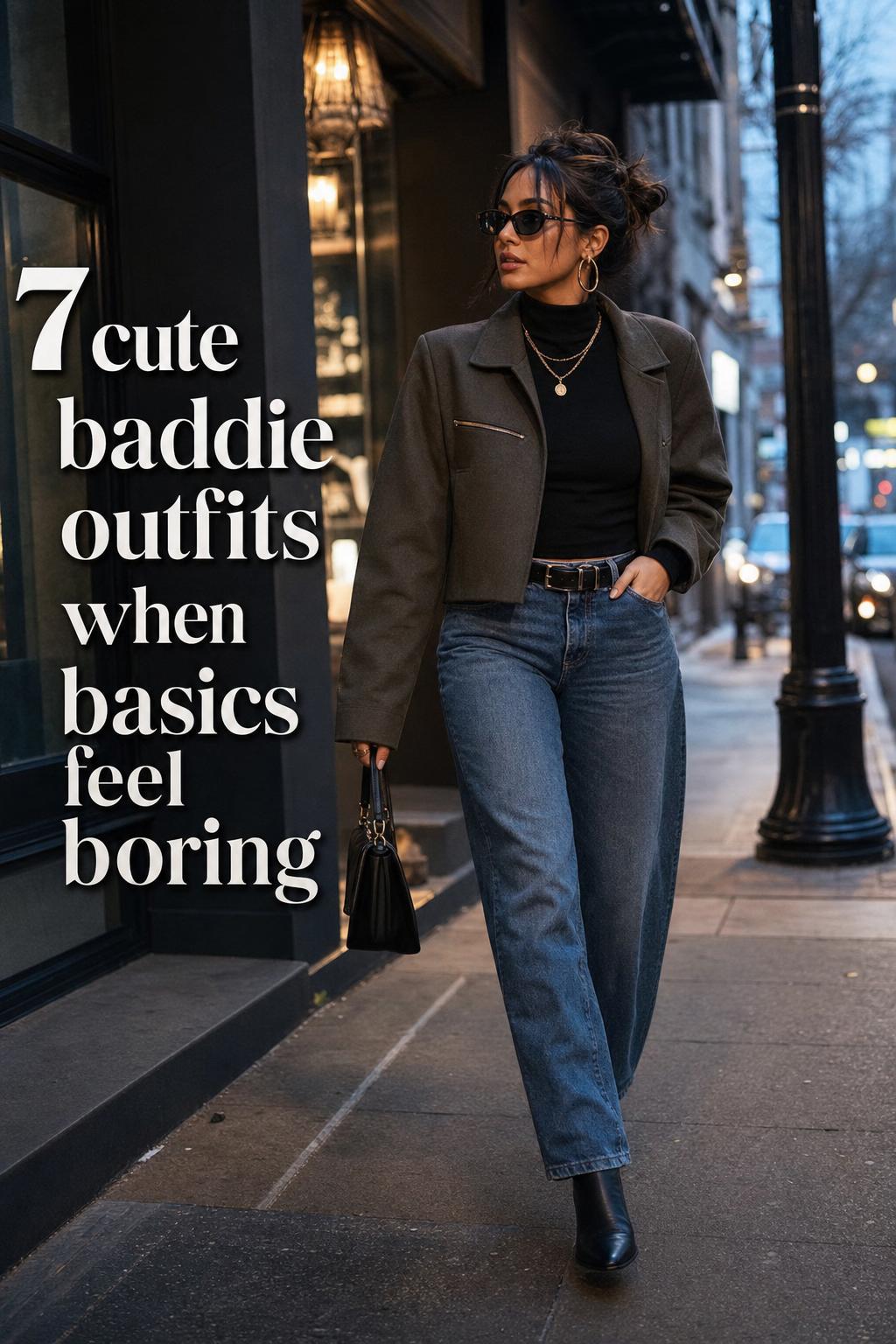
    Cute baddie outfits street style photo of a woman in cropped jacket, high-neck top and denim walking at blue hour
    A woman strolls through a softly lit city street at blue hour in a polished, modest take on cute baddie outfits with luxe accessories.

    FAQ

    What makes an outfit a cute baddie outfit?

    A cute baddie outfit usually combines streetwear-inspired staples with a more polished or playful finish. Common elements include denim, crop tops, bodysuits, boots, sneakers, hoop earrings, sunglasses, and a clear color story such as pink or classic black. The key is balanced styling rather than any single item.

    What is the difference between casual baddie and glam baddie style?

    Casual baddie style leans on comfort-chic pieces such as hoodies, athleisure, oversized tops, denim, and sneakers, while glam baddie style favors sleeker silhouettes, dresses, bodysuits, heels, boots, and more deliberate accessories. Both belong to the same aesthetic family, but one is more relaxed and the other more polished.

    Are crop tops essential for baddie outfits?

    Crop tops are one of the most common pieces in the aesthetic because they create shape quickly and pair well with denim, shorts, skirts, and jackets. That said, they are not the only option. Bodysuits, oversized tees, hoodies, and fitted dresses can also create a strong baddie look when the proportions are balanced well.

    Which shoes work best with baddie outfits?

    Boots, sneakers, and heels all work, but they change the outfit’s mood. Sneakers keep the look casual and daytime-friendly, boots add versatility and a stronger streetwear edge, and heels push the outfit toward a glam or night-out finish. The best choice depends on whether you want the outfit to feel relaxed, sharp, or dramatic.

    How do I style pink baddie outfits without making them look too busy?

    Keep the silhouette clean and let the color lead. Pink works especially well when grounded by simple denim, streamlined athleisure, or minimal accessories such as gold jewelry and sunglasses. If the color is already vivid, avoid layering too many competing statement elements into the same look.

    Can baddie outfits work for different body types?

    Yes. The aesthetic is more flexible than it first appears because it depends on proportion rather than one fixed shape. Curvy, petite, and tall dressers can all adapt the look by adjusting volume, hemline, layering, and the placement of fitted pieces so the outfit feels balanced and comfortable.

    What are the best pieces for a baddie capsule wardrobe?

    A practical capsule usually includes jeans or denim shorts, a denim jacket, one or two crop tops, a bodysuit, an oversized tee or hoodie, boots, sneakers, and repeatable accessories such as hoop earrings, chains, and sunglasses. These pieces can move between casual, glam, and edgy interpretations with only small styling changes.

    How do I make baddie outfits feel more sophisticated?

    Focus on silhouette control, edited accessories, and a restrained color palette. Classic black, clean denim, structured jackets, and well-chosen boots often make the look feel more refined. The goal is not to remove personality, but to give the outfit one strong visual direction instead of several competing ones.

    Are summer baddie outfits different from regular baddie outfits?

    Summer baddie outfits usually rely on lighter fabrics, shorts, crop tops, sundresses, bright colors, and bags suited to warm weather. The styling remains rooted in the same aesthetic, but the layering becomes lighter and the overall composition needs to stay breathable and less dense.

    How can I keep the baddie aesthetic from looking overstyled?

    Choose one focal point and build around it. If your boots are bold, keep the jewelry simpler. If the outfit is bright pink or neon, keep the silhouette streamlined. If you are wearing oversized layers, let one fitted piece define shape. Thoughtful restraint is what makes the look feel modern and wearable.
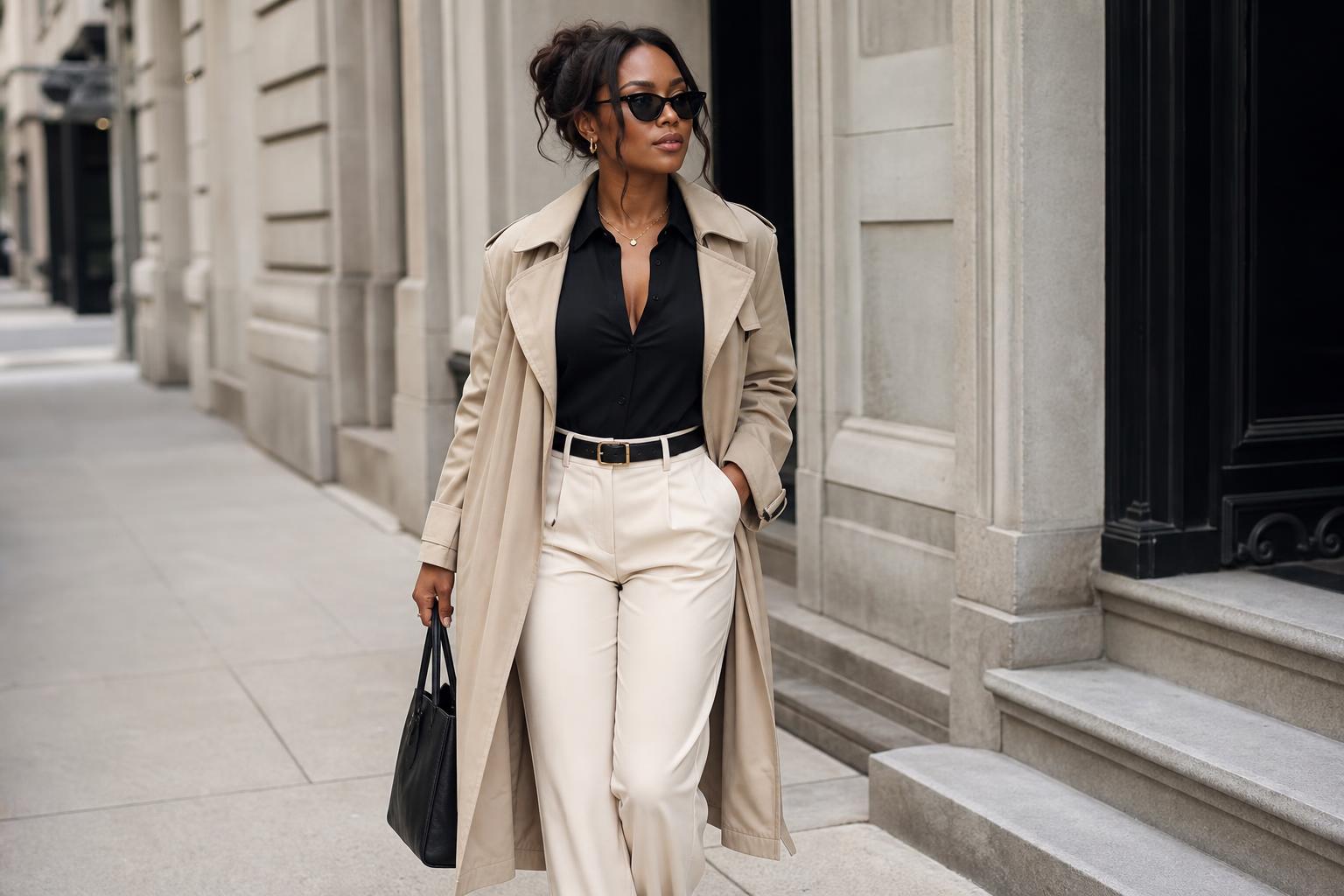
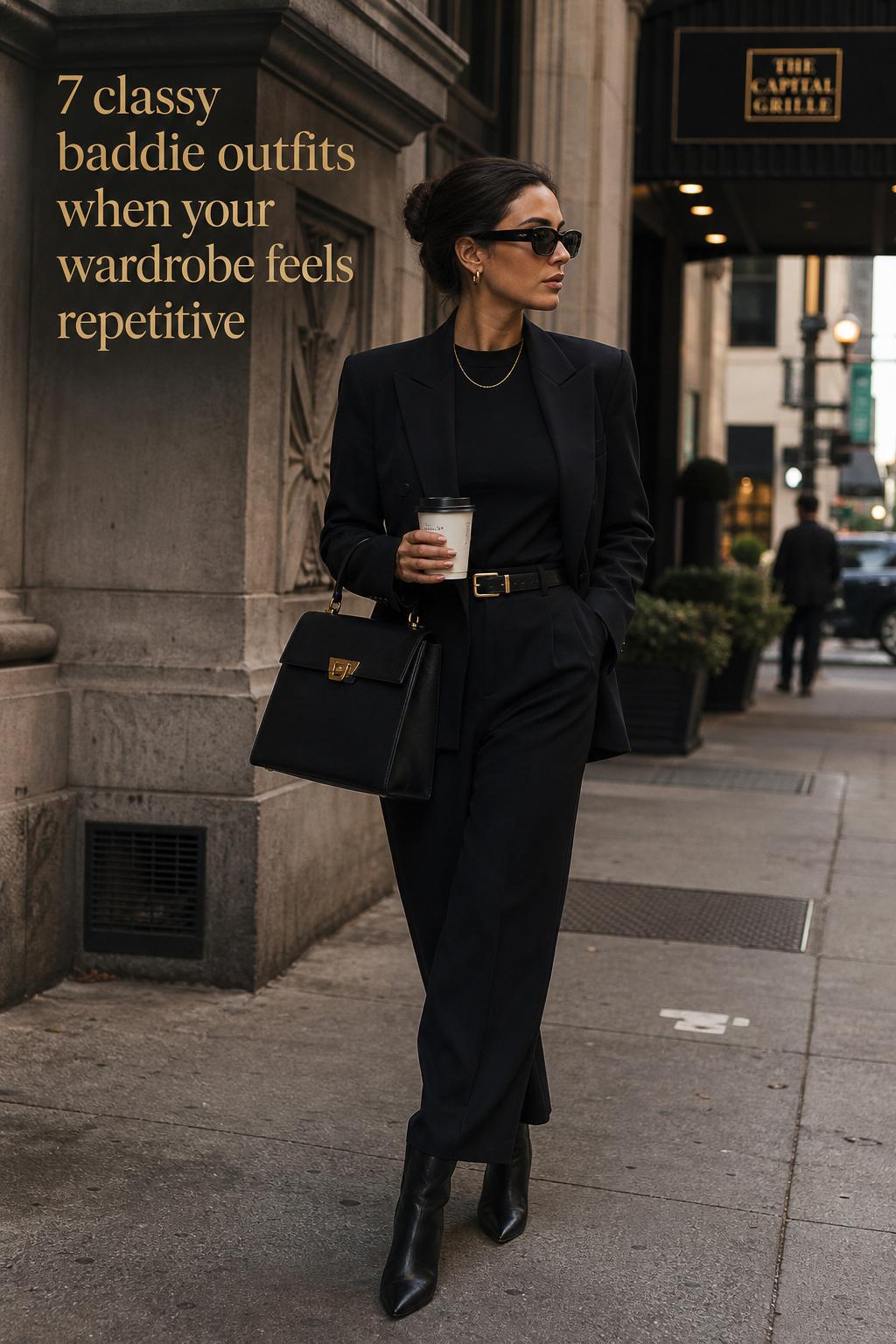
  • Spring Classy Baddie Outfits With a Polished City Edge

    Spring Classy Baddie Outfits With a Polished City Edge

    Some aesthetics ask for spectacle; classy baddie outfits ask for control. The mood is polished, confident, slightly untouchable, yet never stiff. A fitted midi dress, a sharply cut blazer, wrap sunglasses, a belt placed with intention, a trace of leather or satin against clean lines—this is the visual language of a style that balances glamour with discipline.

    Part of the appeal lies in that tension. The baddie aesthetic is known for confidence, bold silhouettes, and main character energy, but the classy version refines the formula. It trades excess for composition: monochrome pantsuits instead of loud layering, tailored jumpsuits instead of chaotic trend mixing, bodycon softened by structure, and accessories used to punctuate rather than overwhelm.

    Classy baddie outfits on an adult woman in a black blazer and midi dress on a New York sidewalk, editorial street style.
    A polished city moment pairs a structured blazer, sleek midi silhouette, and refined accessories for confident, modern elegance.

    In the U.S., this look moves easily across real settings—church on Sunday, a date night in Los Angeles, a polished office look in New York, a club night in Miami, or a college social calendar that shifts from casual daywear to evening glam. Its popularity is easy to understand: classy baddie outfits feel current without abandoning sophistication, and they offer a clear identity while still leaving room for personal style.

    The visual code behind the classy baddie aesthetic

    A classy baddie look is built on contrast. It brings together streetwear-infused glamour and refined dressing, often through a combination of tailored silhouettes, selective skin-baring, and strong accessories. The aim is not simply to look trendy. It is to look composed, as though every proportion, texture, and accent has been considered.

    The most convincing versions usually rely on a few recurring ideas: bodycon balanced by outerwear, relaxed denim sharpened with sleek accessories, or modest pieces elevated through fit and finish. Silk, satin, lace, and leather appear often because they add dimension without requiring complicated styling. A trench coat over a fitted dress, or a blazer over a crop top and jeans, instantly gives the aesthetic its signature polish.

    Celebrity references help define the mood. Rihanna represents fearless glamour with structure; Kylie Jenner leans into body-conscious polish; Saweetie brings flash and attitude; Maddy from Euphoria embodies high-impact confidence. These references matter not because the look should be copied literally, but because they show how the baddie aesthetic translates into silhouette, finish, and presence.

    Classy baddie outfits in a cozy city apartment, woman adjusting a blazer in warm golden-hour light with editorial styling.
    A warm golden-hour apartment scene captures refined, wearable classy baddie outfits with effortless editorial polish.

    Core pieces that make the look feel intentional

    The wardrobe foundation is surprisingly focused. Rather than chasing endless novelty, classy baddie style works best when a small set of key garments is styled in different ways across occasions. The most useful pieces are the ones that can move between casual elegance, date-night glam, corporate boss energy, and selective evening drama.

    • bodycon dress
    • midi dress
    • jumpsuit
    • tailored blazer
    • monochrome pantsuit
    • baggy jeans or cargo pants
    • crop top or sleek fitted top
    • trench coat
    • belt, jewelry, sunglasses, and a structured bag

    Each piece carries a different role. A bodycon dress creates shape, but a blazer or trench coat keeps it refined. Baggy jeans relax the silhouette, but wrap sunglasses and a heeled boot restore precision. A jumpsuit offers a full statement in one gesture, while a pantsuit communicates control and modern authority. In all cases, the styling works because the outfit has one clear point of view.

    Texture matters more than quantity

    One of the clearest lessons in this aesthetic is that texture often does more than embellishment. Silk and satin introduce fluidity, leather adds edge, lace offers contrast, and structured tailoring keeps the entire look anchored. This is why a simple palette can still feel rich. Black, neutral tones, or monochrome shades become more expressive when fabric choice is doing the work.

    Color is usually restrained, then sharpened

    Many classy baddie outfits rely on neutrals first—black, beige, cream, deep brown, or soft monochrome combinations—then use a bold accent sparingly. Neon can appear, especially in more Y2K-leaning looks, but it is most effective when offset by cleaner lines and fewer competing details. The difference between stylish and overdone often comes down to restraint.

    Classy baddie outfits featuring a sleek blazer, satin dress, and gold accessories in a modern city street style look
    A polished street-style moment showcasing classy baddie outfits with tailored layers, satin textures, and bold accessories.

    Look: tailored monochrome power

    This interpretation leans into the corporate-baddie side of the aesthetic: poised, exact, and quietly commanding. The silhouette is long and sharp, with a tailored blazer and matching pantsuit creating an uninterrupted line. It has the confidence associated with the baddie aesthetic, but the energy is contained rather than loud.

    A monochrome pantsuit in black, cream, or another neutral tone forms the base. Underneath, a fitted top keeps the shape clean. A belt can define the waist without breaking the line too aggressively, while jewelry should stay deliberate—layered enough to feel styled, not so much that it competes with the tailoring. Heeled boots or sleek heels complete the structure, and sunglasses add that final editorial edge.

    This look works because it reframes classic suiting through attitude. The baddie element comes from precision, body awareness, and finish rather than exposed skin alone. It is especially effective for office-adjacent settings, creative work environments, or evenings when you want impact without resorting to clubwear.

    Look: satin evening confidence

    A satin or silk-driven look brings softness to the aesthetic without losing strength. The mood is sleek and slightly sensual, ideal for date night, New Year’s Eve references, or any setting that calls for glamour with discipline. Instead of piling on statement elements, this approach lets fabric movement and silhouette carry the message.

    A midi dress or bodycon dress in satin creates a polished foundation, especially in black or another rich neutral. A structured blazer layered over the shoulders gives contrast and makes the look feel complete rather than exposed. Add jewelry with shine, a compact bag, and heels or heeled boots depending on the setting. If the dress is clean and minimal, wrap sunglasses can turn even a simple entrance into a statement.

    The reason this interpretation feels classy rather than overly theatrical is balance. Satin can easily tip into something too delicate or too overt, but structure corrects that. The blazer, the shoe choice, and the controlled accessories keep the glamour modern and wearable.
    Classy baddie outfits street style: woman in neutral blazer and midi look walking in a modern U.S. city
    A polished city street-style moment featuring a neutral blazer, sleek tailoring, and confident, wearable elegance.

    Look: baggy denim with polished attitude

    Not every classy baddie outfit needs to begin with a dress. One of the strongest modern versions starts with baggy jeans and builds upward through proportion and accessory choice. The result feels youthful, slightly Y2K, and rooted in streetwear, yet still refined enough for daytime city dressing or a college wardrobe that wants more shape and intention.

    Baggy jeans create the relaxed base. A crop top or close-fitting top provides contrast, keeping the silhouette from becoming too heavy. From there, the styling can move in two directions: a blazer for a sharper finish or a trench coat for something more fluid. Nike sneakers make the look more casual and grounded, while sunglasses and jewelry bring back the polished edge associated with celebrity-inspired baddie style.

    • key garments: baggy jeans, crop top, blazer or trench coat
    • footwear: Nike sneakers or heeled boots
    • accessories: wrap sunglasses, layered jewelry, belt, structured bag

    This outfit succeeds because the volume is controlled. The jeans are loose, but the upper half remains defined. It is a useful formula when you want comfort and movement without losing visual sharpness, especially for daytime wear in cities such as New York or Los Angeles where casual dressing still rewards a composed finish.

    Style tip: keep one part clean-lined

    Whenever denim, cargo pants, or sneakers enter the picture, the fastest way to preserve the classy side of the aesthetic is to keep one major element sleek. That might mean a fitted top, a precise blazer shoulder, or a narrow sunglass shape. Without that counterbalance, the outfit can drift fully into casual streetwear.

    Look: the trench coat city silhouette

    A trench coat gives classy baddie outfits a metropolitan calm. It suggests movement, anonymity, and polish all at once, which is why it works so well for transitional weather and urban settings. The mood here is less flashy than a bodycon look, but no less confident.

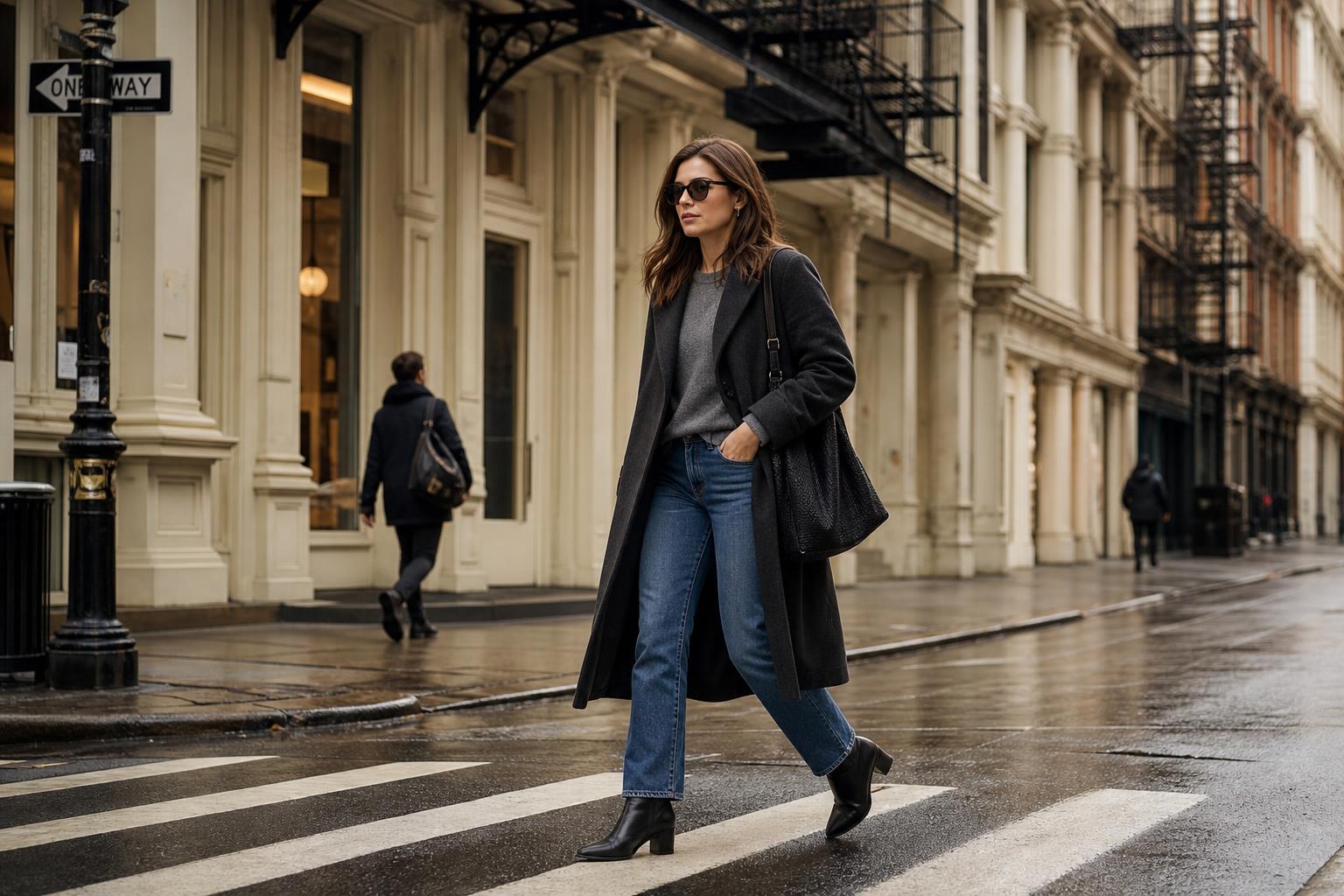
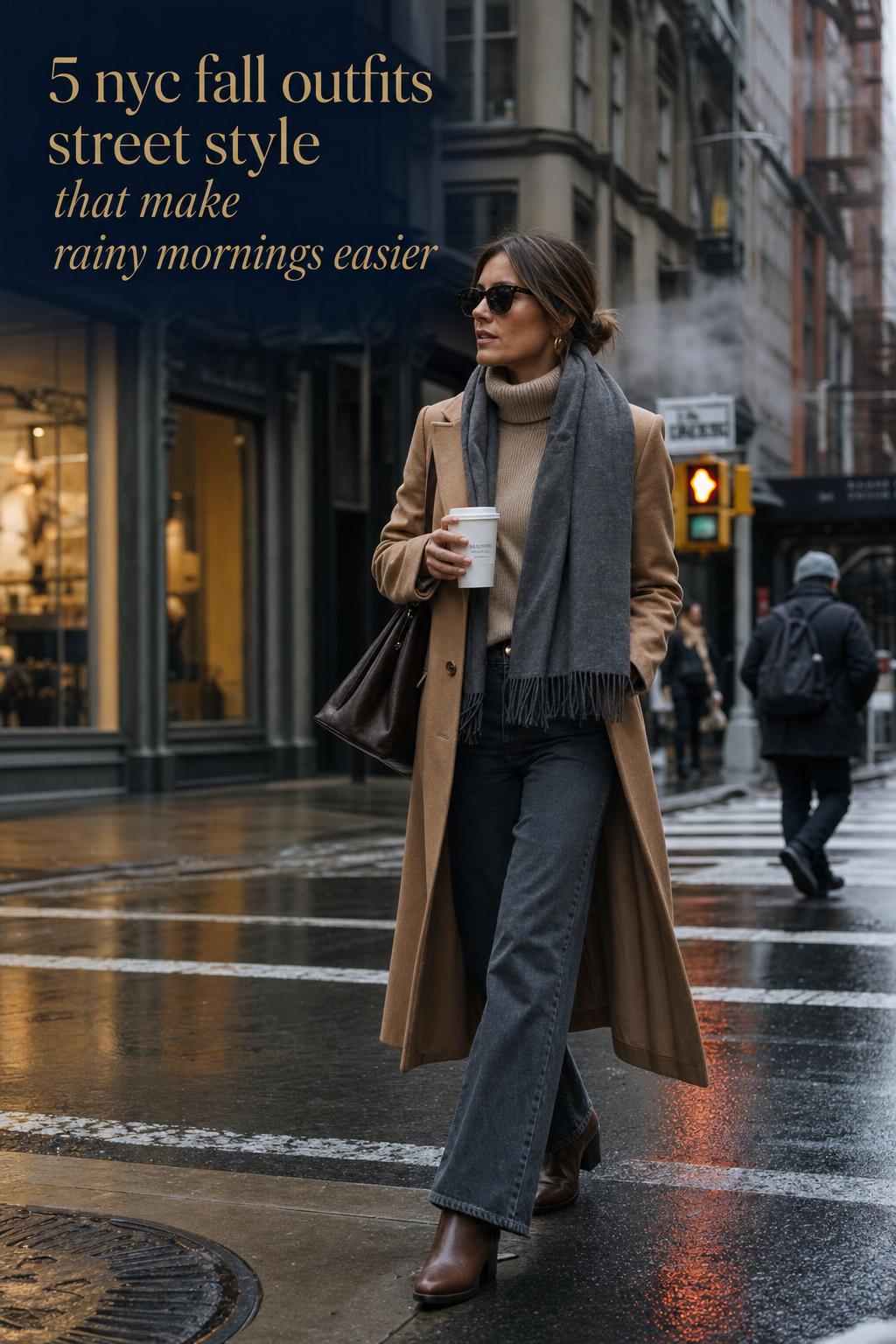
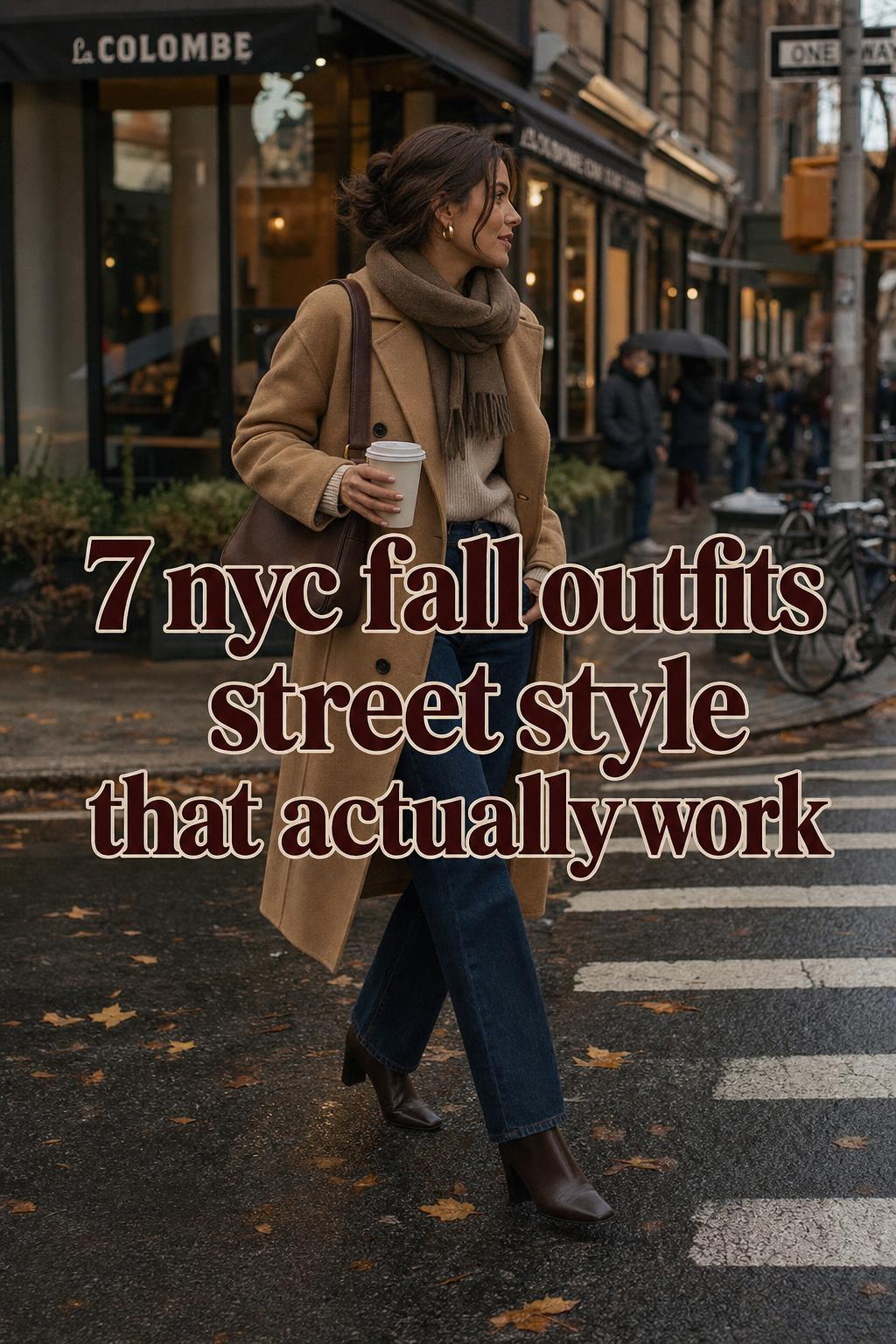
    Under the trench, a fitted midi dress, jumpsuit, or even a sleek top with tailored trousers creates a disciplined base. Neutral tones are especially effective in this version—beige, black, cream, and tonal layering that lets fabric and shape stand out. A belt at the waist can structure the coat, while sunglasses and boots sharpen the profile. Leather details, whether in footwear or accessories, add subtle authority.

    This formula is practical as well as elegant. It accommodates changing temperatures, walks between venues, and the reality of moving through a full day without losing cohesion. That practicality is part of the appeal: the look is dramatic enough for style, but functional enough for real life.

    Look: church-ready refinement with baddie energy

    One of the more nuanced interpretations of the aesthetic appears in church outfits, where modesty and boldness need to coexist. This version proves that classy baddie style is not dependent on revealing cuts. Instead, it relies on elegant proportion, rich texture, and expressive finishing touches.

    A midi dress, tailored jumpsuit, or polished blazer layered over a refined dress makes a strong base for Sunday dressing. Belts define shape without exposing too much, while boots offer presence and practicality. Accessories such as a beret, layered jewelry, and sunglasses can elevate the look, though in this context it is wise to edit carefully. Lace, silk, and leather can all appear, but they should be balanced so the final result feels respectful rather than performative.

    This approach works because it understands context. In church or similar settings, the classy side of the aesthetic must lead. The baddie note comes through confidence, finish, and a strong visual identity, not through excess. For many women, this is one of the most wearable forms of the style because it combines polish, ease, and occasion awareness.

    How to keep church outfits fashion-forward but appropriate

    • choose midi lengths or a full jumpsuit silhouette
    • use texture, such as satin or lace, instead of too many cutouts
    • let one accessory stand out, whether that is a belt, beret, or jewelry
    • favor structured layering over overly casual separates

    Look: bodycon with outerwear discipline

    The bodycon dress remains one of the clearest shorthand pieces in baddie fashion, but on its own it can feel too direct for a more refined interpretation. The strongest classy version uses outerwear to recalibrate the line. That single move shifts the look from obvious to composed.

    A bodycon dress in black or a similarly grounded tone creates the silhouette. Over it, a blazer or trench coat introduces structure and visual maturity. Heeled boots keep the look modern, especially when the dress length sits at the midi line rather than extremely short. Add jewelry, a compact bag, and sunglasses only if the setting allows for that extra fashion note.

    This look is particularly effective for evenings because it feels confident without becoming costume-like. It also photographs well, which helps explain why celebrity-inspired styling often returns to this formula. Rihanna and Kylie Jenner may interpret it differently, but the principle is the same: shape plus structure reads more polished than shape alone.

    Look: sporty-luxe baddie for day

    There is a lighter, more casual branch of the aesthetic that draws from bike shorts, sneakers, and fitted basics. Done carelessly, it can look unfinished. Done well, it becomes one of the most wearable daytime expressions of classy baddie style, especially for errands, campus dressing, or a casual city afternoon.

    Bike shorts or other slim lower-half pieces work best when layered with an oversized blazer or trench coat. Nike sneakers keep the outfit rooted in streetwear, while sunglasses and jewelry restore polish. A neutral palette makes this look feel more elevated, though a neon accent can nod to the Y2K influence seen in trend-driven baddie outfits.

    The appeal here is ease. You can move comfortably, sit through a long day, and still maintain a clear style identity. The trade-off is that proportion becomes crucial; if both the top and bottom are too relaxed, the outfit loses definition. A fitted base is what gives the look its discipline.

    Look: jumpsuit elegance with a sharp finish

    The jumpsuit is often underrated in discussions of the baddie aesthetic, yet it may be one of the cleanest answers to the question of how to look confident and classy at once. It offers continuity, shape, and a full statement without requiring complicated layering.

    A tailored jumpsuit in a neutral or monochrome color palette feels immediately composed. A belt can define the waist, while boots or heels shift the tone depending on the occasion. Add layered jewelry for dimension, and consider a blazer or trench coat when the weather calls for another layer. Fabrics matter here: a more fluid finish such as satin creates softness, while a structured fabric makes the look more architectural.

    This is an especially useful option for women who want a streamlined silhouette without navigating the fit balance of separates. It also translates well across settings, from dinner to church to an evening event, as long as the neckline, fabric, and accessories suit the occasion.

    Retail and brand cues that shape the mood

    Although great style depends more on composition than labels, a few familiar retailers and brands repeatedly sit around this aesthetic because they help define its range. Zara and H&M are often associated with polished trend-driven basics, Fashion Nova with body-conscious baddie dressing, Nike with the sportier streetwear edge, and luxury references such as Chanel and Balenciaga with the high-fashion polish many people borrow as inspiration.

    The most useful way to think about brands in this context is not as status markers but as style signals. A blazer from Zara suggests one kind of city polish; Nike sneakers immediately move a look toward casual confidence; the idea of Chanel or Balenciaga introduces a luxury-coded finish even when the outfit itself remains simple. The visual reference matters more than visible branding.

    Key pieces for this aesthetic

    • a tailored blazer with clean shoulders
    • a midi or bodycon dress that holds its line
    • baggy jeans that still feel intentional through fit
    • a trench coat for city polish
    • one pair of boots, one heel, and one sneaker option
    • wrap sunglasses, a belt, and restrained jewelry

    From New York to Miami: context changes the styling

    One reason the classy baddie aesthetic has lasting appeal in the U.S. is that it adapts easily to location. In New York, the mood often leans sharper—trench coats, monochrome tailoring, boots, and dark sunglasses. In Los Angeles, the same aesthetic may feel more relaxed and skin-aware, with crop tops, bodycon dresses, and streamlined layers. Miami invites more nightlife energy, where satin, heels, and stronger accessories make sense.

    These shifts matter because a look that works beautifully for a club night may feel out of place in an office or church setting. The most stylish approach is not to force one formula everywhere, but to understand the constants: confidence, shape, polish, and balance. Once those are in place, the outfit can become more modest, more glamorous, or more casual without losing identity.

    What often goes wrong with classy baddie outfits

    The line between polished and overloaded can be thin. Because the aesthetic draws from glamour, streetwear, and body-conscious styling, it is easy to add too many signals at once—tight dress, loud color, heavy jewelry, dramatic sunglasses, and strong boots all competing in the same look. The result is not usually more stylish. It simply becomes less coherent.

    Another common issue is ignoring context. A bodycon silhouette can be ideal for date night, but less convincing for church or a work setting unless structure and coverage are introduced through layering. Likewise, neon accents and Y2K references can be fresh, but they need a clean foundation to feel modern rather than costume-like.

    • avoid mixing too many statement textures at once
    • if the silhouette is fitted, simplify the accessories
    • if the palette is bold, keep the cut cleaner
    • if the outfit is modest, let fit and texture create the drama

    Editorial insight: confidence reads best through restraint

    The strongest classy baddie outfits rarely shout in every direction. They tend to choose one leading idea—tailoring, shine, shape, or attitude—and support it with quieter decisions. That is what makes the look feel expensive and self-assured, regardless of price point.

    How to build variety without losing the aesthetic

    A common wardrobe mistake is assuming the aesthetic requires a completely different outfit for every occasion. In reality, the smarter approach is to repeat the same visual principles across different silhouettes. A blazer can top a jumpsuit, a bodycon dress, or baggy jeans. The same belt can define a trench coat or sharpen a dress. Sunglasses can transform even simple basics into a more deliberate fashion statement.

    This is where the style becomes practical. A woman dressing for college may rely more on jeans, sneakers, and fitted tops; someone building date-night looks may favor satin dresses and heels; another may need polished church outfits or office-ready tailoring. The wardrobe changes, but the logic remains stable: clean lines, strong shape, texture contrast, and an edited finish.

    How to recreate the effect in a real wardrobe

    Start with one silhouette that already suits your life. If you wear dresses often, build around a midi or bodycon dress plus a blazer and boots. If you prefer separates, begin with baggy jeans, a fitted top, and a trench coat. If you need occasion flexibility, a jumpsuit is often the most efficient anchor piece. Then add only enough jewelry, sunglasses, and belts to make the look feel intentional.

    Celebrity and pop-culture references that clarify the mood

    Rihanna, Kylie Jenner, and Saweetie help define different expressions of baddie style because each uses proportion and finish in a distinct way. Rihanna often leans into strong outerwear and fearless glamour; Kylie Jenner favors smooth, body-conscious lines; Saweetie brings higher-impact styling energy. Maddy from Euphoria remains an important fictional reference for the modern visual language of confidence, attitude, and sharp femininity.

    These references are useful not as exact templates but as styling studies. They show that the aesthetic can move from sleek evening dressing to casual streetwear-inspired looks while keeping the same underlying message. The lesson is not to imitate every detail. It is to understand how one bold element is often balanced by one clean one.

    Why the aesthetic endures

    Classy baddie style lasts because it bridges two impulses many women want from their wardrobes: the desire to feel visibly confident and the desire to remain polished. It recognizes that glamour does not need to be chaotic, and that sophistication does not need to be quiet. The best looks hold both ideas at once.

    Whether expressed through a monochrome pantsuit, a trench over a fitted dress, baggy jeans with a crop top and sunglasses, or a church-ready jumpsuit finished with a belt and boots, the aesthetic works when the outfit has clarity. Choose silhouettes that feel strong, use texture with purpose, and let accessories sharpen rather than distract. That is how the look becomes personal, wearable, and memorable.

    Luxury street-style photo of an adult woman in a blazer and trousers showcasing classy baddie outfits in a modern city
    A polished city street-style moment featuring sharp tailoring and rich textures for timeless classy baddie outfits.

    FAQ

    What defines a classy baddie outfit?

    A classy baddie outfit blends confidence and polish through tailored structure, body-aware silhouettes, controlled accessories, and elevated textures such as satin, silk, lace, or leather. The key difference from a more overt baddie look is restraint: the outfit feels intentional, not overloaded.

    How can I dress like a baddie without looking too casual?

    The easiest way is to pair relaxed pieces with one refined element. Baggy jeans need a fitted top or blazer, sneakers benefit from clean sunglasses and jewelry, and a casual base becomes more polished when the color palette stays neutral or monochrome.

    Are classy baddie outfits appropriate for church?

    Yes, if the classy side leads the styling. Midi dresses, jumpsuits, blazers, trench coats, belts, and boots can all work well for church outfits, especially when the silhouette is modest and the accessories are edited carefully. Texture and tailoring create the statement more effectively than revealing cuts in this setting.

    What shoes work best with classy baddie outfits?

    Heeled boots, sleek heels, and Nike sneakers are all useful depending on the look. Boots and heels support dressier outfits such as bodycon dresses, midi dresses, jumpsuits, and pantsuits, while sneakers are best for sportier daytime styling with jeans, bike shorts, or cargo-inspired looks.

    Which colors make the aesthetic feel more refined?

    Neutral tones usually create the strongest refined effect, especially black, cream, beige, and other monochrome combinations. Bold or neon accents can still work, but they are most successful when the rest of the outfit remains clean-lined and visually controlled.

    How do I mix textures without overdoing the outfit?

    A good rule is to let one texture lead and one support it. For example, a satin dress can be grounded with a structured blazer, or leather accessories can sharpen a soft midi dress. When silk, lace, leather, and shine all appear at once, the outfit often loses clarity.

    What are the most versatile pieces to start with?

    A tailored blazer, a midi or bodycon dress, a trench coat, a strong pair of boots, and one pair of baggy jeans are among the most versatile starting points. Those pieces can be styled for daytime, workwear-inspired looks, date night, and even more modest church outfits with only small adjustments.

    Do celebrity-inspired baddie looks work in everyday life?

    They can, as long as the inspiration is translated rather than copied literally. Rihanna, Kylie Jenner, Saweetie, and Maddy from Euphoria offer useful references for attitude, silhouette, and finish, but everyday styling usually works best when one dramatic element is balanced by practical layers and simpler accessories.

  • Spring Chill Baddie Outfits That Feel Polished and Cool

    Spring Chill Baddie Outfits That Feel Polished and Cool

    Chill baddie outfits and the art of looking relaxed, polished, and quietly bold

    Some aesthetics announce themselves instantly; others arrive through proportion, attitude, and a certain ease. Chill baddie outfits belong to the second category. They balance the confidence of the baddie aesthetic with the softness of everyday wear, creating a look that feels composed rather than overworked. The result is streetwear with polish, casual chic with edge, and a silhouette that understands how oversized and fitted pieces can sharpen each other.

    This style is commonly worn where real life actually happens: on campus, during casual day plans, on coffee runs, for city errands, weekend brunch, summer evenings, and low-key nights out. Its appeal is simple but not simplistic. It offers the visual presence of a statement look while staying grounded in comfort, practicality, and repeatable wardrobe formulas. That is why the mood has remained so visible across social media styling, especially where streetwear influence, color coordination, and accessories shape the final impression.

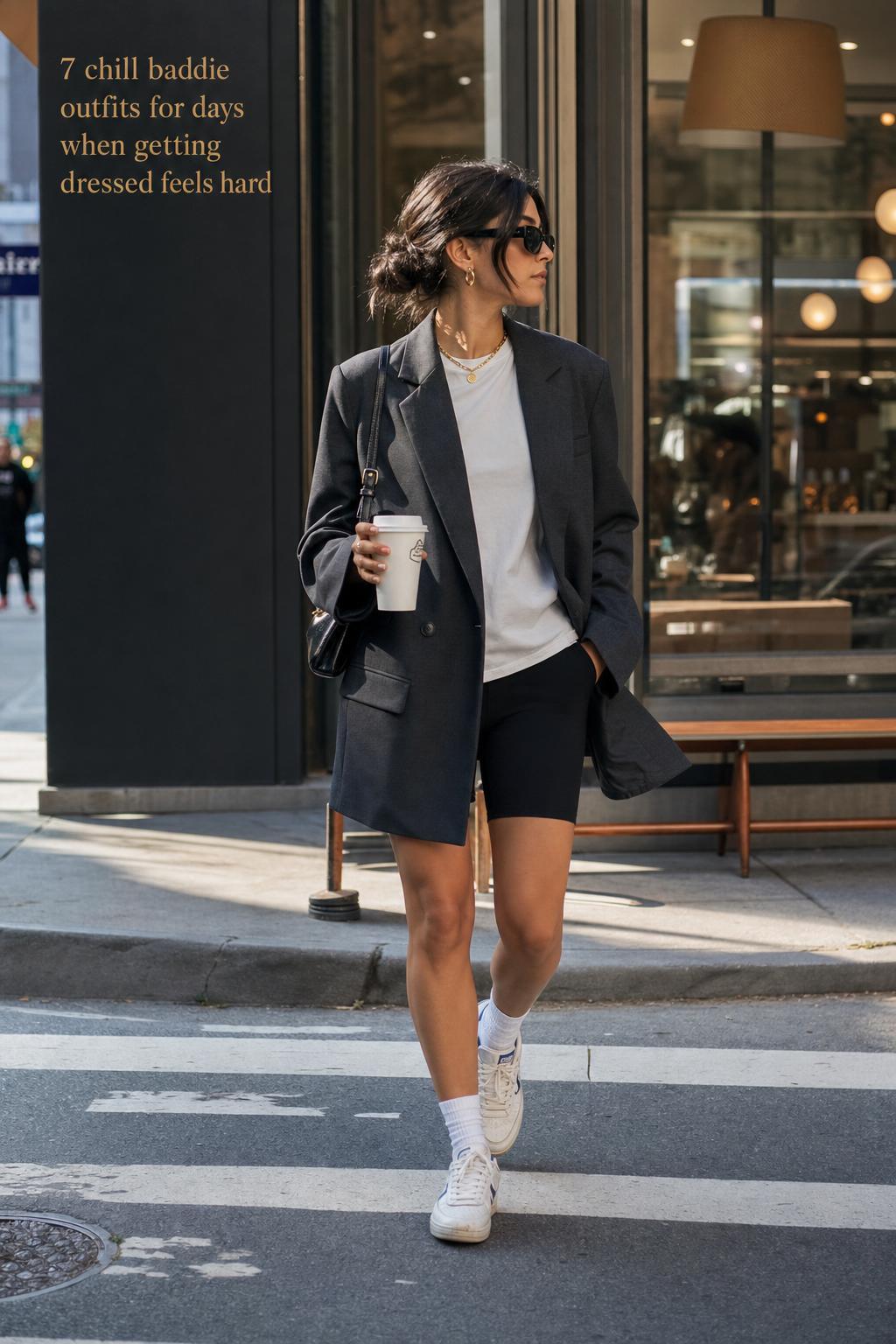
    Chill baddie outfits: woman in charcoal blazer, white tee and black biker shorts walking to a city cafe with coffee cup
    A confident, polished street-style look captures a relaxed coffee-run moment in refined urban morning light.

    At its best, a chill baddie look is not just a set of trendy pieces. It is a styling language built on clean lines, balanced proportions, confident layering, and accessories that frame the outfit rather than overwhelm it. Whether the palette is tonal and minimal or bold with color-blocking, the mood stays the same: controlled, self-assured, and easy to wear.

    What defines the chill baddie aesthetic

    The chill baddie aesthetic draws from three connected ideas: the confidence associated with baddie style, the wearability of casual basics, and the visual edge of streetwear. In practice, that means relaxed garments are paired with something more body-conscious, structured, or polished. A hoodie becomes sharper with biker shorts. An oversized shirt feels intentional when styled with fitted bottoms and jewelry. A crop top reads less obvious when grounded by denim and understated accessories.

    What separates this look from a generic casual outfit is the level of composition. The silhouette is considered. Colors are coordinated. Accessories are not random add-ons but part of the shape of the outfit. Even when the look appears effortless, there is usually a deliberate contrast at work: soft cotton against satin, an oversized top against a close fit below, a neutral palette interrupted by one bold accent, or sleek sunglasses balancing a laid-back base.

    The aesthetic also adapts well across substyles. It can lean toward soft baddie, move into Y2K influences, borrow from high-fashion x streetwear fusion, or become more seasonal through summer fabrics, fall layering, or night-out styling. That flexibility is one reason it continues to resonate. It gives the wearer room to express personality without losing the core identity of the look.

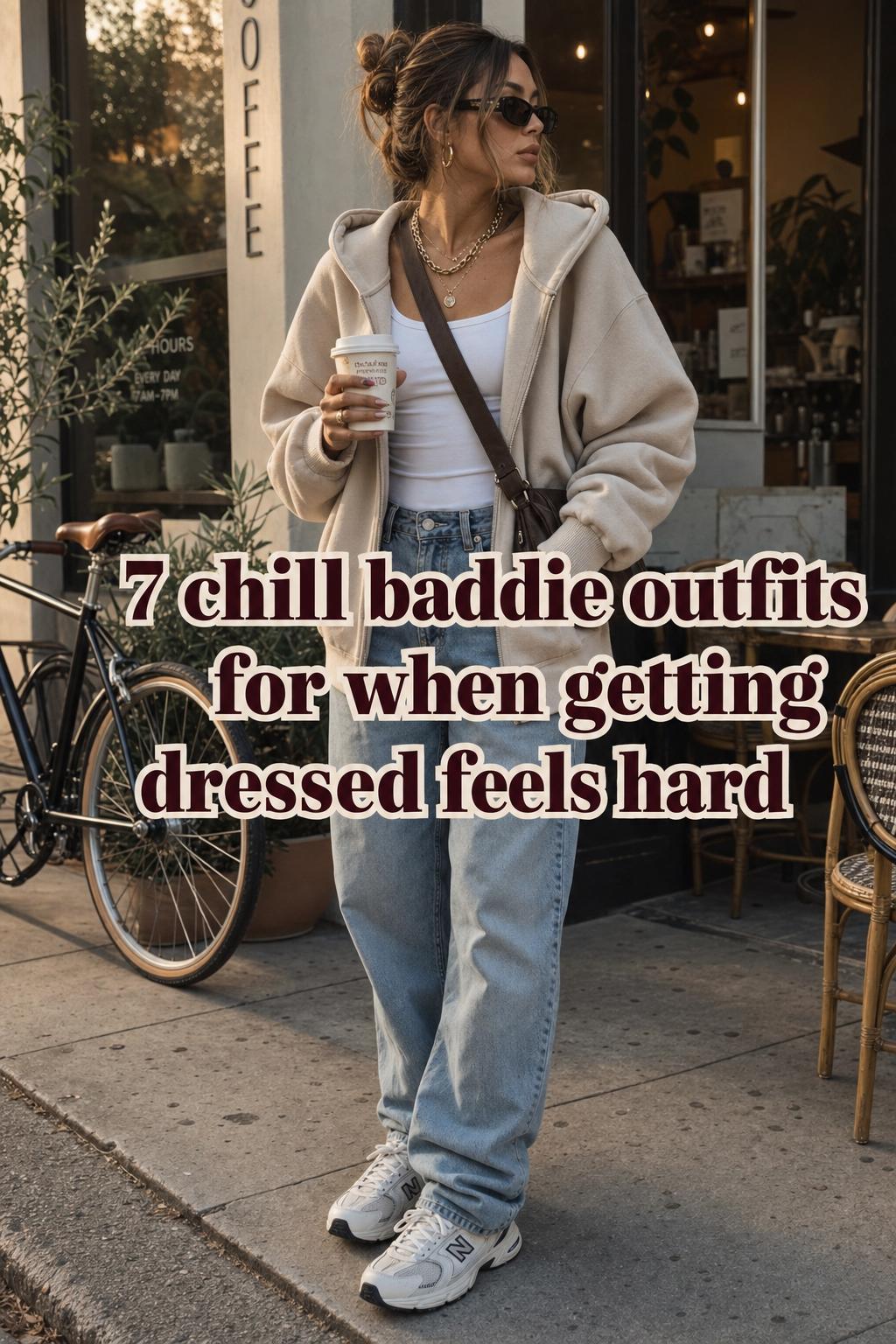
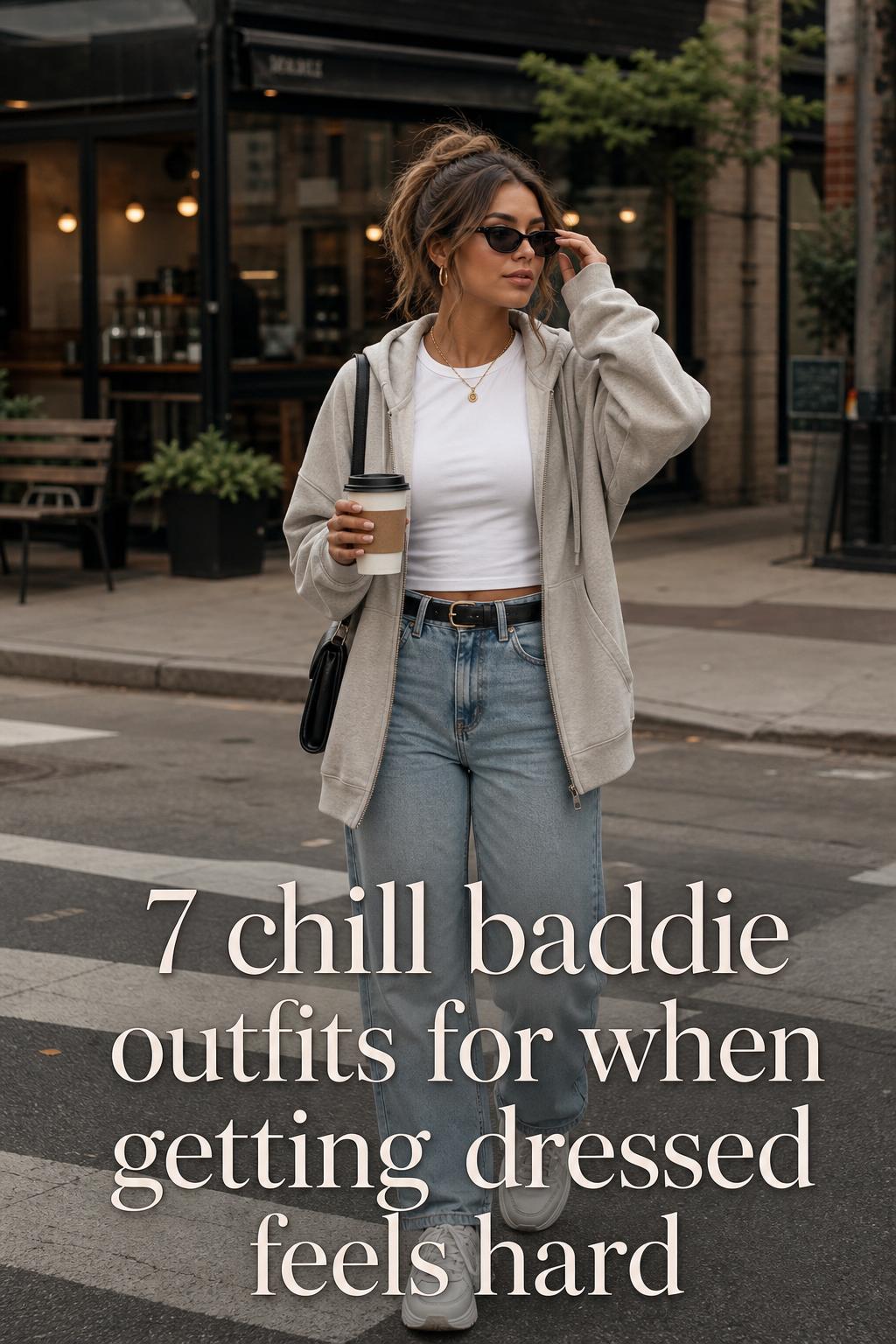
    Woman in oversized hoodie and denim on a coffee run outside a cafe, showcasing chill baddie outfits in warm golden-hour light
    A cozy golden-hour coffee-run scene captures effortless street style with layered neutrals, structured denim, and modern accessories.

    The wardrobe foundation: pieces that create the mood

    A strong chill baddie wardrobe is less about volume and more about useful building blocks. The most reliable versions of this aesthetic come from a capsule approach: a small set of pieces that can shift from everyday chic to more elevated social plans depending on styling. The goal is to create variety through layering, color story, and accessory choices rather than constantly replacing the base.

    • oversized tees and hoodies
    • crop tops in clean, fitted cuts
    • biker shorts and denim shorts
    • skirts that can move casual or dressed-up
    • denim jackets, bombers, and blazers for layering
    • sneakers and boots for different levels of edge
    • chunky jewelry, belts, sunglasses, and compact bags

    These pieces matter because they cover the key relationships that define the style: oversized with fitted, sporty with sleek, and simple basics with statement accents. Cotton and denim keep the look grounded. Satin, metallic details, or leathery textures add contrast when the outfit needs more presence. This is also where real-world practicality enters the conversation. A wardrobe built this way gives enough range for warm weather, transitional layering, and campus or city dressing without losing consistency.

    Chill baddie outfits styled in a casual streetwear look with oversized hoodie, cargo pants, and sneakers in natural light
    A relaxed streetwear ensemble showcases chill baddie outfits with effortless attitude and clean, modern lines.

    Key pieces for this aesthetic

    The most useful items are the ones that can move between multiple formulas. An oversized shirt can sit over biker shorts in summer, open over a crop top and denim, or half-tucked with a skirt for a cleaner silhouette. A denim jacket works because it provides structure without making the outfit feel too formal. Sneakers tend to support the casual baddie identity best, while boots can deepen the edge when the look needs more attitude.

    Look: neutral street style with clean proportions

    This interpretation of chill baddie style is all about restraint. The mood is composed, urban, and modern, with a silhouette that relies on sharp contrast rather than loud detail. An oversized top creates movement through the upper half of the body, while fitted bottoms keep the line sleek and deliberate. The visual effect is confident without appearing try-hard, which is exactly where this aesthetic is strongest.

    Think of an oversized tee or hoodie in a soft neutral tone paired with biker shorts in black, charcoal, or a matching shade. Cotton textures keep the look relaxed, while a compact bag, chunky jewelry, and slim sunglasses add definition. Sneakers are the most natural footwear choice here because they support the streetwear influence without disturbing the calm palette. A belt can be added if the top is partially tucked or layered in a way that reveals the waist.

    • key garments: oversized tee or hoodie, biker shorts
    • footwear: sneakers
    • accessories: sunglasses, jewelry, compact bag

    Why it works is simple: the outfit uses one of the most reliable baddie formulas, oversized versus fitted, but presents it in a quieter and more versatile way. It is ideal for everyday wear because it looks intentional from multiple angles, photographs well, and remains comfortable through long hours of movement.

    Look: color-blocked energy for a brighter take

    Not every chill baddie outfit needs to stay in neutrals. A more expressive version of the aesthetic uses color-blocking to create presence while keeping the shape wearable. The mood feels younger, more social-media-ready, and more playful, but it still depends on disciplined styling. Without proportion and restraint, a bright palette can overwhelm the look rather than sharpen it.

    A fitted crop top paired with denim shorts or a skirt gives the outfit a clear structure. Over that base, an oversized layer in a contrasting shade introduces volume and visual interest. The color story can be built through two dominant tones with one accent rather than many competing shades. Accessories should echo the palette rather than fight it; jewelry, a belt, or a small bag in one of the existing colors is often enough.

    This version suits summer especially well because the fabrics can stay light even when the styling feels bold. It also reflects one of the recurring visual codes of the baddie aesthetic: confidence expressed through color coordination. The key is not brightness for its own sake, but balance between bold tones and familiar silhouettes.

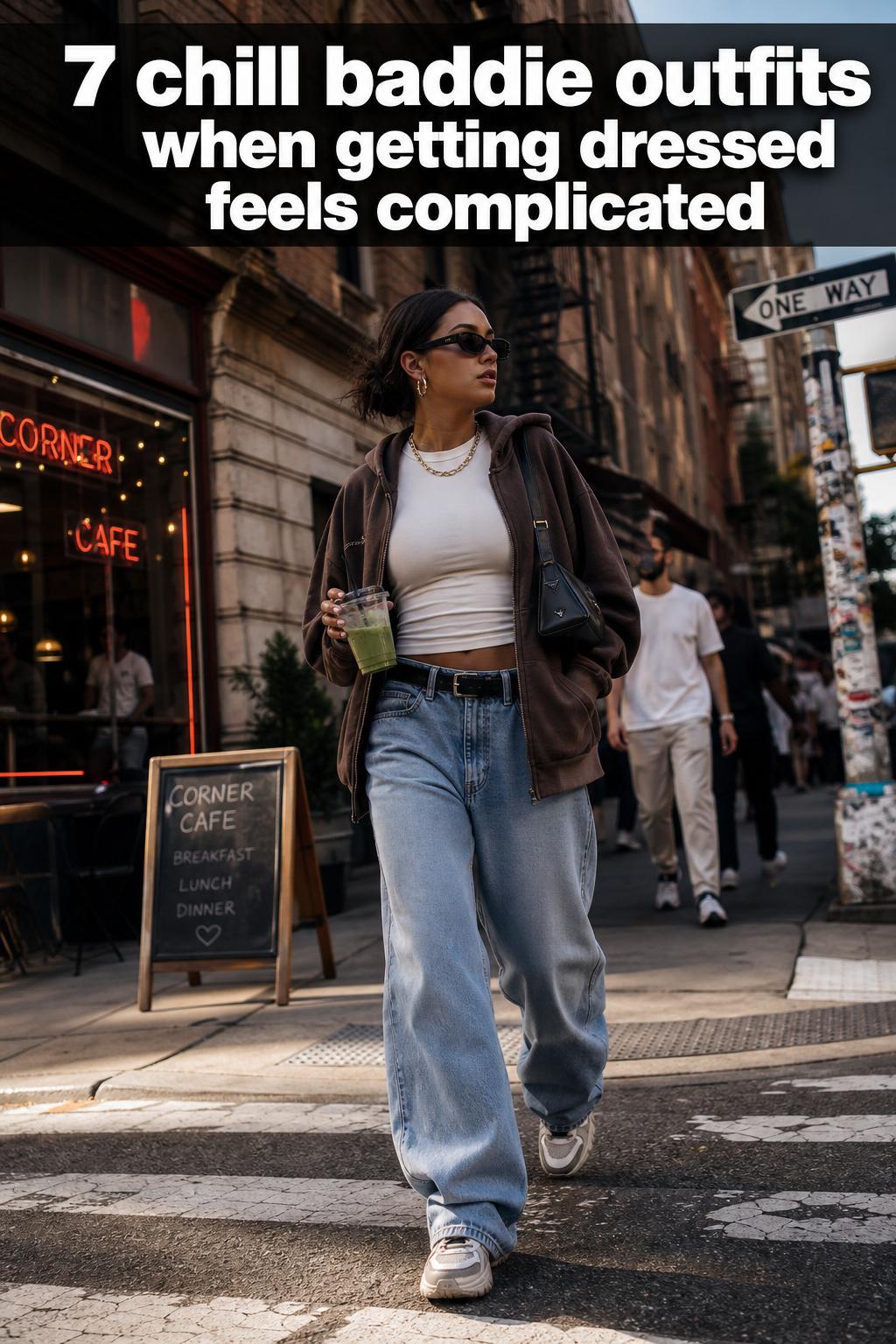
    Adult woman in layered street style on a city sidewalk, showcasing chill baddie outfits with hoodie, denim, sneakers and sunglasses
    A bright, dreamy street-style moment featuring confident layers and effortless chill baddie outfits in an urban setting.

    Style tip: how to keep color-blocking refined

    If the palette is vivid, simplify the textures. Cotton, denim, and one clean accessory finish help prevent the outfit from becoming visually crowded. If you want neon accents, use them as punctuation rather than foundation. One bright note against a controlled base almost always reads more polished than an outfit where every element competes for attention.

    Look: soft weekend baddie with a relaxed shirt layer

    There is a softer side to the aesthetic that feels especially useful for weekends, travel days, or casual social plans. This look trades overt edge for drape, light layering, and a subtle kind of confidence. The silhouette remains true to the baddie mood, but the energy is quieter, almost effortless in the way it falls around the body.

    An oversized shirt worn open over a crop top creates length and movement, especially when paired with fitted shorts or slim denim. Cotton is the most natural fabric here, though satin can elevate the mood if the rest of the look remains simple. The palette works best in soft neutrals, washed denim tones, or muted shades that keep the outfit cohesive. Jewelry should stay intentional but not heavy, and sneakers continue to make the strongest finish for daytime wear.

    This is where the chill baddie aesthetic shows its versatility. The same formula can feel collegiate on campus, polished in a city setting, or relaxed enough for errands and coffee stops. It translates easily because it is built on pieces many wardrobes already hold; the difference lies in proportion, layering, and how confidently the look is carried.

    Look: denim-led everyday chic

    Denim brings a certain familiarity to chill baddie outfits, which is useful when you want the style to feel approachable rather than performative. This interpretation leans into everyday chic with clean lines and a slightly sharper finish. The mood is less lounge-inspired and more dressed for the day, but still rooted in comfort and practicality.

    A fitted top, whether cropped or close to the body, pairs naturally with denim shorts, slim denim, or a denim jacket layered over a simpler base. The visual advantage of denim is that it adds structure quickly, helping casual pieces look more composed. Belts become especially effective in this version of the aesthetic because they define the waist and give the outfit a stronger shape. Accessories can include a small bag, jewelry, and sunglasses, while sneakers or boots change the tone depending on the setting.

    The reason this look stays reliable is that denim acts as a bridge between casual wear and statement styling. It softens bolder elements, supports layering, and works across seasons. If your wardrobe needs one route into the aesthetic that feels realistic and repeatable, denim is often the strongest starting point.

    Look: sleek night-out chill with high-fashion streetwear tension

    For evenings, the aesthetic does not need to become overly formal to feel elevated. A successful night-out version of chill baddie style keeps the streetwear foundation but introduces sleeker textures, sharper accessories, and a more sculpted silhouette. The mood turns more precise, more direct, and slightly more dramatic without leaving the casual-chic space entirely.

    This can take shape through a fitted top or body-conscious base, a skirt or more refined bottom, and an outer layer that adds structure, such as a blazer or bomber. Satin details, metallic notes, or leathery textures create contrast against softer fabrics. Sunglasses may no longer be essential after dark, but jewelry and a bag become more important because they help carry the confidence associated with the baddie aesthetic. Sneakers can still work if the overall styling remains sharp, though boots often give the look a clearer nighttime direction.

    The tension between polish and ease is what makes this version compelling. It does not abandon the comfort that defines chill baddie outfits, but it edits the base more carefully. If a daytime look is built to move, a night-out look is built to hold its shape and presence for hours.

    Look: summer baddie in light layers and heat-friendly textures

    Summer styling asks a practical question: how do you preserve the edge of the aesthetic when the weather limits layering? The answer is to let fabric, cut, and accessories do more of the work. Warm-weather chill baddie outfits should feel breathable and mobile, with enough shape to maintain the attitude of the look.

    Crop tops, denim shorts, skirts, and lighter shirts become the core wardrobe here. Rompers and even swim-adjacent styling can fit within the broader summer baddie mood when the accessories and color palette remain aligned. Sandals may appear in seasonal dressing, but sneakers often keep the look more connected to streetwear. A small bag, sunglasses, and jewelry help replace the visual role that jackets or heavier layers would play in cooler weather.

    • choose breathable fabrics for long outdoor wear
    • keep the silhouette clean when layering is minimal
    • use accessories to maintain the finished feel
    • rely on denim or fitted shapes to preserve structure

    This variation works especially well because the baddie aesthetic already favors strong outlines and confident color stories. In summer, those qualities become even more useful. When there are fewer garments in the outfit, every piece matters more.

    Look: campus-ready polish with a casual baddie edge

    For readers dressing within a college or campus context, the challenge is often moderation. You want the outfit to feel expressive and current, but still practical for a full day of walking, sitting, changing temperatures, and varied settings. A campus-friendly chill baddie look handles that through elevated basics rather than obvious statement pieces.

    A clean fitted top, denim, and a jacket or hoodie make an effective base, especially when the palette is coordinated and the accessories are selected with purpose. Bags should be functional enough for real use, not purely decorative. Sneakers remain the easiest footwear here because they support movement and keep the outfit anchored in everyday wear. Jewelry can be chunkier or more minimal depending on how bold the clothing already is.

    The style logic matters on campus because wearability becomes visible by midday. A look that starts strong but feels uncomfortable after a few hours rarely becomes a true wardrobe formula. The best casual baddie outfits for this setting respect movement, layering, and temperature shifts while still giving the impression of confidence and control.

    How to recreate the look without overcomplicating it

    Start with one fitted element and one relaxed element, then add only one directional accessory focus. That may be sunglasses, a belt, or jewelry, but not all at maximum intensity at once. This approach keeps the outfit polished and prevents a campus look from drifting into costume.

    Layering logic: why oversized and fitted pieces matter so much

    One of the clearest visual principles in chill baddie outfits is the interplay between volume and shape. Oversized garments create ease, movement, and attitude, but without a counterbalance they can flatten the silhouette. Fitted elements bring back definition. That is why combinations such as hoodies with biker shorts, oversized shirts with slim bottoms, or jackets over crop tops appear so often within the aesthetic.

    Layering also allows the look to travel across weather and occasion. A bomber jacket creates a sportier finish, while a blazer introduces tailored structure and shifts the outfit closer to polished streetwear. Denim jackets tend to sit in the middle, making them one of the easiest outerwear choices for everyday styling. The point is not to add layers for complexity alone, but to use them to control silhouette, texture, and proportion.

    Readers often focus first on the individual pieces, but the stronger question is how those pieces behave together. Does the top add volume where the bottom is slim? Does the outer layer sharpen the line of the look? Does the fabric contrast create depth? Those decisions are what turn casual clothing into a recognizable aesthetic.

    Accessories that make the outfit feel finished

    Accessories are not secondary in this style; they are often the difference between a simple casual look and a clear chill baddie statement. Jewelry, belts, sunglasses, and bags help frame the silhouette, clarify the mood, and carry the social-media-ready sharpness that many top interpretations of the trend rely on.

    Chunky jewelry tends to support the aesthetic well because it adds confidence without requiring additional layers. Belts are useful when the outfit needs waist definition or a stronger transition between top and bottom. Sunglasses introduce instant polish and work particularly well with oversized basics. Bags should stay proportional to the outfit; a compact shape often feels more refined than an oversized tote in this context, unless the setting demands more function.

    The practical insight here is to use accessories strategically. If the clothing already includes bold color-blocking, keep the accessories cleaner. If the base is tonal and minimal, let the accessories do more visual work. This kind of restraint is what keeps the outfit modern rather than overloaded.

    Regional mood boards: LA ease, NYC sharpness, Miami brightness

    Although the core of the aesthetic stays consistent, local style habits can shift the emphasis. In Los Angeles, chill baddie dressing logically leans into lighter fabrics, relaxed layering, and an easy blend of streetwear and casual chic. Oversized shirts, crop tops, denim, and sunglasses feel especially natural within that visual climate.

    In NYC, the same aesthetic can become cleaner and more structured. Darker tones, sharper jackets, and a more deliberate outerwear choice often give the look its city edge. The attitude remains baddie, but the polish becomes slightly more pronounced. Miami, by contrast, naturally invites brighter color stories, summer-forward pieces, and a stronger connection to heat-friendly styling. Here, fitted silhouettes and statement accessories can carry more of the look because heavy layering is less practical.

    These regional shifts are useful because they remind readers that chill baddie outfits are not one rigid formula. The aesthetic can absorb different climates and local dress codes as long as the balance of confidence, proportion, and casual edge remains intact.

    Where the aesthetic expands: festival, brunch, and low-key evening plans

    Some of the most interesting versions of this style appear when the setting changes. A festival interpretation may push color, layering, and accessories further. A brunch look often benefits from a softer palette and lighter structure. A low-key evening plan usually calls for sleeker textures or more defined shape. The core identity stays stable, but the emphasis shifts based on where the outfit needs to function.

    That flexibility explains why the aesthetic remains appealing for discovery and inspiration searches. It does not demand a completely separate wardrobe for each scenario. Instead, it invites thoughtful rotation: the same crop top can be styled with denim in the afternoon, a skirt at night, or layered under an oversized shirt for travel or casual errands.

    Tips for adapting the mood to the occasion

    • for brunch, soften the palette and reduce hardware-heavy accessories
    • for festival styling, let color coordination and layered accessories take a bigger role
    • for night plans, introduce satin, metallic, or sleek jacket textures
    • for everyday errands, keep the base simple and focus on one strong silhouette contrast

    Soft baddie, Y2K, and the streetwear connection

    Part of the appeal of chill baddie outfits is that they can absorb neighboring aesthetics without losing coherence. A soft baddie interpretation tends to favor gentler color schemes, cleaner basics, and a more understated finish. The outfit still carries confidence, but the visual language is less confrontational and more refined. This is often the easiest entry point for someone who likes the mood of the aesthetic but not its louder expressions.

    Y2K influences usually appear through cropped silhouettes, playful color choices, and a stronger attachment to trend-led styling cues. Streetwear, meanwhile, remains the grounding force across most versions of the look. It contributes the relaxed base, the sneaker logic, the oversized shapes, and the sense that the outfit should move through everyday life rather than only exist for a photo.

    The most successful styling choices know which influence should lead. If Y2K elements become too dominant, the outfit may lose the relaxed sophistication that makes chill baddie style wearable. If the streetwear base is too heavy, the look can feel casual but not especially elevated. Balance is what keeps the aesthetic modern.

    A note on shopping, secondhand finds, and wardrobe longevity

    Because this style relies so heavily on recognizable wardrobe staples, it lends itself well to a more considered approach to shopping. Platforms such as Depop and Poshmark are logically part of the conversation because oversized shirts, denim jackets, hoodies, skirts, and accessory-led pieces often translate well through secondhand browsing. The aesthetic does not require everything to be new; in fact, slightly lived-in textures can strengthen the ease of the look.

    This also connects to one of the most underexplored strengths of the aesthetic: sustainability through repetition and recombination. A compact capsule can create many outfit formulas if the proportions and colors are chosen intelligently. Rather than chasing every new variation of the trend, it is often more effective to build around versatile basics, then refresh the mood through accessories, layering, and seasonal shifts.

    From a practical wardrobe standpoint, that approach usually produces better results. It lowers the risk of trend fatigue, makes daily styling faster, and helps the aesthetic feel personal rather than copied. Great style here comes less from constant novelty and more from how thoughtfully the pieces are composed.

    Common styling mistakes that weaken the look

    Even visually strong aesthetics can lose impact when the styling logic is inconsistent. One common mistake is ignoring proportion. If every garment is oversized, the outfit may feel shapeless rather than confident. If every piece is skin-tight, the look can lose the relaxed quality that makes chill baddie style distinct from a more overtly dressed-up baddie outfit.

    Another issue is over-accessorizing. Because jewelry, belts, bags, and sunglasses are all relevant to the look, it can be tempting to use all of them heavily at once. In reality, the most polished outfits choose a focal point. A third mistake is forcing seasonal pieces into the wrong context, such as heavy layering in hot weather or underbuilt outfits in cooler conditions. The aesthetic should feel responsive to climate, not indifferent to it.

    Finally, many outfits lose cohesion through weak color balance. Whether you prefer monochrome, neutrals, or bold color-blocking, the palette should feel intentional. Random combinations rarely deliver the poised, editorial finish that makes this style compelling in the first place.

    How to build your own version of chill baddie style

    The smartest way to approach this aesthetic is to decide first which version feels most natural in your life. Some readers will prefer a neutral, sneaker-led streetwear base. Others will want more summer brightness, more night-out polish, or a softer weekend interpretation. Once that preference is clear, the wardrobe becomes easier to shape because you are selecting for a mood, not collecting random trend pieces.

    • choose a base direction: neutral, bold, soft, or sleek
    • build around one reliable silhouette formula
    • keep layering pieces versatile across seasons
    • use accessories to sharpen, not overcrowd, the outfit
    • adjust the palette and texture to setting and weather

    A reader dressing mainly for campus or errands may get the most mileage from hoodies, oversized tees, biker shorts, denim, and sneakers. Someone focused on evenings and social plans may lean more on skirts, sharper outerwear, sleeker fabrics, and stronger accessory choices. Neither approach is more correct. The point is to preserve the identity of the aesthetic while making it useful in real life.

    That is ultimately why chill baddie outfits work so well. They offer a clear visual identity, but they leave room for interpretation. You can make the look softer, brighter, sharper, more seasonal, or more minimal without losing the confidence that defines it. The best version is the one that feels balanced in your wardrobe and believable in your day-to-day rhythm.

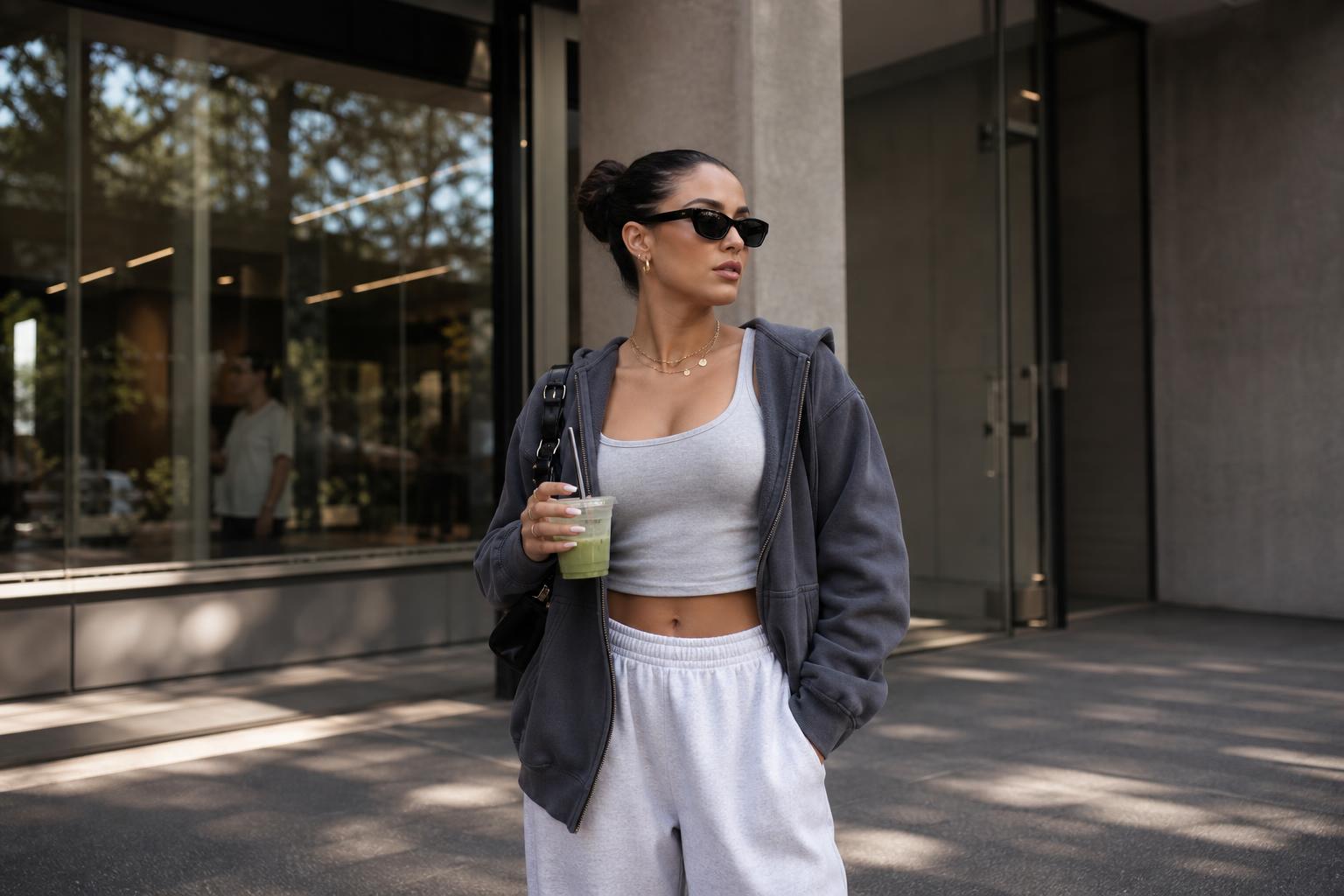
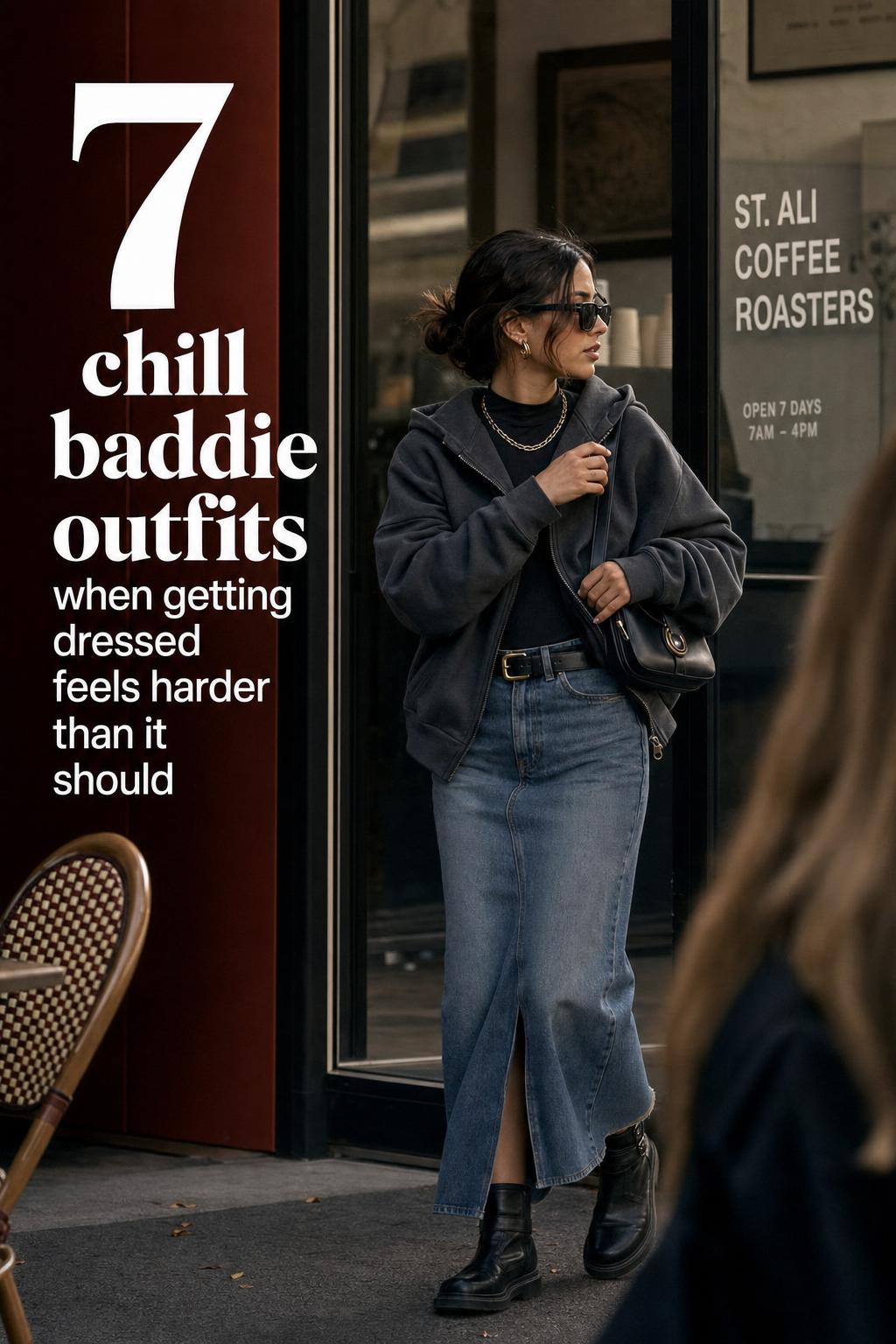
    Chill baddie outfits street-style coffee run with woman in charcoal hoodie, sunglasses, and compact shoulder bag outside café
    A candid late-afternoon coffee-run scene captures refined chill baddie styling with layered neutrals, denim, and sleek accessories.

    FAQ

    What makes a chill baddie outfit different from a regular casual outfit?

    A chill baddie outfit usually has more intentional proportion, sharper accessories, and a clearer streetwear influence than a standard casual look. The balance of oversized and fitted pieces, along with coordinated color and polished finishing details, gives it a more confident identity.

    How can I dress like a baddie casually without looking overdressed?

    Use elevated basics as your base, such as a hoodie, oversized tee, crop top, denim, or biker shorts, then add one or two defining accessories. Keeping the silhouette clean and the palette controlled helps the look feel casual and wearable rather than overly styled.

    Are sneakers the best shoes for chill baddie outfits?

    Sneakers are often the most natural choice because they support the streetwear and everyday-wear side of the aesthetic. Boots can also work well, especially for cooler weather or night-out styling, but sneakers usually keep the look more relaxed and versatile.

    What are the most essential pieces for a casual baddie wardrobe?

    The strongest foundation usually includes oversized tees, hoodies, crop tops, biker shorts, denim pieces, skirts, a versatile jacket, sneakers, and a small set of accessories such as jewelry, belts, sunglasses, and bags. These items create enough contrast and flexibility to build many looks.

    Can chill baddie outfits work for summer?

    Yes, summer versions often work especially well because the aesthetic already relies on clear silhouettes and confident styling. Crop tops, shorts, skirts, lighter shirts, denim, and accessories can maintain the mood even when heavy layering is not practical.

    How do I use color-blocking without making the outfit feel too loud?

    Limit the palette to two main tones and one accent, then keep fabrics and accessories relatively clean. Color-blocking looks more refined when the silhouette is simple and the outfit is not competing with too many textures or extra details.

    Is the chill baddie aesthetic suitable for campus or everyday wear?

    It is well suited to campus and everyday settings because it combines comfort with a polished visual identity. The key is to prioritize movement, practical footwear, and layers that can handle changing temperatures while still keeping the outfit composed.

    What accessories matter most in a baddie aesthetic outfit?

    Jewelry, belts, sunglasses, and compact bags tend to have the biggest impact because they help define the mood and sharpen the silhouette. It is usually better to choose one strong accessory direction than to layer every trend into one outfit.

    Can I build this style through secondhand shopping?

    Yes, secondhand platforms such as Depop and Poshmark make sense for this aesthetic because many of its best pieces are wardrobe staples like denim jackets, hoodies, oversized shirts, and skirts. A secondhand approach can also make the wardrobe feel more individual and more sustainable.

    How do I make the look feel more polished for evening plans?

    Shift the texture, structure, and accessories rather than abandoning the casual base entirely. A sharper jacket, sleeker fabric, more sculpted silhouette, and stronger jewelry or bag choice can move the outfit into night-out territory while preserving the chill baddie mood.

  • Why Y2K Clubbing Outfits Need a More Honest Style Guide

    Why Y2K Clubbing Outfits Need a More Honest Style Guide

    The problem with writing about y2k clubbing outfits without real source material

    Y2k clubbing outfits can be a rich subject because they usually involve more than nostalgia alone. They invite questions about proportion, practicality, fabric, budget, comfort, and how a look translates from inspiration to real life. Yet any useful article on the subject needs an actual foundation: clear source material, identifiable examples, and reliable details about what readers are searching for and what style directions are being discussed.

    In this case, there is no substantive fashion research data to support a true editorial guide. The only available material states that real-time Google results and page-level analysis were not fetched, and that a full browsing pass would be needed to generate a precise, citation-backed report. That means there is no verified set of silhouettes, no confirmed brands, no documented trend variations, no established user questions, and no dependable framework from which to build a trustworthy article about y2k clubbing outfits.

    y2k clubbing outfits research desk scene with woman reviewing blank mood board, fabric swatches, and outfit notes in soft light
    A polished editorial workspace captures a fashion researcher refining y2k clubbing outfits with mood boards, swatches, and unfinished notes.

    Why a complete style article cannot be responsibly produced from the material provided

    A fashion article can sound polished while still being unhelpful. The usual risk is that it drifts into generic statements about mini skirts, metallic fabrics, baby tees, platform shoes, or going-out tops without proving that these specifics were actually present in the source material. Here, the instructions require strict adherence to the supplied data as the exclusive source of truth. Because that data contains no actual trend breakdown, no outfit examples, and no content analysis, introducing those details would mean inventing information rather than interpreting it.

    That matters for readers. A person looking for practical guidance wants to know which pieces are worth buying first, how to adapt the look for a petite or curvy frame, which fabrics are comfortable for a long night out, and what styling mistakes make a look feel costume-like rather than intentional. None of those questions can be answered accurately from the material available. To do so would create the appearance of expertise without a factual basis.

    What is missing from the available information

    • No verified SERP analysis for the topic
    • No extracted headings or themes from ranking articles
    • No confirmed entities such as brands, celebrities, retailers, designers, or cultural references
    • No identified user-intent clusters
    • No documented outfit formulas, styling examples, or shopping patterns
    • No seasonal, budget, or body-type guidance from source material
    • No specific reader FAQs supported by research

    Without those elements, a complete 2000-word style guide would not be an informed editorial article. It would be guesswork dressed in a fashion voice.

    Fashion editor workspace with notes and laptop researching y2k clubbing outfits in warm morning light
    In soft morning light, a fashion editor reviews notes and swatches while refining y2k clubbing outfits with honest, detail-driven research.

    What a trustworthy fashion guide should contain before giving advice

    Good style writing does more than describe an aesthetic. It builds a usable bridge between inspiration and wardrobe decisions. For a topic like y2k clubbing outfits, that means identifying not just what people think the style looks like, but how the look is actually being interpreted now. A useful article would clarify whether readers are searching for exact early-2000s references, modernized going-out outfits with y2k influence, or affordable versions built from current basics.

    It would also need to separate visual nostalgia from practical wearability. Some club looks photograph well yet fail in motion because the fabric rides up, the footwear is uncomfortable, or the layering does not hold up in changing temperatures. A serious editorial guide should explain those trade-offs with specificity. It should identify what flatters different proportions, which pieces anchor the look, and what to avoid if the goal is refinement rather than costume.

    The difference between inspiration and useful guidance

    Inspiration says a look feels fun, bold, nostalgic, or playful. Useful guidance explains why a silhouette works, which hemline balances a certain frame, how shine interacts with low light, whether a piece can be reworn beyond one night out, and where to save versus where to invest. The supplied material does not provide any of that. It only makes clear that the underlying research was not completed.

    Y2K clubbing outfits styled on friends in a neon-lit nightclub, featuring metallic tops, low-rise pants and platform heels
    Friends pose under neon lights in iconic Y2K clubbing outfits with metallic accents and bold silhouettes.

    Editorial restraint is more useful than invented fashion certainty

    There is a temptation to fill in the blanks because y2k clubbing outfits are a recognizable phrase and many readers likely expect a visual guide. But editorial restraint is part of trustworthy style writing. When the source base is empty, the most honest course is to say so directly. That is especially important in fashion, where small details carry real consequences: a neckline changes support needs, a trouser rise changes body proportions, and a shoe choice can determine whether the outfit works for three hours or ten minutes.

    Practical styling advice should be rooted in observation, not assumption. A reader deserves clarity on whether a recommendation reflects current interpretation, archived references, or speculative trend memory. Since the available material includes none of those, the responsible conclusion is simple: a complete article cannot be created without introducing unsupported information.

    Editorial studio photo of a woman researching y2k clubbing outfits with mood boards, laptop, magazines, and desk notes
    A thoughtful editorial studio scene captures a stylist mapping y2k clubbing outfits through unfinished mood boards, notes, and swatches.

    What can be said with confidence from the provided material

    Only a few points are firmly supported. First, no real-time analysis of top search results was performed. Second, no page-by-page extraction of headings, entities, or article coverage was completed. Third, an offer was made to conduct a full browsing pass in order to create a precise report. These points do not tell us what y2k clubbing outfits include. They only tell us that the necessary groundwork for a reliable article remains unfinished.

    That means any attempt to discuss specific garments, silhouettes, accessories, color stories, beauty pairings, shopping strategies, or era references as if they were established by the research would exceed the source material. Even broad statements about what readers typically want from this style category would be assumptions unless supported by documented findings.

    Why this matters for a reader trying to shop or style well

    Fashion advice shapes purchasing decisions. A reader may buy shoes, outerwear, bags, or occasionwear based on what an article recommends. If those recommendations are not anchored in actual source data, the result can be wasted money, impractical purchases, and outfits that feel disconnected from the reader’s needs. The absence of verified examples also makes it impossible to assess versatility, wardrobe compatibility, or whether the suggested look translates to current nightlife settings.

    If the goal is a strong article, the research stage must come first

    The most useful next step would be a proper research pass focused on live search results and close reading of the pages ranking for y2k clubbing outfits. From there, a real article could be built with substance rather than approximation. That article could then address practical concerns in the refined, editorial way readers expect.

    For example, once actual sources are gathered, a strong guide could examine which interpretations dominate the current conversation, whether the aesthetic is being styled with a literal early-2000s lens or a cleaner modern silhouette, and how clubwear differs from casual daytime y2k references. It could distinguish pieces that feel dated from those that feel intentional, and it could map out budget-friendly ways to capture the effect without buying a one-night outfit.

    The kind of analysis that would make the article genuinely useful

    • A breakdown of the most repeated outfit formulas across top-ranking pages
    • Identification of recurring garments and accessories
    • A comparison between literal y2k revival styling and toned-down modern adaptations
    • Body-type adjustments based on silhouette, rise, hem length, and structure
    • Advice on comfort, movement, climate, and venue practicality
    • Shopping guidance on what to buy first and what can be recreated from existing basics
    • Common styling mistakes that make the look feel theatrical instead of polished
    • Frequently asked reader questions pulled from actual search patterns

    That is the level of material needed for a complete article that helps someone make better wardrobe decisions rather than simply admire a mood board.

    The editorial standard readers deserve

    A refined style article should feel clear-eyed and intelligent. It should respect the reader enough not to pretend certainty where none exists. Particularly with an aesthetic topic, there is always a risk of empty description: words like sleek, edgy, fun, iconic, and glamorous can fill space without answering the real questions. Which skirt length stays comfortable while dancing? Which top requires fashion tape or structured underpinnings? Which bag shape is practical for a crowded venue? Which fabrics crease badly? Which pieces can be worn again for dinner, travel, or a casual evening?

    Those are the questions that turn fashion content into wardrobe guidance. They require evidence, examples, and context. Since the provided material contains none of that, the most accurate article is one that acknowledges the limitation rather than disguising it.

    A practical note on style decision-making when information is incomplete

    There is still one broadly useful principle that can be offered without inventing unsupported trend details: avoid making purchases based solely on a phrase. “Y2k clubbing outfits” may suggest a visual direction, but a successful outfit depends on your actual context. Venue dress code, weather, transportation, time spent standing, and personal comfort with exposure all matter. So does the question of repeat wear. If a piece only works in a narrow styling scenario, it may not be the smartest place to spend your budget.

    In practice, the right buying order for any going-out wardrobe usually begins with pieces you can style multiple ways, followed by more directional elements once the foundation is in place. But even that general approach should ideally be tailored to the documented specifics of the trend conversation, which are not available here.

    Tips for evaluating any trend-led night-out purchase

    • Ask whether the piece still works if the styling is simplified.
    • Check whether the fabric supports movement, sitting, and heat.
    • Consider what undergarments the garment requires before buying it.
    • Think about footwear compatibility early rather than as an afterthought.
    • Prefer items that can also be worn to dinner, parties, or travel evenings.
    • Avoid buying multiple statement pieces before you know how they combine.

    These points are not a substitute for a researched y2k-focused article, but they do reflect sensible wardrobe discipline when navigating any trend-driven category.

    Why body type, budget, and comfort should never be treated as secondary

    One reason it would be irresponsible to improvise a guide is that fit-related advice must be precise. A club outfit is not static. You move, sit, dance, stand in line, layer against outdoor air, and carry only a few essentials. The wrong rise, cut, or fabrication becomes obvious very quickly. Budget matters too, because trend-led nightlife dressing can easily encourage spending on pieces with very limited wear. A well-constructed article should therefore weigh impact against versatility and explain which elements are easiest to reinterpret from a wardrobe you already own.

    Similarly, body-type adaptation should never be reduced to simplistic rules. Effective styling depends on proportion, desired emphasis, support, and comfort level, not generic labels alone. Since there are no researched outfit examples to analyze here, no valid framework exists for detailed recommendations. Anything more specific would cross from editorial guidance into fabrication.

    The right conclusion: pause, research, then style

    The topic deserves better than a recycled list of imagined garments and vague nostalgia. Y2k clubbing outfits can absolutely be explored in a way that is polished, practical, and genuinely useful. But that requires actual inputs: visible trends, recurring examples, confirmed entities, and clear evidence of what readers want help with. Those ingredients are not present in the supplied material.

    So the most complete and trustworthy article that can be written from this source is one that stops short of pretending otherwise. It recognizes the appeal of the subject, protects the reader from unsupported advice, and makes clear that the foundation for a real style guide has not yet been built.

    Editorial studio photo of an adult stylist reviewing notes on y2k clubbing outfits beside blank mood boards and swatches
    A focused stylist pauses in a moody studio, mapping y2k clubbing outfits amid blank boards and unfinished trend notes.

    FAQ

    Can this article provide actual outfit ideas for y2k clubbing outfits?

    No. The available source material does not include any real outfit examples, trend breakdowns, or verified fashion details, so giving specific ideas would require inventing information.

    Why not use general fashion knowledge to complete the article?

    The instructions require that the article be based strictly on the provided material as the exclusive source of truth. Using general knowledge would go beyond that limit and reduce the article’s reliability.

    Does the source material identify any brands, celebrities, or products related to the trend?

    No. There are no named entities in the material beyond the note that real-time results were not fetched and that a browsing pass would be needed for a complete report.

    Can body-type or budget advice be given from the current information?

    Not in a meaningful or trustworthy way. There are no researched examples, silhouettes, or shopping patterns available to support body-type adaptations or budget recommendations specific to this topic.

    What is the main limitation of the material provided?

    The key limitation is that it contains no actual fashion research findings. It only states that the research was not completed and that a proper browsing-based analysis would be required.

    Could a full article be created if more research were added?

    Yes. With real search-result analysis, page-by-page content extraction, and documented themes, a detailed and practical article on y2k clubbing outfits could be written responsibly.

    Is there any useful advice that can still be taken from this article?

    Yes, in a limited sense. The article highlights the importance of not making wardrobe decisions from unsupported trend summaries and of waiting for reliable information before buying occasion-specific pieces.

    What should be done next to create a proper guide on this topic?

    The next step is a full research pass that gathers live search results, identifies recurring themes and entities, and analyzes what current articles actually cover so that the final guide can be specific, practical, and trustworthy.

  • Baddie Concert Outfits That Bring the Edge

    Baddie Concert Outfits That Bring the Edge

    The appeal of baddie concert outfits is obvious: you want the confidence of streetwear glam, the polish of a styled look, and the practicality to survive hours of standing, dancing, heat, lines, and crowded exits. That balance is harder than it sounds. A look that feels striking in the mirror can become restrictive under venue lights, while an outfit built only for comfort can miss the sharp, elevated attitude that defines the baddie aesthetic.

    The real styling challenge is not simply finding something edgy. It is building a concert look that feels intentional from top to toe: strong silhouette, considered layering, secure accessories, and footwear you can actually wear. Whether your concert is in an arena, at a festival, or in a club setting, the right outfit needs to respond to the event itself, not just the trend cycle. This guide breaks down the logic behind baddie dressing for concerts and offers realistic outfit solutions you can adapt to your wardrobe.

    Adult woman in blazer and dark denim outside venue at dusk, street-style baddie concert outfits inspiration
    A confident street-style moment outside a concert venue at dusk highlights polished, wearable baddie concert outfits with sleek layering and metallic accents.

    Why concert dressing becomes complicated so quickly

    A concert is one of the few occasions where image, movement, climate, and crowd dynamics all matter at once. You may be dressing for an outdoor queue, a warm interior, late-night transit, and several hours on your feet. Add the pressure of wanting a social-media-ready look, and it becomes easy to over-style or under-plan.

    The baddie aesthetic raises that tension even further because it relies on precision. It often draws from edgy glam, street-style, fitted shapes, denim, leather, sunglasses, jewelry, and statement footwear such as boots or platform heels. These pieces photograph beautifully and create presence, but they need thoughtful proportion and fabric choices to work in a live performance setting.

    There is also the question of context. A festival-ready baddie look is not the same as a polished arena outfit, and neither behaves like a club concert ensemble. The strongest looks respond to venue size, artist energy, weather, and how much movement the night will involve.

    Baddie concert outfits idea: woman in black blazer and dark pants getting ready by apartment entryway in warm golden light
    A confident, cozy editorial moment captures a sleek blazer-and-boots look styled for an effortless concert night out.

    What defines a baddie concert outfit

    At its core, a baddie concert outfit combines confidence, edge, and glamour. It usually blends body-conscious or sharply defined pieces with streetwear elements, then finishes the look with accessories that feel deliberate rather than decorative. The result is sleek, assertive, and visually clear.

    In practical terms, that often means a fitted top balanced with looser bottoms, or a softer fabric such as satin contrasted with structured outerwear like a blazer or denim jacket. Leather, sequins, metallics, monochrome dressing, and bold textures all fit naturally within the aesthetic, but they need to be edited so the outfit still feels wearable in a concert environment.

    The baddie look also thrives on finishing details: sunglasses, chunky jewelry, a mini bag, knee-high boots, or a clean bodysuit under outerwear. These are not random additions. They create a visual language that connects the outfit to broader concert fashion, streetwear glam, and the modern baddie style seen across influencer-inspired looks.

    Baddie concert outfits with a chic black crop top, leather skirt, and statement boots in a nighttime street-style look
    A sleek black crop top and leather skirt pair with bold boots for a confident baddie concert look.

    The dressing principles that make the look work

    Before choosing a specific outfit, it helps to understand the underlying styling principles. Great concert dressing is less about copying a single image and more about assembling pieces that cooperate under real conditions.

    • Use one statement texture at a time, such as leather, satin, sequins, or metallics, and let the rest of the outfit support it.
    • Balance fitted and relaxed silhouettes so the outfit feels sharp but not restrictive.
    • Layer with intention: a blazer, denim jacket, or cropped hoodie should add shape and practicality, not bulk.
    • Choose footwear based on standing time and crowd conditions before visual impact alone.
    • Keep accessories compact and secure so they elevate the look without creating a nuisance.

    These principles matter because concerts expose weak styling decisions. A very short hemline with unstable heels may look strong in a photo but become difficult after an hour. A heavy jacket can overwhelm a fitted dress indoors. A tiny top without any layer may leave you uncomfortable in line outside. The aim is not to dilute the baddie attitude, but to build it on a more intelligent foundation.

    Baddie concert outfits street-style photo of a woman in blazer and jeans outside an arena entrance at golden hour
    A confident street-style look pairs a structured blazer, high-waisted denim, and bold accessories outside the venue at golden hour.

    Core wardrobe pieces worth building around

    Tops that create a strong focal point

    Crop tops, bodysuits, embellished tops, and graphic tees all appear repeatedly in concert styling because they establish the mood quickly. A bodysuit gives a clean line under cargo pants or a leather mini, while a graphic tee can soften a more overtly glamorous bottom piece and make the look feel more street-style than costume-like.

    For a sharper baddie effect, the top should either define the waist or provide visual structure at the shoulder or neckline. This is why fitted bodysuits and cropped silhouettes work so well. They create clarity, especially when the rest of the outfit includes denim, boots, or a jacket.

    Bottoms that anchor the attitude

    Leather shorts, a denim skirt, high-waisted jeans, cargo pants, and a leather mini all give different versions of edge. The choice depends on movement and venue. Cargo pants bring comfort and utility, while a mini skirt delivers a more overtly polished silhouette. Denim remains one of the easiest ways to keep the look grounded and wearable.
    Texture matters here. Smooth leather reads sleek and deliberate. Denim reads casual but can still feel elevated when paired with heeled boots, sunglasses, and jewelry. Sequined or embellished skirts can work beautifully when the top stays pared back.

    Outerwear that adds polish instead of clutter

    A structured blazer layered over a slip dress or bodysuit immediately gives the outfit editorial shape. A denim jacket makes a graphic tee and mini skirt feel more approachable. A cropped hoodie introduces a sporty note that suits festival-ready baddie looks particularly well. The key is proportion: the outer layer should either frame the body or create a clean contrast, never swallow it.

    Footwear that respects the venue

    Boots dominate for good reason. Heeled boots, knee-high boots, sock boots, and cowboy boots all add length and edge while still feeling more stable than delicate sandals. Sneakers have their place when comfort is the priority, especially for standing-room events or long festival days. Platform heels can work, but only if the venue and your own tolerance for movement support them.

    This is where realism matters most. The best shoes for dancing all night are not always the most dramatic pair in your wardrobe. A slightly lower heel or supportive boot often preserves the elegance of the outfit better than footwear that leaves you uncomfortable before the main set begins.

    Accessories that finish the look

    Sunglasses, chunky necklaces, layered jewelry, compact bags, and small statement details complete the baddie identity. In daylight or festival settings, sunglasses feel especially natural. In night venues, jewelry and a secure mini bag do more of the visual work. The best accessories sharpen the outfit’s attitude without interrupting movement.

    Color palettes and textures that hold up under concert lighting

    Concert outfits need to perform visually in mixed light: daylight queues, low indoor lighting, stage flashes, and phone-camera photos. That is why certain palettes return so often in baddie fashion. Monochrome always reads strong, particularly in black, because it keeps the silhouette uninterrupted. Metallics and sequins catch light beautifully, but they are most effective when balanced with matte pieces. Satin introduces softness and sheen without becoming overly theatrical.

    Leather and denim remain practical because they add depth even in simple combinations. A leather mini with a plain tee still looks intentional because the texture does the work. A satin slip dress under a blazer feels polished because the surfaces contrast cleanly. If you prefer a bolder direction, a more vivid palette can still work when the outfit shape remains disciplined. The goal is visual coherence, not visual noise.

    Outfit solutions for real concert scenarios

    The most useful way to approach baddie concert outfits is by scenario. Each of the following combinations solves a slightly different problem, from arena comfort to festival layering, while preserving the sharpness of the aesthetic.

    Outfit solution: satin slip dress with a structured blazer and heeled boots

    This is one of the clearest expressions of edgy glam. The satin slip dress brings fluidity and light reflection, while the blazer introduces tailored structure. Heeled boots ground the look and make it concert-appropriate in a way strappy sandals often do not.

    It works especially well for arena concerts or evening shows where you want polish without looking overdone. If the dress is minimal, jewelry can do more of the finishing work. If the blazer is oversized, keep the hemline and boot shape clean so the outfit retains definition.

    Outfit solution: leather mini with a graphic tee and denim jacket

    This combination solves a common problem: wanting a fierce look that still feels relaxed enough for movement. The leather mini gives the outfit its baddie edge, the graphic tee prevents it from feeling too formal, and the denim jacket makes temperature changes easier to handle.

    The silhouette works because it mixes attitude with familiarity. You can wear it to a pop concert, a casual live performance, or a club venue and still feel appropriately dressed. Ankle boots or knee-high boots both fit, depending on how much visual drama you want.

    Outfit solution: bodysuit with cargo pants and knee-high boots

    For readers who want the baddie look without sacrificing ease, this is one of the strongest choices. A bodysuit keeps the upper half sleek and fitted, while cargo pants provide movement, pockets, and a slightly more utilitarian streetwear feel. Knee-high boots sharpen the silhouette and keep the outfit from becoming too casual.

    This look is particularly useful for crowded concerts, standing-room floors, and settings where comfort matters as much as style. It also responds well to layering. Add a cropped jacket if the weather is uncertain, or keep accessories minimal and let the line of the outfit speak for itself.

    Outfit solution: cropped hoodie with a sequined skirt and sock boots

    This pairing captures the sporty-meets-glam side of the baddie aesthetic. The cropped hoodie introduces ease and warmth, while the sequined skirt catches stage light and gives the outfit energy. Sock boots maintain a sleek lower line without the heaviness of bulkier footwear.

    It is a clever option for festival or arena environments where you want a look that feels young and directional but still practical. The secret is contrast. Because the skirt is visually active, the hoodie should be relatively clean in shape and color.

    Outfit solution: high-waisted jeans with an embellished top and blazer

    Not every baddie concert outfit needs a mini hemline. High-waisted jeans can create a refined, flattering line, especially when paired with an embellished top that catches the light. A blazer adds polish and makes the outfit feel composed rather than improvised.

    This is a smart choice for readers who want a more covered look or are dressing for a cooler evening. The jeans absorb some of the formality of the embellished top, making the outfit easier to wear across different concert types.

    Outfit solution: denim skirt with a fitted crop top and sunglasses

    Simple, sharp, and effective, this look leans into the social-media-ready side of concert fashion without losing practicality. The fitted crop top defines the upper body, while the denim skirt keeps the outfit grounded. Sunglasses complete the look beautifully for daytime events or outdoor festival settings.

    This combination succeeds because denim softens the baddie aesthetic just enough. It feels accessible but still styled. Add layered jewelry and boots for more impact, or keep the palette monochrome for a cleaner line.

    Outfit solution: leather shorts with a bodysuit and denim jacket

    Leather shorts can feel more mobile than a mini skirt while keeping the same sleek energy. Paired with a bodysuit, they create a long, uninterrupted line through the torso. A denim jacket introduces texture contrast and gives you a useful layer for transitioning between outdoors and indoors.

    This is one of the most versatile baddie street-style concert looks because it can be adjusted easily. Swap boots for sneakers if you know you will be walking far, or keep heeled boots if the event is more seated and style-focused.

    Outfit solution: slip dress with a denim jacket and chunky jewelry

    Where the blazer-and-boots version of the slip dress feels polished, this one feels more relaxed and contemporary. The denim jacket roughens the softness of the slip dress in a useful way, making the outfit suitable for more casual concerts. Chunky jewelry restores the baddie edge and ensures the look does not drift into something too delicate.

    This is ideal when you want a feminine silhouette with less formality. It also adapts well to weather changes because the jacket is functional, not purely decorative.

    Outfit solution: blazer over a crop top with high-waisted shorts and boots

    This look relies on proportion. A crop top keeps the outfit youthful and sharp, high-waisted shorts define the waist, and the blazer adds length and structure. Boots give weight to the lower half, which helps the outfit feel complete rather than top-heavy.

    It suits an artist or venue where you want to look polished but current. The blazer also solves the frequent concert problem of not knowing how cold the venue or transit journey will become later in the evening.

    Outfit solution: cowboy boots with denim and leather accents

    Western edge has a clear place within the broader baddie conversation, especially for concerts where a slightly country or hybrid style cue feels natural. Cowboy boots act as the anchor piece. From there, denim and leather accents create shape and attitude without forcing a costume effect.

    The easiest version is a denim skirt or high-waisted jeans with a fitted top and one leather detail, such as a mini bag or jacket. The point is to let the boots lead. This works best when the rest of the outfit stays edited and modern.

    Outfit solution: monochrome streetwear with sneakers and a mini bag

    For concerts where movement is the priority, monochrome dressing offers a strong answer. A fitted top with cargo pants or high-waisted jeans in one color family creates a clean, lengthening effect. Sneakers keep the outfit realistic, and a mini bag preserves the compact, polished mood.

    This is particularly effective for readers seeking affordable baddie concert outfits because monochrome relies more on composition than on novelty. The look feels intentional even when built from elevated basics.

    Arena, festival, or club: the venue should shape the outfit

    One of the biggest styling mistakes is dressing for the idea of a concert rather than the actual concert you are attending. Arena concerts often reward stronger silhouettes and polished layers because the setting can support a more refined outfit. Festival environments demand flexibility, secure footwear, and fabrics that handle changing weather. Club concerts usually suit a more fitted, nightlife-oriented look, but still require realistic shoe choices if there is standing room.

    Artist energy matters too. Some concerts invite sequins, metallics, and dramatic boots. Others call for cleaner streetwear lines, denim, graphic tees, and subtle glam. If you are unsure, start with the venue and crowd behavior: will you be seated, dancing continuously, walking long distances, or exposed to outdoor conditions? Those practical questions often lead to a better outfit than trend imitation alone.

    Comfort and movement are part of the styling, not separate from it

    A successful concert look has to function for several hours. Breathable fabrics matter because body temperature changes quickly in crowded spaces. Stretch matters because fitted garments can become uncomfortable once you have been standing, walking, and moving. Secure closures and supportive shoes matter because concerts involve more unpredictability than a dinner or party.

    • If you expect heat, favor lighter layers and fabrics that do not cling too heavily.
    • If you expect long standing periods, choose boots or sneakers with enough support to last the night.
    • If bag security is a concern, keep to a compact crossbody or mini bag that stays close to the body.
    • If you are dressing for uncertain weather, make outerwear part of the outfit rather than an afterthought.

    These choices do not reduce the style impact. In fact, they preserve it. The most polished person in the room is often the one whose outfit still looks composed at the end of the night.

    Additional styling adjustments that elevate the whole look

    Small refinements often distinguish a thoughtful baddie outfit from a rushed one. If your base look feels too simple, add texture before adding more color. If it feels too revealing for the venue, introduce structure with a blazer or denim jacket rather than replacing the entire outfit. If it feels too casual, swap flat shoes for a sleek boot and add sharper jewelry.

    Sunglasses are particularly useful for daytime concerts and festival-ready looks because they add instant attitude with almost no effort. Jewelry works best when it echoes the outfit’s direction: chunkier for leather and cargo styling, cleaner for satin and blazer combinations. Even the bag can change the mood. A compact, structured style feels more intentional than an oversized carryall in most concert settings.

    Common mistakes that weaken baddie concert outfits

    Many styling errors come from trying to maximize every element at once. Too many statement pieces can make an outfit feel noisy rather than strong. A sequined skirt, embellished top, oversized jacket, and dramatic shoes may each be attractive individually, but together they compete instead of compose.

    Another mistake is ignoring silhouette. A fitted top with fitted bottoms and delicate heels can feel visually flat and physically uncomfortable. The baddie aesthetic usually benefits from contrast: one clean, body-defining element balanced by one relaxed, structured, or textured piece.

    Finally, readers often underestimate the importance of practicality. Concert outfits should not require constant adjustment. If you have to pull at the hem, fix the straps, or worry about your shoes all evening, the look is not doing its job. Refined style always includes ease.

    How to make the outfit feel current without chasing every trend

    The most reliable way to keep baddie concert outfits fresh is to update one element at a time. A familiar base such as high-waisted jeans and a fitted top can feel entirely new with cowboy boots instead of sneakers, or with a structured blazer instead of a denim jacket. Likewise, a monochrome outfit gains modernity through texture contrast: satin with leather, denim with sequins, or a clean bodysuit with cargo pants.

    This approach also supports wardrobe versatility. Rather than treating concert dressing as a separate category, think of it as a more concentrated version of your evening style. The best pieces are the ones that can move between concerts, nights out, and other live performances with only minor changes in accessories or layers.

    Visual presentation and outfit photos

    If you plan to photograph your look, clarity matters. Outfits tend to read better in images when the silhouette is recognizable and the textures are distinct. A black leather mini with boots, for example, photographs differently from a satin slip dress with a blazer because each relies on a different surface and line. Keep accessories visible but not overwhelming, and make sure your outerwear contributes to the composition rather than hiding it.

    Describing your outfit precisely is useful too, especially when saving or organizing inspiration images. Phrases such as black leather mini skirt with knee-high boots, satin slip dress with structured blazer, or bodysuit with cargo pants and sunglasses are clearer and more practical than vague labels. Precision helps you repeat what works.

    Final styling perspective

    The strongest baddie concert outfits are not the loudest ones. They are the looks that combine edge, glamour, and function with discipline. A fitted bodysuit becomes more powerful when paired with the right cargo pant. A slip dress becomes more convincing with a structured outer layer. Boots become more elegant when they are chosen for the venue, not just the mirror.

    Once you understand the logic—shape, texture, layering, and movement—you can adapt the baddie aesthetic to almost any concert setting. That is what makes the style worth wearing: not just its confidence, but its versatility when built with intention.

    Baddie concert outfits street style: woman in black blazer and dark jeans outside a live music venue at blue hour.
    A confident concert-ready look in a black blazer and dark denim, captured at blue hour outside a glowing live music venue.

    FAQ

    What makes an outfit a baddie concert outfit?

    A baddie concert outfit usually combines confidence, edge, and glamour through fitted or sharply defined pieces, strong accessories, and a polished streetwear influence. Common elements include bodysuits, crop tops, leather or denim, boots, sunglasses, jewelry, and structured outerwear such as a blazer or denim jacket.

    What shoes are best for baddie concert outfits?

    Boots are often the most balanced option because they add impact while offering more stability than delicate heels. Sneakers work well for standing-room concerts, long festival days, or any event where comfort is the priority. The best choice depends on how much walking, standing, and dancing the night will involve.

    How can I style a baddie look for a concert without being uncomfortable?

    Start with one strong focal piece, then build around comfort and movement. A bodysuit with cargo pants, a leather mini with a graphic tee, or a slip dress with a blazer all keep the aesthetic intact while allowing better flexibility. Breathable fabrics, practical layers, and secure bags also make a significant difference.

    Are jeans still a good choice for a concert baddie outfit?

    Yes, especially high-waisted jeans. They create a clean line, work well with embellished tops, crop tops, bodysuits, and blazers, and offer more coverage than shorter hemlines. Jeans are particularly useful for cooler evenings or readers who want a more relaxed version of baddie fashion.

    What should I wear to an arena concert versus a festival?

    Arena concerts often suit more polished combinations such as a slip dress with a blazer or jeans with an embellished top, while festivals usually require more practical layering and secure footwear. For festival-ready baddie looks, cargo pants, denim, cropped hoodies, boots, and sunglasses often make more sense than delicate or restrictive pieces.

    Can I wear cowboy boots in a baddie concert outfit?

    Yes, especially if you want a Western edge within the baddie aesthetic. Cowboy boots pair well with denim skirts, high-waisted jeans, fitted tops, and leather accents. The key is to keep the rest of the outfit modern and edited so the boots feel intentional rather than costume-like.

    What accessories improve a baddie concert look without getting in the way?

    Sunglasses, layered or chunky jewelry, and a compact mini bag are among the most effective choices. They sharpen the look without adding too much bulk or inconvenience. For concerts, accessories should support the outfit visually while remaining easy to wear for several hours.

    How do I make a simple concert outfit feel more baddie?

    Focus on silhouette and finish rather than adding too many pieces. Swap a basic top for a bodysuit or fitted crop top, add a structured blazer or denim jacket, choose boots over ordinary flats, and finish with jewelry or sunglasses. Texture contrast, such as denim with leather or satin with tailoring, also makes a simple outfit feel more intentional.

    Are affordable baddie concert outfits possible without losing the look?

    Yes. The baddie effect comes more from composition than from excessive spending. Monochrome dressing, strong denim, clean bodysuits, practical boots, and one standout texture such as leather or sequins can create a polished result without requiring an entirely new wardrobe.

  • Why Alt Baddie Outfits Are Defining After-Dark Style

    Why Alt Baddie Outfits Are Defining After-Dark Style

    On any given city day, the line between polished streetwear and deliberate attitude can be surprisingly thin. That is precisely why alt baddie outfits are so often grouped with broader baddie fashion ideas: both rely on confidence, sharp styling, and a controlled mix of glamour and edge. Yet once you look closely at silhouette, texture, and proportion, the distinctions become much clearer.

    This comparison focuses on the relationship between the classic baddie aesthetic, the alt baddie variation, and the softer or more polished branches that often appear beside them, including streetwear baddie, soft baddie, and corporate baddie dressing. The goal is not simply to name outfit pieces, but to show how leather, denim, faux fur, knitwear, neutrals, burgundy, monochrome, structured bags, chunky sneakers, and knee-high boots create different visual outcomes depending on the styling philosophy behind them.

    Alt baddie outfits street style with black blazer, mini skirt, opaque tights and chunky boots in an urban blue-hour setting
    A polished blue-hour street-style look shows how alt baddie outfits can elevate black basics with sharp layering and texture.

    By the end, you will be able to identify what makes an outfit read as alt rather than simply trendy, how a streetwear baddie look differs from a more glam version, and when to choose one approach over another for everyday wear, nightlife, dinners, city strolling, or an office-to-evening setting.

    The shared foundation: why these aesthetics are often confused

    The confusion is understandable because all of these looks come from the same visual family. The baddie aesthetic is built on confidence, an Instagram-era blend of high-fashion polish and streetwear ease, often with Bratz-inspired attitude. Across its variations, you repeatedly see crop tops, tracksuits, mini dresses, mini skirts, denim, leather, structured accessories, and statement footwear.

    What changes is the emotional temperature of the outfit. A soft baddie look may rely on neutral palettes and a polished knit set. A streetwear baddie look may center on a hoodie, cap, or graphic tee with chain-detail denim. An alt baddie outfit pushes further into emo streetwear, textured black, camo, hardware, and stronger contrast. Corporate baddie pulls the same confidence into a blazer-led silhouette with cleaner lines.

    In practical terms, they share a wardrobe vocabulary but speak in different tones.

    Alt baddie outfits street style: woman in black and burgundy blazer outside a city café at golden hour with text overlay
    A candid golden-hour city sidewalk moment showcases polished alt baddie outfits in sleek black and burgundy layers.

    Style overview: classic baddie aesthetic

    The classic baddie aesthetic is the broadest category. It combines glam dressing with streetwear references, creating outfits that feel camera-ready without losing ease. Typical silhouettes include body-conscious mini dresses, high-slit two-piece sets, leggings, crop tops, tracksuits, and fitted separates balanced by one relaxed element such as an oversized hoodie or jacket.

    The color palette is flexible but often anchored in black, white, neutrals, and occasional brights such as neon or hot pink. Texture matters: patent finishes, leather-like surfaces, denim, knitwear, and faux fur all appear. The overall mood is confident, styled, and socially aware, suited to city days, dinners, nightlife, and casual outings where presence matters.

    Style overview: alt baddie aesthetic

    The alt baddie aesthetic takes the core baddie formula and shifts it toward emo and alt edge. The effect is darker, more textural, and often more deliberate in its contrasts. All-black streetwear, leather mini silhouettes, croc texture, camouflage, graphic pieces, and stronger hardware details become central rather than decorative.

    Silhouettes can still be fitted, but the mood is less about polished glam and more about tension between structure and attitude. An alt baddie look may combine a corset with casual streetwear energy, a mini with knee-high boots, or a graphic tee with chain-detail denim. The palette leans black, white, burgundy, and muted neutrals, occasionally interrupted by sharp accents. The result is still baddie, but with a more rebellious visual language.

    Confident model in alt baddie outfits posing on a city street at night, bold makeup and edgy layered accessories
    A confident street-style portrait showcases an edgy night look with bold makeup and layered accessories.

    Style overview: soft baddie and corporate baddie

    Soft baddie and corporate baddie are useful comparison points because they show how far the same aesthetic can move without losing its identity. Soft baddie favors neutral palettes, cut-out sets, knit textures, soft glam, and a more wearable everyday balance. It may include knee-high boots or a fitted mini, but the finish is gentler and more refined than starkly edgy.

    Corporate baddie, by contrast, is about controlled structure. Think blazers, cropped tops, mini suits, high-slit skirts, and structured bags. The palette often stays monochrome or neutral, the lines are cleaner, and the mood is office-to-night rather than nightlife-first. It still projects confidence, but with restraint and a tailored silhouette.

    Alt baddie outfits street style with black and burgundy layers, blazer, tights, and chunky boots on a city sidewalk
    A polished black-and-burgundy street-style look brings fresh edge to everyday basics in a bright urban moment.

    Where the differences become obvious

    Silhouette and structure

    Classic baddie dressing often favors obvious shape: a fitted romper, a black two-piece set with a high-slit skirt, or a mini dress paired with boots. Alt baddie outfits use many of the same foundations, but introduce more tension through proportion. A fitted leather piece may be offset by heavier boots, a graphic tee, or streetwear layering that creates a slightly tougher line.

    Soft baddie silhouettes appear smoother and more continuous. Knit sets, neutral cut-out tops, and clean mini shapes create polish without visual aggression. Corporate baddie is the most structured of all, relying on tailoring, blazer lines, and sharper architectural balance.

    Color palette

    Color is one of the fastest ways to read the style correctly. Alt baddie looks gravitate toward textured black, black and white, deep burgundy, camouflage, and occasional dark accent color. The effect is moodier and more urban. Classic baddie allows more flexibility, including hot pink, red shorts with a white baby tee, or neon pieces that add playful impact.

    Soft baddie relies on neutrals and soft tonal dressing. Corporate baddie keeps things controlled with monochrome, muted neutrals, and occasionally a precise color statement rather than a loud one.

    Textures and fabric language

    Texture is where alt dressing becomes especially distinct. Leather, croc texture, faux fur, denim with chain detail, and mixed materials communicate attitude immediately. In a classic baddie look, these textures may appear, but often as part of a more glam or trend-led composition. In alt baddie styling, texture is often the statement itself.

    Soft baddie prefers knitwear, smoother surfaces, and fabrics that support polished everyday glam. Corporate baddie uses texture more discreetly, allowing structure and line to lead rather than surface drama.

    Level of formality

    Although none of these styles are conventionally formal, they each manage occasion differently. Alt baddie outfits can move from daytime to nightlife with little adjustment because their edge already carries presence. Classic baddie adapts well to dinners, casual social settings, and night-out dressing. Soft baddie is the easiest for daytime wear, while corporate baddie is the most natural fit for environments that require polish without losing personality.

    Visual style breakdown in real outfits

    Layering approach

    An alt baddie outfit often layers for contrast rather than softness. A corset may sit against casual streetwear, or a leather mini may be grounded by heavier boots and a sharper bag. A streetwear baddie look, meanwhile, may build around a hoodie and cap street combo, using one fitted or polished element to prevent the outfit from feeling too casual.

    Soft baddie layering is lighter and more integrated. A structured top with a knit texture, or a cut-out piece with knee-high boots, feels cohesive rather than confrontational. Corporate baddie layers with purpose: a structured blazer over a cropped top, or a mini suit balanced with a refined bag, so the overall effect remains clean.

    Garment proportions

    Alt baddie outfits tend to use stronger contrast in proportion. A short hemline paired with substantial boots, or a close-fitting top under a more commanding outer layer, creates visual force. Classic baddie also likes fitted shapes, but the proportion play is usually more straightforward: mini with boots, leggings with crop top, tracksuit with chunky sneakers.

    Soft baddie often keeps proportions balanced and flattering in a quieter way. Corporate baddie is even more measured, using tailoring and clean lines to maintain a polished everyday look.

    Accessories and finishing pieces

    Accessories frequently decide whether a look reads alt or simply baddie. Alt styling favors structured bags, metal hardware, bold jewelry, sunglasses, bandana-style references, and footwear with weight. Knee-high boots, combat-adjacent shapes, and darker accents reinforce the edge. Classic baddie accessories can overlap, but they often feel more glam-led than subculture-led.

    Soft baddie styling is cleaner, often relying on one polished accessory rather than several assertive ones. Corporate baddie uses the structured bag especially well because it supports the tailored message of the outfit.

    Footwear choices

    Footwear is one of the clearest signals across these styles. Knee-high boots appear across multiple baddie variations, but in alt dressing they often sharpen the look rather than soften it. Chunky sneakers support the sport-luxe side of classic baddie and streetwear baddie. Western boots can shift a black mini dress into a different mood entirely, creating a more directional interpretation than a simple party look.

    For day-to-day wear, the practical trade-off matters. Heavier boots create visual authority and work well with leather, denim, and mini lengths, but they make the outfit more committed. Chunky sneakers are more forgiving for city strolling and casual wear. A polished boot supports corporate baddie more naturally than a heavily streetwear shoe would.

    Comparing outfit archetypes rather than copying looks

    The most useful way to understand alt baddie outfits is to compare how different style branches interpret the same wardrobe situation. This reveals the logic behind the look: not just what to wear, but how the outfit communicates.

    Casual city day: hoodie and denim versus graphic edge

    A classic streetwear baddie version of a casual city outfit may start with a laid-back hoodie and cap, styled with denim and chunky sneakers. The goal is ease with attitude. The silhouette feels relaxed, but the look remains intentional through color coordination and a fitted base somewhere in the outfit.

    The alt baddie interpretation would likely toughen the same framework with a graphic tee or chain-detail denim, darker tones, and stronger accessories. The outfit still functions for city strolling, but it reads more directional. Where the standard baddie version says effortless streetwear, the alt version says streetwear with emotional sharpness.

    Night out: mini dress glamour versus textured black power

    For nightlife, a classic baddie look might revolve around a black mini dress with western boots or a cutout romper. The emphasis is direct confidence, clean exposure, and a silhouette that photographs well. It is glamorous in a concise, easy-to-read way.

    An alt baddie version often adds tension through texture. Instead of relying solely on the mini dress shape, it may introduce leather, croc texture, or stronger boot structure. The difference is subtle but important: the classic baddie night-out look is polished and socially legible, while the alt baddie equivalent feels more stylized and less purely glam.

    Everyday glam: neutral softness versus monochrome edge

    A soft baddie everyday look often uses chic neutrals, knitwear, or a cut-out set with knee-high boots. The attraction lies in balance. The outfit feels composed enough for daytime, but still refined and attractive. This is where neutral baddie everyday glam performs especially well.

    The alt version of everyday glam usually leans into black and white, textured black, or deep burgundy with more contrast in accessories. It may still be wearable for daytime, but it carries a stronger sense of intention. If the soft version blends into a polished urban wardrobe, the alt version stands apart from it.

    Office-to-evening: corporate baddie versus alt-adjacent polish

    Corporate baddie is one of the clearest examples of how baddie style can be refined rather than exaggerated. A neutral mini suit, blazer, cropped top, and structured bag create authority through tailored structure. The look is modern, sharp, and controlled.

    An alt-adjacent interpretation can borrow the same silhouette but shift the texture and mood. A darker palette, more assertive boot, or slightly more dramatic surface treatment can move the outfit toward alt edge. The risk is that too much hardware or too much contrast may weaken the office-ready effect. This is a useful reminder that corporate baddie works best when the styling remains edited.

    The role of specific pieces in defining the mood

    Leather pieces

    Leather is one of the strongest separators between a general baddie outfit and a more unmistakably alt baddie look. A leather mini ensemble or a sleek leather element instantly adds structure, shine, and power. In classic baddie styling, leather may function as one statement among several. In alt dressing, it often becomes the backbone of the outfit’s identity.

    The practical consideration is comfort and movement. Leather-like pieces hold shape well and create a sharper line, but they can feel less forgiving for long daytime wear than knit or soft denim. That makes them ideal when you want visual authority, less ideal when ease is the priority.

    Denim and graphic tops

    Graphic tee and chain-detail denim combinations are particularly effective in the streetwear baddie and alt baddie space because they ground the outfit in something recognizably casual while still introducing character. Denim keeps the look wearable; graphic elements shift it away from plain basics.

    This pairing works best when the rest of the styling stays controlled. If every element competes for attention, the outfit can lose shape. A structured bag, cleaner footwear choice, or restrained palette keeps the look intentional.

    Knit sets and soft neutrals

    Knit sets and neutral tones belong more naturally to soft baddie territory, but they are useful reference points because they reveal what alt baddie is not. A soft neutral baddie look with knee-high boots creates polish through tonal consistency. It is attractive, but its power comes from refinement rather than friction.

    If you want to bring such a look slightly closer to alt without losing its wearability, the better move is usually to darken one element or sharpen the accessories, not to abandon the entire palette.

    Tips for building alt baddie outfits without overstyling

    • Start with one dominant texture, such as leather, croc texture, denim, or faux fur, then let the rest of the outfit support it.
    • Use black, white, burgundy, or muted neutrals as your base before adding brighter accents.
    • Balance short hemlines with more substantial footwear like knee-high boots or chunky sneakers for visual stability.
    • Choose one strong accessory direction, such as a structured bag or bold jewelry, instead of layering every trend at once.
    • If the outfit already has graphic detail or camouflage, keep the silhouette clean so the look remains readable.

    A common mistake is assuming that more edge always creates a stronger alt effect. In practice, the most convincing looks are edited. A leather mini, boots, and a sharp bag can communicate more than a crowded combination of neon, chain detail, fur, and multiple statement accessories.

    Another useful principle is to decide whether the outfit is led by texture, silhouette, or color. When all three compete, the result can feel costume-like rather than modern.

    Hair, makeup, and the finishing language of the look

    Hair and makeup are not separate from these aesthetics; they complete them. In some baddie outfit references, hair silhouettes such as a smoky two-tone lob, long soft waves, blunt edges, bangs, or long layers help determine whether the outfit feels softer, more polished, or more directional. Makeup also changes the read of the clothing. Soft glam supports neutral baddie dressing, while a more defined or edgy finish reinforces alt edge.

    For example, a black two-piece set can move in several directions depending on the finish. With soft waves and a polished bag, it feels more classic baddie. With a sharper hair silhouette and tougher boots, it moves toward alt. This matters because many readers focus too heavily on the garments and ignore the styling language that makes the outfit coherent.

    A note on setting: city days, dinners, nightlife, and festival energy

    One of the most useful distinctions within alt baddie outfits is setting. Urban and nightlife contexts appear repeatedly for a reason: these outfits are often designed to hold visual shape against busy surroundings. Black and white combinations, burgundy textures, leather, and structured bags all perform well in city environments because they maintain definition.

    For daytime wear, softer neutrals or cleaner black-and-white compositions tend to be easier to carry. For dinners or night out settings, textured black power looks, corset-led combinations, and sleek leather silhouettes feel more appropriate. Festival and street-festival angles are a natural extension of the aesthetic, especially where camo, graphic tops, and stronger footwear are involved, though the outfit still benefits from disciplined styling rather than excess.

    Location matters less as a strict rule and more as a mood filter. A look that feels right for a nightlife setting may need fewer heavy layers and a cleaner line for an office-to-evening transition. That is where understanding the style logic becomes more valuable than copying a single image.

    When each style makes the most sense in a real wardrobe

    Choose alt baddie when you want stronger visual identity

    Alt baddie outfits make the most sense when you want your wardrobe to carry more edge without abandoning glam entirely. They are especially effective for nightlife, concerts, fashion-forward casual settings, and urban weekends where personality matters as much as polish. They also suit wardrobes that already rely on black, denim, leather, and statement boots.

    Choose classic baddie when you want flexibility

    Classic baddie dressing is the most adaptable branch. It can move from casual outings to dinner to social events with relative ease because its visual codes are widely understood. Tracksuits, mini dresses, leggings, crop tops, and chunky sneakers give you room to lean sporty, glam, or somewhere in between.

    Choose soft baddie for polished everyday wear

    Soft baddie is ideal when you want the confidence of baddie styling without the darker or more dramatic edge. Neutral tones, knitwear, cut-out tops, and soft glam make it practical for brunch, travel, daytime city plans, and everyday wardrobes that need refinement more than intensity.

    Choose corporate baddie for office-to-evening balance

    Corporate baddie is the best choice when you want to preserve attitude inside a more polished dress code. Blazers, mini suits, structured bags, and monochrome compositions offer clarity and control. It is a smart option for work environments, dinners after office hours, or any setting where a tailored silhouette needs to do most of the talking.

    Common styling misreads that blur the aesthetic

    • Calling any black outfit alt, even when the silhouette is purely classic glam.
    • Using too many statement textures at once, which weakens the outfit’s structure.
    • Adding casual sneakers to a tailored corporate baddie look without adjusting the rest of the proportions.
    • Expecting a soft neutral outfit to read edgy without changing accessories or finish.
    • Relying on one trend item, such as a corset or faux fur piece, without considering the full outfit balance.

    These misreads matter because the difference between stylish and overworked usually comes down to editing. A well-built alt baddie look is precise. The outfit may be bold, but it is not random.

    The clearest way to identify the style at a glance

    If you need a quick visual test, start with mood. Classic baddie reads as confident and glam with streetwear support. Alt baddie reads as confident and edgy with streetwear and emo influence at the center. Soft baddie reads polished and approachable. Corporate baddie reads tailored and in control.

    Then look at the outfit’s anchors. Is the look built around leather, chain-detail denim, textured black, and assertive boots? It is likely alt baddie. Is it led by a mini dress, tracksuit, bright accent, or straightforward glam silhouette? It leans classic baddie. Is the strength coming from neutrals and knit textures? That points soft. Is the blazer doing most of the work? That is corporate baddie territory.

    Bringing the styles together thoughtfully

    The most modern wardrobes rarely stay inside one category. A structured blazer can sharpen an alt-leaning outfit. A burgundy accessory can soften an all-black look. Knee-high boots can bridge soft baddie and alt baddie depending on what they are paired with. The goal is not to choose one label permanently, but to understand the composition well enough to control the result.

    That is ultimately the appeal of alt baddie outfits. They are not just about darker clothes or trend-driven pieces. They are about using texture, proportion, and attitude with enough intelligence that the outfit feels deliberate from head to toe. Once you recognize that logic, the differences between baddie, alt baddie, soft baddie, and corporate baddie become not only visible, but useful.

    Alt baddie outfits street style at blue hour with blazer, mini skirt, tights, combat boots, and burgundy accent
    A confident blue-hour sidewalk portrait showcases polished alt baddie outfits with sharp tailoring and a burgundy accent.

    FAQ

    What is the difference between baddie and alt baddie outfits?

    Baddie outfits generally mix glam and streetwear in a confident, trend-aware way, while alt baddie outfits push that formula toward emo and alt edge through darker palettes, stronger textures like leather or croc texture, graphic details, and heavier accessories or footwear.

    What pieces define an alt baddie look most clearly?

    The clearest pieces include leather separates, graphic tees, chain-detail denim, knee-high boots, structured bags, monochrome black outfits, burgundy accents, and streetwear elements that add edge without losing the fitted or polished quality associated with the baddie aesthetic.

    Can alt baddie outfits work for daytime?

    Yes, especially when the outfit is edited carefully. Black and white looks, denim with a graphic top, softened leather pieces, or a restrained streetwear base can make alt baddie styling practical for daytime city wear without feeling too heavy for casual plans.

    How do I make an outfit look more alt without changing my whole wardrobe?

    Start by adjusting the finish rather than replacing everything: swap softer shoes for knee-high boots or chunky sneakers, introduce one stronger texture like leather, use a darker or burgundy accent, and choose a more structured bag or sharper hair and makeup direction.

    Are neutral outfits part of the alt baddie aesthetic?

    They can be, but neutrals usually lean more naturally toward soft baddie unless they are styled with stronger contrast, sharper accessories, or darker textural elements. On their own, soft neutral outfits tend to read polished rather than distinctly alt.

    What footwear works best with alt baddie outfits?

    Knee-high boots are one of the strongest choices because they add shape and attitude, while chunky sneakers work well for the streetwear side of the look. The best option depends on whether you want the outfit to feel more polished, more casual, or more nightlife-ready.

    Is corporate baddie the same as alt baddie?

    No. Corporate baddie is more tailored and polished, usually built around blazers, mini suits, structured bags, and cleaner monochrome or neutral palettes. Alt baddie can borrow some of that structure, but it introduces more edge through darker mood, texture, and streetwear influence.

    How do hair and makeup change the feel of a baddie outfit?

    They can shift the same clothing in very different directions. Soft waves and soft glam makeup tend to support classic or soft baddie styling, while sharper hair silhouettes, smoky finishes, or more defined beauty choices reinforce alt edge and make the outfit feel more deliberate.

    What is the easiest alt baddie outfit formula for beginners?

    A simple starting point is a black base with one strong texture and one structured accessory: for example, a fitted top, denim or a mini skirt, knee-high boots, and a structured bag. This gives the outfit enough edge to read alt without becoming overstyled.

  • NYC Fall Outfits Street Style in Motion

    NYC Fall Outfits Street Style in Motion

    By the time early autumn settles over New York City, the sidewalk becomes its own runway. The appeal of nyc fall outfits street style lies in that tension between polish and practicality: wool coats moving over denim, boots meeting damp pavement, knitwear softened by wind and motion. It is not merely about trends. It is about rhythm, proportion, and the kind of wardrobe intelligence that a fast-moving city quietly demands.

    The visual identity is unmistakable. NYC fall style is layered but not heavy, refined but never fragile, urban yet personal. You see it in the neutral palettes that dominate downtown, the sharper tailoring that reads well in Tribeca, the cozy-luxe silhouettes that feel natural in Williamsburg, and the quietly composed combinations that survive a full day of walking, commuting, and changing weather. The mood is modern, self-assured, and slightly cinematic.

    nyc fall outfits street style editorial photo of an adult in a wool coat and boots walking on a rainy SoHo sidewalk
    A stylish New Yorker strides through a damp SoHo street in layered autumn essentials, framed by soft reflections and morning bustle.

    Part of its enduring appeal is that it feels lived in. These are outfits for city streets, fashion week sidewalks, coffee runs in SoHo, long afternoons between Manhattan and Brooklyn, and those in-between temperatures when a scarf, a trench, or the right pair of boots can change everything. NYC street style remains influential because it translates aspiration into something wearable.
    Why New York City remains the reference point for fall street style

    Fall in NYC creates ideal conditions for thoughtful dressing. The season asks more of clothing than summer does. Temperatures shift between morning and evening, rain and wind are common, and the city’s pace favors outfits that can move from casual daytime errands to a more polished evening without a complete change. That pressure produces better styling decisions: stronger outerwear, more considered layering, and footwear that does more than simply look good.

    Street style here also carries the influence of New York Fashion Week, where public figures, editors, and fashion insiders turn sidewalks into visual references for the season ahead. The impact of NYFW is not always theatrical. Often, its most lasting effect is subtler: a shift toward knee-high boots, a renewed interest in trenches, a sharper silhouette in knitwear, or a more deliberate balance between minimal and maximal accents. Figures such as Rama Duwaji and Zoë Kravitz help anchor these ideas in real wardrobes rather than fantasy.

    What makes the aesthetic especially useful is its adaptability. The same city identity can be expressed through downtown minimalism, urban chic layering, or a softer cozy-luxe formula. The point is not to dress identically. The point is to understand the visual language.

    nyc fall outfits street style with woman in camel coat crossing SoHo street at dusk, holding coffee on wet pavement
    A stylish New York City fall street moment captures a woman in a camel coat mid-crosswalk, coffee in hand, with cinematic rainy-evening glow.

    The NYC fall wardrobe capsule that supports every great look

    A strong fall capsule is the backbone of NYC style. The most convincing street-style wardrobes are rarely built from endless novelty. They come from a tight edit of outerwear, knitwear, bottoms, boots, and accessories that can be recombined with ease. In New York, versatility matters because the city asks clothes to perform under real conditions: subway heat, outdoor chill, occasional rain, long walks, and day-to-night transitions.

    The essential pieces are consistent across most top-performing interpretations of the aesthetic. Coats, trenches, puffer layers, sweaters, denim, and reliable boots appear again and again because they solve both style and climate. The most elegant wardrobes then refine these basics through color palette, proportion, and texture rather than through excess.

    • A structured coat or wool coat for polished city dressing
    • A trench for transitional weather and rain
    • A lighter puffer layer for colder, windier days
    • Two to three knitwear options, including a refined sweater or cardigan
    • Denim that works with both ankle boots and knee-high boots
    • Pull-on pants or similarly easy city trousers
    • A knit dress for a softer street-style silhouette
    • Ankle boots for everyday mobility
    • Knee-high boots for sharper autumn styling
    • City-friendly accessories such as scarves, hats, gloves, and a practical bag

    The smart approach is not to chase a different identity for every day. Instead, keep the capsule anchored in neutrals and earthy tones, then shift the mood with one or two stronger elements: a dramatic boot, a plush scarf, a richer knit texture, or a more directional coat shape. This is where NYC dressing feels sophisticated rather than overworked.

    Style tip: think in layers, not single outfits

    The city rewards modular dressing. A tank under a cardigan, topped with a trench, gives you flexibility in heated interiors and windy streets. A sweater over denim with a scarf and coat can be opened, removed, or rebalanced throughout the day. The elegance of NYC fall style often comes from this ability to adapt without losing visual cohesion.

    NYC fall outfits street style with a fashionable woman in a trench coat walking past brownstone buildings
    A stylish New Yorker steps out in a classic fall look, capturing effortless street style in the city.

    Look: Casual downtown minimal

    This is the foundation of modern NYC fall dressing: restrained, clean-lined, and quietly confident. The silhouette is simple but never flat, usually built around straight or slightly relaxed denim, a neat knit, and outerwear with enough structure to sharpen the whole frame. It feels especially natural in SoHo, where minimal dressing often carries the most presence.

    Imagine a fine sweater or compact cardigan layered over a tank, paired with jeans and ankle boots. Over that, a trench or polished coat creates movement without adding bulk. The color story stays disciplined: black, camel, cream, charcoal, or muted earthy tones. Texture does the work that print might otherwise do, with wool, denim, and smooth leather creating subtle contrast.

    • Key garments: trench or wool coat, fitted knit, straight denim
    • Footwear: ankle boots
    • Accessories: understated scarf, functional city bag

    Why it works: the outfit reflects the NYC uniform often referenced in street style coverage. Nothing competes for attention, yet every piece contributes to a refined silhouette. It is ideal for readers who want city polish without looking overly styled.

    Look: Boots tucked into jeans with a sharper city edge

    Among the recurring fall ideas in recent coverage, boots tucked into jeans stands out because it changes the entire line of the outfit. It adds structure at the lower half, creates a stronger vertical impression, and brings a more directional energy to even the simplest layers. In NYC, where outerwear often dominates the look, this styling move gives balance.

    The most effective version pairs denim with a longer coat and a knit that is not overly oversized. Knee-high boots or similarly assertive boots ground the outfit, while the upper half remains refined: a sweater, a close-fitting cardigan, or a light layer under tailored outerwear. Neutrals work especially well here because the silhouette already carries enough visual interest.

    Why it works: the look channels current fall styling without sacrificing practicality. Boots protect against wet sidewalks and cooler air, while tucked denim avoids the heaviness that can happen when fabric bunches awkwardly over footwear. For long city days, this is one of the few trend-driven formulas that still feels genuinely functional.

    How to recreate the effect

    Choose denim with enough shape to hold its line but not so much volume that it fights the boot. Then keep the coat longer than the knit underneath. That slight difference in proportion gives the look the tailored, editorial finish associated with New York street style rather than a purely casual denim outfit.

    nyc fall outfits street style in rainy SoHo, woman in wool coat and scarf walking on wet pavement with coffee cup
    A candid post-rain SoHo moment captures refined layering—wool coat, scarf, boots, and a polished bag—on glistening pavement.

    Look: Cozy-luxe knit dressing for chilly city days

    Some of the most elegant nyc fall outfits are built around softness rather than sharpness. This interpretation of street style leans into knitwear, layered warmth, and a more relaxed silhouette, but it still keeps enough structure to feel urban. Think of the quiet confidence of a chilly morning in Tribeca, where comfort is visible yet never careless.

    A knit dress under a substantial coat creates a long, fluid line, especially when paired with boots that extend the silhouette. Alternatively, a sweater with pull-on pants can achieve a similar mood with less formality. The palette is best kept tonal: cream with camel, charcoal with black, brown with muted taupe. Scarves and gloves become more than accessories here; they complete the visual softness.

    • Key garments: knit dress or sweater, coat, pull-on pants as an alternative
    • Footwear: knee-high boots or sleek ankle boots
    • Accessories: scarf, gloves, soft-structured bag

    Why it works: cozy dressing can easily lose shape, especially in colder weather. NYC style avoids that by keeping the lines elongated and the palette controlled. The result feels comfortable, expensive in spirit, and highly wearable across a full day.

    Look: The Zoë Kravitz-inspired three-piece city uniform

    Celebrity street style only matters when it translates into a believable formula, and Zoë Kravitz offers one of the clearest examples. Her NYC fall look, built around a cardigan, tank, and pull-on pants, resonates because it is composed rather than complicated. It proves that a strong outfit does not need many parts when proportion is right.

    The silhouette is narrow, fluid, and low-key. A cardigan introduces softness, the tank keeps the base clean, and the pants bring ease without reading sloppy. In cooler conditions, a coat layered over the trio adds the necessary autumn finish. The palette should remain understated, allowing the look to rely on line and restraint rather than ornament.

    Why it works: this formula captures casual chic in a way that feels true to NYC. It is particularly useful for readers who prefer elevated basics to trend-heavy styling. It also handles indoor-outdoor transitions well, which matters in a city where a day can move quickly between overheated interiors and brisk sidewalks.

    Look: NYFW-influenced outerwear with a polished street-style frame

    New York Fashion Week often amplifies fall dressing by placing outerwear at the center. The strongest street-style looks are not necessarily the loudest. More often, they rely on a memorable coat, disciplined layering, and one distinct silhouette choice, whether that is a stronger boot, a sculptural knit, or a cleaner monochrome base.

    This look begins with outerwear as the focal point: a tailored coat, a trench, or a colder-day puffer layer styled with intent rather than treated as an afterthought. Beneath it, keep the foundation lean and refined with knitwear and denim or simple trousers. The mood can move between minimal and slightly maximal depending on accessories, but the best versions still feel grounded in utility.

    Why it works: NYFW street style is often most useful when distilled into one transferable lesson. In fall, that lesson is outerwear dominance. In NYC, your coat is not a finishing touch. It is the outfit’s public identity for most of the day.

    Key pieces for this aesthetic

    • A coat with clear structure or strong length
    • Layering knits that do not overwhelm the frame
    • Boots with enough presence to support the outerwear
    • A restrained color palette with one accent if desired

    Look: Urban chic in earthy tones

    While black and gray remain central to the city’s wardrobe, earthy tones bring warmth to autumn street style without softening its urban character. This version of the aesthetic feels especially right in transitional weather, when the light is gentler and the mood of the city shifts away from summer brightness.

    A camel or brown coat layered over a cream sweater and denim creates a familiar but effective composition. Add boots in a tonal shade and the outfit gains continuity from top to bottom. The trick is to keep the palette edited rather than overly varied. Earth tones are most refined when they read as a family, not a collage.

    Why it works: color becomes a styling tool rather than mere decoration. In NYC fall fashion, earthy tones soften the severity of urban dressing while preserving sophistication. They also blend easily into a capsule wardrobe built on neutrals, making them one of the most practical seasonal additions.

    The weather toolkit: layering for rain, wind, and shifting temperatures

    Any credible approach to New York fall style must account for weather. The city’s autumn is transitional by nature, which means your clothing has to accommodate chill in the morning, possible warmth by midday, and wind or rain by evening. This is where many visually strong outfits fail in practice. They look compelling in a static image but lose functionality across a real day.

    The best layering system begins with a breathable base, builds with knitwear, and finishes with outerwear chosen according to conditions rather than pure mood. A trench is ideal when rain is likely and temperatures remain moderate. A wool coat carries more polish on cooler, dry days. A puffer layer becomes useful when the wind sharpens and warmth is the priority. Scarves, hats, and gloves should be treated as part of the look, not emergency extras.

    • For rain: trench, boots with weather resistance, compact layering underneath
    • For wind: closer-fitting knit, scarf, coat with enough weight to hold shape
    • For a long city day: removable layers that still look intentional when one piece comes off
    • For commuting: avoid overly delicate hems and footwear that struggles on damp sidewalks

    A practical wardrobe insight often overlooked in trend coverage is that NYC style depends on mobility. If a look becomes uncomfortable after a subway ride, a long walk, or several hours out, it will rarely feel effortless. The most polished outfits are usually the ones that anticipate movement.

    Style tip: let accessories solve climate problems elegantly

    Scarves and hats are especially useful because they shift both warmth and visual tone. A scarf can make a minimal coat feel richer, while gloves or a hat can nudge a simple outfit toward a more complete autumn identity. In NYC, accessories are often the difference between looking merely dressed and looking intentional.

    Neighborhood moods: where the aesthetic changes across the city

    One of the most underused ways to think about NYC fall outfits street style is through neighborhood character. The city does not dress as one uniform block. Even within the same neutral palette, the styling cues can shift from one area to another. Understanding this makes the aesthetic feel more nuanced and more authentically local.

    SoHo and Tribeca: polished minimalism with strong outerwear

    In SoHo and Tribeca, the visual language often leans toward clean tailoring, long coats, disciplined color palettes, and accessories that are useful without being loud. Denim appears, but usually in a sharper frame with boots, a refined sweater, or a trench. This is where downtown minimal truly excels.

    Williamsburg and DUMBO: texture, comfort, and urban softness

    Brooklyn interpretations, particularly around Williamsburg and DUMBO, often feel slightly more relaxed. Knitwear has greater presence, proportions may be softer, and cozy-luxe styling reads naturally here. The mood is still polished, but less strict. A sweater, coat, and boots combination may carry more texture and a gentler silhouette than its Manhattan counterpart.

    Upper East Side and Upper West Side: classic refinement with practical layers

    On the Upper East and Upper West Sides, fall dressing can take on a more classic rhythm. Coats, scarves, and boots are styled with a cleaner, more timeless sensibility. This does not mean conservative dressing; it means the composition is often anchored in longevity rather than novelty. For readers building a capsule wardrobe, this area’s style logic is especially instructive.

    The takeaway is not that each neighborhood requires a costume. Rather, each area reveals a different emphasis: sharper tailoring, softer texture, or classic polish. Those shifts help explain why NYC street style feels so rich even when the core pieces remain relatively similar.

    What separates a convincing NYC outfit from a generic fall look

    Many fall outfits feature coats, boots, and sweaters. Not all of them read as distinctly New York. The difference usually lies in balance. NYC outfits tend to combine practicality with a clearer editorial point of view. That might mean a stronger boot choice, a more elongated silhouette, a cleaner neutral palette, or a smarter response to weather.

    Another distinction is restraint. The city’s most effective outfits rarely rely on too many statements at once. If the coat is dramatic, the base stays calm. If the boots are assertive, the rest of the look often narrows into simplicity. This is why even celebrity-inspired or NYFW-informed styling still feels wearable in New York when done well.

    There is also a lived-in intelligence to the aesthetic. Readers often notice street style but miss the practical editing underneath it: layers that can be removed, footwear that can handle distance, and bags or accessories that support the day rather than interrupt it. That realism is part of what keeps NYC fall fashion relevant year after year.

    A local-first approach to shopping the look

    Although great style comes from composition more than consumption, where you shop still shapes the wardrobe. A local-first approach makes sense for NYC fall fashion because the city’s retail landscape, flagship stores, and New York–based brands help anchor the look in its own environment. This also supports a more cohesive understanding of what works on actual city streets.

    When choosing pieces, focus first on product clusters that do the heaviest work: outerwear, boots, knitwear, and a small group of elevated basics. Brand names matter less than fit, texture, and how well a piece integrates into your existing capsule. Even widely recognized labels only justify their place if the garment supports multiple outfit formulas.

    Sustainability also deserves a place in the conversation, especially in a season built around investment pieces. Materials such as wool, alpaca, and recycled fabrics bring relevance here because they align with the practical, enduring side of NYC fall style. A wardrobe built around fewer, better layers often feels more authentic to the aesthetic than one built around frequent replacement.

    Practical tip: build by category, not by trend

    If your coat selection is weak, another sweater will not solve the problem. If your footwear cannot handle a rainy walk, a more expensive bag will not make the wardrobe feel more complete. Prioritize the pieces that shape silhouette and function first. This is the most reliable path to a city-ready autumn wardrobe.

    The role of influencers, celebrities, and fashion week in shaping the mood

    NYC fall style is often filtered through recognizable figures, but their value lies in interpretation rather than imitation. Zoë Kravitz’s pared-back approach demonstrates the power of a compact formula built from a cardigan, tank, and easy pants. Rama Duwaji’s visibility within NYC street-style conversation reinforces how personal identity can sharpen a seasonal trend without making it feel inaccessible.

    NYFW expands the conversation by showing how coats, boots, knits, and silhouettes evolve from year to year. Still, the most relevant lesson for everyday dressing is not to recreate runway-adjacent spectacle. It is to observe what remains useful after the excitement fades: stronger outerwear, a more intentional knit, better layering, or a cleaner relation between volume and structure.

    This is also where the line between minimal and maximal becomes useful. NYC style can absorb both impulses, but it tends to succeed when one is clearly in control. A maximal coat needs a minimal foundation. A minimal outfit can handle one stronger accent. The city rarely rewards visual confusion.

    Common mistakes that disrupt the aesthetic

    Even a wardrobe filled with strong individual pieces can miss the mark if the styling lacks clarity. One common mistake is over-layering without shape. Too many bulky pieces flatten the silhouette and remove the sharpness that gives NYC outfits their presence. Another is choosing footwear that looks good in theory but fails in practice, especially on wet or windy days.

    Color can also disrupt the mood when it lacks intention. Because many successful interpretations of this style rely on neutrals and earthy tones, introducing too many unrelated shades can make the outfit feel scattered. The same applies to accessories. A scarf, hat, and bag should support the composition, not compete with it.

    Perhaps the most important mistake is confusing trend adoption with style identity. A pair of boots tucked into jeans or a fashion week–inspired coat can feel current, but without the right proportion and context, the look may appear costume-like. The NYC aesthetic is strongest when trends are absorbed into a composed wardrobe rather than worn as isolated statements.

    A week in the city: how the aesthetic adapts across real routines

    One of the most useful ways to understand this style is to imagine it across an actual autumn week in New York City. A Monday in Manhattan may call for polished minimalism: coat, knit, denim, and boots. A midweek downtown day might lean into tucked jeans and stronger footwear. A Saturday in Williamsburg may soften into cozy knitwear, a scarf, and a more relaxed silhouette. The identity stays consistent even as the emphasis changes.

    This is why a capsule wardrobe matters so much. The same coat can move through several moods depending on what sits underneath it. The same boots can look sharp with denim one day and more refined with a knit dress the next. That adaptability is not only economical; it is aesthetically stronger because it creates continuity.

    In practical terms, this also reduces decision fatigue. Once you understand your preferred version of NYC fall style, getting dressed becomes less about constant reinvention and more about variation within a clear visual language. That is often what makes street style look effortless from the outside.

    How to make the look your own without losing the NYC spirit

    The appeal of this aesthetic is not that everyone should dress the same way. It is that the framework is strong enough to support different personalities. Some readers will prefer the tailored calm of SoHo-inspired dressing. Others will lean toward softer Williamsburg textures, celebrity-informed simplicity, or NYFW-inflected outerwear drama. All of those can still belong to the same autumn language.

    Start by choosing your dominant mood: minimal, cozy-luxe, urban chic, or polished classic. Then build around one consistent palette and a dependable group of coats, knitwear, denim, and boots. From there, use accessories, silhouette shifts, and layering to create variety. This is how thoughtful wardrobes develop depth without becoming cluttered.

    NYC fall outfits street style works because it honors both atmosphere and reality. It understands weather, movement, and public life, yet still leaves room for beauty. Adapted well, it does not ask you to copy the city exactly. It asks you to dress with the same clarity.

    Adult woman walking on a wet NYC street in nyc fall outfits street style, trench coat, scarf, boots, coffee in hand.
    A stylish woman strides through a rain-slick New York street in polished nyc fall outfits street style, coffee in hand and autumn layers in motion.

    FAQ

    What defines nyc fall outfits street style?

    It is defined by layered dressing, strong outerwear, practical boots, knitwear, and a polished urban mood that balances style with mobility. The look usually relies on neutrals or earthy tones, clean silhouettes, and pieces that can handle changing weather and long city days.

    What should I wear in New York City during fall?

    A reliable fall formula includes a coat or trench, knitwear, denim or easy trousers, and boots that can handle walking and variable weather. Accessories such as scarves, hats, and gloves are useful additions because they help with wind and chill while making the outfit feel more complete.

    What is the best color palette for NYC fall style?

    The most consistent palette centers on neutrals and earthy tones, including black, cream, camel, charcoal, brown, and muted shades that layer easily together. This creates a refined city look and makes it easier to build a capsule wardrobe with strong outfit repeat value.

    How do I layer effectively for NYC fall weather?

    Begin with a light base such as a tank, add knitwear for warmth, and finish with outerwear chosen for the day’s conditions. A trench works well for rain and transitional temperatures, while a wool coat or puffer layer is better for colder or windier days. The key is choosing layers that still look intentional when one comes off indoors.

    Are boots essential for New York fall outfits?

    Boots are one of the most important elements because they combine style with practicality. Ankle boots work for everyday city dressing, while knee-high boots add a sharper seasonal line and pair especially well with denim, knit dresses, and longer coats.

    How can I make a fall outfit look more like NYC street style and less generic?

    Focus on proportion, outerwear, and restraint. A strong coat, clean knit, city-ready boots, and an edited palette will usually feel more New York than an outfit with too many competing details. Practicality also matters, since authentic city style is shaped by real movement and weather.

    Which NYC neighborhoods are most associated with different fall style moods?

    SoHo and Tribeca often suggest polished minimalism and stronger tailoring, while Williamsburg and DUMBO lean slightly softer with more texture and cozy layering. The Upper East Side and Upper West Side tend to reflect a classic, refined version of autumn dressing built around timeless coats, scarves, and boots.

    How does New York Fashion Week influence everyday fall outfits?

    Its influence is usually strongest through outerwear, footwear, and silhouette ideas rather than dramatic trend copying. NYFW street style often reinforces the importance of a memorable coat, sharper boots, and better layering, all of which can be translated into everyday city dressing.

    Can I build this aesthetic with a capsule wardrobe?

    Yes, and it is one of the most effective ways to achieve the look. A compact wardrobe built around coats, trenches, knitwear, denim, trousers, boots, and accessories allows you to create multiple outfit moods while maintaining the consistency and practicality that define NYC fall style.

  • Fall Baddie Outfits for Everyday Style

    Fall Baddie Outfits for Everyday Style

    By the time early fall arrives, most wardrobes need to do several things at once: handle changing temperatures, look intentional in daylight, and still feel sharp enough for dinner, drinks, campus, or a casual office. That is exactly why fall baddie outfits remain so appealing. The aesthetic sits between streetwear ease and glam precision, using layering, clean silhouettes, textured fabrics, and strong accessories to create outfits that feel confident rather than costume-like. In practical terms, the best version of this look is not built from endless shopping. It comes from understanding proportion, choosing a few strategic pieces, and styling them in a way that works for real life in the U.S., whether you are dressing for class, a workday, a date night, or a quick city weekend.

    A strong fall baddie wardrobe usually rests on familiar foundations: high-waisted jeans, crop tops or bodysuits, hoodies, denim jackets, oversized blazers, leather pants, plaid shackets, bodycon dresses, moto jackets, boots, sneakers, and a compact set of accessories such as chunky jewelry and a mini bag. What matters is not simply owning these pieces, but knowing how they interact. A fitted top under a structured layer creates polish. Relaxed denim with a more defined silhouette on top keeps the outfit balanced. Faux leather, knit, plaid, and denim bring depth that lighter summer dressing often lacks. Once you understand that framework, the outfit decisions become much easier.

    Fall baddie outfits street style with blazer, dark denim and ankle boots on a city sidewalk in warm late-afternoon light
    A confident early-fall street-style look pairs dark denim, a knit top, and an oversized jacket with sleek boots and a mini bag.

    What makes a baddie outfit work in fall

    The baddie aesthetic is often described as a blend of streetwear and glam, but that phrase becomes useful only when broken down. In fall, the look depends on three visible elements: shape, texture, and finishing detail. Shape gives the outfit its confidence signal, whether through high-waisted bottoms, a body-skimming dress, a cropped layer, or a tailored blazer. Texture brings seasonal richness through leather, knit, plaid, denim, and structured outerwear. Finishing detail comes from boots, sneakers, heels, jewelry, nails, hair, makeup, and a bag that feels deliberate rather than accidental.

    What separates a wearable look from a try-hard one is restraint. If the pants are fitted leather, the top can be simpler. If the blazer has a strong line, the accessories do not need to compete. If you choose a bodycon dress for a going-out look, a cropped moto jacket and ankle boots usually give enough attitude without overwhelming the silhouette. Fall style rewards this kind of composition because layering naturally adds complexity; you do not need every item to be loud.

    Another reason this aesthetic performs well in cooler weather is functionality. Streetwear elements such as hoodies, denim, and sneakers make outfits livable. Glam elements such as a mini bag, jewelry, heels, or a sleek dress make them feel elevated. That duality is why the look can move across occasions more easily than people expect.
    Fall baddie outfits street-style coffee run with woman in blazer, dark denim and ankle boots at golden hour
    A stylish golden-hour coffee run captures polished fall baddie outfits with rich layers, warm tones, and city-chic ease.

    The fall textures and color stories that create impact

    Fall baddie outfits become more convincing when the textures reflect the season. Leather or faux leather adds edge and structure. Knit softens the outfit and makes it practical for everyday wear. Plaid introduces a casual, layered feel through shackets or overshirts. Denim grounds the look and keeps it from feeling overstyled. These materials do some of the visual work for you, which is useful if you prefer simple colors or want to shop with a tighter budget.

    Color also changes the mood. Seasonal color stories such as caramel, deep emerald, rust, wine, and forest green are especially effective because they make even basic pieces feel more considered. A black bodysuit and jeans can look fine in any season, but add a rust plaid shacket or a forest green jacket and the outfit immediately feels more autumn-specific. Similarly, an all-black monochrome look reads stronger in fall because heavier fabrics and boots give it dimension rather than flatness.

    If you tend to buy pieces one at a time, start with a compact palette instead of random statement items. Black, denim blue, and one deep fall shade will create more combinations than several isolated trend colors. That matters if you want a capsule wardrobe effect, or if you are trying to make a few purchases stretch across work, weekends, and going-out plans.

    Fall baddie outfits styled on a streetwear model with leather jacket, boots, and bold accessories in autumn light
    A confident streetwear look showcases fall baddie outfits with sleek layers, bold accessories, and autumn-ready attitude.

    The capsule wardrobe behind the aesthetic

    The easiest way to recreate fall baddie outfits is to build from a concise set of pieces that can cover most situations. This approach also prevents the common mistake of buying dramatic items that work in only one photo and nowhere else. A practical capsule does not have to be minimal in spirit; it simply needs enough range to shift between casual, polished, and evening styling.

    Tops and dresses worth buying first

    If you are starting from scratch, begin with a fitted black bodysuit or crop top, one hoodie, and one dress that can be styled up or down. A bodycon dress is especially useful because it can move from date night to a casual bar with the right outerwear. For a softer, more comfort-led version, a knit midi dress brings the same clean vertical line without feeling restrictive. These pieces are versatile because they anchor stronger layers rather than competing with them.

    • A fitted bodysuit or crop top for layering under jackets and blazers
    • A hoodie for casual school, college, and travel-friendly styling
    • A bodycon dress for going out, date night, or bar looks
    • A knit midi dress if comfort, inclusivity, and day-to-night wear matter more than a body-hugging fit

    Outerwear and layers that do the heavy lifting

    Outerwear is where most fall baddie outfits either succeed or flatten out. A denim jacket gives easy structure and works especially well with high-waisted jeans, dresses, and sneakers. A moto jacket sharpens softer pieces and adds instant night-out energy. An oversized blazer introduces a more tailored silhouette and is the key piece for corporate baddie dressing. A plaid shacket sits between jacket and shirt, making it ideal for early fall or for readers who want a less severe finish than leather.

    It is usually worth spending a little more on outerwear than on trend tops, because jackets determine the line of the outfit and will be worn repeatedly. A well-cut blazer or moto jacket can make affordable basics look far more elevated than they are.

    Bottoms and footwear that create versatility

    High-waisted jeans are often the easiest starting point because they flatter a wide range of proportions and work with cropped tops, bodysuits, hoodies, and jackets. Leather pants offer a stronger statement and immediately shift the outfit into a more polished or evening direction. Denim overalls and cargo-inspired shapes can also fit the aesthetic when styled with cleaner accessories and a more defined top layer.

    For shoes, think in terms of function first, mood second. Sneakers make the wardrobe wearable and are often the smartest purchase if you want the highest cost-per-wear value. Ankle boots add definition and work especially well with dresses, leather pants, and jeans. Knee-high boots bring drama and are useful for lengthening the line under shorter hemlines or fitted dresses. Heels still have a place, but in fall they usually work best when balanced by a jacket, knit, or heavier texture.

    Fall baddie outfits street style look with blazer, dark denim, ankle boots, and structured bag outside a coffee shop
    A polished early-fall street-style moment pairs dark denim, a knit top, and an oversized blazer with refined city confidence.

    How to compose the outfit, not just copy the pieces

    A polished fall baddie outfit rarely depends on one item. It depends on contrast. The most reliable formula is to combine a fitted element, a structured layer, and one grounded accessory category. For example, a crop top under a denim jacket with high-waisted jeans and sneakers feels balanced because the top is close to the body, the jacket adds shape, and the sneakers keep the outfit believable for daytime. Replace the sneakers with heels and the same base becomes more nightlife-focused.

    Another useful principle is visual weight. If you wear a heavy plaid shacket, keep the inner layer cleaner and more compact so the outfit does not become bulky. If you wear leather pants, choose a knit or jersey top that softens the shine and keeps the proportions calm. If you wear a bodycon dress, use outerwear to define the look rather than piling on accessories. This is how the aesthetic stays refined instead of chaotic.

    Readers often ask whether the look works in everyday life. It does, provided the glamour comes from precision rather than discomfort. A mini bag, chunky jewelry, fresh nails, and a neat beauty finish can deliver the desired impact even when the clothing itself is relatively simple. That is often a better investment than chasing many trend pieces.

    Everyday fall baddie outfits that still feel realistic

    The strongest casual looks are usually the ones that acknowledge movement, errands, temperature changes, and the fact that most people spend more time sitting, commuting, or walking than posing. For school, college, or a relaxed workday, start with high-waisted jeans, a fitted crop top or bodysuit, and a hoodie or denim jacket. This combination works because it keeps the waistline visible while allowing enough comfort for long hours. Add sneakers for all-day practicality or ankle boots if you want a slightly sharper finish.

    A second reliable everyday direction is the plaid shacket over a simple top with leather pants or dark denim. This outfit has enough texture to feel intentional in photos, but it is still grounded enough for coffee runs, classes, and casual lunches. If your proportions are petite, choose a slightly cropped or less oversized shacket so the layer does not swallow your frame. If you are tall, a longer line can look especially strong and relaxed.

    For a more polished daytime option, an oversized blazer with jeans and a fitted inner layer offers a clean transition into meetings or city errands. This is one of the easiest ways to make casual basics look expensive. The blazer gives tailored structure, the fitted top keeps the outfit sleek, and the denim prevents the look from becoming too corporate.

    Tip: the easiest pieces to recreate on a budget

    If you want the look without a large spend, prioritize jeans, one good jacket, and boots or sneakers before buying multiple tops. In most outfits, these pieces are more visible and more likely to be repeated. A budget bodysuit can look polished under an excellent blazer or moto jacket, while the reverse is less often true.

    When the dress code shifts: going out, casual bars, and date night

    Night-out dressing is where fall texture becomes especially useful. A bodycon dress with a cropped moto jacket and ankle boots remains one of the clearest expressions of the aesthetic because each piece plays a specific role. The dress creates a defined silhouette, the moto jacket adds edge and warmth, and the boots ground the look for cooler weather. This formula is practical for a casual bar because it is visually strong without requiring delicate shoes or bare shoulders all evening.

    For date night, a dress-and-jacket combination still works well, but the mood can be adjusted through color and fabric. Wine, deep emerald, or black create a more evening-appropriate feel than very light tones, while knit or velvet-adjacent texture softens the structure of leather outerwear. If you prefer pants, leather bottoms with a fitted top and heels offer a sharp alternative that feels modern rather than predictable.
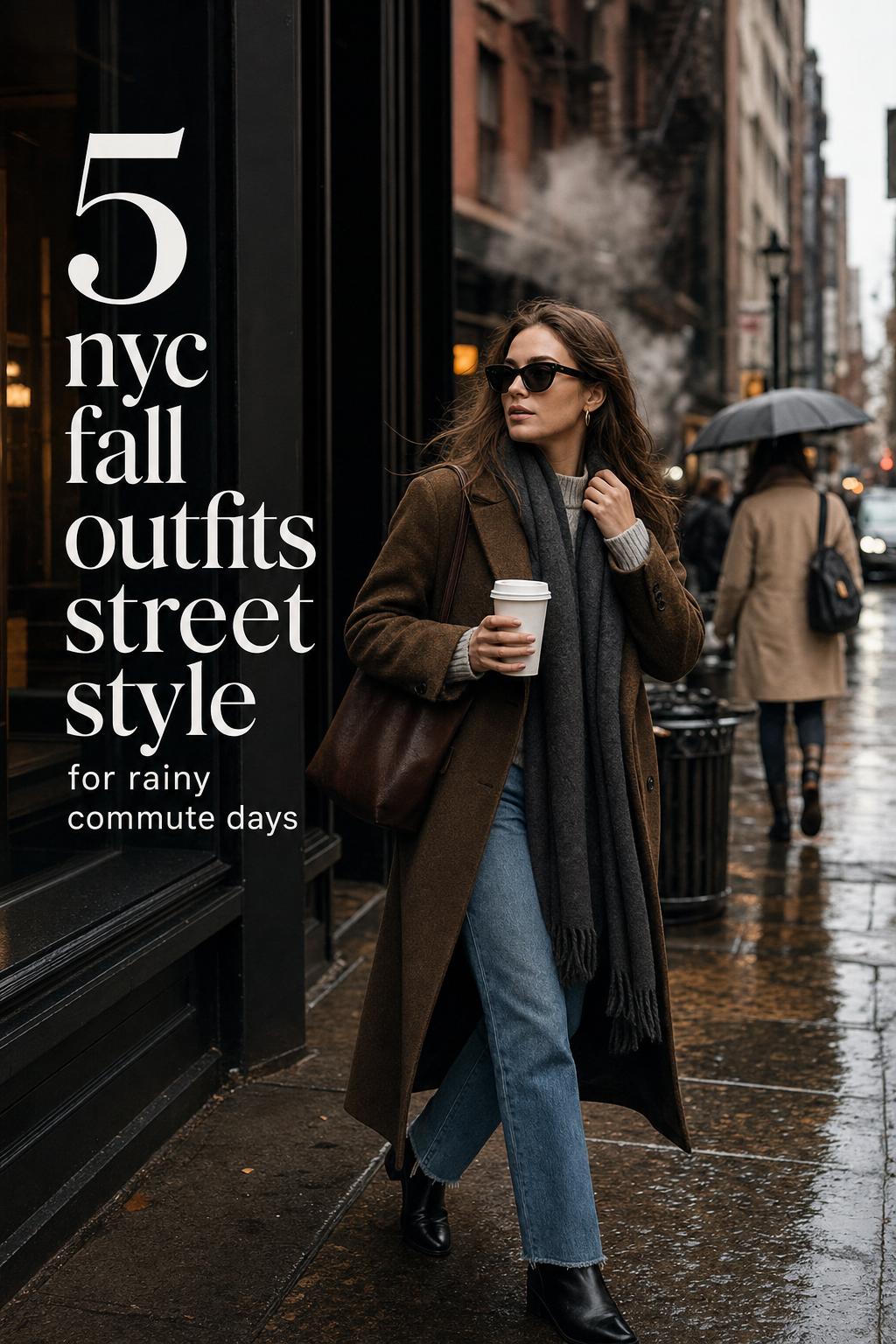
    The key decision for going-out outfits is whether you want the focus on the body line or on the layering. If the dress is the statement, keep the layer cropped and streamlined. If the outerwear is the statement, such as a stronger moto jacket or blazer, use a simpler dress or top beneath it. Trying to make both do all the work often results in visual overload.

    • Choose ankle boots when comfort and stability matter more than height
    • Use a mini bag to keep the look compact and intentional
    • Let one texture lead, such as leather or knit, rather than mixing too many strong surfaces at once
    • Bring in jewelry as a finishing note, not as a substitute for outfit structure

    The rise of corporate baddie dressing

    Corporate baddie style deserves separate attention because it solves a very common problem: how to keep the confidence and edge of the baddie aesthetic while respecting a more professional environment. The answer lies in tailored silhouettes, monochrome dressing, and selective drama. An all-black outfit, especially with a blazer or blazer dress, carries the attitude of the aesthetic without relying on casual streetwear cues.

    A cut-out blazer dress is one of the more directional expressions of this niche, but it is not the easiest option for every workplace. For most readers, the more functional route is an oversized blazer worn over a fitted top with high-waisted trousers or dark jeans, depending on office norms. The proportion works because the blazer provides authority while the close-fitting base preserves that sleek, confident line associated with the aesthetic.

    Monochrome is especially effective here because it reduces visual noise. It can also be more flattering across body types, as one color family tends to elongate the line. If black feels too severe for daytime, deep wine, forest green, or charcoal-like dark neutrals within a fall palette can create similar polish. The mistake to avoid is leaning too heavily into nightclub styling for the office. In a work setting, the edge should come from tailoring, not from overexposure or excessive accessories.

    Tip: how to make work-friendly outfits look more expensive

    Choose one structured layer, keep the palette tight, and pay attention to finish. Even affordable pieces look more refined when the blazer fits cleanly at the shoulders, the boots are in good condition, and the bag and jewelry feel intentional. Corporate baddie style is more about discipline than excess.

    Regional styling: what works in NYC, LA, Chicago, Houston, and Seattle

    One of the most overlooked aspects of fall baddie outfits is geography. The same look does not function identically across the U.S., and some of the best styling decisions come from adapting the aesthetic to climate rather than copying a single formula. A smart wardrobe for NYC fall benefits from layered structure: blazer, moto jacket, denim jacket, boots, and pieces that can move from subway commutes to indoor dining. Texture reads particularly well in an urban setting, so leather pants, plaid, and stronger outerwear earn their keep.

    In LA, the emphasis can shift toward lighter layering. Hoodies, crop tops, denim jackets, and sneakers often make more sense than heavier knitwear or tall boots for everyday wear. The look remains polished when you keep the silhouette defined and the accessories neat. A heavy fall palette can still work, but the fabrics may need to stay lighter so the outfit feels seasonally stylish without becoming impractical.

    Chicago and parts of the Midwest often require more weather-conscious layering. Here, fall baddie dressing works best when the outfit has a visible base layer and a true outer layer, rather than relying only on one jacket. Boots become more than an aesthetic choice. They help the outfit hold up across longer walks, colder evenings, and early seasonal shifts. In Seattle, where layering and comfort often go hand in hand, a plaid shacket, denim, boots, and a fitted knit base can feel especially relevant.

    Houston calls for selective fall signals rather than full cold-weather styling. This is where color and accessory choices become valuable. A deep rust top, a mini bag, ankle boots, and a lighter jacket can deliver the seasonal mood without requiring heavy materials for the entire day. Adapting the aesthetic this way tends to look more natural and more expensive than forcing cold-weather formulas into a warm climate.
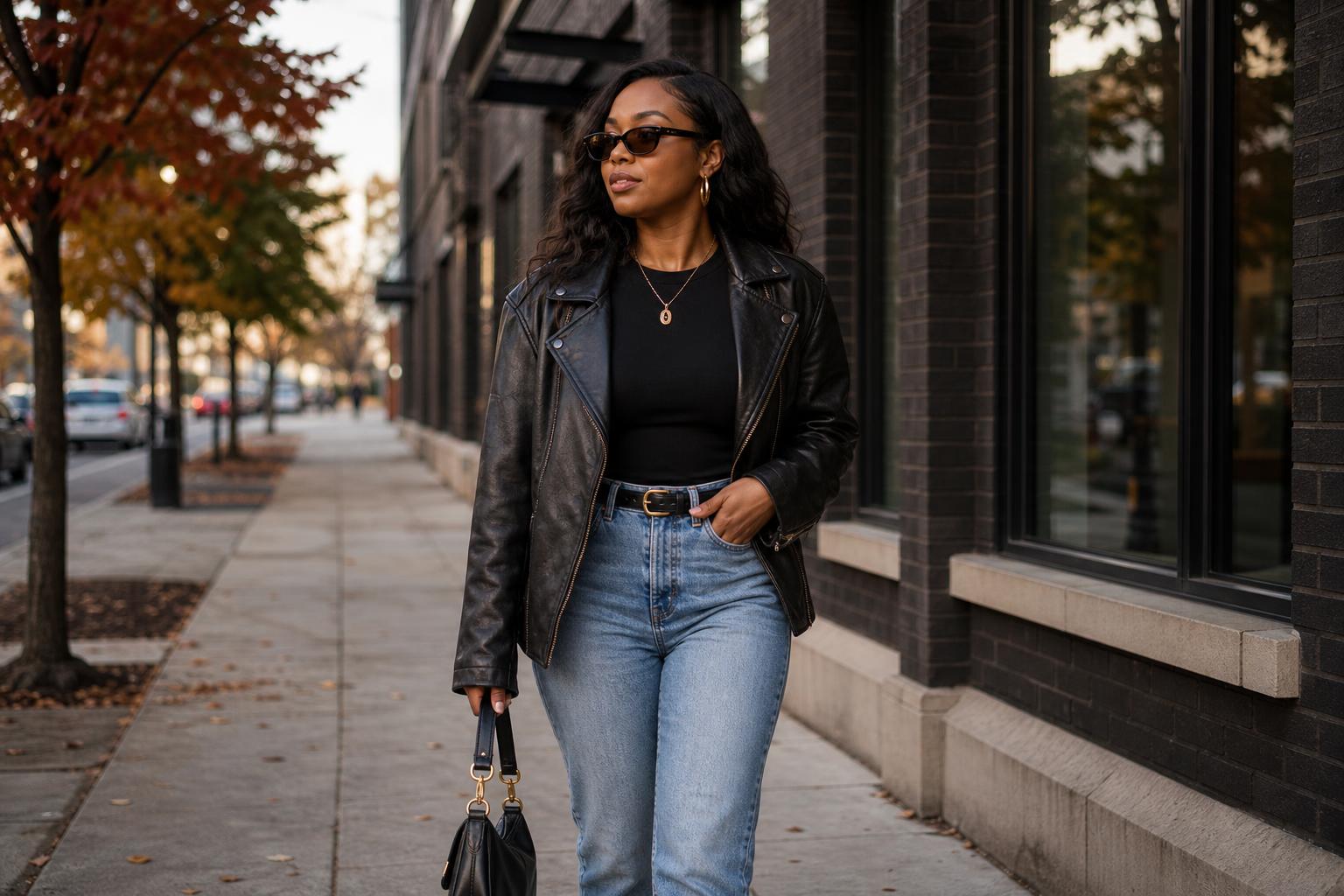
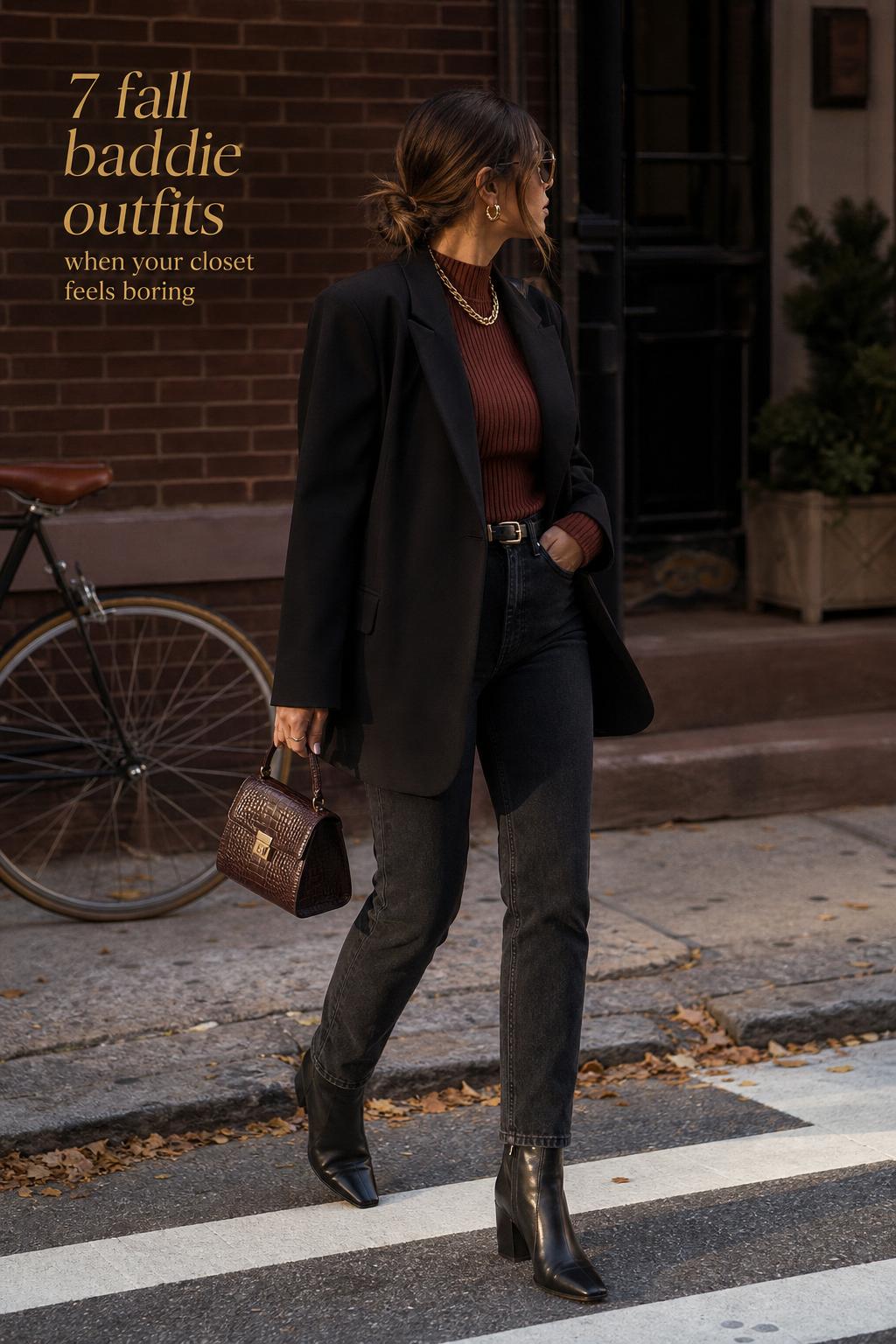
    Size inclusivity, body proportion, and comfort

    The aesthetic is often presented through one narrow silhouette, but in reality it translates well across different body types when proportion is handled thoughtfully. Plus-size readers may find knit midi dresses, structured blazers, and high-waisted bottoms especially useful because they create line and support without sacrificing comfort. A fitted inner layer under a jacket or shacket can define shape beautifully, while still allowing freedom of movement.
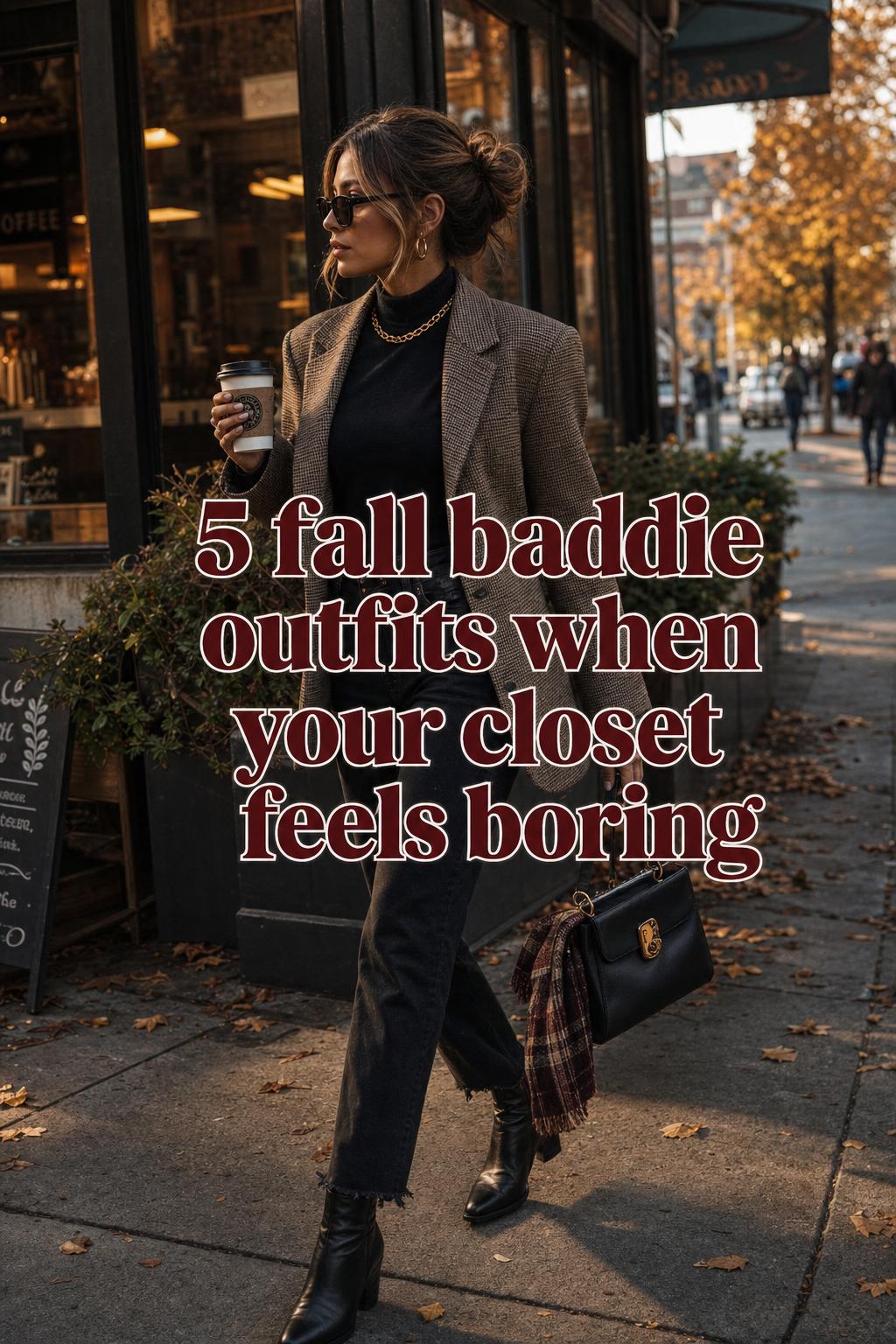
    For petite frames, the main challenge is avoiding too much visual bulk. Cropped jackets, high-waisted jeans, and ankle boots usually work better than very long layers combined with wide shapes everywhere. For tall readers, longer blazers, bodycon dresses, and knee-high boots can look especially elegant because the line has room to breathe. Curvy readers often benefit from balancing fitted and structured elements rather than choosing either all-tight or all-oversized styling.

    Comfort is not the opposite of style here; it is part of what makes the look convincing. A hoodie under a good jacket, a knit dress with boots, or jeans with a fitted top and blazer can all feel polished while still being wearable for an entire day. If you are shopping strategically, always ask whether a piece works for at least two settings. That simple question helps separate wardrobe builders from one-use purchases.

    Common mistakes that weaken the look

    One of the biggest mistakes is confusing a baddie outfit with an outfit that includes every bold item at once. Fall already adds texture through jackets and layers, so too many competing pieces can make the final result feel busy. Another issue is ignoring proportion. An oversized hoodie with oversized outerwear and loose bottoms can lose the sharpness that gives the aesthetic its confidence.

    Footwear errors are also common. A beautiful outfit can fall flat if the shoe does not match the weight of the clothing. Light, delicate shoes often struggle against heavier fall textures, whereas boots or substantial sneakers tend to integrate more naturally. Similarly, adding glam details without tidy foundations can work against the outfit. Jewelry, hair, makeup, and nails should support the look, but they cannot replace a coherent silhouette.

    • Avoid layering too many statement textures in one outfit
    • Do not let oversized pieces erase the waist and shape entirely
    • Match the shoe weight to the season and the clothing texture
    • Buy fewer, better repeat pieces instead of many single-use items
    • Use accessories to finish the look, not to rescue a weak outfit base

    Building a smart shopping plan instead of chasing every trend

    Because so much of the current landscape leans on visual lookbooks and trend language, it is easy to overbuy. A better approach is to shop by outfit function. Start with the pieces that can anchor multiple combinations: jeans, one jacket, one pair of boots or sneakers, one fitted top, and one going-out option such as a dress or leather pants. This creates a wardrobe that can handle everyday wear, casual bars, date night, and a more polished setting.

    When deciding where to spend more, prioritize outerwear and footwear. They shape the entire look and tend to be the first elements people notice. Save on simple tops, especially if they are used mainly as base layers. If your budget allows only one statement purchase, make it a blazer or moto jacket rather than a more limited trend item. That choice gives you far more styling range.

    It is also wise to think in clusters: tops, outerwear, bottoms, footwear, and accessories. If one new piece cannot connect to at least two categories you already own, it may not be the right purchase yet. This is especially important for readers trying to build a fall baddie capsule wardrobe rather than a one-season experiment.

    Tip: what to buy first if your wardrobe feels random

    Begin with high-waisted jeans, a fitted black top, a denim jacket or blazer, and ankle boots or sneakers. These four categories form the backbone of many of the most wearable looks and make it easier to layer in trend pieces later without losing cohesion.

    Accessories, beauty finish, and the final five percent

    Accessories are often treated as optional, yet they are part of what gives the baddie aesthetic its polished edge. A mini bag keeps the look compact and deliberate. Chunky jewelry adds emphasis near the face and neckline, which is especially useful with simple tops or monochrome outfits. Boots, heels, or sneakers help define the attitude of the outfit more than many people realize.

    Beauty details matter because they complete the tension between streetwear and glam. Nails, hair, and makeup do not need to be dramatic every day, but they should feel consistent with the outfit. A sleek outerwear look paired with completely casual finishing can feel unresolved. On the other hand, a simpler outfit can be elevated considerably through neat grooming and a strong accessory choice.

    The most useful mindset is to treat these details as refinements, not distractions. If the silhouette and layering are strong, a mini bag and jewelry can sharpen the outcome. If the clothing is confused, no amount of finishing detail fully corrects it.

    From casual to polished: a few outfit directions that earn repeat wear

    Some outfit combinations return again and again because they solve practical wardrobe needs. High-waisted jeans, a bodysuit, a denim jacket, and sneakers create an easy daytime uniform with a clean line. Leather pants, a fitted knit top, and ankle boots offer a stronger evening option while still feeling manageable for a dinner or casual bar. A bodycon dress with a cropped moto jacket works for going out because it balances shape with seasonal texture. A plaid shacket over a crop top and dark denim gives a relaxed but photogenic campus or weekend look. An oversized blazer with a fitted top and dark bottoms moves naturally into corporate baddie territory.

    What all of these outfits share is repeatability. They are not dependent on one exact item or one exact trend year. You can recreate them with affordable versions, with plus-size adaptations, or with small proportion shifts for petite and tall frames. That is what makes them useful: the styling logic survives even when the specific pieces change.

    Fall baddie outfits street style: adult woman in blazer, dark denim and ankle boots on an urban sidewalk by a coffee shop
    A confident early-fall street-style moment pairs dark denim, a knit top, and an oversized blazer in warm city light.

    FAQ

    What are the most essential pieces for fall baddie outfits?

    The most useful starting pieces are high-waisted jeans, a fitted bodysuit or crop top, one strong layer such as a denim jacket, blazer, moto jacket, or plaid shacket, and footwear that can handle fall weather, usually ankle boots or sneakers. If you want one evening option, add a bodycon dress or leather pants.

    Can fall baddie outfits work for everyday life, not just photos?

    Yes, when the outfit is built around practical layers and comfortable shoes. The most wearable versions use streetwear foundations such as jeans, hoodies, denim, and sneakers, then add polish through outerwear, boots, jewelry, a mini bag, and a more defined silhouette.

    How do I style this aesthetic on a budget?

    Spend first on outerwear and footwear, because those pieces shape the outfit and get repeated often. Save on basic tops used as layering pieces. A well-cut blazer or moto jacket can make inexpensive bodysuits, crop tops, and denim look much more refined.

    What if I am petite, curvy, tall, or plus size?

    The key is proportion rather than one fixed body type. Petite readers often benefit from cropped jackets and high-waisted shapes, curvy readers usually look strongest in a balance of fitted and structured pieces, tall readers can carry longer blazers and knee-high boots beautifully, and plus-size styling works especially well with knit midi dresses, blazers, and defined layering.

    What colors work best for fall baddie outfits?

    Black remains a strong base, especially for monochrome and corporate baddie styling, but fall-specific shades such as caramel, rust, wine, deep emerald, and forest green help the outfit feel more seasonal. These colors are especially effective when paired with textured fabrics like knit, leather, plaid, and denim.

    Are sneakers or boots better for this look?

    Both work, but they create different outcomes. Sneakers make the outfit more casual, practical, and campus- or travel-friendly. Boots add seasonal weight and polish, especially with dresses, leather pants, and layered evening looks. The right choice depends on weather, occasion, and how sharp you want the final outfit to feel.

    How can I make a fall baddie outfit look more polished?

    Focus on clean structure, a controlled palette, and finishing detail. A tailored blazer, good boots, neat jewelry, and a bag that feels intentional can elevate even simple basics. The outfit usually looks strongest when one silhouette is fitted, one layer is structured, and the accessories are restrained.

    What are the most common mistakes to avoid?

    Avoid wearing too many statement pieces at once, using oversized layers without any shape underneath, and choosing shoes that feel too light for heavier fall textures. Another common mistake is buying dramatic single-use items before building a foundation of jeans, jackets, footwear, and versatile tops.

    Can I wear fall baddie outfits to work?

    Yes, especially through the corporate baddie approach. Tailored silhouettes, monochrome dressing, oversized blazers, fitted base layers, and polished boots create the right balance. In a professional setting, the edge should come from structure and confidence rather than from overly revealing styling.