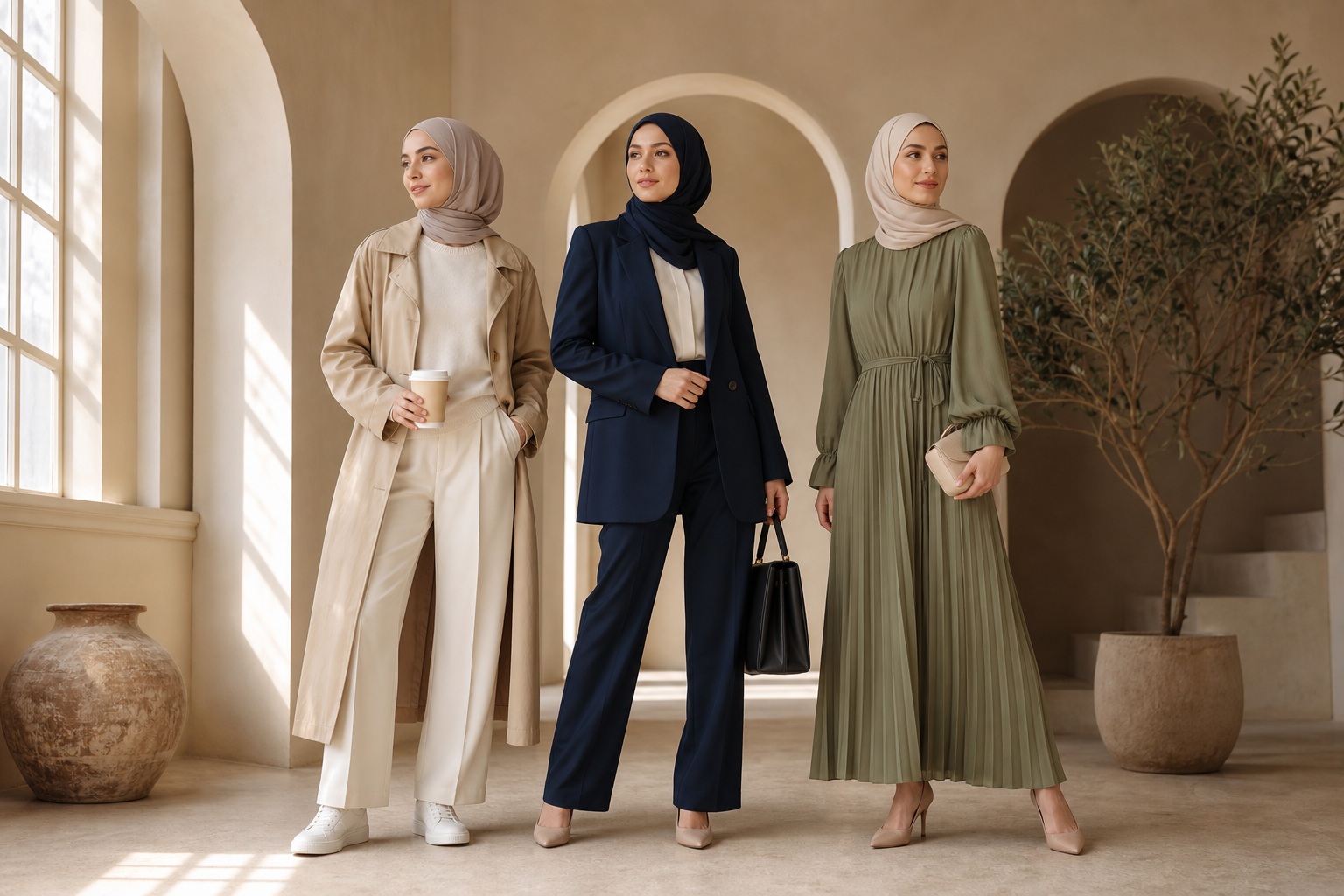
Getting dressed as a hijabi is not a choice between looking polished and feeling comfortable. The better question is which outfit system fits the day in front of you. A long commute, a formal presentation, a warm afternoon, a flight, and a family celebration all ask for different levels of coverage, structure, movement, and fabric performance. The most useful hijabi style outfits are the ones that respect those differences while still feeling like your personal style.
This guide compares complete outfit approaches instead of presenting one universal formula. You will see when a dress is easier than separates, why a modal or jersey hijab can outperform a beautiful but slippery scarf, how to make a work outfit feel less rigid, and how to adapt a small set of clothes across several settings. Use the ideas as a wardrobe map, not a strict rulebook. Modesty is personal, and the best outfit is the one that meets your own coverage, comfort, faith, and confidence preferences.
How to Choose Between Hijabi Style Outfits
Start with the demands of the situation before choosing a color or trend. Ask four quick questions: How much will you move? How long will you wear the outfit? Does the setting require a polished impression? How much time do you have for adjustments? These questions make the decision more useful than copying a look because it photographs well. An outfit for a university day may need eight-hour comfort and a bag-friendly layer, while a client meeting may need a secure wrap, a sharper shoulder line, and shoes that can handle a commute.
Next, decide whether the outfit should be built around a one-piece or a two-piece base. A maxi or shirt dress reduces matching decisions and creates coverage in one step. Trousers with a long shirt, tunic, or blazer give more flexibility because each piece can be reused. A skirt offers movement and softness, while wide-leg trousers create a similar visual ease with a different feel. Neither approach is automatically more modest or more stylish; the right choice depends on fabric opacity, hem length, sleeve coverage, fit, and how freely you need to move.
Your wedding has a lot of moving pieces. Your plan can still feel composed.
Zarellea organizes guests, vendors, budget, and timelines in one shared space — so you can make decisions with clarity, not stress.
Finally, match the hijab to the performance of the outfit. A calm neutral can connect several colors, but fabric changes the message. Matte jersey, cotton, and modal usually feel easy and grounded. Chiffon and georgette create a more structured or dressy finish when secured correctly. Satin and silk bring light and occasion energy, but they may need an undercap, pins, or magnets. Think of the hijab as both a frame for the face and a functional layer that must stay comfortable for the whole day.
Everyday and Casual Hijabi Style Outfits
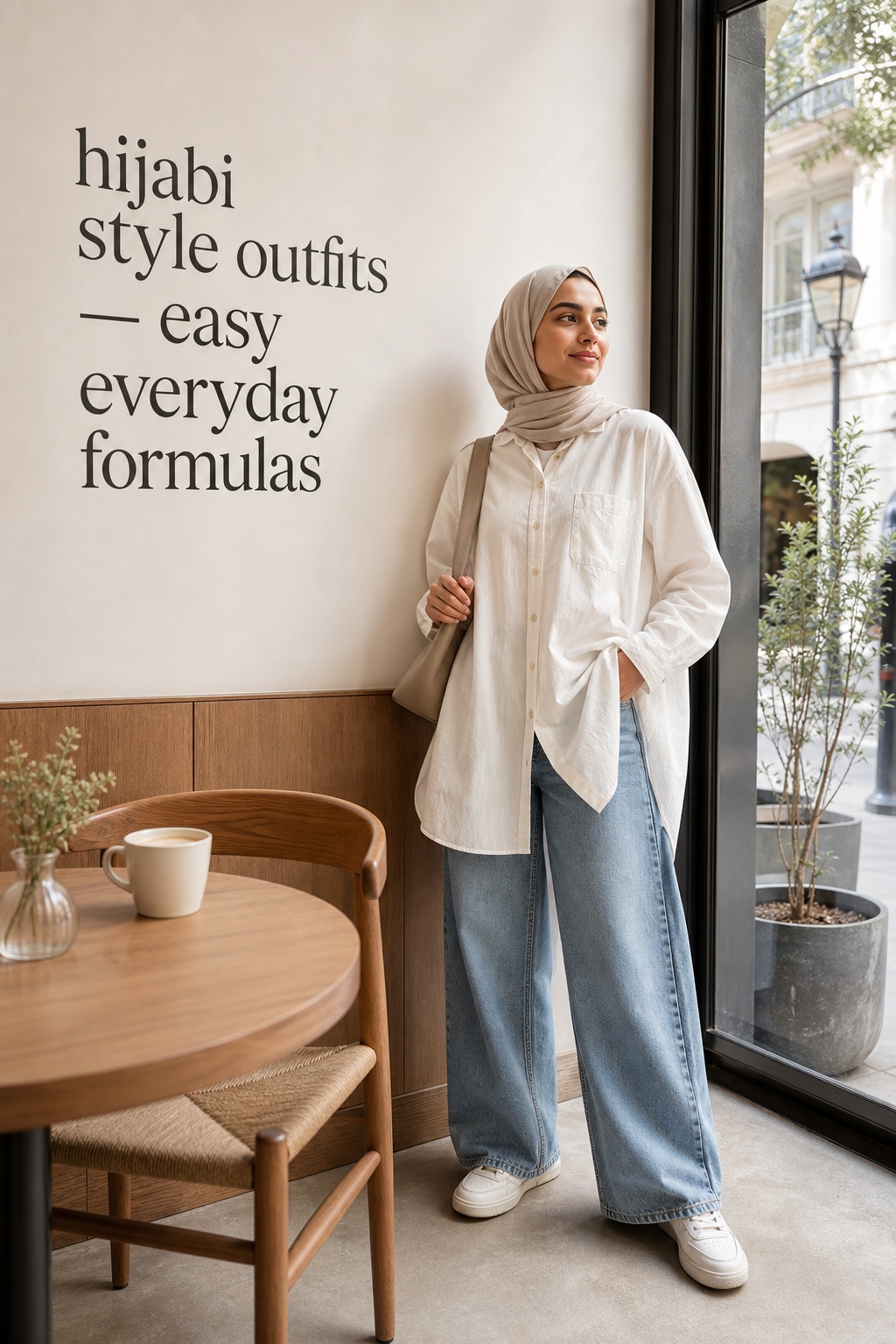
For everyday dressing, the winning formula is usually a long top, a comfortable bottom, and a hijab that does not need constant attention. Try a relaxed button-down worn over a long-sleeve base with straight-leg jeans, wide-leg trousers, or a flowing skirt. Finish with clean sneakers, flat loafers, or supportive sandals. The proportions matter: if the bottom is wide, let the top have a clear line or a controlled tuck; if the top is oversized, choose a bottom that still gives the outfit an intentional shape.
A casual maxi dress is the fastest alternative. Choose a breathable dress with a comfortable neckline and enough room through the body, then add a denim jacket, lightweight cardigan, overshirt, or long vest. A layer can change the mood without changing the entire outfit. A soft jersey hijab in a tonal shade keeps the look relaxed, while a contrasting but related color gives a simple dress more personality. This is especially useful when you want one base dress to work for errands, coffee, family visits, and a casual dinner.
For a campus or busy-day outfit, combine a modal or cotton hijab with a crewneck sweatshirt, longline shirt, wide-leg jeans, and white sneakers. Carry a lightweight coat or cardigan for air conditioning. This combination is comfortable for sitting, walking, and carrying a laptop, yet it does not depend on oversized pieces everywhere. A structured tote, simple watch, or small crossbody adds finish without making the outfit feel formal.
Color coordination does not require an exact match. Pick one anchor shade from the clothing, repeat it in a softer or deeper form near the face, and keep the accessories quiet. For example, an olive overshirt can work with cream trousers and a taupe hijab; a navy cardigan can meet blue denim, an ivory top, and a soft gray hijab. If the clothing is patterned, a plain hijab usually creates balance. If the clothing is plain, texture or a gently colored scarf can provide interest.
Work, Study, and Professional Hijabi Style Outfits
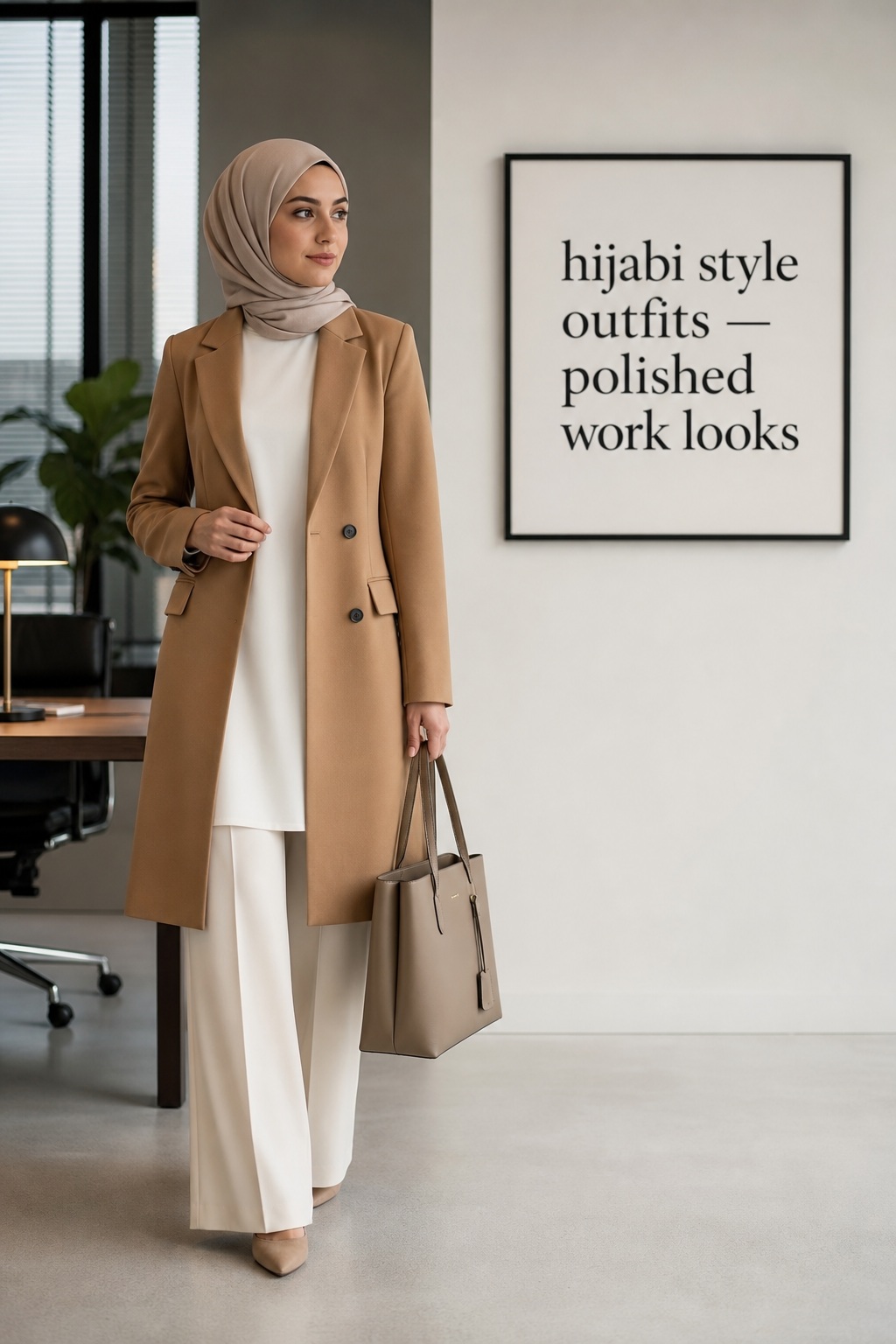
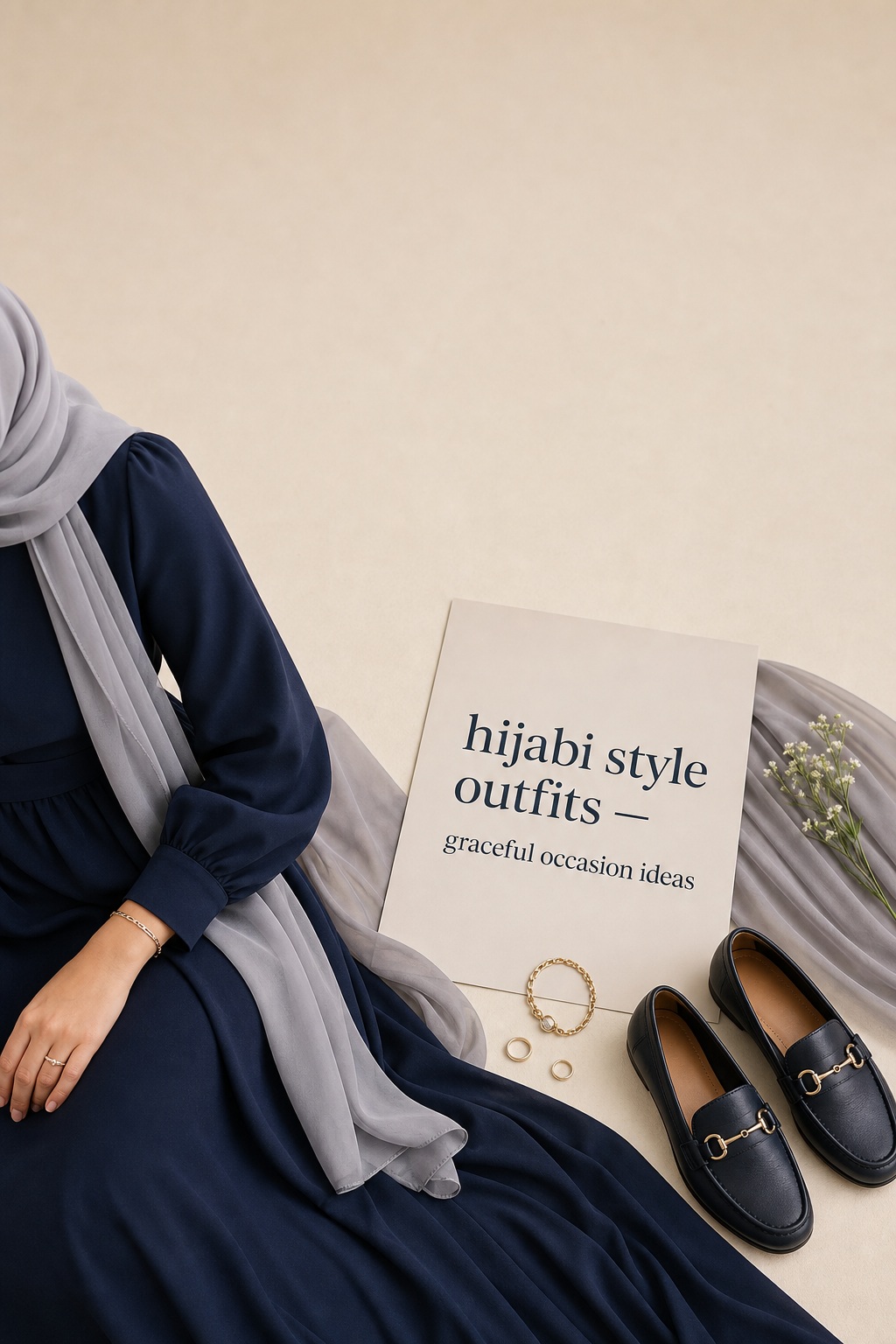
Professional dressing benefits from structure, but structure does not mean stiffness. Start with a reliable base such as tailored wide-leg trousers, a longline blazer, a pleated midi skirt, a modest shirt dress, or a coordinated tunic and trouser set. Choose fabrics that hold their shape through sitting and movement. Add a closed-toe flat, loafer, block heel, or polished sneaker only if the workplace allows it. A structured tote or medium shoulder bag makes the outfit feel complete and carries practical items without overwhelming the silhouette.
For formal offices, a monochrome or tonal outfit is an efficient solution. Charcoal trousers with a matching blazer, a high-neck shell, and a satin or matte hijab in a related shade creates a long, uninterrupted line. Navy, ivory, camel, taupe, gray, and deep burgundy are useful because they coordinate easily and can look intentional without relying on loud prints. If black feels too severe, replace it with deep navy or charcoal and keep the rest of the outfit soft.
For a creative office, school, healthcare setting, or relaxed professional environment, use texture and layering instead of adding more accessories. A long cardigan over a tunic and straight trousers, a shirt dress over trousers, or a knit sweater with a maxi skirt can feel expressive while staying practical. Bamboo jersey, modal, and cotton blends often offer a good balance of grip, breathability, and drape. The goal is a hijab that stays in place when you speak, turn, reach, or move between rooms.
Keep the face-framing area clean. A neat undercap gives the scarf a stable base, while a well-placed pin or magnet can reduce readjustments. A wrapped-and-tucked style is especially useful beneath a coat or blazer because the ends do not bunch at the neck. If you prefer a looser drape, make sure the rest of the outfit has enough structure to keep the overall look from appearing accidental. Professional polish is usually created by consistency: secure fabric, clear proportions, and one deliberate color relationship.
Occasion, Travel, and Active-Day Comparisons
Occasion outfits allow softer drape, richer texture, and a little more visual drama. A satin or chiffon hijab with a modest maxi dress, tailored jumpsuit layered over a high-neck top, or embellished skirt can feel special without requiring excessive accessories. Let one element lead. If the dress has shine or beading, keep the hijab simple but elegant. If the base outfit is plain, a bordered scarf, subtle print, or luminous fabric can bring focus toward the face. Steam delicate fabric before wearing it, and test the wrap at home so the occasion is not the first time you discover that it slips.
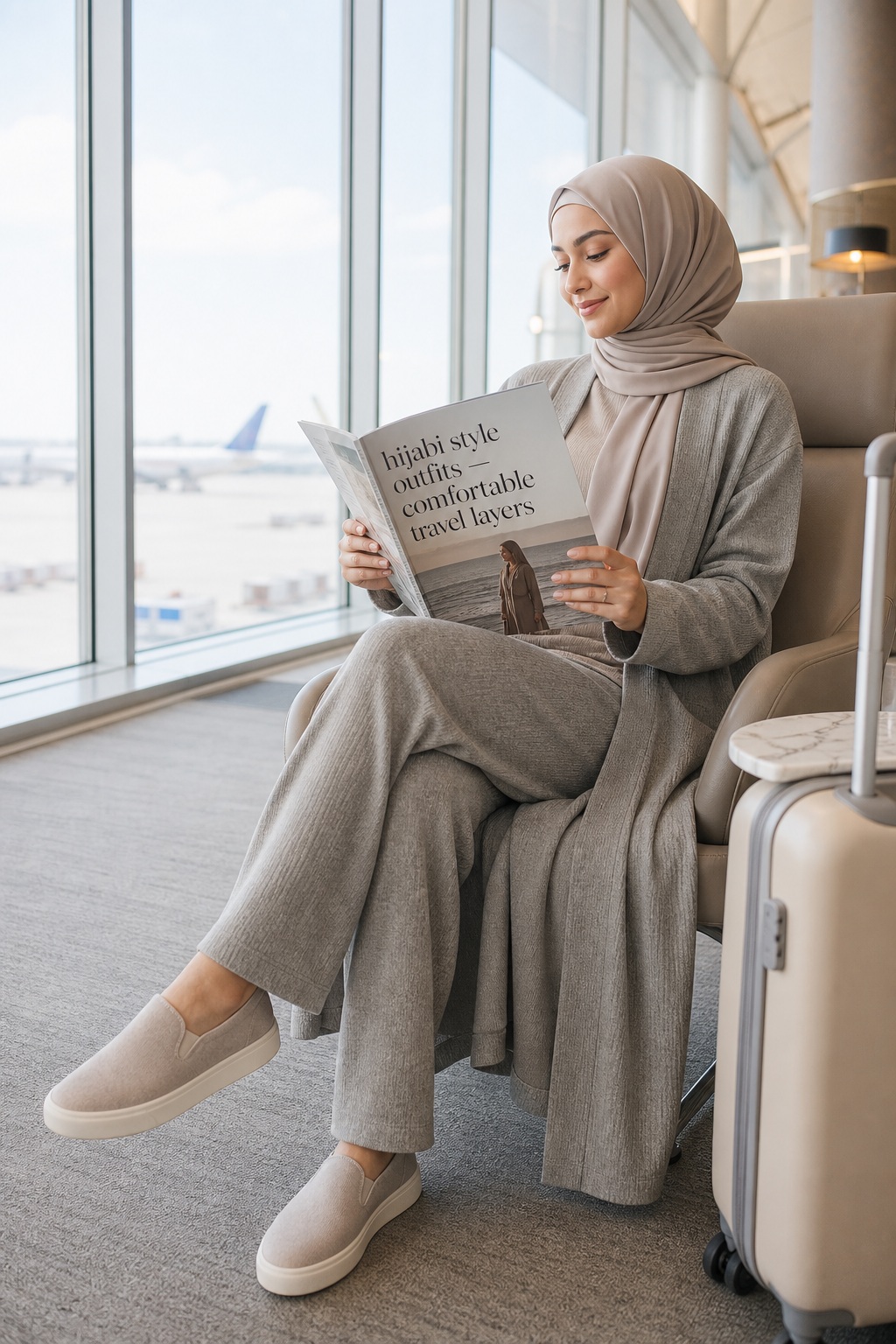
For travel, comfort and adaptability matter more than a perfect first impression. A soft knit set with an oversized cardigan, slip-on sneakers, and a modal or jersey hijab works for a long flight. If you are traveling directly to a meeting, wear tailored trousers, a long shirt, a travel blazer, and a wrinkle-resistant scarf, then keep a dressier layer in your carry-on. A small kit with an undercap, two pins or magnets, and one neutral backup hijab can solve most airport, hotel, and weather problems.
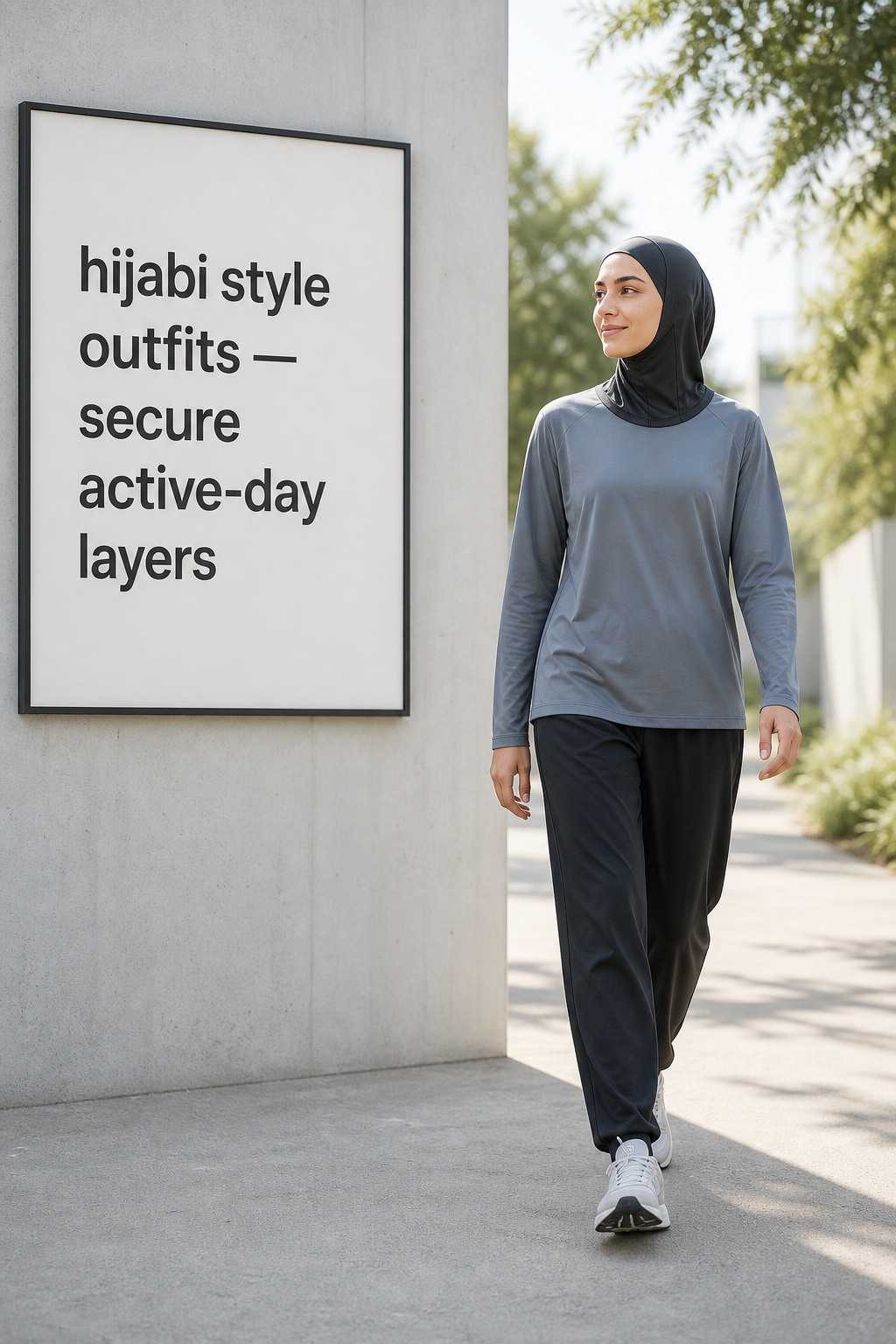
For active days, reduce anything that can shift, catch, or overheat. A fitted sports hijab or secure jersey wrap with a breathable long-sleeve top, loose performance trousers, and supportive shoes is usually more practical than a long loose drape. For walking, errands, or outdoor travel, choose a lightweight fabric and a simple wrap with minimal pins. Keep the ends controlled and check that the sleeves and hem allow a full range of movement. Comfort is not an afterthought here; it is what lets the outfit perform.
These settings can share pieces. A neutral wide-leg trouser can move from a casual shirt to a blazer and then to a long cardigan. A simple maxi dress can become work-appropriate under a structured jacket and occasion-ready with a satin hijab and refined shoes. A lightweight trench, open abaya, or long vest adds coverage while creating a new vertical line. The most versatile wardrobe is not the one with the most items; it is the one in which each item has at least two believable jobs.
Trade-Offs, Fit Checks, and a Small Hijab Wardrobe
Every outfit choice has a trade-off. Loose layers provide ease and coverage but can look bulky if all the fabrics are heavy. A slim base under a long layer creates a cleaner line, but it should still meet your own comfort and modesty standards. Chiffon looks elegant but may require more preparation. Jersey is forgiving and secure but can feel too casual for a formal event. Satin catches the light beautifully but shows creases and movement. Decide which quality matters most for that day instead of asking one fabric to do every job.
Use a five-point fit check before leaving. Can you sit, walk, reach, and bend without adjusting the outfit? Does the hem stay where you want it? Are the sleeves comfortable under the outer layer? Does the hijab stay secure when you turn your head? Is the visual weight balanced from head to toe? If the answer is no, change the fabric, layer, or shoe before adding more accessories. Small practical corrections usually make an outfit look more polished than extra decoration.
A small hijab capsule might include two everyday neutrals, one soft bridge shade, one darker accent, one breathable active option, one dressier chiffon or satin, and a dependable undercap. The exact number is personal. Start with colors that already connect to your clothes: black, ivory, taupe, mocha, gray, navy, camel, olive, or burgundy may be useful depending on your wardrobe. Before buying another scarf, ask whether it fills a real gap, works with at least five outfits, or improves comfort in a situation you regularly face.
Keep your outfit formulas visible. A note on your phone can list combinations such as long shirt plus straight jeans, blazer plus wide-leg trousers, maxi dress plus cardigan, or tunic set plus loafers. Save the combinations that worked in real life, not only the ones that looked good in a mirror. Over time, this creates a personal reference library. You will still have room for experimentation, but everyday dressing will no longer depend on starting from zero.
FAQ
What are the easiest hijabi style outfits for everyday wear?
Start with a long shirt, straight or wide-leg trousers, a neutral jersey or modal hijab, and comfortable flats or sneakers. A modest maxi dress with a cardigan is another easy one-piece option. Both formulas are comfortable, repeatable, and simple to adapt with color or accessories.
Which hijab fabric is best for work?
Modal, cotton blends, and structured jersey are strong everyday work choices because they can look neat, breathe, and stay in place. Chiffon or georgette can work for a more formal look when secured with an undercap and suitable pin. Choose the fabric based on your office, commute, climate, and tolerance for adjustment.
How can I make a casual hijabi outfit look more polished?
Keep the color palette intentional, add one structured piece such as a blazer or long vest, and choose shoes and a bag with clean lines. A pressed shirt, coordinated hijab, and controlled proportions often make a bigger difference than statement jewelry. One relaxed item is enough; balance it with one piece that holds its shape.
How do I style hijabi outfits for hot weather?
Choose breathable cotton, modal, lightweight linen layers, or a fine jersey, and avoid stacking heavy fabrics. Wide-leg trousers, airy maxi dresses, and loose long shirts allow movement without trapping as much heat. Keep the wrap secure but simple, use a breathable undercap when needed, and choose lighter colors if that feels comfortable for your wardrobe.
What should I wear for a formal event as a hijabi?
A modest maxi dress, tailored layered set, or elegant skirt outfit can provide a strong base. Pair it with chiffon, satin, or silk in a color that complements the clothing. Keep one element as the focal point, secure the scarf before the event, and choose shoes you can comfortably stand and walk in.
How many hijabs do I need for a useful capsule wardrobe?
There is no required number, but a practical starting point is two everyday neutrals, one bridge shade, one deeper color, one active or travel-friendly option, and one dressier scarf. Add pieces only when they solve a real color, fabric, or occasion gap. A smaller group that you wear often is more useful than a large drawer of difficult choices.
Proportion is the quiet detail that makes hijabi style outfits feel considered. A longline layer creates a strong vertical line, but it does not have to be oversized. Look for a shoulder seam that sits comfortably, sleeves that leave room for a base layer, and a hem that moves without catching on your shoes. Wide-leg trousers look balanced with a top that ends around the hip or extends clearly below it. With a maxi skirt, a shorter structured jacket can define the upper half while preserving coverage. These are visual options, not fixed rules, so use a full-length mirror and your own comfort as the final test.
Layering also helps when a favorite item is not designed with modest dressing in mind. A long-sleeve mock-neck top can add coverage under a sleeveless dress. A long vest or open abaya can provide another layer over a simple base. A shirt dress worn open over trousers changes the outfit without requiring a new statement piece. Pay attention to fabric friction: a slippery shirt under a slippery outer layer may move more than expected, while cotton, knit, or a lightly textured fabric can create a steadier base. The best layering pieces are easy to wash, comfortable at the neck and wrists, and useful across more than one season.
Seasonal styling should change the weight of the outfit, not erase your personal style. In spring, combine a light trench, cotton shirt, straight trousers, and a soft bridge-color hijab. In summer, replace the trench with an airy overshirt or long vest and choose breathable fabrics. In fall, add a knit cardigan, suede or leather loafers, and a warmer hijab shade such as camel, espresso, olive, or burgundy. In winter, place the most secure wrap under a coat, keep the neck comfortable rather than over-wrapped, and use boots with enough room for walking. A small seasonal shift can make the same neutral wardrobe feel fresh.
Shopping becomes easier when you buy by role rather than by isolated inspiration. A weekday neutral should work with several tops and bottoms. A work layer should fit over the clothes you already wear, not only one imagined outfit. A special-occasion scarf should have a clear place in your calendar. Before purchasing, make three quick combinations in your head or on your phone. If you cannot connect the item to at least three existing pieces, pause. The most flattering color is not necessarily the most useful color, and the most beautiful fabric is not automatically the one you will reach for on a busy morning.
Body shape and personal preference can guide the choice without turning style into a set of restrictions. If you like more definition, use a structured blazer, a belted outer layer worn comfortably, or a tonal outfit that creates a long line. If you prefer fluid clothing, select fabrics that fall cleanly and add interest through texture, color, or a controlled sleeve shape. Petite wearers may prefer shorter outer layers over long dresses or a monochrome base with a clean hem. Taller wearers may enjoy longer vests, generous scarves, and wide-leg trousers. Every suggestion can be adjusted for height, mobility, climate, and the amount of coverage that feels right to you.
When an outfit feels almost right but not quite, change one variable at a time. If it feels too casual, replace sneakers with loafers or add a structured bag. If it feels too formal, switch satin to matte jersey or remove the blazer. If it feels visually heavy, lighten the scarf or show more space between layers. If it feels unfinished, repeat one color in the hijab and shoes, or add a simple watch. This one-change method prevents overstyling and helps you understand what your wardrobe actually needs.
The most sustainable outfit formula is one that supports real routines. Notice which looks survive a full day, which scarves remain comfortable after several hours, and which shoes let you move naturally. Keep those observations instead of chasing every new outfit list. Hijabi style outfits become more personal as you learn your own fabric preferences, reliable colors, favorite proportions, and practical limits. That knowledge is more valuable than a large collection of disconnected ideas because it lets you create a new outfit even when you have never seen the exact combination before.
Leave a Reply