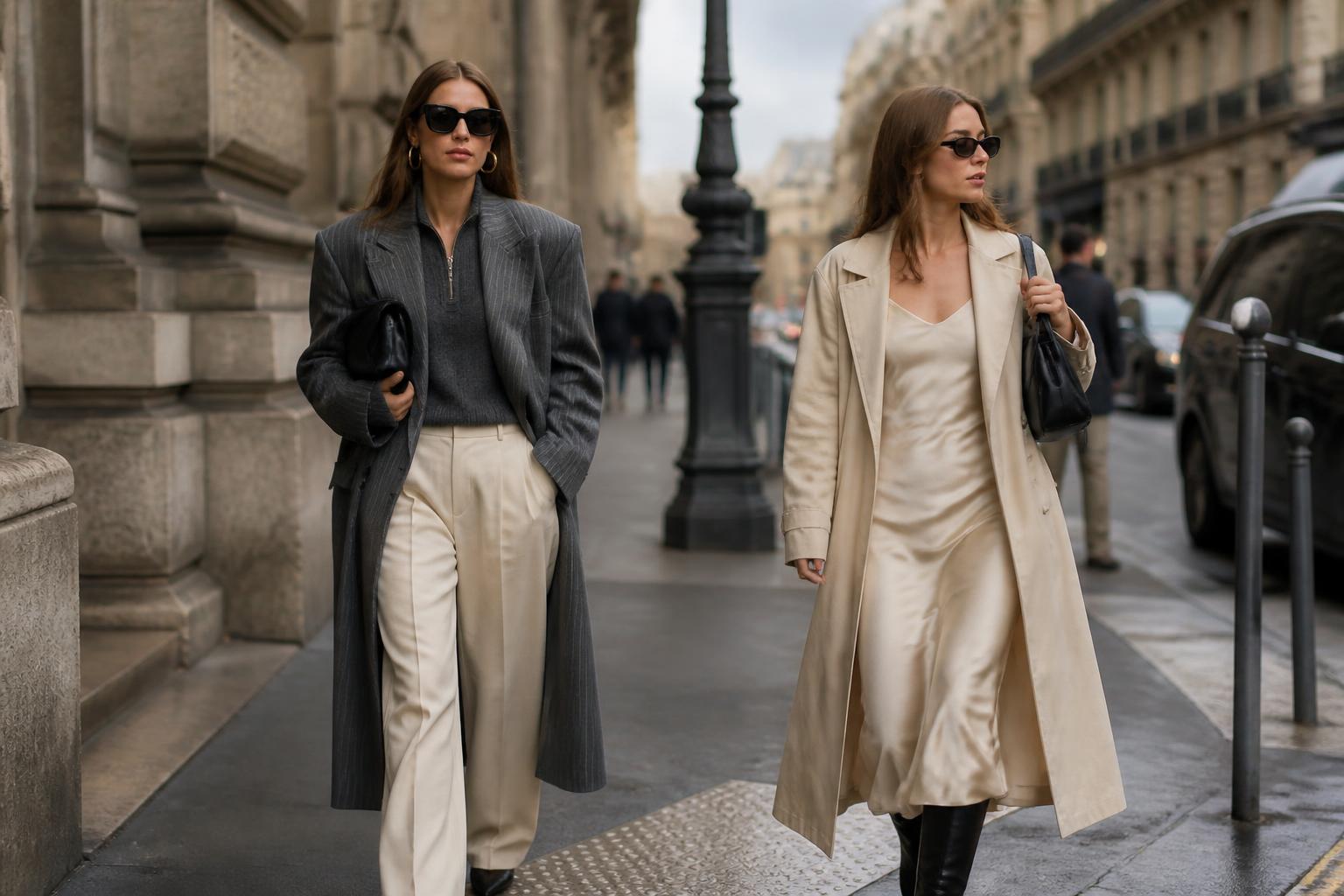
A black blazer over a vintage band tee, a sharply cut coat worn with sneakers, a silk slip grounded by an oversized bomber—this is the visual tension that keeps high fashion street style in constant conversation with luxury fashion. The two aesthetics overlap so often that the line between them can seem almost theoretical, especially in cities where fashion week crowds turn sidewalks into an unofficial runway. Yet the distinction matters. One approach is built on movement, spontaneity, and personal styling language; the other begins with polish, precision, and the codes of elevated dressing.
High fashion street style is often discussed alongside luxury fashion because both rely on strong silhouettes, brand literacy, and visual confidence. Paris, Milan, Copenhagen, and New York have all shaped the way these looks are read today, with street style photography helping translate what might begin at a show or event into an everyday styling reference. Understanding the difference helps you identify whether an outfit is driven by tailored structure, streetwear energy, or a deliberate balance of both.
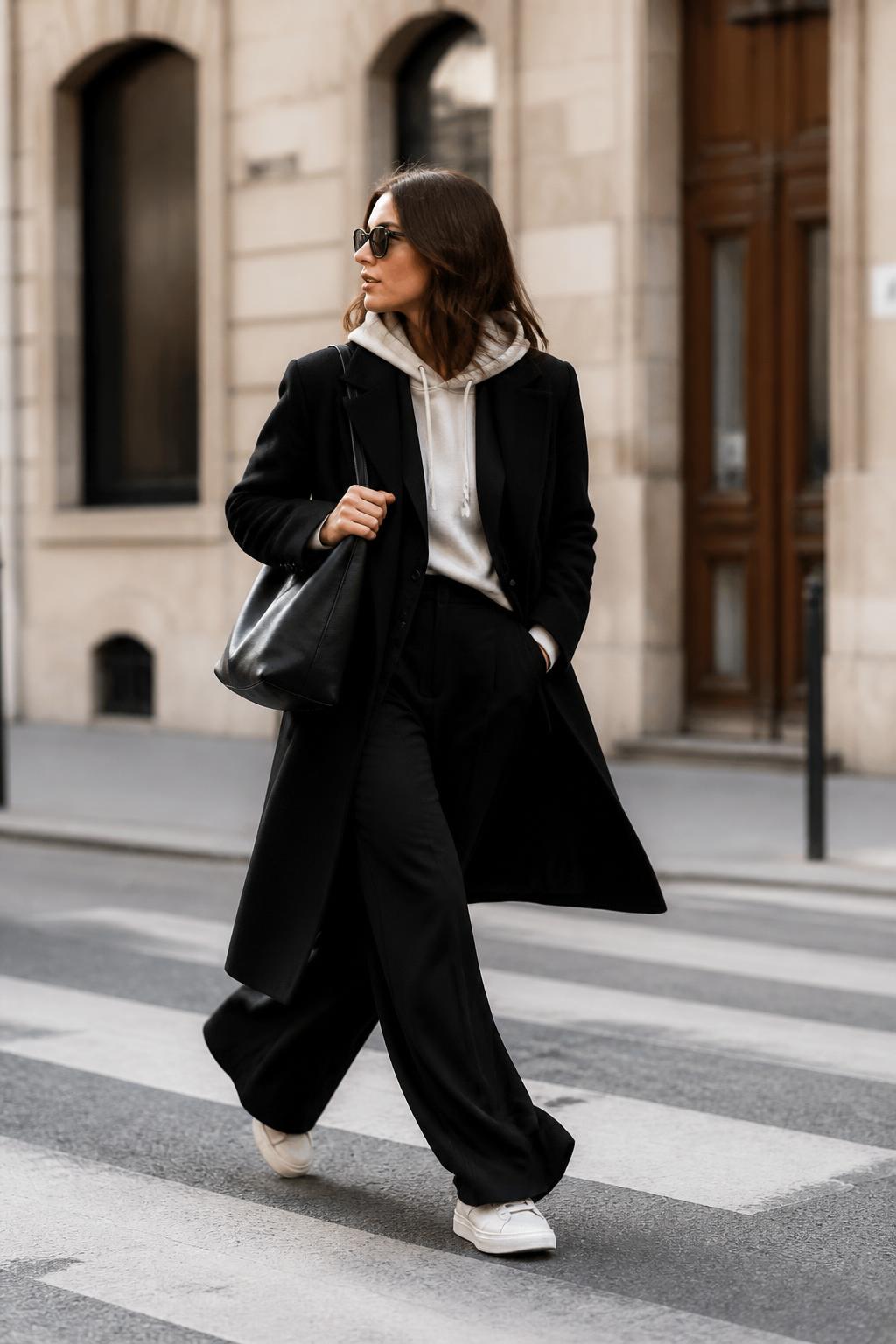
This comparison breaks down how high fashion street style differs from classic luxury dressing, where they intersect, and how each works in real wardrobes. The focus is not on copying a trend cycle, but on reading proportion, texture, layering, and styling intent with a more trained eye.
Defining the conversation: high fashion street style and luxury fashion
Before comparing details, it helps to define the terms clearly. High fashion street style refers to an elevated street-facing way of dressing that combines directional fashion with the relaxed codes of everyday wear. It often includes designer pieces, but the styling is what makes it distinct: a tailored jacket may be worn with denim, sneakers, or a hoodie; an otherwise formal piece may be offset by something casual, oversized, or slightly undone. The result feels editorial, but not strictly formal.
Your wedding has a lot of moving pieces. Your plan can still feel composed.
Zarellea organizes guests, vendors, budget, and timelines in one shared space — so you can make decisions with clarity, not stress.
Luxury fashion, by contrast, is usually more aligned with refinement, finish, and controlled elegance. It may share the same brands, fabrics, and high-end references, but the outfit logic is different. Where high fashion street style thrives on contrast, luxury fashion often favors continuity—clean lines, intentional polish, and a more composed relationship between garments.
This is why the two are often confused. Both may involve premium materials, designer outerwear, strong accessories, and recognizable labels. The difference is less about price point than visual attitude.
Style overview: what defines high fashion street style
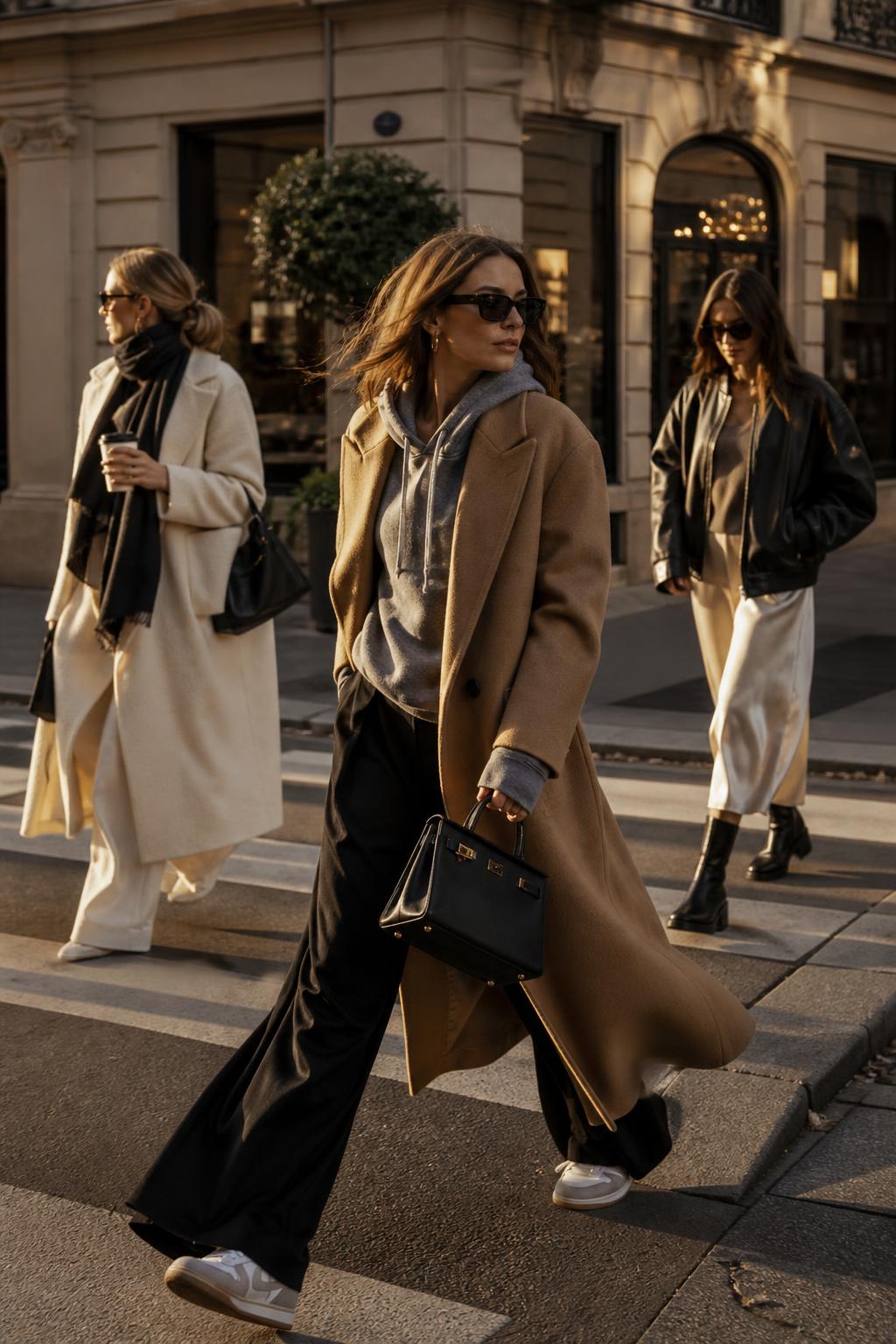
High fashion street style is built around contrast and composition. It borrows from streetwear, tailoring, and runway styling, then filters those references into outfits that feel personal rather than ceremonial. A defining feature is the way garments from different style languages are made to coexist: structured pieces with casual layers, oversized proportions with something fitted, polished accessories with grounded basics.
The silhouette can shift dramatically, but there is usually one strong line anchoring the look—an elongated coat, a wide trouser, a boxy blazer, a substantial boot, or a deliberate volume through layering. The palette varies more than in many other aesthetics. Neutrals remain central, yet bold color, graphic accents, and unexpected combinations are common when they support the outfit’s overall balance.
Texture matters as much as color. Leather, wool, denim, cotton jersey, technical fabrics, satin, and knits often appear together, creating dimension even when the outfit itself is simple. The mood is modern, urban, and self-directed. It tends to feel most natural in fashion capitals like Paris, Milan, Copenhagen, and New York, where tailored structure and daily practicality regularly meet.
Style overview: what defines luxury fashion dressing
Luxury fashion dressing is typically more restrained in its composition, even when the pieces themselves are statement-making. It emphasizes quality, fit, and finish. Instead of building an outfit around tension between opposites, it often builds around harmony: similar levels of formality, a controlled palette, and refined accessories that echo the tone of the clothes.
Silhouettes in luxury dressing tend to be cleaner and more resolved. Tailoring is central, whether that appears in a sharp blazer, a fluid trouser, a structured coat, or a dress that follows the body with precision. The color palette usually leans toward black, cream, navy, camel, white, gray, or muted jewel tones. Even when brighter shades appear, they are often integrated with discipline.
Fabric is part of the message. Fine wool, silk, leather, cashmere, and crisp cotton communicate quality immediately, especially when the outfit is not overloaded with competing elements. The aesthetic mood is polished, intentional, and quietly authoritative. If high fashion street style suggests a person in motion, luxury fashion often suggests a person fully composed.
Where they overlap and why the distinction can blur
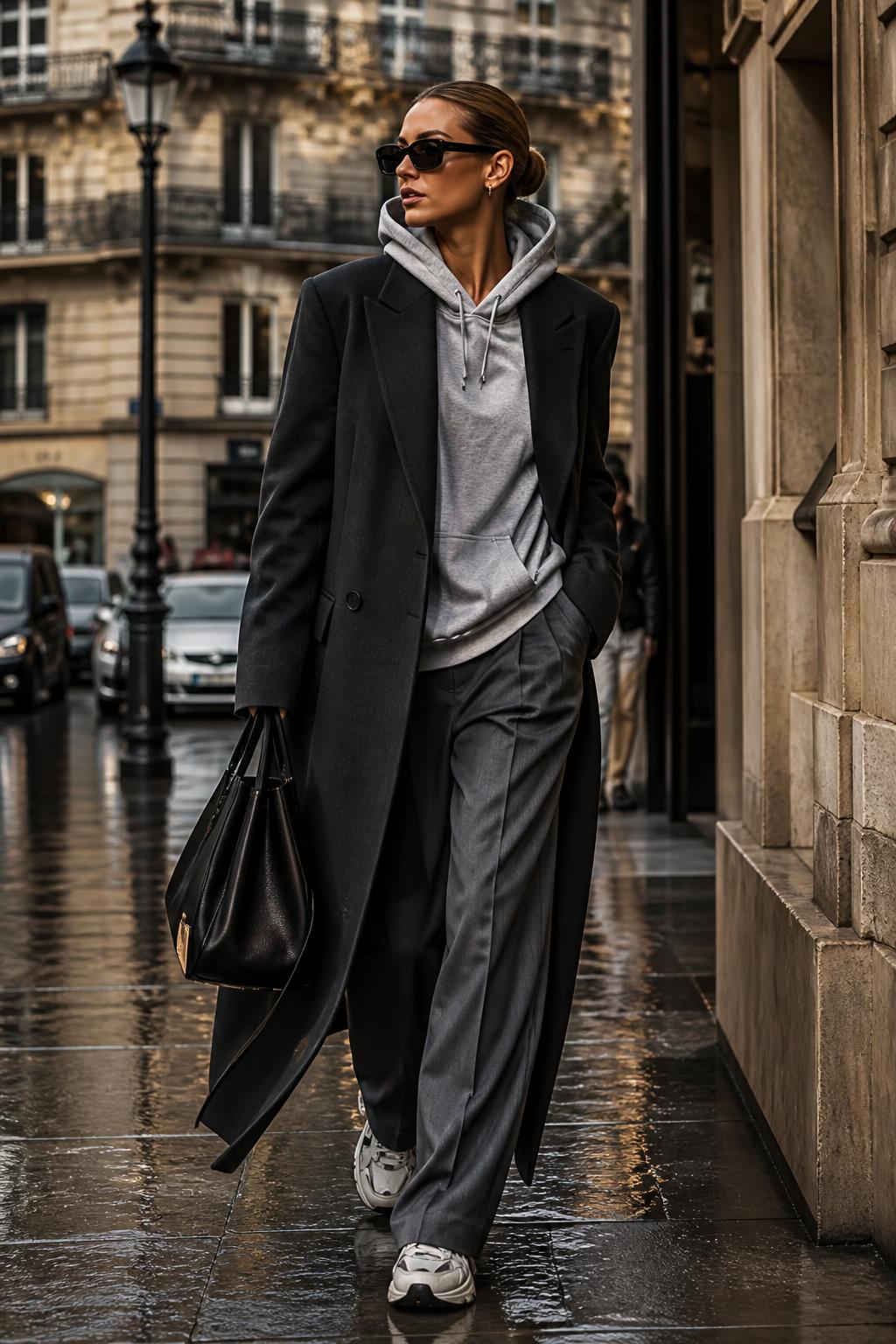
The overlap is strongest around designer clothing, outerwear, and fashion week dressing. A look seen outside a show in Paris or Milan may include a luxury handbag, sharply cut tailoring, and premium footwear, yet still read as street style because of how the pieces are combined. Add denim, a hoodie, chunky sneakers, or an oversized coat thrown on with ease, and the outfit shifts away from formal luxury into a more street-led visual language.
Street style photography has amplified this blurred line. What used to belong primarily to runway presentations or luxury campaigns now appears in candid urban styling, where the styling itself becomes the point of interest. In that setting, a structured blazer and designer bag do not automatically make a look purely luxury fashion. The deciding factor is usually the styling philosophy behind the ensemble.
In practical terms, the distinction often comes down to whether the outfit prioritizes contrast or continuity.
The real differences in silhouette, structure, and outfit logic
Silhouette and proportion
High fashion street style often plays with scale. Oversized outerwear, relaxed trousers, boxy shirts, and layered knits create movement and volume. Even when something fitted appears, it usually serves as a counterpoint rather than the whole story. The silhouette is often built from imbalance made intentional.
Luxury fashion generally favors a more resolved shape. Volume may still appear, but it is more controlled. Wide-leg trousers are balanced by elegant tailoring; an oversized coat is kept clean through sharp shoulders or a precise hemline. The silhouette tends to look edited rather than experimental.
Color palette and visual mood
In high fashion street style, color is often used as a styling device. Monochrome dressing is common, but so are striking accents, graphic layers, and tonal clashes that make the outfit feel alive. A bright knit under a neutral coat, distressed denim with a pristine white shirt, or black tailoring with a vivid accessory all fit naturally within the category.
Luxury fashion tends to use color in a quieter way. Neutrals dominate because they highlight cut and fabric. When color enters, it usually looks controlled, rich, and purposeful rather than spontaneous.
Formality and finish
High fashion street style is elevated, but not necessarily formal. One of its signatures is the refusal to keep every piece at the same dress code level. A polished coat can sit easily with casual pants or athletic footwear. The finish is often slightly relaxed, as if the outfit was styled with instinct rather than perfected in front of a mirror for an hour.
Luxury fashion is more consistent in tone. Shoes, handbag, jewelry, and clothing tend to support the same level of refinement. Even when the look is minimal, the finish feels complete.
Wardrobe building philosophy
High fashion street style thrives on reinterpretation. It values pieces that can shift depending on what they are paired with: a blazer over a hoodie, a satin skirt with boots, an oversized shirt under a sculptural coat. The wardrobe is flexible and often relies on elevated basics that can handle contrast.
Luxury fashion is usually more invested in coherence. It still values versatility, but the priority is often enduring polish rather than styling tension. Pieces are chosen for longevity, excellent cut, and their ability to create a refined whole.
How the two styles read in real life
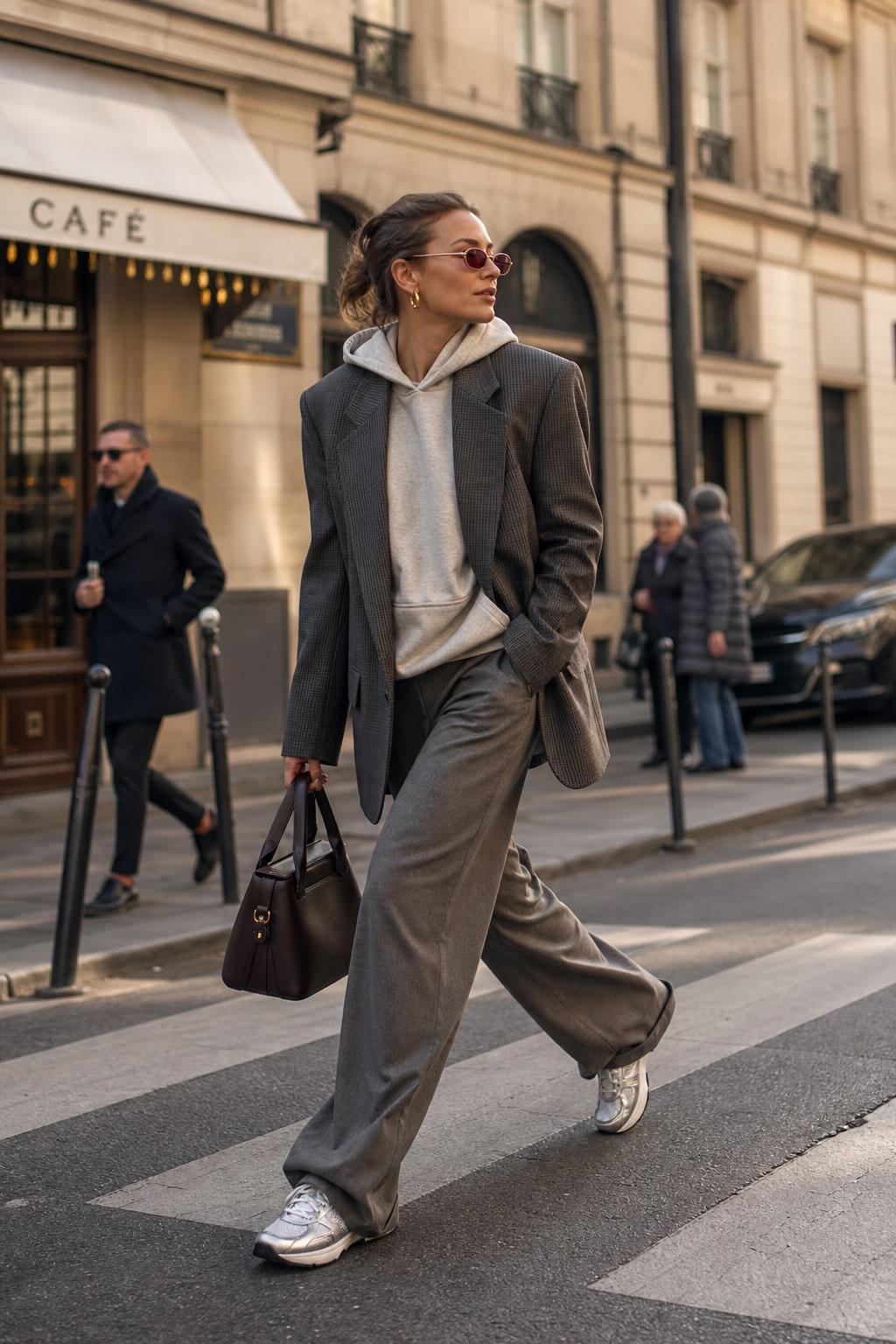
On the street, the difference is immediately visible in how the outfit occupies space. High fashion street style tends to feel more kinetic. Layers sit a little looser, hems may be longer, accessories may carry more attitude, and footwear often grounds the look in practicality. The outfit looks as though it was meant to move through a city.
Luxury fashion reads more still and composed. The lines are clearer. The proportions are often neater. Accessories support the outfit without disrupting it. Even when worn casually, the look communicates control.
This does not make one approach better than the other. It simply means each one solves a different style question. High fashion street style asks how elegance can become dynamic. Luxury fashion asks how refinement can remain unmistakable.
Visual breakdown: layering, accessories, and footwear
Layering approach
Layering in high fashion street style is often visible and purposeful. Shirts extend below knits, coats sit over hoodies, leather is paired with wool, and proportions are allowed to overlap. This kind of layering creates depth and often gives the outfit its editorial quality.
In luxury fashion, layering tends to be cleaner and more discreet. A cashmere knit under a tailored coat or a silk blouse beneath a blazer maintains clarity rather than contrast. The layers are there, but they do not compete for attention.
Accessories
Accessories in high fashion street style are often used to redirect the look. A sleek handbag with a relaxed outfit, angular sunglasses with soft tailoring, or bold jewelry against a minimal base can shift the tone instantly. Accessories are not always matching; they are often strategic interruptions.
Luxury fashion usually treats accessories as part of a unified composition. The bag, shoe, and jewelry work together with less contrast. The impression is one of polish rather than disruption.
Footwear choices
Footwear is one of the clearest markers. High fashion street style frequently relies on sneakers, chunky boots, loafers with edge, or fashion-forward flats that introduce ease into the look. Even when heels appear, they are often chosen for shape and attitude rather than traditional glamour.
Luxury fashion is more likely to favor refined boots, elegant pumps, sleek loafers, or minimalist sandals, depending on season and setting. The shoe typically reinforces the outfit’s sophistication rather than challenging it.
A tale of four cities: why location changes the styling language
High fashion street style is especially shaped by urban rhythm, and the mood changes slightly from one fashion city to another. Paris often brings sharper restraint: a long coat, clean denim, strong black layers, and a single accessory with authority. Milan can lean more polished and luxe, with richer textures and a stronger embrace of drama through outerwear or tailoring. Copenhagen tends to make room for playful proportion, color, and practical layering without losing sophistication. New York often sharpens the mix through utility, speed, and a stronger edge.
Luxury fashion exists in all of these places too, of course, but city dressing often determines how wearable the look must be. A highly polished luxury outfit may suit a show entrance, a dinner, or a formal daytime setting. High fashion street style adapts more naturally to the full arc of the day: walking, commuting, layering for weather shifts, and moving between casual and polished spaces.
This is one reason the street style category remains so relevant. It translates fashion into lived context.
Outfit comparisons that reveal the styling logic
The casual city uniform
In high fashion street style, a casual outfit might begin with straight-leg denim, a crisp white tee, an oversized blazer, and sneakers. What elevates it is not the simplicity of the pieces, but the proportions: the blazer is cut with intention, the denim falls cleanly, the sneaker is chosen as part of the composition, and the accessories add tension rather than decoration. A crossbody bag, sleek sunglasses, or a sculptural coat layered on top can transform the entire reading.
Luxury fashion would approach the same casual brief differently. The denim may be darker and more streamlined, the blazer more sharply tailored, the shoe more refined, and the handbag more formally integrated into the outfit. The final effect is polished from the first glance, with fewer visible contradictions.
The polished daytime look
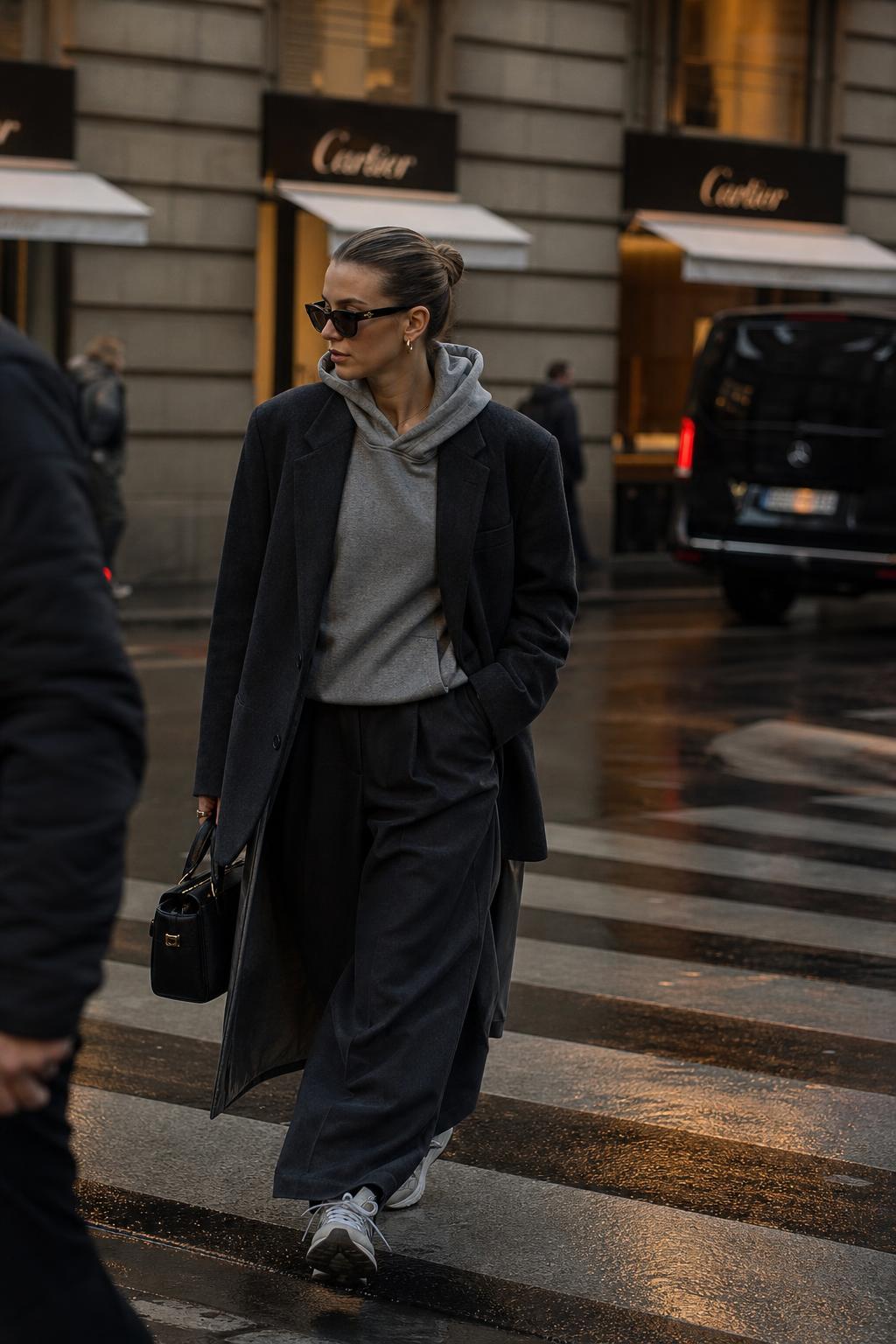
For daytime polish, high fashion street style often uses one formal anchor and one relaxed counterweight. Think fluid trousers with a hoodie under a structured coat, or a silk skirt with a substantial knit and boots. The outfit feels modern because it resists becoming too neat. It acknowledges elegance, but keeps it moving.
Luxury fashion would likely keep every element within the same refined register: tailored trousers, a fine knit, a beautiful coat, and understated leather accessories. The look remains versatile, but the emphasis is on seamless finish rather than juxtaposition.
The evening interpretation
At night, high fashion street style may use satin, leather, or sharp black tailoring, then temper the look with a less expected shoe or outer layer. A slip dress under an oversized blazer, or tailored black separates with boots and a dramatic coat, gives eveningwear a lived-in confidence. It feels considered, but not delicate.
Luxury fashion in the same setting is more likely to preserve a stronger sense of finish. The blazer is cleaner, the footwear more elegant, the bag more compact and resolved. The silhouette reads with greater formal clarity.
Tips for recognizing authentic high fashion street style
Many outfits use expensive pieces, but not all of them express high fashion street style. The distinction is in the styling intelligence.
- Look for contrast in dress codes, such as tailoring paired with relaxed elements.
- Notice whether proportion is doing real work through volume, length, or layering.
- Check the footwear. Shoes often determine whether the look reads as street-led or purely polished.
- Pay attention to texture combinations like wool with leather, denim with silk, or cotton with structured outerwear.
- Observe whether the outfit feels personal rather than overly coordinated.
A useful rule is this: if the outfit could move from a show venue to a café, through several city blocks, and still feel visually strong, it is probably operating in the space of high fashion street style rather than traditional luxury dressing.
Common styling mistakes when trying to combine the two
The easiest mistake is overloading the look. Because high fashion street style relies on contrast, it can be tempting to add too many ideas at once—oversized outerwear, loud accessories, competing textures, statement shoes, and trend-heavy layers in a single outfit. The result often looks busy rather than directional.
Another common problem is using luxury items without adjusting the rest of the silhouette. A highly formal bag or tailored coat can look disconnected if everything around it is shapeless without intention. Contrast only works when the proportions still feel balanced.
It is also worth being realistic about comfort and movement. High fashion street style may look effortless, but it depends on clothes that can actually be worn throughout the day. If the shoes limit your stride or the layering feels too rigid for changing temperatures, the outfit will lose the relaxed authority that makes this aesthetic convincing.
When each style works best in a real wardrobe
For everyday wear
High fashion street style usually has the advantage in daily life because it is designed around adaptability. It accommodates walking, layering, weather changes, and a mix of casual and polished environments. If your schedule includes movement across the city, this aesthetic tends to feel natural.
For work environments
Luxury fashion often works better in conservative offices or client-facing settings where consistency and polish matter. That said, high fashion street style can translate beautifully in creative industries, especially when the contrast is restrained—a structured blazer with elegant denim, sleek boots, and a refined bag can feel both modern and professional.
For travel
Travel favors high fashion street style because layering and comfortable footwear are central to the look. A coat, knit, tailored trouser, and sneaker combination can feel elevated without becoming impractical. Luxury fashion may still work for travel, but it requires more careful coordination to avoid looking overdone in transit.
For polished occasions
Luxury fashion has a natural advantage when the dress code leans formal or visibly refined. Dinners, events, and environments where precision matters often reward the cleaner finish of luxury dressing. High fashion street style can still succeed here, but it must be edited carefully so the contrast feels intentional rather than too casual.
How to borrow from both without losing clarity
The most compelling wardrobes rarely live in only one category. In practice, many of the strongest looks borrow the discipline of luxury fashion and the energy of high fashion street style. The key is choosing one dominant language and one supporting note.
- Start with a luxury base—tailored trousers, a refined coat, a clean knit—then add one street-style element such as sneakers or an oversized layer.
- Begin with a street-style foundation—denim, relaxed tailoring, substantial boots—then elevate it with a structured handbag or sharp outerwear.
- Keep the palette controlled when the silhouette is bold.
- Use texture, not just logos or accessories, to create depth.
- Let one piece lead the outfit and allow the others to support it.
This approach preserves intention. Without that intention, the outfit risks becoming either too formal for everyday wear or too casual to feel elevated.
An editor’s note on timelessness versus trend
One of the reasons high fashion street style remains compelling is that it can absorb trend movement without depending entirely on it. Because the aesthetic is driven by proportion, layering, and styling logic, it can evolve through changing outerwear shapes, trouser widths, footwear moods, or accessory preferences without losing its identity. That makes it more enduring than many fast, image-led fashion moments.
Luxury fashion offers a different form of longevity. It relies less on contrast and more on consistency, which can make it feel timeless in a quieter way. A beautifully cut coat, a precise blazer, elegant leather shoes, or a refined knit rarely need much reinterpretation to remain relevant.
For most wardrobes, the smartest path is not choosing one forever. It is learning to identify what each style is trying to achieve, then dressing according to context, mood, and the life the clothes actually need to support.
The essential distinction to remember
The core difference between high fashion street style and luxury fashion is not simply cost, brand, or trend relevance. It is the relationship between polish and ease. High fashion street style uses elevated pieces to create visual tension, urban movement, and personal expression. Luxury fashion uses elevated pieces to create harmony, refinement, and composure.
Once you understand that distinction, the two become easier to identify. A structured blazer layered over casual separates, clean lines disrupted by sneakers, or a tailored silhouette contrasted with relaxed textures usually signals high fashion street style. A fully resolved palette, precise accessories, and a consistent level of formality point more clearly toward luxury dressing.
The most modern wardrobes often live between the two, taking the intelligence of luxury fashion and the immediacy of the street. When that balance is handled well, the result feels current without being temporary, polished without looking stiff, and expressive without becoming chaotic.
FAQ
What is high fashion street style?
High fashion street style is an elevated way of dressing that combines runway-influenced or designer pieces with everyday styling elements such as denim, sneakers, oversized layers, or relaxed separates, creating a look that feels polished yet urban and personal.
How is high fashion street style different from luxury fashion?
The main difference is styling philosophy: high fashion street style relies on contrast, movement, and mixed dress codes, while luxury fashion usually emphasizes consistency, refined finish, and a more harmonious relationship between silhouette, accessories, and formality.
Can high fashion street style include designer brands?
Yes, designer brands often appear in high fashion street style, but the presence of luxury items alone does not define the aesthetic; what matters more is how those pieces are styled with proportion, layering, and casual or street-led contrasts.
Which cities influence high fashion street style the most?
Paris, Milan, Copenhagen, and New York are especially influential because their street style cultures shape how tailoring, outerwear, layering, and accessories are interpreted in real life, particularly around fashion week and urban daily dressing.
What shoes work best for high fashion street style?
Sneakers, chunky boots, sleek loafers, and fashion-forward flats are common because they ground the outfit and support movement, whereas more formal luxury dressing is usually reinforced by elegant boots, pumps, or minimalist leather shoes.
Can high fashion street style work for workwear?
Yes, especially in creative or less formal workplaces, where a structured blazer, refined denim or trousers, polished boots, and thoughtful accessories can create a look that feels professional while still carrying the layered, modern character of the style.
Why are high fashion street style and streetwear not exactly the same?
Streetwear is a distinct fashion language rooted in casual, graphic, and sports-influenced dressing, while high fashion street style is broader and often combines those references with tailoring, luxury pieces, and a more editorial approach to silhouette and composition.
How can I make a luxury outfit feel more like high fashion street style?
Add one element of contrast, such as sneakers with tailoring, an oversized coat over a refined base, or a relaxed knit with structured trousers, while keeping the overall outfit balanced so the contrast feels deliberate rather than random.
Leave a Reply