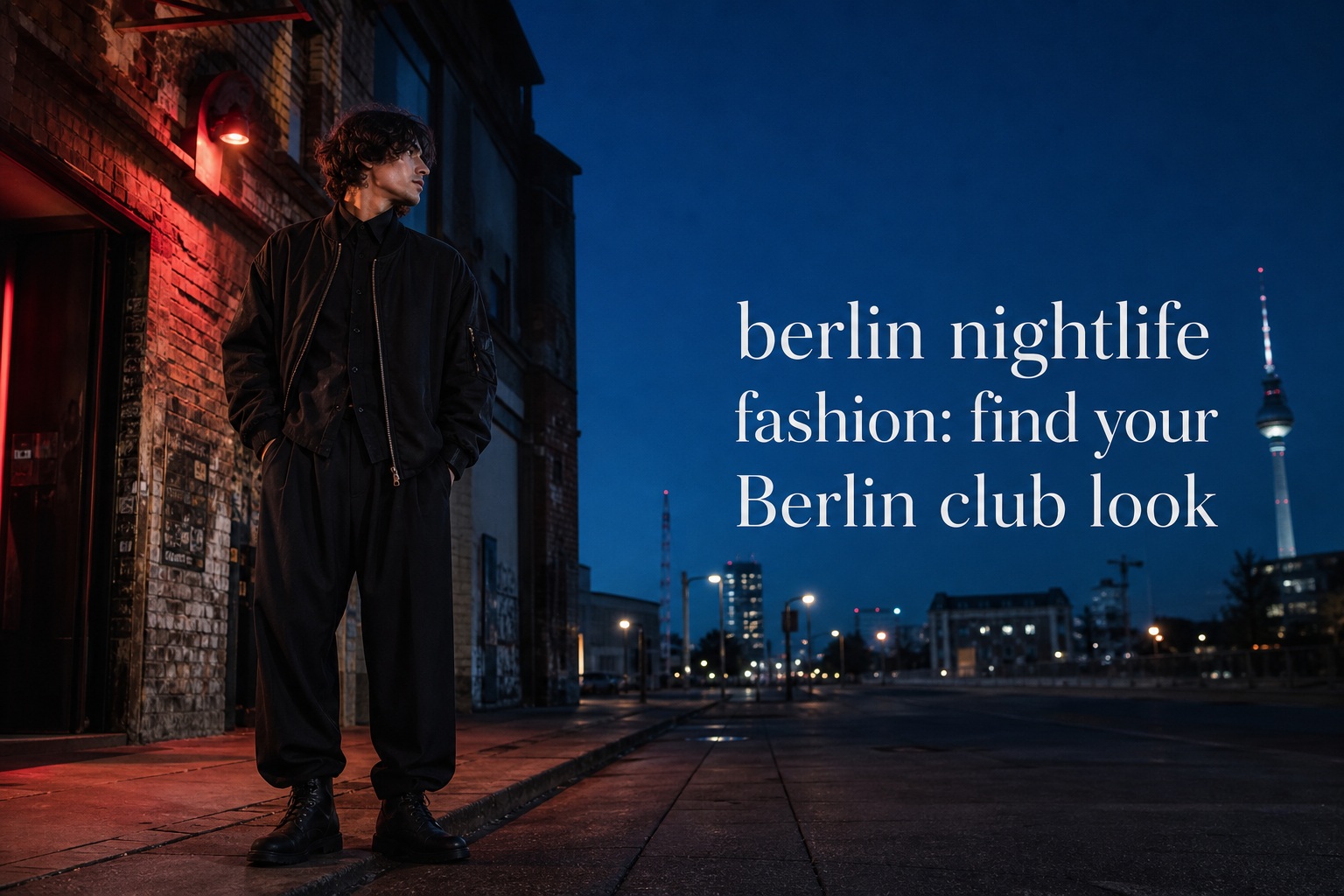
Berlin nightlife fashion is less about finding one perfect club uniform and more about reading the room before you leave your hotel. A dark, functional outfit can feel exactly right for a serious techno floor, while the same look may seem overly severe at a colorful riverside party. A polished dress can work in a cocktail bar, yet look disconnected from the atmosphere at an underground warehouse. The most useful question is not whether Berlin requires black clothing. It is which night you are actually dressing for.
This comparison guide turns that question into a simple wardrobe decision. You will find outfit formulas for dark techno clubs, expressive parties, fetish-friendly venues, and smarter nightlife rooms. You will also see how to choose shoes, layers, bags, and personal details for long queues, changing weather, crowded dance floors, and cloakrooms. Think of these ideas as starting points, not rules. Berlin clubs vary by venue, event, and crowd, and no outfit guarantees entry.
The real choice is the venue and the event
Berlin does not have one citywide dress code. The style expectation changes from one door to the next, and the same club can feel different on a weekday, a special event, or a long weekend. Check the club website, the event listing, and recent social posts before planning your look. A lineup can tell you more than a generic internet list because a day party, a queer night, a house session, and a harder techno event may attract very different clothing.
Your wedding has a lot of moving pieces. Your plan can still feel composed.
Zarellea organizes guests, vendors, budget, and timelines in one shared space — so you can make decisions with clarity, not stress.
Official Berlin guidance commonly separates club dressing into casual, smart casual, and a more self-confident category. That is helpful as a broad map, but it is not a promise at the door. Presentation, behavior, the event mood, and the club’s capacity all matter. Dress neatly, arrive sober enough to communicate, and avoid treating an outfit as a secret entrance code. The best Berlin nightlife fashion looks lived in rather than purchased as a costume.
Berghain and serious techno rooms
For a serious techno room such as Berghain or another industrial venue, start with quiet confidence. Black, charcoal, washed gray, and deep olive are reliable, but the color is only one part of the idea. Choose a plain fitted tank with wide trousers, a washed T-shirt with a cropped work jacket, or a simple long-sleeve top with straight jeans and sturdy boots. The shapes should let you move and the fabrics should survive hours of standing, dancing, and sitting on concrete or benches.
Avoid building a costume from every recognizable techno reference at once. A new harness, glossy faux-leather trousers, dramatic sunglasses, and a logo-heavy jacket can read as a performance rather than your actual style. If you like one of those elements, use one deliberate detail and keep the rest relaxed. A black mesh layer over a plain base, a silver chain, or a strong boot is usually enough to make the outfit feel intentional.
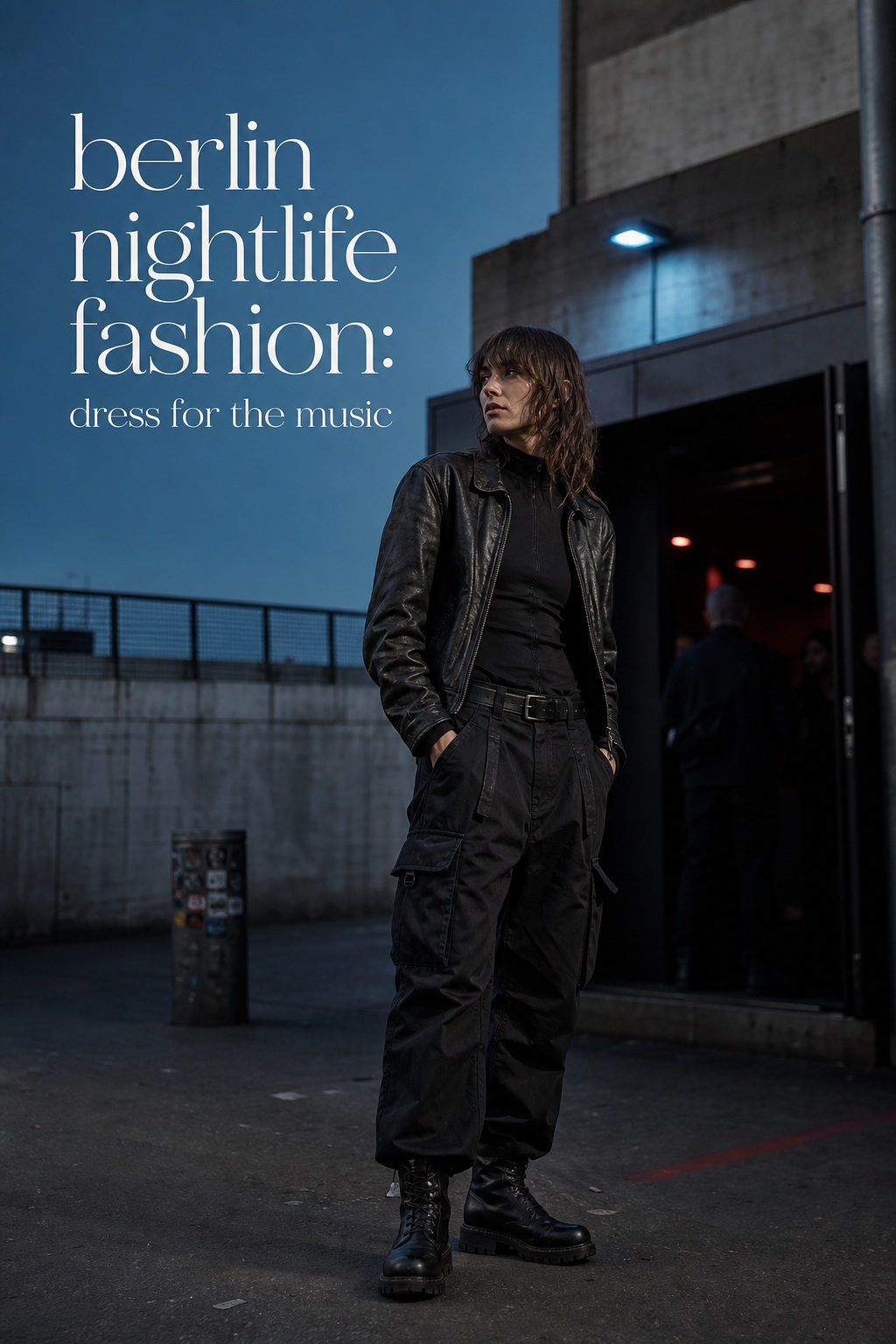
Tresor, RSO, and practical underground nights
For a functional club night, make your outfit easy to wear from the queue through the final track. Try black cargo pants with a close-fitting tee and a loose overshirt. Another option is a ribbed tank, relaxed denim, and a short utility jacket. These combinations feel connected to streetwear and workwear without looking like a themed uniform. Keep branding quiet, because a large sports logo or an obviously expensive statement piece can compete with the understated energy of the room.
Choose materials that breathe. Berlin clubs can become warm even when the street is cold, so a removable layer is more useful than one heavy sweater. Cotton jersey, light denim, nylon, mesh, and thin knitwear can be combined without creating a bulky silhouette. If you carry a coat, confirm the cloakroom situation and keep your pockets secure. A compact crossbody or a zipped belt bag is often more useful than a large handbag.
KitKat and expressive dress codes
KitKat is a different decision entirely. The venue is known for creative, provocative, fetish-influenced, and body-aware dressing, and everyday casual clothes alone may not fit many nights. Check the official event information before you go, because expectations can vary. If you are new to that environment, choose an outfit that makes you feel confident and allows movement, rather than copying the most extreme image you have seen online.
A practical expressive formula could be a sheer top over a bralette with high-waisted trousers, a sculptural bodysuit with a long skirt, or a leather-look harness over a simple base. Some guests arrive in regular clothes and change at the venue, so a packable second look can reduce stress. Respect the room’s privacy, consent culture, and photography rules. An outfit may be revealing, but that never implies permission to touch, stare, or photograph another person.
Kater Blau, Sisyphos, and playful outdoor energy
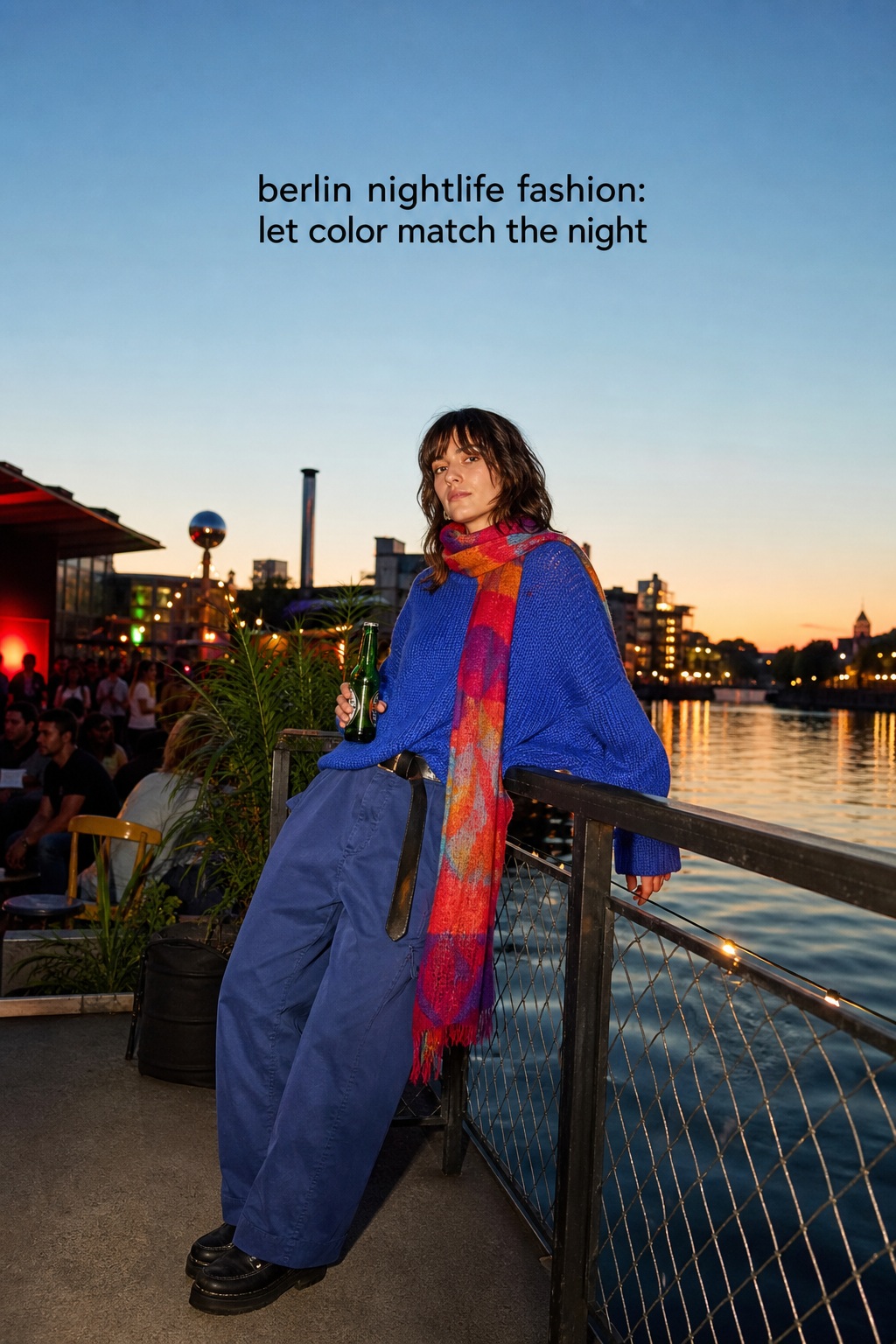
Color and personality make more sense at playful, open-air, or riverside parties. Kater Blau and Sisyphos are useful examples of why all-black advice can be too narrow. Try a bright knit with loose trousers, a printed shirt over a tank, a metallic skirt with flat boots, or a colorful scarf tied to a neutral outfit. The goal is not to look polished in a formal way. It is to look comfortable, individual, and ready for a long day that may move between indoor rooms and outdoor spaces.
Choose washable, forgiving pieces if the venue has sand, grass, dusty paths, or crowded benches. Layer a light windbreaker over a slip dress, or wear wide-leg pants with a fitted top and a small crossbody. Flat shoes are still the safest choice for uneven ground. A single playful item, such as red sunglasses, a printed overshirt, or a bright bag, can give a neutral outfit enough energy without making it feel like a festival costume.
Smart-casual bars and mixed nightlife plans
If your night begins at a cocktail bar or restaurant and ends at a club, build a bridge between the two. A dark slip skirt with a fine knit and ankle boots can become more casual with a vintage jacket. Tailored trousers, a simple shirt, and clean low-profile sneakers can work for dinner, drinks, and a less underground venue. For a dressier option, choose a column dress with a flat boot or a low block heel, then add a relaxed leather jacket to keep the look from becoming too formal.
Ritter Butzke and similar rooms may accommodate smart casual with a creative edge, but check the specific event. A neat outfit does not need to be stiff. Focus on fit, clean shoes, and one interesting texture such as satin, brushed wool, leather, or ribbed knit. Skip delicate pieces you will spend the entire evening protecting. Berlin nightlife fashion rewards clothes that can participate in the night.
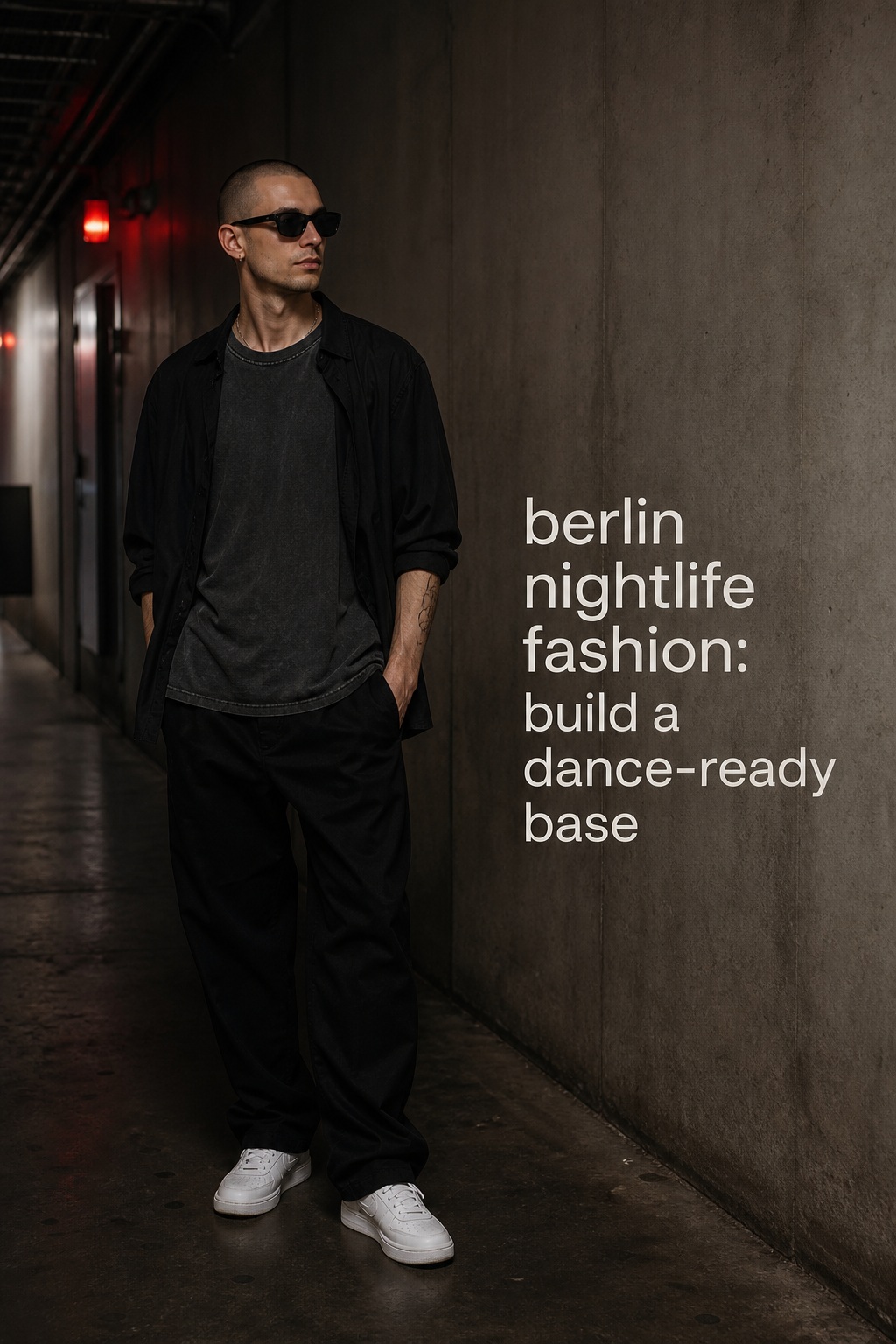
Build the outfit with four decisions
Once you know the room, assemble the look in four steps: base, layer, footwear, and personal detail. This keeps outfit planning practical and prevents the common mistake of buying a dramatic item before solving comfort. Start with the piece that will touch your skin for the longest time. Then add a layer for the queue, shoes for the floor, and one detail that makes the outfit yours.
1. Choose a base you can dance in
A good base is secure without being restrictive. A fitted tank, soft T-shirt, long-sleeve top, bodysuit, slip dress, or relaxed button-down can all work. Consider how the fabric handles heat and sweat. Very heavy denim, scratchy sequins, and stiff tailoring may look good for an hour but become irritating by the middle of the night. If you prefer a more covered outfit, try a breathable long-sleeve mesh layer, a loose cotton shirt, or wide trousers with a close-fitting top.
Proportion creates the Berlin feeling more effectively than a collection of trends. Pair one generous piece with one clean piece. Wide cargo pants can balance a narrow tank. An oversized blazer can work over a simple mini dress. A fitted top can sharpen relaxed denim. This approach also makes the outfit easier to adapt across gender expressions and body types. You do not need to shop in a specific section to create a credible club look.
2. Add a removable layer
Berlin nights can include a long queue, a late train, a cold walk, and a very warm dance floor. Use a layer that looks complete on its own and can be checked when you get inside. A cropped bomber, denim jacket, oversized shirt, light trench, leather jacket, or thin puffer can all work. Avoid a coat that is so precious you will refuse to put it in a crowded cloakroom. The best outer layer is useful, durable, and easy to identify.
In colder months, wear a thin thermal layer under your main outfit if it will not show. In warmer months, take a compact overshirt instead of a heavy jacket. If you plan to move between venues, choose layers that can be tied around your waist or folded into a small bag. The outfit should support your night rather than force you to return to your hotel to change.
3. Treat shoes as part of the dress code
Comfortable shoes are not an afterthought in Berlin. You may stand in line for a long time, dance on hard floors, walk between neighborhoods, or stay out until public transport becomes less convenient. Broken-in boots, clean sneakers, flat leather shoes, and supportive trainers are usually better choices than delicate heels. If you want height, try a stable platform that you have already worn for several hours, not a brand-new pair.
Match the shoe to the venue. Dark boots or understated sneakers suit serious techno rooms. Colorful trainers or practical boots can work at a playful outdoor party. A low block heel may suit a bar, but it is not automatically right for a warehouse dance floor. Check the sole, weather resistance, and grip. Berlin nightlife fashion is successful when your shoes allow you to stay present instead of counting the minutes until you can take them off.
4. Add one personal signal
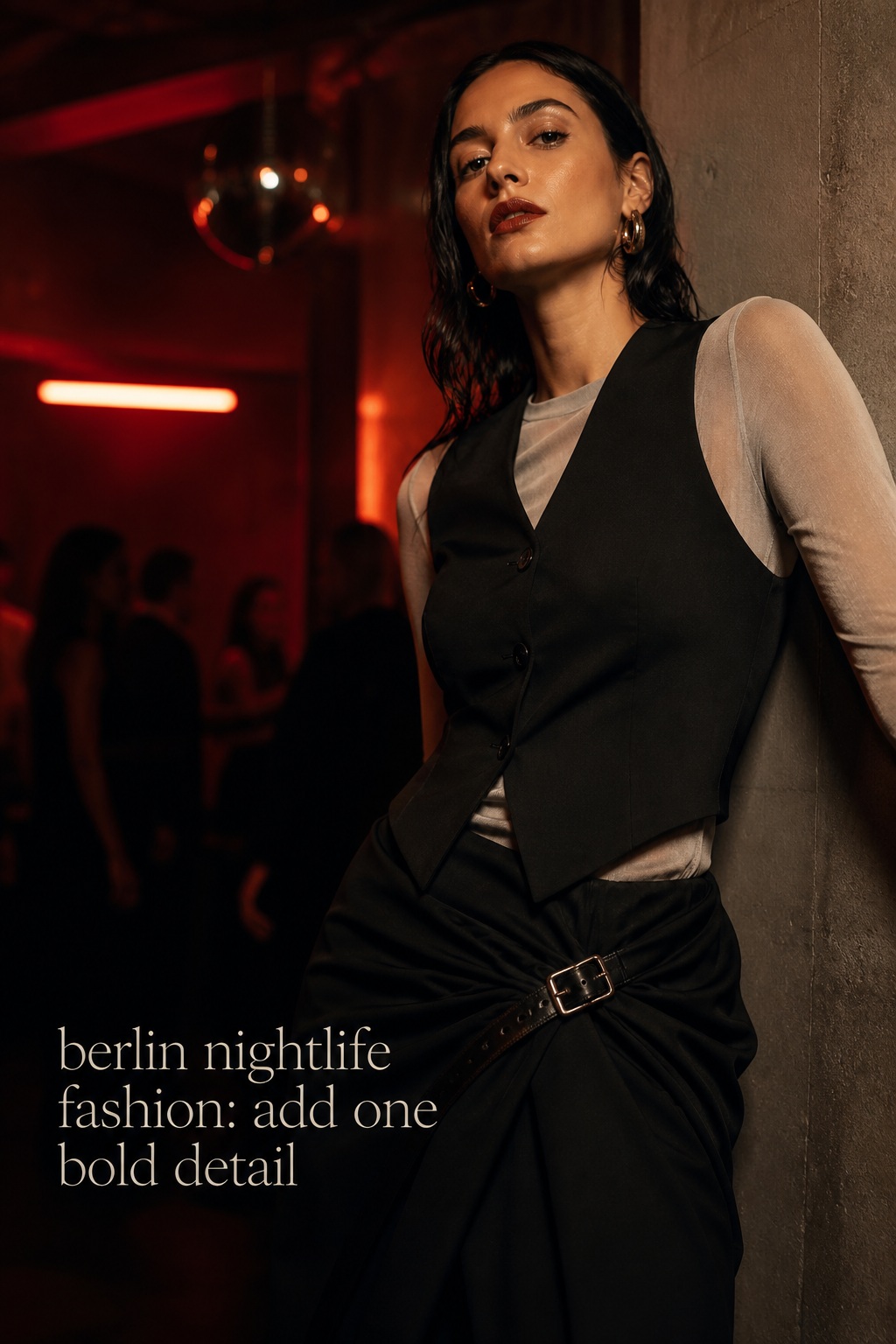
Your personal detail can be a silver necklace, a vintage belt, a scarf, unusual glasses, a red lip, a textured bag, or a distinctive jacket. One signal is often stronger than five competing statements. It helps the outfit feel intentional without looking overworked. If the venue invites experimentation, you can make that detail more dramatic. If the night is understated, keep the shape simple and let the material or color do the work.
Avoid using accessories that you will constantly adjust. Long dangling pieces can catch on people or clothing. Oversized bags are difficult in a crowd. Precious jewelry can create anxiety. Choose items that are secure, lightweight, and compatible with movement. The best detail should make you feel more like yourself, not make you spend the night monitoring it.
Adapt Berlin nightlife fashion to real conditions
Many outfit guides stop at color and silhouette, but real nightlife involves weather, waiting, heat, privacy, and logistics. A look that photographs well in a hotel mirror may be a poor choice for a five-hour night. Use the following adjustments to make your outfit more reliable.
For cold weather and long queues
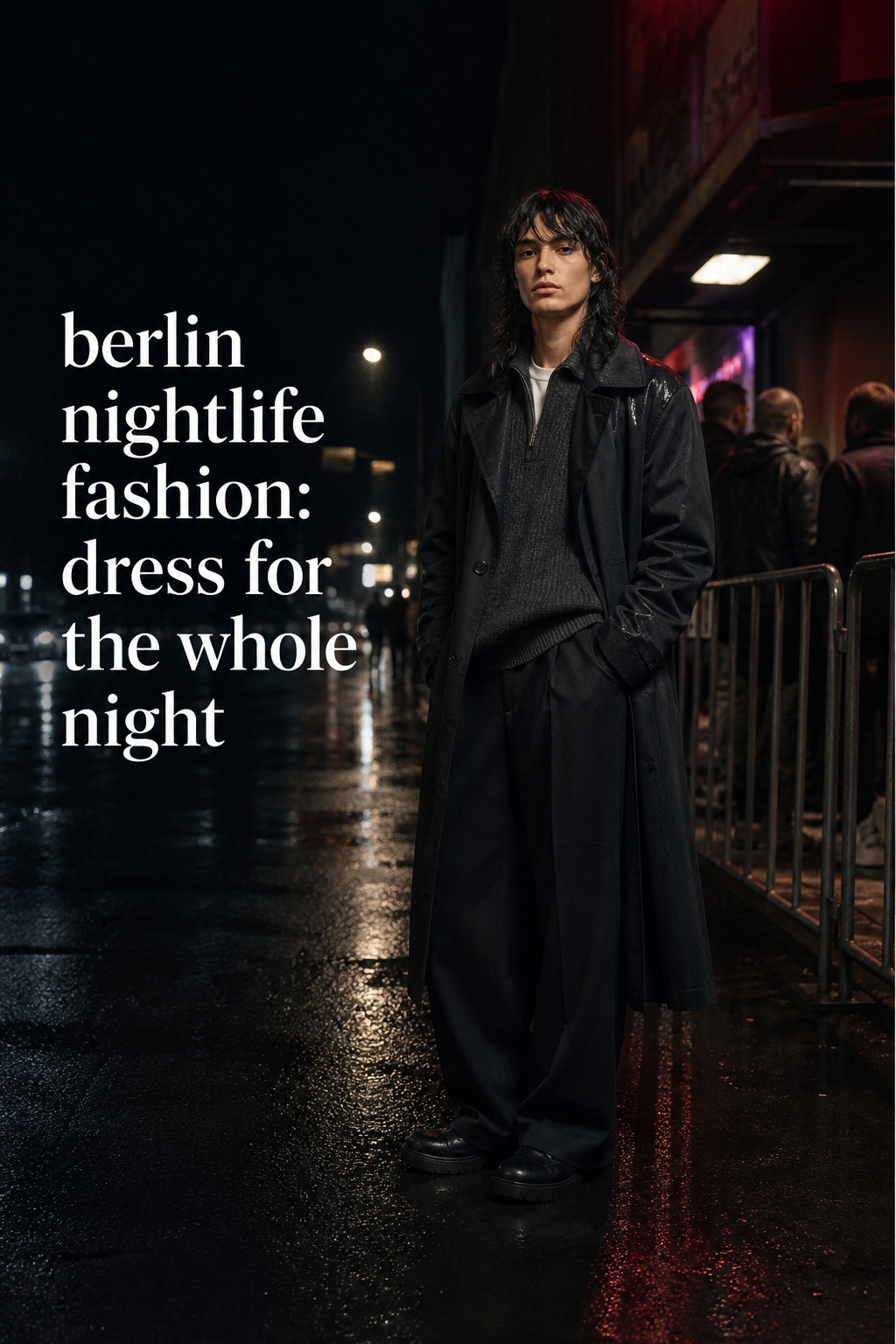
Wear warm socks, a real coat, and a base layer that can come off later. Do not rely on bare skin, thin tights, and a dramatic jacket if you expect to wait outside. A long wool coat over wide trousers and boots can look refined while keeping you comfortable. For a more underground outfit, add a thermal top beneath a loose black shirt and carry a scarf that can fit into your bag. Gloves with touch-screen fingertips are useful, but avoid bulky accessories you will have to manage at the door.
For rain and changing temperatures
Choose shoes that can handle wet pavement and a jacket with a secure hood or high collar. A water-resistant shell over a monochrome outfit can look modern and practical. Keep a small plastic pouch for a phone, cards, or makeup if you are carrying a soft bag. Avoid suede shoes when rain is expected, and do not wear a floor-length hem that will drag through puddles before you reach the club.
For body comfort and inclusive styling
There is no required body shape, gender expression, or level of exposure for Berlin nightlife fashion. If you prefer coverage, use long layers, relaxed trousers, maxi skirts, or a high-neck top. If you enjoy showing skin, choose cuts that stay secure while you move. If you are between sizes, prioritize the garment that gives you the best range of motion and alter the styling around it. Confidence comes from feeling physically at ease, not from matching a narrow image of a club regular.
Use the same formula with different proportions. A person who prefers tailoring can choose a wide blazer and straight trousers. Someone who prefers softness can choose a jersey dress and a cardigan. Someone who likes a more androgynous look can combine a boxy shirt, utility pants, and a clean boot. These are styling choices, not categories you have to earn.
For privacy, consent, and club etiquette
Some Berlin clubs cover phone cameras or restrict photography to protect privacy. Follow those policies immediately. Do not treat a distinctive outfit, a dance floor, or a visibly expressive person as content for your feed. Ask before photographing anyone, and accept no without pushing. A respectful guest fits the culture better than someone who arrives in a perfect costume and ignores the room’s boundaries.
Keep your group small and your behavior calm in the queue. Avoid matching group costumes if the night has an understated atmosphere. Do not assume an outfit gives you access to anyone’s body or space. These details matter because Berlin nightlife fashion is part of a social environment, not a stage set for visitors.
Trade-offs, mistakes, and better alternatives
The most common mistake is dressing for a fantasy of Berlin instead of the actual event. A person may buy head-to-toe black clothing, fetish accessories, or a highly styled rave outfit and still look uncomfortable because the pieces are new, restrictive, or unrelated to their personal style. The solution is to borrow one idea from the scene and translate it through clothes you already understand.
- All black versus color: black is a dependable base for serious techno rooms, but charcoal, olive, brown, denim, and muted red can feel more personal. Add color when the event invites it.
- Heels versus flats: heels can suit a bar, but supportive flats or boots are safer for dancing and walking. Wear height only when you know the shoe can handle the night.
- Logo pieces versus quiet branding: recognizable logos can make an outfit feel commercial or touristy. Choose texture, cut, or a vintage detail instead.
- Costume versus personal style: a harness, mesh top, or dramatic makeup can work, but it should be one believable part of the outfit rather than a checklist.
- Minimal versus underprepared: simple does not mean careless. Clean shoes, fresh layers, secure clothing, and a weather-ready coat show intention.
- Large bag versus essentials: carry only what you need. A phone, ID, payment method, earplugs, and a small lip product are usually enough.
If you are uncertain, use the two-look test. First, imagine the outfit in the queue outside. Would you be warm enough, mobile enough, and comfortable being seen in it for an hour? Next, imagine it at 4 a.m. Would you still be able to dance, walk, and store the extra layer? If the answer is yes, the outfit is probably doing its job.
Finally, remember that door decisions are not a style score. Clubs curate different atmospheres, and entry can depend on capacity, timing, group size, behavior, and the event itself. Dress thoughtfully, but do not turn rejection into a reason to buy more clothes. A good Berlin night is still possible at another venue, and a good outfit is one you can enjoy wherever the evening leads.
FAQ
Do I have to wear black for Berlin nightlife fashion?
No. Black is a reliable option for understated techno rooms because it is practical and visually quiet, but it is not a universal rule. Dark gray, olive, brown, denim, and muted colors can work well. At playful or expressive parties, brighter colors and unusual pieces may be more appropriate. Choose the event first, then decide how much color feels natural.
What should I wear to Berghain?
Choose comfortable, understated, functional clothing that feels like your own wardrobe. Dark or neutral layers, minimal logos, relaxed trousers, a simple top, and sturdy shoes are sensible starting points. Avoid treating black clothing as a guarantee of entry. Behavior, the specific event, timing, capacity, and the club’s door decision all matter.
What should I wear to KitKatClub?
Check the event’s current guidance, then consider creative, provocative, fetish-influenced, or body-aware clothing rather than ordinary casualwear. A bodysuit, sheer layer, harness detail, leather-look piece, or expressive styling can be a starting point. Choose something you can move in and respect the club’s privacy and consent culture. Some guests arrive in regular clothes and change at the cloakroom.
Are sneakers acceptable in Berlin clubs?
Clean, understated sneakers can be acceptable at many Berlin clubs, especially when they suit the rest of the outfit. Select a supportive pair with a secure fit and a sole suitable for long hours. Avoid shoes that look delicate, dirty, or difficult to dance in. Always check the event or venue guidance if a particular night lists footwear expectations.
Can I wear heels to a Berlin club?
You can wear heels if they suit the venue and you can comfortably stand, walk, and dance in them. For long techno nights, a flat boot, supportive sneaker, or stable platform is usually more practical. A low block heel may work for a bar or smart-casual room. Test the shoes before your trip and consider the walk from transit to the door.
How should I dress for a Berlin club in winter?
Use a warm removable layer, thick socks, weather-ready shoes, and a base outfit that will not become uncomfortable indoors. A wool coat, utility jacket, or water-resistant shell can work over simple layers. Plan for the queue rather than dressing only for the dance floor. A small bag or cloakroom-friendly coat will make the transition easier.
What is the biggest Berlin nightlife fashion mistake?
The biggest mistake is trying to look like a stereotype instead of dressing for the actual night. Overly polished outfits, loud logos, uncomfortable shoes, and costume-like techno references can all feel disconnected from the room. Start with clothes that fit your real style, add one relevant detail, and prioritize comfort, respect, and the event’s atmosphere.
Leave a Reply