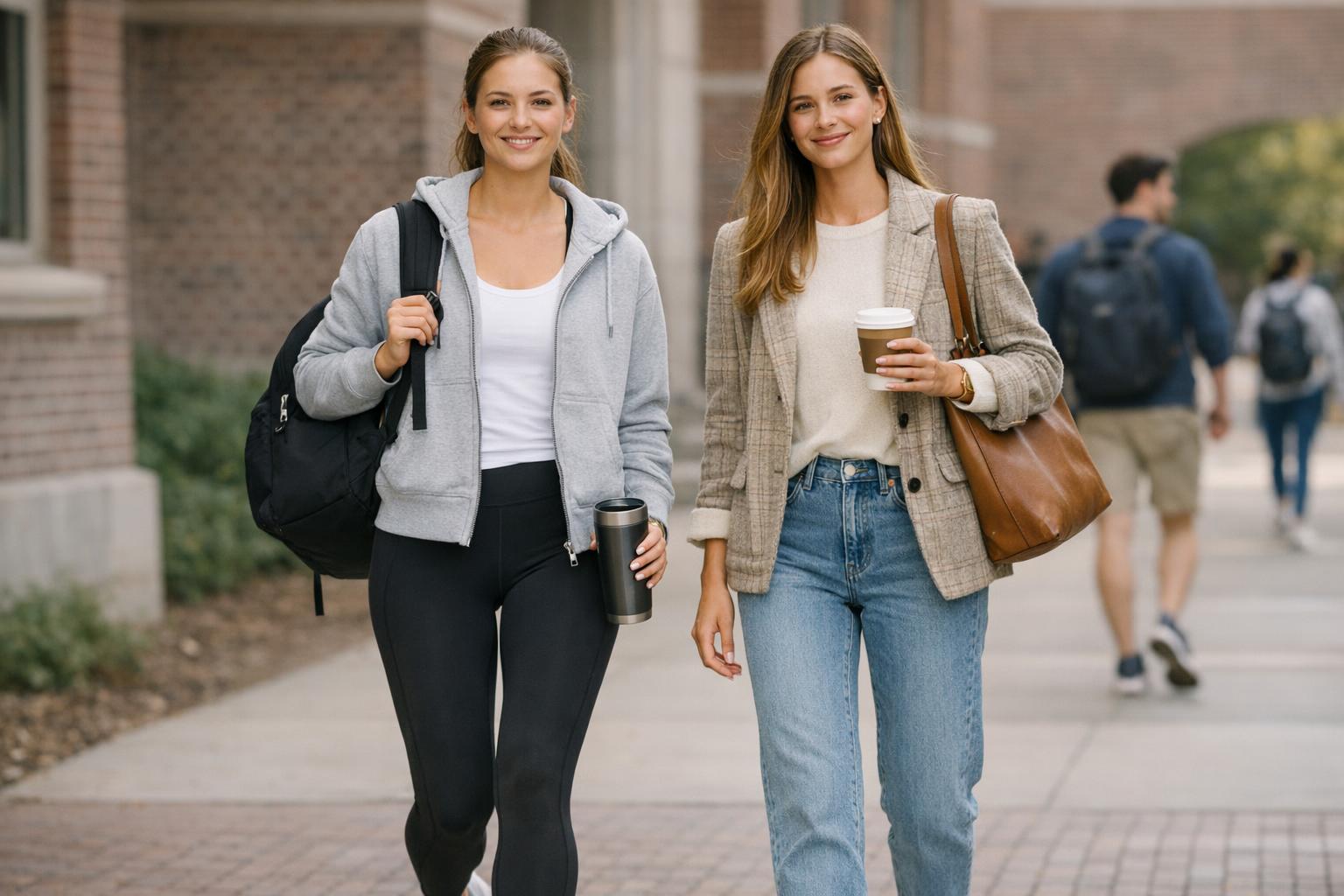
College outfit logic: why “cute” and “put-together” often mean two different things on campus
The most common college outfit dilemma rarely has anything to do with trend cycles. It’s about tempo. Campus life moves quickly—early classes, long walks, unpredictable lecture-hall temperatures, and the sudden pivot from study session to coffee run. In that pace, two aesthetics rise again and again: the relaxed, sporty ease of athleisure and the polished, intentional clarity of casual-chic (the “effortlessly put-together” look). They’re often discussed together because both can be simple outfits for school, both photograph well, and both rely on the same core wardrobe staples—denim, sneakers, basic tees, and outerwear like a denim jacket or cardigan.
Yet they behave differently once you start building outfits in real life. Athleisure is designed around movement and comfort first; casual-chic is designed around proportion and refinement first. The confusion happens because they borrow from the same closet: the same sneakers can read sporty or polished depending on what’s paired with them; the same sweatshirt can feel intentional when balanced with tailored trousers, or purely lounge when combined with sweats.
This style breakdown compares these two approaches—athleisure campus wear vs. casual-chic campus wear—so you can choose with clarity. You’ll see what defines each style, how they differ in silhouette, color, and formality, and how to translate them into cute outfits for school that still feel practical for class. Along the way, we’ll also touch the “vanilla fall outfits” conversation—those soft, neutral, minimalist campus looks that sit between sporty and polished—and show how to make them work without losing the point of getting dressed for college: function, confidence, and ease.
Style overview: athleisure campus wear (the movement-first college outfit)
Athleisure on campus is the wardrobe equivalent of a smooth commute: minimal friction, maximum comfort. It’s built from pieces that already signal motion—leggings or sweats/loungewear, sporty tops, logo sweatshirts, and sneakers/trainers. The mood is clean, energetic, and slightly street style–adjacent, often anchored by practical accessories like a backpack.
Your wedding has a lot of moving pieces. Your plan can still feel composed.
Zarellea organizes guests, vendors, budget, and timelines in one shared space — so you can make decisions with clarity, not stress.
Silhouette tends to be relaxed or streamlined: a fitted leg with a looser top, or a full relaxed set when you want the softness of head-to-toe loungewear. Color palettes are typically neutral or sporty—black, gray, white, and muted tones—though the real signature is texture: fleece, knit, technical fabrics, and the matte finish of athletic basics.
Athleisure’s strongest campus advantage is realism. It acknowledges long days and the need for clothing that feels good while sitting through lectures, climbing stairs, or carrying a laptop. It also integrates naturally with brand-coded cues that are familiar in U.S. campus culture—Nike and Adidas sneakers, a North Face layer or backpack—without requiring constant outfit “work.”

Style overview: casual-chic campus wear (the proportion-first college outfit)
Casual-chic is not “dressed up” in the traditional sense; it’s composed. The same staples—denim, tees, sneakers—are arranged with a slightly sharper eye: cleaner lines, more deliberate layering, and a silhouette that looks finished even when it’s built from basics. Think jeans and a top, but with intentional balance; a denim jacket, but used as structure; a dress or skirt, but paired with pragmatic shoes so it remains campus-ready.
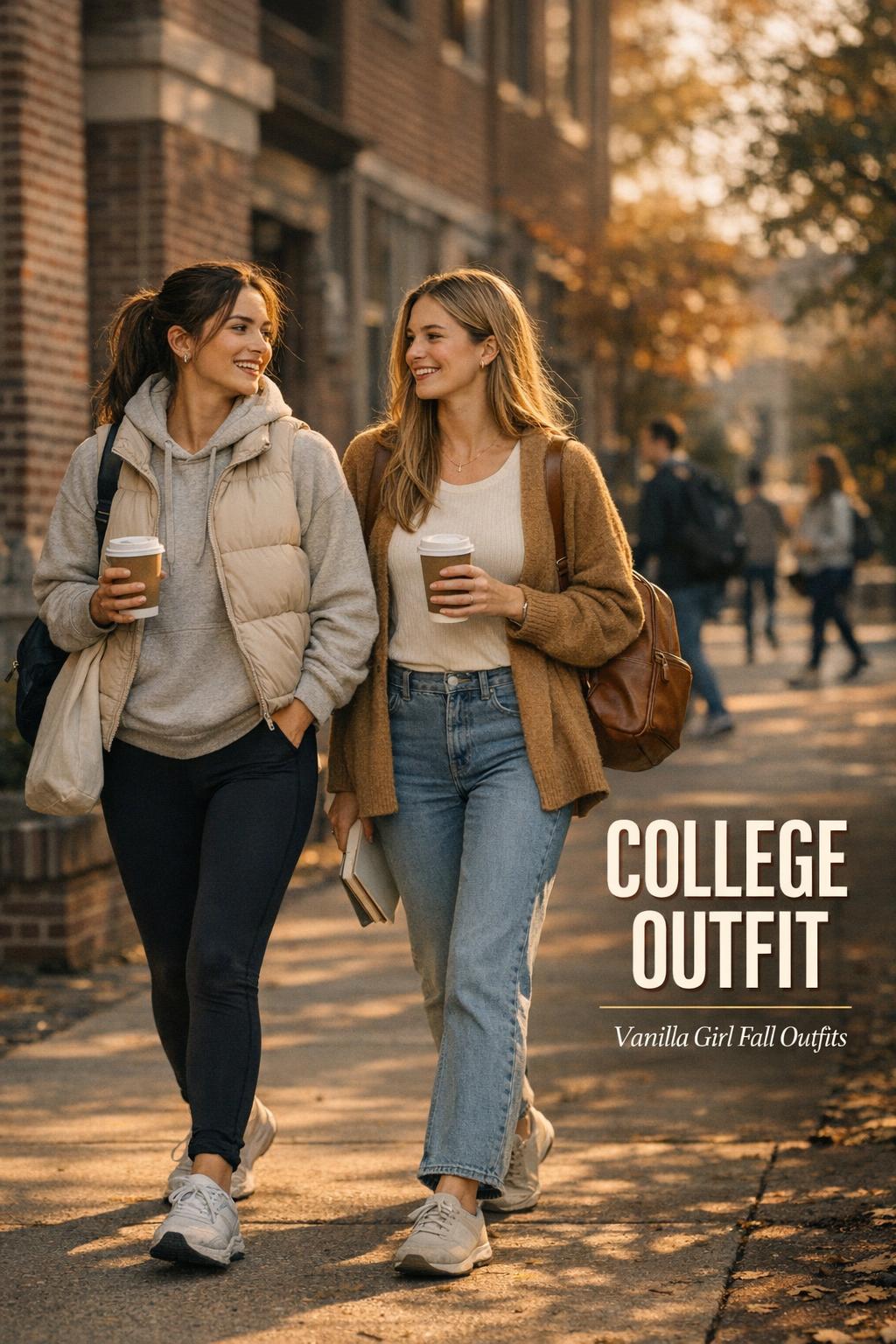
Typical silhouettes are anchored by denim (jeans) or tailored/trouser pants, often contrasted with simpler tops—tees, refined knitwear, or a cardigan. The color palette can be classic and restrained, which is why it’s frequently linked to “vanilla girl fall outfits” and “vanilla fall outfits”: soft neutrals, calm layers, and an understated mood that reads modern and polished.
Casual-chic is also the style that transitions most smoothly into “dressy college looks”—presentation days, campus interviews, or moments where you want to look more elevated without abandoning comfort. It’s less about adding “more” and more about choosing the right structure: trousers instead of sweats, a dress instead of a tee, or a mini skirt balanced with a grounded sneaker.
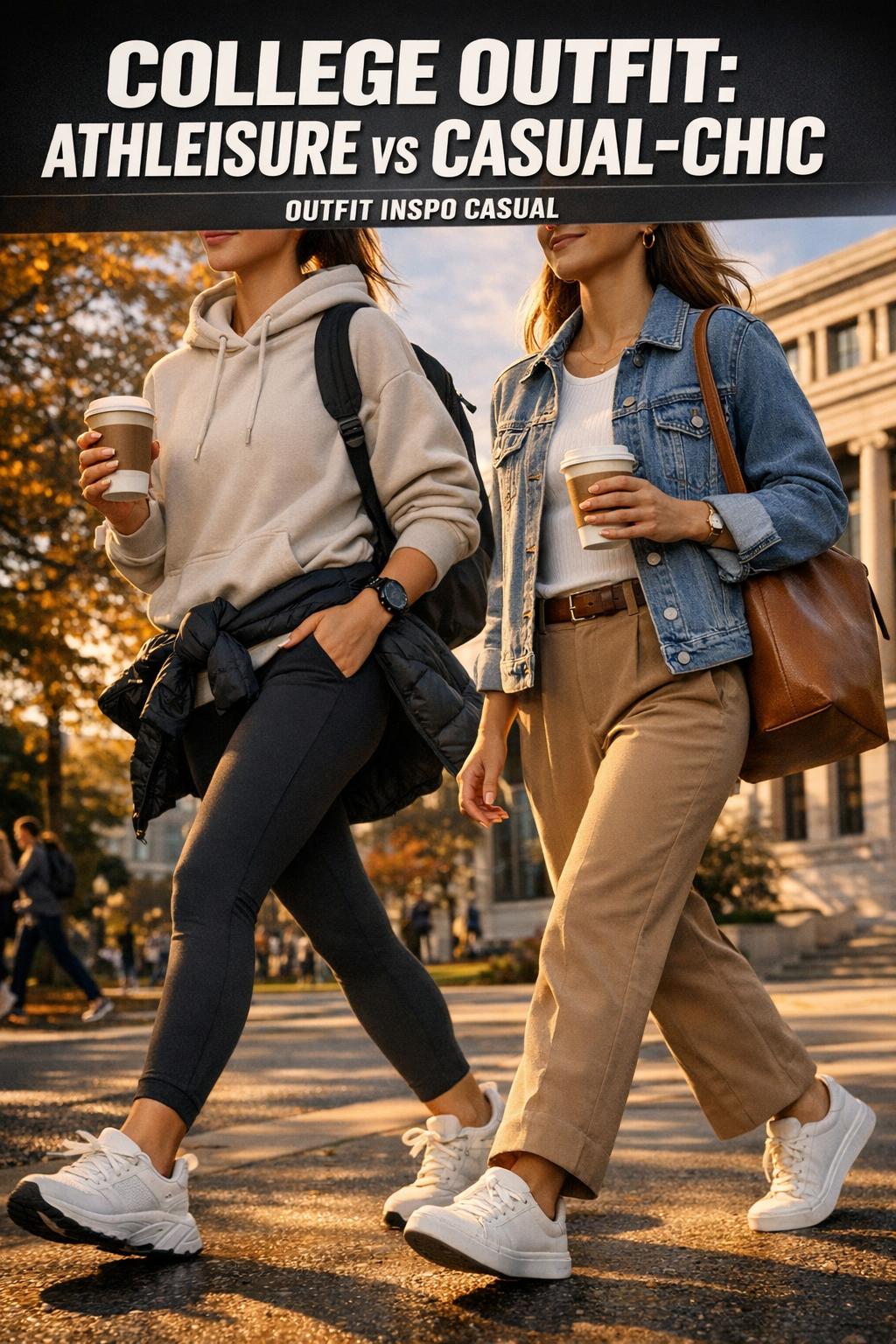
The shared foundation: wardrobe staples that sit under both aesthetics
Before comparing differences, it helps to acknowledge what the two styles share. The campus wardrobe—especially in the United States—gravitates to a dependable set of pieces that appear in nearly every outfit inspo casual edit: denim, sneakers, tees/tops, and easy layering. The distinction is rarely about what you own; it’s about how you compose it.
- Denim: jeans for everyday wear; a denim jacket for structure and layering
- Sneakers/trainers: the default campus shoe, usable in both sporty and polished looks
- T-shirts and tops: basic tees, graphic tees, and simple knit tops
- Dresses and skirts: a fast route to “put-together,” especially when paired with sneakers
- Outerwear: denim jacket, cardigan, or a more practical layer for colder days
- Bags: backpacks as the functional anchor; accessories like jewelry to shift the mood
- Seasonal framing: back-to-school timing shapes shopping and styling decisions
That’s why so many cute college outfits look similar at first glance on a Pinterest board: you’re seeing the same components remixed. The real difference is styling philosophy—movement-first versus proportion-first.
Key differences: how athleisure and casual-chic diverge in real campus styling
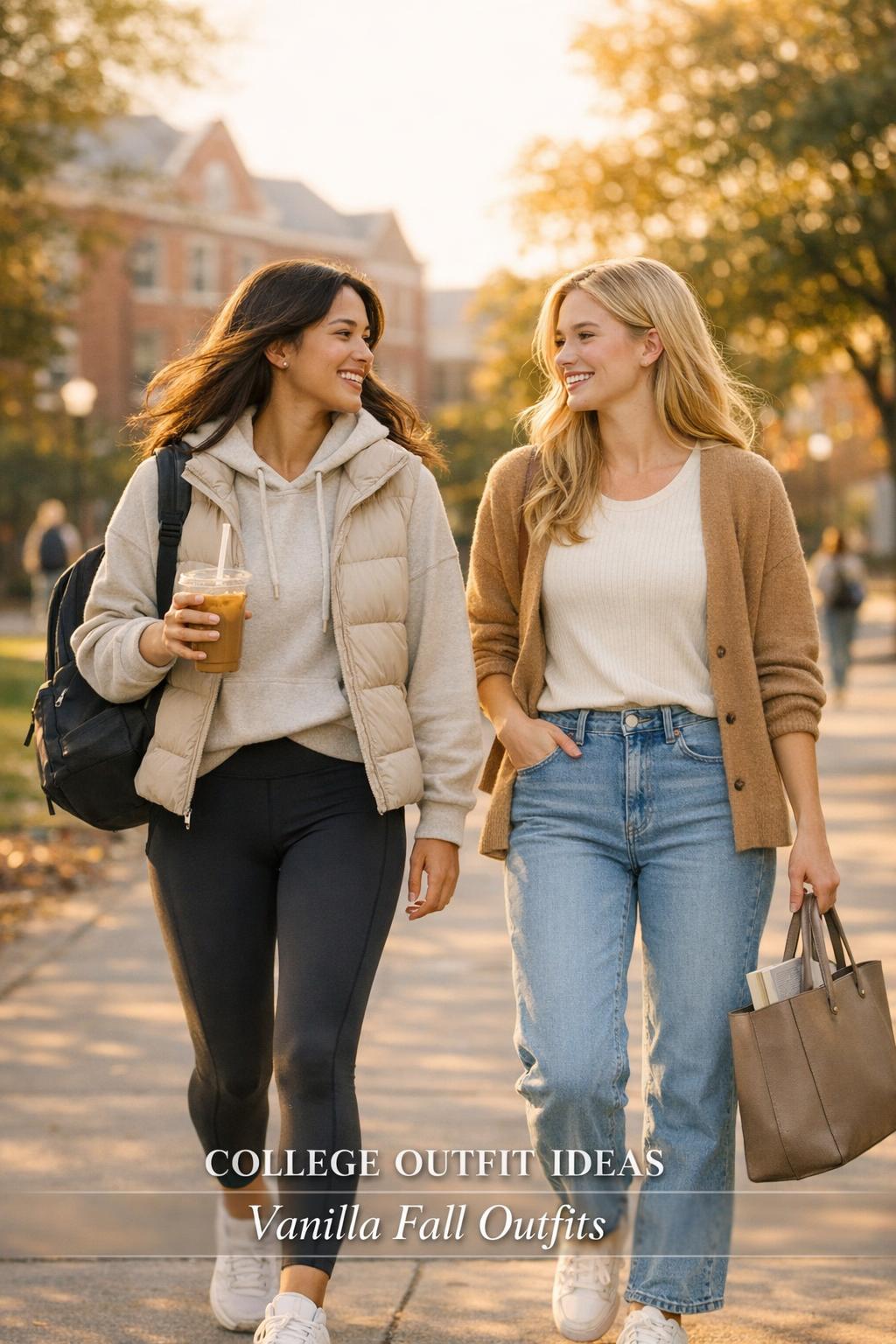
Silhouette and structure
Athleisure prioritizes ease: relaxed sweats, soft sets, streamlined leggings, roomy hoodies. The silhouette is designed to move. Casual-chic, by contrast, uses structure to look intentional: jeans that hold their shape, tailored trousers that create a clean line, a denim jacket that frames the shoulders. Even when both styles use sneakers and a tee, casual-chic tends to define the waist or leg line more deliberately.
Color palette and “vanilla” minimalism
Both styles can live comfortably in neutrals, but they use them differently. Athleisure neutrals feel sporty—black, heather gray, crisp white—often in matte knits. Casual-chic neutrals feel curated and layered, which is why “vanilla fall outfits” often lean into denim, soft tops, and an outer layer like a cardigan or denim jacket. The “vanilla girl fall outfits” mood is less about athletic energy and more about calm, refined balance.
Level of formality (and what “dressy” means in college life)
On campus, “dressy” rarely means formalwear—it means polished enough for a presentation, a campus interview, or a day when you want to look sharp. Athleisure can be made neat, but it doesn’t easily become dressy without feeling like a compromise. Casual-chic can pivot into dressy college looks simply by switching denim for tailored trousers, or choosing a dress and adding a more refined layer.
Styling philosophy: comfort cues vs. composition cues
Athleisure sends comfort cues on purpose—softness, ease, sport references, and sometimes school spirit through logo sweatshirts and graphic tees. Casual-chic sends composition cues—line, proportion, layering, and a sense that the outfit was assembled, not just worn. Neither is “better”; the point is choosing the message that matches your day.
Visual style breakdown: how these looks read at a glance
Layering approach
Athleisure layering is practical: a hoodie under a jacket, a sweatshirt over a tee, a warm layer you can pull on for cold classrooms. Casual-chic layering is architectural: a denim jacket or cardigan placed to frame the outfit, create a vertical line, or add contrast between relaxed and tailored textures. In other words, athleisure layers for temperature; casual-chic layers for shape as well as warmth.
Garment proportions
Athleisure tends to favor either streamlined (tight bottom, oversized top) or fully relaxed (sweats with sweatshirt). Casual-chic uses proportion to look effortless: straight-leg jeans with a simple top, tailored pants with a softer knit, a mini skirt balanced by a more covered top. The difference is subtle but visible—the casual-chic outfit usually has one “clean line” that anchors the look.
Accessories: backpacks, jewelry, and the finishing signal
Both styles rely on a backpack because campus life demands it. In athleisure, the backpack reinforces the sporty practicality, often paired with sneakers that echo that same utility. In casual-chic, accessories are the quiet upgrade: a touch of jewelry, a more intentional pairing of bag and shoe, and a layered outer piece that reads refined. Small details matter because the clothing itself may be minimal.
Footwear choices: sneakers as the bridge
Sneakers are the great campus equalizer. In athleisure, they are the centerpiece—trainers that match the athletic mood. In casual-chic, sneakers are used as a modern contrast: paired with a dress, skirt, or tailored trousers to keep the look grounded and wearable for class. Either way, the sneaker is rarely optional in a college outfit built for real walking.
Outfit comparisons: the same campus scenario, two different styling minds
Rather than treating outfits as isolated “looks,” it’s more useful to see how each style answers the same day. The following comparisons show styling logic—how the pieces interact, how comfort and polish are negotiated, and why the outfit reads the way it does.
Example comparison: early morning class (simple outfits for school)
Athleisure interpretation: Start with sweats/loungewear and a sweatshirt that feels soft enough for an early lecture. Add sneakers/trainers for walking across campus, and a backpack that carries the day’s essentials. If you want a subtle campus identity, this is where a logo sweatshirt or graphic tee makes sense—it’s effortless and familiar in back-to-school season.
Casual-chic interpretation: Choose jeans as the anchor, then a simple top (a tee or knit) and a denim jacket for a clean outer layer. Sneakers keep it practical, but the denim-on-denim structure reads more finished than sweats. The backpack stays, but the overall effect is “awake” even when you are not.
Example comparison: long library day (outfit inspo casual, but functional)
Athleisure interpretation: Athleisure excels here because comfort isn’t a luxury—it’s strategy. A coordinated top-and-bottom set (think sweatshirt and matching relaxed bottoms) creates a cohesive silhouette without effort. Layering matters because library air conditioning can be sharp; a second layer you can pull on quickly is part of the uniform.
Casual-chic interpretation: Build softness into the polished framework: tailored/trouser pants with a comfortable top and a cardigan for warmth. You still get ease for sitting and studying, but the trouser line keeps the outfit composed. Sneakers maintain practicality, and jewelry can be minimal—just enough to keep the look intentional.
Example comparison: warm-weather campus day (cute outfits for school without overthinking)
Athleisure interpretation: A sporty short paired with a simple top keeps the outfit breathable and easy. Sneakers remain the default for walking, and a backpack keeps hands free. The mood is energetic and unfussy—ideal for days that include both class and errands.
Casual-chic interpretation: Choose denim shorts with a clean tee, then add a denim jacket for indoor chill or late-afternoon cooling. The double-denim can work because the proportions are different—shorts below, jacket above—and sneakers keep it grounded. This is the warm-weather version of a “put-together” college outfit: simple pieces, deliberate balance.
Example comparison: cold-weather lecture halls (layering that survives the day)
Athleisure interpretation: This is where brand-coded practicality shows up. A North Face outer layer over a hoodie creates warmth with minimal styling decisions. Pair with sweats or leggings, sneakers, and a backpack. The outfit’s success is measured in comfort and temperature control, not refinement.
Casual-chic interpretation: Start with jeans or tailored pants, then add a top that layers cleanly and a structured outer piece (a denim jacket for milder days, a heavier layer when needed). The goal is to keep the silhouette clear even with multiple layers. You still get warmth, but the outfit reads intentional—especially important if you’re heading from class to a meeting or presentation.
Example comparison: “career day” on campus (dressy college looks that still feel like you)
Athleisure interpretation: Athleisure can be cleaned up, but it is inherently casual. If you lean sporty, your best strategy is refinement through simplicity: darker, minimal pieces; clean sneakers; and a more structured layer on top. It can work for a normal class day, but may feel underpowered for presentations or campus interviews.
Casual-chic interpretation: This is the natural territory of casual-chic. Tailored/trouser pants with a simple top creates a direct line to polish without feeling costume-like. A cardigan can soften the look while keeping it professional-leaning; a denim jacket can work if the rest of the outfit is clean and structured. The backpack is still allowed—college is practical—but the outfit reads ready.
Example comparison: weekend social plans after class (from campus to coffee)
Athleisure interpretation: Swap the most lounge-coded piece (very baggy sweats, overly worn tee) for something slightly sharper—cargo pants, for instance, can retain comfort while adding a street style edge. Keep sneakers and a graphic tee for personality; the result feels current and easy.
Casual-chic interpretation: A dress with sneakers is a classic campus shortcut to “effortlessly put-together.” Alternatively, a mini skirt paired with a more covered top balances proportion in a way that feels intentional rather than “trying.” Add a denim jacket for texture and practicality, and the outfit shifts smoothly from classroom to evening plans.
Where “vanilla fall outfits” fit: the quiet middle between sporty and polished
“Vanilla fall outfits” and “vanilla girl fall outfits” are often described as soft, neutral, and minimalist. On campus, that aesthetic tends to borrow from both athleisure and casual-chic—comfort from the first, composition from the second. The trick is to keep the neutrals from looking accidental. Without some structure—denim, tailored trousers, or a defined outer layer—the palette can drift into “I grabbed what was clean” territory.
The most convincing vanilla-leaning college outfit is built on contrast: a clean base (jeans or trousers) paired with a softer layer (cardigan or sweatshirt) and anchored by sneakers. Accessories—especially a backpack and minimal jewelry—should look deliberate. This aesthetic is quietly powerful for back-to-school season because it’s repeatable, camera-friendly, and grounded in staples rather than constant newness.
Campus culture cues: logos, graphic tees, and why “school spirit” reads differently in each style
Campus style has its own visual language. Logo sweatshirts and graphic tees are a common shorthand for belonging—whether it’s school spirit or simply the familiar uniform of American college life. Athleisure welcomes these cues naturally; a logo sweatshirt over comfy bottoms looks cohesive because the outfit already leans casual and sporty.
In casual-chic, those same cues require editing. A graphic tee can still work, but it often needs a stronger frame—jeans with a clean fit, or tailored trousers to offset the casual print. The goal isn’t to erase personality; it’s to keep the overall look balanced so the graphic reads intentional rather than loud. This is one of the easiest ways to translate cute college outfits into a more polished register without abandoning campus identity.
Regional and seasonal reality: why one “college outfit” doesn’t fit every campus day
Even within the United States, campus weather and daily rhythms can change the outfit equation. Warm-weather days invite denim shorts, dresses, and lighter tops; cold-weather days demand layering and outerwear that can handle long walks and indoor temperature swings. That’s why the same college outfit idea can feel perfect in one setting and frustrating in another.
Instead of treating seasonal dressing as a separate wardrobe, it’s more practical to treat it as a layering system. A denim jacket becomes the hinge piece for mild transitions; a cardigan is the indoor layer that makes classrooms bearable; a more robust outer layer (the kind you might associate with North Face in campus contexts) becomes necessary when the day is genuinely cold. Sneakers remain constant because walking remains constant.
Tips from real campus dressing: how to make either style work for long days
Tip: dress for the “middle temperature,” then layer
College days often include two climates: outside weather and aggressively cool lecture halls. Aim for a base you can tolerate indoors (tee, top, or lightweight knit), then add a layer you can remove (denim jacket or cardigan). Athleisure does this with hoodies and sweatshirts; casual-chic does it with structured layers. The principle is the same: controllable warmth without bulk.
Tip: keep one anchor piece consistent
If you’re building simple outfits for school quickly, choose one anchor and vary around it. For athleisure, the anchor is often sneakers or a dependable sweatshirt. For casual-chic, it’s frequently denim (jeans) or tailored trousers. When one piece is consistent, the rest of the outfit becomes easier to compose, and repetition starts to look like a signature rather than a rut.
Tip: use accessories to “tilt” the outfit
When you don’t have time for a full change between class and plans, accessories do the work. A backpack is non-negotiable for many students, but jewelry can shift the mood quickly, and even the choice between a graphic tee versus a clean top changes the outfit’s message. This is where outfit inspo casual becomes genuinely useful: the same pieces can read sporty or refined depending on the finishing decisions.
Common styling mistakes that make a college outfit feel “off” (and how to correct them)
Most campus outfits fail not because the pieces are wrong, but because the outfit lacks a clear center of gravity. When everything is relaxed, the look can feel unfinished; when everything is structured, it can feel rigid for college life. The correction is usually a single adjustment: balance.
- All-lounge, no shape: if you’re in sweats and a loose top, add a more defined outer layer or keep the sneaker clean and intentional to avoid looking sleepy.
- Too many statements at once: graphic tee plus loud accessories plus a busy bottom can compete. Choose one statement, then keep the rest quiet.
- Ignoring proportion with skirts: mini skirts and skirts in general look more modern when balanced—either a cleaner top line or a grounded sneaker.
- Cold-weather bulk without a plan: pile-on layering can swallow the silhouette. Keep one layer structured (a denim jacket in milder cold, a more defined outer layer when needed) so the outfit still has lines.
- Comfort sacrificed on walking-heavy days: a college outfit that looks great but punishes your feet will not be repeated. Sneakers exist for a reason; use them strategically.
These corrections don’t require a new wardrobe. They require a clearer decision about what you’re aiming for: sporty ease or polished ease.
Brand signals, used sparingly: how Nike, Adidas, and North Face function in campus style
On U.S. campuses, certain brands function less as “fashion labels” and more as visual shorthand for utility. Nike and Adidas are commonly associated with sneakers/trainers that support long walking days, while North Face often appears in the context of practical outerwear or campus-ready gear. These brand cues show up most naturally in athleisure, where performance and comfort are part of the aesthetic.
In casual-chic, brand signals tend to fade into the background. The focus is on silhouette—jeans, tailored trousers, a denim jacket, a clean dress—so the outfit reads refined even when you’re wearing the same sneakers. The best approach is moderation: let recognizable pieces do their job (comfort, warmth, function) without forcing them to be the entire outfit’s identity.
How to blend the two styles without looking undecided
Many of the most wearable cute college outfits live in the space between athleisure and casual-chic. The blend works when you follow one clear rule: choose one style to lead, the other to support. If athleisure leads, keep the base sporty and use a structured element—denim jacket or tailored pants—to sharpen it. If casual-chic leads, keep the base refined and use athleisure as comfort—sneakers, a soft top, or a sweatshirt styled with intention.
This is also where cargo pants earn their place. They can lean street style and comfortable (supporting athleisure) while still feeling deliberate when paired with a clean top and a structured layer (supporting casual-chic). The result feels modern, not conflicted—a college outfit that understands the day ahead.
When to choose each style: a practical campus decision guide
Athleisure works best when the day is physically demanding
Choose athleisure for days with long walks, packed schedules, or back-to-back classes where comfort is the priority and you want the outfit to disappear into the background. It’s also ideal during back-to-school season when you’re building a repeatable uniform and need reliability more than novelty.
Casual-chic works best when you need polish without sacrificing ease
Choose casual-chic for presentation days, group meetings, or moments where you want to feel sharper—without wearing anything that feels out of place on campus. Jeans with a clean top, tailored trousers with a cardigan, or a dress with sneakers are dependable formulas that still qualify as outfit inspo casual because they’re built from staples.
The vanilla fall outfits sweet spot: when you want calm, neutral confidence
Lean into vanilla girl fall outfits when you want a quieter kind of style that still reads intentional: neutrals, denim, soft layering, and a clean sneaker. This approach photographs beautifully, but more importantly, it repeats well—making it a smart choice for anyone building simple outfits for school with limited time and a realistic student wardrobe.
A small, versatile outfit framework you can repeat (without feeling repetitive)
If you want the ease of a Pinterest board with the practicality of real life, think in modules rather than “new outfits.” Keep your core pieces consistent—denim, sneakers, tees, outerwear, backpacks—then rotate one element to change the style message. This is how students end up with cute outfits for school that feel fresh without constant shopping.
- Module A (sporty base): sweats/loungewear + sweatshirt + sneakers + backpack
- Module B (denim base): jeans + tee/top + denim jacket + sneakers + backpack
- Module C (dress base): dress + sneakers + denim jacket or cardigan + backpack
- Module D (tailored base): tailored/trouser pants + simple top + cardigan + sneakers + backpack
- Module E (warm-weather base): denim shorts or shorts + tee/top + sneakers + backpack
- Module F (skirt base): mini skirt or skirt + balanced top + sneakers + denim jacket
The framework is intentionally familiar because campus wardrobes are built from repetition. The sophistication comes from your edits: proportion, layering, and the decision to lead with sporty ease or polished ease.
Conclusion: two campus aesthetics, one intelligent wardrobe
The core distinction is simple: athleisure is movement-first, casual-chic is proportion-first. They share the same building blocks—denim, sneakers, tees, backpacks, outerwear—but they communicate different priorities. Athleisure delivers comfort and speed; casual-chic delivers polish and composure. Vanilla fall outfits sit between them, using neutrals and soft layering to create a calm, modern campus mood.
Once you can identify the leading logic of an outfit—sporty ease or refined balance—you can recreate it with what you already own, adapt it for warm or cold days, and build cute college outfits that feel authentic to your schedule. And if you like elements from both styles, blend them with intention: let one lead, let the other support, and keep the silhouette clear.
FAQ
What are the most essential pieces for a college outfit?
The most repeatable college outfit wardrobe relies on denim (especially jeans), sneakers/trainers, simple tops like tees, a layering piece such as a denim jacket or cardigan, and a practical bag like a backpack; dresses and skirts add quick “put-together” options without requiring complex styling.
What are cute outfits for school that still feel comfortable for class?
Comfortable cute outfits for school usually combine a dependable base (jeans or sweats/loungewear) with sneakers and a layer you can adjust for temperature, like a denim jacket, cardigan, or sweatshirt, plus a backpack to keep the look realistic for campus movement.
How do I make athleisure look more put-together on campus?
Keep the palette simple, ensure the sneakers look clean, and add one structured element—such as a denim jacket or more intentional pants like cargo pants—so the outfit reads styled rather than purely lounge, while still staying true to athleisure comfort.
What makes casual-chic different from basic casual campus wear?
Casual-chic uses the same staples—denim, tees, sneakers—but focuses on proportion and structure, often through jeans with a clean fit, tailored/trouser pants, or a composed layer like a denim jacket or cardigan, creating an “effortlessly put-together” effect.
What should I wear to college on a warm-weather day?
Warm-weather campus outfits often center on denim shorts or shorts with a simple top and sneakers for walking, and many students add a denim jacket for indoor air conditioning or later temperature drops while keeping the look easy and class-appropriate.
What should I wear to class in colder weather?
Cold-weather class dressing works best with a layered system: a comfortable base top, jeans or tailored pants, sneakers for walking, and an outer layer you can adjust; many students choose practical outerwear associated with campus utility, such as a North Face-style layer, paired with a backpack for daily function.
How can I do “vanilla fall outfits” as a college student without looking boring?
Vanilla fall outfits feel intentional when neutrals are paired with a clear silhouette—jeans or tailored trousers—then finished with a layered piece like a cardigan or denim jacket and grounded by sneakers; small accessories like jewelry can add polish without disrupting the minimalist mood.
Are dresses and skirts practical for college outfits?
Yes—dresses and skirts can be very practical when styled with sneakers and a functional bag like a backpack, and they’re one of the fastest ways to look put-together for class while still keeping the outfit comfortable and easy to move in.
What brands are commonly associated with campus athleisure?
In U.S. campus contexts, Nike and Adidas commonly appear as sneaker examples, and North Face is often referenced for practical outerwear or campus-ready gear, functioning as familiar signals of comfort and utility within athleisure-oriented looks.
Leave a Reply