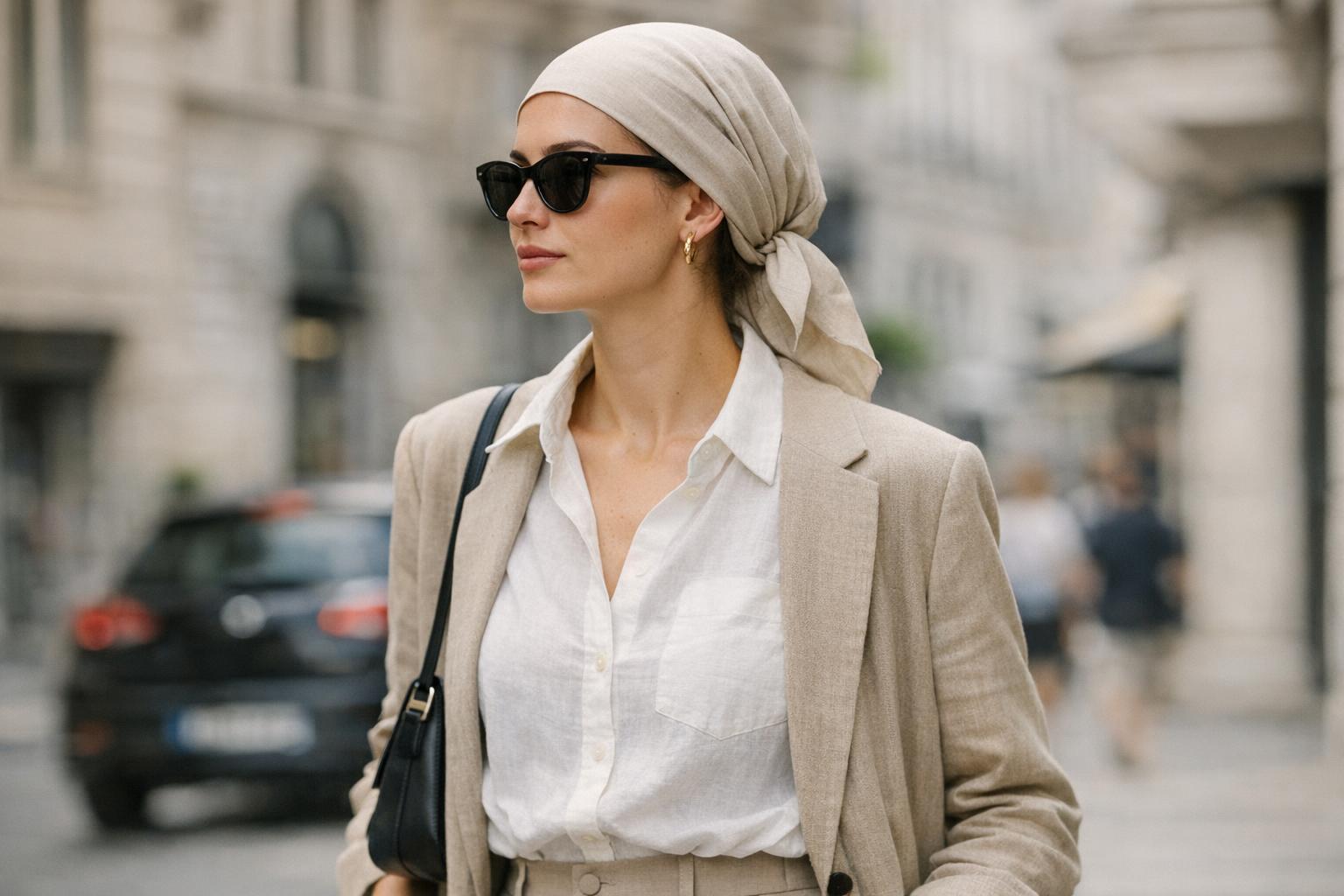
The head scarf outfit dilemma: looking intentional, not improvised
There’s a particular kind of outfit problem that shows up five minutes before you leave the house: you want a head scarf outfit that looks polished, but your mirror says “last-minute fix.” Maybe it’s a humid day and your hair won’t cooperate. Maybe you’re traveling, stretching a wash day, or simply craving that effortless, European sense of ease—where a scarf on head outfit feels like a styling decision, not a compromise.
The challenge is that headscarves sit at the most visible point of your look. If the fabric is bulky, the knot is oversized, or the colors fight your outfit, the scarf can dominate rather than harmonize. And because it frames your face, even a small imbalance in proportion can read louder than the rest of your clothes combined.
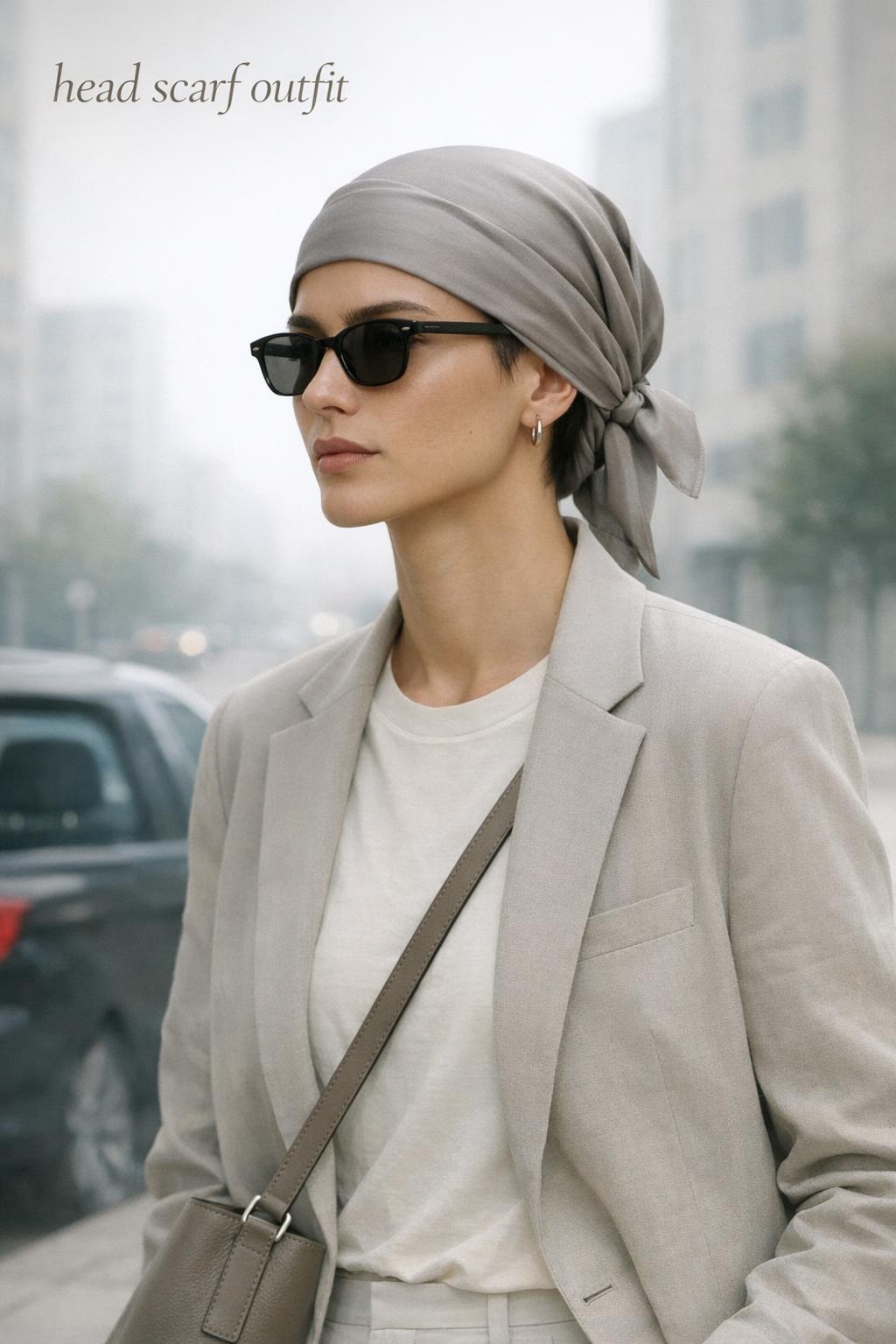
This guide is built to solve that exact tension. You’ll learn the logic behind head scarf styles outfits—how to choose a shape, tie, and outfit silhouette that feels deliberate, comfortable, and modern. You’ll also find outfit solutions for real situations (from city errands to smart-casual plans), plus clear ways to adapt the look for headscarf outfits across seasons and for a men’s head scarf or a bandana with outfit styling approach.
Understanding the styling challenge: why headscarves can look “off” so quickly
A headscarf is a compact accessory, but it behaves like a structural piece. It adds volume, introduces color close to the complexion, and changes the visual “top line” of your outfit. That’s why a scarf on head outfit can feel inexplicably wrong even when the rest of the look is strong.
Your wedding has a lot of moving pieces. Your plan can still feel composed.
Zarellea organizes guests, vendors, budget, and timelines in one shared space — so you can make decisions with clarity, not stress.
Most headscarf frustration comes down to a few practical factors: comfort, stability, and proportion. Too tight and you spend the day adjusting. Too loose and it slips—especially when you’re walking fast, commuting, or dealing with wind. Then there’s the style equation: if the scarf is bold and the outfit is busy, the look can tip into clutter; if both are minimal, you risk looking unfinished rather than refined.
Weather plays its part, too. Heat can make thick ties feel suffocating, while cold conditions can demand coverage that challenges your usual styling rhythm. The good news is that the solution is rarely “buy something new.” It’s almost always about tie choice, fabric behavior, and the way you balance the scarf with the neckline, outerwear, and overall silhouette.
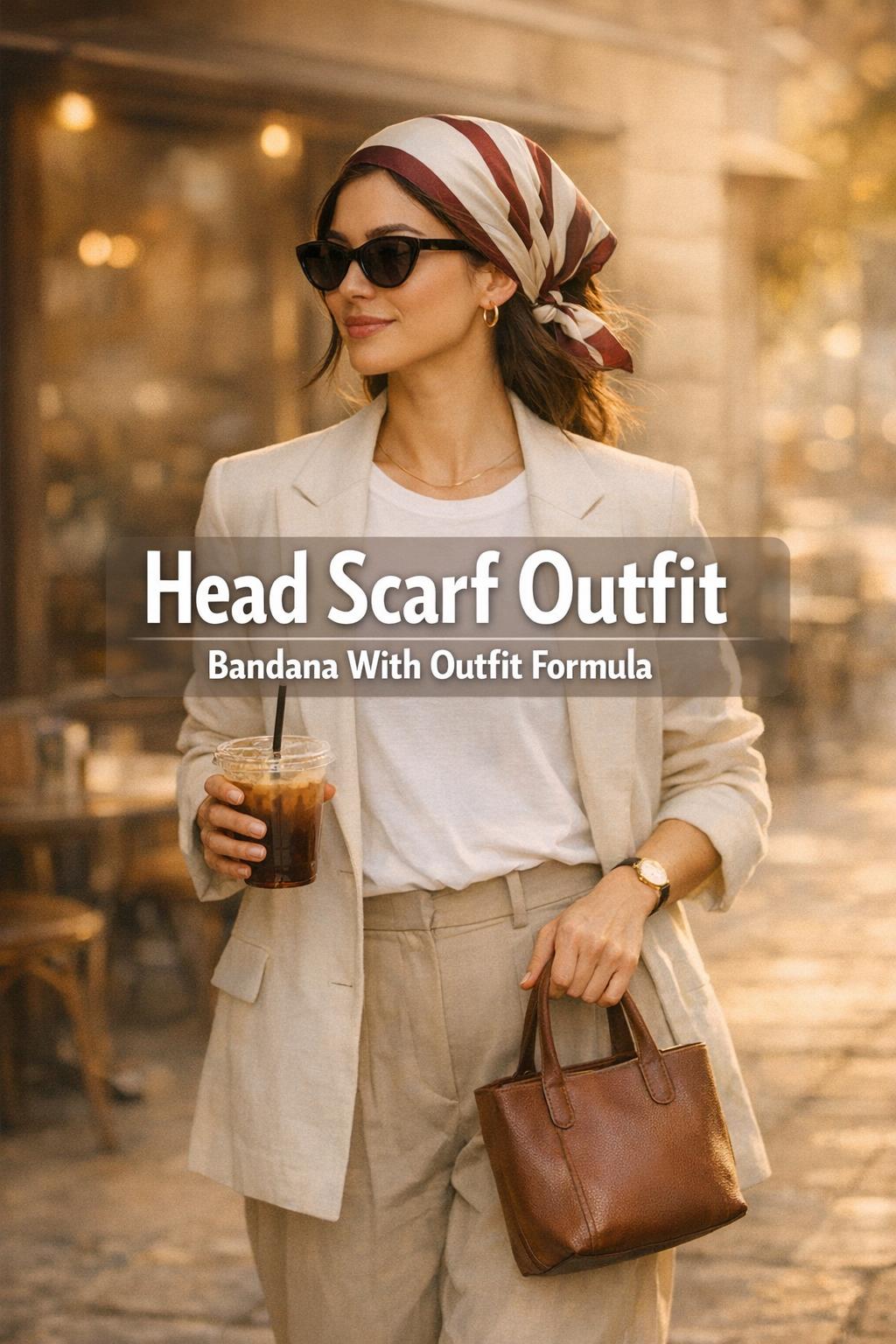
Key dressing principles that make a headscarf look editorial (and feel wearable)
Start with proportion: the scarf is your topmost silhouette
Think of the headscarf as the crown of the outfit. If you create volume at the top, you generally want cleaner lines through the body—sleeker knitwear, a tidy collar, a tailored coat, or a more streamlined pant shape. If the scarf is small and close to the head (a bandana-style fold), you can support it with slightly more texture and layering elsewhere without losing control of the look.
Control the “face frame”: keep color and print intentional
Because the scarf sits right by your face, it’s not the place for accidental color. The most reliable approach is to echo a tone already present in your outfit—one shade pulled from your top, outerwear, or shoes. If you love prints, anchor them with quiet clothing lines. A patterned headscarf paired with a calm, modern silhouette reads sophisticated rather than busy.
Let function lead: comfort and stability are non-negotiable
If your scarf feels fussy, it will look fussy. Choose tying methods that match your day: a secure wrap for walking and errands, a softer knot for seated occasions, and a low-bulk fold if you’ll be layering outerwear. The most convincing head scarf styles outfits are the ones that stay put—so you can move naturally and stop thinking about it.
Balance neckline and scarf shape
A headscarf changes how your neckline reads. High necklines plus bulky ties can feel crowded; open necklines can benefit from a scarf that’s tidy and close to the head. When in doubt, simplify the upper chest area: a clean crewneck, a crisp collar, or a neat V creates a calm backdrop for the scarf to do its work.
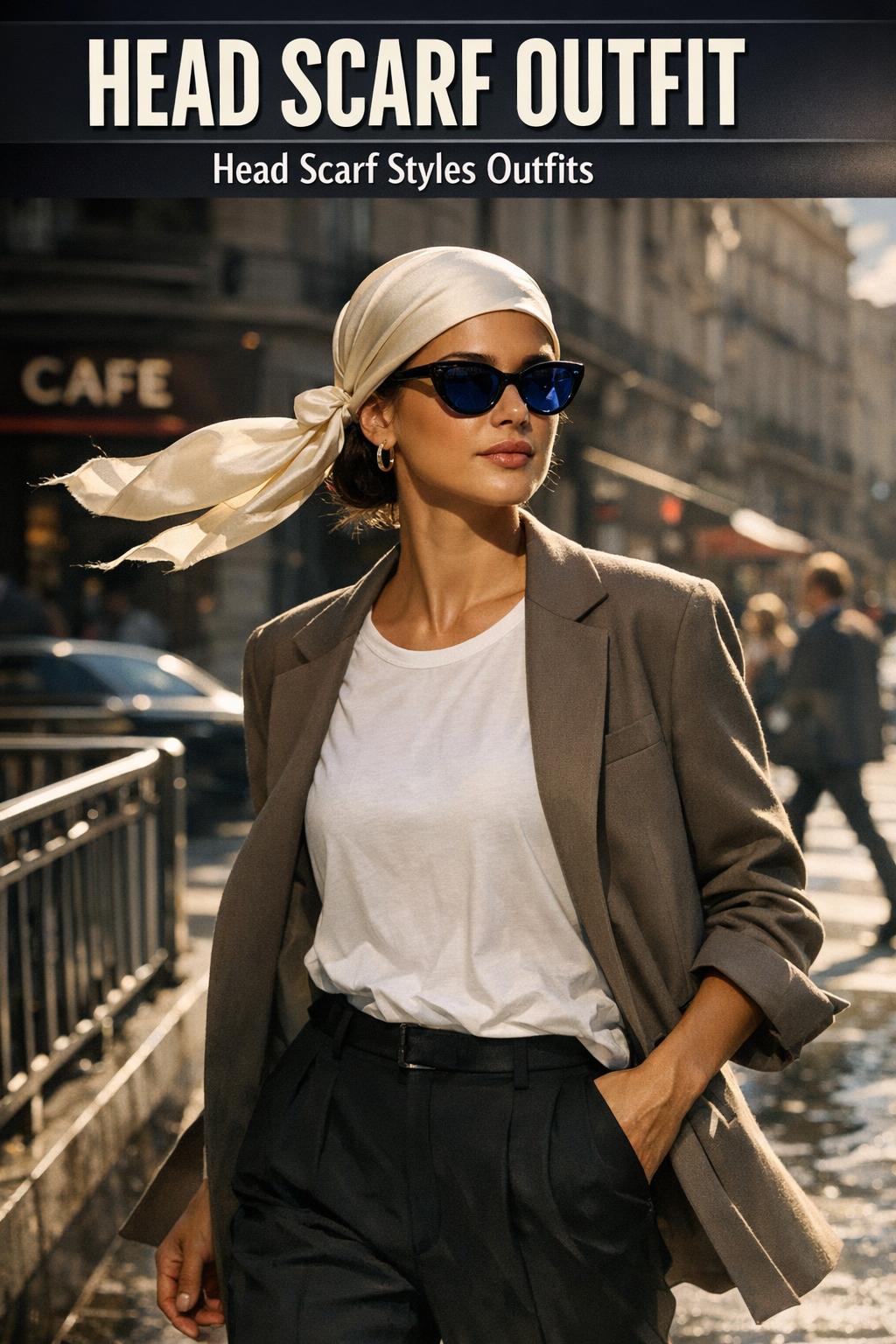
Choosing a headscarf format: head scarf vs bandana with outfit styling
Before you build the outfit, decide what the scarf is doing. Is it primarily practical—hair control, protection, coverage? Or is it a style accent? This decision determines whether you’ll lean into a fuller headscarf wrap or a bandana with outfit approach that feels more minimal and graphic.
- Bandana-style fold: smaller, closer to the head, visually “sportier,” and easier to pair with casual silhouettes.
- Classic headscarf wrap: more coverage and structure, reads refined when paired with tailored or clean-lined clothing.
- Soft turban-inspired wrap: creates volume and a sculptural top line; best when the outfit beneath is streamlined.
For a men’s head scarf, the same logic applies: the more graphic and compact the fold, the easier it is to integrate with everyday basics. When the wrap becomes larger or more sculptural, it asks for quieter clothes and stronger silhouette control.
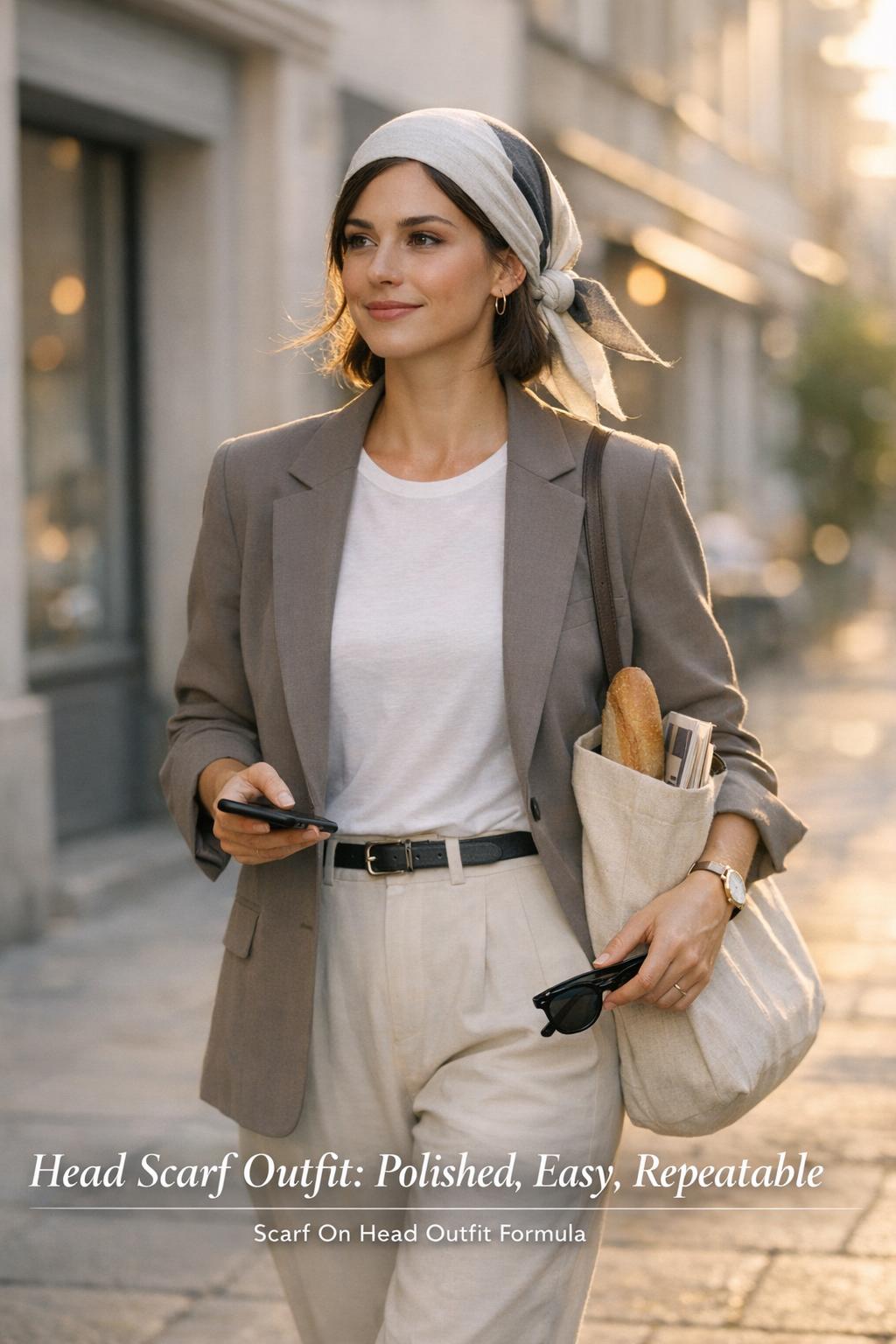
Outfit solutions that solve real-life headscarf problems
The most useful headscarf outfits are the ones that work under pressure: heat, movement, long days, and mixed dress codes. Below are outfit solutions organized by the problem they solve, with styling logic so you can adapt them to your wardrobe rather than copy a costume.
Outfit solution: the humid-day city look (stays polished when hair won’t)
On sticky days, the goal is to keep fabric light, the silhouette clean, and the scarf secure. Choose a bandana-style fold or a close wrap so you’re not adding unnecessary warmth around the head and neck. Pair it with breathable, simple lines—think a crisp shirt or a clean tee and relaxed trousers that skim rather than cling.
Why it works: the headscarf becomes a controlled focal point while the rest of the outfit stays calm. A minimal scarf on head outfit looks intentional when the body silhouette is uncluttered and the palette is restrained.
Practical tweak: if you’re walking a lot, keep the knot flat and positioned so it won’t press uncomfortably when you lean back against a seat or chair.
Outfit solution: smart-casual balance (headscarf without feeling “too casual”)
The smart-casual challenge is that headscarves can read relaxed by default—especially in a bandana with outfit styling direction. The fix is structure. Add one tailored element: a blazer, a crisp button-front, or a coat with clean lines. Keep the scarf print controlled and the wrap tidy, letting the outfit’s architecture do the heavy lifting.
Why it works: structure below balances softness above. When your head scarf outfit includes a tailored piece, the scarf reads like a styling choice—modern, composed, and considered—rather than a purely functional cover.
Variation: if you prefer a fuller wrap, simplify the rest even more. A sculptural scarf shape pairs best with a streamlined column underneath.
Outfit solution: the comfortable travel day (movement, temperature swings, and long wear)
Travel exposes every weakness in styling: fabrics wrinkle, shoes pinch, and accessories become annoying. For a travel-proof head scarf outfit, prioritize stability and comfort. Choose a secure wrap that won’t slip when you’re carrying bags, and build your clothes around soft structure—layers that are easy to add or remove without disrupting the scarf.
Why it works: a headscarf can quietly “finish” a travel look, especially when the outfit is built from elevated basics. It also helps you feel put-together after hours in transit, when hair and collar lines can look tired.
Practical tweak: avoid bulky knots if you’ll be resting your head against a seat. A flatter tie keeps the experience comfortable without sacrificing the look.
Outfit solution: the minimalist monochrome (when you want the scarf to look expensive and modern)
Monochrome is a quiet power move for head scarf styles outfits. Keep your clothing in one tonal family—light to dark variations—then choose a scarf that either matches closely or introduces one controlled accent. The outfit becomes a clean canvas, and the scarf looks like part of the composition rather than an add-on.
Why it works: tonal dressing reduces visual noise, which is exactly what headscarves need to look refined. It also makes a scarf on head outfit easier to repeat across occasions without feeling like you’re wearing the same “look” every time.
Variation: if you’re wearing a bolder scarf, keep the monochrome base extra sleek—minimal seams, simple shapes, and fewer competing accessories.
Outfit solution: the textural contrast (for headscarf outfits that feel styled, not flat)
When the scarf is simple—solid color, compact fold—you can build interest through texture. Pair smooth scarf fabric with a tactile knit, a crisp shirt, or a softly structured outer layer. This creates depth without relying on more color or print near the face.
Why it works: texture does what pattern would do, but in a subtler way. It keeps the outfit editorial while allowing the headscarf to remain the quiet anchor.
Practical tweak: if you’re sensitive to heat, keep textures lighter and avoid heavy layering around the neckline. The scarf should feel like a light finish, not a thermal trap.
Outfit solution: the men’s head scarf, modernized (not costume, not cliché)
A men’s head scarf works best when it’s treated like a clean accessory rather than a statement trying too hard. The easiest entry point is a bandana with outfit styling approach: compact fold, tidy lines, and an overall silhouette that’s modern and uncluttered. Keep the outfit grounded in well-fitting basics and let the scarf be a sharp, minimal accent.
Why it works: the smaller scale of the bandana fold integrates naturally into everyday menswear proportions. It reads intentional when the rest of the look is consistent—clean lines, controlled palette, and no competing headwear or overly loud accessories.
Variation: if you want a fuller scarf on head outfit, keep the rest of the styling even more streamlined so the wrap remains the single focal point.
Head scarf styles outfits: tying choices that change the mood of the same clothes
One of the most practical ways to make headscarf outfits feel versatile is to treat the tie as your “styling dial.” The same shirt and trousers can read relaxed or refined depending on how the scarf is folded and where the knot sits.
- Flat side knot: clean and understated, good for days when you want the scarf to blend seamlessly with tailored pieces.
- Low wrap with minimal volume: polished and comfortable under outerwear, especially when collars and lapels are involved.
- Bandana triangle with a neat back tie: slightly sportier and fresh, ideal for casual errands and warm weather.
Tips: when you’re experimenting, do it with the outfit already on. A scarf that looks perfect with a bare neckline can feel crowded once you add a collar or jacket. The final look should feel composed from every angle—front, profile, and back—because headscarves are visible in motion, not just in selfies.
A location-minded note: translating the scarf on head outfit for real American life
In the U.S., headscarves often sit at the intersection of practicality and personal style—especially on days when weather and schedules are unpredictable. The most wearable approach is to build an outfit that works indoors and outdoors, then choose a scarf tie that won’t become a nuisance when you’re in a car, at a desk, or moving between errands.
European-inspired styling—clean silhouettes, thoughtful proportion, restrained palette—translates beautifully here because it makes headscarf outfits feel like an extension of your wardrobe rather than an “extra.” The goal is not to dress for a runway; it’s to look composed while living your actual day.
Additional styling tips that make headscarf outfits feel effortless
Tips: keep the knot flatter than you think you need
Most headscarf discomfort comes from bulk. A flatter knot looks more refined and is more comfortable against chairs, headrests, and coat collars. If you want drama, create it through shape at the crown rather than a heavy tie at the back.
Tips: echo one color, then stop
For a cohesive head scarf outfit, repeat one scarf color elsewhere—shoes, a bag, a top—then let the rest remain neutral or tonal. This creates the editorial impression of intention. Too many repeated accents can feel “matched” in a dated way; one is modern.
Tips: consider your earrings and sunglasses as part of the architecture
Headscarves change the space around the face. If you wear earrings, choose shapes that don’t compete with the scarf’s line. Sunglasses can also help “finish” the look, especially with a bandana with outfit styling approach that reads crisp and graphic.
Tips: adjust your neckline for breathing room
If the scarf covers more of the head and sits close to the neck, keep your top layer’s neckline cleaner—open collar, simple crew, or a neat V. This prevents the upper body from feeling visually congested and makes the scarf look like a deliberate frame rather than a crowded layer.
Common mistakes that make a head scarf outfit look unbalanced (and how to fix them)
Mistake: pairing a voluminous wrap with a busy outfit
This usually happens when you love a bold scarf and also love layered clothing. The result can feel visually noisy. Fix it by simplifying one side of the equation: keep the wrap sculptural and streamline the outfit, or keep the outfit layered and choose a compact scarf fold.
Mistake: ignoring the back view
A headscarf is seen from behind all day—especially in mirrors and photos. Oversized tails or uneven ties can make an otherwise refined look feel improvised. Fix it by tucking ends neatly or choosing a flatter knot that sits cleanly against the head.
Mistake: treating the scarf as an afterthought
The fastest way to make headscarf outfits look accidental is to add the scarf after the outfit is “done.” Instead, choose the scarf first, then dress to support it—pull one color from it, keep the neckline calm, and match the outfit’s formality to the tie style.
Mistake: choosing a tie style that doesn’t match your day
A delicate, looser tie may look beautiful at home, but it can slip during errands, commuting, or long walks. The fix is simple: reserve softer ties for low-movement occasions and use a more secure wrap when your schedule is active. Comfort is what makes a scarf look confident.
How to build a repeatable formula for headscarf outfits
If you want the head scarf outfit to become a reliable part of your wardrobe—not a once-in-a-while experiment—create a simple formula you can repeat. The point is consistency: when your scarf, silhouette, and palette follow a familiar rhythm, the look stops feeling risky.
- Pick the scarf role: practical coverage (more secure wrap) or style accent (bandana fold).
- Choose one anchor piece: tailored layer for polish, or minimal basics for ease.
- Keep the palette disciplined: tonal base plus one echoed scarf color.
- Finish with one “clean” accessory: sunglasses, a watch, or understated jewelry to reinforce intention.
Over time, you’ll notice something subtle: the scarf becomes less about hiding hair or solving a bad day and more about refining your silhouette. That shift—toward composition—turns head scarf styles outfits into a genuine signature.
Conclusion: a headscarf is easiest when you style it like structure, not decoration
A successful head scarf outfit is built from a few calm decisions: proportion you can trust, a tie style that matches your day, and an outfit silhouette that supports the scarf rather than competing with it. When you treat the headscarf as part of your outfit’s architecture—framing the face, setting the top line, and guiding the palette—the look reads polished in a deeply wearable way.
The most valuable takeaway is a mindset: start with function, refine with structure, and keep your color story intentional. With that approach, scarf on head outfit styling becomes repeatable—whether you’re leaning into headscarf outfits for daily practicality or exploring a men’s head scarf and bandana with outfit direction that feels modern and composed.
FAQ
How do I make a head scarf outfit look intentional instead of last-minute?
Choose the scarf first, then build the outfit around it: echo one scarf color elsewhere, keep the neckline clean, and match the tie style to the outfit’s formality so the scarf reads like a styling decision rather than a quick fix.
What’s the easiest way to wear a bandana with outfit styling without looking too casual?
Keep the bandana fold compact and neat, then add one structured element—like a crisp shirt or tailored outer layer—so the overall silhouette feels polished while the bandana stays graphic and controlled.
How can I keep my scarf on head outfit comfortable for long days?
Use a flatter knot to reduce bulk, avoid overly tight ties that create pressure, and choose a wrap style that suits your movement level; a secure tie is best for walking and errands, while softer ties work for low-activity plans.
How do I stop a headscarf from overpowering the rest of my look?
Balance volume with simplicity: if the scarf wrap is fuller, keep the clothing lines cleaner and the palette restrained; if your outfit is layered or textured, choose a smaller, closer-to-the-head fold so the overall composition stays calm.
What are the most wearable head scarf styles outfits for everyday errands?
A compact bandana-style fold or a low-volume wrap paired with clean, breathable basics works best for errands because it stays stable, feels comfortable, and looks intentional even in motion.
How can a men’s head scarf look modern rather than costume-like?
Keep the fold compact and the outfit streamlined, with well-fitting basics and a controlled palette; a minimal, tidy tie integrates naturally and looks like a deliberate accessory instead of a forced statement.
Why does my head scarf outfit look “crowded” around the neck and shoulders?
This usually happens when a bulky tie meets a high neckline or layered collars; create breathing room by choosing a flatter knot, simplifying your upper layers, and selecting a cleaner neckline so the scarf frames the face without competing with the collar area.
How do I create variety with the same headscarf?
Change the tie “mood” rather than the scarf itself—switch between a flatter side knot, a low-volume wrap, and a compact bandana fold, then adjust your outfit structure (more tailored or more relaxed) to match the new silhouette.
Leave a Reply