Introduction
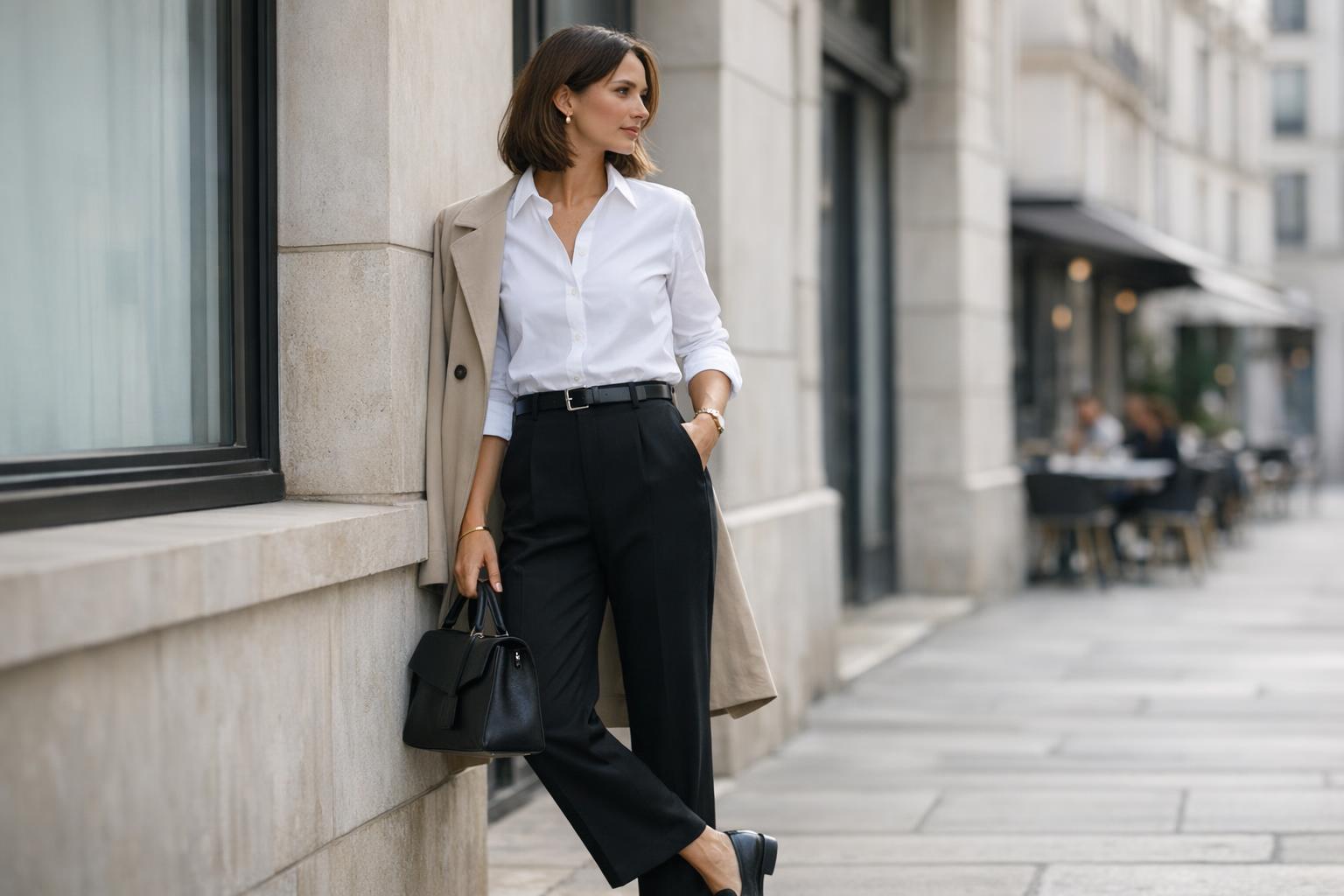
A fitted shirt outfit is one of those rare style moves that reads as both intentional and effortless—especially in the in-between moments of real life: the morning commute, a last-minute dinner reservation, a gallery afternoon that turns into cocktails. The fitted shirt has structure, but it doesn’t demand ceremony. It simply sharpens your silhouette and makes everything around it look more considered.
The visual identity here is polished minimalism with a quietly sensual edge: clean lines, a defined waist or torso, and styling that plays with proportion—sleek on top, relaxed elsewhere. Think of it as a modern uniform you can tune to different moods, from pared-back European ease to a slightly more downtown, American practicality.
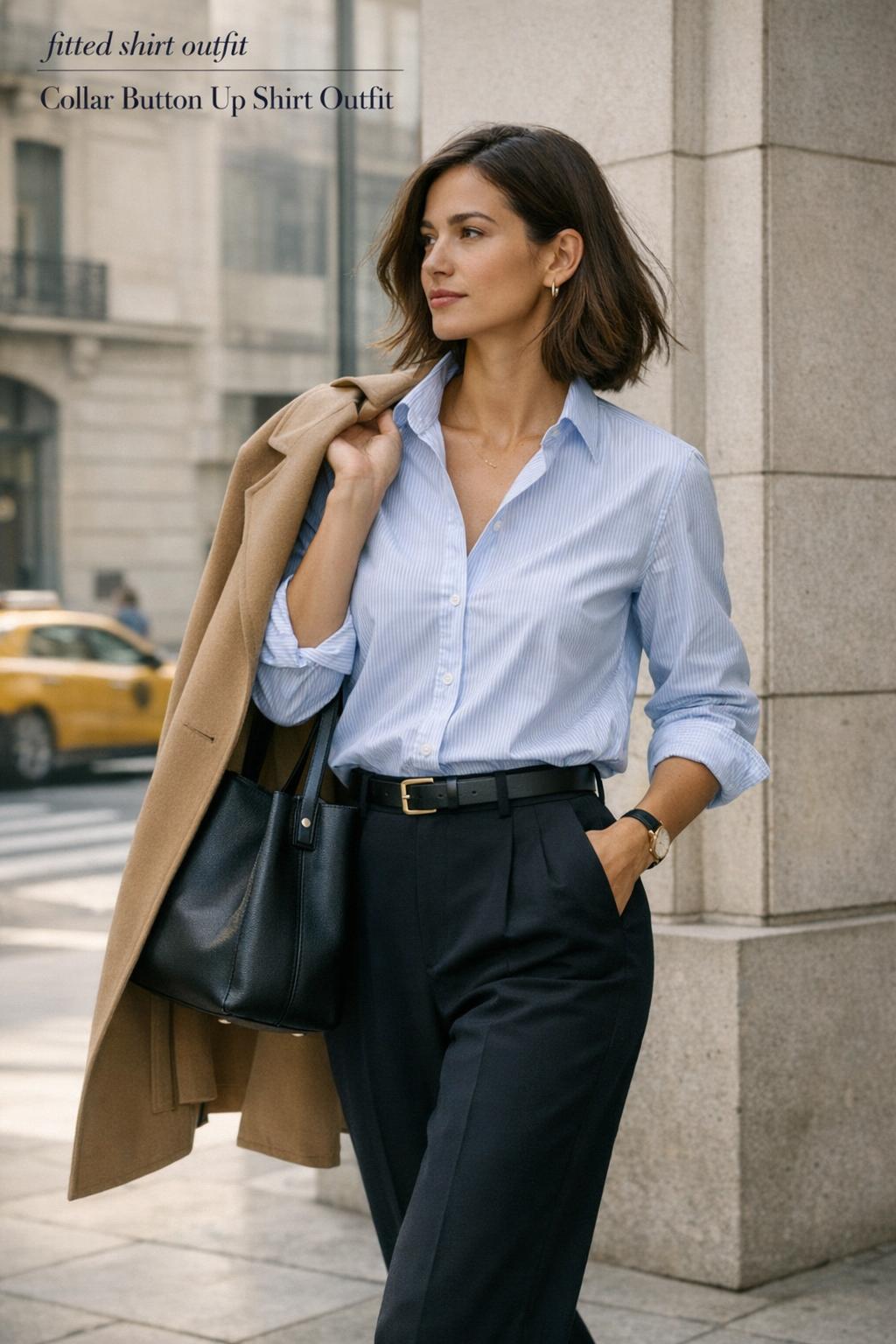
It’s popular because it solves a familiar styling puzzle: how to look “put together” without feeling overdressed. A fitted shirt—whether crisp cotton, a soft stretch poplin, or a subtle rib—creates a controlled foundation that works across offices, weekends, travel days, and evenings. The best part is its adaptability: one shirt can feel architectural under tailoring, casual with denim, or quietly provocative when styled with a long line and minimal accessories.
The fitted shirt, defined: what makes it work
“Fitted” isn’t synonymous with “tight.” In a modern wardrobe, fitted shirts are about clean contact with the body—skimming rather than clinging—so the outfit reads streamlined without restricting movement. The aim is a silhouette that holds its shape: a collar that frames the face, a shoulder seam that sits where it should, and a torso that’s shaped enough to feel deliberate under layers.
Your wedding has a lot of moving pieces. Your plan can still feel composed.
Zarellea organizes guests, vendors, budget, and timelines in one shared space — so you can make decisions with clarity, not stress.
When a fitted shirt outfit looks exceptional, it’s usually because the fit has been balanced against something looser: a wide-leg trouser, a slouchy jean, an oversized coat, or a relaxed skirt. This tension—tailored structure against ease—is the aesthetic engine. If everything is fitted, the result can feel dated or overly formal; if everything is loose, the outfit loses clarity.
Key fit checkpoints that separate “sharp” from “stiff”
In practice, a fitted shirt should let you breathe, sit, and reach without pulling at the buttons or twisting at the side seams. The collar should lie flat without gaping, and the shirt should be long enough to stay tucked (if you’re tucking) without constant adjustment. These details matter because the fitted shirt is often the focal point—any small fit issue becomes part of the visual story.
- Shoulders: seams sit at the edge of the shoulder bone, not down the arm
- Chest: no strain lines; buttons lie flat when you move
- Waist: shaped enough to define, relaxed enough to sit comfortably
- Hem length: long for a clean tuck, or intentionally cropped for proportion play
Look: collar button-up shirt outfit in crisp minimal tailoring
This is the fitted-shirt look that feels most “editorial office,” the kind of polish you’d associate with a fast morning in Paris or Milan—sleek, quiet, and composed. The silhouette is narrow on top and elongated through the leg, creating a clean column that reads professional without feeling corporate.
Anchor the look with a collar button-up shirt outfit in structured cotton or poplin, worn fully buttoned or with only the top button undone for a softer frame at the neckline. Pair it with high-rise tailored trousers—straight or gently wide—so the waistline becomes the transition point between fitted and fluid. Keep the palette restrained: white, pale blue, or soft cream against black, charcoal, or deep navy.
- Key garments: fitted collared shirt, high-rise tailored trousers
- Footwear: sleek loafers or refined low-heel boots
- Accessories: slim belt, minimal watch, structured bag
Why it fits the aesthetic: the shirt delivers structure and intention, while the trousers provide ease and movement. The overall effect is a modern uniform—controlled, minimal, and quietly powerful—built on proportion rather than decoration.
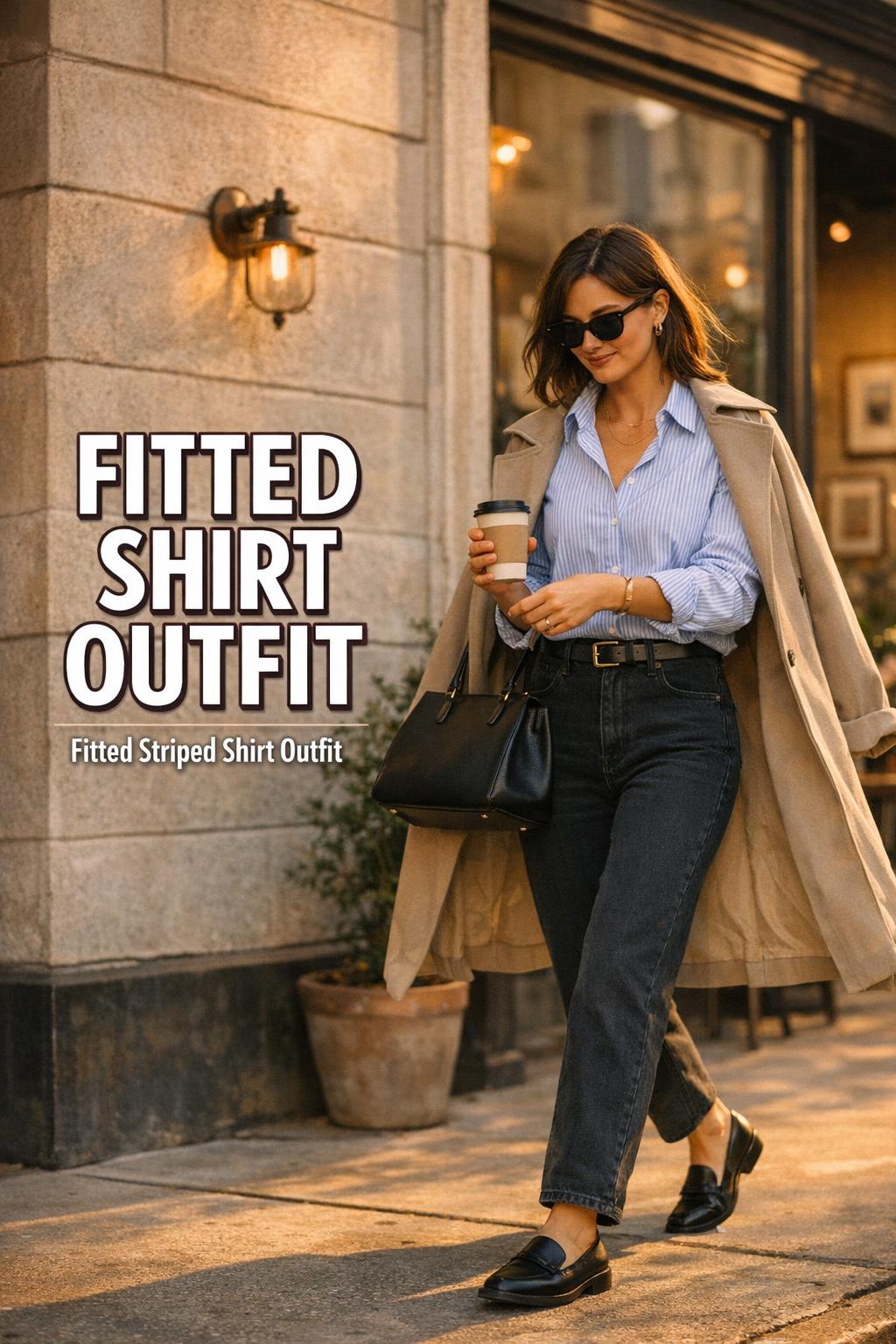
Look: fitted striped shirt outfit with relaxed denim and precise accessories
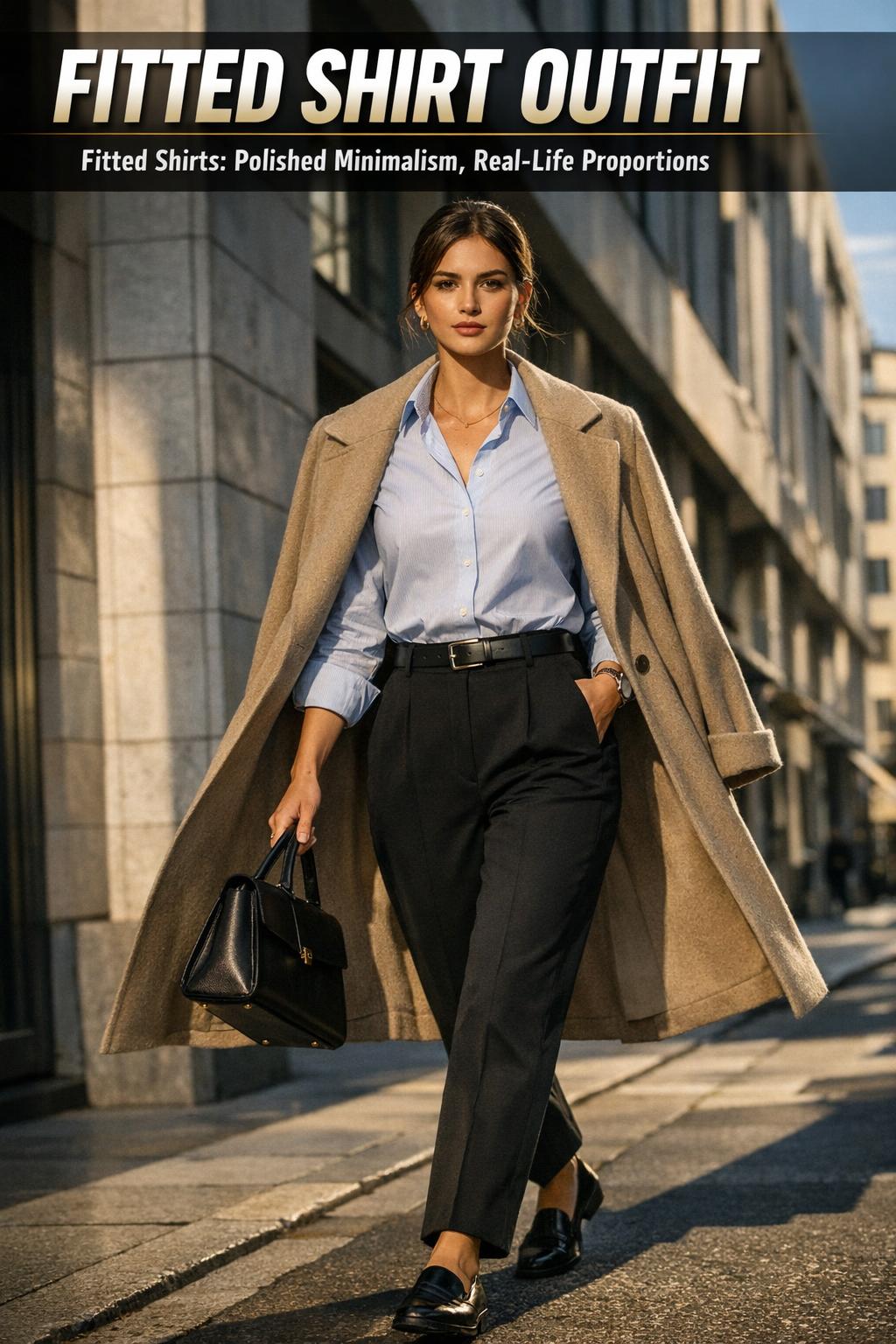
A fitted striped shirt outfit has an inherent graphic intelligence: the lines do some of the styling work for you, adding rhythm and direction to the torso. The mood here is clean and city-ready—an elevated casual look that feels just as appropriate for a coffee meeting as it does for an afternoon in a bookstore.
Choose a fitted striped shirt with a crisp collar and a close-but-comfortable body. Keep the stripe classic and understated so it reads timeless rather than novelty. The contrast comes from denim: a relaxed straight leg or a slightly slouchy silhouette that sits lower on the hip for a quieter, more modern nonchalance. A tidy belt and a structured shoe bring the outfit back into focus.
- Key garments: fitted striped button-up, straight or relaxed jeans
- Footwear: clean sneakers for day, loafers for a sharper note
- Accessories: leather belt, simple hoops, compact shoulder bag
Why it fits the aesthetic: the fitted shirt provides the “line,” and the denim provides the “air.” Together, they create a look that feels composed but never precious—exactly what a modern fitted shirt outfit should do in everyday life.
Look: long sleeve button-up shirt outfit with tonal layering for transitional weather
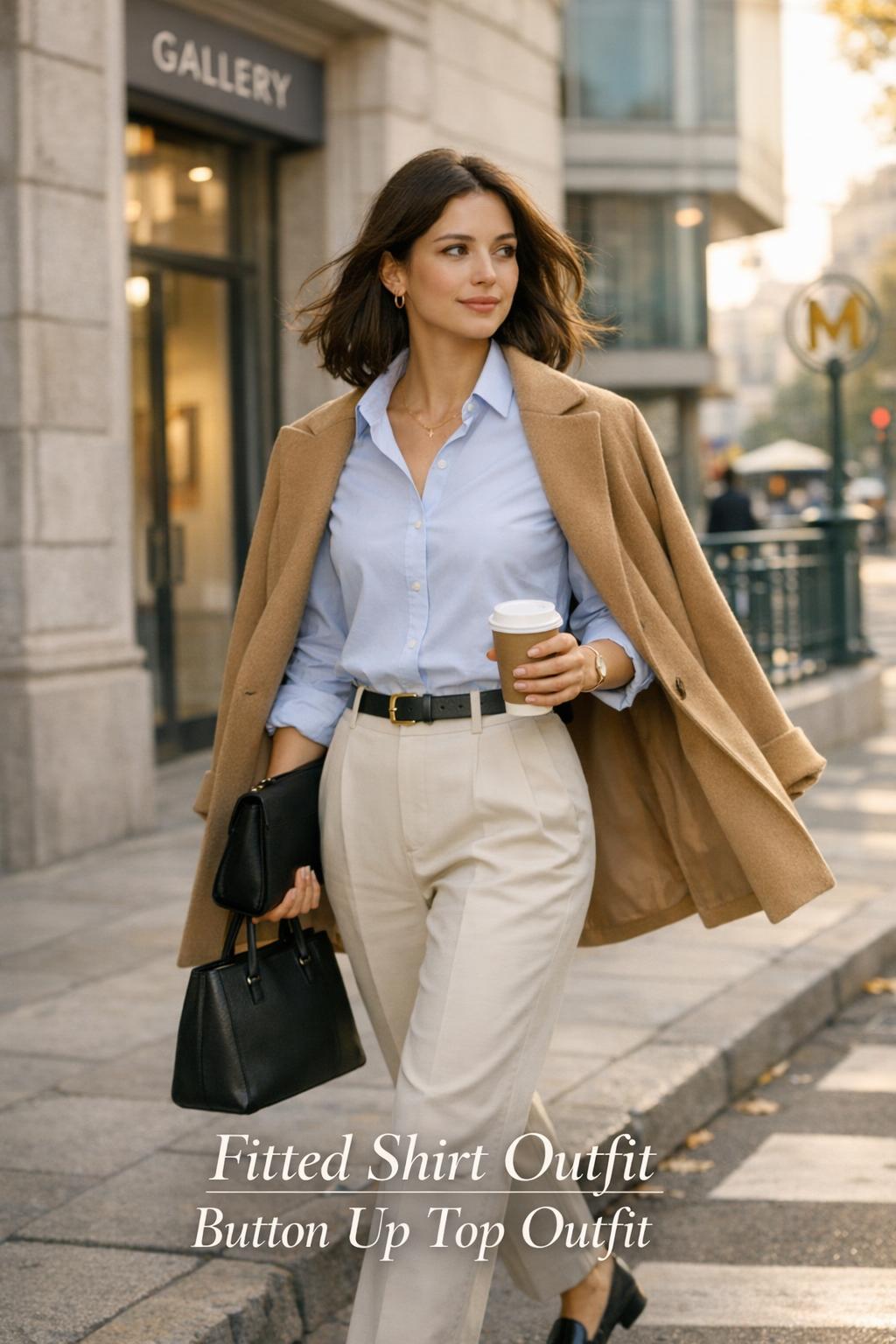
There’s a particular sophistication to tonal dressing in transitional weather: it looks intentional, photographs beautifully, and feels calm. This long sleeve button-up shirt outfit leans into texture and subtle color shifts—think soft neutrals or a deep monochrome—so the eye reads the silhouette before it notices the pieces.
Start with a fitted long sleeve button-up shirt in a smooth, structured fabric that holds a clean line under layers. Add a fine-gauge knit draped over the shoulders or a tailored outer layer that skims the body without compressing it. On the bottom, a fluid trouser or a straight midi skirt keeps the look elegant while remaining comfortable for a full day of movement—walking between meetings, sitting for long lunches, stepping into cooler evening air.
Why it fits the aesthetic: the fitted shirt acts like an architectural base layer, and the tonal approach keeps the styling refined. It’s minimalism with depth—less about “statement pieces,” more about controlled composition.
Style tip: make tonal outfits look rich, not flat
When you stay in one color family, rely on texture and finish to create dimension. Pair a crisp cotton shirt with a matte trouser, or contrast a smooth poplin with a softly brushed coat. Even small shifts—cream to oatmeal, navy to ink—create a layered, European-feeling sophistication without adding visual clutter.
Look: button up top outfit with a soft waist and subtle evening polish
Not every fitted shirt outfit needs to read “daytime.” The evening version is quieter than a full going-out top, but it has a certain confidence—more refined than flashy. The silhouette is controlled through the torso, then softened through the styling: a slightly open neckline, a defined waist, and a fluid movement below.
Use a fitted button up top outfit as your base—something with a clean collar and a smooth finish. Style it with a skirt that moves (a midi length works particularly well) or a tailored trouser with a gentle drape. The color palette can stay classic—black, white, deep neutrals—or shift into softer tones for a more romantic edge. Accessories should feel deliberate: one strong element is enough, whether that’s sculptural earrings, a sleek bag, or a refined heel.
Why it fits the aesthetic: it’s an exercise in restraint. The fitted shirt creates poise; the styling choices create mood. You look dressed without looking like you tried to be “dressy,” which is often the most modern kind of evening elegance.
Look: fitted shirts under relaxed outerwear for an off-duty city uniform
This interpretation is about contrast in scale: a fitted shirt against an outer layer that’s intentionally roomier. The vibe is Copenhagen-adjacent—practical, architectural, and unfussy—ideal for errands that turn into impromptu plans. The fitted shirt keeps the base clean; the outerwear brings the attitude.
Choose fitted shirts in neutral shades—white, pale blue, or soft gray—then layer a relaxed coat or jacket over the top. Keep the bottom half comfortable and modern: a straight trouser, a relaxed jean, or even a tailored short with tights when the weather calls for it. The key is that the shirt remains visible at the collar and cuffs, acting as a crisp frame beneath the softer outer layer.
- Key garments: fitted shirt, relaxed outerwear, straight-leg bottoms
- Footwear: boots for structure, minimalist sneakers for ease
- Accessories: scarf in a muted tone, sunglasses, understated tote
Why it fits the aesthetic: the fitted shirt is the anchor that keeps relaxed pieces from feeling messy. It’s the styling equivalent of a clean line in architecture—quiet, but essential.
Look: the modern tucked-and-unbuttoned formula (without the styling clichés)
The half-tuck and the slightly unbuttoned neckline are everywhere for a reason: they create ease. But the difference between looking styled and looking accidental comes down to symmetry and intention. This look is a study in relaxed polish—a fitted shirt outfit that feels lived-in, not sloppy.
Start with a fitted shirt that’s tailored through the torso but not skin-tight. Unbutton just enough to elongate the neck, then choose one deliberate styling move: a clean full tuck with a sharp belt, or a controlled partial tuck that emphasizes the waistline without adding bulk at the hips. Balance it with a bottom that has shape—straight trousers, a structured skirt, or a clean denim silhouette—so the loosened neckline doesn’t make the whole outfit drift.
Why it fits the aesthetic: it reads effortless, but the silhouette is still “held.” The fitted shirt keeps your lines clean; the styling makes it feel modern and wearable rather than overly formal.
How to recreate a fitted shirt outfit with pieces you already own
Most wardrobes already contain the raw materials for this aesthetic: a collared shirt, a pair of trousers, a denim option, and a coat or jacket. The shift comes from how you edit. The goal is not to buy a whole new look, but to refine your proportions so the fitted element feels intentional.
- Choose one fitted piece only: let the shirt be fitted, then keep the bottom relaxed or straight
- Control the waistline: use a tuck, a belt, or a high-rise bottom to define proportion
- Repeat a color: echo the shirt tone in your shoes or bag for a cohesive finish
- Keep accessories minimal: one strong element reads more editorial than many small ones
- Mind fabric behavior: crisp shirts look sharp; softer shirts look romantic—style accordingly
Practical tip for real life: movement matters
If you’re wearing a fitted button-up for a full day—driving, working, commuting—test the fit while sitting. A shirt that looks perfect standing can pull at the bust or waist once you’re seated. A subtle adjustment (slightly more room through the torso, a different bra shape, or a higher-rise bottom) keeps the look polished without constant fussing.
Common styling mistakes that make fitted shirts feel dated
Fitted shirts have history—they can quickly skew “old office” if the styling is too literal. The modern approach is about mixing structure with ease, keeping the outfit clean but not rigid. A few predictable pitfalls tend to flatten the look.
- Pairing a very fitted shirt with very fitted pants, creating a compressed silhouette
- Over-accessorizing with multiple statement items competing at the neckline
- Choosing overly stiff fabric with no room for movement, leading to pulling and gaping
- Ignoring proportion: long shirt tails over low-rise bottoms can shorten the leg line
- Overly perfect styling (too many “rules”), which can drain the outfit of ease
A modern fitted shirt outfit should feel like a decision, not a costume. If you’re unsure, simplify: clean shirt, thoughtful bottom, one strong shoe, and a coherent palette. That restraint is often what makes the look feel current.
Key pieces that quietly elevate fitted shirts
Because a fitted shirt is a foundational piece, the supporting cast matters. You don’t need many items, but you do need the right categories—pieces that respect the shirt’s clean lines rather than fighting them. Think of these as the wardrobe “architecture” that helps fitted shirts look intentional across settings.
- A high-rise trouser with a straight or gentle wide leg to balance the fitted torso
- A structured belt that defines the waistline without adding bulk
- A refined flat (like a loafer) and a sleek boot option for season shifts
- A relaxed outer layer that adds contrast in volume
- A compact bag shape that feels polished, not heavy
These pieces don’t compete with the shirt—they frame it. That’s the secret of the aesthetic: composition over clutter, proportion over trend.
Where this aesthetic wears best: context styling for U.S. life
In the U.S., the fitted shirt outfit has a particular advantage: it can flex between casual and polished depending on the city and the setting. A fitted striped shirt outfit with denim reads natural in a creative office, while a collar button-up shirt outfit with tailored trousers suits a more formal environment. The same fitted long sleeve button-up shirt outfit can take you from a cool morning to a heavily air-conditioned interior without losing its line.
For travel, fitted shirts are quietly brilliant: they take up little space, layer easily, and instantly refine simpler pieces. For evenings, the button up top outfit approach—sleek, minimal, intentional—offers a sophisticated alternative to more revealing silhouettes, while still feeling modern and confident.
Conclusion
The fitted shirt outfit works because it’s built on design principles that rarely go out of style: clean lines, intentional proportion, and a controlled silhouette softened by ease elsewhere. Whether you lean into a collar-forward tailored mood, a fitted striped shirt outfit with relaxed denim, or a tonal long sleeve button-up shirt outfit for transitional days, the aesthetic adapts to real wardrobes—and real schedules. Start with one excellent fit, balance it with a looser counterpiece, and let restraint do the heavy lifting.
FAQ
What bottoms work best with a fitted shirt outfit?
The most modern pairings balance the fitted torso with a straighter or more relaxed bottom—high-rise straight trousers, gentle wide-leg tailoring, straight-leg denim, or a fluid midi skirt. This contrast keeps the silhouette current and prevents the outfit from feeling overly tight or overly formal.
How do I keep a collar button-up shirt outfit from looking too corporate?
Soften the structure with proportion and styling: choose a slightly relaxed trouser shape, keep accessories minimal, and consider a subtle neckline opening rather than fully buttoned-to-the-top. A relaxed outer layer or a more casual shoe can also shift the mood from corporate to polished everyday.
Is a fitted striped shirt outfit flattering, or do stripes emphasize the wrong areas?
Stripes can be very flattering when the shirt fits cleanly through the shoulders and chest and the stripe scale feels subtle rather than bold. If you’re concerned about emphasis, keep the rest of the outfit simple and choose a straight or relaxed bottom so the overall look stays balanced and elongating.
How should a long sleeve button-up shirt outfit fit for all-day comfort?
It should skim the body without pulling when you sit or reach; buttons should lie flat with no gaping across the chest. In real life, comfort often improves when there’s a touch more ease through the torso, paired with a high-rise bottom that holds the tuck and keeps the silhouette defined.
What’s the easiest way to style fitted shirts for a casual weekend?
Use the fitted shirt as the polished anchor and keep everything else relaxed: straight or slightly slouchy denim, minimal sneakers or loafers, and a low-effort outer layer. A simple belt and restrained accessories help the look feel intentional without becoming “dressed up.”
Can a button up top outfit work for evening without looking too conservative?
Yes—focus on silhouette and finish rather than exposure. A fitted button-up with a subtly open neckline, paired with a fluid skirt or draped trouser and one refined accessory element, reads modern and confident while staying understated.
How do I avoid the “too tight” look with fitted shirts?
Prioritize clean fit over compression: the shirt should contour without strain lines or button pull. Then style it with a looser counterpiece—relaxed trousers, straight denim, or an outer layer with volume—so the overall outfit feels balanced and wearable.
What’s the most important styling trick to make a fitted shirt outfit feel modern?
It’s proportion control: define the waistline with a tuck or high-rise bottom, then balance the fitted shirt with a straighter or roomier silhouette elsewhere. Modern styling is less about adding more and more about editing—clean lines, cohesive color, and one clear focal point.
Leave a Reply