Silk dress outfit, decoded: why “slip” and “silk dress” styles get blurred
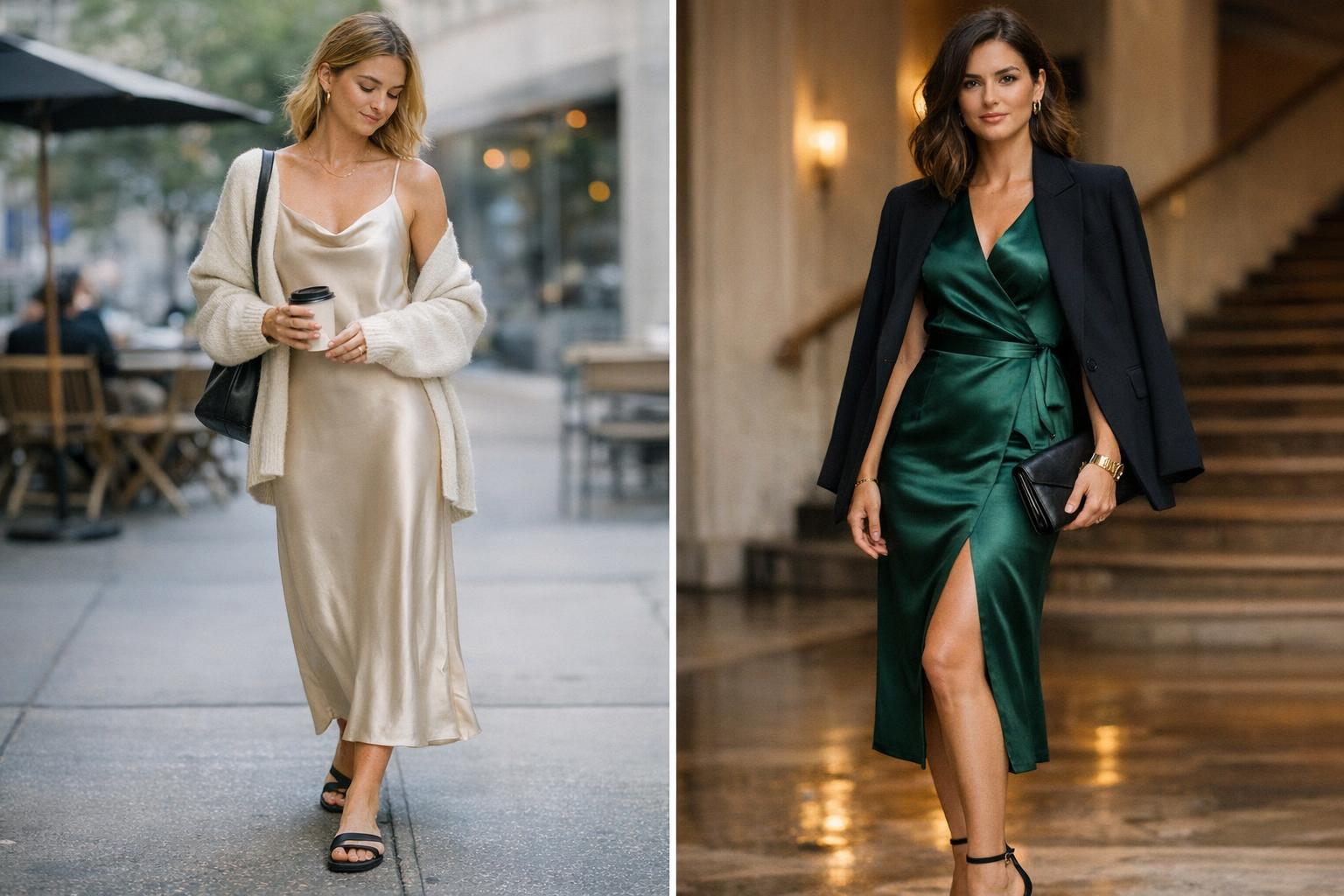
The modern silk dress outfit lives in a curious double life. In one setting, it reads as minimal and intimate—bare straps, fluid drape, a silhouette that seems to skim rather than “fit.” In another, it’s the same fabric and the same dress category, yet it appears composed and architectural, almost like tailoring translated into shine. This is where confusion begins: “slip dress” is often used as shorthand for any silk dress, while “silk dress” gets used as a catchall for multiple silhouettes that behave very differently once you actually wear them.
This comparison breaks down two styling approaches that are routinely discussed together: the slip-led aesthetic (built around the silk slip dress and the idea of lingerie-as-daywear) versus the structured silk dress approach (where silk is the material, not the mood). You’ll learn how to identify each style by silhouette, proportion, layering logic, and accessories—then apply those differences to real-life scenarios like work, travel, and evenings out without falling into the common traps that make silk look accidentally underdressed or overly precious.
Style overview: the slip-led aesthetic (silk slip dress and silk slip logic)
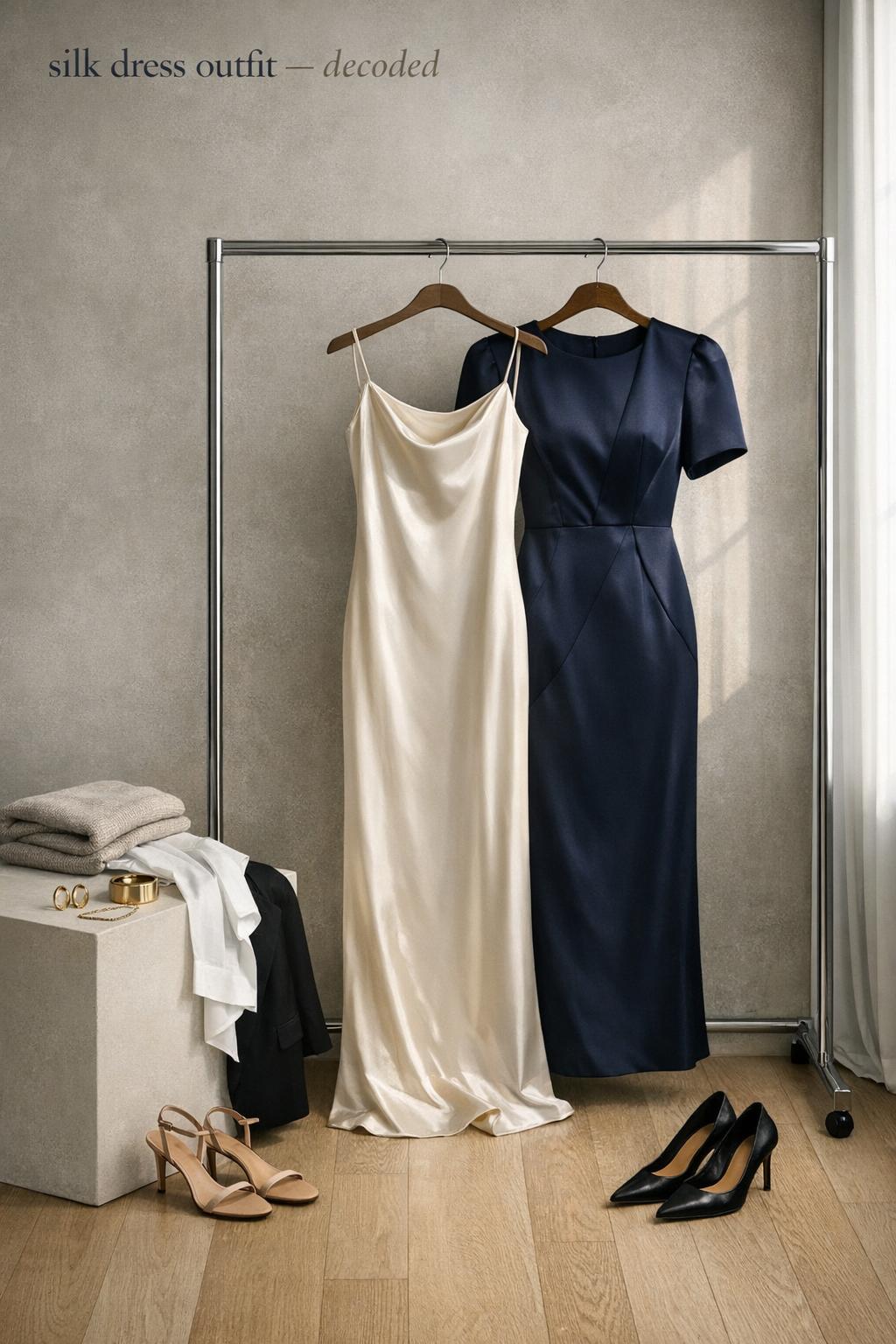
The slip-led aesthetic begins with a specific garment idea: the silk slip—traditionally bias-cut, usually midi or mini, with fine straps and minimal hardware. The defining characteristic is restraint. Seams are reduced, structure is softened, and the dress relies on fabric behavior rather than tailoring to create shape. When people say “slip dress outfit,” this is typically what they mean: a dress that feels light on the body, visually uninterrupted, and quietly sensual without trying to be overt.
Silhouette and structure: the slip dress tends to be column-like with gentle contouring, not sharp waist definition. The neckline is often a cowl or a simple scoop; the back may be low, but the overall effect stays clean. The hem moves when you walk, and the dress looks best when it’s allowed to hang naturally rather than being cinched into submission.
Your wedding has a lot of moving pieces. Your plan can still feel composed.
Zarellea organizes guests, vendors, budget, and timelines in one shared space — so you can make decisions with clarity, not stress.
Color palette and mood: slip-led styling often leans toward understated tones—neutrals, soft shades, and deep, quiet hues that let the sheen read as “texture” rather than “statement.” The mood is effortless, slightly intimate, and modern in its minimalism.
Fabrics and textures: the hero is silk (or silk-like fluidity), where the surface catches light and emphasizes movement. In a slip-led wardrobe, contrast is typically introduced through layering pieces—matte knits, crisp shirting, or structured outerwear—so the silk remains the focal texture.
Style overview: the structured silk dress approach (silk as a refined fabric, not lingerie)
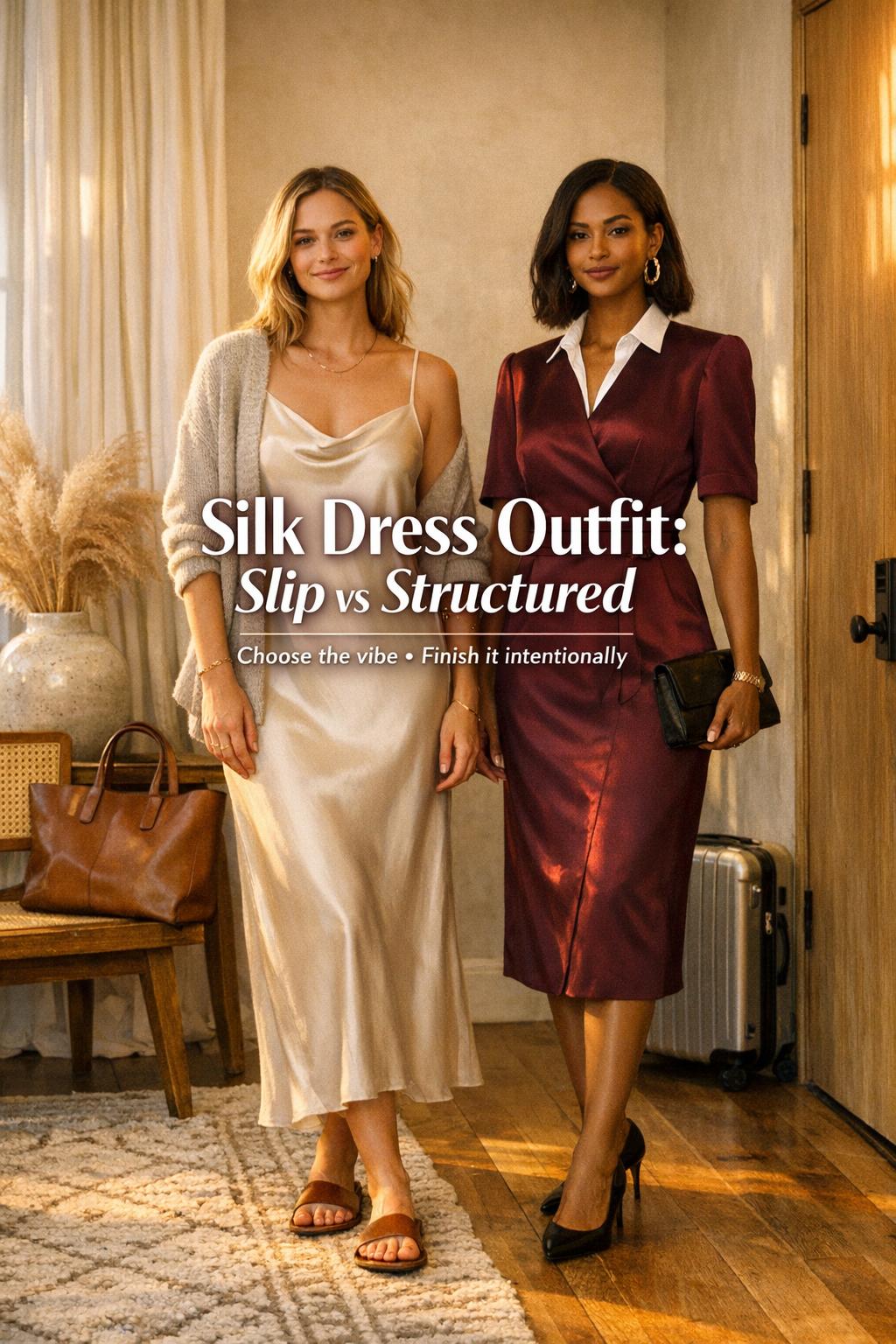
The structured silk dress approach starts from a different premise: silk is chosen for its refinement, not its intimacy. These dresses may still be fluid, but they are designed with clearer intent—defined shoulders, a deliberate waist, purposeful sleeves, or a neckline that frames the face in a more formal way. If the slip dress is about whisper-level design, the structured silk dress is about composition.
Silhouette and structure: think of silhouettes that hold a line. A structured silk dress might be wrap-inspired, shirt-dress adjacent, or shaped with darts and panels. Even when it drapes, it drapes with direction. The garment communicates “dressed” before you add anything else, which is why this approach often feels naturally aligned with a silk dress outfit classy agenda—polish built in, not styled on later.
Color palette and mood: structured silk styling can be just as neutral, but it’s more comfortable leaning into decisive color. Because the silhouette reads intentional, it can carry bolder shades or stronger contrasts without tipping into “nightwear” territory. The mood is refined, poised, and occasion-ready—even when the dress is simple.
Fabrics and textures: silk remains central, but the styling often emphasizes finish—clean edges, considered closures, and accessories that echo the dress’s clarity. Where the slip aesthetic depends on softness, the structured approach uses silk to elevate the formality of a silhouette that already has shape.
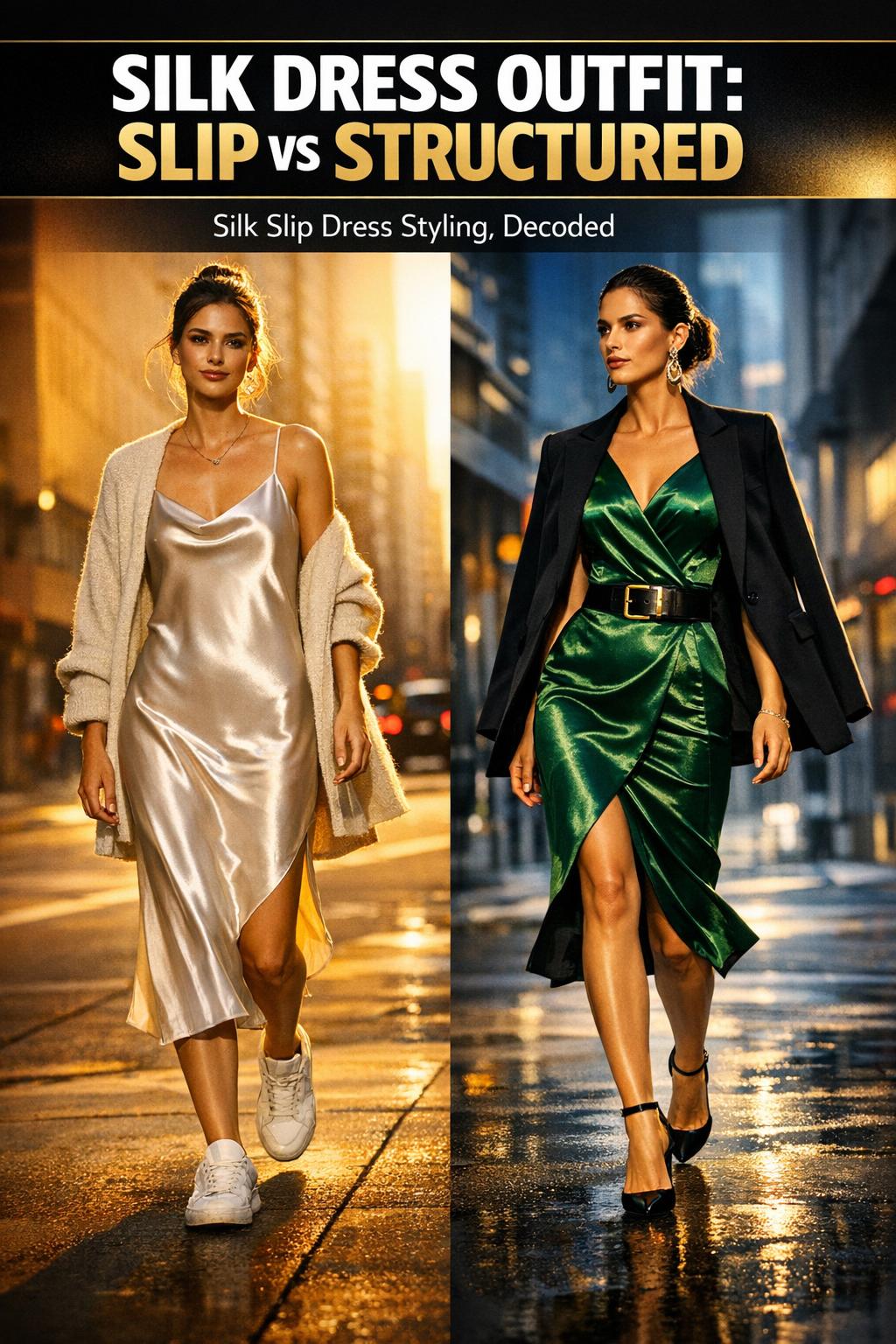
The essential differences that change how the outfit reads
Silhouette: skim versus shape
The slip-led silk slip dress is built to skim. Its elegance comes from the uninterrupted line and the way the fabric glides over the body. In contrast, a structured silk dress is built to shape—through seam placement, a defined waist, or a shoulder line that frames the upper body. This single difference explains why a slip dress can look effortlessly cool with minimal styling, yet feel “too little” in environments that expect definition and structure.
Formality: intimate minimalism versus composed polish
A slip dress outfit often sits in a liminal space: it can look elevated, but it also carries an at-home intimacy that needs balancing for certain settings. Structured silk dresses begin at a higher baseline of formality; even simple designs look intentional. If you’re trying to achieve a silk dress outfit classy effect with minimal effort, structured silhouettes give you a head start.
Styling philosophy: layering as a necessity versus layering as an option
In slip-led dressing, layering isn’t just a flourish—it’s often the difference between a look that feels editorial and one that reads like lingerie. A blazer, a knit, or a crisp shirt can “translate” the silk slip into daywear. In the structured silk dress approach, layering is more optional; the dress can stand on its own, and outerwear becomes an enhancement rather than a rescue.
Wardrobe ecosystem: basics-driven versus occasion-driven
Slip-led wardrobes typically rely on elevated basics around the dress: a thoughtful coat, a refined knit, a clean bag, a shoe that anchors the delicacy. The structured silk dress approach can be more occasion-driven because the dress itself does more visual work; accessories are chosen to complement, not to stabilize.
Visual style breakdown: how the two approaches look in real outfits
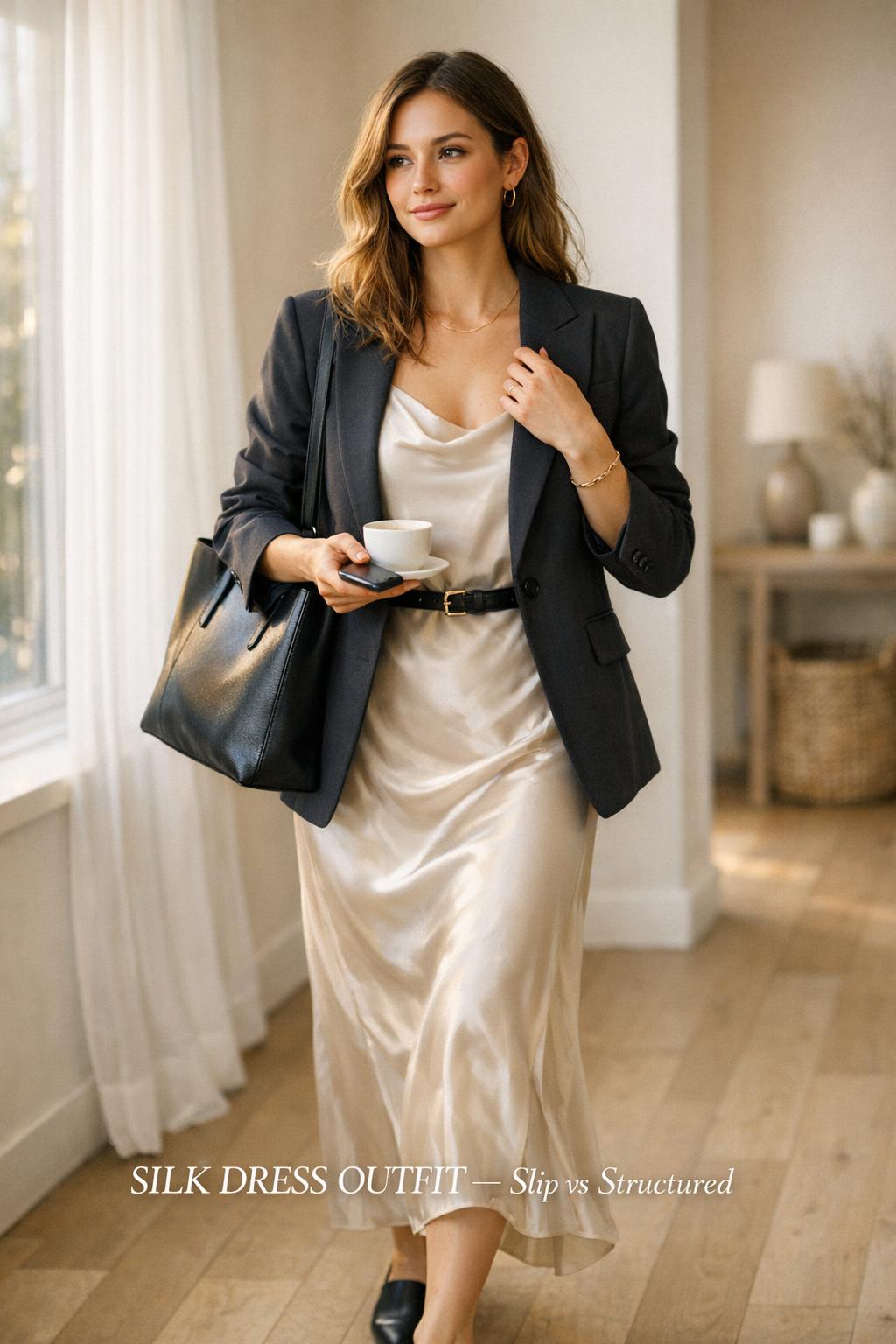
Layering approach: anchoring the silk versus highlighting the silhouette
With a silk slip dress, the most successful outfits usually add one grounded element that introduces contrast—something matte, structured, or deliberately casual. The effect is a controlled tension: delicate fabric, confident styling. With a structured silk dress, the silhouette already communicates intention, so layering tends to be lighter-handed: a coat that follows the dress’s line, or a jacket that frames the waist without cutting the body awkwardly.
Proportions: long and lean versus defined and balanced
Slip-led looks often aim for an elongated column. The dress is the vertical line; shoes and outerwear are chosen to keep that line uninterrupted. Structured silk dresses create proportion through built-in shape—waist definition, sleeves, or a skirt that has measured volume—so your accessories can be subtler without losing impact.
Accessories: minimal metal versus purposeful punctuation
A slip dress outfit tends to look best with restrained accessories—pieces that echo the dress’s quietness. Too much hardware can fight the fabric’s softness. Structured silk dress outfits can handle more “punctuation”: a sharper bag shape, a bolder earring, or a belt that’s meant to be seen rather than hidden.
Footwear choices: grounding delicacy versus matching refinement
With a silk slip, shoes often do the grounding. A heavier sole, a cleaner line, or a deliberate contrast can keep the look modern. With structured silk dresses, shoes typically match the refinement—sleek shapes that keep the outfit cohesive rather than pulling focus away from the dress’s construction.
Outfit comparisons that reveal the styling logic
Instead of treating silk dresses outfit styling as a list of interchangeable combinations, it helps to test each aesthetic against the same scenario. Notice how the decisions shift—not just what you wear, but why.
Example comparison: a casual daytime slip dress outfit versus a casual structured silk dress
In a slip-led casual outfit, the dress stays simple and the support pieces do the work: a relaxed knit or a crisp shirt layered over the silk slip dress to remove any nightwear association, plus a practical shoe that keeps the look daytime. The goal is ease with intention—silk, but not precious. In a structured silk dress casual interpretation, the dress itself already signals “dressed,” so the casual note comes from restraint: fewer accessories, a simpler bag, and an outer layer that softens the formality without collapsing the silhouette.
Example comparison: office-appropriate silk dress outfit classy versus “creative office” slip styling
A structured silk dress is naturally office-aligned because it tends to offer coverage and definition—elements that read professional without requiring heavy styling. Keep the look composed with clean lines and minimal distraction, letting the silk function as quiet luxury. A slip dress can work in a creative office, but it typically needs a framing layer: a structured blazer over the silk slip, or a fine-gauge knit that creates a neckline and shoulder line. The intention should be unmistakable: the slip is a dress, styled as daywear, not a piece that wandered out of evening.
Example comparison: evening polish—sleek slip versus sculpted silk
For evening, the slip-led approach leans into the dress’s natural elegance: the silk catches low light beautifully, and the silhouette becomes the statement. The styling trick is precision—clean hair, refined shoes, and accessories that don’t clutter the neckline. In a structured silk dress evening approach, the dress provides a clearer “event” signal, so you can choose whether to amplify with bolder jewelry or keep it restrained and architectural. The difference is subtle but important: slip styling reads sensual-minimal; structured silk reads formal-modern.
How to choose: matching the aesthetic to real life
Everyday wear and errands (where silk can feel intimidating)
Slip-led outfits can be surprisingly wearable day to day when the silk is treated as a texture rather than a special-occasion fabric. The key is to introduce an element that signals practicality—an outer layer with structure or a knit that makes the outfit feel lived-in. Structured silk dresses can also work for everyday, but they may feel “too much” if the silhouette is very event-coded. If you’re choosing one approach for regular wear, slip-led styling offers flexibility—provided you’re comfortable with layering and proportion control.
Work environments (where perception matters)
Structured silk dresses are the safest route for conventional workplaces because they communicate professionalism through shape and coverage. They deliver a silk dress outfit classy impression without requiring explanation. Slip dresses belong more naturally in creative or relaxed offices, and they ask for intentional styling: a strong shoulder line via a blazer, or a refined knit that turns the dress into a layered composition.
Travel and packing (where wrinkles and versatility decide everything)
For travel, the slip dress outfit approach can be a quiet powerhouse because it layers easily and transitions across settings. A silk slip can act as a day base with a shirt or knit, then become evening-ready with a simple switch in accessories. Structured silk dresses can be equally effective when you need a one-and-done look that feels polished for dinners or events, but the silhouette may be less flexible if it relies on specific underpinnings or a precise fit.
Occasions that require polish (where intention must be obvious)
When the invitation or venue demands clarity—formal dinners, ceremonies, or professional events—structured silk dresses tend to read more appropriate with less effort. Slip dresses can still be elegant, but they require sharper finishing: impeccable outerwear, refined accessories, and a silhouette that doesn’t look overly casual once you’re indoors.
Tips: the small adjustments that make silk look expensive, not fussy
Silk is unforgiving in the best way: it reflects light, it moves with you, and it reveals styling decisions immediately. The difference between “beautifully effortless” and “slightly unfinished” is usually a matter of finishing details rather than buying anything new.
- Decide what is doing the work: in a slip dress outfit, let either the dress or the outer layer lead—if both are minimal, the look can feel too quiet; if both are dramatic, silk can look overwhelmed.
- Control the neckline story: a silk slip dress neckline is visually delicate; keep competing details away from the chest area if you want the look to read refined.
- Use contrast strategically: pair silk with one contrasting texture (matte knit, crisp cotton, structured tailoring) so the silk reads as intentional texture, not shine for shine’s sake.
- Mind the hem and movement: silk looks best when it moves cleanly; if the length interrupts your stride, it will show in the way the fabric pulls and twists.
Most importantly, treat silk as a fabric with behavior. When you sit, walk, or layer, it shifts. A composed look anticipates that shift: layers that won’t bunch, straps that sit flat, and proportions that allow the dress to skim rather than cling in motion.
Common mistakes: why a silk slip dress can look “off” (and how to correct it)
Mistake 1: relying on the dress alone in settings that require structure
A silk slip dress can look impeccable at dinner, then feel oddly exposed in daylight or at work. The fix isn’t to abandon the dress; it’s to add one structural cue—an outer layer that creates shoulders, or a layering piece that clarifies the neckline and makes the styling look deliberate.
Mistake 2: adding too many delicate details at once
Fine straps, glossy fabric, delicate jewelry, and dainty shoes can collectively tip into fragility. If the silk is already doing “delicate,” choose one counterpoint: a cleaner shoe line, a slightly stronger bag shape, or an outer layer with tailored clarity.
Mistake 3: confusing “minimal” with “unfinished”
Minimalism is not the absence of decisions; it’s the presence of fewer, better decisions. In a silk dresses outfit, minimal styling still needs a finish—clean proportions, intentional layering, and accessories that look chosen rather than incidental. A structured silk dress can carry minimalism more easily because the garment supplies visual intent; a slip-led look often needs one additional point of definition.
Silk dress outfit classy: how each style achieves refinement
“Classy” is often used as a vague compliment, but in styling terms it usually means balance: the outfit feels composed, appropriate to the setting, and visually calm. Both slip-led and structured silk approaches can deliver that effect, but through different routes.
The slip-led route to a silk dress outfit classy is about controlled simplicity. Keep the silhouette long and clean, choose accessories with restraint, and use a framing layer when needed. The dress should look like the centerpiece of a thoughtfully edited outfit, not an afterthought. The structured route is about clarity: the dress’s shape sets the tone, and you maintain refinement by avoiding competing elements. In both cases, the goal is the same—quiet sophistication—but the mechanics differ.
Blending the two: a modern wardrobe doesn’t have to pick a side
In practice, most people don’t dress in pure aesthetics. The most modern silk dress outfit often borrows from both: the clean sensuality of a silk slip, tempered by the composure of structure. This is where styling becomes personal—less about following a look, more about building a silhouette that feels like you.
A simple way to blend approaches is to keep the slip silhouette but adopt structured finishing—clean outerwear, refined shoes, and a composed accessory story. Or reverse it: take a structured silk dress and soften it with minimal, slip-like styling—barely-there jewelry, a quieter bag, and an emphasis on the dress’s natural drape. The most convincing blends always respect the fabric: silk wants to move, catch light, and feel deliberate. Your job is to keep the outfit’s message clear.
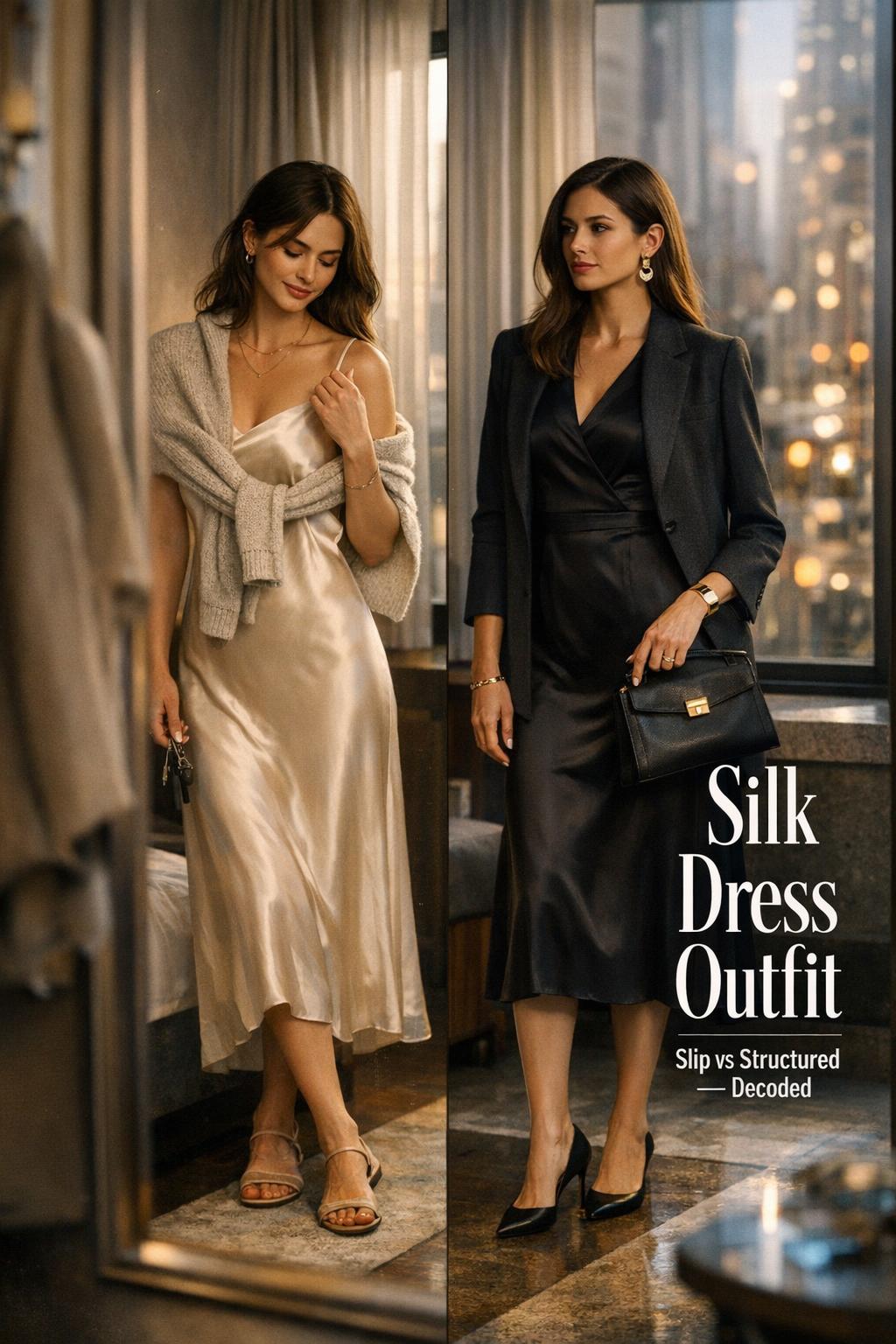
FAQ
What’s the difference between a silk slip dress and a regular silk dress?
A silk slip dress is defined by slip-style design cues—minimal structure, fine straps, and a skimming silhouette that relies on drape—while a regular silk dress can include more tailoring, sleeves, defined waist shaping, or deliberate construction; in that case silk is the fabric, not the lingerie-inspired style.
How do I make a slip dress outfit look daytime-appropriate?
Add one grounding element that signals daywear—typically a structured outer layer or a matte knit—and keep accessories restrained so the silk reads as a textural choice rather than an evening statement.
Can a silk slip dress be worn to the office?
Yes, especially in creative or relaxed workplaces, but it usually needs intentional styling such as a blazer or refined layering piece that clarifies structure at the shoulders and neckline so the overall look reads professional rather than intimate.
What makes a silk dress outfit classy rather than overly flashy?
Classy silk styling comes from balance and clarity: a clean silhouette, controlled sheen through contrasting textures, and accessories that don’t compete with the fabric’s light-reflecting surface.
Which is more versatile: a structured silk dress or a slip dress?
A slip dress can be more versatile across casual-to-evening situations because it layers easily, while a structured silk dress is often more versatile for polish and events because it looks intentional on its own; the better choice depends on whether your wardrobe needs layering flexibility or built-in formality.
Why does my silk slip dress sometimes look “unfinished”?
Because slip silhouettes are intentionally minimal, the outfit can lack a clear anchor if everything else is also delicate; adding one element of structure, contrast, or sharper finishing usually restores intention without losing the dress’s ease.
How should I think about accessories for silk dresses outfit styling?
For slip-led looks, choose quieter accessories that respect the dress’s delicacy, and let one item provide definition; for structured silk dresses, you can use more purposeful accessories as long as they support the silhouette rather than competing with it.
Can I combine the slip aesthetic with a more structured, polished look?
Yes—keep the silk slip dress as the base but introduce structured finishing such as a crisp layer, refined shoes, and a cohesive accessory story, so the outfit reads composed while preserving the slip’s fluid, modern line.
Leave a Reply