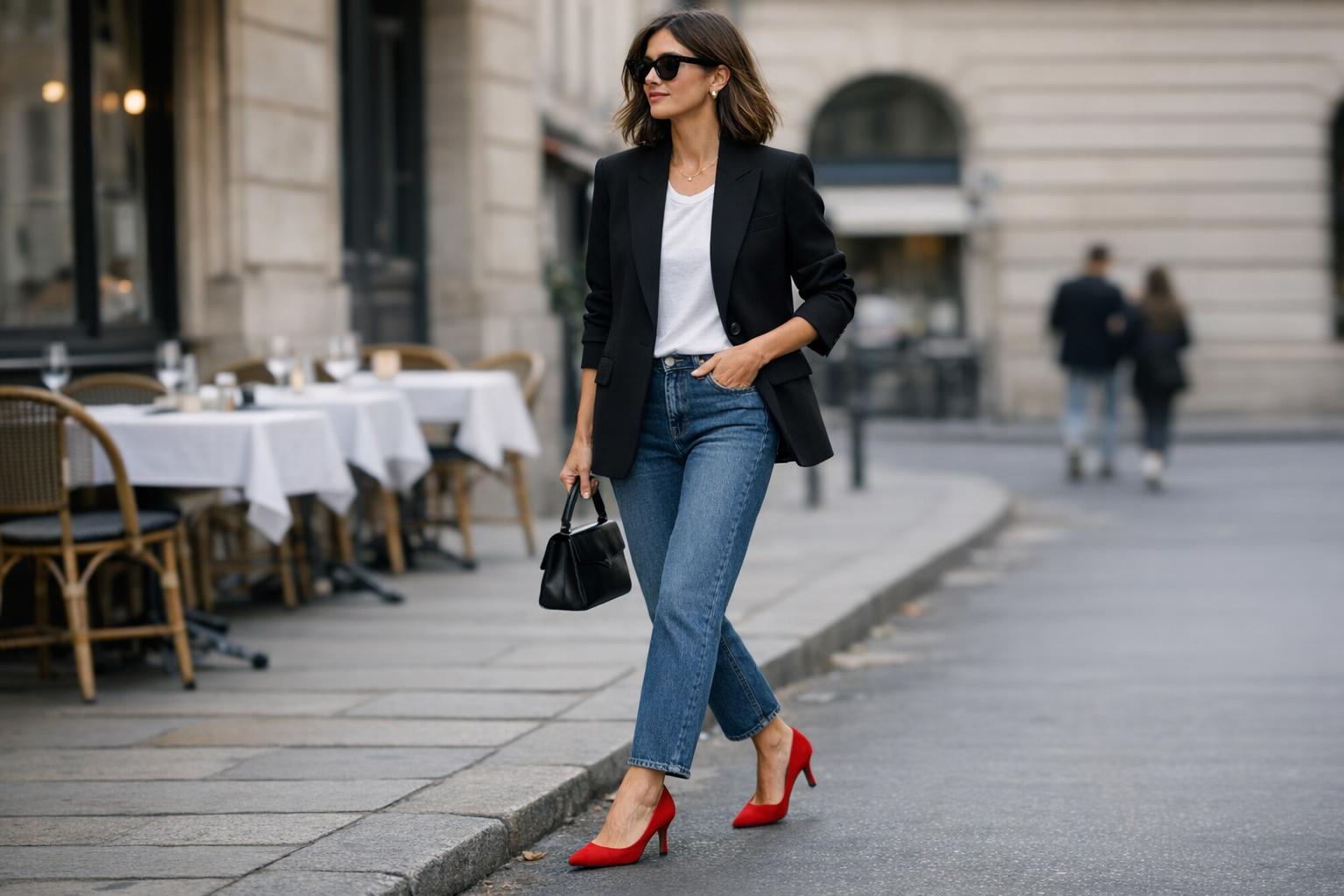
A red heels outfit is one of those style decisions that can feel decisive before you’ve even left the house. The shoes do the talking—confident, graphic, unapologetically polished—yet they can also be surprisingly versatile when you treat them as a color accent rather than a costume. The challenge is rarely the heels themselves; it’s everything around them: proportion, texture, and the fine line between “intentional” and “trying too hard.”
Fashion media and outfit-focused style coverage—think the kind of editorial inspiration you’d expect from WhoWhatWear, Marie Claire, Glamour, and the broader ecosystem of outfit blogs—returns to red heels again and again because they solve a real wardrobe problem. They elevate basics instantly, they sharpen a silhouette, and they can shift the mood of denim, tailoring, or a dress without changing the underlying outfit. This guide approaches red heels with that same editor’s eye: composition first, trend second, and always with real-life wearability in mind.
Red heels, but make them modern: the styling logic that keeps it chic
There’s a reason “styling red heels” is often framed as a question of balance. Red is visually forward; heels add height and formality. Together, they can either read as sleek punctuation—or as a full stop. The most wearable red heels outfits treat the shoes as one strong element inside a controlled outfit architecture: clean lines, considered color families, and a silhouette that doesn’t compete.
In editorial terms, red heels work best when you decide what role they play: are they the only bright note in a neutral look, or one part of a deliberate color story? When the rest of the outfit is calm—tailoring, minimal jewelry, matte textures—the red looks elevated. When the outfit is already loud—busy prints, multiple bold colors, fussy details—the shoes can look disconnected.
Your wedding has a lot of moving pieces. Your plan can still feel composed.
Zarellea organizes guests, vendors, budget, and timelines in one shared space — so you can make decisions with clarity, not stress.
Define your “red”: pump, heel height, and finish change everything
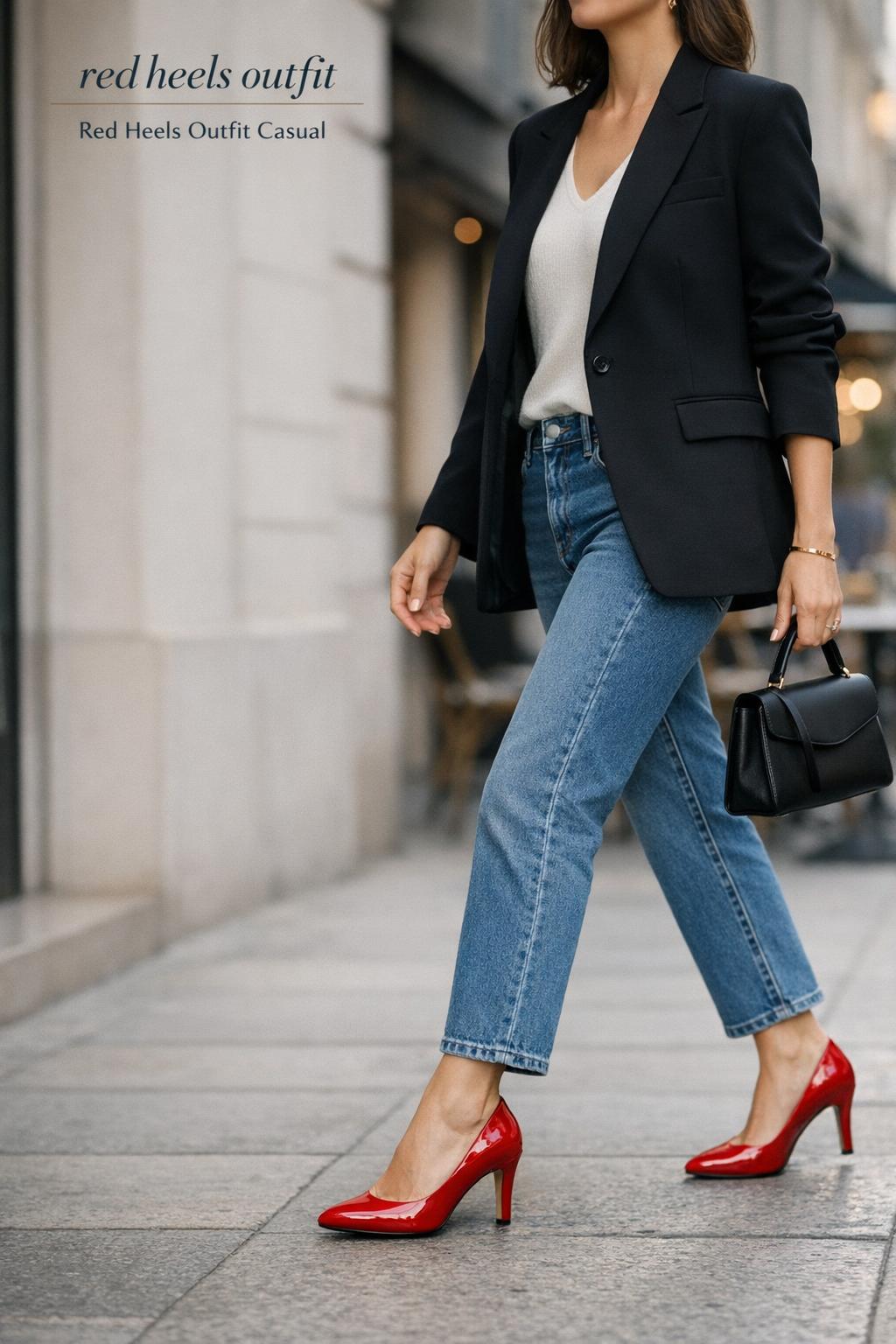
“Red pump outfits” often feel more classic because a pump has a cleaner, more structured line than many other heel shapes. But even within pumps, the finish matters: glossy looks sharper and more evening-coded; a softer finish reads more daytime. Heel height is not just about comfort—it shifts proportions. A mid heel can look crisp with relaxed denim; a higher heel can turn the same denim into something more overtly dressed.
Practical experience note: if you’re building a red heels outfit for a long day, the most polished choice is the one you can actually walk in. A slightly lower heel often looks more expensive because your posture stays relaxed and your stride remains steady—details that register immediately, even if no one can name why the outfit works.
Building a red heels outfit casual enough for daylight
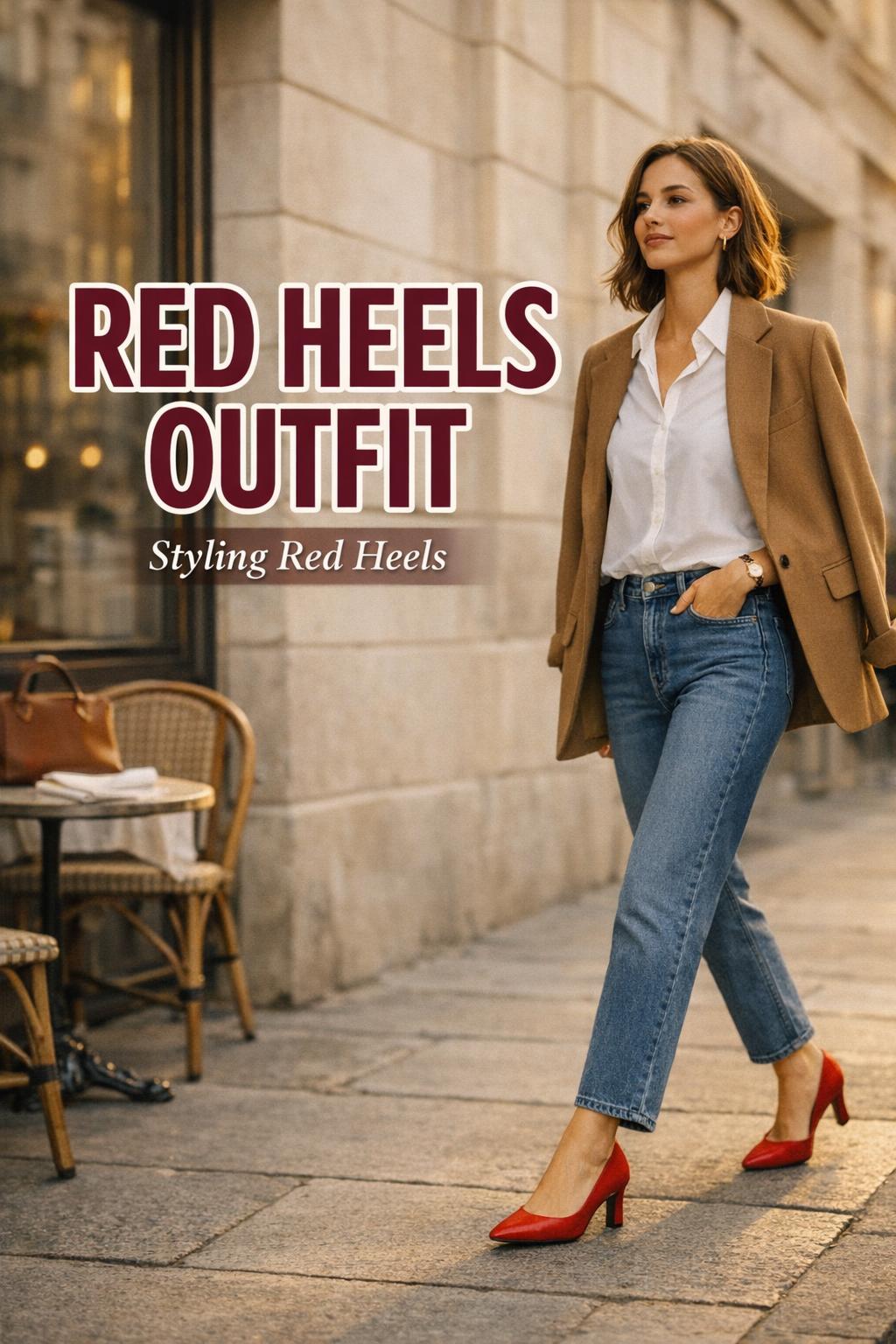
“Red heels outfit casual” can sound contradictory until you focus on texture and ease. Casual isn’t about being underdressed; it’s about relaxed components that soften the formality of the shoe. The most convincing casual red heel outfits use pieces you’d wear anyway—denim, simple knits, easy shirting—then allow the heels to lift the look into something polished.
Denim plus red heels: a controlled contrast that always reads intentional
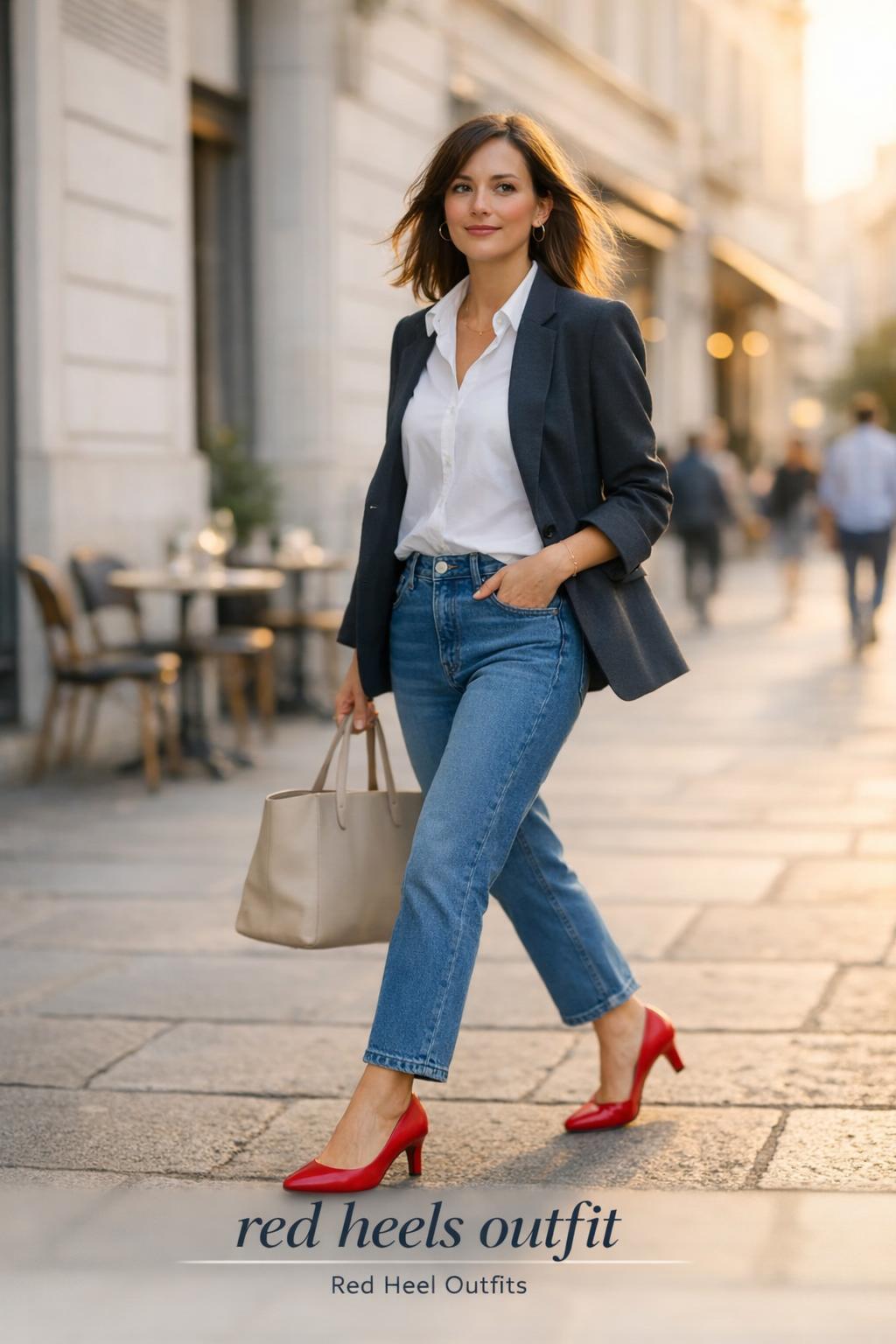
Denim is the perfect counterweight to a red heel because it’s familiar and visually matte. A clean, straight jean with a simple top lets the shoes become the accent without pushing the outfit into “night out” territory. The key is to keep the denim line tidy—no overly complicated silhouette—so the heels don’t feel like an afterthought.
For a more editorial daytime balance, think of structure on top: a tailored jacket over a simple base. The jacket provides a frame; the red heels provide the punctuation. This is the kind of look fashion magazines return to because it’s built on wardrobe fundamentals, not a fleeting trend.
Knits and red heels: softness on top, clarity on the bottom
A fine knit is one of the smartest ways to make red heels feel wearable at noon. The softness of knitwear visually relaxes the look, while the heel keeps the silhouette refined. This pairing also gives you a built-in way to manage proportion: a slightly cleaner line on the lower half, and a comfortable, easy texture above.
Tip: if the knit is more oversized, keep the rest of the look streamlined so you don’t lose the leg line. The red heel naturally draws the eye downward; let it elongate you rather than interrupting the silhouette with too much volume everywhere.
The classic fashion-editor formula: tailoring, neutrals, and one red point
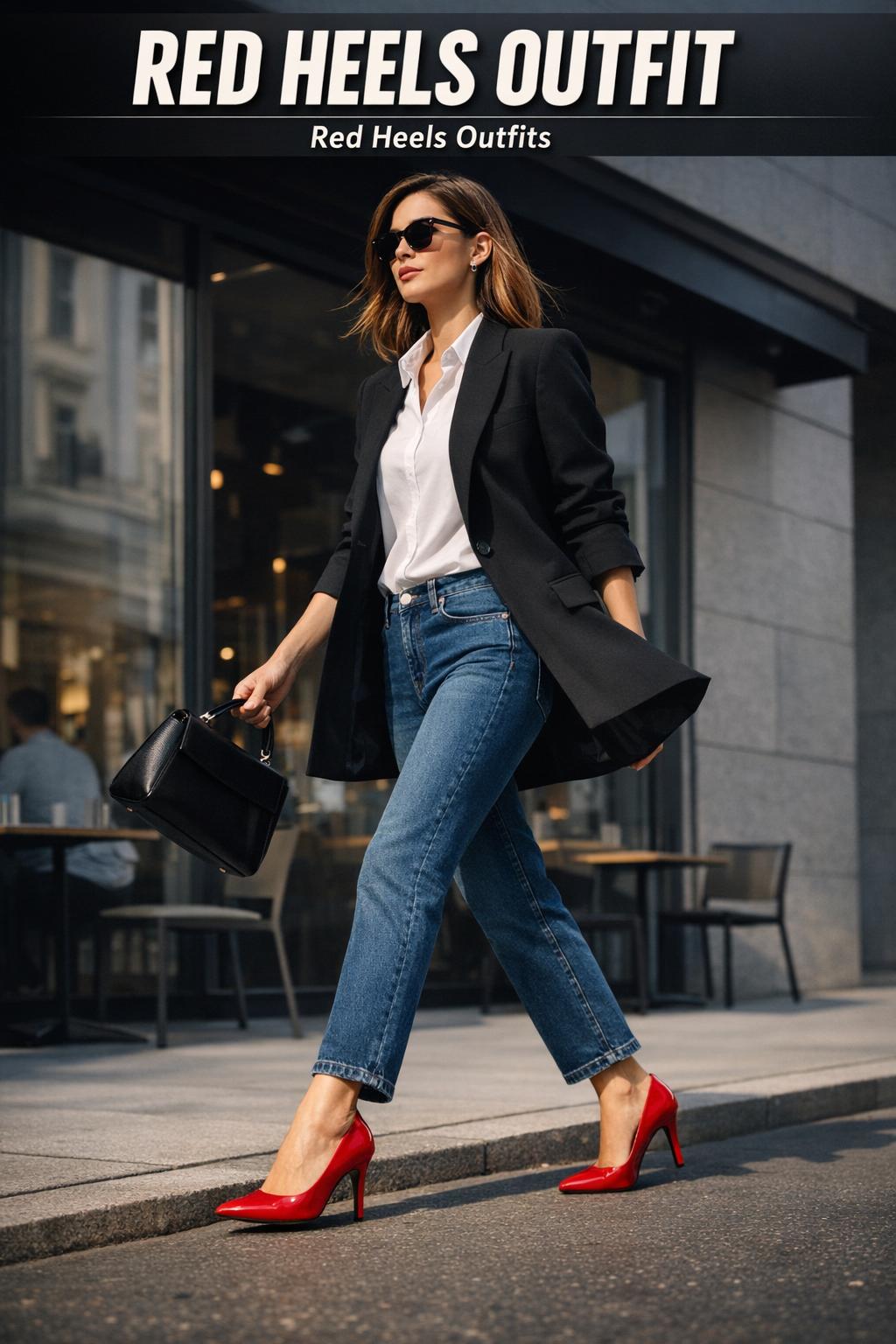
If you’ve ever noticed how often fashion editors default to neutrals with a single bold accessory, this is why: it’s repeatable, it photographs well, and it gives you a consistent “signature” without becoming a uniform. Red heels sit beautifully inside this logic. They are the one vivid point in an otherwise disciplined palette.
This approach also travels across settings. In a city context—think the crisp minimalism associated with European fashion capitals like Paris, Milan, and Copenhagen—neutrals plus one vivid accent reads confident rather than performative. The outfit looks designed, not decorated.
- Keep the base calm: black, white, or other neutrals that feel clean and deliberate.
- Choose one structured element: a blazer, a crisp shirt, or a tailored pant line to anchor the look.
- Let the red heels be the primary color statement rather than competing with multiple bold items.
- Prioritize silhouette continuity: long lines on the leg and tidy hems help the red heel feel integrated.
Why the “one strong element” approach works
From an editorial styling perspective, the eye needs a hierarchy. A strong shoe can be that focal point, but only if the rest of the outfit supports it. Neutrals create negative space; tailoring gives the look a spine. Together, they make red heels feel like a choice rather than a gimmick—exactly the difference between a wearable red heel outfit and a look that only makes sense for a photo.
Red heel outfits for evening: the difference between “date” and “dinner”
Evening styling is where red heels can become either effortlessly cinematic or slightly predictable. The shortcut—pairing red heels with an overtly “sexy” outfit—often looks less modern because it stacks the same message twice. The more sophisticated route is contrast: refined fabric, cleaner lines, and a silhouette that moves well.
A sleek dress, edited
With a simple dress, red heels bring in attitude. Keep the dress line uncomplicated so the shoes remain the focal point. If the dress is already dramatic, red heels can push it over the edge. But with a clean, polished dress, the red adds exactly the right kind of tension—classic shape, modern color punch.
Tip: if you’re unsure whether your dress and red heels “argue,” take a photo from a few steps back. Red reads strongly on camera; what looks balanced in the mirror can look more intense in a full-body shot. Adjust by simplifying something else: reduce shine, reduce accessories, or choose a cleaner hair-and-makeup direction.
Tailored separates after dark
A sharply cut jacket over a streamlined base with red pumps can feel more current than a traditionally “evening” look. Tailoring communicates intention and polish. The red heel injects personality. This is the kind of outfit formula fashion magazines frequently highlight because it’s adaptable: you can remove the jacket, switch the base, or dial the heel height up or down without losing the overall effect.
Color conversations: how red heels interact with the rest of your outfit
Most red heels outfits succeed or fail based on color balance, not the individual pieces. Red is a high-impact hue; it needs either a harmonious context or a crisp contrast. In practice, that means choosing whether the rest of the outfit sits in a quiet spectrum (neutrals) or whether you’re building an intentional color story.
In everyday styling, the easiest route is a restrained palette that lets the shoes read as the single point of intensity. In a more editorial mood, you can echo red subtly elsewhere—through a lip, a nail, or a small accessory—but the echo should be light. Too many “matches” can look costume-like rather than composed.
Tip: decide whether you want harmony or contrast
Harmony means the shoe feels integrated: the outfit supports the red. Contrast means the shoe stands out: the outfit frames the red. Both can be chic, but mixing them halfway is where outfits start to look accidental. If you’re wearing very clean neutrals, embrace the contrast and keep the rest minimal. If your outfit already has warmth or color, aim for harmony and keep the red heel from feeling like a separate idea.
Silhouette matters more than “rules”: proportion with heels
Heels change how clothing sits on the body. They lengthen the leg line, tilt the pelvis slightly, and encourage a more upright posture. That’s why a red heels outfit can look sharper than the same outfit with flats—but it’s also why the wrong proportions become more obvious.
Hem length and the “break” at the ankle
The ankle area is where red heels announce themselves. If a hem lands awkwardly—too long, too bunchy, or cutting at an unflattering point—the shoe can look disconnected. Cleaner hems allow the red heel to feel like an intentional finish. This is especially important with “red pump outfits,” where the line of the shoe is designed to look crisp.
Volume placement: one relaxed element is enough
A relaxed silhouette can look beautiful with heels, but it needs editing. If you go oversized on top, keep the bottom cleaner. If you choose a wider pant, keep the upper half more structured. Red heels already add drama; too much volume everywhere can make the overall look feel heavy.
Practical experience note: when you’re moving through a real day—commuting, walking to a restaurant, standing at an event—an edited silhouette isn’t just aesthetic. Clothes that skim rather than tug will sit better as you move, and the heel won’t feel like it’s fighting the outfit.
What fashion sites get right about red heels outfits—and where real life differs
There’s a consistent visual language across reputable fashion coverage—from glossy magazines like Marie Claire and Glamour to digitally native outlets like WhoWhatWear, plus the countless outfit blogs that translate runway mood into daily styling. They lean into red heels because they photograph well and read instantly as “styled.” The best inspiration keeps the rest of the look clean and lets the shoe do the work.
But real life introduces variables that photos ignore: pavement, long hours, temperature swings, and the need to feel like yourself rather than like a lookbook. A red heels outfit that’s flawless for a two-minute street-style shot can be exhausting for an eight-hour day. The modern solution isn’t to abandon the heel; it’s to choose an outfit architecture that supports comfort—stable proportions, manageable layers, and a shoe you can realistically wear.
Tip: style for your calendar, not just your mirror
If your day involves walking, prioritize a red heel shape and height you trust, then keep the clothing streamlined so you’re not constantly adjusting. If you’re going from day to evening, build your base with tailoring or clean separates, and let the red heels be the “switch” that makes the outfit feel dinner-ready without a full change.
Common mistakes that make red heels feel dated or costume-like
Red heels can be timeless, but they’re also easy to over-style. The most frequent missteps are not about age or body type—they’re about visual noise and competing messages. A red heel already signals confidence. When the rest of the outfit insists on the same point, the styling can feel forced.
- Over-matching multiple red items so the look feels themed rather than styled.
- Combining too many “statement” elements at once: loud print, heavy jewelry, and red heels competing for attention.
- Ignoring proportion at the hem, which makes even an expensive shoe look awkward.
- Choosing an outfit that’s too formal for the setting, making the red heel feel like an accessory to discomfort.
The antidote is simple, but not simplistic: keep one focal point, build a calm base, and let red be the deliberate accent. This is the philosophy behind the most enduring “red heel outfits” you see referenced repeatedly across fashion media.
Occasion styling: how to wear red heels without feeling overdone
The question “Where do red heels actually work?” is more interesting than it sounds, because the answer depends on the outfit’s overall level of formality. Red heels can be worn almost anywhere if the clothing choices signal the right context. Think of the shoes as a volume knob: they turn the look up. Your job is to set everything else to the appropriate level.
Work-leaning polish (when you want to look sharp, not loud)
A red pump can look remarkably refined with tailored pieces, provided the rest of the palette stays composed. Keep the lines clean and the accessories minimal so the shoes read as a confident accent rather than a distraction. The most effective work-leaning approach is a structured silhouette with controlled color: the red heel becomes a signature detail.
Events and celebrations (when photos are inevitable)
For parties or dinners, red heels do something useful: they create a focal point that holds the outfit together in photos. The key is to avoid stacking too many high-impact elements. If the shoes are bold, keep the outfit sleek. If the outfit is already dramatic, consider whether the red heel is enhancing the look or competing with it.
Weekend city dressing (the true test of “red heels outfit casual”)
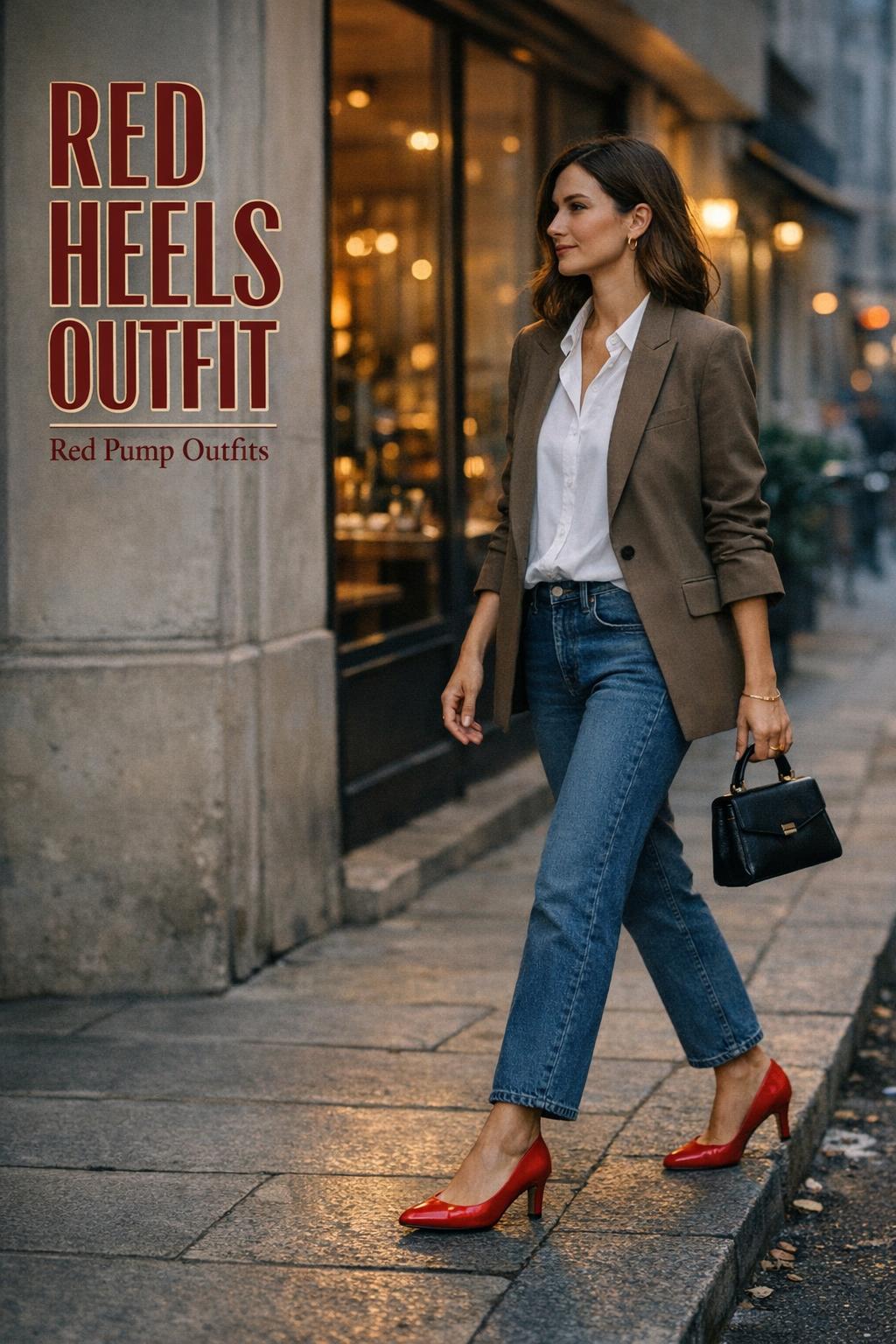
Casual red heels outfits are most convincing in a city context, where polished elements are worn with ease. Pairing red heels with relaxed basics looks modern when the silhouette is intentional: clean denim, a simple top, and one structured layer. It’s less about trying to look dressed up and more about looking composed.
Styling red heels through the lens of European aesthetics
Paris, Milan, and Copenhagen style references tend to share one idea: restraint is a power move. That sensibility is particularly helpful with red heels. In a Paris-leaning mood, you’ll see the red heel used as a single accent against a disciplined, neutral base. Milan often celebrates a sharper sense of glamour—sleek lines, precise tailoring—where red heels can feel like the final, confident stroke. Copenhagen’s influence, in its clean, modern minimalism, supports the idea of contrast: strong shoe, calm outfit, intentional silhouette.
You don’t need to replicate any one city’s style to benefit from the principle. The takeaway is compositional: fewer competing elements, better cut, and a clear focal point. That’s how red heels look expensive, regardless of the rest of your wardrobe.
Practical tips for comfort and confidence in red heels
Even the most elegant red heels outfits fall flat if you’re visibly uncomfortable. Comfort is not separate from style; it’s part of the silhouette. When you walk naturally, the outfit reads effortless. When you’re bracing or wobbling, every element looks more “try-hard,” even if the clothes are perfect.
Tips: make the heel feel wearable, not aspirational
- Choose a heel height that suits your day, not your mood board; a slightly lower heel often looks more polished in motion.
- Build the outfit around stability: cleaner hems and streamlined lines reduce the need to fuss as you walk.
- Do a “movement check” before leaving: sit, stand, take a few steps—if you keep adjusting, refine the silhouette.
- Let the red heel be the highlight; when the rest is simpler, you feel less pressure to perform the look.
One of the most useful styling red heels habits is to decide early what you’re optimizing for: elegance, comfort, or maximum impact. You can have more than one, but rarely all three at the extreme. The best outfits are honest about the day ahead.
How to create outfit variety with the same red heels
The reason red heels are repeatedly featured across fashion magazines and outfit blogs is that they can anchor multiple moods. Instead of buying into a “special occasion only” mindset, treat them like you would a great blazer: one strong piece that can move between casual and polished depending on what surrounds it.
To build variety, change one major element at a time: switch denim for tailoring, swap a knit for a crisp top, or adjust your outer layer. Your red heels remain constant, but the message changes. This is how you get real wardrobe mileage from a statement shoe without feeling repetitive.
Tip: keep a “red heel outfit” formula on standby
A reliable formula saves time on days when you want to look polished without overthinking. Start with a neutral base you trust, add one structured layer, and finish with red pumps. Once you know your proportions—your best hem length, your preferred heel height—you can repeat the structure with different pieces and still look fresh.
FAQ
How do I make a red heels outfit look casual?
To make a red heels outfit casual, keep the clothing relaxed and familiar—think denim, simple tops, and soft textures—then let the heels act as the polished accent; the look feels easiest when the silhouette is clean and the red is the only strong statement.
What’s the easiest way to start styling red heels if I’m nervous about them?
Start with a neutral outfit you already feel confident in and add red heels as the single point of color; this “one strong element” approach is the most reliable way to make red feel intentional rather than overwhelming.
Are red pump outfits more versatile than other red heels?
Red pump outfits often feel more versatile because a pump has a clean, structured line that pairs easily with both tailoring and simple everyday pieces, making the shoe read polished in a wide range of settings.
How do I keep red heel outfits from looking costume-like?
Avoid over-matching multiple red items and reduce competing statement pieces; red heels look most modern when the rest of the outfit is edited—clean lines, calm colors, and minimal visual noise.
Can I wear red heels during the day without looking overdressed?
Yes—daytime red heel outfits work best when the clothing is daytime-coded (like denim, knits, or simple separates) and the overall look is streamlined, allowing the red heel to elevate rather than formalize the outfit.
What’s the most important proportion detail when wearing red heels?
The hem and ankle area matter most because that’s where red heels draw the eye; cleaner hems and an intentional break at the ankle help the shoe look integrated and keep the silhouette long and polished.
How do I choose between contrast and harmony when wearing red heels?
Choose contrast when the rest of your outfit is calm and neutral so the red stands out cleanly, and choose harmony when your outfit already has warmth or color so the heel feels connected rather than like a separate idea.
What’s a reliable approach for red heels outfits that need to go from day to night?
Build a polished base with clean separates and a structured layer, then let the red heels do the transition work; the outfit reads daytime-appropriate earlier, but the shoes instantly make it feel dinner-ready later.
Leave a Reply