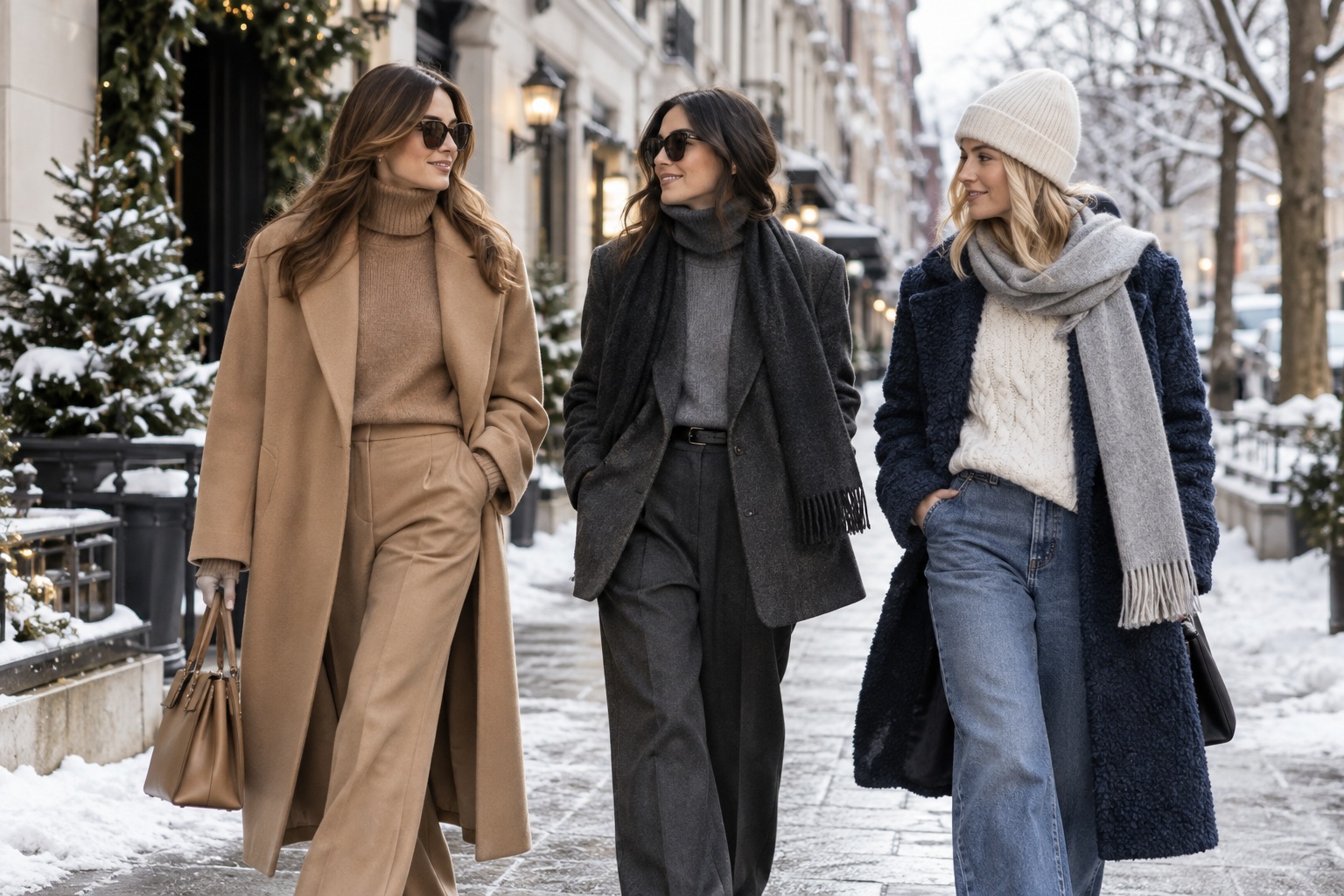
Winter style becomes much easier when you stop asking, “What else can I put on?” and start asking, “What should this outfit say?” That small change turns a crowded closet into a useful styling tool. A charcoal coat can look minimal, tailored, relaxed, or quietly dramatic depending on the layers underneath. The difference is not always a new purchase. It is usually a decision about proportion, texture, color, and the role of the outer layer.
This guide treats winter style as a set of directions rather than a fixed list of trends. You will see how to create a readable outfit with familiar pieces, how to keep warmth from becoming visual bulk, and how to carry the same idea from a morning errand to work, travel, or dinner. The goal is not to dress identically every cold day. It is to know why a combination works before you leave the house.
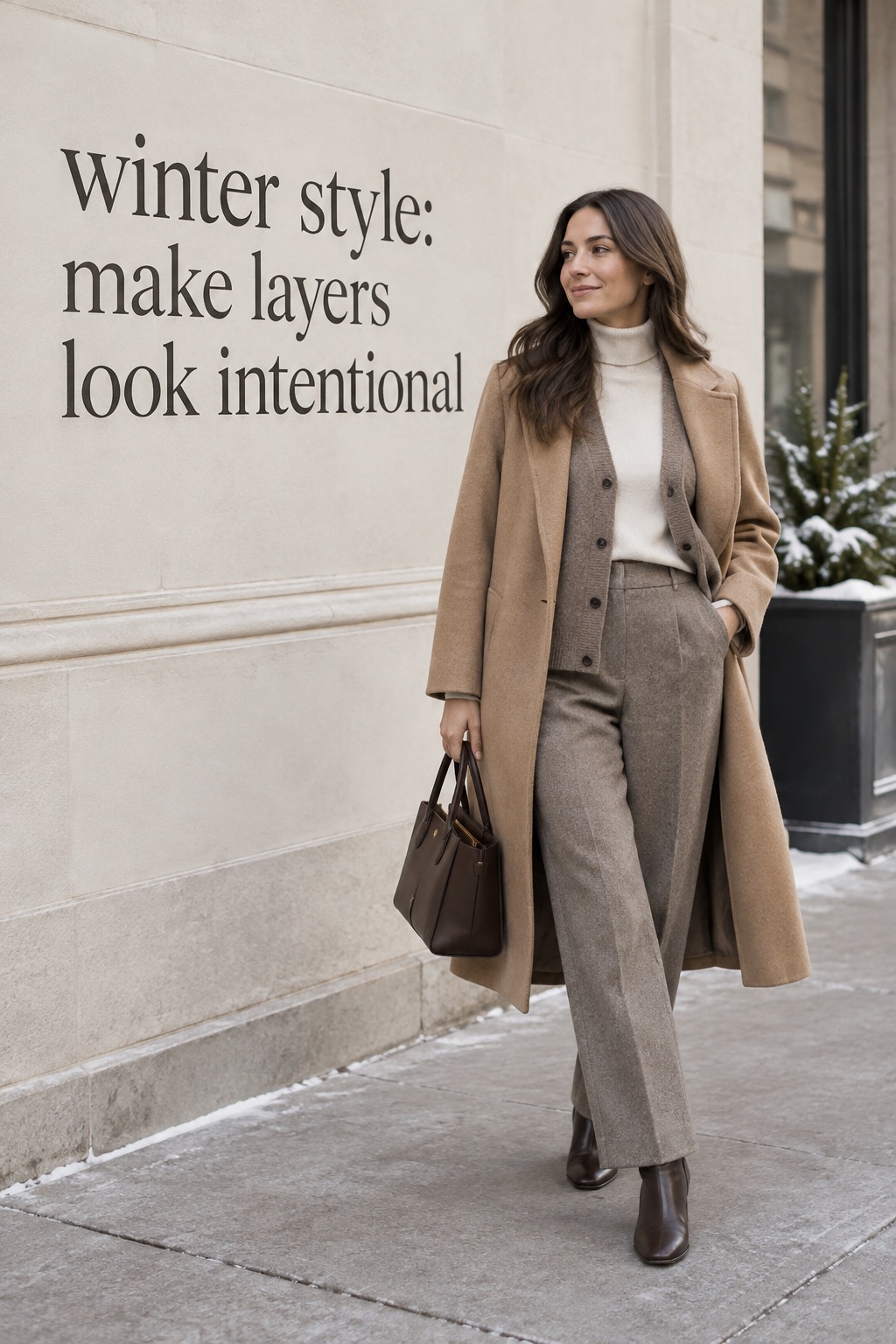
The most useful starting point is a simple one: choose the mood first, then build the layers that support it. A fine turtleneck, a sweater, wide-leg trousers, and a long coat can belong to several different wardrobes. Your styling choices give the outfit its identity.
What winter style is really asking for now
Cold-weather dressing often fails in one of two ways. The outfit is practical but visually accidental, or it looks beautiful indoors and stops working the moment wind, rain, or a long walk enters the picture. Strong winter style sits between those extremes. It respects the weather while giving the eye a clear point of view.
Your wedding has a lot of moving pieces. Your plan can still feel composed.
Zarellea organizes guests, vendors, budget, and timelines in one shared space — so you can make decisions with clarity, not stress.
That point of view does not have to be dramatic. It can be as quiet as a tonal palette, as polished as relaxed tailoring, or as tactile as a mix of wool, leather, denim, and brushed knitwear. What matters is repetition. When two or three choices support the same idea, the outfit feels intentional. When every piece is trying to be the focal point, the result feels heavy even if the individual clothes are attractive.
Layering is the construction underneath that point of view. A useful three-part system is a close base, a flexible middle layer, and an outer layer that handles the weather. Macy’s describes the same basic division as base, mid-layer, and outerwear, with fit and volume contrast doing much of the visual work. That structure is helpful, but it should remain flexible. You might skip the middle layer on a mild day, or use a vest instead of a sweater when a coat has a narrow sleeve.
Think of winter style as editing visible information. The base layer controls comfort and neckline. The middle layer controls texture and shape. The coat controls the first impression from the street. Shoes and accessories then decide whether the outfit feels casual, refined, sporty, or evening-ready. This order keeps the styling process calm because every piece has a job.
There is also a difference between an outfit that is layered and an outfit that looks layered. The first simply contains multiple garments. The second reveals a deliberate relationship between them. A cuff may echo the color of a shoe. A narrow turtleneck may create a clean line beneath a broad blazer. A scarf may repeat the softness of a knit rather than introduce a random print. Those small connections make warmth look like style.
The four decisions behind a strong winter look
Start with silhouette. Before choosing color, decide where the volume belongs. If the coat is oversized, a cleaner base keeps the outfit from losing its shape. If the trousers are wide, a shorter or more fitted middle layer can give the waist and hips a visible anchor. This is not a rule about body type. It is a way to make the outline of the outfit legible.
Use length as well as width. A long shirt under a cropped sweater creates a different effect from a short tee under a long cardigan. A midi skirt beneath a coat can look elegant when the coat ends several inches above the hem, while a coat that stops at the same point may create a blocky line. Try the layers together in front of a mirror and look at the outer edges, not just the individual pieces.
Choose a texture story. Winter gives you permission to make fabric the main source of interest. Smooth wool with ribbed knitwear feels refined. Denim with brushed fleece feels casual. Leather with a soft scarf feels sharper and more dimensional. You do not need five different textures. Two strong contrasts and one quiet supporting fabric are usually enough.
Texture works best when the weights are balanced. A very thick sweater under a narrow coat can restrict movement and make the shoulders look crowded. A fine knit beneath a roomy coat creates insulation without the same visual pressure. For a close-up detail check, look at cuffs, collars, belt edges, boot shafts, and bag handles. These are the places where material quality becomes visible.
Set a color relationship. A winter outfit can be tonal, contrasted, or accented. Tonal dressing uses nearby shades such as cream, camel, tan, and chocolate. Contrast might pair black with white, navy with rust, or gray with burgundy. An accent keeps the rest quiet while one item, such as a red bag or colored boot, carries the energy.
Do not confuse a neutral palette with a lack of style. A cream knit, oatmeal trousers, a camel coat, and dark brown boots can look highly considered when the shapes and textures vary. The reverse is also true: a colorful outfit can feel flat if every fabric has the same surface and every piece has the same level of visual importance.
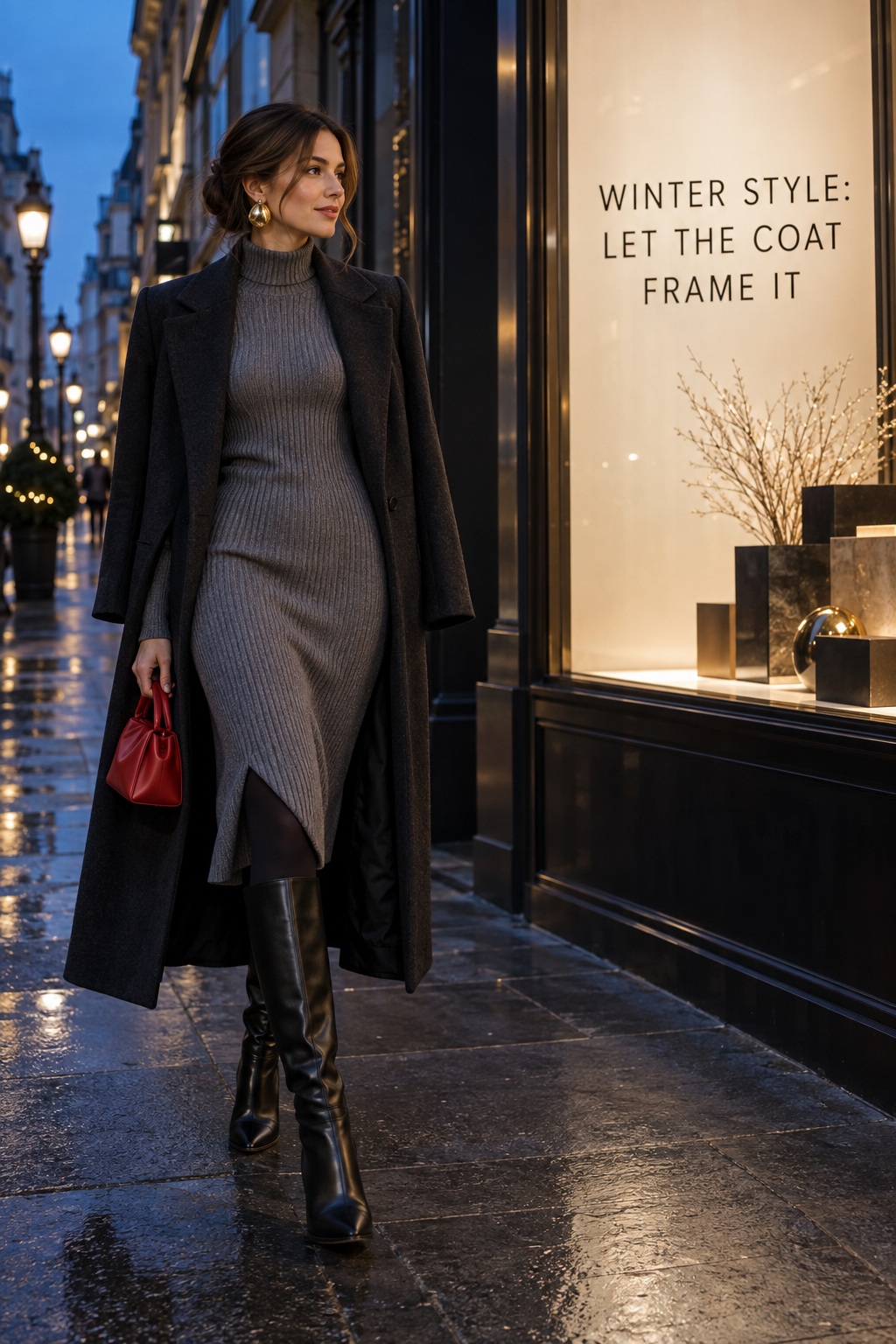
Give the outer layer a role. The coat is often the item people see longest, especially during a commute. Let it act as the frame for the outfit. A tailored coat brings polish, a puffer brings volume and sportiness, a leather jacket brings edge, and a blanket-like wrap coat brings softness. Once you know the role, the layers underneath become easier to choose.
Check the practical side before committing. Can you move your arms? Can you sit comfortably? Will the hem drag through wet sidewalks? Can you remove a layer when you enter a heated room? These questions do not reduce style. They protect it by preventing the outfit from becoming something you spend the day fighting.
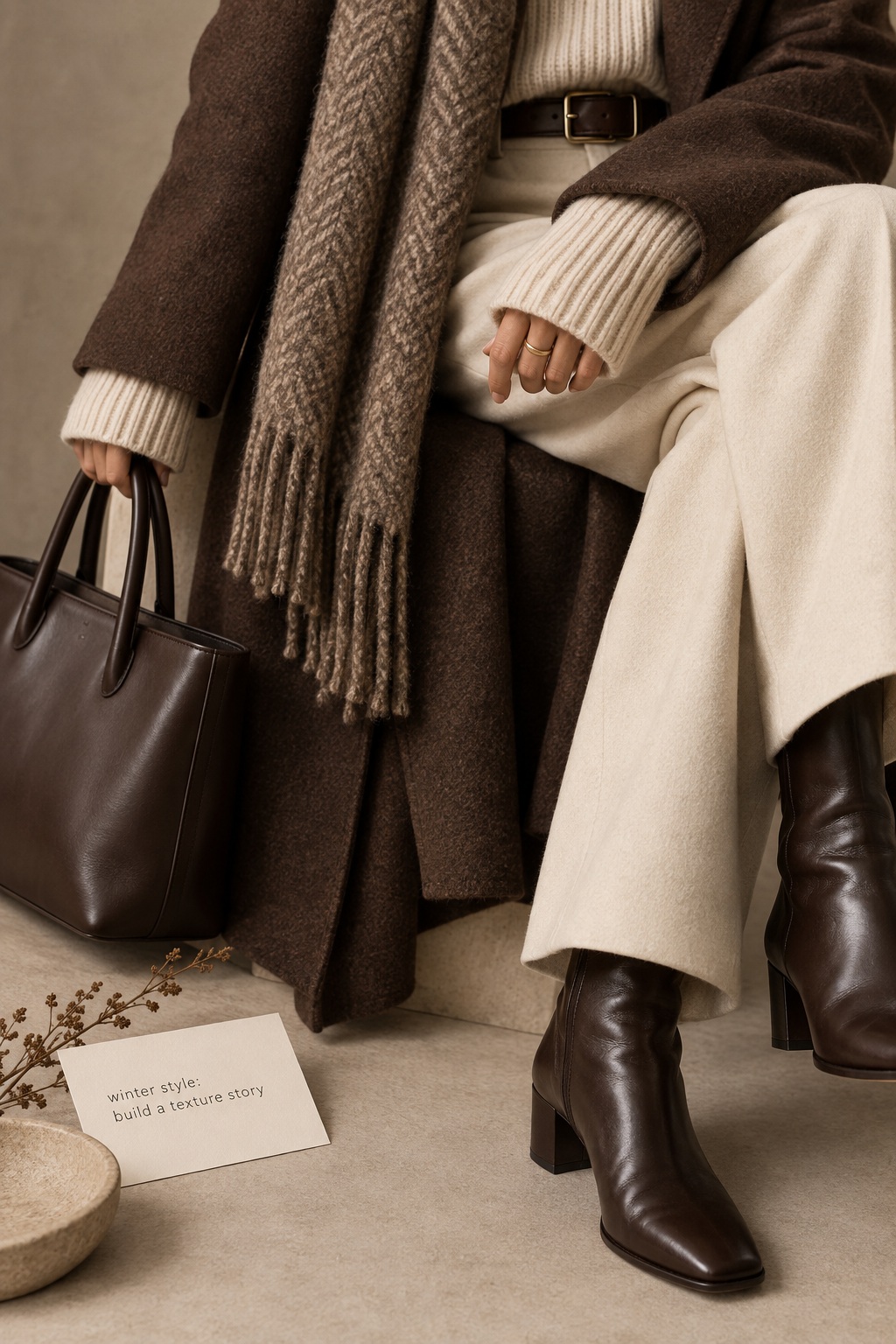
Four winter-style directions to try with clothes you own
1. Tonal polish
Tonal polish is the easiest winter style direction when you want to look composed without feeling overdressed. Build from two or three related shades, then add one change in texture. Try an ivory mockneck, a taupe cardigan, straight-leg trousers in warm gray, and a camel coat. Finish with chocolate boots and a structured bag. The palette does most of the work, while the different surfaces keep it from looking flat.
For a casual version, replace the trousers with medium-wash denim and the structured bag with a soft shoulder bag. For work, use a crisp shirt beneath the sweater or choose a sharper trouser. For dinner, keep the coat and shoes but swap the cardigan for a satin camisole under a fine knit worn open. The direction stays the same even as the level of polish changes.
2. Relaxed tailoring
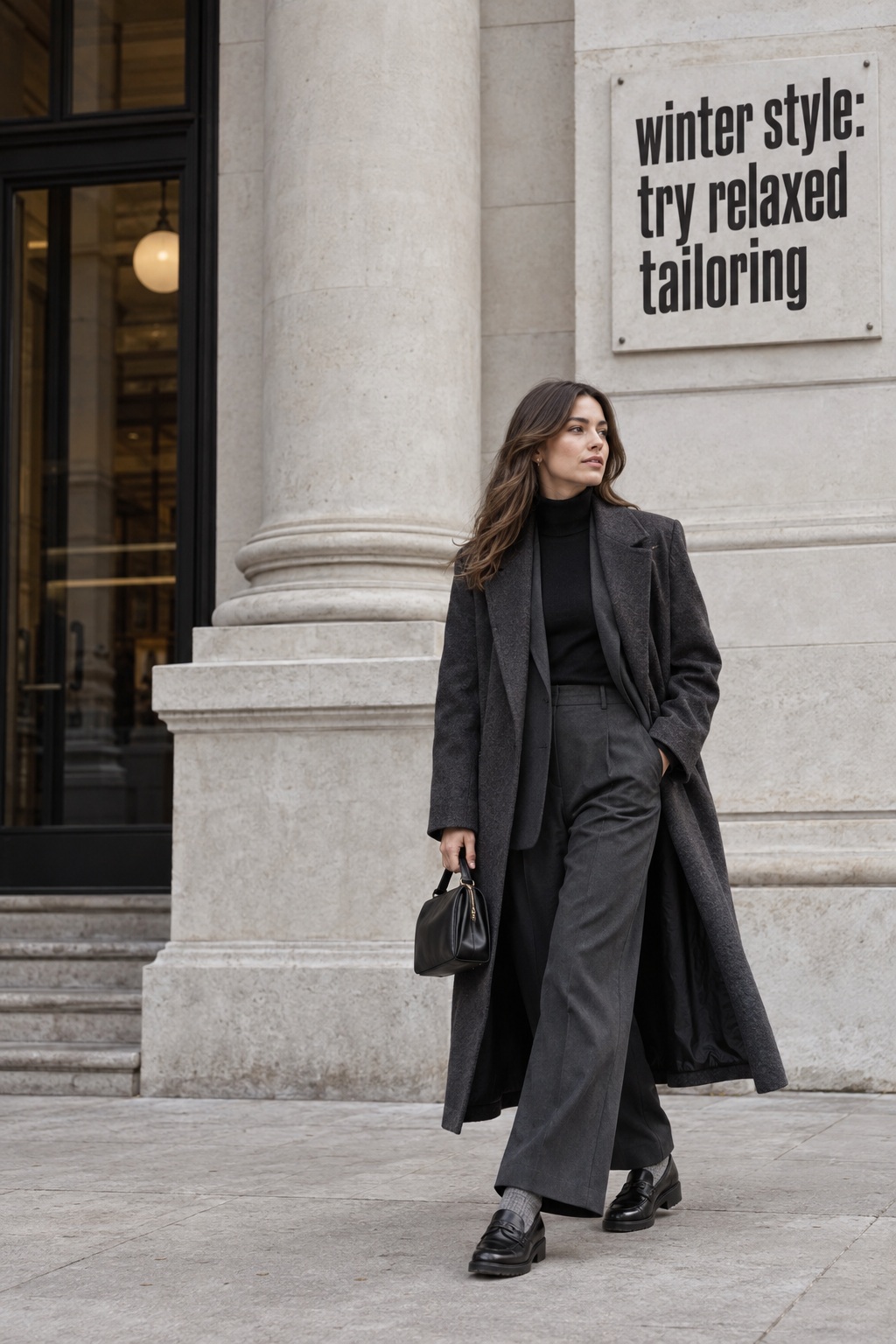
Relaxed tailoring gives winter style a clear shape without requiring a formal suit. Begin with a fitted base, such as a ribbed long-sleeve top or thin turtleneck. Add a roomy blazer, wide-leg trousers, and a coat that has enough space for the shoulders. The key is to let one layer be precise. A visible collar, a defined shoulder, or a clean trouser crease gives the softness somewhere to land.
Keep the footwear grounded. Loafers with warm socks, sleek ankle boots, or a clean sneaker can all work, but the shoe should echo the scale of the tailoring. A delicate ballet flat may disappear under a very broad trouser unless the rest of the outfit is intentionally light. Add a belt or compact bag when you want more definition, and remove it when you prefer an easier, more fluid line.
3. Texture-led casual
Texture-led casual is for days when comfort is the priority but a basic sweatshirt and coat feel unfinished. Combine one soft piece, one sturdy piece, and one polished piece. A brushed sweater can meet straight denim, a wool coat, and leather boots. A fleece-lined layer can sit beneath a quilted vest, while a textured scarf and a clean sneaker keep the outfit from looking like outdoor gear.
Keep the color range narrow so the materials can be noticed. Charcoal, faded blue, cream, and tan make a relaxed combination feel calm. If you prefer darker clothes, let one lighter item appear at the neckline or under the coat. This small interruption creates depth and helps the outfit photograph well without relying on a statement item.
4. The dress or skirt winter look
A dress or skirt can make winter style feel more expressive, especially when you are bored with repeating jeans. The trick is to let the lower half stay visually stable. Start with opaque tights, tall boots, or a substantial ankle boot. Add a fine turtleneck beneath a sleeveless dress, a cardigan over a slip skirt, or a cropped jacket over a knit midi dress. The warm layer should support the shape rather than hide every line.
Use the coat to decide the mood. A long tailored coat makes a soft dress look more deliberate. A cropped puffer creates a sportier contrast. A leather jacket sharpens a floral or satin skirt. For a low-effort evening formula, try a knit dress, tall boots, a long coat, and one piece of visible jewelry. The outfit feels complete because the dress supplies the vertical line and the coat supplies the frame.
These four directions are not boxes. They are filters. A tonal outfit can include relaxed tailoring. A texture-led casual look can use a skirt. A dress can become polished or edgy depending on the outer layer. If an outfit feels close but not quite right, change one filter at a time rather than starting over. Swap the shoes, simplify the colors, or replace the coat. Small edits reveal which decision is causing the friction.
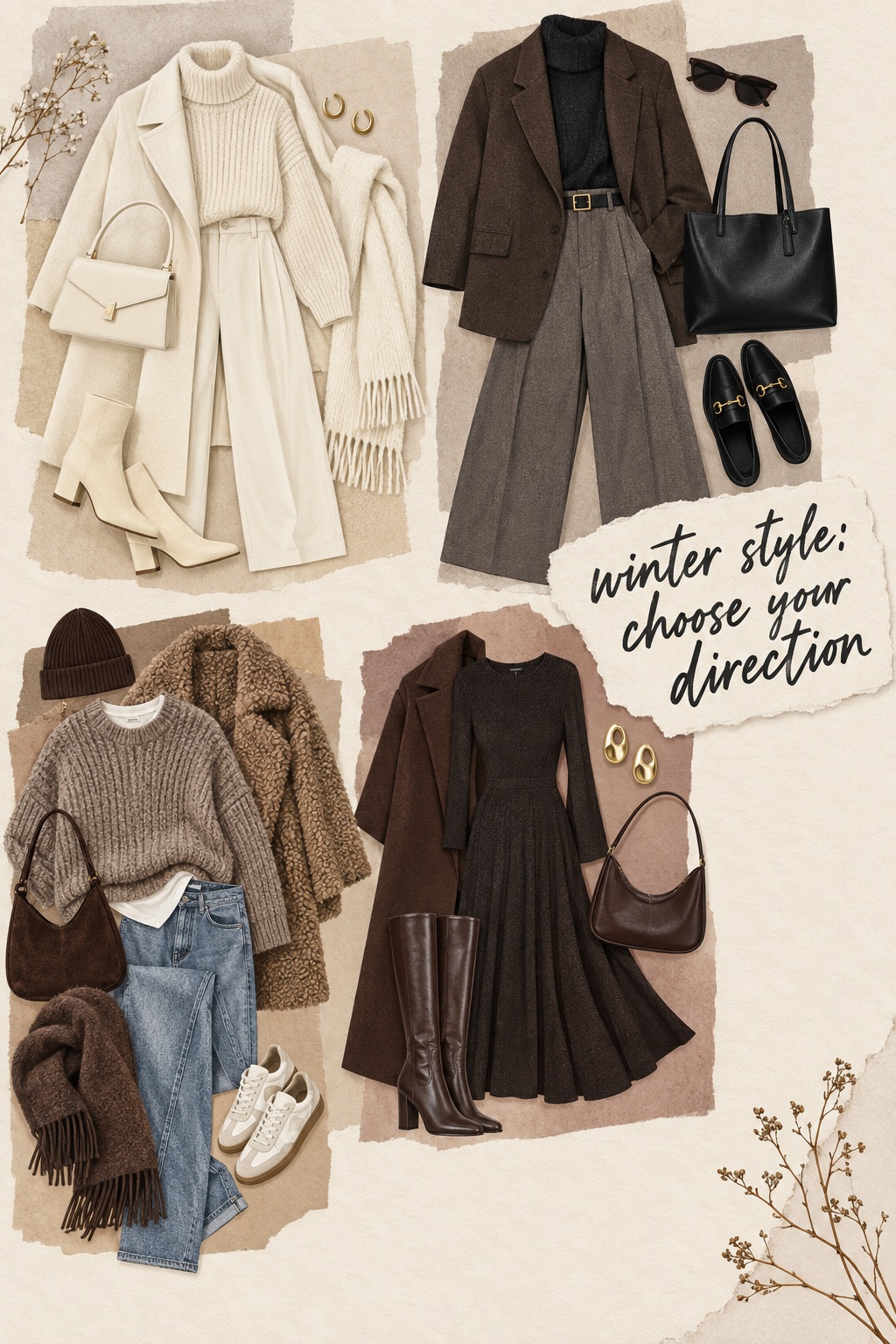
How to make one direction work across real plans
For errands, choose the direction that gives you the most movement. Texture-led casual works well with straight trousers or denim, a flexible sweater, a weather-ready coat, and shoes you can walk in. Keep the bag light and place the visual interest near the face with a scarf, glasses, or a contrasting neckline. This prevents a practical outfit from looking anonymous.
For work, relaxed tailoring or tonal polish usually needs the fewest changes. Start with the indoor temperature because you will spend more time without the coat. A thin base, a blazer or cardigan, and a coat that can be removed cleanly are more useful than one extremely heavy sweater. Keep a second pair of shoes at work if wet sidewalks make your everyday boots feel too casual for your setting.
For travel, prioritize layers that can be removed and recombined. A fine knit, a relaxed blazer, wide-leg trousers, and a soft scarf can handle an airport, a chilly train, and an overheated café. Choose fabrics that do not punish you for sitting. A long coat can work as the polished outer frame, but leave enough room to move and keep your most comfortable layer closest to the body.
For evening plans, keep warmth in the pieces people do not immediately notice. Tights under a skirt, a thin thermal under a dress, a fitted long-sleeve under a slip, or a fine knit beneath a jacket can preserve the intended silhouette. Then let one visible element carry the mood: a velvet texture, a sculptural earring, a glossy shoe, or a small bright bag.
For a changing forecast, build the outfit in modules. Check the temperature, wind, and precipitation before choosing the base layer. Keep the warmest removable piece easy to access, not buried under a tight coat. A scarf, gloves, and hat can be more useful than adding another thick top because they can be taken off independently. British Vogue makes a similar point in its layering guidance: visible styling and invisible warmth can work together when the foundation matches the weather.
Before leaving, take a sixty-second review. Look at the outfit from the front, side, and back. Ask whether one item leads, whether the volume has a counterweight, whether your shoes belong to the same level of formality, and whether you can comfortably remove one layer. If the answer is yes, the outfit is probably doing enough. More accessories will not necessarily improve it.
Lasting choices that keep the outfit wearable
The first lasting choice is to solve bulk with order, not quantity. Put the closest and thinnest layer nearest your body. Let the middle layer add warmth or shape, then choose an outer layer with enough room for both. If a coat only works over a thin top, it is not a reliable winter coat for your wardrobe. If a sweater only works under one coat, consider its proportions before buying another color.
The second is to repeat a small number of visual relationships. A favorite coat can feel new when you change the texture underneath. The same trousers can look relaxed with a chunky knit, polished with a fine cardigan, and more expressive with a bright scarf. Repetition is not a style failure. It is how a personal wardrobe becomes recognizable.
The third is to avoid treating every current idea as a requirement. A winter trend is useful only when it fits your climate, movement, comfort, and existing clothes. You can borrow a color, a proportion, or a layering move without recreating a runway image. The best interpretation is usually the one that leaves enough room for your actual day.
The fourth is to inspect the quiet details. Are the cuffs stretched? Does the scarf compete with the neckline? Are the boots clean enough for the level of polish? Is the bag practical for the amount you are carrying? These details often determine whether winter style looks considered, because cold-weather outfits contain more visible accessories than warm-weather ones.
Finally, remember that style is not a performance of discomfort. If a layer makes you too hot indoors, a heel makes walking impossible, or a fabric irritates your skin, the outfit is not finished. Adapt the formula. Wear a softer base, switch the shoe, shorten the stack, or change the coat. A clear winter style direction should make dressing easier, not turn a normal day into a costume change.
Sources and methodology: The article’s layering framework was cross-checked against Macy’s guide to base, mid, and outer layers and British Vogue’s winter layering examples. The outfit directions and adaptations are original styling guidance based on the research set recorded for this run.
FAQ
What is the easiest winter style to start with?
Start with tonal polish. Choose two or three related colors, add one fine base layer, one textural middle layer, and a coat in a nearby shade. The limited palette makes familiar pieces look connected, so you can focus on fit and comfort before experimenting with stronger contrasts.
How can I layer without looking bulky?
Use a thin, close base layer, then add one insulating middle layer and an outer layer with enough room. Balance a roomy piece with a cleaner one, vary lengths, and avoid stacking multiple thick garments in the same area. Warm accessories can add comfort without crowding the torso.
Which colors look polished in winter?
Polished winter palettes can be tonal or contrasted. Cream, camel, gray, chocolate, navy, black, burgundy, and soft blue are easy to combine, but the real key is repeating one shade at least twice. Use a brighter color as an accent when you want the outfit to feel more energetic.
Can winter style work with sneakers?
Yes. Pair clean sneakers with the same level of ease elsewhere, such as straight denim, relaxed trousers, or a soft knit. A tailored coat can make sneakers look intentional, while a structured bag or neat scarf keeps the outfit from reading as purely athletic.
How do I make a skirt or dress warm enough for winter?
Use opaque tights, tall boots, a fitted base layer, and a coat that covers enough of the outfit for your weather. A cardigan, vest, or fine turtleneck can add warmth without hiding the dress shape. Check that the hem and footwear allow you to move comfortably before adding accessories.
How many visible layers should a winter outfit have?
There is no fixed number, but three visible clothing levels usually create a clear result: a base, a middle layer, and outerwear. You can add a scarf, hat, or vest when the weather requires it. The important part is that each layer adds warmth, shape, texture, or protection rather than simply adding bulk.
How can I refresh winter outfits without shopping?
Change one styling decision at a time. Wear a familiar coat with a different texture, switch the proportion of the layers, repeat one color through an accessory, or replace boots with sneakers or loafers. Photograph the combinations you like so you can repeat the successful formulas instead of rebuilding them from memory.
Leave a Reply