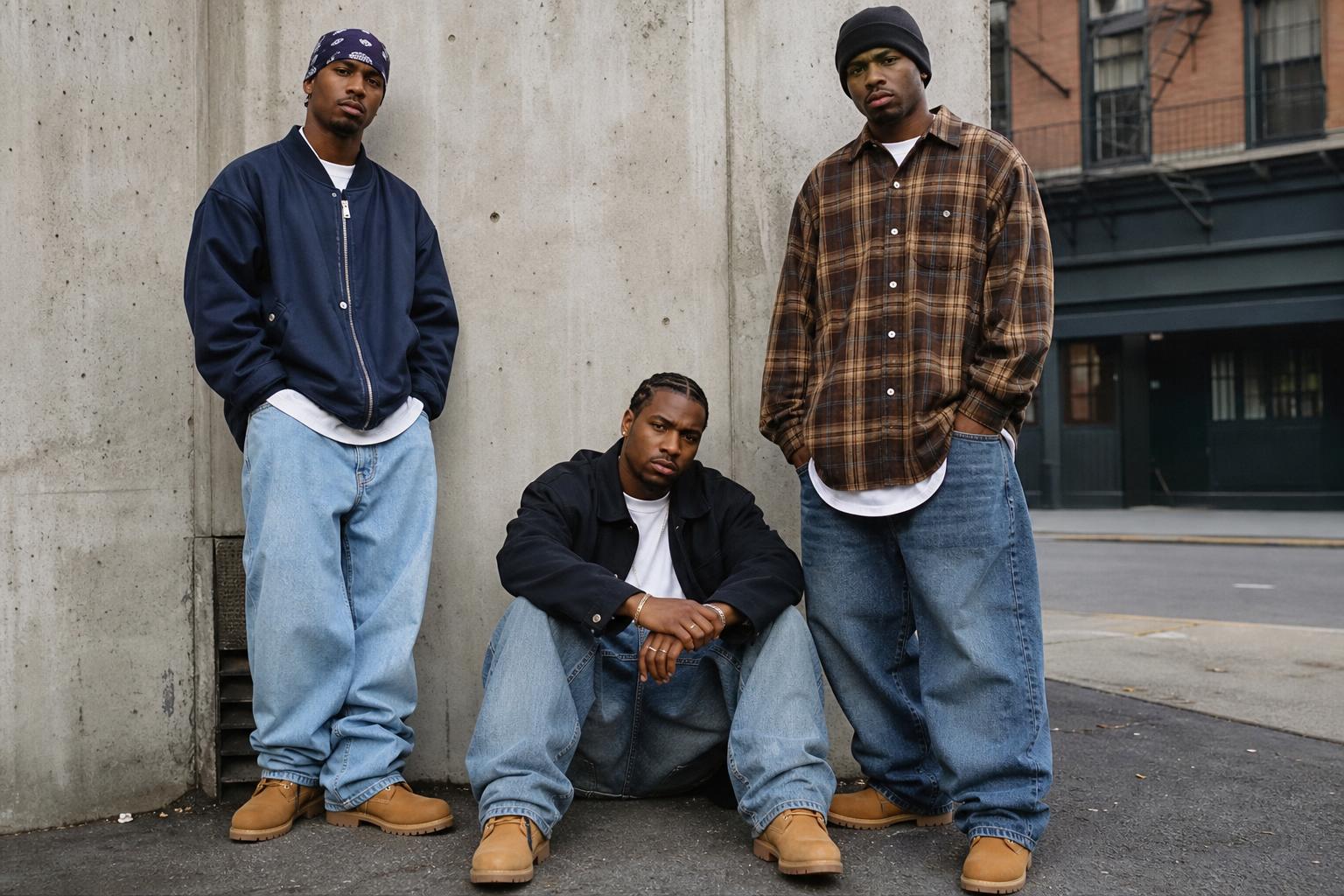
There is a reason 90s urban fashion still feels current. The decade did not produce a single look so much as a conversation between streetwear, hip-hop, grunge, sportswear, and the rising power of branded style. New York, Seattle, California, and later Tokyo each contributed distinct visual codes, yet the silhouettes often overlapped enough to be discussed as one broad aesthetic. That is exactly why the era remains so fascinating: the same baggy jeans, logo tees, sneakers, and layered outerwear could communicate very different ideas depending on the culture behind them.
What many people call 90s urban fashion is often a blend of at least three related but separate directions: hip-hop streetwear, grunge-inflected city dressing, and logo-driven sportswear that crossed into the mainstream through celebrities, MTV, and major brands such as Nike, Tommy Hilfiger, Levi’s, Calvin Klein, and Ralph Lauren. Understanding the differences matters if you want more than a costume version of the decade. It helps you build outfits with proportion, mood, and context in mind.
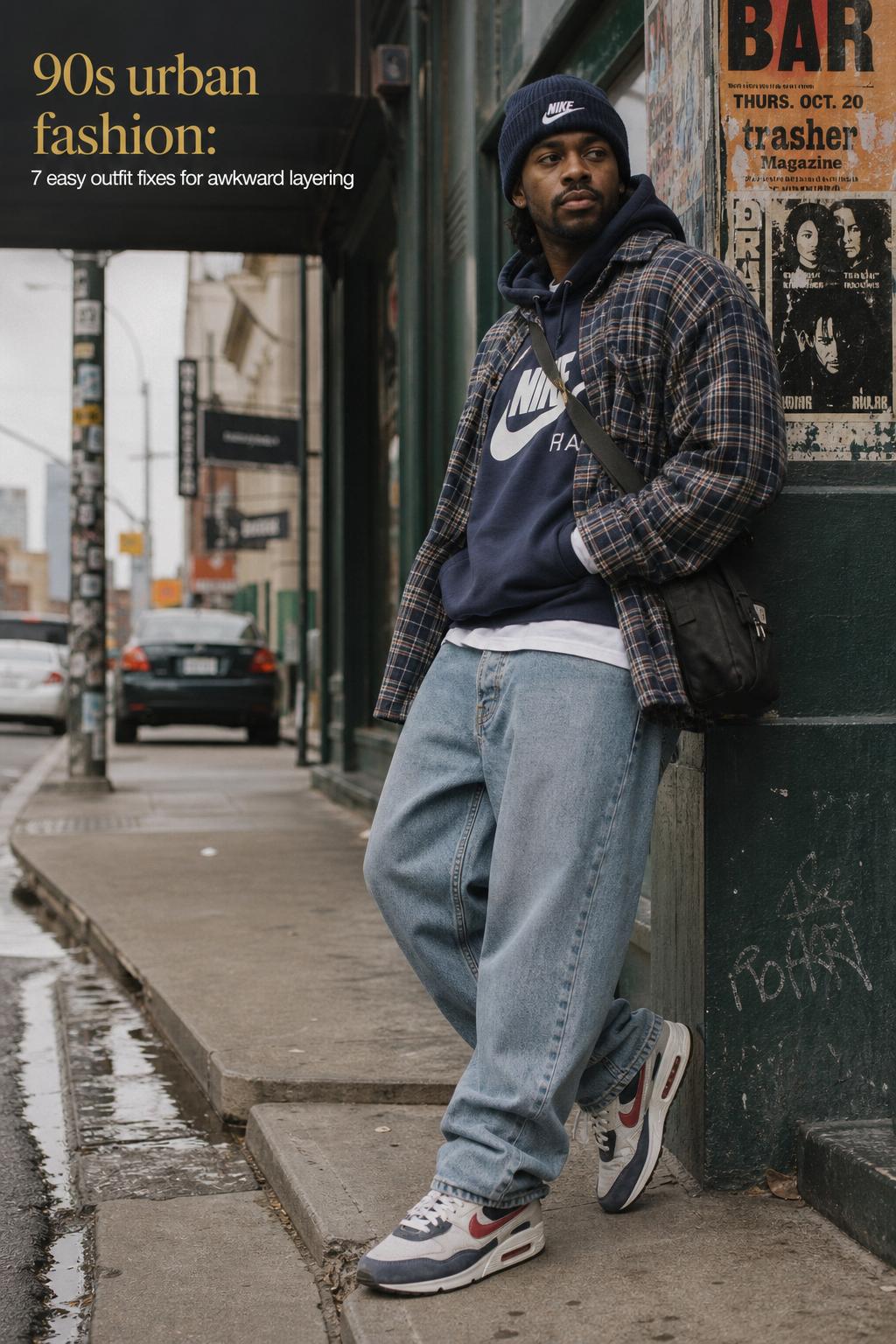
This guide breaks down those styles side by side. You will see how 90s streetwear compares with grunge, where branded sportswear fits in, how iconic figures from Aaliyah to Naomi Campbell helped shape the visual language, and how to recreate the look today with more precision and less guesswork.
The three style worlds inside 90s urban fashion
To read the decade well, it helps to separate 90s urban fashion into three connected categories rather than treating it as one uniform trend. These categories share denim, oversized proportions, sneakers, and a strong relationship to youth culture, but they differ in attitude, styling philosophy, and visual finish.
Your wedding has a lot of moving pieces. Your plan can still feel composed.
Zarellea organizes guests, vendors, budget, and timelines in one shared space — so you can make decisions with clarity, not stress.
Style overview: hip-hop streetwear
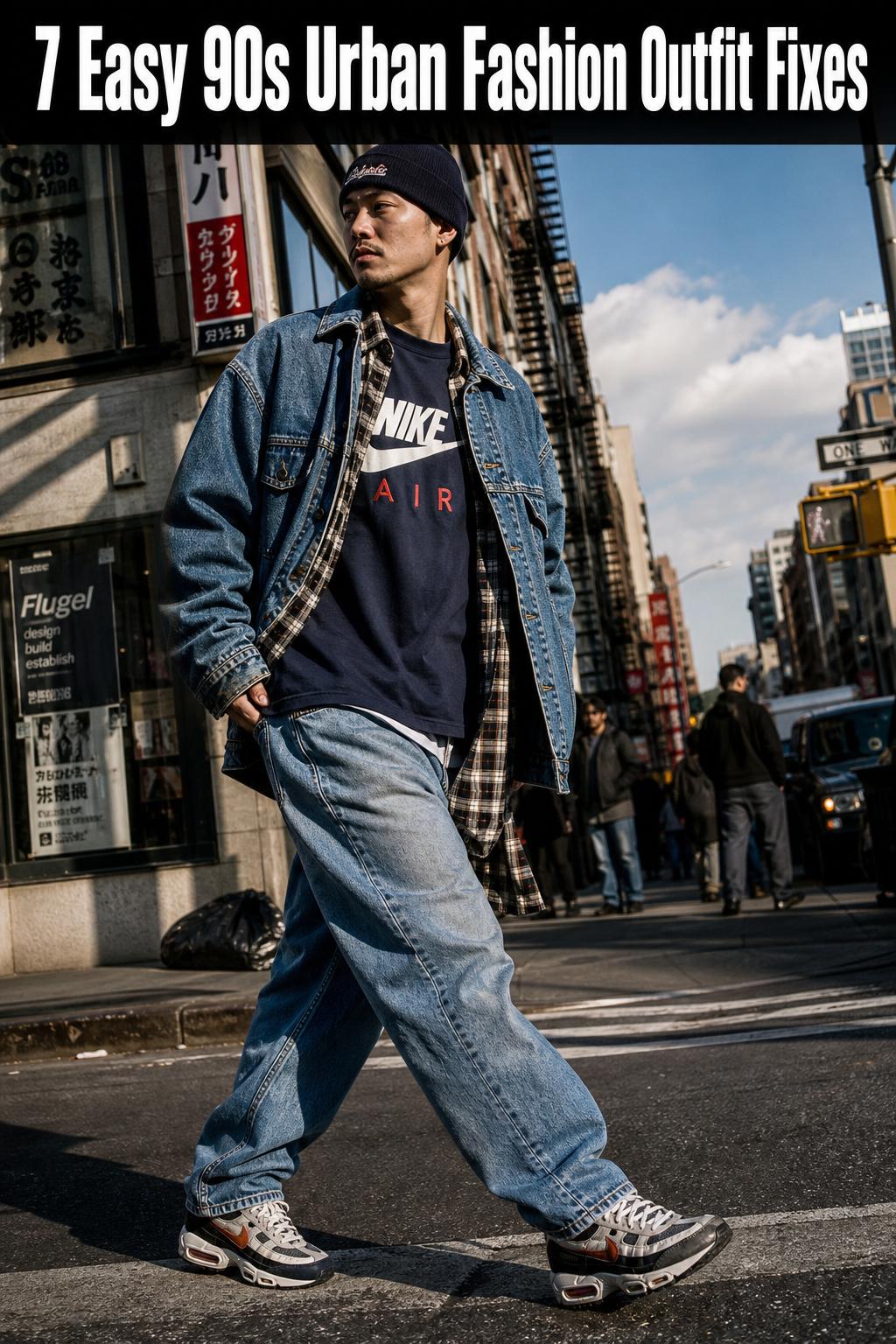
Hip-hop streetwear in the 1990s centered on bold proportion, visible branding, and a strong sense of cultural presence. Typical silhouettes included baggy jeans, oversized tees, loose jackets, logo-heavy separates, and statement sneakers such as Nike Air Max. Denim from Levi’s, branded pieces from Tommy Hilfiger, and later labels associated with 90s street identity such as FUBU and Karl Kani fit naturally into this world. The mood was confident, graphic, and public-facing rather than understated.
Style overview: grunge-inflected urban dressing
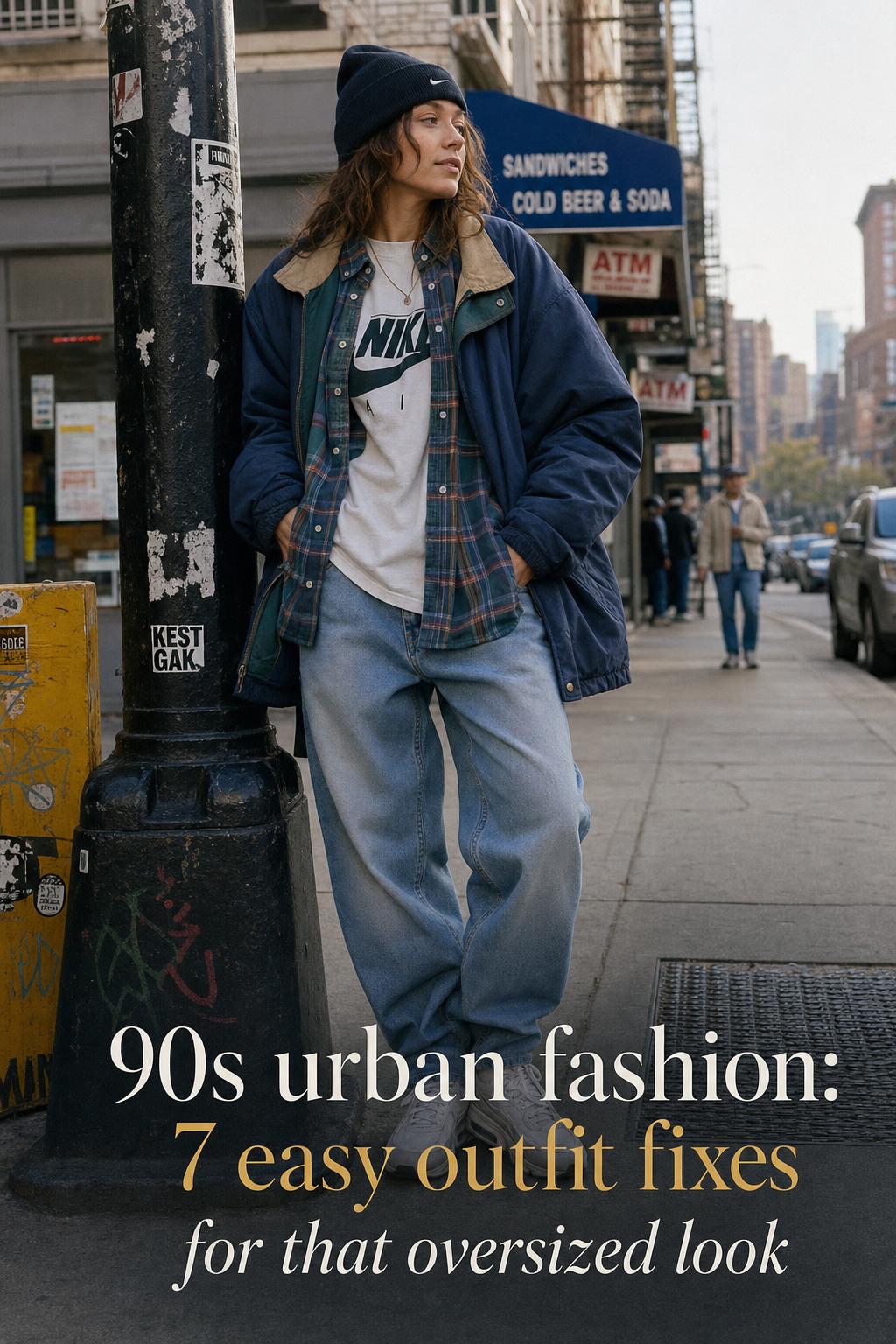
Grunge brought a different texture to the decade. Emerging from Seattle and filtered into wider fashion culture, it favored thrifted layers, flannel, worn denim, relaxed knits, and an intentionally unpolished finish. In an urban context, grunge often intersected with streetwear through baggy silhouettes and practical layering, but the overall message was less logo-driven and less performative. Calvin Klein and Perry Ellis represent the moment when this laid-back, anti-gloss attitude began moving into editorial fashion.
Style overview: logo sportswear and mainstream crossover
This third lane sat between subculture and mass visibility. It included branded t-shirts, athletic references, denim, and clean but relaxed separates that traveled easily from street style into mall culture and television. Nike, Tommy Hilfiger, Ralph Lauren, and Adidas all played into this space. Compared with hip-hop streetwear, the styling was often simpler. Compared with grunge, it looked more polished and more commercially legible. This was the version of the decade that licensing, celebrity campaigns, and broader retail made widely accessible.
Why these aesthetics are grouped together so often
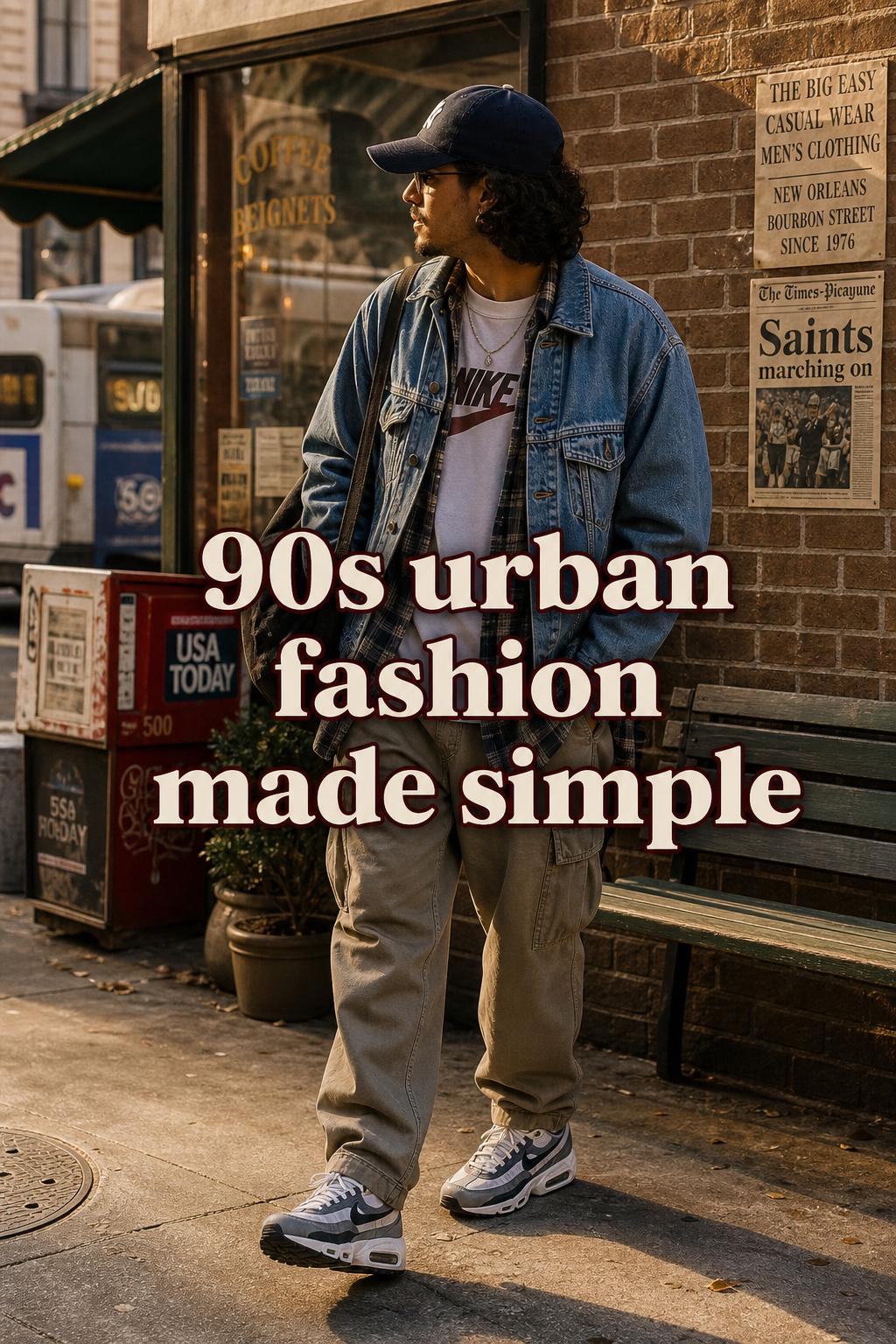
They are grouped together because the 1990s encouraged cross-pollination. Hip-hop culture influenced brand campaigns. Grunge moved from subculture into high-fashion editorial. Sportswear brands absorbed streetwear language. Television, music videos, and fashion photography accelerated the overlap. The result was a decade in which a pair of loose Levi’s and Nike sneakers might belong to very different outfits depending on whether they were styled with a logo rugby, an oversized tee, a thrifted flannel, or a sleek Calvin Klein minimal layer.
That overlap is part of the appeal, but it can also flatten the decade if you are not careful. A thoughtful reading of 90s urban fashion pays attention not just to pieces, but to styling logic. Was the outfit built around brand identity, anti-fashion ease, or clean commercial sportswear? The answer changes everything from the footwear choice to the way layers sit on the body.
Streetwear vs grunge vs branded sportswear: the defining differences
Silhouette and structure
Hip-hop streetwear tends to exaggerate proportion with more intention. The volume is part of the statement: wider denim, oversized tops, roomy outerwear, and footwear that anchors the look visually. Branded sportswear is also relaxed, but usually cleaner in line and easier to wear in a conventional everyday setting. Grunge, by contrast, can look loose without looking constructed. Its proportions feel accidental on purpose, as though the outfit was assembled through instinct rather than image management.
Color palette and visual energy
Streetwear often leans into high-contrast branding, primary color accents, athletic details, and recognizable logos. Tommy Hilfiger is especially important here, because the brand became closely tied to the decade’s visual vocabulary. Grunge is usually more muted in effect, with faded denim, washed textures, darker checks, and a less branded surface. Mainstream sportswear sits in the middle: crisp whites, denim blues, strong logo moments, and pieces that feel fresh rather than distressed.
Styling philosophy
Hip-hop streetwear uses clothing as cultural expression. Logos, sneakers, and silhouette work together to project identity. Grunge pushes against polish and often rejects overt display, even when it later appears in editorial settings with figures such as Kate Moss or Naomi Campbell bringing the look into fashion imagery. Branded sportswear is less oppositional than either of the other two. Its purpose is wearability with attitude, often amplified by celebrity visibility, licensing, and broad retail presence.
Typical wardrobe pieces
- Hip-hop streetwear: baggy jeans, oversized tees, logo sweatshirts, statement sneakers, bold branded layers
- Grunge: flannel, worn denim, layered knits, thrifted pieces, relaxed jackets, understated footwear
- Branded sportswear: Nike Air Max, logo tees, denim, rugby shirts, clean outerwear, athletic separates
The pieces can overlap, but the finish does not. The same denim jacket can read three different ways depending on whether it is paired with a sharp logo focus, a rougher Seattle-inspired layer, or a cleaner sportswear base.
How hip-hop reshaped the decade’s urban wardrobe
Hip-hop was not simply a style influence in the 1990s. It was one of the forces that changed how fashion moved through culture. In 90s urban fashion, hip-hop connected celebrity endorsement, brand identity, and street-level dressing in a way that still feels familiar today. When artists and groups such as Aaliyah, TLC, and Destiny’s Child wore branded pieces, the garments did more than complete an outfit. They established a visual bridge between music, youth culture, and fashion aspiration.
This is why brands such as Nike, Tommy Hilfiger, and Levi’s appear so consistently in any discussion of the era. They were not just labels; they were tools of self-styling. Nike Air Max offered footwear with strong visual presence. Levi’s grounded the wardrobe in denim. Tommy Hilfiger turned branding itself into part of the look. Even when the outfit was relatively simple, the logo or sneaker could carry the message.
What distinguishes hip-hop streetwear from a generic 90s look is the degree of intention. Oversized did not mean careless. Volume had to feel balanced. A wide jean usually needed a top with enough scale to hold its own, and footwear needed enough weight to finish the proportion. That logic remains useful today, especially for anyone trying to wear the look without seeming dressed for a theme party.
Grunge in the city: softer structure, rougher texture
Grunge is often treated as separate from urban style because of its Seattle roots, yet in practice it became one of the decade’s most important parallel aesthetics. It shared with 90s streetwear a preference for looseness, denim, and anti-precision. Where it differed was in surface and attitude. Grunge embraced thrifted texture, rumpled layering, and a kind of visual fatigue that felt almost resistant to image-making, even as high fashion quickly absorbed it.
That transition from subculture to editorial is key. Vogue’s broader 1990s framing places grunge alongside the decade’s larger shift away from 1980s excess. In this environment, Perry Ellis and Calvin Klein became useful reference points because they connected the street-level ease of the moment to a more elevated fashion conversation. The look could move from a local scene in Seattle to a magazine page without losing its relaxed outline.
In an everyday wardrobe, grunge usually reads as less branded and more tactile than hip-hop streetwear. The interest comes from layering a faded flannel over denim, or from combining soft knits with a looser silhouette. It is quieter, but not weaker. When styled well, it has a clear aesthetic position: undone, practical, and subtly expressive.
The role of supermodels, magazines, and fashion business
The 1990s were also the decade in which street-linked aesthetics were increasingly translated through the business of fashion. Kate Moss, Naomi Campbell, Shalom Harlow, Amber Valletta, Claudia Schiffer, and Christina Kruse represent the editorial side of this shift. Their presence mattered because it helped move once-subcultural silhouettes into broader fashion consciousness.
Naomi Campbell, in particular, symbolizes the important meeting point between supermodel culture and the decade’s urban energy. Meanwhile, designers and major brands such as Ralph Lauren, Calvin Klein, Perry Ellis, Versace, Gucci, Prada, and Louis Vuitton reflect the larger context in which 90s fashion evolved. Not all of these names belong strictly to urban fashion, but their relevance lies in how the decade blurred lines between luxury, branding, and street influence.
This is also where licensing and product expansion mattered. As branding became more central, urban-adjacent looks became easier to access beyond fashion capitals. In practical terms, this meant more people could buy into a visual identity once tied more tightly to music scenes or editorial subcultures. It was one of the reasons 90s urban fashion grew from local expression into a mass cultural language.
The pieces that made the look instantly recognizable
Some items became shorthand for the decade because they worked across style categories. They appeared in hip-hop wardrobes, grunge variations, and mainstream sportswear, even if the final outfit mood differed.
- Baggy denim, especially Levi’s, for relaxed structure and movement
- Cargo pants for a utility-leaning silhouette associated with 90s menswear and urban cool
- Oversized t-shirts and logo tops for proportion and cultural signaling
- Nike Air Max and other sneakers for grounding the outfit visually
- Denim jackets and layered outerwear for balance and texture
- Athletic references that blurred sportswear and street style
These pieces mattered because they solved a styling problem. Baggy bottoms required equally thoughtful upper-body proportion. Sneakers gave weight to the hemline. Logos created focus when the silhouette was otherwise simple. Cargo pants added volume without the stiffness of tailoring. Even now, the success of a 90s-inspired outfit depends less on owning the “right” item than on understanding what role that item plays in the composition.
By city: how place changed the meaning of the outfit
One of the most useful ways to read 90s urban fashion is by geography. The decade was not visually uniform, and the same garment could mean something different in New York, Seattle, Los Angeles, California more broadly, or Tokyo. This is where the article moves beyond nostalgia and into actual style literacy.
New York: branding, denim, and street authority
New York stands at the center of the streetwear and hip-hop conversation. Here, urban dressing was deeply tied to visibility, labels, sneakers, and confidence in silhouette. Nike, Tommy Hilfiger, Levi’s, FUBU, and Karl Kani all make sense in this context. The outfit was often direct and public. A logo could be central rather than incidental.
Seattle: grunge as anti-polish
Seattle introduced a more withdrawn visual language. Denim remained important, but branding receded. Texture came forward. Grunge in Seattle privileged flannel, layering, and a kind of imperfect functionality that later became highly influential well beyond the city itself.
Los Angeles and California: relaxed street-sportswear crossover
California contributed ease. The relationship between streetwear and skate-adjacent dressing helped make 90s style look less formal and more naturally relaxed. In this context, sneakers, denim, and oversized basics felt wearable rather than theatrical. It is one of the reasons California’s influence remains so compatible with modern wardrobes.
Tokyo: late-90s global dialogue
Tokyo appears less prominently in mainstream retrospectives, yet it is an important differentiating reference when discussing the global spread of urban fashion. The city represents the late-90s expansion of streetwear into a more international conversation. Including Tokyo in the map of 90s urban fashion helps explain why the decade’s style legacy did not stop at American regional scenes.
Media made the look visible, but it also changed it
Fashion in the 1990s moved through MTV, television, film, and editorial imagery with unusual force. This mattered because media did not merely document 90s urban fashion; it translated it. What looked natural in a neighborhood, club, or music scene often became sharper, more branded, or more stylized once filtered through campaigns and celebrity images.
That translation helps explain why references as different as Friends and The Matrix can sit within a wider conversation about the decade. Friends represents an everyday 90s wardrobe language that reached a broad audience, while The Matrix points toward the decade’s later cyber and futuristic edge. Neither replaces hip-hop streetwear or grunge, but both show how media expanded the visual vocabulary around them.
For readers trying to recreate the era, this distinction is practical. Ask whether your inspiration comes from street photography, music culture, or polished screen styling. The answer will change the amount of branding, the cleanliness of the silhouette, and the overall finish of the outfit.
Visual style breakdown: how the differences appear in real outfits
Layering approach
Hip-hop streetwear often layers for scale and presence: a roomy top over loose denim, or a branded outer layer over a simple base. Grunge layers for texture and mood, often with softer edges and less visual hierarchy. Mainstream sportswear layers more neatly, using one logo piece or one athletic item as the focus rather than building the entire outfit around volume.
Garment proportions
In hip-hop styling, proportion is usually deliberate and legible from a distance. In grunge, the fit may seem almost incidental, though it still creates an intentional slouch. In sportswear crossover looks, proportion is relaxed but usually easier to integrate into a polished everyday wardrobe. If you want the outfit to feel modern, sportswear is often the easiest entry point; if you want historical accuracy, streetwear and grunge require more commitment to their original scale.
Footwear and finishing balance
Nike Air Max and similar sneakers act as anchors in 90s streetwear because they support the weight of baggier clothing. Grunge footwear is less about visual force and more about complementing the relaxed line. In branded sportswear, sneakers still matter, but they tend to feel cleaner and more integrated rather than dominant. This is one of the simplest ways to identify which side of 90s urban fashion an outfit belongs to.
Outfit comparisons that clarify the styling logic
A casual daytime look
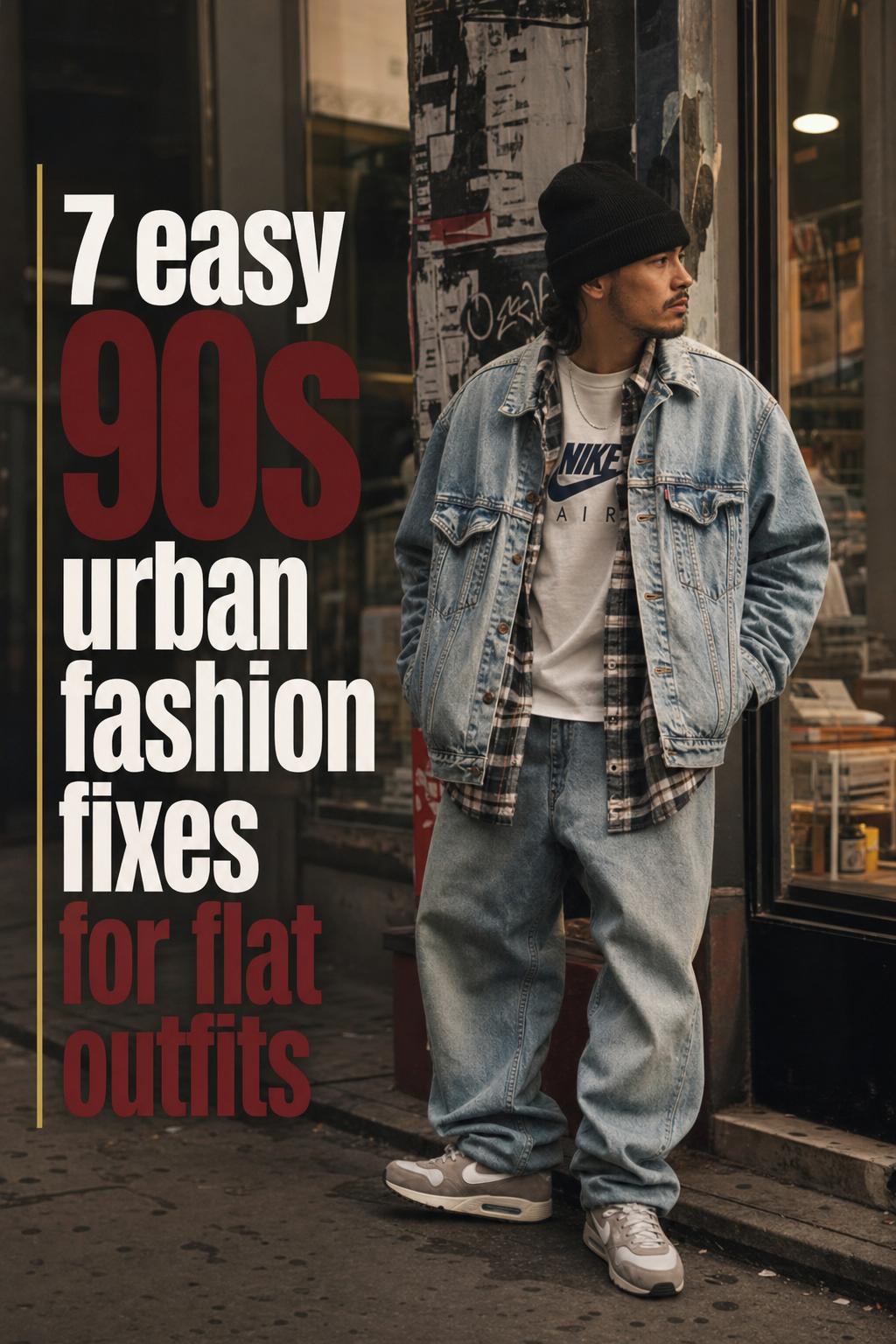
A hip-hop streetwear version would likely begin with baggy Levi’s, an oversized logo tee, and Nike sneakers strong enough to hold the width of the hem. The outfit works because each piece supports the same visual language of scale and visibility. A grunge version of the same casual situation would keep the denim relaxed but mute the branding, replacing the logo focus with a layered flannel or worn knit. The sportswear crossover version might use straight but still relaxed denim, a Tommy Hilfiger top, and clean sneakers for a look that feels more accessible and less subculture-specific.
An evening look shaped by media influence
If the goal is a more image-conscious evening outfit, hip-hop streetwear leans into statement branding and sharp sneaker presence. Grunge would take the opposite route, relying on darker layers, a looser profile, and a less polished finish. A late-90s media-inflected interpretation might borrow a sleeker line, nodding toward the cyber mood associated with The Matrix while still keeping streetwear proportions in the base layers. The difference lies in gloss: some outfits project, others withdraw.
A travel or off-duty outfit
Travel is where the distinctions become especially practical. Hip-hop streetwear favors comfort through scale, but can become visually heavy if every piece is oversized. Grunge handles movement well because layered separates can adapt through the day, though too much texture may read disorganized. Branded sportswear tends to work best for most people because it delivers the decade’s ease without sacrificing clarity. Think denim, athletic references, and one strong brand cue rather than several competing ones.
Tips for recreating 90s urban fashion without looking costume-like
The most common mistake is overloading the outfit with every recognizable reference at once. Good 90s urban fashion usually centers on one strong idea. That might be volume, branding, or texture. Once that is clear, the rest of the outfit should support it rather than compete with it.
- Choose one main lane first: hip-hop streetwear, grunge, or branded sportswear
- Build around proportion before adding logos or statement details
- Use denim as an anchor, especially Levi’s or a similar relaxed shape
- Let sneakers carry visual weight if the trousers are baggy
- Keep layering intentional; too many oversized pieces can flatten the silhouette
- For a modern result, combine one authentic 90s cue with cleaner contemporary styling
A useful rule in practice is to check the outfit from the side as well as the front. If the layers collapse into one bulky shape, the look loses definition. If the hemline, top volume, and footwear all feel proportionally related, the outfit usually reads as informed rather than imitative.
When each approach works best in a real wardrobe
Not every version of 90s urban fashion suits every situation equally well. The style works best when its cultural references are matched to practical context.
For everyday wear
Branded sportswear is often the easiest to live in day to day. Nike, denim, and a clean logo top or athletic layer offer enough 90s energy without requiring full commitment to oversized proportions. This version feels especially useful for readers who want the decade’s spirit in a contemporary wardrobe.
For creative environments
Grunge and hip-hop streetwear both perform well in more expressive settings, but for different reasons. Grunge suits wardrobes built around texture, muted color, and layered ease. Hip-hop streetwear works when the wearer wants stronger visual identity and confidence through scale. Neither needs to look theatrical, but both ask for clearer styling conviction than mainstream sportswear does.
For polished casual occasions
If the setting calls for casual dress with some structure, a Ralph Lauren or Tommy Hilfiger reference often fits more naturally than a full grunge or baggy streetwear look. The reason is simple: these brands helped define the decade’s more commercially polished side, where urban influence met broader everyday wearability.
The revival question: why the decade keeps returning
The ongoing return of 90s fashion is not only about nostalgia. It reflects how effectively the decade solved enduring wardrobe desires: comfort, identity, versatility, and visual impact. Streetwear, grunge, and branded sportswear all offered alternatives to rigid dressing without losing style clarity. That makes them highly adaptable to modern life.
It also explains why Nike, Tommy Hilfiger, and Levi’s remain central to current conversations, and why figures such as Kate Moss, Naomi Campbell, Aaliyah, TLC, and Destiny’s Child still appear in visual references to the era. They did not simply wear the decade; they helped define its proportions, mood, and cultural reach.
If there is one lasting lesson from 90s urban fashion, it is that clothes communicate most clearly when the silhouette, context, and attitude all point in the same direction. That principle matters far more than copying a specific outfit photo.
How to identify the core distinction at a glance
When you see a 90s-inspired outfit, ask three questions. Is the focus on branding or on texture? Does the volume feel deliberate or incidental? Does the outfit project itself outward or keep some visual distance? Those answers usually reveal whether you are looking at hip-hop streetwear, grunge, or a mainstream sportswear crossover.
The most successful modern interpretations often blend elements carefully: the denim language of Levi’s, the sneaker authority of Nike Air Max, the branding confidence of Tommy Hilfiger, and the softened layering instinct of grunge. Done with restraint, that mix feels current. Done without a clear point of view, it can become visually confused.
90s urban fashion remains relevant because it was never one narrow formula. It was a meeting point between culture, commerce, media, and personal style. That complexity is exactly what makes it worth revisiting with a more discerning eye.
FAQ
What is 90s urban fashion?
90s urban fashion is a broad style category shaped by hip-hop streetwear, grunge, and branded sportswear during the 1990s. It is typically associated with baggy denim, sneakers, oversized tops, logos, layered outerwear, and the cultural influence of cities such as New York, Seattle, and Los Angeles.
Is 90s streetwear the same as 90s urban fashion?
Not exactly. 90s streetwear is one major part of 90s urban fashion, especially the hip-hop-influenced side tied to brands like Nike, Tommy Hilfiger, and Levi’s. Urban fashion is the broader umbrella, which also includes grunge-inflected city dressing and mainstream sportswear crossover looks.
Which brands are most associated with 90s urban fashion?
Nike, Tommy Hilfiger, and Levi’s are the most consistently associated brands. Adidas, Ralph Lauren, Calvin Klein, FUBU, and Karl Kani also fit naturally into the conversation, depending on whether the look leans more toward sportswear, streetwear, or a broader 1990s fashion context.
How did grunge influence 90s urban fashion?
Grunge influenced 90s urban fashion by introducing looser silhouettes, layered dressing, thrifted texture, and a more anti-polish attitude. While it came from Seattle rather than hip-hop culture, it overlapped with urban style through denim, relaxed proportions, and its eventual adaptation into high-fashion editorial.
What are the key pieces for a 90s urban outfit?
The most recognizable pieces include baggy jeans, cargo pants, oversized tees, logo tops, denim jackets, and sneakers such as Nike Air Max. The exact combination depends on whether you want a hip-hop streetwear look, a grunge look, or a cleaner sportswear interpretation.
How can I make 90s urban fashion look modern today?
The easiest approach is to keep one strong 90s element and simplify the rest. For example, wear relaxed denim with clean sneakers and one logo piece, or use grunge-inspired layering with a more controlled silhouette. The goal is to preserve the decade’s proportion and attitude without overcrowding the outfit with references.
Why are Nike Air Max and Levi’s so important to this style?
Both helped define the visual structure of 90s urban fashion. Levi’s provided the denim foundation for many of the decade’s relaxed silhouettes, while Nike Air Max gave outfits a footwear anchor with enough presence to balance oversized proportions and strong brand-driven styling.
Did celebrities shape the look of 90s urban fashion?
Yes. Aaliyah, TLC, Destiny’s Child, Kate Moss, and Naomi Campbell all helped popularize different sides of the decade’s style language. Their influence mattered because they connected music, editorial imagery, and public fashion visibility in ways that broadened the reach of streetwear, grunge, and branded dressing.
What is the difference between 90s hip-hop fashion and 90s grunge?
90s hip-hop fashion is usually more logo-driven, more intentional in its oversized proportions, and more centered on sneakers and brand identity. 90s grunge is more muted, more texture-based, and less concerned with visible branding. Both use relaxed silhouettes, but they communicate different moods and cultural references.
Leave a Reply