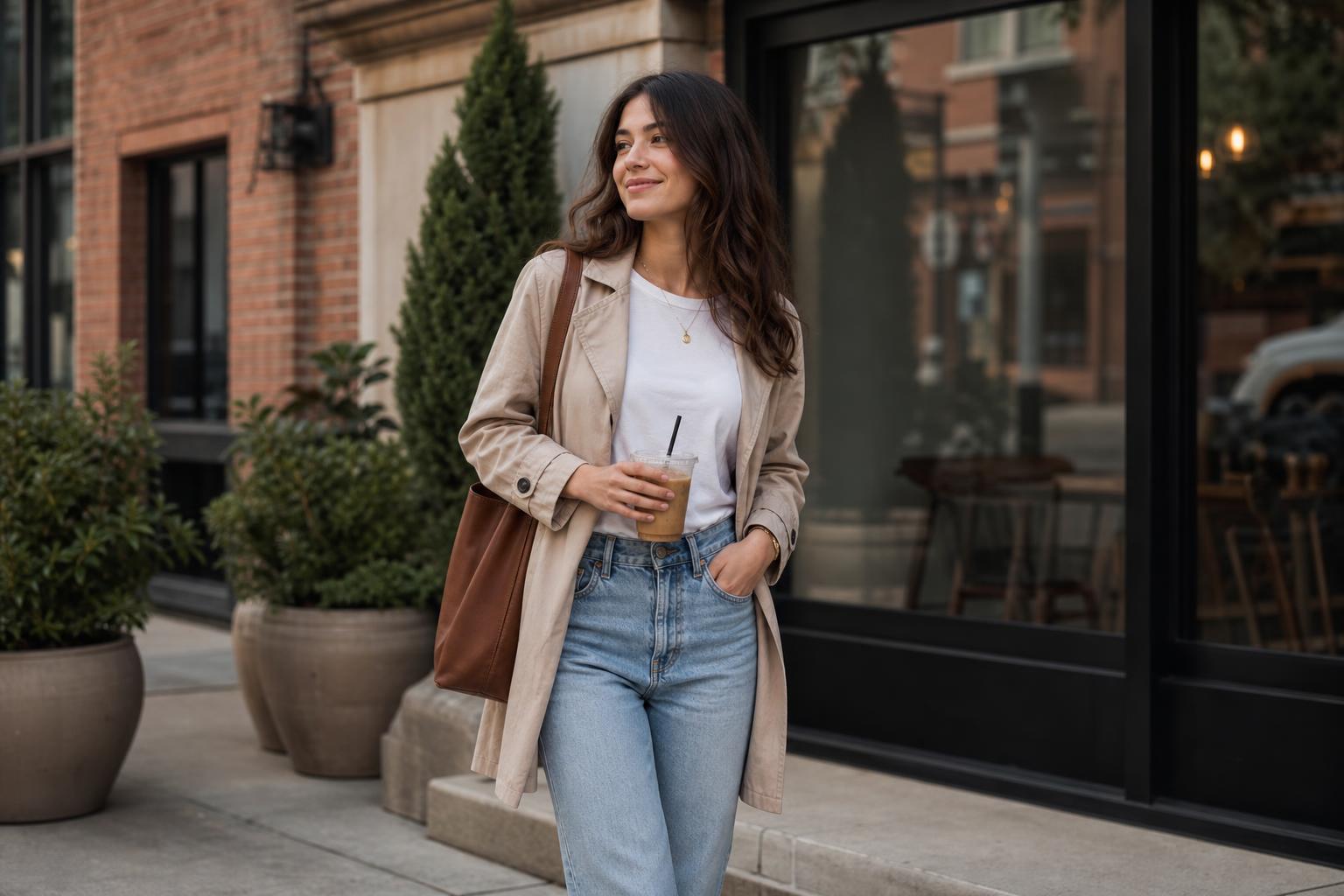
Some of the most useful cute casual outfits sit in the space between ease and intention. That is precisely why readers so often blur the lines between casual outfits and casual-chic outfits: both rely on wearable basics, both favor comfort, and both can begin with the same wardrobe staples—a white tee, denim, sneakers, a knit, a jacket. Yet the final impression is not quite the same. One feels relaxed and straightforward; the other feels refined, slightly more composed, and often more deliberate in silhouette and finish.
In modern American wardrobes, this distinction matters. Daily dressing now moves across home, commute, campus, coffee meetings, flights, city walks, and casual dinners without much time for a complete wardrobe change. That is why outlets such as Who What Wear, Marie Claire, Cosmopolitan, Yahoo Life, College Fashion, and Urban Outfitters repeatedly return to the same core formulas: jeans and tees, midi dresses with sneakers, knit sets, denim layers, loafers, and elevated basics. The real style question is not whether these pieces work, but how they are styled.
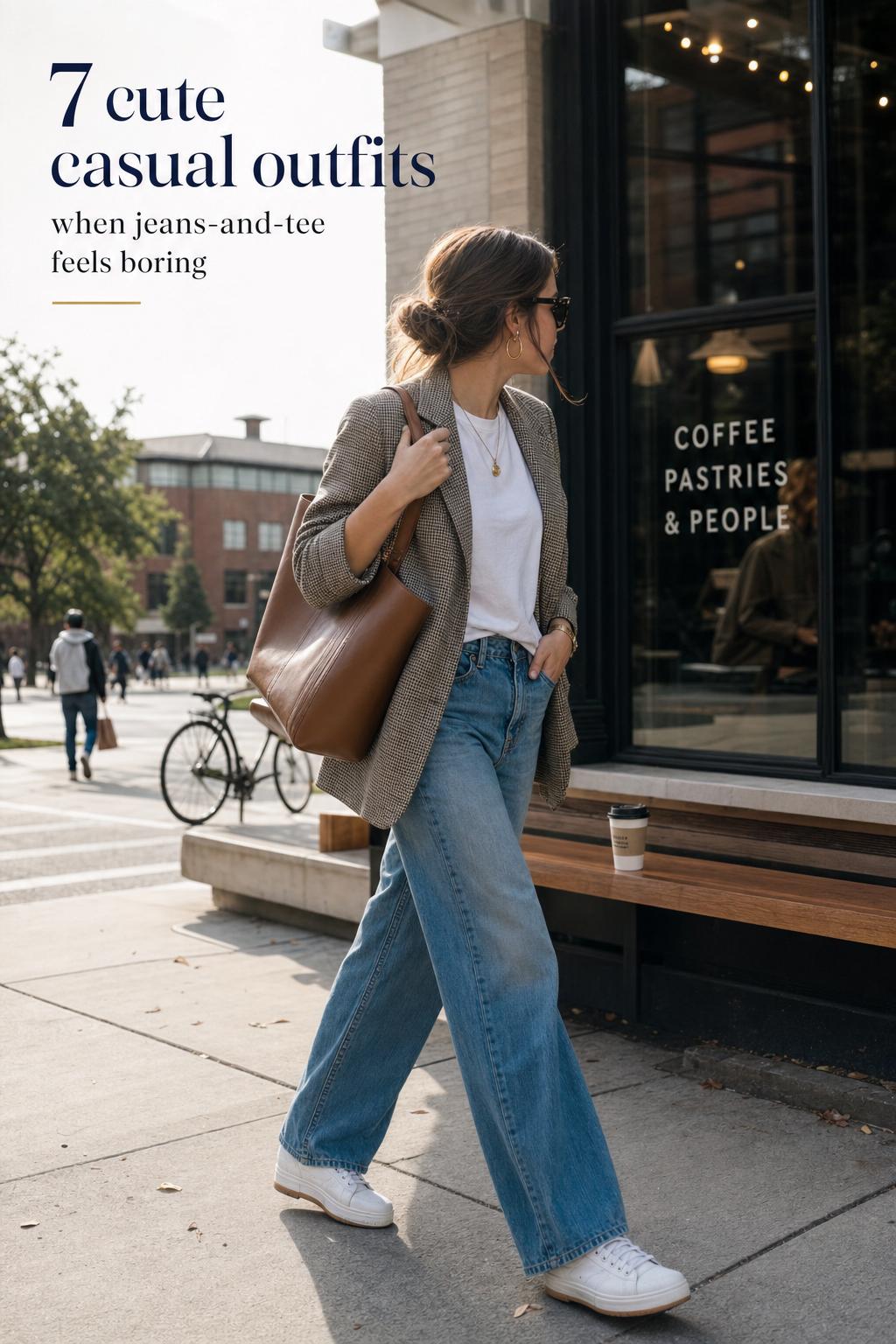
This comparison breaks down how cute casual outfits differ from casual-chic dressing, where they overlap, and how to identify each approach in real life. Along the way, it also clarifies how summer, fall, winter, and spring styling shifts the balance, how city style from New York, Los Angeles, and Chicago influences outfit logic, and how a capsule wardrobe of basics makes both aesthetics far easier to build.
The shared wardrobe language behind both styles
Before separating these aesthetics, it helps to understand why they are so often grouped together. Cute casual outfits and casual-chic outfits are built from the same family of essentials: T-shirts, jeans, lightweight knits, hoodies, sneakers, loafers, denim jackets, neutral coats, midi skirts, casual dresses, bags, sunglasses, and simple jewelry. These are the foundational pieces that appear again and again in everyday fashion coverage because they are versatile, easy to repeat, and adaptable across seasons.
Your wedding has a lot of moving pieces. Your plan can still feel composed.
Zarellea organizes guests, vendors, budget, and timelines in one shared space — so you can make decisions with clarity, not stress.
Both styles also lean on the logic of the capsule wardrobe. Instead of treating every outfit as a trend statement, they use basics as the base and then shift proportion, texture, and accessories to create a different mood. A tee with wide-leg jeans and sneakers can read entirely casual. The same tee with a midi skirt, loafers, and an oversized blazer begins to move toward casual-chic. The ingredients overlap; the composition changes.
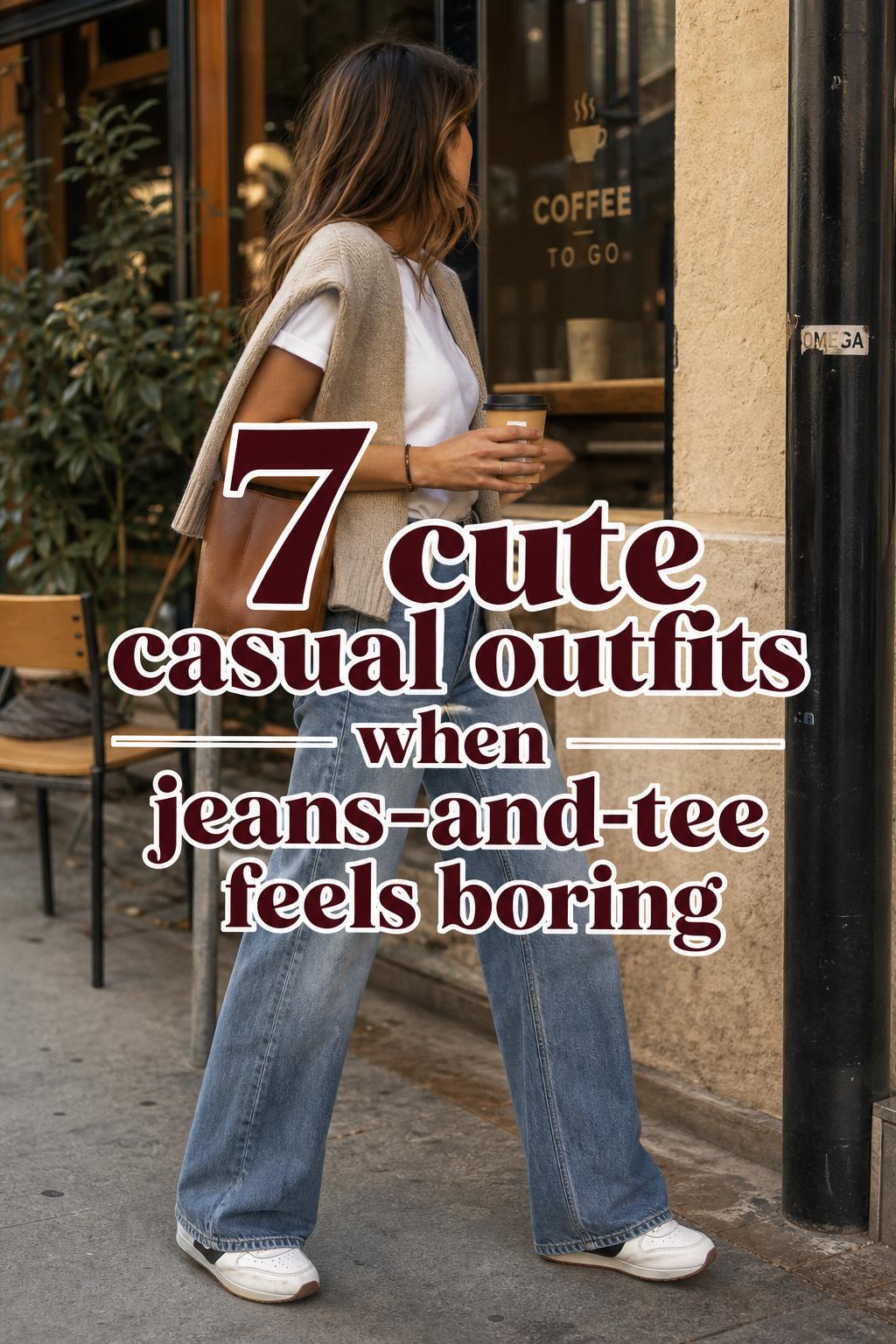
Style overview: cute casual outfits
Cute casual outfits are the more relaxed side of the comparison. Their defining characteristic is immediacy: they look easy to put on, comfortable to wear, and natural in everyday settings. The silhouette is usually uncomplicated—straight or wide-leg jeans with a T-shirt, a hoodie with denim, a simple maxi dress with sneakers, denim shorts with a white tee, or a soft knit set styled with minimal accessories.
The color palette tends to stay approachable. Neutrals dominate, but softer seasonal shifts are common: white, denim blue, beige, gray, and black in the cooler months; pastels, florals, and brighter summer notes in spring and summer. Fabric choices are practical and familiar rather than formal. Denim, cotton tees, lightweight knits, soft loungewear textures, and easy dresses create a wardrobe that feels lived-in rather than structured.
The overall mood is effortless. In fashion media, this often appears through street style references, influencer imagery, and “it girl” shorthand—the sort of look associated with moving through a normal day without seeming overworked. Even when an oversized blazer or a statement accessory enters the outfit, the foundation remains simple.
Style overview: casual-chic outfits
Casual-chic outfits begin in the same wardrobe but finish with more polish. Their defining characteristic is elevation. The pieces themselves may still be familiar—sweaters, midi skirts, trousers, sneakers, loafers, leather accents, trench-style layers, neutral coats—but they are arranged with greater attention to structure, line, and texture. The look remains wearable and practical, yet it projects a slightly sharper point of view.
Silhouettes in casual-chic dressing often feel more composed. A sweater with a midi skirt creates cleaner vertical movement than a hoodie with denim. A knit set under a trench has a more considered finish than a lounge set worn alone. Leather details, tonal dressing, and tailored outerwear shift the mood from simply casual to refined. This is the space Marie Claire often captures with fall layering and elevated basics.
The color palette also tends to look more restrained. Neutrals, tonal combinations, and controlled contrast are common. Rather than relying on playful ease alone, casual-chic style uses balance: soft textures against tailored lines, relaxed fabrics against polished shoes, understated accessories against strong proportions. The result is still accessible, but less spontaneous in appearance.
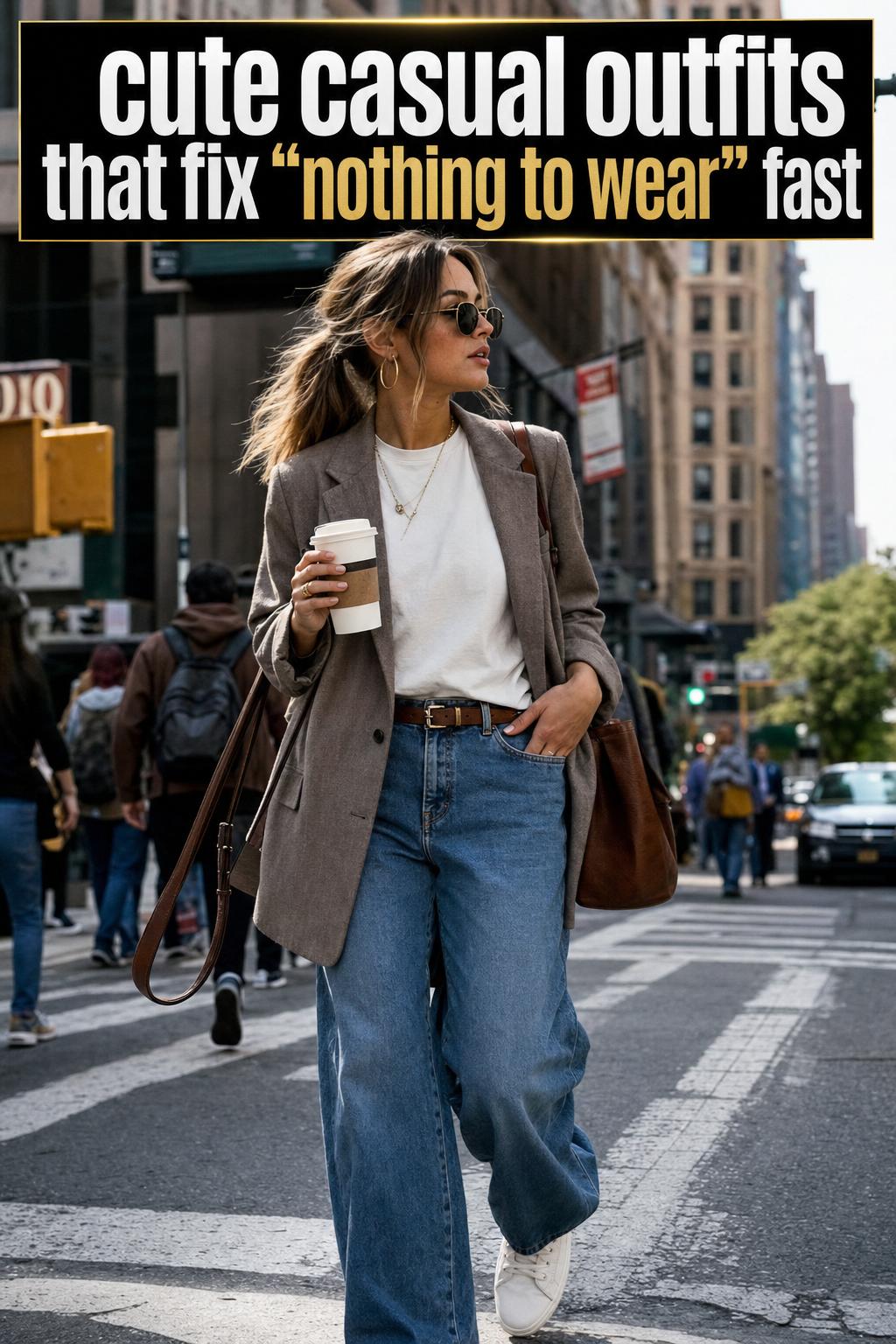
Where the divide becomes visible
Silhouette and structure
The clearest difference lies in silhouette. Cute casual outfits usually prioritize comfort first, then shape. Think everyday jeans and tees, denim shorts with sneakers, or a T-shirt dress styled with minimal layering. Casual-chic reverses that order slightly. Comfort remains important, but shape is considered earlier: a defined coat line, a smoother knit, a midi skirt that lengthens the frame, or loafers that sharpen a simple base.
Color palette and contrast
Cute casual dressing allows more visible softness and spontaneity—summer whites, floral prints, playful denim, and fresh seasonal color. Casual-chic often looks more edited. White-on-white casuals, tonal neutrals, black with cream, or denim paired with a polished knit create a quieter visual field. The effect is not necessarily dressier in a formal sense, but it is visually more controlled.
Level of formality
Neither style is formal, but they perform differently. Cute casual outfits are ideal for errands, campus, daytime social plans, weekend movement, and situations where comfort needs to remain visible. Casual-chic works better when the day includes a lunch meeting, a city dinner, travel that requires polish, or a workplace with relaxed but presentable expectations.
Styling philosophy
Cute casual style says, “start with basics and keep them easy.” Casual-chic says, “start with basics and refine the finish.” That distinction sounds small, but it changes every styling decision, from whether sneakers should look sporty or clean-lined, to whether a jacket should feel thrown on or integrated into the silhouette.
Typical wardrobe pieces
- Cute casual outfits often center on T-shirts, jeans, hoodies, denim jackets, denim shorts, maxi dresses, matching knit sets, sneakers, and playful accessories.
- Casual-chic outfits more often emphasize sweaters, midi skirts, leather accents, loafers, ankle boots, neutral coats, oversized blazers, and tonal knitwear.
- Both styles use basics, but casual-chic leans more heavily on pieces that create clean lines and subtle structure.
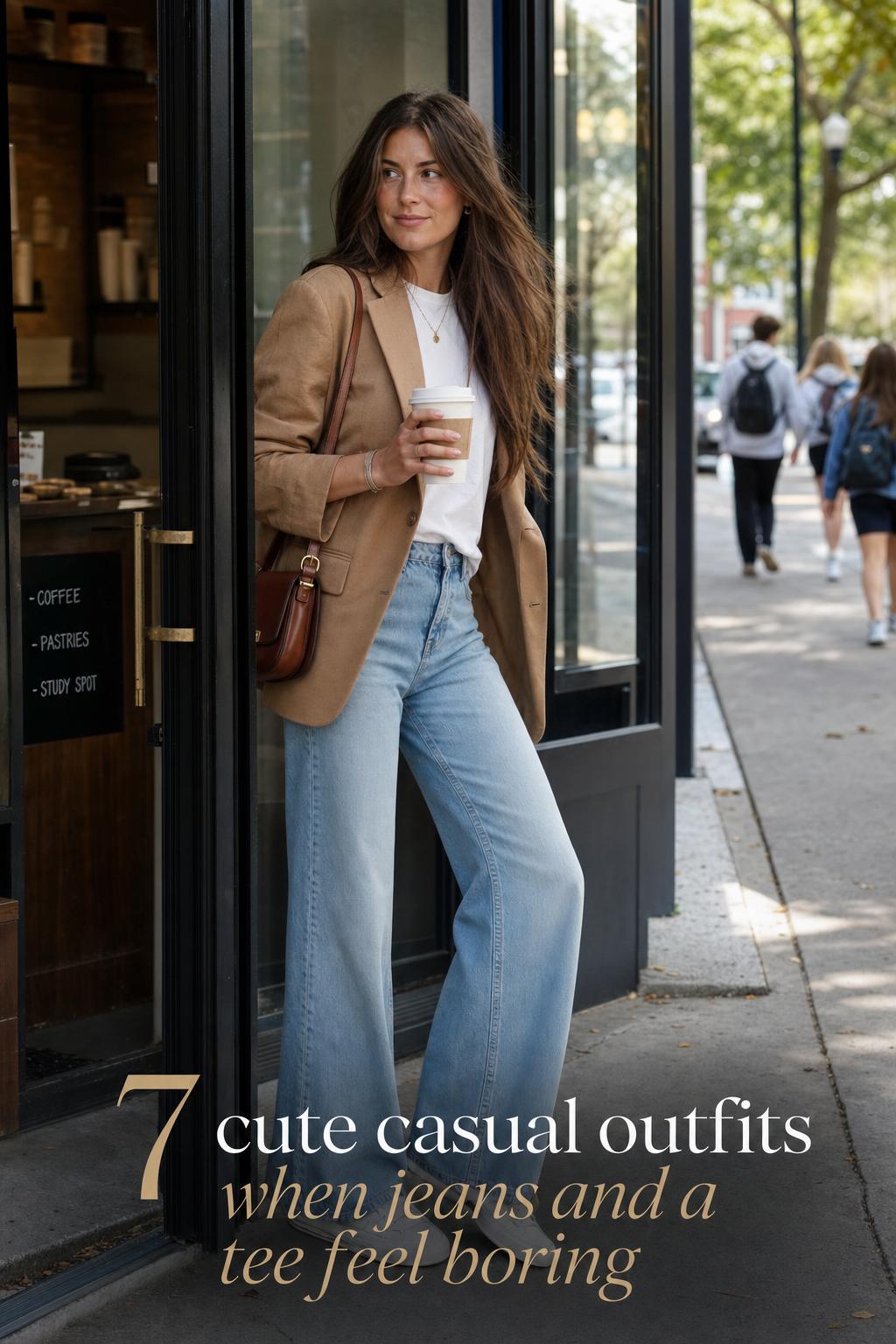
How they read in real life: a visual style breakdown
In everyday wear, cute casual outfits tend to feel more open and immediate. Layering is lighter, proportions are often looser, and the outfit usually looks ready for movement. A white tee tucked casually into wide-leg jeans with sneakers reads as effortless because there is little visual tension in the look. The lines are familiar, the textures are soft, and the accessories support rather than define the outfit.
Casual-chic outfits, by contrast, often rely on contrast. A structured blazer layered over a soft knit set creates tension between polish and ease. A sweater with a midi skirt works because the softness of the knit is balanced by the length and fluidity of the skirt. A neutral coat over denim and loafers introduces a tailored frame around otherwise simple pieces.
Footwear is one of the quickest visual clues. Sneakers anchor both styles, but not in the same way. In cute casual outfits, they often support the relaxed mood of the entire look, especially with dresses, denim shorts, or jeans and tees. In casual-chic dressing, loafers and ankle boots appear more often because they tighten the silhouette. Even when sneakers are used, they tend to function as a clean base rather than a sporty focal point.
Accessories follow the same pattern. Cute casual styling might use sunglasses, a simple bag, or understated jewelry to finish a look without changing its mood. Casual-chic styling uses accessories more strategically. A structured bag, sharper sunglasses, or a slightly more deliberate jewelry choice can shift basics into a more polished register without making the outfit feel dressed up.
The outfit formulas both styles borrow from—and interpret differently
T-shirt, jeans, and sneakers
This is the most familiar foundation in the entire category. In cute casual outfits, the formula is straightforward: a relaxed or fitted T-shirt, everyday denim, and sneakers, perhaps with a denim jacket or hoodie if the weather changes. It is the kind of look often seen in quick street style references and “nothing to wear” days because it always functions.
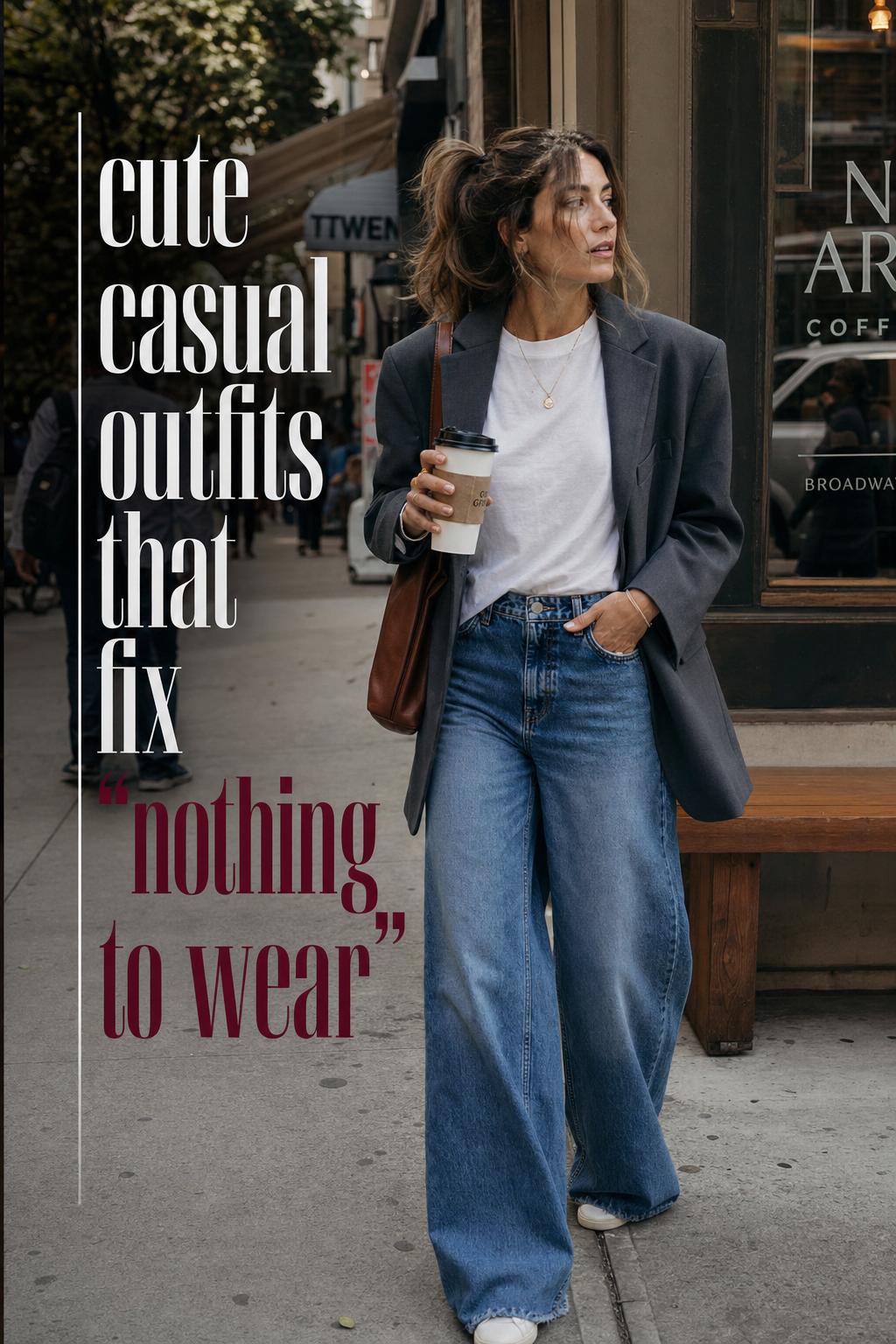
In a casual-chic interpretation, the same formula becomes more precise. The denim may be wide-leg or cleaner in line, the T-shirt more neatly fitted or intentionally tucked, and the top layer more likely to be an oversized blazer or neutral coat than a hoodie. The sneakers remain, but the outfit now has visual architecture.
Midi dress with sneakers
For cute casual summer dressing, this formula is especially effective. A maxi or midi dress with sneakers keeps the silhouette easy while maintaining a feminine softness. The charm comes from not overcomplicating the look. This is why it appears so often in summer outfit roundups from magazines and lifestyle outlets.
Casual-chic takes the same dress and introduces a more defined layer or accessory. A light jacket, a more sculpted bag, or a tonal palette shifts the outfit away from simple ease and toward a polished everyday look. The footwear remains practical, but the dress becomes part of a fuller composition rather than a one-step solution.
Knit set with outerwear
Matching knit sets can belong to either camp, which makes them useful for comparison. In cute casual styling, they lean soft and comfortable, especially when paired with sneakers and minimal accessories. In casual-chic dressing, they become more editorial when layered under a trench-style coat or neutral outer layer. Texture does the work here: the softness of knitwear looks more sophisticated when framed by sharper outerwear.
Denim jacket, tee, and skirt
This formula highlights styling mood. In cute casual outfits, the skirt may feel playful or floral, the jacket relaxed, the footwear uncomplicated. In a casual-chic version, the skirt is often a midi length, the proportions cleaner, and the accessories quieter. The difference is not the presence of denim, but how much the outfit depends on spontaneity versus control.
White-on-white casuals
White-on-white outfits appear simple, yet they reveal styling skill quickly. In a cute casual version, the look feels fresh and easy, often anchored by sneakers and soft layering. In casual-chic dressing, white-on-white becomes more architectural. The appeal comes from clean lines, tonal consistency, and carefully balanced textures. It is one of the fastest ways to make basics appear more refined.
Season changes everything
One reason casual and casual-chic are constantly discussed together is that both need to perform across the entire year. Summer, fall, winter, and spring do not simply change fabrics; they also change styling logic.
Summer: lightness and sneaker-friendly simplicity
Summer favors the cute casual side because the season naturally rewards simplicity. White tees, denim shorts, maxi dresses, and matching sets feel appropriate when layering must remain light. Sneakers with dresses, in particular, capture the relaxed practicality that defines many warm-weather outfit ideas. Casual-chic still works in summer, but it usually requires more discipline in color palette and cleaner accessories so the outfit feels polished without becoming heavy.
Fall: where casual-chic becomes more visible
Fall is the season in which the divide sharpens. Sweaters, midi skirts, leather accents, jackets, and textured knits naturally support a more elevated silhouette. Cute casual fall outfits still rely on denim and layering, but casual-chic often becomes more compelling because the season allows outerwear, tonal dressing, and richer texture combinations.
Winter: comfort versus polish is most apparent
In winter, cute casual outfits often lean into hoodies, soft knits, denim, and practical layering. Casual-chic winter dressing, however, uses neutral coats, ankle boots, polished knitwear, and a more intentional line. The challenge in colder weather is avoiding bulk. When proportions are not managed well, a cute casual outfit can lose definition, and a casual-chic outfit can feel overworked. This is where thoughtful layering matters most.
Spring: balance, florals, and versatile layers
Spring sits comfortably between both aesthetics. Florals, pastels, and lighter jackets make room for playful cute casual outfits, while the return of midi skirts, soft knits, and adaptable outerwear also supports casual-chic combinations. It is perhaps the easiest season for mixing the two.
City influence: how location changes the styling mood
American style is never entirely separate from place. New York, Los Angeles, and Chicago each create a slightly different version of casual dressing, which is useful when deciding whether a look should remain fully casual or lean more chic.
New York style tends to reward sharper lines and stronger layering. An oversized blazer, loafers, a neutral coat, or tonal knitwear can make a simple outfit feel more aligned with city movement. Los Angeles often supports the easier side of the spectrum: relaxed denim, sneakers, T-shirts, light dresses, and softer silhouettes make sense in a climate that rarely demands heavy structure. Chicago, with its stronger seasonal shifts, highlights the practical side of both aesthetics. Layers must work hard there, and that naturally brings outerwear, texture, and proportion into focus.
This city framework is useful because it explains why the same basics can read differently depending on climate and pace. A white tee and denim shorts in Los Angeles can remain simply cute and casual. In New York, the same instinct might become a tee, wide-leg jeans, loafers, and a blazer. The wardrobe overlap is real; the styling context changes the message.
Editorial comparison through real wardrobe scenarios
A day of errands, coffee, and walking
The cute casual approach is the obvious choice here. Jeans, a white tee, sneakers, and a denim jacket offer freedom of movement and enough structure to feel put together. A casual-chic version would not be wrong, but it may feel slightly over-composed for a truly low-key day unless the rest of your wardrobe naturally skews polished.
A casual office or lunch meeting
This is where casual-chic becomes especially practical. A sweater and midi skirt, or a knit set under a structured layer, communicates intention without reading formal. Cute casual outfits can work in these settings too, but they generally need one elevated element—perhaps loafers instead of sneakers or a more tailored jacket—to hold the look together.
Travel days and city weekends
Travel often asks for both comfort and polish, which is why the border between the two styles becomes useful. Cute casual works beautifully for flights and long movement days, especially with soft fabrics and sneakers. Casual-chic is often the better answer if you want to arrive looking immediately ready for lunch, meetings, or photographs without changing first.
“Nothing to wear” mornings
On these days, cute casual outfits usually win because they are built from reliable combinations. College Fashion often captures this logic well: denim, knits, skirts, and floral notes offer enough variation to feel considered without demanding too much thought. Casual-chic can also be effective, but only if your wardrobe already contains easy refined pieces that work together naturally.
Tips for choosing between the two on any given day
- Choose cute casual outfits when comfort needs to stay visible in the final look, not just present behind the scenes.
- Choose casual-chic when your day includes mixed settings and you need the outfit to hold up in more polished environments.
- If the base is very simple, adjust the mood through footwear first: sneakers keep the outfit easier, while loafers or ankle boots sharpen it.
- If the outfit feels flat, add structure before adding trend. An oversized blazer, neutral coat, or cleaner bag often does more than an extra accessory.
- If the outfit feels too rigid, remove one polished element and let a softer texture—denim, knitwear, or a more relaxed tee—rebalance the look.
The capsule wardrobe advantage
A strong capsule wardrobe makes this comparison far simpler because it allows one set of pieces to move between both aesthetics. The most effective core wardrobe for cute casual outfits and casual-chic dressing includes T-shirts, lightweight knits, hoodies, jeans, midi skirts, casual dresses, sneakers, loafers, ankle boots, a denim jacket, and a neutral coat. Add a few accessories—bags, sunglasses, jewelry—and the wardrobe starts to shift fluidly between moods.
This is also why shopping roundups from sources like Who What Wear often reference Zara, J.Crew, COS, and H&M in the same breath. The goal is not simply to buy more pieces; it is to find items that can work across outfit formulas. A tee that only works with denim is less useful than one that also sits cleanly under a blazer or with a midi skirt. A sneaker that only looks sporty is less versatile than one that can move from a maxi dress to a polished knit set.
Urban Outfitters approaches the same idea from a more product-led perspective through denim staples, loungewear, and coordinating sets, while outlets like Marie Claire and Cosmopolitan often frame the conversation through seasonal styling and outfit interpretation. The through line is consistency: great style comes from repeatable pieces arranged thoughtfully, not from constant novelty.
An overlooked distinction: texture and finish
Many readers assume the difference between the two styles is simply “dressier versus more relaxed,” but texture often tells the truth faster than formality does. Cute casual outfits are comfortable with visible softness—cotton tees, washed denim, easy knits, casual dresses. Casual-chic relies more on contrast: leather accents with knits, smoother fabrics under structured outerwear, tonal layers that create depth rather than just coverage.
This matters because two outfits can contain nearly identical pieces and still project entirely different moods. A tee, jeans, and jacket can read youthful and low-key, or sleek and composed, depending on how crisp the layering is, how the colors relate, and whether the finishing pieces sharpen or soften the silhouette. Readers often focus too much on the item list and not enough on the interaction between garments.
Common styling mistakes that blur the look for the wrong reasons
The aim is not to create rigid categories, but there are a few mistakes that make outfits feel accidental rather than intentional. The first is mixing too many competing messages. A polished coat, sporty sneakers, a playful floral piece, and a heavy statement accessory can all work separately, yet together they may weaken the outfit’s direction. The second is ignoring proportion. Wide-leg jeans, oversized outerwear, and bulky shoes can look excellent, but only if the rest of the outfit creates enough balance.
Another common issue is using accessories as decoration rather than structure. In cute casual outfits, accessories should support the ease of the look. In casual-chic dressing, they should sharpen the line or reinforce the palette. If they do neither, they often create visual noise. Finally, many wardrobes rely too heavily on one season’s logic. A summer outfit formula does not always translate directly into fall or winter without adjusting texture and outerwear.
Tips for adapting the look to real wardrobes
If your closet already leans relaxed, do not try to force casual-chic by replacing everything. Start by refining one variable at a time: upgrade the outer layer, add loafers, or choose a more controlled palette. If your wardrobe already feels polished, add ease through sneakers, denim, or a simpler tee so the outfit remains modern rather than stiff.
For readers thinking about sustainability and long-term use, the practical lesson is to favor pieces that travel across both aesthetics. Organic cotton tees, recycled materials in everyday staples, and durable outerwear make more sense when they work in multiple outfit formulas. The same principle applies to size-inclusive and accessibility-aware dressing: the best wardrobe is one that respects comfort, movement, and fit while still allowing for thoughtful styling.
Even image-led fashion references—from Collage Vintage-inspired street style visuals to celebrity and editor styling—are most helpful when treated as composition studies rather than exact formulas. Notice what carries the look: proportion, texture, color restraint, or one elevated accessory. That is the transferable lesson.
So which style should define your wardrobe?
For most people, the answer is neither one exclusively. Cute casual outfits are the backbone of everyday dressing because they are easy, repeatable, and naturally aligned with modern life. Casual-chic is what gives that wardrobe range. It allows the same core basics to move into work-adjacent settings, city weekends, dinners, and travel days without losing comfort.
The most functional wardrobes borrow from both. They keep the softness of casual dressing—denim, tees, sneakers, easy dresses, knit sets—but layer in the polish of casual-chic through midi skirts, loafers, neutral coats, leather accents, and cleaner lines. In practice, that hybrid is often what readers are really looking for when they search for cute casual outfits: not just inspiration, but a smarter way to make basics feel current, flattering, and adaptable.
FAQ
What makes an outfit cute instead of just casual?
A cute casual outfit usually includes the same basics as a standard casual look, but with a more considered sense of balance, color, or styling detail. That might mean a maxi dress with sneakers, a white tee with wide-leg jeans, or denim with a playful skirt rather than the most purely functional combination.
What is the difference between cute casual outfits and casual-chic outfits?
Cute casual outfits emphasize ease first and polish second, while casual-chic outfits begin with the same wardrobe staples but style them with more structure, cleaner lines, and a more refined finish. The difference usually shows up in outerwear, footwear, accessories, and silhouette control rather than completely different clothing categories.
Are sneakers appropriate for casual-chic dressing?
Yes, but the styling matters. In cute casual outfits, sneakers often reinforce the relaxed tone of the look. In casual-chic dressing, they work best when the rest of the outfit has enough structure or tonal balance to keep the result polished rather than sporty.
Which pieces are essential for building cute casual outfits?
The most useful foundations are T-shirts, lightweight knits, hoodies, jeans, midi skirts, casual dresses, sneakers, loafers, ankle boots, a denim jacket, a neutral coat, and simple accessories such as bags, sunglasses, and jewelry. These pieces can be mixed across seasons and adjusted toward either a more relaxed or more polished mood.
How can I make a simple jeans-and-tee outfit look more polished?
Focus on finish rather than adding too many extra elements. A cleaner tuck, an oversized blazer, a neutral coat, loafers, or a more structured bag can shift jeans and a tee toward casual-chic without losing the simplicity that makes the outfit work in the first place.
What are the best cute casual outfits for summer?
Summer usually favors lighter formulas such as a white tee with denim shorts, a maxi dress with sneakers, or a matching knit set styled simply. The reason these combinations work is that they keep the silhouette breathable and uncomplicated while still looking intentional.
How do I transition cute casual outfits from summer to fall?
Begin by adding texture and one practical layer rather than changing the entire outfit formula. A denim jacket, light knit, oversized blazer, or neutral coat can take a summer base into fall, while loafers or ankle boots can make the outfit feel seasonally grounded without overcomplicating it.
Do cute casual outfits work for different body types?
Yes, because the category is built around adaptable basics rather than one fixed silhouette. The key is to choose proportions that feel balanced for your frame, whether that means a more defined waist with a midi skirt, straighter denim with a soft knit, or a longer outer layer to create cleaner vertical lines.
Which brands are often associated with these outfit ideas?
In fashion coverage, brands such as Zara, J.Crew, COS, H&M, Vuori, and Urban Outfitters frequently appear in discussions of casual and casual-chic dressing because they relate to basics, knitwear, outerwear, and easy styling formulas. The value lies less in the label itself and more in whether the piece integrates well into a repeatable wardrobe.
Leave a Reply