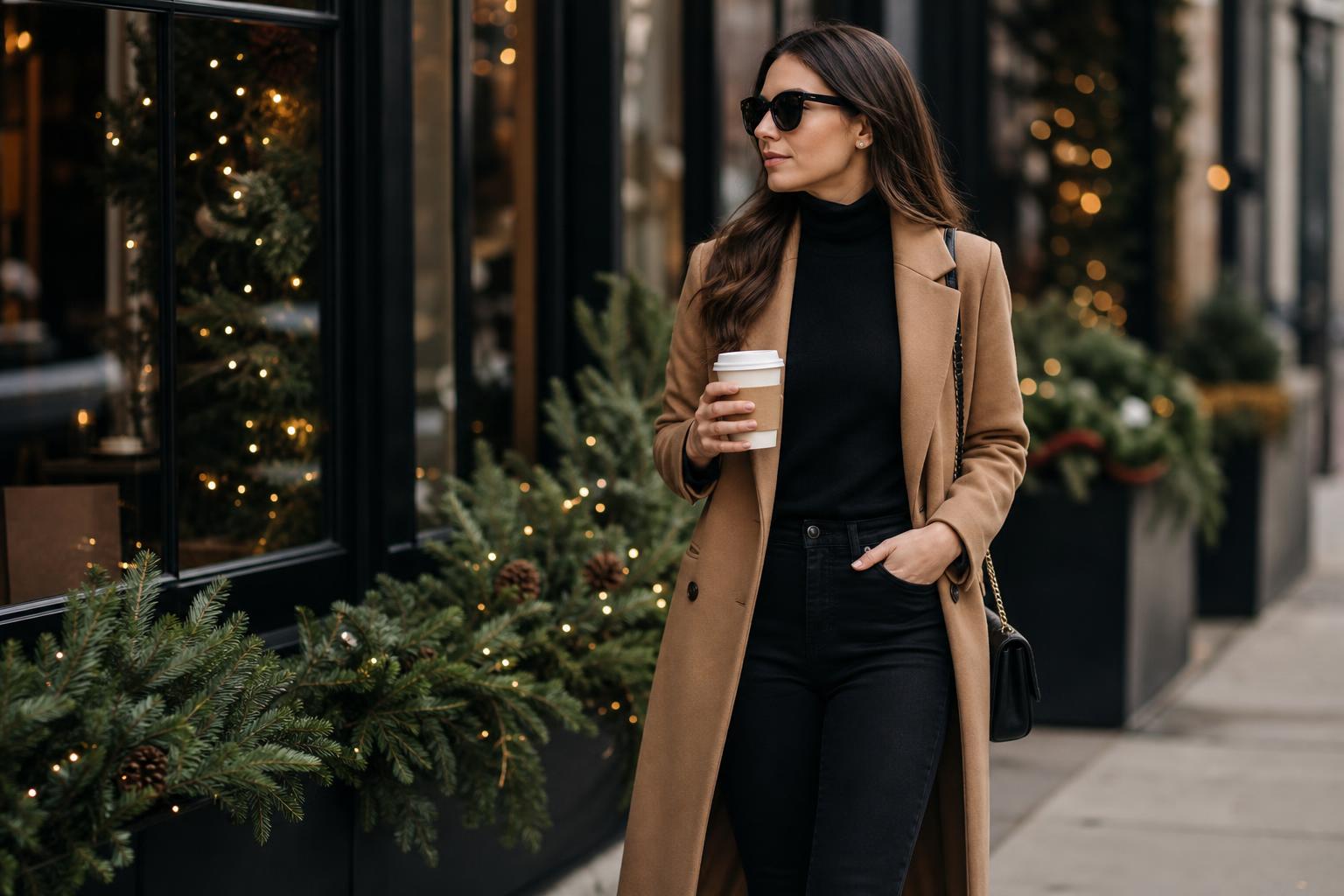
Getting dressed in December often means negotiating three things at once: comfort, polish, and the reality of a calendar that moves from coffee runs to family dinners to last-minute travel in a single day. That is exactly where casual holiday outfits become useful. The most successful versions are not costume-like or overly precious. They rely on thoughtful composition: a clean knit with tailored trousers, denim sharpened by a structured coat, soft textures balanced with practical shoes, and color choices that feel festive without becoming difficult to wear again. A strong holiday wardrobe should work in real life, flatter your proportions, and still feel special enough for the season.
The key is to think like an editor rather than a trend collector. Instead of asking what looks festive in a photograph, ask what pieces will carry you through a long lunch, a cold evening, a road trip, or an office gathering without constant adjustment. A refined casual holiday outfit is usually built from elevated basics, subtle texture, and a silhouette with clear intention. Once those foundations are in place, small details such as velvet, metallic accents, satin, or a richer winter palette do the seasonal work quietly and effectively.
The foundation of a wearable holiday wardrobe
Before building individual looks, it helps to understand why some holiday outfits feel effortless and others feel overdone. Casual dressing during the festive season works best when one element does the visual lifting and the rest remains grounded. That might mean a sequined top with dark straight-leg jeans, a cashmere sweater with satin trousers, or a black knit dress with statement earrings. The outfit feels considered because there is contrast, but it still feels wearable because not every piece is competing for attention.
This is also where budget decisions become easier. Investment pieces should be the items that shape multiple outfits: a tailored wool coat, a refined knit, dark denim with a flattering rise, ankle boots that can handle a full day, and trousers with a clean drape. Seasonal accents are where you can spend less. A metallic flat, a velvet headband, or a more playful bag can create a holiday effect without forcing you into a one-season purchase that sits untouched in January.
Your wedding has a lot of moving pieces. Your plan can still feel composed.
Zarellea organizes guests, vendors, budget, and timelines in one shared space — so you can make decisions with clarity, not stress.
If you are starting from scratch, buy for versatility first. A navy, black, cream, camel, burgundy, or deep forest green palette tends to mix easily while still looking seasonal. These shades also work across casual, office, and family settings, which matters if you are trying to build a compact wardrobe rather than a separate outfit for every invitation.
What to buy first if your closet feels unprepared
- A fine-gauge knit in black, cream, gray, or red toned to your wardrobe
- Dark-wash or black denim with a straight or slim-wide silhouette
- Tailored trousers in wool, ponte, or a fluid crepe fabric
- A polished outer layer such as a blazer, wool coat, or long cardigan
- Comfortable boots or flats that can handle standing, walking, and weather
- One festive accent piece, such as satin, velvet, sequins, or metallic accessories
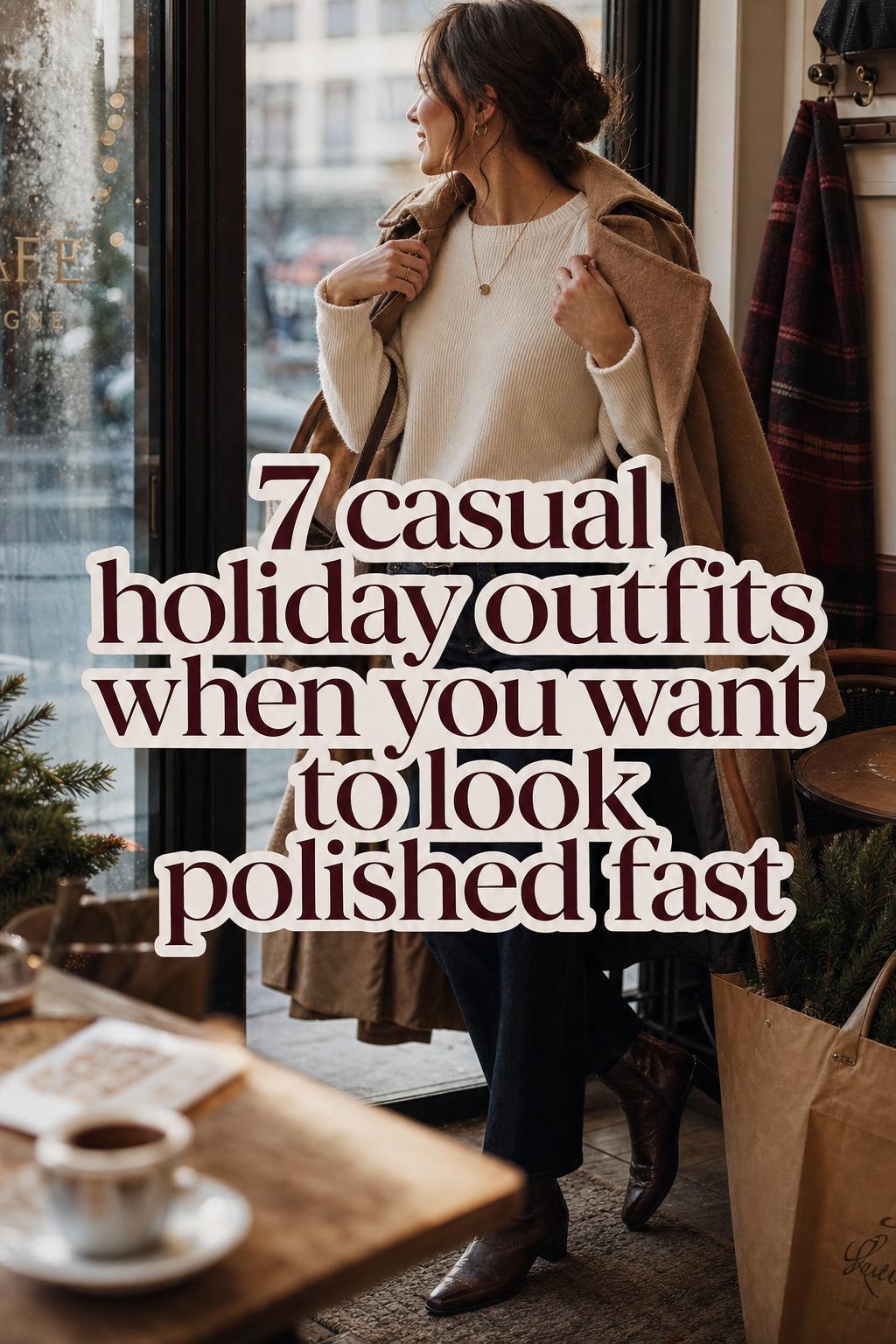
Why proportion matters more than trend during the holidays
Holiday dressing often fails when people focus only on a statement piece and ignore shape. Proportion is what makes an outfit look expensive and intentional, even if every item is relatively simple. A chunky knit works best when balanced by a cleaner lower half. Fluid trousers become more flattering with a fitted or tucked top. A shorter jacket can define the waist, while a longer coat creates vertical length. These are quiet adjustments, but they change how the whole look reads.
For petite frames, too much volume at both the top and bottom can overwhelm. A cropped sweater, a front tuck, or a higher-rise pant usually creates better definition. For curvier proportions, fabric matters as much as cut. A knit with drape rather than stiffness, a trouser that skims instead of clings, and a V-neck or open neckline can help create length without sacrificing comfort. Taller women can often carry long coats, wider trousers, and layered silhouettes beautifully, but even then, one point of structure keeps the outfit from feeling heavy.
That is why a simple combination such as a structured blazer layered over a soft knit and straight jeans often works across many body types. It introduces line, texture, and balance at once. You are not relying on embellishment to make the outfit feel festive; you are relying on a strong silhouette and then adding subtle seasonal character through accessories or color.
Casual holiday outfits for family gatherings that still feel polished
Family settings usually call for a particular kind of practicality. You may be sitting on the floor with children, moving in and out of the kitchen, stepping outdoors, or staying for hours. The outfit should look refined, but it cannot depend on constant fussing. This is the ideal setting for soft tailoring, tactile fabrics, and layers that can adapt to fluctuating indoor heat.
The knit-and-trouser formula
A fine or medium-gauge knit with tailored trousers is one of the most reliable holiday combinations. It works because the knit brings ease while the trousers supply structure. In cream, camel, charcoal, burgundy, or deep green, the outfit feels quietly seasonal without becoming theme-driven. Add loafers, ballet flats, or low-heeled ankle boots depending on the setting.
For a more flattering line, tuck the front of the knit lightly into the trouser waistband. If you prefer more coverage through the midsection, choose trousers with a smooth front and let the sweater skim just over the waistband rather than fully untucked. A simple belt, gold jewelry, or a silk scarf can elevate the look without making it look formal.
Dark denim with a special top
This is one of the easiest casual holiday outfits to recreate because most wardrobes already contain the core pieces. Dark denim instantly reads more polished than distressed or faded jeans, especially in a straight-leg or slim-wide cut. Pair it with a velvet blouse, a satin shell under a cardigan, a subtle sequined knit, or a blouse with gentle volume at the sleeve.
The reason this combination works is balance. Denim keeps the outfit approachable, while the top introduces enough light reflection or texture to feel festive. If you are curvy, choose denim with a clean waistband and enough structure to hold shape through the day. If you are petite, avoid tops that are overly long or heavily ruffled, as they can shorten the leg line. A half-tuck or slightly cropped hem usually improves the proportion immediately.
Tip: choose fabrics that survive a long day
Family gatherings often involve sitting, eating, and moving between warm rooms and cold outdoor spaces. Ponte, wool blends, cashmere, merino, satin with weight, and substantial cotton tend to hold shape better than flimsy synthetics. If a fabric wrinkles quickly, clings, or feels scratchy after an hour, it is not a good holiday choice no matter how appealing it looks on a hanger.
For coffee dates, errands, and festive city afternoons
Some of the best holiday dressing happens outside the official event calendar: a weekend market, a casual lunch, an afternoon of shopping, an impromptu meet-up. These are the moments when style needs to feel easy, layered, and functional. The look should hold up under a coat and still look complete when the coat comes off.
The long coat, knit, and denim combination
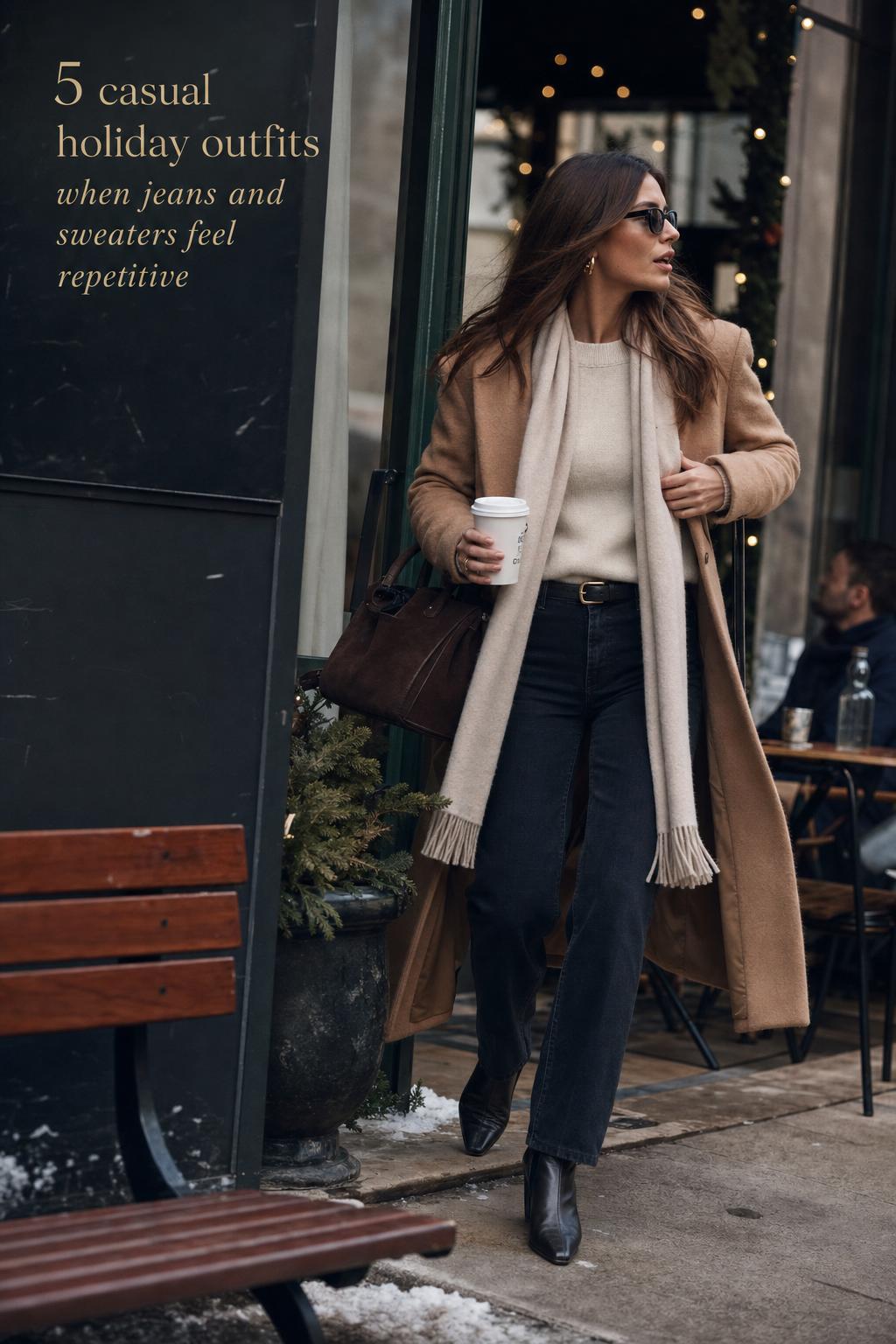
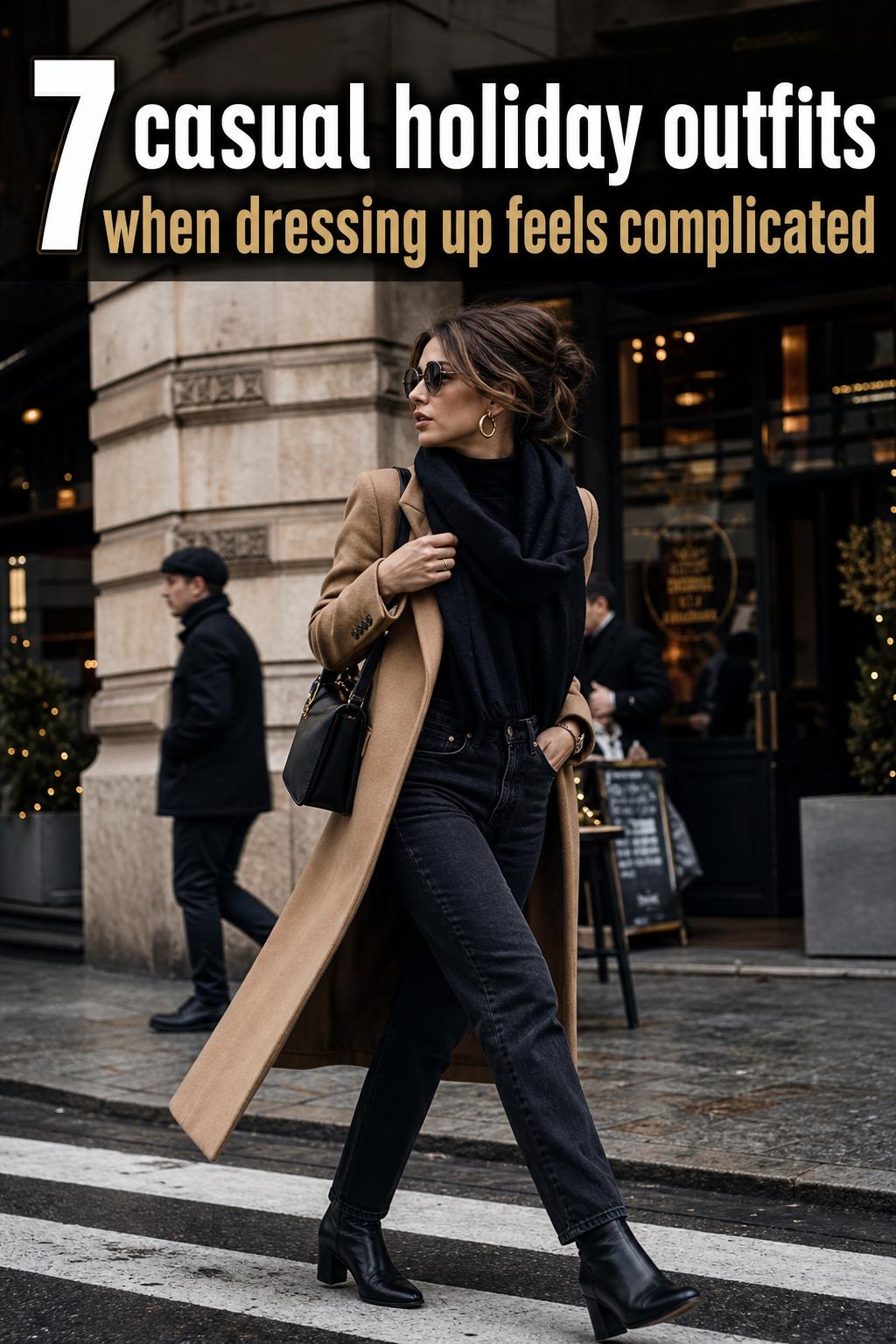
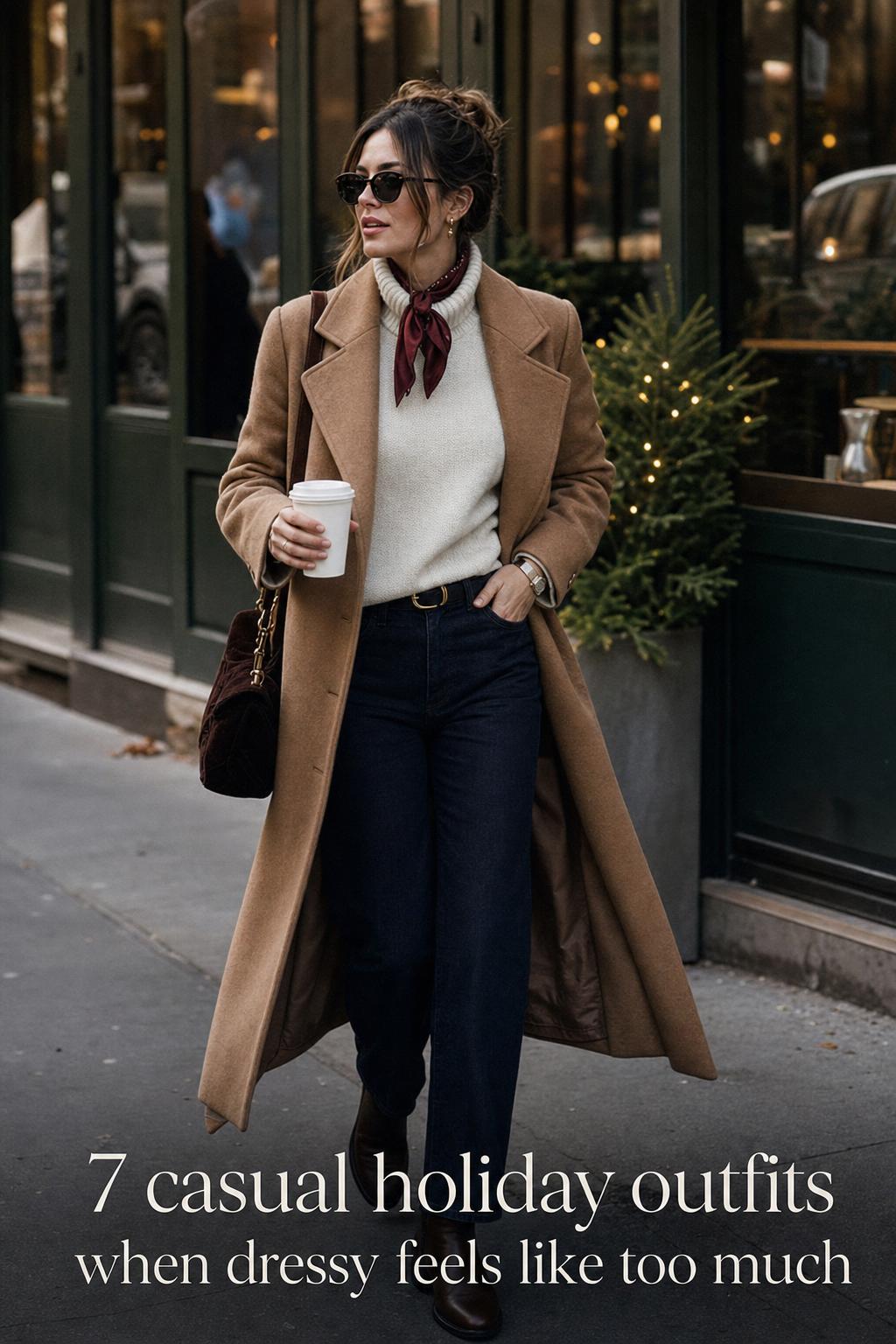
A long wool coat layered over a fitted knit and straight jeans is almost always a successful winter formula. It has the clean lines associated with Paris and Milan street style, but it is also deeply practical. The coat creates vertical polish, the knit keeps the body line neat, and the denim prevents the look from becoming too formal for daytime.
To make this combination feel more holiday-specific, adjust the palette rather than the structure. Try cream and camel, black and burgundy, navy and gray, or winter white with chocolate brown. If you want a more festive note, choose a red knit under a camel coat, or add a metallic bag with otherwise neutral clothing. These choices are easier to wear again than overt novelty pieces.
Relaxed tailoring with sneakers or flats
A blazer with relaxed trousers and a knit tee or slim turtleneck can be an excellent casual holiday outfit when you need movement and comfort. The outfit feels modern because it combines tailored structure with softer essentials. Sneakers can work here if they are clean and minimal; pointed flats or loafers create a sharper finish. This is particularly useful for travel days, gallery visits, or city weekends when you want to look composed but expect to walk.
For curvier figures, a blazer with some waist shaping or a strong shoulder can add definition. For petites, keep the trouser hem clean and avoid bunching at the ankle. A cropped or hip-length blazer often helps maintain proportion more effectively than one that is too long and boxy.
The dinner table balance: casual, but not underdressed
Casual holiday dinners can be deceptively difficult because the environment is relaxed while the expectation is still elevated. The simplest solution is to build around one refined material and keep the rest understated. Satin, velvet, leather, sequins, and ribbed knits all add evening character, but they should be grounded by familiar pieces such as jeans, tailored pants, or a long cardigan.
Satin with knitwear
A satin skirt or satin trousers paired with a soft sweater creates a particularly elegant contrast. The shine gives the outfit enough occasion value, while the knit prevents it from looking overdressed. This pairing also works across age groups and body types because it relies on texture rather than overt tightness or embellishment.
If you are worried about satin emphasizing the hips, choose a cut that skims rather than clings and pair it with a sweater that ends at the top of the hipbone or is lightly tucked. Heavier satin or bias cuts with some substance are generally easier to wear than very thin fabrics, which can highlight every line underneath.
Black basics with one festive interruption
Black is useful during the holidays not because it is dramatic, but because it provides a calm backdrop for texture and accessories. Black jeans with a velvet blazer, a black knit dress with metallic earrings, or black trousers with a sequined shell under a cardigan can all feel seasonally appropriate without becoming formalwear. This is an especially good strategy if you want a look that feels slimming, simple, and easy to repeat in different ways.
The mistake to avoid is making every element dark and matte. If the whole look is black, introduce dimension through fabric: suede boots, a satin camisole, a ribbed knit, or glossy jewelry. The variation in texture keeps the outfit from reading flat.
How to make festive accents look sophisticated
The difference between festive and theatrical often comes down to restraint. Sequins, metallics, faux leather, and velvet all have a place in casual holiday outfits, but they work best when paired with something grounded. A sequined skirt with a cotton shirt and boots feels more modern than sequins from head to toe. A velvet blazer over a white tee and dark denim feels sharper than velvet with multiple competing evening pieces.
- Pair metallic shoes with denim and knitwear rather than with a heavily embellished outfit
- Use velvet in one focused area, such as a blazer, trousers, or flats
- Choose smaller-scale sparkle for daytime, such as subtle sequins or jewelry, instead of full shine
- Let one texture lead and keep the rest matte or softly structured
- Anchor special fabrics with practical silhouettes you already know suit you
This approach also helps with cost per wear. A metallic flat or velvet Mary Jane can work with jeans long after the holiday season, while a highly specific embellished dress may not. If your budget is limited, accessories and knitwear trims often deliver the strongest seasonal effect for the least commitment.
Cold-weather realism: fabrics, layers, and outerwear that actually work
An outfit is only successful if it performs in the weather you are actually living in. Winter dressing needs to account for freezing sidewalks, overheated interiors, rain, snow, and long hours away from home. That is why layering deserves as much attention as the visible outfit itself.
Layering without adding bulk
Start with a thin base if temperatures are low. A fitted long-sleeve layer under a sweater or blouse adds warmth without altering the silhouette. Choose finer knits under blazers and thicker knits under coats. If you stack too many medium-weight layers, the outfit can become stiff and make your outerwear fit poorly.
For skirts and dresses, opaque tights and knee-high boots often create a more practical winter look than bare legs with delicate shoes. For trousers, the fabric weight matters. Lightweight summer tailoring tends to lose authority in winter and can look disconnected from heavy coats and boots. Wool blends, brushed cotton, denim, and substantial knits usually integrate better.
Outerwear that elevates the entire look
Outerwear is often the first thing people see, so it should support the mood of the outfit rather than work against it. A tailored wool coat makes denim and knitwear feel refined. A belted wrap coat is flattering for many body shapes because it defines the waist while maintaining softness. A classic puffer can work for very casual settings, but if the rest of your outfit is polished, choose one with a cleaner line and minimal detailing.
If you travel frequently during the holidays, a coat in camel, charcoal, navy, or black will integrate with more outfits than a bright trend color. This matters more than it seems, because coat repetition is inevitable in winter. A versatile coat gives your entire wardrobe more range.
Casual holiday dressing on a budget
There is no need to buy an entirely new wardrobe for a few festive weeks. In fact, the most convincing casual holiday outfits usually come from reworking familiar staples with one or two strategic additions. The goal is to create a different mood, not an entirely different identity.
Where to spend and where to save
Spend more on the pieces that influence fit, comfort, and repeat wear: boots, a coat, trousers that drape well, and knitwear that does not pill after two wears. Save on trend-led accents such as party jewelry, a satin blouse, a velvet hair accessory, or a metallic bag. These are the details that can refresh basics without requiring a large investment.
- Rewear dark jeans and upgrade the top instead of buying new bottoms
- Add festive earrings to a simple black sweater dress
- Use a blazer to sharpen a basic tee-and-denim combination
- Choose one rich color, such as burgundy or forest green, to make existing neutrals feel seasonal
- Shop your closet for texture before shopping for new silhouettes
A common budget mistake is buying multiple inexpensive “holiday” pieces that are difficult to style with the rest of the wardrobe. One better knit, one polished shoe, and one special accessory usually create more outfits than several novelty items.
Body type adaptations that make outfits easier to wear
Good styling advice should not assume every silhouette works on every body in the same way. The strongest casual holiday outfits can be adapted through hem length, rise, neckline, and fabric weight without losing their overall effect.
For petites
Keep visual breaks intentional. High-rise jeans or trousers, cropped jackets, shorter knits, and shoes that do not heavily cut off the ankle often help create a longer line. If wearing a midi skirt, choose one that falls at a flattering point on the calf and pair it with a more fitted top or heeled boot to preserve balance.
For curvy shapes
Look for pieces that define shape without constriction. Wrap-style knits, softly tailored blazers, straight or gently wide trousers, and dresses with waist emphasis are often especially effective. Avoid fabrics that are both thin and clingy, particularly in satin or jersey, unless the cut is exceptional. Structure in the right places usually looks more elegant than tightness.
For tall frames
Long coats, wide-leg trousers, knee boots, and layered knits can look particularly strong on taller proportions. The main consideration is not to let everything become oversized at once. Keep one area clean, such as a fitted turtleneck under a generous coat, or a defined waist with full trousers.
For those prioritizing comfort
Comfort does not require sacrificing refinement. Knit dresses with a strong cut, elastic-back tailored trousers, loafers with cushioning, and soft wool layers can all look polished. The more comfortable you are, the more naturally the outfit wears. Holiday dressing should support the day, not interrupt it.
Small styling decisions that make outfits look more expensive
Even very simple outfits can read elevated when details are handled carefully. Pressed trousers, a clean hem, tonal layering, and coherent accessories all contribute more than people realize. Casual holiday outfits become polished through editing, not excess.
- Choose one metal tone for jewelry and hardware when possible
- Steam satin, velvet, and trousers before wearing them
- Keep shoes in good condition, especially black leather and suede styles
- Use a structured bag to sharpen softer outfits
- Stick to a controlled palette and add contrast through texture
- Check how the outfit looks with the coat on, not just indoors
Another often-overlooked detail is sock and hosiery choice. Visible athletic socks with a polished trouser or party-adjacent skirt can break the line unless that contrast is intentional. The same is true of underlayers that show through thin fabrics. Quiet technical details are often what separate a thoughtful outfit from one that feels unfinished.
From casual brunch to office gathering: adapting one outfit across occasions
One of the smartest ways to approach holiday dressing is to build adaptable outfits rather than isolated looks. A pair of black trousers with a cream knit and ankle boots can move from brunch to an office gathering with only a few adjustments. Swap the daytime tote for a smaller structured bag, add a blazer, change to a heeled boot or polished flat, and introduce earrings or a red lip if that suits your style. The base remains stable; the finish changes.
The same logic works with denim. Straight dark jeans, a black fitted knit, and a wool coat can be daytime casual. Replace everyday sneakers with a metallic ballet flat or heeled boot, add a velvet blazer or satin camisole, and the outfit becomes dinner-ready without needing a full change. This kind of modular thinking is especially useful for travel, packed schedules, and smaller wardrobes.
Tip: build around one “bridge” piece
A bridge piece is an item that can cross settings easily, such as a fine turtleneck, a black midi skirt, a tailored blazer, or elegant dark denim. If a piece only works in one exact holiday scenario, it is less useful than something that can be dressed up or down by changing shoes, jewelry, and outerwear.
Common mistakes that weaken casual holiday outfits
Holiday style often goes wrong in predictable ways. The clothes themselves are not necessarily the problem; it is usually the lack of balance, practicality, or context.
- Choosing fabrics that wrinkle, itch, or cling after an hour
- Wearing shoes that are elegant in theory but impossible for the event length or weather
- Adding too many festive details at once, which can make the outfit feel costume-like
- Ignoring the role of outerwear and ending up with a coat that clashes with the look
- Selecting silhouettes that look good standing still but are uncomfortable while sitting or moving
- Buying very specific seasonal pieces before securing versatile basics
There is also the issue of formality mismatch. A sequined minidress may feel out of place at a relaxed family lunch, while plain leggings may feel too casual for a holiday dinner even if the invitation says informal. When in doubt, choose elevated basics with one special element. It is the most reliable middle ground.
A practical capsule for the season
If you want a streamlined approach, a small holiday capsule can cover most December occasions with surprisingly few pieces. The ideal version includes items that layer well, share a consistent color story, and can shift through accessories and texture. This is how wardrobes in places with strong winter style traditions often feel so composed: not because they contain endless options, but because the options relate to one another.
- One wool coat
- One blazer or structured cardigan
- Two to three knits in complementary colors
- One pair of dark jeans
- One pair of tailored trousers
- One skirt or knit dress
- One festive top or accent piece
- Two shoe options, one practical and one more polished
- A small set of jewelry or accessories that can change the mood quickly
With a capsule like this, you can create combinations that feel varied without drifting into clutter. More importantly, you reduce the temptation to buy one-off pieces that do not integrate with the rest of your wardrobe. Thoughtful repetition is one of the foundations of personal style.
FAQ
What are the easiest casual holiday outfits to recreate with clothes I already own?
The simplest combinations are usually dark jeans with a special top, tailored trousers with a soft knit, or a black knit dress with polished accessories. These formulas work because they mix familiar basics with one seasonal element such as velvet, satin, metallic shoes, or statement jewelry.
How can I make a casual holiday outfit feel festive without looking overdressed?
Use one festive detail at a time and keep the rest of the outfit grounded. A velvet blazer with denim, a satin skirt with a sweater, or metallic flats with black trousers creates seasonal interest without pushing the outfit into formalwear.
Which pieces are worth investing in for holiday dressing?
The best investments are a versatile wool coat, comfortable boots or polished flats, quality knitwear, and trousers that fit well and drape properly. These are the pieces that shape multiple outfits and continue working well after the holiday season ends.
What should I avoid when putting together a casual holiday look?
Avoid combining too many festive elements at once, choosing uncomfortable fabrics, or wearing shoes that do not suit the weather or event length. It is also wise to avoid silhouettes that require constant adjusting, since ease is part of what makes a casual holiday outfit convincing.
How do I style casual holiday outfits if I am petite?
Focus on clean lines, higher rises, and intentional hemlines. A cropped knit, straight dark jeans, a shorter blazer, or a fitted top with a midi skirt can help create length, while too much bulk at both top and bottom may make the outfit feel heavy.
Can I wear jeans to a holiday gathering?
Yes, especially if they are dark-wash, black, or have a clean, structured finish. Jeans look more polished when paired with a refined top, a blazer or wool coat, and shoes that feel deliberate rather than purely casual.
How can I dress for a holiday dinner if I want to stay comfortable?
Choose soft but structured fabrics such as knitwear, ponte, wool blends, or a substantial satin paired with comfortable shoes. A sweater with tailored trousers or a knit dress with boots often gives enough comfort for a long evening while still looking composed.
What colors work best for casual holiday outfits?
Black, cream, camel, navy, charcoal, burgundy, deep green, and winter white are especially useful because they feel seasonal but remain versatile. These shades also mix well together, making it easier to build multiple outfits from fewer pieces.
How do I build a casual holiday wardrobe on a budget?
Start with the basics you will wear repeatedly, such as dark denim, one pair of tailored trousers, a knit, and practical shoes. Then add one or two lower-cost accents like festive earrings, a velvet accessory, or a satin blouse to give your existing wardrobe a more seasonal finish.
Leave a Reply