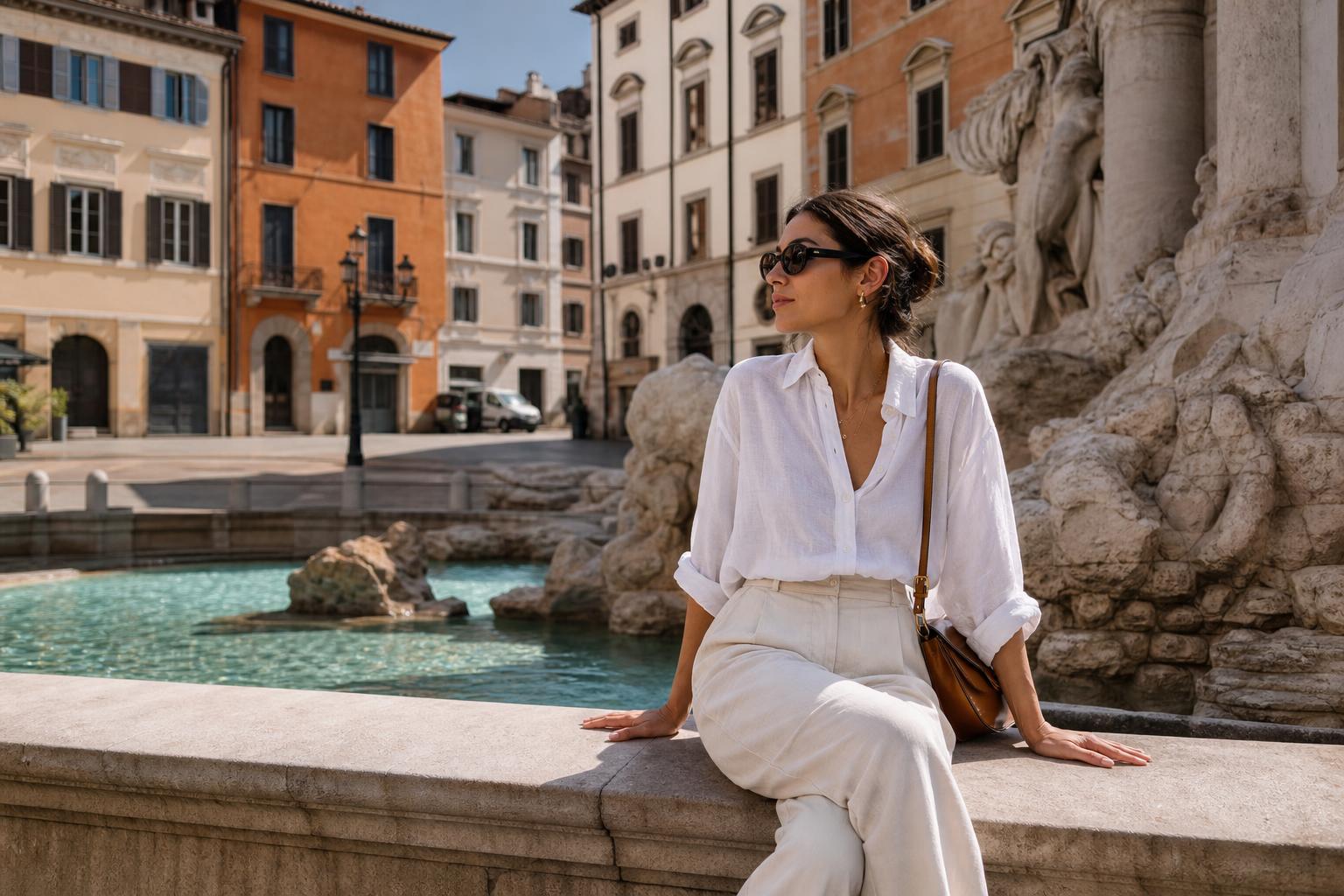
The challenge with summer europe outfits is not finding inspiration. It is narrowing that inspiration into a wardrobe that can handle long walking days, changing regional weather, compact packing, and the quiet expectation of looking polished in cities such as Paris, Milan, Rome, or Barcelona. Many travelers overpack for fantasy versions of their trip, then discover they needed breathable fabrics, comfortable footwear, and a stronger sense of outfit logic.
Europe in summer also creates a specific style tension. You want ease, but not carelessness; comfort, but not bulk; variety, but not an overstuffed suitcase. A dress and sandals may feel ideal for Southern Europe, while Northern or Central Europe can call for light layers and more flexible combinations. The most useful wardrobe is not the trendiest one. It is the one that works from sightseeing to dinner, city street to coastal promenade, with only a few intelligent swaps.
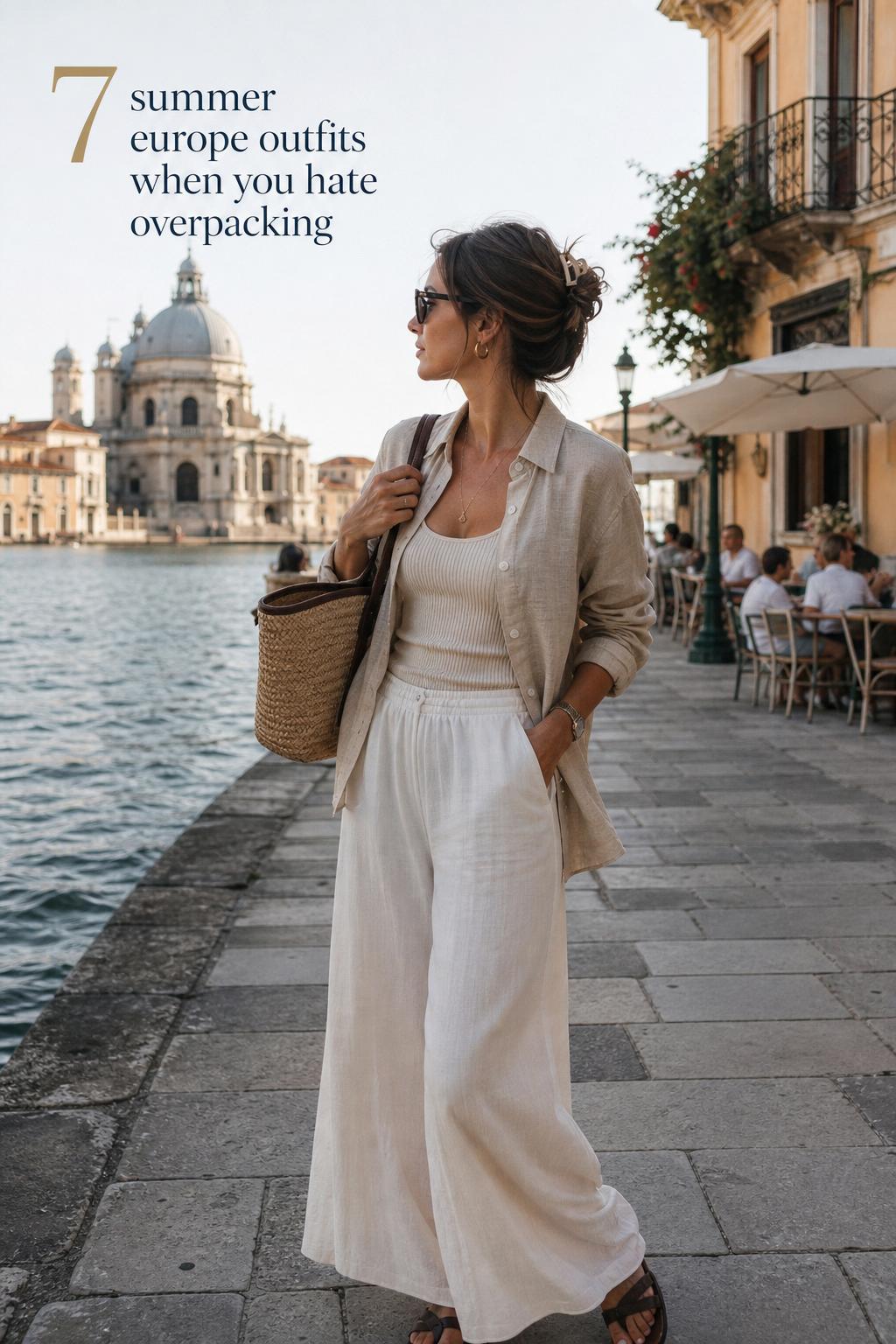
This guide approaches the problem the way a fashion editor would: by looking at silhouette, fabric, proportion, and practicality first. You will find a realistic capsule, climate-aware styling principles, and outfit solutions that help you dress well across Europe without losing comfort or refinement.
Why dressing for a European summer feels more complicated than it should
The difficulty usually begins with the phrase “European summer” itself. It suggests one mood, but the reality is broad. A Mediterranean itinerary points toward hot, sunny days and airy dressing, while Nordic or Northern Europe summers may require a lightweight cardigan, a linen shirt layered over a tee, or walking shoes that can handle cooler mornings. Central Europe adds another variable: rain risk and the need for adaptable layers.
Your wedding has a lot of moving pieces. Your plan can still feel composed.
Zarellea organizes guests, vendors, budget, and timelines in one shared space — so you can make decisions with clarity, not stress.
Then there is movement. A travel wardrobe does more work than a home wardrobe. It needs to survive transit, museum days, outdoor lunches, evenings out, and repeated wear. Pieces that look beautiful in isolation can fail quickly if they wrinkle too aggressively, require special care, or only work with one pair of shoes. That is why the strongest summer travel outfits are built from repeatable formulas: a midi or maxi dress with sandals, a linen shirt with wide-leg pants, or a simple dress finished with a denim jacket at night.
Style pressure plays its part too. Readers often want the effortless confidence associated with European street style, especially the clean restraint linked to Paris, the polished confidence of Milan, or the easy city-to-coast elegance associated with the Amalfi Coast and Barcelona. The answer is rarely buying more. It is choosing a smaller set of versatile pieces in breathable fabrics and composing them with intention.
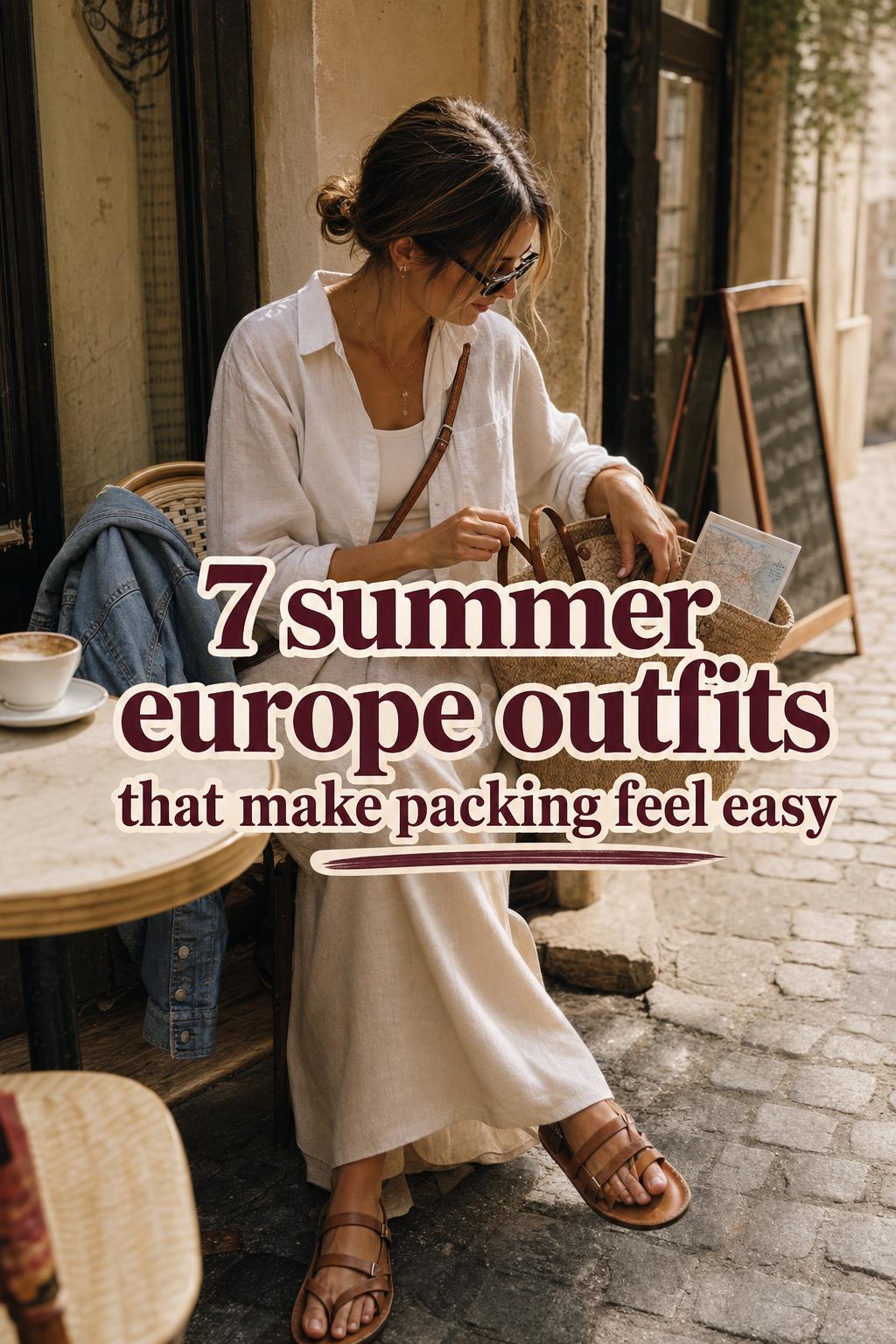
The dressing principles that solve the problem
Before choosing individual outfits, it helps to understand the logic behind them. A successful Europe summer wardrobe is less about trend collecting and more about building combinations that can shift with weather, activity, and setting.
Start with breathable fabrics
Linen remains central for a reason. It appears throughout summer travel style because it breathes well, feels appropriate in heat, and immediately creates a relaxed but elevated texture. Cotton, viscose, and other breathable blends are equally useful, especially when you want softness or slightly more fluid drape. In hotter parts of Southern Europe, these fabrics reduce the heavy, overdone feeling that can come from synthetics or overly structured layers.
Use a capsule wardrobe mindset
A capsule wardrobe is simply a small group of pieces designed to work together. For summer Europe outfits, this matters because it reduces overpacking while increasing outfit range. Repetition is not a weakness on a trip. If your sandals, tote, linen shirt, dress, and trousers all coordinate, your wardrobe becomes calmer and more useful.
Balance relaxed textures with clean lines
European summer style often feels polished because soft, airy fabrics are grounded by clear silhouette. A loose linen shirt looks sharper with wide-leg pants that skim rather than overwhelm. A flowing maxi dress feels more refined with minimal sandals and a structured crossbody bag. Texture gives the outfit warmth; clean lines keep it modern.
Dress for walking, not just photographs
Travel-ready fashion is different from event dressing. Sandals are a core piece, but they are not the only answer. Espadrilles and sneakers matter, especially for city walking tours or days that stretch longer than expected. Footwear should support the rhythm of the trip, not just the mood of one outfit.
Build in day-to-night flexibility
The strongest outfits transition with minimal effort. A dress worn with flat sandals and a woven tote by day can move into evening with jewelry, sunglasses removed, and a lightweight jacket or cardigan added after sunset. That flexibility is what makes a wardrobe feel intelligent rather than excessive.
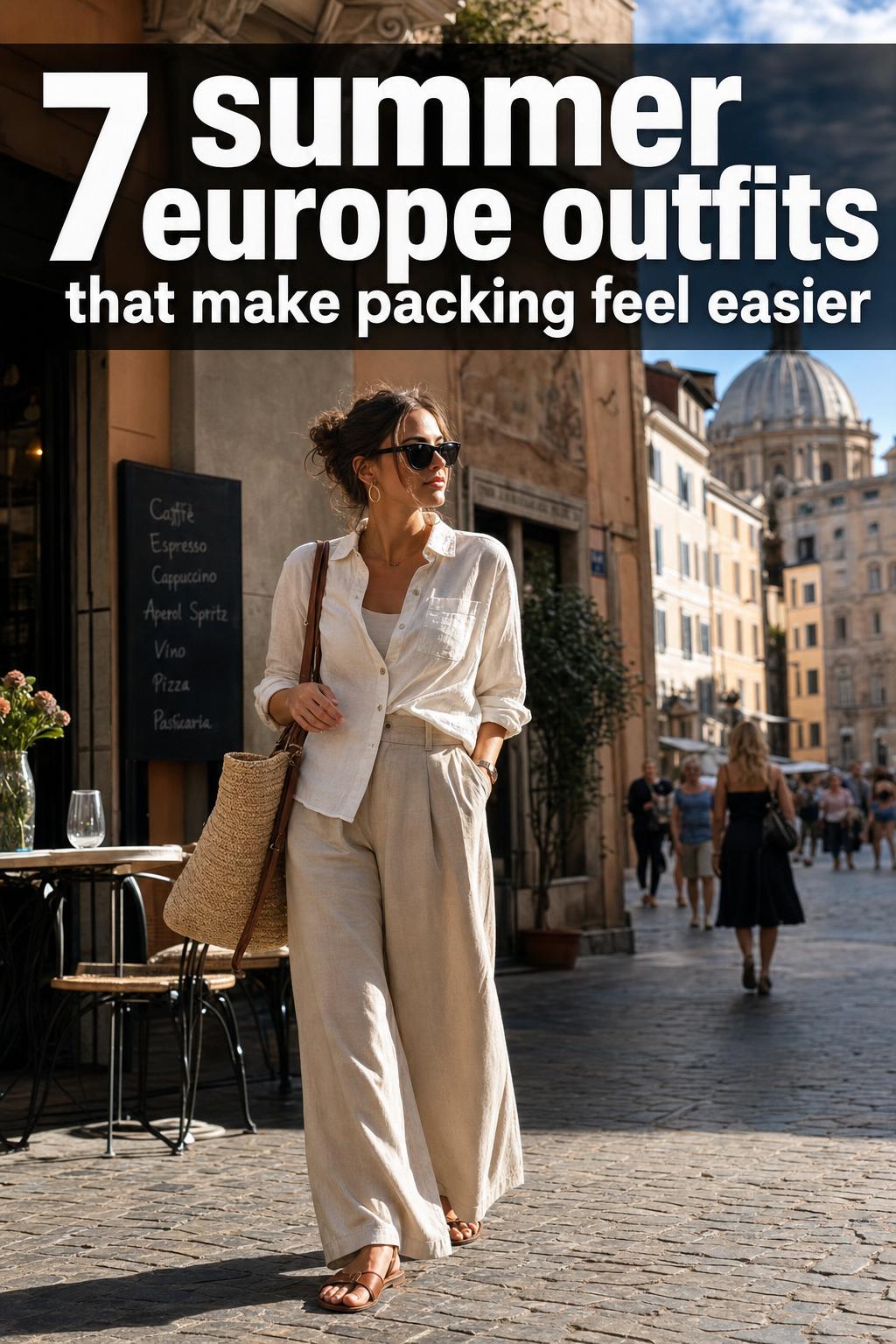
The essential 7-piece capsule for two weeks of summer travel
If you want a practical framework, a 7-piece capsule is one of the clearest ways to simplify packing. Accessories and footwear can vary, but the clothing core should feel disciplined. This kind of structure works particularly well for travelers moving between cities or combining coast and urban stops.
- A linen shirt
- A midi or maxi dress
- Linen pants or lightweight trousers
- A breathable top or tee
- A matching set or skirt option
- A lightweight cardigan or jacket
- A second dress or easy evening piece
What makes this capsule effective is not the exact number alone, but how the pieces interact. The linen shirt can work open over a dress, tucked into trousers, or tied at the waist with a skirt. The maxi dress functions as a complete look on hot days. Lightweight trousers ground the wardrobe for cooler mornings, flights, or museums. A matching set offers visual polish with almost no styling effort, while a cardigan or light jacket handles Central Europe layering needs and late-night temperature drops.
This approach reflects what fashion editors and travel-focused wardrobes consistently prioritize: a small set of elevated basics with strong interchangeability. It also leaves room for accessories that shift the tone without taking over your suitcase.
Climate matters: how to adapt your outfits across Europe
One reason travelers struggle is that they plan for Europe as a single destination instead of a set of regional climates. A wardrobe that feels perfect for the Amalfi Coast may not feel complete in Northern Europe. Small adjustments make a major difference.
Southern Europe: light, breathable, and sun-aware
In Rome, Barcelona, or Mediterranean destinations, the formula is straightforward: breathable fabrics, open silhouettes, and accessories that support sun exposure. Linen dresses, cotton tops, sandals, basket bags or woven totes, sunglasses, and a sun hat all make sense here. Floral dresses and linen sets also sit naturally in this setting because they feel relaxed without losing charm.
The main mistake in hotter destinations is adding too much structure. Heavy layering works against the climate. Instead, create polish through color balance, a neat crossbody bag, or subtle jewelry.
Northern Europe: easy layers and slightly more coverage
For Nordic or cooler summer regions, keep the same clean wardrobe base but shift toward light layering. A linen shirt over a breathable tee, lightweight trousers, and walking shoes often feel more useful than a bare-shouldered look. A cardigan is not just practical here; it gives outfits a more composed line, particularly when worn over dresses in the evening.
This is also where fabric mix matters. Linen remains helpful, but lightweight blends and slightly more substantial pieces create a wardrobe that feels intentional rather than underprepared.
Central Europe: dress with rain and transitions in mind
Central Europe often calls for the most flexibility. A simple summer dress still earns its place, but it should work with both sandals and sneakers or espadrilles. A denim jacket or lightweight outer layer becomes more important here because weather shifts can affect the entire feel of the day. You are not building a different wardrobe, only a more adaptive one.
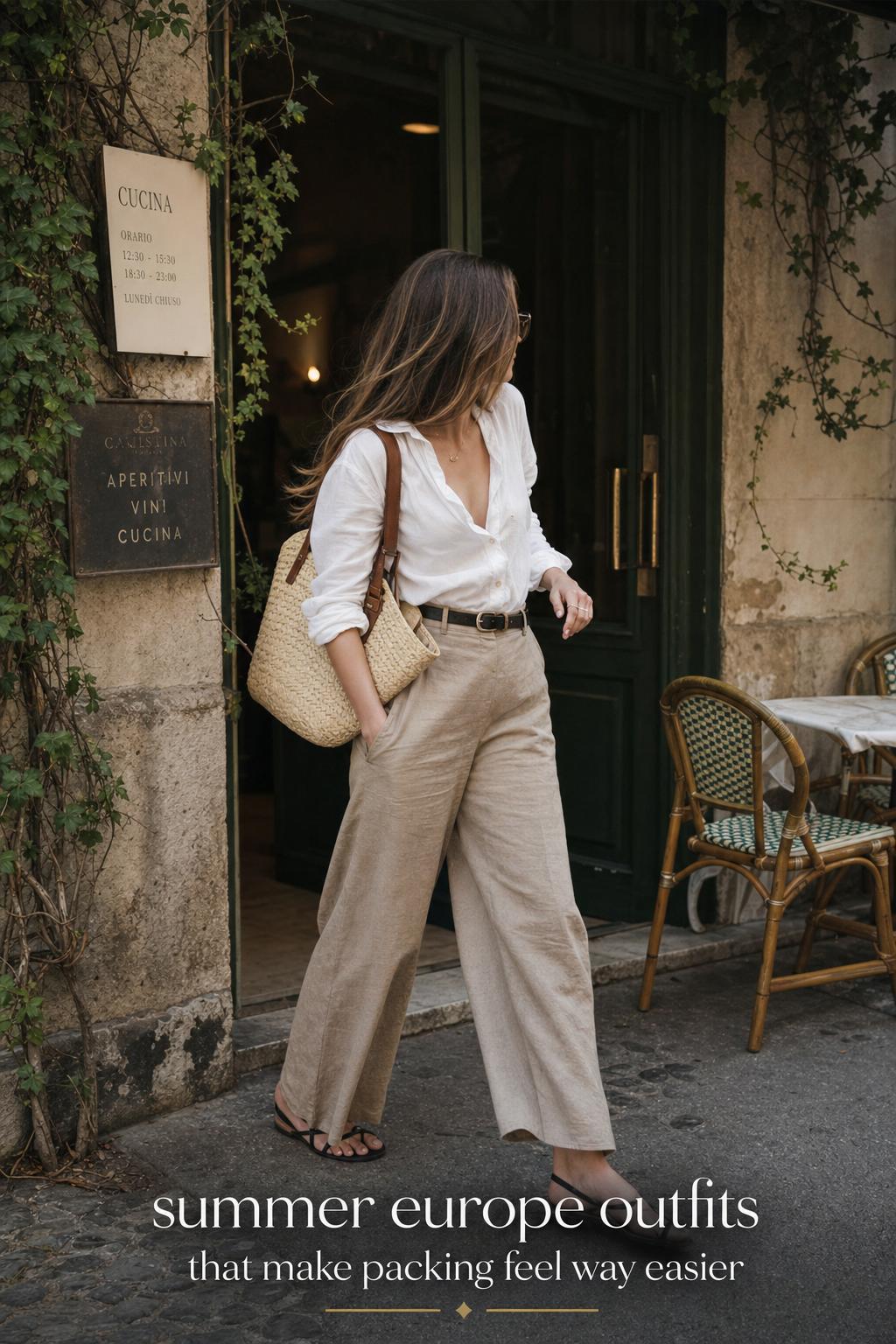
Outfit solution: the dress-and-sandals formula that actually travels well
The dress and sandals combination appears so often in European summer style because it solves several problems at once. It is quick, breathable, elegant, and easy to adapt. A midi or maxi dress creates an instant silhouette without requiring complicated layering, while sandals keep the look light enough for heat and movement.
To make this formula practical, focus on shape and finish. A sundress or simple linen dress in a neutral tone feels more versatile than something overly specific. Add a woven tote for daytime, or switch to a crossbody bag if you need more security while moving around a city. For evening, introduce a lightweight cardigan or denim jacket rather than changing the entire outfit.
This kind of combination works especially well in Paris, Milan, Rome, and coastal destinations because it aligns with the broader appeal of European street style: easy lines, unfussy accessories, and confidence in restraint. It also reflects the kind of styling seen across editorial and influencer-led summer dressing, where dresses and sandals anchor the entire wardrobe.
Outfit solution: linen shirt with wide-leg pants for polished city days
When the itinerary includes museums, trains, long lunches, or urban walking, a linen shirt with wide-leg pants is one of the most useful outfit formulas available. It looks composed without feeling formal, and it gives more coverage than a dress on days when heat, sun, or movement make that preferable.
The balance is important. If the shirt is relaxed, the trousers should fall cleanly rather than pool too heavily. Keep the palette soft and coordinated: neutrals, quiet contrast, or one controlled accent. Sandals work for lighter city days, while sneakers can make the look more grounded for long walks. A tote bag reinforces the travel mood; a crossbody sharpens it.
This formula also performs well across regions. In hotter climates, wear the shirt slightly open with sleeves rolled. In cooler cities, layer the cardigan or jacket over it. The result is a modern silhouette with clear structure and relaxed texture, exactly the kind of combination that feels current without chasing trends.
Outfit solution: a matching set when you want ease without looking repetitive
Matching sets are useful for travelers who want cohesion with minimal thought. They appear in Europe summer styling because they deliver a finished impression quickly and can be separated later into other looks. A linen set, for example, can read polished in Milan, effortless in Barcelona, and quietly elevated on a city-to-coast itinerary.
The reason this works is visual continuity. A coordinated top and bottom create a long, clean line, which feels refined even in lightweight fabric. Then each piece can re-enter the wardrobe independently: the top with trousers, the bottom with a breathable tee, the full set with sandals by day and slightly more dressed accessories by night.
If your suitcase space is limited, a matching set can do the work of several disconnected items. It is also a useful answer for readers who want easy summer outfits but dislike feeling too casual.
Outfit solution: the city-to-coast skirt or floral dress look
For trips that move from a cultural city stop to a coastal setting, softer pieces become especially helpful. A floral dress or a skirt with a breathable top bridges these environments well. In a city, the look can be styled with a crossbody bag and clean sandals. Near the coast, the same outfit relaxes naturally with a basket bag, sunglasses, and a looser shirt layer.
This is where texture and print need restraint. A floral dress already carries visual energy, so accessories should stay controlled. If you choose a skirt instead, pair it with a plain top and let the silhouette do the work. The goal is not to look themed for vacation, but quietly adjusted to the setting.
Travel wardrobes often become stronger when one or two romantic elements are balanced by more grounded basics. That contrast keeps the clothing expressive without becoming impractical.
Outfit solution: the evening layer that saves your entire packing plan
Even in summer, evenings can expose the weakness of a wardrobe built only for midday heat. This is where the lightweight jacket, cardigan, or denim layer becomes essential. It allows your daytime dresses and tops to continue working after sunset, especially in Northern Europe, Central Europe, or on breezier coastal nights.
A dress with sandals can quickly feel more complete with a cardigan draped over the shoulders or a denim jacket added for structure. Trousers and a tee become dinner-appropriate with a more tailored outer layer and a cleaner bag. The point is not dramatic transformation. It is controlled adjustment.
Many travelers pack separate evening outfits and wear them far less than expected. In practice, layering is often the smarter solution. It preserves suitcase space and produces outfits that still feel aligned with the rest of the wardrobe.
Accessories that elevate without creating clutter
Accessories should act as multipliers, not distractions. In summer Europe outfits, a few focused additions can shift the entire wardrobe while keeping packing disciplined.
- Sunglasses for both function and finish
- A sun hat for strong daylight and coastal itineraries
- A woven tote or basket bag for daytime ease
- A crossbody bag for city movement and security
- A scarf for light layering and subtle texture
The value of these pieces lies in versatility. A scarf can soften a simple tee-and-trouser look, add coverage in transit, or bring visual interest to a neutral dress. A woven tote leans more relaxed and works well in Southern Europe; a crossbody bag often feels better for long sightseeing days. Sunglasses and hats are not just aesthetic additions. They support comfort and help the wardrobe feel complete in strong summer light.
Practical footwear choices for long days
Footwear is where many otherwise beautiful travel wardrobes break down. Sandals are central because they appear in almost every high-performing summer formula, but they should not be your only option. The more realistic wardrobe includes sandals for easy days, espadrilles when you want a slightly more finished feel, and sneakers or dedicated walking shoes when the itinerary becomes more demanding.
Arch support and overall comfort matter more than people expect. City travel in Europe tends to involve sustained walking, uneven streets, and longer wear hours than a typical day at home. If a sandal only works for a short lunch, it is not a strong packing choice. The best shoes are the ones that preserve the elegance of the outfit without limiting the day itself.
Tips for making footwear feel more refined
Choose shoes that support the line of the outfit. Delicate sandals suit fluid dresses. Slightly more grounded sandals or sneakers work better with wide-leg trousers and linen shirts. If you are packing only a few pairs, let one pair serve the polished city role and another cover longer walking days. That division tends to be more useful than trying to make every shoe do everything.
Seasonal events, dinners, and nightlife without overpacking
European summer travel often includes open-air concerts, casual evening dinners, festivals, and last-minute plans. These occasions can tempt people into packing highly specific outfits that rarely justify the space. A better strategy is to identify one or two pieces that become event-ready through styling.
A slip-like midi dress, a clean maxi dress, or a matching set can all work for evening with minor adjustments. Add a more intentional bag, refined sandals or espadrilles, and a light layer if needed. The outfit should still feel like part of your daytime wardrobe, only slightly sharpened. That continuity is what keeps travel style polished rather than costume-like.
If your trip includes nightlife in cities such as Milan or Barcelona, focus on silhouette over excess. A tailored structure contrasted with relaxed textures usually feels more modern than heavy embellishment. Clean lines, good proportions, and breathable fabric remain the priority.
Where trend cues fit into a timeless travel wardrobe
Trend influence is visible in much of the current conversation around European summer style, from editor-approved shopping pages to brand-led takes from Nordstrom, Ally Fashion, or designer-adjacent references such as Miu Miu. But the most reliable way to use trend cues is selectively. Let them inform mood, not dictate the entire suitcase.
If woven bags, floral dresses, or matching sets are resonating this season, incorporate one version that genuinely suits your wardrobe. If contemporary street-style references from Paris or Milan inspire you, focus on the cleaner underlying principles: neutrals, balance, and confidence in simple pieces. Great travel style comes from thoughtful composition, not from packing every trend that appears in a shopping editorial.
Common packing and styling mistakes that make outfits harder to wear
Most summer travel wardrobe problems come from understandable decisions that do not hold up in practice.
- Packing too many single-purpose items that do not mix well
- Relying only on sandals and ignoring serious walking needs
- Choosing heavy fabrics in pursuit of polish
- Skipping a light evening layer
- Overusing statement pieces that limit repeat wear
These mistakes usually happen because travelers imagine separate wardrobes for each city, event, or mood. In reality, a more coherent capsule produces better outfits. Repetition becomes elegant when the pieces are well chosen. A linen shirt worn three ways is more valuable than three tops that each work once. The same principle applies to dresses, bags, and shoes.
A calmer way to plan your summer Europe outfits
The most effective planning method is to think in activities and climates rather than in isolated outfits. Build around sightseeing days, travel days, beach or coast moments, evenings out, and one adaptable layer for cooler conditions. Once those needs are covered, the wardrobe starts to organize itself.
A traveler heading from Paris to Rome to the Amalfi Coast, for example, does not need three separate fashion identities. She needs a coordinated capsule of dresses, trousers, breathable tops, one strong layer, reliable footwear, and a few accessories that shift the mood. A family moving from Nordic summer stops to Southern Europe will benefit from the same principle, simply with more attention to layers and walking shoes at the start of the trip.
That is the real elegance of summer travel dressing. It is not about excess. It is about precision, ease, and a wardrobe that respects both the trip and the person wearing it.
FAQ
What are the best summer Europe outfits for travel?
The best options are versatile combinations built from breathable fabrics and simple silhouettes, such as a midi or maxi dress with sandals, a linen shirt with wide-leg pants, or a matching set that can be separated into multiple looks. The strongest travel outfits work across walking days, meals, and evening plans without requiring a full change.
How many pieces do I need for a Europe summer capsule wardrobe?
A 7-piece clothing capsule is a practical starting point for two weeks if the items coordinate well. A linen shirt, one or two dresses, lightweight trousers, a breathable top, a matching set or skirt option, and a cardigan or light jacket can create a broad range of outfits when paired with a few strategic accessories and footwear choices.
Are sandals enough for a summer trip to Europe?
Not usually. Sandals are essential for many summer Europe outfits, but most travelers also benefit from espadrilles, sneakers, or walking shoes for longer city days. Europe travel often involves more walking than expected, so comfort and support should be built into the wardrobe from the beginning.
Which fabrics work best for European summer outfits?
Linen is one of the most useful fabrics because it is breathable and visually suited to warm-weather travel. Cotton, viscose, and other lightweight blends are also helpful, especially when you want softness, airflow, and easier layering. The best fabric choice depends on climate, but breathable materials consistently make outfits more comfortable and wearable.
How should I dress differently for Northern Europe versus Southern Europe in summer?
Southern Europe usually calls for lighter, more open dressing with linen dresses, sandals, woven bags, and sun-focused accessories. Northern Europe often benefits from the same wardrobe base with more layering, such as lightweight trousers, a cardigan, or a linen shirt worn over a tee. Central Europe typically sits between the two and rewards adaptability.
What accessories are most useful without overpacking?
Sunglasses, a sun hat, a woven tote, a crossbody bag, and a scarf are among the most effective accessories because they improve both function and styling range. These pieces can shift the mood of simple outfits, support comfort in strong summer light, and help a small capsule feel more complete.
Can I wear floral dresses in Europe without looking too dressed up?
Yes, provided the styling stays restrained. A floral dress works well for city-to-coast travel when paired with simple sandals, a clean bag, and minimal extras. Let the print carry the visual interest and keep the rest of the outfit calm so the overall look feels refined rather than overworked.
How do I make daytime outfits work for evening in Europe?
The easiest method is layering and accessory adjustment rather than packing separate evening looks. Add a lightweight cardigan, denim jacket, or other light outer layer to a dress or trouser outfit, and switch to a more intentional bag or slightly more polished footwear. This keeps the wardrobe compact while still feeling appropriate for dinners or nightlife.
What style approach feels most authentically European in summer?
The most convincing approach is not copying a single city but focusing on principles associated with European street style: breathable fabrics, clean silhouettes, restrained accessories, and thoughtful proportion. Whether you are inspired by Paris, Milan, Copenhagen, or the Amalfi Coast, the common thread is ease combined with polish.
Leave a Reply