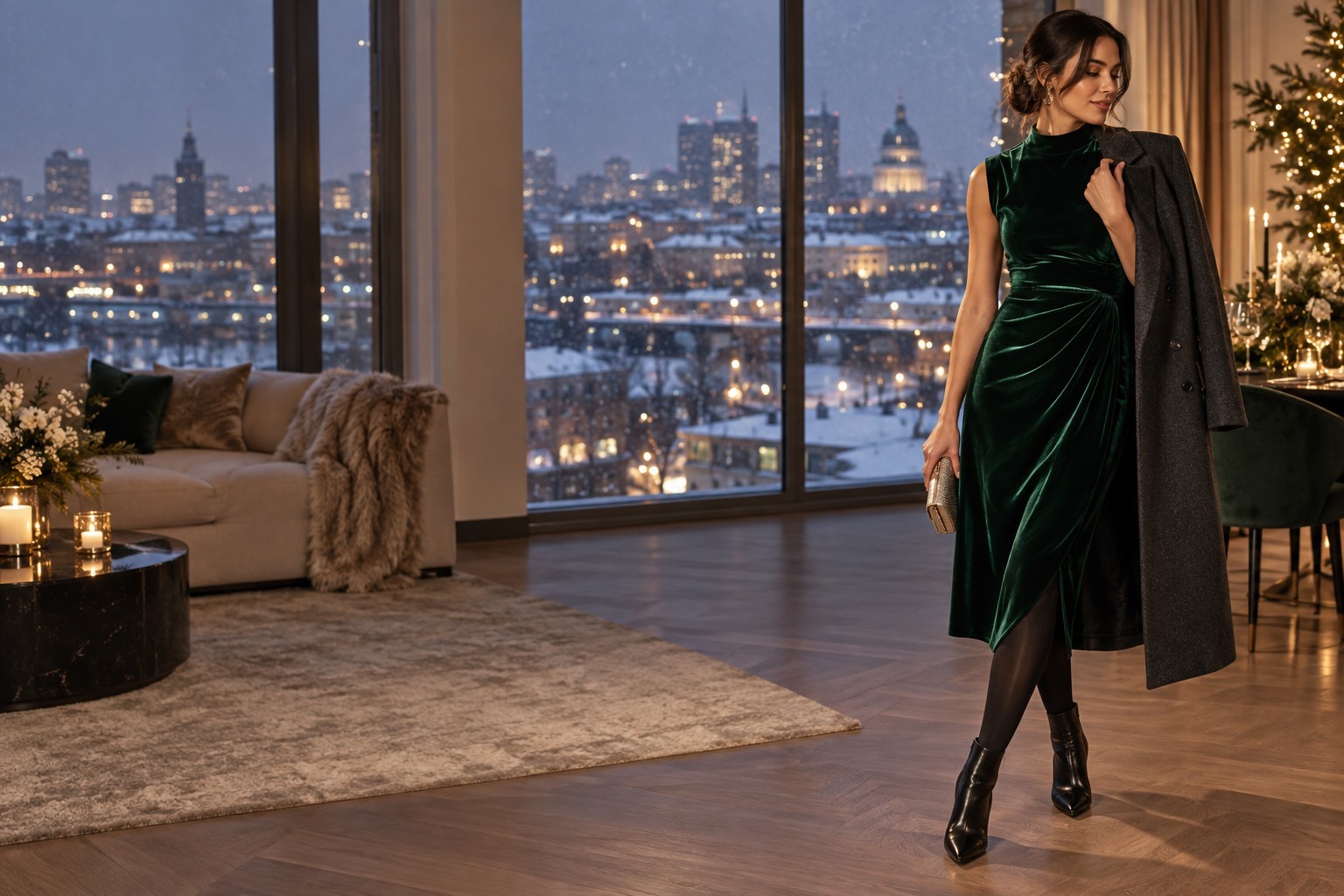
A party outfit winter plan has to do more than look festive in a mirror. It has to survive the walk from the car, the wait for a coat check, a warm room, a crowded table, and the trip home. The strongest cold-weather looks are not built around one dramatic item. They are built around a clear invitation, one visual anchor, and layers that can change the outfit without fighting it.
The useful shift is to stop asking, “What is the prettiest thing I own?” and ask, “What does this night actually require?” A house party rewards ease and movement. An office celebration needs polish with sensible coverage. A cocktail invitation welcomes shine, but the fabric and shoe still need to work in winter. Once you read the event first, outfit ideas become much easier to edit.
This guide treats winter party dressing as a flexible system. You will find five distinct formulas, a way to layer dresses and separates without losing shape, and a final check for comfort, weather, and dress code. The goal is not to make every look formal. It is to make every look intentional.
What makes a winter party outfit work from arrival to goodbye
The best winter party outfit answers four questions before you add accessories. Where is the event? How formal is it? How much will you move? What will happen between leaving home and entering the room? These questions sound practical, but they have a direct style effect. A velvet dress and delicate heel can be perfect for a seated dinner, while the same combination may feel awkward for a long walk, a standing reception, or an outdoor gathering.
Your wedding has a lot of moving pieces. Your plan can still feel composed.
Zarellea organizes guests, vendors, budget, and timelines in one shared space — so you can make decisions with clarity, not stress.
Start with the invitation and the venue. A dress code is a boundary, not a complete outfit. Cocktail attire may mean a refined dress, a jumpsuit, or polished separates. Festive attire can include sparkle, rich color, velvet, or a statement blouse. A casual invitation does not mean ordinary basics worn without thought. It means you can choose one dressed-up detail and let the rest of the look stay relaxed.
Next, choose one anchor piece. It might be a jewel-tone dress, a sequin skirt, a satin blouse, a sharply cut blazer, or wide-leg trousers in a beautiful fabric. The anchor should carry the mood of the outfit. Supporting pieces should clarify its shape rather than compete with it. If the dress is glossy, a matte coat and simple shoe often create better balance than more shine.
Winter changes the order in which you get dressed. A summer party look can be finished with jewelry and a small bag. A winter look needs an arrival layer, a plan for covered legs if needed, and shoes that make sense for the ground outside. The outer layer is part of the outfit, not a temporary object that can be ignored. A long wool coat, tailored wrap coat, cropped faux-fur jacket, or polished leather jacket can make the whole combination feel complete.
- Use one main statement, such as texture, color, shine, or silhouette.
- Add warmth in thin, close-fitting layers before reaching for bulky pieces.
- Match the shoe to the amount of standing, walking, and weather exposure.
- Keep the bag secure and small enough that it does not interrupt movement.
Finally, think about temperature transitions. Many winter parties begin in a cold entryway and continue in a heated room. A good look can reveal its strongest element when the coat comes off, then remain comfortable when the room warms up. That may mean a fitted long-sleeve layer under a sleeveless dress, tights under a short hem, or a blazer over a camisole rather than a heavy sweater that changes the silhouette entirely.
Five winter party outfit formulas for different invitations
Formulas are helpful because they give you a starting point without forcing every person into the same look. Keep the structure, then change the color, fabric, and accessories to suit your wardrobe. Each option has a clear focal point, a winter solution, and an easy way to adjust the level of formality.
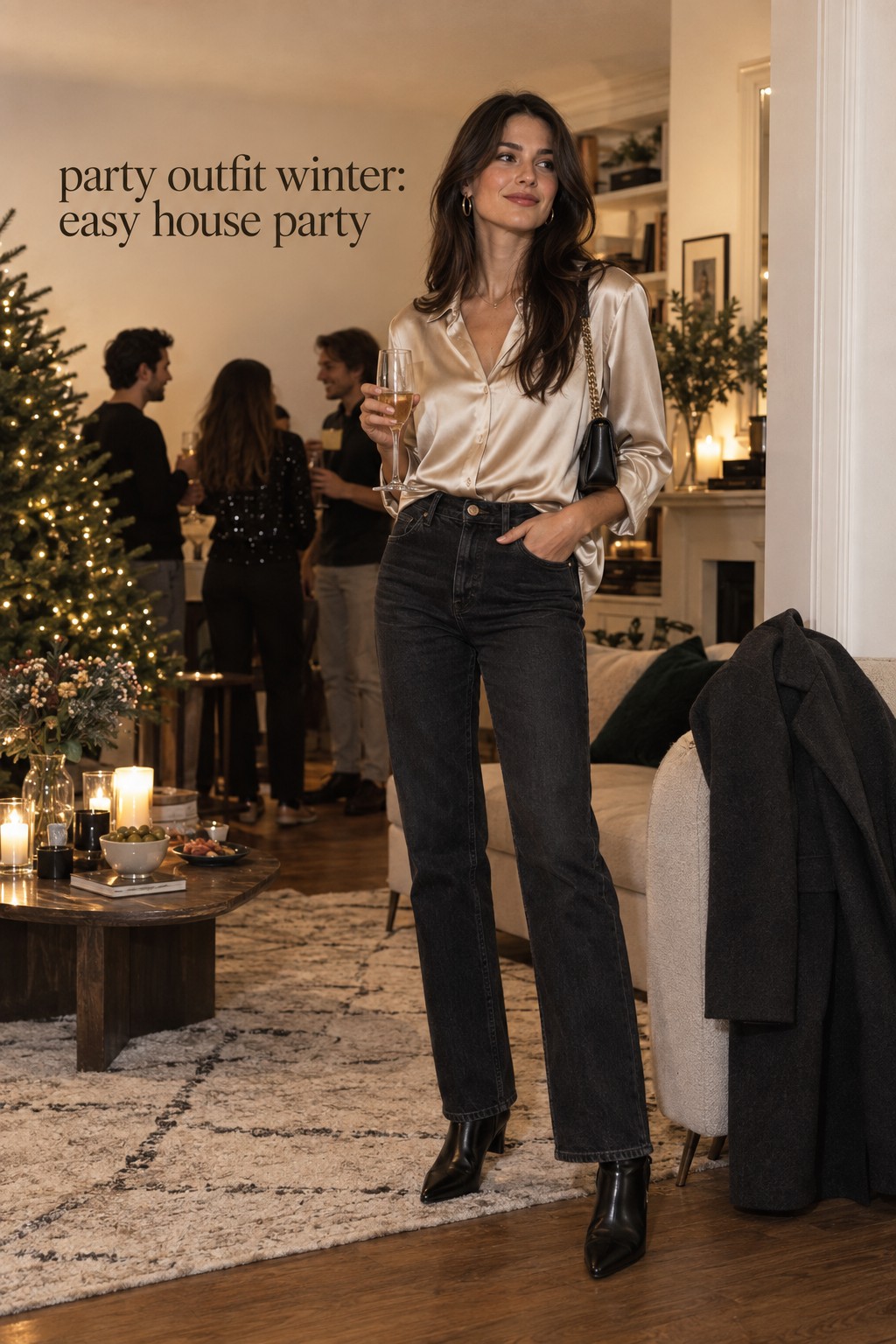
1. House party: dark denim and one special top
For a relaxed house party, start with dark straight-leg jeans, black jeans, or clean wide-leg denim. Add a satin blouse, subtle sequin top, velvet camisole over a fine knit, or fitted sweater with an unusual neckline. This keeps the outfit comfortable while making it clear that you dressed for the occasion rather than for errands.
Keep the bottom simple if the top has shine or volume. A pointed flat, polished ankle boot, or low block heel gives the outfit a finished line without making it too formal for a home setting. Add one strong earring or a compact shoulder bag. If you will remove your shoes indoors, make sure the socks or tights look deliberate too. A ribbed texture or rich neutral can make that small detail feel considered.
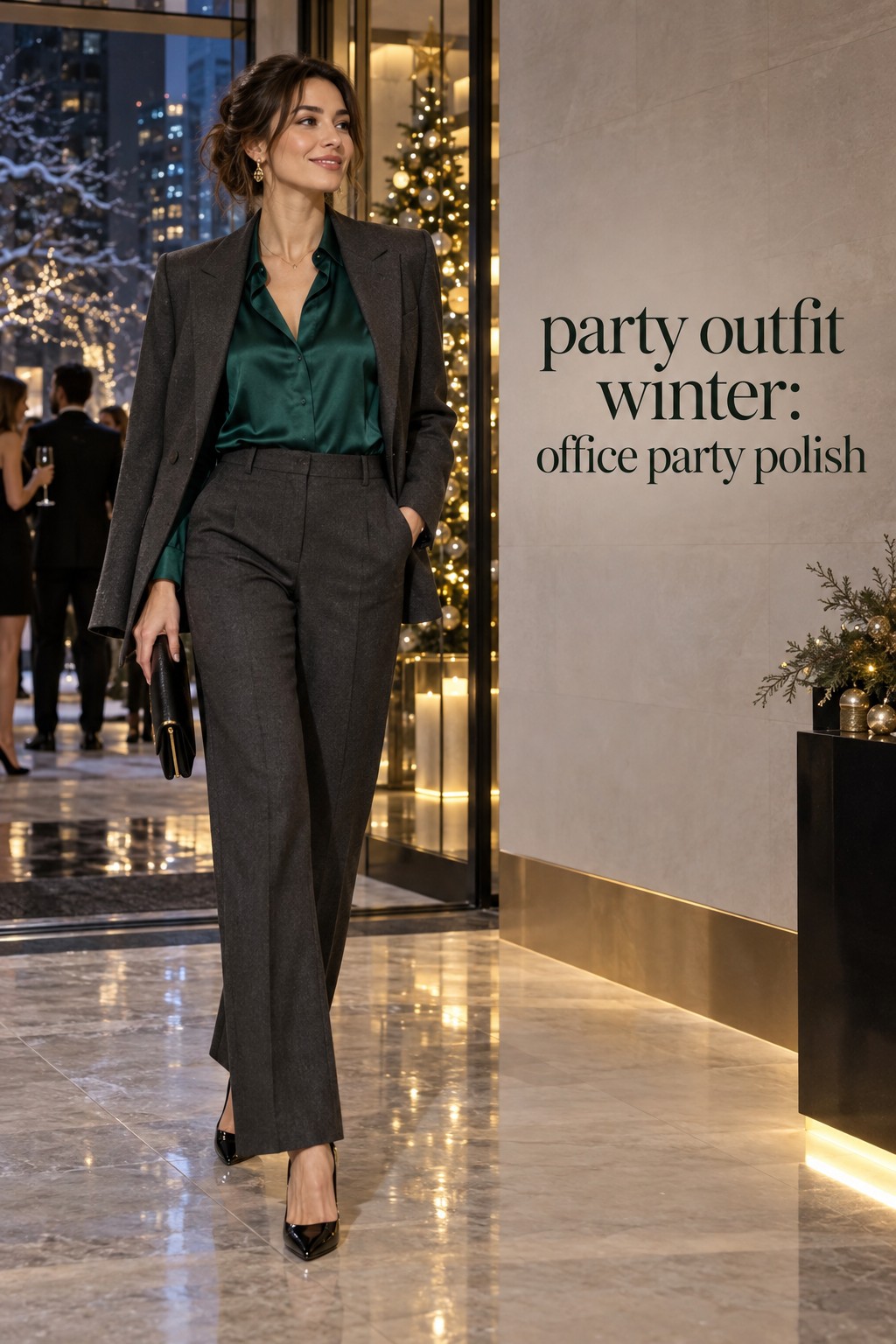
2. Office party: tailoring with one festive signal
An office party works best when the base still feels professional and one element clearly signals celebration. Try tailored trousers with a silk-look blouse, a knit midi dress with velvet shoes, or a simple suit with a jewel-tone camisole underneath. A statement earring, metallic belt, polished brooch, or textured bag can provide the festive note without making the outfit feel like a costume.
Think about how the look will appear under office lighting and in group photos. Deep burgundy, forest green, navy, or winter white can feel special without relying on head-to-toe sparkle. If the event begins directly after work, carry one small change that shifts the mood, such as a more decorative earring or a lipstick shade. A blazer should still look good when worn because the commute and arrival may happen before you can take it off.
3. Dinner party: rich texture with a reliable layer
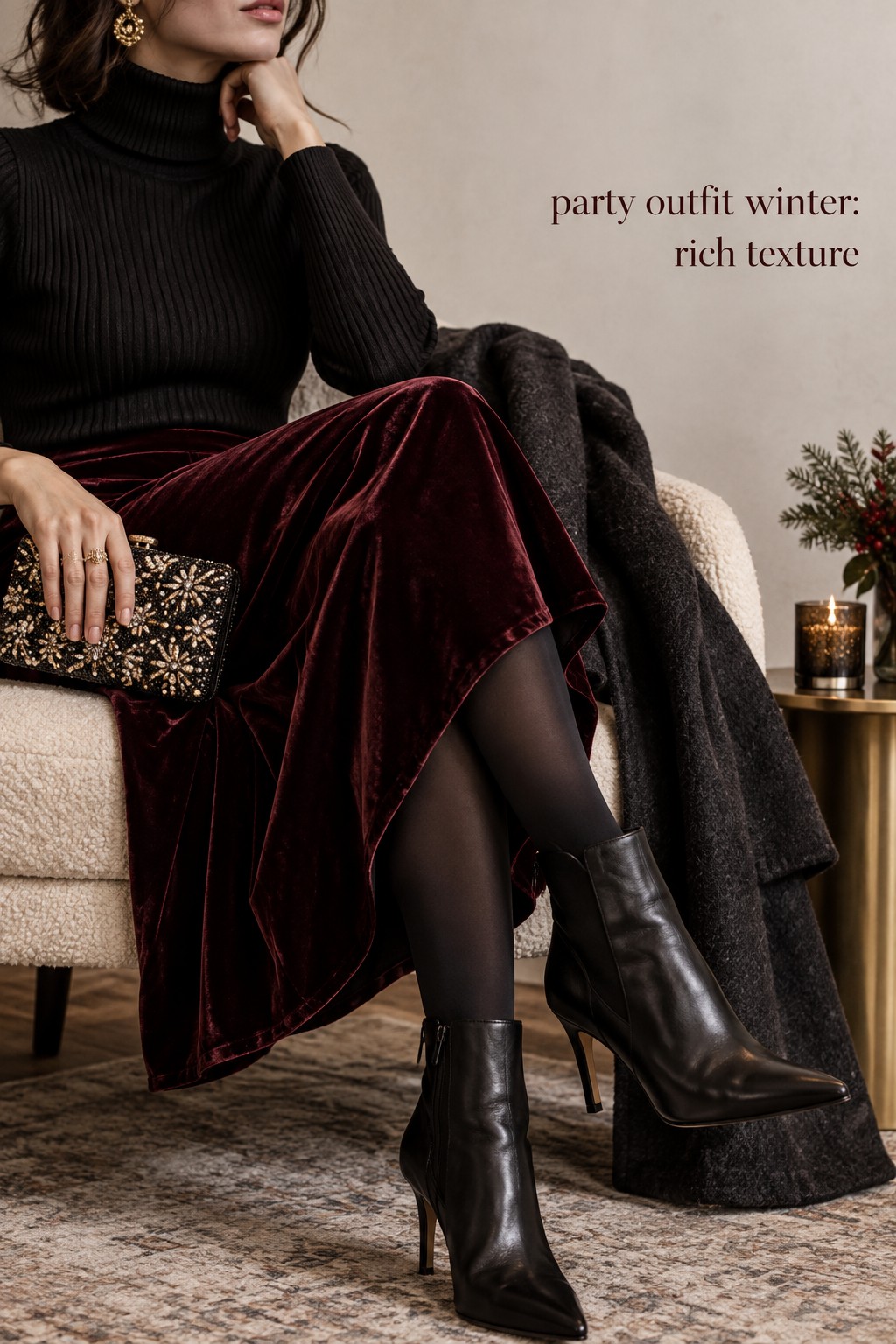
For dinner with friends or family, build around one rich texture. Velvet, satin, brushed knit, suede, or faux leather can make a familiar silhouette feel occasion-ready. A velvet midi dress with opaque tights is an easy route. So is a satin skirt with a fine turtleneck, tailored jacket, and ankle boots. If the table is casual, dark trousers with a softly draped blouse can look just as intentional.
Balance tactile fabrics with clean shapes. A velvet skirt does not need an elaborate top, and a glossy blouse does not need a highly decorated bag. Choose a coat that repeats one color from the outfit, then let the shoe create contrast. A pointed boot lengthens a midi skirt, while a low heel or elegant flat makes a long dinner more comfortable. Before you leave, sit down and check that the waistband, neckline, and hem still feel right.
4. Cocktail party: a polished dress, jumpsuit, or dressy separates
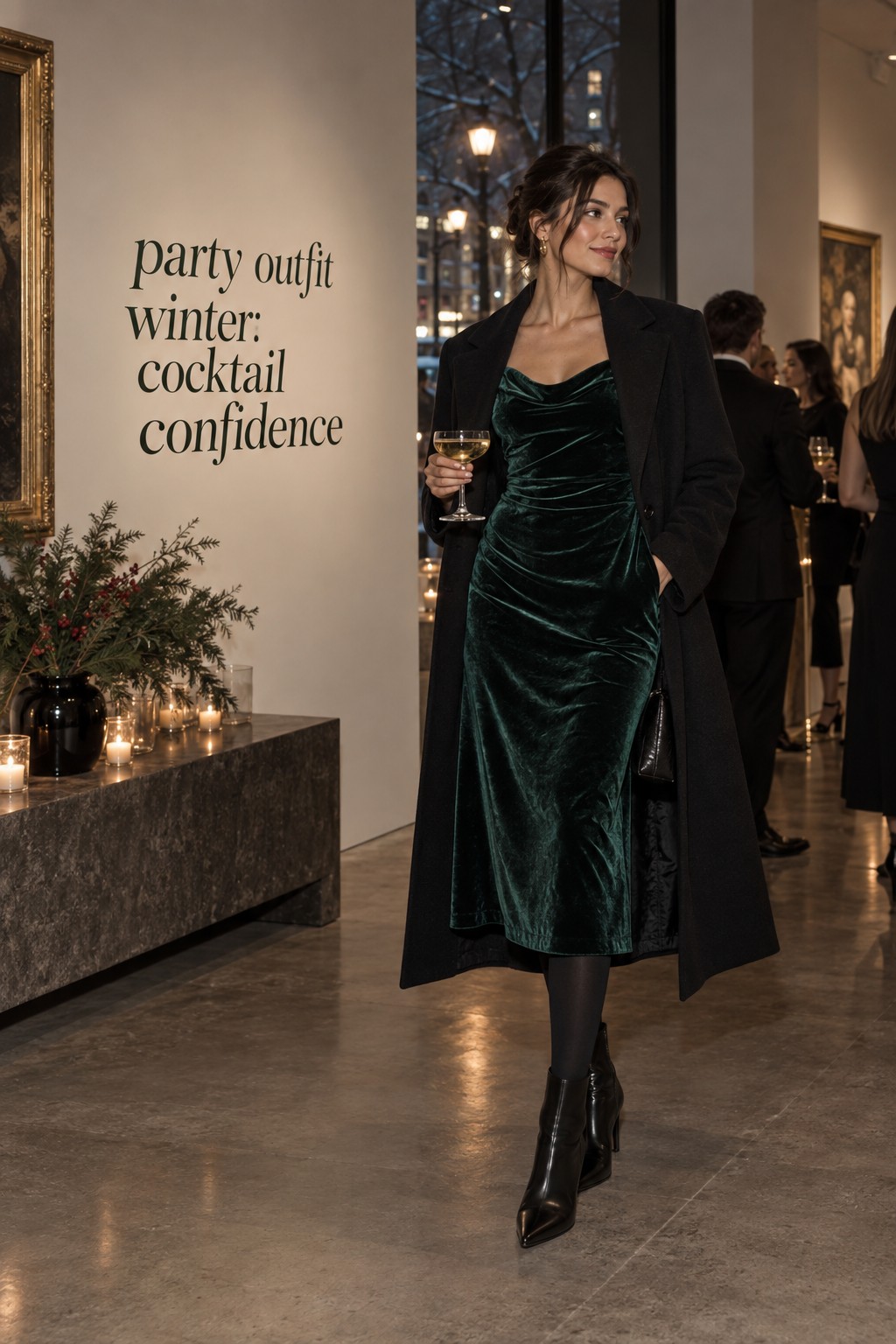
Cocktail dressing gives you permission to be more deliberate. A knee-length or midi dress, tailored jumpsuit, or wide-leg trousers with a fitted evening top can all work. Choose the silhouette according to what you want to emphasize. A clean neckline can carry a strong necklace. A dramatic sleeve may look best with small earrings. Wide trousers need a closer top or tucked waist so proportions remain visible.
Winter is a good moment to trade thin, fragile fabrics for heavier versions with better drape. Ponte, velvet, lined satin, and structured crepe hold their shape and feel more substantial in cold weather. Add opaque or semi-opaque tights when the hem allows, then choose a shoe that can handle the route to the venue. If you must walk outside, a sleek boot can be more useful than a delicate sandal. You can still create a cocktail finish with a pointed toe, polished heel, or jeweled bag.
5. Formal or outdoor event: a strong silhouette with serious protection
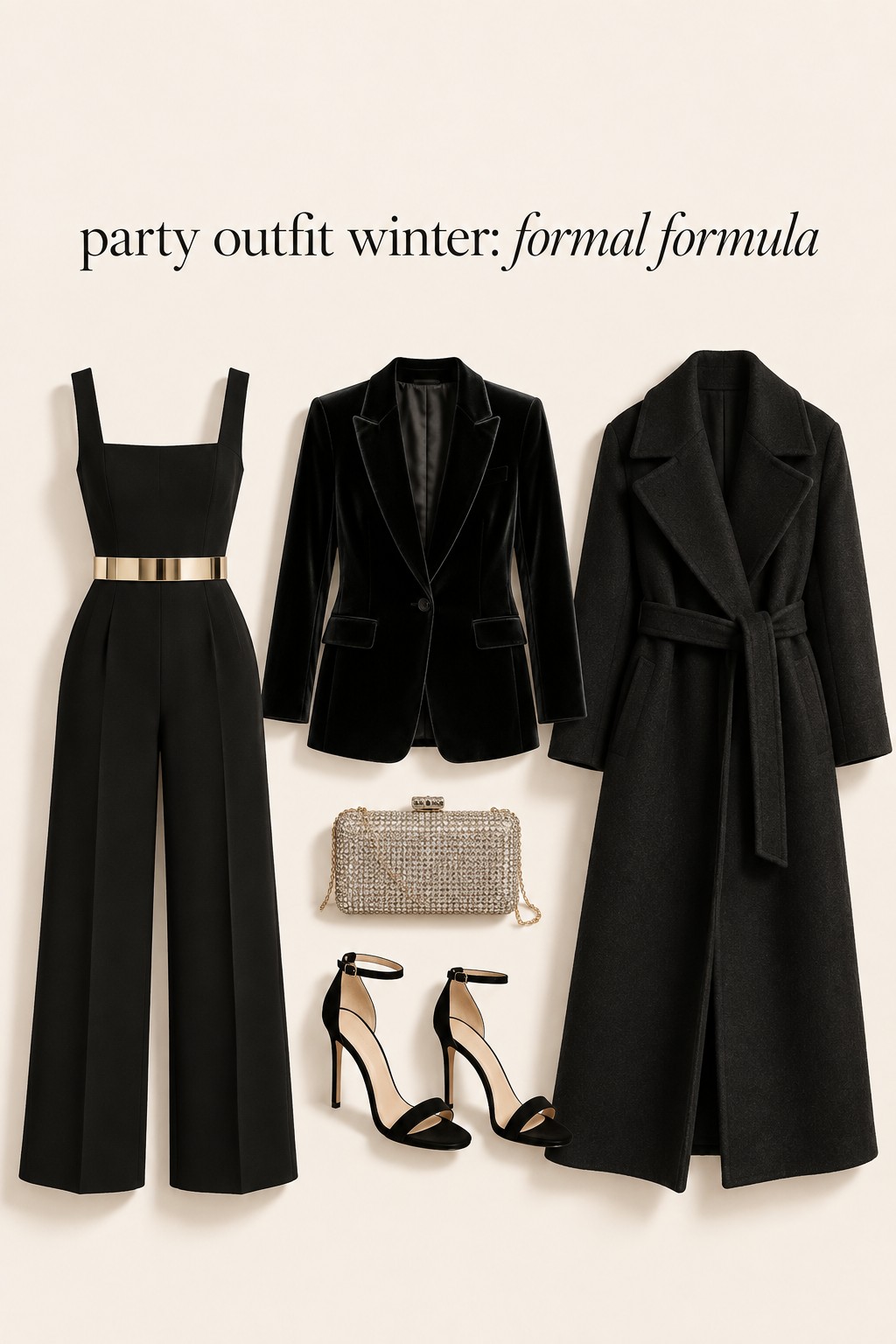
A formal winter party asks for clarity. Choose a long dress, refined maxi, formal jumpsuit, or tuxedo-inspired suit if the invitation permits it. Let one feature lead: a long line, jewel color, liquid fabric, strong shoulder, or restrained embellishment. When the main silhouette is clear, accessories can stay smaller and the outfit will still feel special.
For an outdoor event, protection becomes part of the styling. A long wool coat can preserve a column shape. A velvet jacket can add warmth and richness to a simple dress. Thermal or opaque tights may be more appropriate than sheer tights, especially when you will spend time outside. Choose a stable heel, dressy boot, or elegant flat for snow, uneven pavement, or grass. The look should allow you to enjoy the event rather than spend the evening protecting your hem and balancing on your shoes.
How to layer dresses, skirts, trousers, and jumpsuits without losing polish
Layering works when each piece has a job. The base layer manages comfort, the middle layer shapes the outfit, and the outer layer handles the weather. Problems appear when every layer is oversized, every fabric is heavy, or the coat hides the most interesting part of the look. Use contrast in weight and proportion so the final outfit feels composed rather than crowded.
With a dress, decide whether the dress should remain the visual anchor. If yes, use a thin mock-neck or long-sleeve layer underneath only when it improves the line. A fitted layer can make a sleeveless dress more winter-ready, but a bulky knit may pull the eye away from the neckline. Over the dress, choose a coat or jacket that respects its length. A cropped jacket can define the waist, while a long coat can create one uninterrupted column.
With a skirt, let the top control the temperature and proportion. A slim turtleneck works with a fuller midi skirt. A softly oversized sweater works better when the skirt is narrow or the waist is clearly visible. Add tights that relate to the shoe rather than creating an unexpected break. Black tights with black boots make a shorter hem feel grounded, while a tonal boot can keep a longer skirt looking sleek.
With trousers, use texture to create party energy. A satin blouse, velvet blazer, metallic knit, or sculptural earring can lift a practical base. Wide-leg trousers need a coat that either mirrors their length or stops cleanly above the widest point. Straight trousers can handle a longer coat, cropped jacket, or tucked top. If the trousers are the statement, keep the rest quiet enough for the fabric and cut to be noticed.
With a jumpsuit, treat the waist and neckline as the main architecture. A slim belt can make a relaxed shape feel more formal. A blazer adds structure, while a long coat creates a clean arrival silhouette. Check the practical details before committing: can you sit, use the restroom, put on a coat, and move your arms? A beautiful jumpsuit that is difficult to manage will not feel effortless for long.
- Thin fitted base: long sleeve, camisole, or fine turtleneck when the neckline allows it.
- Shape-making layer: blazer, cardigan, waistcoat, belt, or tailored jacket.
- Weather layer: wool coat, faux-fur jacket, leather jacket, or substantial wrap.
- Finishing layer: tights, boots, jewelry, scarf, and a secure bag selected as one story.
Color can make layers feel intentional. Repeat one shade in two places, such as burgundy in the blouse and bag, or ivory in the knit and coat. Alternatively, keep the base neutral and let one jewel tone do the work. Too many unrelated colors can make winter layers look accidental, especially when a coat, scarf, and shoe are all visible at the same time.
Accessories should finish the mood, not add every possible party signal. If the outfit already includes velvet or shine, choose a matte bag and a clean earring. If the base is simple, use a crystal bag, sculptural necklace, metallic shoe, or bold lip. One or two intentional details often look more modern than a collection of competing accents.
The final winter party outfit check before you leave
Give yourself a short test before the coat goes on. Stand, sit, walk across the room, raise your arms, and turn as if you are greeting someone. Notice anything that pulls, slips, scratches, or needs constant adjustment. If a strap will not stay in place at home, it will be more distracting in a crowded room. If a shoe already feels unstable on a hard floor, it is unlikely to become more comfortable outdoors.
Check the outfit in the light you will actually encounter. A party look can appear different under daylight, office lighting, candlelight, or a flash. Look for visible bra lines, sheer areas, reflective details that feel too bright, and a coat that changes the proportions. You do not need to remove every surprise, but you should know what the look is doing.
Then check the practical route. Will you walk on wet pavement? Stand outside? Ride public transportation? Carry a coat? Dance? Sit at a low table? These details determine whether you need a block heel, secure bag, warm layer, shorter hem, or fabric that does not crease immediately. Comfort is not separate from style. It is what allows the style to remain visible throughout the night.
- Dress code: does the outfit meet the invitation before personal styling is added?
- Warmth: is there a thin base layer or coat for the coldest part of the route?
- Movement: can you sit, walk, lift your arms, and dance if needed?
- Balance: is there one focal piece, with the rest supporting it?
- Maintenance: can you go several hours without adjusting the outfit?
- Exit plan: will the coat, shoes, and bag work when you leave the warm venue?
Avoid the most common winter styling mistake: choosing the indoor outfit first and treating the outside as an inconvenience. If the coat looks unrelated, the arrival can feel unfinished. If the shoes cannot handle the route, you may spend the evening sitting out the fun. If the layers are too thick, the outfit can lose its shape as soon as you enter the room. Plan the full sequence, and the final look will feel calmer.
The most dependable party dressing formula is simple: one memorable piece, one clean supporting shape, one useful layer, and one finishing detail. That structure leaves room for personal style while keeping the outfit practical. Whether you choose dark denim and satin, a velvet dress, a tailored suit, or a formal jumpsuit, the best result is the one that lets you enter the room feeling ready rather than preoccupied.
FAQ
What is a good party outfit winter option for a casual event?
Wear dark jeans or simple trousers with one special piece, such as a satin blouse, velvet top, subtle sequin sweater, or unusual neckline. Finish with ankle boots or polished flats and one deliberate accessory. The outfit should feel more considered than everyday clothing without becoming overdressed for a house party or relaxed dinner.
How can I stay warm in a party dress?
Choose a heavier fabric such as velvet, ponte, lined satin, or structured crepe, then add opaque tights, a fine fitted base layer when the neckline allows it, and a substantial coat. A warm layer under the dress should follow the body rather than create bulk. The right boot can add more practical warmth than a delicate sandal.
Can I wear jeans to a winter party?
Yes. Choose a clean dark wash or polished black pair, then add one clearly festive element such as satin, velvet, sparkle, a special sleeve, or a refined heel. Keep the remaining pieces simple so the jeans look intentional. This works especially well for house parties, casual birthdays, and relaxed dinners.
What shoes work best for a winter party outfit?
The best shoes depend on the route and the event. Pointed ankle boots, low block heels, polished flats, and stable pumps can all work. For snow, wet pavement, grass, or long walks, choose a secure boot or stable heel. A shoe that lets you move comfortably will make the outfit look more confident than a dramatic pair you cannot wear for more than a few minutes.
How do I dress for a winter office party?
Start with a professional base such as tailored trousers, a knit dress, a midi skirt, or a simple suit. Add one festive signal through velvet, a jewel tone, a silk-look blouse, a metallic belt, or a statement earring. Keep the neckline, hem, and coverage appropriate for the workplace, and make sure the blazer or coat looks polished during the commute and arrival.
What should I wear to an outdoor winter party?
Choose a warm foundation with covered legs, a reliable coat, and shoes that suit the surface. A sweater dress with tights and knee-high boots, a velvet suit with a long coat, or wide-leg trousers with a warm fitted top can all work. Prioritize the coldest part of the event rather than only the indoor portion, and choose accessories that stay secure in wind or movement.
Leave a Reply