
Choosing night club outfits is rarely difficult because you have no clothes. It is difficult because the outfit has to solve several problems at once. You want to look intentional at the door, feel comfortable while standing or dancing, carry what you need, and avoid spending the evening adjusting a strap, holding a coat, or regretting your shoes. A look that photographs well but fails after an hour is not a successful night-out outfit.
The easiest way to get dressed is to start with the night rather than a single trend. Think about the venue, the most active part of your plans, the temperature outside, and how much coverage feels right for you. Then choose one focal point and let the rest of the outfit support it. The formulas below cover a polished lounge, a dance-heavy club, a casual bar-club, and a dinner plan that may turn into dancing. Each can be adjusted with different shoes, layers, and proportions.
Diagnose the Night Before You Open the Closet
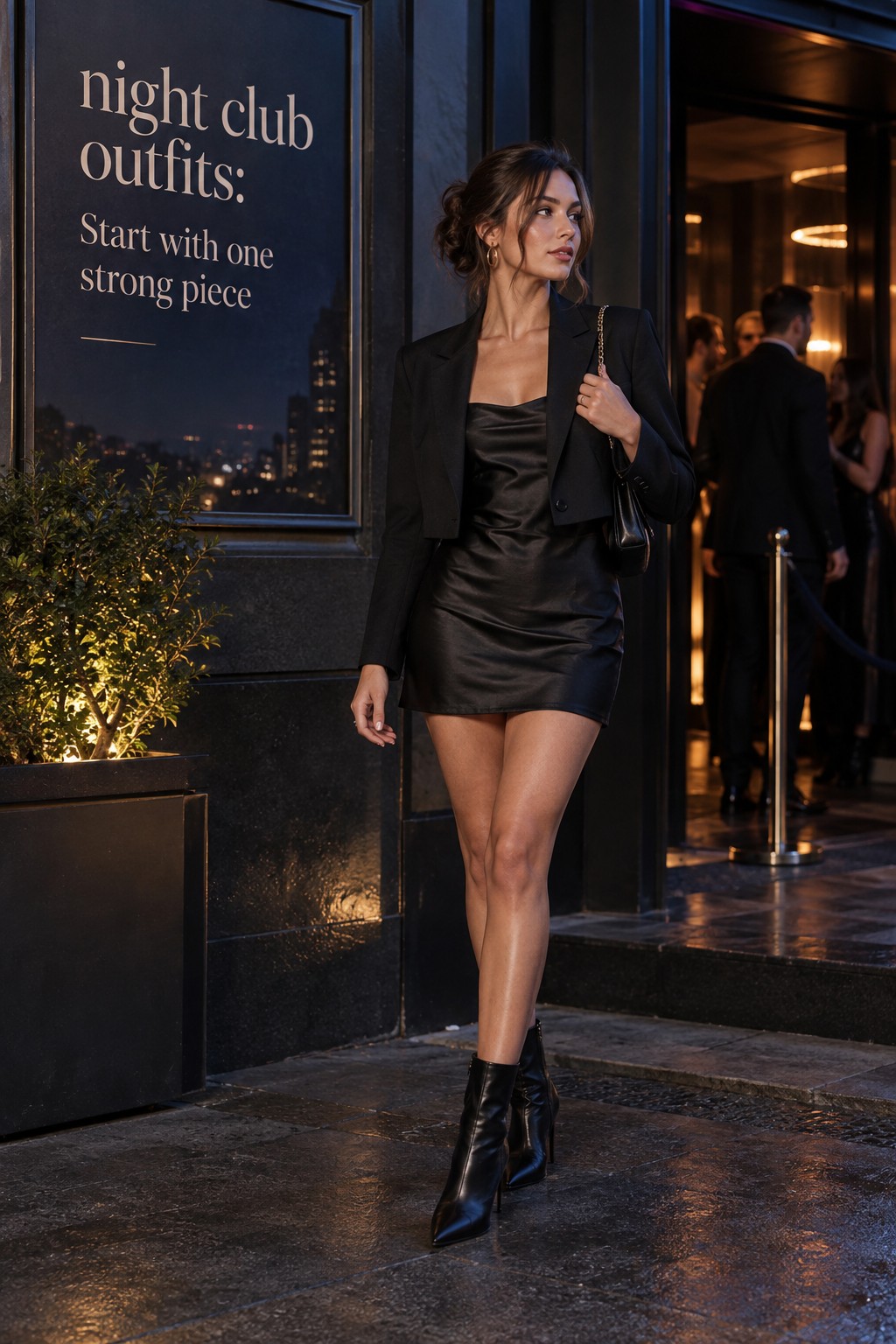
The first friction point is dressing for an imaginary club. A rooftop lounge, a neighborhood bar with a dance floor, and a strict upscale nightclub may all be described as a night out, but they do not ask for the same outfit. Before choosing a dress or top, answer four quick questions: how formal is the room, how much will you move, what will you do before and after, and what do you need to carry?
Read the venue, not just the invitation
Look at the club’s recent photos, social posts, or stated dress code when possible. A polished room usually rewards clean lines, tailored trousers, a sleek dress, a structured top, or a refined jumpsuit. A casual bar-club gives you more freedom to use dark denim, a fitted tee, a going-out top, or fashion sneakers. A dance-focused room calls for pieces that stay secure and allow your arms and legs to move without constant adjustment.
Your wedding has a lot of moving pieces. Your plan can still feel composed.
Zarellea organizes guests, vendors, budget, and timelines in one shared space — so you can make decisions with clarity, not stress.
When the dress code is unclear, choose a slightly elevated version of what you would normally wear. Dark, clean denim with a strong top is safer than distressed jeans and a basic daytime tee. A simple black dress with interesting shoes is safer than an outfit that feels like formal weddingwear. Remember that the venue’s rules are more specific than general internet advice, so confirm details if entry matters.
Dress for the most active moment
If dinner is followed by dancing, select the outfit for the dancing rather than the restaurant. If you will stand in line, walk several blocks, and then spend hours moving, shoes and layers need to support that full sequence. The dress, pants, or skirt should still feel good when you sit, bend, raise your arms, and take longer steps. A beautiful outfit that changes your behavior is asking you to manage it all night.
Choose your comfort boundaries in advance
Comfort is not a single style category. For one person it means a flat shoe; for another it means a secure heel, opaque tights, a higher neckline, a sleeve, or a longer layer. Decide what you do not want to think about once you leave home. That may be a slipping neckline, a short hem, a fabric that traps heat, or a bag that cannot close. Once those boundaries are clear, styling becomes faster and more personal.
Choose Night Club Outfits by Venue Energy
Instead of saving dozens of unrelated outfit pictures, sort your options by energy. This keeps the choice practical and prevents a dramatic look from feeling wrong in a relaxed room. You can use the same wardrobe pieces at different intensity levels by changing the finish, shoe, and layer.
Polished lounge or upscale club
For a more formal venue, start with a clean silhouette and one rich surface. A black slip dress, a sculpted midi, a satin wide-leg trouser, a monochrome jumpsuit, or a fitted top with a sharp skirt can look finished without needing many accessories. Keep the palette controlled and let the shape do the work. A small structured bag, pointed shoe, or refined boot will usually make the outfit feel more appropriate than adding more sparkle.
Dance-heavy club
For a room where you expect to dance, security matters as much as impact. Choose a dress that stays in place, a bodysuit with trousers, or a fitted top with a bottom that lets you move. Stable platforms, block heels, sleek boots, and clean sneakers can all work when they suit the venue. Avoid a shoe that requires careful steps or a top that you will need to pull into position every few minutes.
Casual bar-club or neighborhood venue
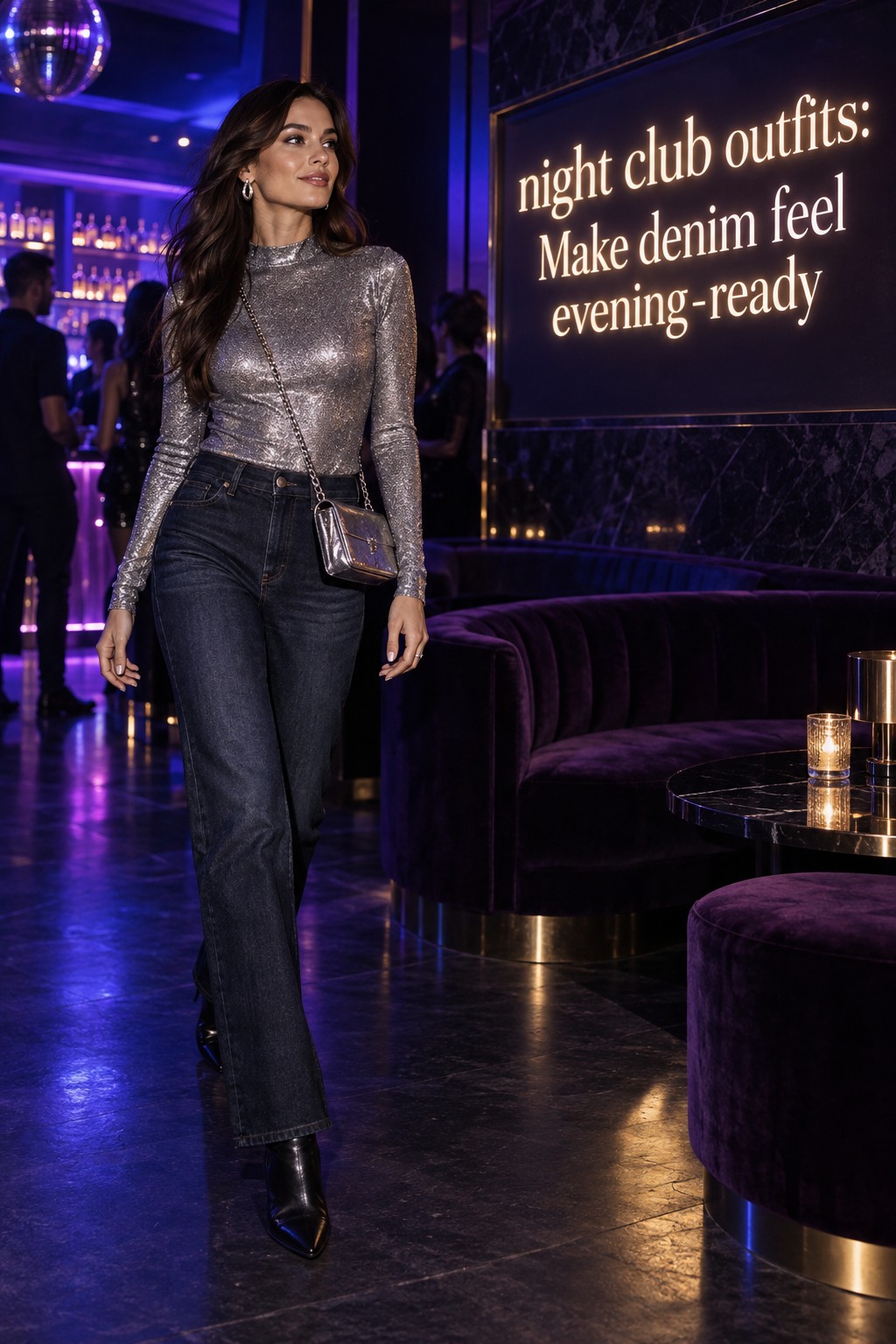
Dark denim is an easy foundation when you want to look dressed without appearing too formal. Pair straight or relaxed jeans with a satin camisole, asymmetric top, fitted knit, corset-inspired layer, or sharp button-down. Add an ankle boot, polished sneaker, or low heel and one accessory with texture. The key is to make at least one element clearly evening-ready so the outfit does not read like a daytime look that happened to leave the house.
Dinner that may turn into dancing
This plan needs an outfit that can change mood without a full change of clothes. A simple mini or slip dress can move from dinner to the club when you add a compact bag, an easy-to-remove jacket, and shoes you can stand in. You can also start with tailored pants and a statement top, then remove the blazer when the night becomes more energetic. Keep the base comfortable enough for the most active part of the plan.
Four Night Club Outfit Formulas to Build Tonight
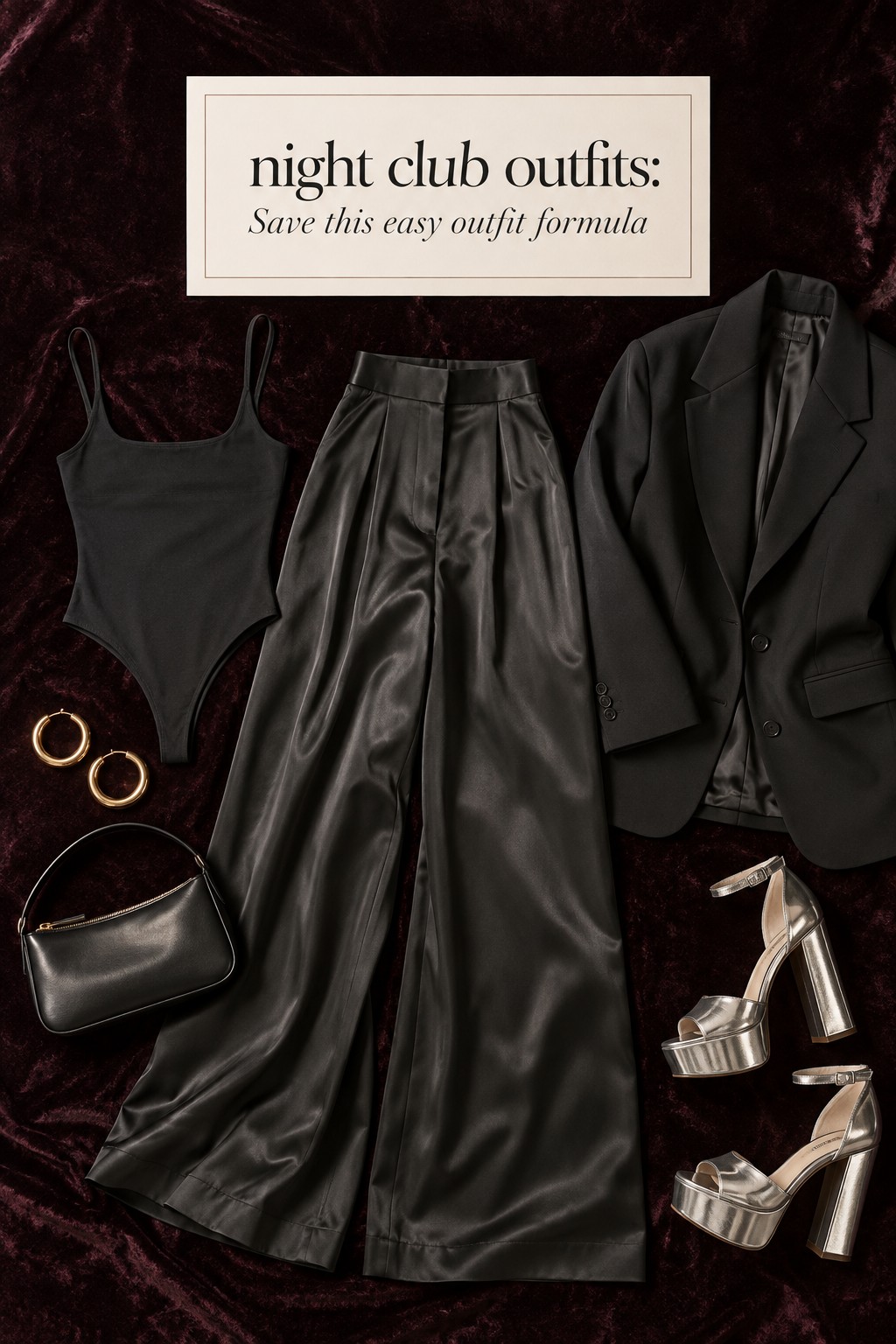
These formulas are starting points, not uniforms. Each gives you a focal point, a grounding piece, a practical shoe direction, and a way to adjust coverage. Use the version that matches your venue and change colors or fabrics to suit your closet.
1. The statement mini or slip dress
Choose a mini or slip dress with one memorable feature: satin, ruching, a strong neckline, a rich color, subtle shine, or a clean cutout. The dress is already the focal point, so keep the accessories edited. Add a small shoulder bag or zip crossbody, then choose a stable strappy heel, platform, pointed boot, or polished flat based on the venue and your walking plans.
If you want more coverage, add opaque tights, a fitted long-sleeve base under a slip shape, or a longer coat for the arrival. A blazer can make a short dress feel more balanced without hiding the silhouette. If the dress is very detailed, skip a heavy necklace and let earrings or a glossy lip provide the finishing point. The outfit should still look complete when the outer layer comes off.
2. The going-out top with dark denim
This is one of the most adaptable night club outfits because the top sets the mood while denim provides stability. Try a satin camisole, mesh top over a simple base, halter, asymmetric knit, embellished tank, or fitted corset-inspired piece. Pair it with dark straight jeans, a relaxed bootcut, or a clean denim mini with tights. The contrast between a shaped top and a calmer bottom makes the look easy to read.
Finish with a heeled boot, platform sneaker, low block heel, or sleek pointed shoe. If the top catches the light, use a matte bag and simple earrings. If the top is plain, let the shoe or bag bring in metallic, patent, or crystal texture. For a more covered version, add a cropped jacket, open button-down, or tailored blazer. Keep the layer easy to remove and easy to carry once the room warms up.
3. The fitted top with wide-leg pants
Wide-leg pants are useful when you want movement and coverage without losing evening impact. Choose satin, fluid crepe, polished jersey, faux leather, or a dark tailored fabric. Balance the volume with a fitted bodysuit, one-shoulder top, halter, sleek tank, or close-fitting knit. Defining the waist with a tuck, belt, or shaped seam keeps the proportions intentional.
Choose a shoe that is visible enough to support the hem. A pointed heel lengthens the line, while a platform or slim boot gives the outfit more edge. A compact clutch works for a seated lounge, but a small crossbody is better when you will move through a crowd. If you prefer more coverage on top, use a long-sleeve bodysuit or a sheer layer over a fitted camisole and let the pants provide the drama.
4. The tailored set or jumpsuit
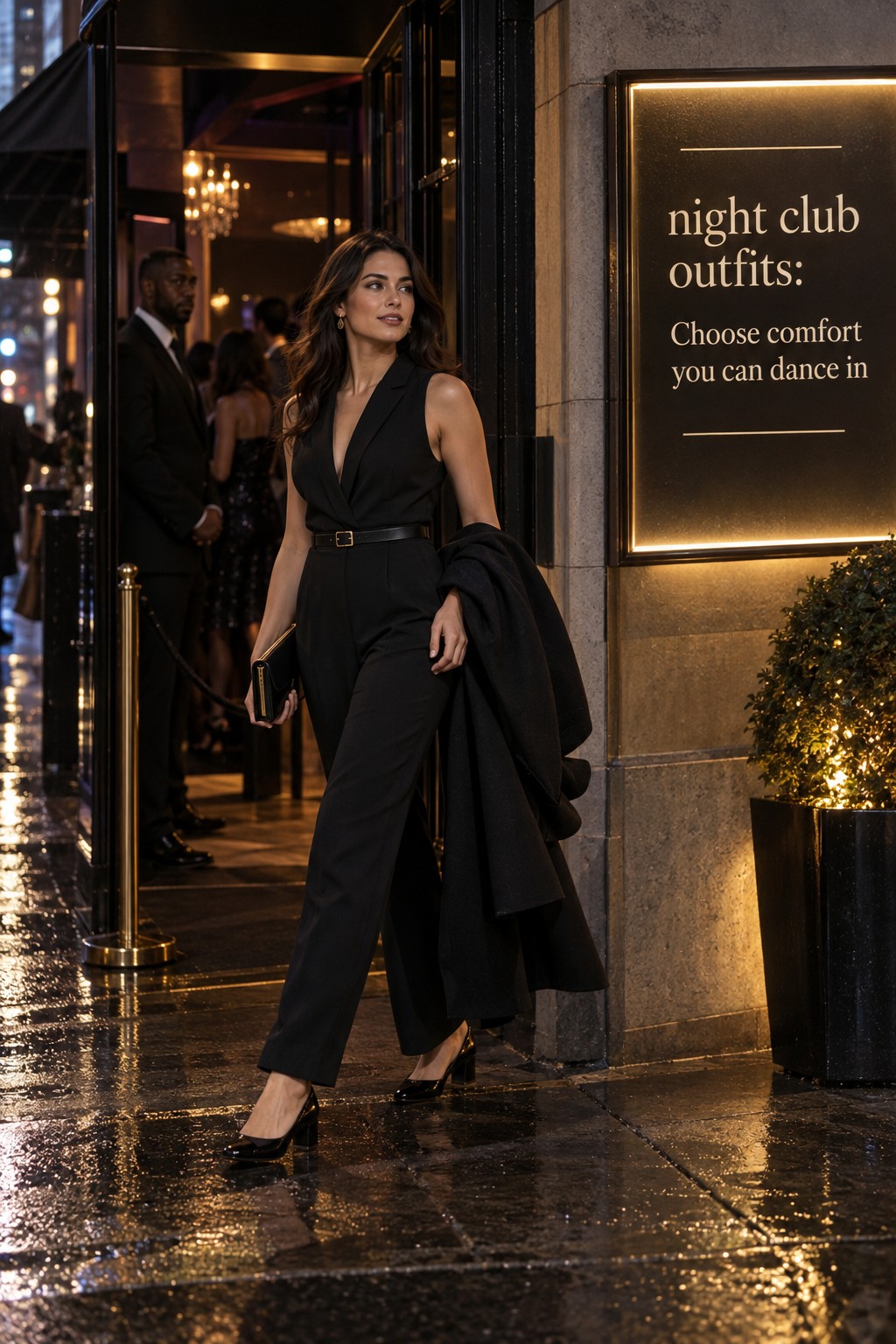
A coordinated set or jumpsuit solves the problem of looking put together quickly. Try a fitted skirt set, cropped top with flared pants, vest with matching trousers, or a monochrome jumpsuit. The matching element creates structure, so you can keep jewelry and color simple. For an upscale room, choose satin, crepe, velvet, or a crisp tailoring fabric. For a casual venue, use knit, denim, or a softer stretch material.
Break up a coordinated look if it feels too formal. Add a contrasting jacket, a different bag texture, a chunky boot, or a simple tee underneath a vest. A jumpsuit can be especially useful when you want the security of a one-piece outfit. Check the closure before leaving and make sure the bathroom situation is realistic. Practical details are part of the style decision, not an afterthought.
Make the Outfit Last Through the Whole Night
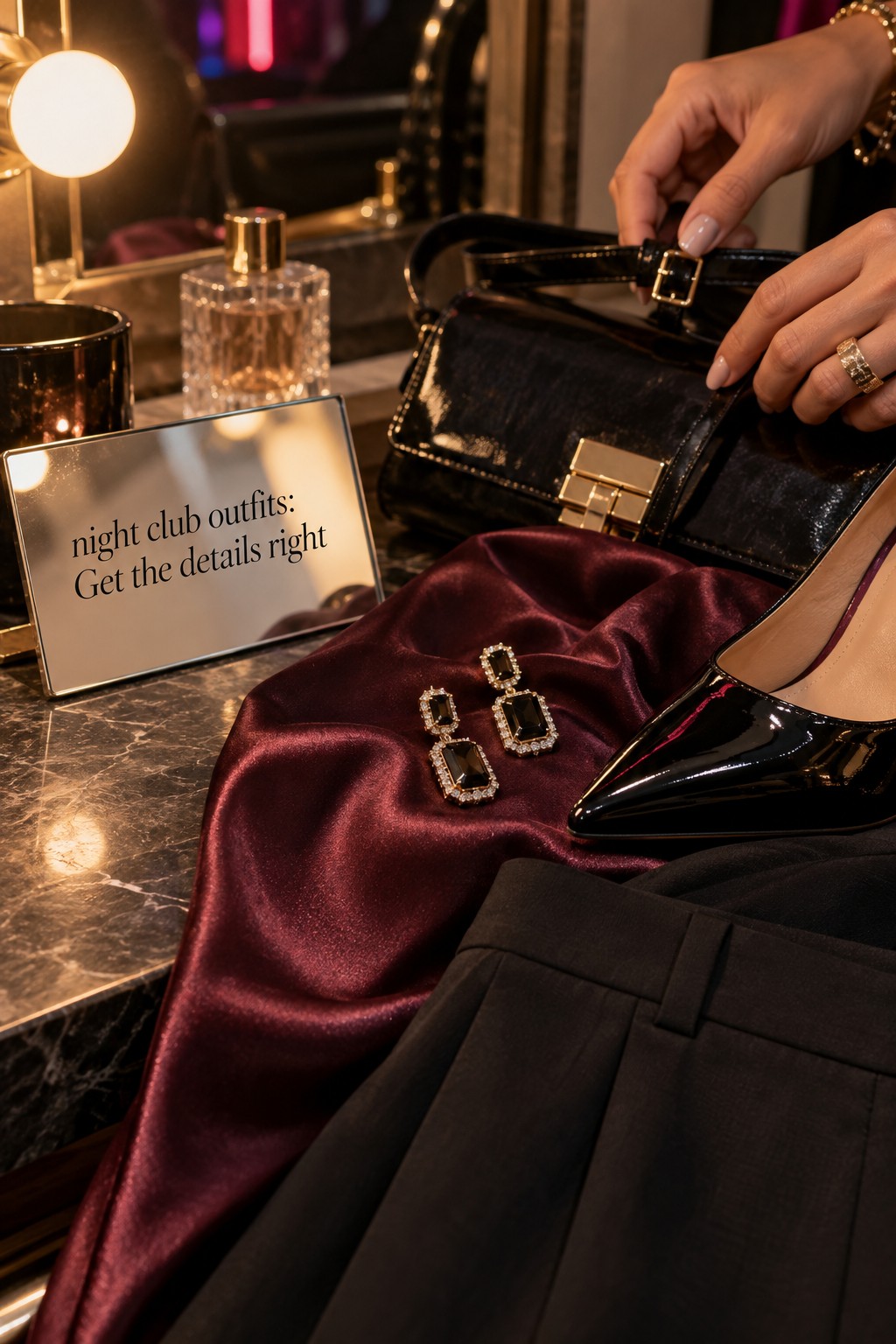
The difference between an attractive outfit and a successful club outfit is often found in the details no photograph captures. Shoes, bags, layers, fabric, and closures decide whether you enjoy the night or spend it managing your clothes. Treat these pieces as part of the outfit formula rather than finishing decorations.
Pick shoes for movement, not just height
Try the full shoe and outfit combination at home. Walk on the surface you will use, sit down, climb a few steps, and stand for several minutes. A stable platform can be easier than a narrow heel, but only if you already know how it feels. A clean sneaker may work in a casual room, while a pointed flat or low boot can give a polished venue more refinement. The right shoe is the one that lets you keep your posture and confidence.
Use a bag that closes and stays close
A tiny bag is attractive, but it should still hold your phone, identification, payment method, keys, and one small touch-up item. A zip crossbody, compact shoulder bag, or close-fitting belt bag can be more useful than a clutch you must carry all night. Match the bag to the outfit’s focal point. If the dress is bold, choose a quiet shape. If the base is simple, a metallic or textured bag can add the needed finish.
Plan the arrival layer and coat-check moment
Outdoor weather can make a perfect indoor outfit feel impractical. Choose a layer that works with the silhouette and can be checked or carried without crushing the focal piece. A tailored coat suits a dress, a cropped faux-leather jacket works with denim, and a blazer can balance a slip or mini. Avoid a layer that has to be held in your hands if you know you will be moving around. Check whether the venue has a coat policy before you leave.
Test fabric, closures, and temperature
Stretch jersey, ponte, and fluid fabrics can make movement easier, while stiff or delicate materials may become irritating in a crowded room. This does not mean every club look should be soft or casual. It means the fabric should support the plan. Check zippers, hooks, straps, and adhesive solutions before you apply makeup. If a top needs constant support, a skirt rides up, or the fabric overheats quickly, change one element before leaving rather than hoping the problem disappears.
Mistakes That Make Night Club Outfits Fail
The first mistake is choosing the most dramatic item before checking the venue. A sequined mini may be perfect for one room and feel out of place in another. Start with the dress code and energy, then decide how much shine, skin, color, or volume the outfit needs. The second mistake is treating comfort as something you can add later. It is easier to create a polished look around a stable shoe than to rescue an outfit after you have abandoned the shoe.
The third mistake is adding several focal points. A metallic top, rhinestone bag, statement earrings, dramatic shoes, and bold makeup can compete instead of creating impact. Choose one hero detail and one supporting detail. The fourth is wearing a layer that changes the proportions. Try the complete outfit with the coat or jacket before you leave, because the arrival look is part of the experience and often the first photo.
The fifth mistake is copying an outfit without adapting it to your own boundaries. You can borrow the idea of a fitted top with wide-leg pants, a slip dress with a jacket, or dark denim with a bright accessory without duplicating the exact amount of coverage. The best night club outfits look convincing because the wearer can move naturally in them. Personal ease is visible.
Before you go, perform a five-minute check. Sit, walk, raise your arms, turn around, test the bag, and look at the hem with the actual shoe. Confirm that the layer can be removed, the closures stay secure, and your essentials fit. If everything passes, stop styling. A clear outfit usually looks more confident than one more accessory added at the last minute.
FAQ
What are the best night club outfits for a first visit?
Start with a polished outfit that gives you room to move, such as a simple mini dress with a stable shoe, dark jeans with a statement top, or tailored pants with a fitted bodysuit. Check the venue’s dress code, use a small bag that closes, and choose one focal point instead of stacking several dramatic details.
Can I wear jeans to a nightclub?
Yes, when the venue allows them and the jeans look intentional. Dark, clean denim paired with a satin camisole, fitted top, structured jacket, polished boot, or refined heel usually feels more evening-ready than distressed denim with casual sneakers. If the dress code is strict, confirm before relying on jeans.
What shoes are most comfortable for clubbing?
Stable platforms, block heels, low boots, pointed flats, and clean sneakers can all be comfortable choices. The best option depends on the venue and your own experience with the shoe. Test it by walking, standing, and moving at home. Extra height is not useful if it changes the way you walk or makes you leave early.
How can I make a club outfit more covered?
Use opaque tights, a long-sleeve base, wide-leg pants, a higher neckline, a tailored blazer, or a longer arrival coat. You can also create impact through satin, metallic texture, rich color, jewelry, or a strong shoe rather than exposure. Keep the silhouette deliberate so extra coverage looks styled rather than added as an emergency.
What bag should I carry to a nightclub?
Choose a small zip crossbody, close-fitting shoulder bag, compact structured bag, or clutch if you will be seated. It should hold your phone, identification, payment method, keys, and one small touch-up item. A bag that closes and stays close to your body is usually more practical than a decorative micro bag with no room.
How do I choose an outfit when dinner may turn into dancing?
Choose the base for the most active part of the night, then use the shoes, layer, and bag to adjust the mood. A slip dress with a blazer, tailored pants with a statement top, or a coordinated set can work for both plans. Select footwear you can stand in and use a layer that is easy to remove or check once the room warms up.
Leave a Reply