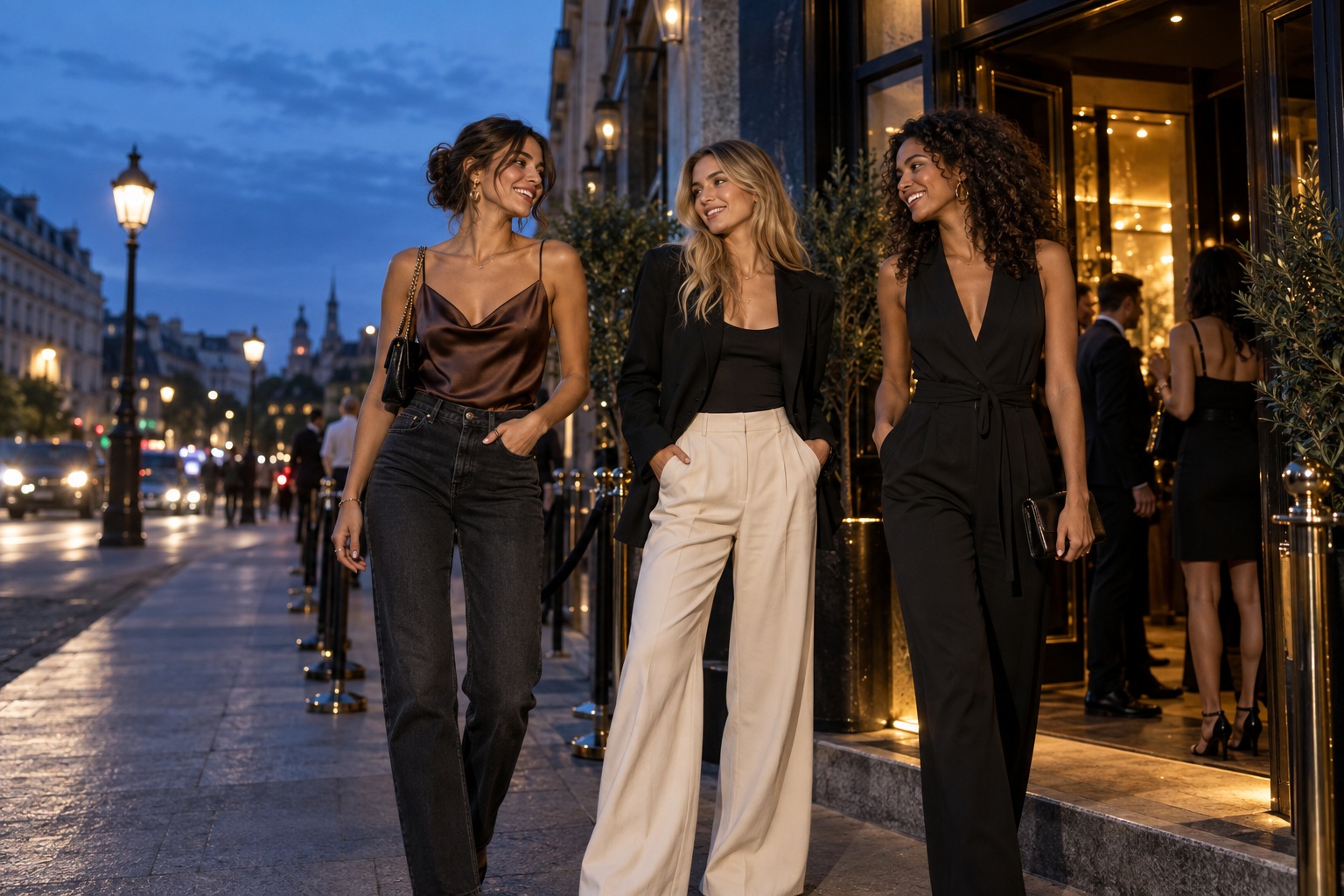
Casual club outfits have moved beyond the old choice between a bodycon dress and everyday jeans. The most useful looks now sit in the middle: relaxed enough for a low-key dance bar, considered enough for a lounge, and comfortable enough that you can stop thinking about your clothes once the music starts. That middle ground is not careless dressing. It is a deliberate mix of familiar pieces and one clear evening signal.
The signal might be a satin camisole, a sharp blazer, a metallic shoe, a low-back top, or a bag with a little shine. Your base can still be dark denim, a simple skirt, wide-leg trousers, or a fitted knit. Current clubwear guides repeatedly return to the same practical idea: the venue sets the tone, while fit, comfort, and movement determine whether the outfit actually works. Venue type matters more than a rigid universal dress code, so use the formulas below as a starting point, then check the room you are entering.
This guide treats casual club outfits as a styling problem, not a shopping list. You will see what is changing, how to adjust the polish level, five distinct formulas, and a final check that prevents a promising look from becoming uncomfortable at midnight. The goal is simple: look like yourself, only more intentional.
What is changing in casual club dressing
The old idea of club dressing often depended on one dramatic garment. A tiny dress, high heels, or a glittering top had to announce the occasion by itself. Casual club outfits work differently. They use contrast. A relaxed pair of jeans becomes evening-ready beside a sculptural top. A basic tee gains energy from a short skirt and tall boots. A soft knit looks deliberate when the rest of the silhouette is clean and the bag is small.
Your wedding has a lot of moving pieces. Your plan can still feel composed.
Zarellea organizes guests, vendors, budget, and timelines in one shared space — so you can make decisions with clarity, not stress.
This shift reflects a wider interest in clothes that move between settings. A look can begin at dinner, continue at a bar, and end on a dance floor without requiring a complete change. The bodysuit-and-jeans formula is a useful example because the base is familiar while the neckline, texture, and accessories create the going-out feeling. The lesson is not to copy one exact outfit. It is to let one detail carry the evening message.
Low light also changes the way a casual outfit reads. Texture becomes more visible than tiny decorative details. Satin catches a warm lamp. Leather creates a clear outline. Metallic thread reflects movement. A white or bright top gives the face a little lift. That does not mean every look needs sparkle. It means the surface of a garment deserves as much attention as its color.
The strongest version of casual club dressing is therefore not the most revealing or expensive one. It is the look with a readable point of view. You can say polished denim, relaxed glamour, sporty with intent, soft and sharp, or minimal with shine. Once you know the phrase, getting dressed becomes much faster.
How to find the casual-to-polished balance
Think of polish as a dial rather than a dress code. Start with the most casual piece you want to wear, then add two details that make it feel chosen. If your base is vintage jeans, the details could be a backless knit and pointed boots. If your base is a cotton mini skirt, try a fitted tee and a structured bag. If your base is a simple jumpsuit, add earrings and a jacket with a defined shoulder.
One useful rule is to avoid making every item casual at the same time. Jeans, a loose sweatshirt, athletic sneakers, and a large canvas tote may be perfect for daytime, but together they can look disconnected from a club setting. Keep one or two relaxed elements and let the remaining pieces provide shape, sheen, or a cleaner finish. This is why a blazer over a fitted top works so reliably: the top feels social, while the jacket gives the outfit structure.
Proportion does the same work. Pair volume with a closer fit, or pair a short hem with a longer layer. Wide-leg pants look intentional beside a compact halter or slim knit. A mini skirt feels less fussy under an oversized blazer. A cropped jacket can make a loose dress feel more defined. These combinations create tension without asking you to wear anything extreme.
Finally, check the venue before deciding how far to turn the dial. A neighborhood bar, a casual dance venue, an upscale lounge, and a themed event can all use the word casual differently. Look at the club’s website or recent social posts when possible. If you are uncertain, one step above your everyday uniform is usually safer than arriving in a look that feels unfinished, while still leaving room for your own comfort.
- Keep the base familiar: denim, a knit, a tee, a skirt, or trousers.
- Add one evening texture: satin, leather, sequins, mesh, or polished metal.
- Use one structured element: a blazer, sharp bag, defined belt, or tailored pant.
- Choose shoes you can stand and move in for several hours.
Five casual club outfit formulas that work
The formulas below are intentionally repeatable. Each one starts with pieces that can already live in a normal wardrobe, then adds a different kind of energy. Use the exact combination, or swap the categories while keeping the same balance of relaxed and refined.
1. Dark jeans, a going-out top, and a walkable heel
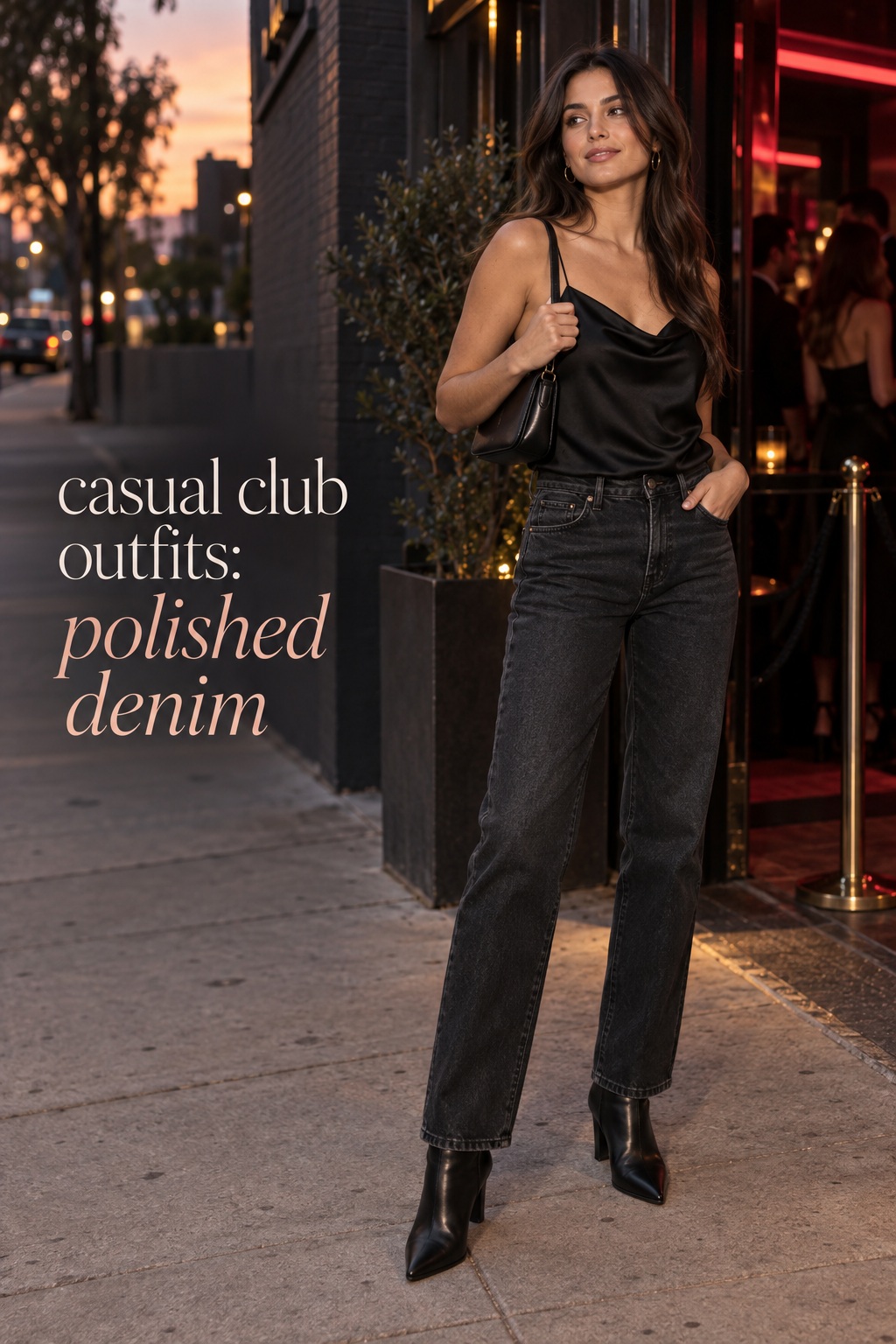
This is the clearest answer when you want to feel casual but still look as if you made a plan. Choose dark straight-leg, bootcut, or relaxed wide-leg jeans without excessive distressing. Add a top with a noticeable detail: a cowl neckline, satin finish, asymmetrical shoulder, lace trim, or subtle cutout. Finish with a block heel, kitten heel, or sleek ankle boot rather than a shoe that makes every step a negotiation.
The contrast works because the denim supplies ease while the top supplies occasion. A small metallic earring or compact shoulder bag is enough to connect the pieces. If the top is already shiny, keep the jewelry quiet. If the top is matte, let the bag or shoe add a little reflection. The jeans-and-a-nice-top formula is often described as a middle ground between too casual and too dressed up; for a club, make the top tactile and keep the footwear purposeful.
2. Fitted tee, mini skirt, and tall boots
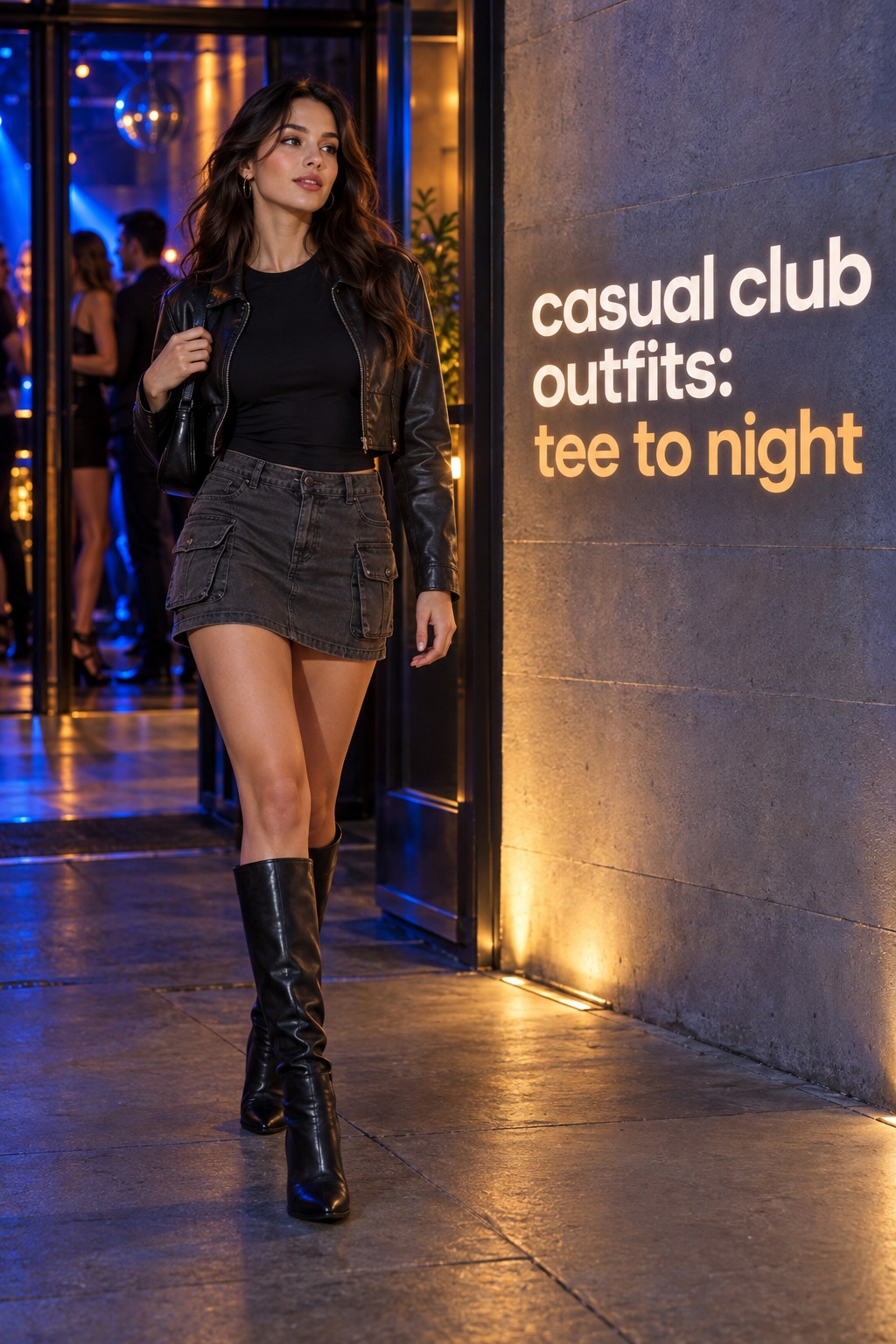
A fitted black, white, or washed graphic tee makes a short skirt feel modern rather than overly styled. Try denim, cargo, knit, or faux leather depending on the venue. Tall boots bring the outfit together and provide more support than a delicate sandal. The result has a casual base, but the leg line and boot shape give it enough presence for the night.
Keep the tee close to the body or tuck it neatly so the skirt remains the focal point. A slim belt can define the waist, while a cropped jacket adds a practical layer for the trip to and from the venue. If the skirt rides up when you walk, test it before leaving and consider fitted shorts underneath. Feeling secure is part of looking relaxed. A casual club outfit should not require constant adjustments.
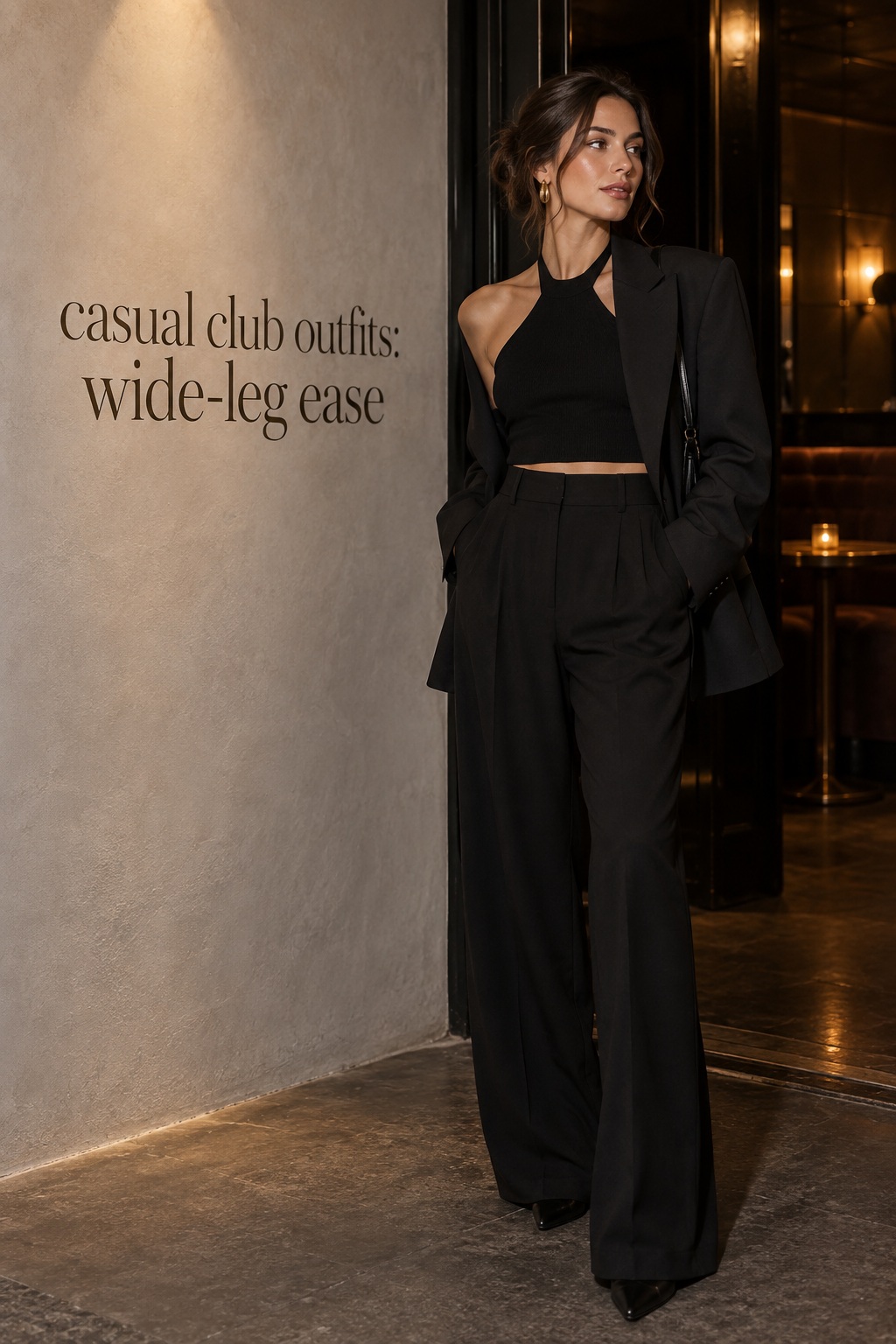
3. Wide-leg trousers, a compact top, and a sharp layer
Wide-leg trousers are useful when you want coverage and movement without sacrificing shape. Pick a fluid fabric, dark denim, or a lightweight tailored pair. Balance the volume with a fitted tank, halter, bandeau, or fine-gauge knit. Then add a cropped leather jacket or an oversized blazer. The contrast between the wide leg and a defined upper half makes the look feel styled immediately.
This formula is especially flexible for a club that begins as dinner or drinks. Remove the jacket once the room warms up, or wear it open so the top remains visible. A pointed flat, low block heel, or clean sneaker can work if the rest of the outfit is crisp. Wide-leg trousers with a structured top are repeatedly used for evening dressing because they create a long line while leaving room to move.
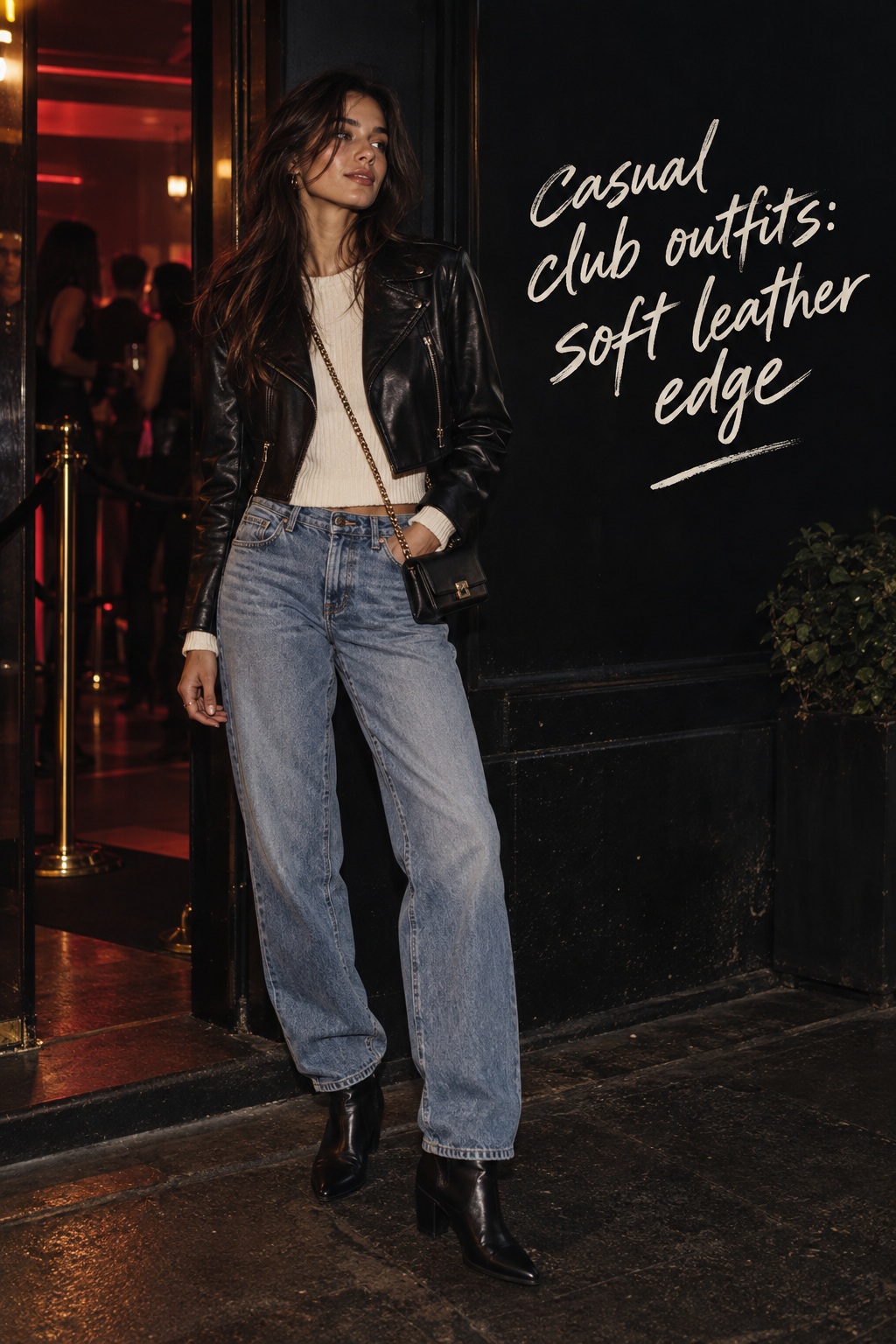
4. Leather layer, soft top, and relaxed denim
Leather does not have to dominate the outfit. Use it as a jacket, vest, trouser, or compact skirt, then soften it with denim or a fine knit. A cropped leather jacket over a satin cami and loose jeans feels casual with an edge. Leather trousers with a simple long-sleeve top can be even easier if you choose a matte finish and a forgiving waist.
Keep the color story tight: black and blue, espresso and cream, or deep brown with charcoal. That lets the texture do the work. Shoes can be ankle boots, a low platform, or a refined sneaker when the venue allows them. Avoid adding leather in every accessory. One strong surface is enough, especially in low light where texture can look more dramatic than expected.
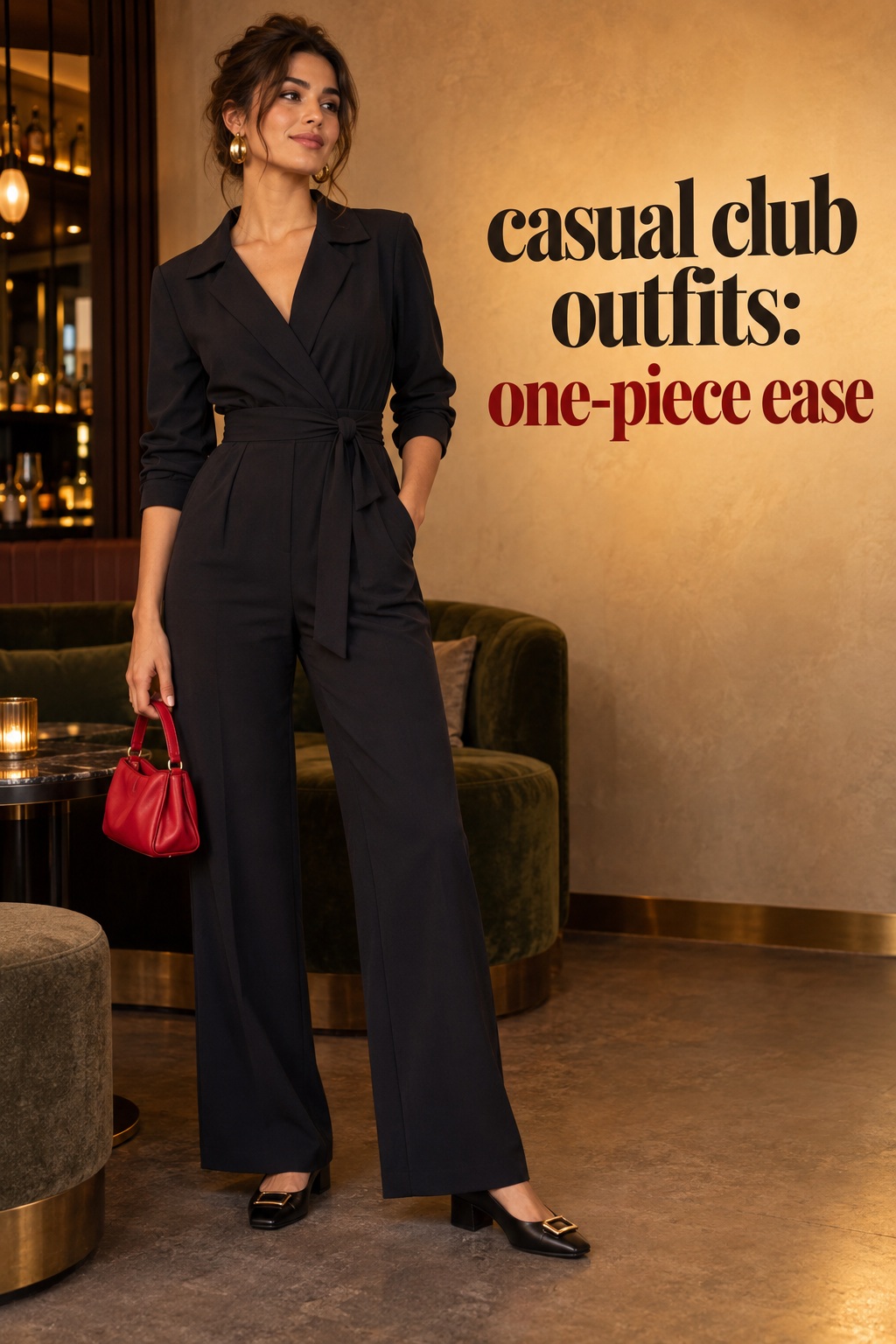
5. Jumpsuit, small bag, and one bright detail
A jumpsuit is the shortcut for nights when you want a complete silhouette with very little decision-making. Look for a fitted waist, a clean neckline, and a leg that lets you walk freely. A utility-inspired style can feel casual, while a fluid black or jewel-toned version moves closer to lounge dressing. Add a small bag and one bright detail such as red earrings, a metallic shoe, or a vivid lip.
Check the practical details before committing. Can you sit comfortably? Is the fastening easy to manage in a restroom? Does the hem stay clear of your shoe? The one-piece approach is useful when you want drama with less adjusting, but only if the garment works in real life. A cropped or ankle-length hem is often easier for a casual night than a floor-skimming style.
How to choose shoes, layers, and accessories
Shoes decide whether an outfit stays enjoyable. Start with the amount of standing and walking you expect, then choose the dressiest option within that limit. A block heel gives height with a wider base. An ankle boot protects the foot and works with jeans or skirts. A sleek sneaker can be appropriate for a genuinely casual room, but pair it with a going-out top, clean lines, or a polished bag so the whole outfit does not read as daytime.
Try the full outfit at home and walk, sit, reach, and take a few stairs. This is not overthinking. It is a quick way to catch a strap that slips, a hem that twists, or trousers that drag. The best club look disappears once the night starts. Guides that focus on club comfort consistently return to fit, breathability, and footwear because discomfort becomes more obvious after hours of movement.
Layers should be easy to remove and easy to carry. A cropped jacket, slim blazer, or compact overshirt gives you warmth outside without turning into a burden indoors. Avoid a bulky coat if you do not know whether the venue has a coat check. A small shoulder bag with a secure closure is usually more practical than a large tote. Keep only what you will actually use: phone, card, keys, and lip product.
Accessories are where a casual club outfit can become personal. Choose one focal point near the face, one near the hands, or one that catches light when you move. Drop earrings, a sculptural ring, a narrow belt, or a polished hair clip can be enough. If your top has a dramatic neckline, skip a necklace. If your outfit is almost entirely matte, add a small shine through the bag or shoe instead of layering several reflective pieces.
Color works best when it has a job. A red bag can wake up black denim. A pale top can brighten a dark room. A saturated shoe can make a neutral outfit feel current. You do not need a full trend look. Choose one color or texture that makes the outfit recognizable from a distance, then let the rest support it.
Mistakes that make a casual club look feel accidental
The first mistake is treating casual as a reason to skip finishing touches. A tee and jeans can absolutely work, but the fit should be intentional and at least one element should feel evening-specific. Tuck the tee, add a belt, switch to a smaller bag, or choose a more defined shoe. Tiny decisions make the difference between relaxed and rushed.
The second is combining too many loud signals. Metallic top, sequin skirt, patent boots, oversized jewelry, and a glitter bag may each be appealing, but together they compete. Pick one hero texture and one supporting detail. This makes the outfit easier to read and usually more comfortable to wear.
The third is wearing shoes that belong to a fantasy version of the night. If you know you will walk several blocks, wait in line, and dance, a narrow high heel may change your mood before the evening has started. A boot, block heel, or dressy flat can still look intentional. Style is not measured by the amount of suffering an outfit requires.
The fourth is ignoring the room. A casual bar, rooftop lounge, underground music venue, and upscale club may all welcome personal style, but their expectations differ. The US street-style guidance from LA and Dallas examples illustrates why the same base can be styled more relaxed or more structured depending on the setting. Use the venue’s own signals as information, not as a rule that erases your personality.
The final mistake is choosing an outfit that photographs well but fails in motion. Check the waistband, neckline, straps, closures, and hem. Put your phone in the bag you plan to carry. If you cannot move naturally for five minutes at home, the outfit is not finished. A successful casual club outfit should support the night rather than become the main event.
FAQ
Can I wear jeans to a casual club?
Yes, if the venue allows denim and the jeans look clean and intentional. Dark or even-wash denim is the easiest starting point. Add a special top, defined shoe, and smaller bag so the look feels ready for the evening rather than copied from a daytime outfit.
What is the easiest casual club outfit?
Try dark jeans with a satin, lace-trimmed, asymmetric, or fitted top and a walkable ankle boot. It is simple to assemble, easy to adjust for different venues, and comfortable enough for a night that includes standing or dancing.
Are sneakers appropriate for casual club outfits?
Sleek, clean sneakers can work in a genuinely casual club or dance bar, but check the venue first. Balance them with a polished top, blazer, mini skirt, or structured bag. Avoid pairing athletic sneakers with several other gym-like pieces unless the venue specifically has a sporty or streetwear mood.
How can I make a casual outfit look more dressed up?
Add one structured element and one evening texture. A blazer with a satin top, a leather jacket with relaxed denim, or a metallic shoe with a simple jumpsuit can raise the outfit quickly. You do not need to change every item or add multiple statement accessories.
What shoes are best for dancing in a club?
Choose shoes you can comfortably stand and walk in for several hours. Block heels, ankle boots, low platforms, supportive dressy flats, and clean sneakers can all work depending on the venue. Test the shoes with the full outfit before leaving, especially if the soles or heel height are unfamiliar.
What should I bring with a casual club outfit?
Keep it compact: phone, identification, payment card, keys, and any small personal essentials. A secure shoulder bag or small crossbody is easier to manage than a large tote. If you need a jacket, choose one that is light enough to carry or confirm whether the venue has coat check.
Casual club outfits work when every piece has a reason. Start with what feels like you, add one detail that catches the evening light, and make sure the silhouette can move. That balance gives you the freedom to enjoy the room instead of monitoring the outfit.
Leave a Reply