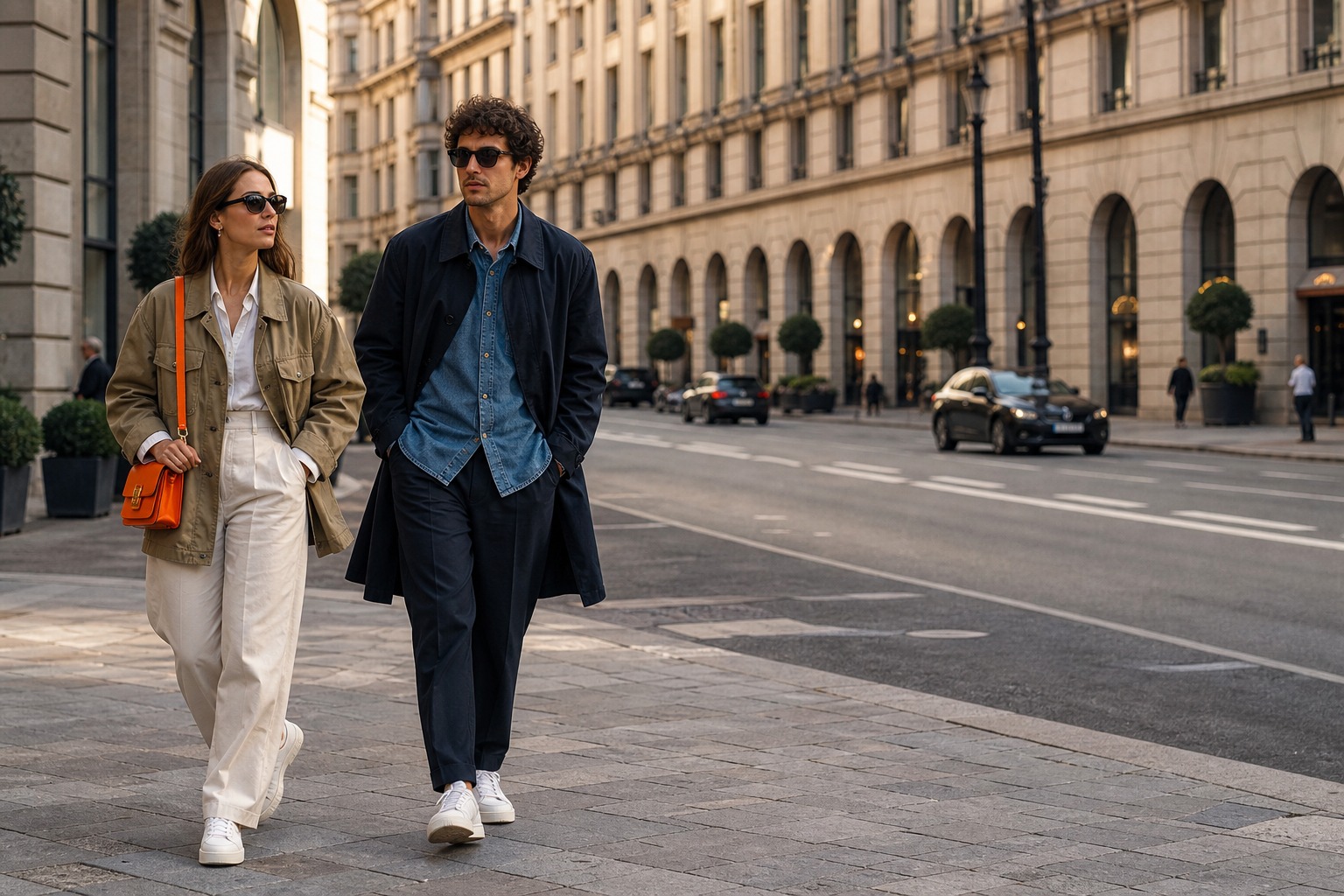
Looks street style can seem spontaneous in a photograph, but the strongest outfits usually have a quiet system underneath. There is a recognizable base, a deliberate proportion, one useful layer, and a detail that makes the outfit feel personal. That is good news if you want a wardrobe that looks current without buying a new personality every season.
This guide treats street style as a capsule wardrobe problem. You will build a small group of pieces that can create relaxed, polished, sporty, or slightly experimental outfits, depending on the way you combine them. The goal is not to copy one influencer or chase every trend. It is to make your existing clothes work harder, then add only the pieces that unlock several new outfits.
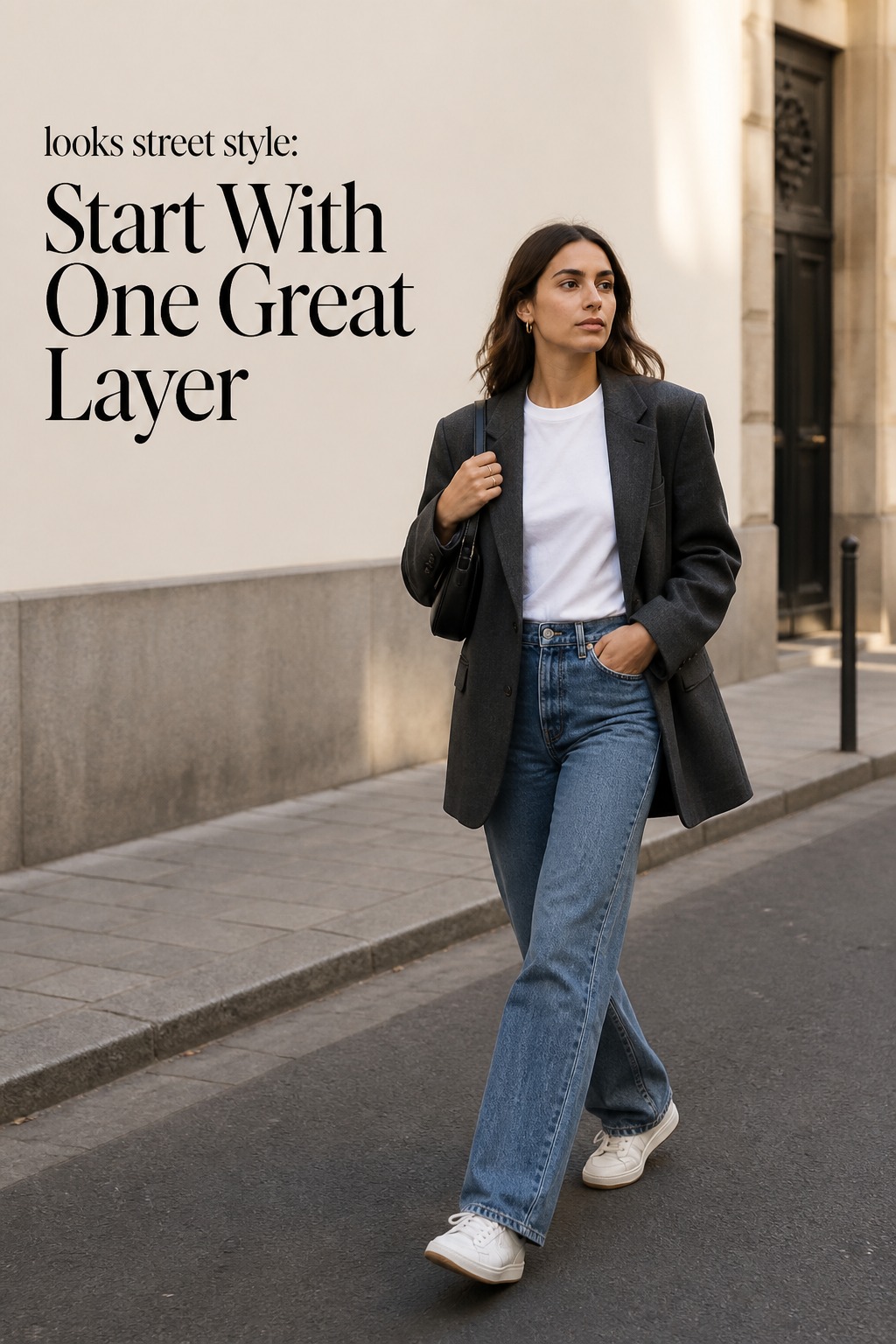
Start With the Street Style Capsule
A useful street style capsule has enough contrast to feel expressive, but enough repetition to make dressing easy. Begin with categories rather than a shopping list. You need a reliable base, a relaxed bottom, a structured layer, a practical shoe, and one accessory that can change the mood. The exact colors and fabrics can reflect your life, climate, and comfort level.
Your wedding has a lot of moving pieces. Your plan can still feel composed.
Zarellea organizes guests, vendors, budget, and timelines in one shared space — so you can make decisions with clarity, not stress.
Choose three anchors for the wardrobe
Your first anchor is a simple top that works under layers. A white, black, gray, or muted color T-shirt is an easy beginning, but a fitted knit, tank, or crisp button-down can fill the same role. Your second anchor is a bottom with an uncomplicated line, such as straight-leg denim, relaxed trousers, a cargo pant, or a midi skirt. Your third anchor is outerwear with a little presence. This might be a blazer, bomber, chore jacket, denim jacket, leather jacket, or lightweight trench.
These anchors should not all be oversized. If your jeans are wide and your jacket is roomy, choose a closer-fitting base layer. If your top is fitted and your jacket is cropped, a fuller trouser can create the volume. Street style looks need movement and personality, but the eye still benefits from a clear relationship between the pieces.
Build a practical color story
Pick two or three dependable neutrals before adding color. Black and cream create a sharp foundation. Navy, gray, and white feel clean and urban. Brown, olive, and denim blue bring a softer utility mood. The point is not to make every outfit monochrome. It is to make your layers easy to combine, so a statement bag, shoe, scarf, or top can become the intentional focal point.
- Use one dominant neutral for the largest area, such as trousers or a coat.
- Repeat a smaller color in two places, such as a bag and a stripe or shoes and a belt.
- Keep one high-impact shade for days when you want the outfit to speak first.
- Let denim act as a bridge between bright colors, dark neutrals, and warm earth tones.
Texture can do the work of color. A cotton tee under a wool jacket, smooth leather beside faded denim, or a crisp shirt under a soft knit creates depth even when the palette is restrained. This is especially helpful when you prefer simple outfits but still want them to look considered.
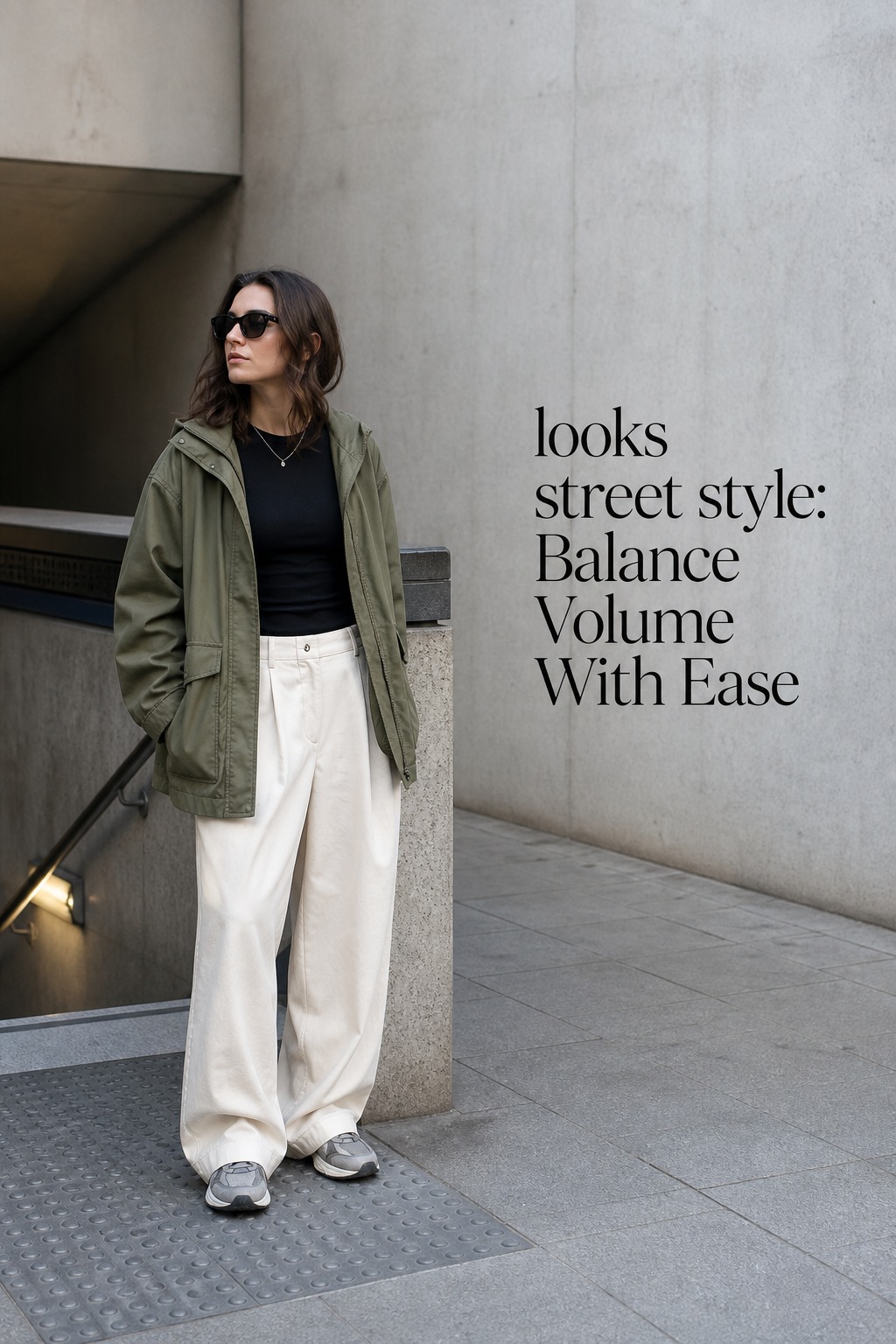
Use Proportion to Make Simple Pieces Look Intentional
The quickest way to make looks street style feel designed is to pay attention to proportion. You do not need unusual pieces. You need to decide which part of the outfit carries volume, where the waist or hip line sits, and whether the shoe supports or interrupts the shape. Try on the outfit as a whole, not just one item at a time.
Try the oversized and fitted balance
An oversized layer works well over a more defined base. Pair a roomy bomber with a slim tank and straight jeans. Wear a generous blazer over a tucked tee and a long, clean trouser. Try a large denim jacket over a fitted dress. The closer layer gives the look a center, while the larger layer supplies the relaxed street energy.
The reverse also works. A fitted jacket or cropped cardigan can balance wide-leg denim, parachute pants, or a long skirt. If your outfit feels heavy, expose a little ankle, wrist, neckline, or waist, depending on what feels comfortable. A small area of visual lightness can keep multiple relaxed pieces from becoming shapeless.
Let the third piece do the styling
The third-piece rule is useful because a basic top and bottom often look unfinished on their own. Add a jacket, overshirt, vest, cardigan, scarf, or belt. The layer does not need to be dramatic. Its job is to create a new line, add texture, or connect the outfit’s colors. An open shirt can create vertical movement. A belt can define the transition between a tucked top and wide trousers. A vest can make a familiar tee and jeans feel more urban.
Use the third piece according to your day. A blazer is useful for a studio, office, or dinner. A chore jacket works for errands and weekends. A trench handles changing weather. A bomber brings sporty energy. A cardigan softens the outfit. When a layer serves a real purpose, it is more likely to earn frequent wear.
Create Repeatable Looks for Real Days
A capsule becomes valuable when it answers the question you ask on a busy morning. Instead of collecting isolated inspiration images, create a few formulas for the situations that actually fill your week. Each formula should have slots you can change. This keeps the outfit recognizable while allowing different colors, fabrics, weather solutions, and levels of formality.
The elevated everyday formula
Start with a simple tee or knit, add straight-leg jeans, then finish with a structured blazer and clean sneakers. A belt and small shoulder bag sharpen the base. For a more relaxed version, replace the blazer with a chore jacket. For a cooler day, add a long coat and let the sneaker show beneath the hem. The formula works because the tailored layer prevents denim from looking too casual, while the sneakers keep the outfit connected to the street.
The utility contrast formula
Combine a fitted top, cargo or utility trousers, and a compact shoe. Add a cropped jacket, a canvas tote, or a simple cap. Keep the palette calm if the pockets and hardware are noticeable. If the trousers are neutral, let the top or bag introduce color. This is a good option for walking days because the clothes have function, but the contrast between a close-fitting top and substantial bottom gives the outfit shape.
The dress over casual layers formula
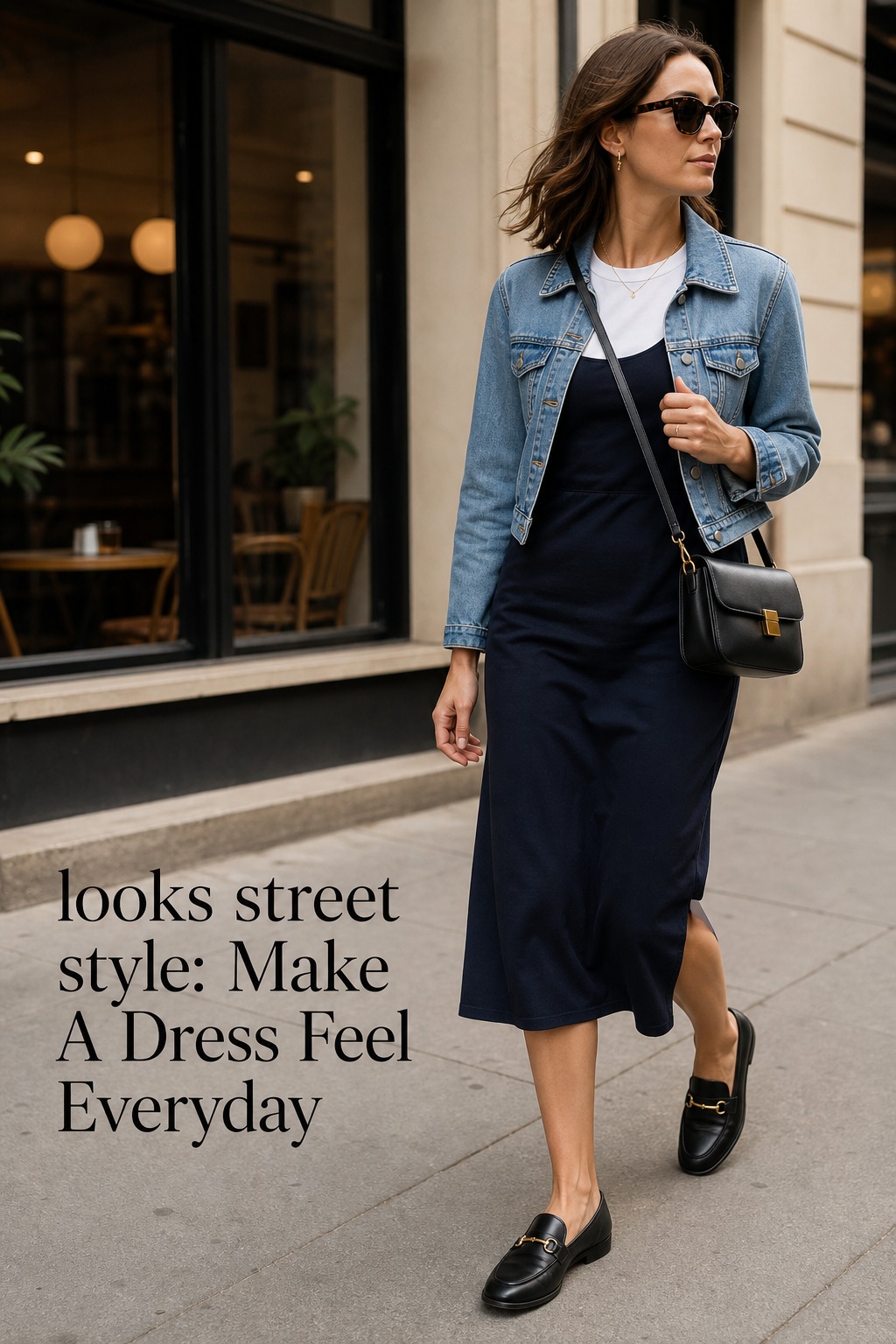
Wear a slip dress or simple midi dress over a fitted T-shirt, fine knit, or long-sleeve base. Add sneakers, loafers, or ankle boots depending on the setting. A denim jacket makes it casual, while a blazer creates a more polished result. If the dress is loose, use a bag with a defined shape or a belt to restore structure. This formula gives a dress more wear and makes the street style idea feel personal rather than costume-like.
The tonal comfort formula
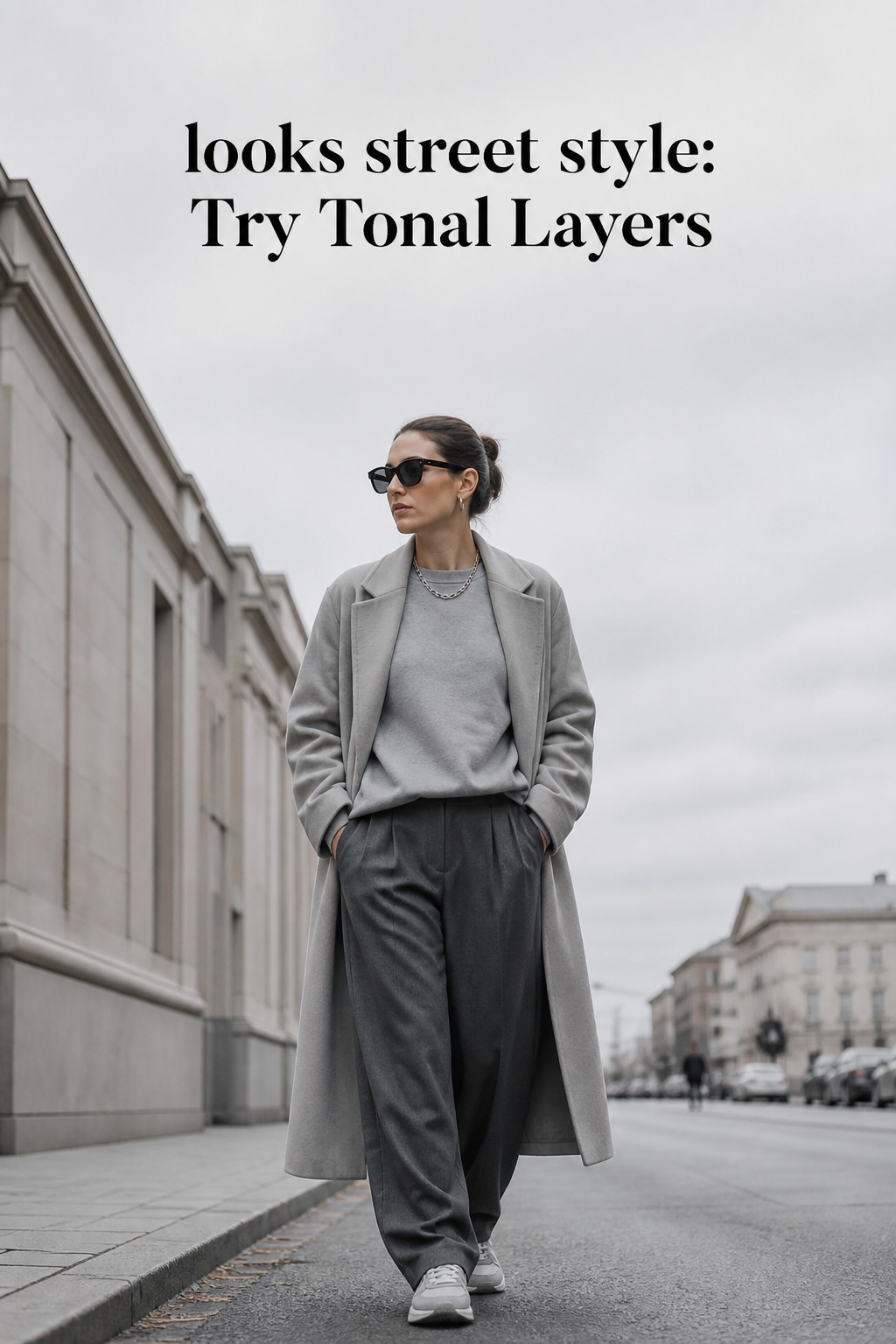
Choose one color family for the base, then vary texture and proportion. Try a gray sweatshirt with charcoal trousers and a lighter gray coat. Try cream denim with a beige knit and a camel jacket. Add one contrasting accessory, such as a red bag, blue sneaker, or silver earring. Tonal dressing looks calm in a photograph, but the texture changes keep it from feeling flat.
The polished workday formula
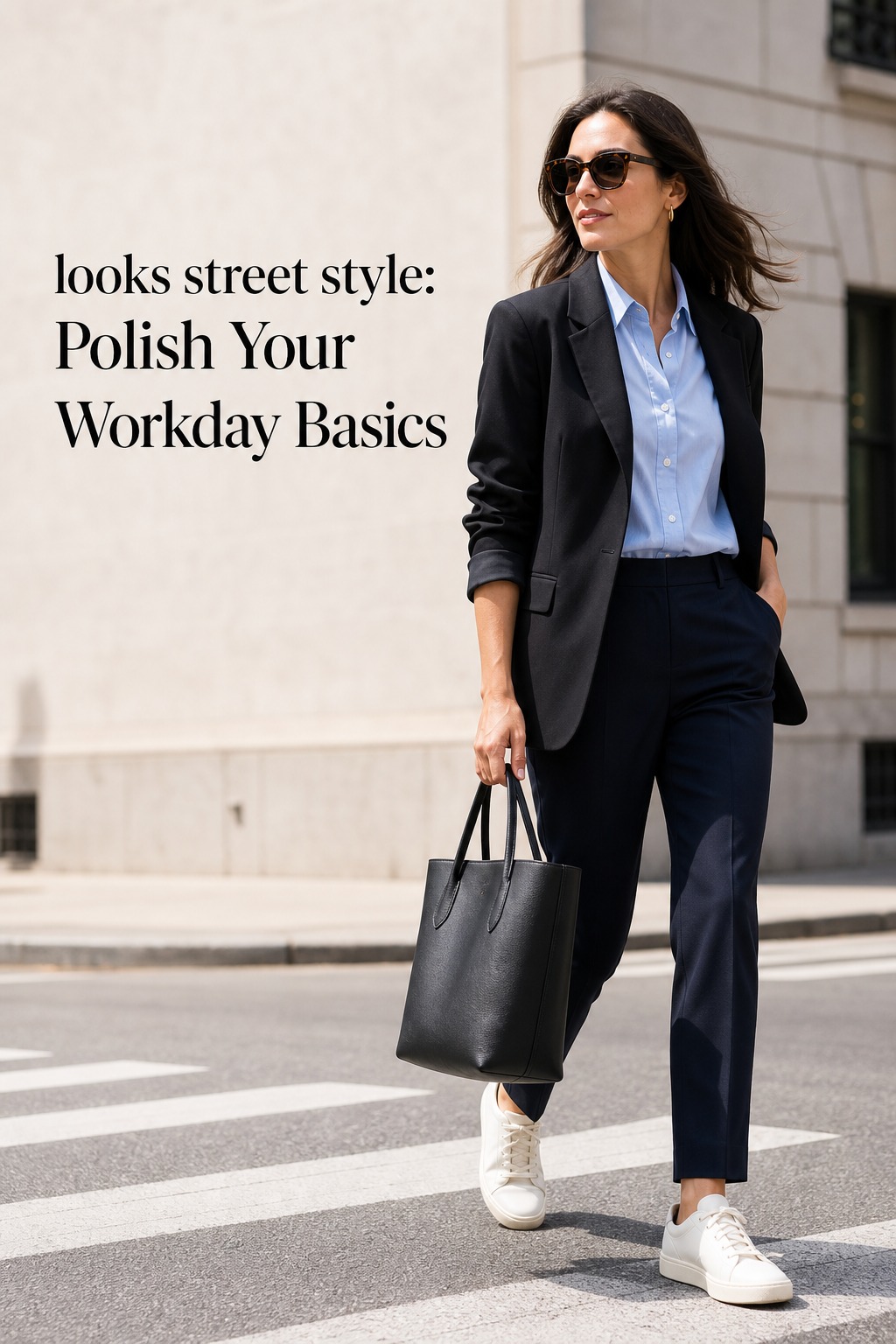
Use a button-down or fine knit, tailored trousers, a roomy blazer, and a practical loafer or minimal sneaker. Keep the shirt partly untucked or add a belt so the outfit does not become overly formal. A crossbody worn under the blazer or a structured tote can make the look feel more current. If your workplace is conservative, keep the colors classic and let the proportions provide the street style influence.
Shop, Adapt, and Edit the Capsule
The best street style wardrobe is not the one with the most pieces. It is the one where each new item has a clear job. Before buying, write down three outfits the item will complete using clothes you already own. If you can only imagine one special occasion, it may be an interesting piece, but it is not yet a capsule priority.
Buy the missing connector first
A connector is a piece that links several parts of your wardrobe. A neutral overshirt can work with denim, trousers, a skirt, and a dress. A black sneaker can support dresses, cargo pants, tailored trousers, and jeans. A compact shoulder bag can make casual clothes feel finished without changing the entire outfit. Look for these connectors before buying another statement item.
- Choose a layer if your outfits feel like plain tops and bottoms.
- Choose a versatile shoe if your clothes work but the finish feels inconsistent.
- Choose a strong basic if your statement pieces have no calm foundation.
- Choose an accessory if your palette is useful but visually quiet.
Adapt the formulas to the season
Seasonal adaptation is often about changing one layer rather than rebuilding the outfit. In warm weather, use a breathable shirt, tank, or lightweight knit as the close layer and switch to sandals, canvas sneakers, or a slim loafer. In fall, add denim, wool, or a chore jacket. In winter, preserve the same proportions under a long coat and use boots with enough visual weight for the outer layer. In wet weather, prioritize a water-resistant shell, a bag that closes securely, and shoes you can walk in.
When the temperature changes during the day, make the removable layer part of the plan. A sweater over the shoulders, an overshirt tied at the waist, or a scarf in the bag can give you flexibility without adding visual clutter. The street style effect is stronger when the practical solution looks intentional.
Fix the most common styling problems
If the outfit feels too plain, add texture or a third piece before adding more color. If it feels too busy, remove one competing detail and repeat a color already present. If the silhouette feels bulky, bring one layer closer to the body or expose a small area of ankle, wrist, or neckline. If the look feels like a costume, keep the statement piece and simplify everything around it. If you cannot walk, sit, carry your bag, or handle the weather, the outfit needs a practical edit.
Take a quick mirror photo from a few steps away. Check whether the outfit has a clear focal point, whether the shoe feels connected to the bottom, and whether the outer layer creates a useful shape. Photos reveal issues that a close mirror view can hide, especially when several pieces are relaxed or oversized.
FAQ
What are looks street style?
Looks street style are everyday outfits shaped by personal expression, city dressing, practical movement, and a mix of casual and polished pieces. They can include denim, tailoring, sneakers, utility clothing, dresses, bold accessories, or unexpected layers. The common thread is intentional styling rather than a fixed uniform.
How can I create street style looks from basic clothes?
Start with a simple top and bottom, then add a third piece such as a blazer, bomber, overshirt, vest, or trench. Change the proportion by pairing a relaxed layer with a closer base, and finish with a shoe or accessory that gives the outfit direction. A strong tuck, cuff, belt, or bag can make basics feel styled.
Do street style outfits have to be oversized?
No. Oversized clothing is one possible street style language, but balance matters more than size. You can create the same sense of ease with a relaxed shirt, straight jeans, and a clean sneaker, or with a fitted dress under a roomy jacket. Choose the volume that lets you move and still feels like yourself.
What shoes work best with street style outfits?
Clean sneakers, retro sneakers, loafers, ankle boots, and substantial sandals can all work. Match the shoe’s visual weight to the hem and volume of the outfit. Wide trousers often need a shoe with some presence, while a slim skirt or fitted jean can work with a lighter shoe. Comfort and walking ability should guide the final choice.
How many pieces do I need for a street style capsule?
There is no correct number, but a useful starting point is three tops, two bottoms, two layers, two shoes, and two accessories that can combine in several ways. Add a dress or seasonal outer layer if your lifestyle needs it. The important test is not the total count. It is whether each piece works in at least three outfits and suits your real week.
How do I make street style outfits look less trendy?
Keep the foundation classic and limit the trend to one item or styling choice. Use good proportions, comfortable fabrics, and a color palette you already wear. A current sneaker, bag, or jacket can feel lasting when it is surrounded by familiar pieces. If the outfit only works because every item is a trend, simplify the base.
A final capsule check can make these formulas much easier to use. Lay your likely tops, bottoms, layers, and shoes on the bed and look for repeated combinations. You are not searching for perfect variety. You are checking whether the wardrobe has enough bridges between categories. A jacket that only works with one trouser is less useful than a simple jacket that works with denim, a skirt, a dress, and relaxed pants.
Pay attention to the clothes you reach for without thinking. Those pieces reveal your actual comfort preferences better than a mood board does. If you always choose a soft layer, look for a polished version of that shape. If you always wear flat shoes, build outfits around them instead of treating heels as the final step. Personal style becomes clearer when the wardrobe supports your behavior rather than asking you to perform a different lifestyle.
You can also create a weekly rotation from the formulas. Choose one everyday base, one workday base, one weather-ready base, and one outfit with a stronger focal point. Photograph each combination and note what made it comfortable or inconvenient. After two weeks, you will know which items need tailoring, which shoes are underused, and which purchases would genuinely improve your options. This small review prevents the capsule from becoming another aspirational project that looks good only in theory.
The most convincing looks street style usually contain a little tension: relaxed with polished, practical with refined, familiar with unexpected. You can create that tension with a single contrast rather than a pile of trend pieces. Start with the clothes that already feel like you, add one useful connector, and let repetition become your signature. That is how a compact wardrobe produces outfits that look fresh, photograph well, and still make sense on an ordinary day.
Leave a Reply