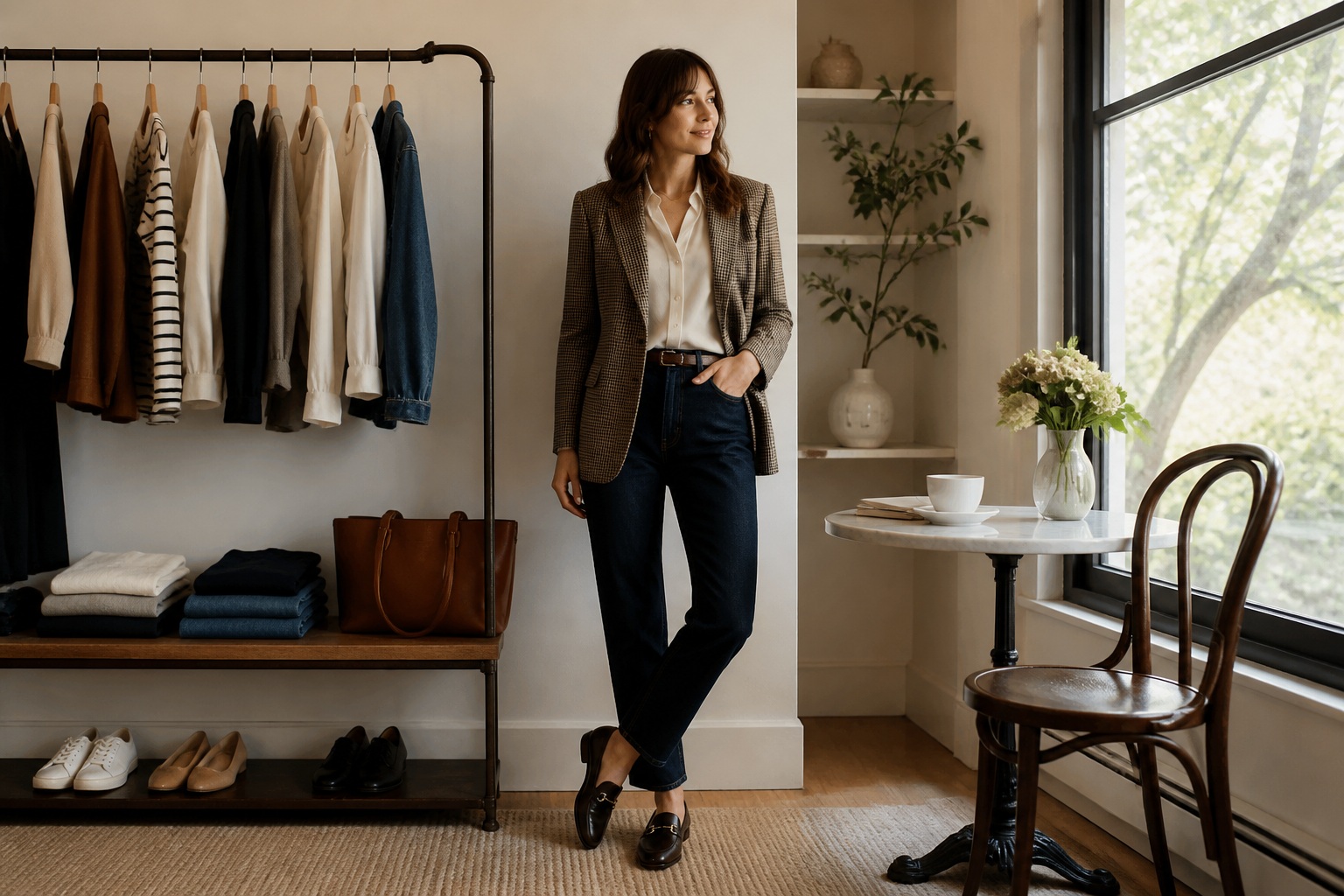
At 7:42 on a weekday morning, the closet is full, the coffee is getting cold, and the outfit that looked fine on the hanger suddenly feels unfinished. The jeans are right, the shirt is clean, and the shoes are comfortable. Still, the whole look seems to be waiting for one more decision. This is the small frustration that makes basic style worth understanding. Simple clothes are easy to own, but they are not automatically easy to combine.
Good basic style is not a strict uniform, a closet made entirely of beige, or a challenge to own as little as possible. It is a way of making everyday clothes work together so getting dressed feels clear rather than accidental. The difference usually comes from proportion, texture, fit, repetition and one or two details that feel like you. Think of this guide as a practical wardrobe conversation: start with what you have, notice what your clothes are saying, and build simple outfits with enough intention to feel finished.
Why Basic Style Looks Better When It Feels Intentional
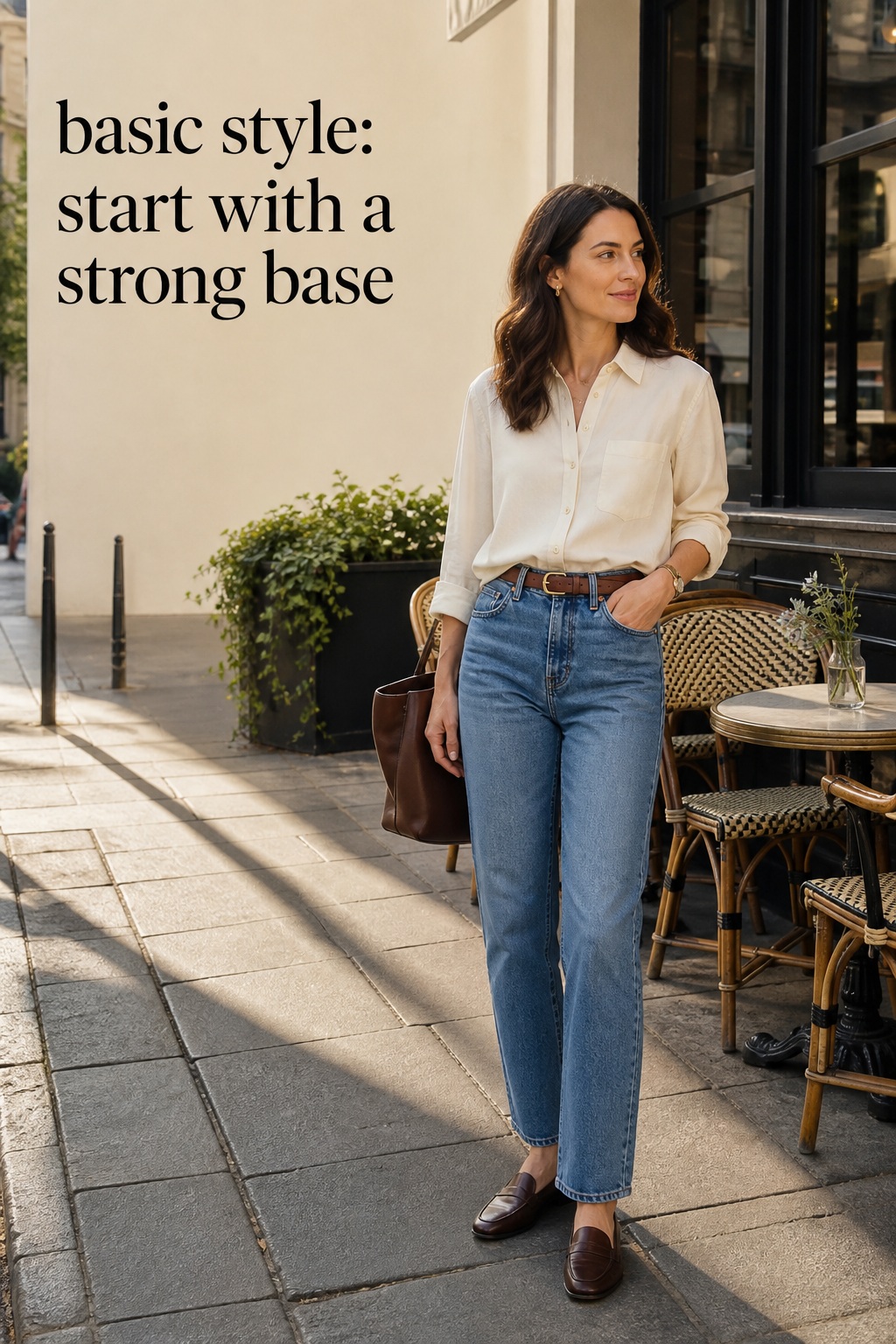
The phrase basic style can sound dismissive because basic is often used to mean forgettable. In clothing, however, a basic is a foundation. A white shirt, straight-leg jeans, a fine knit, a blazer, a simple dress or a clean sneaker can support dozens of outfits. These pieces are not supposed to provide all the personality by themselves. They create a calm background where your proportions, color choices and finishing details can do the work.
Your wedding has a lot of moving pieces. Your plan can still feel composed.
Zarellea organizes guests, vendors, budget, and timelines in one shared space — so you can make decisions with clarity, not stress.
This is also why basic style is different from a capsule wardrobe. A basic wardrobe describes the dependable pieces that make other clothes easier to wear. A capsule is a smaller, curated group designed to work within a particular season, lifestyle or color story. You can have a large wardrobe built around basics, and you can have a capsule filled with expressive prints. The two ideas overlap, but they are not identical.
Recent style guides make the same distinction in different language. Some focus on a restrained visual vocabulary, while others focus on versatility, the five-outfit test or the ability to restyle pieces already in the closet. The most useful shared lesson is that simplicity becomes stylish when it is deliberate. A plain shirt with the right shoulder line, a slightly relaxed trouser and a textured bag can look more considered than an outfit full of competing details.
The Building Blocks of a Basic Style Wardrobe
Start by treating your wardrobe as a visual system rather than a shopping list. The goal is not to buy every item that appears on a basic wardrobe checklist. The goal is to identify the pieces that help you get dressed for your actual life. Someone who walks to work in a rainy city needs different foundations from someone who drives to a creative studio in a warm climate. Your basics should support your schedule, weather, comfort and personal taste.
1. A flexible color base
Choose two or three base colors that you already enjoy wearing. Black, navy, gray, cream, denim, camel, olive and chocolate are common options, but there is no required neutral. A muted blue can be your neutral. Burgundy can function as a grounding color if it works with the rest of your closet. What matters is that your base shades can connect several categories, from tops and trousers to outerwear and shoes.
Then add one or two supporting colors instead of collecting random accents. A small palette makes outfit planning faster because fewer combinations need to be solved from scratch. It also does not mean every look must be monochrome. A navy trouser, cream shirt and brown belt can be just as flexible as black and white, while feeling warmer and more personal.
2. Silhouettes that create balance
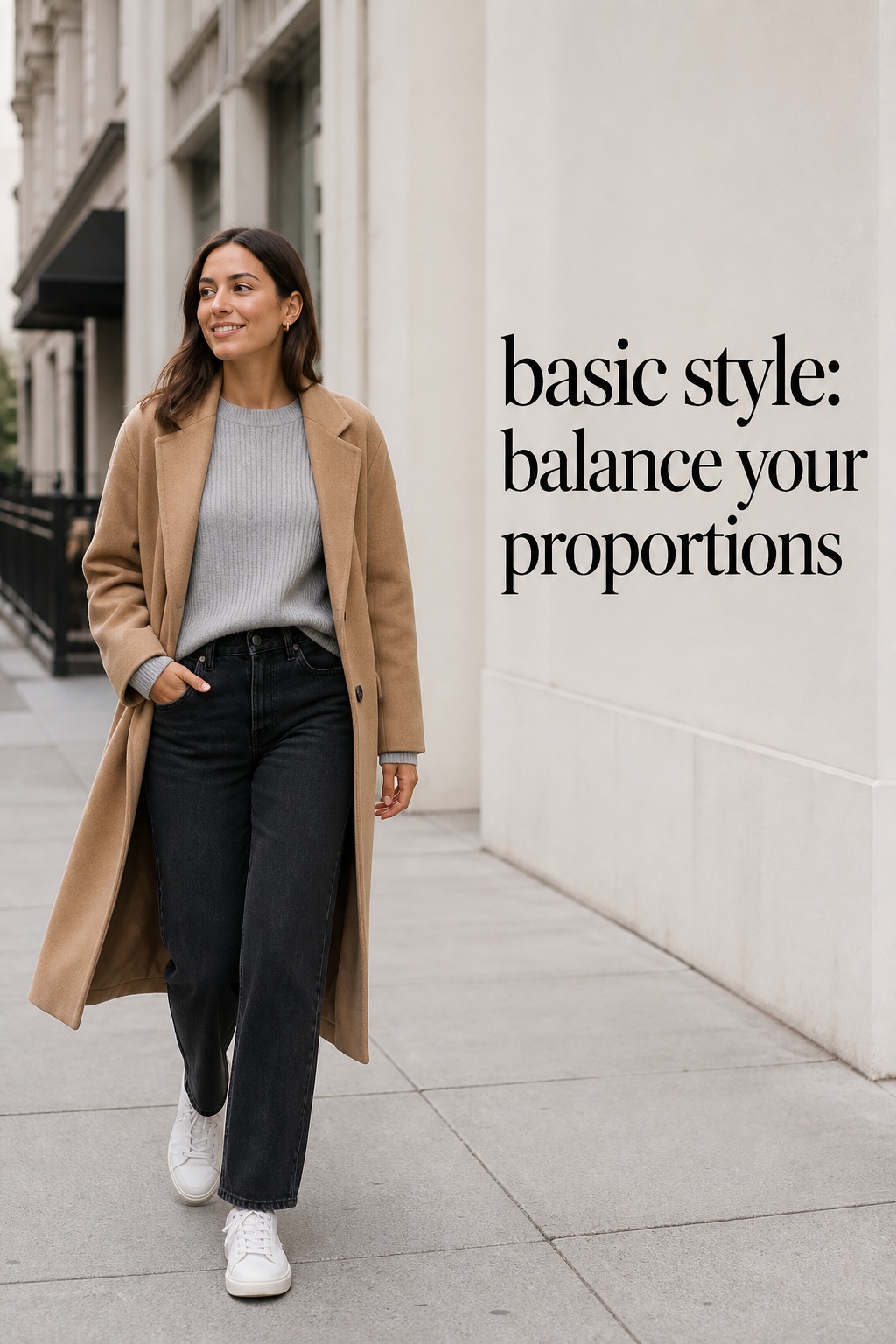
Basic style depends heavily on proportion because there are fewer prints or embellishments to distract the eye. Pairing a relaxed top with a straighter bottom creates a different effect from pairing a fitted top with a wide-leg trouser. Neither is automatically better. The point is to make the relationship between the pieces visible.
Try a simple balance check. If both pieces are loose, define the outfit with a tuck, a visible wrist, a shorter jacket or a structured shoe. If both pieces are close to the body, add a longer layer or a more generous shape so the look can breathe. Small changes in hem length, sleeve roll or waistband position can change the entire impression without buying anything.
3. Texture that keeps simple clothes alive
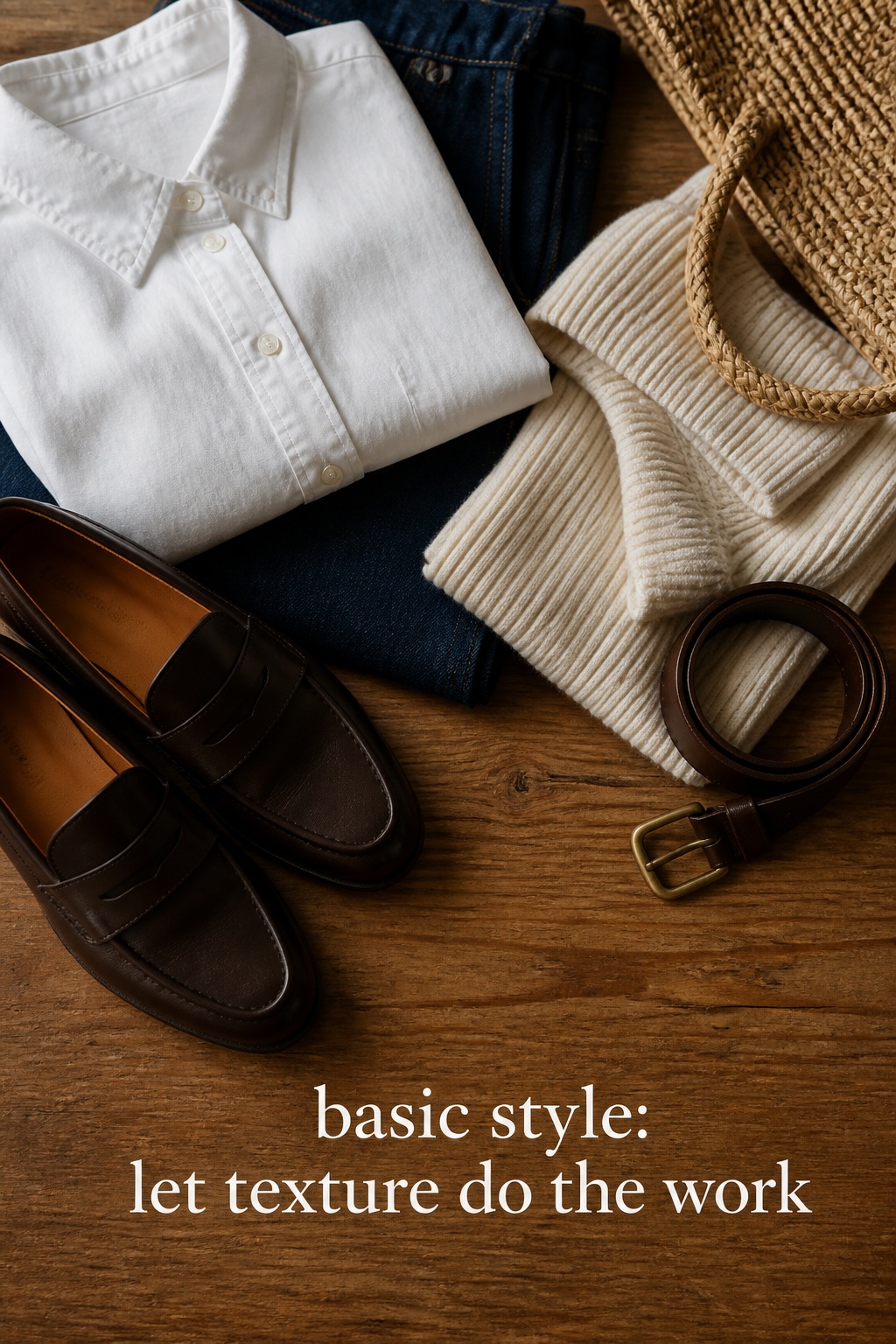
A basic outfit can look flat when every surface has the same finish. Mix a crisp cotton shirt with soft denim, a ribbed knit with smooth trousers, or a linen layer with leather shoes. Texture gives the eye something to notice while keeping the color story calm. This is one reason quality matters in simple clothing: plain fabric shows its hand, weight and construction more clearly.
You do not need expensive materials to create this effect. A cotton poplin shirt, a brushed sweater, a faded denim jacket, a canvas tote or a woven belt can provide contrast. Look for variation in surface and structure first. When you shop, ask whether a new piece adds a useful texture or simply repeats something already in the closet.
4. Reliable layers and shoes
Layers make basic style practical because they help an outfit move through temperature changes and different settings. A relaxed button-down worn open over a tank, a blazer over a T-shirt, or a fine sweater under a coat can make one base outfit feel like three. Choose layers that create a clear shape rather than simply adding bulk.
Shoes set the mood quickly. Clean sneakers make trousers casual, loafers make denim feel sharper, boots add weight to a soft dress, and a simple flat can keep a tailored look relaxed. Build around the shoes you actually wear. A beautiful outfit formula that depends on uncomfortable footwear will never become a dependable part of your basic style.
Five Outfit Formulas That Make Basics Feel Personal
Outfit formulas reduce the pressure of starting from zero. They are not rules that remove creativity. They are familiar structures that leave room for a different color, shoe, layer or accessory each time. Save the formulas that match your life, then adjust the details until they feel natural.
1. The polished everyday base
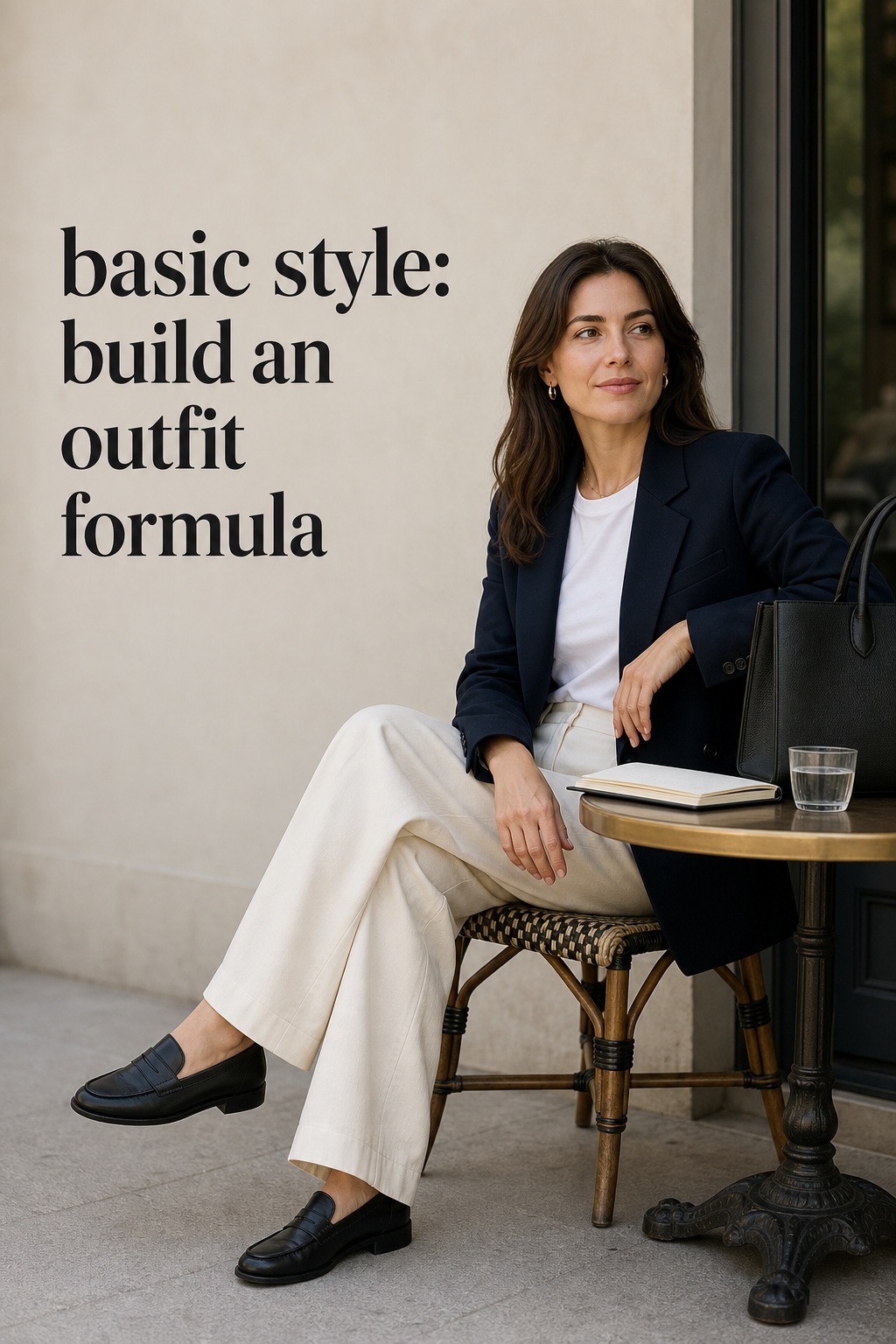
Begin with straight or relaxed denim, a simple knit or T-shirt, and one structured layer. This could be a navy blazer, a cropped jacket, a long cardigan or a chore coat. Finish with a loafer, clean sneaker or ankle boot. The structure comes from the outer layer, so the base can stay comfortable.
Make it personal with one contrast. Try a striped knit, a warm brown shoe, a colorful bag or a silver watch. If the outfit still feels ordinary, change the proportion before adding more accessories. A half tuck, pushed-up sleeves or a shorter jacket often creates more energy than a stack of jewelry.
2. The easy workday column
Use tailored trousers, a fitted or softly draped top, and a long layer in a related color. A cream top with camel trousers and a dark coat creates a quiet column. Black trousers with a soft blue shirt and a gray cardigan feels equally simple but less severe. Add a structured tote and a shoe that can handle the commute.
For a more relaxed workplace, replace the tailored trouser with dark denim or a clean midi skirt. For a more formal setting, keep the formula and sharpen the fabric, pressing and shoe. The formula works because each piece has a job: the bottom creates polish, the top brings softness, and the layer gives the outfit a clear frame.
3. The weekend texture mix
Combine a soft sweatshirt or knit with a textured skirt, relaxed jeans or corduroy trousers. Add a denim jacket, canvas tote or suede shoe. The outfit stays comfortable, but the mix of surfaces keeps it from reading as sleepwear. This is a useful formula when you want to look put together for errands, brunch or a casual visit.
Keep the colors close and let texture provide the contrast. A gray sweatshirt with blue denim and suede sneakers is enough. A cream knit with olive trousers and a leather belt is another easy direction. If you prefer a print, use it on one small surface, such as a scarf or striped top, rather than asking every piece to compete.
4. The simple dress with a new attitude
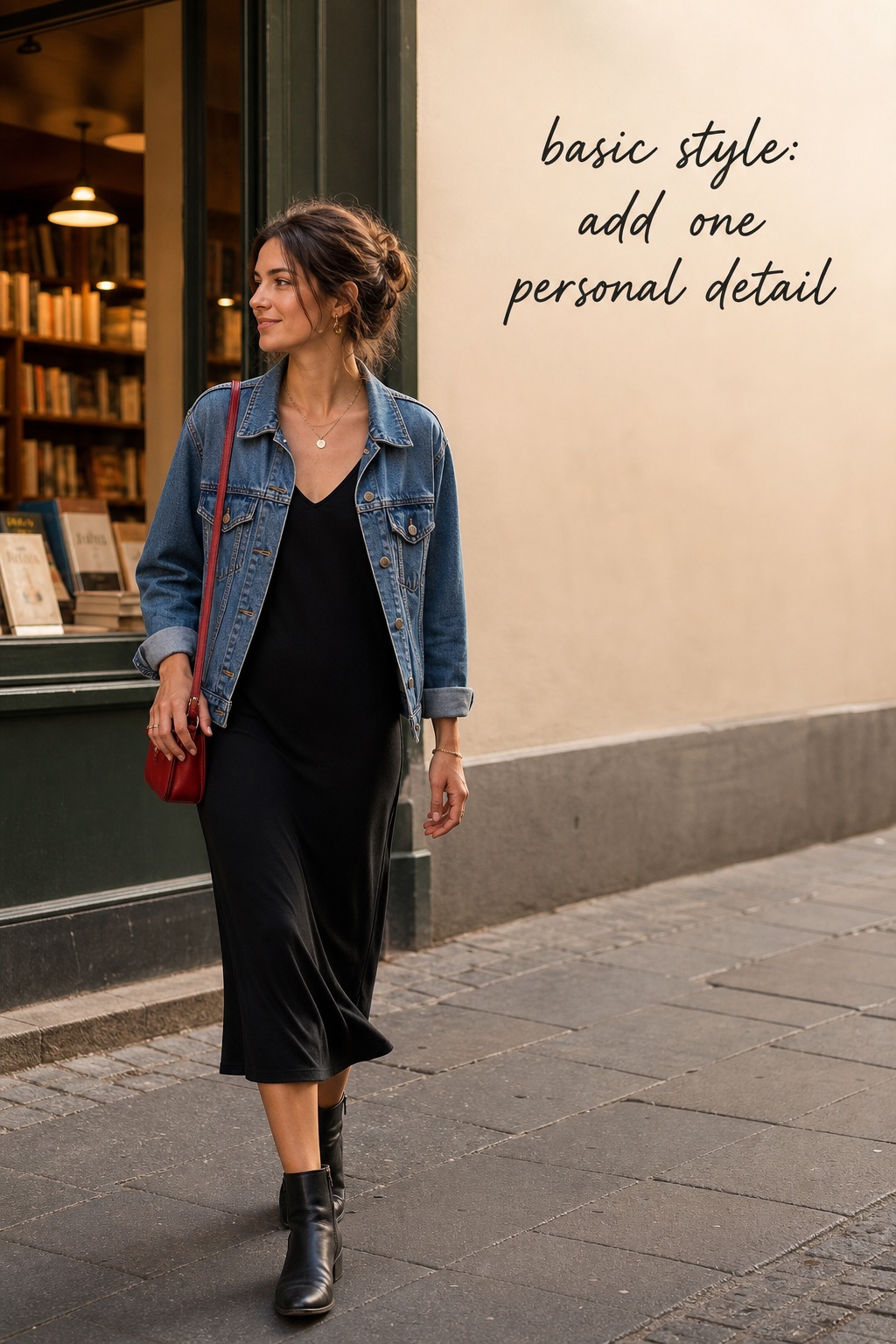
A plain dress becomes a reliable basic when you stop treating it as a one-outfit item. Wear it with a blazer and loafers for work, a denim jacket and sneakers for the weekend, or a fine knit layered underneath when the weather turns cool. A belt can change the proportion, while a boot can make the same dress feel more grounded.
Choose a shape that supports your life instead of an idealized version of it. A shirt dress, slip dress, knit dress or simple column can all work. Pay attention to movement, neckline and the layers you already own. The best basic dress is the one you can imagine wearing in at least three distinct situations.
5. The monochrome look with one interruption
Build an outfit in one color family, then interrupt it with one deliberate element. Try different shades of cream with a black shoe, tonal gray with a red lip, or navy separates with a striped bag. This formula feels calm because the main color does the connecting work, while the interruption gives the eye a place to land.
The interruption does not have to be loud. It can be a different texture, a belt with a visible buckle, a watch, an unusual earring or a shoe with a sharper shape. When basic style feels too quiet, add one clear decision rather than five small ones.
How to Add Interest Without Losing the Ease
The most convincing simple outfits usually have a point of view. That point of view can come from a love of menswear, soft colors, vintage denim, sculptural bags, romantic skirts, sporty shoes or precise tailoring. You do not need to announce it with a statement piece. Repeat the same preference in small ways until it becomes recognizable.
Accessories are an efficient place to begin. A structured bag changes the line of a soft outfit. Small hoops add polish without making the look formal. A narrow belt can connect shoes and outerwear. Sunglasses, a scarf or a watch can create a finishing rhythm. Use one or two accessories that you genuinely enjoy rather than adding every available detail because the outfit feels incomplete.
Fit is another form of personality. A relaxed shoulder, a cropped hem, a full trouser, a clean sleeve or a slightly oversized shirt can signal your taste before color does. If a basic piece almost works, try a tailor, a different tuck or a new layer before replacing it. In simple clothing, a small alteration can create more impact than a new purchase.
Finally, let repetition work in your favor. Wearing a favorite shape often is not a failure of imagination. It can be a style signature. The goal is not to make every outfit completely new. The goal is to make familiar clothes feel purposeful and useful in more than one context.
Basic Style Mistakes That Make Outfits Feel Unfinished
The first common mistake is confusing neutral with harmonious. A closet full of black, cream and gray can still produce disconnected outfits if the silhouettes, textures and shades do not relate. Look at the whole shape in a mirror. If everything has the same visual weight, add contrast through a lighter shoe, a sharper layer or a softer fabric.
The second mistake is buying a replacement before identifying the gap. A new white shirt will not solve an outfit that needs a better shoe. Another pair of jeans will not help if the issue is that every top is cropped. Before shopping, write down the exact problem: a layer for changing weather, a shoe for long days, a color that connects your separates or a top that balances your trousers.
The third mistake is ignoring care. A pilled sweater, wrinkled shirt, scuffed sneaker or stretched neckline can make a good outfit look careless. Basic style relies on repeat wear, so maintenance is part of styling. Steam what needs steaming, repair what can be repaired, brush coats and shoes, and store delicate pieces in a way that protects their shape.
The fourth mistake is treating a checklist as a personal law. You do not need a trench coat if you live in a climate where it never works. You do not need ballet flats if you prefer sneakers. You do not need a white button-down if a blue shirt makes you feel more like yourself. Use common wardrobe categories as prompts, then choose the versions that fit your body, movement, schedule and taste.
A final mistake is adding detail without editing. When an outfit feels boring, the instinct is often to add another necklace, another color and another layer. Instead, remove one thing, change the shoe or adjust the proportion. Basic style becomes stronger when each visible choice has a reason.
FAQ
What is basic style?
Basic style is a way of dressing with versatile, easy-to-combine pieces while using fit, proportion, texture, color and a few personal details to make the outfit feel intentional. It is a foundation, not a demand to dress plainly or own a fixed number of items.
Is basic style the same as minimalist fashion?
Not exactly. Basic style focuses on dependable wardrobe foundations and simple combinations. Minimalist fashion is a broader visual language built around restraint, clean lines and intentional detail. A basic wardrobe can support minimalist outfits, but it can also support colorful, vintage, sporty or romantic personal style.
How many pieces do I need for basic style?
There is no universal number. Begin with the pieces you wear often and check whether they cover your real schedule. A useful test is whether a new item can make at least five outfits with clothing you already own. If it works with only one look, it may be an accent rather than a basic.
Which colors work best for basic style?
The best colors are the ones that connect easily and make you feel good. Black, navy, cream, gray, denim, camel, olive and brown are common foundations, but muted blue, burgundy or another favorite shade can work just as well. Choose a small base palette, then add accents with purpose.
How can I make a basic outfit look less boring?
Change one of four things: proportion, texture, shoe or accessory. Try a relaxed jacket with a slimmer base, pair smooth trousers with a ribbed knit, switch sneakers for loafers, or add one structured bag. A single clear contrast usually works better than several random additions.
Can basic style include prints and color?
Yes. Basic style is about how easily an item supports your wardrobe, not whether it is plain. A striped shirt, small floral print or rich accent color can become a basic when it works with several pieces and reflects your taste. Keep the surrounding outfit simple so the expressive element has room.
What should I buy first when building basic style?
Start with the category that creates the most friction in your current wardrobe. That may be a comfortable shoe, a useful layer, a top that balances your favorite bottoms or a pair of jeans that fits well. Audit what you own first, define the gap, and choose the version that can support several outfits.
Leave a Reply