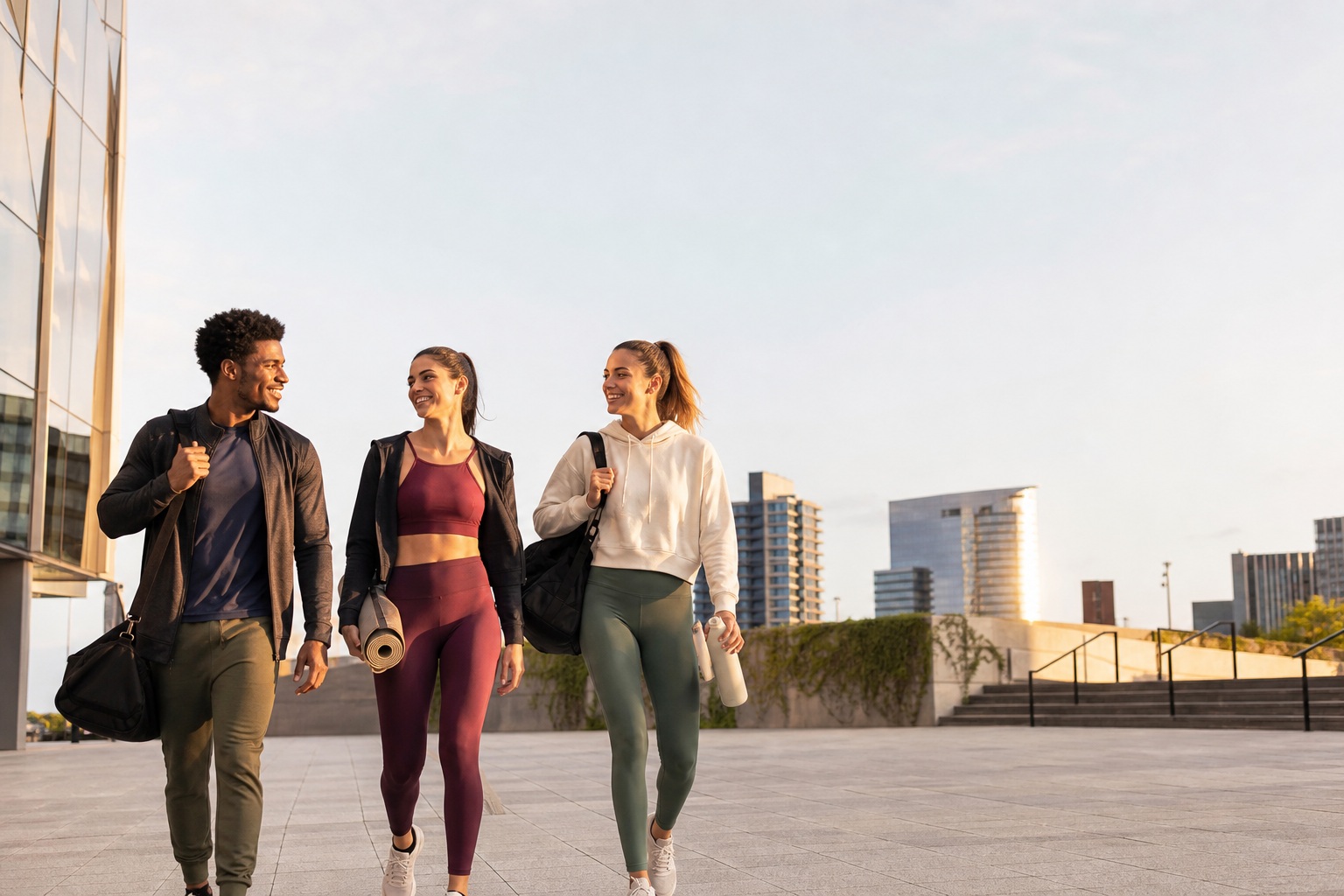
Gym style used to mean a matching set, a performance logo, and a pair of shoes chosen only for the workout ahead. In 2026, the idea is broader and more useful. It describes the way athletic pieces, casual clothes, and considered accessories work together so an outfit feels active without looking unfinished. You might wear a supportive top and training tights for a morning session, then add an oversized shirt, clean sneakers, and a structured bag for the rest of the day. The goal is not to pretend every outfit is suitable for every workout. It is to make the transition between movement and ordinary life feel deliberate.
The best gym style begins with a practical question: what does this outfit need to do? It may need to support a heavy lifting session, stay breathable during cardio, look comfortable on a commute, or work for a coffee stop after Pilates. Those needs overlap, but they are not identical. A technical running shirt can be excellent for a workout and awkward at lunch if it is shiny, saturated with logos, or visibly damp. A heavyweight cotton hoodie can look polished but become miserable during intense training. Separating the performance layer from the styling layer gives you more options and prevents the wardrobe from becoming a collection of one-purpose costumes.
This is also why gym style is more than simply wearing leggings or sweatpants. It is a system of proportion, texture, color, footwear, and context. The outfit should show that comfort was chosen, not that getting dressed was abandoned. A fitted base with a relaxed layer is one reliable route. A loose track pant with a close-fitting top is another. A neutral palette can make technical fabrics feel quieter, while one sporty color or retro sneaker can give a simple outfit energy. Small decisions create the difference between an outfit and a uniform.
What Is Changing in Gym Style
The biggest change is that the matching set no longer has complete control over the look. Coordinated sets are still convenient, especially when you are short on time, but current styling is more interested in separates. A longline bra can sit under an open shirt. Joggers can meet a crisp tee and a short jacket. A pair of flared leggings can be balanced with a simple knit rather than another performance item. This creates outfits that feel connected to sportswear without looking as if they came directly from a locker-room display.
Your wedding has a lot of moving pieces. Your plan can still feel composed.
Zarellea organizes guests, vendors, budget, and timelines in one shared space — so you can make decisions with clarity, not stress.
Layers are doing more work, too. Lightweight anoraks, half-zips, zip hoodies, oversized button-downs, and boxy sweatshirts provide warmth and visual structure. They also solve a practical problem: many people move through several temperatures and settings in one day. A breathable base can handle the trip to the gym, while a clean outer layer makes the same outfit more appropriate for errands or travel. The layer should have enough shape to frame the body, but it should not be so bulky that it hides every proportion underneath.
Footwear has become a stronger style signal. Instead of treating trainers as an afterthought, build the outfit around what the shoe communicates. Cushioned running shoes make sense for cardio and long walking days. Cross-training shoes are better for mixed movement and strength sessions. Clean low-top sneakers, retro trainers, or a simple leather pair can shift a post-gym outfit toward everyday wear. If you are going straight from training to another plan, changing shoes may be the fastest way to change the message of the whole outfit.
Texture is replacing loud branding as a source of interest. Ribbed seamless fabric, matte nylon, French terry, ponte, brushed fleece, and cotton jersey each create a different impression even when the colors are similar. A tonal outfit becomes more sophisticated when the fabrics are not all identical. Black leggings with a soft gray sweatshirt and a matte nylon jacket feel richer than three glossy black pieces worn together. Texture also helps a sporty outfit look tactile and intentional in real life, not only in a mirror or on a screen.
Finally, gym style is becoming less tied to one gendered formula. Flared pants, boxy hoodies, skorts, track pants, fitted tanks, and clean sneakers can be styled in many directions. The useful question is not whether a piece belongs in a men’s or women’s section. Ask whether the fit supports your movement, whether the proportion feels balanced, and whether the item works with the rest of your wardrobe. A flexible gym style should make room for different bodies, levels of coverage, and comfort preferences.
Why the Shift Matters
Modern schedules rarely divide neatly into workout time and non-workout time. Someone may walk to a training class, take a train to work, collect a child, meet a friend, and do groceries before going home. A wardrobe that requires a complete change after every activity can be impractical. Gym style answers that friction by creating a base that moves well and a small set of layers that changes the context.
Technical fabrics contribute to that flexibility. Moisture-wicking fibers, four-way stretch, breathable knits, and lightweight insulation can make activewear genuinely comfortable. Yet technical performance should be matched to the activity. A fabric that dries quickly may look too sporty for an office. A soft, compressive legging may work for strength training but feel too restrictive for a long travel day. Good gym style is not about wearing the most advanced fabric everywhere. It is about choosing the right level of performance for the day.
The shift also reflects a desire to buy fewer clothes that do more. An interchangeable sportswear wardrobe can include pieces that work in several combinations: black or charcoal leggings, a straight or wide track pant, a breathable tee, a fitted tank, a hoodie, a lightweight jacket, and two types of sneakers. Add a crossbody bag or tote that does not resemble a bulky gym bag, and the outfit can travel through more of your real life. Versatility is not a reason to accept low quality. It is a reason to inspect seams, opacity, waistband comfort, washability, and shape retention.
There is also a cultural reason the style remains relevant. Athleisure grew because people wanted clothing that respected comfort and movement while still expressing personal taste. That does not mean every casual outfit should look athletic. It means the old hierarchy between “real clothes” and “gym clothes” is less useful than it once was. A sporty garment can be elegant when its proportions are clear, its condition is good, and its styling suits the setting. The same garment can look careless when it is stretched out, stained, heavily branded, or worn far beyond its practical purpose.
The result is a more thoughtful version of casual dressing. Gym style rewards repetition, but it does not require sameness. You can use one black legging in a training outfit, a travel outfit, and a layered weekend outfit simply by changing the top layer, shoe, and bag. That is the useful promise: less decision fatigue without giving up identity.
How to Build a Gym Style Outfit
1. Start with the actual activity
Choose the base according to movement first. For cardio, look for breathable tops, secure bottoms, and shoes with appropriate cushioning. For strength training, a closer fit can prevent fabric from catching on equipment, while durable materials and reliable opacity matter during squats, lunges, and stretching. For Pilates or yoga, softness and freedom of movement may be more important than heavy support. For a casual gym visit or a walk, a cotton tee, relaxed pant, and everyday sneaker may be enough. Style becomes easier when the foundation is genuinely comfortable.
2. Choose one fitted element and one relaxed element
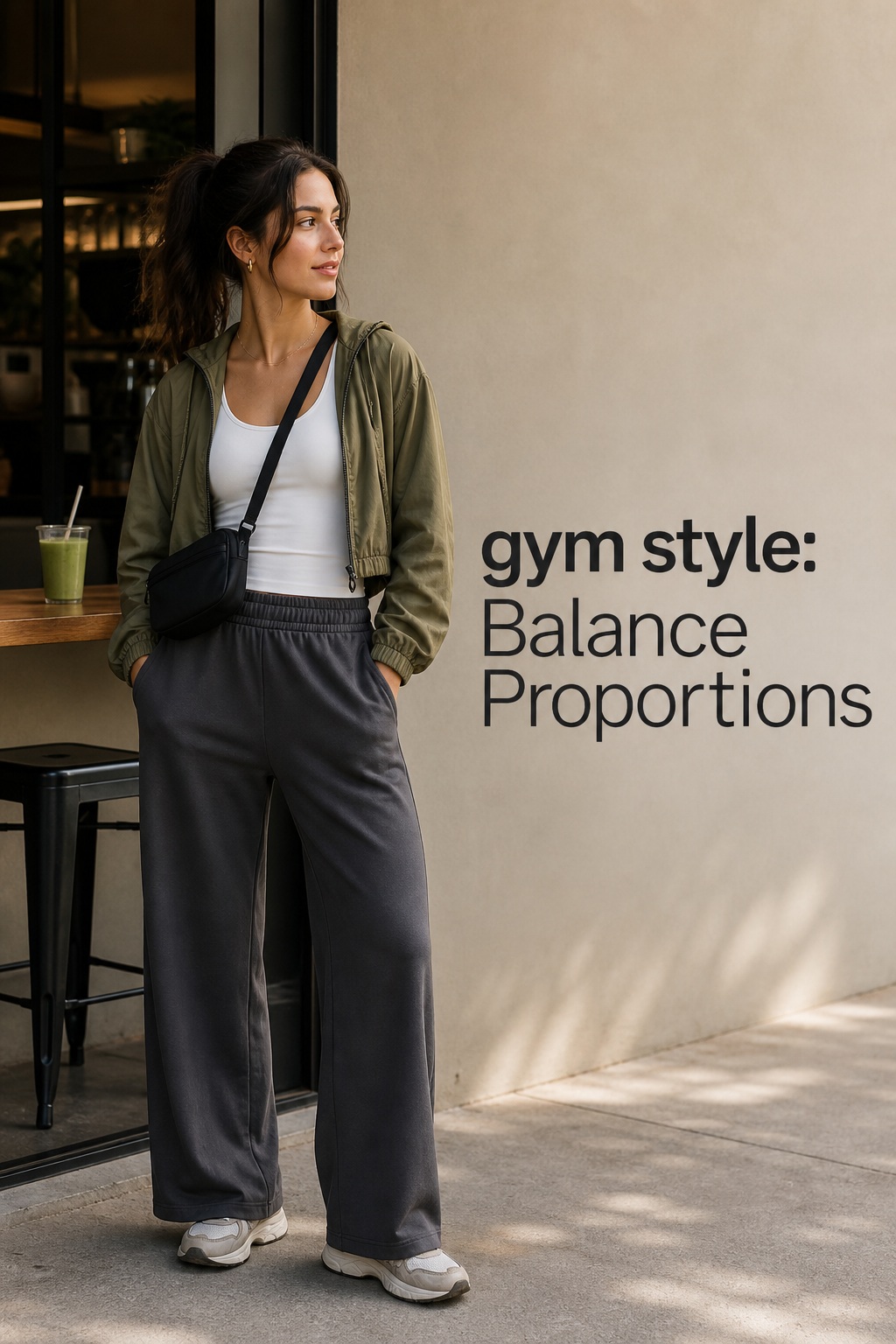
Proportion is the simplest way to make gym style look intentional. If the bottom is close to the body, add an oversized tee, open shirt, cropped jacket, or long cardigan. If the bottom is wide or baggy, choose a fitted tank, neat tee, or shorter layer. This does not mean every outfit must be tight somewhere. It means the eye should be able to read a shape. A full look of oversized pieces can work, but it benefits from a visible hem, a defined shoulder, a tucked front, or a clean shoe that keeps the silhouette from becoming shapeless.
3. Keep the color story simple
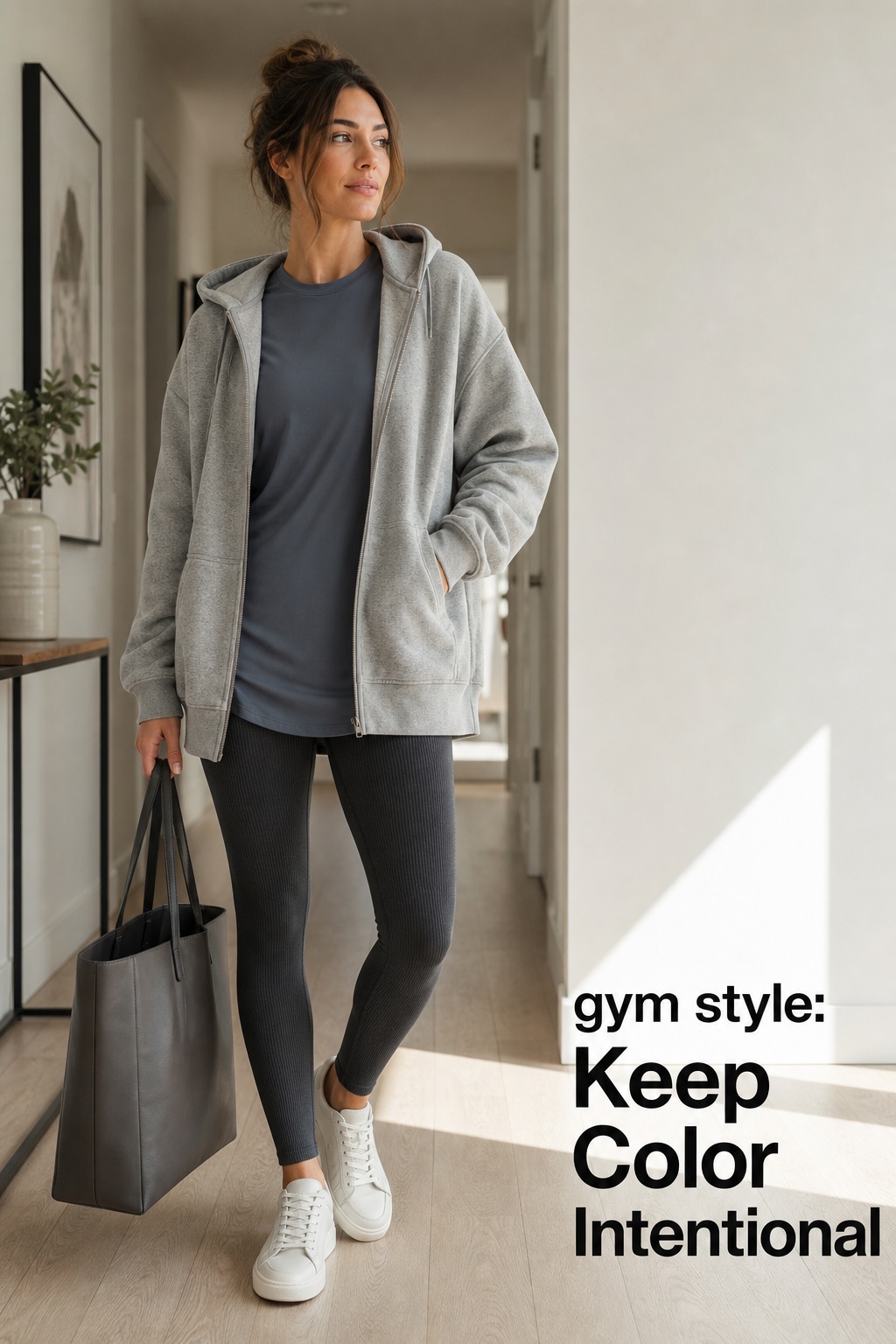
Neutral colors make gym pieces easier to repeat, but neutral does not have to mean boring. Black, charcoal, navy, cream, olive, heather gray, and chocolate can be combined in dozens of ways. If you prefer color, place it where it will have the most impact: a longline bra under an open layer, a cap, a bag, or a pair of shoes. A tonal outfit in one color family can look elevated, while a neutral base with one bright accent feels energetic. Try not to combine a loud logo, contrast piping, vivid shoes, and several bright colors at once. One clear focal point is usually stronger.
4. Add an everyday layer
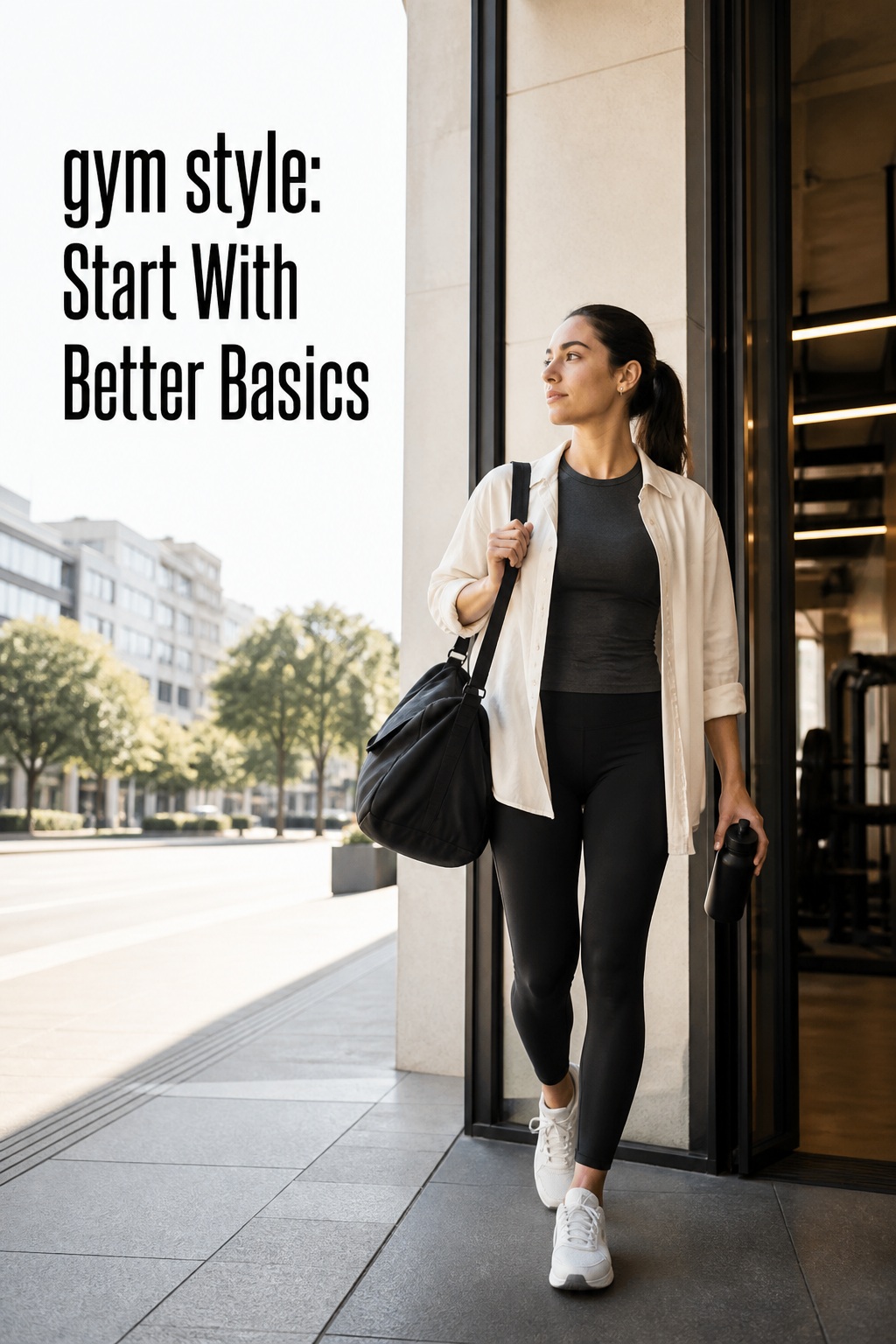
The layer is often what changes gym clothing into gym style. Try an oversized white shirt over a fitted set, a cropped windbreaker over a tee and track pants, a structured blazer with a longline top, or a denim jacket over a hoodie. For colder weather, a wool coat or quilted jacket can provide a strong contrast against performance basics. The layer should be fresh and dry if you have finished a hard workout. Carrying one clean top in your bag is a small habit that makes the whole outfit feel more considered.
5. Finish with shoes and a bag that fit the setting
Use training shoes for training. Use clean everyday sneakers, loafers, boots, or a simple sandal when the rest of your day calls for a different finish. This is not just a visual choice; the shoe should support the walking you expect to do. A structured tote, compact crossbody, or streamlined shoulder bag usually looks more intentional than carrying a full gym bag everywhere. Keep the bag practical, but let it introduce a material or color that the activewear does not already provide.
Wearable Gym Style Directions
Minimal monochrome
Build a black, charcoal, navy, or cream base from two or three shades of the same family. Pair leggings or a straight track pant with a fitted tee and a relaxed jacket. Add a clean sneaker and a structured bag. The visual interest comes from texture and proportion: matte leggings, a brushed sweatshirt, and a crisp nylon layer will feel more polished than a head-to-toe matching set in one shiny fabric.
Relaxed unisex street style
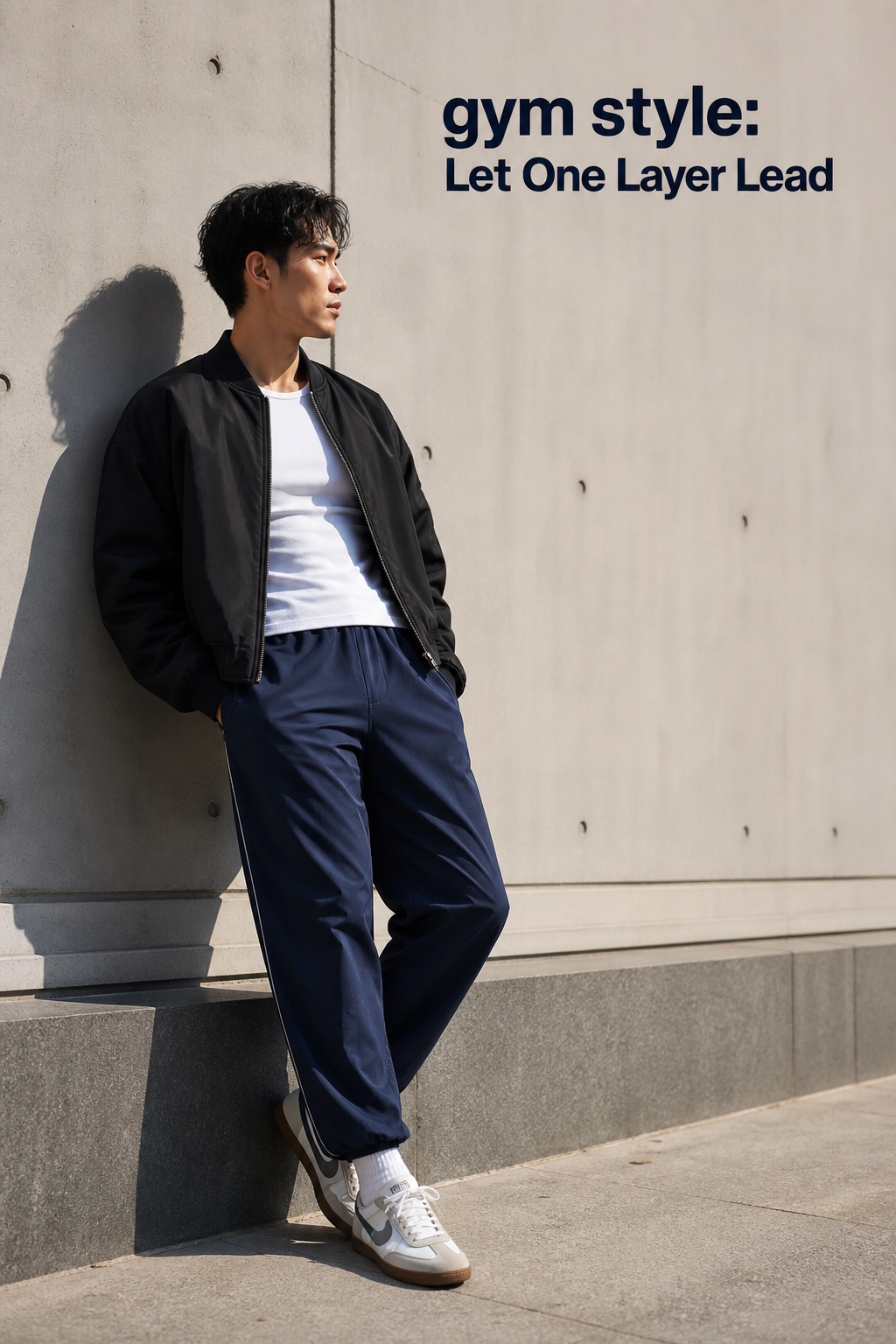
Try a roomy hoodie or graphic-free sweatshirt with straight track pants, visible crew socks, and a retro sneaker. Keep the colors calm and let the silhouette provide the attitude. A cap, small crossbody, or bomber jacket can make the look feel finished without adding much effort. This formula works across many bodies because the focus is on volume, hem placement, and comfort rather than a specific gendered item.
Polished gym-to-errands dressing
Use a clean fitted base, such as opaque leggings and a longline tank, then add an oversized button-down or blazer. Swap technical trainers for clean sneakers and carry a leather or woven bag. Keep jewelry minimal and choose one calm color contrast, such as camel over black or white over olive. The formula is especially useful when you need to look presentable without wearing rigid clothes.
Cold-weather athletic layering
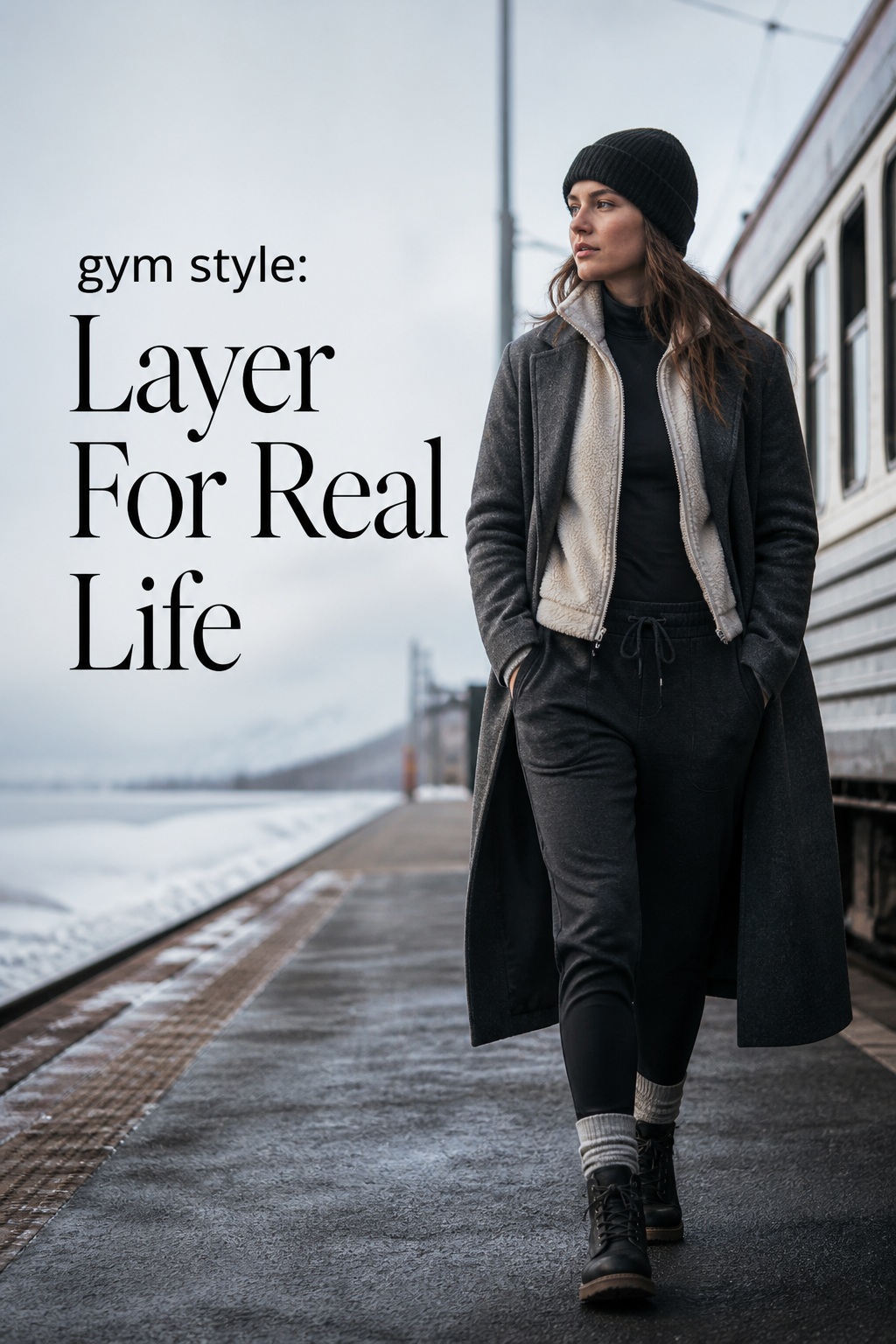
Cold weather is where layering becomes functional rather than decorative. Start with a breathable base, add a fleece or merino layer, and finish with a puffer, wool coat, or technical shell depending on the weather. Straight-leg track pants or leggings can sit inside a longer coat, while a beanie and practical boots create a stronger winter finish than overly bright performance gear. Make sure every layer still allows movement and that the first layer can dry comfortably.
Modest and coverage-conscious gym style
Coverage preferences should be treated as a styling choice, not a limitation. A longer performance tunic, relaxed jogger, lightweight overshirt, or zip jacket can create coverage while preserving movement. Look for breathable layers that do not cling and choose secure hems that will not interfere with equipment. A tonal palette makes multiple layers look cohesive, while a matching scarf, cap, or shoe can connect the outfit. The same principles of fabric, fit, and activity still apply.
Choices That Make the Style Last
Before buying another set, inspect the pieces you already own. Can the leggings work with a sweatshirt and with an oversized shirt? Can the track pant be worn with a fitted tee and with a knit? Does the jacket work over ordinary denim? If an item only works as part of one exact set, it may be less useful than a good neutral separate. The goal is not to own every silhouette that appears in a trend report. It is to own enough compatible pieces to create variety.
Pay attention to fabric behavior. Hold leggings up to light to check opacity. Sit, squat, reach, and walk in the garment before deciding it fits. Check whether the waistband rolls, whether the seams irritate you, and whether the material keeps its shape. For everyday wear, a fabric with a soft hand and a matte surface often looks more refined than a very shiny compression fabric. For training, performance may be the priority. You can have both types in the same wardrobe without asking one garment to do everything.
Condition matters as much as styling. Pilling, stretched elastic, faded black, worn-out soles, and permanent sweat odor can make a carefully planned outfit look tired. Wash performance pieces according to their care instructions, let them dry fully, and rotate them instead of wearing one favorite set every day. Keep a separate category for clothes that are genuinely workout-only. The most fashionable gym style still needs hygiene and maintenance.
Be realistic about dress codes. A sports bra under a blazer may work for a creative casual setting, but it is not automatically appropriate for a conservative office. A hoodie and leggings may be perfect for travel, but a dinner reservation may call for a cleaner top and a different shoe. Gym style becomes more sophisticated when it respects the place you are going. The question is not whether the outfit is fashionable in isolation; it is whether it communicates the right level of care for the situation.
A lasting gym style is ultimately built from clarity. Know what you need to move, know what makes you feel good, and know which details turn a performance base into an outfit. When those three ideas agree, you do not need excessive branding, constant trend shopping, or a perfect matching set. You need a few good layers, reliable shoes, and proportions that look like you chose them on purpose.
FAQ
What does gym style mean?
Gym style is a modern sporty way of dressing that combines performance clothing with everyday pieces. It can include leggings, joggers, technical tops, hoodies, track jackets, sneakers, and casual layers. The important difference is intention: the outfit is balanced for proportion, color, footwear, and setting rather than being a random collection of workout clothes.
Can you wear gym clothes outside the gym?
Yes, as long as the pieces are clean, appropriate for the setting, and styled with an everyday element. Add a fresh button-down, blazer, denim jacket, or structured coat. You can also change from training shoes to clean casual sneakers or boots. Avoid wearing damp, heavily branded, or visibly worn workout clothes into situations that require a more polished appearance.
What are the essential pieces for a gym style wardrobe?
A useful starting group includes one supportive workout top, one breathable tee, opaque leggings or a track pant, comfortable shorts if you wear them, a hoodie or sweatshirt, a lightweight jacket, training shoes, clean everyday sneakers, and a practical bag. Choose colors that mix easily. Add trend pieces only after the basics work in several outfits.
How do you make gym style look less like a workout uniform?
Break up the athletic category with one everyday piece. Wear a crisp shirt over a fitted base, a blazer over a longline top, denim with a hoodie, or a wool coat over track pants. Keep the color palette controlled and use texture to add interest. Changing the bag and shoe can also shift the outfit away from a pure training look.
What shoes work best with gym style?
The best shoe depends on the activity and the rest of your day. Use running shoes for running and cushioned cardio, cross-training shoes for mixed workouts, and stable shoes for strength work when appropriate. For everyday gym style, clean low-top sneakers, retro trainers, or simple leather sneakers can look more deliberate. Never sacrifice the support you need during the workout for a fashion choice.
How can men wear gym style without looking sloppy?
Start with a relaxed but intentional silhouette: straight or gently wide track pants, a clean fitted or boxy tee, and a simple zip hoodie or bomber. Make sure the pants break neatly over the shoe and avoid too many oversized pieces at once. Neutral colors, fresh sneakers, and a structured outer layer make casual athletic clothing look considered rather than careless.
How do you adapt gym style for winter?
Use a breathable base, a warm middle layer, and an outer coat or shell suited to the weather. Choose longer coats, fleece, merino, quilted jackets, beanies, and practical boots while keeping the proportions clean. Avoid so many bulky layers that movement becomes difficult. A tonal winter palette helps technical pieces look integrated with the rest of your wardrobe.
Leave a Reply