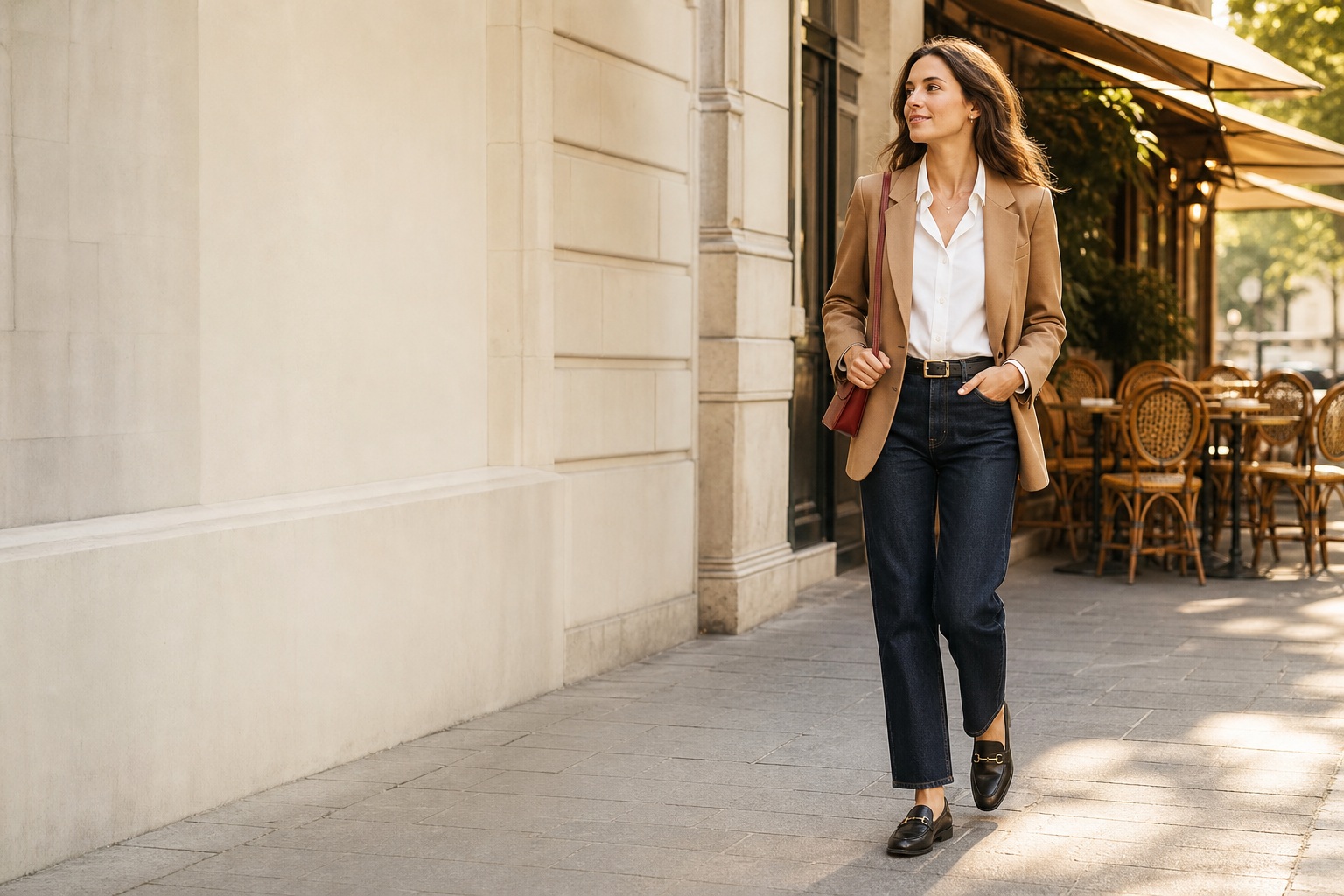
Style ideas are easy to save and surprisingly hard to use. You can have a closet full of good clothes, a phone full of outfit inspiration, and still stand in front of the mirror feeling that nothing works. The problem is usually not a lack of taste or another missing purchase. It is that the outfit has not yet answered a simple question: what job should each piece do?
A useful outfit needs a base, a clear shape, a bit of visual interest, and enough comfort for the day ahead. Once you look at getting dressed that way, style ideas become practical tools instead of images to copy perfectly. The formulas below are designed for real wardrobes, changing weather, and different levels of effort. Start by identifying the friction you feel, then use the matching fix.
Start by diagnosing why the outfit feels wrong
Before changing everything, name the actual problem. Most disappointing outfits fall into one of five categories: flat, shapeless, too busy, mismatched, or impractical. A flat outfit has the right pieces but no contrast in texture, proportion, or finish. A shapeless outfit has volume everywhere, or tightness everywhere, without a deliberate balance. A busy outfit has too many competing colors, patterns, or statement details. A mismatched outfit combines pieces that belong to different levels of formality. An impractical outfit looks good for five minutes but fails the weather, walking, sitting, or schedule test.
Use a thirty-second mirror check. First, cover the shoes and accessories with your hand. Does the clothing still have a visible shape? Next, look at the outfit from a distance. Is there one area that your eye notices first? Finally, move: sit down, raise your arms, and walk a few steps. This small test separates an outfit that only photographs well from one that can support your day.
Your wedding has a lot of moving pieces. Your plan can still feel composed.
Zarellea organizes guests, vendors, budget, and timelines in one shared space — so you can make decisions with clarity, not stress.
- If it feels flat: add texture, a third layer, or one intentional accessory.
- If it feels shapeless: create contrast between a close piece and a relaxed piece.
- If it feels busy: remove one competing detail and repeat one color.
- If it feels mismatched: adjust the shoes or outer layer to bring the dress level together.
- If it feels impractical: keep the visual idea but swap in weather- and movement-friendly fabrics.
This diagnosis matters because shopping cannot solve a problem you have not identified. If an outfit lacks shape, another patterned top may make it louder without making it better. If it lacks polish, a structured bag or cleaner shoe may do more than a new dress. Think of every styling decision as a small adjustment rather than a complete restart.
Style ideas for everyday casual dressing
Everyday outfits often feel difficult because they have to do several things at once: look intentional, stay comfortable, and work for errands, coffee, commuting, or an unexpected plan. The easiest solution is a reliable three-part formula: a simple base, one shape-building layer, and one finishing detail. The base can be a T-shirt with jeans, a knit with trousers, or a simple dress. The layer gives the outfit direction. The finishing detail tells people that the combination was chosen, not assembled in a hurry.
Try a relaxed base with one polished anchor
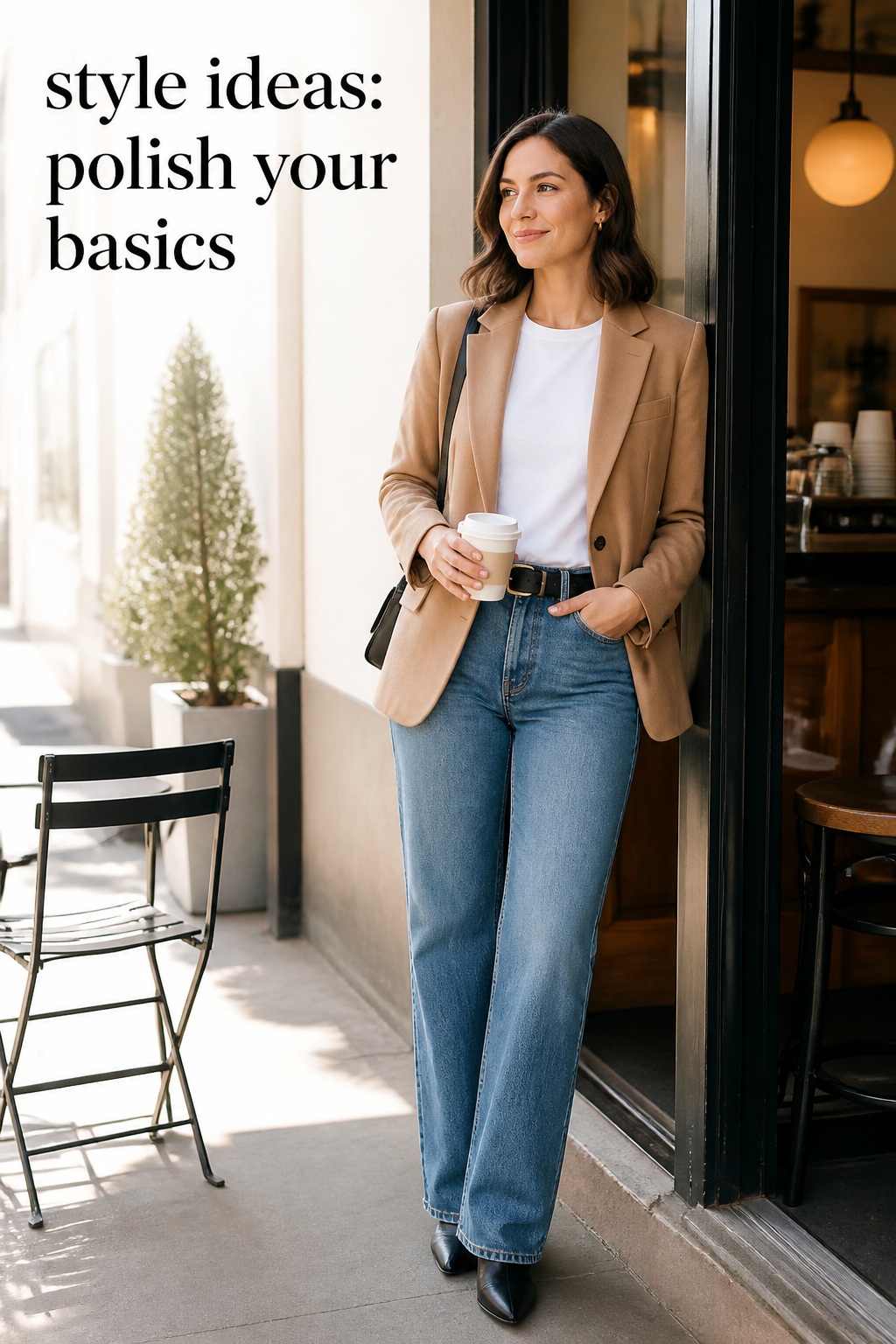
Pair a white or striped T-shirt with straight-leg jeans, then add a blazer, leather jacket, or neat overshirt. Finish with loafers, clean sneakers, or ankle boots and a structured crossbody. The anchor can be the jacket or the shoe, but not both in competing colors. This is one of the most useful style ideas because it lets familiar basics look current without requiring a dramatic trend.
Use a dress as a base, not a finished answer
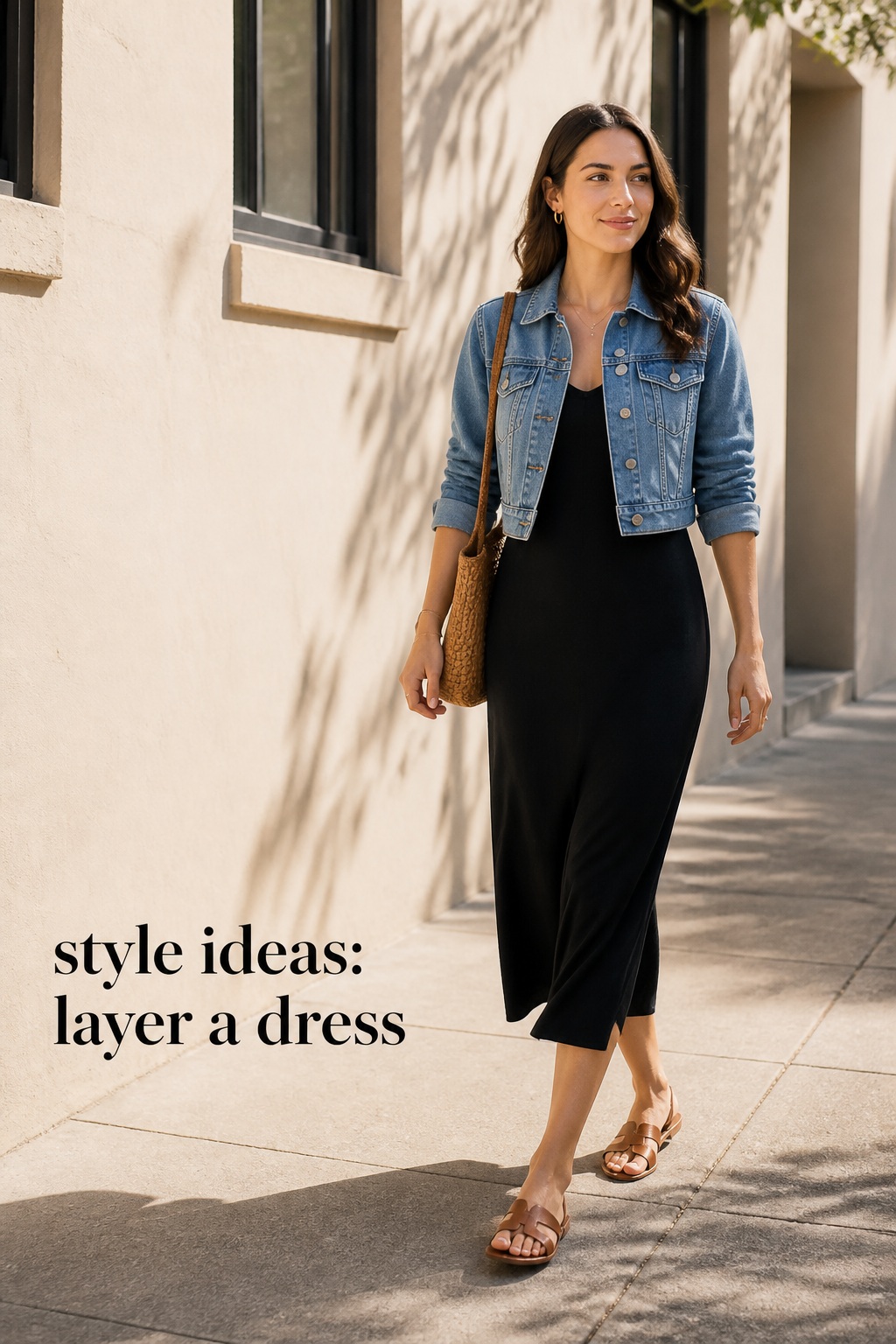
A simple midi or shirt dress can become several outfits when you change the layer and the shoe. For a casual day, wear it with a denim jacket and flat sandals. For a cooler morning, add a fine knit over the dress so the skirt reads like a separate piece. For dinner, use a cropped jacket, pointed flats, or a small bag. If the dress looks too plain, tie a printed scarf at the neck, waist, or bag handle. If it feels too fussy, ground it with a practical jacket and a quieter shoe.
Build interest through texture instead of extra color
When you want an outfit to feel richer but do not want to look overdressed, combine surfaces. Try cotton denim with a smooth knit, linen with leather, satin with a soft cardigan, or a crisp shirt with suede shoes. The colors can stay neutral while the textures create depth. This approach is particularly useful in warm weather, when fewer layers leave less room for visual contrast.
A good casual outfit also benefits from repetition. Echo the color of your belt in your shoes, repeat a warm metal in your jewelry and bag hardware, or match a small stripe to a scarf. Repetition creates cohesion without making the outfit look like a set. Keep one element slightly unexpected—a red bag, a sculptural earring, or a colorful flat—so the look retains personality.
Style ideas for work, meetings, and polished plans
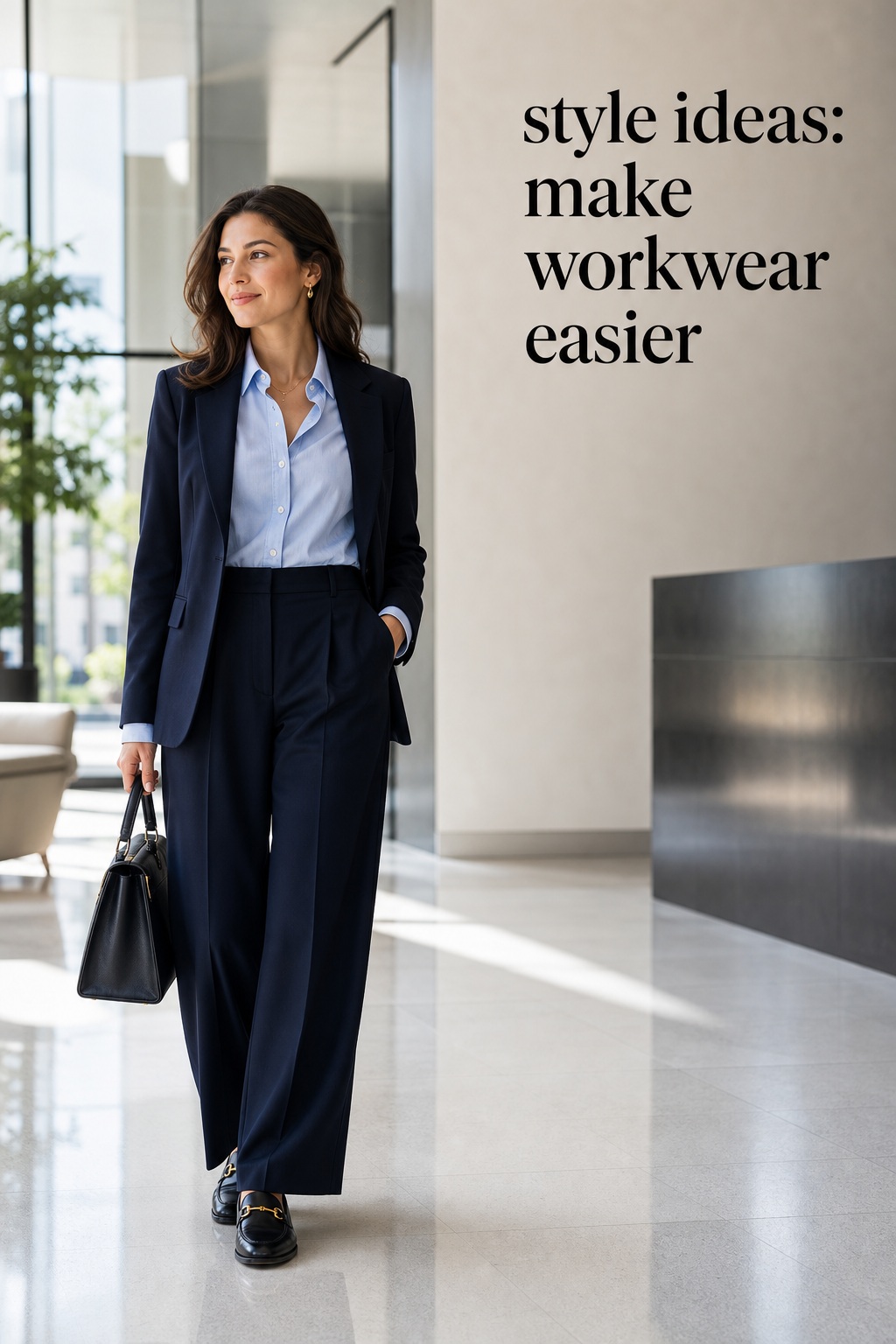
Work outfits become easier when you separate authority from stiffness. You do not need every piece to be tailored. You need one controlled element that sets the level of polish, then softer or more personal pieces around it. A structured blazer, a sleek trouser, a pointed flat, or a refined bag can be the control point. The rest of the outfit can include a knit, a relaxed shirt, or dark denim if the dress code allows it.
Make the blazer do the organizing
For a dependable office formula, wear a blazer with a simple top and one clean bottom: wide-leg trousers, a column skirt, or dark straight-leg jeans. Keep the top close enough to the body that the jacket has room to define the silhouette. If both the jacket and trousers are oversized, add a tucked top or a belt to restore proportion. If everything is fitted, use a longer jacket or a relaxed trouser to keep the look modern.
Use one color family to look pulled together
Tonal dressing is a practical shortcut for busy mornings. Combine cream with camel, navy with pale blue, gray with charcoal, or chocolate with tan. The pieces do not need to match exactly; they only need to share a visual temperature. Add contrast through the shoe or bag when you want more energy. A red handbag, patterned scarf, or metallic earring can make a quiet base feel considered without breaking the professional line.
For a meeting, check the frame around your face first. A collar, neckline, earring, scarf, or jacket lapel will be visible on camera and across a table. Keep that area clear enough to read. Then check the hem and shoe relationship. A cropped trouser with a delicate flat creates a different message from the same trouser with a heavy boot. Neither is automatically better; the right choice depends on the authority and ease you want to project.
- More formal: crisp shirt, tailored trouser, structured jacket, pointed or polished shoe.
- Smart casual: fine knit, dark denim, blazer, loafer, and a defined bag.
- Creative workplace: neutral base with one expressive print, color, or sculptural accessory.
- After-work plans: keep the base simple and carry a smaller bag or change the shoe.
Style ideas for weather changes, dinner, and low-effort polish
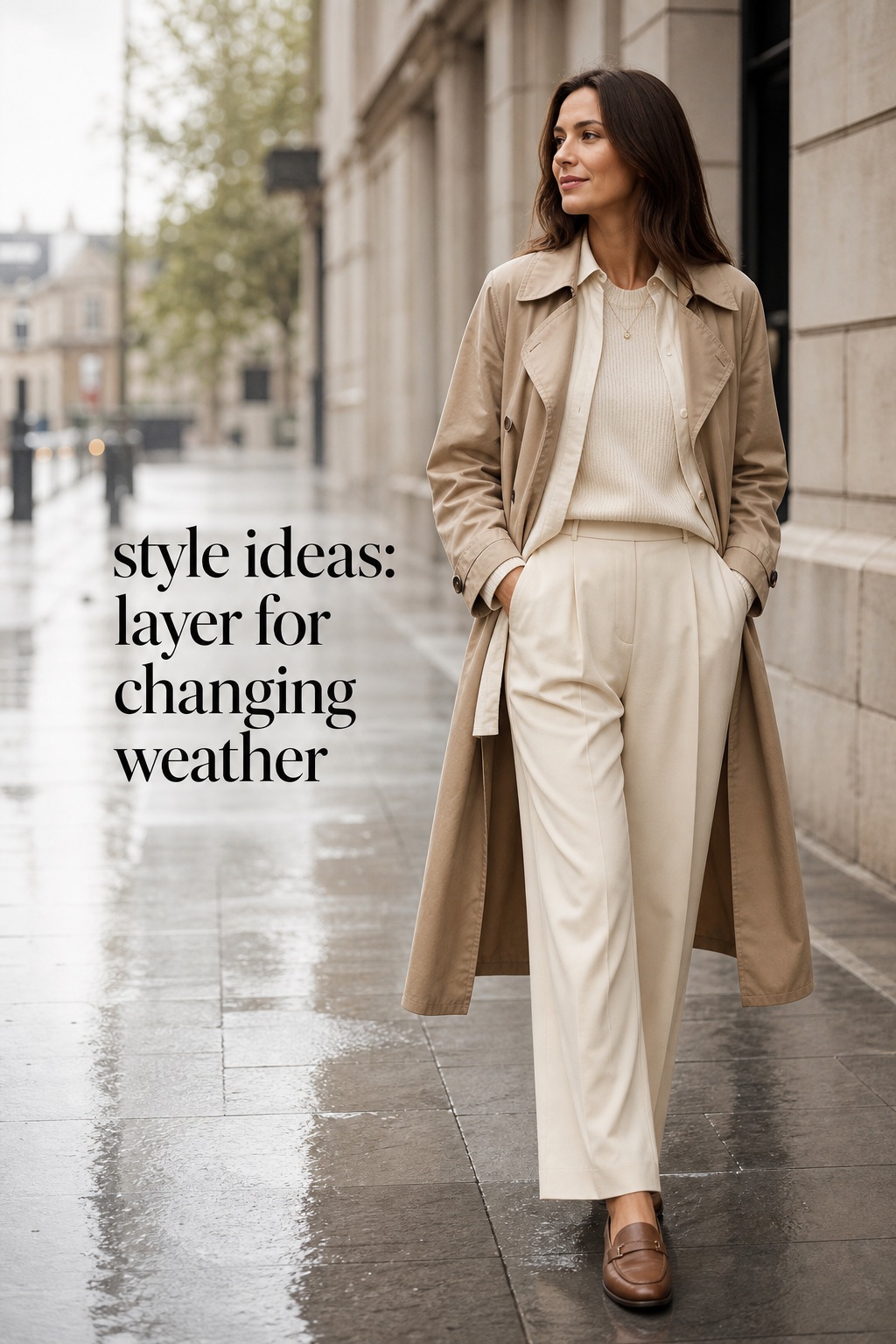
The most wearable style ideas are flexible. They account for a cold office, a warm sidewalk, a sudden shower, or a plan that changes from daytime to evening. Build the outfit around removable layers and shoes that can handle the route you are actually taking. A lightweight trench, cardigan, overshirt, or scarf can make a simple base feel intentional while giving you temperature control.
Layer without adding visual bulk
Start with the thinnest fabric closest to the body and move toward denser layers. A tank under a shirt under a light jacket is easier to manage than a bulky sweater under a tight coat. Keep one layer open to create a vertical line. If the outfit begins to look crowded, remove a layer before adding an accessory. A scarf or belt cannot fix too much fabric in the wrong place.
Make a day-to-dinner change with one swap
For an outfit that can travel from day to dinner, choose a calm base and make the evening shift through one deliberate change. Swap sneakers for a pointed flat, a roomy tote for a smaller shoulder bag, or a denim jacket for a sleek blazer. Add a stronger earring or a lipstick shade only after the silhouette works. This keeps the transition fast and prevents the common mistake of adding every “dressy” item at once.
Use the one-three rule for finishing details
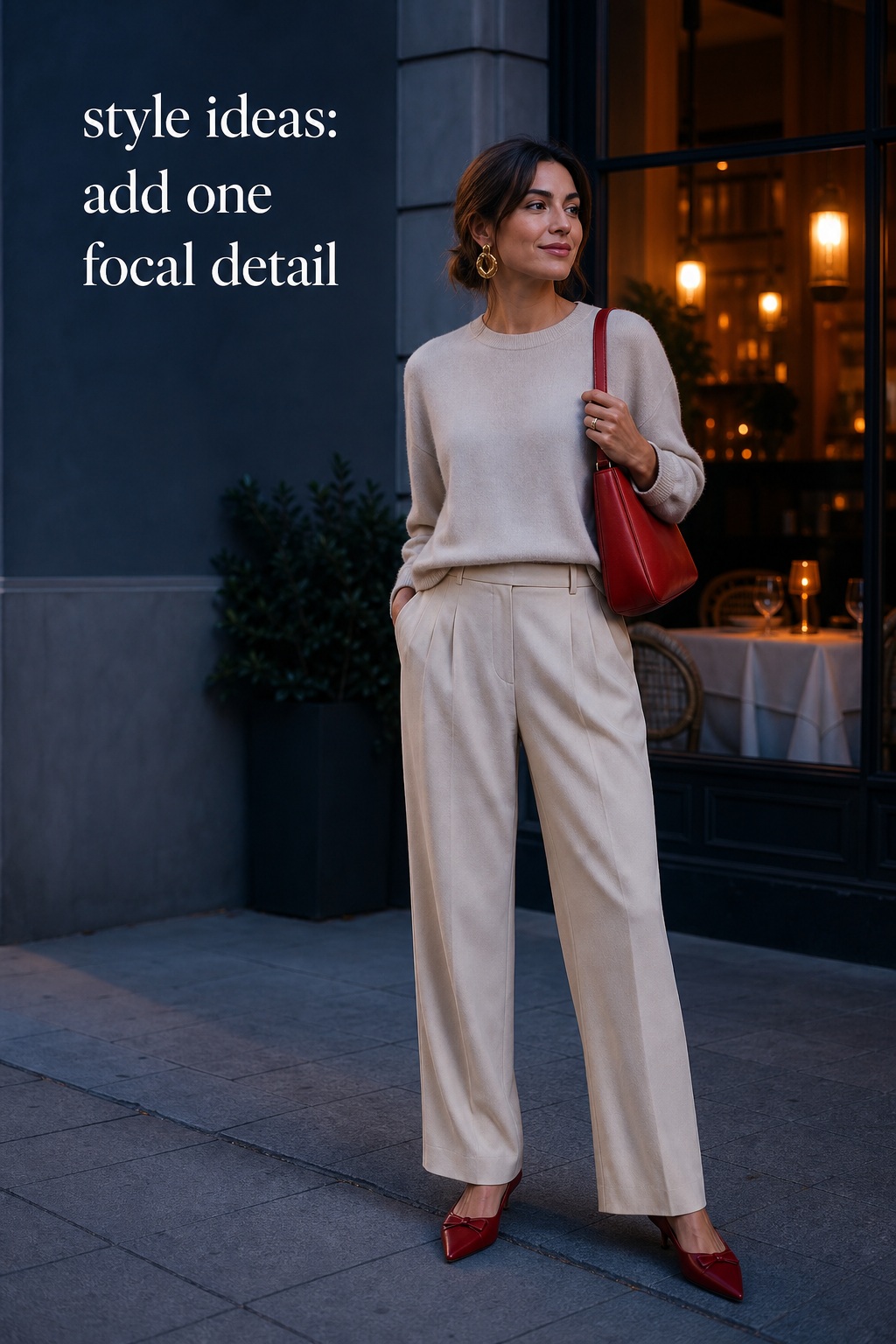
When an outfit needs polish, add one focal detail and up to three supporting repetitions. The focal detail might be a patterned scarf, a red bag, a bold necklace, or an interesting shoe. The supporting elements can repeat its color or material in smaller doses. For example, a red bag can echo a red stripe in the scarf and a warm tone in the lipstick. If the focal detail is large, keep the rest quiet. Balance is more convincing than accumulation.
Do not ignore practical styling. A beautiful shoe that hurts after ten minutes changes your posture and your mood. A coat that cannot close over your layers makes the entire look feel wrong. A bag that does not fit what you need forces you to carry extra pieces. The best style ideas survive contact with real life. Choose fabrics you can sit in, shoes you can walk in, and layers you can remove without destroying the outfit underneath.
Quick fixes for outfits that still feel off
If the outfit is close but not convincing, make only one change at a time. First try a proportion fix: tuck, half-tuck, roll a sleeve, open a shirt, or add a belt. Next try a shoe fix. A delicate outfit can become grounded with a loafer or boot; a heavy outfit may need a lighter flat or sneaker. Then try a color fix by repeating one small shade or removing the loudest competing color.
- Too plain: add a contrasting texture or a small statement accessory.
- Too young or casual: replace one soft piece with tailoring, leather, or a structured bag.
- Too severe: add movement through a softer fabric, rolled sleeve, or relaxed shoe.
- Too wide: define one area at the waist, wrist, ankle, or neckline.
- Too short: add a longer open layer or a shoe that visually extends the leg.
- Too coordinated: change one accessory to a different texture or a close, not identical, color.
Before leaving, ask four questions: Is there a clear focal point? Is the proportion deliberate? Can I move comfortably? Does the outfit fit the actual setting? If you can answer yes to three and adjust the fourth with one small swap, you are finished. Style is not the absence of uncertainty; it is having a reliable way to resolve it.
FAQ: practical questions about style ideas
How do I find style ideas that work with clothes I already own?
Choose one item you wear often and build three versions around it: casual, polished, and weather-ready. Keep the base the same, then change the layer and shoe. Photograph the combinations that work. This creates a personal reference library based on your real proportions, comfort, and schedule rather than someone else’s closet.
What is the fastest way to make a basic outfit look intentional?
Add one structured element and repeat one detail. A blazer, belt, polished loafer, or structured bag can organize a basic outfit. Then echo a color, metal, or texture in a smaller accessory. Avoid adding several statement pieces; one clear decision usually looks more confident.
How many colors should an everyday outfit have?
There is no fixed rule, but two main colors plus one accent is an easy starting point. You can also use several shades from one color family and add one contrast. The goal is not to limit personality. It is to make sure the colors have a relationship so the outfit reads as one idea.
How can I wear trends without feeling like I am in costume?
Use a trend in one category at a time: silhouette, color, print, accessory, or shoe. Anchor it with familiar basics and choose a version that fits your lifestyle. For example, try a printed scarf with a simple shirt instead of buying a complete themed look. A trend should add direction, not erase your personal wardrobe.
What should I change when an outfit looks shapeless?
Create contrast in volume. If the top is loose, try a straighter or narrower bottom, a partial tuck, or a shorter layer. If the trousers are wide, use a closer top, show the wrist or ankle, or add a defined shoulder. You do not need tight clothing; you need one visible point of structure.
How do I know when an outfit needs fewer accessories?
Cover one accessory at a time and see whether the outfit becomes clearer. If removing an item does not reduce the outfit’s personality, it may be competing rather than helping. Keep the strongest detail and let smaller pieces support it through color or material. The finished look should have room for the eye to rest.
FAQ
How do I find style ideas that work with clothes I already own?
Choose one item you wear often and build casual, polished, and weather-ready versions around it by changing the layer and shoe.
What is the fastest way to make a basic outfit look intentional?
Add one structured element, such as a blazer, belt, loafer, or defined bag, and repeat one color or material in a smaller accessory.
How many colors should an everyday outfit have?
Two main colors plus one accent is a useful starting point, although tonal shades can create variety without visual clutter.
How can I wear trends without feeling like I am in costume?
Use one trend category at a time and anchor it with familiar basics that fit your lifestyle and existing wardrobe.
What should I change when an outfit looks shapeless?
Create contrast in volume with a partial tuck, a defined shoulder, a shorter layer, or a straighter bottom.
How do I know when an outfit needs fewer accessories?
Remove one detail and check whether the outfit becomes clearer. Keep the strongest focal piece and let smaller items support it.
Leave a Reply