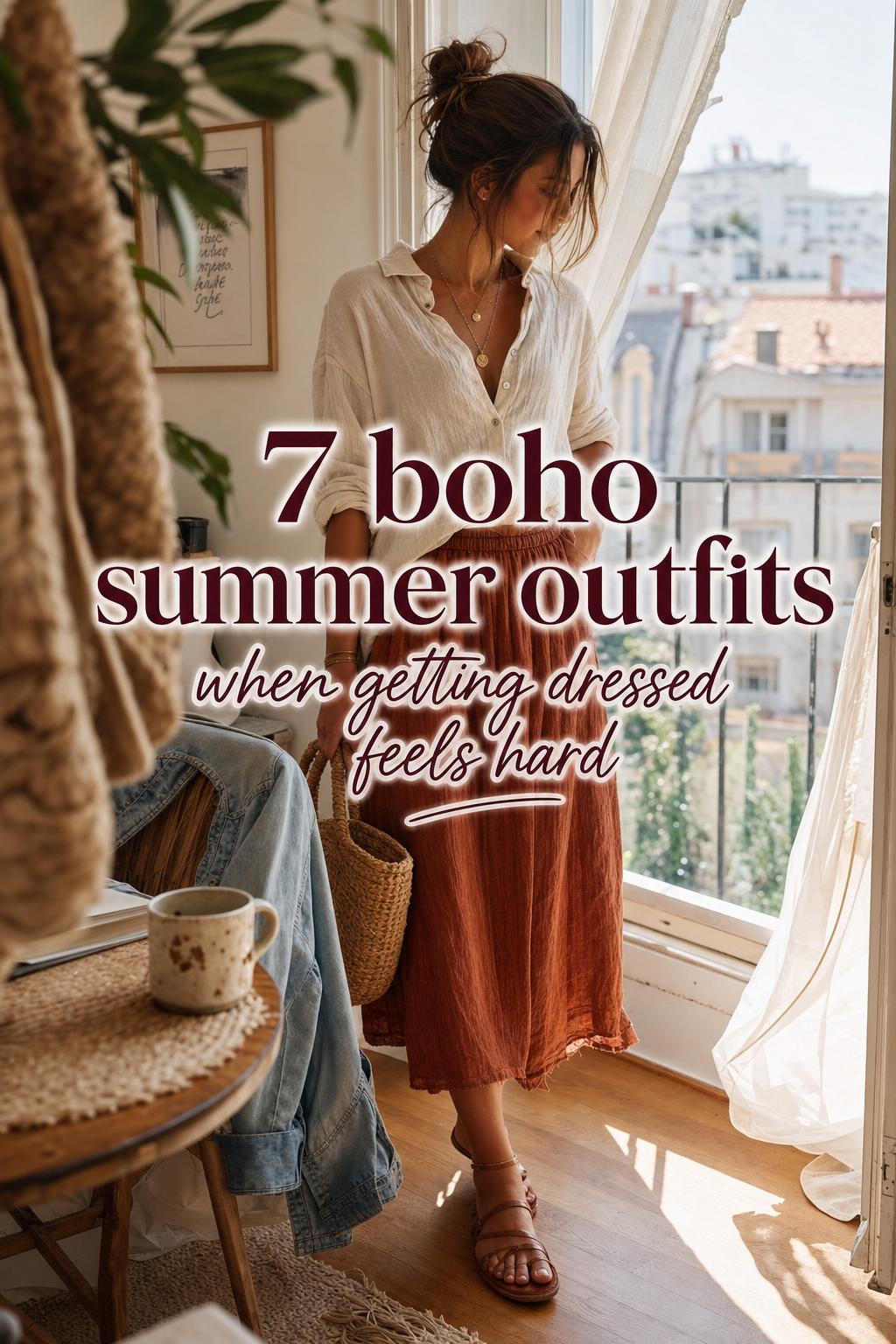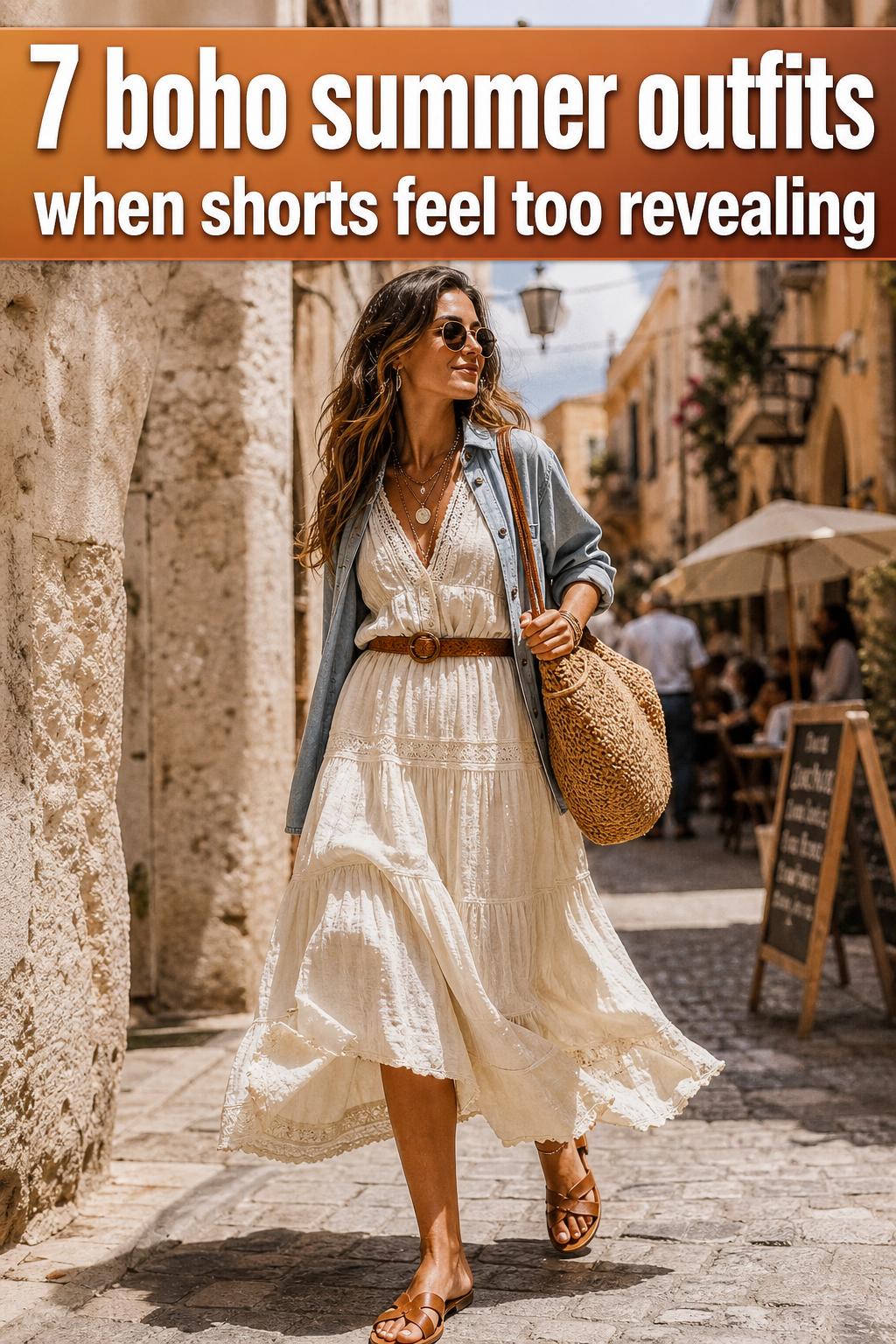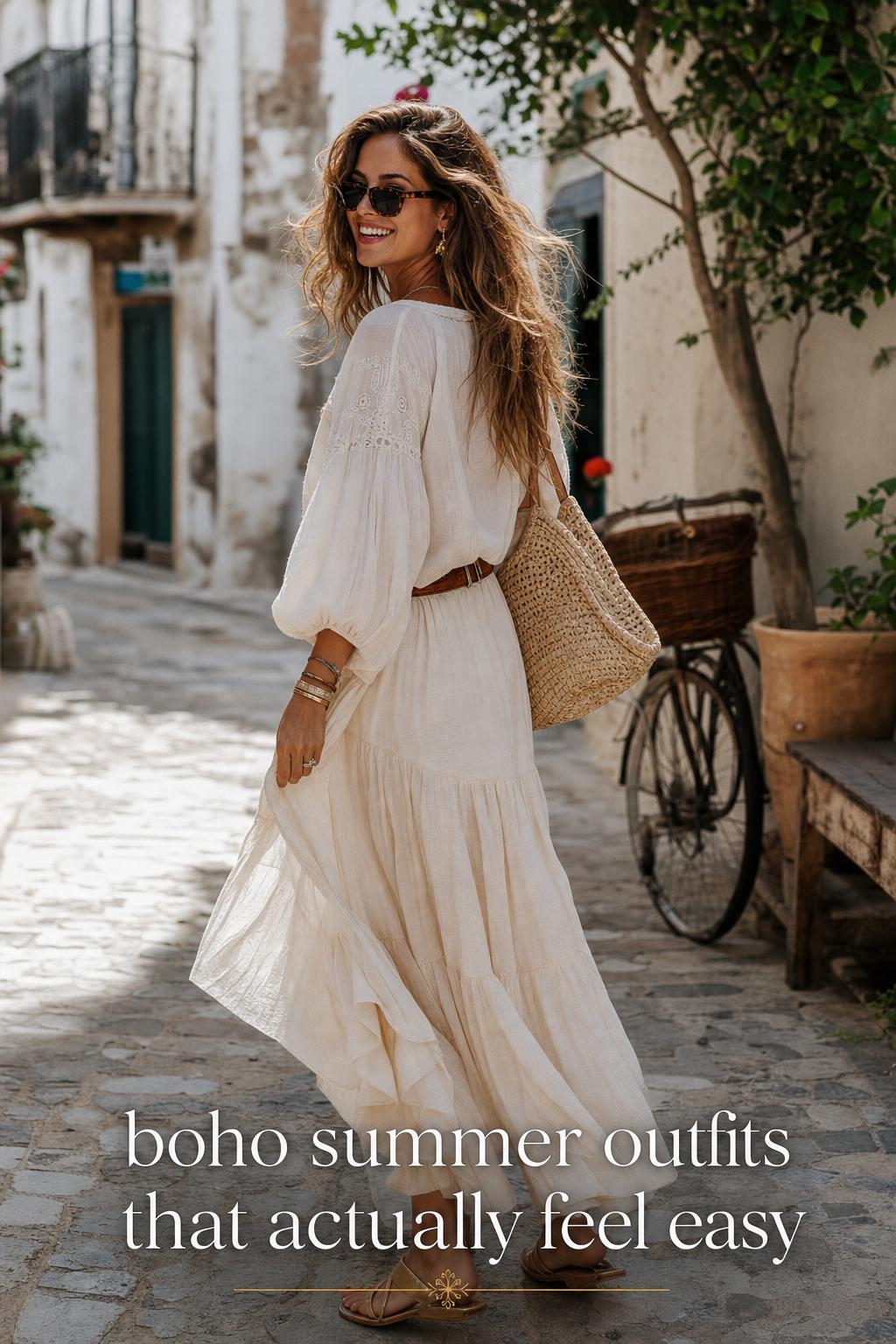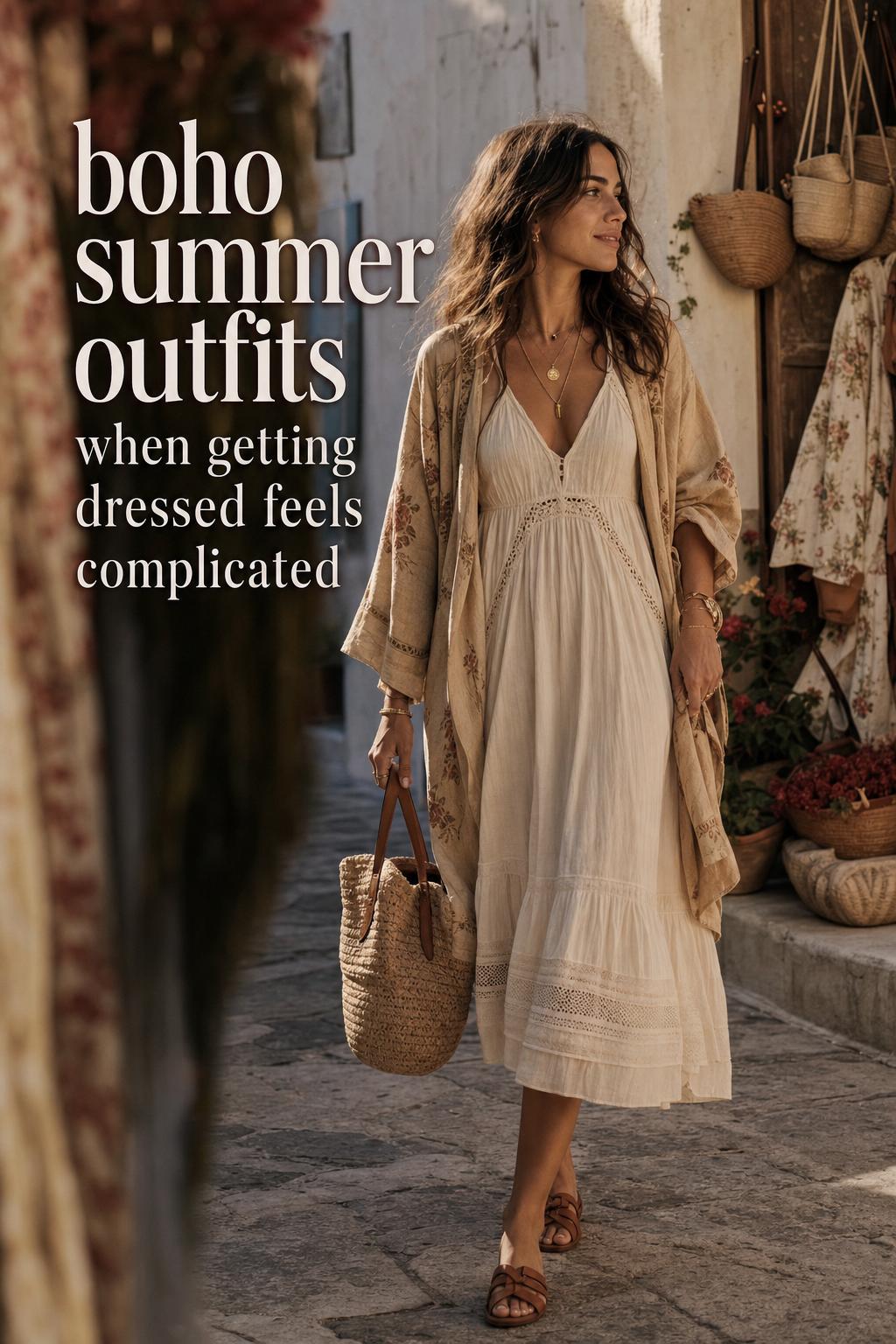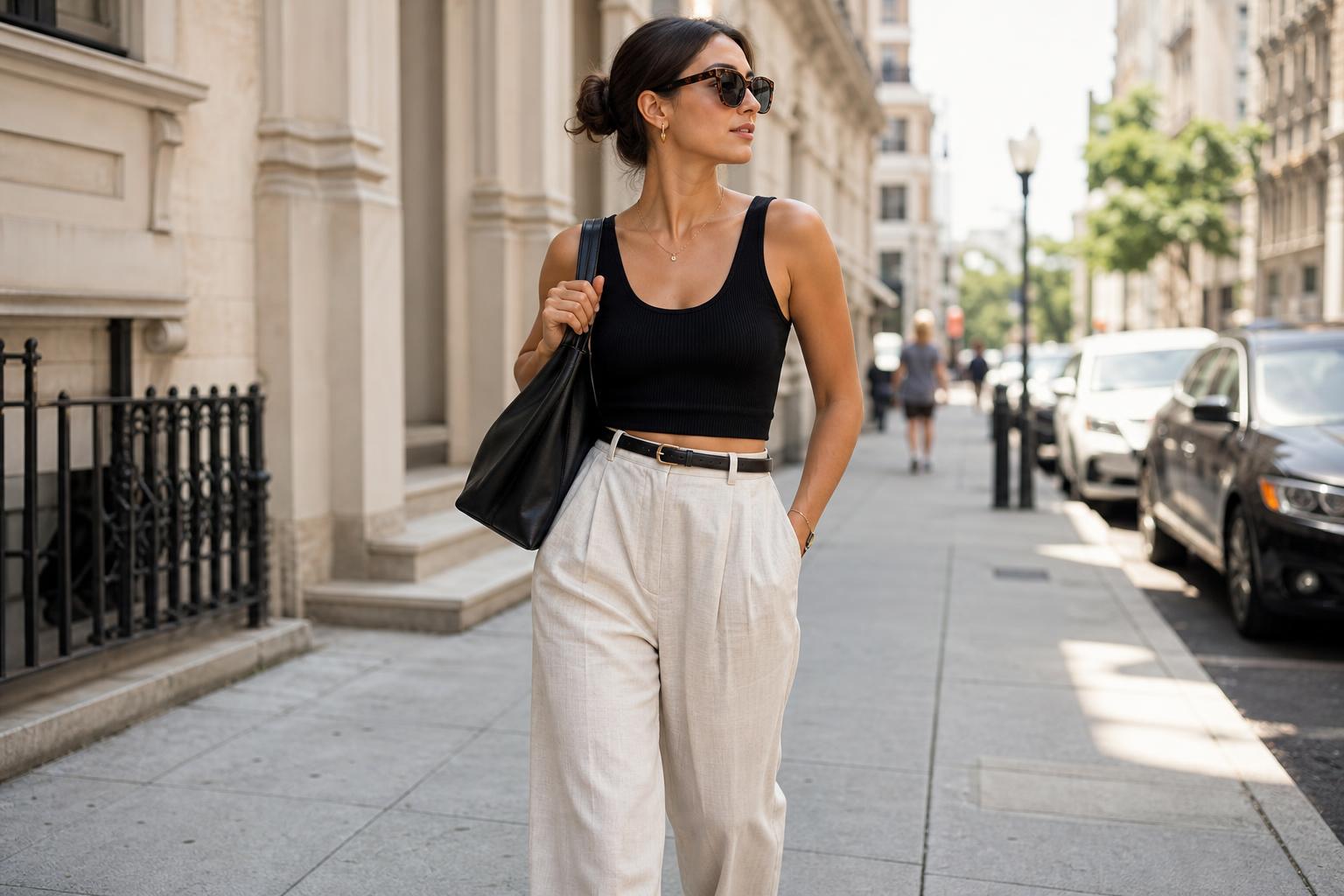
Category: Summer Outfits

Looking for stylish summer outfits that keep you cool, comfortable, and effortlessly chic? In this category, you’ll find summer outfit ideas for every occasion, from casual everyday looks and beach vacations to brunch dates, travel adventures, and special events.

Discover lightweight outfit combinations featuring linen pieces, breezy dresses, shorts, skirts, matching sets, and versatile wardrobe staples designed for warm-weather dressing. Whether you prefer classic, minimalist, old money, coastal, boho, or trendy summer styles, our guides will help you create fashionable looks that work in real life.

Explore seasonal inspiration, practical styling tips, and summer outfit ideas that make getting dressed easy throughout the hottest months of the year.

  • Summer City Outfits With Downtown Polish

    Summer City Outfits With Downtown Polish

    A summer morning in the city asks more of an outfit than a simple warm-weather formula. By noon, there is transit heat, office air conditioning, pavement glare, and perhaps a rooftop dinner still to come. That is why summer city outfits tend to gather around a few recurring aesthetics: polished minimalism, elevated casual dressing, downtown edge, and the city-break capsule. They often overlap, which is precisely why so many wardrobes end up feeling slightly muddled rather than intentional.

    The confusion is understandable. A neutral midi dress with sandals can read refined minimalism in one context, elevated casual in another, and even city-travel practicality when styled with a crossbody bag and sunglasses. The difference lies less in the individual piece than in silhouette, proportion, layering, and purpose. Editors at Vogue and Vogue UK, city-focused styling from Harper’s Bazaar, and the practical travel lens seen in city-break wardrobes all point toward the same truth: urban summer style works best when composition is deliberate.
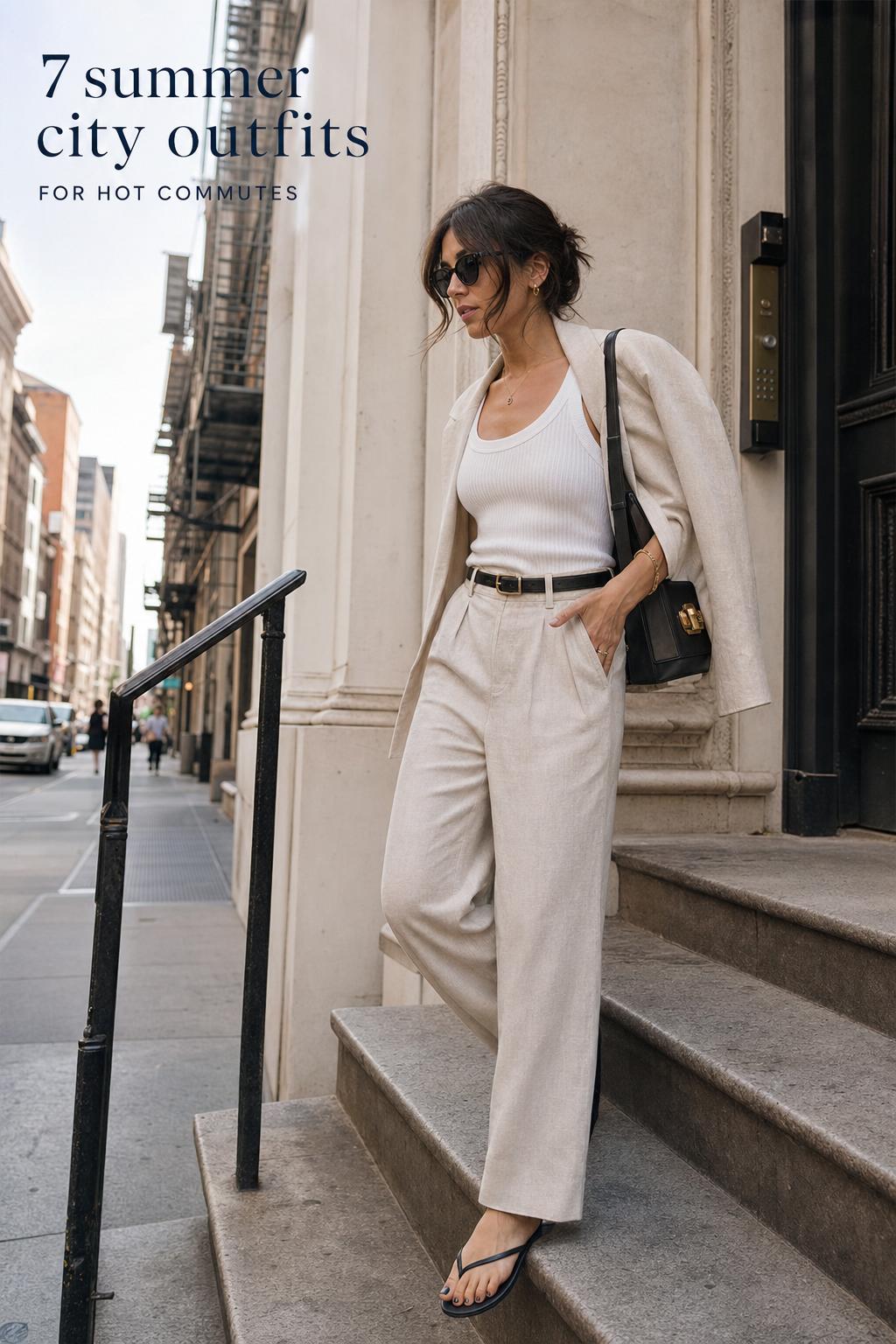
    Model in linen trousers and blazer walking past a cafe in warm light, showcasing summer city outfits for hot commutes
    A candid city walk pairs linen trousers, a fitted tank, and a draped blazer for polished summer ease from commute to evening.

    This comparison breaks down the main styling approaches that shape modern summer city outfits, explains how they differ visually and functionally, and shows where they can blend. The aim is not to prescribe one aesthetic, but to clarify how each one works in real life—from New York City commutes and Los Angeles ease to polished city travel and effortless evening dressing.

    The city wardrobe problem: why urban summer dressing has its own logic

    City dressing in summer is not simply seasonal dressing placed against a metropolitan backdrop. The urban environment changes how clothes behave and how they are perceived. Pieces must withstand movement, temperature shifts, and long hours out of the house while still looking composed in offices, on sidewalks, at lunch meetings, and during social events. This is why the strongest city-ready wardrobes rely on breathable fabrics, tailored structure, and a sense of versatility rather than isolated trend pieces.

    Across style coverage centered on NYC, Los Angeles, London, and broader city life, the same priorities keep returning: dresses and tailored separates, polished but effortless silhouettes, tonal dressing, and capsule-like coordination. Minimalism appears often, but not as austerity. It works because clean lines and a controlled palette make repeated wear easier, especially when one outfit must move from transit to work settings to nightlife with only a few styling adjustments.

    In practice, this creates several distinct aesthetics that are closely related but not identical. Understanding the differences helps you build a wardrobe that feels coherent instead of overfilled.
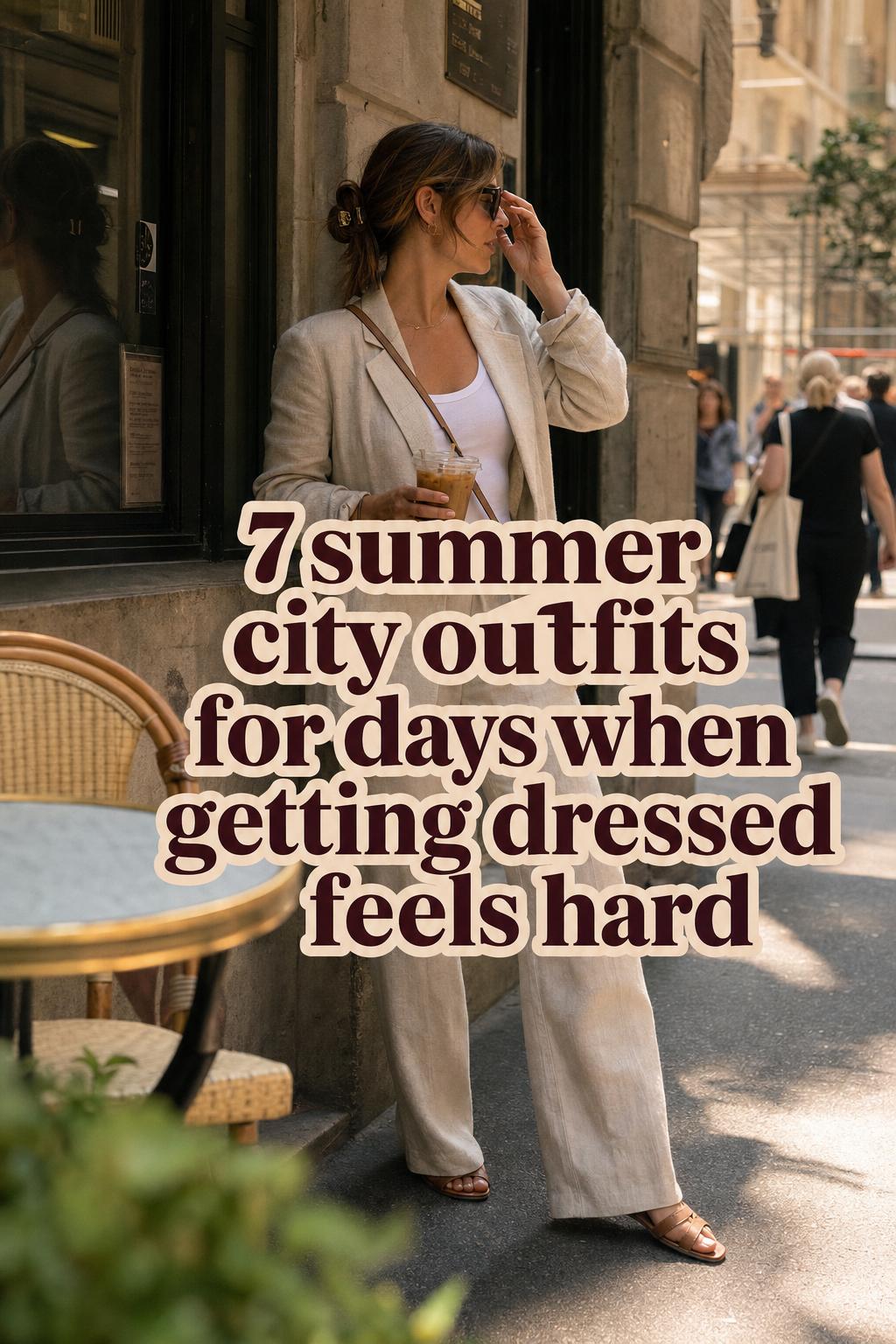
    Woman outside a city cafe in linen trousers and blazer with text overlay, summer city outfits inspiration
    A polished golden-hour street moment captures breathable summer city outfits that move seamlessly from errands to evening.

    Style overview: polished minimalism

    Polished minimalism is the aesthetic most strongly associated with editor-approved city dressing. It favors tailored trousers, simple tank tops, lightweight blazers, streamlined dresses, and refined sandals. The mood is controlled, modern, and effortless without appearing casual. It is often the visual language behind the “summer in the city” edit: chic, urban, and quietly confident.

    The silhouettes are clean and slightly architectural. Think loose linen trousers balanced by a fitted top, a midi dress with a long vertical line, or a structured blazer layered over a simple blouse. Nothing feels overly embellished. The interest comes from proportion, fabric quality, and disciplined styling.

    The color palette leans toward neutrals and tonal dressing—ivory, black, stone, navy, soft earth tones—with the occasional restrained accent. This is where brands such as COS, The Row, Loulou Studio, and DÔEN are often invoked as references for elevated basics and refined city silhouettes. The overall mood is urban, polished, and versatile enough for commuting, client meetings, dinner, and gallery-like social settings.

    Style overview: elevated casual

    Elevated casual sits adjacent to minimalism but feels softer, easier, and slightly less formal. It still values cohesion, but it allows more visible ease: a tee with a midi skirt, smart shorts with a polished shirt, or a simple dress with sandals and a practical bag. It is the aesthetic of low-effort chic rather than structured restraint.

    Silhouettes are more relaxed and familiar. There is usually one easy piece grounding the outfit—a T-shirt, a loose skirt, a simple sundress—while the rest of the look keeps it city-appropriate through proportion and accessory choice. In Los Angeles-focused style, this often reads as rich-looking without trying too hard, with attention to tone and proportion rather than heavy structure.

    The palette may still be neutral, but it has more room for soft pastels, warmer tones, and subtle contrast. Fabrics remain important: breathable cotton, linen, and lightweight blends help the outfit look intentional rather than undone. Elevated casual is often the most useful category for everyday summer city outfits because it can be adjusted so easily.
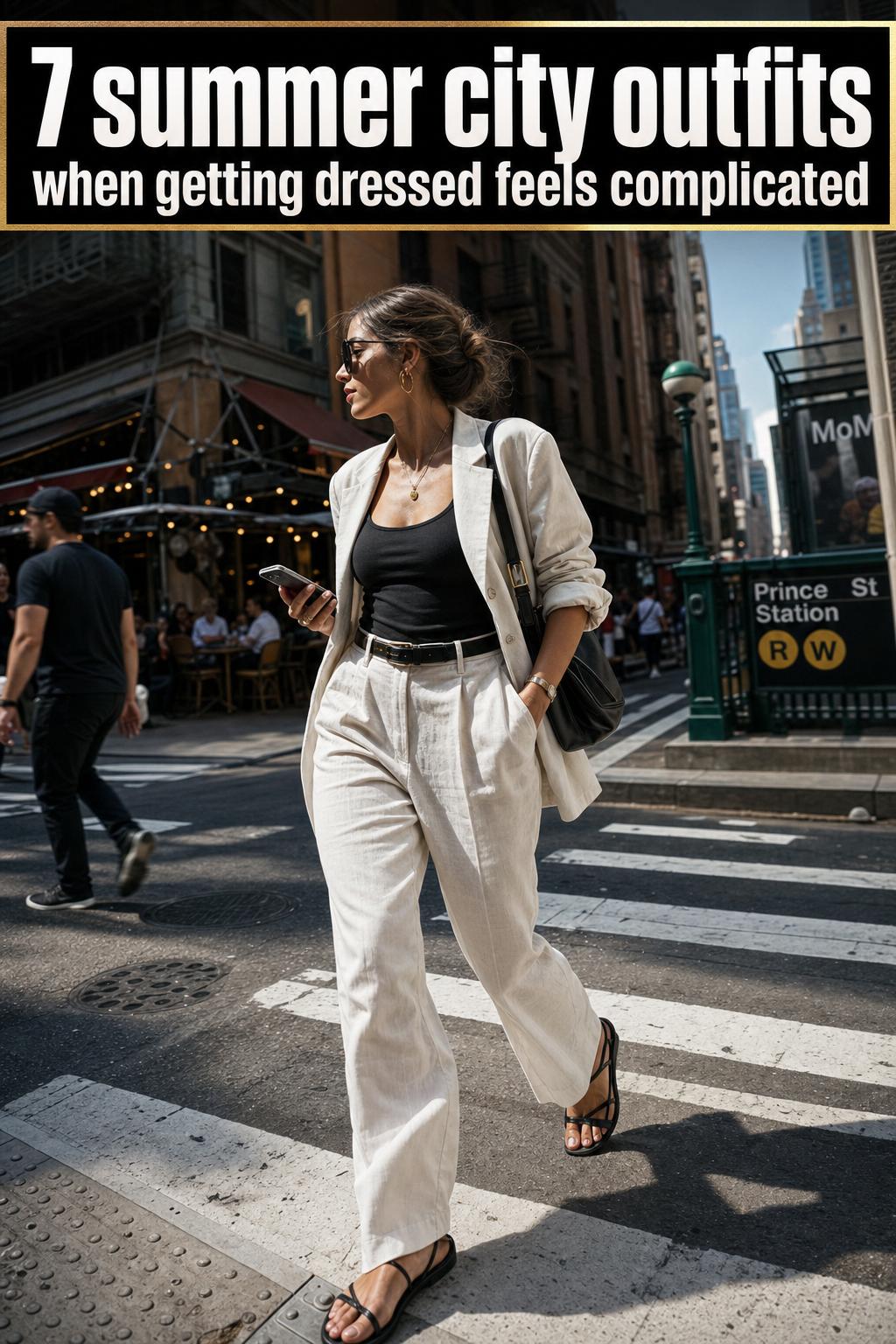
    Street style summer city outfits with a chic casual look in a sunny urban setting
    Chic summer city outfits bring effortless street style to a sunlit urban day.

    Style overview: downtown edge

    Downtown edge introduces sharper contrast. It borrows from street style and gives summer dressing more attitude through denim, leather-adjacent styling references, stronger outerwear shapes, and a more directional approach to balance. Even when the weather is hot, the look may include a light jacket carried for evening, a structured layer over a lightweight dress, or a statement piece against a neutral base.

    The silhouettes here are less serene than polished minimalism and less relaxed than elevated casual. A fluid dress may be offset by a tougher outer layer. Tailored pants might be styled with a more assertive accessory. The intention is not simply comfort or refinement, but visual tension. This is the style most likely to appear in street style imagery and creator-led city outfit roundups.

    Its palette can remain neutral, but contrast matters more: black against cream, washed denim against a sleek top, or a sharper accessory line within an otherwise simple look. Downtown edge suits city personalities who want to retain polish without losing individuality.
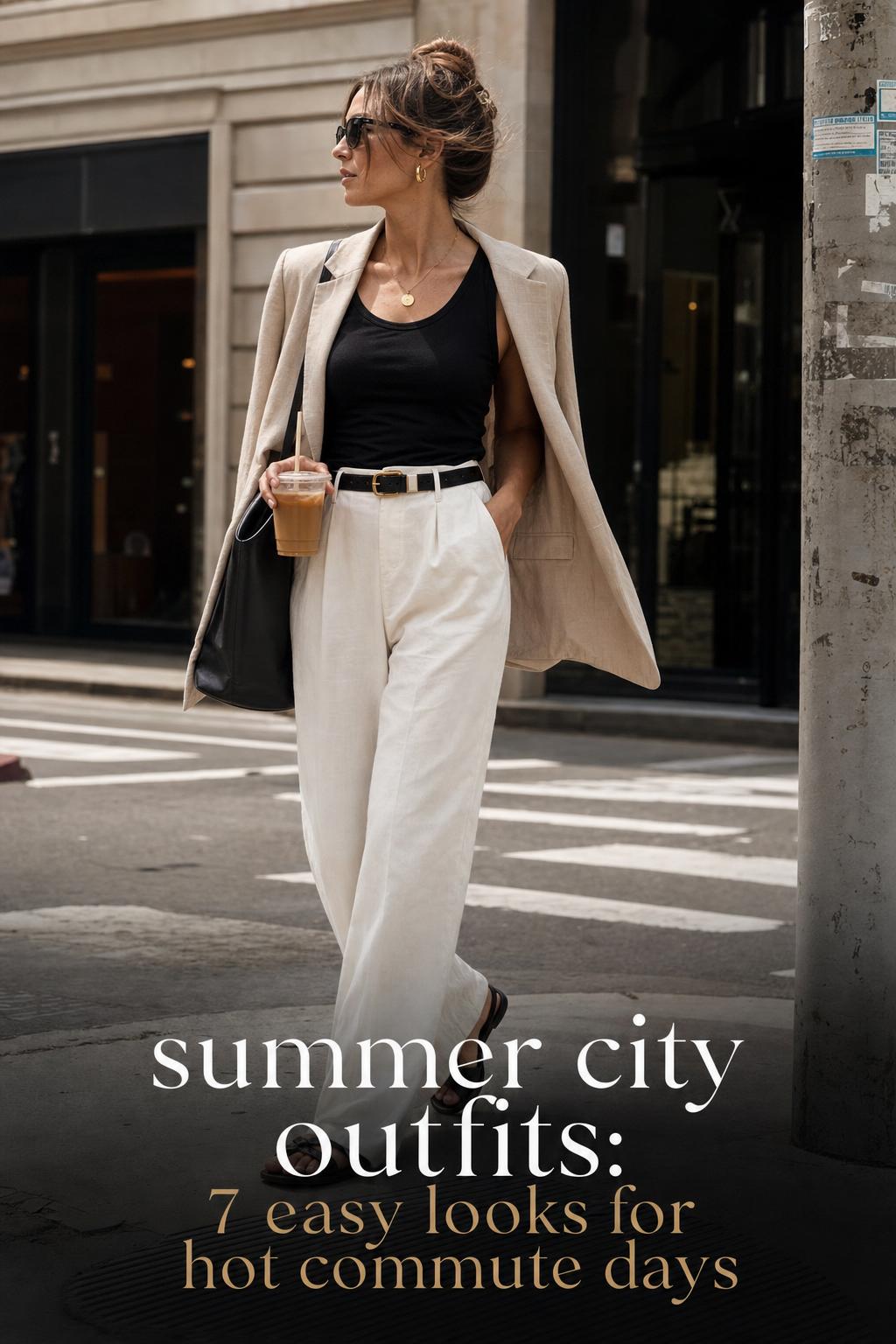
    Woman walking in linen trousers and blazer on a bright city street, showcasing summer city outfits for hot commute days
    A candid downtown stroll captures breathable layers and polished neutrals made for summer city outfits on the move.

    Style overview: the city-break capsule

    The city-break capsule is less of a pure aesthetic and more of a wardrobe strategy, yet it has a recognizable look. It prioritizes packable, repeatable pieces that can cover walking days, transit, daytime sightseeing, café stops, and dinner. The styling is practical, but not careless. It often overlaps with polished minimalism and elevated casual because those aesthetics naturally support repetition and mix-and-match dressing.

    Silhouettes are functional and versatile: a midi or maxi dress that works day to night, smart shorts balanced with a polished top, loose trousers, comfortable sandals, and a crossbody bag. Layering is light but essential, often through a shirt or blazer that can shift the outfit’s tone. The palette is usually compact and cohesive, making a few pieces behave like many.

    This approach appears frequently in city travel styling and in capsule wardrobe guidance because it solves a very real urban problem: how to dress for long summer days without carrying an entirely separate evening outfit.

    Where the aesthetics divide most clearly

    Silhouette and structure

    Polished minimalism depends on tailored structure. Even when the fabric is lightweight, the line of the outfit feels intentional and controlled. Elevated casual relaxes that structure, allowing softer outlines and easier movement. Downtown edge uses structure more dramatically, often creating tension between fluid and sharp pieces. The city-break capsule sits in the middle, choosing silhouettes that travel well and can be restyled quickly.

    Color palette

    Tonal dressing is strongest in polished minimalism and often central in Los Angeles-inspired rich-looking outfits. Elevated casual opens the door to softer contrast and a slightly more varied palette. Downtown edge tends to rely on contrast for visual force. The city-break capsule usually edits color for practicality, favoring neutrals and a few accent tones that make repeated combinations look coherent.

    Level of formality

    Polished minimalism is the most office- and event-ready by default. Elevated casual is the easiest for everyday city life and can be sharpened when needed. Downtown edge may look highly intentional but is not always the best fit for conservative work settings. The city-break capsule is not defined by formality at all; its success depends on how effectively it moves between casual daytime wear and polished evening adaptation.

    Styling philosophy

    Minimalism asks, “How little can I do and still look refined?” Elevated casual asks, “How can I look effortless but considered?” Downtown edge asks, “How can I create personality through contrast?” The city-break capsule asks, “How many situations can one outfit handle?” These are different questions, and they lead to different wardrobes even when some pieces overlap.

    Typical wardrobe pieces

    • Polished minimalism: tailored trousers, tank tops, midi dresses, lightweight blazer, sleek sandals, structured bag
    • Elevated casual: tee, midi skirt, smart shorts, relaxed shirt, easy dress, practical sandals
    • Downtown edge: denim or light outerwear, statement separates, sleek dress with contrast layer, stronger accessories
    • City-break capsule: repeatable dress, loose pants, versatile top, blazer or shirt layer, crossbody bag, comfortable sandals

    What these styles look like in real life

    On the street, the differences are often visible before individual garments are. Polished minimalism looks composed from a distance because the outfit line is uninterrupted. A tailored silhouette contrasted with relaxed textures gives it sophistication without noise. Elevated casual appears lighter and more spontaneous, though the best versions are still carefully balanced. Downtown edge reads faster and sharper; the eye notices contrast and attitude first. The city-break capsule looks adaptable, as though the wearer could walk several blocks, step into lunch, and continue into evening without needing to start over.

    Layering is one of the clearest distinctions. Minimalism uses layering to add structure, such as a blazer over a tank or blouse. Elevated casual uses it softly, often through an open shirt or a lightweight extra layer that does not dominate the outfit. Downtown edge treats layering as a visual device, using a jacket or stronger piece to define the look. The city-break wardrobe layers for utility, with pieces chosen because they can be tied, carried, or added later when city temperatures shift.

    Accessories follow the same pattern. In minimalism, sunglasses, a bag, and sandals are sleek and restrained. Elevated casual allows accessories to feel more lived-in and practical. Downtown edge often gives accessories more attitude, using them to sharpen the message of the outfit. In the city-break approach, accessories are selected for movement and duration as much as style; the crossbody bag is emblematic because it supports a long urban day.

    The fabric question that separates good city dressing from beautiful but impractical dressing

    One of the most useful distinctions in summer city outfits has little to do with trend and everything to do with fabric behavior. Breathable materials such as linen, cotton, and TENCEL Lyocell support the polished look cities often demand because they help the wearer remain comfortable enough to keep the outfit composed. In an urban setting, discomfort quickly changes posture, layering choices, and even the way an outfit photographs.

    Polished minimalism in the wrong fabric can feel too rigid in heat; elevated casual in the wrong fabric can collapse into looking rumpled rather than effortless. The city-break capsule depends especially on fabric intelligence because pieces need to be reworn, packed, and moved through different settings. Moisture-wicking blends, cooling fabrics, and UV-conscious choices become relevant not as technical novelties, but as quiet enablers of style.

    There is also a broader wardrobe value here. Sustainability in summer city style is most convincing when it is tied to longevity and repeat wear. A breathable, neutral piece that can function across work, transit, and evening settings will often do more for a real wardrobe than a highly specific seasonal item. That is where capsule thinking, minimalism, and responsible fabric choice naturally meet.

    Tips for choosing summer fabrics in the city

    • Choose linen, cotton, and Lyocell when you want airflow without sacrificing a polished line.
    • Use moisture-wicking or cooling blends for long transit days or city travel, especially when the outfit must last from morning to evening.
    • Test how a fabric behaves when seated and walking; city style is judged in motion, not only in a mirror.
    • Favor pieces that layer lightly, since offices and evening settings often demand a second element.

    Four city situations, compared through different style lenses

    Commuting to a client meeting

    Polished minimalism handles this best with a tank or blouse, tailored trousers, a lightweight blazer, and sleek sandals. The logic is clarity: the outfit feels cool enough for summer but formal enough for work settings. Elevated casual would soften the same scenario with a relaxed shirt and smart shorts or an easy midi skirt, but this depends on office culture. Downtown edge can work if the tailoring remains strong, though the statement element should stay controlled. The city-break capsule is least specific here, but a versatile dress with a structured layer can perform surprisingly well.

    Walking through the city on a hot afternoon

    Elevated casual and the city-break capsule often win this comparison. A breathable dress, practical sandals, sunglasses, and a crossbody bag create the right balance of ease and urban polish. Polished minimalism can still work beautifully, particularly with loose linen trousers and a simple top, but the outfit must not become too constrained. Downtown edge can feel compelling visually, yet in extreme heat it requires restraint; one stronger element is enough.

    Rooftop evening plans after work

    Here the differences become elegant rather than dramatic. Polished minimalism may move into a sleek dress or jumpsuit with refined sandals and minimal accessories. Elevated casual keeps the same spirit but feels softer, perhaps through a simple dress styled to look effortless rather than overtly dressed. Downtown edge thrives in this setting because evening allows more tension and attitude. The city-break capsule succeeds when the daytime base already had evening potential, proving the strength of versatile wardrobe planning.

    Weekend city travel

    The city-break capsule is the clearest choice because it was built precisely for this purpose. It values packability, repeat wear, and day-to-night shifts. Elevated casual also performs well, especially for walking-heavy itineraries. Polished minimalism can be excellent if the traveler prefers a highly edited wardrobe, though it may require more careful curation. Downtown edge is best used selectively on travel weekends, with one or two stronger looks rather than an entire suitcase built around statement contrast.

    Example comparisons that clarify the styling logic

    Casual daytime outfit interpretation

    A polished minimalist approach might use loose tailored trousers, a fitted tank, sleek sandals, and a structured bag in tonal neutrals. The effect is calm and urban. Elevated casual would approach the same moment with a tee, midi skirt, flat sandals, and softer accessories, creating movement and approachability. Both can be beautiful summer city outfits, but the first prioritizes line while the second prioritizes ease.

    Work-to-evening outfit interpretation

    Polished minimalism relies on a blazer, blouse, and tailored bottoms, then shifts the tone through accessories after hours. Downtown edge may begin with a similarly urban base but add a stronger layer or more directional contrast, making the transformation visible rather than subtle. The first look whispers refinement; the second announces intention.

    Dress-based outfit interpretation

    In polished minimalism, the dress is usually clean-lined, perhaps midi or maxi, with restrained sandals and little interruption. In elevated casual, the same category of dress becomes easier and more lived-in, often styled with practical accessories and less emphasis on strict silhouette. For the city-break capsule, the dress is judged by versatility above all—whether it can serve lunch, walking, transit, and dinner without strain.

    How New York City, Los Angeles, and London subtly shift the same summer formulas

    Location changes the emphasis more than the wardrobe itself. New York City style, as seen in NYC-focused summer outfit coverage, often values tailoring, polish, and the ability to withstand a long day of movement. The silhouette tends to feel sharper, with city heat managed through breathable fabrics rather than through overt informality.

    Los Angeles summer outfits often express ease through tonal dressing and proportion. The look can still appear rich-looking and refined, but it does not lean as hard on strict structure. There is more softness in the line and often a greater sense of relaxed confidence. London-inflected city dressing, meanwhile, tends to preserve a minimalist and capsule-like sensibility, with practical layering and understated sophistication.

    These differences matter because readers often try to recreate a city style without noticing the local logic behind it. A sharply tailored NYC formula may feel too formal for some Los Angeles routines. A very relaxed West Coast interpretation may not deliver enough structure for a Manhattan workday. The most successful wardrobes borrow the spirit of a city while adapting to actual use.

    A refined capsule for summer in the city

    The most practical answer to summer city dressing is usually not more clothing, but better coordination. A compact wardrobe built around breathable fabrics, tonal dressing, and adaptable pieces can support multiple aesthetics at once. This does not erase personal style; it gives it structure.

    • Loose linen trousers for movement, polish, and heat management
    • A midi or maxi dress that can shift from daytime to evening
    • A simple tank top and a polished shirt or blouse
    • A lightweight blazer for work settings and late-day transitions
    • Smart shorts for elevated casual days
    • Versatile sandals that remain comfortable across long city hours
    • A crossbody bag for transit, errands, and travel practicality
    • Sunglasses and, where useful, a hat for sun-heavy days

    This foundation can move toward minimalism, casual ease, or downtown edge depending on styling. The wardrobe pieces stay the same; the composition changes. That is a more intelligent approach than trying to maintain completely separate aesthetics for every urban scenario.

    Tip: build around outfit formulas, not isolated items

    A useful city wardrobe often depends on recurring formulas such as tank plus tailored trousers, tee plus midi skirt, dress plus sleek sandals, or blazer plus versatile blouse and tailored bottoms. These formulas make dressing faster and more consistent. They also reduce the common problem of owning attractive pieces that do not connect.

    Common mistakes that make summer city outfits feel off

    The first mistake is confusing simplicity with lack of styling. Minimal looks still need shape, color balance, and intention. A neutral outfit without proportion can look unfinished rather than refined. The second is over-layering in pursuit of polish. Urban summer style should feel light, even when it includes a blazer or jacket. If the layering is too heavy, the wearer will spend the day carrying pieces instead of wearing them well.

    Another common issue is treating all city contexts as identical. Transit-heavy days, office settings, rooftop evenings, and city travel each ask for slightly different priorities. Practicality is not separate from style in this category; it is part of style. Footwear, in particular, often reveals whether an outfit was composed for real life or only for a still image. Comfortable sandals and ergonomic design matter because a city day is long.

    Finally, many wardrobes neglect inclusivity and adaptability. Summer city style should serve the wearer’s body, schedule, and movement patterns. Size range, comfort, and adaptive styling choices are not side concerns; they are central to whether a look can become part of daily life.

    Tips for avoiding city-style imbalance

    • If the silhouette is relaxed, add one polished element so the outfit still reads city-ready.
    • If the outfit is very tailored, use breathable fabric or simpler accessories to keep it light.
    • Keep the palette edited when you want multiple pieces to mix across work, travel, and evenings out.
    • Choose footwear with long walking days in mind; elegance fades quickly when comfort is ignored.

    When each style works best

    Polished minimalism is ideal for work environments, lunch meetings, gallery openings, and any city setting where you want to look composed without appearing overdone. It is also highly effective for readers building a timeless wardrobe because the pieces tend to repeat well across seasons.

    Elevated casual works best for everyday city life, creative offices, errands, daytime social plans, and warm afternoons when comfort matters as much as appearance. It is often the most approachable route into summer city outfits because it starts with familiar pieces and refines them through styling.

    Downtown edge belongs to evenings, fashion-oriented environments, and moments when personal style should feel more visible. It can work during the day, but usually in measured form. The city-break capsule is strongest for travel, weekends, and compressed schedules when one wardrobe needs to cover many activities.

    In reality, most strong wardrobes use all four approaches. A city resident may prefer minimal tailoring for work, elevated casual for daytime movement, downtown edge for evening, and a capsule mindset for travel. The value of comparison is not in choosing one forever, but in understanding which logic to apply when.

    Blending the styles without losing clarity

    The most modern wardrobes are rarely pure. A polished minimalist base can gain relevance through one street-style element. Elevated casual can become dinner-ready through a sleeker sandal and a sharper bag. A city-break capsule can feel less purely practical if the palette is disciplined and the silhouettes are elegant. The key is to know which aesthetic is leading and which is supporting.

    One of the easiest ways to combine them is through color discipline. When the palette stays cohesive, you can introduce different levels of structure and still maintain visual calm. This is why tonal dressing appears so frequently in city-focused summer style. It allows contrast in silhouette without creating chaos.

    Another useful method is to let accessories set the mood. The same midi dress can move from elevated casual to polished minimalism to city-break practicality depending on the sandal, bag, sunglasses, and layering piece. Thoughtful styling, not constant buying, is what creates wardrobe depth.
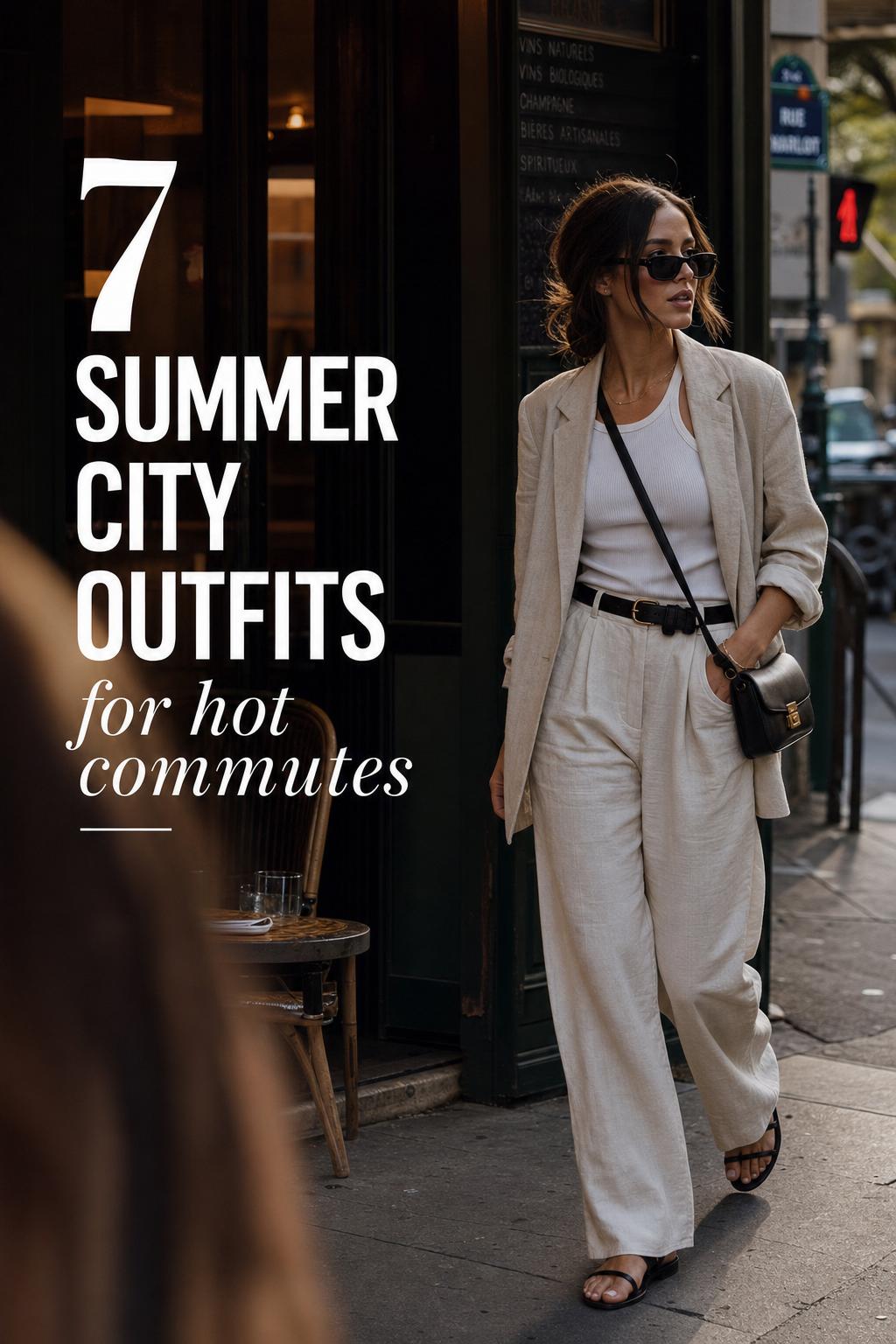
    Woman stepping out of a café at golden hour wearing linen and blazer, featuring summer city outfits with editorial street style.
    A polished woman steps from a café into warm golden-hour light, showcasing effortless summer city outfits with downtown ease.

    FAQ

    What defines summer city outfits compared with regular summer outfits?

    Summer city outfits are designed for urban movement and multiple settings in one day, so they tend to combine breathable fabrics, polished silhouettes, and versatile layering more carefully than general warm-weather looks. They often need to work for transit, work, walking, and social plans without losing shape or ease.

    What are the most useful pieces for a summer city capsule wardrobe?

    The strongest foundation usually includes loose linen trousers, a midi or maxi dress, a simple tank, a polished blouse or shirt, a lightweight blazer, smart shorts, comfortable sandals, and a crossbody bag. These pieces support both everyday wear and more refined city moments when the styling is adjusted.

    How can I make summer city outfits look polished in high heat?

    Focus on breathable materials such as linen, cotton, and Lyocell, then keep the outfit visually clean through tailored proportion, tonal dressing, and restrained accessories. In heat, polish comes less from adding more and more from choosing fabrics and silhouettes that stay composed as the day progresses.

    Are dresses or tailored separates better for city summer style?

    Both work well, but they serve slightly different needs. Dresses are often the easiest route for day-to-night dressing and city travel, while tailored separates offer more control for work settings and styling variation. The better choice depends on whether your day requires flexibility, formality, or long hours of movement.

    How do NYC and Los Angeles summer outfit formulas differ?

    New York City style tends to emphasize tailoring, structure, and polished endurance across a long day, while Los Angeles formulas often express refinement through tonal dressing, softer proportions, and a more relaxed line. Both can be minimal and elegant, but the mood and level of structure usually differ.

    What shoes work best for summer city outfits?

    Versatile sandals are the most consistent choice, especially when they combine comfort with a clean silhouette. For long city days, footwear should support walking and transit without making the outfit feel too casual. In practical terms, comfort and ergonomic design matter as much as appearance.

    Can elevated casual still work for office-to-evening dressing?

    Yes, provided the outfit includes enough structure to hold its shape in a work setting. A relaxed base can become more polished through a blazer, sharper bag, more refined sandals, or a controlled color palette. Elevated casual works best when ease is balanced with intention.

    How can I make a city-travel wardrobe feel stylish rather than purely practical?

    Keep the wardrobe edited, choose a cohesive palette, and rely on pieces that can shift between daytime walking and evening plans. A city-break wardrobe feels stylish when practicality is built into refined silhouettes rather than treated as a separate category.

    Is minimalism the best approach for summer in the city?

    Minimalism is one of the most effective approaches because it supports repetition, polish, and versatility, but it is not the only one. Elevated casual, downtown edge, and capsule dressing all work well when their styling logic matches your routine, city context, and comfort needs.
  • Boho Summer Outfits With A Modern Ease

    Boho Summer Outfits With A Modern Ease

    There is a particular ease to boho summer outfits that never feels forced. The aesthetic moves between sun-washed romance and grounded practicality: airy silhouettes, tactile fabrics, softened structure, and a palette that looks as though it belongs equally to a beach town, a music festival, a weekend market, or a long city afternoon. It is expressive without becoming theatrical, relaxed without losing intention.

    What makes this style enduring is its balance. Boho dressing invites movement, layering, and individuality, yet it still depends on thoughtful proportion. A flowing skirt needs restraint elsewhere. A loose blouse benefits from shape through accessories or footwear. The overall mood is free-spirited, but the best versions feel edited, not accidental.

    Boho summer outfits street style: woman in ivory linen blouse and sand wide-leg trousers with straw bag at golden hour
    In soft golden-hour light, she steps past a sun-washed market corner in airy linen and sand-toned boho ease.

    In summer, that balance becomes especially appealing. Warm weather favors breathable textures, lighter layers, and pieces that can move from daytime to evening with little effort. Whether worn for travel, outdoor events, relaxed weekends, or everyday dressing, the bohemian summer wardrobe offers a visual language of softness, ease, and subtle confidence.

    The visual identity behind boho summer style

    At its core, the boho summer aesthetic is built on fluidity. Instead of sharp tailoring and rigid lines, it leans into drape, texture, and a slightly undone finish. Dresses skim rather than cling. Wide-leg trousers and loose blouses create air around the body. Layers are present, but they are light enough to remain practical in heat. The silhouette is often elongated, with movement carrying much of the impact.

    Color is rarely harsh in this mood. Think sun-faded neutrals, earthy tones, soft whites, muted florals, and natural-looking contrasts. Even when detail appears through embroidery, lace, crochet, or print, it tends to feel organic rather than graphic. This is why the style sits so comfortably within summer dressing: it reflects light beautifully and works with natural settings rather than against them.

    The appeal also lies in its adaptability. A boho outfit can read coastal, urban, festival-ready, romantic, or quietly minimal depending on fabric choice, accessories, and proportion. That flexibility is one reason the aesthetic remains popular season after season. It allows personal interpretation while keeping a cohesive visual identity.

    Woman in linen blouse and rust midi skirt by balcony door wearing boho summer outfits in warm sunlit apartment
    A relaxed, sun-washed moment captures an easy boho summer outfit with breezy linen, earthy tones, and lived-in texture.

    Look: Sun-faded linen and easy volume

    This interpretation of boho summer outfits is the most understated: relaxed, breathable, and visually calm. The silhouette is soft but not shapeless, built around pieces that allow movement and air. It feels ideal for a hot afternoon when comfort matters, but appearance still carries intention. The mood is less festival and more effortless Mediterranean ease, the kind of outfit that works for a market morning, a casual lunch outdoors, or a travel day spent moving slowly through a warm city.

    A loose linen blouse paired with wide-leg trousers or a softly gathered midi skirt sets the foundation. The fabric matters here; linen brings a lived-in texture that immediately supports the bohemian mood without relying on excess detail. Shades of ivory, sand, oat, or washed terracotta create warmth while staying refined. Flat leather sandals, a woven bag, and delicate layered jewelry complete the look without making it feel busy.

    • Key garments: linen blouse, wide-leg trousers or gathered midi skirt
    • Footwear: flat sandals in natural leather
    • Accessories: woven tote, layered necklaces, slim bangles

    Why it works is simple: volume is controlled through light fabric and a limited palette. This keeps the outfit aligned with the boho spirit while preserving polish. When a look already has texture, the smartest styling choice is often restraint.

    Style tip: let the fabric do the work

    In warm weather, boho dressing can become heavy if too many decorative elements compete at once. Choosing one tactile fabric such as linen, crochet, or lace and letting it lead the outfit usually feels more modern than combining all three. The result is lighter on the body and cleaner to the eye.

    Look: The romantic white dress with grounded accessories

    Few summer silhouettes feel as naturally bohemian as a white dress with movement. The mood is soft, feminine, and open, but the strongest version avoids looking overly precious. Instead of leaning into sweetness alone, the look becomes more compelling when balanced with accessories that introduce texture and weight.

    A tiered cotton or lace-trimmed dress, cut in a midi or maxi length, creates that signature fluid line associated with boho summer style. The white does not need to be stark; cream, ecru, or warm off-white often feels richer in daylight. Add flat sandals, a tan belt if shape is needed, and a structured woven or leather bag. Jewelry can remain delicate, but a few more substantial details, such as a cuff or pendant, help keep the outfit from drifting into a purely bridal mood.

    This look fits the aesthetic because it captures the contrast that defines strong bohemian dressing: softness tempered by earthiness. The dress carries the romance; the accessories anchor it. That tension is what makes the outfit wearable for real life rather than just a styled image.

    Boho summer outfits styled on a sunlit beach with flowing maxi dress, straw hat, and layered jewelry
    Sunlit boho summer outfits pair flowing fabrics, earthy textures, and easy accessories for a carefree warm-weather look.

    Look: Desert tones and artisanal texture

    Boho style often becomes most interesting when it moves away from obvious summer brights and into a grounded palette. Desert-inspired tones—clay, rust, camel, olive, cream—bring depth to the season and add a more mature reading of the aesthetic. The visual mood is warm, slightly rugged, and textural, suited to open-air evenings, road trips, or informal gatherings where an outfit should feel expressive but still composed.

    A sleeveless top with subtle embroidery, crochet detailing, or a softly crinkled finish pairs beautifully with a long skirt or relaxed shorts in a natural tone. Leather sandals or ankle boots change the direction slightly: sandals keep it lighter for daytime, while boots make the outfit feel more grounded and event-ready. A fringed crossbody, beaded jewelry, or a hat can add dimension, but each extra element should serve the silhouette rather than distract from it.

    • Palette: rust, camel, cream, olive, faded brown
    • Textures: crochet, embroidery, washed cotton, soft suede accents
    • Best setting: outdoor evenings, travel days, casual summer events

    The styling logic here rests in tonal harmony. When colors sit within the same warm family, texture becomes the focal point. That is especially useful in boho dressing, where detail can easily overwhelm if color contrast is too sharp.

    Boho summer outfits in a sun-washed coastal street scene, woman mid-step in linen and sandals with a straw bag
    A candid, sun-drenched street-style moment captures effortless boho summer dressing with linen layers and a woven bag.

    Look: Festival spirit, edited for real wear

    The boho summer wardrobe often intersects with festival dressing, but the most wearable version is more considered than costume-like. Rather than building the look around excess fringe, layered prints, and dramatic accessories, it is more elegant to choose one expressive element and let the rest remain quiet. The mood should suggest spontaneity and freedom, yet still feel practical enough to wear for hours.

    A printed kimono or lightweight cover layer over a simple tank and denim shorts offers that balance. The silhouette combines ease with familiarity, which is why it translates well beyond a single occasion. Flat sandals or low boots, sunglasses, and a crossbody bag keep movement easy. If jewelry is layered, keep the clothing shapes simple; if the print is bold, let the accessories become quieter. Summer heat also matters here, so breathable fabrics are not just aesthetically pleasing but necessary.

    This interpretation works because it borrows the expressive confidence of festival style while removing the elements that often make it difficult in everyday life. The result still reads bohemian, but with more longevity and less reliance on trend-driven styling.

    How to keep festival-inspired boho from feeling overdone

    Choose one focal point only: a kimono, a statement hat, a fringed bag, or layered jewelry. Once everything in the outfit asks for attention, the silhouette loses clarity. Bohemian style is at its strongest when it appears instinctive, and that instinct is usually the result of editing.

    Look: Soft denim with a feminine drape

    Denim brings needed structure to boho summer outfits, particularly if your wardrobe already leans casual. The key is to avoid letting denim dominate the outfit with stiffness. Instead, it should act as a grounding element against lighter, more fluid pieces. This creates a balanced silhouette that feels approachable, easy to repeat, and useful for everyday wear.

    Consider a pair of relaxed denim shorts or wide-leg jeans styled with an airy blouse in cotton, lace, or gauze. A peasant-style top, a softly ruffled camisole, or an off-the-shoulder shape can all work if the denim remains simple. The palette may stay classic with blue and white, or shift into faded indigo with warm neutrals. Add sandals, a woven belt, and understated jewelry to retain softness.

    The reason this look belongs within the boho category is proportion. Denim adds familiarity and practicality, while the top introduces movement and romance. That interplay is especially valuable if fully fluid dressing feels too loose for your personal style. It offers an entry point into the aesthetic without losing everyday realism.

    Where boho summer dressing works best

    One of the most useful things about this aesthetic is how naturally it adapts to setting. The same visual language can be adjusted for location, temperature, and occasion without losing its identity. What changes is not the core style but the emphasis.

    • For beach towns and vacations, focus on cover layers, sandals, natural fibers, and lighter palettes.
    • For city weekends, keep the silhouette relaxed but add one structured element such as a cleaner bag or more defined sandal.
    • For outdoor dinners or summer events, choose longer hemlines, deeper earthy tones, and jewelry with more visual presence.
    • For festivals or concerts, prioritize comfort, movement, and breathable layers that still hold their shape after hours of wear.

    The practical lesson is clear: boho style should respond to context. A sweeping maxi dress may look beautiful, but if the day includes stairs, crowded streets, or high heat, a midi hem or a two-piece combination may feel smarter. Good style rarely ignores environment.

    Look: The printed maxi with quiet companions

    A printed maxi dress is one of the most recognizable expressions of boho summer style, yet it is also one of the easiest to mishandle. The strongest version feels effortless and elongated, with the print acting as atmosphere rather than noise. The mood is expressive, artistic, and slightly nostalgic, but the silhouette should remain breathable and calm.

    Choose a dress with a muted floral, paisley, or softly blended print rather than something overly sharp. A wrap shape, empire line, or tiered cut all work, provided the fabric can move easily. Because the dress already carries visual information, the accessories should stay restrained: simple sandals, a natural bag, and minimal jewelry. Hair and beauty, too, often look best when left relaxed and uncomplicated against a statement print.

    This look fits the aesthetic because it allows pattern to express the bohemian mood while the rest of the styling preserves elegance. It is a reminder that boho does not require clutter. A single strong printed piece can carry the entire story.

    Look: Crochet detail and coastal ease

    There is a distinctly summer-specific version of boho style that feels lighter, brighter, and more coastal than earthy. Here, texture takes precedence over color contrast. Crochet, open knits, and loosely woven details suggest craftsmanship and hand-finished charm, but they also require careful styling to avoid feeling too styled for the setting.

    A crochet top layered over a simple slip, bralette, or camisole can pair with loose shorts, a midi skirt, or soft drawstring trousers. The color palette works best in cream, beige, soft tan, and sun-bleached neutrals, perhaps with a hint of faded blue. Leather sandals, a straw bag, and lightly layered jewelry complete the effect. Because crochet already attracts the eye, the silhouette underneath should remain clean.

    The appeal of this version lies in texture and transparency. It feels summery in a direct way, but when styled with discipline, it still appears refined. That balance makes it especially useful for vacations, boardwalk evenings, and warm-weather weekends where comfort and visual softness matter equally.

    Key pieces for this aesthetic

    • A breathable white or cream dress
    • A relaxed blouse with texture or subtle detail
    • Wide-leg trousers or a flowing midi skirt
    • Flat leather sandals
    • A woven or straw bag
    • Layered jewelry with an organic finish

    Look: Tailored restraint meets bohemian softness

    For readers who admire boho summer outfits but prefer a more polished wardrobe, the aesthetic can be interpreted through contrast rather than abundance. This version uses soft bohemian pieces alongside cleaner lines, creating an outfit that feels more urban and slightly more European in mood. It is less about free-form layering and more about selective softness.

    A flowing blouse tucked lightly into tailored shorts or streamlined wide-leg trousers creates an elegant balance. A structured blazer may even be added in the evening if the fabric remains light enough for summer. Keep the palette neutral—ivory, sand, tobacco, soft black, muted olive—and let one boho detail stand out, such as lace trim, a pendant necklace, or a woven bag. Footwear can stay simple with leather sandals or a clean low heel.

    This works because it translates the essence of bohemian style into a wardrobe that may otherwise be more refined and minimal. Rather than dressing fully in one mode, it lets texture and drape bring softness to tailored structure. The result is subtle, modern, and highly wearable.

    What often makes boho summer outfits fall flat

    Boho dressing is deceptively easy. Because the pieces are relaxed and often decorative, it can seem as though anything goes. In reality, the aesthetic relies on editing and proportion as much as any tailored wardrobe. When an outfit feels off, it is usually because too many visual ideas are competing at once.

    • Too many statement elements in one outfit, such as heavy jewelry, strong print, fringe, and embroidery together
    • Dense fabrics in high heat, which can make the look feel impractical and visually heavy
    • Lack of silhouette balance, especially when every piece is oversized
    • Accessories that lean costume-like instead of natural and wearable
    • Ignoring setting, weather, or movement needs for the day

    The easiest correction is to decide what the hero of the outfit is. If the dress carries the statement, simplify the accessories. If the jewelry is layered and expressive, keep the clothing quiet. Bohemian style is not about adding endlessly; it is about allowing softness, texture, and personality to coexist with restraint.

    Look: Evening boho in darker summer tones

    Summer evenings invite a richer interpretation of the boho mood. The light changes, the temperature drops slightly, and softer daytime neutrals can give way to deeper shades without losing seasonal relevance. The result is more sensual and atmospheric, but still relaxed.

    A dark floral maxi, a black or deep brown slip skirt paired with a textured blouse, or a flowing dress in rust or olive all work beautifully here. The difference from daytime lies in depth and finish. Jewelry can be a little more substantial, sandals a little sleeker, and the silhouette slightly more elongated. A light wrap, kimono, or draped layer can complete the look if the evening cools.

    This variation proves that boho summer outfits do not need to stay pale and beachy. They can become more refined after sunset, provided the fabrics remain fluid and the mood stays unfussy. It is an excellent formula for dinner outdoors, concerts, or vacation evenings when you want ease with presence.

    How to build a boho summer wardrobe without overbuying

    The most convincing boho wardrobe rarely comes from purchasing a large set of highly specific pieces all at once. It develops through a few well-chosen items that share texture, palette, and silhouette harmony. This matters because the bohemian aesthetic can quickly feel cluttered if every item is trying to perform the same role.

    Start with versatile anchors: one soft white dress, one relaxed blouse, one flowing bottom, one pair of leather sandals, and one textured bag. Then add personality through selected details such as a printed layer, crochet top, or distinctive jewelry. This approach keeps the wardrobe flexible. It also makes it easier to adapt the aesthetic to different settings, from travel and errands to outdoor gatherings and evening plans.

    A practical advantage of this method is repetition. The same blouse can work with denim, linen trousers, or a maxi skirt. The same sandals can ground a dress or shorts. Great style in this category comes less from novelty than from recomposition. That is where boho becomes personal rather than performative.

    Practical tips for wearing boho in real summer weather

    • Choose breathable fabrics first, then build the aesthetic through detail.
    • Keep at least one layer removable if the day moves from heat to cooler evening air.
    • Test hemlines and footwear for walking comfort, especially on vacations or event days.
    • If humidity is high, simplify layering and rely more on shape and texture than added pieces.
    • Use accessories to shift the look from day to night rather than changing the entire outfit.

    Look: Weekend market boho with relaxed practicality

    Not every boho outfit needs to feel romantic or dramatic. Some of the most successful versions are built for ordinary summer moments: coffee runs, weekend browsing, an outdoor lunch, a day spent moving between errands and leisure. The aesthetic here is easygoing and tactile, with enough polish to feel composed in daylight.

    A sleeveless cotton top or soft blouse paired with loose shorts, a midi skirt, or lightweight trousers creates exactly that balance. Add practical sandals, sunglasses, and a roomy woven bag. The palette can stay soft and earthy, perhaps with white, tan, faded olive, or dusty rose. If one detail carries texture—crochet trim, subtle embroidery, or a gauzy finish—the rest of the look can remain clean and functional.

    This is where the boho mood proves its everyday value. It offers comfort without looking purely casual, and personality without overcomplication. For many wardrobes, this version is the most useful because it translates directly into real schedules and real weather.

    Look: Soft layering for travel and transition days

    Travel often exposes whether a style truly works. Pieces need to remain comfortable through movement, temperature changes, and long hours, while still looking cohesive. The boho summer aesthetic is particularly well suited to this if the layering stays light and the shapes are practical rather than excessive.

    Begin with a simple base such as a camisole or tank, then add a lightweight button-up, kimono, or draped overshirt. Pair it with loose trousers, easy shorts, or a soft midi skirt depending on the route and setting. Sandals may work for short city days, while more secure footwear can make sense for transit-heavy itineraries. The colors should remain coordinated so that one added layer does not disrupt the whole outfit.

    What makes this interpretation effective is flexibility. Layers can be removed, tied, or reworked as the day changes. In boho dressing, practicality does not undermine style; it often sharpens it. A well-composed travel outfit should feel as fluid in motion as it appears at rest.

    The lasting appeal of the bohemian summer mood

    Boho summer outfits continue to resonate because they offer more than a trend. They create a complete visual mood: ease, warmth, texture, and self-expression held together by softness and proportion. The style can be romantic, coastal, earthy, or subtly polished, yet it always returns to the same idea of freedom shaped by intention.

    The most successful version is the one adapted to your own wardrobe and your own summer rhythm. Choose silhouettes that let you move, fabrics that suit the heat, and details that feel authentic rather than borrowed. When the balance is right, the aesthetic does not look like a costume or a passing phase. It looks like a thoughtful way of dressing well.

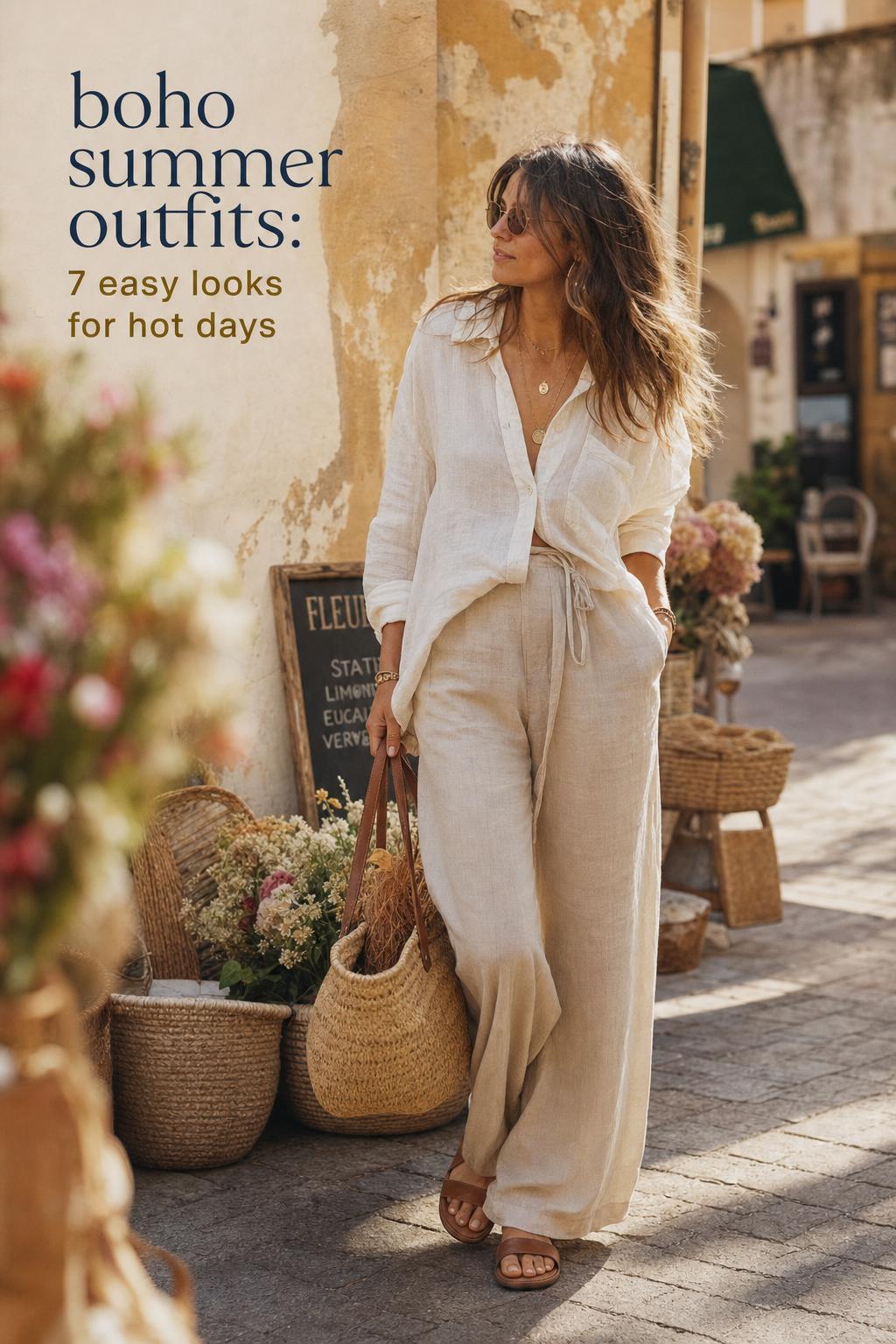
    Boho summer outfits on a stylish woman walking through a golden-hour coastal market street with text overlay.
    A stylish woman strolls through a sunlit coastal market in effortless boho summer layers, captured in warm editorial light.

    FAQ

    What defines boho summer outfits?

    Boho summer outfits are defined by relaxed silhouettes, breathable fabrics, natural texture, soft earthy or sun-faded color palettes, and styling that feels expressive but not rigid. Common visual cues include flowing dresses, loose blouses, wide-leg trousers, woven accessories, delicate layers, and details such as crochet, lace, or embroidery.

    How can I make a boho outfit look modern instead of costume-like?

    The easiest way is to edit carefully. Choose one statement element, such as a printed maxi dress, a kimono, or layered jewelry, and keep the rest of the outfit clean. Modern boho styling usually relies on balanced proportion, breathable fabric, and fewer competing details rather than piling on every recognizable bohemian element at once.

    Are boho summer outfits only for festivals or vacations?

    No, the aesthetic works well for everyday life when the pieces are styled with practicality in mind. Softer blouses with denim, linen trousers with sandals, or a simple white midi dress with natural accessories can feel entirely appropriate for weekends, casual lunches, travel, and warm-weather city dressing.

    What colors work best for a boho summer wardrobe?

    The most versatile palette includes white, cream, sand, tan, camel, rust, olive, faded brown, and muted floral tones. These shades support the relaxed, natural feel of the aesthetic and make it easier to mix textured pieces without creating visual overload.

    Can I wear denim in a boho summer outfit?

    Yes, denim works especially well when used as the grounding element in an otherwise soft outfit. Relaxed shorts, wide-leg jeans, or a simple denim piece can balance airy blouses, lace details, or flowing layers. The key is to keep the denim easy and not overly rigid so the outfit still feels fluid.

    Which shoes suit boho summer style best?

    Flat leather sandals are often the most natural choice because they support the relaxed silhouette and remain practical in warm weather. Depending on the setting, low boots or simple heels can also work, especially for evening outfits, but footwear should usually feel grounded, comfortable, and visually connected to the outfit’s natural textures.

    How do I layer boho pieces in hot weather?

    Use very light layers and let texture replace bulk. A gauzy overshirt, a lightweight kimono, or a crochet top over a simple base can create depth without making the outfit heavy. In high heat, it is usually better to build visual interest through fabric and accessories rather than adding many garments.

    What is the easiest first piece to buy for a boho summer wardrobe?

    A soft white or cream dress is often the easiest place to start because it captures the mood of the aesthetic and can be styled in multiple ways. With different sandals, jewelry, bags, or layers, it can shift from beachy and casual to more polished and evening-appropriate without losing its bohemian character.

  • Summer Europe Outfits That Feel Polished

    Summer Europe Outfits That Feel Polished

    The challenge with summer europe outfits is not finding inspiration. It is narrowing that inspiration into a wardrobe that can handle long walking days, changing regional weather, compact packing, and the quiet expectation of looking polished in cities such as Paris, Milan, Rome, or Barcelona. Many travelers overpack for fantasy versions of their trip, then discover they needed breathable fabrics, comfortable footwear, and a stronger sense of outfit logic.

    Europe in summer also creates a specific style tension. You want ease, but not carelessness; comfort, but not bulk; variety, but not an overstuffed suitcase. A dress and sandals may feel ideal for Southern Europe, while Northern or Central Europe can call for light layers and more flexible combinations. The most useful wardrobe is not the trendiest one. It is the one that works from sightseeing to dinner, city street to coastal promenade, with only a few intelligent swaps.

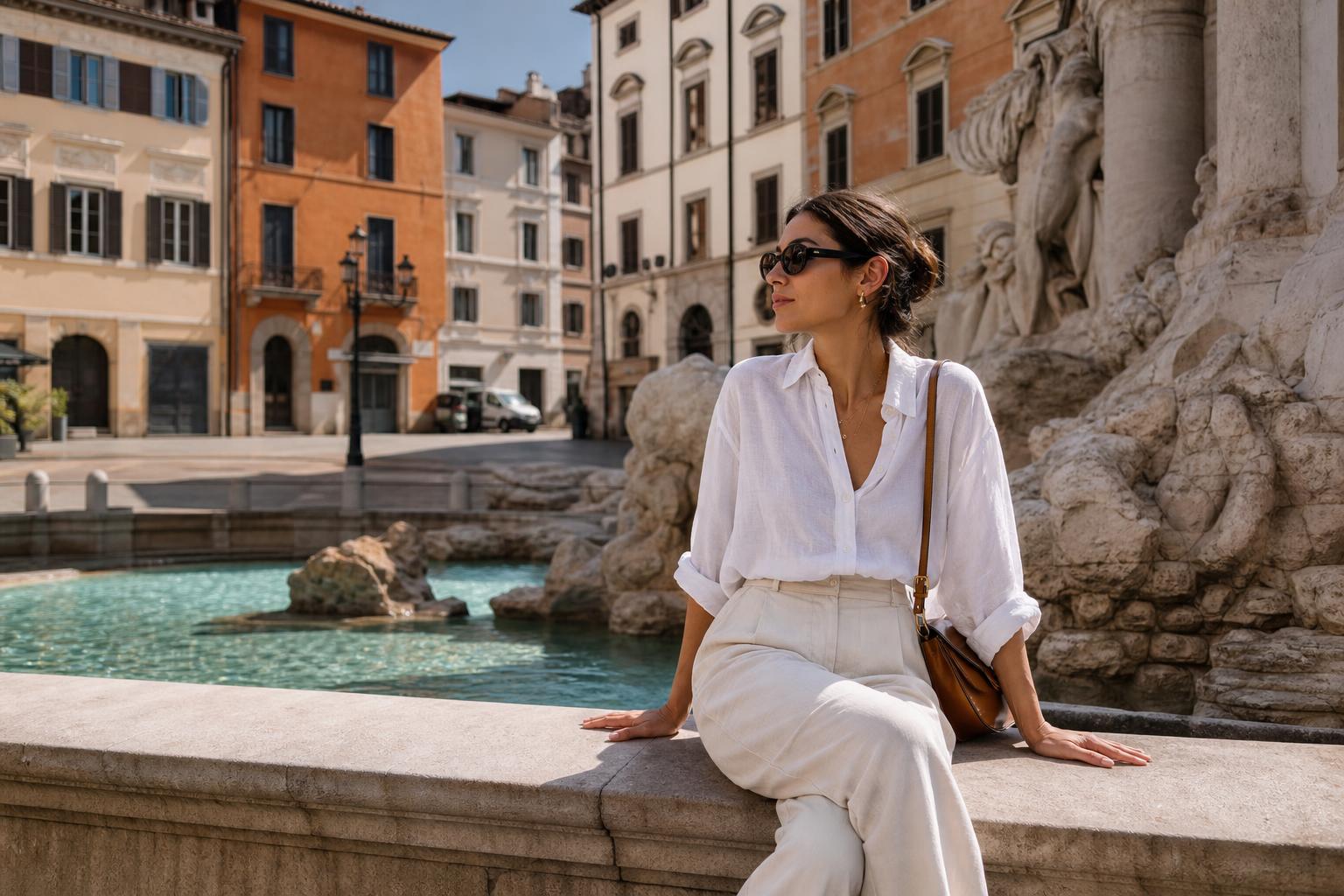
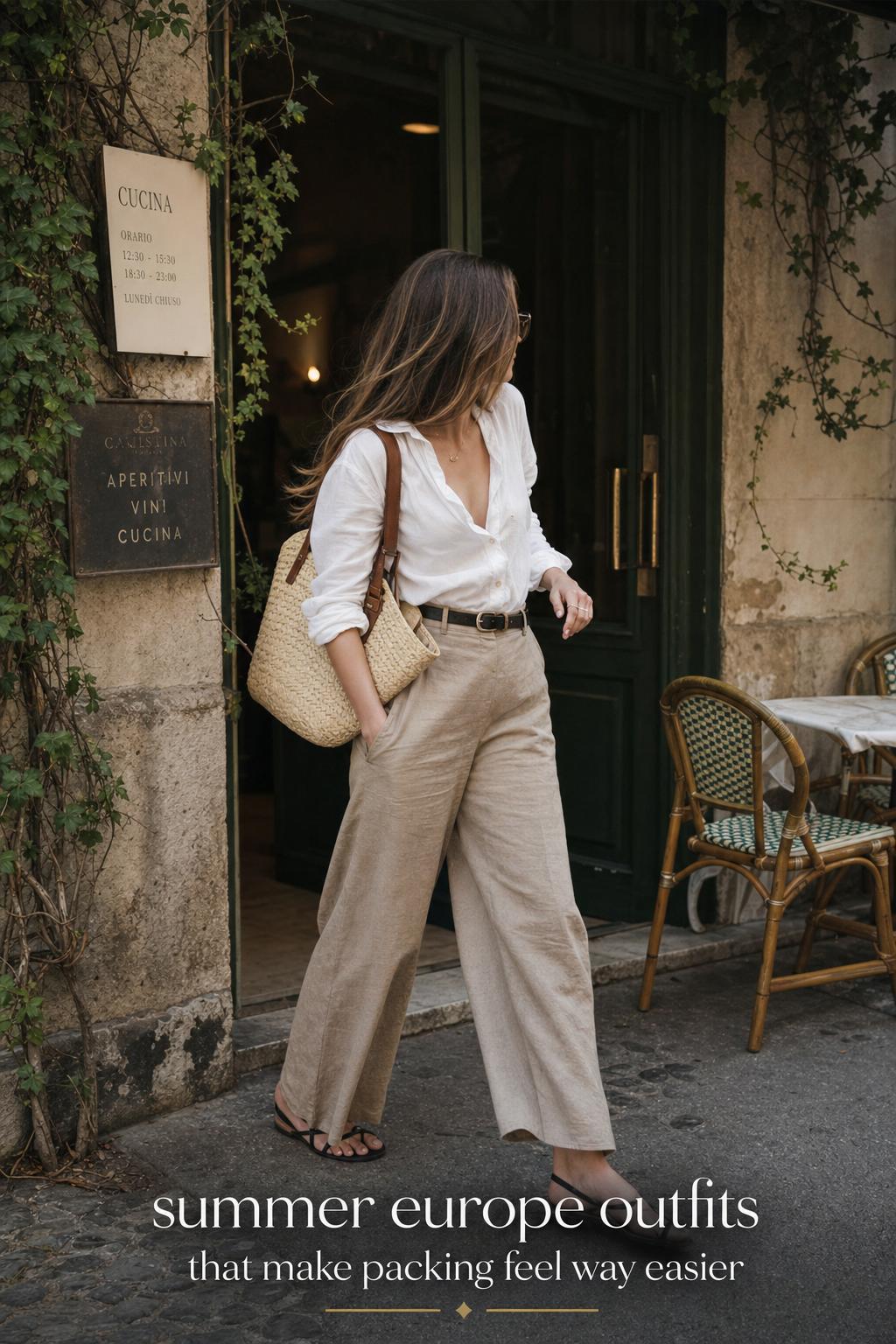
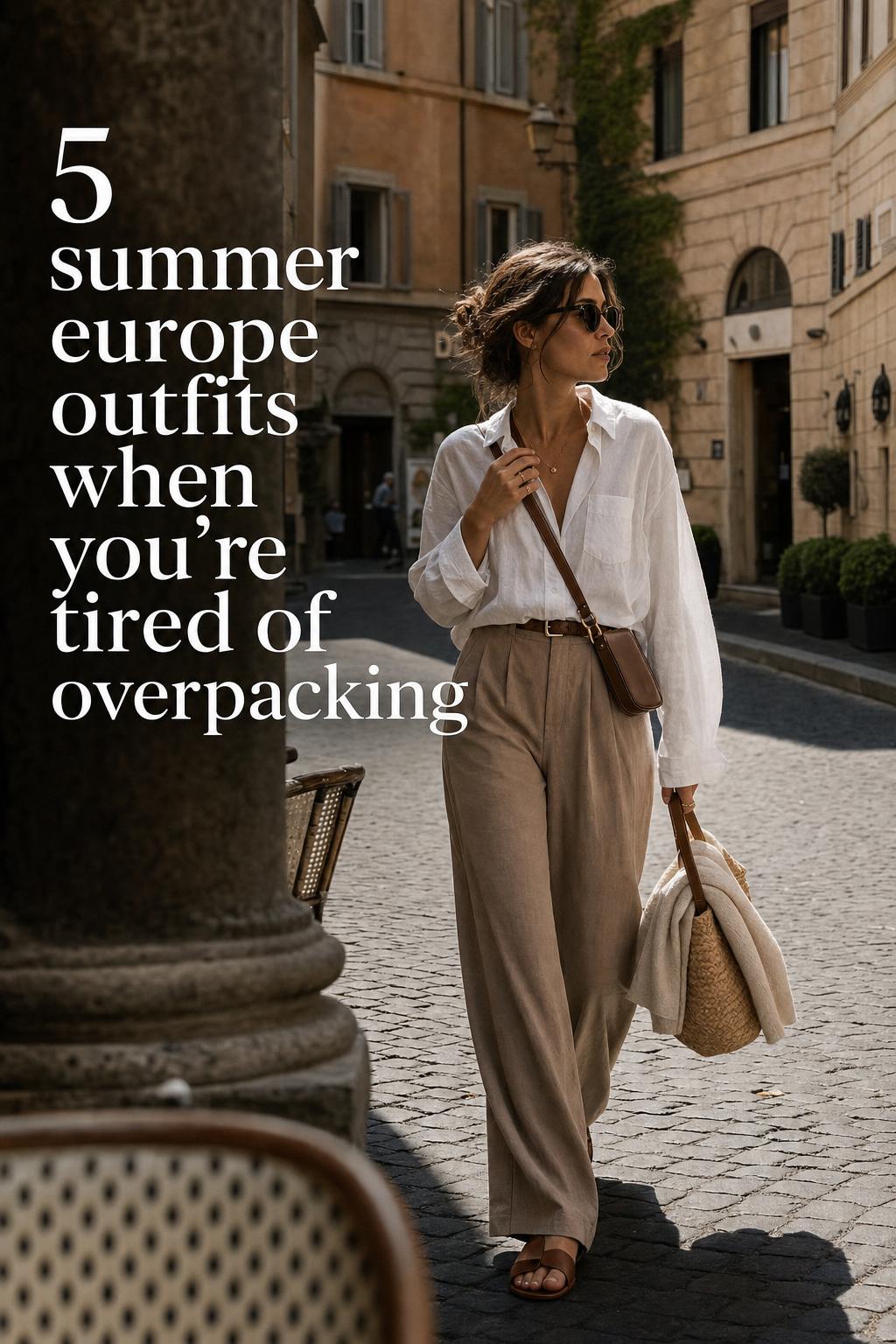
    Woman walking through a sunlit Roman piazza in linen and sandals, showcasing summer europe outfits for travel
    A stylish traveler strolls through a sunlit Roman piazza in breezy neutrals, embodying effortless European summer elegance.

    This guide approaches the problem the way a fashion editor would: by looking at silhouette, fabric, proportion, and practicality first. You will find a realistic capsule, climate-aware styling principles, and outfit solutions that help you dress well across Europe without losing comfort or refinement.

    Why dressing for a European summer feels more complicated than it should

    The difficulty usually begins with the phrase “European summer” itself. It suggests one mood, but the reality is broad. A Mediterranean itinerary points toward hot, sunny days and airy dressing, while Nordic or Northern Europe summers may require a lightweight cardigan, a linen shirt layered over a tee, or walking shoes that can handle cooler mornings. Central Europe adds another variable: rain risk and the need for adaptable layers.

    Then there is movement. A travel wardrobe does more work than a home wardrobe. It needs to survive transit, museum days, outdoor lunches, evenings out, and repeated wear. Pieces that look beautiful in isolation can fail quickly if they wrinkle too aggressively, require special care, or only work with one pair of shoes. That is why the strongest summer travel outfits are built from repeatable formulas: a midi or maxi dress with sandals, a linen shirt with wide-leg pants, or a simple dress finished with a denim jacket at night.

    Style pressure plays its part too. Readers often want the effortless confidence associated with European street style, especially the clean restraint linked to Paris, the polished confidence of Milan, or the easy city-to-coast elegance associated with the Amalfi Coast and Barcelona. The answer is rarely buying more. It is choosing a smaller set of versatile pieces in breathable fabrics and composing them with intention.

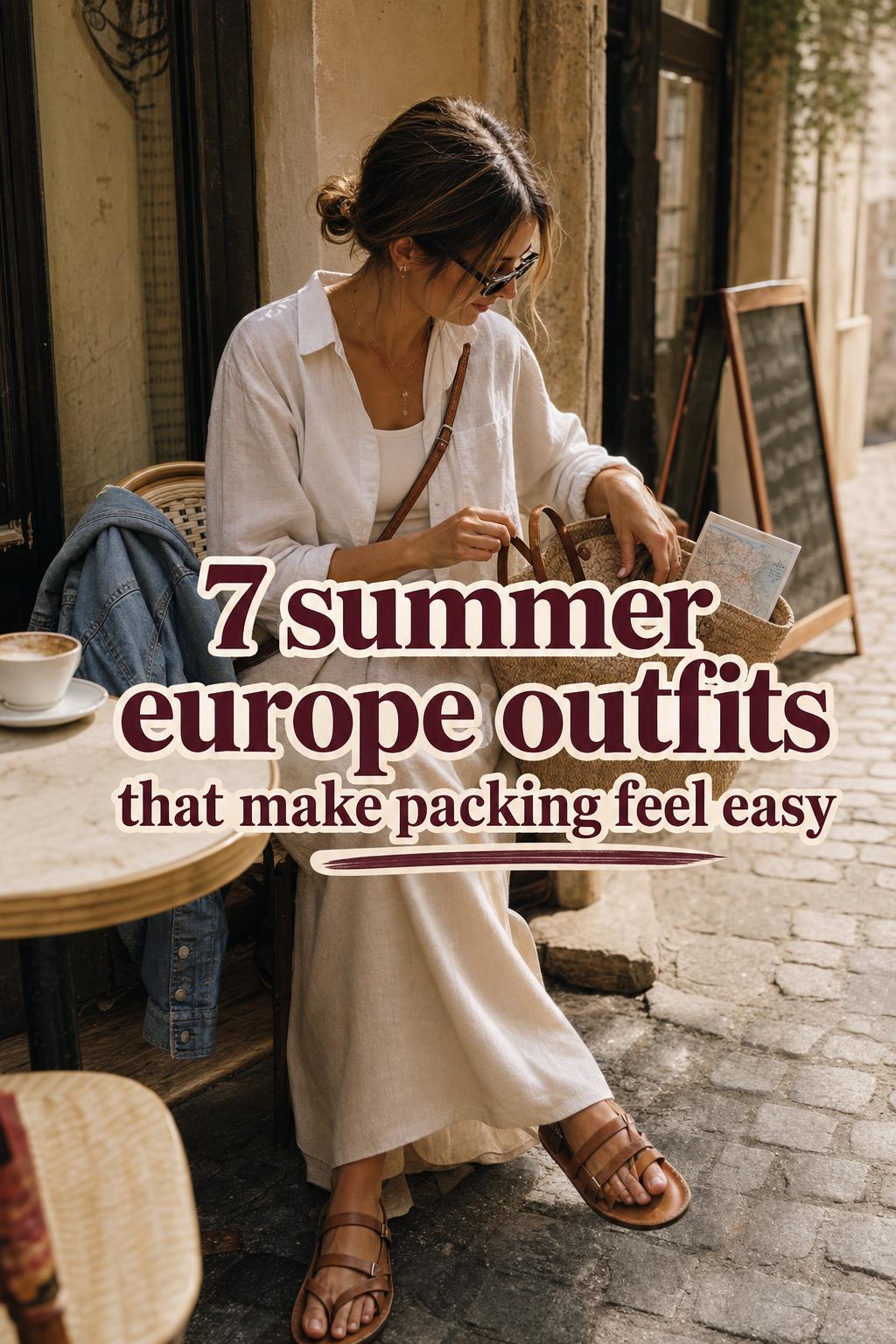
    Summer Europe outfits at a sunlit side-street cafe, stylish traveler in linen layers with tote, coffee, and city map.
    A candid golden-hour café moment captures effortless summer Europe outfits with breathable linen layers and travel-ready essentials.

    The dressing principles that solve the problem

    Before choosing individual outfits, it helps to understand the logic behind them. A successful Europe summer wardrobe is less about trend collecting and more about building combinations that can shift with weather, activity, and setting.

    Start with breathable fabrics

    Linen remains central for a reason. It appears throughout summer travel style because it breathes well, feels appropriate in heat, and immediately creates a relaxed but elevated texture. Cotton, viscose, and other breathable blends are equally useful, especially when you want softness or slightly more fluid drape. In hotter parts of Southern Europe, these fabrics reduce the heavy, overdone feeling that can come from synthetics or overly structured layers.

    Use a capsule wardrobe mindset

    A capsule wardrobe is simply a small group of pieces designed to work together. For summer Europe outfits, this matters because it reduces overpacking while increasing outfit range. Repetition is not a weakness on a trip. If your sandals, tote, linen shirt, dress, and trousers all coordinate, your wardrobe becomes calmer and more useful.

    Balance relaxed textures with clean lines

    European summer style often feels polished because soft, airy fabrics are grounded by clear silhouette. A loose linen shirt looks sharper with wide-leg pants that skim rather than overwhelm. A flowing maxi dress feels more refined with minimal sandals and a structured crossbody bag. Texture gives the outfit warmth; clean lines keep it modern.

    Dress for walking, not just photographs

    Travel-ready fashion is different from event dressing. Sandals are a core piece, but they are not the only answer. Espadrilles and sneakers matter, especially for city walking tours or days that stretch longer than expected. Footwear should support the rhythm of the trip, not just the mood of one outfit.

    Build in day-to-night flexibility

    The strongest outfits transition with minimal effort. A dress worn with flat sandals and a woven tote by day can move into evening with jewelry, sunglasses removed, and a lightweight jacket or cardigan added after sunset. That flexibility is what makes a wardrobe feel intelligent rather than excessive.

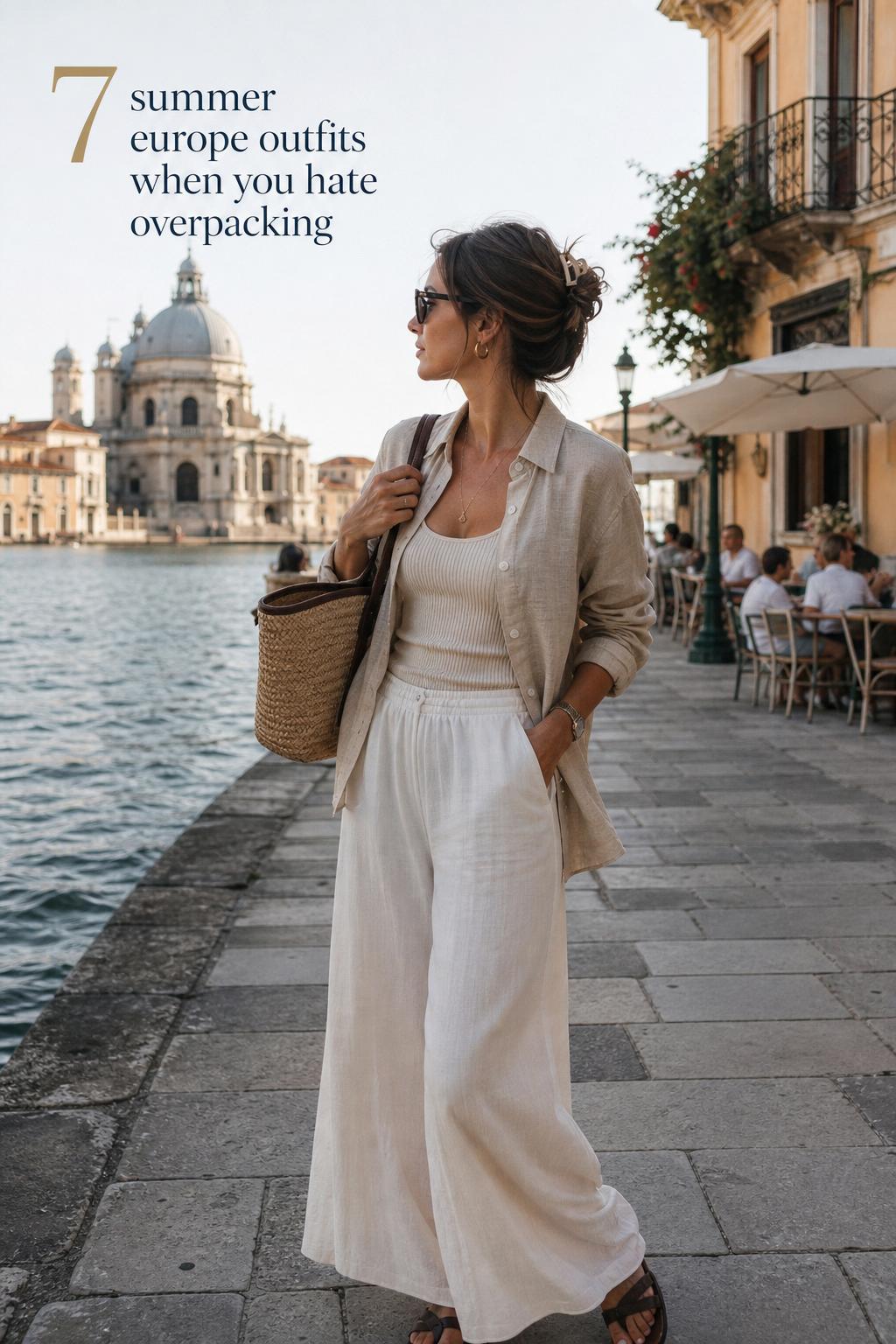
    Stylish summer Europe outfits on a traveler walking a sunlit European street in a light linen dress and sandals
    A traveler strolls down a sunlit European street in breezy linen layers and effortless summer style.

    The essential 7-piece capsule for two weeks of summer travel

    If you want a practical framework, a 7-piece capsule is one of the clearest ways to simplify packing. Accessories and footwear can vary, but the clothing core should feel disciplined. This kind of structure works particularly well for travelers moving between cities or combining coast and urban stops.

    • A linen shirt
    • A midi or maxi dress
    • Linen pants or lightweight trousers
    • A breathable top or tee
    • A matching set or skirt option
    • A lightweight cardigan or jacket
    • A second dress or easy evening piece

    What makes this capsule effective is not the exact number alone, but how the pieces interact. The linen shirt can work open over a dress, tucked into trousers, or tied at the waist with a skirt. The maxi dress functions as a complete look on hot days. Lightweight trousers ground the wardrobe for cooler mornings, flights, or museums. A matching set offers visual polish with almost no styling effort, while a cardigan or light jacket handles Central Europe layering needs and late-night temperature drops.

    This approach reflects what fashion editors and travel-focused wardrobes consistently prioritize: a small set of elevated basics with strong interchangeability. It also leaves room for accessories that shift the tone without taking over your suitcase.

    Climate matters: how to adapt your outfits across Europe

    One reason travelers struggle is that they plan for Europe as a single destination instead of a set of regional climates. A wardrobe that feels perfect for the Amalfi Coast may not feel complete in Northern Europe. Small adjustments make a major difference.

    Southern Europe: light, breathable, and sun-aware

    In Rome, Barcelona, or Mediterranean destinations, the formula is straightforward: breathable fabrics, open silhouettes, and accessories that support sun exposure. Linen dresses, cotton tops, sandals, basket bags or woven totes, sunglasses, and a sun hat all make sense here. Floral dresses and linen sets also sit naturally in this setting because they feel relaxed without losing charm.

    The main mistake in hotter destinations is adding too much structure. Heavy layering works against the climate. Instead, create polish through color balance, a neat crossbody bag, or subtle jewelry.

    Northern Europe: easy layers and slightly more coverage

    For Nordic or cooler summer regions, keep the same clean wardrobe base but shift toward light layering. A linen shirt over a breathable tee, lightweight trousers, and walking shoes often feel more useful than a bare-shouldered look. A cardigan is not just practical here; it gives outfits a more composed line, particularly when worn over dresses in the evening.

    This is also where fabric mix matters. Linen remains helpful, but lightweight blends and slightly more substantial pieces create a wardrobe that feels intentional rather than underprepared.

    Central Europe: dress with rain and transitions in mind

    Central Europe often calls for the most flexibility. A simple summer dress still earns its place, but it should work with both sandals and sneakers or espadrilles. A denim jacket or lightweight outer layer becomes more important here because weather shifts can affect the entire feel of the day. You are not building a different wardrobe, only a more adaptive one.

    Stylish woman walking through a sunlit European street in linen and sandals, showcasing summer europe outfits for travel
    A stylish traveler strolls through a sunlit European street in breathable neutrals, capturing effortless summer elegance.

    Outfit solution: the dress-and-sandals formula that actually travels well

    The dress and sandals combination appears so often in European summer style because it solves several problems at once. It is quick, breathable, elegant, and easy to adapt. A midi or maxi dress creates an instant silhouette without requiring complicated layering, while sandals keep the look light enough for heat and movement.

    To make this formula practical, focus on shape and finish. A sundress or simple linen dress in a neutral tone feels more versatile than something overly specific. Add a woven tote for daytime, or switch to a crossbody bag if you need more security while moving around a city. For evening, introduce a lightweight cardigan or denim jacket rather than changing the entire outfit.

    This kind of combination works especially well in Paris, Milan, Rome, and coastal destinations because it aligns with the broader appeal of European street style: easy lines, unfussy accessories, and confidence in restraint. It also reflects the kind of styling seen across editorial and influencer-led summer dressing, where dresses and sandals anchor the entire wardrobe.

    Outfit solution: linen shirt with wide-leg pants for polished city days

    When the itinerary includes museums, trains, long lunches, or urban walking, a linen shirt with wide-leg pants is one of the most useful outfit formulas available. It looks composed without feeling formal, and it gives more coverage than a dress on days when heat, sun, or movement make that preferable.

    The balance is important. If the shirt is relaxed, the trousers should fall cleanly rather than pool too heavily. Keep the palette soft and coordinated: neutrals, quiet contrast, or one controlled accent. Sandals work for lighter city days, while sneakers can make the look more grounded for long walks. A tote bag reinforces the travel mood; a crossbody sharpens it.

    This formula also performs well across regions. In hotter climates, wear the shirt slightly open with sleeves rolled. In cooler cities, layer the cardigan or jacket over it. The result is a modern silhouette with clear structure and relaxed texture, exactly the kind of combination that feels current without chasing trends.

    Outfit solution: a matching set when you want ease without looking repetitive

    Matching sets are useful for travelers who want cohesion with minimal thought. They appear in Europe summer styling because they deliver a finished impression quickly and can be separated later into other looks. A linen set, for example, can read polished in Milan, effortless in Barcelona, and quietly elevated on a city-to-coast itinerary.

    The reason this works is visual continuity. A coordinated top and bottom create a long, clean line, which feels refined even in lightweight fabric. Then each piece can re-enter the wardrobe independently: the top with trousers, the bottom with a breathable tee, the full set with sandals by day and slightly more dressed accessories by night.

    If your suitcase space is limited, a matching set can do the work of several disconnected items. It is also a useful answer for readers who want easy summer outfits but dislike feeling too casual.

    Outfit solution: the city-to-coast skirt or floral dress look

    For trips that move from a cultural city stop to a coastal setting, softer pieces become especially helpful. A floral dress or a skirt with a breathable top bridges these environments well. In a city, the look can be styled with a crossbody bag and clean sandals. Near the coast, the same outfit relaxes naturally with a basket bag, sunglasses, and a looser shirt layer.

    This is where texture and print need restraint. A floral dress already carries visual energy, so accessories should stay controlled. If you choose a skirt instead, pair it with a plain top and let the silhouette do the work. The goal is not to look themed for vacation, but quietly adjusted to the setting.

    Travel wardrobes often become stronger when one or two romantic elements are balanced by more grounded basics. That contrast keeps the clothing expressive without becoming impractical.

    Outfit solution: the evening layer that saves your entire packing plan

    Even in summer, evenings can expose the weakness of a wardrobe built only for midday heat. This is where the lightweight jacket, cardigan, or denim layer becomes essential. It allows your daytime dresses and tops to continue working after sunset, especially in Northern Europe, Central Europe, or on breezier coastal nights.

    A dress with sandals can quickly feel more complete with a cardigan draped over the shoulders or a denim jacket added for structure. Trousers and a tee become dinner-appropriate with a more tailored outer layer and a cleaner bag. The point is not dramatic transformation. It is controlled adjustment.

    Many travelers pack separate evening outfits and wear them far less than expected. In practice, layering is often the smarter solution. It preserves suitcase space and produces outfits that still feel aligned with the rest of the wardrobe.

    Accessories that elevate without creating clutter

    Accessories should act as multipliers, not distractions. In summer Europe outfits, a few focused additions can shift the entire wardrobe while keeping packing disciplined.

    • Sunglasses for both function and finish
    • A sun hat for strong daylight and coastal itineraries
    • A woven tote or basket bag for daytime ease
    • A crossbody bag for city movement and security
    • A scarf for light layering and subtle texture

    The value of these pieces lies in versatility. A scarf can soften a simple tee-and-trouser look, add coverage in transit, or bring visual interest to a neutral dress. A woven tote leans more relaxed and works well in Southern Europe; a crossbody bag often feels better for long sightseeing days. Sunglasses and hats are not just aesthetic additions. They support comfort and help the wardrobe feel complete in strong summer light.

    Practical footwear choices for long days

    Footwear is where many otherwise beautiful travel wardrobes break down. Sandals are central because they appear in almost every high-performing summer formula, but they should not be your only option. The more realistic wardrobe includes sandals for easy days, espadrilles when you want a slightly more finished feel, and sneakers or dedicated walking shoes when the itinerary becomes more demanding.

    Arch support and overall comfort matter more than people expect. City travel in Europe tends to involve sustained walking, uneven streets, and longer wear hours than a typical day at home. If a sandal only works for a short lunch, it is not a strong packing choice. The best shoes are the ones that preserve the elegance of the outfit without limiting the day itself.

    Tips for making footwear feel more refined

    Choose shoes that support the line of the outfit. Delicate sandals suit fluid dresses. Slightly more grounded sandals or sneakers work better with wide-leg trousers and linen shirts. If you are packing only a few pairs, let one pair serve the polished city role and another cover longer walking days. That division tends to be more useful than trying to make every shoe do everything.

    Seasonal events, dinners, and nightlife without overpacking

    European summer travel often includes open-air concerts, casual evening dinners, festivals, and last-minute plans. These occasions can tempt people into packing highly specific outfits that rarely justify the space. A better strategy is to identify one or two pieces that become event-ready through styling.

    A slip-like midi dress, a clean maxi dress, or a matching set can all work for evening with minor adjustments. Add a more intentional bag, refined sandals or espadrilles, and a light layer if needed. The outfit should still feel like part of your daytime wardrobe, only slightly sharpened. That continuity is what keeps travel style polished rather than costume-like.

    If your trip includes nightlife in cities such as Milan or Barcelona, focus on silhouette over excess. A tailored structure contrasted with relaxed textures usually feels more modern than heavy embellishment. Clean lines, good proportions, and breathable fabric remain the priority.

    Where trend cues fit into a timeless travel wardrobe

    Trend influence is visible in much of the current conversation around European summer style, from editor-approved shopping pages to brand-led takes from Nordstrom, Ally Fashion, or designer-adjacent references such as Miu Miu. But the most reliable way to use trend cues is selectively. Let them inform mood, not dictate the entire suitcase.

    If woven bags, floral dresses, or matching sets are resonating this season, incorporate one version that genuinely suits your wardrobe. If contemporary street-style references from Paris or Milan inspire you, focus on the cleaner underlying principles: neutrals, balance, and confidence in simple pieces. Great travel style comes from thoughtful composition, not from packing every trend that appears in a shopping editorial.

    Common packing and styling mistakes that make outfits harder to wear

    Most summer travel wardrobe problems come from understandable decisions that do not hold up in practice.

    • Packing too many single-purpose items that do not mix well
    • Relying only on sandals and ignoring serious walking needs
    • Choosing heavy fabrics in pursuit of polish
    • Skipping a light evening layer
    • Overusing statement pieces that limit repeat wear

    These mistakes usually happen because travelers imagine separate wardrobes for each city, event, or mood. In reality, a more coherent capsule produces better outfits. Repetition becomes elegant when the pieces are well chosen. A linen shirt worn three ways is more valuable than three tops that each work once. The same principle applies to dresses, bags, and shoes.

    A calmer way to plan your summer Europe outfits

    The most effective planning method is to think in activities and climates rather than in isolated outfits. Build around sightseeing days, travel days, beach or coast moments, evenings out, and one adaptable layer for cooler conditions. Once those needs are covered, the wardrobe starts to organize itself.

    A traveler heading from Paris to Rome to the Amalfi Coast, for example, does not need three separate fashion identities. She needs a coordinated capsule of dresses, trousers, breathable tops, one strong layer, reliable footwear, and a few accessories that shift the mood. A family moving from Nordic summer stops to Southern Europe will benefit from the same principle, simply with more attention to layers and walking shoes at the start of the trip.

    That is the real elegance of summer travel dressing. It is not about excess. It is about precision, ease, and a wardrobe that respects both the trip and the person wearing it.

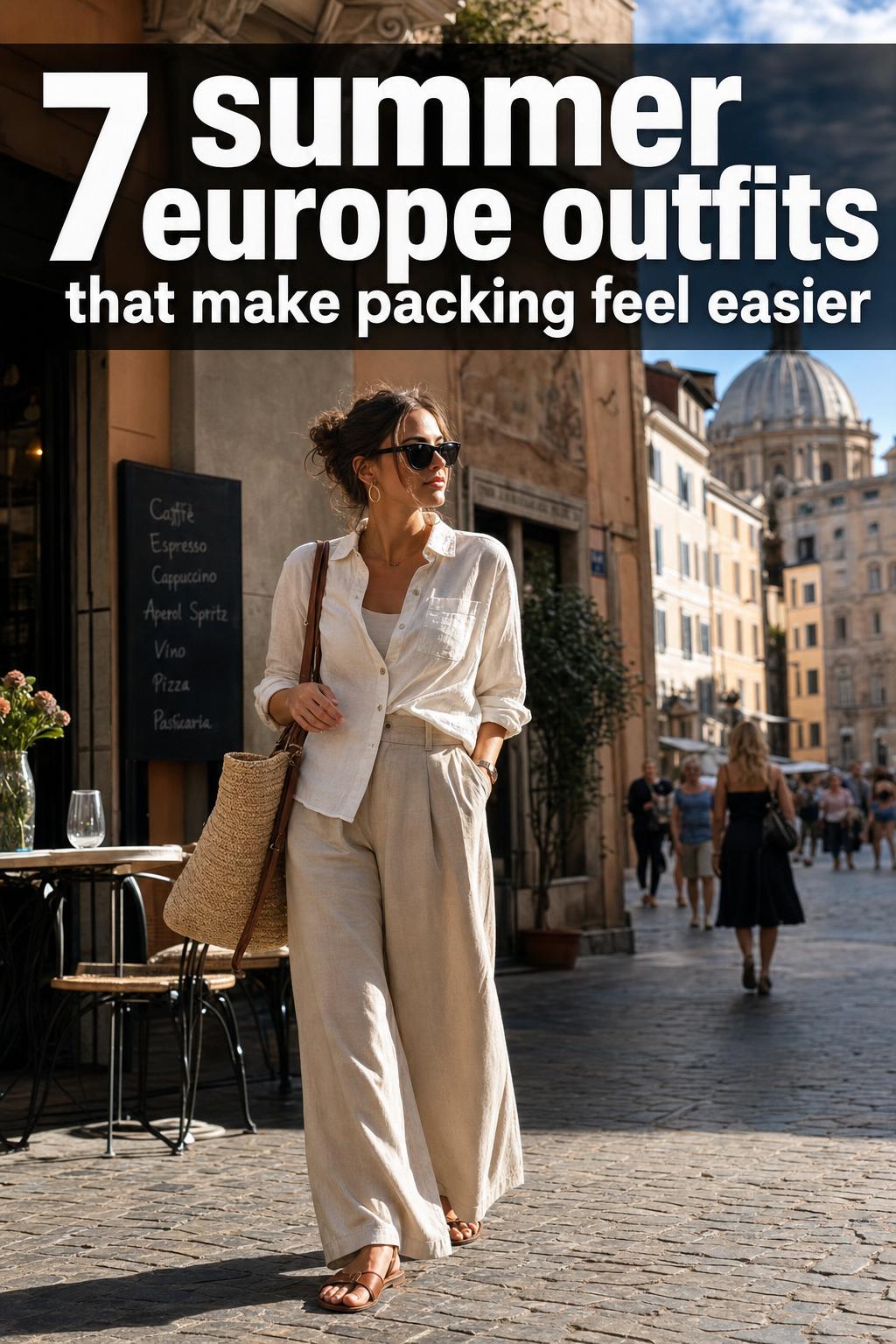
    Summer Europe outfits editorial photo of a stylish woman walking a sunlit Roman side street in linen shirt and taupe trousers
    A stylish traveler steps through a softly sunlit Roman side street in an effortless linen-and-taupe capsule look.

    FAQ

    What are the best summer Europe outfits for travel?

    The best options are versatile combinations built from breathable fabrics and simple silhouettes, such as a midi or maxi dress with sandals, a linen shirt with wide-leg pants, or a matching set that can be separated into multiple looks. The strongest travel outfits work across walking days, meals, and evening plans without requiring a full change.

    How many pieces do I need for a Europe summer capsule wardrobe?

    A 7-piece clothing capsule is a practical starting point for two weeks if the items coordinate well. A linen shirt, one or two dresses, lightweight trousers, a breathable top, a matching set or skirt option, and a cardigan or light jacket can create a broad range of outfits when paired with a few strategic accessories and footwear choices.

    Are sandals enough for a summer trip to Europe?

    Not usually. Sandals are essential for many summer Europe outfits, but most travelers also benefit from espadrilles, sneakers, or walking shoes for longer city days. Europe travel often involves more walking than expected, so comfort and support should be built into the wardrobe from the beginning.

    Which fabrics work best for European summer outfits?

    Linen is one of the most useful fabrics because it is breathable and visually suited to warm-weather travel. Cotton, viscose, and other lightweight blends are also helpful, especially when you want softness, airflow, and easier layering. The best fabric choice depends on climate, but breathable materials consistently make outfits more comfortable and wearable.

    How should I dress differently for Northern Europe versus Southern Europe in summer?

    Southern Europe usually calls for lighter, more open dressing with linen dresses, sandals, woven bags, and sun-focused accessories. Northern Europe often benefits from the same wardrobe base with more layering, such as lightweight trousers, a cardigan, or a linen shirt worn over a tee. Central Europe typically sits between the two and rewards adaptability.

    What accessories are most useful without overpacking?

    Sunglasses, a sun hat, a woven tote, a crossbody bag, and a scarf are among the most effective accessories because they improve both function and styling range. These pieces can shift the mood of simple outfits, support comfort in strong summer light, and help a small capsule feel more complete.

    Can I wear floral dresses in Europe without looking too dressed up?

    Yes, provided the styling stays restrained. A floral dress works well for city-to-coast travel when paired with simple sandals, a clean bag, and minimal extras. Let the print carry the visual interest and keep the rest of the outfit calm so the overall look feels refined rather than overworked.

    How do I make daytime outfits work for evening in Europe?

    The easiest method is layering and accessory adjustment rather than packing separate evening looks. Add a lightweight cardigan, denim jacket, or other light outer layer to a dress or trouser outfit, and switch to a more intentional bag or slightly more polished footwear. This keeps the wardrobe compact while still feeling appropriate for dinners or nightlife.

    What style approach feels most authentically European in summer?

    The most convincing approach is not copying a single city but focusing on principles associated with European street style: breathable fabrics, clean silhouettes, restrained accessories, and thoughtful proportion. Whether you are inspired by Paris, Milan, Copenhagen, or the Amalfi Coast, the common thread is ease combined with polish.

  • Summer Festival Outfits That Feel Current

    Summer Festival Outfits That Feel Current

    By the time festival season reaches its hottest stretch, the question is rarely whether you need inspiration. It is whether your summer festival outfits should lean boho and expressive, sleek and minimal, or somewhere in the more practical middle ground that real wardrobes usually occupy. The most compelling festival style sits at that intersection: visual enough for the mood of an open-air event, functional enough for heat, walking, and long hours on your feet.

    That is why certain aesthetics keep appearing together. Crochet, fringe, mesh, white shirts, dresses, sandals, Bermuda shorts, cargo details, satin, linen, and coordinated sets all belong to the same conversation, yet they communicate very different fashion instincts. Some outfits are built around texture and movement, others around crisp lines and day-to-night versatility. Readers often group them under one broad category, but the styling logic behind each approach is distinct.

    summer festival outfits editorial photo of a stylish woman walking a dusty music festival path in warm late-afternoon sun
    A stylish woman strolls through a sun-warmed festival path, balancing effortless comfort with elevated summer style.

    This comparison breaks down the most relevant style directions shaping summer festival outfits right now: boho-textural festival dressing, clean minimal tailoring, and the utility-led practical approach that has become increasingly important for outdoor concerts and large-scale summer events from Outside Lands to Lollapalooza and Essence Festival in New Orleans. The goal is not simply to list what to wear, but to explain how these aesthetics differ, where they overlap, and how to choose the one that works for your climate, venue, and personal style.

    The three festival aesthetics worth understanding

    Festival fashion tends to look crowded online because many pieces belong to more than one aesthetic. A crochet dress can feel bohemian, body-conscious, or polished depending on cut and accessories. A white shirt can read tailored and refined with Bermuda shorts, or easy and boho with a maxi skirt and flat sandals. Before comparing them directly, it helps to define the three strongest style directions that recur across modern festival dressing.

    Style overview: boho-textural festival dressing

    This is the most recognizable festival look and the one most closely linked to crochet, fringe, mesh, sheer layers, maxi dresses, sunset tones, and expressive accessories. Its defining characteristic is movement. Fabrics are chosen not only for appearance but for how they shift while walking, dancing, or standing in open air. Silhouettes are often soft rather than strict: a flowing maxi, a relaxed dress, a co-ord with texture, or a crochet piece with visible openness in the weave.

    The palette can move from warm neutrals to florals, holographic details, and brighter seasonal color. Even when the garments are body-conscious, the overall mood is less sharp than sensual and atmospheric. This is the aesthetic most associated with crochet-inspired textures, fringe dresses, mesh overlays, and the broader boho chic festival outfits category.

    Style overview: clean minimal festival tailoring

    This approach is often overlooked in festival conversations because it appears simpler at first glance, yet it is one of the most modern directions. Think white shirts, coordinated sets, silk or satin contrasts, linen separates, dresses paired with streamlined sandals, and a more edited color story. The defining quality here is clarity. Instead of relying on overt embellishment, the look is built through proportion, fabric balance, and restraint.

    Typical silhouettes include a crisp shirt with shorts, a sleek midi dress with clean sandals, or a co-ord set that moves easily from daytime to evening. The palette tends toward white, black, beige, soft neutrals, and occasional statement pieces. The mood is polished, travel-friendly, and quietly elegant rather than overtly theatrical.

    Style overview: utility-led practical festival style

    The third aesthetic grows out of reality: heat, crowds, walking, changing terrain, and the need for pieces that can endure a full day. This style borrows from cargo details, denim shorts, shirts, pockets, relaxed fits, walkable footwear, and hands-free bags. It does not reject fashion; rather, it prioritizes function as part of the visual language.

    Its silhouettes are grounded and mobile. A utility short, a lightweight top, a romper, or a jumpsuit can all belong here, especially when paired with supportive sandals or sneakers. The palette is often neutral or sun-faded, though practical festival style can absorb trend textures like crochet or mesh in smaller doses. It is especially relevant for long festival days, city events, and climates where humidity and heat shape every wardrobe decision.

    Summer festival outfits inspiration: stylish woman walking at golden hour music festival with crossbody bag and text overlay
    A candid golden-hour moment captures an easy, comfort-first festival look with editorial warmth and lived-in summer textures.

    Where these styles diverge most clearly

    The easiest way to understand the difference between these aesthetics is to stop thinking in terms of single pieces and start thinking in terms of composition. A dress is never just a dress at a festival. Its length, fabric, openness, footwear pairing, and accessory story determine which style language it belongs to.

    Silhouette and structure

    Boho-textural outfits favor movement and fluidity. Maxi dresses, airy layers, and fringe produce a softer outline, even when the garment itself is fitted. Clean minimal looks are more controlled. The line is sharper, with a deliberate balance between fitted and relaxed elements: a loose linen shirt with neat shorts, or a slim dress with pared-back sandals. Utility-led dressing sits between them, but with more pragmatic volume. Cargo shorts, rompers, and relaxed shirts are chosen for mobility rather than drama.

    Color and surface interest

    Boho festival fashion often depends on texture to create visual depth: crochet openings, mesh, fringe, florals, shimmer, or even holographic accents. Minimal tailoring creates interest through contrast instead, such as linen against satin or a white shirt against darker shorts. Utility style usually reduces decoration and focuses on material and function, using pockets, seams, and practical fabric choices as part of the design story.

    Level of polish

    All three approaches can look considered, but they express polish differently. Boho style appears styled through texture layering and mood. Minimal festival dressing appears polished through editing and proportion. Utility style appears polished when practical pieces are intentional rather than accidental, with clean styling and a restrained accessory approach. This distinction matters because many summer festival outfits fail not from lack of trend awareness, but from mixed signals. A heavily textured dress with overly rugged accessories can feel visually confused. A sleek satin piece with no regard for terrain can feel disconnected from the setting.

    Wardrobe pieces each style returns to

    • Boho-textural style returns to crochet pieces, fringe dresses, mesh layers, maxi dresses, florals, and expressive accessories.
    • Clean minimal style returns to white shirts, linen separates, silk or satin accents, co-ord sets, dresses with simple sandals, and refined statement pieces.
    • Utility-led style returns to cargo elements, denim shorts, shirts, jumpsuits, rompers, supportive footwear, and practical bags.

    The fabric conversation: texture versus performance

    One of the most useful ways to compare festival aesthetics is through fabric. Summer festival outfits are shaped as much by material behavior as by silhouette. Heat, movement, and long wear expose the difference between a look that photographs well for a few minutes and one that actually works through an entire day.

    Linen, cotton, satin, crochet, and mesh in practice

    Linen and cotton sit closest to the minimal and practical ends of the spectrum because they align with breathability and ease. A linen shirt or cotton dress naturally supports a cleaner silhouette while remaining realistic for daytime heat. Satin and silk-inspired textures introduce elevation, but they work best when the rest of the outfit stays simple. Their role in festival dressing is usually to sharpen a look, not to carry an overly complicated outfit.

    Crochet and mesh belong most naturally to the boho-textural family, yet they can shift tone depending on styling. A crochet top with cargo shorts becomes more grounded and practical. A mesh layer over a simple dress feels more fashion-driven. What matters is not the fabric alone, but how open textures are balanced with coverage, proportion, and footwear.

    Why fit changes the effect of the same fabric

    A loose crochet maxi reads romantic and free-moving. A fitted crochet dress feels more body-conscious and stage-ready. A crisp white shirt worn oversized can lean effortless and slightly bohemian; worn neatly with Bermuda shorts, it becomes clean and tailored. This is why style comparison matters more than trend naming. The same material can move across aesthetics depending on cut, shape, and what sits beside it.

    Tip: choose one expressive texture at a time

    At festivals, texture is often more effective than excess. If you are wearing fringe, keep the rest of the outfit streamlined. If your outfit centers on mesh, let footwear and bag choices stay practical. If satin is the statement, pair it with simpler separates. The result is more refined, more wearable, and easier to sustain over a full day.

    Summer festival outfits on stylish friends in a sunny outdoor music festival setting
    Stylish friends showcase effortless summer festival outfits under warm sunshine at an outdoor music event.

    How these styles look in real outfits

    The visual difference between aesthetics often becomes clearest in everyday festival dressing, where weather, venue, and movement force styling decisions. Looking at outfit logic rather than isolated pieces makes it easier to identify what each style is trying to achieve.

    Dress-and-sandal outfits: romantic versus refined

    A boho interpretation of the dress-and-sandal formula might involve a crochet or fringe-accented dress, warm-toned accessories, and sandals that feel relaxed rather than polished. The outfit is meant to move and catch light. A minimal interpretation of the same idea would focus on a cleaner dress silhouette, perhaps midi rather than highly embellished, with pared-back sandals and fewer accessories. The styling message shifts from expressive ease to elegant restraint.

    This is why dress and sandal outfits remain so versatile all summer long. They can belong to different aesthetics without changing the basic formula. The difference lies in texture, line, and editing.

    White shirt outfits: crisp tailoring versus undone festival ease

    A white shirt with Bermuda shorts is one of the clearest examples of clean festival tailoring. It feels modern, especially when the shirt has structure and the shorts carry a longer line. The same white shirt can become softer and more boho when tied over a maxi skirt or layered with crochet. If paired with utility shorts or a hands-free bag, it starts moving toward the practical end of the spectrum. One item, three style languages.

    Shorts and shirts: platform-ready versus venue-ready

    Shirts and shorts often separate trend dressing from true event dressing. A more fashion-forward interpretation may involve proportion play, a statement piece, and deliberate contrast. A venue-ready interpretation simplifies the silhouette, prioritizes comfort, and brings in supportive sandals or sneakers. Poshmark-style affordability and ASOS-style coordinated dressing both sit comfortably here, but they express different intentions: one is more trend-led and buyable, the other more composition-focused.

    Body-conscious silhouettes versus relaxed lines

    Meshki’s body-conscious direction and the softer lines seen in more classic summer dressing illustrate another important divide. Fitted silhouettes can look striking, especially in fringe or crochet, but they ask more from the wearer in heat and during long movement-heavy days. Relaxed lines, by contrast, often look quieter at first, yet they perform better over hours of walking, sitting, and dancing. Neither is inherently better. The question is whether the event calls for visual impact, practical endurance, or a measured blend of both.

    Footwear reveals your style philosophy fastest

    If there is one category that instantly clarifies the difference between festival aesthetics, it is footwear. Sandals, sneakers, and boots are never just accessories at an outdoor event. They set the tone of the entire outfit and determine whether the look can survive grass, dirt, pavement, and full-day wear.

    Sandals in boho and minimal styling

    Sandals appear across almost every major summer style guide because they work visually and practically in heat. In boho dressing, sandals usually support the relaxed spirit of the outfit. In minimal dressing, sandals become cleaner and more architectural, acting as a finishing line rather than a casual afterthought. That subtle difference changes the whole balance of a dress, co-ord, or shirt-and-short combination.

    Sneakers and boots in practical festival wardrobes

    Utility-led dressing is more open to sneakers and sturdier options because the style already values endurance and movement. This makes particular sense at large festivals where walking is constant and terrain is unpredictable. The practical advantage is obvious, but there is also a visual one: grounded shoes can prevent shorts, rompers, or light dresses from feeling overly delicate or unfinished.

    Tip: let terrain decide as much as taste

    Grass, dust, pavement, and humidity all shape how footwear performs. A sandal that works beautifully for a polished daytime city event may not be the best choice for a field-based venue. The strongest festival wardrobes do not treat comfort and aesthetics as opposites. They use the venue itself as part of the styling brief.

    Summer festival outfits: stylish woman walking at golden hour in a dusty open-air music venue near food stalls
    A stylish woman strides through a golden-hour festival path, balancing comfort and polish with ease.

    Accessories and balance: how the outfit is completed

    Accessories are where summer festival outfits often tip into excess or, conversely, become too plain. The right finishing pieces should reinforce the style direction already established by the garments.

    Boho-textural looks generally welcome more visible accessories: hats, sunglasses, belts, and small bags that contribute to mood and movement. Minimal looks ask for more restraint. One pair of sunglasses, a simple bag, and a clean sandal may be enough because the outfit’s power comes from silhouette and fabric contrast. Utility-led outfits often benefit from the most intentional editing of all. A practical bag, secure sunglasses, and a sun-conscious hat can look sharp when the rest of the look is uncomplicated.

    An overlooked point is that accessories also determine how “festival” an outfit reads. A linen dress can feel almost everyday until it is paired with the right sandals and bag. A white shirt and shorts can feel too ordinary until sunglasses and proportion give it direction. Accessories do not need to be louder; they need to be coherent.

    Location changes everything: from California light to New Orleans humidity

    No comparison of festival dressing is complete without location. A style that feels perfectly judged for California can feel misplaced in the humidity of New Orleans or the shifting conditions of Chicago. Summer festival outfits are never created in a vacuum; they are responses to heat, exposure, movement, and regional atmosphere.

    California coast and Coachella-like climates

    In drier, sun-heavy settings associated with California festivals and Coachella-adjacent dressing, boho-textural and minimal styles both thrive. Crochet, white shirts, dresses, and coordinated looks all make visual sense in strong light. The main difference is mood: boho looks more atmospheric and expressive, while minimal tailoring feels cleaner and more deliberate. Layering for evening still matters, but daytime styling can remain relatively open and light.

    Austin, Chicago, New York, and the practical middle ground

    In cities where the day may involve more walking, more pavement, and less purely scenic dressing, utility-led style becomes especially persuasive. Shirts, shorts, jumpsuits, and practical bags feel grounded. This does not eliminate style; it simply shifts emphasis toward pieces that can move across travel, festival hours, and the journey home.

    Essence Festival and New Orleans heat

    Essence Festival offers one of the clearest examples of why practical glamour matters. In New Orleans, walking comfort and heat are central, so the most successful outfits do not ignore reality. Dresses, tops, and accessories can still feel elevated, and brands such as Rendoll, Bottega Veneta, and Simon Miller may inform the styling direction, but the wardrobe needs walkability. This is where minimal refinement and practical dressing often meet most successfully.

    Tip: style for the event schedule, not only the photo moment

    A look that begins outdoors in full sun and ends after dark needs more range than a short appearance-based outfit. Day-to-night transitions matter at festivals more than they do in many other summer settings. A linen layer, a balanced sandal, and a compact bag often do more for the full experience than an outfit built only for impact.

    Comparison through real styling scenarios

    A daytime open-air concert

    The boho interpretation might center on a crochet top or a flowing maxi dress with sandals and visible texture, creating a soft, movement-driven silhouette. The minimal interpretation would likely use a cleaner dress or a co-ord set with streamlined accessories, allowing fabric and line to carry the look. The utility version would turn to shorts, a lightweight shirt, and footwear designed for hours of standing. All three are valid; they simply prioritize atmosphere, polish, or endurance in different measure.

    A multi-day festival weekend

    Over several days, a capsule approach becomes more useful than isolated statement looks. Boho dressing may rotate crochet, fringe, and a maxi silhouette across the weekend. Minimal dressing may rely on a dress, a white shirt, Bermuda shorts, and sandals that can be reworked in several combinations. Utility dressing often performs best here because it naturally supports repetition, layering, and comfort. In practice, many of the best festival wardrobes blend these systems rather than choosing one exclusively.

    An evening set with a cooler finish

    Minimal tailoring tends to adapt most smoothly into evening because satin, silk-inspired textures, and cleaner silhouettes already carry a subtle formality. Boho style can be beautiful after dark, particularly with shimmer, mesh, or fringe, but it often needs thoughtful editing to avoid feeling overworked. Utility style can move into evening as well, though it usually depends on cleaner accessories and a stronger sense of proportion to feel intentional after sunset.

    The case for a festival capsule wardrobe

    If there is one practical lesson hidden inside all these aesthetics, it is that festival dressing works best when the wardrobe has internal logic. A small capsule of compatible pieces creates more sophistication than a collection of disconnected trend items.

    • A dress that works for daytime and can shift into evening
    • A top that pairs with shorts or a skirt
    • A bottom such as denim shorts, cargo shorts, or Bermuda shorts
    • An outer layer for later hours
    • Versatile footwear, usually sandals or sneakers depending on venue
    • A small crossbody or similarly compact bag
    • Sunglasses and a hat for sun management

    This kind of edit supports all three style approaches. The difference lies in the pieces you select. A boho capsule may emphasize crochet and a maxi silhouette. A minimal capsule may depend on linen, co-ords, and a white shirt. A practical capsule may place more emphasis on pockets, movement, and all-day footwear. The philosophy remains the same: thoughtful composition over excess.

    What people often get wrong with summer festival outfits

    One common mistake is assuming festival style must always be loud to feel relevant. In reality, some of the strongest outfits are the simplest, particularly when line and texture are well judged. Another frequent error is treating trend pieces as complete styling solutions. Crochet, mesh, fringe, and shimmer can all be compelling, but they need grounding. Without that, the outfit can feel costume-like rather than modern.

    A second mistake is overlooking the relationship between climate and silhouette. Body-conscious dressing can be striking, but not every venue rewards it equally. Likewise, relaxed and breathable fabrics may seem less dramatic at first, yet they often look better after several hours because they still feel effortless rather than strained. The most convincing wardrobes respect both image and experience.

    A third mistake is failing to align accessories with the style direction. A practical bag can sharpen a utility look, but may interrupt a more refined satin outfit if it is too rugged. Delicate sandals can elevate a dress, but they may undermine a more grounded shorts-and-shirt combination if the venue is rough underfoot. Balance is what separates a styled outfit from a random one.

    When to choose each style

    The right festival aesthetic depends less on trend cycles than on setting, energy, and how you like to dress under real conditions.

    Choose boho-textural style when

    • You want a visually expressive outfit with movement and personality.
    • The event setting suits crochet, fringe, mesh, florals, or softer silhouettes.
    • Your priority is atmosphere and texture, especially in dry, sunlit festival environments.

    Choose clean minimal tailoring when

    • You prefer refined lines over overt trend signals.
    • You want a wardrobe that can move from daytime into evening with little adjustment.
    • You value dresses, white shirts, linen, co-ords, and sandals that feel polished but uncomplicated.

    Choose utility-led practical dressing when

    • The event involves extensive walking, long hours, or challenging terrain.
    • You want clothing that supports movement first without giving up style.
    • You are dressing for city festivals, humid conditions, or multi-day wear where repetition and comfort matter.

    For many readers, the smartest answer is not choosing only one. A white shirt from the minimal wardrobe, cargo-inspired shorts from the utility wardrobe, and a crochet layer from the boho wardrobe can form a far more interesting outfit than a strict commitment to a single style category. The point is to understand the language of each approach so you can combine them with intent.

    A final editorial note on mixing aesthetics

    The core distinction between these styles is not whether they use dresses, sandals, shorts, or statement pieces. It is the reason those pieces are chosen. Boho festival dressing seeks texture, mood, and movement. Minimal festival tailoring seeks line, restraint, and ease. Utility-led style seeks practicality integrated into the visual composition. Once you recognize that difference, identifying each look becomes much easier.

    The best summer festival outfits rarely look as though they were assembled from a single trend board. They look considered. A tailored silhouette can soften with crochet. A practical outfit can gain elegance through cleaner sandals. A flowing dress can become more modern with a structured bag and edited accessories. That is where festival dressing becomes genuinely stylish: not in copying one formula, but in understanding how textures, proportions, and function work together under summer light.

    Fashion-forward woman in golden-hour city festival scene wearing layered summer festival outfits with crochet, utility bag, and sandals
    A candid golden-hour editorial moment captures layered festival styling where comfort and polish meet in the city dusk.

    FAQ

    What are the best summer festival outfits for hot weather?

    The best options for heat usually combine breathable fabrics, easy movement, and simple styling. Dresses, linen separates, cotton pieces, coordinated sets, and shirt-and-short combinations tend to work well because they feel lighter over long hours. Sandals are a frequent choice, but the venue should guide the final decision.

    How do boho chic festival outfits differ from minimalist festival outfits?

    Boho chic festival outfits rely more on texture, movement, and expressive details such as crochet, fringe, mesh, and flowing silhouettes. Minimalist festival outfits are more restrained, often built around white shirts, linen, satin contrasts, clean dresses, and edited accessories. Both can feel stylish, but one is mood-driven and the other is line-driven.

    Are dresses and sandals still one of the easiest festival outfit ideas?

    Yes, because the formula is versatile and easy to adapt. A dress and sandals can look bohemian, polished, or practical depending on the silhouette, fabric, and accessories. It is one of the few combinations that can work across daytime events, travel-friendly dressing, and simple day-to-night transitions.

    What should I wear to a festival in New Orleans heat?

    For a setting like Essence Festival in New Orleans, practical glamour is usually the strongest approach. Lightweight dresses, easy tops, walkable footwear, and accessories that support comfort are more useful than overly complicated outfits. The goal is to keep the look elevated without ignoring the reality of heat and walking.

    Can I wear a white shirt to a summer festival?

    A white shirt is one of the most adaptable festival pieces. It can read crisp and tailored with Bermuda shorts, relaxed and easy with a skirt or denim shorts, or slightly boho when layered over crochet or a dress. Its strength is that it balances stronger textures without competing with them.

    What footwear works best for festivals: sandals, sneakers, or boots?

    All three can work, but the terrain matters. Sandals suit many heat-driven summer outfits and pair especially well with dresses and minimalist looks. Sneakers often make more sense for all-day walking and city festivals. Boots can anchor certain outfits visually, but they are most useful when the setting supports them rather than purely for style effect.

    How can I build a festival capsule wardrobe instead of packing random pieces?

    Start with a small group of mix-and-match items: one dress, one top, one bottom, one outer layer, versatile footwear, and a few accessories such as sunglasses and a compact bag. Then choose whether your capsule leans boho, minimal, or practical. The fewer disconnected statement pieces you bring, the easier it is to create balanced outfits across multiple days.

    Are crochet festival outfits still relevant?

    Yes, crochet remains one of the clearest visual signals in festival fashion. What changes is the styling. It can feel romantic and bohemian in a flowing silhouette, more modern when paired with clean accessories, or more grounded when combined with practical shorts or simple sandals. The key is to keep the rest of the outfit balanced.

    How do I make festival fashion look polished instead of overdone?

    Choose one visual focus and let the rest of the outfit support it. If you are wearing fringe, keep accessories simpler. If you choose a mesh or crochet piece, pair it with cleaner silhouettes. If you want satin or a statement item, reduce the number of competing textures. Polished festival dressing usually comes from editing, not adding more.

  • Chic White Pants Outfit for Work, Weekends, and Travel

    Chic White Pants Outfit for Work, Weekends, and Travel

    A strong white pants outfit has less to do with novelty than with precision. White trousers can look sharp and expensive, relaxed and summery, or quietly polished for everyday life, but only when silhouette, fabric, shoes, and proportion are working together. This is why the same pair of white pants can feel effortless on one day and slightly off on another. The difference is rarely dramatic. It is usually in the weight of the fabric, the line of the hem, the contrast of a belt, or the way a blazer adds structure to an otherwise soft look.

    Across fashion magazines, lookbooks, and retail styling pages, white pants keep returning as a foundation piece rather than a statement item. That distinction matters. They are not difficult because they are bold; they are difficult because they reveal every styling decision. A bright top feels brighter against white. A black belt reads more intentional. Linen looks airy and resort-like, while tailored cotton or crepe immediately shifts the mood toward office or evening. Once you understand those relationships, white pants become one of the most versatile pieces in a modern wardrobe.

    Editorial street style of a woman in tailored white trousers and blazer, showcasing a white pants outfit with belt detail
    A refined city-resort look pairs tailored white trousers with a neutral top, structured blazer, and sleek belt for effortless polish.

    The real appeal is their range. A woman building a capsule wardrobe, a man dressing for smart-casual weekends, someone planning summer travel, or someone trying to make fall outfits feel lighter can all use white pants differently. What follows is not a gallery of vague inspiration. It is a practical style breakdown: how to choose the right cut, which fabrics are easier to wear, how to pair tops and footwear, what a belt can do for the outfit, and how to make white pants work for office days, weekends, evenings, and seasonal transitions.

    Why white pants work when the outfit feels balanced

    White pants are visually clean, which means they amplify both the strengths and weaknesses of an outfit. If the top is too oversized without enough structure, the look can lose shape. If the shoes feel too heavy for a lightweight fabric, the outfit can seem disconnected. If the pants are beautifully tailored and paired with a structured blazer or a simple neutral shirt, the result often looks far more considered than the same outfit built around darker trousers.

    There is also a useful tension in white: it can support monochrome dressing, soft neutrals, or strong contrast. This explains why some of the most compelling styling ideas pair white trousers with cream knits and soft beige accessories, while others rely on a black belt, darker footwear, or a bright top for color-blocking. The pants act as a base. Everything else determines whether the final impression is minimalist, preppy, street-style influenced, or more polished in a Paris, Milan, or Copenhagen direction.

    For everyday wear, this practicality matters even more than aesthetics. A good white pants outfit should survive real movement, changing temperatures, work settings, and repeated styling. If a look only works in a static image, it is not especially useful. The best versions are the ones you can rewear with different shirts, jackets, shoes, and belts without feeling repetitive.

    Woman adjusting belt in a white pants outfit in a sunlit European-style suite, warm editorial lifestyle scene
    In soft morning light, she slips into a polished white pants outfit that moves easily from work to weekend plans.

    Start with silhouette: the cut decides almost everything

    Before choosing a top, decide what kind of white pants you actually want to build around. Silhouette shapes the entire outfit. It affects how formal the pants look, which shoes make sense, and how much structure the top needs. This is why wide-leg white pants feel different from slim or straight styles even when styled in the same color palette.

    Wide-leg white pants

    Wide-leg white pants are one of the most visually modern options, but they need balance. Their strength is movement and ease. In linen, they lean resort-ready and relaxed; in a more tailored fabric, they feel refined and architectural. They generally work best with tops that create some definition: a tucked shirt, a neat knit, a blouse with controlled volume, or a tailored blazer. Without that counterpoint, the silhouette can read oversized rather than intentional.

    For petites, the most useful adjustment is not avoiding wide-leg styles altogether but paying attention to proportion. A higher rise, a cleaner hem, and footwear that does not visually cut off the leg can help the shape feel elongated. For taller frames, wide-leg trousers are often especially elegant because they emphasize length. For curvier bodies, a fabric with a bit more structure can prevent the silhouette from collapsing around the hips.

    Straight-leg and cigarette styles

    Straight-leg and cigarette-style white trousers are usually the easiest entry point because they are highly adaptable. They work with sneakers, flats, and heels, and they move easily between casual and office settings. If you want a single pair that can work with a striped shirt one day and a blazer the next, this is often the most practical choice. The line is clean, the styling demands are lower, and the result is usually polished without trying too hard.

    These cuts are also useful for capsule wardrobes because they partner well with nearly every top category mentioned across style editorials: shirts, blouses, knitwear, jackets, and simple tees. If budget is a concern and you are buying just one pair, a straight-leg white trouser is often the most versatile investment.

    Slim and ankle-grazing shapes

    Slim white pants, including ankle-grazing variations, can look crisp and very functional, particularly with jackets and loafers or sleek flats. They are often easier to style in transitional weather because they sit neatly under outerwear and do not drag on wet ground. The caution is that a slimmer silhouette reveals fit issues more quickly, so fabric quality and opacity matter even more here.

    For someone who commutes, travels, or needs a reliable work option, this shape can be very practical. It pairs naturally with blazers, trench-style outerwear, and shirts tucked with a belt. The overall effect is less dramatic than wide-leg trousers but often more efficient in real life.

    Fabric changes the entire mood

    Many white pants styling problems are actually fabric problems. A cut that looks elegant in crepe may feel flimsy in a thin cotton. Linen that works beautifully on vacation may not give enough structure for a business-casual office. Because white reflects light, fabric weight, weave, and translucency are more visible than they would be in darker colors.

    Linen for summer and travel

    White linen pants are ideal when you want ease, breathability, and a relaxed silhouette. They fit naturally into summer wardrobes and resortwear-inspired dressing, and they work especially well with sandals, flats, soft shirts, and light layering. Windsor and similar brand-led style guidance often frames them as a summer staple for exactly this reason: they deliver comfort without losing visual polish.

    The trade-off is structure. Linen wrinkles, and that is part of its character, but it means the outfit should acknowledge that softness. A very rigid shoe or overly formal top can feel mismatched. If you want linen to look intentional rather than undone, pair it with pieces that share the same sense of ease: a clean tank, a light blouse, a cardigan, or an unstructured blazer.

    Cotton for everyday wear

    Cotton white pants are often the most useful everyday option because they sit between relaxed and polished. They can feel casual enough for sneakers and a shirt, but crisp enough for a more tailored outfit with a belt and structured jacket. For many readers, this is the safest place to start because cotton tends to be easier to repeat across different situations.

    If you want white pants for errands, weekend lunches, casual Fridays, or simple travel outfits, cotton is usually the most practical balance of comfort and versatility. Just be selective about thickness. In white, a slightly more substantial cotton often looks better and feels more secure than a very lightweight version.

    Crepe and tailored fabrics for refined dressing

    Crepe and other tailored fabrics give white trousers a cleaner drape and a more elevated finish. They are especially useful for office outfits, evening looks, and any situation where you want the pants to hold a stronger line. These fabrics generally pair well with blouses, blazers, refined knits, and heels or sleek flats. They also support the more expensive-looking aesthetic seen in fashion editorials, particularly when the styling is restrained.

    If your goal is a white pants outfit that reads polished rather than casual, this is where to invest. The cost often returns in versatility because tailored white pants can cover work, dinner, and event dressing with only small changes in accessories and layering.

    White pants outfit styled with a crisp blouse and neutral accessories in a bright modern setting
    A chic white pants outfit pairs clean tailoring with soft neutrals for an effortlessly polished look.

    The color logic that makes white pants easier to style

    Because white sits so cleanly in an outfit, color choices feel more pronounced around it. The easiest way to style white pants is to think in three directions: tonal neutrals, deliberate contrast, or one controlled pop of color. Most successful outfits stay within one of those lanes instead of trying to do all three at once.

    Soft neutrals and monochrome layers

    White with cream, beige, stone, or soft gray creates a refined palette that feels quiet but expensive. This kind of outfit relies on texture more than color, so the details become important. A knit over tailored trousers, a silk-like blouse with cotton pants, or a blazer over a soft top gives depth without breaking the mood. This is one of the easiest ways to make white pants feel elegant in daily life.

    Monochrome dressing also works well for capsule wardrobes because it increases compatibility. If most of your wardrobe already lives in neutral territory, white trousers slot in almost effortlessly. The look can lean Parisian in its simplicity or more Milan-informed when the tailoring is sharper and the accessories slightly bolder.

    Black, belts, and useful contrast

    One of the strongest styling ideas around white trousers is the use of a black belt. It creates a visual anchor, especially with higher-rise pants, and gives the outfit a finished line through the waist. Who What Wear and other style-focused pages have highlighted this contrast repeatedly because it turns a plain base into something sharper with minimal effort.

    This works particularly well in fall outfits, when the rest of the look may already include deeper tones or slightly weightier layers. A black belt can connect white trousers to darker shoes, a knit, or a tailored jacket. It is a small piece, but it often makes the entire outfit feel more intentional. If you tend to feel that white pants look unfinished on you, start here.

    Bright tops and color-blocking

    White pants also support bright tops extremely well because they do not compete with color. A vivid blouse or knit becomes the focal point, while the trousers keep the outfit grounded. This is one of the simplest ways to make white pants feel more expressive without adding too many accessories. SheWhatWear-style outfit formulas often use this approach alongside a statement belt for a high-contrast, editorial result.

    The practical rule is restraint elsewhere. If the top is doing the visual work, keep the bag, shoes, and jewelry relatively clean. That keeps the outfit modern rather than busy.

    The accessories that elevate white without overworking it

    Accessories matter more with white pants because they either sharpen the look or interrupt it. The goal is not to add more pieces. It is to choose the right finishing pieces.

    • A belt is often the first accessory worth adding, especially with tailored or high-rise trousers.
    • Shoes should support the weight of the fabric: lighter and cleaner for linen, more structured for tailored pants.
    • Bags work best when they echo the outfit’s direction, whether that is relaxed, office-ready, or evening-oriented.
    • Metallic accents such as gold or silver can add polish, but they are most effective when used sparingly.
    • Sunglasses, hats, and jewelry should complete the line of the outfit rather than compete with it.

    Belts deserve special attention because they appear across multiple styling approaches. A black belt creates contrast, while a belt in a soft neutral can keep the palette fluid. Width matters too. A slimmer belt often feels more refined with cigarette or straight-leg trousers, while a slightly more substantial belt can support wide-leg silhouettes and create a stronger waist definition.

    For footwear, think in terms of silhouette compatibility. Wide-leg white pants usually need shoes that do not get visually lost under the hem. Straight-leg and ankle styles are more flexible and can work with flats, sneakers, or heels. If comfort is a priority, especially for travel or long days, a clean sneaker or simple flat is often more useful than a dramatic shoe. White pants already bring clarity to the outfit; they do not need footwear that tries too hard.

    Tip: if you only buy one accessory, make it a belt

    A belt is the fastest way to make white pants look styled rather than merely worn. It defines the waist, breaks up a long line when needed, and helps connect top and shoe color choices. On a budget, this is usually a smarter purchase than chasing multiple trend pieces.

    Woman in a chic white pants outfit walking past a sunlit European café terrace, blazer and belt, editorial street style.
    A polished yet effortless white pants outfit pairs crisp tailored trousers with a light blazer in warm European daylight.

    How white pants adapt to real occasions

    The most useful white pants outfit is one that can shift according to setting. Instead of thinking in abstract style categories, it helps to anchor the look in actual situations: office days, weekends, evening plans, travel, and warm-weather dressing. White trousers are versatile precisely because they can move between these contexts with relatively few changes.

    For the office: tailored structure first

    Office-appropriate white pants work best when the fabric is substantial and the styling is controlled. A straight or cigarette silhouette in cotton or crepe, a tucked blouse or shirt, and a structured blazer creates a look that feels business-ready without becoming severe. Neutral tones are usually the safest route here, especially in U.S. workplace settings where dress codes can vary from business formal to more relaxed casual Fridays.

    The reason this formula works is that white softens the formality of tailoring while still looking polished. If your office leans conservative, keep contrast low and accessories restrained. If it is more flexible, a dark belt or more directional shoe can add personality without sacrificing professionalism.

    For weekends: ease with clean lines

    Weekend white pants should feel comfortable enough for movement and repeated wear. This is where cotton or linen shines. Pair them with a simple shirt, relaxed knit, or easy top, then finish with sneakers, flats, or uncomplicated sandals. The secret is to keep at least one element crisp. If the pants are soft and loose, choose a neater top. If the top is oversized, keep the pants more tailored.

    This balance gives the outfit shape without making it precious. It is also one of the easiest looks to recreate affordably because it relies on elevated basics rather than special pieces.

    For evening: contrast and texture

    White pants can work beautifully at night when the outfit gains definition through texture, color contrast, or a stronger accessory. Tailored trousers with a darker top, a belt, and refined shoes often look more modern than the expected dark trousers. A sleek blouse, subtle metallic detail, or a sharply cut blazer can make the look feel evening-appropriate without requiring anything overly ornate.

    If you want the outfit to look expensive, keep the palette edited. White, black, and one metal tone often do more than multiple accent colors. The aim is clean composition, not decoration.

    For travel and resortwear: comfort that still looks composed

    Travel dressing asks for more from white pants than a photo does. You need ease of movement, breathable fabric, and styling that can adapt as temperatures change. Linen or soft cotton white pants paired with layers such as a light cardigan, shirt, or unstructured blazer create a useful travel base. This is also where London, Milan, and broader European style references become relevant: the best travel looks are rarely overdesigned. They rely on clean lines, tonal dressing, and a few dependable accessories.

    For a resortwear mood, white linen trousers with a light top and minimal accessories feel natural. For city travel, especially in London or other urban settings, a slightly more tailored cut and a practical shoe make more sense. The location changes the attitude of the outfit, even when the core piece stays the same.

    Seasonal transitions: from summer brightness to fall depth

    One reason white pants remain relevant beyond peak summer is that they adapt well to transitional dressing. The trick is not to force them into a different season, but to alter the supporting pieces. Summer styling usually emphasizes light fabrics, open silhouettes, and softer accessories. Fall asks for more contrast, more structure, and slightly heavier textures.

    In summer, white linen or cotton trousers with a relaxed top and simple shoes feel natural. In early fall, the same pants can be grounded with a black belt, darker footwear, a cardigan, or a blazer. Fashion editorials often use this formula because it preserves the freshness of white while making the outfit seasonally convincing.

    • For summer, choose linen or lighter cotton, softer neutrals, and minimal layering.
    • For late summer into fall, add a blazer, cardigan, or trench-style layer and a more defined belt.
    • Use texture to signal the season: knit, wool-like finishes, or denim-inspired contrast make white look less beach-oriented.
    • Shift shoes with the weather rather than changing the whole outfit concept.

    This is also the moment when outerwear matters most. A structured blazer layered over a neat top and white straight-leg trousers creates a polished everyday look. A cardigan softens the outfit. A trench-style layer adds urban practicality. These pieces do not simply warm the outfit; they reposition it.

    Body type, proportion, and the small adjustments that matter

    White pants are often described as difficult for certain body types, but the more accurate issue is proportion. Most styling problems come from the wrong rise, length, or fabric behavior rather than from the color itself. This is useful news because it means the solution is usually technical, not personal.

    For petite frames

    Focus on leg line and scale. High-rise white pants, cleaner hems, and tops that do not overwhelm the torso tend to be the easiest path. Wide-leg pants can still work, but they are strongest when the fabric drapes cleanly and the waistband sits clearly. Too much volume in both the top and bottom usually shortens the silhouette visually.

    For tall frames

    Taller silhouettes often carry wide-leg and elongated straight-leg trousers especially well. The opportunity here is to use length intentionally. A longer blazer, a bold belt, or stronger color contrast can all look balanced rather than overpowering. The main concern is making sure the proportions still feel deliberate, not simply long.

    For curvy or plus-size dressing

    Structure becomes particularly helpful. A white trouser with a little more substance, a waistband that sits properly, and a top that defines shape without clinging often creates the cleanest result. Wide-leg styles can be excellent, especially when paired with a more fitted or tucked top. Straight-leg silhouettes are also dependable because they skim rather than squeeze.

    The simplest test is movement. Sit, walk, and check how the fabric falls. White reveals tension lines and translucency more readily than darker shades, so comfort and appearance are closely linked.

    Tip: buy for proportion, not aspiration

    If you are deciding between a dramatic silhouette you admire and a cut you know you will wear, the second option is usually wiser. White pants become valuable when they serve multiple real outfits. The pair that works with your actual tops, jackets, and shoes will outperform the more trend-led option that requires a whole new wardrobe around it.

    Capsule wardrobe thinking: what to buy first

    For most wardrobes, the smartest approach is to treat white pants as a base for repeat combinations rather than a one-season purchase. If you want maximum mileage, begin with one pair and build outward. This is where capsule wardrobe logic becomes extremely helpful.

    • First buy: straight-leg or cigarette white trousers in a substantial fabric.
    • Second addition: a belt that works with at least two pairs of shoes.
    • Third addition: one lightweight option such as linen for summer and travel.
    • Most versatile tops: neutral shirts, blouses, clean knits, and a structured blazer.
    • Most versatile shoe direction: simple flats, sneakers, or understated heels depending on lifestyle.

    This order keeps spending practical. It also prevents the common mistake of buying white pants without considering the supporting pieces. The trousers themselves matter, but the real versatility comes from what surrounds them. A white pants outfit becomes easy when your wardrobe already contains tops, outerwear, and accessories that create at least three different moods: casual, polished, and evening-leaning.

    If affordability matters, spend more on the pants than on trend accessories. Good fabric, opacity, and cut make a larger difference than an extra bag or statement item. You can recreate most editorial white trouser looks with elevated basics if the foundation is right.

    Common mistakes that make white pants harder than they need to be

    White pants are unforgiving of small styling errors, but those errors are usually easy to correct once you know what to look for.

    • Choosing fabric that is too thin for the intended setting.
    • Ignoring hem length, especially with wide-leg silhouettes.
    • Pairing a very relaxed trouser with an equally oversized top and no point of structure.
    • Adding too many focal accessories instead of one clear finishing element.
    • Forcing beachy linen into settings that need more tailored polish.
    • Using shoes that conflict with the visual weight of the pants.

    Another frequent mistake is treating all white pants as interchangeable. White jeans, white chinos, white linen trousers, and tailored white crepe pants do not behave the same way. Even when the outfit formula appears similar on paper, the final impression changes dramatically with fabric and cut. This is why copying a look exactly often works less well than understanding the principle behind it.

    A final caution: over-accessorizing usually weakens white pants rather than improving them. The elegance of white comes from clarity. Let one element lead, whether that is the silhouette, a bright top, a black belt, or a sharp blazer.

    Care and longevity: keeping white trousers looking fresh

    Practical styling does not end with getting dressed. White pants need care if they are going to remain a reliable part of your wardrobe. This is one of the most under-discussed but useful aspects of wearing them well. A beautiful cut loses its effect quickly if the fabric dulls, stains, or takes on a tired cast.

    Different fabrics need slightly different handling, but the principle is the same: pay attention early. Stain removal is easier when addressed quickly, and regular care helps white fabric maintain the crispness that makes it attractive in the first place. This is especially important if you rely on white pants for office wear or polished occasions, where freshness is part of the impression.

    It is also worth rotating your white pants by function. Keep one pair for casual weekend or travel use and another for more polished settings if possible. This preserves the sharper pair and makes the whole category more practical over time.

    Tip: use white pants strategically, not indiscriminately

    If you know the day involves long commutes, messy weather, or a highly active schedule, a more tailored white trouser may not be the best choice. Reserve your best white pants for settings where they can actually perform well. Wearing them intelligently extends their life and keeps them looking refined.

    Style perspectives: from London polish to broader European ease

    White pants take on a slightly different character depending on the style context around them. In London-oriented styling, they often appear with sharper layering and practical urban pieces, making them feel grounded rather than purely summery. In a Milan-informed mood, the emphasis may shift toward cleaner tailoring, stronger contrast, and a more deliberate accessory moment. Copenhagen-style influence often brings relaxed structure and understated ease.

    These differences are subtle, but they are useful. They remind you that the same white trousers can adapt to different aesthetics without changing their core function. This is part of their enduring appeal. They are not tied to one formula. They simply ask for thoughtful composition.

    Even celebrity and influencer references, such as the kind of polished cues associated with Lori Harvey and broader magazine styling, generally return to the same principles: clean lines, intentional contrast, controlled accessories, and a silhouette that feels resolved. The lesson is not to copy a person exactly. It is to observe why the outfit works.

    Building a white pants outfit that actually earns its place in your wardrobe

    The most successful white pants outfit is rarely the one with the most trend detail. It is the one that gives you options. It should work with at least three tops you already own, more than one pair of shoes, and a layer that makes sense in changing weather. It should suit your body proportions, your weekly routine, and your tolerance for maintenance. That may sound unglamorous, but it is precisely what makes the outfit elegant in practice.

    Start with silhouette, then fabric, then a clear styling direction. Use neutrals if you want quiet refinement, a black belt if you want sharp contrast, or a bright top if you want energy without clutter. Let accessories support the line of the outfit rather than dominate it. And if you are shopping carefully, choose the pair that serves the most occasions, not just the one that photographs best.

    White pants can absolutely be modern, polished, and easy to wear. The secret is not confidence alone, though confidence helps. It is understanding proportion, texture, and purpose. Once those are in place, the outfit usually takes care of itself.

    Moody editorial photo of a woman in a white pants outfit with wide-leg trousers, blazer, and elegant flats in a luxe hotel corridor
    A quietly luxurious white pants outfit is captured in cinematic window light, balancing crisp tailoring with effortless ease.

    FAQ

    How do I make a white pants outfit look more expensive?

    Focus on fabric quality, clean tailoring, and restraint. White pants tend to look more expensive when paired with a structured blazer, a neat shirt or blouse, and one intentional accessory such as a black belt. Soft neutrals, sharp hems, and minimal clutter usually create a more refined result than multiple statement pieces.

    What tops go best with white pants?

    The most reliable choices are shirts, blouses, clean knits, and simple tops that match the silhouette of the pants. Wide-leg white trousers usually need more definition at the waist or shoulders, while straight-leg and cigarette styles work with a broader range of tops. Neutrals are easiest, but bright tops can work well when the rest of the outfit stays controlled.

    Can I wear white pants in fall and not just summer?

    Yes, but the styling should shift with the season. In fall, white pants usually look more convincing with a black belt, darker shoes, knitwear, or a structured blazer or cardigan. The goal is to add depth and texture so the outfit feels transitional rather than beach-oriented.

    Which white pants are best for petite, tall, or curvy body types?

    For petites, high-rise cuts and clean hems are often most helpful. Taller frames can usually wear wide-leg and elongated straight-leg silhouettes particularly well. For curvy or plus-size dressing, structure and drape matter most, so look for fabric with enough substance to skim cleanly and pair it with tops that define shape without excessive bulk.

    What shoes work best with white pants?

    The best shoe depends on the cut and fabric of the pants. Wide-leg styles need shoes that hold their own visually, while straight-leg and ankle-grazing pants are more flexible and work well with flats, sneakers, or heels. In general, lighter fabrics pair best with cleaner, simpler shoes, and tailored trousers benefit from more structured footwear.

    Are white linen pants practical for everyday wear?

    They can be, especially in hot weather, but they are most practical for casual settings, travel, and summer dressing rather than formal office use. Linen offers comfort and breathability, but it wrinkles and has a softer structure, so it works best when the rest of the outfit respects that relaxed quality.

    How do I style white pants for the office?

    Choose a tailored fabric such as cotton with structure or crepe, then pair the pants with a tucked blouse or shirt and a structured blazer. Keep the palette neutral if your office is more formal, and use accessories sparingly. The cleaner and more controlled the outfit, the easier white pants are to wear in a professional setting.

    What is the easiest way to recreate a white pants outfit on a budget?

    Start with one well-fitting pair in a versatile silhouette such as straight-leg or cigarette, then style it with basics you may already own: a neutral shirt, a simple knit, clean flats or sneakers, and one belt. Spending more on fit and fabric usually pays off more than buying several trend-led accessories.

    What should I avoid when wearing white pants?

    Avoid fabric that is too thin, tops and pants that are both overly voluminous without structure, and shoes that do not match the visual weight of the trousers. It is also best not to over-accessorize. White pants usually look strongest when the outfit has one clear point of focus and a clean overall line.