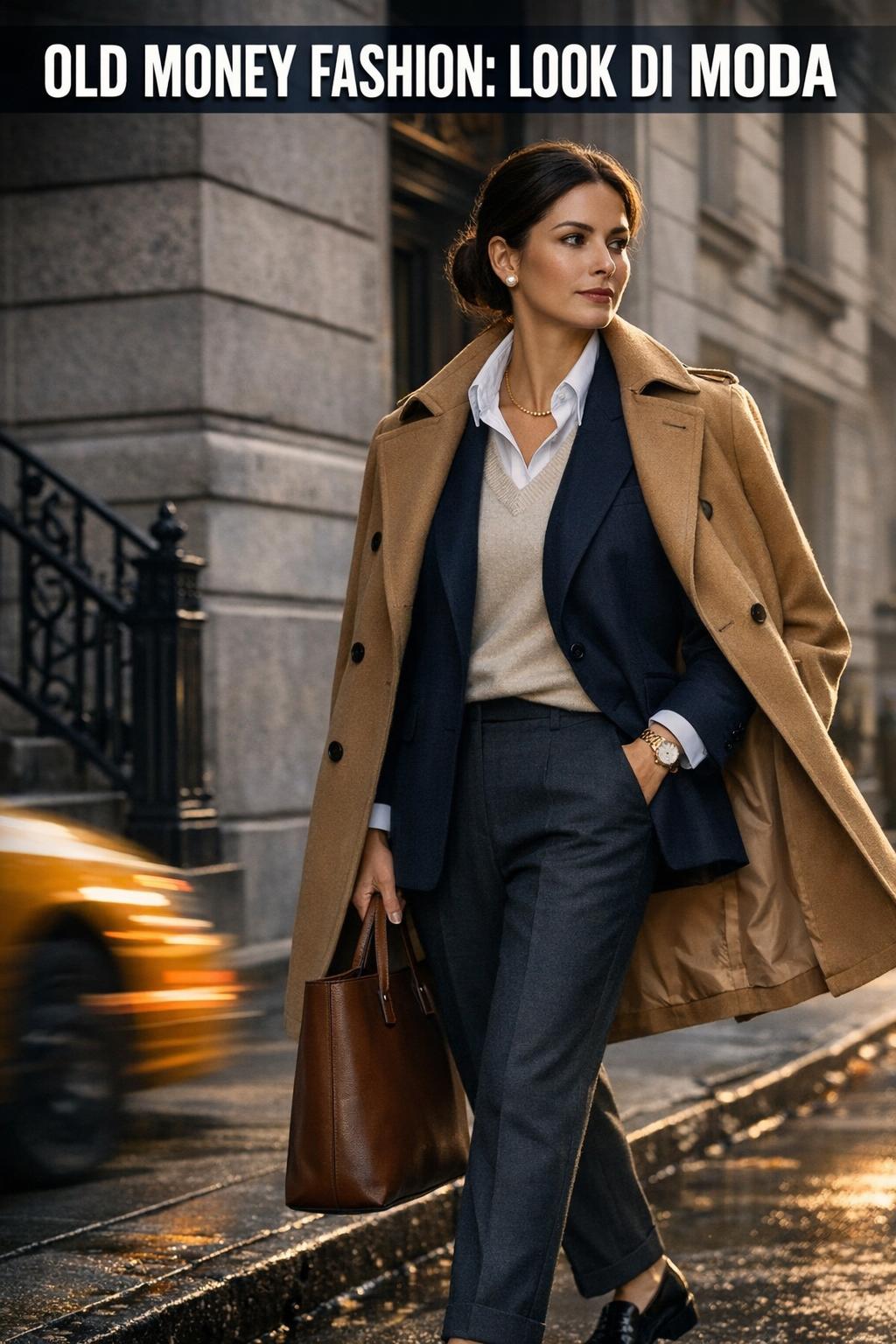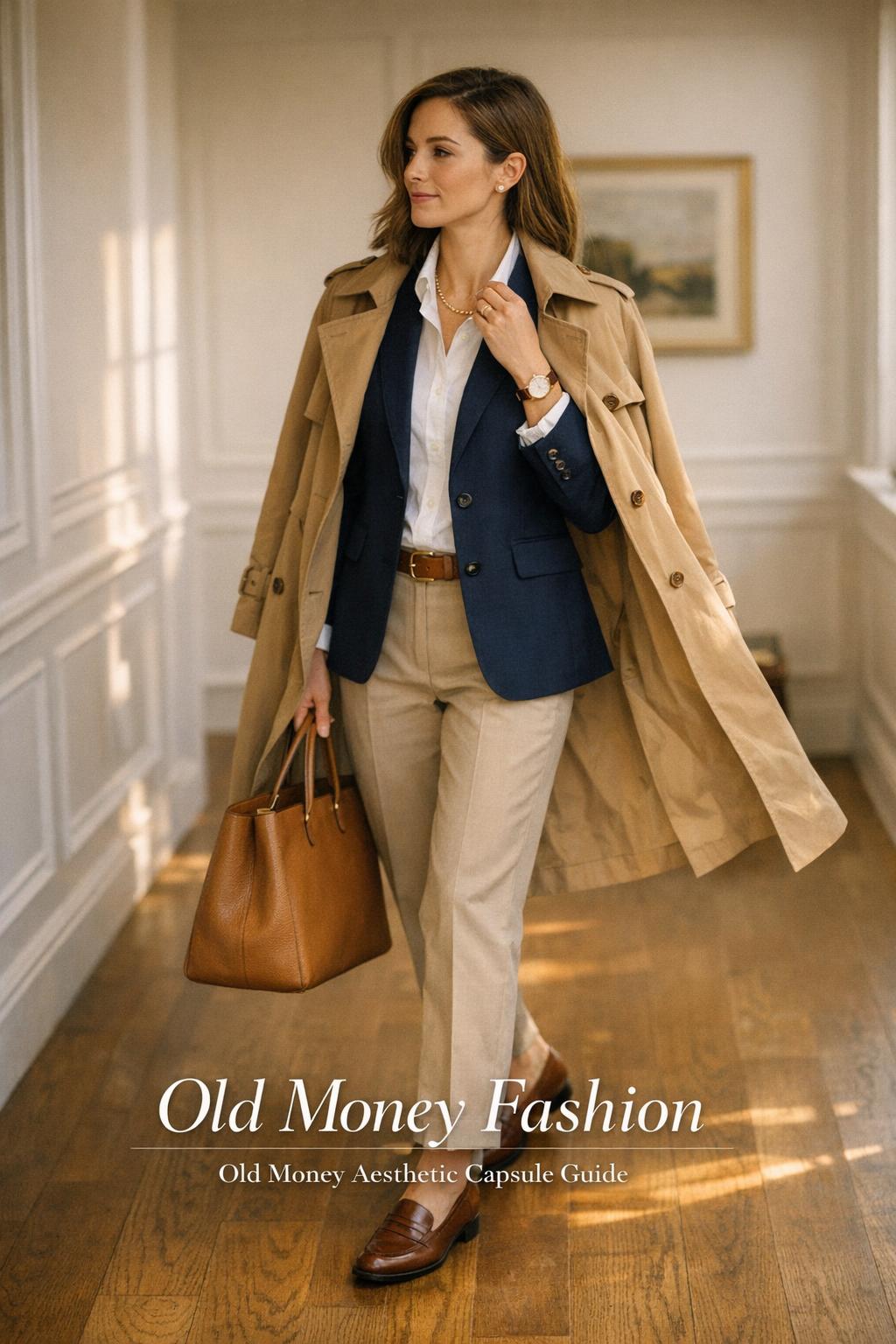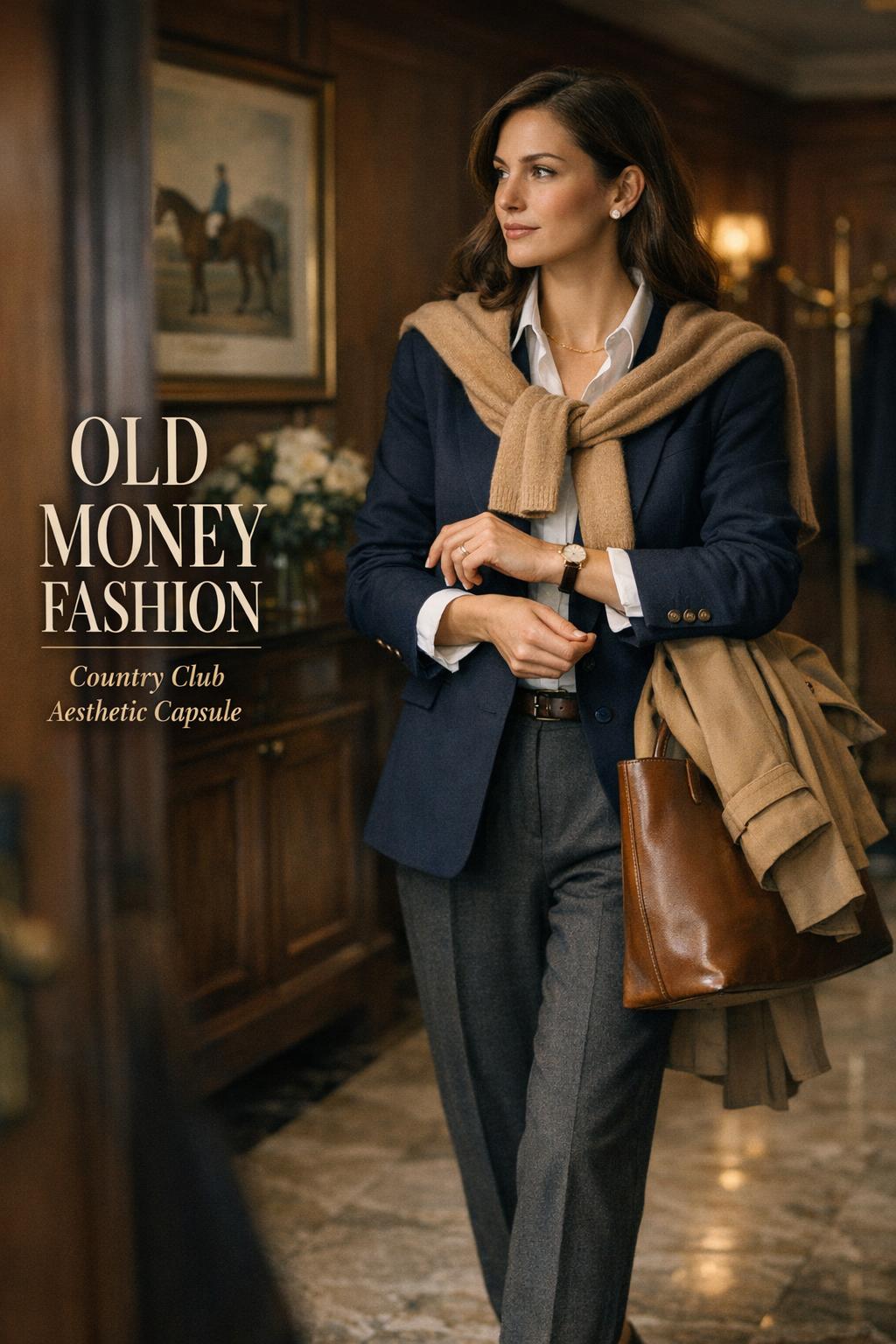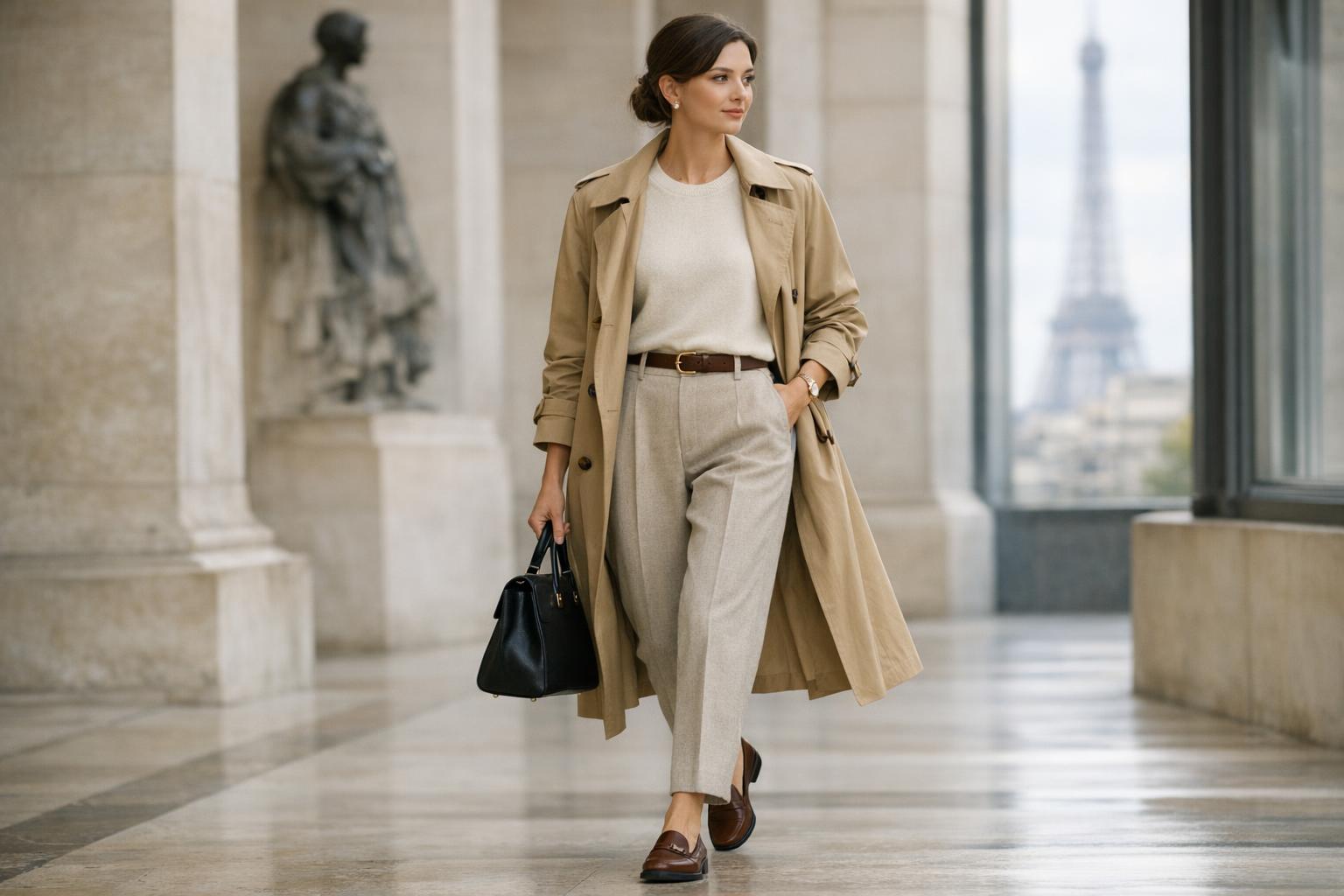
Category: Outfit Aesthetic

Outfit Aesthetic is all about creating a cohesive, recognizable style that reflects your personality and lifestyle. Instead of focusing on individual pieces, an outfit aesthetic looks at how colors, silhouettes, fabrics, and details work together to form a distinct visual identity. From timeless minimalism and quiet luxury to Parisian chic, Scandinavian simplicity, and modern street style, exploring different aesthetics can help you refine your wardrobe and develop a more intentional approach to fashion.

In this category, you’ll find curated inspiration, styling guides, and outfit ideas that highlight popular fashion aesthetics while remaining practical for everyday wear. Each post focuses on wearable combinations, balanced proportions, and versatile pieces that can easily integrate into a modern wardrobe. Whether you prefer clean neutral outfits, elevated casual looks, or romantic feminine styling, understanding outfit aesthetics makes it easier to build outfits that feel polished and consistent.

Our editorial approach is grounded in real fashion experience, combining insights from fashion retail, styling principles, and long-term wardrobe building. Rather than chasing short-lived trends, we focus on aesthetics that translate into timeless outfits you can adapt across seasons and occasions.

If you’re looking for fresh outfit inspiration, clear styling ideas, and guidance on defining your personal fashion identity, this Outfit Aesthetic category will help you discover styles that feel both authentic and effortlessly stylish.

  • Parisian Chic Style Outfits: The Polished Uniform Formula

    Parisian Chic Style Outfits: The Polished Uniform Formula

    Parisian chic style outfits: a practical definition you can actually wear

    You’re standing in front of an open suitcase—or an overstuffed closet—trying to build an outfit that feels polished without looking “styled.” That tension is where parisian chic style outfits live: the sweet spot between ease and intention. The look isn’t loud, and it doesn’t depend on constant newness; it’s built on a small set of reliable wardrobe staples (think trench coat, white shirt, neutrals, tailored pieces) and the confidence to repeat them in slightly different combinations. In the U.S., the appeal is practical: these are paris outfits you can wear to work, on a plane, to dinner, or while walking all day without feeling overdressed.

    Parisian style is often described as “French chic” or “effortless French chic,” but the “effortless” part is usually the result of planning—especially a capsule wardrobe mindset. You’ll see it in celebrity snapshots that read as modern uniforms: a Paris capsule wardrobe anchored by minimalism and a neutral palette (as seen in Rosie Huntington-Whiteley’s Paris-focused packing approach), a trench coat styled with crisp simplicity (a Kaia Gerber-style cue), or classic pieces elevated by context, like Nicole Kidman’s wide-leg jeans and oversized white shirt moment tied to a Chanel show atmosphere. This guide translates those cues into repeatable decisions you can make every morning.

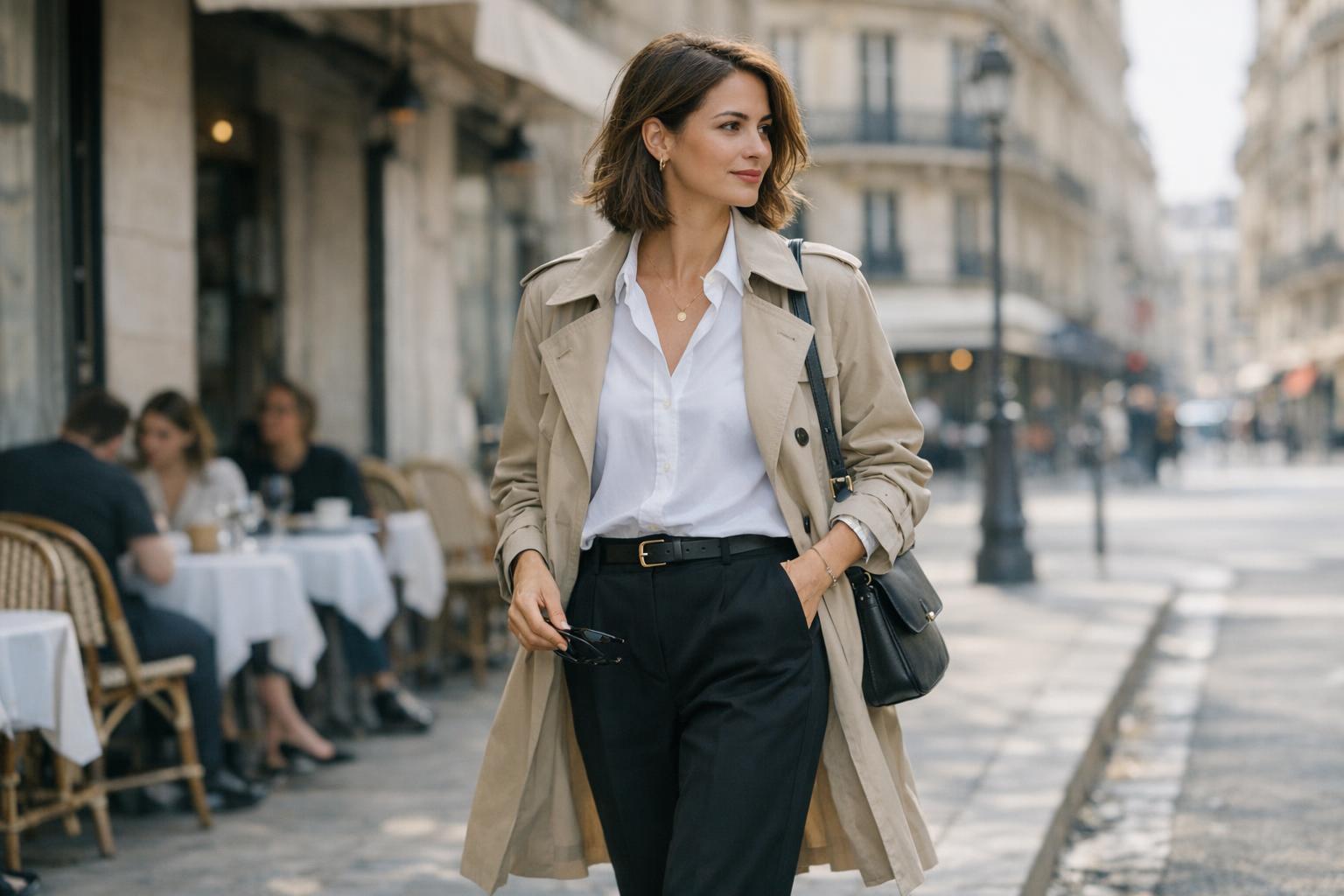
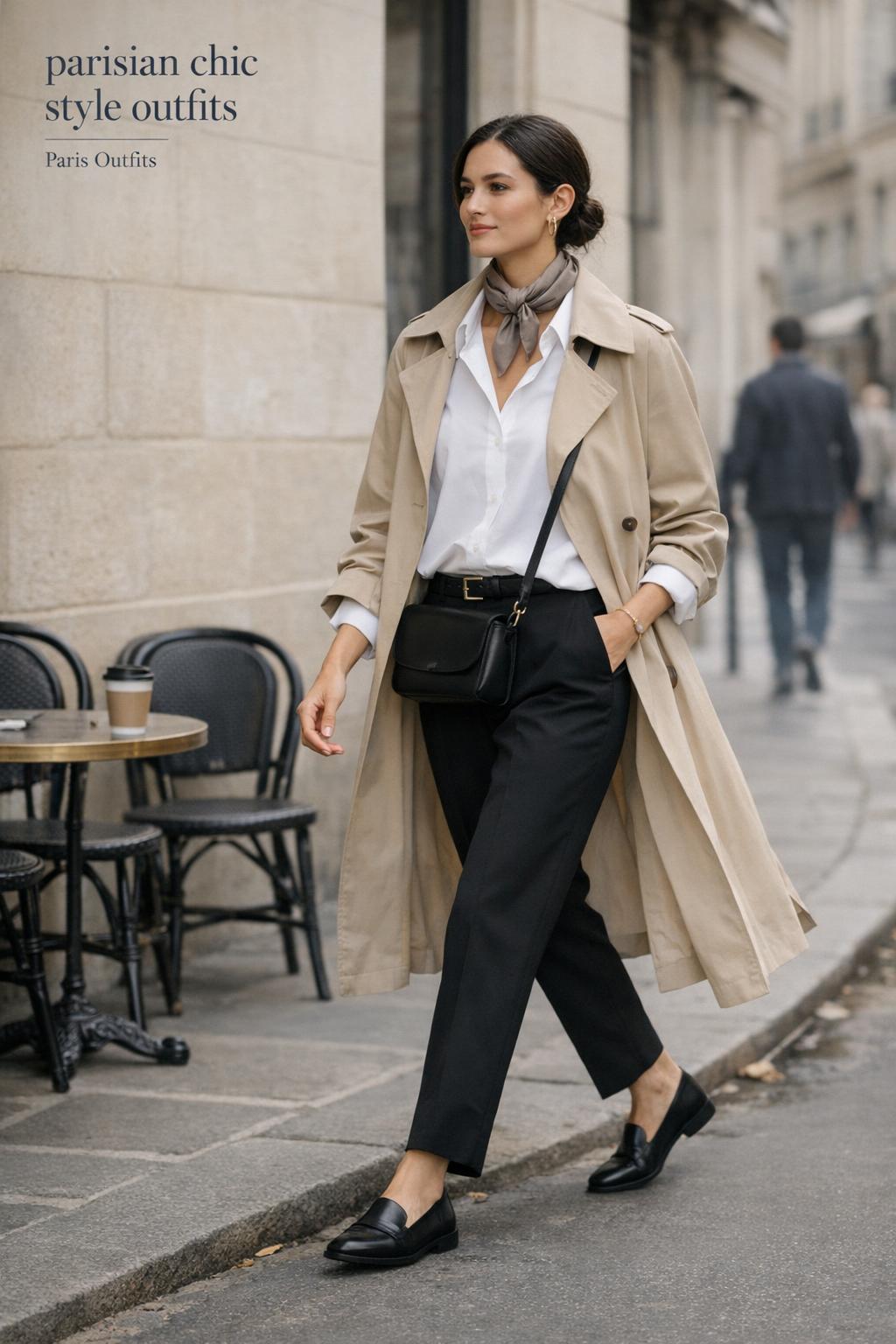
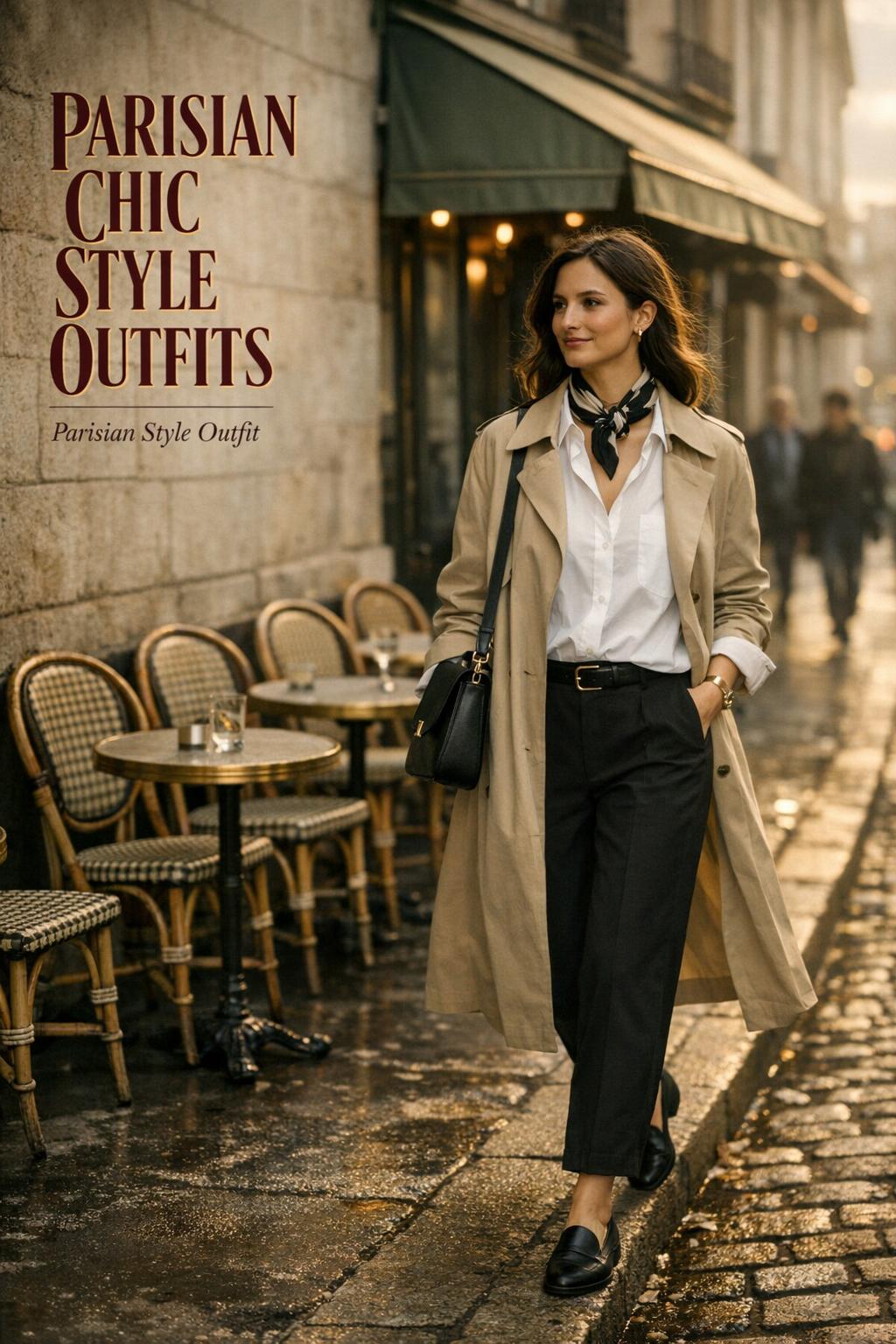
    Parisian chic style outfits: stylish woman in beige trench and black trousers walking past a minimalist Paris cafe
    A poised Paris street moment captures quiet luxury with a beige trench, crisp white shirt, and tailored black trousers outside a minimalist café.

    The Parisian style mindset: understated choices, strong structure

    Before outfits, start with the mindset that holds them together. Parisian chic is not a costume; it’s a logic. The logic is built around neutral tones, clean lines, and fit that looks deliberate. “Tailored silhouettes” show up repeatedly because they create instant structure, even when the pieces are simple. A white shirt becomes a style statement when the shoulders sit right and the hem behaves under a coat. A trench coat looks “Parisian” when the length and drape match your proportions rather than fighting them.

    Minimalist style doesn’t mean boring—it means editing. Instead of stacking trends, Parisian style outfits tend to focus on one idea at a time: a strong coat, a crisp shirt, a monochrome column of color, or a single accessory that looks chosen rather than accumulated. That’s why day-to-night transitions work so well in this aesthetic: the base stays the same, and you change the emphasis.

    Tips: how to tell if an outfit reads “French chic” or just “basic”

    If you’re wearing simple pieces but the look feels unfinished, the difference is usually structure and restraint. Choose one tailored anchor (a blazer, tailored pants, or a trench coat), keep the palette tight (neutrals or deliberate monochrome), and let one detail do the work—like the collar of a white shirt, the line of wide-leg jeans, or the way a coat is belted. If you add more than one “statement,” the outfit often loses the quiet confidence that makes parisian style distinct.

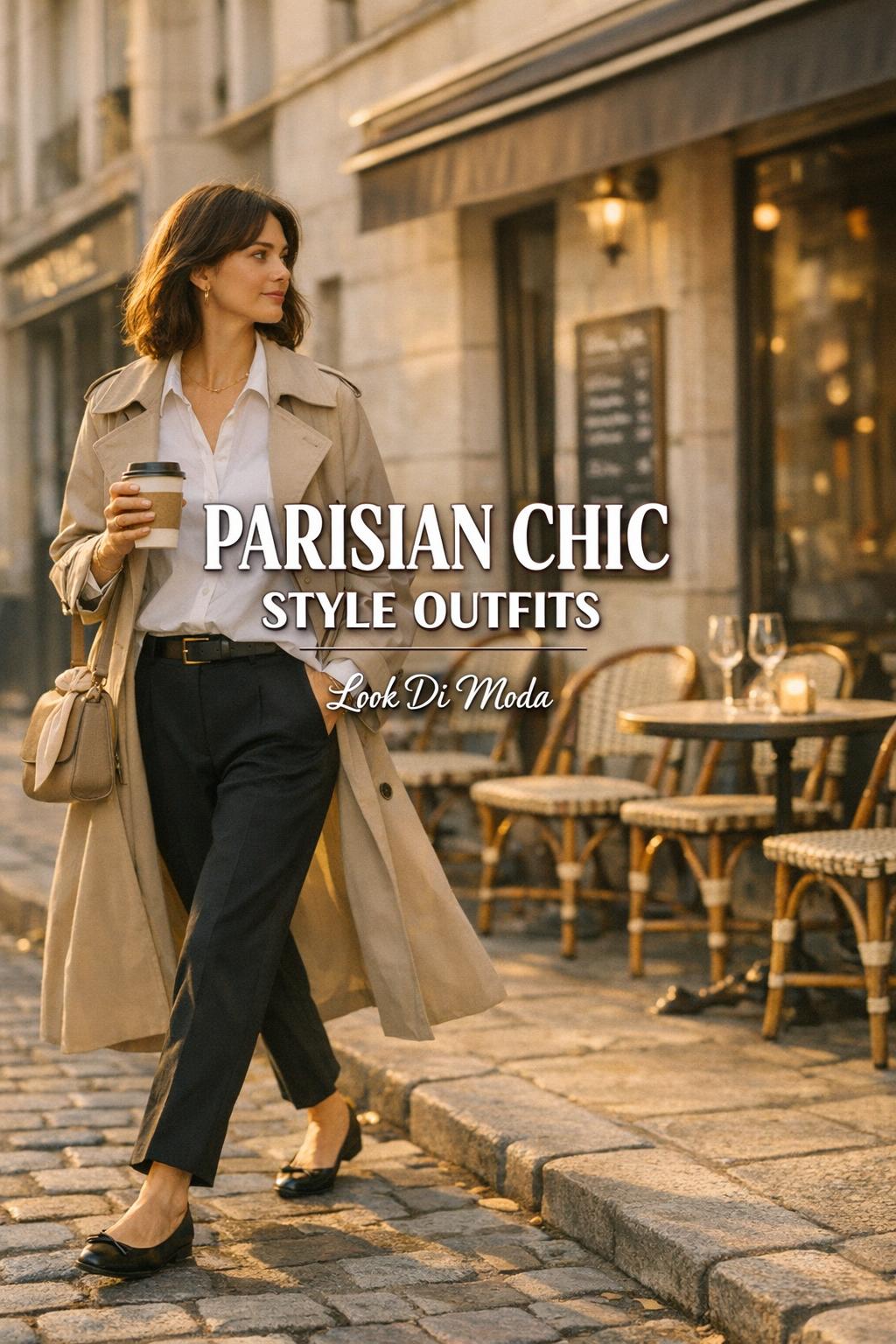
    Parisian chic style outfits on a woman in beige trench coat walking past a Paris street café at golden hour
    A stylish woman in a beige trench and tailored black trousers strolls past a Paris café terrace with a takeaway coffee in warm golden-hour light.

    The backbone pieces: trench coats, white shirts, and tailored neutrals

    Across modern “Parisienne fashion” interpretations—from travel packing lists to street-style outfit ideas—certain items keep reappearing because they solve real-life wardrobe problems. The trench coat is the clearest example: it’s weather-aware, layers easily, and elevates even casual basics. The white shirt is another: it creates crispness next to denim, tailored pants, or a skirt, and it photographs well in a way that reads “pulled together” without needing embellishment.

    Neutrals matter here less as a rule and more as a strategy. A neutral palette creates mix-and-match flexibility, which is why capsule wardrobe advice dominates so much parisian style content. When you build around black, white, and other muted tones, you can repeat silhouettes—tailored pants one day, a skirt the next—without your outfit looking identical. That repeatability is the real secret behind “effortless”.

    • Trench coat as the all-season outer layer that instantly signals Parisian style
    • White shirt as the “polish layer” for denim, skirts, and tailored pieces
    • Tailored pants or black trousers for clean lines and day-to-night flexibility
    • Wide-leg jeans for a relaxed silhouette that still looks intentional
    • A blazer for structure when you want minimalist style with sharper edges
    • A striped Breton top as the classic pattern that pairs naturally with trench coats and tailoring

    The 20-item Parisian capsule wardrobe template (built for real life)

    A Parisian capsule wardrobe works because it narrows choices while expanding combinations. Instead of chasing endless outfit variety, you build a small system: a few outer layers, a few tops, a few bottoms, one or two dresses, and accessories that finish without distracting. This is the same logic behind a Paris capsule wardrobe for travel—pack fewer things, wear them more, and rely on tailored silhouettes and neutrals to keep everything cohesive.

    Below is a 20-item template you can adapt for work, weekends, and travel. It’s not meant to be restrictive; it’s meant to be repeatable. If your lifestyle leans casual, keep the tailored elements in outerwear and pants. If you dress up more often, keep the structure but shift the proportion toward dressier pieces like an LBD and sharper layering.

    Spring/summer essentials for Paris outfits (and beyond)

    Warm-weather Parisian style outfits still rely on structure—just with lighter layers and simpler lines. The goal is to avoid outfits that feel fussy in heat or while walking all day. Think of these pieces as the core that lets you create multiple paris outfits with minimal packing and maximum cohesion.

    • White shirt (crisp, versatile, easy to layer or wear open)
    • Striped Breton top (the classic pattern that keeps basics from feeling flat)
    • Lightweight blazer (for meetings, dinners, or any moment you want instant polish)
    • Tailored pants (a summer-weight option keeps the silhouette clean)
    • Wide-leg jeans (relaxed but deliberate, especially with a tucked-in shirt)
    • Midi skirt (easy movement, elegant line, simple to dress up)
    • Little black dress (the simplest answer to “what do I wear tonight?”)
    • Ballet flats or loafers (choose based on comfort and the mood you want)

    Fall/winter essentials: the layered Parisian style outfit approach

    Cool-weather dressing is where Parisian chic can look most convincing, because coats and layers create shape. Travel-focused guides often emphasize timeless outerwear and accessories—items that can handle long days and changing temperatures without forcing you into heavy, trend-driven styling.

    • Trench coat (especially useful in transitional weather)
    • Tailored blazer (a second structure layer when coats come off indoors)
    • Black trousers (a foundation piece for minimalist style)
    • Wide-leg jeans (comfortable for walking, elevated with a white shirt)
    • Long-sleeve tops that layer cleanly under coats (keep the line smooth)
    • Closed-toe flats or loafers (a practical, polished option)

    Accessories and footwear: the “restraint” zone

    Many Parisian style outfit ideas hinge on accessories, but the key is editing. A scarf, a belt, or a crossbody bag can elevate a basic uniform, yet too many accessories can start to look like you’re trying to “perform” French chic. Travel-focused Parisian style content often highlights scarves and bags because they pack small and change an outfit’s mood quickly.

    • Scarf for texture and color without committing to a loud garment
    • Belt to define shape over a trench coat or blazer
    • Crossbody bag for city walking and hands-free ease
    • Subtle jewelry (keep the focus on silhouette and fabric)
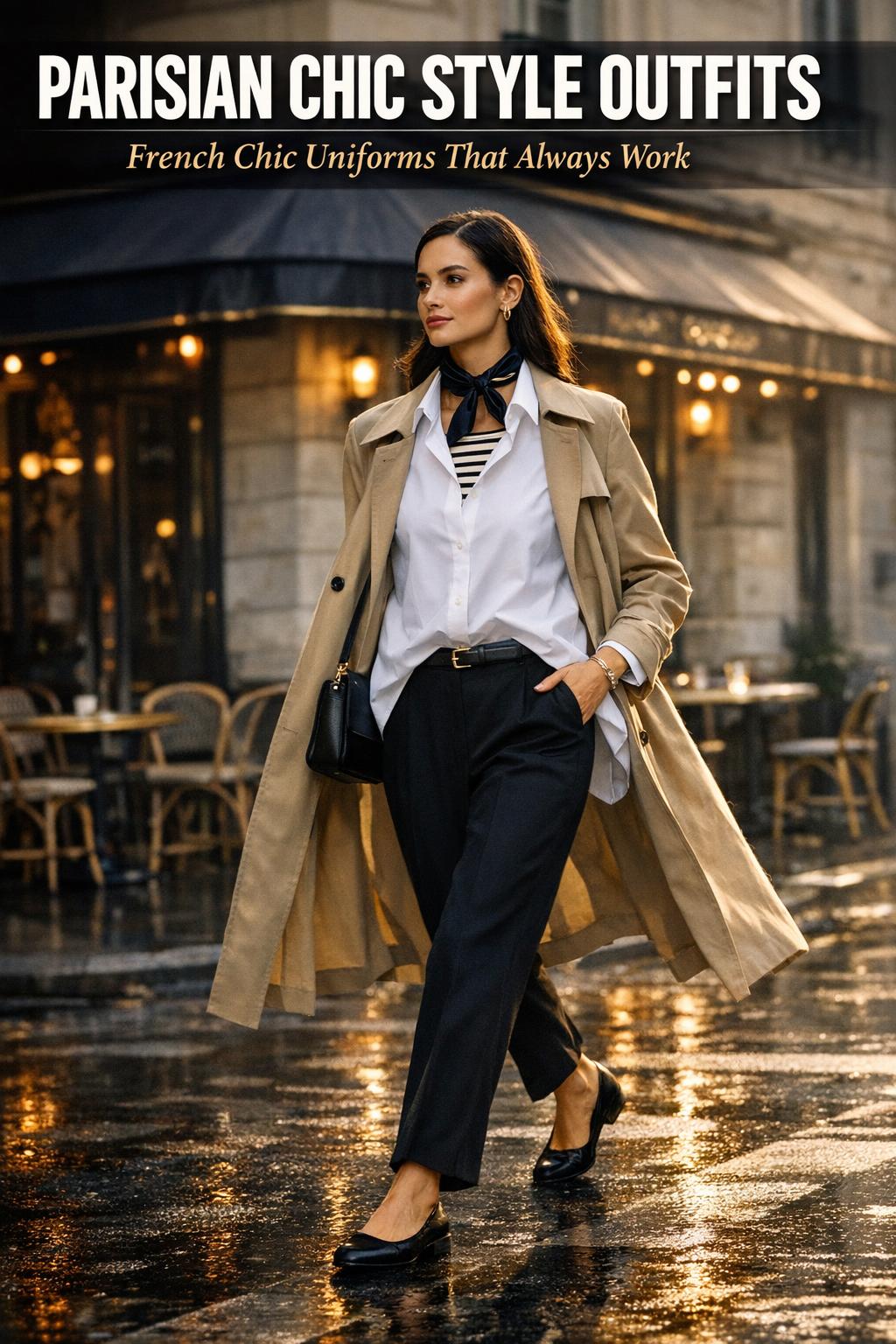
    Parisian chic style outfits photographed on a stylish woman walking a Paris street in a tailored blazer and scarf
    A stylish woman strolls down a Paris street in timeless layers that define effortless Parisian chic.

    Outfit logic you can recycle: three signature formulas that always work

    If you want parisian chic style outfits to feel effortless, rely on outfit formulas. Formulas reduce decision fatigue and improve consistency, which is why they show up across Paris outfit idea articles and “how to dress like a Parisian” guides. The point isn’t to copy a uniform; it’s to give yourself a stable structure you can personalize with small choices—shoe type, sleeve styling, and how sharp or relaxed your tailoring feels.

    The trench + Breton + tailored pants formula (a modern Parisian trench coat outfit)

    This is the clearest “French girl style” structure because each piece does a specific job. The trench coat brings movement and polish, the striped Breton top breaks up neutrals with a classic pattern, and tailored pants keep the silhouette intentional. It’s also easy to adjust: swap tailored pants for wide-leg jeans when you want the look to feel more relaxed without losing the Parisian effect.

    In real life, this formula is ideal for travel days. You’ll be comfortable sitting, walking, and changing temperatures, and you’ll still look like you planned your outfit. The trench coat is the anchor—similar to the way a Kaia Gerber trench moment reads instantly Parisian because the coat does most of the storytelling.

    The little black dress with subtle accessories formula

    The LBD works in Parisian style because it’s a clean canvas. Keep the accessories subtle—one bag, one pair of flats or loafers—and let the dress be the line that carries the outfit. This formula also solves the “day-to-night” challenge: you can wear the same base to a daytime plan and then shift the mood by adding a blazer and changing your bag.

    Where this can go wrong is over-accessorizing. If the LBD becomes a backdrop for too many details, it stops feeling Parisian and starts feeling like a costume. Choose one focal point: the neckline, the hemline, or a scarf, but not all of them at once.

    The monochrome day-to-night formula (minimalism with impact)

    Monochrome styling is a shortcut to “expensive-looking” because it creates a continuous line. In a Parisian style outfit, this often means neutrals from head to toe. Start with black trousers and a black top, or a white shirt with light-toned pants if you prefer brighter neutrals. Add a blazer or trench coat for structure, and you’re ready for most scenarios—from work to dinner—without changing the foundation.

    Monochrome is also a smart way to incorporate “Look Di Moda” energy without chasing trends: the look feels editorial because it’s cohesive, but it’s still built from timeless pieces you’ll wear repeatedly.

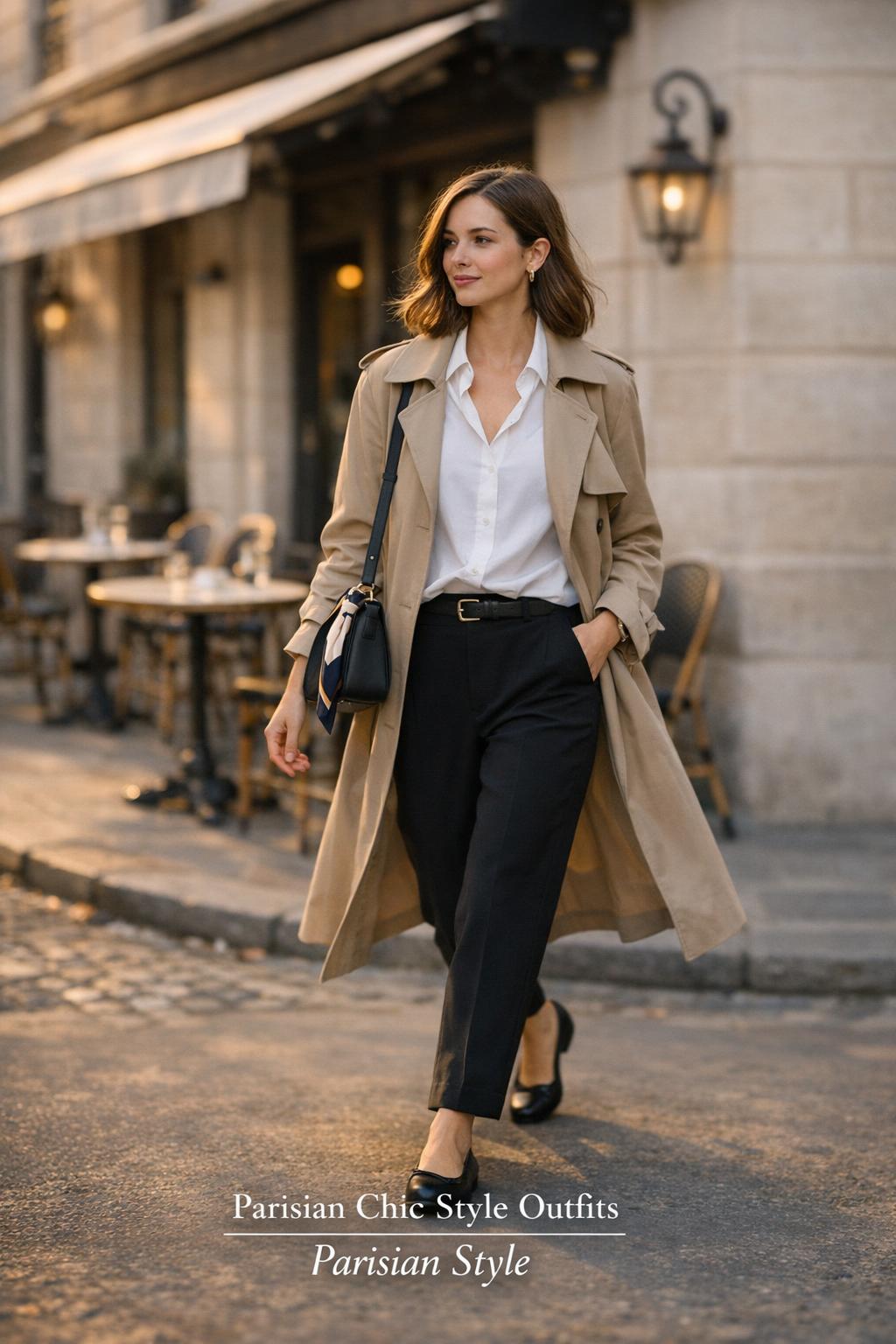
    Parisian chic style outfits: woman in beige trench walking past Saint-Germain cafe in golden-hour light, Paris
    A stylish woman in a beige trench coat strolls past a Saint-Germain café in warm golden-hour light, embodying effortless Parisian chic.

    Icon pieces, styled the Parisian way: fit, fabric, and restraint

    Most style guides can list staples; fewer explain how those staples should behave on the body. In Parisian style, the difference is in the specifics: where the shoulder seam sits, how a coat falls when unbuttoned, how wide-leg jeans skim without swallowing your frame. If you’ve ever tried to recreate French chic and felt “off,” it’s usually because the fit is fighting the idea.

    Trench coat: your year-round anchor

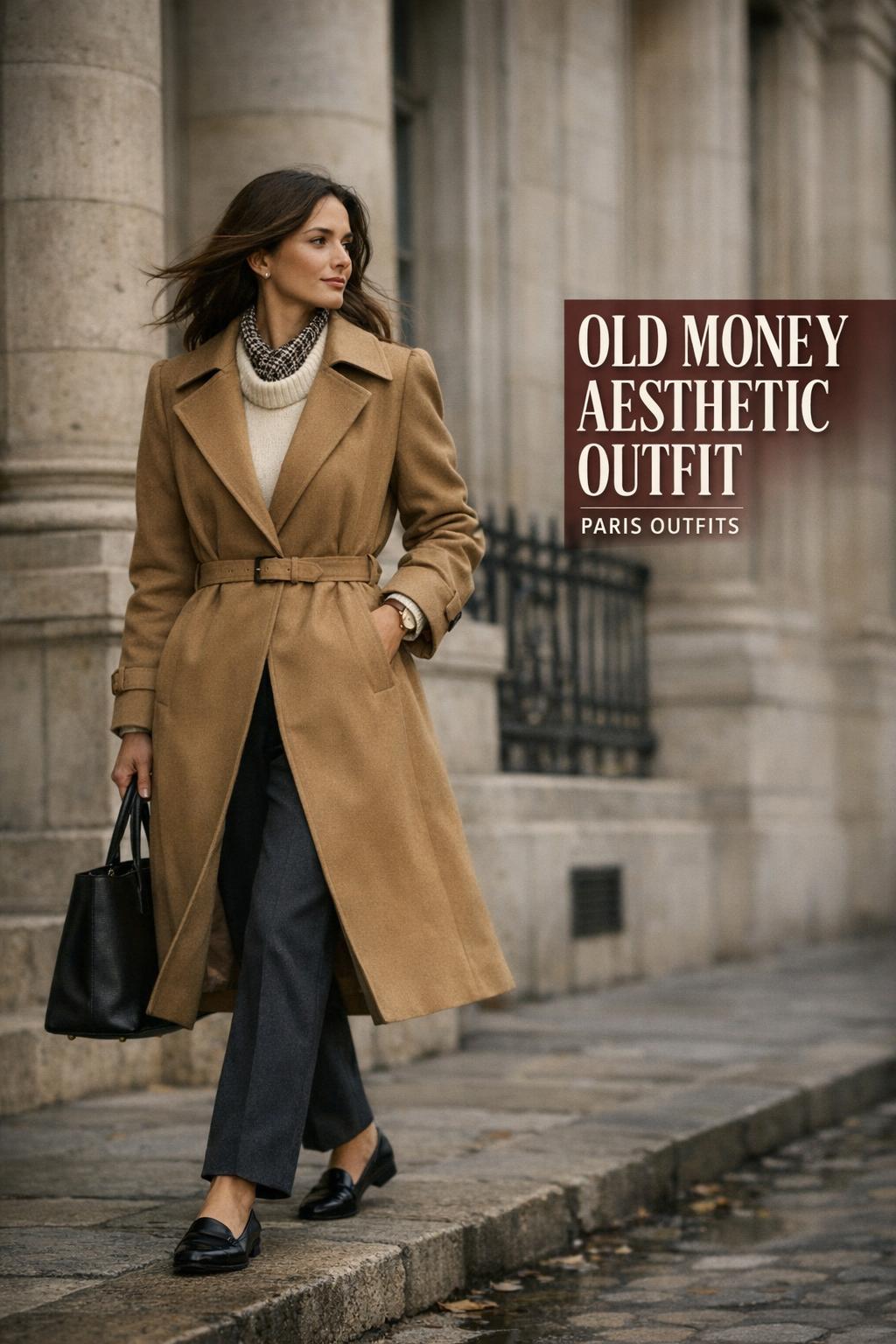
    A trench coat reads Parisian because it’s functional and elegant at the same time, which is why it appears so often in Parisian outfit idea roundups. For a more authentic effect, pay attention to length and movement: a trench that swings slightly as you walk feels relaxed, while a stiff, overly structured trench can feel costume-like. Belt it when you want a defined waist; leave it open when you want a longer, cleaner line over tailored pants or wide-leg jeans.

    White shirt: the polish layer you’ll never regret packing

    The white shirt shows up in Paris Fashion Week-adjacent styling because it photographs cleanly and makes an outfit look deliberate. Nicole Kidman’s oversized white shirt styling paired with wide-leg jeans captures a key Parisian principle: contrast. The relaxed volume of the shirt works because the rest of the look stays simple. If you try this at home, keep the styling tidy—clean lines at the collar, sleeves pushed with intention, and a front tuck if you need waist definition.

    Ballet flats vs. loafers: choosing the mood and the mileage

    Both shoes can belong in a Parisian capsule wardrobe, but they signal slightly different energy. Ballet flats lean delicate and classic, while loafers feel sharper and more tailored. For long walking days, choose what supports your routine and your posture; Parisian style is as much about how you carry yourself as what you wear. If your outfit is already soft (midi skirt, airy top), loafers can add structure. If your outfit is already tailored (blazer, black trousers), ballet flats can make it feel less severe.

    Parisian style by neighborhood: using place as a styling guide

    Parisian chic is tied to Paris not just as a concept, but as a real place with distinct visual moods. Thinking in neighborhoods is a helpful way to decide how your outfit should feel—minimal, classic, or quietly luxurious—without changing your entire wardrobe. This is also a more realistic way to approach “how to dress Parisian”: you’re choosing a context, not copying a stereotype.

    Le Marais minimalism: clean lines, edited color

    Le Marais-inspired styling leans into minimalism. Think tailored pants, a trench coat worn open, and a striped Breton top used sparingly—more graphic than cute. Keep the palette neutral and let silhouette do the work. If you want an easy update without buying anything new, focus on proportion: pair wide-leg jeans with a cleaner, more structured top like a white shirt to keep the look intentional.

    Saint-Germain quiet luxury: classic pieces with soft confidence

    Saint-Germain-des-Prés cues skew polished and timeless: a blazer over a white shirt, black trousers, and subtle accessories. The goal is not flash; it’s the sense that your wardrobe is built to last. This is the neighborhood mindset that aligns naturally with investment dressing and the heritage influence associated with Chanel in Paris fashion culture. If you’re building a parisian style outfit for a dinner or a work event, this is the easiest direction to follow.

    Real-world inspiration: celebrity Paris moments translated into wearable outfits

    Celebrity style can be useful when you treat it like a case study rather than a shopping list. The most relevant Parisian moments aren’t about owning “the exact piece”; they’re about understanding why the outfit works. In this aesthetic, the “why” is usually one of three things: a disciplined palette, tailored silhouettes, or a capsule wardrobe approach that repeats strong basics.

    Rosie Huntington-Whiteley: the Paris capsule wardrobe approach

    Rosie Huntington-Whiteley’s Paris capsule wardrobe framing highlights a modern version of French chic: minimalist, high-quality pieces in neutral tones, often leaning into tailored silhouettes. The takeaway is strategic packing. If you want paris outfits that work for multiple settings, choose a tight color story and repeat silhouettes—like pairing a white shirt with both tailored pants and wide-leg jeans, then using a blazer or trench coat to shift the formality.

    Kaia Gerber: trench coat as the “instant Parisian” signal

    Kaia Gerber’s trench styling is a reminder that one iconic piece can anchor an entire Parisian style outfit. Even when trends shift—like the presence of 90s skirt silhouettes around trench coats—the core remains the same: a classic outer layer that makes everything beneath it look more considered. If you’re unsure where to invest, a trench coat is one of the most flexible choices because it works across seasons and settings.

    Nicole Kidman: wide-leg jeans + oversized white shirt, influenced by a Chanel show moment

    Nicole Kidman’s styling moment—wide-leg jeans with an oversized white shirt—shows how Parisian chic handles volume. The look works because the palette stays clean and the shapes are controlled: one piece is relaxed, the rest stays simple. Tied to the atmosphere of a Chanel show, it also reflects how Paris Fashion Week energy can translate into everyday dressing: you don’t need a runway wardrobe, just a strong silhouette and classic pieces.

    Travel-ready Paris outfits: packing like you’ll actually walk all day

    A lot of Parisian style advice becomes truly useful when you treat it as a travel system. Paris is a walking city in the imagination of most travelers, and the best paris outfits account for comfort without sacrificing polish. Travel-oriented Parisian guides consistently emphasize simple pieces elevated with accessories, plus outerwear that handles unpredictable weather—especially trench coats and layering staples.

    For U.S. travelers, the biggest challenge is overpacking “options” instead of packing a plan. If your suitcase is full of unrelated statement pieces, you’ll default to the same safe outfit anyway. A capsule wardrobe approach prevents that: you pack fewer items, but each one works with the rest, giving you more outfits in practice.
    Tips: the three-item rule for a strong Parisian style outfit on the go

    When you’re dressing quickly—hotel room, early train, long day—use a three-item structure: one anchor (trench coat or blazer), one clean base (white shirt or Breton top), and one polished bottom (tailored pants or wide-leg jeans). Add one accessory (a scarf or crossbody bag), and stop there. This keeps the look French chic rather than overloaded, and it’s reliable enough to repeat across multiple days without feeling repetitive.

    Parisian style outfits for different ages: elegant, not age-coded

    Parisian chic adapts well across decades because it’s built on classics. It’s also why Parisian travel wardrobes are often framed as “elevated looks,” including guidance specifically for women over 40. The point isn’t to dress “younger” or “older”—it’s to dress with clarity. Tailored pieces, a neutral palette, and well-chosen accessories tend to look modern at any age because they’re rooted in fit and proportion rather than trend intensity.

    If you’re refining your wardrobe over time, Parisian style offers a useful editing principle: invest attention in pieces you’ll wear frequently (outerwear, tailoring, shoes you can walk in) and keep the rest simple. This creates consistency—an underrated kind of style confidence that reads as French chic more than any single item does.

    Shopping for Parisian chic: building the look from budget to investment

    Shopping for parisian chic style outfits is easiest when you shop by role, not by impulse. Each purchase should fit into your outfit formulas: an outer layer that anchors, a top that adds polish, a bottom that holds the silhouette, and accessories that finish. This approach also helps you decide when it’s worth paying more. A trench coat or blazer that fits beautifully will change the way your entire closet works; a trendy extra may not.

    Parisian content often balances shopping desire with practicality: some readers want investment pieces influenced by heritage fashion culture (with Chanel frequently serving as a reference point), while others want accessible wardrobe basics that still feel Parisian. Both are valid. The “French chic” result comes more from cohesion and fit than from a specific price point.

    Tips: a simple cost-per-wear mindset for Parisian staples

    If you’re debating whether to upgrade a piece, ask how often it will appear in your real-life rotation. Trench coats, white shirts, tailored pants, and a blazer show up across multiple Parisian style outfits and travel scenarios, so they typically earn their place quickly. More specialized items can still be fun, but they shouldn’t crowd out the basics that make the system work.

    Common mistakes that make “French chic” feel like a costume

    Most people don’t “fail” at Parisian style because they chose the wrong item; they stumble because the outfit is trying too hard. Parisian chic depends on restraint and repetition, and that can feel unfamiliar if you’re used to building looks around obvious statements.

    • Buying pieces that are “Parisian” in theory but don’t fit your life (for example, shoes you can’t walk in for travel-heavy days)
    • Over-accessorizing a simple base outfit until it loses its minimalist style clarity
    • Ignoring tailoring and proportion, especially with wide-leg jeans and oversized shirts
    • Mixing too many trends at once instead of anchoring the look with a trench coat, blazer, or clean trousers
    • Assuming neutrals alone create Parisian style, without the structure that tailored silhouettes provide

    If you recognize yourself in any of these, the fix is usually simple: return to one outfit formula, tighten the palette, and make one intentional fit adjustment (hem, tuck, belt, or sleeve styling). Parisian style looks calm because the decisions have already been made.

    Finishing touches: confidence, grooming, and the “quiet” details

    Parisian style is often described as confidence, but confidence here is practical: you’re not fussing with your outfit all day. That comes from comfort, movement, and thoughtful finishing. A crossbody bag that sits correctly, shoes you can walk in, and a coat that doesn’t restrict your arms matter more than chasing a perfect “French girl” image.

    Another quiet detail is consistency. If your wardrobe is built around a capsule, your outfits start to feel like a signature. That signature is what makes the look believable—whether your inspiration comes from Paris Playbook-style outfit ideas, a travel guide’s packing list, or a Paris Fashion Week-adjacent celebrity moment.

    Parisian chic style outfits: woman in beige trench coat walking past a Saint-Germain cafe terrace in Paris
    A poised woman in a beige trench coat strolls past a quiet Saint-Germain café terrace, embodying timeless Parisian elegance.
    FAQ

    What are parisian chic style outfits, in simple terms?

    Parisian chic style outfits are built around understated elegance: a neutral palette, well-fitting basics, and tailored silhouettes, often anchored by staples like a trench coat and a white shirt, then finished with restrained accessories.

    What pieces are most associated with a Parisian style outfit?

    The most common staples are a trench coat, a white shirt, tailored pants or black trousers, a striped Breton top, a blazer, and comfortable polished shoes like ballet flats or loafers.

    How do I build a Parisian capsule wardrobe without overbuying?

    Start with a small, cohesive set of neutral, mix-and-match items—outerwear, tops, bottoms, and one dress—then add only what supports repeatable outfit formulas, such as trench + Breton + tailored pants or monochrome day-to-night looks.

    How can I style a trench coat like a Parisian?

    Use the trench coat as the outfit’s anchor, keep the layers underneath clean and simple (a white shirt or striped Breton top with tailored pants or wide-leg jeans), and avoid over-accessorizing so the silhouette and movement stay the focus.

    How do wide-leg jeans fit into Parisian style?

    Wide-leg jeans work well in Parisian style when paired with a crisp top like an oversized white shirt and kept within a minimal, neutral palette; the look feels intentional when volume is balanced and the rest of the outfit stays streamlined.

    How do I make my outfits look “French chic” rather than plain?

    Choose one tailored anchor piece (a trench coat, blazer, or tailored pants), keep your colors cohesive, and make one deliberate styling choice—like a clean tuck, a defined belt, or a carefully chosen scarf—so the outfit looks edited, not accidental.

    Does Parisian style work for travel and long walking days?

    Yes, because many Paris outfits are built around practical staples—trench coats, comfortable flats or loafers, and simple layers—that can handle changing weather and long days while still looking polished and cohesive.
    How does Paris Fashion Week influence everyday Parisian style?

    Paris Fashion Week often spotlights classic pieces in modern proportions—like oversized white shirts and tailored silhouettes—showing how timeless staples can feel current through fit, balance, and minimal styling rather than heavy trend layering.
    Is Chanel relevant to Parisian chic styling today?

    Chanel is frequently referenced as part of the Paris fashion context, especially around show moments, but you don’t need Chanel items to dress in a Parisian way; the more transferable lesson is prioritizing classic pieces, clean lines, and a refined, understated finish.

  • Quiet Luxury Signals: old money classy outfits for U.S. Events

    Quiet Luxury Signals: old money classy outfits for U.S. Events

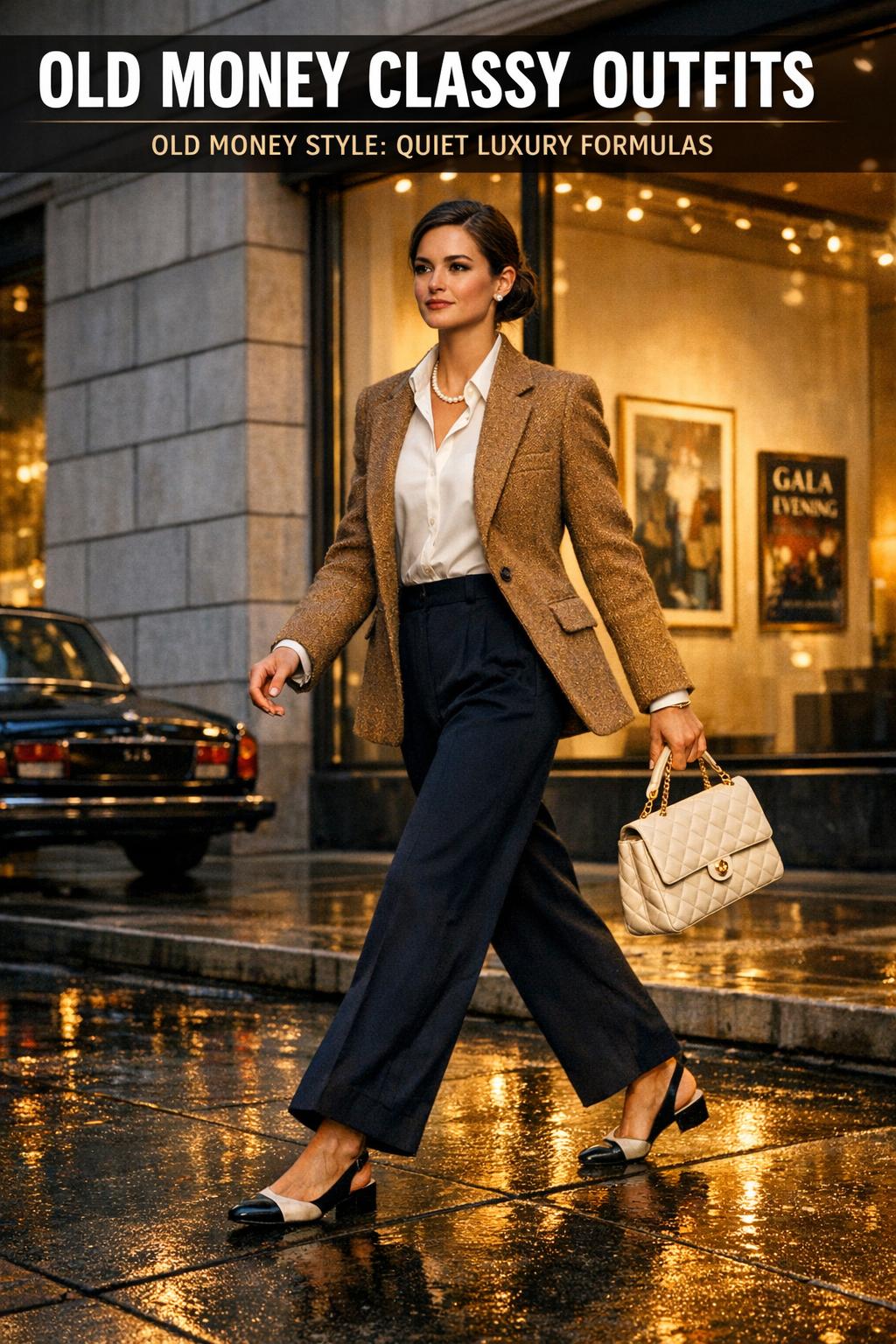
    Old money classy outfits: why the “quiet” details read the loudest

    You can spot old money classy outfits in a room long before you register any single item. It’s the calm confidence of a tailored blazer that sits clean at the shoulder, trousers that fall in a straight, unbroken line, loafers that look polished without trying to be trendy, and a neutral palette that feels intentional rather than “safe.” In U.S. settings—from a gallery opening in New York to a country-club brunch outside Boston—the old money aesthetic signals restraint, practicality, and taste. It overlaps with quiet luxury, but it’s more than minimalism: it’s about proportion, fabric, and continuity across seasons and occasions.

    This guide approaches old money style the way a well-built wardrobe actually works in real life: a small set of evergreen building blocks (blazers, trench coats, wool coats, crisp shirts, knitwear, structured handbags, pearl jewelry) remixed into elegant outfit ideas for the calendar events that keep coming back—afternoon tea, a day at the races, cocktail parties, galas, city strolls, upscale brunches, and art galleries. You’ll also see how to translate the look into a modern business outfit without drifting into loud branding or costume-like “preppy chic.”

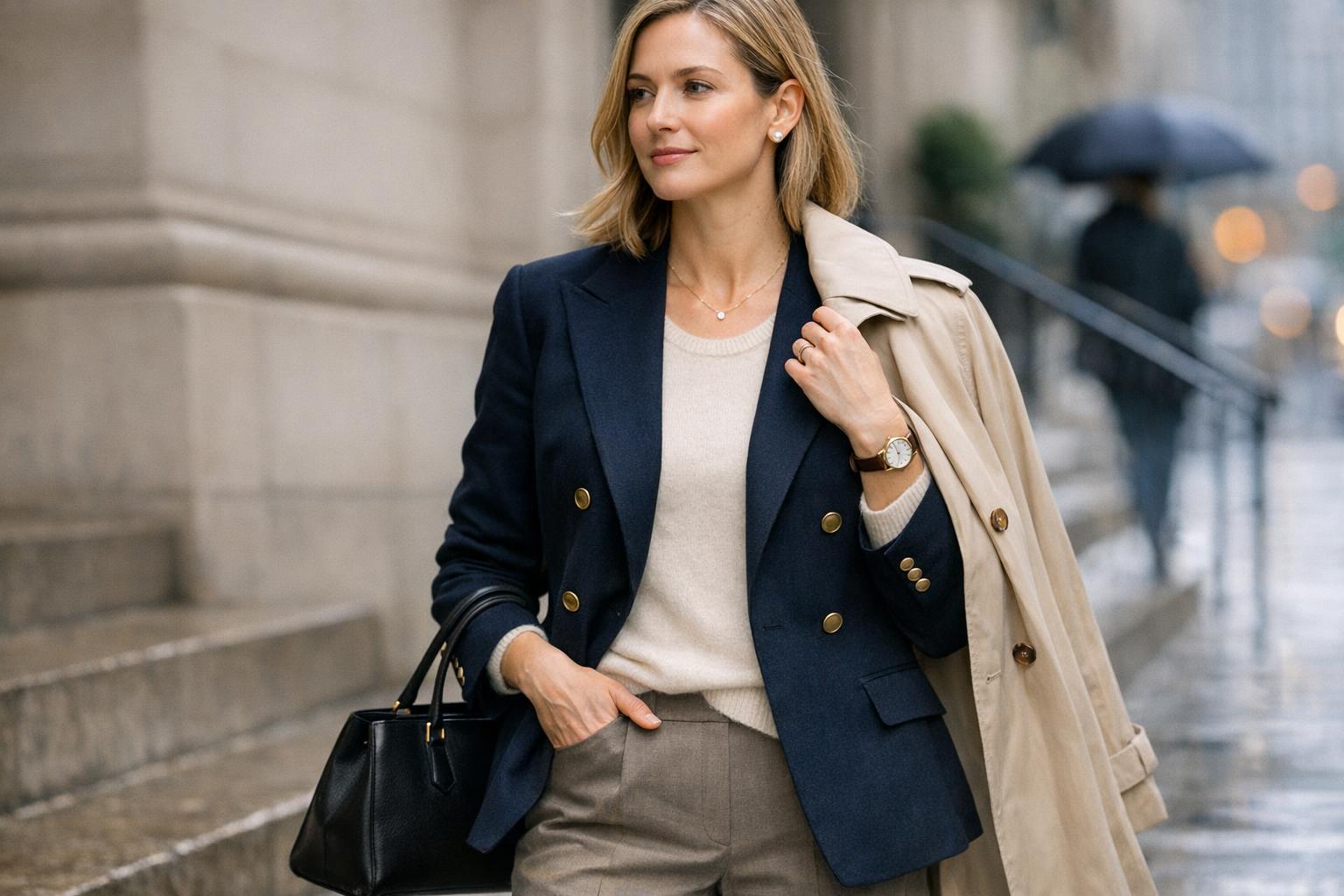
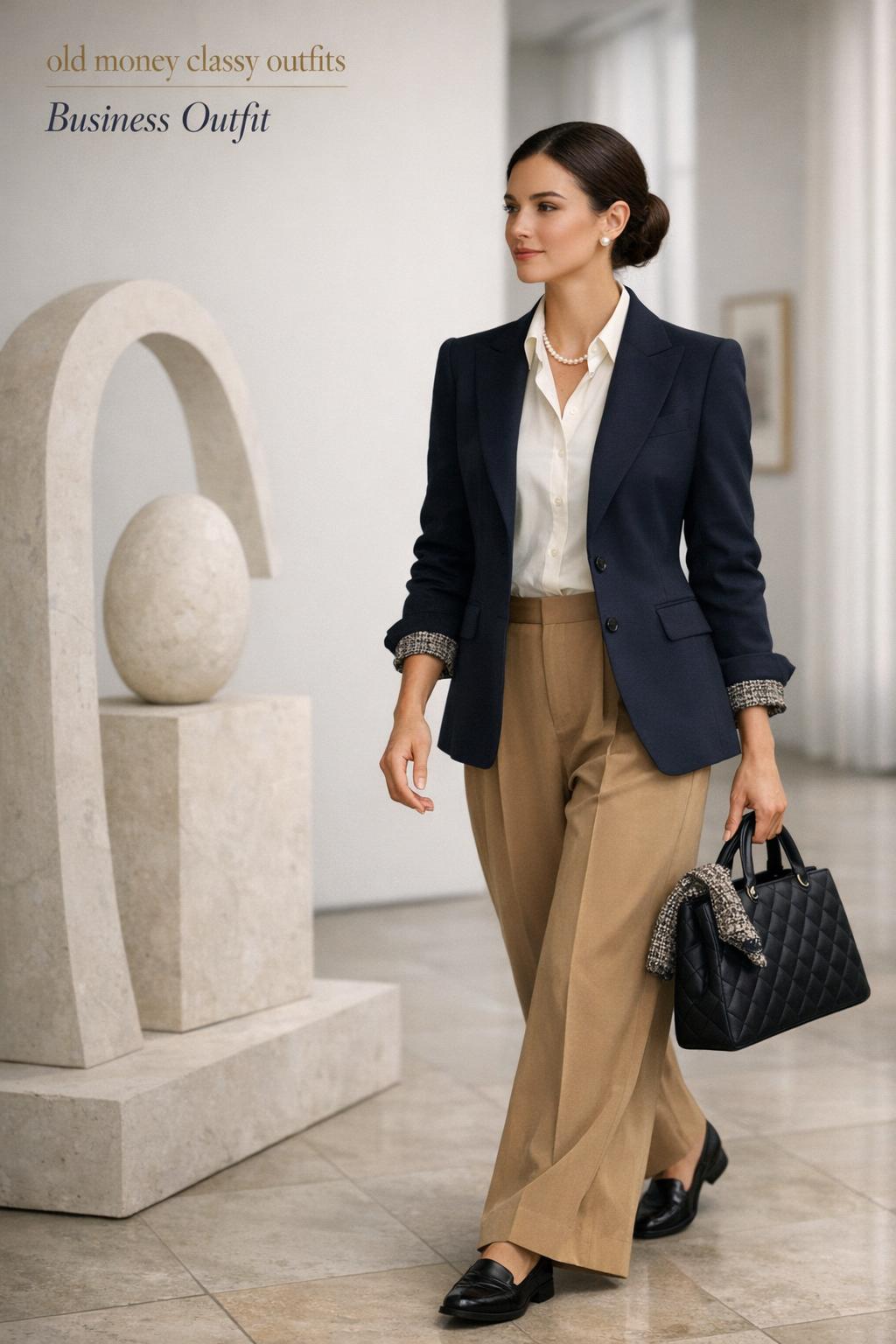
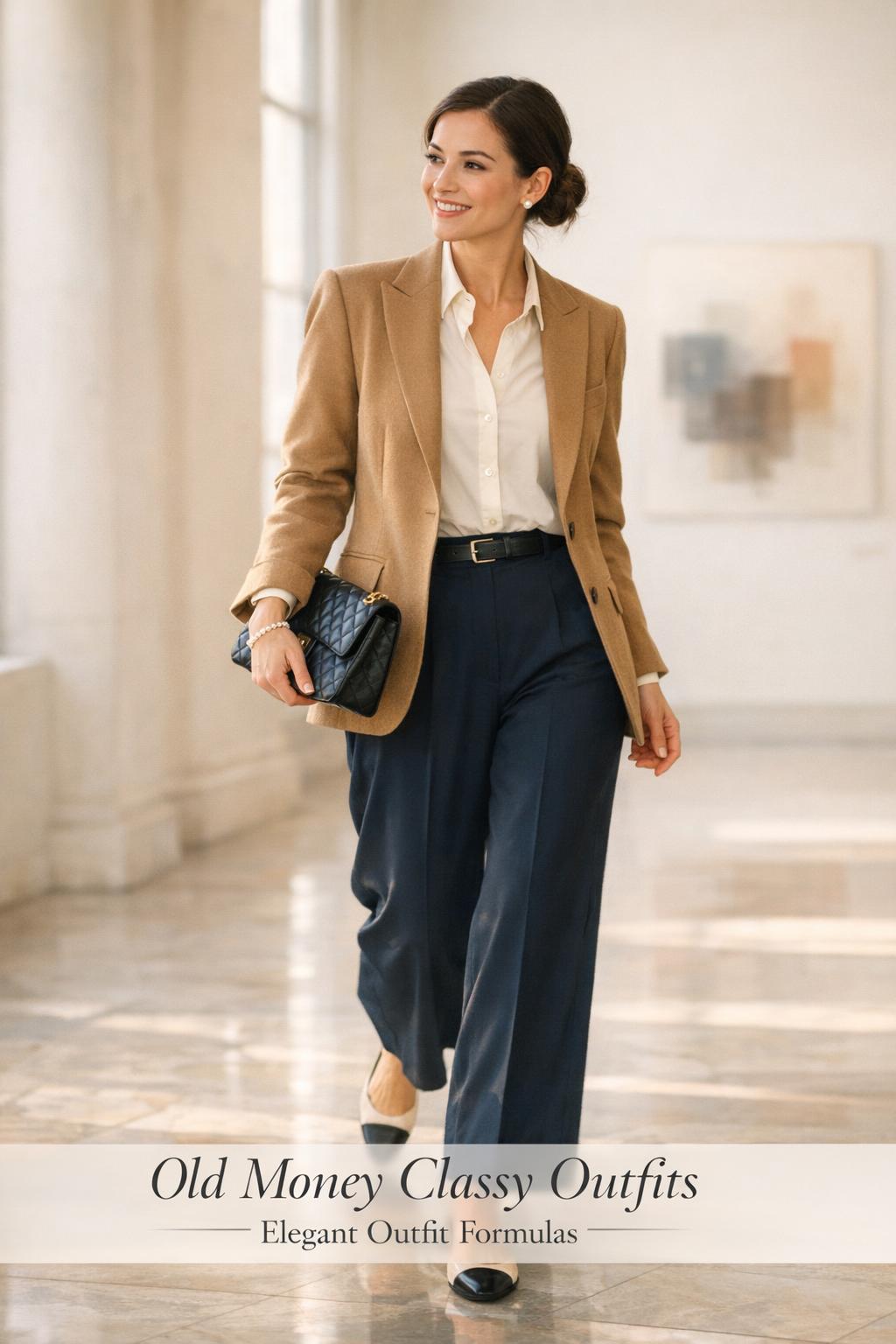
    Old money classy outfits business look in a New York art gallery: navy blazer, ivory shirt, camel trousers, pearls.
    A poised woman strides through a sunlit New York gallery in an old-money business ensemble of navy, ivory, camel, and pearls.

    What defines the old money aesthetic in 2026 (and what it isn’t)

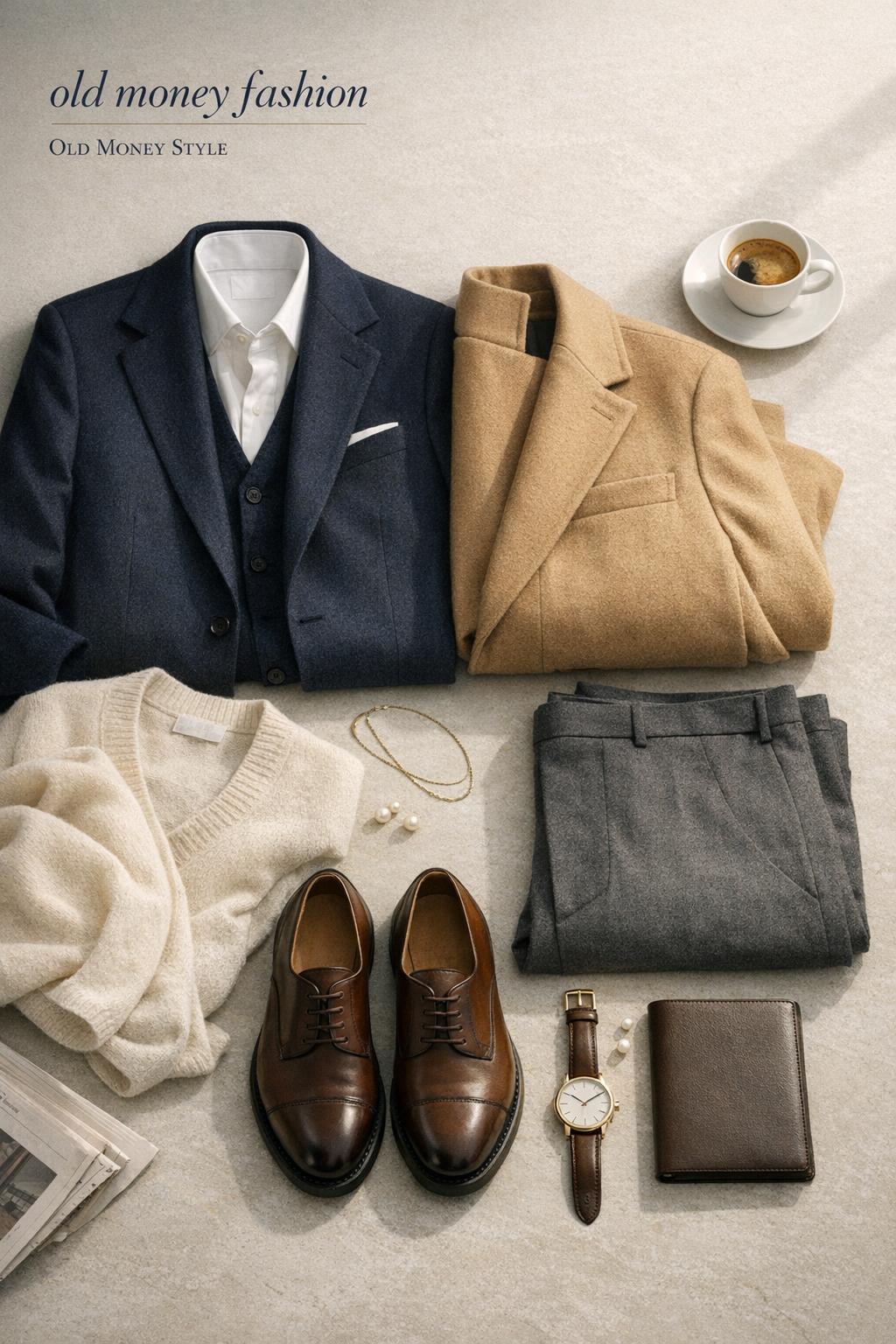
    Old money style is built on a few principles that consistently show up across the most timeless outfit formulas: tailored silhouettes, neutral colors (camel, navy, ivory, beige), subtle accessories, and a “quality-first” approach that values longevity. The goal isn’t to look flashy or obviously expensive; it’s to look composed in every context, from elevated casual to formal events. Quiet luxury is the closest adjacent concept: both prioritize understated elegance, minimal logos, and a refined color palette. The difference is that old money dressing often leans into heritage cues—tweed jackets, trench coats, classic loafers, pearls, and structured bags—pieces that look at home in traditional settings like yacht club afternoons or the races.

    What it isn’t: a rigid uniform, or an excuse to strip away personality. Old money classy outfits can be monochrome, duo-tone, or softly patterned, and they can be modern—wide-leg trousers, a clean midi dress in navy wool, or a sharp cropped jacket—so long as the effect is disciplined and the styling stays intentional. When the look fails, it’s usually because the outfit is trying to “announce” wealth instead of demonstrating taste through fit, texture, and context.

    Tip: use “restraint” as your styling filter

    If you’re unsure whether an item fits the old money aesthetic, ask a practical question: would this still look refined at an art gallery, then at upscale brunch, then at a cocktail party—without changing the vibe? Pieces that pass that test tend to be the same ones you’ll rewear for years: tailored blazers, straight or wide-leg trousers, trench coats, wool coats, crisp white shirts, fine knitwear, loafers, pearl jewelry, and structured handbags.

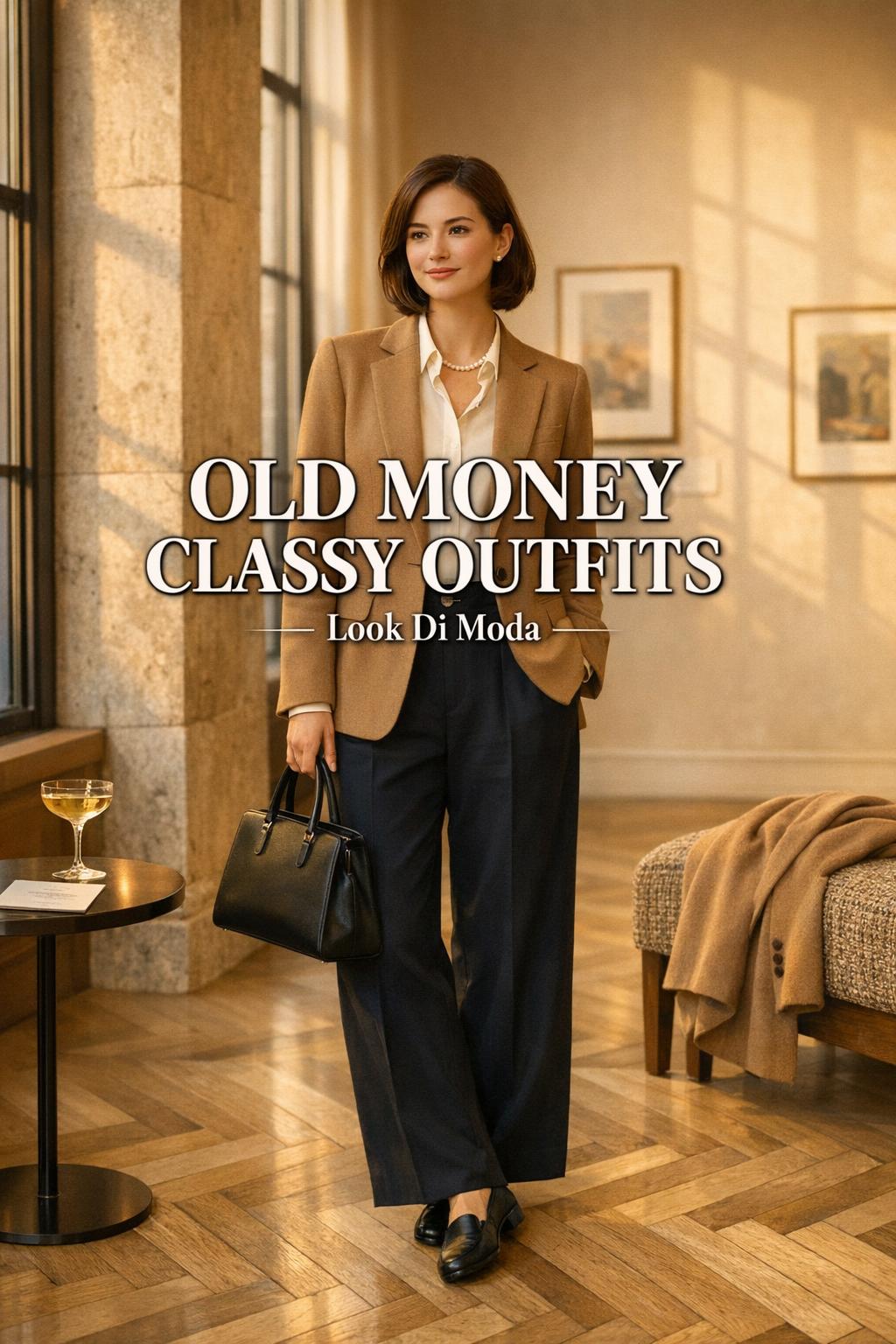
    Old money classy outfits in a New York art gallery lobby, woman in camel blazer and navy trousers in golden-hour light
    In a sunlit New York gallery lobby, she embodies old-money elegance with a camel blazer, pearls, and tailored navy trousers.

    The wardrobe backbone: pieces that quietly do most of the work

    The easiest way to build old money outfits is to stop thinking in “special occasion looks” and start thinking in building blocks. Across timeless style guides and outfit lists, the same categories repeat because they solve real problems: they layer well, they photograph well without being loud, and they can be dressed up or down with small accessory shifts.

    Top-tier tailoring: blazers, trousers, and skirts

    Tailoring is the clearest signal in old money style because it changes how everything else behaves. A tailored blazer creates structure over a crisp shirt or fine knit. Straight-leg trousers read polished with minimal effort, and wide-leg trousers can look especially refined in neutral colors when the hem and drape are clean. Skirts—especially classic silhouettes like a pencil skirt—bring instant formality without needing loud accessories. The common thread isn’t strictness; it’s balance. If your blazer is sharp and structured, keep the trousers simpler. If you choose wide-leg trousers, keep the top streamlined so the silhouette stays intentional.

    • Tailored blazer in a neutral tone for day-to-night flexibility
    • Straight-leg trousers for a classic, disciplined line
    • Wide-leg trousers in beige or ivory for modern quiet luxury
    • Pencil skirt paired with a crisp white shirt for an elegant outfit that never feels dated

    Outerwear as a signature: trench coats, wool coats, and capes

    Outerwear is where old money classy outfits become unmistakable, especially in fall and winter. A trench coat is a functional classic that works across city strolls and more formal settings, while a wool coat in camel, navy, or black offers a clean finish over tailored separates. A cape is more niche, but in the right fabric and neutral palette, it reads polished and intentional—ideal for evenings when you want warmth without losing shape.

    The practical insight here is comfort: long events (a day at the races, a gallery opening that turns into dinner) require layers that don’t restrict movement. A trench coat and a wool coat solve that while still looking refined. Keep the styling simple underneath—shirt and trousers, or a navy wool midi dress—so the outerwear stays the hero without becoming dramatic.

    Shirts and knitwear: crisp whites, fine knits, and cashmere energy

    A crisp white button-down shirt is a cornerstone because it can anchor beige trousers, a pencil skirt, or a suit and still feel appropriate for a city day or an upscale brunch. Knitwear adds the quiet luxury layer: fine knits, cashmere-like softness, and tidy necklines that fit neatly under blazers and coats. The old money effect isn’t about bulk; it’s about clean lines and texture that looks rich without shouting.

    If you’ve ever felt “too formal” in a blazer, knitwear is the bridge. A fine knit under a tailored blazer keeps the look relaxed enough for elevated casual while still reading as old money style. In warmer months, you can keep the same idea with a crisp shirt worn open at the neck—still disciplined, just lighter.

    Footwear and accessories: loafers, slingbacks, pearls, and structured handbags

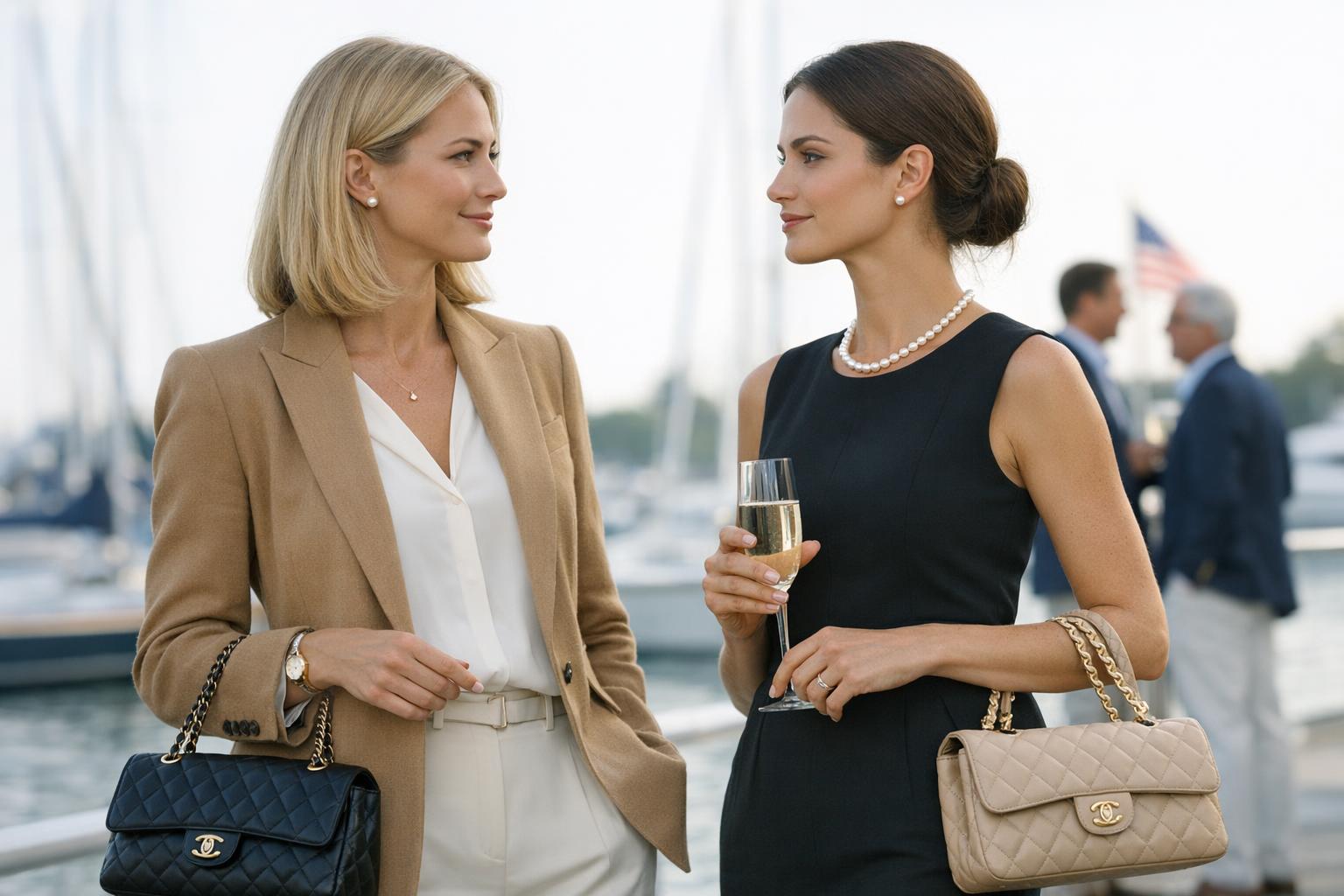
    Accessories in old money outfits are meant to look chosen, not collected. Loafers are the most consistent footwear anchor because they’re polished, comfortable, and work with trousers, skirts, and even dresses. Ballet flats can create a softer line, while classic duo-tone slingback heels offer an elegant lift for cocktail parties or evening events without tipping into flashy territory. Structured handbags and quilted handbags show up frequently because they hold shape and look intentional even with simple outfits. Pearl necklaces and restrained gold jewelry are the “quiet finishing touches” that make a neutral outfit look complete.

    • Loafers for daytime polish (and comfort during long city walks)
    • Duo-tone slingback heels for cocktail parties and gallery evenings
    • Pearl jewelry (especially a pearl necklace) for understated elegance
    • Structured handbag for clean lines; quilted handbag for a softer classic finish
    • Minimal gold jewelry for subtle warmth against navy, ivory, and camel
    Old money classy outfits photographed in soft natural light, featuring tailored blazers, pleated trousers, and loafers.
    Timeless tailoring and understated accessories define these old money classy outfits in soft, natural light.

    Color and pattern strategy: neutrals, monochrome, and restrained prints

    Old money classy outfits rely on a controlled palette not because color is “forbidden,” but because neutrals make fabrics, tailoring, and proportion more visible. Camel, navy, ivory, beige, and black are the recurring anchors. Olive can work as a muted alternative when you want depth without brightness. With neutrals, the goal is cohesion: pieces should look like they belong in the same wardrobe, not like separate styling experiments.

    Monochrome styling is one of the simplest ways to look expensive without trying. A cream or beige monochrome look—fine knit plus wide-leg trousers, finished with a structured bag—reads calm and refined. Navy monochrome feels especially classic in the U.S., and it’s a strong choice for a navy wool midi dress in old money outfits style. If you add pattern, keep it restrained: a tweed jacket, a patterned skirt with a quiet color story, or a subtle duo-tone shoe. The pattern should support the silhouette, not compete with it.

    Tip: pick two “home base” colors and one accent neutral

    For real-life wardrobe planning, choose two core neutrals you’ll repeat (for example, navy and ivory) and one accent neutral (camel or beige). This keeps your outfits looking intentional across seasons and reduces the temptation to over-accessorize. It also makes your business outfit rotation feel cohesive, especially if you wear tailored pieces often.

    Stylish woman in camel blazer and navy trousers walking in a New York gallery, showcasing old money classy outfits
    A poised woman strolls through a sunlit New York gallery in a camel blazer and navy trousers, embodying timeless elegance.

    Looks chic in motion: outfit ideas that work for real U.S. settings

    The best old money outfits look effortless, but they’re engineered to perform: you can sit through brunch, walk through a museum, stand at a cocktail party, or spend a long afternoon at the races without tugging at hems or adjusting straps. The outfit ideas below are organized by context so you can choose based on your calendar, not a numbered template.

    City strolls and art galleries: polished, comfortable, and camera-ready

    For city outings and galleries, the key is refined practicality. A tailored blazer over a fine knit with straight-leg trousers creates a clean line that works indoors and outdoors. Finish with loafers for comfort on pavement and a structured handbag that keeps the silhouette sharp. If you prefer something softer, swap the trousers for a pencil skirt and keep the top crisp—this reads composed without feeling like officewear.

    A smart alternative is a tweed blazer with beige wide-leg trousers and a crisp white shirt. The tweed adds heritage texture; the wide-leg cut modernizes it. Keep jewelry minimal—pearl earrings or a delicate pearl necklace—so the texture remains the focal point.

    Upscale brunch: elevated casual that still feels intentional

    Upscale brunch is where “too formal” can look out of place, but “too casual” breaks the old money illusion. A reliable formula is crisp shirt + beige trousers + loafers, with a trench coat if the weather is unpredictable. If you want a softer, more feminine line, a midi skirt with a fine knit works well—add a quilted handbag for classic texture and keep colors in ivory, camel, or navy.

    This is also a great moment for subtle duo-tone details, like classic duo-tone slingback heels if you’re skipping long walks. The duo-tone element adds interest without introducing a bright color that fights the palette.

    Afternoon tea and yacht-club energy: classic accessories do the talking

    Afternoon tea and yacht-club-adjacent settings reward tradition: tailored pieces, restrained jewelry, and fabrics that hold structure. Think a cropped jacket with a pencil skirt, or a tweed jacket over a crisp shirt and straight trousers. Pearl jewelry fits naturally here, especially when your clothing stays neutral and clean-lined. A structured handbag keeps the look refined, and loafers or ballet flats maintain a polished daytime feel.

    If you’re choosing between a blazer and a trench coat for a daytime event, consider the venue. Indoors, a blazer reads more “finished.” Outdoors near water, a trench coat gives you movement and weather protection without losing the old money aesthetic.

    A day at the races: tailoring plus a statement texture

    Races are one of the clearest occasions where old money classy outfits feel culturally “correct.” The easiest way to get it right is to keep the silhouette tailored and let one element add interest: a tweed blazer, a cape, or a beautifully cut trench coat. Pair with straight-leg trousers or a skirt that stays put as you walk and sit. Shoes matter more than people expect at the races; you’ll be on your feet. Loafers and structured flats can be more realistic than heels, but if you do choose heels, keep them classic—duo-tone slingbacks are a refined option that doesn’t look overdone.

    Because races often involve hours outside, prioritize layers. A wool coat works in colder months; a trench coat handles wind and light rain. Keep accessories understated—pearls, minimal gold jewelry, structured or quilted handbag—so the outfit reads composed even after a long day.

    Cocktail parties: quiet luxury after dark

    Cocktail parties are where quiet luxury and old money style overlap most clearly. You don’t need sparkle to look expensive; you need clean lines and a deliberate palette. A navy wool midi dress is a strong anchor because it reads classic and refined with minimal styling. Add duo-tone slingback heels and a structured handbag; finish with pearl jewelry or minimal gold jewelry, but not both at maximum volume. If you’d rather wear separates, a tailored blazer with a sleek skirt keeps the look sharp and understated.

    A practical note: cocktail settings often involve dim lighting and close conversation. That’s when texture matters most. A tweed jacket, a fine knit, or a crisp shirt fabric adds depth that reads “rich” without needing loud accessories.

    Galas: formal, but never flashy

    Galas are high-formality events, but old money classy outfits still avoid obvious statements. The guiding principle is restraint: a refined dress with a clean silhouette, paired with classic accessories. If you go with a dress, keep the palette grounded—navy, black, or ivory—and let the tailoring and fabric do the work. If you wear a suit-inspired look, the blazer should be sharply tailored and the trousers should drape cleanly, finished with understated jewelry and a structured handbag.

    In formal settings, it’s tempting to add “one more thing.” Usually, that’s where the look breaks. Choose one focal point—pearl necklace, impeccable blazer line, or a beautifully structured bag—and keep everything else quiet.

    The modern business outfit, interpreted through old money style

    A business outfit can easily align with old money style because both rely on tailoring and polish. The challenge is avoiding a look that feels rigid or corporate. The solution is subtle softness: fine knitwear under blazers, neutral monochrome palettes, and accessories that are classic rather than trendy.

    For an office day that shifts into a city evening, try a tailored blazer with a crisp white shirt and straight-leg trousers in navy or beige. Add loafers for daytime and keep a pair of duo-tone slingback heels ready if you have a cocktail party or gallery opening afterward. This kind of switch preserves the old money aesthetic because the foundation stays the same; only the footwear and jewelry change.

    Tip: the “meeting-to-dinner” swap list

    • Swap loafers for classic duo-tone slingback heels
    • Trade a tote-style carryall for a structured handbag
    • Add a pearl necklace or minimal gold jewelry (choose one)
    • Smooth the silhouette by buttoning the blazer or adding a trench coat as a finishing layer

    If your workplace is more relaxed, an elevated casual approach still works: fine knit plus wide-leg trousers, topped with a trench coat. Done in a neutral palette, it stays looks chic and professional without feeling like a uniform.

    Heritage houses and recognizable names (used with restraint)

    Old money dressing is often described without brand callouts, but certain heritage houses are closely associated with the mood because of their long-standing signatures. Burberry is frequently referenced in the context of trench coat aesthetics; Chanel is associated with classic texture and refined accessories; Ralph Lauren is tied to heritage-inspired American polish; Hermès is associated with craftsmanship and understated luxury. The key is not the logo—it’s the alignment between the piece and the wardrobe principles: timeless silhouette, neutral palette, and lasting wear.

    In practice, these names are useful as “north stars” for what a category should feel like. If you’re evaluating a trench coat, you’re looking for that clean, classic line and versatile color that works from upscale brunch to a day at the races. If you’re choosing a tweed blazer, you want structure and texture that elevates simple trousers. Whether you buy heritage or not, the old money aesthetic depends on coherent choices, not on name-dropping.

    Tip: avoid the “brand-first” trap

    If you build outfits around a recognizable label instead of around tailoring and palette, the result often reads louder and less refined. Start with the silhouette (blazer, trousers, skirt, trench coat), then the color (camel, navy, ivory, beige), then the accessories (loafers, pearls, structured bag). Brands should support those decisions, not replace them.

    Place-based style: how New England and the East Coast influence the mood

    Old money style in the U.S. is strongly shaped by place and social setting. New England references—Boston, Newport, and the broader East Coast club and country-club culture—help explain why the aesthetic favors tradition and practicality. These are environments with real weather shifts, lots of walking, and social calendars that move from daytime gatherings (afternoon tea, brunch) to evening events (cocktail parties, charity-style galas). That’s why trench coats, wool coats, and tailored separates show up so consistently: they perform across settings and look appropriate in conservative venues.

    New York adds another layer: city pace and gallery culture. Here, a more streamlined approach often looks most natural—monochrome neutrals, a sharp blazer, straight-leg trousers, and polished loafers. The location doesn’t change the core rules; it changes the emphasis. In Newport energy, heritage texture like tweed can feel especially at home. In a New York gallery, a clean navy-and-ivory palette can read more modern quiet luxury.

    Seasonal planning without starting over every three months

    One reason old money classy outfits look “effortless” is that the wardrobe is designed to rotate through seasons. Instead of building separate closets, you keep the same anchors and adjust fabrics and layers. Outerwear and knitwear do most of the seasonal work, while tailored pieces stay consistent.

    Fall: where old money feels most natural

    Fall is peak season for the aesthetic because wool coats, scarves, and knitwear naturally add the texture that reads refined. Pair a tweed blazer with beige trousers, or layer a trench coat over a crisp shirt and straight-leg trousers. Keep accessories classic—loafers, structured handbag, minimal jewelry—so the outfit stays timeless rather than “styled.”

    Winter: structure plus warmth, not bulk

    In winter, a wool coat becomes the centerpiece. Choose tailoring underneath that doesn’t bunch: fine knits, crisp shirts, straight-leg trousers, and skirts with clean lines. A navy wool midi dress can also be an elegant outfit solution when you want one piece that feels formal enough for evening but comfortable for long wear. The goal is warmth with shape—nothing too puffy or distracting.

    Spring: lighten the layers, keep the discipline

    Spring is about the trench coat’s return and slightly lighter combinations: crisp white shirts, tailored blazers, and neutral trousers. This is also a strong season for monochrome cream looks because the palette feels fresh without needing bright color. If your spring calendar includes gallery openings and brunches, keep footwear practical—loafers or refined flats—so you can move comfortably through a full day.

    Summer: old money without looking heavy

    Summer old money style depends on keeping the silhouette clean while reducing layers. Crisp shirting becomes more important, and accessories do more of the finishing work. Stick to ivory, beige, and navy, and let the outfit breathe: tailored trousers with a crisp shirt, or a simple dress with classic shoes and understated jewelry. The restraint matters most in summer because it’s easy for an outfit to slip into “vacation casual” and lose its polished edge.

    Look di moda, not costume: styling decisions that separate timeless from trendy

    It’s easy to mistake old money style for a strict set of rules, but the best versions are flexible and modern—look di moda in a way that still feels timeless. The difference comes down to decision-making: what you emphasize, what you remove, and how you tailor the look to your day.

    For example, wide-leg trousers can look modern and refined, but only if the waist and hem are clean and the top half stays streamlined. A tweed blazer can look heritage and elegant, but only if the rest of the outfit doesn’t become overly “themed.” A cape can look dramatic in the wrong context; it works best when the rest of the outfit is quiet, the color is neutral, and the event supports a slightly elevated feel (a formal evening, a gala, or a high-end cocktail party).

    Tips: quick refinements that make outfits look expensive

    When you want looks chic results without adding more pieces, focus on refinement rather than novelty. Prioritize clean lines, cohesive neutrals, and classic accessories that hold their shape. Small improvements—like keeping jewelry restrained or choosing a structured handbag—often change the entire impression more than adding another trend item.

    • Keep the palette tight: two neutrals plus one accent neutral is often enough
    • Use texture for depth (tweed, fine knit) instead of loud accessories
    • Let one element lead: either the blazer, the coat, or the pearls
    • Choose footwear based on the day’s walking and standing, not just the mirror

    Common mistakes that dilute the old money aesthetic (and how to fix them)

    Most “misses” happen when outfits chase the idea of wealth rather than the discipline of good dressing. The fix is usually simple: return to tailoring, neutral colors, and understated accessories.

    Mistake: relying on one “statement” item to do everything

    A single dramatic piece can easily overwhelm the old money vibe, especially if the rest of the outfit is unstructured. Fix it by pairing the statement with classics: a cape over a clean monochrome base, or a tweed blazer with simple straight-leg trousers and loafers. The statement should read like a deliberate choice, not a rescue attempt.

    Mistake: mixing too many signals at once

    Pearl necklace, quilted handbag, patterned skirt, and bold shoes all at once can tip into costume. Choose one or two classic signals and keep everything else quiet. If you’re wearing pearl jewelry, keep the bag structured and the outfit mostly neutral. If your bag is quilted and textured, keep jewelry minimal.

    Mistake: ignoring comfort and venue reality

    Old money outfits are meant to look composed over time, not just in a photo. If you’ll be walking through a city or standing at the races, prioritize loafers or comfortable classic shoes. If the event runs long and temperatures change, choose a trench coat or wool coat that layers cleanly. A look that forces constant adjustment never reads effortless.

    A practical mini-gallery: mix-and-match outfit formulas you’ll actually reuse

    Instead of one-off “perfect outfits,” the most useful approach is a set of repeatable formulas. Each formula below uses the same core pieces—tailoring, neutrals, classic accessories—but shifts the emphasis for different situations.

    Formula 1: the crisp shirt anchor

    Start with a crisp white shirt and build outward. Pair it with beige wide-leg trousers for a modern quiet luxury feel, or with straight-leg trousers for a sharper business outfit. Add a tailored blazer for structure and loafers for polish. For a more event-ready finish—like a gallery opening—swap loafers for duo-tone slingback heels and add a structured handbag.

    Formula 2: the tweed texture lift

    Use a tweed blazer (or tweed jacket) as the texture story and keep everything else calm. Choose neutral trousers or a pencil skirt, minimal gold jewelry or pearls, and a bag with structure. This formula excels for afternoon tea, a day at the races, and polished city errands because it looks intentional without looking overly formal.

    Formula 3: navy as the quiet powerhouse

    Navy is one of the easiest ways to communicate classic elegance in the U.S. A navy wool midi dress creates an instant elegant outfit foundation for cocktail parties and even some formal evenings, especially when paired with restrained accessories. If you prefer separates, navy trousers with a fine knit and a tailored blazer keep the mood refined and adaptable for day-to-night.

    Formula 4: the trench coat finishing layer

    A trench coat can be the entire “old money” signal if the pieces underneath are simple and well-fitted. Wear it over a crisp shirt and trousers for upscale brunch, or over a knit and skirt for a more dressed-up daytime look. Add loafers for walking-heavy days; add slingbacks when the venue is mostly seated or indoors.

    Formula 5: monochrome cream for a clean, look di moda silhouette

    Monochrome in ivory, cream, or beige reads modern and quietly luxurious when the fit is precise. Try a fine knit with wide-leg trousers, finished with a structured handbag and minimal jewelry. The key is keeping the tones close and the lines crisp; the payoff is a looks chic result that feels current without being trendy.

    Shopping and sourcing mindset: budget-to-bespoke without the stress

    Old money style is often misunderstood as “buy the most expensive version.” In reality, the wardrobe is about choosing fewer pieces that integrate seamlessly. Whether you’re shopping entry-level, investing gradually, or aiming for aspirational pieces, the decision framework stays the same: prioritize fit, fabric feel, and classic shapes that repeat across your life—work, weekends, and events.

    Start with the items that appear in the widest range of outfits: a tailored blazer, straight-leg trousers, a crisp white shirt, loafers, and a trench coat. Then add one texture piece (tweed blazer) and one dress option (a classic midi dress, especially in navy) to cover cocktail parties and more formal invitations. Accessories come last, but they matter: pearl jewelry and a structured handbag elevate even the simplest neutral outfit.

    Tip: build around “most-worn” categories first

    If you’re deciding between buying a new dress for a single gala or upgrading a blazer you’ll wear weekly, the blazer usually creates more value in an old money wardrobe. Dresses are useful, especially for cocktail parties, but tailored pieces generate the repeating outfits that define the aesthetic over time.

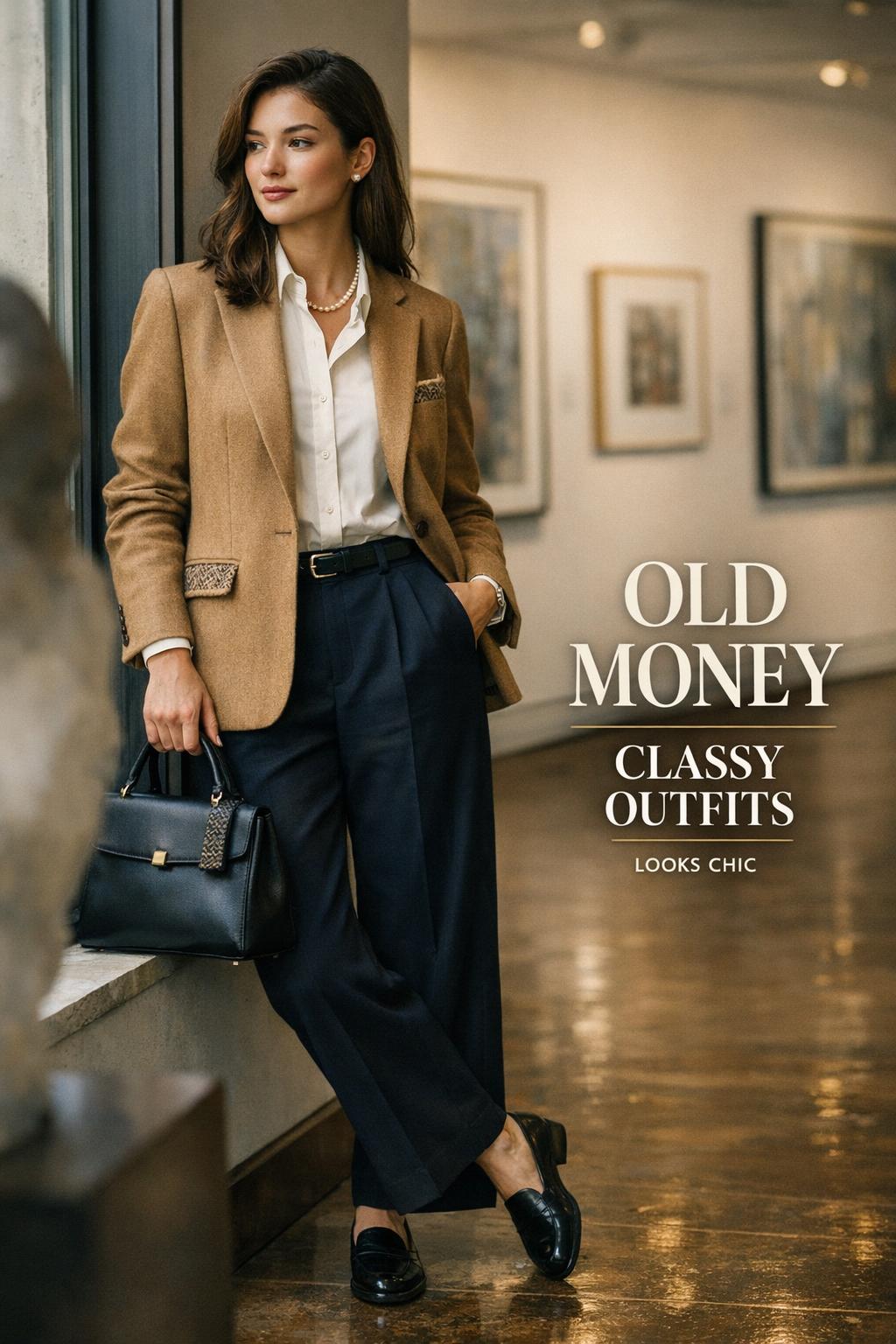
    Old money classy outfits in a New York art gallery, stylish woman in camel blazer and navy trousers by a window
    A poised woman in a camel blazer and navy trousers embodies old-money elegance in a sunlit New York art gallery.

    FAQ

    What is old money style, exactly?

    Old money style is a timeless approach to dressing built on restraint, tailored silhouettes, neutral color palettes (camel, navy, ivory, beige), and understated accessories like loafers, pearl jewelry, and structured handbags, creating a refined look without obvious flash.

    How is quiet luxury different from the old money aesthetic?

    Quiet luxury and the old money aesthetic overlap in their preference for minimal branding and refined basics, but old money style leans more heavily into heritage cues like tweed jackets, trench coats, classic loafers, and traditional event dressing for settings such as the races, tea, and formal gatherings.

    What are the easiest starter pieces for old money classy outfits?

    A practical starter set is a tailored blazer, straight-leg trousers, a crisp white shirt, loafers, and a trench coat, then a wool coat for cold weather and one classic dress option such as a navy wool midi dress for cocktail parties and evenings.

    How do I make a business outfit look old money without feeling too formal?

    Use tailoring as the foundation (blazer and trousers or a pencil skirt) and soften the feel with fine knitwear or a crisp shirt in a neutral palette; keep accessories classic and subtle, and rely on loafers for day polish with an optional swap to duo-tone slingback heels after work.

    Which colors look most “old money” in everyday life?

    Camel, navy, ivory, beige, and black are the most consistent anchors because they highlight fabric texture and tailoring; olive can work as a muted alternative when you want depth while keeping the overall palette restrained.

    Are loafers always the best shoe for this style?

    Loafers are the most reliable daytime option because they read polished and are comfortable for city strolls and long events, but ballet flats and classic duo-tone slingback heels also fit the aesthetic when the occasion is dressier or involves less walking.

    How do I dress old money for a day at the races?

    Choose a tailored foundation (blazer with trousers or a refined skirt), add one heritage texture like tweed or a classic finishing layer like a trench coat or wool coat, and keep accessories understated with pearls and a structured bag so the outfit stays refined through hours of standing and walking.

    What accessories make an outfit look quietly expensive?

    Pearl jewelry, minimal gold jewelry, a structured handbag (or a classic quilted handbag), and polished shoes like loafers or duo-tone slingbacks tend to elevate neutral outfits because they add intentional detail without overwhelming the look.

    How can I avoid looking like I’m wearing a costume version of old money style?

    Keep the outfit grounded in modern fit and real-life practicality: use one or two classic signals (like tweed or pearls), maintain a tight neutral palette, and prioritize tailoring and comfort so the look feels natural across settings like brunch, galleries, cocktail parties, and formal events.