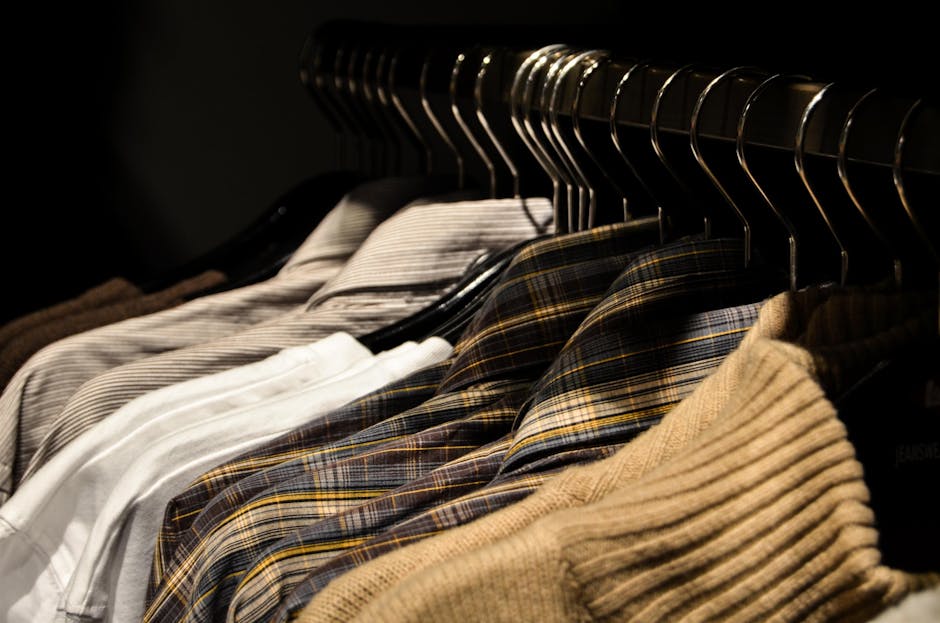
The Ultimate Guide to Building a Male Capsule Wardrobe (2026)
A male capsule wardrobe is a small, intentional set of clothing that mixes and matches easily, covers most occasions, and reduces daily decision fatigue. Done well, it becomes a reliable “system” of wardrobe essentials—built around fit, a coherent color palette, and season-aware layering—so you can get dressed quickly without feeling repetitive.
This guide gives you a practical blueprint: core principles, an 8–12 piece starting capsule, budget tiers, climate-first layering guidance for the U.S., step-by-step instructions, and outfit formulas you can repeat. The goal is a minimalist wardrobe that still feels personal, versatile, and realistic.
Quick Start Checklist (Read This First)
If you want the simplest path to a capsule wardrobe for men, start here. You’ll refine details later, but these steps prevent the most common mistakes: buying too much, choosing inconsistent colors, and skipping fit.
- Pick a core palette of neutrals (then choose 1–2 accent colors)
- Decide your capsule size (start with 8–12 core pieces)
- Choose your “default” level of dress (casual, business casual, smart casual)
- Audit your closet: keep what fits, remove what doesn’t, list true gaps
- Build from core categories first (tops, bottoms, footwear, outerwear)
- Create 5–7 outfit formulas you can repeat
- Add seasonal plug-ins only after the core works
Tip: If you feel stuck, commit to a smaller capsule first. A small, coherent capsule that you actually wear beats a larger one that still leaves you “nothing to wear.”
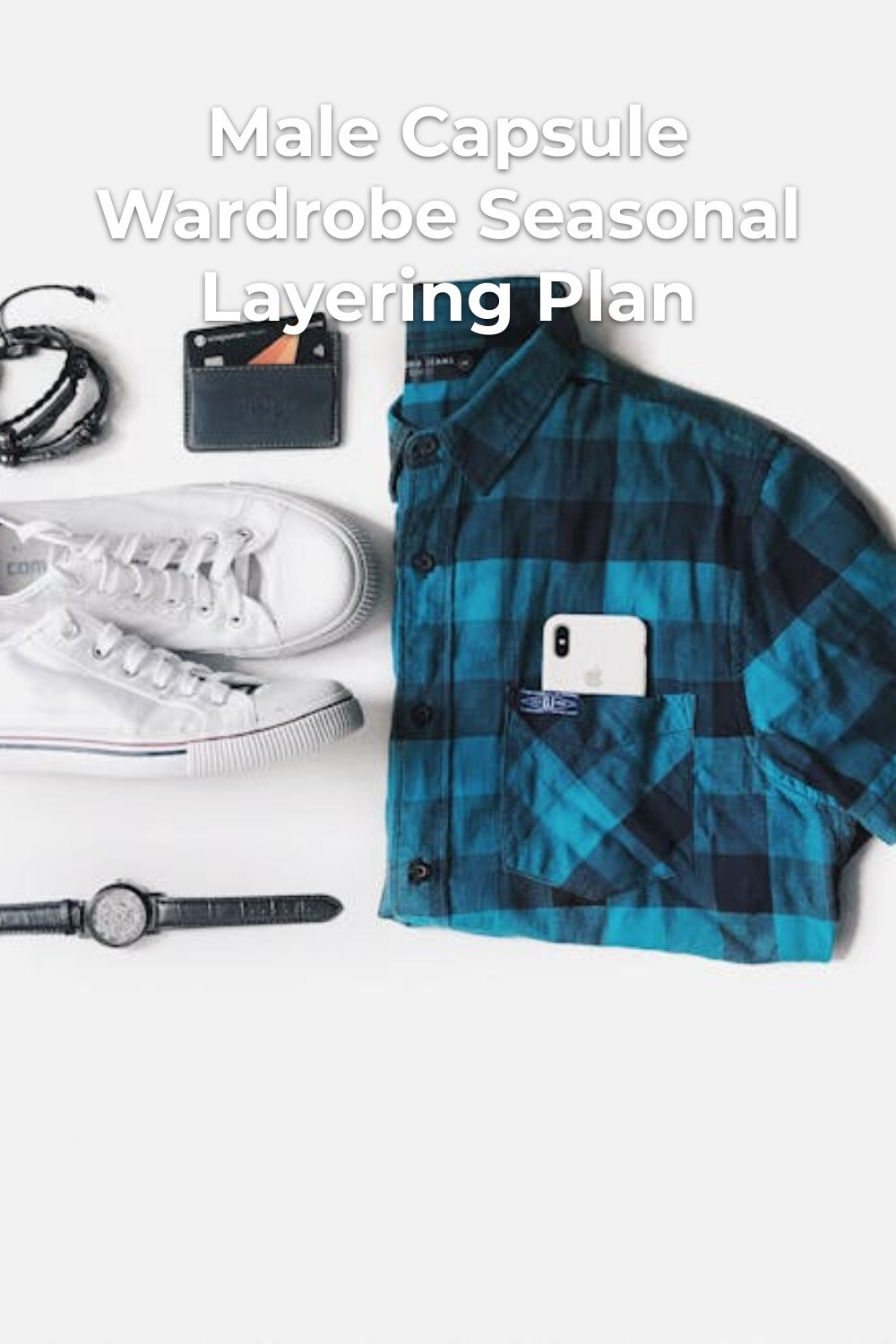
What a Capsule Wardrobe for Men Is (and Why It Works)
A capsule wardrobe is a curated collection of core capsule pieces designed to create many outfits from relatively few items. In practice, it means your tops, bottoms, shoes, and outerwear all work together—so you can rotate combinations without constantly shopping or second-guessing what matches.
For most men, the appeal is practical: fewer decisions, fewer “wrong” purchases, and a more consistent personal style. A capsule can also support a more thoughtful approach to consumption by emphasizing durability, repair, and resale rather than constant replacement.
Common Myths About a Male Capsule Wardrobe
A capsule doesn’t mean owning the same outfit every day, dressing in only one color, or buying expensive items you don’t need. It also doesn’t require a rigid number of pieces. The point is a reliable wardrobe foundation: a clear set of essentials that can expand by season and still stay cohesive.
Tip: Think “core + plug-ins.” Your core pieces do most of the work year-round, and seasonal expansions add comfort and weather protection without disrupting the system.
Core Principles to Guide Your Capsule
Capsules succeed when you build them like a toolkit: each item has a job, and most items can work with most others. The principles below are the difference between a minimalist wardrobe that feels effortless and a small wardrobe that feels limiting.
Start With a Core Color Palette
A neutral-based palette keeps your outfits interchangeable. The simplest approach is to anchor your tops and outerwear in neutrals, keep bottoms in a tight range, and then add 1–2 accent colors if you want variety without complexity.
Neutrals reduce friction: fewer “orphan” items, fewer mismatched outfits, and more options with fewer pieces. Accent colors work best when they appear in small doses—one knit, one shirt, or a simple accessory—so you stay flexible.
Fit, Fabric, and Longevity
Fit is the most visible quality marker in a capsule wardrobe. A smaller wardrobe puts your essentials on repeat, so anything that fits poorly will annoy you more often. Prioritize pieces that feel good, move well, and look clean without constant adjustment.
Fabric matters because your capsule is about repeat wear. Choose durable, comfortable materials that hold up and feel appropriate for your climate. Your goal isn’t trend-chasing; it’s a consistent lineup of items that you can rely on.
Tip: If you’re upgrading slowly, start with the items you wear most frequently (often tops, pants, and everyday shoes). This improves your “cost-per-wear” logic immediately because the most-used pieces deliver the most value.
Seasonal Adaptability Through Layering
Seasonal adaptability is what makes a year-round core capsule realistic in the U.S. Instead of owning completely separate wardrobes, you keep a stable base and adjust with layers: knitwear, outerwear, and seasonal footwear.
Layering also increases outfit variety without expanding your item count dramatically. A single extra layer can shift the same base outfit from casual to smart casual, or from mild weather to colder temperatures.
The 8–12 Core Pieces for a Practical Capsule (U.S.-Climate Version)
There’s no single perfect number, but an 8–12 piece core is a practical starting point for a male capsule wardrobe. It’s large enough to cover the week and small enough to stay intentional. You can expand later with seasonal capsules.
Tops: T-Shirts, Button-Downs, and Knitwear
Your tops create most of your outfit variety. Focus on clean lines, consistent colors, and layering-friendly fits. This is where a neutral palette does the most work because tops are the most visible part of your wardrobe.
- 2–4 T-shirts that fit well and layer cleanly
- 1–2 Oxford button-down shirts (or similar button-downs) for versatility
- 1 knitwear piece for layering (a simple sweater or similar)
Tip: Keep at least one shirt that can shift your look upward (for example, a button-down you can wear open over a T-shirt or buttoned on its own). That one item multiplies the number of capsule outfits you can build.
Bottoms: Jeans, Chinos, and Trousers
Bottoms set the “tone” of your capsule: jeans lean casual, chinos sit comfortably in business casual territory, and tailored trousers push you toward smart casual. Your best capsule is the one that matches how you actually live.
- 1–2 pairs of jeans as a casual foundation
- 1 pair of chinos for a flexible, polished option
- Optional: 1 pair of tailored trousers if your life includes more smart casual moments
Keep the cuts consistent with your style and body preferences. The capsule approach works best when you don’t fight your clothes—your bottoms should be the easiest part of getting dressed.
Outerwear and Footwear: The Pieces That Make It “Work”
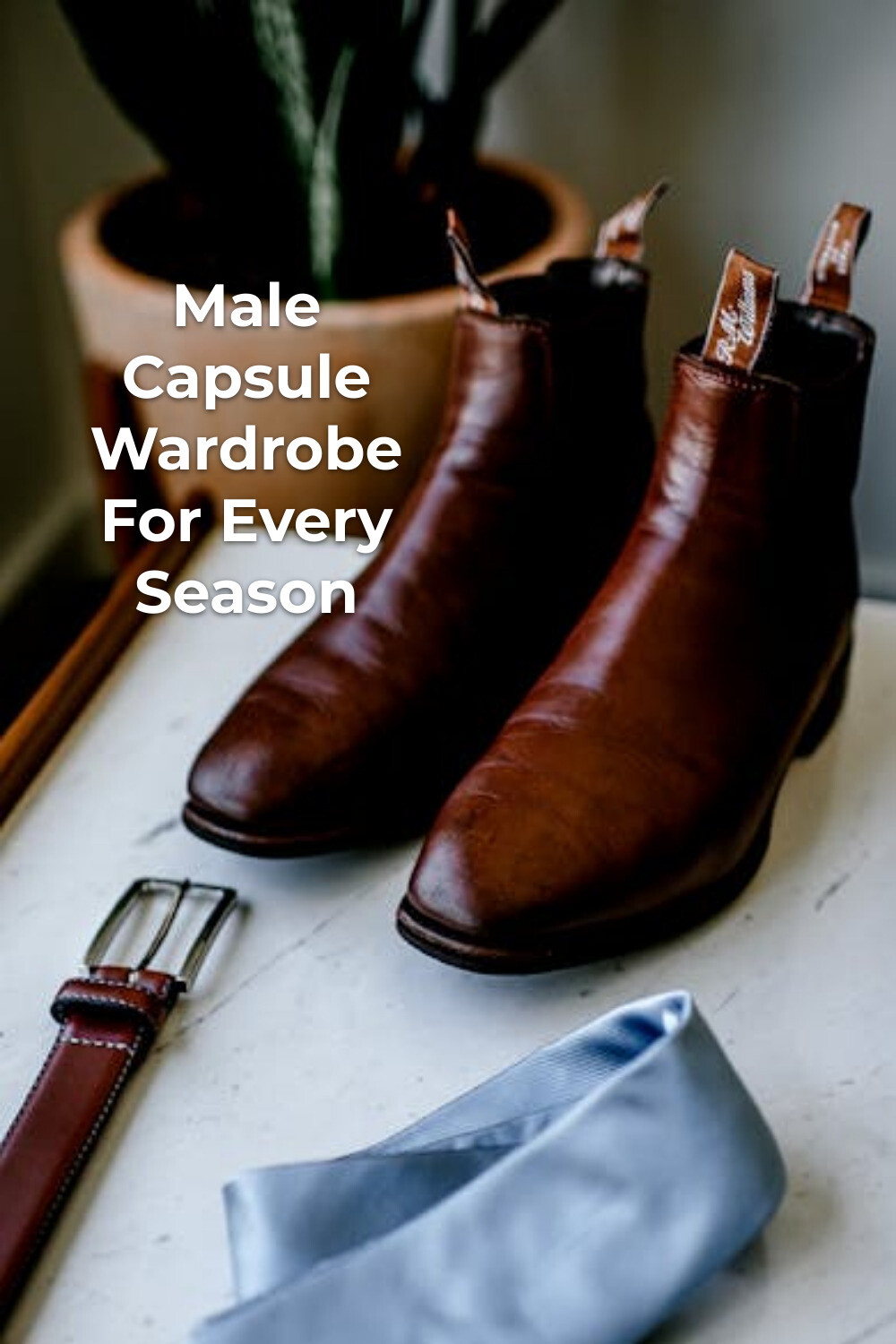
Outerwear and footwear often determine whether a capsule feels complete. A limited set of shoes can still cover a wide range of situations if you choose a small lineup that balances casual and dressier needs.
- 1 versatile jacket that matches your climate and daily life
- Optional: 1 blazer-style layer for smarter outfits if needed
- 1 pair of sneakers you can wear most days
- 1 pair of dress shoes or loafers for occasions that require a step up
Tip: If you want a capsule that feels more “put together” instantly, upgrade shoes first. Even a simple outfit formula looks sharper when the footwear is clean, cohesive, and appropriate.
Accessories and Details (Keep It Simple)
Accessories should support your capsule, not complicate it. A belt, a watch, and a small set of season-appropriate add-ons can finish outfits without creating clutter.
- 1–2 belts that match your main shoes
- 1 watch as a consistent daily piece
- Optional: minimal cold-weather add-ons when needed
The goal is consistency. When your accessories align with your palette and footwear, they make your outfits look intentional—even when you’re repeating the same core items.
Item-by-Item Buying Guide (Budget Tiers)
Budget matters because a capsule wardrobe is about value over time. A higher price isn’t automatically better, and a low price isn’t automatically wasteful; what matters is how often you wear the item, how long it lasts, and how many outfits it supports. These tiers help you build a capsule with realistic expectations.
Under $300 Core Capsule (Start Small, Wear Often)
This tier is about building a functional core with disciplined choices. Keep your palette tight, prioritize fit, and avoid buying duplicates “just in case.” You’re aiming for a small set of essentials that you can wear repeatedly while you learn what gaps are real.
Focus your spending on your most-worn categories: everyday tops, one great pair of bottoms, and dependable sneakers. If outerwear is climate-critical where you live, treat it as a priority item and keep everything else even simpler.
Tip: In a tight budget capsule, reduce the total number of pieces before you reduce fit. A smaller capsule that fits properly will look better and feel more versatile than a larger set of poorly chosen items.
$301–$700 Expanded Capsule (Better Materials, Better Versatility)
This tier is where capsules usually start to feel effortless. You have room for a clearer structure: more consistent quality, a stronger layering piece, and footwear that can cover casual and dressier situations without feeling like a compromise.
Use the extra room to strengthen your foundations rather than adding novelty. An expanded capsule is still minimalist: it just removes friction by giving you enough options to handle different weeks, weather swings, and social contexts.
Tip: Add one “bridge” item that moves between dress levels—like a button-down that works with jeans and chinos, or a blazer-style layer that works with a T-shirt and with a button-down. Bridge items increase outfit count without bloating your closet.
$701+ Premium Capsule (Durability, Fit Refinement, Long-Term Thinking)
A premium capsule emphasizes longevity and repeat wear. This tier is less about having more pieces and more about having fewer, better ones: consistent fit across categories, reliable fabrics, and outerwear/footwear that hold up season after season.
Premium spending works best when it’s tied to real usage. If you’re building a capsule to reduce consumption, consider strategies like repair and resale so your wardrobe stays lean without becoming disposable.
Tip: Before upgrading, calculate your “cost-per-wear” in plain terms: how often you’ll realistically wear the item, and how many outfits it supports. Premium pieces make sense when they become regular players, not rare special-occasion items.
Climate Zones and a U.S.-First Layering Guide
A capsule wardrobe for men works best when it matches the climate you actually dress for. The same “essentials list” can feel perfect in one region and frustrating in another, so treat your climate as a design constraint. Build a year-round core, then add seasonal plug-ins based on temperature swings and humidity.
Mild Coastal States (Long Shoulder Seasons)
In mild coastal climates, layering is more valuable than heavy seasonal gear. You can rely on a stable set of core pieces and rotate lighter outerwear and knitwear as temperatures shift. A capsule here succeeds when you can add or remove one layer and still look coherent.
Tip: Treat outerwear as a styling tool as much as a weather tool. A clean, versatile jacket can act like the “final layer” that makes simple outfits look intentional.
Continental Plains and Mountain States (Big Temperature Swings)
Regions with bigger swings reward a true core-and-expansion approach. Your core stays consistent, but you’ll need more deliberate seasonal rotations: heavier layers in colder periods and lighter combinations in warmer periods. The best capsules in these areas depend on layering that can scale up or down.
Tip: Keep your core palette especially consistent. When you add seasonal layers, a coherent palette ensures you can stack layers without clashing, even when you’re wearing more pieces at once.
Humid Southeast (Breathability and Simple Outfits)
In humid climates, a capsule should prioritize comfort and simplicity. You’ll likely rely more on lightweight tops and fewer heavy layers, while still keeping one or two options for cooler indoor environments and transitional weather.
Tip: Build outfit formulas that are easy and repeatable for heat: a reliable top + a reliable bottom + sneakers. In a capsule, consistency is a feature, not a flaw.
Northern Winters (Warmth Without Losing Versatility)
In cold-winter regions, your capsule must include winter-ready expansions. Your core pieces can remain mostly the same, but winter outerwear and layering become non-negotiable. The trick is to avoid buying a separate winter wardrobe; instead, add winter plug-ins that still work with your core tops and bottoms.
Tip: Avoid duplicating entire categories by season. Keep your base items consistent, and let outerwear and layering do the heavy lifting when the temperature drops.
How to Build Your Capsule Wardrobe Today (Step-by-Step)
Building a male capsule wardrobe is easiest when you treat it as a process, not a shopping spree. The steps below keep you focused on what you’ll actually wear and prevent the common trap of buying a “perfect” capsule on paper that doesn’t match your real life.
Step 1: Audit Your Current Closet
Start with what you already own. Pull out the items you wear most often and the items you avoid. Your goal is to identify wardrobe foundations you can keep, plus gaps you need to fill to create a coherent capsule.
- Keep: items you wear often that fit well and match your palette
- Question: items you like but rarely wear (ask why)
- Remove: items that don’t fit, don’t match, or feel off in your daily life
Tip: If you can’t explain when you would wear an item, it probably doesn’t belong in your core capsule. Put it aside and revisit later instead of forcing it into the system.
Step 2: Define Your Capsule Size (Start With 8–12 Pieces)
Choose a starting size that you can manage. Many men do well with 8–12 core pieces because it’s enough for variety but small enough to stay intentional. If you prefer a stricter framework, you can explore a “10-item capsule wardrobe for men” approach; if you want a bit more flexibility, you can explore a “15-item capsule wardrobe men” style framework.
Choose your number based on your routine: how often you do laundry, how many dress codes you deal with, and how much weather variability you have. The capsule should make life easier, not create scarcity stress.
Step 3: Build 5–7 Outfit Formulas
Outfit formulas are repeatable templates that remove guesswork. They’re the easiest way to turn “a list of essentials” into a wardrobe you can actually use. Start with a small set you can wear across the week.
- T-shirt + jeans + sneakers
- Button-down + chinos + sneakers
- Button-down + jeans + dress shoes or loafers
- Knitwear + jeans + sneakers
- T-shirt + chinos + jacket + sneakers
- Button-down + tailored trousers (if you own them) + dress shoes
Tip: If a formula requires “the perfect” one-off item to work, it’s too fragile for a capsule. Capsules should be resilient: small substitutions should still look good.
Step 4: Shop Only for True Gaps
Once you’ve tested your outfit formulas, you’ll see what’s missing. Shop deliberately: one gap at a time. This keeps your wardrobe aligned with your day-to-day needs and prevents over-accumulation.
When you consider a new item, ask two questions: does it match your palette, and can it pair with most of your capsule? If the answer is no, it may be a fun piece, but it’s not a core capsule piece.
Seasonal Capsule Rotations (Spring, Summer, Fall, Winter)
Seasonal capsules work best as expansions rather than total swaps. Keep your year-round core stable, then rotate a small set of seasonal pieces in and out. This keeps your closet simple while making your wardrobe feel fresh and climate-appropriate.
How to Use Seasonal Plug-Ins Without Losing the “Capsule” Feel
Seasonal plug-ins should connect to the same palette, fit standards, and outfit formulas as your core. If seasonal items force you into new colors or new shoe categories, they can make your capsule harder to use.
- Spring: keep the core, adjust layering and outerwear weight
- Summer: lean on lighter tops and simpler outfits; keep footwear versatile
- Fall: reintroduce knitwear and jacket layering as temperatures drop
- Winter: add the warmest outerwear and the most reliable layers; keep the core consistent
Tip: Store off-season items out of daily sight. A capsule wardrobe works partly because it reduces visual clutter and makes your “good options” easier to see and choose.
Outfit Formulas You Can Rely On (Casual to Smart Casual)
Outfit formulas are the secret weapon of the best capsule wardrobes. They turn your closet into a dependable menu: you pick a formula, then rotate the specific pieces. Below are practical formulas that cover casual, business casual, and smart casual needs using typical capsule items like T-shirts, Oxford button-downs, jeans, chinos, a jacket, sneakers, and dress shoes or loafers.
Casual Formulas (Everyday, Errands, Weekend)
Casual outfits should be effortless and repeatable. In a capsule, you want a few combinations that always work, so you don’t waste time “experimenting” on busy mornings.
- T-shirt + jeans + sneakers
- T-shirt + chinos + sneakers
- Knitwear + jeans + sneakers
- Button-down worn open + T-shirt + jeans + sneakers
- T-shirt + jeans + jacket + sneakers
Tip: If your casual outfits feel too repetitive, don’t add more items first—adjust the balance of tops. A single extra top that matches your palette often creates more variety than adding another pair of pants.
Business Casual Formulas (Work, Meetings, Dinner)
Business casual is where capsules shine because the category rewards consistency and clean basics. A well-fitting button-down and chinos can carry you through many situations with only minor changes.
- Oxford button-down + chinos + sneakers
- Oxford button-down + chinos + dress shoes or loafers
- Knitwear over a button-down + chinos + dress shoes or loafers
- Button-down + jeans (dark, clean) + dress shoes or loafers
Tip: Keep one go-to “meeting outfit” formula that always feels right. When you have a reliable default, your capsule reduces stress instead of adding it.
Smart Casual Formulas (Events, Date Night, Elevated Looks)
Smart casual is about small upgrades: a sharper layer, cleaner lines, and dressier footwear. You don’t need many special items; you need a few that integrate seamlessly with your core.
- Button-down + tailored trousers (optional) + dress shoes or loafers
- Button-down + chinos + blazer-style layer (optional) + dress shoes or loafers
- Knitwear + chinos + dress shoes or loafers
Tip: If you rarely dress up, keep your smart casual options minimal. One sharp layer and one pair of dress shoes or loafers is often enough when everything else in your capsule is already coherent.
Common Pitfalls (and How to Avoid Them)
Most capsule wardrobe failures aren’t about bad taste—they’re about building a capsule that looks good as a list but doesn’t work in daily life. Avoid these common problems and your capsule will feel easier from week one.
Pitfall: Over-Accumulation
Buying “just one more” is the fastest way to lose the benefits of a capsule. If you keep adding pieces, you bring back clutter and decision fatigue. Instead, set a temporary rule: one in, one out, at least during the build phase.
Pitfall: Color Fatigue (or Random Colors That Don’t Combine)
When colors don’t align, you end up with fewer wearable combinations. Keep your neutrals consistent and add only a small number of accent colors. If you’re unsure, remove the accent until your core feels effortless, then reintroduce one accent thoughtfully.
Pitfall: Ignoring Fit
Because capsules rely on repeat wear, fit problems become daily annoyances. If a piece is “almost right,” it will probably become the item you skip. Build around pieces that fit confidently, and treat fit as a requirement, not a bonus.
Tip: When deciding between two similar items, choose the one that supports more outfit formulas. In a capsule, versatility beats novelty.
Maintenance: Caring for a Capsule Wardrobe
A capsule wardrobe is easier to maintain than a crowded closet, but it requires more consistency: each item gets more wear, so basic care matters. Maintenance is also part of a more sustainable approach—keeping pieces in rotation longer, repairing instead of replacing, and moving items on when they no longer fit your needs.
Repair, Alterations, and Resale
Small fixes can extend the life of your wardrobe foundations, and minor fit refinements can make your capsule feel premium even if your budget isn’t. When something no longer works for you, resale can keep your closet lean and help fund upgrades that improve your cost-per-wear.
Tip: Schedule a quick capsule check-in a few times per year. Ask what you wore most, what you avoided, and what you missed. This is how a capsule stays aligned with your life transitions and seasonal reality.
FAQ
How many pieces should a men’s capsule have?
Many men start successfully with an 8–12 piece core capsule and then add small seasonal expansions as needed; others prefer stricter frameworks like a 10-item capsule wardrobe for men or a more flexible 15-item capsule wardrobe approach depending on lifestyle, laundry habits, and climate.
Can I include sneakers in a male capsule wardrobe?
Yes—sneakers are often the everyday shoe in a capsule wardrobe for men, especially for casual and business casual outfits, and they pair well with core items like jeans, chinos, T-shirts, and button-downs.
What are the most essential pieces in a capsule wardrobe for men?
A practical capsule typically includes versatile tops (like T-shirts and an Oxford button-down), reliable bottoms (like jeans and chinos), at least one jacket or outer layer suited to your climate, and footwear that covers everyday wear plus a dressier option such as dress shoes or loafers.
How do I build a capsule wardrobe for men without buying everything at once?
Start by auditing what you already wear, define a small core capsule size, create a handful of outfit formulas, and then shop only for true gaps one at a time so every new item matches your palette and works with most of your existing pieces.
How do I choose a color palette for a minimalist wardrobe?
Use neutrals as the foundation so most items naturally combine, then add 1–2 accent colors if you want variety; keeping colors consistent across tops, bottoms, outerwear, and shoes increases the number of capsule outfits you can create.
How does climate affect a capsule wardrobe?
Climate determines how much you rely on layering and seasonal plug-ins: mild regions can lean on light layers, while areas with northern winters or big temperature swings need stronger outerwear and more deliberate seasonal rotations without changing the year-round core.
What are outfit formulas and why do they matter?
Outfit formulas are repeatable templates—like T-shirt + jeans + sneakers or button-down + chinos + loafers—that reduce decision fatigue and make a small set of wardrobe essentials feel like many different outfits.
How do I think about cost-per-wear in a capsule wardrobe?
Cost-per-wear is simply the idea of judging value by how often you’ll realistically wear an item and how many outfits it supports; capsule wardrobes improve this by focusing spending on versatile pieces you repeat frequently rather than on occasional, hard-to-pair purchases.
Leave a Reply