Capsule Wardrobe List: Your Practical Guide to 30–37 Essential Pieces
A capsule wardrobe list is a streamlined set of clothing and accessories designed to mix and match easily, so getting dressed takes less time and your closet works harder. Most modern capsule-wardrobe frameworks land around 30–37 items per season, built on versatile staples plus a few elevated, non-basic pieces that add personality without limiting outfit options.
This guide walks you through what a capsule wardrobe is, how many pieces to include (including a simple 3-month rotation model), and a complete core capsule list organized by category. You’ll also get practical tips for color planning, decluttering, outfit formulas, seasonal adjustments, and smarter shopping—so you can build a capsule closet that feels timeless, functional, and distinctly you.
What a Capsule Wardrobe Is (and Why It Works)
A capsule wardrobe is a curated collection of essentials you actually wear—chosen to coordinate across outfits and fit your lifestyle. Instead of relying on a closet packed with one-off items, a capsule focuses on pieces that remix well together: tops that work with multiple bottoms, layers that dress up or down, and shoes and accessories that support many outfits.
Why it works is simple: a smaller, more cohesive wardrobe reduces decision fatigue and makes outfit planning faster. It also encourages intentional shopping—adding pieces because they serve multiple outfits, not because they only work in one look.
Tip: A capsule wardrobe isn’t a uniform. The goal is a “minimal closet” that still reflects your taste. If you love a certain silhouette, texture, or a few signature colors, you can build around that—just keep coordination and versatility as the standard for what makes the cut.
How Many Pieces Should Be in a Capsule Wardrobe? (The 30–37 Rule)
The 30–37 Item Range Explained
Many capsule wardrobe checklists use a target range of about 30–37 items. Think of this as a practical sweet spot: enough variety to cover real life, but focused enough that nearly everything works together. The exact number matters less than the outcome—easy mixing, repeatable outfit formulas, and fewer “nothing to wear” moments.
As you build your capsule wardrobe essentials, be consistent about what counts as an “item.” Most capsule frameworks focus on clothing, shoes, and core accessories. You can tailor the boundaries to your preferences, but keep the system simple so it’s easy to maintain.
The 3-Month Rotation Model (Seasonal Capsule)
A common approach is to plan your capsule in a 3-month cycle—essentially a seasonal capsule wardrobe. You pare down to your chosen item count, wear that set for the season, then plan the next capsule by swapping in weather-appropriate pieces. This rotation helps you stay aligned with your climate and daily needs while still relying on a core set of timeless wardrobe staples.
Tip: If the idea of a strict seasonal switch feels overwhelming, keep a small core that works year-round (like jeans, tees, and a blazer) and rotate only the climate-dependent layers and shoes. That gives you the benefits of a capsule without the pressure of a total reset.
The Core Capsule: A 30-Piece Capsule Wardrobe List (By Category)
Below is a practical 30-item core capsule wardrobe list organized by category. Use it as a starting point and adjust quantities to your lifestyle—whether you need more workwear, more casual pieces, or a travel-friendly set that leans into comfort and layering. The key is that every item should coordinate with multiple others.
Tops (8 items)
Tops carry most outfits, so prioritize fit, comfort, and easy layering. A strong mix includes polished options (for work or dinners) and casual staples (for weekends and travel). Aim for mostly neutral colors with one or two accent tones that flatter you and work across bottoms.
- 2 everyday tees (in neutral foundation colors)
- 1 elevated tee or knit top (a step up from a basic)
- 2 versatile button-downs or shirts (easy to wear open as a layer)
- 2 blouses or dressy tops (for work or evening)
- 1 layering tank or cami (for transitional outfits)
Tip: When choosing tops, test them against your most-worn bottoms. If a top only works with one specific pair of pants, it’s likely not a capsule piece yet.
Bottoms (6 items)
Bottoms anchor your capsule closet. A balanced set usually includes denim, tailored trousers, and at least one option that feels more relaxed. Your best capsule bottoms are the ones you can wear three ways: casual, work-appropriate, and slightly dressed up depending on shoes and layers.
- 2 pairs of jeans (one classic wash, one alternate wash or silhouette)
- 2 pairs of tailored trousers (or one trouser and one wide-leg/structured pant)
- 1 casual pant (comfortable and polished enough for errands or travel)
- 1 skirt (choose a shape that works with tees and blouses)
Tip: If you regularly repeat the same two bottoms, that’s not a flaw—it’s a signal. Let your real-life habits guide your capsule wardrobe essentials instead of forcing “should” items into your list.
Outerwear & Layers (6 items)
Outerwear determines whether your capsule works across occasions and temperatures. Aim for layers that can stack: a blazer over a tee, a sweater over a button-down, and a jacket that finishes a look without feeling overly trendy. If your climate shifts dramatically, this category is where seasonal rotation matters most.
- 1 blazer (a classic, tailored layer for work and dinner)
- 2 sweaters or knit layers (one lighter, one warmer)
- 1 casual jacket (easy, everyday layer)
- 1 coat (your primary cold-weather outer layer)
- 1 transitional jacket or outer layer (for variable weather)
Tip: Choose at least one outer layer that immediately elevates basics. Even a simple jeans-and-tee outfit looks intentional with a sharp blazer or a well-chosen jacket.
Dresses (2 items)
Dresses are high-impact capsule pieces because they create a full outfit with minimal effort. Pick silhouettes you can style multiple ways—layered with a blazer, worn with sneakers, or dressed up with a sleek shoe.
- 1 day-to-night dress (works for daytime plans and evenings)
- 1 casual dress (easy for weekends, travel, or warm weather)
Tip: If you rarely wear dresses, keep just one versatile option in your capsule and allocate the second slot to an extra layer or bottom you’ll wear more often.
Shoes (5 items)
Shoes should cover your real calendar: workdays, weekends, bad weather, and at least one dressier scenario. Capsule wardrobe checklists often succeed or fail here—because the wrong shoes can limit outfits quickly. Choose pairs that match your core palette and feel comfortable enough to repeat.
- 1 everyday sneaker (clean, versatile)
- 1 flat (simple and walkable)
- 1 ankle boot (or practical boot that anchors many outfits)
- 1 heel or dress shoe (for events and evenings)
- 1 weather-appropriate shoe (seasonal, climate-dependent)
Tip: If you’re building a travel-friendly capsule wardrobe, prioritize shoes that can handle long walking days and still look polished. One comfortable, versatile pair often does more work than multiple “special occasion” options.
Accessories (3 items)
Accessories create outfit variation without adding a lot of closet volume. A small, intentional set can make your capsule feel more “styled” while keeping coordination simple.
- 1 shoulder bag (everyday and structured enough for multiple settings)
- 1 belt (to finish outfits and add polish)
- 1 scarf or accessory accent (adds variety and seasonal flexibility)
Tip: If your wardrobe leans minimal, consider using accessories as your “spice”—a scarf, belt, or bag can add personality while the clothing stays timeless and easy to mix.
Building Your Palette: Colors That Coordinate
Start With a Neutral Foundation
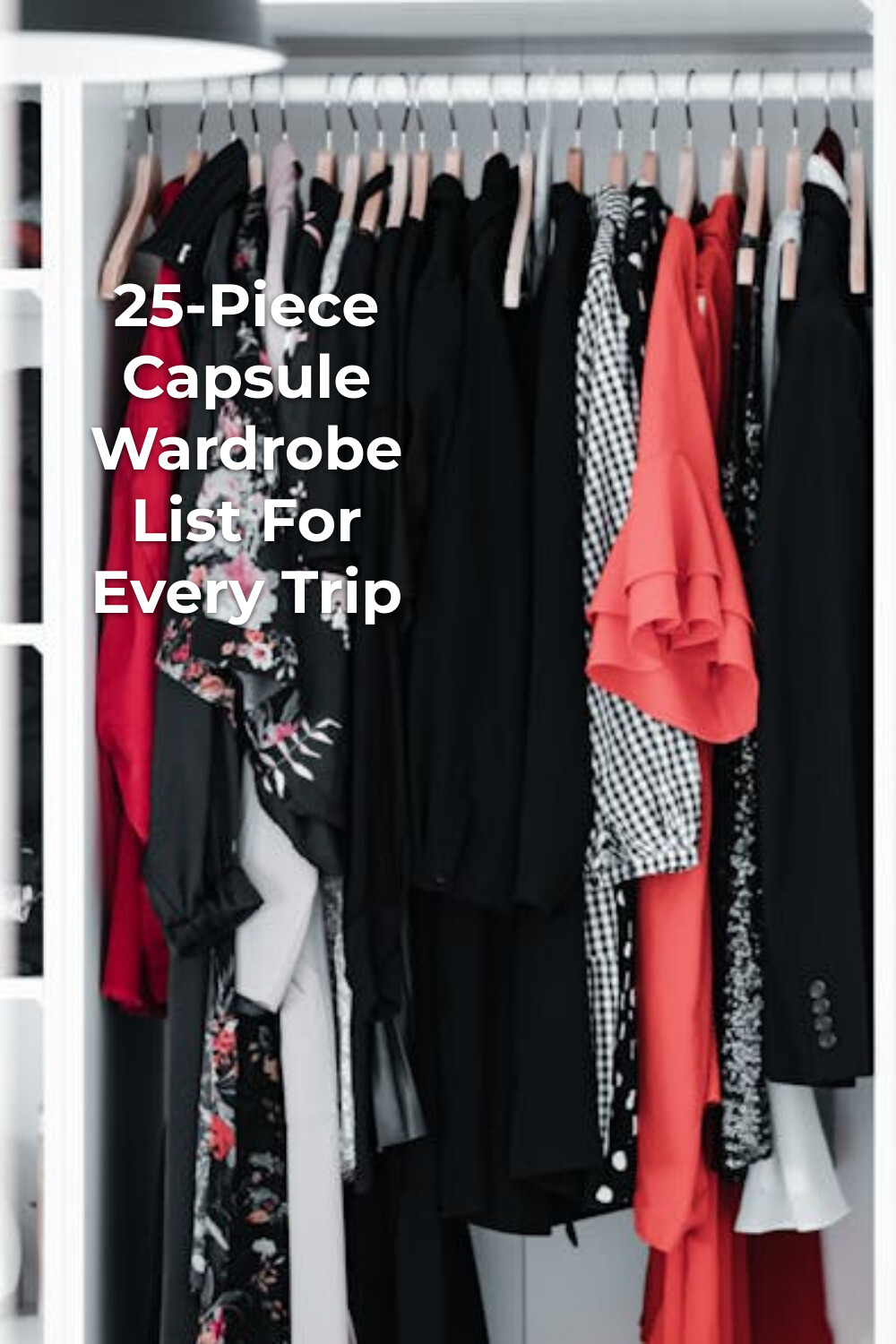
A cohesive color palette is what makes a capsule wardrobe list feel effortless in practice. Many capsules begin with a neutral foundation—classic tones that coordinate across categories and don’t compete with each other. Common neutral anchors include black, white, navy, gray, and camel.
The goal isn’t to limit yourself to neutrals forever. It’s to create a base where most tops work with most bottoms, and your outerwear and shoes don’t “fight” the rest of your wardrobe.
Add Accent Colors (Without Losing Versatility)
Accent colors keep your capsule from feeling flat. A simple approach is to choose one or two accent colors you enjoy wearing and repeat them across a few pieces—such as a blouse, a knit, or a scarf—so they feel integrated rather than random. This is also where “non-basic” pieces fit in: elevated colors, textures, or subtle statements that still mix and match.
Tip: If you’re unsure whether a new color belongs in your capsule closet, check if it pairs with your main bottoms and your primary outer layer. If it doesn’t coordinate with those anchors, it may live better outside your core capsule.
How to Declutter: From Full Wardrobe to Capsule Closet
Most people don’t need to shop first—they need to edit. Decluttering is how you uncover your true wardrobe staples, remove friction, and build a capsule from what you already own. The most effective capsule wardrobes are built around real wear patterns, not an idealized version of your life.
Quick Declutter Questions That Keep You Honest
When you’re choosing what stays in your seasonal capsule, focus on fit, frequency, and versatility. If a piece is uncomfortable, hard to style, or rarely worn, it’s probably not a capsule essential for you right now.
- Does it fit today and feel good for a full day?
- Have I worn it recently and would I wear it again this week?
- Can I create at least three outfits with it using items I already own?
- Does it match my current lifestyle (work, weekends, events, travel)?
- Would I replace it if it disappeared tomorrow?
Tip: If you’re torn, set “maybe” items aside during your first pass. Wear your capsule for a few weeks and see what you miss. Real life will tell you what deserves a spot more accurately than overthinking.
A Simple Seasonal Audit Checklist
A capsule wardrobe works best when it’s maintained on a schedule—often a 3-month rotation. At each seasonal switch, audit what worked and what didn’t. This keeps your capsule aligned with weather changes, evolving style preferences, and the reality of what you actually reach for.
- Identify your most-worn items and keep them as the core for the next season
- Note what you avoided and why (fit, comfort, color, practicality)
- Swap in climate-appropriate layers and shoes
- List true gaps (items that would unlock multiple outfits)
- Remove duplicates that don’t add meaningful variety
Tip: Treat your capsule like a working system. The point is progress and ease, not perfection. Each rotation should make the next season simpler.
How to Style Your Capsule: 15 Outfit Formulas (Work, Weekend, Evening, Travel)
Outfit formulas are the “engine” of a capsule wardrobe—repeatable combinations that feel good, look intentional, and work across the week. Use these as templates, then swap colors, shoe types, and layers to create variety while keeping the structure consistent.
- Tee + jeans + blazer + flat
- Button-down + tailored trouser + shoulder bag
- Blouse + jeans + ankle boot
- Sweater + tailored trouser + sneaker (polished casual)
- Tee + skirt + jacket
- Dress + blazer + heel (meeting-to-dinner)
- Casual dress + sneaker + scarf
- Button-down worn open + tee + jeans (easy layering)
- Sweater over button-down + trouser + flat
- Blouse + skirt + heel
- Tee + casual pant + sneaker (travel day)
- Dress + ankle boot + jacket (transitional weather)
- Sweater + jeans + ankle boot
- Blazer + tee + skirt + flat
- Blouse + tailored trouser + dress shoe (evening polish)
Tip: If you want your capsule wardrobe outfits to feel less repetitive, change one “high-impact” element at a time: swap the shoe, switch the outer layer, or add a scarf. You’ll get a new look without needing more clothing.
Seasonal Adjustments: Adapting Your Capsule Across the Year
A capsule wardrobe is designed to adapt. Seasonal capsules keep your closet relevant to weather and lifestyle changes while protecting you from overbuying. Your core doesn’t have to change dramatically; instead, shift the pieces that respond to temperature, precipitation, and the need for layering.
Lightweight Summer Capsule Strategy
For summer, prioritize breathable, easy pieces and simplify layers. This is a good season to lean on tees, lightweight tops, a casual dress, and shoes that support long days. Keep your palette consistent so you can create outfits quickly even when the weather makes you want the simplest option.
Tip: When building a summer capsule, avoid adding too many “vacation-only” pieces. The strongest capsules support your everyday life first, with a few flexible items that can also travel.
Warmer Winter Capsule Strategy
Winter capsules are won or lost in outerwear and layering. Focus on a reliable coat, warm knits, and shoes that match your conditions. Keep the rest of the capsule stable—jeans, trousers, and core tops—then use sweaters and jackets to create warmth and outfit variety.
Tip: If you live in a region with frequent temperature swings, prioritize transitional layers that can be added or removed easily. A capsule wardrobe is most useful when it handles real weather, not just a single “ideal” temperature.
Transitional Pieces for Shoulder Seasons
Spring and fall often require the most outfit flexibility. This is where a blazer, a lightweight sweater, and a transitional jacket earn their place. You can also rely on simple layering: a tee under a button-down, topped with a jacket, paired with jeans or trousers.
Tip: When you’re planning a seasonal capsule, start with shoes and outerwear first. Those pieces are the most climate-dependent, and they influence which bottoms and layers feel practical.
Practical Shopping Guide: Building a Capsule Wardrobe Without Regret
Once you’ve decluttered and tested outfit formulas, shopping becomes more targeted. A good capsule wardrobe checklist doesn’t push you to replace everything—it helps you identify the few pieces that unlock multiple outfits. Whether you shop budget or investment, the goal is the same: pieces that earn their space through repeated wear.
Investment vs. Budget Pieces
Some items tend to work especially hard in a capsule—outerwear, shoes, and a great blazer often define the look of many outfits. Other items, like tees and layering pieces, may be easier to replace over time. The best approach is to decide where you want longevity and where you’re comfortable refreshing as needed.
Quality Signals to Look For
In capsule wardrobes, quality matters because repeat wear is the point. Prioritize fabric, construction, and fit so items remain comfortable and presentable across many uses. If something looks great but feels fussy or restrictive, it’s less likely to become a true wardrobe staple.
- Comfortable, reliable fit you can wear for a full day
- Versatility across at least three outfits you’d actually wear
- Colors that work with your established neutral foundation
- Layering potential (especially for tops, knits, and outerwear)
- A role in your week (work, weekend, evening, travel) rather than a one-time scenario
Tip: Before you buy a new item, write down three complete outfits using pieces already in your capsule wardrobe list. If you can’t do it quickly, that’s a sign the item may be an impulse buy rather than a capsule essential.
Make Your Capsule Feel Personal (Not Basic)
Many people worry a capsule closet will feel boring. The solution isn’t more items—it’s better choices within the same structure. This is why some capsule wardrobe checklists emphasize including a few “spiced-up” pieces beyond basics: items with a distinctive cut, a refined fabric, or a signature color that still coordinates with your palette.
Personal style can show up in controlled ways: a blouse you love wearing, an accessory that adds polish, or a jacket that makes every outfit look intentional. The capsule framework gives you a reliable base; your taste is what makes it yours.
Tip: If you want more variety without adding more clothes, focus on styling. One blazer can read very differently over a tee and jeans versus over a dress. A scarf can make a repeated outfit feel fresh without disrupting coordination.
Bonus: Your Capsule Wardrobe Checklist and Planning Tools
A capsule wardrobe succeeds when it’s easy to repeat and easy to adjust. Many people use a simple checklist to plan categories and avoid overbuying duplicates, and some prefer a wardrobe-planning tool to map outfits and visualize how often items get worn.
If you like structure, create a “capsule wardrobe checklist” from the 30-item list above and revisit it at each 3-month rotation. If you like visuals, plan a set of outfits from your capsule (even a month’s worth) to confirm you’ve covered your work, weekend, evening, and travel needs.
Tip: Your first capsule doesn’t need to be perfect. Build a workable set, test it, and refine. The most effective capsule wardrobes are iterative—improving each season as you learn what you truly wear.
Conclusion: Start With a Small, Cohesive Capsule Today
The best capsule wardrobe list is the one that reflects your real life: your climate, your calendar, your comfort needs, and your personal style. Start with a 30–37 item target, build around coordinating neutrals, add a few personality pieces, and use a 3-month seasonal rotation to keep your capsule fresh and functional.
If you’re new to the process, begin by editing what you already own, then shop only to fill true gaps that unlock multiple outfits. With a clear framework and a little iteration, a capsule wardrobe becomes less about having less—and more about wearing more of what you love.
FAQ
How many items should be in a capsule wardrobe?
Many capsule wardrobes are built around about 30–37 items, often planned as a seasonal set. The exact number matters less than having a cohesive collection where most pieces mix and match easily and fit your lifestyle.
What is the 3-month rotation model for a capsule wardrobe?
The 3-month rotation model means you curate a capsule for the current season, wear it consistently, then reassess and swap pieces as weather and needs change. This keeps your wardrobe practical while still relying on a stable core of essentials.
Do I have to stick to neutrals in a capsule wardrobe?
No—neutrals are simply an easy foundation because they coordinate well. You can include accent colors or more elevated pieces as long as they integrate with your core palette and work across multiple outfits.
Can I include non-basic or trend-forward items in my capsule wardrobe list?
Yes, and many modern checklists encourage it in moderation. A capsule can include a few “spiced-up” pieces that add personality, as long as they remain versatile and don’t limit how many outfits you can build.
Should I declutter before I shop for capsule wardrobe essentials?
Yes, decluttering first helps you identify what you already wear, what fits your current life, and what gaps truly exist. Shopping becomes more intentional when you know which additions will create multiple new outfits.
How do I know if an item belongs in my capsule?
A strong capsule item fits well, feels comfortable, coordinates with your palette, and works in several outfits you would actually wear. If it only works in one scenario or requires special styling to feel right, it may not be a core capsule piece.
How can I make a capsule wardrobe feel less repetitive?
Use outfit formulas and vary one high-impact element at a time, such as shoes, outerwear, or a key accessory. This creates noticeable change without adding lots of new clothing.
What categories should a capsule wardrobe checklist include?
Most capsule checklists are organized by tops, bottoms, outerwear and layers, dresses or skirts, shoes, and a small set of accessories. This structure makes it easier to confirm you have balanced options for work, weekends, evenings, and travel.
Leave a Reply