
The Ultimate Guide to Building a Capsule Travel Wardrobe for Every Trip
A capsule travel wardrobe is a compact collection of mix-and-match clothing you can pack for a trip and wear in multiple combinations without overpacking. Done well, it helps you travel with less, get dressed faster, and still look put-together—whether you’re heading to a temperate city, a humid destination, or a cold-weather itinerary that demands smart layering.
This guide walks you through a practical system: how to choose versatile pieces, why quality and fabric choice matter, how to plan around season and climate, and how to use simple “rules” (including the popular 5-4-3-2-1 approach) to create a cohesive travel capsule. You’ll also find example item lists for women and men, tips for wrinkle resistance and easy care, and an end-to-end packing checklist you can reuse for future trips.
What a Travel Capsule Wardrobe Is (and Why It Works)
A travel capsule wardrobe is a travel-focused version of a capsule wardrobe: fewer pieces, chosen intentionally, that work together across multiple outfits. Instead of packing “just in case” extras, you build a small set of staples—tops, bottoms, layers, and shoes—that can be dressed up or down and reworn in different combinations.
Why it works is simple: versatility reduces volume. When every top matches every bottom (and layers fit over each other), you get more outfit options from fewer items. That’s the heart of capsule wardrobe travel—planning outfits as a system rather than as single-use looks.
Beyond saving space, the travel capsule approach supports decision-making on the road. A cohesive palette means less time figuring out what to wear, fewer “this doesn’t go with that” moments, and an easier path to packing carry-on-only when that’s your goal.
Start With the Trip: Season, Climate, and Trip Length
Before you choose a single item, define the real constraints of your trip. Season and climate determine fabrics and layers, and trip length determines how many repeats you’ll build in (and whether you’ll plan to wash items). A capsule wardrobe for travel succeeds when it’s specific to your itinerary rather than a generic list.
Season and climate: plan for the conditions you’ll actually face
Many travelers run into trouble when they plan for “average” weather instead of daily reality. A climate-appropriate wardrobe doesn’t mean packing more; it means choosing pieces that adapt. For warm destinations, breathable and easy-care fabrics matter. For cold destinations, layering strategy matters. For multi-city travel, your capsule should accommodate shifts in temperature without requiring a second wardrobe.
Tip: If your trip includes big temperature swings, prioritize layers over bulk. A streamlined outer layer plus a mid-layer can cover more situations than multiple heavy options.
Trip length: decide how much you’ll repeat (and whether you’ll do laundry)
Trip length influences quantity more than variety. For shorter trips, a tighter set of items can cover everything with minimal repeats. For longer trips, you can still keep the capsule small by planning simple care routines—like quick washes and air-drying—so you can rewear core pieces.
Think in terms of a rewear plan: tops can rotate more frequently, bottoms typically repeat well, and layers do the heavy lifting. When your capsule is cohesive, repeating doesn’t feel repetitive—it feels intentional.
Core Principles: Versatility, Quality, and a Cohesive Color Palette
The strongest travel capsule wardrobes share a few principles: every item must earn its space, fabrics must perform in real travel conditions, and the color palette must allow easy mixing. These principles show up repeatedly in successful step-by-step packing systems because they make outfit-building automatic.
Versatility: build for layering and mix-and-match
Versatility means each piece can be used in multiple outfits and settings. A practical way to test this is to imagine at least three different looks per item. A blazer, for example, can work with jeans for daytime, over a simple top for meetings, or as a polish layer for dinner. The same logic applies to outerwear like a trench and to footwear like boots or neutral flats.
Tip: Choose “bridge” items that connect casual and elevated outfits. A polished layer (like a blazer) or a structured outer layer (like a trench) can make simple tees and straight-leg jeans feel instantly more intentional.
Quality: invest in pieces that hold up to repeat wear
Travel is hard on clothes: sitting, walking, packing and unpacking, and repeat wears. Investing in high-quality clothes is a common theme in effective capsule planning because durable pieces keep their shape and appearance over time. You don’t need a huge wardrobe; you need a reliable one.
Quality also supports comfort—especially when your capsule is intentionally small. If you’re going to wear a pair of jeans multiple times, you want them to be the pair that fits well, feels good, and works with most of your tops and shoes.
Color: neutrals first, plus one accent if you want variety
A cohesive palette is the easiest way to multiply outfit options. Many capsule systems lean on neutrals because they mix naturally: think of a base of neutral staples with the option to add a single accent color for interest. When most pieces coordinate, you can pack fewer items without sacrificing outfit variety.
Tip: If you’re unsure where to start, build around neutrals and let one standout piece (or one color family) provide contrast. The goal is compatibility, not strict uniformity.
The 5-4-3-2-1 Rule: A Simple Packing Framework
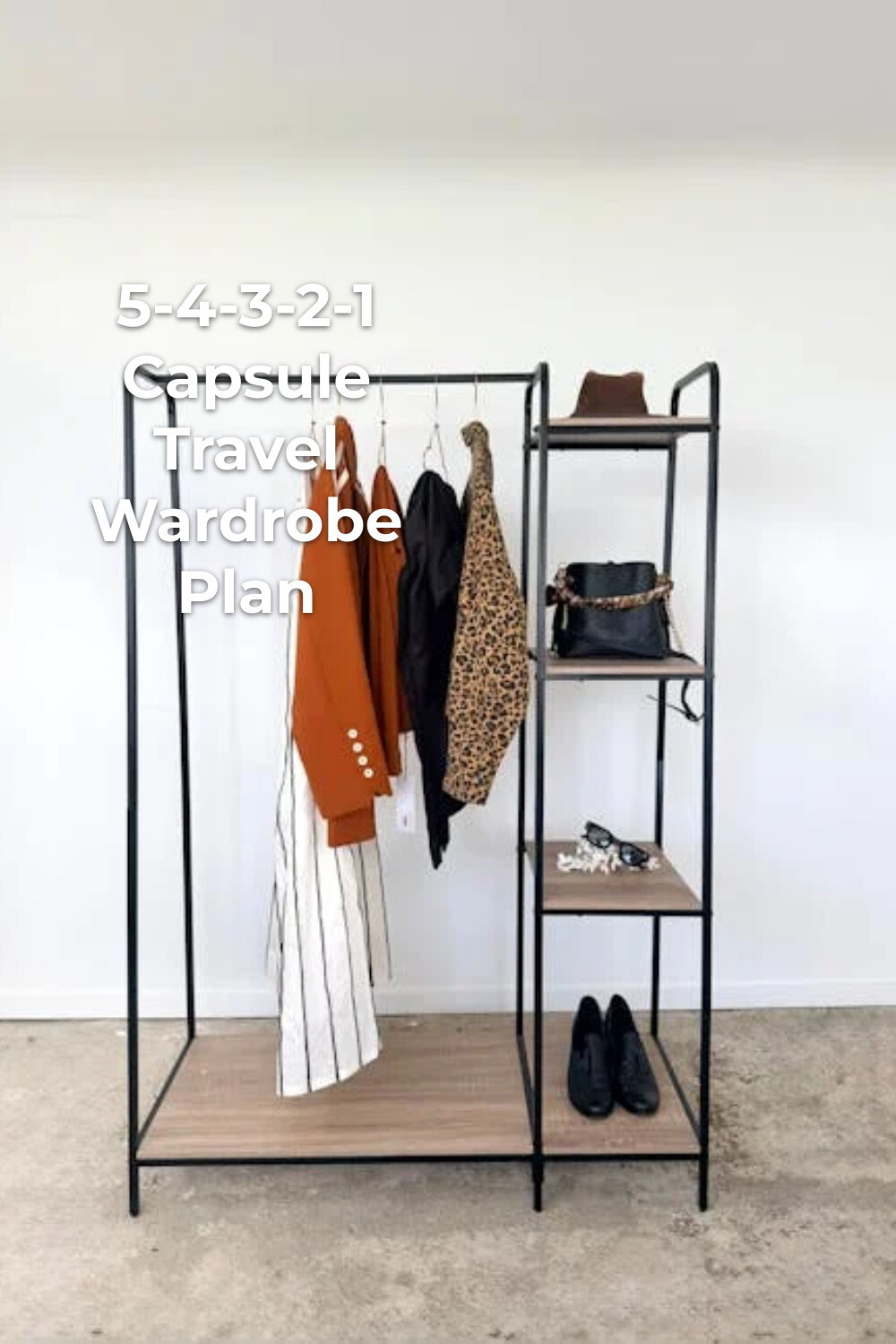
If you like clear structure, the 5-4-3-2-1 approach is a practical way to assemble a travel capsule wardrobe without overthinking it. The idea is to choose a set number of items by category so your outfits naturally balance and you avoid packing too many of one thing.
- 5 tops
- 4 bottoms
- 3 layers
- 2 pairs of shoes
- 1 set of accessories (kept cohesive and intentional)
This framework is flexible. You can swap categories depending on your destination and preferences—for example, trading one bottom for a dress or emphasizing layers for a colder climate. What matters is that each piece works with the rest of the capsule and supports the activities on your itinerary.
The 10-Item Travel Capsule: Minimalist, Practical, and Repeatable
If you want an even tighter system, a 10-item travel capsule focuses on the essentials. The point isn’t to limit yourself for the sake of limitation—it’s to prove how much range you can get from a small, well-chosen set. This minimalist travel wardrobe approach is especially helpful for carry-on packing and multi-city itineraries.
Women’s 10-item capsule (with easy substitutions)
This list leans into widely useful categories—tops, bottoms, layers, and shoes—so you can create outfits for travel days, daytime exploring, and a more polished dinner look.
- 1 blazer (polish layer)
- 1 trench or versatile outer layer
- 1 sweater (or warm mid-layer)
- 2 reliable tees (core tops)
- 1 cami or simple top (works alone or under layers)
- 1 straight-leg jeans
- 1 additional bottom (choose what fits your trip)
- 1 dress (optional swap for a bottom/top if you prefer)
- 1 pair of boots (especially useful for city travel)
- 1 pair of packable flats (such as ballerinas) or a second versatile shoe
You can refine this further by using a neutral palette and choosing tops that layer comfortably under your blazer or trench. If your trip is warm, you might swap the sweater for a lighter layer and prioritize breathable options; if it’s cold, you’ll likely keep the sweater and treat the trench as part of a layering system.
Men’s 10-item capsule (built for repeat wear)
A men’s travel capsule wardrobe typically prioritizes shirts, trousers, a sweater, outerwear, and shoes that can cover a range of settings. The aim is the same: cohesive outfits with minimal redundancy.
- 2 shirts (easy to rotate, compatible with layers)
- 2 additional tops (such as tees for everyday wear)
- 2 trousers (or one trouser and one jean)
- 1 sweater (or mid-layer)
- 1 versatile outer layer (appropriate to your season)
- 1 pair of everyday shoes
- 1 second shoe option (chosen for your activities)
The exact mix depends on your itinerary. For business travel, you’ll emphasize a sharper layer and shoes that look good in more formal settings. For a casual trip, you can keep the structure but lean into comfort, choosing pieces that still coordinate cleanly.
Fabrics and Care: Choose Materials That Travel Well
Fabric choice can make or break a capsule travel wardrobe. When you’re packing fewer pieces, you need fabrics that can handle repeat wear and real-life travel conditions. The most useful travel fabrics align with three priorities: wrinkle resistance, quick-dry potential, and breathability.What to look for: wrinkle resistance, quick-dry, breathable comfort
Wrinkle resistance matters because your capsule items will spend time folded and compressed. Quick-dry performance matters if you plan to do sink washes or need items to dry overnight. Breathability matters for comfort and helps your capsule work across more climates without feeling heavy or restrictive.
Tip: If you’re choosing between two similar pieces, pick the one that’s easier to care for. In a travel capsule, ease of care is a form of versatility.
Travel-friendly care routines: make a small wardrobe work longer
A small capsule becomes far more flexible when you can refresh items quickly. Many travelers rely on simple routines like washing essentials in a hotel sink and air-drying. When you choose quick-dry fabrics and plan for layering, you can repeat core pieces confidently without feeling like you’re wearing the same outfit every day.
Build your care plan into your packing strategy. If your capsule includes tops that can be washed and dried easily, you can reduce the total number you bring. If you tend to spill or travel in variable weather, prioritize pieces that tolerate frequent cleaning and still look good.
How to Build Outfits: Mix-and-Match Strategies That Feel Effortless
The best capsule wardrobes don’t just pack well—they style well. You’re not trying to create a different aesthetic for each day; you’re building a repeatable outfit formula. With a cohesive palette and versatile layers, your travel outfits can shift from casual to polished with minimal changes.
Use outfit formulas instead of one-off looks
Outfit formulas reduce decision fatigue. For example, a reliable tee plus straight-leg jeans is a base you can wear repeatedly, then change the “top layer” and shoes to transform the feel. Swap in a blazer for a more elevated look, or add a trench as a sleek outer layer for city days. A simple top layered under a blazer can also serve work-focused needs without requiring extra standalone pieces.
Tip: When planning a capsule, decide on two to three go-to formulas you’ll repeat. If you can’t imagine repeating it happily, it doesn’t belong in your capsule.
Daywear, dinner, and travel days: small switches with big impact
Most trips include a few predictable “modes”: travel days, daytime exploring, and at least one more polished moment. You don’t need separate wardrobes for each mode; you need adaptable pieces. Packable flats can shift an outfit from walking-focused to dinner-ready, while a blazer can make the same base outfit look sharp and intentional. Likewise, boots can anchor a city capsule with comfort and structure.
Layering order also matters. When your layers are compatible, you can add or remove warmth without changing your entire outfit. That’s why many effective travel capsules include a mid-layer (like a sweater) plus an outer layer (like a trench) rather than multiple bulky outerwear options.
Packing Checklist for a Capsule Wardrobe for Travel
Use this checklist as your baseline, then customize based on climate, season, and trip length. The categories reflect what consistently shows up in successful capsule packing systems: versatile tops and bottoms, functional layers, and shoes that match most outfits.
- Tops you can rotate (including reliable tees and at least one slightly more polished top)
- Bottoms that work with all tops (jeans are a common anchor)
- A warm layer (like a sweater) if your climate calls for it
- An outer layer chosen for your destination (often a coat or trench-style layer)
- Shoes that cover your main activities (a practical pair plus a packable second option)
- A cohesive set of accessories (kept minimal and compatible with your palette)
Tip: Do a quick “three-outfit test” before you pack: for each item, identify at least three ways you’ll wear it on the trip. If you can’t, consider swapping it for something that works harder in your capsule.
Minimalist vs. Expanded Capsules: Choosing the Right Item Count
There isn’t one perfect number of items for every traveler. Some people prefer a strict 10-item travel capsule; others do better with a slightly expanded set using the 5-4-3-2-1 framework. What matters is having a clear system and avoiding random additions that don’t integrate with the rest of your wardrobe.
A minimalist travel capsule wardrobe shines when you want maximum simplicity, quick packing, and easy outfit repetition. A slightly expanded capsule can be useful when your trip includes multiple settings—like work meetings and dinners—where you want a bit more range while still staying cohesive.
Seasonal Capsules: How to Adapt Without Starting Over
Seasonality shows up often in travel capsule planning because it’s one of the biggest drivers of packing decisions. Rather than reinventing your wardrobe each season, keep your foundation consistent: core neutrals, trusted silhouettes, and versatile footwear. Then adjust the capsule with a few strategic swaps: lighter layers for warm trips, stronger layering for cold trips, and fabrics suited to the conditions.
For spring and transitional seasons, the most useful pieces tend to be those that handle variability: crisp, reliable tops; a packable second shoe; and a versatile outer layer. For colder seasons, your mid-layer and outer layer become more central to your outfit formulas. The capsule concept stays the same—the swaps simply align your system with the weather.
“Packing in Families”: A Practical Way to Stay Coordinated
One editorial approach to travel capsules is the idea of “packing in families”—grouping items that naturally work together. Instead of packing an isolated statement piece that requires specific styling, you pack small clusters of compatible items: tops that share the same vibe, bottoms that pair with every top, and layers that fit over everything.
This approach reduces the risk of packing something you love but don’t actually wear on the trip. It also makes your suitcase feel organized because each category has a purpose and each item has clear outfit partners.
Shop Smarter: Build Capsule-Worthy Pieces Over Time
A capsule travel wardrobe doesn’t have to be built in a single shopping trip. In fact, the most reliable capsules are often assembled gradually: you identify what you rewear, invest in quality when it matters, and replace weak links with more versatile staples. This is also where durability becomes a practical benefit—high-quality pieces hold up through repeated travel and frequent outfit rotation.
Use a simple shopping checklist to protect your capsule
When you’re tempted by a new item, evaluate it as part of a system. The goal is to add pieces that increase the number of outfits you can make, not items that require new purchases to “support” them.
- Does it work with most of your tops or bottoms immediately?
- Can you wear it in at least three outfit combinations?
- Will it layer comfortably under or over your key layers?
- Is it easy to care for during travel (wrinkle resistance and quick refresh)?
- Does it fit your palette (mostly neutrals, with optional accent color)?
Tip: Prioritize items that solve multiple needs at once: a layer that looks polished, a shoe that works with most outfits, or a top that transitions between daytime and dinner with a simple styling change.
Printable Capsule Wardrobe Planner (Make Your Capsule Repeatable)
Even if you don’t literally print it, having a one-page plan makes your capsule travel wardrobe much easier to reuse. The objective is to create a template you can adjust by season and destination without rebuilding from scratch each time.
One-page checklist: categories first, then specific items
Start with categories (tops, bottoms, layers, shoes, accessories), then fill in your specific pieces. This keeps you from overpacking one category while forgetting another. It also makes it easy to compare trips and refine what you bring based on what you actually wore.
Wardrobe palette plan: neutrals plus one optional accent
Write down your base neutrals and your optional accent color. Then confirm that every piece fits the plan. This is one of the fastest ways to ensure mix-and-match success, especially when you’re building a minimalist travel capsule wardrobe with limited items.
Real-World Examples: What a Capsule Looks Like on the Road
Editorial and real-world packing strategies often spotlight the same types of capsule pieces because they consistently perform: a blazer for polish, straight-leg jeans as a repeatable base, a cami or tee for layering, a trench as a versatile outer layer, and boots for city-friendly walking. These pieces mix and match across work travel and leisure travel, which is why they appear so often in capsule wardrobe travel guidance.
Multi-city trip mindset: build around the “core,” then adjust the layers
For multi-city itineraries, the most effective approach is to keep your core stable—your key tops and bottoms—and let layers and shoes handle the context. That might mean using the same base outfit formulas repeatedly and changing only the outer layer or footwear to suit the day’s schedule. This is also where a cohesive palette pays off: even quick changes look intentional.
Tip: If your itinerary includes work and leisure, choose one “chic” capsule anchor (often a blazer or sleek outer layer) and one “comfort” anchor (often your most wearable jeans or trousers). Keeping those anchors consistent stabilizes the whole capsule.
Common Mistakes to Avoid (So Your Capsule Actually Gets Worn)
The most common capsule problems aren’t about style—they’re about cohesion and practicality. Travelers often pack too many special-case items, skip fabric performance, or bring pieces that don’t layer well together. A travel capsule wardrobe works best when it’s realistic about how you’ll spend your days and simple enough to repeat without frustration.
Overpacking “just in case” items that don’t integrate
If an item doesn’t match your palette or doesn’t work with your key bottoms, it usually becomes dead weight. A capsule is designed to minimize these single-use pieces. Instead, look for staples that can shift roles—tops that go casual or polished, and layers that elevate simple outfits.
Ignoring the reality of fabrics and care
If your capsule relies on items that wrinkle easily or require complex care, you may end up not wearing them. Travel-friendly fabrics and a simple care plan make a small wardrobe feel bigger because you can refresh items and rewear them confidently.
Packing items that don’t match your layering system
Layering only works when pieces fit together—literally and stylistically. Make sure your tops work under your blazer, your sweater works under your outer layer, and your shoes work with most outfits. This is especially important for seasonal travel capsule wardrobes, where one wrong layer can throw off the whole system.
FAQ
What is a capsule travel wardrobe?
A capsule travel wardrobe is a small, intentional set of clothing designed to mix and match into many outfits while you travel, usually built around versatile staples, coordinated colors, and layers that adapt to changing conditions.
How do I build a travel capsule wardrobe from scratch?
Start by defining your season, climate, trip length, and activities, then choose a cohesive palette and select versatile, high-quality pieces that layer well; use a structure like the 5-4-3-2-1 rule or a 10-item capsule to keep the selection balanced.
What is the 5-4-3-2-1 packing rule for a travel capsule?
The 5-4-3-2-1 rule is a simple framework that typically includes 5 tops, 4 bottoms, 3 layers, 2 pairs of shoes, and 1 cohesive set of accessories, adjusted as needed for your destination and season.
How many outfits can you make with a 10-item travel capsule?
A 10-item travel capsule can produce a wide range of outfits because most pieces are chosen to work together; when tops match all bottoms and layers can be added or removed, you can repeat core items while changing the overall look with small switches.
What fabrics are best for a travel capsule wardrobe?
The most useful travel capsule fabrics are those that support wrinkle resistance, quick-dry convenience, and breathability, because they handle packing, repeat wear, and simple travel care routines more easily than high-maintenance options.
How do I make my capsule work for different seasons?
Keep a consistent foundation of neutral, versatile staples and adjust mainly through layers and fabric choices, swapping lighter layers for warm trips and adding a stronger mid-layer plus outer layer for colder destinations.
Can a capsule wardrobe for travel work for business trips and city travel?
Yes—business and city travel capsules often rely on the same core pieces, such as a blazer, straight-leg jeans or trousers, a versatile outer layer like a trench, and shoes that balance comfort with a polished look.
What’s the easiest way to avoid overpacking with a travel capsule?
Use a fixed framework (like 5-4-3-2-1 or a 10-item capsule), stick to a cohesive palette, and require that each item has at least three planned outfit combinations with the rest of your capsule before it earns space in your bag.
Leave a Reply