Goth Capsule Wardrobe: Build a Timeless, Dark-Core Closet for Everyday Style
A goth capsule wardrobe is a practical way to build everyday goth outfits from a focused set of versatile pieces. Instead of chasing endless “perfect” items, you curate a cohesive mix of goth basics—tops, bottoms, layers, footwear, and accessories—that can be combined and re-combined for work, weekends, and nights out.
This guide walks you through the core pillars of a gothic capsule wardrobe, how to keep your color palette and fabrics cohesive, how to layer across seasons, and how to stretch your budget with thrift and DIY strategies. You’ll also get substyle variation ideas (soft goth, romantic goth, cyber goth, industrial, and steampunk-adjacent tweaks) so your capsule feels personal without ballooning in size.
Think of this as a “wear more, stress less” system for goth fashion: fewer pieces, stronger outfits, and clearer decisions every morning.
What Exactly Is a Goth Capsule Wardrobe?
A capsule wardrobe is a curated set of clothing chosen for mix-and-match versatility. A goth capsule wardrobe applies that same concept to gothic fashion basics: a cohesive palette (often anchored in black and dark neutrals), repeatable silhouettes, and layers that let you shift from minimalist goth outfits to more dramatic looks using accessories and styling.
Most people do best when their capsule has enough variety to cover real life—errands, social plans, day-to-day obligations—while still feeling unmistakably “goth.” The goal isn’t to look the same every day; it’s to create many outfit combinations from a smaller set of pieces that all work together.
There’s no single “correct” number of items. What matters is cohesion: the ability to reach into your closet and build a complete look with minimal friction—especially when your style depends on layers, texture, and strong accessories.
Core Pieces: The Pillars of a Goth Capsule
The strongest gothic wardrobe staples are the pieces you can wear constantly, styled multiple ways. Build your capsule by categories so you can see what you actually need: tops, bottoms, outerwear, dresses/one-pieces, footwear, and accessories. Your capsule becomes more versatile when each category includes both simple “foundation” items and a few statement pieces.
Tops: Tees, Blouses, and Corset-Inspired Pieces
Tops do a lot of the heavy lifting in a capsule wardrobe for goth style because they change the vibe instantly. A basic black tee can lean minimalist; a dark blouse can read romantic; a structured top can skew industrial. Aim for a small rotation that layers easily under jackets, cardigans, and coats.
- Black or dark neutral tees for daily wear and easy layering
- A blouse option for a more refined gothic look
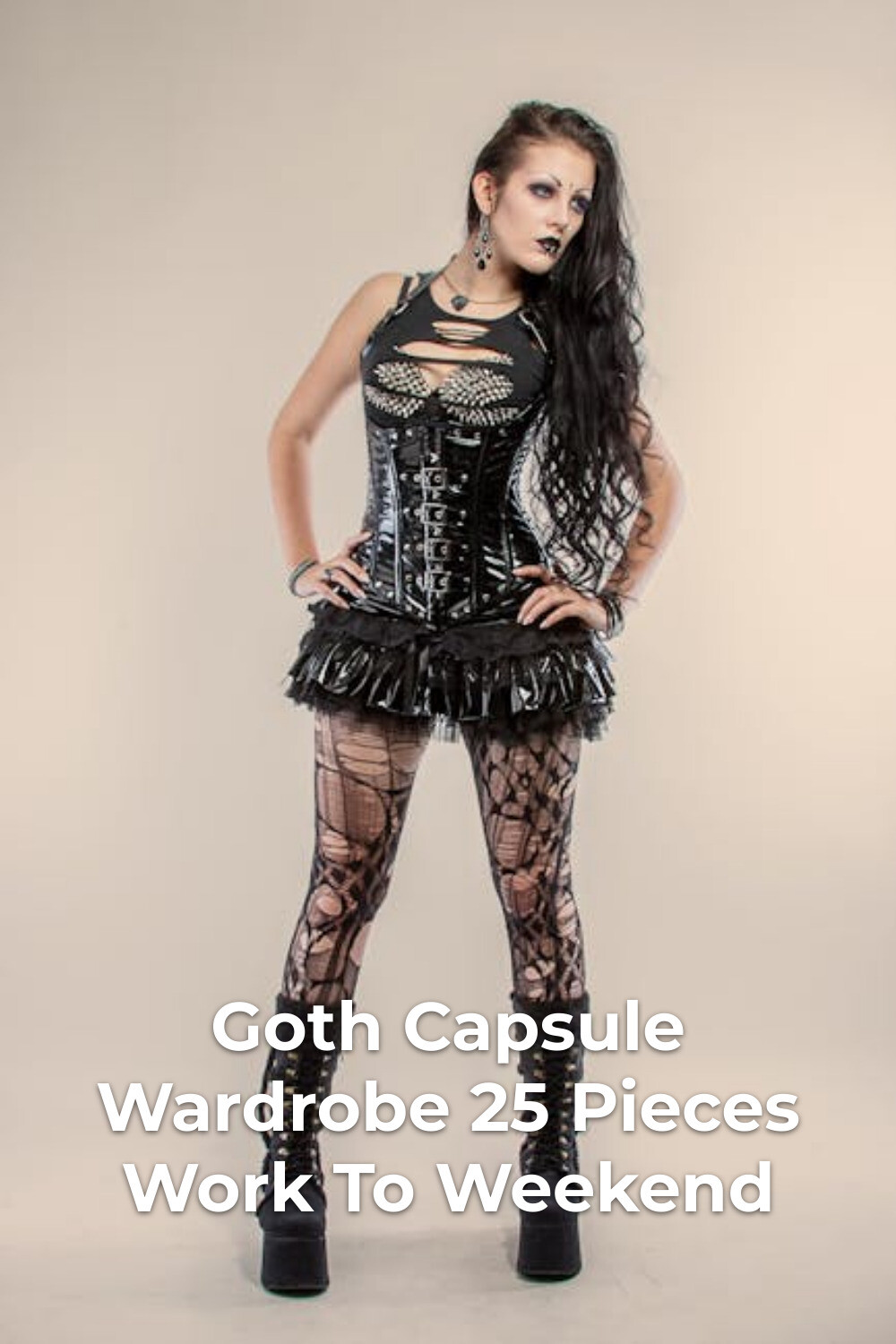
- A structured or corset-inspired top for sharper silhouettes
- A graphic sweater or statement knit for casual outfits with impact
Tip: When you’re choosing tops, prioritize pieces that work in at least two modes: solo (as the main focus) and layered (under a jacket, cardigan, or coat). If a top only works one way, it may not earn its place in a capsule.
Bottoms: Pants and Skirts You’ll Actually Repeat
Bottoms anchor your outfit silhouette and determine how many “real life” looks your goth capsule wardrobe can support. The most useful bottoms are the ones that pair cleanly with your tops and layers without requiring a specific shoe or accessory to make them “work.”
- Dark pants as your daily go-to base for outfits
- A skirt option to add variety and switch mood quickly
- A second bottom silhouette to prevent outfit repetition (for example, a different cut or vibe)
Tip: If you often feel like you have “nothing to wear,” it’s frequently a bottoms issue. A capsule with plenty of tops but too few reliable bottoms becomes hard to mix and match.
Outerwear: Jackets, Coats, Capes, and Cardigans
Outerwear is a defining part of a goth capsule because it’s visible so often and it creates instant structure. Many gothic capsule wardrobe lists emphasize one standout jacket, a dependable coat, and layering pieces like cardigans for day-to-day flexibility.
- One “super cool” jacket that feels like you (the piece you build outfits around)
- A coat that can handle colder days while still fitting the aesthetic
- Cardigans for flexible layering and softer silhouettes
- An optional dramatic layer (like a cape-inspired piece) if it integrates with your core palette
Tips for outerwear: Choose outer layers that can dress up and down. A jacket that only works for one specific look limits your outfit range. A coat in your anchor color can pull together even the simplest tee-and-pants combo.
Dresses and One-Pieces: Easy Outfits with Maximum Payoff
Dresses are a shortcut to a complete look, especially in a gothic capsule wardrobe where styling and accessories can quickly shift the mood. A slip dress or a midi dress can be worn alone or layered with jackets, cardigans, and hosiery to create multiple outfits from one piece.
- A slip dress for layering versatility
- A midi dress for a more grounded, everyday silhouette
- One “statement” dress if you regularly attend events or want a bolder goth outfit option
Tip: If you only keep one dress in your capsule, make it a piece you can wear across seasons by layering over or under it. That single decision can multiply your outfit combinations.
Footwear: Boots, Oxfords, Creepers, and Everyday Options
Footwear can make or break minimalist goth outfits. In a capsule, shoes should be chosen for repeat wear and compatibility with multiple silhouettes: pants, skirts, and dresses. One strong pair can do a lot, but two to three options typically offer the best balance between variety and simplicity.
- Boots as the backbone footwear option for goth fashion
- Oxfords or creepers for a different vibe and outfit variety
- An everyday shoe option that still fits your dark aesthetic capsule needs
Tip: When deciding between shoe styles, pick the pair that matches the majority of your outfit silhouettes. If most of your looks rely on pants and layering, prioritize the pair that complements that base most consistently.
Accessories: The Fastest Way to Multiply Outfits
Accessories are essential for a capsule wardrobe for goth style because they let you pivot between minimalist and expressive looks without adding a lot of clothing. Many guides emphasize accessorizing strategies—jewelry, belts, bags, and hosiery—because accessories can transform the same base outfit repeatedly.
- Jewelry pieces (including chokers) to define the neckline and mood
- Belts to reshape silhouettes and add edge
- A bag that works with most outfits and fits your daily needs
- Hosiery to support dress and skirt looks across seasons
Tip: If you’re building on a budget, prioritize accessories early. They’re often the most efficient way to make your “goth basics” feel intentional and styled.
How to Mix & Match Your Goth Basics (Without Getting Bored)
A goth capsule wardrobe succeeds when you can create a wide range of outfits from a small number of pieces. The easiest way to do that is to treat your wardrobe like a system: stable foundations, flexible layers, and swappable “finishers” like accessories.
Start with a base outfit formula you know you’ll repeat. For example, a top + bottom + outer layer is a daily structure you can adjust with silhouette and texture. Dresses offer an even simpler formula: one piece + layer + accessories.
Tips for mix-and-match: Use one statement item at a time. If your jacket is dramatic, keep the base simple. If your dress is the focus, use a quieter outer layer and let accessories do the styling work. This keeps outfits wearable while still feeling distinct.
Color Palette and Fabric Choices for Cohesion
A cohesive color palette is what makes a capsule wardrobe feel effortless. Many goth capsule wardrobes rely on black as the primary anchor, supported by dark neutrals and deep accent tones. Keeping your palette tight reduces “orphan items” that don’t pair with anything else.
Fabric choices matter just as much because goth fashion often depends on layering. Pieces should be comfortable to stack and visually interesting when combined. Think in terms of how fabrics behave together: some layer smoothly, others add bulk, and some are better as top layers.
- Choose an anchor base (often black or charcoal) for the majority of items
- Add a small set of deep accents (for example, deep wine tones) for variation
- Repeat fabrics and textures across categories so outfits look intentional
- Prioritize materials that hold up to repeated wear and regular layering
Tip: If you’re unsure about adding color, add it through accessories first. This keeps the capsule cohesive while letting you experiment with different gothic moods.
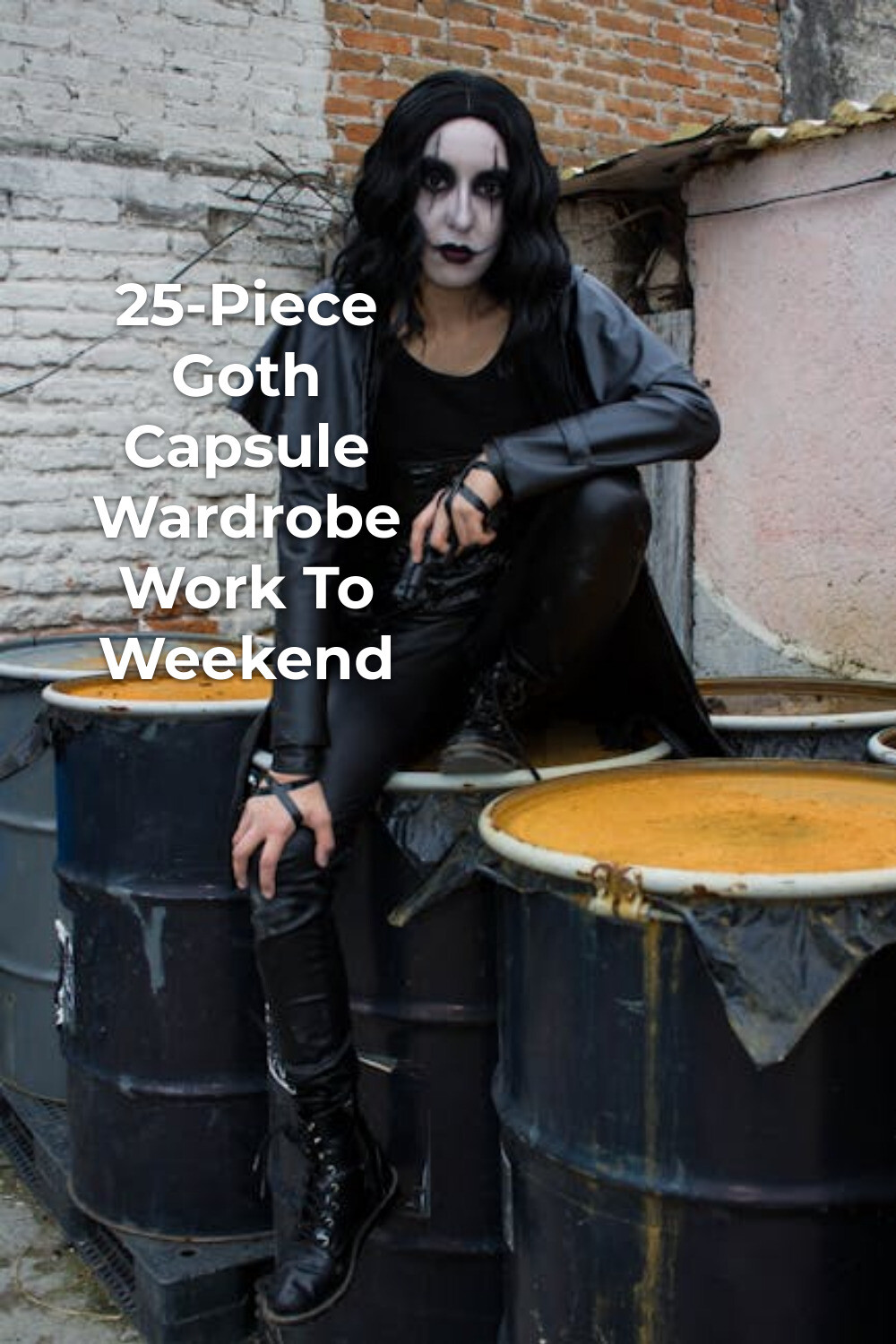
Seasonal Layering: Build, Swap, and Layer Like a Pro
Seasonal layering is where a goth capsule wardrobe becomes truly practical. Instead of rebuilding your closet every season, you keep core pieces consistent and swap in weather-friendly layers. The same dress can work year-round with different outerwear, hosiery, and styling.
Spring and Summer Layering Ideas (Including Soft Goth)
Warm-weather goth can still look intentional without feeling heavy. Many soft goth capsule wardrobe spring ideas emphasize lighter layers and styling that feels airy while staying within a dark aesthetic. The key is to keep your silhouettes breathable and your layers optional.
- Layer a light cardigan over a slip dress for an easy day-to-night look
- Use a statement jacket as your main layer and keep the base outfit simple
- Choose tops that can stand alone but still work under outerwear
- Use accessories to add goth detail without adding heat
Tip: In spring and summer, your capsule gets more mileage when each layer can be carried easily. A cardigan you can tie around a bag or waist often earns its place more than a fussy layer you won’t actually bring.
Fall and Winter Layering Ideas (Coats, Knits, and Structure)
Cold-weather goth is all about outerwear, knits, and building depth with layers. A coat becomes the centerpiece, and pieces like graphic sweaters and cardigans become daily essentials. This is also where a “one super cool jacket” shines, because it can create outfit variety even when you’re repeating the same warm base layers.
- Wear a graphic sweater with dark pants and finish with a strong coat
- Use cardigans to add warmth without losing mobility
- Layer a jacket over a dress and add hosiery for a winter-ready outfit formula
- Stick to your core palette so layers always coordinate
Tip: If winter outfits feel repetitive, don’t immediately buy more clothes. Add variety by rotating outerwear (coat vs. jacket vs. cardigan layering) and changing accessories like belts and jewelry to shift the silhouette and mood.
Concrete Seasonal Capsule Templates (Item Counts You Can Actually Use)
Many people love the idea of a goth capsule wardrobe but get stuck because they don’t know what “enough” looks like. Use these templates as a starting point. They are intentionally simple so you can adapt them to your lifestyle and preferred goth substyle.
Spring Capsule Template (12 Pieces + Accessories)
- 3 tops (including at least one everyday tee)
- 2 bottoms (one pants, one skirt)
- 1 slip dress
- 1 midi dress (or a second dress silhouette)
- 2 light layers (for example, cardigan + jacket)
- 1 statement sweater (optional if your spring is cool)
- 2 shoe options (boots + alternate like oxfords/creepers)
Accessories (jewelry/choker, belt, bag, hosiery) act as “multipliers” and aren’t counted in the 12 clothing pieces because they’re meant to be repeated constantly. If you prefer a soft goth capsule wardrobe spring direction, focus on lighter layers and use accessories to carry the aesthetic.
Winter Capsule Template (12 Pieces + Accessories)
- 3 tops (including at least one layering-friendly option)
- 2 bottoms (pants as a daily base, plus one alternate)
- 1 dress that layers well
- 1 warm knit or graphic sweater
- 2 mid-layers (cardigans are especially useful here)
- 2 outerwear pieces (one coat + one standout jacket)
- 1–2 shoe options (boots as the primary)
In winter, outerwear often defines your outfit more than anything else. If you invest attention anywhere, focus on your coat and your “super cool” jacket so your daily looks feel deliberate even when you’re repeating warm basics.
Budgeting, Thrifting, and DIY: Get More with Less
A goth capsule wardrobe doesn’t have to be expensive. In fact, capsule thinking often helps you spend more intentionally because you’re buying fewer, more versatile pieces. Many people build their strongest goth basics through a combination of thrift finds, careful purchasing, and small DIY upgrades.
Budget-Friendly Tips That Keep Your Capsule Cohesive
When money is limited, the biggest risk is buying random “cool” pieces that don’t mix together. A budget goth capsule wardrobe works best when every purchase earns its place by matching your palette, layering needs, and daily lifestyle.
- Start with the pieces you will wear weekly (boots, everyday tops, reliable bottoms)
- Choose one statement outerwear piece instead of multiple novelty items
- Prioritize accessories that change outfits quickly
- Avoid buying duplicates unless the first is truly a workhorse you repeat constantly
Tip: If you’re debating between a trend-driven piece and a capsule staple, pick the staple. Trends can still show up through accessories and styling, but your foundations should stay dependable.
Thrifting Checklist for Goth Wardrobe Staples
Thrifting can be ideal for gothic fashion essentials because you can find unique layers, coats, and versatile basics without paying full price. A checklist keeps you focused so you don’t leave with items that don’t fit your capsule plan.
- Look for coats and jackets first (outerwear often offers the best value)
- Search for cardigans and layering pieces that match your core palette
- Pick up simple tops that work under multiple layers
- Check for bottoms that pair with both casual and dressed-up tops
- Scan accessories like belts and bags to “finish” outfits
Tip: Before you thrift, decide on your capsule gaps by category (tops, bottoms, outerwear). Shopping with a category goal reduces impulse buys and helps you build a wardrobe system rather than a pile of standalone items.
DIY Project Ideas (Simple, Capsule-Friendly Upgrades)
DIY works best in a capsule wardrobe when it’s used to customize staples, not complicate them. Small, repeatable details can make a basic piece feel more goth without limiting how often you can wear it. Keep your DIY choices consistent with your capsule palette and overall vibe.
- Subtle distressing for a lived-in, alt-leaning finish
- Embroidery details to personalize a top or layer
- Fabric embellishments that add texture while remaining wearable
Tip: DIY is most effective when it’s reversible or minimal. If you’re uncertain, start with accessories or a secondary layer before altering a core piece you rely on weekly.
Accessorizing Minimalist Goth Outfits (The “Outfit Multiplier” Method)
A minimalist goth base outfit—dark top, dark bottom, simple boots—can look completely different depending on accessories. This is why accessories are central to capsule wardrobes: they deliver variety without adding clutter.
Use accessories with intention. A belt can reshape your silhouette, a choker can change the neckline focus, and a bag can shift your outfit from casual to more refined. Hosiery can turn a dress into a season-spanning staple, which is especially valuable in a gothic capsule wardrobe built for layering.
Tip: Build a small accessory “rotation” the way you would build a mini capsule: a few pieces you can wear repeatedly in different combinations. This helps you avoid owning lots of accessories you rarely reach for.
Substyle Variations Within the Capsule (Without Expanding Your Base Count)
One of the smartest ways to personalize a goth capsule wardrobe is to keep the base consistent and shift the styling and a few key pieces to match your preferred substyle. You don’t need separate wardrobes for romantic goth, cyber goth, or industrial—just purposeful substitutions and accessory choices.
Soft Goth
Soft goth variations often feel lighter and more delicate, especially in spring capsule wardrobe planning. Keep your base dark and cohesive, then emphasize layering and styling that feels less heavy. Cardigans and dresses become central because they create a gentle silhouette while staying within a dark aesthetic capsule.
Romantic / Classic Gothic
Romantic goth leans into refined silhouettes and dress-forward looks. Within a capsule, this can be achieved by prioritizing a blouse option, a midi dress, and accessories that draw attention to the neckline and waist. Your coat and jacket choices can stay the same; the shift is in shape and finishing details.
Cyber Goth
Cyber goth twists the capsule through sharper contrast and bolder styling, but the capsule idea still applies: keep the base cohesive, then lean on statement layers and accessories for impact. A standout jacket and a consistent footwear choice can carry much of the vibe while you keep tops and bottoms versatile.
Industrial
Industrial variations tend to feel structured and utilitarian. In capsule terms, this means focusing on strong outerwear, reliable pants, and accessories like belts that add definition. The outfit formula stays simple, but the finish feels harder-edged and more functional.
Steampunk-Adjacent
Steampunk-adjacent styling can be approached as a capsule “overlay” rather than a whole separate wardrobe. Keep your foundation pieces consistent, then use a few chosen accessories and one structured top option to shift the mood when you want that look, without requiring a closet overhaul.
Tip: If you’re torn between substyles, don’t build multiple capsules. Build one strong base and create “style switches” with one or two pieces per variation—usually outerwear or accessories—so your closet remains cohesive.
Common Mistakes to Avoid When Building a Goth Capsule Wardrobe
Capsule wardrobes are simple in concept but easy to derail in practice. Most issues come from skipping the planning stage, overbuying statement items, or ignoring how pieces layer together in real life.
- Buying too many statement pieces and not enough goth basics
- Choosing items that don’t layer well, then feeling “stuck” seasonally
- Ignoring footwear versatility, resulting in outfits that only work with one pair of shoes
- Building a palette that’s too broad, creating items that don’t mix and match
- Overlooking accessories, then feeling like outfits look unfinished
Tip: If your capsule feels off, don’t assume you need to start over. Identify the bottleneck: is it missing outerwear, too few bottoms, or accessories that don’t support your intended silhouettes?
Maintenance: Keeping Your Capsule Sharp Over Time
A goth capsule wardrobe works best when you maintain it like a system. That means periodic wardrobe audits, thoughtful rotation, and paying attention to which pieces truly earn frequent wear. The advantage of a capsule is clarity: it’s easier to see what you use, what you avoid, and what needs replacing.
Set a simple cadence to review your capsule: check for gaps (like missing layering pieces for seasonal shifts), check for items that no longer fit your daily life, and check whether your core palette still feels cohesive. Maintenance also includes keeping your dark pieces looking intentional over time, since your anchor colors do a lot of work in a gothic capsule wardrobe.
Tip: Keep a running note of “outfit friction,” meaning moments when getting dressed feels hard. Those moments often point directly to the next capsule improvement—like needing a second reliable bottom or a more versatile layer.
Inventory Tracking: How to Audit, Count, and Improve Versatility
One of the fastest ways to make a capsule wardrobe successful is to track what you have before you shop. Inventory tracking doesn’t need to be complicated; it just needs to show you your categories and how many wearable outfits you can build with what you already own.
- List your items by category (tops, bottoms, outerwear, dresses, shoes, accessories)
- Mark which items fit your core palette and which don’t
- Note which pieces layer well and which pieces only work alone
- Identify “high-rotation” items you wear constantly
- Spot gaps that reduce outfit variety (often bottoms, layers, or shoes)
Tip: A quick test for versatility is to ask: “Can I style this item at least three different ways using only what’s already in my closet?” If not, it may not be capsule-friendly right now.
Quick-Start Checklist: A 7-Day Path to Your Goth Capsule
If you want a concrete plan, use this 7-day path to go from “full closet, nothing to wear” to a functional capsule wardrobe for goth style. The goal is to make decisions quickly, build outfit formulas, and shop only for true gaps.
- Day 1: Define your capsule goal (daily life needs, preferred goth vibe, and the seasons you’re dressing for)
- Day 2: Audit your current closet by category and identify your core palette
- Day 3: Pull your current “winners” (pieces you wear often) and set them aside as your starting capsule
- Day 4: Identify missing pillars (often outerwear, reliable bottoms, or footwear)
- Day 5: Build 10 outfit combinations using only your pulled capsule pieces and note what you wish you had
- Day 6: Create a tight shopping list for only the missing items and prioritize thrifting where it makes sense
- Day 7: Finalize your capsule, choose your accessory rotation, and set a date for your first mini-audit
Tip: On Day 5, take your time. Outfit testing is where you discover what actually works together, which is more valuable than guessing based on individual pieces.
Resources and Next Steps
Your next step is simple: commit to a cohesive palette, choose your most versatile pillars (especially outerwear, bottoms, and boots), and use accessories to expand your outfit range. If you enjoy shopping, funnel that energy into purposeful sourcing—thrift hunts for coats and layers, and targeted purchases for the specific gaps that limit your mix-and-match options.
Tip: When you’re tempted to add a random new piece, pause and compare it to your existing capsule plan. If it doesn’t strengthen at least one outfit formula or solve a known gap, it’s likely not a capsule upgrade.
FAQ
What pieces define a goth capsule wardrobe?
A goth capsule wardrobe is defined by versatile goth basics across key categories: tops, bottoms, outerwear (including a standout jacket and a practical coat), a dress or two that layers well, dependable footwear like boots, and accessories such as jewelry/chokers, belts, a bag, and hosiery that multiply outfit options.
How many items should be in a gothic capsule wardrobe?
There isn’t one universal number; what matters is that your pieces mix and match easily. If you want a clear starting point, a 12-piece seasonal template plus a small set of repeatable accessories is a practical way to build a cohesive capsule without feeling restricted.
How do I build a budget goth capsule wardrobe without sacrificing style?
Start with high-wear foundations you’ll use weekly (reliable bottoms, layering-friendly tops, boots, and outerwear), then use accessories to create variety. Thrifting is especially effective for coats, jackets, and cardigans, while small DIY upgrades can personalize basics without requiring lots of new clothing.
What’s the easiest way to make minimalist goth outfits look intentional?
Use an outfit formula (base outfit plus a layer) and rely on accessories as finishers. Belts can reshape silhouettes, chokers and jewelry can define the neckline, and a consistent bag and hosiery can make simple outfits feel styled while keeping the wardrobe small.
How do I handle seasonal changes in a goth capsule wardrobe?
Keep your core pieces consistent and swap layers seasonally. In warmer months, lean on lighter layers like cardigans and use accessories for impact; in colder months, prioritize a strong coat, a standout jacket, and knits or sweaters, while continuing to build outfits from the same cohesive base palette.
Can I include soft goth or romantic goth in the same capsule?
Yes—keep one cohesive base capsule and shift the vibe with a few targeted choices. Soft goth can be emphasized with lighter layering and dress-forward styling, while romantic goth can be supported by a blouse option, midi dress silhouettes, and accessories that highlight the waist and neckline.
What are common mistakes people make when building a capsule wardrobe for goth style?
Common mistakes include buying too many statement pieces without enough foundations, choosing items that don’t layer well, building a palette that’s too broad to coordinate easily, overlooking footwear versatility, and skipping accessories that would otherwise make repeated basics look fresh.
How do I audit my wardrobe to create a goth capsule?
Sort your wardrobe by category, identify which pieces fit your core palette, and note which items you actually wear often. Then test outfit combinations using your “winners” and track what stops outfits from working—typically missing layers, too few bottoms, or lack of a versatile jacket or coat.
Leave a Reply