
Dark Academia Capsule Wardrobe: A Complete U.S. Guide to a Timeless, Layered Look
A dark academia capsule wardrobe is a compact, mix-and-match set of clothes built around the dark academia aesthetic: scholarly, classic, and slightly moody, with an emphasis on tailored silhouettes, cozy knitwear, and layered outfits. The goal is to get maximum outfit variety from a minimal number of pieces by choosing a cohesive color palette, repeating core fabrics, and relying on a few signature staples like blazers, wool coats, loafers, and structured bottoms.
This guide breaks down what defines a dark academia capsule wardrobe, which pieces matter most, how to use simple “wardrobe rules” to keep your closet cohesive, and how to choose a piece count that fits your life (from a very small 12-piece plan to a more flexible 15–20 pieces). You’ll also find outfit-building guidance and practical tips for maintaining the vibe without constantly adding more items.
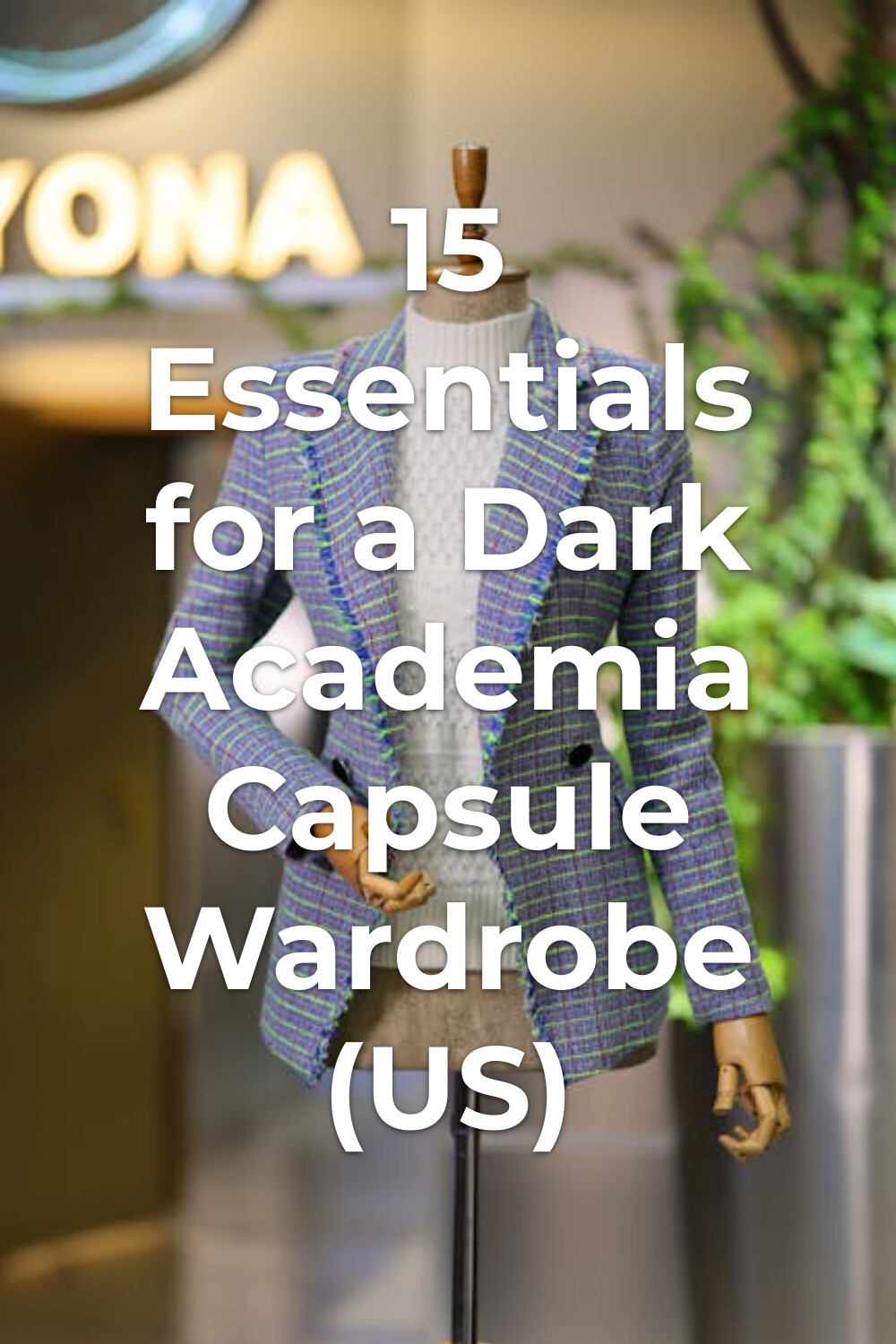
What Is a Dark Academia Capsule Wardrobe?
A dark academia capsule wardrobe combines two ideas: the capsule wardrobe approach (a deliberately limited set of versatile clothing) and the dark academia style (an academic, literary-inspired look built around classic tailoring, traditional textures, and deep, earthy tones). Instead of owning dozens of one-off pieces, you build a small wardrobe where almost everything works together, so getting dressed is faster and outfits look intentional.
Key Characteristics of the Dark Academia Look
Dark academia style leans into a “scholarly aesthetic wardrobe” with a preppy-gothic edge: clean structure, traditional classics, and layered combinations that feel like they belong in a library or lecture hall. In capsule form, the look relies on a few repeatable shapes—tailored trousers, pleated skirts, button-down shirts, sweater vests, structured blazers, and a wool coat—so you can rotate outfits while staying consistent.
Color Palette and Fabrics That Make It Feel Authentic
Dark academia capsules often center on neutral earth tones and deep neutrals, then add controlled accents for richness. Think browns and beiges alongside darker anchors, with touches of burgundy and forest green for depth. Fabrics matter as much as color: textured, traditional-feeling materials (like tweed, wool, corduroy, and knitwear) naturally create the layered, academic mood associated with the aesthetic.
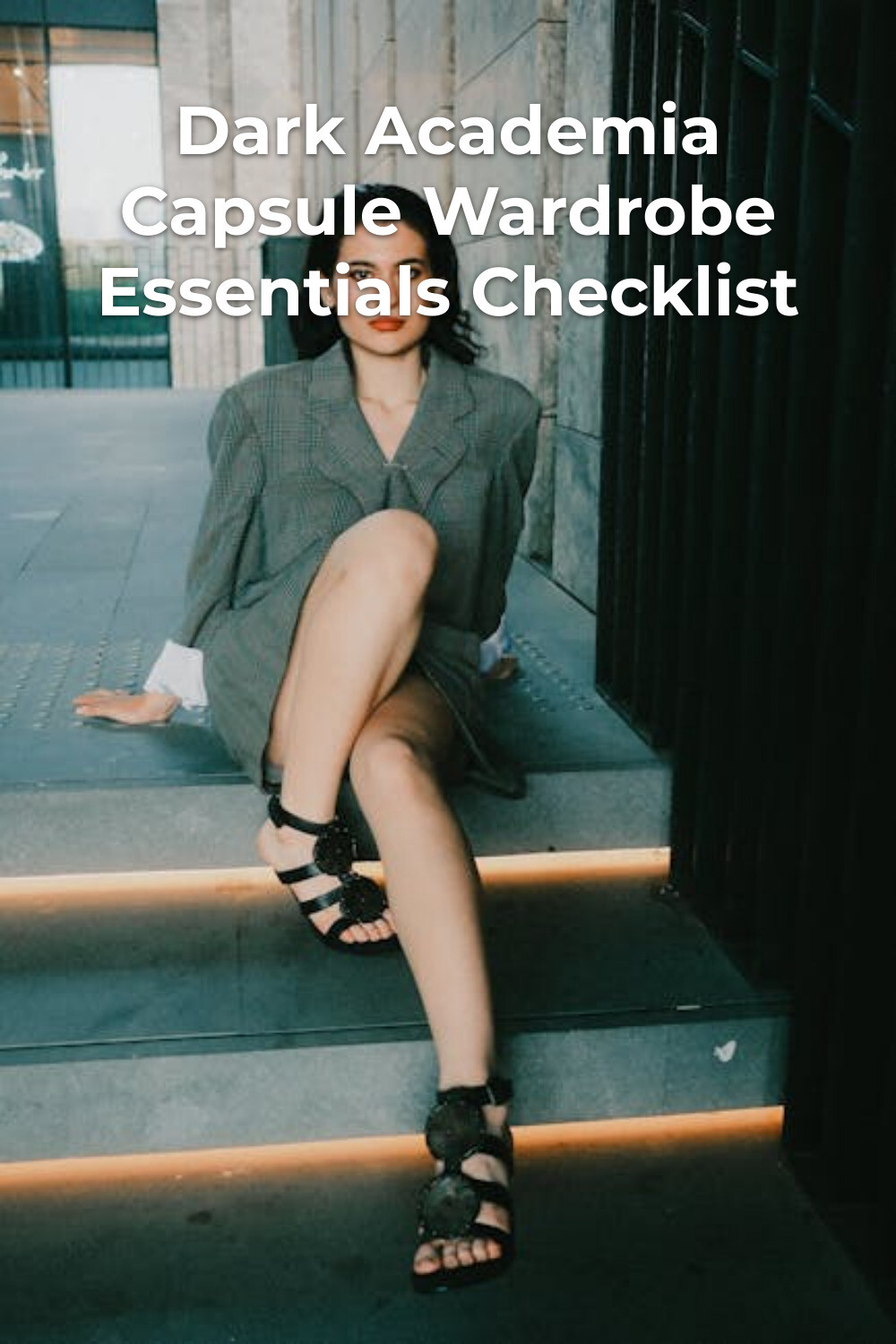
Why a Capsule Wardrobe Fits the Dark Academia Aesthetic
The dark academia vibe is built on repeatable classics—items that look even better when you rewear them in new combinations. That’s exactly what a capsule wardrobe is designed for: fewer pieces, stronger cohesion, and outfits that look “pulled together” without relying on constant trend churn.
Minimalism With Maximal Impact
Dark academia outfits often look complex because of layering, not because they require a huge closet. A capsule approach helps you focus on layering tools (like blazers, knitwear, and coats) and dependable bases (like tailored trousers and skirts). With the right small set, you can create a range of looks—from polished and structured to cozy and bookish—without owning multiples of the same thing.
Longevity Through Classics and Intentional Repetition
Many dark academia staples are classics for a reason: a structured blazer, a crisp button-down, and dark loafers don’t need constant updating. A capsule wardrobe makes that longevity practical by pushing you to choose pieces you’ll actually rewear and by limiting “extras” that don’t match the overall direction.

Core Pieces You Need for a Dark Academia Capsule Wardrobe
Most dark academia capsule wardrobes use a familiar structure: a handful of tops that layer well, a small set of bottoms with tailored lines, outerwear that instantly sets the tone, and shoes/accessories that lean classic. You can build your capsule with different piece counts, but the categories stay consistent.
Tops: The Layering Foundation
Tops in a dark academia capsule should be able to stand alone and also sit comfortably under knits and blazers. Prioritize pieces that look intentional under layers: a button-down shirt for structure, a turtleneck for warmth and clean lines, and knitwear for texture. A light blouse can soften the look while staying academic, especially paired with tailored bottoms.
- Button-down shirts for crisp structure and easy layering
- Turtlenecks for streamlined warmth and a classic academic silhouette
- Knitwear like cable knit sweaters for texture and depth
- Sweater vests for a signature dark academia layer
- A light blouse for contrast and polish under blazers or knits
Tip: If you’re trying to keep the capsule small, choose tops that can play multiple roles—something that looks as good on its own as it does under a blazer or sweater vest. That versatility is what turns a small list into a high-function wardrobe.
Bottoms: Tailored Lines and Classic Shapes
Bottoms do a lot of the heavy lifting in dark academia because they signal “academic” immediately. Tailored trousers are a cornerstone; they create a structured line that pairs with everything from button-downs to chunky knits. Pleated skirts (and plaid skirts in particular) bring a traditional school-uniform energy without needing a costume-like approach. Dark denim can work as a practical anchor when you want the vibe but need everyday ease.
- Tailored trousers as a primary base for outfits
- Pleated skirts for movement and an academic feel
- Plaid skirts to reinforce the classic collegiate mood
- Dark denim as a casual alternative that still fits the palette
Tip: When you’re deciding between two similar bottoms, pick the one that works with more shoes. In a capsule, shoe compatibility matters because it increases outfit combinations without adding more clothing.
Outerwear: The Pieces That Instantly Set the Tone
Outerwear is where dark academia becomes unmistakable. A structured blazer gives you immediate “lecture-ready” polish and makes simple outfits feel intentional. A wool coat adds the dramatic, timeless layer that dark academia is known for, especially in fall and winter. Some wardrobes also include cape-like outerwear for a more romantic academic silhouette, but even one strong coat plus one blazer can carry most outfits.
- Structured blazer for sharp, academic layering
- Wool coat for timeless warmth and a strong seasonal statement
- Cape-style outerwear (optional) for a more dramatic silhouette
Tip: If you want your capsule to feel cohesive fast, focus on outerwear first. A blazer and wool coat can make repeated basics look like different outfits because they change the shape and mood so dramatically.
Shoes and Accessories: Classic Finishing Details
Footwear and accessories complete the “scholarly” impression. Dark loafers and oxfords are core dark academia shoes because they read traditional and pair naturally with trousers and skirts. Boots can add practicality and keep the palette grounded. Accessories are best kept intentional and classic: a leather belt to add structure, frilly socks for a vintage-academic twist, and headwear like a beret if it fits your personal take on the aesthetic.
- Dark loafers for classic, polished versatility
- Oxfords for a traditional academic feel
- Boots for practicality and seasonal wear
- Leather belt to sharpen outfits and define the waistline
- Frilly socks for a subtle vintage detail
- Beret (optional) as an accent piece
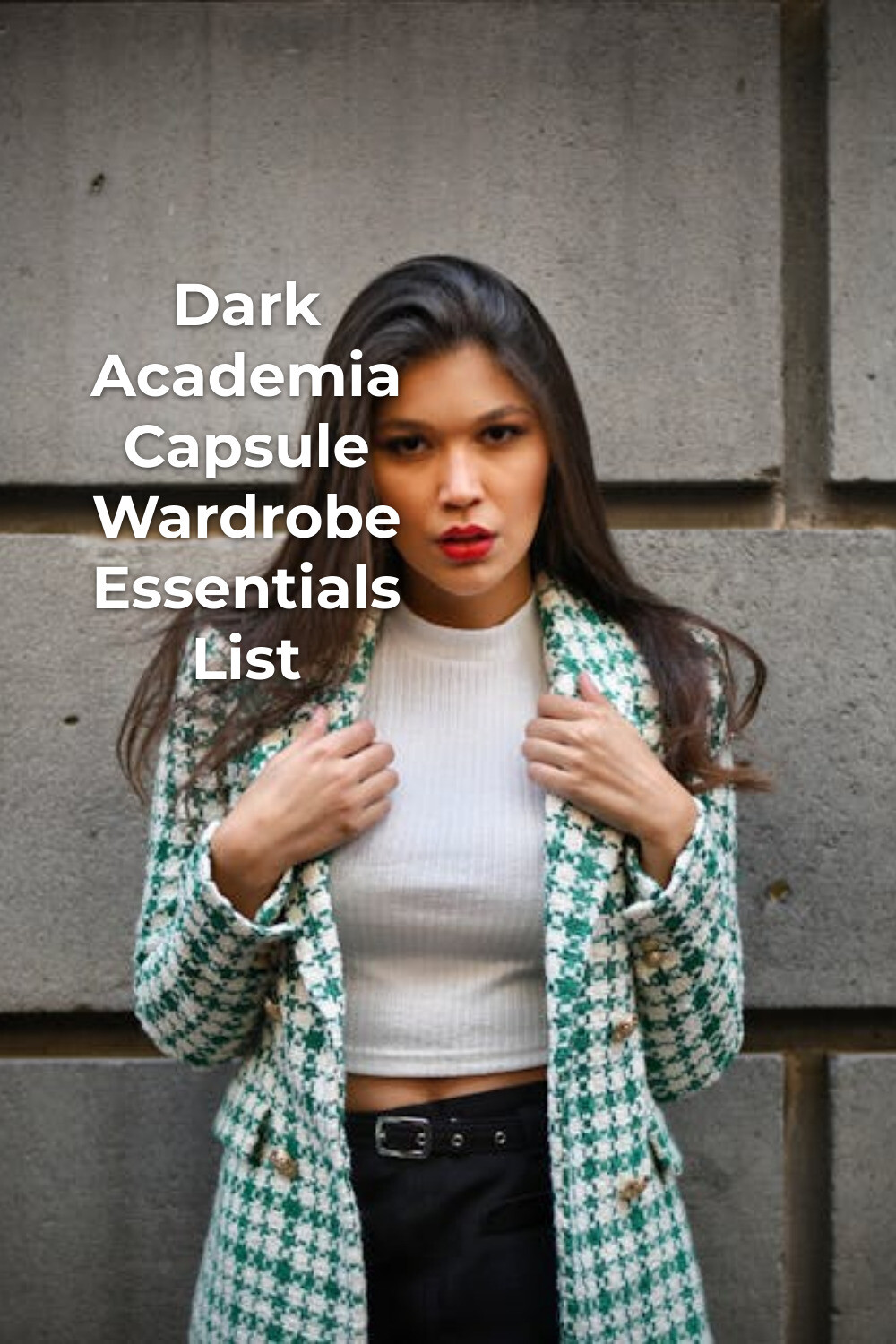
Color and Fabric Palette: The Shortcut to a Cohesive Capsule
A capsule wardrobe only works when the palette is tight enough that most items can be worn together. Dark academia typically uses deep neutrals and earthy tones, then adds a small number of accent colors for interest. On top of color, you want fabric consistency—textures that feel traditional, warm, and layered.
Earth Tones to Deep Neutrals (With Rich Accents)
A dependable dark academia palette often includes neutral earth tones (like browns and beiges) and deep neutrals (darker anchors), then uses burgundy and forest green as accents. The point isn’t to limit yourself to a strict uniform; it’s to ensure that when you reach into your closet, your pieces naturally coordinate and feel intentional together.
Tips: If you’re unsure what to buy next, choose one of your “anchor” neutrals and one accent, and commit to them. Repeating the same accents across different items is what makes a capsule look curated rather than random.
Fabrics by Season: Texture Is Part of the Aesthetic
Dark academia leans heavily on texture and weight. Wool and tweed create that traditional academic presence, corduroy adds depth, and knitwear makes layering feel cozy rather than fussy. Cotton and silk blends can keep the capsule breathable while maintaining a refined look, especially for tops and blouses that need to layer smoothly under structured pieces.
Tip: When your colors are restrained, fabric variation becomes your “pattern.” Mixing a smooth blouse with a textured knit and a structured blazer creates a complete outfit even when everything stays within the same dark, earthy family.
The 3-3-3 Rule and the 70-30 Rule: How to Apply Capsule Wardrobe Math
Two commonly used frameworks help keep a dark academia capsule wardrobe cohesive without becoming boring: the 3-3-3 rule (a balance of color, pattern, and texture) and the 70-30 wardrobe rule (a ratio of staples to statement pieces). Used together, they help you plan purchases, avoid duplicates, and build outfits that feel rich and layered.
Applying the 3-3-3 Rule to Dark Academia
The 3-3-3 rule focuses on variety through controlled repetition: you’re intentionally balancing color, pattern, and texture so your outfits don’t feel flat. In dark academia, this is especially useful because the palette is often subdued—texture and subtle pattern do a lot of the work.
- Color: choose a tight set of deep neutrals and earth tones, plus a couple of accents like burgundy or forest green
- Pattern: lean into classic options (like plaid in skirts or subtle traditional patterns) without making every piece patterned
- Texture: prioritize knits, wool, tweed, and corduroy to create depth across outfits
Tip: If your capsule feels “too plain,” don’t automatically add brighter colors. Add one textured layer (like a cable knit sweater or sweater vest) or one classic patterned piece (like a plaid skirt) and keep the rest neutral.
Applying the 70-30 Wardrobe Rule (Staples vs. Statements)
The 70-30 wardrobe rule is a way to keep your capsule wearable: about 70% of your pieces should be dependable staples you can wear repeatedly, and about 30% can be more distinctive pieces that reinforce the dark academia mood. In practice, staples are your core tops, trousers, and shoes; “statement” can be your plaid skirt, sweater vest, or a standout wool coat.
Tip: When you’re building a small capsule, treat outerwear and shoes as high-impact “statements” only if they still pair with most of your wardrobe. A statement piece that only works with one outfit undermines the purpose of a capsule.
How Many Pieces Should a Dark Academia Capsule Wardrobe Have?
There isn’t one perfect number. Some people thrive with an ultra-minimal 12-piece set, while others prefer a bit more flexibility in the 15–20 piece range. You’ll also find larger seasonal examples (like a fall capsule with significantly more pieces), which can be useful if you want more outfit variety while still staying “capsule” in spirit.
The 12-Piece Dark Academia Capsule (Minimal and Focused)
A 12-piece capsule is ideal if you want a strict, simplified wardrobe that still reads unmistakably dark academia. The key is to choose items that can be layered multiple ways—especially a blazer, a knit layer, and versatile shoes—so you can generate outfits without needing backups.
- 3–4 tops that layer well (for example: button-down, turtleneck, knit)
- 2–3 bottoms (tailored trousers plus a skirt option)
- 2 outerwear layers (often a blazer plus a coat)
- 2 shoe options (loafers/oxfords plus boots or a second classic pair)
- 1–2 accessories that add structure or signature detail (belt, socks, optional beret)
The 15–20 Piece Capsule (Balanced, Still Compact)
A 15–20 piece range is a common sweet spot because it stays curated while giving you more variety across tops and layering pieces. This range works well if you need outfits for multiple settings—work, school, daily life—without feeling like you’re wearing the same look every day.
Tip: If you’re hovering between 12 and 20 pieces, add variety by expanding within categories that increase combinations most. Typically, that means tops and layering knits (including sweater vests), not more “special occasion” items.
A Larger Seasonal Capsule (Example: Fall)
Seasonal dark academia capsules—especially for fall—often include more pieces to accommodate weather changes and layering. A fall-focused capsule can include an expanded list of tops, outerwear, and accessories so you can adjust to temperature shifts while staying aligned with the aesthetic.
Tip: If you like the idea of a bigger fall capsule but want to stay disciplined, keep the palette even tighter. More pieces can still feel “capsule” if everything coordinates.
Building Your Capsule Step-by-Step (Without Overbuying)
Dark academia is easy to overdo if you treat it like a costume. A capsule approach keeps it grounded. The most reliable build process is to start with your foundation, then add layers, then refine with accessories—checking each new item against your palette and your outfit needs.
Step 1: Choose Your Anchors and Accents
Start by selecting your anchor neutrals and a small set of accent tones. Dark academia commonly uses earth tones and deep neutrals, with burgundy and forest green as accents. When these choices are made upfront, you can shop and edit with confidence because you’re building a system, not collecting random “vibes.”
Step 2: Lock In Your Core Silhouettes
Next, choose the silhouettes you’ll repeat: tailored trousers, a pleated or plaid skirt, and tops that work tucked or layered. Add a structured blazer and a wool coat early—these items carry the aesthetic and make even basic pieces feel intentional.
Step 3: Use Rules to Control Variety (Not Restrict It)
Use the 3-3-3 rule to make sure you have enough pattern and texture to avoid flat outfits, and use the 70-30 rule to keep the majority of your capsule wearable. This prevents the common problem of owning too many “statement” items that don’t mix well.
Tip: Before adding a new piece, challenge it to create at least a few outfits with what you already own. If it only works with one specific item, it’s not capsule-friendly.
Outfit Ideas: How to Get More Looks From the Same Capsule
Outfit variety in a dark academia capsule wardrobe comes from swapping layers, adjusting textures, and rotating one “signature” element (like a sweater vest or blazer). Below are mix-and-match outfit formulas that rely on classic dark academia staples.
Everyday Academic (Polished and Practical)
Build around tailored trousers and a button-down, then finish with dark loafers and a leather belt for structure. Add a structured blazer when you want the look to feel more formal, or swap in a knit layer when you want it to feel softer while staying academic.
Classic Layering (Sweater Vest Focus)
A sweater vest over a button-down creates instant dark academia energy. Pair it with tailored trousers for a crisp line, or with a pleated skirt for a more vintage academic direction. Finish with oxfords and intentional socks (like frilly socks) if you want a subtle, styled detail.
Skirt-Centered Dark Academia (Pleated or Plaid)
Use a pleated or plaid skirt as the outfit anchor. For a sharper vibe, add a structured blazer; for a softer one, add cable knit. Keep shoes classic—dark loafers or oxfords—to maintain the scholarly feel, and use a belt if you want extra definition.
Fall and Winter Layering Strategies
Fall and winter naturally suit dark academia because the aesthetic thrives on outerwear and texture. Use a turtleneck as a warm base, add knitwear for depth, then top with a wool coat for that timeless academic finish. When you want maximum impact with minimal effort, let the coat and shoes do the heavy lifting while keeping everything else in deep neutrals and earth tones.
Tips: If your outfits start to feel repetitive, change only one variable at a time: swap loafers for boots, switch a button-down to a light blouse, or trade a blazer for a wool coat. Small changes keep the capsule cohesive while refreshing the look.
Regional and Climate Adjustments (U.S.-Friendly Approach)
A dark academia capsule wardrobe is inherently flexible because it’s built around layers. That said, your ideal balance of knitwear, outerwear, and lighter tops depends on where you live and how much temperature swing you experience. The easiest way to adapt without expanding your wardrobe endlessly is to keep your core silhouettes the same and shift fabric weight and layering frequency.
Tip: If your climate is warmer, you can still keep the dark academia mood by leaning into the palette and structure: tailored trousers, a light blouse or button-down, and classic loafers create the “academic” impression even when heavy outerwear isn’t practical.
Practical Tips for Maintaining Your Dark Academia Capsule
A capsule wardrobe succeeds when it stays edited. The dark academia aesthetic can tempt you into collecting more and more “perfect” pieces, but the real power comes from maintaining a tight system and learning how to refresh it strategically.
Refresh Without Expanding: Small Changes, Big Payoff
When you want something “new,” try refreshing within the logic of your capsule instead of adding unrelated items. A single addition that supports multiple outfits—like a sweater vest, a structured blazer upgrade, or a pair of dark loafers—often does more for your wardrobe than several trend-based purchases.
Rotate by Season, Not by Trend
Dark academia is naturally seasonal because of layering. Consider rotating emphasis: more knitwear and wool in cooler months, more button-downs and lighter tops when it’s warmer. This keeps your aesthetic consistent while making your wardrobe feel responsive to real life.
Care and Longevity Mindset
Because dark academia relies on classic pieces and textured fabrics, treating those items as long-term wardrobe tools supports the entire capsule concept. The more consistently you can rewear and restyle your core staples, the more “effortless” the aesthetic becomes.
Tip: If you notice you’re only wearing a few items repeatedly, that’s useful data. Instead of buying more, consider whether the unused pieces fit your palette and silhouettes, or whether they’re out of sync with how you actually dress day to day.
Final Checklist: Build Your Dark Academia Capsule Wardrobe With Confidence
Use this checklist as a quick way to confirm your capsule is balanced before you shop for anything else. A strong capsule should feel cohesive in color, complete in layers, and practical in footwear.
- I have anchor neutrals and a small accent plan (often including burgundy and/or forest green)
- I have at least one crisp top (button-down) and one warm base (turtleneck or knit)
- I have a signature knit layer (cable knit sweater and/or sweater vest)
- I have tailored bottoms (tailored trousers) plus a second option (pleated or plaid skirt, or dark denim)
- I have a structured blazer for academic polish
- I have a wool coat or equivalent outerwear layer for the full dark academia effect
- I have classic shoes (dark loafers or oxfords), with boots as needed for practicality
- I have one or two accessories that add structure or character (leather belt, frilly socks, optional beret)
- My pieces follow a balanced approach (texture and/or pattern without overwhelming the palette)
FAQ
What is a dark academia capsule wardrobe?
A dark academia capsule wardrobe is a small, curated set of mix-and-match clothing built around the dark academia aesthetic—classic, scholarly pieces in deep neutrals and earth tones, designed for layered outfits with staples like tailored trousers, blazers, knitwear, and a wool coat.
How many pieces should be in a dark academia capsule wardrobe?
Piece counts vary based on lifestyle and preference: some people build a very small 12-piece capsule, while others prefer around 15–20 pieces for more flexibility; seasonal capsules (especially fall) may include more pieces while still staying cohesive.
What are the most important dark academia staples?
The most commonly emphasized staples include a structured blazer, a wool coat, tailored trousers, knitwear (including cable knits), a sweater vest, classic tops like button-downs or a light blouse, and classic shoes like dark loafers or oxfords.
What colors work best for a dark academia capsule wardrobe?
A dependable approach is to use neutral earth tones and deep neutrals as your base, then add small, controlled accents such as burgundy and forest green to create depth while keeping the wardrobe highly mixable.
How do I use the 3-3-3 rule in a dark academia capsule?
You apply the 3-3-3 rule by balancing color, pattern, and texture—keeping your palette cohesive while using classic patterns (like plaid) and rich textures (like wool, tweed, corduroy, and knitwear) to make outfits feel layered and interesting.
What is the 70-30 wardrobe rule and how does it help?
The 70-30 wardrobe rule suggests keeping roughly 70% of your capsule as versatile staples and 30% as more distinctive pieces; this helps you avoid a closet full of items that look great alone but don’t combine into many outfits.
Can I create dark academia outfits with a small capsule?
Yes—dark academia is especially suited to capsule dressing because the aesthetic relies on layering and classic shapes, so a small set of tops, tailored bottoms, a blazer, a coat, and classic shoes can generate many outfits through simple swaps.
What are easy dark academia outfit formulas for fall and winter?
Reliable formulas include a turtleneck with tailored trousers and a wool coat, or a button-down layered under a sweater vest with a pleated or plaid skirt, finished with dark loafers or oxfords; changing one layer at a time creates variety without needing more pieces.
Leave a Reply